Ask ChatGPT
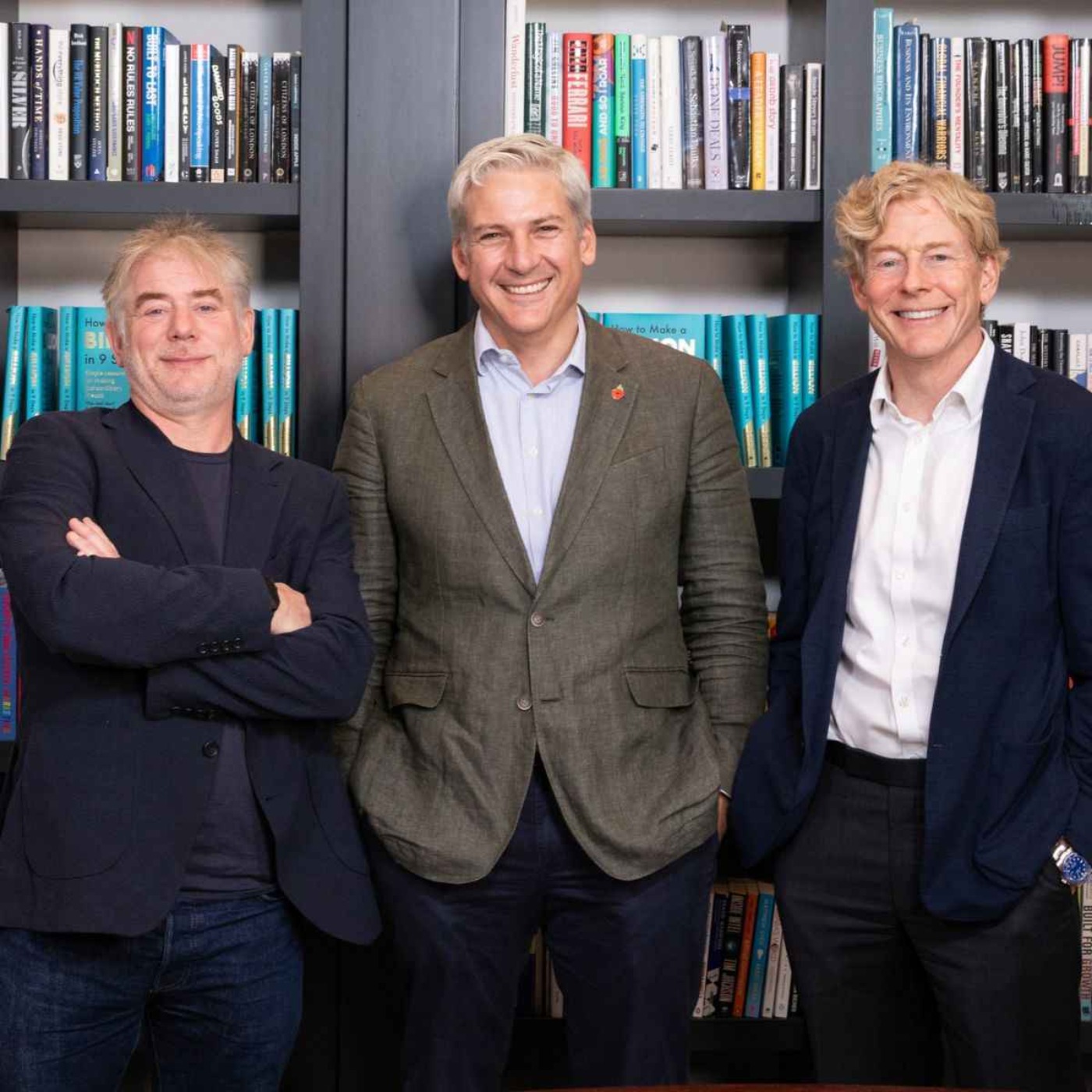
 The Business Leader Podcast with Sir Richard Harpin
8 Apr 2025 · 19m

In this episode of the Business Leader Podcast, host Josh Dornbrack interviews Kevin Evers, a senior editor at Harvard Business Review. They discuss Evers' new book exploring the strategic decisions behind Taylor Swift's remarkable rise in the music industry. The conversation illuminates Swift's long-term thinking, innovation, and her approach to fan engagement, culminating in the success of her $2 billion Eras Tour.
Written by AI. May contain mistakes.

Get the gist, explore an idea or ask about something said.
 Claude
On The Business Leader Podcast with Sir Richard Harpin, what are the key points of this episode?
Searching your listeningAutomatic transcript. May contain errors.
0:00This is Britain's growth moment. Do you want to be part of it? On 26th of March, 750 of the UK's most ambitious founders, CEOs and investors will gather in London to shape the future of mid-sized business. The company's driving our nation's success. The Business Leader Summit 2026 isn't just another conference. It's a day built around the three forces that define growth, ambition, policy and capital. And as one of our valued podcast listeners, you can be there in person. To secure a discounted ticket, visit the events section of our Business Leader website and use this code. BLPODCAST, all one word, all uppercase.
0:41We look forward to seeing you there.
1:02And the home of the brave That rendition of the Star-Spangled Banner was performed ahead of a Philadelphia 76ers game in 2002. The footage shows a 12-year-old blonde girl draped in a US flag sweatshirt and headband belting her heart out in front of thousands of basketball fans. Without context, this is a heartwarming recording of an all-American girl who's been given the opportunity to sing at a sporting event in her native state. But little did the people in the crowd know, they were watching someone who would go on to change the music industry forever.
1:51I'm Josh Dornbrack and this is the Business Leader Podcast. Today we're going to do something a little different and look into the strategy behind the person that many regard as unmatched in the music industry today. While the year 2024 was shaped by global elections, brat summer and epic sporting events, the Errors Tour featured 151 sold-out shows across five continents and 21 countries. Pictures, videos and friendship bracelets filled social media timelines as it earned the title of the highest-grossing tour of all time. as well as boosting the UK economy by nearly a billion pounds alone. A new book by Kevin Evans, a senior editor at the Harvard Business Review, is an exploration of Taylor Swift's career that took two and a half years to write and looks at how she morphed from a country music disruptor to pop superstar to cultural phenomenon.
2:50You know, to be honest, I didn't approach this book any differently than if I was writing a book about Steve Jobs or Jeff Bezos. Taylor's been doing this for 20 years. She's a great songwriter, no doubt, but she also has great entrepreneurial instincts. There's no way you could reach this level of success without having great business instincts. And her level of popularity right now is astronomical. The Heiress tour grossed over$2 billion. That's almost twice as much as the Second Place concert series, which is Coldplay's Music of the Spheres. and in the U.S. alone in 2024, she represented close to 2 % of the total music market.
3:29And those are just astronomical numbers. It's like, how do you do that after two decades into your career? So that's really what drew me to her is her longevity, right? Not only is she a successful artist, but she's been able to scale her success and popularity multiple times over the last two decades. So that's what really drew me to her. How is it that she's been able to do that? I love how you break down the stages of her career in the book by looking for lessons within each marker, if you will. You also mentioned in the book that she's very similar to Steve Jobs, Richard Branson or even Jeff Bezos.
4:02But in some ways, she's even more impressive, right? That may be a controversial statement to some saying that she's even more impressive than Steve Jobs or Jeff Bezos. But look at the industry she's operating in. The music industry is very fickle. It's very brutish. Most artists don't make it past four or five years or a few albums. And the current music industry is even more brutish and fickle. Because Swift started out in 2006. That was after Napster. So there was the move to digital. And now lately, there's been the move to streaming. So she's gone through a lot of industry disruptions. But she's been able to turn those disruptions and challenges into opportunities.
4:40these. And like you mentioned, one of the big things that she's been able to do is adapt as she's gone, right? She's very good at looking at what's happening in the industry and adapting and changing her strategies based on those changes. The Elvis Presley film that came out a few years ago was arguably more primarily focused on Tom Parker, who was Elvis's agent for many years. Scooter Braun, who has a big role in her story, managed many acts, including Justin Bieber, Ariana Grande and Kanye West. But how much of her success could you attribute to Swift and the work that she does herself directly?
5:20A lot of it, for sure. I think compared to other artists, she's really in control of what she does. She's really in control of her own brand. She's really in control of her own creative decisions. But early on in her career, I will say that she made a very important decision that really helped her grow and find success and popularity in country music. And that's her relationship with Scott Burschetta. Now Scott Burschetta is persona nangrata in the Swift community these days because he's the one that sold Swift's master recordings. But that's a pretty crazy story because Swift had interest from major labels, but she decided to go with Scott Burschetta, who, you know, he wasn't selling contracts in the back of his Buick, but he was starting his own startup label at the time.
6:05He worked for Universal Music Group, but then decided, you know, I'm going to start my own label. And he didn't have funding. He didn't have a headquarters. And the label didn't even have a name at the time. But Swift went with him because he said, you can write your own songs. I'm never going to tell you to write someone else's songs. And he also had a lot of skin in the game. The consensus in country music was, you're a teenager. There's no audience for teenage girls. And Swift persisted, and so did Scott Bruchetta. And since he had skin in the game and he really needed Swift to succeed, he was really willing to push to promote her in novel ways and to really convince country music radio to play her songs.
6:46And I think if she went with a major music label at the time, I'm not so sure that they would have been so adamant. And I don't think they would have had as much hustle as Scott Prichetta did. So that relationship in particular was really critical to Swift's early success. You mentioned the blue ocean versus red ocean theory in the book. This is a business strategy concept that says over time competitors in the same industry begin to think and act like each other and adhere to the same conventional wisdom which can be harder to change in the long run of course the thinking being that ultra competitive existing market space is red with blood but blue ocean is uncontested market space that you've created now you mentioned there that she stuck with a theory that teenagers wanted to listen to country music and she's evolved from there.
7:34But did you notice a theme of her almost being hardheaded and sticking to her convictions throughout her journey? For sure. There's a quote very early on in the book from Swift where she says, anytime someone tells me I can't do something, I just want to do it more. And that's the thing that surprised me the most, because I didn't know much about her early career. But when I did all this research, what I realized is she was incredibly headstrong at a very, very early age. I mean, she was 13, 14 years old in songwriting rooms with men three to four times her age and really advocating for her ideas.
8:07And she had a very clear vision. She wanted to write her own songs, which was pretty rare in country music. Usually they use writers. She wanted to write her songs for an audience of her peers, teenage girls. The consensus in country music radio and among executives at major labels was there's no audience for teenage girls. And she wanted to put out an album as soon as possible. And she persisted. She made a lot of bold decisions based on that vision. She left a development deal with RCA Records because they didn't quite believe in her vision. She was very young. She was 13, 14 years old, 15 years old.
8:39Her first album came out when she was 16. And that's the thing that really surprised me. I look back at old interviews of executives and people who were around her at the time, and they all point out that they've never seen someone at this age who had such a clear vision of what she wanted to do. I mean, I'm 40 years old, and I don't have a clear vision for what I want to do with my life, but she did. And I think that was really, really important because it really helped her navigate a lot of the challenges and a lot of the criticism she faced early on in her career and a lot of the pushback she received from the country music establishment.
9:11If she wasn't so headstrong and she waited until she was 18 or she wrote other people's songs, I'm not sure she would have found that early success and popularity in country music. failure is a big part of every successful person's journey. Steve Jobs was fired from Apple in the 80s. Oprah Winfrey was fired from her first TV job and Walt Disney went bankrupt, etc. But could you just give us an example of where Swift failed and how she responded to that failure? The major failure is around 2019, she releases an album called Lover. And it does well compared to everyone else. But compared to Taylor Swift, I wouldn't call it a failure, but it didn't do as well as her previous albums.
9:55And a big reason for that is that for the longest time, she didn't have a strategy for streaming because she didn't need one. She was in a premium position. She had a very famous battle at Spotify back in 2014, where she pulled all of her catalog from Spotify. But she didn't need Spotify. She was the only artist that didn't need streaming because she could sell a lot of physical albums. But by 2019, the user base of Spotify had grown close to 700%. So her audience was on Spotify. They're on Apple Music. And Swift was left a bit flat-footed. That album is overly long. You could tell that she was trying to beef up the set list, to beef up her streaming numbers.
10:37But it was a bit all over the place. It was a bit chaotic of an album. And she also tried to release that album in a way that she's done in the past. It's a big, big media push. It was a big extravaganza. She was doing a ton of media for it. And, you know, the album did okay for Taylor Swift standards, but Taylor Swift has higher standards than that. So after that, she really adopted to the streaming age. And instead of releasing a big album every two years, she turned on the fire hose. She's released so much music since 2020. She's released four new studio albums and her four re-records. So that's eight albums that she's released in about five years.
11:14And so that was a big adaptation for her. Instead of being really precious about the music that she released, she became more prolific. You could argue that the big demand for the Ares tour was really driven by that strategy change. Because around 2019, she did what a lot of other stars do. She plateaued. But now she's accelerated her growth. She's accelerated her popularity. And I I think a big reason for that is her prolific output. So we've touched on how Swift stayed true to her convictions and how adaptable she was in changing environments. But I'm curious, are there any other themes from her career that stood out to you when you were researching the book?
11:51The first thing I'd say is she takes radical risks, but they're very calculated. And she tends to take those risks at times when you wouldn't think that she would need to take those risks. It's usually she takes those risks when she's at her peak, when her success is high and her popularity is really high. So a big example of this was her move to pop music, where she left country music completely behind. And this was a big risk because it wasn't just about replacing her banjos and mandolins with 80s sounding synthesizers. She was leaving behind a market that she had built strong relationships with, that was country music.
12:24But by going full on pop, she was leaving country music behind. That market was not going to come along and play her pop music. but she did it anyway and that was a risk but she felt personally that this is the way that her music was moving and that she had to take that big risk and she did and it paid off because 1989 which was that pop album is one of the best-selling pop albums of the 2010s and you can see the same thing with her re-record project she's re-recorded all of her old music her six older albums she still has two to go and she's released four, but her master recordings were sold.
13:02So she wanted to reclaim ownership of her music. So she re-recorded those albums. That was a big risk too. Other artists have threatened to do this. Prince threatened to do it, but he never followed through. And Swift made a huge deal over the fact that her past recordings were sold, but that wasn't a shoo-in because fans in particular had grown, had such close relationships to her former music. And she was essentially telling them, don't listen to my old music, only listen to my new versions. And if that was a failure, Swift would have looked pretty bad, right? Because she had made such a big deal of that re-record project.
13:40But I think it ended up being successful because of the way that she communicated to her fans and how important this was to her. And those re-records brought in new fans and also accelerated her growth and popularity. because especially in streaming, we listen to old music just as much as we listen to new music. So by Swift revitalizing her old music, she was increasing her streams, but also bringing new fans into the fold. The second point I'll say is she's incredibly fan obsessed. And I think this is really, really important for leaders in any organization. Everyone knows that you should be obsessed with your customers, but I'm not sure so many people go to the links that Swift does to delight her customers, her fans.
14:25She understands that superstars aren't self-made. They're created by the fans. And everything that she does is about her fans, right? I mean, she has sent fans Christmas presents. She has invited fans into her home for listening parties, right? And we talked about the Heiress Tour, how she went above and beyond. There was high expectations for the Heiress Tour, and she exceeded those expectations and probably gave fans more than they even deserved. And I think this is a big reason for her longevity, because she has really built those close relationships with her fans, and she doesn't take those relationships for granted, right?
15:02It doesn't matter how popular she is or how successful she is. She's always trying to find new ways to delight those fans. I appreciate this may be a difficult question, but taking into account her journey and the themes that you've brought up already, if Taylor Swift was a company, which company do you think she would be? I'd say Amazon, right? And it goes back to the customer obsession. So Jeff Bezos has this great quote in one of his famous shareholder letters where he says, and I'm going to paraphrase here, but he says, our customers are delightfully dissatisfied. They may tell us that they love our product.
15:39They may tell us that they love what we're doing, but deep down, customers always want more. And it's our job to delight them and to innovate based on their dissatisfaction. and I think that quote right there fits Taylor Swift to a T. I mean, she's so successful and she's so popular and she has been since 2008, 2009. I mean, that's really when she reached superstar level, but she's always adapting. She's always finding new ways, one to delight her fans, but also change her music. And for me, that's very Amazon-like. Being a leader of any organization, you need to be able to roll with the punches, shall we say, and deal with setbacks and hardship.
16:20But are there any stories that spring to mind when it comes to showing resilience in her career? For sure. So 2009, she's at the VMA Awards. It's really her first big mainstream pop event, right? Because she was still firmly entranced in country music. And she wins the album for Female Video of the Year. I was very early on in the show. And I'm sure a lot of people know this story. But as she's accepting the award, all of a sudden there's Kanye West on stage, steals her mic and says, I'm gonna let you finish. But Beyonce had the greatest album or the greatest video of all time. That turned into a huge viral moment, which was fueled by the hyper growth of Twitter at the time.
17:00But Swift has since said that that was a really devastating moment for her. I mean, essentially you had Kanye West, who at the time was the most innovative rapper, gets on stage and says, you don't belong here. You're not talented enough. That was a very devastating moment for Swift, but I think what followed is even more important. It wasn't just the Kanye stuff. At the time, she was getting very criticized for not having a great voice, for having a princess fixation, having twee lyrics, right? And a lot of this has to do with who she was. She was a teenager writing songs for teenagers. That was a big deal back then.
17:33But after that controversy, she doubled and tripled down on what she does best. She didn't try to change who she was. That third album, she decided to write entirely by herself. She didn't use co-writers, and she used that as a big part of a promotional campaign. And that third album, Speak Now, I'd argue, is one of the most intimate and vulnerable albums that she's released. So she's getting all this criticism. She's getting told that she's not talented. So what does she do? She decides, well, I'm going to get better, but I'm not going to change who I am, right? I'm going to play into my strengths.
18:03And then I'm also going to turn that into a story for my fans. So this is what she's done her entire career. She's gone through pretty big controversies and challenges, but she finds a way to make those into moments of empowerment for her and her fans. So she's not only resilient, I'd argue that she's anti-fragile, meaning that she doesn't only withstand pressure and criticism, she actually grows stronger from them. And I think, again, that's a big reason for her success and longevity. Anti-fragile. I love that. That's a great story. So if we reflect on her character as a whole, what would you say is one attitude or characteristic that got her to where she is now?
18:43Her restlessness, right? I would call it productive paranoia. It doesn't matter how successful she is. She's always seems to have that paranoia. And she's voiced this many times that she may lose her popularity and success or they may dwindle. And I think that productive paranoia is really what drives her to constantly change and to constantly delight her fans.
19:28and case studies, please check out businessleader.com.uk.
19:58all uppercase. It's your chance to join the leaders who are shaping the future of business.
Steve Jobs. Jeff Bezos. Taylor Swift? A new book makes a compelling case for why the world’s biggest pop star belongs in the pantheon of business masterminds.
In this episode, Josh Dornbrack talks to Harvard Business Review senior editor Kevin Evers to explore the bold strategic decisions behind Taylor Swift’s rise, from redefining fan engagement to mastering reinvention in a disrupted industry. Her $2bn Eras Tour wasn’t a fluke, it was the product of long-term thinking, relentless innovation and "anti-fragile" leadership. Tune in for sharp insights that will change how you think about strategy, brand and customer connection.
Hosted on Acast. See acast.com/privacy for more information.