Ask ChatGPT
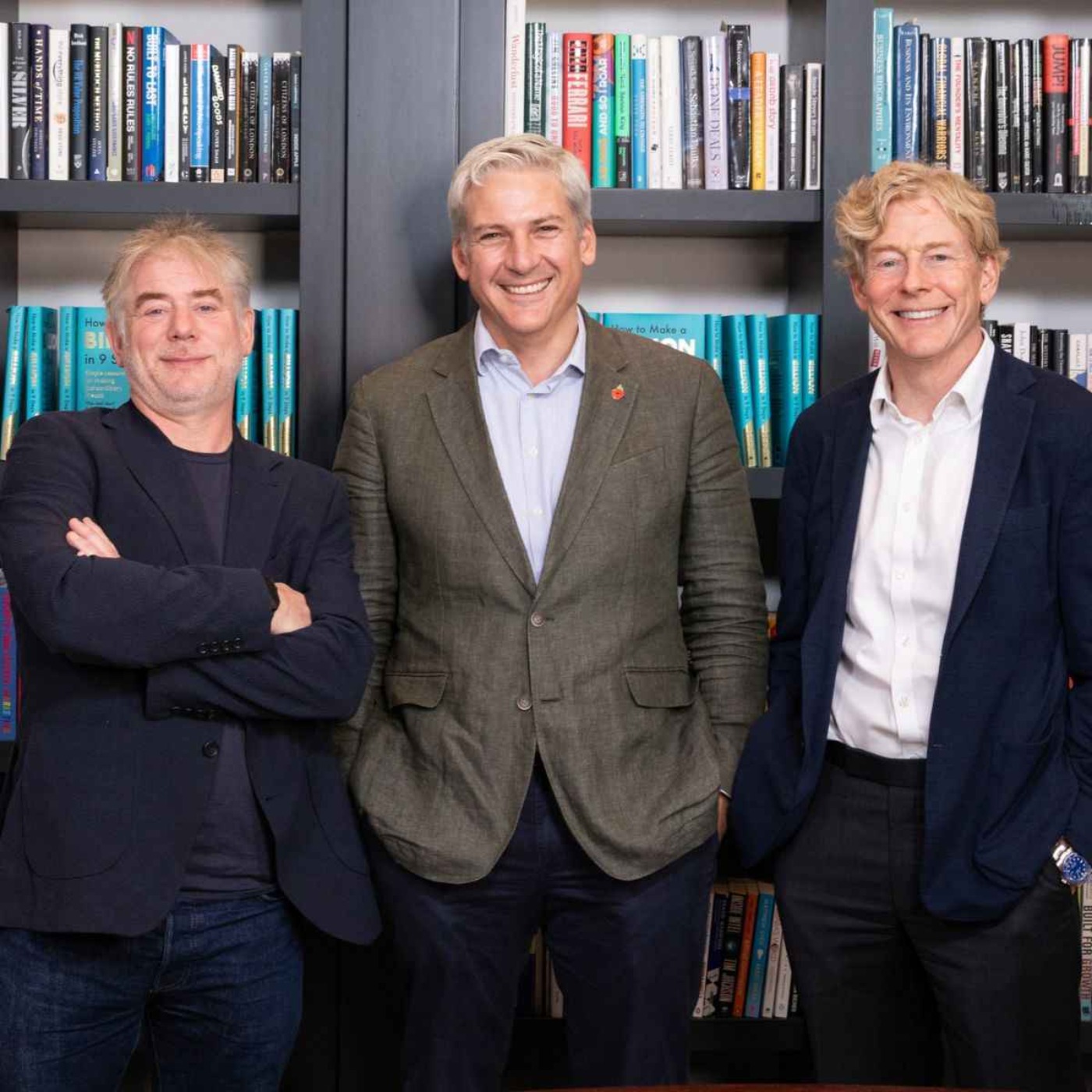
 The Business Leader Podcast with Sir Richard Harpin
28 Oct 2025 · 37m

In this episode of the Business Leader Podcast, hosted by Graeme Ruddick, Nathan Coe, the CEO of Autotrader, discusses the remarkable transformation of the company from a traditional print magazine to a leading digital platform valued at £7 billion.
Written by AI. May contain mistakes.

Get the gist, explore an idea or ask about something said.
 Claude
On The Business Leader Podcast with Sir Richard Harpin, what are the key points of this episode?
Searching your listeningAutomatic transcript. May contain errors.
0:00This is Britain's growth moment. Do you want to be part of it? On 26th of March, 750 of the UK's most ambitious founders, CEOs and investors will gather in London to shape the future of mid-sized business. The company's driving our nation's success. The Business Leader Summit 2026 isn't just another conference. It's a day built around the three forces that define growth, ambition, policy and capital. And as one of our valued podcast listeners, you can be there in person. To secure a discounted ticket, visit the events section of our Business Leader website and use this code. BLPODCAST, all one word, all uppercase.
0:41We look forward to seeing you there.
0:48Hello and welcome to the Business Leader Podcast. I'm Graeme Ruddick. In this episode, we're going to look at an extraordinary transformation story. In 2007, Autotrader made about 60 % of its revenue from its print magazine and employed 4 ,000 people. Today, it makes 0 % from its print magazine and it employs fewer people, 1 ,200. But it's a much bigger business. Autotrader was valued at£1.35 billion in 2007, and the Guardian Media Group, then the owner, sold a 49.9 % stake to private equity firm Apex. Today, AutoTrader is valued at around£7 billion, and is now listed on the stock market as part of the FTSE 100.
1:29What has happened is an extraordinary digital transformation. Before we get into the story, first, let's go back into the 1990s and hear a clip of an advert for the old AutoTrader magazine. Have you ever wondered why AutoTrader is Britain's favourite for buying or selling a car? Is it the way they help you get this bit right, if you want them to? Or is it that they actually come round to your home and photograph your car for you? The real secret of Autotrader's success is that it works by bringing buyers and sellers together in the same area. No wonder it's used by over two million people every week.
2:09Autotrader has gone from that TV advert in the 1990s to a modern tech business with a mobile app, AI initiatives and a digital hub in Manchester. A key figure in the story has been Nathan Coe. He joined Autotrader in 2007 to lead the digital transformation of the business. He rose up through the ranks of Autotrader and in 2020 became chief executive. This is what he about what attracted him to the business in the first place back in 2007. So I was obviously a lot younger in 2007. And interestingly, I've been looking at the business for a couple of years before that. So we, me and an executive that worked for the same business as me were approached by funds that were advised by Apex Partners, so Private Equity Fund.
2:54And they'd been looking at the business for a while with a pretty strong view that this looks like a, you know, really really exceptional brand in a good country with a great position but it's still dominated by magazine revenues both in the way that they think and in the kind of p &l and economic structure of the business as well and the view that they took was that that a new team might be able to reinvigorate or really up and accelerate the kind of digital transition and that would ultimately result in a in a business that's much more likely to exist for many more years to come but also to perform better and be valued at a much higher multiple than kind of a traditional magazine business.
3:35And it was kind of on and off. It was owned by The Guardian at the time. I think there was probably thoughts about whether you should IPO it at that time, or whether they should go down a trade sale or a private equity sale route. And I think at the end, the opportunity as I saw it, the opportunity as The Guardian saw it, I think the opportunity as Apex or was actually, this is just an incredible business that can become an incredible digital business at a time when there were very, very few precedents for businesses doing that, making that transition from, you know, the print leader to the digital leader.
4:09I think for me, if you overlay my own personal motivations at the time, you know, Australia is a very long way away from anywhere. I was just, just got married a few years before that. And we thought, you know what, going abroad to work on a business that feels like it's big enough to matter but small enough to steer in a role where I can also have that influence plus come to Europe and experience you know not only the UK but all the bits of Europe that are attached to it there's loads of personal experiences cultural experiences skiing experiences all that stuff that came along with the package so I think at the time the idea was this is kind of the story you get sold with private equity, go do a thing that's amazing for five years, then go back home and, you know, all would be merry for the rest of your life.
4:54Did you ever think that 18 years later, you'd still be not only still in the UK, but still with AutoTrader? No, no. I mean, it sounds somewhat disappointing when you say like that. But I think the reality is I wouldn't have thought, and I was reasonably young in my career when I came over here. But I think, you know, I'm someone that likes a lot of change. I do have a predisposition. I have a discomfort with things not changing, which is perhaps sometimes exhausting for people around me. So the thought of actually staying in any company for more than five years, I just assumed you do a five-year stint here and you do a five-year stint there.
5:29The reality is that the culture at Autotrader, the people at Autotrader and its willingness and ability to adapt is just so incredible. I feel like whilst I've been at Autotrader for 17 years, I have probably done six jobs during that time, but I feel like I've probably worked in three or four businesses over that same period of time. This business does change. People talk a lot about disruption, but the change that has been driven through this business, you know, in multiple eras, not just the very obvious print to digital transition, you know, really is quite exceptional. What does change and disruption actually take?
6:09Because a lot of people say they like it, but actually when it comes down to it, they don't. What does it really take? Yeah, so I think right in the heat of the battle, I think the thing that keeps you going is that you know at some level with a very broad direction that you're doing the right thing and it would be good for the business. So we made a very simple bet that if more of this business is internet-based in the future and less of it's magazine-based, we know that business will be better. We never anticipated closing the magazines. I don't think anyone would sign off that business case, to be honest, because it just looks horrendous.
6:45And the truth is, making that transition is horrendous. It is really, really hard work. And it involves, you know, bold strategic plays. It involves putting at risk your core business. And people will say to you, as they said to me, you know, all you're going to do is make a big business smaller. And it also involves massive, massive changes to people. I mean, this will sound somewhat shocking in a way, but the way we managed it was incredibly empathetic to the people involved. But when I joined, we had 4 ,000 people. Today, we've got 1 ,200. So if you kind of take the – we've got to take this business model over here and these people over here, and you've got to move them to a completely different business model and probably completely different people by and large because they're doing a different thing.
7:31like that is both risky, incredibly disruptive, very hard to do. And you need to actually have the right stakeholder support because every year it's not like, oh, it's better, it's better, it's better. You know, you have those wobbles. 2007, maybe not the greatest year to come into a highly leveraged company because we had, you know, quite a bit of debt at the time and we went into the global financial crisis. To be fair, though, the owners of the business at the time, were really committed to the cause that we were going after and remained that right up until they exited in. Guardian obviously exited along the way.
8:07Apex probably didn't exit until 2016 or something like that. And that whole time, they did remain committed and supportive of the business. Now, to even have the willingness to do all that kind of change takes a big intake of breath. To actually make it happen really requires very, very good execution and a very good underlying culture as well. And on top of all that, you've got to have an ownership structure, which some might argue in public markets, you can't really do that sort of level of change that can remain stable to stay the course because it does, you know, I'm a big believer that unfortunately, certainly as it relates to me, really good things take a really long time to happen and can be disrupted along the way.
8:49So, you know, you put all that together, that's why it doesn't happen very often. It does happen very often. You use the word they're horrendous. What would you pick out as the bits that are horrendous? Are there specific times and moments you can think back and think that was horrendous? The hardest bit, I would say for me, which is very much down to who I am as a person, is going into a print centre to do this job, going into a particular magazine, this one operated in Wales, and having to tell the staff that, look, this magazine's no longer profitable. We're going to shift to entirely online.
9:23That means we'll be centralizing the offices. So essentially, you know, we're going to be running a consultation process. And people cry because these are their friends and they've been working together. This is very true of auto-trader. Tenure is really, really long. They've been working together for years. They've got advertisers. In this case, they had some adult services advertisers that were in the back of the magazine that were actually relying on a lot of the people in the center to provide them emotional support and advice and all those sorts of things. And they felt like, you know, they were losing friends, you know, friends that had become like family.
9:54They were customers that, you know, they really built a strong bond with. And to kind of take that away from them and then them to be so good about it and ask, you know, their only question was, could we have a copy of the final magazine? It's heart-wrenching, absolutely heart-wrenching. And now kind of scale that up. That was probably 15 or 20 people in a small office in Wales. you multiply that by 55 sites I think when I came over here and you know we have to run that process across all of them you can't help I think as a manager you can't avoid needing to make people changes but every time you do you can't help I think if you've got any humanity about you feeling like you know this is a you know to me it's a bit of a process and it's a business decision but to them that's their job and and it's their friends and it's their you know a big part of their life especially in a world where so many other aspects of community in life, church, religion, all those sorts of things have taken a bit of a backseat for people.
10:55You can't help but feel like you're taking quite a bit away from people. You multiply it all up. I would say it probably fits the description, maybe not horrendous, but certainly very, very hard. How important was the balance between strategy and execution? Which is the most important on a turnaround like this? Was it a case of you had the strategy at the start And as you said, the important things is delivering over the long term and then just having that focus for, I guess, for years, just executing on that single vision and strategy you had from the start. Yeah. So I think that this is actually true to this day in auto trade and we might end up covering it a lot more.
11:31And part of this is my own personal view and people do disagree with them perhaps validly. And that's absolutely fine. But I honestly think that like if strategy is more than 10%, I'd be very, very surprised. I think it is all about execution. And I'd say execution is, you know, a huge chunk of it. There's a bit of a strategy element in there. How are we going to do this thing? But I'd say a huge chunk of execution is actually about culture. And people often think about culture as being on the, you know, it's a thing you do in addition to running a good business. I don't believe that at all. I think if you think of culture as, well, how do we do things around here?
12:07Then it is execution. And I would say that is 80, 90 % of the job is all about doing the execution well. And you look around, I mean, you interview lots of people running lots of businesses. We all probably read annual reports, results. Most people get their strategy probably more or less right. I mean, and it's not necessarily a difficult thing to work out very often. You might need to have different levels of courage to choose certain paths. but I think for most businesses the strategy is not necessarily the most complicated bit it is actually about you know making it happen and making sure that you get um you know good performance along the way so I'm a big subscriber in you know strategy is um you know you can kind of be done with strategy reasonably quickly our strategy was make this business digital okay now that we've got the strategy out of the way should we work out how we're going to do that and that is the truth of what we did.
13:03In terms of the scale of the transformation and what was required, is there an alternative world where if this didn't happen, this business simply just wouldn't exist today? Yeah, I think absolutely. Yeah. Or it would be, well, actually, no, I think probably exist is the right word. I was going to say it might be just a shadow of its former self, but I think had we not, and if you look at the other businesses around the world that didn't necessarily make that transition, you know, those businesses, you know, if you think of businesses like Loot, exchange in the UK, these businesses, when we were a print business, they were not small businesses.
13:37They were real competitors. We only had a 33 % market share at that time. Now, over 75 % of people are spending their time on auto traders. So back then it was much more even. And these digital markets do become a bit winner takes all. If you look at other markets, Australia, many of the European markets, it's generally been digital pure plays that have taken that leading position. They tend to be winner takes all markets. That means if you're not the winner, you've lost out. And so I imagine that, yeah, it would have been existential had we not.
14:15AutoTrader stopped publishing its magazine in 2013. At the time, it faced heavy criticism for doing so. So I'm interested to ask Nathan Coe, why did the company not just carry on printing the magazine, given the value it brought to the Autotrader brand. Couldn't the digital part of the business have grown alongside this? By 2013, print circulation for Autotrader had dropped substantially, but it was still£27 ,000 per issue and getting Autotrader into shops across the UK. Well, I mean, it sounds prestige and USP you talk about. What we used to talk about is the fact that it used to be in every news agent around the UK and people used to love turning up on a Thursday or whatever was the day in their region.
14:57And still to this day, you'll see many a scrappy-looking auto trader sticker up in the window of a newsagent. So we did talk about the brand value quite a lot. I think that strategy that we set, we did commit to ourselves that we believed that the brand value of the digital business would eventually become stronger than the magazine. So at that point, we would only run the magazines while they were cashflow positive. And as soon as they weren't, we would close them down. It's a bit perhaps simplistic, but that was kind of the rule that we had. And we incentivized that business solely on that basis.
15:32So they could do very, very well by extending the life of the magazines. That was their kind of reason to be. And when the time did come, we were probably publishing in the region of 20 ,000 magazines, reaching 20 ,000 people being read by three or four people. the website was doing millions and millions of people doing more than that um you know many many times that just in a day so i think we knew actually at that point that you know we knew where our reach was we knew where the brand value was and despite the fondness that both our advertisers you know car dealers and the general public had for the magazine was something that would continue beyond because customers consumers had already made their choice they weren't buying the magazine they were coming online so i think it was a bit of a brave moment we did put a value on the brand and we we kept an eye on things as soon as we closed the magazine quite ironically still to this day i think when the team runs surveys our magazine is still cited as both being purchased used and having some brand value so you can explain that to me how much of a challenge at that stage was dealing with external voices people questioning the decision to close the magazine and even people from the history of the business i mean how much communication did the business have at that stage with people like John Majeski and people who built the business and the magazine?
16:50And was it a challenge to deal with those voices? Yeah, I wouldn't say it was really high on the challenge list because I think people couldn't really argue with the success that we were having on the digital side. You know, the revenues, you know, that disruption thing that we spoke about earlier, the magazine revenues basically went down, the digital revenues went up, but they tended to offset each other, which is why actually holding through disruption is quite difficult because it looks like you're kind of running to stand still. But by the time we got to that stage, the digital business was the biggest business.
17:24It was clear we're not going to make a big business small and it was growing faster as well. So it was quite hard to argue with the success of it and it had been through numerous private equity transactions. That being said, there were moments where we were challenged and one of those was the day after we closed the magazine you know it was a certain very very well-known radio station in the uk that said why don't you come on board and talk about you know how you've created this you know being part of creating you know a really successful british business their first question was why did you take away the auto trader magazine from the british public which with a slight australian accent was a very awkward a very awkward question to answer and also john mordeski also made his thoughts uh his thoughts known as well again to be fair to his credit i mean he did create the business and he had a great passion for the print business after auto traders subsequently invested you know more in the the print side of the business so i imagine for him you know it would have been quite difficult not necessarily a decision here he agreed with is a key part of transformation and this transformation accepting that if you take the print magazine and not being a newsagent that you were going to a make some of your customers unhappy and b you may lose some of them?
18:37Yeah, I think it's always a consideration. But to be honest, if we lost every person that was buying a magazine on that day, it wasn't even a blip on the digital business. So I think you can be quiet. It sounds a bit cold, but I think we really judged consumer. Whenever you do research, especially in a tech business, which we are, that's all that we do today. What people say and what people actually do are two very, very different things. And so I think we relied on, Well, let's look at what they do and prioritise that over what they say. For our customers, used car retailers, many of them had a real fondness for the magazine.
19:18They'd grown up with the magazine and their dad had grown up with the magazine. And many of them were angry about the decision to close it down. But at the same time, just like consumers had stopped spending as much money buying the magazine, both in number and the amount of spend, all our retailers had done exactly the same thing. So they knew well and truly where the audience was coming from. They knew what they were spending the money on. They decided to reduce the magazine spend. But taking them through that is no easy thing. And actually, interestingly, in certain verticals, because everyone knows us for cars, but we do bikes, we do trucks, we do planned equipment, we do caravans, we do leisure vehicles, all that actually in some of those verticals the magazine was still a pretty key part of the the buying and selling process and for some of those customers perhaps rightly they said you know this feels like it's a premature decision but we had to up the ante on the digital side there to make sure that we could show them that no this is this is where the world's going and you're best to come along for the ride.
20:19Auto Trader today is totally different from the business that Nathan co-found in 2007. It's based in modern offices in Manchester and he's now one of the UK's leading tech businesses, not a print publisher. So what, if anything, connects this business to the old auto trader? Yeah, I'd say apart from the brand, well, we've changed the brand as well. So I would say it is, you know, unrecognizable. You know, we've evolved to get here. It wasn't kind of a point in time as much as it felt like the magazine to digital bit was a point in time. The business today is totally unrecognisable. A third of our staff are product and tech people, data scientists, data analysts.
21:01A third of our people still work with customers, which you would expect, but the way that they work with our customers, they speak very little about advertising. They spend a lot more time speaking to our customers about what cars they should be buying, what prices they should be paying, all based on deep learning or machine learning AI models, which is obviously all the trend. They've been doing that for 10 years. And then the rest of the organisation, you know, you've got bits like finance and people, but all those roles have changed entirely. I think there is still, you know, tenure is pretty impressive at AutoTrade.
21:35I think the average tenure for a person at AutoTrade is about 10 years. So that is quite unusual. And we still have people that were around them, but, you know, there has been so much change. We had 55 offices dotted around the UK. Now we've got the vast majority of our people in Manchester with a small office in London and Hamilhamstead. And now the business is a technology business that's kind of forging ahead, forged ahead with cloud. It's got a very, very good and healthy tech stack. The data stack is very, very good. And we've launched products out to customers that are based on those pricing products and inventory management products all based on AI.
22:15and now we've got into applying the LLMs and helping democratise that technology for our customers. You can probably tell that's just nothing like cutting out pictures of cars and sticking them down and collecting money and all the stuff that we did. So the business is, as much as its purpose and what it does for the world and what it does for the UK and the brand and the trust, all that's very, very consistent. How we do it, entirely different. How do you ensure within the culture of the business that you keep evolving and keep curious and don't think that you've solved the problem? Yeah, it's a good question.
22:50I think we're a bunch of grumps, if I'm really honest. And we don't have that as a value. But pretty much everyone at AutoTrade, and we talk about our PDPs, which is your kind of people would think of it as your annual performance review or whatever. We do them quarterly. but it'll be very typical for an auto trader person to sit down that conversation and their manager or whatever will start with these are these are the things that i think you're doing really really well and both of them will be resisting the urge to stop that conversation in about two minutes and say yeah but like what can i do differently this this thing feels like it didn't go very well or you know from my perspective i want to get to this role i'm glad i'm doing this one well but you know i want to take nathan's job or or whatever i think we just have something that runs very deep in the culture that I would call it humility.
23:39Some people within the business would say sometimes we're a little bit too humble to the point of obscuring the really good story that is auto trader. And I think along with that humility comes just a very, very natural conversation about, I certainly don't want to swear on the podcast, but people will say, well, this thing's rubbish, that thing's rubbish. And they don't really pay attention to the fact that you know, the business has tripled over the past 10 years or whatever since IPA. There is just a really natural thing within the business to say, you know, to look for the things that just aren't right and constantly address them, which is super helpful because, you know, for many businesses and if we weren't like that, you'd be relying on competitors to kind of spur you on in that respect.
24:22And if that was true, you know, I don't think it'd be half the business we are today. So we're in a vicious competition with ourselves is probably the right way to describe it. how you think about the future what are the priorities and the same way that in 2007 you were thinking if we become more digital this is a better business what are you thinking today that you need to do to be a better business yeah yeah no so i mean the transitions we went through there was kind of we've kind of forgotten about their magazine to digital move along that journey there there was a big move to mobile obviously so more than half of our audience are accessing auto trade through mobile so you know laptops and desktop sites you know well that's not really the way the vast majority of people use auto traders.
25:01So that in itself was actually quite a big transition. Then you had the cloud moving a lot of our backend infrastructure and our culture actually be more digital because that's one thing that we haven't really spoken about. But the ways of working aspect of culture had to completely transform from our magazine business, including little things like financial reporting periods. They used to be four weeks, four weeks, five weeks, because that was going to be a print cycle. But the rest of the world just uses months. So there's lots of those aspects that needed to change. So becoming a real digital culture was part of that and really enabling our technology.
25:36Now where we are today is we've got a good brand that people trust and our retailers by and large know that we're working hard to help them be successful and connect them up with buyers and sellers. but if you've bought a car recently you will notice you probably won't see the bit of their business that has changed the most which is how they source the cars and our data that they use to work out what they should have in that local area and the prices they should charge you don't really see any of that what you will experience is a process that feels by and large unchanged from what it was 20 years ago you walk in you might not get seen or you might put in an email and half the time the email might not get answered.
26:17And that's not because our retailers don't value providing a good customer service. They're just really busy and hard businesses. They run 1 % profit margins. I know people very often, and if I was to advocate for my retailers, people think they make£2 ,000 out of every car. I can tell you they definitely do not make a mile in the gross margin, but there's the rest of the costs in their business. And so the customer experience hasn't really changed and the fundamentals of their business, the margin structures, the operations, the requirement to have people doing jobs, that hasn't changed either.
26:50So if I was to summarise it without doing all the detail of our strategy, we want to change that. We want to continue to be a great marketplace. We want to continue to be a great brand that can be trusted by the British public to do a great job of ensuring that they've got all the choice of vehicles. Those vehicles are embellished with things like price flags, dealer reviews, really accurate data so they can compare and contrast and make a good decision for themselves or their family. So we've got to carry on doing that. Autotrader floated on the stock market in London in 2015 with a valuation of£2.35 billion.
27:26Since then, its share price has more than trebled. Autotrader has been a success on public markets. The London Stock Exchange has been roundly criticised for not doing enough to attract new tech companies. But is this criticism overblown given the success of Autotrader? No, I don't think it's entirely wrong, if I'm really honest with you. I think everything you said is true. The UK capital markets have been great for us. And the reality is, you know, good businesses will attract investors from everywhere. It's not like if you listed on the UK Stock Exchange, the only people that you can attract are going to be UK investors at all.
28:06I I mean, it's just not true at all. I would say that we have probably almost as many US investors as we do have UK shareholders. Interestingly, the bigger decision for those, and this is not about the stock exchange at all, the bigger uncertainty and questions that some of those investors will have is actually about the UK macroeconomic environment, things that affect the risk-free rate, that affect the exchange rate. And those things can really expose them. So I would say, you know, they probably think, you know, many of them, I'm sure there's some that don't think we're a great company, but many of them will think Auto Trade is a great company.
28:41But there are just some risks around the broader economy there and that I can't quite get comfortable with at the moment. But that doesn't change whether, you know, if we were listed on a US exchange, it doesn't change the fact that we're based here in the UK. So that bit of it, I think, is a little bit of a certainly not something that we care a great deal about at all and doesn't seem to hold us back. What I do think holds back things a little bit as it relates to the stock market in this country, and to be honest, I imagine it's definitely true of private capital markets as well, is the fact that we have a huge amount of pension money that has come from public and private employees in the UK.
29:22And about 4 % of it finds its way into UK public markets. And that percentage, I'm not a banker, but that percentage used to be double, maybe triple that years ago. And I think that is a bit of a problem because if you want to grow as a company, or as a country, sorry, and it's probably true as a company as well, generally you do need to invest. That's kind of the logic. You put in capital, you build a thing, you sell some of that thing, you make a return. If you don't have capital flows, it's very, very difficult to grow as a country. And whether that's into public markets or whether that's into private markets, you know, the flood of money and flows that we've seen towards the US is just feeding that, you know, virtuous circle of growth over there.
30:08And I do think we're held back a bit by that in the UK. And if we could address that and the government have kind of had a nudge with the mansion house agreements, which is all about getting more of that pension money in that case into private markets doesn't really help the public markets. But, you know, I think there is something that needs to be addressed there. Finally, I want to ask Nathan Coe about leadership. What has he learned during this transformation of AutoTrader? And how did he find making the move up the business and the transition to becoming chief executive? I'd say my own mistakes are a good teacher.
30:42I don't like making them very much. But unfortunately, you know, I do make them from, you know, more regularly than I'd like. And I do. I'm very self-reflective. So whilst it sounds like it's a bit of a perhaps a jokey remark, it is very, very true. I spend a lot of time thinking about the stuff that I want to make happen and the stuff that's gone well and the stuff that hasn't gone well. And I take the general point of view that even if it's not, if it's a mistake of the organization, you know, that's on me. And I will ask myself pretty deeply, you know, why did that happen and what didn't I do or how should I have acted differently or what team wasn't working right or what leader did I not have in place?
31:18And I think we will come on to the other ways that I work. The problem with trying to learn in another way, reading books, listening to podcasts, as good as this podcast hopefully will be, is that every situation is quite different in business. The nature of the business, the position of the business, the challenge of the business, the culture of the business. These things are all different. So as much as you can read a book on it or listen to a podcast, I think there's loads to be learned. And I will come on to it. I'm a very, very, very insanely curious person. but you can never just take these things as rote and be like all right well you know I'll take that template from um when you interview the CEO of AO and I'm just going to plonk that on my company and then I'll be a successful business in the UK the world's just um a bit more nuanced than that and every situation I believe has its own unique kind of challenges and solutions that you need to provide so actually reflecting on your situation and being really honest about what you've got right and what's got wrong, I think has been the richest, certainly for me, the richest source of learning.
32:19Outside of that, like I am massively curious, you know, probably a bit of a perfectionist to a fault. So, you know, if there's something out there to be known, you know, I'm hunting it down. So things like podcasts, interviews with, you know, great business leaders, books, you know, there are some books that have really stood out for me. I do think Jim Collins' books, Good to Great, those sorts of things, I think they're really good because they're not complicated, but they're really hard to do and really hard to do consistently year in, year out. So I don't apply it as a template, but I think there's been loads that I've learned from other business people, loads that I've learned from snippets from those books.
33:03I wouldn't say there's any one that's like, that's what you need to do as a CEO because we'll come on to the transition. That's a really, really hard question to answer. the other the other way that I learn is actually the team that I work with and that's just at all that that's my leadership team but it's also at all levels of the organization I try and create an environment I want there to be environment where people can say that's rubbish or you know that talk you did was you know that one was really good but the one you did you know the other day that was less good and uh actually I think that is just that you know it's almost as rich as self-reflection maybe even richer it's hard to get out when you're a CEO because people don't want to tell you that you're great because they want to maintain employment.
33:43They somehow think those two things are linked, which I don't think they are in my case. So I think, yeah, from within the team, from a bit of looking at myself and then just being wildly curious and picking up those small bits of wisdom that you can take from things that people have done, but never, especially with the external stuff, you do need to recognize that people only tell you the very best bit of themselves and the best bit of their businesses. And the richest learnings are often in the things that they've done. Someone wrote a book about, these are all the terrible decisions that I made as a CEO of a business.
34:14I'd probably learn a lot more than that, but it's not necessarily a title anyone wants to write. On the transition point, what would you, for anyone else making that transition as you do, what advice would you give? That's a good question. I think the first bit of advice I'd say is it's very hard to know what it's like until you actually get there. And I've reflected on this quite a lot because I would have thought, I've found I've had to navigate it a lot myself. And, you know, I've read the McKinsey articles, you know, I've followed a great CEO, you know, I've literally read everything on it, looked at studies and all that as I was preparing to do the role myself.
34:55And when you get in, actually, like the theory is all good and well. For me, I started on the 1st of March 2020. So you might remember what happened on the 23rd of March, 2020. So all this theory about being a great CEO, putting your stamp on the culture, rethinking purpose was basically everything just was thrown up in there because we had this global pandemic. And the truth is that actually what do you do as a CEO? Well, you have got to deal with navigating the unknown and making sure that the organization's fit and well to do that. Now, in that case, I'd only had 23 days. The truth was I was a COO for years before that.
35:32But, you know, we needed to jump straight into not addressing culture or values or making an impact on culture. We had to say, right, do we still want to charge our customers because they can't sell cars anymore? And so my first, and there's no right or wrong answer to that. And it's pretty clear that as chief executive, you know, that's not a data driven decision. And it's not a decision anyone in the organisation except for you is going to make because it ended up costing us about 120 million pounds. So you're very quickly, and this would be my bit of advice, you very quickly have to get right down to the core of what do you want for this company and what do you believe, you know, what's your kind of center?
36:11What do you believe is the right thing to do? And pretty quickly get in touch with a bit of a mix of intuition that comes from experience. And I guess you would call it leadership, which is, you know, that bloody mindedness commitment to, you know, what you believe is the right thing for the business. being centered in that and not trying to be like the CEO that came before you, just being your own version and then recognizing that your own version has its shortcomings and making sure that those bits around you are filled by really good people so that together you can kind of be the whole complement.
36:44That would be my advice. But if you look at the list of stuff, and I've got a list of this because I'm pretty reflective, the things that you need to do as chief executive is literally impossible to do in the time that you've got literally impossible so what you need to do and this is where I think um you know the transition becomes really difficult is working out well exactly which of those things are you really going do you need to really double down on which of those things do you give to other people that's really the art form and how does that actually fit into your diary which sounds like a very pragmatic thing but diary management literally I'm still not sure I've got there
37:24you've been listening to the business leader podcast with me rain rudwick our producer is anushka tate if you enjoyed this podcast and want to get all business leaders content including more stories about why businesses succeed and fail sign up for our regular newsletters at businessleader.co.uk forward slash newsletters
37:51The Business Leader Summit 2026 is set to be bigger, bolder and more ambitious than ever. Don't just watch Britain's growth story unfold, be part of it. Secure your ticket today by visiting the events section of the Business Leader website and using the code BLPODCAST, all uppercase. It's your chance to join the leaders who are shaping the future of business.
Hosted on Acast. See acast.com/privacy for more information.