Ask ChatGPT
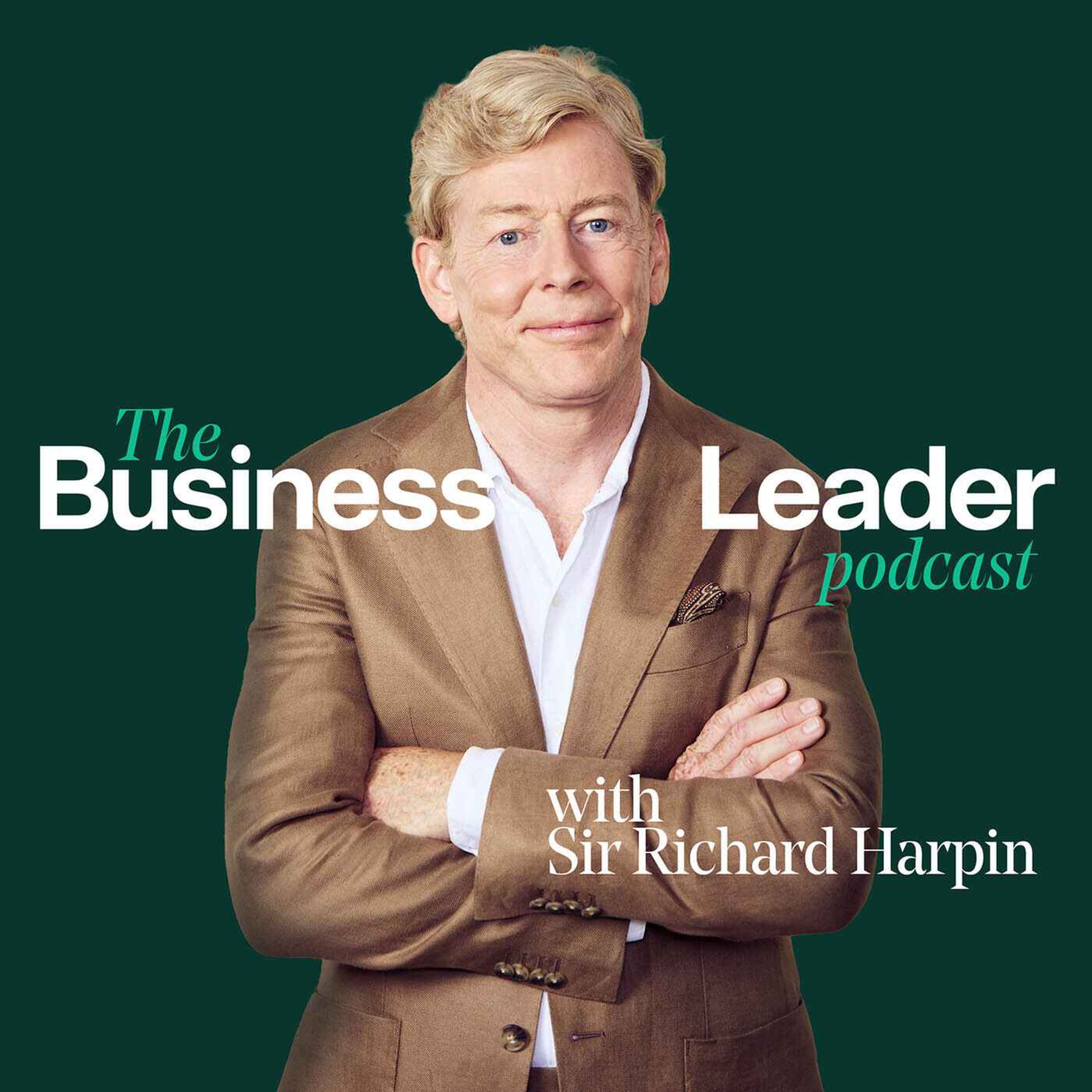
 The Business Leader Podcast with Sir Richard Harpin
20 Aug 2025 · 38m

Podcast Host: Richard Harpin
This finale explores the Exeter Chiefs' ambition for a double win, tough personnel decisions, and the anatomy of a successful turnaround.
Written by AI. May contain mistakes.

Get the gist, explore an idea or ask about something said.
 Claude
On The Business Leader Podcast with Sir Richard Harpin, what are the key points of this episode?
Searching your listeningAutomatic transcript. May contain errors.
0:00This is Britain's growth moment. Do you want to be part of it? On 26th of March, 750 of the UK's most ambitious founders, CEOs and investors will gather in London to shape the future of mid-sized business. The company's driving our nation's success. The Business Leader Summit 2026 isn't just another conference. It's a day built around the three forces that define growth, ambition, policy and capital. And as one of our valued podcast listeners, you can be there in person. To secure a discounted ticket, visit the events section of our business leader website and use this code. BL podcast, all one word, all uppercase.
0:41We look forward to seeing you there. You're so well prepped that the guys just do the same things that they've done for the first game that they do with this one. And the importance of that is like at the highest level of stress or pressure, you fall onto your highest level of preparation.
1:00strapping the left, strapping the right. All of those things were prepping them, but they were the same things that they'd done every single week before this. And that just centered them in, allowed them to zone in. And then they can release the emotion as they run out. Then it's like, okay, I've worked the whole season for this. I worked throughout COVID. I didn't see my kids. Whatever the reasons might be, then you start to see it all coming out.
1:42I'm Josh Dornbrack and this is The Turnaround, a podcast that lifts the lid on organisational change. In this series, we look to the world of sport and the remarkable story of how a team in Devon went from playing in front of a handful of spectators at a small ground to beating the odds and making it into English rugby's top flight, suffering unbearable heartbreak on the biggest stage and finally conquering all in the English and European competitions in the same season. I meet with coaches, players and those who follow the journey along the way, as well as organisational psychologists to analyse the moves they made to truly understand the anatomy of a turnaround and how you can apply these lessons to your organisation.
2:27Through visionary leadership, strategic decisions and a relentless pursuit of excellence, Exeter Chiefs rewrote their story just as any organisation can. Last time, we heard about how the Chiefs coaching staff used goals to overcome complacency and manage egos after the club won its first title, how they mentally handled the major scandal and the uncertainty of COVID. In the final episode of the series, we look at Chiefs' attempt to achieve their goal by winning the double, when to take tough personnel decisions, and break down the full anatomy of the turnaround. We pick up the story as play was due to resume after the COVID lockdown.
3:06In June 2020, and after a three-month delay in play, Premiership Rugby announced that the competition would resume in August, behind closed doors. Before the break, strong performances had put Chiefs in contention for both the Premiership and the European Champions Cup titles. Club captain Jack Yendall says that the work the team had done during lockdown had the potential to set them up for what was to come. I think we'd given ourselves such a good platform at the start of the season. We'd started off so well, like so, so well, that we then, when it started to get towards the potential of returning, Rob was very good in narrowing the focus and being like, right lads, it's a sprint finish.
3:41It is a sprint finish here and we've given ourselves a head start. Jack Knoll was another Chiefs player eager to get back on the pitch. When we were allowed to come back and we were allowed to do, you know, the social distancing, training and the tests and stuff, everybody was in unbelievable condition and everyone looked like they had just finished a 10-week pre-season. The COVID delay saw the season resume around the same time that the following season was due to start. If Chiefs were to succeed in their mission of winning the double, they'd need to play 14 games in the space of 10 weeks. Then head coach Ali Heifer knew that they had to keep things simple.
4:17Because it was a bit of a sprint to the end of the season in both competitions, our plan was to not change too much, not introduce too much, whereas I know there was a lot of teams doing a lot of extra stuff, you know, linking up with Southern Hemisphere coaches and doing a lot of work. We did the opposite. We knew it would be intense, so we consciously didn't change too much because when you add things, it takes a number of weeks for that to really come to the fore. Play resumed in mid-August. The squad's strong performances saw them finish second in the Premiership. They also made it through to the Champions Cup semi-final after a hard-fought 38-15 win against Northampton Saints.
4:58And what came next was a special highlight of Chiefs Director of Rugby Rob Baxter's coaching tenure. If there was probably a game, I think, that really defined the best of us and what you have to do to be a great team, it probably was that Toulouse semi-final. Due to COVID restrictions, the Times deputy rugby correspondent Will Kelleher was one of only a few people allowed to be in the stands to watch the game. They played a semi-final of the European Cup against Toulouse, one of the greatest sides of all time. They're like the Real Madrid of rugby. Ultimately, their team, they had obviously Cheslin, Kobe playing, DuPont, Entemac.
5:34Because of travel and restrictions and everything else, it had to get played at Sandy Park, whereas in a usual season it wouldn't have done. It would have been a neutral ground, maybe in England, but not certainly their home ground. And everything we said to Lazars was going to be important, how they could work together to challenge to lose, we pretty much committed to it absolutely flat out. And they beat them quite easily. Everything kind of paid off for us. Everything we spoke about we did in the game and we made happen. Again, it was a game that we felt very dominant in. and yeah, to get to the end of that game with a win was pretty incredible.
6:07They all really came together in that game. To watch a whole, almost like a six, seven, eight year plan come together in a game was massively fulfilling. But the game plan and boys executed it so, so well just with how hard they went about it and what a performance, what a moment in history to put in to get yourself to your first ever Champions Cup final. Three weeks later, Chiefs defeated Bath in the semi-final of the Premiership. In the space of seven days, they could achieve their goal of winning a domestic and European double. First up was a Champions Cup final against Racing 92, a French side littered with internationals.
6:44The game was taking place in Bristol, where 10 years earlier, Chiefs had risen to the top flight of English rugby. However, as it was played under heavy COVID restrictions, this wouldn't be a normal Champions Cup final. Veteran rugby journalist and Planet Sport writer Alex Spink was at the game. The European final at Ashton Gate was, I mean, remarkable in that, you know, we were only allowed in the ground, whatever it was, 45 minutes before the game, had to go in at allotted times, completely empty stadium, echoing around. The atmosphere had been created a little bit by European rugby, the banners were all up, the stadium was dressed well as if it was like the big occasion, so it had that feel about it.
7:26At the club's home ground of Sandy Park, a small viewing party of the final was hosted within COVID restrictions. We opened up one of the restaurant spaces downstairs. This is Chiefs Managing Director, Natasha Pavis. But we could only put, obviously, in their bubbles, and we had to serve in a certain way, and we had to put arrows on the floor for how they could come in and go out. And so I think we could only get a maximum of 200 people in the room to do that. So we didn't make any money. but at least he got some supporters in the building to enjoy it at Sandy Park. As the clock edged towards kick-off, final preparations got underway.
8:02A couple of players found themselves in different ancillary roles that also had important functions in making sure that the team could overcome this first hurdle. Chiefs player Gareth Steenson announced only a few months prior that he would be retiring at the end of the season. I wanted to enjoy the day because I knew I'd probably only, you know, We're staring, this is probably my second last game that I'm going to have in a rugby environment. And it's the biggest game that you can ever be involved in. A bit different because I'm on the bench. So, yes, we were very much more relaxed than, say, a couple of years previous when I was getting ready to go and play against them in Prem Finals.
8:36But still a bit of apprehension, all the things that go with it. But I wanted to make sure everybody around me was in a good space. So I had to be as good as I could be. I couldn't be a distraction. I had to make sure everybody's on task. really quite excited about the opportunity to go and again win something big. Don Almond also found himself in a different role from the one he'd had in previous finals, but he understood what the players were going through mentally. Because of Trappling Reserve, I get to take in a lot more. Like up until the warm-up is done, I'm like, I'm safe. And so once the warm-up's done and you know that it's time, you just get to observe and watch guys.
9:13And it's the same thing, like you're so well prepped that the guys just do the same things that they've done for the first game that they do with this one and the importance of that is like at the highest level of stress or pressure you fall onto your highest level of preparation right strapping the left strapping the right all of those things were prepping them but they were the same things that they'd done every single week before this and that just centered them in allowed them to zone in and then they can release the emotion as they run out because then it's like okay i've worked the whole season for this i worked throughout covid i didn't see my kids i and whatever the reasons might be, then you start to see it all coming out.
9:47The whistle blew to start the match and rung around the empty stadium as the two sides began the battle to be called the best team in Europe. Former Chiefs coach Ali Heifer recalls the event. And then just remember we started very well. We were on top very early on and through the first half. And again, probably let them back into it at points. Chiefs scored two tries in the first quarter of the game and had one disallowed. Rassing fought back with two tries of their own, before Exeter scored just before halftime to take the teams into the sheds, up 21 points to 12. Henry Slade scored just after halftime, but Rassing fought back to take the score to 28-27 in Chiefs' favour.
10:28Thomas Francis was sent off with just under 10 minutes to go in the game, to set up a nervy finish for the Devonian side. There's so many moments that probably people on the outside don't realise happened that were huge in that game. Jack Yandel again. I can't remember who's carrying, but they're about to score, and Ben Moon's assist tackled someone back over the try line. I'm talking like a blade of grass from scoring. Despite finishing the game a man down, the trust and cohesion between the players on the field would prove to be enough to get the team over the line. We relied on our forward pack at the end from getting ourselves from our own try line.
11:02We went, kick exit, penalty, got a more penalty, did it again, and before you know it, we're down there 22. Like, how much we could just rely on each other to do your own job and do it well. and that just comes from confidence of A, trusting your mate and B, trusting the system and what we had in place.
11:36Pinnacle of my career. Absolute pinnacle of my career and what a moment for the boys. What a moment for the club. you got to see guys crying hugging bringing the whole team in to have a team photo and all that kind of stuff and it was just you look at the coaches and how much it meant to them they're not necessarily going to be front and center but they have got their own reasons for celebrating because it kind of like redefines their success as a coach otherwise it's another final that you've lost and you know if you've made six finals and won none you may as well not have made any of the finals um so i think it was a really good reinforcement for them as their sacrifices their analysis, their coaching, their leadership ability was reinforced by the fact that we won that.
12:18After the European final, there was unbelievable scenes of celebration. It's just them on the pitch. I seem to remember Rob Baxter going on the phone to his wife after the game and being in tears. We had to wait in some sort of empty area of an empty stand waiting for Rob Baxter and Henry Slade. It was just surreal. It didn't change the fact that Exeter had beaten a very good, very good Racing 92 side. Despite not being able to have friends and family in the stadium, the team got special treatment on the return trip from Bristol to Exeter. And it was in lockdown and I had a message come through from the Chief Constable of Demond-Cornwall.
13:01Exeter Chiefs Chairman Tony Rowe. congratulating the team and everybody and saying that there would be a police escort waiting for us on the M5. And we drove past Columpton and all these police cars, the blue lights all the way into Exeter. There was nobody here to see it. What if you could grow your business faster just by surrounding yourself with the right people? At Business Leader, we connect UK founders and CEOs with the support they need to scale fast. That means peer group forums with experienced entrepreneurs, one-to-one coaching, live masterclasses, and real-world insights from our under-the-bonnet company visits.
13:43Whether you're stuck in the day-to-day or planning your next big leap, you don't have to do it alone. Our members include founders and CEOs you've heard right here on this podcast, and they're seeing real results. If your business turns over at least£3 million in revenue a year and you're ready to grow further, apply now for our next free growth workshop or book a consultation call. Spots are limited. Head to businessleader.co.uk to get started. The Exeter Chiefs players now had to recalibrate and prepare for the next challenge. The final of the Premiership at Twickenham, seven days later. The team had learned lessons on remaining zoned in from the first year they won the Premiership.
14:26But they had to balance celebrating winning a trophy with preparing for the prospect of winning another, which is not easy, as former Chiefs coach Ali Heifer explains. You've got to celebrate the win before, but that's not perfect prep for the week after. But mentally, you have to do that and you have to go with that. So it was very much a low-key week, actually, really recharging them mentally as much as anything. so in the early part of the week you know we played a bit of football got a loose loosen the guys off we didn't change too much we didn't train too much that week either and that was you know just to allow the guys to to recharge and hopefully hit the pitch in a good state Chiefs player turned organizational psychologist Don Armand says the squad's motivation was fueled by their mindset if you are reward centered in your approach to things when you've got that thing you've worked hard for it's really hard to keep going again but if you're privilege centered if you're responsibility centered centered it's a lot easier and so checking your motivation before you get to the the goal is really important if you've won that and you want to win the double you're going i'll celebrate this but i'm i'm done i'm doing my recovery on sunday guys that were like we've won the hiding cup that's the biggest thing in my career they perhaps would have celebrated a little bit longer recovered a little bit less and maybe not been as prepped as they could have been but i think on the whole we got it right because rob was like here's your free rein up to a point there's your free rein so if he'd said there's no free rein that may have you know disheartened some of the guys been like i really want to enjoy this so i think rob always spoke about like letting it all out so that you can then start again there's your boundary come and make sure that you switch on when you're meant to switch on and switch off when you're meant to switch off so constantly having to balance different personalities different motivations and seeing seeing how you can get the best out of guys and i think you know the key bit is is tying them back into the bigger goal the bigger goal was winning the double and i think that's the downside of sport then i heard johnny wilkinson say this on his like on the high performance interview he did on on their podcast the first 10 seconds is the best you'll ever feel after that final whistle and from then on it's just going down because you're automatically starting to think about next season next victory what's next but i also reflected on that a lot and i go but that's part of the personality type that you'll have to be able to play top end sports is if you can move on from mistakes quickly you can move on from highlights quickly so if you sit and stay in a victory for too long you get complacent so you have this ability to keep moving forward keep moving forward keep moving forward the same way that if you lose you keep moving forward keep moving forward i think that's a really good analogy for business in it like you can rest but you can't rest on your laurels because then you get complacent.
17:12So it's easy to get to the top because that's a goal. But what are you doing once you've got that goal? And often that's where people hit the stumbling block is they get their goal and they haven't thought about next because they can't move forward. The time for preparation was over. October 24th, 2020. Game day had arrived. Alex Spink was in the ground covering the final. There was this sense that this was their opportunity to put a season down in the record books that will be talked about forevermore. Club captain Jack Yandel remembers the challenging conditions on the day. That's probably the wettest game of rugby I've ever played in in my life.
17:49You're just trying to throw to each other in the warm-up. Me and Dickens have been like, what? You dry the ball, by the time you put it up your head, it's dripping wet again. You're like, oh, my days. Exeter won the toss on a blustery, wet, South West London evening. The Gallagher Premiership final. with players' voices and referees' whistles echoing around a ghostly twickenham. The Times deputy rugby correspondent Will Kelleher was also in the stands that day. It was dark and cold and wet and horrible and that kind of contributed to a bit of a slower, uglier game, I suppose. Wasps drew first blood with a penalty kick from Jimmy Goppeth with 13 minutes on the clock before a moment of quality five minutes later from two men who had come through the Chiefs Academy.
18:36Now Slade, oh he's ghosted through Henry Slade! Oh that is brilliant! Individual brilliance from Henry Slade and a try to light up a dark autumnal evening at Twickenham. Just after the half hour mark, Wasps hit back with a score of their own. Rob Serne and then the Amanda breaking through and Amanda skipping through and scoring. Oh, to cap a brilliant season. Jacob Amanga and Wasps are back ahead in the final. A penalty from Chiefs saw the teams go into half-time at 10 points apiece. The rain continued to come down hard in the second half, making play challenging for both sides. They traded penalties early on in the half, before Exeter got three points to take the lead heading into the final 10 minutes of the game.
19:27And then, a pivotal moment. Aloe Harris feeding it back to Amanga. slipping and sliding oh great and then Thomas Young again a fairly disobedient wet ball tonight but Thomas Young brought it to heel and draws the penalty it's the same as the penalty you had over there he's passed the ball isn't it? as Yandel put his hands on the floor it was never a penalty I conceded the penalty they said hands to floor when I was on the turnover on the outside you watch our back my fingers like touch a blade of grass probably the best jackal I've ever done in my career a great kick from and Wasps fly-off Jacob Umunger put them within five metres of the extra try line.
20:07It was a bit like the final that they played Wasps in all those years before. Wasps probably felt they should have won it. They had a chance right at the end of the game. This is the biggest throw of 22-year-old Gabriel O 'Gray's career. Oh, and it's been thrown straight to Johnny Gray. And all of those Wasps fans who are probably off your feet
20:38They had the wherewithal, they had the fortitude and the determination not to rest on their European laurels and to go and finish the job. And sure enough, they became only the fourth club in English history to do that double.
21:02Exeter Chiefs double winners.
21:08It's one of the most inspiring, astonishing stories of English rugby ever. European champions, premiership champions, a Devon double. Hail to the Chiefs. You've just done the double. No one can take that away from you. That's down in history. And it was unbelievable. I just remember like so many tears I said about like tears before we won the first Premiership. I'm terrible for crying when I was all over the place. Chiefs player Jack Knoll was also overwhelmed by the feeling. It's impossible to explain because now we've done it. It's one of those ones where it's like this is so rare to get to a Champions Cup final, to get to a Premiership final all in one year.
21:55So few teams have actually done it. And I think it is until now we've actually experienced it where you actually realise how hard that is actually to do and to accomplish. But that's the beauty of being naive to it and not being there. Because for us, it was just about winning every game. And we win every game, we'll win every trophy at the end of the season. It's as simple as that. The man who commentated on that final was TNT and ITV rugby commentator Nick Mullins. I think we all understood within the history of Exeter what that season meant. and doing what they did was the pinnacle of where they've been up to this point.
22:28A really strange experience, a bit like the Champions Cup final, because you have players celebrating doing the double, which is an incredible historic achievement, not just for Exeter, but for an English club anyway, to win both those trophies is so hard. And they're celebrating with themselves, but they have none of their family there. So they're kind of on the pitch, FaceTiming mum and dad and their wife and kids and things like that. It's strange because it's the biggest thing you've ever achieved. but the celebrations of all of it was so different to 2017 whereas it was a case of like celebrate with the boys enjoy each other's company have some beers on the bus ah do you mean because of all the cover restrictions that there wasn't like too much more that you could do legally in one way it was incredible just to lift the trophy just the boys that you had played with since i was six years old but at the same time it's obviously frustrating not to have had our fans there and to celebrate with my family and things like that.
23:23Such an eerie experience and a massive shame really for Exeter fans that none of them were able to see their greatest days. That double win is probably the best thing that Exeter Chiefs will ever achieve and zero fans saw either of it. So what a weird experience that must have been for people who love Exeter and have seen them all the way up through the journey. That year was mental and one that I'm never going to forget. unbelievable thing and one that I would love for this club to get back to again because you see how close the boys are now coming through there's a lot of young lads in the group now that are genuinely like a close a close group a close group of mates and it is genuinely so reminiscent of like 10 12 years ago when we all started to push through this was the closing of the chapter really they were they were just starting to have that regeneration that we talked about this team that was 10 years old now in our minds and had been establishing itself over the course of the decade.
24:20This felt like the perfect point to move on. There were players as a result of COVID and the way that clubs were having to restructure their finances. There were players who were going to be moving on. And Rob Baxter was beginning to bring in and talking about newer players. Chris Chinza, Davith Jenkins was somebody that we were starting to hear whispers about. And the role that the university was going to play, and now subsequently is, in what the Chiefs were going to be about, was beginning to come over the horizon. It was an absolute changing of what the Chiefs were about. And it was perfectly timed, because at the point they were beginning to have to start the regeneration, they suddenly said, we're going to restart it next season, having won the double.
25:06After losing the Premiership final to Harlequins the following season, Exeter Chiefs struggled to reach the dizzying heights of their double success. The club started to make wholesale changes and moved along the bulk of the team that had been there for its pinnacle moment. Exeter Chiefs chairman Tony Rowe explains. We decided, with the lack of money, we haven't got fortunes, and the salary cap, we decided to let some of our more mature players move on. But this goes deeper than just the financial imperative and comes down to something we've already discussed in this series. Chiefs Director of Rugby, Rob Baxter.
25:45The truth of it, any good organisation, any good change room, any good group of people is the momentum of the group. And we've been fortunate, it's probably the wrong word, because we've probably made sure the senior players we've worked with make sure they maintain that understanding of what does a good group feel like, that's allowed most of the time the momentum in the group to head the right way. And I'll be honest with you, the guys who fight to stay outside that are the guys we've let go. They're the guys who, over the years, are the guys who we've either been happy to move on or we've moved them on or we've released them.
26:17We probably lost the really, really positive momentum of that group, of the senior group who got to a lot of finals a couple of years ago. Coming out of winning the double, coming out of COVID, that group that had led the momentum a certain way probably started to leave the momentum the wrong way. And I think probably now in hindsight, most of them will probably see it. I'm not sure at the time they could shake themselves out of it. And actually that's probably why we needed a bit of a refresh in the end because I think too many of those guys just had different priorities for themselves, where they wanted to go in their careers, for the rest of their lives, what they wanted to achieve individually.
26:54And of course, once that momentum or that drive in the group, the senior players in that group starts to disperse, starts to get spread, you lose that direction. Speaking to Rob Baxter about the Sint, I think he felt that team had come to the end of its road. The Times deputy rugby correspondent Will Kelleher covered the team throughout the transition and spoke to Baxter about this mindset. And he found it more difficult to motivate them after they'd won the double because they'd achieved everything they'd ever dreamed of. As kids together through either the championship or they played in the Chiefs team through the academy me and grown up together and they'd done it they'd hit the top of Everest and it was very difficult he felt to find different ways of getting them back up to do it again and so there was a financial reality to it but I think almost like a sporting and motivational side too where he actually wasn't too unhappy to lose the whole squad and I think some of the players when he's said that before have taken that fairly badly because they would say well it wasn't the lack of our motivation why would we ever have not wanted to win more titles but maybe there's an intangible thing there where you can't quite get up for stuff that you've already achieved and also I think some on the player side of thing would say that setup at Exeter Chiefs has been identical for a long time and I've spoken to people around Exeter about this and they've said that even down to the meals they have at certain times of the week has been so similar for 20 years and so if you've been at at club for nine you're going yep i know exactly what's happening on monday and tuesday and wednesday and we do this on monday mornings and we do that in the down weeks where we don't have a game we do this in pre-season and it's really similar all the time so maybe there was a element there where the players needed a refresh too and a different challenge so jack knoll went off to larachelle luke cow and dickie he's ended up at sale sharks tomo flackety is another one who ended up at sale, as did Johnny Hill.
28:49Henry Slade's the great survivor, he's the one that stayed. He had a slightly longer contract than these other guys. Pretty much every single person who played in the Champions Cup final of 2020 is now not at the club, so it's been an extraordinary kind of shedding of talent. The club has struggled since its changing of the guard and hasn't finished higher than seventh on the Gallagher Premiership table. However, the club is still feeling rosy about its future. What we're now calling them is either Exeter 2.0 or Exeter even 3.0 because now what Rob Baxter is doing is basically starting the whole process again with a whole load of university kids and guys from the championship and young players.
29:28And I think he's really energised by that new challenge of can he do it again? Can he build another team? A bit like Alex Ferguson used to do with Manchester United. Or be it maybe not getting rid of an entire squad and then starting again. He did it a bit more gradually than that. The messaging is coming for Circle 2. Baxter's focuses mirror almost exactly what he did with a young squad a decade before. We understand as a coaching group, you can't add all the layers straight away. So what I would say as an example is the group of players who eventually won the double had been together, and I know there's odd guys come in for one or two years or come and go, but on the whole, that group had been pretty together for five, six years.
30:09You can add a lot of coaching layers there. You can add a lot of little detail. and so we made sure that we actually stripped a lot back made things very achievable for them went back to a little bit what i said to you when we first came in the premiership you know i remember saying to them on day one of pre-season all i'm expecting for you guys is you're better at the end of today than you're at the start we kept it very simple you're a better individual and we're a better group at the end of the week i said that we'll do that all through pre-season i said when we start pre-season games anyone who plays in that first game you just have to be a better player That's it.
30:41Let's keep this really simple. But what we want to try and do is, as I said, keep it enjoyable for them. Keep the pressure heading in the right direction that there's an understanding you learn, you improve day by day. And I kind of say you stay off the emotional roller coaster where the team win and we're all in there going mental and this is the best thing in the world. And then we lose and everyone thinks we're rubbish and we can't win another game. My job is to flatten that curve. You have to be able to deal with the highs and lows and you have to take the good bits from them and not trying to focus on the bad bits, don't you?
31:12And I think we've managed to do that pretty well as a club and as a team and as a coaching group and as a group of players on the whole. I think that's been one of our strengths, and I'm hoping that will be a strength that's going forward as we rebuild this young group. We don't ask too much of them too soon, but we also don't ask too little of them for too long. That balance is very important. But at the same time, I need them to know we're ambitious, that we're going to be a top-four team, we're going to win it one day, within their career span. Because I don't want any of these guys leaving.
31:43I want them to know they can achieve their dreams here. We knew we had some talented boys, but they're starting to mould together now and they're showing signs. They're showing signs that they could be better than the last cohort we had, you know. And as I said, you know, the last cohort won five trophies. Should have been seven, but I'm not going to mention Saracens, all right? So what makes a turnaround? Momentum is a term that's thrown around in a sporting context, but is just as important in any organisation. The words and actions of some can have an overwhelming effect on the collective. When that is heading in a good direction, innovation, collaboration and productivity thrive.
32:23However, when it's heading in the wrong direction, poor morale, burnout and disengagement can fester. For a turnaround to truly take hold, the momentum needs to be behind the strategy and the vision. The role of the leader is really to set a direction for the followers. Organizational psychologist, Graham Norris. If everybody's just milling around, you don't need a leader because there's nowhere to lead to. The vision, most importantly, and this is something a lot of people miss out on, the vision needs to be as vivid and as vibrant as what we can see right in front of us, as the present. To be motivating and compelling, it has to seem concrete and real.
33:03And so many things in the future seem more abstract, less tangible, you know, maybe pie in the sky kind of things. But to really make that vision hit home, it needs to be real, vibrant and vivid. So we really need to colour it in. It can't just be a single vision statement. It needs to have some colour there. Chiefs player turned organisational psychologist Don Armand again. Some of the biggest turnarounds are when you go and you say, what's your vision? What's everyone working for? And they go, we don't really need one. And I go, you've got team problems? And they go, yes, can you help us with that?
33:31and I say, where's your vision? What you're working towards? And there's just this lack of connection that at the end of the day, your strategy is great, but your people are what makes it. And then you need buy-in. You have to have your goals because that's how people either enjoy stress or don't enjoy stress because either way you're going to push yourself. But sometimes you lean into it and like I'm growing through this. Any good coach in sport, any good leader in business goes, this is the goal that I am setting. this is a goal that where we're going and i need you to buy in everyone goes yes i buy in or no i don't so that authenticity that determination that like i've set the expectation who is going to live up to it once people put their hand up then you go okay what are you about how are we tying in the goal together here how can i understand your personality to put you in the right place to make you 10 times more efficient because of what you bring to our collective goal that's where a lot of them go wrong is we're in sport it's kind of like i already know stepping into a team i'm there to win so they don't have to necessarily worry about that they just have to go okay now we're going to understand you we're going to pressure you some people need the negative pressure some people don't some people need a certain type of push some people don't and when you apply one size fits all that's when you go wrong because the one person that doesn't need your approach is going to have an effect on the people around them because group think and group mentality and all that kind of stuff that goes with it.
34:54But most importantly, it's how you communicate it. If you can actively understand how you communicate and what you do to elicit certain responses as a leader, that makes your ability to inspire that much more effective. Communication always comes down to it. Understanding your own energy state and your self-awareness and the message and how you give it is almost way more important than having a great strategy that's communicated badly. Followed by a culture of trust and accountability, which starts with you as a leader as graham norris explains if you have a leader who is transparent and honest and and straightforward and speaks in those kinds of terms and is very open about what they've done right but also what they've done wrong then you can see the strength in that you can see the power in that and then you can buy into the fact that that person learns and really does learn from their experiences and so you'll be happy to follow them into the future because they're someone who can really understand what's going on.
35:53And I think that's really part of when you're sharing your own kind of learning journey, that in itself can be quite awe-inspiring to say, wow, you know, they've really learned a lot from that experience. And I can learn from the way that they learn. And so, you know, when you're being honest, yes, you need to be honest. But you also need to think about how you're going to present that and how that's going to land with your team, thinking about the world as it looks like from them. And then, of course, you give them a chance to express themselves. And when they're expressing themselves, they feel heard, they feel understood, and they feel they have some sense of agency and control over what's happening to them.
36:30You don't have to come across as weak to be vulnerable. And I think that's the biggest barrier that comes in with leaders these days, especially if you are the old school generation where that was just not acceptable to be vulnerable, is there's vulnerability and weakness is unfortunately automatically paid. But you can deliver a message. one way you seem strong the other way you seem weak and you've got to think about how you can deliver a message in a strong way so rob would have stood up and be like guys i haven't said it in the right way and i understand because i don't see people buying in so they immediately he's he said you're not buying in but i recognize it's my he didn't go i'm sorry i'm not good i wasn't good enough to do this if you guys give me another chance i'll try that comes across as weak loses authenticity loses respect loses buy-in it was that ability to know how to deliver a message that as a leader he held his power and people then still respected that and wanted to follow.
37:21Was there a turnaround at Exeter Chiefs? Former head coach Ali Heifer would say no. It wasn't a turnaround in a sense because it was an ongoing process. There was a while spent in the Championship, but it was always ambitious and I think the key parts of it, obviously Rob and Tony being in place all that time has been huge. you know we're all allowed to get on with our our jobs but equally it is about a culture that is a work hard culture and and if you set yourself high standards to strive for that day in day out and that that's all it is there's no magic wand or there's no magic one thing but it's just you know living it day to day and getting that little bit better day in day out has always been the way we've really approached it.
38:13And it's simple, but it's difficult as well. You need to make sure you've got that focus. Hard work, high standards, and enjoying it along the way have been key to us. But I would suggest that's exactly what a turnaround is. It's not a golden bullet. It's hardworking individuals carefully thinking about personal and organisational improvements. It's getting buy-in. It's making difficult decisions. It's communicating a vision for the future. and it's building a culture of trust and accountability. The true power of a turnaround lies in the commitment to continuous improvement and the unwavering belief that small, intentional steps can lead to significant and lasting change.
38:55I'm Josh Dornbrack and this has been The Turnaround. Who would you like to see in future series? Let us know by emailing editorial at businessleader.co.uk
39:13The Business Leader Summit 2026 is set to be bigger, bolder and more ambitious than ever. Don't just watch Britain's growth story unfold, be part of it. Secure your ticket today by visiting the events section of the Business Leader website and using the code BLPODCAST, all uppercase. It's your chance to join the leaders who are shaping the future of business.
Hosted on Acast. See acast.com/privacy for more information.