Ask ChatGPT
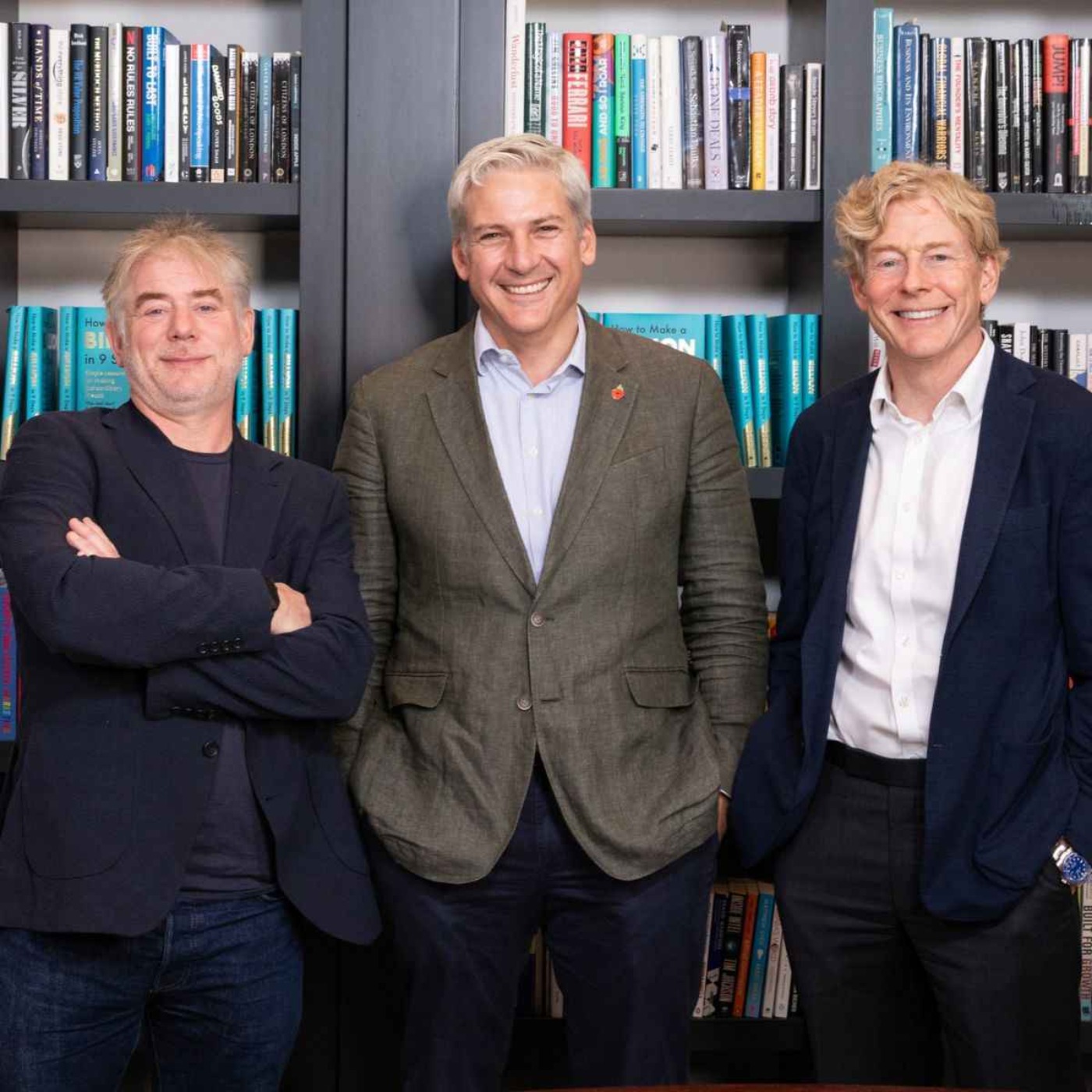
 The Business Leader Podcast with Sir Richard Harpin
5 Jun 2025 · 30m

In this episode of the Business Leader Podcast, host Dougal Shaw interviews Bruce Bratley, the founder and CEO of First Mile, a successful recycling business in the UK. Established in 2004, First Mile has grown to serve over 30,000 clients, has 200 employees, and generates an annual turnover of £50 million. The conversation covers Bratley's entrepreneurial journey, insights into the recycling industry, and practical advice for businesses looking to improve their sustainability efforts.
Written by AI. May contain mistakes.

Get the gist, explore an idea or ask about something said.
 Claude
On The Business Leader Podcast with Sir Richard Harpin, what are the key points of this episode?
Searching your listeningAutomatic transcript. May contain errors.
0:00This is Britain's growth moment. Do you want to be part of it? On 26th of March, 750 of the UK's most ambitious founders, CEOs and investors will gather in London to shape the future of mid-sized business. The company's driving our nation's success. The Business Leader Summit 2026 isn't just another conference. It's a day built around the three forces that define growth, ambition, policy and capital. And as one of our valued podcast listeners, you can be there in person. To secure a discounted ticket, visit the events section of our Business Leader website and use this code. BLPODCAST, all one word, all uppercase.
0:41We look forward to seeing you there. So we're outside a cafe here, a pretty typical small cafe on a high street. What kind of recycling would they be creating that you might work with them on? So we do work with hundreds of cafes across London. the main thing they've got is cardboard packaging waste for deliveries in, coffee cups and food waste for recycling. They'll then have a general stream for things like plastic bottles, glass bottles if they're selling glass bottles. But the main materials is going to be food waste, cardboard, coffee cups. I've come to a cafe in central London to meet Bruce Bratley, the founder and CEO of First Mile, the waste management and recycling company.
1:21I want to see firsthand how his business helps lots of businesses to manage their waste products. Are you then giving them separate bins where they can put the coffee granules and get them to do some of the sorting? Yeah, absolutely. They're doing a good degree of sorting in the first instance, and then we come and collect it and do the rest. And a small cafe like this in the city, how often would your team come and visit them for a collection? We'll come every single day because they've got such a small amount of space. They're paying a high rent. They want to maximise the retail space and minimise the space to store and sort waste.
1:53So we're doing it every day.
1:57I'm Dougal Shaw and this is the Business Leader Podcast. In this episode, we are going to get our hands dirty. We're going to meet Bruce Bratley, the man who started out doing a PhD in social science, focusing on Marxism, then went on to create a highly successful waste management company, First Mile. Founded in 2004, the company now has 30 ,000 clients, 200 employees, and it had an annual turnover of£50 million last year. It collects more than 65 ,000 tonnes of waste every year using zero and low-emission vehicles and electric cargo bikes, which it takes to recycling centres. I spoke to Bruce Bratley at his HQ in the heart of London and heard how his personal story starts on a farm.
2:45I suppose you could rewrite history as an entrepreneur in terms of your early business life but one of the amusing things is I was brought up on a farm in North Yorkshire and we were desperately trying to make money just to escape which usually involved buying a car or a motorbike. I think I got my first motorbike when I was 13 and did some creative use of the local roads without a license um and so my first business which was very much driven around that the need to have some freedom in the countryside was growing and selling cauliflowers at the end of the road um my dad used to sell potatoes um because he grew them to the passing it was up in north yorkshire in the in the yorkshire dales and um so i added to that he used to get me to run the potato stall i added to that my own cauliflowers which had grown on a bit of wasteland um and it became so popular that actually we got shut down by the police because um we we had a bit of a traffic jam up the road it was a it was it was a bit of an early version of uh Clarkson's uh farm shop I think really so too much too much success too much success at very at a very early age so you definitely had entrepreneurial instincts in the world of kind of agriculture then an interesting thing in your cv is that you went on to study at phd level environmental Marxism well I'm assuming that's not a course was that your PhD topic that you chose yes I did my first degree at Edinburgh in geography and then that was when I sort of first I mean everyone I suppose it's like you talk about the relationship with nature everyone's got a very personal relationship with nature I believe and I I'm very close to nature and I have a very personal relationship with nature and I love it I then went on to study uh geography at Edinburgh which was a I love the subject but it was also one of the few areas you could study around the environment you're either a scientist and looked into sort of parts per million of carbon dioxide and acidification and ozone holes back then or if you like me a social scientist there weren't many subjects to do environmentalism other than geography so that's sort of what led me into the into the geography area because i was very interested in environmentalism at a very early age um and then what happened at the end is i was looking to do a phd and there was one that was fully funded and actually weirdly i'm a social scientist but i'm funded by the engineering and physical research council and i did my uh phd at a in a chemistry department at surrey university and it was the first interdisciplinary environmental department still running now that was set up in the uk called the center for environmental strategy and so my phd was fully funded and and and the only condition was that i studied waste hence why we're here today got me into the waste sector, but you could do anything.
5:30And they were looking for economists, social scientists and engineers to look at different environmental aspects. An area of social geography was political economy and political ecology. And I was looking at neo-Marxist rewriting of the contradictions of capitalism to see how it could inform what capitalism was doing to nature, which was effectively destroying it. And so Marx's first contradiction was that capitalism destroyed its means of production, which was humans, by keeping them in bad conditions and polluting the air that they breathed when they went to work and ripping their arms off in factories.
6:06And indeed, there is a second contradiction, which capitalism needs nature for its ingredients to make things, but actually, unchecked, it just pushes all the externalities into nature and eventually will destroy things, which is what we're seeing at the moment with the destruction of ecosystem services like biodiversity, which we rely on, but we're just systematically destroying. And that's sort of what I was studying 25 years ago is still hyper-relevant for today. And I think the first job you did after studying at graduate level was in the world of recycling, but it was with a not-for-profit trade organisation.
6:44So was that partly because you were still fuelled by these ideas? Yeah, so I left you at the tender age of 27 and needed to get a job. And there was this new piece of legislation coming out of Europe called the Packaging Directive, which is based around the polluter pays principle, which is if you're a company putting packaging into the supply chain, so whether it was a packer filler, a retailer, a wholesaler, an importer, and that packaging ended up in the waste stream, you had to pay for contribution towards recycling. And there's this concept now that's quite widely known of producer responsibility.
7:27The first bit of producer responsibility that happened across Europe and in the UK was packaging producer responsibility. And I knew about it because I'd studied it and wrote about it in my PhD. And it was about, you know, organisations taking on responsibility for some of their externalities rather than just pumping glitter into the environment. And I needed a job, so I contacted Valpac, which initially was a not-for-profit company limited by guarantee, and said, look, I'm the only person that knows about this stuff. You need to give me a job, and they did, and I realized that. And so I built that business very quickly as a commercial director from zero up to 60%, 70 % market share.
8:05And I stayed there four or five years, but then got bored because A, I could do the job, and B, I thought the business could be a lot bigger. and I realised then there was a lot of requirement for recycling, for business recycling, and I thought I could have more purpose and impact and build a successful business outside of Valpac. So I left to do my own thing and that's where First Mile came from.
8:32First Mile is the company name, but it's also kind of a concept in recycling. What does that mean? We're called First Mile because that was the project name when I set up the business. and I got my friends who worked at Saatchi and various of the marketing agencies coming around to the house to have dinner and come up with a great name for the company. And they drank all my wine and said First Mile's a good name. So they were absolutely useless. And it was a project name because if you're looking at any logistics business or parcel delivery or connecting houses to the internet, the greatest challenge is the last mile because you can put a fibre optic down the street relatively easily you can get parcels into a distribution center but sending somebody to every single house to connect them or deliver a letter or parcel is in logistics terms the expensive thing that last mile is the expensive bit if you look at from a collections perspective in a recycling collections the real challenging bit is the first mile which is giving the customer something that they want in terms of the proposition turning up on time collecting the um collecting the waste and then getting it back into the supply chain and that was another unique area of first mile because that's what we focused on and we really just wanted to focus on what the customer needs rather than worrying about some legacy asset that we've got that we're trying to get waste to fill with we know we're trying to grab waste to to put through the legacy facility you might think if you're a small business in an inner city area the council the state will will collect your refuse your rubbish your recycling why can't it be left to them that's right it's a common misconception because some people including lots of businesses think that their waste disposal is included in their business rates it isn't at home it's obviously included in your council tax so the opportunity i saw was that when you look at the recycling market and the waste management market the large waste companies that have been established had gone after and serviced reasonably well large waste producers so factories large retailers retail parks but if you look in city centres the SME market was only really serviced by some small local providers and councils and councils always have a duty to provide a waste services because they have to be the service provider of last resort and because SMEs had been largely neglected a lot of the SMEs were serviced by councils or small local providers and they had things in common which was bad service probably high prices but importantly no one was doing any recycling and the strange thing about the waste industry and it's true today as it was then is that the waste industry has been given this responsibility to recycle and have a positive impact on the environment um but they're not necessarily that well qualified for it because they've you know if you look back at the waste industry a lot of them were farmers um who i obviously understand then they found some gravel deposits under their land they dug that out had a quarry became a family quarrying business then they had a hole in the ground to fill it with waste and they end up in waste businesses and so what I was interested in was servicing an area of the market that I could get into early on which was businesses had bad recycling and I could access SMEs more easily because I was it was a startup I didn't have any money so the SME market was loads of businesses who didn't have recycling and we were the first organization in London to offer a daily recycling service to SMEs and people have followed now but it was very very much pioneering 20 years ago but the other reason which is really really important to understand why we started with SMEs they were the only businesses who gave a shit about recycling back then big corporates didn't care now we didn't have the means to chase after big corporates but also we didn't really we weren't that relevant to them because they didn't really care and their idea 20 years ago and actually up until quite recently five or six years ago of and there's obviously some exceptions but a lot of them their idea of reducing their carbon impact was about exporting those externalities to the global south and and developing countries in the east and then saying well we've we've exported you know that we've lowered our carbon emissions in the uk which is the uk government did that as well but actually they weren't they were just sending them somewhere else uh in the in the world what's changed now thankfully and it's a really exciting time for first mile is that bigger businesses or enterprises are now super keen on delivering impact and actually wanting to look at their supply chains, their recycling, their waste, their circular economies.
13:01And so we're right in the middle of that because that's where we started. And we've always been focused on recycling and purpose-driven around recycling. And it's really the reason, not really, it was the reason I started the business because I thought I wanted to have an impact-led business. And I thought the way I could have the most impact with the resources I had, was by providing a business service because I could touch many more people. I also wasn't that interested in the consumer market and I definitely wasn't interested in academia anymore, which is why I left that. And so I didn't want to be in an ivory tower in academia, not that interested in consumers.
13:38And I felt like the way I could have the most impact to deliver the purpose I wanted to do was by servicing businesses. And I could see that there was a huge opportunity in the business waste market. And that market continues to grow and grow and grow because waste companies just aren't that good at recycling. So in those early days, 20 years ago, how did you actually go around acquiring customers? I bought a van. I hired a driver. I hired a company, a call center in, they weren't called call centers, I don't think, in Piccadilly to answer the phone. And then I hit the road doing the sales and it was literally door knocking.
14:12And I cycled around customer to customer. We had a very simple flyer, which was, you know, you can start recycling and we were a slightly lower price than the council, but a much better service because I had a call centre with nice people who would answer the telephone. And we did, and we still do today. We do really innovative things like answering the phone and replying to emails, which you'd be surprised how many companies don't do that. But we've always sold on three principles, and it's the same today as it was then, which is value, service, and the environmental planet or impact, whether you want to call it.
14:46And those three things, 20 years ago, a few people were interested in environment and usually SMEs. They all wanted a good service. And the value is always in that play. People don't want the cheapest service, but they don't want to pay a lot of money for it. It always has to be value for money. And those three areas, those three sort of buying pain points are still very relevant today with big enterprises, big corporates, as they are with SMEs. Thankfully, there's much more emphasis on environment now than there was then. and particularly for the bigger enterprise companies. Presumably, when you were trying to persuade, for example, a small restaurant in a city that they should sign up for the service, they're not just going to do it because of their conscience about the environment.
15:31Were there some practical issues like freeing up space if you have a more regular collection or something like that? Yeah, absolutely. I mean, there's two main practical reasons. One is we had more frequent collections than anybody else, which was interesting to try. I wish I could remember it was, but I had a very good sales talk about how our fleet of vehicles was very reliable. And describing a fleet of vehicles when you only have one is quite a unique set of words. So service was a really key element in terms of what we were doing. And we were much more flexible than anyone else. So in the early days of any startup, the founder like yourself is very hands on.
16:08And you're at the coalface doing all the sort of dirty things of the business. and you're also confronted with a lot of the day-to-day failures of things that are going wrong that you can fix so what kind of things were you finding that you could improve oh gosh that still goes on today I mean this is it's it's constant it's constant you know it's a it's a it's an operational business so there's lots of lots of moving parts um I think um in the early days it was really about getting enough reach into the marketplace so you've got very limited resources So what you're trying to do is talk to as many businesses as you possibly can and sign up as many as you possibly can.
16:46And reverting back to the earlier point around service, we also were delivering and we sort of pioneered this, which isn't quite right now, but it was then, which we made recycling cheaper. So people wanted to do something that was environmentally correct back then, but they also had to have another reason, which was we made it cheaper. and actually it's much more expensive to deliver a recycling service because it's much more complicated than just hauling waste and putting it in an incinerator or a landfill um and to this day recycling services are normally cheaper which is a challenge but a lot of businesses won't do it even if it's not if it's not cheaper so that was one of the other drivers so that was a challenge and particularly in the early days because we it cost us about twice as much to deliver the recycling service as it did the waste service but we had to we had to charge less for it there's And it's slightly less, but it's still less.
17:35So the early day challenges were getting enough coverage with the limited number of vehicles. And we were constantly reinvesting to try and grow the fleet of vehicles and the drivers. It was then getting enough traction with sales. And we did, you know, crazy things like we sent out. This is really before, you know, the internet, certainly before PPC. You know, we sent out like 50 ,000 faxes. I've only got one back saying, don't send us any more faxes. It's a total waste of money and a waste of time. But we're finding every time it was door knocking, it was traction, it was people were getting to see the vehicles and understand the brand.
18:07And even today, we get half of our new business just through organic leads where people have been, we've been recommended or people have seen us or they know about us. And because we stayed in a tight geographic area, people saw the vehicles more often. They saw the salespeople more often. That started to grow. I guess delivering the service and selling the service were the two challenges. but we've also since day one capture data because by its very nature, nobody measures waste, it's thrown away. And what we've always tried to do is say, we'll provide a service. It'll be a service with impact.
18:38So try and do as much recycling as possible. But then what we're trying to do is put a layer of data over the top of it. And we've actually got very good at it now, but it's still very challenging because you're collecting data from the field and any organization that collects field data that's listening will understand that that's really hard because bits of kit break and it's very difficult and unreliable. And we're trying to measure the unmeasurable. So there's no baseline data. So you're starting from zero all the time collecting data. And in the early days, we had a Nokia phone with GPRS and Bluetooth on it and an Acer tablet with a little app on it that the drivers used.
19:11And the phone was in the glove box and the tablet was on the screen. And then if the phone slid across through the side of the glove box, you'd lose Bluetooth and actually it just never worked. But we're probably on version six of our app and we get better and better each time. but it's still very challenging you know getting data from the from the field but we've stuck to that principle and as a result we've now got a data studio that's miles ahead of anybody else and that's really important now because businesses need to report on their recycling the supply chain where it's going and their scope one scope two scope three emissions which we can which we can work on and that's you know super relevant for businesses today and we have two two areas of impact one is we're offsetting carbon by recycling customers waste and recycle as much as possible it's always been our mission to do that and we can report on that and we report by individual customer individual location and you know our big customers they love it because they can get a league table and they can see you know it's pretty monge which is a customer they can see which stores or which area managers are doing better at recycling than others and so it gets quite competitive On this podcast, we're very interested in growth, business growth.
20:21And obviously, you got to the point where you knew your business idea worked. It was expanding. It was bringing in revenues. But I mean, you've got to the point today where I think your revenues are about 50 million, that kind of mark. What has allowed you to grow? Has it been acquisition or how have you done it? In the early days, it was very much around every spare penny we could. we reinvested and we reinvested in service delivery and we reinvested in growth. If I hadn't really cared about purpose and I hadn't been that bothered about service, I reckon the business is probably three times the size it is now.
20:57But what we're trying to do is to build something that is actually delivering real impact and actually delivering a fantastic service for customers. Because otherwise, what's the point, really? You just build a sort of scruffy business that makes some money. And then, you know, when you look back on your life, what have you actually achieved? So for me, it's about delivering something that's delivering real purpose and impact, but actually delivering something that customers value. And as a result of that, we get very high referrals. We get very high customers coming to us where the personnel in the business might move to a new business.
21:27And we get very strong customer referrals. You know, we haven't lost a large enterprise customer since we started winning them. They always stick with us. They always renew with us because we keep innovating and delivering value for them. And that's, you know, super important for us. so the growth element has just come from keeping customers and doing a great job and our customers are very sticky if you do that you then get high referrals but then what we've also done is we've invested in and built a very clever sales team and we haven't just got 20 sales people or 40 sales people we've got sales specialists and they're doing very specialist roles to drive the sales pipeline along to the next point.
22:09What does specialist mean in that context? So if you look at our large customers, for example, we have their account managed and we have some strategic account managers and there might not be that much growth in the account, but then all the other account managers, but they're strategically important to us, i.e. big. All the other account managers only get customers to account manage if there's growth in them. We don't spend money on looking after big customers as if the customer services team could look after them. So they're focused on growth. We then have an inbound team who are just focused on SMEs, and they're signing up businesses 10 or 15 a day, but in a couple of minutes on the phone, and they've usually got most of the information on the website, and then they call us or they've heard about us and call us.
22:50We've then, and this is since COVID, we've totally redesigned our website. So that's, we think, the only website in the UK where you can buy your end-to-end services online. So it's a full e-com platform, but it's actually integrated with our operations as well. So as soon as you sign up, you get added to a round and your service is delivered pretty quickly. And then for the larger enterprise clients, we're doing a lot of sophisticated marketing, then prospecting. Then we go through to the sort of the big business development team who will do proposals and tenders and site visits and audits to win that work.
23:28and then once it's won and we have a rollout team and it goes into account management to make sure we continue to get that growth because most of the businesses that we're signing up are growing anyway they're the successful ones. So as CEO did you have to step in and say we're going to make specialised marketing and account management a priority and kind of spend a lot of time hiring for that or how do you make it happen? So actually I hired someone 15 years ago who's my chief commercial officer Joe and he designed that entire process. I bought a little business that he was running for some other people, which was tiny.
23:59But I said, I'll take the business as long as I can get you. I mean, he was only 23 when he started working for me and he's worked for me for 15 years now. And he runs everything customer-focused, which is CST marketing and sales and account management. And he's designed that entire process, which is a very unique way of looking at it in the waste sector because most waste sales teams are field-based and they get a territory. We don't look at it like that at all. do you think by its nature in terms of what you do could you get to the size of a viola biffo or a ds smith or something like that maybe not that big um and they've they've they have a lot we we sort of describe the waste industry as sort of the legacy industry um which are those guys and then sort of the the future of waste and recycling which is first first mile the difficulty with legacy waste businesses whether they're big or small they have quite a lot of assets and equipment that isn't that useful for the future of recycling which is more segregation more recycling more technical aspects of waste management so that i think could constrain how big we get to but i don't think we really want to own legacy landfills and legacy incinerators we want to be much more specialist in terms of what we're doing those businesses also if they're turning over a billion They're actually only turning over 500 million in terms of what we do, because usually half of their business is municipal contracts doing household waste collection.
25:23So, I mean, we're targeting to get to somewhere between 200 and 300 million in the next 10 years to continue to grow. So we could get close, but not that big.
25:37Taking out the equation, the kind of profit margins and the business side of things for a second. if we just care as a society in the UK about improving recycling rates and being more efficient with our resources what things need to happen to make your life easier two things you have to look at the supply chain first so we've been very good at lightweighting packaging so we've moved from cardboard boxes for washing powder to pouches or plastic bottles to pouches and this is very good for the overall impact of packaging or materials. You know, cars are now made out of plastic and become much more lightweight.
26:15So if you look at the embedded carbon in products, we've done a lot of work and a lot of positive work on that. What it's made, what's happened though is that it's, at the end of its life, we're getting more complicated materials in the recycling stream, which are harder to recycle because we've got composites, we've got lightweight materials, we've got novel types of materials. And so I think as a society, we need to make a decision, which is do we want to look upstream at the embedded carbon and produce something that's very complicated to recycle and therefore it might not get recycled? Or do we want to try and simplify upstream and maximise recycling?
26:55And I think it depends on what you're looking at. There's different elements of it. Certainly if you're manufacturing a car, you want to look at a lower embedded carbon, and it's a big thing. therefore you can spend more time recycling it. But if you look at common packaged goods, I bowl my beer in aluminium cans because it's a lower embedded carbon and it's much easier to recycle rather than glass bottles, like massively low embedded carbon. So it's almost a question of why do we keep selling things in glass when we could sell them in aluminium cans? So I think society needs to look at the entire supply chain and make some decisions around what we're trying to do.
27:34We then also need to understand waste a little bit more which will help with the segregation of the waste. And a good example of why we don't really understand waste is we go, oh my God, it's terrible, I can't recycle my plastic. And we call things plastic. Plastic is a generic word for a multi-stream type of material. And if you just look at the common types of packaging plastics, there's five polymers, and then you've got different composite polymers, and then you've got soft plastics or plastic bags, and there's another set of polymers there as well. So actually, if we're going to want to increase plastics recycling, we need to start to break it down into more streams rather than just giving a generic name and it's a bit like turning up at a you know furniture builder and saying you know can you make me a chair out of some wood they'd say well is it oak or is it pine you know it we can't just keep calling it plastic so i think there's some knowledge is important but then fundamentally is we just need to get people to put the right thing and just make a tiny bit of effort put the right thing into the right bin and give them very clear instructions because everyone's got a different answer and i hear hundreds of different answers you know a week i saw you know an olive oil bottle at home the other day which is made of glass and it had uh it said um widely recycled remove the lid aluminium lid to recycle it um and rinse the bottle all wrong because you can't rinse you shouldn't rinse the bottle anyway because you just need to empty the bottle this idea of washing and rinsing is nonsense.
28:59You can't rinse a bottle with oil in it because oil would repel the water. So it's pointless putting it on there, even if it was right. And you need to leave the aluminium caps on glass bottles because the glass industry recycles 6 ,000 tonnes of aluminium a year, which is enough to make 100 jumbo jets because they see aluminium all the time and they're really good at extracting it. But we just universally get the wrong information out there. Despite the government spending quite a lot of money on trying to get the right messages out, we just seem to fail to do that, which is really important to do.
29:29And a closing question. Is there one piece of business advice you wish you could give yourself looking back 20 years to when you were starting out? Something you've kind of fundamental lesson you've learned along the way? Yeah, I mean, I don't think I'd change anything so I did it. But my piece of business advice is just to keep making decisions. I see people pondering, you're going to make mistakes whether you spend four days deciding to do something or you just go on and make a decision. And so you just need to accept. If you make a decision, you need to accept and move on or you need to convert it to a gift, which is usually a gift in there.
29:59And you're going to make mistakes along the way. And obviously you're trying to minimise making the mistakes, but you just need to keep making decisions and keep moving forward. The gift being the gift of a failure, which you learn from. Exactly. So, yeah. So if you make a failure, you need to go, oh, that was bad. I shouldn't do that again. Or normally there'll be a gift in there, which is, you know, my gift was never to send a fax again, you know, through the fax out the window. And I've never looked at one again since. and are happy and not having a fax machine. So there's always a gift, there's nearly always a gift in a mistake that you're making.
30:31You call it learning from mistakes, but there's always anything in there.
30:38You've been listening to the Business Leader Podcast with me, Dougal Shaw, speaking to Bruce Bratley, founder and CEO of First Mile. If you've enjoyed this, please do rate and subscribe to us wherever you get your podcasts.
30:57The Business Leader Summit 2026 is set to be bigger, bolder and more ambitious than ever. Don't just watch Britain's growth story unfold, be part of it. Secure your ticket today by visiting the events section of the Business Leader website and using the code BLPODCAST, all uppercase. It's your chance to join the leaders who are shaping the future of business.
Hosted on Acast. See acast.com/privacy for more information.