Ask ChatGPT
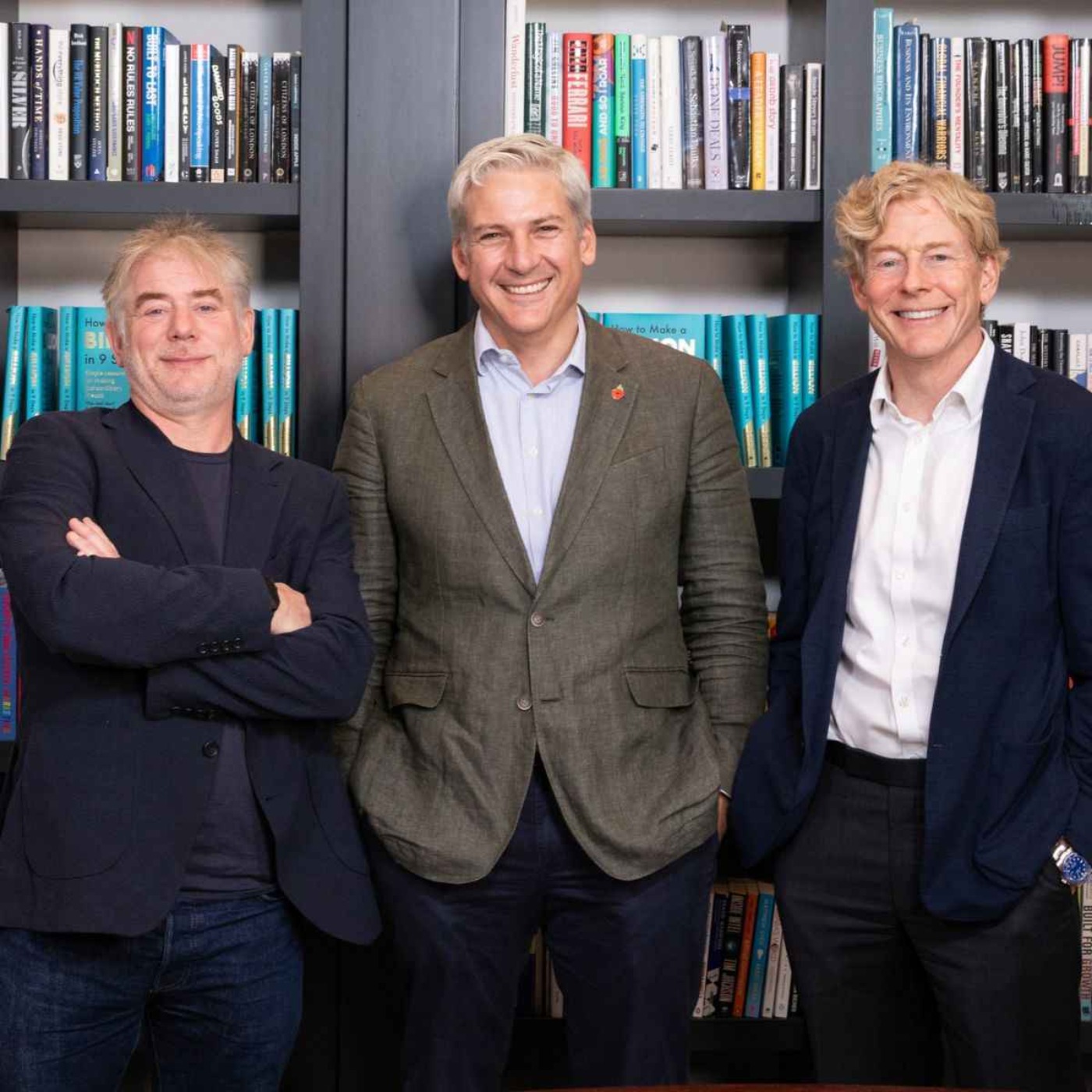
 The Business Leader Podcast with Sir Richard Harpin
14 Apr 2026 · 40m · 21 chapters

Leadership and value creation in low-margin, outsourced public and private services. Phil Bentley (Mighty Group CEO) argues leaders must raise standards, stay close to customers, manage energy, and build tech-enabled, people-first operations to improve margins and resilience.
Phil Bentley is CEO of Mighty Group for nearly 10 years; previously held senior roles including British Gas (Centrica) and earlier career at BP with international postings (China, Egypt, France, Houston oil & gas). Mighty employs ~90,000 people and is an engineering/security/hygiene provider to UK infrastructure and government.
In low-margin businesses (about 5% net margin), small pricing slips (96–97p) can halve profit. Leadership should “invert the triangle”: CEO supports execs; execs support teams closest to customers. Cyber resilience, cloud/AI systems, and workforce technology drive efficiency. Public sector outsourcing should be treated as expert work, not insourcing.
British Gas technician trust; union (GMB) enabling roster/pension changes; Mighty acquisitions (Interserve, Marlow) and COVID-era Teams deal; AI camera retail security for major chains; robots for Heathrow cleaning; apprenticeships and reforming apprenticeship levy.
Written by AI. May contain mistakes.
Learn how maintaining high standards can affect business profitability.
“I'm not going to drop my standards to meet your standards.”
Discover Phil's career progression and international experiences.
“£2 billion and keep it relevant and growing.”
Understand the key lessons Phil took from BP into his executive roles.
“But, yeah, I think that was quite a tough time across the industry.”
Explore the challenges and successes Phil faced as CEO of British Gas.
Learn about the impact of unions on employee engagement and business changes.
“2007, I joined British Gas as the managing director.”
Hear Phil's insights on joining Mighty and the turnaround strategies implemented.
“And it means that for every pound we're selling, we're making 5p.”
Understand the strategy behind refocusing on core services at Mighty.
“And today we've got about 14 % of the market.”
Discover how acquisitions like InterServe have transformed Mighty Group.
Learn how Mighty leveraged public sector synergies to drive growth.
“It had public sector, which is what we wanted to be in, and we weren't in at that point, particularly in the MOD.”
Explore the importance of cyber resilience and technology in operational efficiency.
“I'm not saying we'll never have a cyber attack because no one would ever be so foolish to say that.”
Understand the evolving role of facilities management in creating a desirable workplace.
“And generally, compliance margins are higher than facilities management.”
Discover how AI is enhancing workflow and improving service delivery.
Examine the impact of robotics on cleaning operations and workforce management.
Learn about the challenges and opportunities of engaging with the public sector.
“And all of that is where I see a big change.”
Understand the importance of apprenticeships and the challenges in the UK.
“And if you want that, you go for an expert.”
Explore how net zero goals present opportunities for innovation in construction.
“But notwithstanding that, it's about investment and return.”
Learn about the innovative security solutions Mighty provides to retail clients.
“I mean, we're the leader in retail security.”
Discover the potential for Mighty Group's growth both locally and internationally.
“And people, you know, who get on the first ladder of crime and think, well, that was OK.”
Understand the current challenges in the London stock market and advice for IPOs.
“You're running a FTSE 250 business, a public company.”
Phil Bentley shares insights on learning from mistakes in leadership and hiring.
“And in our industry, in Mighty, people who get on in Mighty, we say low ego and high impact.”
Gain valuable tips for running medium-sized businesses and focusing on customer relations.
“Yeah, 8 out of 10 is good enough for me.”

Get the gist, explore an idea or ask about something said.
 Claude
On The Business Leader Podcast with Sir Richard Harpin, what are the key points of this episode?
Searching your listeningAutomatic transcript. May contain errors.
0:02I'm not going to drop my standards to meet your standards. You're going to have to get your standards up to what I expect. For every pound we're selling, we're making 5p, and 95p is cost, but if it's 96p or 97p, it's half my profit gone. Many mistakes I've made are around people. What specifics? Holding on to people who weren't performing too long? or? That's one. You're the CEO at the top of the triangle and I always say think invert the triangle you're on the bottom of the CEO and you're there to support your exec team and the people who count the most at the top of the inverted triangle are those closest to the customer.
0:42The most important thing in leadership is managing your energy and the energy of those around you. I'm Richard Harpin and this is the Business Leader podcast, where we look at the stories and strategies behind modern businesses. Today, my guest is Phil Bentley, who has been chief executive of Mighty Group for almost a decade. This business may not be a household name, but its services are woven into the fabric of British life. It outsources key government services, including everything from facilities management of hospitals and data centres to security services for events. So what does it take to lead a FTSE 250 company employing nearly 90 ,000 people and valued at more than £2 billion and keep it relevant and growing.
1:36Phil, you're now in your 10th year as Chief Executive of MyZ Group. The business is performing extremely well, but just take us through some of the career steps and your journey to get there gosh wow well i've been working 46 years now uh richard so don't look old enough uh exactly but you know i first i left university and joined bp and um very early on i was posted to china which in those days were sort of mid early 80s was uh quite a place to be and i think that and i was posted to egypt i spent time in france and And then later on, I was in Houston in the oil and gas industry as well. So I sort of moved around a bit.
2:18And I think when you get those sort of experiences when you're young, you just sort of realise there's a whole world out there and it's not just your way, it's the only way. And the world is your oyster. And was that a big change from being born in Bradford in West Yorkshire along the road from Huddersfield where I was born? In that period of time, a lot of things have changed. You think of China, how in those days, back in those days, it would have been paddy fields. And now it's a major economy in the world. So I guess that's all progress. I don't think I'd ever say I had a life plan. I remember when I joined BP, we were all these new graduates.
2:56And one guy said, I'm going to be the chairman of BP. And I'd have been happy to get the next job. what was what was the one thing that you learned from bp that you took on to your um your next role i think what a good comp what what a good company does and how it behaves and the values and the standards that it sets and especially in something as geopolitically important as the oil and gas industry and dealing often in very sensitive locations as well just that with stewardship and responsibility and I always I know and I won't name the companies I've worked at where particular examples but I remember going to one and saying look I'm not going to drop my standards to meet your standards you're going to have to get your standards up to what I expect and then one of your big roles was chief exec of British Gas in the UK part of Centrica talk a little bit about that I think the last time I was in a recording studio it was usually Paxman or Radio 4 programme grilling me about putting up the price of gas.
3:58But, yeah, I think that was quite a tough time across the industry. But as you know, we were competing against HomeServe. In that time, we did really well. We added a lot of clients, customers. We really got our people on board, net promoter score, things that you measure, employee engagement. Everything was heading in the right direction, actually. And I left in, gosh, 2013, and we were at our peak. and actually I don't think British Gas has made the same amount of money since then in the last 12 years. And quite a bit of that money came out of the services business. Yeah, we did well. We were competing with you so you raised the bar.
4:38At one point I was trying to buy HomeServe at a small company but you had the right idea and hung on to it. But I think that man, often a man, but that engineer was very much a trusted person in the household and the British Gas technician turning it up in the home was often and getting them on board uh was it was absolutely really key because that there's such great trust with the with our customer base but also and i'm surprised i would say this though the the role that the union played and it was mainly the gmb actually was quite important because they really influenced their their membership and and they were people who work for us and so working together quite often we were working together alongside and and the idea somehow the union on the other side of the table to management there sometimes are but not always and and they were really supportive in making quite some big some big changes around the pension funds around funding around rostering in summer versus winter because we needed more hours in winter but we didn't need the hours in summer and how do we sort of get them to agree to that and i think customers that had bought home services were more loyal on their energy supply weren't they and um i used to look at you as a role model of three million customers that have got boiler breakdown cover doing about a hundred thousand boiler installs and i think you ended up copying our plumbing model and we ended up copying the boiler breakdown model and getting into boiler installs and um uh life might have been very different phil minded if you um had been able to buy home serve and it uh hadn't been deemed as too big a share of the market i would have been i could have been reporting into you oh gosh um i think you've made the right call not to sell what sort of um what sort of leader and boss would you have been you know i there's a couple of things that have always resonated with me around around leadership and uh there's a guy wrote a very thin book called future engaged deliverer a guy called steve ratcliffe who's no relation to sir jim of the same name but the idea about laying out with the start with the future and work back from the future what you want to be what what are we good at where what do we want to be when we're at our best and then engage people around that vision uh and then focus on delivery and that you need all three work working together and then build a team or build a good team around you that's that's uh as i always say build if you get better people than you around the table then with me it was never difficult to do that it was quite easy to get better people than me so we had some really good people british cast we had some really good people uh kevin wireless now mighty we've got really good people so that's half the battle and And not having your own office was one of the things I think you firmly believe in.
7:312007, I joined British Gas as the managing director. And in those days, you were down the corridor and then you'd go into the room and that would be the room of the PA. And then behind the PA, you'd finally get to the boss. And all of our people were working officers working on benches in call centres. So we benched everybody. Everybody got benched. and I was benched and I was next to my PA but on a bench and we were open. So I always felt that it created a visibility, you know, accessibility and we're all in it together. No one's more important than anybody else doing what they do. The other story I really remember and the first time we met, and you may not remember it, but we just started to have directly employed plumbers rather than subcontractors and we thought we're going to have these red, shiny red home-served vans and we met at a utility conference and um you came up to me and said um oh i've seen one of your um red home-served vans how many have you got and i remember saying thousands and you'd seen the only one that we'd got it was the the test of the first van that we'd sprayed red we did actually rebrand british gas to the lighter blue and the green sort of swirl now because the old British Gas branding hadn't changed for many many years and and it still and we did that again in the late 2000s but um they still use their branding still use the color so it's still a distinctive brand British Gas from British Gas you went to cable and wireless and then sold that business and then ended up where you are today at Mighty Group just talk about your decision to join and what you found when you got there cable wireless or at at Mighty.
9:20Yeah. I mean, so we told Cable & Wiles for$7 billion to John Malone, the Cable Cowboy, Liberty Global and Sheldon did very well and a bit like British Gas when I started at British Gas and Cable & Wiles, Mighty was a bit of a turnaround as well and I never comment on what went on before because I wasn't on the pitch and it was a different management team but we had, you know, it was a, it was a, It's a tough industry, and we might get on to that. It's a low margin, net margins of 5%. And it means that for every pound we're selling, we're making 5p. And 95p is cost. But if it's 96p or 97p, it's half my profit gone.
10:05So it's so hard being on top of a low-margin business. So it was another turnaround. It was a market. It was very fragmented. So we want to try and consolidate it. And today we've got about 14 % of the market. We had 4 % back then. And we wanted to raise the barriers to entry. We couldn't be competing with anybody who just decided to set up a small mom and pop business. And so we invested heavily in technology and the way we deployed our people and the way we interacted with our clients such that in the end, the market has become much more consolidated. And so, yes, we lose business to competitors.
10:46All of our competitors in the main are global players, but in a way that's better than lots and lots of little players in the market, in my view. And so that's been quite a big thing. We engage, again, same model, engage with the people, get behind the vision of how technology can change our industry, recognise we work best with our clients when we collaborate with them, and that our people will give their best if we show them we care about them. And that's what we do. And just talk about the range of services that Mighty provided when you first arrived there. Well, we did a lot of things. We sold, actually.
11:22We got out of pest control. We got out of post. We got out of social housing. We got out of domiciliary, health care. And we actually, probably the best deal we ever did, we sold our catering business, which is selling cups of coffee and sandwiches in the office, just before COVID. so that was quite good in a way and we've been focusing on engineering that's the main thing engineering the built environment we do a lot of energy work now we've come on to but we do engineering as a big part of business security and because we do do hygiene and cleaning you see them as a Heathrow airport and the railway stations here in Kings Cross and Pancras everyone assumes we're a clean company we are we're number one in each market but cleaning is our smallest part of our business it's about 12 of our revenue but engineering is the heartbeat of our company because that's that's the built-in environment and where people want technology really making a difference in their cost base and efficiency but didn't it take courage to sell some of those businesses because that was several different activities many chief execs think big is beautiful every entrepreneur says we must do more and you were really focused and said we want to not to do list and we're going to get out of some of these and then really focus in a way it wasn't that difficult because what we want to be is number one in each each chosen activity and we are with number one in engineering number one security by a long way everyone thinks g4s is a big company we're double the size here in the uk um and we want to be number one in cleaning as well so we're a number one we we were never going to be number one in everything so and what we've done in through acquisitions and is cemented that leadership but in in the space we're in play the game you play i would say that you say that to my kids but play do what you're good at and so m &a mergers and acquisitions has had a uh quite a big role i think you bought inter serve 270 million pound deal and marlo just talk about those well the inter it started at 270 but it It didn't end up at that.
13:31We ended up at 190, which for the seller, it didn't make me the most popular. And we bought the business in the middle of COVID when they'd had a cyber attack and we needed to refinance the business and raise equity. And we did it all on Teams, which had just the start of Teams in early 2000. And it was the making of Mighty. By then we had about 2 billion of revenue. It added a billion of revenue, so 50 % bigger. It had public sector, which is what we wanted to be in, and we weren't in at that point, particularly in the MOD. And today, it was the making of Mighty. We got a lot of the synergies out of the business, and we've kept the public sector capability.
14:19And half our business now is public sector, and MOD is by far our biggest client. And talk a little bit more then about the synergies and how they came about with InterServe. Well, you probably know all about this. I mean, call centers and productivity, truck rolls, it's all about having volume and then systems efficiency. And we'd put a lot of money into systems, and the very fact that they'd have a cyber attack says something about cyber resilience, something we take really, really seriously. And it's quite often when you talk to other CEOs and you ask them, do you know what your cyber resilience rating is?
14:59Because you can get companies to attack you and tell you where you are. And we know where ours are and we're the highest in the industry. But we put money into that. So all our systems are in the cloud. All our systems are in AI. We do patches, 24-7 patching. I'm not saying we'll never have a cyber attack because no one would ever be so foolish to say that. But we drove a lot of efficiency on the backbone of all our systems. And that was hugely important. And then, you know, shutting offices and automating workflow. And then Marlow got you into a new area? Sort of. I mean, we talk about facilities management is your core engineering, security and hygiene.
15:42And then we do facilities transformation, which is transforming the built environment. So that's doing all the energy efficiency and all the high end security. And then the last bit of facilities management, facilities transformation is facilities compliance. So what Marlow are in was compliance, what they call TIC, testing, inspection, compliance. And all the rules after Grenfell fire, rules around high buildings, rules around digital twins, rules around Manchester Arena bombing and the protect duty. There's all these regulations, rules around energy consumption reduction, rules around water now consumption reduction.
16:18And there's all these rules coming in, and that's where compliance is important. And generally, compliance margins are higher than facilities management. And that's because you can choose how much cleaning you want or how much security, but you can't choose how much compliance you want. You're either compliant or you're going to get fined. So margins tend to be higher in compliance, and they are in Marlow, and it's going to be a good business. Just talk a little bit more about technology and the importance to Mighty's growth. Facilities management increasingly is about efficiency and it's creating a great place to work, a safe place to work and an efficient place to work.
16:59And if you don't offer people that, and we talk about buildings worth the commute, if it's not worth the commute, people won't come to the office. And then if you look at the cost of the built environment, energy is really important. So you need building management systems. You need energy management systems. You've only got to look at Canary Wharf in an evening, see how many lights are on in buildings and the cost of energy. And here we are in the middle of the Iran war and the effect of energy prices yet again. So you've got to create a building where people feel safe and want to be there. And that means whether it's lighting, whether it's temperature, whether it's air quality whether if it's a if it's a critical manufacturing say pharmaceutical manufacturing you know parts per million levels of cleanliness or blade manufacturing for jet engines it's got to be a certain controlled temperature and that's why you need sensors on everything because you need to know the you know the engineered solution is working as per the spec and that's where you need a lot more technology then you need to play it back to the client and go well this is your building in sort of all the data that's going on and look at this building this versus that building and why is that more expensive or how does it compare to your competitors so that's all the stuff that technology is sort of changing the industry and can that all help you get your margins ultimately above that five percent in our dreams yeah it does because i think it's all about you've got to add value and and and it's it's a cliche but our clients want more for less and i did when i ran british gas i want i want more for less and so we're in b2b business services and we've got to give our clients value and if we're giving value and some of the things we do we make 20 margins on some of the high-end security advice that we provide to our clients is high margin uh high margin stuff so value and margin in my mind go together and what about the um robots that will be um cleaning heathrow airport and your other cleaning contracts and the role there yeah we've got we actually talk about co-botics right because it's always there's always people there as well but the and the robots were he throws the biggest robotic cleaning fleet in europe so it's big it's big um and so that clearly can drive a lot of efficiencies but it's not going to go up the stairs and in and out the looes and what have you so you've got to have the right people there to do the work together so i think it was jensen wang just said nvidia chief exec with all the impact of ai what was it advice he gave he's trained to be a plumber but you know there'll be certain jobs that they'll always need and we'll always need we employ nearly 90 000 people there might be 5 000 jobs changed 10 000 jobs but we're not not of the vast majority and so we're always going to need good people working hard and giving us a productive hour what we don't want to be doing is paying overtime for a job that can be done in the time available and we want to make sure people are productive and that's where a lot where technology can help as well the um the recent buy recommendation for the shares in the tempest column in the times recently put a big store on your focus on um ai becoming a big enabler to the business yeah we talk about mighty reimagined um we talk about how we're going to use ai to deploy workflow and but in the end you know when it gets to the technician but they might have a sort of google metaglass and they'll see what work's been done and then can record and close off jobs and save the engineer having to sort of type it all on a little pda uh work out where there might be some other work that could be done at the same time of the visit and so be much more um intelligent in the way that we deploy our our mobile workforce in the main and then and i get our engineers out and then how do we imagine hr processes because you know we've got we've got um people join us and then they leave after a certain amount of time or quite often or they're only working part-time So we've got to vet them and write to work and provide a P45 and sort the tax out.
21:22And all of that is where I see a big change. And we've got all the cameras and AI and all the technology. Everyone knows about facial recognition, but there's heuristics, behavioral and analytics. so you can see based on predictive observations on behaviours what predictive, what they're going to do next sort of thing and that can be important in certain applications. And again, that's got to help with your profitability, hasn't it? But two, will you need to share some of that efficiency savings with your big customers? We are doing it every time. Every time we rebid, we're rebidding at a lower margin and then we're working it up again And that's just that's the nature of the of what we have to do, because we're dealing with highly professional procurement departments, sixth, seventh generation of of an outsourced contract.
22:19And they know every, you know, every trick in the book. And you deal with government procurement, which can be quite challenging. So you've got to be you've got to be offering value. Many companies would run a mile from government contracts and public sector, but you embrace it. My predecessor did, funnily enough. And we often ask, do we make more money or less money out of public sector? It's about the same, because actually we're giving the same sort of service. It doesn't matter who we're giving it to. Look, I mean, we think, and this is the point we say about, again, politically, people are talking about we're going to do insourcing.
22:57and I go, well, we're not outsourcers. We're experts. We're experts in engineering. We're experts in the built environment. We're experts in security. We're experts in hygiene. And if you want that, you go for an expert. And if you're in a hospital, you don't want to be employing a load of people. You want to be getting people better. That's what you're there for. And leave our job to the experts. Some of the 90 ,000 people that you employ, Phil, are ex-military, I think. Yeah. You also do apprenticeships. programs yeah seven well we've got 1700 apprentices um some of which plumbers electricians and there's all sorts of different apprenticeships you can get uh these days we've got riggers in tell you know in telcos there's lots of um you can be even even in hygiene you can get an apprenticeship so there's there's opportunities there and military mod is our biggest client so we want to be seen to be taking military people but they're hard-working trustworthy trustworthy the reliable and follow orders and that's what we need and back to apprenticeships um do we need more in this country how can we persuade the government to help have we got the the right programs and for smaller businesses where maybe they don't have an apprentice program today how do we how do we get them to take on their first one or two apprentices well there's there's a long story about the apprentice levy which is a tax on essentially it's a tax on turnover and it's allowed to be spent for apprenticeships and we spend now about 75 percent of our levy the other 25 just goes back to treasury as a tax and you again if you ask people how much of their levy they spend some people will say it's 20 percent and the organizations that spend all their levy are the consultants and you go why is that because you used to be allowed to put people on an MBA and that wasn't what in my view what the apprenticeship was about no this was about learning trade skills and taking 16 year olds or retraining 25 year olds not pouring more money against graduates well there you go but so so there was and there were rules around what they called trailblazing you had to get a new apprenticeship you had to trailblaze and explain why this program should be qualified and it was like jumping over all these hoops and hurdles so for example rigging in telco that we have a shortage of riggers like we've got a shortage of welders and there's a lot of manual labor shortages in this in the uk and so we think and this is what we lobby for spending or making it easier to spend the levy we can actually gift the levy levy to smaller companies so we if there's companies you know we can gift them our levy or some that might be in your supply chain we do your smaller suppliers we do we do that as well but equally and we've argued so a couple things we so they used to have it used to have to be a full year program and they've reduced that now i think to eight months or seven months so that was good because we we've got say gas engineers that we're using less gas but we could train them to be solar panel installers that is not a one-year program but we can't get a levy to do that so we have to do that ourselves and the other one we'd argue is around basic literacy and numeracy for not all of our employees are english as a first language and helping them through life skills with numeracy literacy better that than sending money back to the treasury and it never get spent on skills so i'm a real you know advocate of changing the way the levy works what about net zero and meeting these new energy standards that are required by 2030 is that a threat or an opportunity well it's an opportunity for us because we are in the built environment and we need to repurpose the built environment for energy efficiency and actually they've the government recently relaxed the rules a little bit and so they pushed the data it's a bit like all the EV cars and they push that back out as well.
27:03But notwithstanding that, it's about investment and return. So LED lighting is the simplest thing you can do to get a payback quite quickly. So the panel prices are still falling. So that's still quite economic. We do heat pumps. So we've got business to do extraction of energy from waste and putting it into, we're taking heat out of effluent and put it into greenhouses to grow tomatoes. We do data centers which are highly efficient around huge consumers of energy, but highly efficient in how they use energy as well. So all of that EV charges, we do the whole lot. And we're in that because we see that as a macro trend of decarbonizing the built environment.
27:48And 40 % of our country's emissions are from the built environment, industrial buildings, as it were, offices and factories and whatnot. The other big trend is around retail crime in the UK and I think 20 million theft incidents last year. Again, that's an opportunity for Mighty? Sadly, it is. I mean, we're the leader in retail security. So we look after co-op, Boots, Aldi, Lidl, Asda, Sainsbury's, the lot. And that's because we collate. We've got all the camera feeds. We've got AI. We've got facial recognition where clients wish to trial that. We've got connections with our guards within the earphone.
28:38We've got body cameras. cameras and actually it might be just something as simple as you know heuristics behavior analytic so if somebody comes in with a backpack and a hoodie and they don't pick up a basket and they go to the booze aisle 99 times out of 100 there whatever they take off the booze aisle is going in the backpack and it might be just as simple as walking up and saying would you like a basket sir that might deter them. So it's all about being present and observing. But again, with the use of technology. With technology. And so we watch now. So in the old days, you used to have these static cameras.
29:15But now the AI cameras, because they can work out which direction they're walking in, it picks up the next camera as a seamless feed of somebody moving around the building, which is quite impressive. £4.2 billion is the cost of theft in the UK. And that's not including the shop assistants who are getting roughed up and all the other stuff that's going on. This is sort of big, organized crime. And people, you know, who get on the first ladder of crime and think, well, that was OK. Nothing happened there. So you get on the next ladder of crime. And so we need as a country to fix this because it's almost seen as a victimless crime.
29:56But it's not because we're all paying. Some companies, half of their profits are going in shrinkage. half the company's doing really well your uh your market cap the value of the business is heading towards two and a half billion pounds yeah and you're still only in the uk and ireland with those 90 000 people is there a is there an international opportunity we are technically in spain if you go to the airports in palma and madrid you'll see lots of mighty people there so say ola to them and we are also in with the british army so we're in cyprus where we're just repairing the drone damage that was done recently with the drone there.
30:37But we're in the Falkland Islands, Central Islands, Gibraltar, and Germany as well. So we're not wholly just in the UK. But your point about international expansion is a good one. There's still, we think, opportunities for growth in the UK. But it is something we look at, although we haven't said we would go big internationally. And therefore, the way we work is that we would tell our shareholders with a capital markets event, this is what we're thinking of doing before we would do it. So we're not going to surprise anyone tomorrow and suddenly announce a big deal somewhere because we won't. You're running a FTSE 250 business, a public company.
31:14And for any aspiring public company founder that wants to float their business on the stock market, what would your advice be? Do you want me to say honestly? Look, I think the days of the London market and the IPO, it's not a buoyant market today. I mean, the London market was an equity market. It was bigger than that. When I started working BP in the 80s, London was a bigger equity market than the whole of Europe put together. And today, the Amsterdam market trades more volume than London, which is just a mind-blowing thing that's happened in that time. and we can go back to ACT rules and all the tax changes and investments in the UK and everything else there's lots of reasons for it but the net is that today valuations are multiples they're quite low we trade on 7.5 times EBITDA and PE are buying businesses 14 times and 20 times and why is the Amsterdam market winning because you have the likes of CVC listed there are very sure listed there.
32:22What have they got that our market doesn't have? Well, there's a simple answer to that because in the UK you pay stamp duty, so 50 bips on every trade. And Amsterdam is free, Hong Kong is free, and the US is free. So you can start there. So there's no tax incentives to be listed. So message to government is get rid of stamp duty. That will help the UK stock market. And it's the same conversation around energy prices. Our energy prices in the UK are higher than anywhere else in Europe. And we build data centres, big consumers of data. And data centres in the UK are a lot more made to run than in France or in Germany.
33:03But in Norway, where we do a bit of work, the government is giving energy away for free. So data centres have been built where the energy is free. That is a policy for incentives and investment. And what I don't see, and this is not a political point, because we didn't see it in the previous government, is what policies are being put in place to drive what outcomes that will help investment in Britain. And that's the bit I don't see. looking back Phil on a an amazing career what have been there I think we all learn by our mistakes and I I think I've had far more than you did but what what are the one or two things that you got wrong that you you really learned from that you could share many mistakes I've made around people what specifics holding on to people who weren't performing too long or that's one what what else on people making the wrong decisions in the first place hoping it's going to turn around but it doesn't how do you avoid making the wrong decisions on hiring somebody what should um what should people do differently i think sometimes you so you sometimes if i look back where i have made mistakes it's been on sort of gutting instinct and actually there's a lot around i'm a much greater believer now of psychometric it's not the answer but it's It provides colour around strengths and weaknesses and then fit, because they might be really smart in what they do.
34:39And in our industry, in Mighty, people who get on in Mighty, we say low ego and high impact. And so you've got to really get the right fit. So it's cultural fit, understand your culture, and you've got to bring in people that will match that culture. And who are happy to roll their sleeves up and work on a bench like I do. So that's people. One other mistake. I think there's always, I think there's always the question of, we bought businesses that haven't always worked well. We bought a business that does telecoms installations on the rigging, I mentioned, from private equity. And it wasn't as good a business as we hoped.
35:16On the other hand, we bought many other businesses that have been really successful. So some you get wrong, some you get right. I think the thing as well is you've got to keep making decisions. You can't just wait. and whether you're a Kodak or whoever, companies that do nothing are taking more risks than they realise. So move with pace. And if you get a few decisions wrong, so long as they're small ones, it's better to make a wrong decision than not make a decision at all. Yeah, 8 out of 10 is good enough for me. And what's the advice on M &A? Because you've done a lot of deals. And is there any common factor in the ones that were less good buys?
35:55You know, it's quite interesting. I remember the first big disposal I was involved with was selling the AA to private equity. And we at Centrica, we'd bought it, I think, for 600 million before I joined. And then we thought if we sold it for about a billion, we'd be doing quite well. And we sold it for 1.75. So as far as I was concerned, it was a great deal. But then within two years, they refinanced it for something like 4 billion. And remember talking to the people who bought it And the work that they'd done on every aspect of the business, the books they had on pricing or customers or operations, they'd just done their homework.
36:35And so that was always a lesson for me of how done well, what you need to do to do well. So for me, if I'm buying a business, that's the level of granularity I want to see in the business plans. and where's the risk and how do we mitigate it and then who's going to execute and who's going to be responsible for it. But if you're buying from private equity and have used their playbook and have extracted growth and value out of each of those things, then maybe there's not much left to... I don't buy from private equity anymore. Yeah. That's what I've learned. It's another learning. Finally, Phil, what would be three bits of advice for entrepreneurs, chief execs, founders that are running medium-sized businesses in the UK.
37:20They're passionate about growing and they want to learn from your success and the success of Mighty. I don't know about learning from my success, but I think a couple of points. One is, I always think, whenever they do an organisation chart, you're the CEO at the top of the triangle. And I always say, invert the triangle. You're on the bottom of the CEO and you're there to support your exec team and there to support their team. And the people who count the most at the top of the inverted triangle are those closest to the customer so you've got to you've got to be able to reach in to those people closest to the customer stay closest to your customer you lose touch with the customer you know you're no good to anybody so that will be one then take care of your people who are closest to the customer and that's why i say your people will give you the best if you show them that you care for them um would be the second one and maybe the third i talked about risk don't make decisions you've you're there it's like you it's like a center forward is there to score goals the ceo is there to make decisions it's not to not make decisions and it's not to not be a safe pair of hands so you've got to take risk uh and then the last one i always remember there was a quote from peter drucker who was the harvard business school mba guru of management and he said the most important thing in leadership is managing your energy and the energy of those around you managing your energy and the energy of those around you and that's always resonated with me because you you've just got to be on it you've got it and you've got to have the people around you on it and and you can't be a drain of energy you've got to radiate energy and that is infectious in an organization and you've you've got it and that's why you've been so successful.
39:08Phil, thank you so much. I've learned a lot today and I only wish that you had become my boss and that you did buy HomeServe, although I know that Brookfield paid a better price and they're now a fantastic owner of the business. But thank you again. Congratulations to you, Richard. Well done. You've been listening to me, Richard Harpin, speaking to Phil Bentley of Mighty Group for the Business Leader podcast. Please do rate and subscribe on your podcast app. And if you visit our Business Leader website, you can sign up to our weekly newsletter to get more content like this and find out opportunities for your business.
Mitie may not be a household name, but its services are woven into the fabric of British life. It outsources key government services, including everything from facilities management of hospitals and data centers to security services for events. Its Chief Executive, Phil Bentley, who previously led British Gas, tells Sir Richard Harpin that the key to his success is 'managing your energy and the energy of those around you.' He says "the people who count the most, are those closest to the customer". As the CEO of a FTSE 250 company, Phil Bentley explains why the London equity market is valued lower than Amsterdam's and why the government needs to promote investment in Britain. He believes a leader's purpose is to make decisions and take risks, even if you make mistakes. Also, how is his company using technology and AI to fight retail crime which costs the UK £4.2bn a year?
Join the Business Leader community at Business Leader
Hosted on Acast. See acast.com/privacy for more information.