Ask ChatGPT
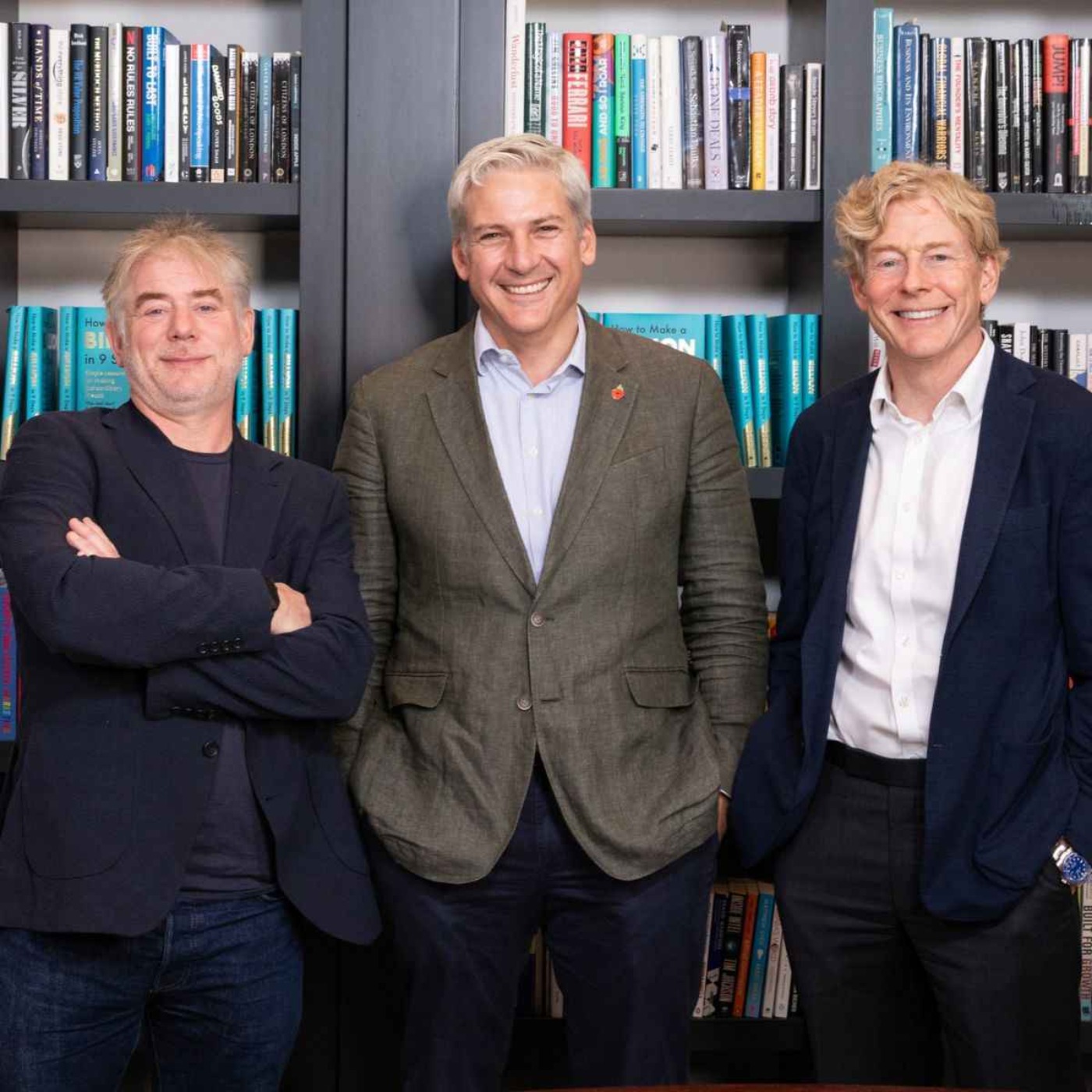

Host: Graham Ruddick
Tim Richards, Founder and CEO of Vue International
Tim Richards shares his journey of founding Vue International and transforming it into one of the world’s largest cinema chains.
Written by AI. May contain mistakes.

Get the gist, explore an idea or ask about something said.
 Claude
On The Business Leader Podcast with Sir Richard Harpin, what are the key points of this episode?
Searching your listeningAutomatic transcript. May contain errors.
0:00This is Britain's growth moment. Do you want to be part of it? On 26th of March, 750 of the UK's most ambitious founders, CEOs and investors will gather in London to shape the future of mid-sized business. The company's driving our nation's success. The Business Leader Summit 2026 isn't just another conference. It's a day built around the three forces that define growth, ambition, policy and capital. And as one of our valued podcast listeners, you can be there in person. To secure a discounted ticket, visit the events section of our Business Leader website and use this code. BLPODCAST, all one word, all uppercase.
0:41We look forward to seeing you there.
0:53Hello and welcome to the Business Leader Podcast. I'm Graeme Ruddick. In this episode, we're going to look at the story of how Tim Richards built Vue International into one of the largest cinema chains in the world. He founded the business in 1999, and today it has well over 200 cinemas across eight countries. Tim Richards is still the chief executive, who's initially a corporate lawyer in New York before he took a job in the film industry working for Warner Brothers. But being an entrepreneur was in his blood. His father and his grandfather were both entrepreneurs. So when it became clear in the 1990s that cinemas were not core to Warner Brothers, Tim Richards decided to act.
1:29The first View Cinema opened in Livingston in Scotland. I went to Viewset Office in London to find out the full story. I was selling a lot of countries worldwide for the studio at the time. And I knew that I probably realistically had probably 12 months left for the studio. So I started looking. I always had an entrepreneurial streak in me. I think it kind of maybe it came out a little bit later than my father and grandfather. But I had an entrepreneurial streak. And a lot of entrepreneurs talk about a eureka moment. And I didn't have that. I had a lot of small things that kind of added up. But I had one incident when I was at Finchley Road.
2:15And I was watching on a Friday night. Because there was a very affluent crowd from Hampstead, audience from Hampstead. who come down into it. And at the time we were using the Warner Brother characters, Daffy Duck and Tasmanian Devil and Donald Duck and everything. And it looked very nightclub-ish and it also looked very juvenile. Lights were low, very loud music, flashing lights and the cartoon characters. And this couple looked in, they clearly wanted to see a movie, but they looked in, they saw this environment, and they walked away. And I just thought, I can do this differently, I can do it better, and I can do it considerably cheaper.
3:00Because lifestyle with the studios is probably one of the few things that puts investment banking lifestyle to shame. It was extraordinary in life. It's why people don't leave. Why were you prepared to give it up? I mean, you had a glamorous life in Hollywood, as you say, and you changed it for this entrepreneurial life, which is very, very different, certainly in those early days. Why were you prepared to make the change? Well, because I didn't care. I didn't care about the corner office suites, the limos, the first-class travel. In fact, it was the opposite. I kept thinking, when are the shareholders going to wake up and see the amount of money that's being spent here?
3:42And I just thought, I can do this very, very differently. And that was really the beginning of it. And I remember I put a business plan together and I kind of shopped it around for seven, eight months. And when I left the studio, I hadn't secured funding yet because I left the studio. I had a five-year contract on my desk. I had a corner office, two assistants on the lot. and my friends thought I was insane. My family were really worried and for me it was probably one of the most exciting days of my life when I left. So it was the right time to make that move. Why did you do it in the UK? Well, I think when I look back at those early days, because I had travelled so extensively with the studios and I knew so many markets, I just saw opportunities everywhere and we are absolutely guilty of trying to do too much too quickly.
4:42And that's something that can kill a lot of young companies. We had a base in Brazil, in Japan, in Germany, in the UK, Taiwan. We were all over the place. And I realized very quickly that we had to focus on one market, get a proof of concept, get a foundation laid, and then use that to start moving out to other markets. and it was a lesson that I learned quickly enough that we were able to kind of retrench and save the company. You mentioned you left without raising the money. How then did it go with raising the money? It was eventually Boston Ventures who came in with the money. How challenging was getting that initial funding?
5:24It was horrible. Well, I was, I mean, and I didn't realize at the time because I hadn't really focused on my competition and my competition was.com And this was kind of before the dot-com crash, right before. You know, I expanded it to Paris, to New York, to LA, to Toronto, Tokyo. I had meetings with venture capitalists and private equity worldwide, all the brand names. And I can remember vividly freshly recruited MBAs in New York with venture capital firms pushing back in their chairs with their feet up on the tables. flicking their pen in the air saying, we don't look at anything under 50%. And I kind of thought, well, sorry, I can't do that.
6:12Can't promise that. And then as we know, you know, the dot-com crashed probably a few months after that kind of those episodes. But I am, I was very fortunate to get Boston Ventures, who were an amazing group who spent a lot of time getting to know the team that I put together at that point, the opportunities and the business and they were kind of we ended up being close friends and colleagues at the same time how did the first site end up being in livingston one of the disappointing things um this is kind of human nature i guess but when i left the studio uh i had a lot of friends worldwide a lot a lot of friends and friends in different places and high places.
6:56And when I left the studio, I reached out to them and I kind of said, look, this is what I'm doing. I'm really excited. We've got ambitious plans. And over half of them didn't return my calls or emails. And you realize very quickly who your true friends are. And those true friends are the ones that I stuck with. And we are still with quite a few of them even today. But it was a tough time at that point. And why that site? Why that cinema? How did you come to identify that that was a cinema? Well, with Scotland it was really just being opportunistic because I made a lot of these calls and we had a developer who we made a pitch to against the incumbents and I met with the head of Odeon at the time and we sat down and we had lunch together and I was a nobody.
7:49I was an absolute nobody. And Odeon were the biggest player at the time. And he said, it was just a courtesy lunch. And halfway through lunch, he said, look, I just want to let you know that I intend to build across the street from you at every single cinema that you build in the country. And I kind of said, well, I don't understand. You know, why? I'm a nobody. You know, I don't even have a cinema yet. And he said, I want to send a message to venture capital and private equity. this is our market and no one else is going to come in. So that's kind of what I was up against at the time. And we ended up with Livingston.
8:28And then we bizarrely had two or three sites in Scotland, which wasn't by intention. We were looking everywhere in the UK at that point. But we were lucky to get that first site down, which is always the hardest. The first cinema in Livingston went well and others followed soon after. With each new cinema, Tim Richards sought to make it slightly better than the last one, taking into account everything that the new business was learning. In 2003, Vue did something transformational. It bought the 36 Warner Village cinemas in the UK for£250 million. I realised quickly, we'd built six sites at that point, and I realised quickly that we needed scale.
9:09And we were not going to get the kind of scale that we needed by doing it organically. So we started looking at the Warner site in late 2000. We spent literally over two years on it. And this is something kind of advice for any young entrepreneurs or young companies starting out. And it sounds obvious, but you just have to watch your costs all the time. And our professional fees chasing this deal could have swamped the company if it hadn't worked. So we ran really hard for two years. And it was a tough deal because it was 36 cinemas and it was a 225 million pound deal. And we had nothing. We had absolutely nothing.
9:58And the one headline from the Times, which I actually framed and still hear, was Unknown Bit Player by Warner Brothers, which I loved because I loved being that unknown bit player, kind of the people who you least suspect will succeed. What was the key to getting that deal done? How did a bit player nobody do that deal? We hit a commercial deal reasonably quickly. I mean, we had street cred with Boston Ventures behind us. But what happened was, about a year into it, when we thought we were going to get it over and get the deal done, someone in New York at Time Warner looked at the leases and realized that they were on the hook for 25 years of lease liability at 36 sites.
10:48And they added it out to hundreds of millions of dollars. And at that point, you know, it became a major issue. So we spent an entire year trying to address that issue. And there was one last final moment when I I was visiting my mother in Vancouver Island. And I just had one of those few eureka moments that one gets about how to deal with it and wrap the deal up 24 hours later. What was the eureka moment? It was a very complex legal approach that I didn't really handicap that it was going to work. And it worked. So I got on the phone with our lawyers here and just said, look, if we were to do this and this, would that get us over there and protect Warner Brothers?
11:41And it did. It did. So it was just a little bit of luck and a lot of work that we managed to get it. You mentioned that you felt after those six slides you needed scale. Why did you feel you needed scale? Well, because we were ambitious. And with scale, you get the economies of scale for purchasing. You get the economies of scale and you're dealings with suppliers and studios and everyone. And we didn't want to be that unknown player forever. And we wanted also to look at markets outside of the UK. And we realized we couldn't do that until we had a major foundation here. Through the Warner deal and through the deals, you were able to scale the business quickly.
12:21What were the challenges that emerged from building and scaling this business that you hadn't necessarily expected? Quite a few. and some of what I was expecting because I had done M &A for quite a while and I knew from my, even from my legal practice, the importance of getting the culture right. And we were a young entrepreneurial company and when we purchased a larger corporate like the Warner Cirque at the time, culturally it was really challenging and probably a third of the office just couldn't get their head around what we were doing. and it's an entrepreneurial mentality of tube versus taxis easy jet at the time versus BA and so forth and just saving money and and looking at everything you do as if it is your money because it is how have you maintained and improved that culture over the years before it's it is very challenging I I am and I agonize over that because I want to try and instill that across the whole company.
13:27And it absolutely becomes harder. But I promised myself that if I was ever lucky enough and blessed enough to have my own company, that there'd be no prima donnas, there'd be no egos. And I think we've largely succeeded. And I think that our team right now, we get along socially and professionally. Everyone loves what they do. And I think the important part of our business, we're in a fun business. We are. It's movies. But it is a business. And I think there's a lot of people that forget that it's a business. And I've long since cared about the creative talent side of the business, which is what I saw in LA a lot.
14:09And for me, it is a business. It's a great, fun business, but that's what it is. When you're building that team and getting those sort of people into the business, obviously, a lot of that goes down to recruitment. What are some of the things you do in recruitment to make sure you're getting people that fit that culture? Well, I think that, fortunately, our head of HR, Dee Vassili, has been with me since day one. And she thinks the same way. She knows how I think, how the rest of us think. And it just, when you approach recruitment, you know, you know, when you meet someone, if they're going to be the right fit, the right chemistry for the team and whether they're going to come in and shake things up.
14:52And shaking things up sometimes is not a bad thing, but not if it's ego-driven as opposed to being constructive. So what I love is, and what we've done certainly for the last 10 years, I love marrying old experience with new blood. And that's what we've tried to do. Look in the history of this business, you've worked with a collection of different investors but managed to keep the culture and the business division very clear. What's a tip for another entrepreneur I see about how to work with investors? Because you work with venture capital, private equity, pension funds. What's the key to a strong relationship with investors?
15:28Well, I think my training with the studios, I would literally have to download everything I did every day, every week, every month to LA when I was traveling. And I think I continued with that approach with my investors. It's cliched, but bad news arriving before the good news. And being completely 100 % transparent, when things aren't going well, you let them know right away. And I think that builds up trust. And I think in the early days, I was able to choose who I wanted to work with. and my personal test was when I was kind of interviewing, it's a mutual interview with private equity and because I had control those days and I could actually decide who I wanted to work with and it's a mutual interview because you've got to sell them on the concept and equally I want to know who I'm going to work with because the level of intellect of private equity I've always loved.
16:32They're super smart guys and everyone's got money. So it's not about that For me, it's the chemistry. And my personal test was, could I see being in the trenches with them at three o 'clock in the morning? Would they keep their sense of humor? Is it somebody that I wanted to spend time with? Because private equity helped us build the company to where we are today because of those relationships. View's growth continued, and by 2019, it was delivering record annual revenues of£854 million. Underline profits were£140 million. 2019 was also the best ever year for the global cinema box office, buoyed by hits such as Avengers Endgame.
17:16But then COVID-19 struck. Not only did cinemas around the world have to close, but Tim Richards was told by View's biggest investors that they would no longer support the business. All of a sudden, Vue faced a battle for survival.
17:32Unfortunately, our two investors, our two main investors, cut and run, which is not what I'd expected. Because that was kind of one of my other tests. When things get tough, do they roll up their sleeves and jump in with us or do they run? And I'd never had this happen before. And both of our investors, unfortunately, decided to cut and run. And the one thing that I will never forget was in March of 2020, kind of in the peak of the pandemic, when things were just starting, or in April of 2020, things were starting to get a little bit better. There was a new head of private equity at OMERS. And I called him up to introduce myself and the company and what we were doing.
18:14He didn't really know us that well. And 30 seconds into the call, he stopped me and he just said, Tim, I just want to be honest with you. I don't believe in the industry. I don't believe in your company. I don't believe this is going to go anywhere. And if ever, CEOs don't get hugs very often. But if ever there had been a time when I needed a corporate hug, it was then. It was devastating and it was brutal. And as a CEO, you are on your own. And I kind of said to him, I said to him, well, if things, I said, we can agree to disagree and where the business is going, because even in those days, I believed in the future of our industry.
18:53And I said to him, if things don't go to plan, can we at least plan on you coming in and helping us out financially? And he said, I just want to be clear, not a penny. So I literally, I thanked him for his candor, because that's all you can expect from a partner. And you'd rather have that message than not. So we knew where we stood then. We knew that we were completely on our own. And I think that made it even that much more challenging than it would have been otherwise, unfortunately. And what I love is basically proving them wrong, that they should have stayed with us, and things could have been very different.
19:43The context of that conversation as well is that 2019 had been the biggest ever year for box office in cinema but the position they'd taken was a personal view of the i think there was a changing of the guard of the company and i think it was someone really wanting to come in and put their own mark on the business the private equity business and um and they did that to a lot of companies and i think they've I think I've heard that they've pretty much closed down their private equity wing in Europe now, which I'm not surprised. But there's no bitterness there because they were good investors for quite a while with us and they helped us.
20:24And I've got very good memories of working with them. It just had an unfortunate ending. So what do you do next? So your cinemas are closed. You have that conversation with your investor. How did you go about putting together the deal that would shore up the future of the company? The hardest part was, as you mentioned earlier, that we were coming off of the biggest year globally,$42.5 billion in global box office. As a company, we've always prided ourselves, if you ask around, we are really known for being highly analytical and innovative. And in 2019, it was one of those bizarre years where everything we did worked.
21:05Normally, you throw 10 things against the wall, one or two stick, you're happy, you move on. Everything worked. And we delivered record profits. We had 150 million of EBITDA. And then we had an issue in northern Italy with this virus. And then, as we know now, within three weeks, we closed down every cinema in eight countries. It was apocalyptic, and it was devastating. And it was a really tough time, really, really tough time. My personal goal was to save the company and to save the 10 ,000 employees that we had. And that's a lot to have on your shoulders at a time. But I just looked at everyone that had helped us build the company and I felt a huge allegiance to them.
21:53Tim Richards was able to shore up the future of Vue and its balance sheet by doing a deal with the company's lenders, which eventually resulted in a debt for equity swap. But with that deal in place and cinemas back open, Vue faced another challenge as a writer's strike in Hollywood delayed the release of top films. Now, however, Richards is feeling optimistic about the future of cinema again. Even the tech giants like Apple and Amazon are investing in cinemas, with Apple enjoying a big hit in 2025 with its F1 film. Netflix remains something of an outlier, but with potential mega-hits like Avatar, Fire and Ash on the way, that may not matter.
22:29I think when the history books are written and we're looking back in five or ten years on our industry, I think we will look at the end of this year with the release of Wicked and Avatar as being the end and the beginning. The end of the absolute five years of horror that we've had and the beginning of a new era in film. What is that new era? What's really exciting is that all the studios went through a difficult time as well. And they are friends and they are partners. And we're all in the same ecosystem. And they had a difficult time, as you can imagine, during the pandemic as well. They tried releasing their films onto platforms, their subscription services.
23:14They lost hundreds of millions of dollars. Every studio has come back acknowledging the 100-year-old model that's been in place, slightly tweaked, but they've acknowledged it, and are supporting feature filmmaking in record number of films. Then you had Tim Cook and Jeff Bezos come in with Amazon and Apple, who also believe in our sector and our industry, not because they like it but because they believe it drives value for their movies and they've made a huge bet and are going forward and they're going to be great partners amazon love it so much they bought mgm studios uh and uh and apple right now we know we just saw f1 come out and there's a lot more there how key was the f1 movie for apple in terms of a realization of what you're speaking about them and i think it is coming from what is now brad Pitt's highest grossing film of all time.
24:09How significant is that? I think I'd probably characterize it. It didn't have to work, but it made it easier when it did work because Apple had already had some successful films, but they hadn't hit it out of the ballpark yet. And with a movie like F1 with Brad Pitt doing over being on the right side of 500 million worldwide, I think was kind of a confirmatory message to Apple that they're going down the right path. Why, and this is a broad question, but why does cinema work? Why does cinema work financially for Apple and Amazon? What is it about the magic of this industry that means it can still thrive with streaming services around?
24:53Well, I think, I mean, at its essence, we are social beings and we love sharing a moment with others, whether they be family, whether they be friends, whether they be complete strangers. Movies are funnier, scarier, whatever, collectively, socially. So that's the kind of the core business, and that will never change. There's always going to be a demand to go out and watch something collectively. And also, it has been for 100 years, the driver of all the ancillary revenue streams. it's the kind of the the marketing activity and in one way I guess another way of looking at it is that because of the expense of launching a movie worldwide the studios have to believe in it so in a way it's a curated by the studios when they release a movie because they don't release everything obviously some of them have all there's always been made for tv movies or made for vhs or Blu-ray or DVD and now subscription services.
25:55That's always existed. But the good movies are the ones that they release. They don't always work, but they believe in them and they spend money marketing them. And that then, when it has a theatrical release, it has a massive impact on all the ancillary revenue streams. Netflix has continued to take a slightly different approach to Apple and Amazon. Do you think that'll change? No, I think certainly as long as Ted Serendos is there, it won't. I mean, Ted loves being the bad boy. He loves being the disruptor, notwithstanding the fact that many industry professionals have pointed out to him that he's leaving hundreds and hundreds of millions of dollars on the table by not releasing them theatrically.
26:39He doesn't care. I mean, he's making 50 million a year and loves being that kind of Hollywood disruptor, which he's not. And I think Hollywood is doing very well right now. I think Netflix do a very good job with TV shows, and they do a great job with documentaries. But it's very hard to find anyone that can tell you the last Netflix movie that they saw, let alone liked it. I wanted to finish by asking a few quickfire questions about entrepreneurship, if that's all right. What's the best advice you've ever been given about building a business? I wasn't given a lot of advice, and I didn't really have a mentor either.
27:21So it's a hard one. I had to learn a lot of it the hard way. The closest I had to a mentor was probably my mother and father. But I didn't have a business mentor. And I loved the fact that when I would go and visit one of the plants or companies with my father, that he'd go out onto the assembly lines and he would know every single person there. He'd ask about their kids and their grandkids and he'd know their names too. And he was a real people person and I love that. And it's a big part of business, I think, is having that kind of personal engagement. So you've learned on the job, learned from mistakes, learned from doing.
28:03I've learned the hard way. What's the biggest myth about building a business? I think that the success rate is very low for succeeding. And I think that whenever I speak to young MBAs or classes, I urge them to kind of go out and not jump into it right away. Get a grounding, get credibility, understand, because investors want something that they can believe in other than an idea. They want someone that they can trust. They want somebody that they know will see things through. And I think there's a level of maturity that helps when you jump into it. So even though now it's easier, you know, you see kind of in Silicon Valley with particularly with AI and some of the developments coming out, but I still think it holds true.
28:54Do you have any regrets or things you wish you'd done differently? There's always things, small things that you think. But I mean, I look back in the last 25 years and I know it's cliched, but luck and timing are absolutely huge. And we were really, really lucky on so many times. Things so easily could have gone against us. And yes, we worked really hard, but a lot of people work hard. You know, we were lucky and we worked hard.
29:53Summit 2026 is set to be bigger, bolder and more ambitious than ever. Don't just watch Britain's growth story unfold, be part of it. Secure your ticket today by visiting the events section of the Business Leader website and using the code BLPODCAST, all uppercase. It's your chance to join the leaders who are shaping the future of business.
Tim Richards tells the story of how he founded Vue International and built it into one of the biggest cinema chains in the world...
Hosted by Graham Ruddick
Produced by Anouszka Tate
Hosted on Acast. See acast.com/privacy for more information.