In short
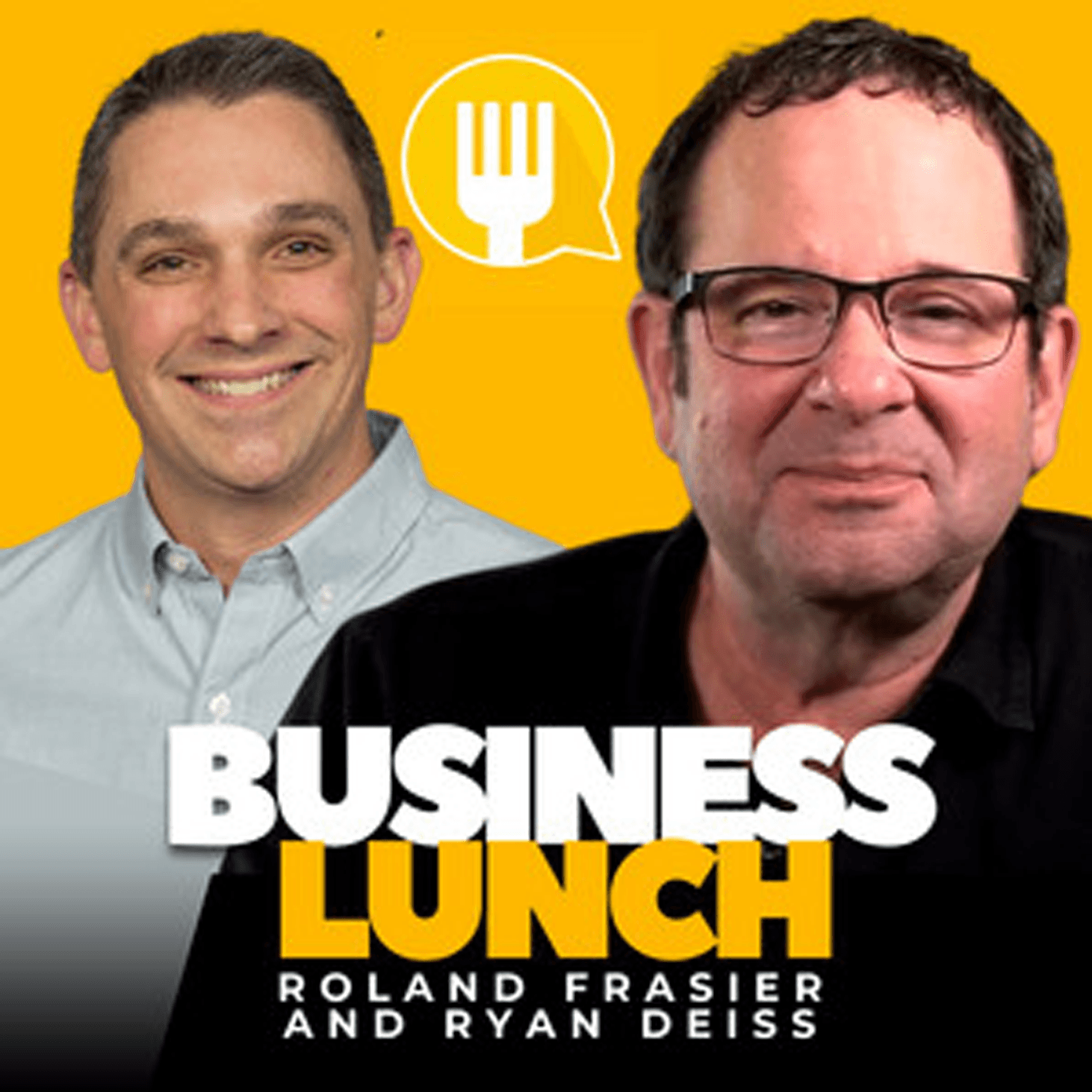
Business Lunch Podcast Episode Notes
Episode Title AI, Disruption, Sales, and the Path to Success as a Small Business
Hosts
- Roland Frasier
- Ryan Deiss
Episode Overview In this episode, Roland Frasier and Ryan Deiss explore the real challenges facing small and medium-sized businesses amidst the rise of AI and macroeconomic shifts. They discuss strategies for growth, customer acquisition, and the importance of simplicity in business offerings.
---
Key Highlights
- Resilience vs. Real Challenges: Small business owners rarely discuss "resilience"; rather, they focus on tangible challenges like revenue growth and customer acquisition.
- Simplifying Offers: A clear, straightforward offer is essential in today's market. Confusing offers can deter potential customers.
- AI as a Disruptor: AI represents a significant disruptive force in the business landscape. Embracing AI can drive changes in customer engagement and operational efficiency.
- Customer Buying Preferences: Businesses should allow customers to buy in the way they prefer for better engagement and conversions.
---
Episode Timestamps
- 00:00 - Introduction
- 01:36 - Discussion of Salesforce Report: Hype or Help?
- 03:57 - Do Business Owners Really Say ‘Resilience’?
- 05:14 - AI Adoption: Fear of Losing the Human Touch
- 07:38 - What Are the Real Top Challenges for Businesses?
- 11:07 - How Macroeconomics Impact Sales
- 15:23 - Simplifying Offers for Better Results
- 17:41 - Creating a ‘Happening’ to Re-Engage Customers
- 21:05 - AI-ifying Your Business: Pivot or Perish
- 28:04 - Acquisitions: The Private Equity Playbook for SMBs
---
Discussion Points
Salesforce Report Insights
- Discusses the top challenges faced by small businesses.
- Critique of how the report’s terminology (e.g., "resilience") may not reflect actual concerns of business owners.
Top Challenges Identified
- Increasing Sales Revenue (72% of respondents)
- Acquiring New Customers (72%)
- Keeping Pace with Changing Technology (68%)
- Competition from Other Businesses (67%)
- Retaining Existing Customers (66%)
- Hiring or Retaining Talent (60%)
- Understanding Customer Needs (60%)
The Importance of Simplicity
- Offers should be made straightforward to enhance customer understanding and acceptance.
- Example: Transitioning complex offers into simple, flat-rate pricing models.
AI Integration
- Discuss the necessity of integrating AI into business models to remain competitive.
- Consider how AI can streamline operations and enhance customer experience.
Creating 'Happenings'
- A 'happening' refers to an event or announcement that re-engages customers.
- Example: Announcing significant changes in business strategy to capture attention.
---
Key Takeaways
- Simplicity Wins: Simplified offers lead to better customer engagement.
- AI's Role: Businesses must adapt and leverage AI to thrive in a changing landscape.
- Customer Understanding: Allow customers to buy in their preferred way to enhance sales.
- Growth Through Acquisitions: Buying other businesses can solve multiple challenges, including customer acquisition and technology integration.
---
Conclusion The episode highlights the necessity for small and medium-sized businesses to adapt to the changing landscape driven by AI and economic shifts. Emphasizing simplicity in offerings, understanding customer needs, and considering acquisitions as a growth strategy are pivotal for success.
---
Additional Resources
- Ask Roland: [Business Lunch Podcast](https://businesslunchpodcast.com/)
- 7 Steps to Scalable Workbook
- Free Book: "Zero Down"
---
By following the insights shared in the episode, entrepreneurs and business owners can better navigate the challenges they face in today's rapidly evolving business environment.
Written by AI. May contain mistakes. Listen to the episode to check what was said.
Transcript
Automatic transcript. May contain errors.0:00Because we do. I mean, just for context, if you're listening to this for the first time, I mean, we have the privilege and I do consider it a privilege to get to work with hundreds of small business owners of small business owners of small business business.
0:30see? Does this match what we see? Or yeah, is it basically just a marketing piece of like, oh, this is really hard, but if you buy our software, it'd be easier.
0:41Hey, everybody. Welcome to another episode of the Business Launch Podcast with your host, Ryan Dice. Ryan, how are you today? So good. So ready for summer to be over and to get back to a regular cadence of life, which sounds stupid because when summer is getting here, I'm ready for it to begin. But man, oh man, I'm ready for everybody to get done with vacations. I hear you. I hear you. And I am Roland Frazier. Just didn't want to say that. Yeah, I'm excited for it to go because sales always kind of stink for us in the summer, right? Yeah, that's what I'm saying. So I enjoyed the vacation. I enjoyed the break.
1:22Now it's time for everybody to get back to work and to start buying crap again. I agree. I agree. So if you're out there, start buying crap again. Yeah. Nice. Ours in particular. One thing that I thought would be fun to talk about today, I just saw it come out this morning, was the small and medium business trends report by Salesforce.com. And one of the things in it, they have the SMB, small, medium-sized business leaders that talk about what is challenging them. And so it'll be fun. I haven't really gone through it yet. So I thought it'd be fun to kind of just do together and see, do we agree?
2:02Do we disagree? And is it just a bunch of stuff that's designed to sell Salesforce or is it actually useful and helpful? That would be interesting because we do, I mean, just for context, if you're listening to this for the first time, I mean, And we have the privilege, and I do consider it a privilege, to get to work with hundreds of small business owners on a fairly close basis. I mean, dozens of portfolio companies where we're really close, intimate with. And then the clients that we get to work with as well. And so I think we get to observe a fair number of trends, maybe not directly like data.
2:41So it'd be interesting to see, does this match what we see? Yeah. Is it basically just a marketing piece of like, oh, this is really hard, but if you buy our software, it'd be easier. Yeah, they did. Let me see if I can get back to that first part. They did start like what I saw was a report that they did on it that was basically the six, the seven, sorry, solving the seven biggest challenges that businesses are experiencing. and interestingly enough, they are not in order. When I look at the back of the trend report that lists how many people responded to each one and what percentage of people said this was a problem, they aren't ranked the same.
3:24And interestingly enough, Salesforce has the ability to solve the seven big challenges that are listed in the report that they sent out. So yeah, This is a coincidence, I'm sure. But their number one on their kind of what I'll call the marketing report now was building resilience during economic shifts, which I would say doesn't even come on to the list of things that I hear businesses talking about being concerned with. You? That is the stupidest thing I've ever heard in my life. I've never once in my entire life heard a small business owner use the word resilience.
4:08I think it's interesting. Like this is when as marketers, there's like, so there's a, there's a marketing lesson here. And, and, you know, so to the marketers at Salesforce, oh my God, use the words and the language that your prospects are actually using. And I don't think that there's a small business owner alive who wakes up in the middle of the night and thought, oh, I'm just struggling with the resiliency of my marketing. I'm not buying it. I am betting that resilience is not a word that's used by almost any of them ever. Yeah, actually, I'm going to read through these and you tell me like initial thoughts and then we'll go to the data where they actually list the percentage of people that said that something was a problem and it'll be fun to see, you know, where these things fall there.
4:55So ever wonder how some people build real wealth through acquisitions while others just sit on the sidelines? Well, I'm here to tell you, it's not about luck. It's about having the right system, the right deals and the right guidance. And that's exactly what we give you in the Epic Deal Fast Track. If you've been thinking about buying a business, but you keep getting stuck, whether it's finding the right deal, structuring the financing, or negotiating with sellers. You are not alone. Too many people waste months, even years, just thinking about acquiring a business while the real opportunities pass them by.
5:31The Epic Deal Fast Track is not another course. It's actually an implementation program, and it's designed to get you from the idea to the acquisition in just 16 weeks or less. We work with you one-on-one to help you find, fund, and close your first or next deal. And once you do, we're going to plug you into our elite Epic board community so that you can keep scaling through acquisitions. We install three powerful systems in your business. The first is the deal flow engine. So you always have high quality off-market deals coming to you. Number two, we give you our offer and funding system so that you can structure offers that get accepted and fund them creatively many times with no money out of your own pocket.
6:15And number three, our closing and integration system so that you don't just buy a business, you actually successfully run and scale it once you have acquired it. Plus, you'll have direct one-on-one support from an Epic Deal advisor every step of the way. And that's people that have actually come up through the system and done these deals themselves. That's the only way to become an Epic Deal advisor. And if you're serious about acquiring a business this year, don't just sit on the sidelines. Just text I'm in to 334-458-9034 and we'll get you in. So text I'm in to 334-458-9034. We'll get you in.
6:52No fluff, no wasted time, just real deal making from people that are actually out there doing deals right now. I'll see you there. Challenge number two, meeting rising customer expectations.
7:08I haven't heard it. Okay, me neither. Number three, adopting AI without losing the human touch. So you got rid of adopting AI. I haven't heard many that are super concerned about the human touch aspect of it. Small business owners are definitely worried about adopting AI and not getting behind the competition. No, it's really, you misunderstood. Those people are really talking about Rick. Rick, what was it? The guy with the human touch song back in the eighties. Yeah, I can only get Rick James in my mind, but it's not Rick James. Rick Astley? No, no, no, daggone it. Anyway, and I probably have it wrong.
7:51He did the Jesse was a friend. I can't even think of his name. Anyway. Oh yeah, yeah. Oh yeah, yeah. I just got to have Rick James in my mind and I can't get rid of him. So the other, of course, and this one I know you're going to agree with, maintaining customer trust and data security? No. If you guys are watching, like if you're listening, if you could just see Ryan's expressions to each of these. Okay. Number five. Rick Springfield. Springfield. Thank you. Five. Managing growth with lean teams. I'll give that one a 6.8 out of 10. Okay. Okay. I mean, definitely people want to manage growth and they don't want to expand their teams anymore.
8:40So I'll give that an ish, a mostly right. The funny thing to me is it's such a buzzword. It's lean teams, you know, with its specific connotations and definitions. Right. Six, standing out in a crowded digital market.
8:58Okay. Okay. Seven, and this is their last chance, scaling customer engagement across channels. I mean, fine. Yeah. I mean, fine. Like, so yes, it has gotten harder to communicate with our customers and clients across channels, especially as Apple, for example, has made cross platform pixel tracking more difficult. I don't know that that is necessarily a top seven challenge or concern. Just so we're clear, inflation, interest rates increase, none of these things. You heard the top seven. You got the top seven. So now you're good. Okay. So now I went to the back of the report. And this is the, um, in the appendix where, uh, it gives the percentage of people that said what the top challenges are.
10:00And, um, I'm actually going to scan through here real quickly. I don't see resilience in any of them. So, okay. These actually do make sense to me. Um, they're, they're not particularly in my mind insightful, but I'd love to chat about them. So So 72 % of the respondents said, and this was, I think like 30, 3 ,000 odd businesses was the sample across, you know, a bunch of countries and everything. Increasing sales revenue, number one at 72%. Tied, by the way, with acquiring new customers at number one. So increasing sales revenue and acquiring new customers, 72%. That makes sense. That's, I hear that.
10:42Perfect. Right? Yeah. Yeah. Only everybody wishes they had more sales and leads and sales. Yeah. And so do you want to go through them or talk about them each as we go or kind of run through them and then talk about them? Yeah. Hit me with what the actual stuff is. Okay. Number two, at 68%, keeping pace with changing technology. And I do get that because they're all freaked out about AI, right? It's like even to the point of doing too many AI things as initiatives without a plan and just like, must AI. guy. Totally. 67%. This is the number three competition from other businesses. Retaining existing customers is number four.
11:26Number five, hiring or retaining talent. These sound a lot more like the things I actually hear. Then keeping up with demand. So being able to service the customers they've got, which is a scale issue. Understanding customers' needs. Affording business costs. So basically things just cost too much, which would be inflation, I think, as much as anything. Providing a consistent experience and providing quality products and services. Those are all more than 60 % of the respondents. And then the last couple, personalizing customer engagements, accessing capital, complying with government regulations and industry standards, engaging customers where they prefer, which sounds like the only one that I've heard on the report that they did of seven things, finding sufficient time to manage the business, going back to scaling, and then responding to inquiries quickly.
12:16And these are all 55 % or more of the people. So more than half of the respondents had those as issues, which I, and those, that sounds like, I'm trying to think if there's anything that the only one that I don't see that we get, I think more is, um, how do I, um, how do I sell this or how do I increase the valuation of the business? Cause we, we do talk to people about that. So, so our, our world of business people probably are thinking about that more, you know, or is thinking about that more than, uh, than the average bear. So, so the first couple increasing sales revenue, acquiring customers, keeping pace with technology, competition from other businesses and retaining existing customers, all fairly related to how do I make more money?
13:07Thoughts, feelings, emotions on how they might address that? Well, I mean, what I can say is that over the past really three months, every business owner that I've talked to has struggled. Like they've all said like, wow, this has been really, really, really hard. And pretty much everybody is flat or down. And the ones that are up are either up because they have just, you know, been killing themselves to get up or they were in the kind of business where their customers pre-bought a bunch of inventory out of tariff fears. Right. So they essentially were front and loading tariff type things. And so they know that they're going to get hammered for that in the latter half of this year.
13:53And I think the reason that's happened is just kind of the chaos of the macroeconomic stuff that's been going along. So, I mean, you had you had April 2nd when all the tariff stuff was announced. There's been wars left and right. But what we have seen over the past 30 days is things calming down. And I know what we've seen in our businesses and what I've been hearing from more and more business owners is things seem to be kind of coming back a little bit. And it makes sense because frankly, when the market is up, people buy. And when the market is going in, when the market's down, people do still buy then too.
14:34They just don't spread their money around as much as they do when it's up. But they'll still buy. You just have to make sure that you're the one they buy from. It's an allocation issue. So you have to keep some consolidation. But when there's confusion, when there's chaos, everybody freezes. And I think that's where we've been. And so the advice, I guess, that I've been giving and what I've been saying to people is make sure that you don't go and change a bunch of the stuff that used to work before this period and throw it away and replace it with something that potentially works not as well, simply because there was an external factor that caused it not to work.
15:10Because we've done that a bunch of times. We've thrown out stuff that worked, replaced it with things that didn't work as well. you always get a little bit of a bump in the beginning because it's new. And that little bump in the beginning gives you that kind of false positive that can cause you to think, oh, we figured it out. But no, you didn't. And so just I would say if it's been tough, keep doing what you're doing. If it was working before, I'd say give it another 30 to 60 days if you can possibly stand it and see if it doesn't come back on its own. And I think that's good advice. I think it depends.
15:48To me, it's an allocation issue that when things get tight for the macro economy and people have fewer dollars to spend, they're going to be more careful on how they allocate them. So you have to be somehow in the list of important things that causes them to make a decision to make the allocation. And I thought it was interesting. And to me, this goes to three of the top five. It goes to increasing sales revenue, acquiring new customers, and competition from other businesses, that things have changed pretty dramatically over the last couple of years. And a lot of that has to do with AI in terms of getting customers.
16:34The things I think, it depends on the business. Like if you were selling cars before and you have your media worked out and you're competing with the three other dealerships that are the same as you for the people that are buying in your geographic area or any other business like that, I agree with what you're saying. Don't change. Do what you did. you know, it's going to come back. It's just people aren't buying as much because things are tighter. They don't have as many dollars to work with. So, you know, you're vying for them. Your best probably bet is promotions, bundles, you know, those kinds of things, customer stories to get engagement so that you can stand out and be top of mind when they do decide to make that decision or prompt them to decide to reallocate other dollars to your thing by making it an irresistible offer, right?
17:28Yeah. And that's one thing I was going to say, be the simplest offer. Like that's one change that we have made instead of trying to come up with the best, most amazing over the top offer that gets a little bit confusing and complex. We've actually been stripping things away from offers just to make them really, really, really simple to say yes to. Yeah. Because right now when everybody's kind of confused, when things are a little bit chaotic, if your offer is confusing, if it's complicated. And where I do see this a lot, frankly, is with companies like Salesforce. Like if you've ever bought enterprise software, it's confusing as crap.
18:04I mean, there's all these different features and levels and pricing options and this seat for that and this one for that. Just going to a very, very, very simple flat rate or if you have a higher ticket program, maybe switching it to a monthly flat. Just simplify and make it super easy to say yes, and then see if you can't do a land and expand or an ascension on the backend after they're already a client. That is one shift that we have made right now, not necessarily to our marketing, but to our offer structure that is getting a lot more yeses than it was before. Yeah. The other thing I would say that I've watched, try to say all my things at the same time.
18:46Um, one thing that, uh, that I thought was really interesting for us was recently we did a promotion at digital marketer and had the best month that we'd had in a few years. And, um, and so what was interesting about that was we didn't get a bunch of new people in. We just gave all the people we already had that had seen the same offers over and over and over a new thing that they could do. And there were two parts of that. One was your announcement of I'm retiring from marketing. And the second was technology related with AI. How do we take that lesson, do you think, and make that? I think if you tell the story briefly of those two things and the results, And then in terms of how does somebody use that in the current environment to accomplish, to overcome some of these challenges that we've mentioned?
19:47Sure. So for the first one, I did, I announced that, hey, I'm no longer going to be teaching marketing. And frankly, because I haven't, because I don't do marketing anymore. Like all I've ever done is talk about what I was doing and I don't do in the trenches day-to-day marketing anymore. That's what I used to do. And so that's what I talked about. Now, Roland, as you all know, we're, you know, we're running companies and we're helping business owners scale and exit. We're not really involved in the day to day in the trenches marketing. So it's not appropriate for me to teach marketing. So I basically came out and said, I'm no longer teaching marketing anymore.
20:22and what that created for our audience who kind of knows me as Ryan Dice, the marketer was a happening and a happening is simply something happened. It really is that simple. And, and the whole idea is it starts a conversation and it re-engages people. And if you have proof of this, just walk up to somebody and go, Hey, did you hear what happened? I promise you to go, no, what? And if you're like, ah, nothing, I'm just messing with you. But like you will get their attention if something happened. So the first way that you can create some sort of attention is just to create a happening. And a happening can be a new discovery, right?
21:04A happening can be a big change. You can incorporate a happening if something happened out there in the world. You can talk about how this thing that happened actually does matter to your business or to your audience, but just to bring something new and novel into your community, that's the first thing that you can do to get people's attention. And that's what we did there. So we leveraged the happening of my retirement, which doesn't really matter that much to people. No, not really. Not really. I mean, does the fact that I've decided I'm not teaching marketing, I mean, I guess it matters to some people, but does it really?
21:38No, it doesn't actually matter, but it was something that happened. And so it was a resetting and a recapturing of attention. The second piece, really, I think is just as simple as the, you know, we could talk about shifting and taking something that was old and making it new. But I think right now today, it really is as simple as AI-ifying things. I mean, right now there are a lot of businesses that are being rendered obsolete because of AI. And that was certainly the case for digital marketers training products, their training products. People don't want to learn digital marketing. They don't need to learn digital marketing anymore because AI will just do it for them.
22:20And so what we needed to do was to pivot and to restructure that entire product line instead of saying, we'll teach you marketing to, we will just give you our trained AI bots, agents, GPTs, pre-trained bots, agents, you know, and GPTs. Now all of a sudden people went from, I don't need this. I don't want this to, oh my gosh, I absolutely need this and want this. So the second thing that you can do is just say, if frankly, you're kind of getting disrupted because of AI, which is the single biggest disruptive event that any of us have ever experienced in our life, more disruptive than the internet, more disruptive than social.
22:57Then I do think asking the question of how can I AI-ify my business is a very, very important question to ask. So we incorporated happening and we AI-ified. And those two things combined, yeah, gave us the best month we'd had in years. Yeah. And so if we kind of try to expand that, let's say that you've got a service business, let's start there because I feel like that's the easiest. Then what's the happening that you could talk about? It could be related to the AI. It could be, you could play off of what Ryan did. you could retire from accounting because now you're in the business of strategic planning or something like that.
23:41If you're an accountant or if you're an attorney, you could say, we will no longer be doing, it's no longer business as usual. I guess that would be the, like, how can you come up with an angle that we're not doing this anymore because we've evolved and that separates you from the competition into the, the now, uh, that, that to me, you know, like into what's going on and what's in people's mind. So I like looking at these things that, that come out, especially when they're not marketingified and they're the actual results from, you know, these are the things that 3000 plus business owners say are challenging and then say, okay, how can we help people increase sales and acquire new customers?
24:20And we could basically say we're retiring from lead gen as you know it. It could be as you know it might be a good way to tag onto whatever you do. I'm retiring from accounting as you know it. We're no longer going to be accounting the same way. We now use AI to analyze all of your expenses and data that you give us. And we upload your last year's tax return and create a strategic plan for you that's optimized by 10 billion hours of internet knowledge. Something like that. I like that as as you know it, I'm retiring from this as you know it is easy because if you were an accountant and you said, I'm retiring from accounting, your people might go find another accountant, which would be bad.
25:00Yeah. And that's why the framework of the happening is something happened, which means, and therefore. So something happened because of the emergence of AI, we're retiring retiring from accounting as we know it, which means we're able to deliver a higher degree of service. And therefore, we can now do the following things for you at even better rates. Yeah. Yeah. Let's have a follow-up meeting. Right. And so now there's a call to action. So think about that. It's not just this thing happened. All right. See you later. Right. It It needs to be something happened, you know, which, which means this change is occurring and this is how we're adapting.
25:48And therefore, in the end, therefore, this is how it applies to you. So just remember that, that basic structure and framework. Yeah. And then like, as far as acquiring new customers and increasing sales revenue, which were the two that were tied for number one, I just got off a meeting. That's a weekly meeting that one of our, our port codes has. And we were looking at day over day sales. And I'm looking at sales are hundreds of thousands of dollars a day, five days a week, and then fall to almost nothing on two days a week. Well, the two days a week that they fall to almost nothing are weak ends when we don't have people in the office.
26:25And I ask, why don't we have people in the office? Because our customers are the type of customer. They're not business customers. They're customers that are available and interested in talking during the weekends and might be working other jobs because we're helping them start new businesses. So maybe they're working a job nine to five during the week, which is the only time they can talk to our people. It's not nine to five, but basic business hours or business days anyway. And now we don't, but we don't make any effort or availability to talk to them during those other eight days a month, eight days a month.
Read the full transcript
27:05If we could get an extra, you know, just over, what is it? $133 ,000, you know, a day, which would be less than we're selling on those other days. During those eight days, we make an extra million dollars a month. You know, that's like a$12 million change to the business just by thinking about doing things differently. And then how do, so that's a, how do I acquire new customers and increase sales revenue? And then if you want to put the tech stack on top of that, how do we get more people talking to our, you know, talking, how do we get more people to the point where they're making a buying decision with us?
27:42And that's really, to me, the easiest, best way to do that right now is either add a sales team if you don't have one in any business you've got. And I want you to argue with me about this, Ryan, because that seems to be the single biggest change across every business we've got to have an actual sales team that is outbound talking to customers and closing them as opposed to just hoping they'll walk in the door and buy the thing that's on the shelf or hoping that they'll see the ad online and click on the site and buy from the site. That's just not as effective, particularly as you get into slightly more expensive things.
28:24But let's talk about that for a minute. Yeah, well, it's funny. In the businesses that previously were just a go buy something, so just a direct purchase, we added sales teams and it completely changed everything. But we also had a number of businesses that have only ever been sales by a sales team. And now what we've been doing is saying, how do we make it possible to have a frictionless experience where the people who do just want to go and buy something without talking to somebody? How do we make that happen? And so we've begun implementing that this month. And that's been effective as well.
29:00I think I think really the lesson is people like to buy in different ways. And so to think about all the different ways that people like to buy and to make those available at the right time, because you don't want to necessarily, you know, show everybody all your price points in your entire product line to, you know, super early in the process. We actually had some salespeople that were doing that and it was terrible. Yeah, that's a bad idea. But there are times when it can be appropriate to give somebody the opportunity to receive an offer and to make a decision without necessarily having to get on the phone.
29:31So I think, yes, adding a sales team, adding that direct sales outreach is almost always going to make you more money if they're well trained, if they're well managed. But the inverse is also true. And I think the lesson here is try to let people buy the way that they want to be the way that they want to buy. Yeah, I love it. I also love that. I just want to point out that your, your idea for increasing sales is essentially, if you're not going to come in on Saturday, don't bother coming in on Sunday. That just is amazing to me. Right. Right. Yeah. It's genius. So, so then speaking to the, to all seven of these, the, the top seven increasing sales revenue, acquiring new customers, keeping pace with changing technology, competition from other business, retaining existing customers and hiring or retaining talent.
30:23One of the things that we do that is from the private equity playbook is we acquire other businesses. And so all of these things, all of these challenges can easily be solved through acquisitions. You can get instantly new customers, new revenue. You can acquire other people's technology. You are acquiring literally your competitors. When you do this kind of stuff, you are retaining existing customers by bringing new things into the fold and you get the hiring and talent that exists in the other company to help yours, you know, either supplement it, you know, help you keep up with demand, et cetera.
31:03So like it, it solves all of those problems or it certainly addresses all of those problems. So that's something that if, if you haven't thought about, I think acquiring a business can really help with a lot of these challenges. And I don't think acquisitions are, are really top of mind for a lot of entrepreneurs. They're thinking more ads, right? I get more customers, buy more ads. How do I get more ads? Or I need to start content marketing. Like something that like, like if you want the guarantee, because ads aren't guaranteed to generate new business and be successful and neither is content marketing.
31:38And it's a long game to do content marketing and neither is biz dev, right but you know what does get you instant customers and technology and people and all of that buying a business already has all that stuff so i think that should be really high up on the list of solutions for how to meet some of this stuff what are your thoughts on it it does have a fixed known cost as well right like you know exactly what it's going to cost when you when you get into it so um the other thing by the way that can help tremendously with retention is winning. In general, if the businesses that we've had that were growing steadily, we typically didn't have massive retention issues.
32:20I mean, even if people are trying to poach, you do run into that. There's no doubt about that. And so you get a little bit of that, but usually it's fairly easy to get the people to stay because if you're growing as a business, then people are getting promoted. You're constantly providing the best opportunity for them. So I would say the best avenue to improve employee retention goes back to what we're talking about before, which is sales. Let's get growing again. Now, a lot of people, I don't believe that growth solves everything because at some point you're going to run the systems issue and the constraints are going to go into other places.
32:55That's the folks who said that they're concerned with fulfillment. So they got supply issues instead of demand issues. But a lot of the folks who are worried right now about losing their great people, I bet those are some of the same people who are also worried about their sales because their people haven't had a raise in a couple of years. And so they think they're going to lose them. Yeah, I agree. And I think also in terms of solutions to a lot of these challenges, the new technology and the new opportunities that AI provides are really like those solutions address a lot of these challenges.
33:29And they're, you know, so I think it's definitely something that you want to, you know, you don't want to just put your head in the sand. You want to think about how, how do I start with the first job to be done that I would like AI to do. And so if, you know, if 72 % of the people said acquiring new customers and increasing sales revenue, then how can AI help you with that? And let AI coach you as to how AI can help you with that. Tell them about, tell it about your business, describe it, and then give it the task of, I want to increase sales revenue. Give me 10 strategies, right? And, you know, or I want to acquire new customers.
34:04Give me 10 strategies and you'll have to work with it. We had a, we talked about this on another episode, but like AI isn't Google. If you use it effectively, you don't say, how do I get more customers? And then it just spits an answer and you're like, good. It gives you answers if you give it a lot of context. and then you need to argue with it about those answers and brainstorm it and refine that because it's wrong a lot of times. It hallucinates. It'll, you know, how many times if you've used it at all, when you call it on something, it's like, oh, I'm sorry. I really screwed that up. You know, it's like, my apologies.
34:36I completely overlooked, blah, blah, blah. I mean, it happens pretty much every query for me, right? So, and I know for you too. So as you use AI, just remember that it is, It's still nascent and it's still got a lot of growing to do. I just thought it was kind of interesting to talk about anything else on this that you think is worth chatting about or should we wrap it up? I just think that I'm still a little bit confused as to how, based on that survey data, they produced the report that they produced. But if nothing else, marketers, this should inspire you to be bold because, oh, my God, if Salesforce can run a survey like that, get data like that and produce a report like that, what could you do?
35:28I mean, just take all truth and accuracy, throw it out the window. Don't be constrained by it whatsoever. Go nuts, my friends. Go nuts. I was really surprised when I read the list. I mean, I expected to see a list like I see, like we're talking about in the appendix. When I saw the piece that caused me to click through to look and see what the challenges were, I was like, this is like a bad Inc. magazine article. You know, it's a clickbait five things that were written by some, you know, journalist that doesn't know anything about the topic that they're writing about. So it was interesting. Well, we'd love to hear what you guys are experiencing challenges.
36:06Wise, do you agree with the top challenges that we heard? Or are you more aligned with the article that Salesforce wrote that got us into this in the first place? And if so, what are you doing about addressing those challenges? We would love to hear. And if we hear good stuff, we would love to share it with the rest of the audience here. And thanks for being with us. If you liked this episode, please share it with friends. If you didn't, try a couple more and you'll find one you like. We'll see you next time on Business Lunch.
36:49I'm here to tell you it's not about luck. It's about having the right system, the right deals, and the right guidance. And that's exactly what we give you in the Epic Deal Fast Track. If you've been thinking about buying a business, but you keep getting stuck, whether it's finding the right deal, structuring the financing or negotiating with sellers, you are not alone. Too many people waste months, even years, just thinking about acquiring a business while the real opportunities pass them by. The Epic Deal Fast Track is not another course. It's actually an implementation program and it's designed to get you from the idea to the acquisition in just 16 weeks or less.
37:27We work with you one-on-one to help you find, fund, and close your first or next deal. And once you do, we're going to plug you into our elite Epic board community so that you can keep scaling through acquisitions. We install three powerful systems in your business. The first is the deal flow engine. So you always have high quality off-market deals coming to you. Number two, we give you our offer and funding system so that you can structure offers that get accepted and fund them creatively many times with no money out of your own pocket. And number three are closing an integration system so that you don't just buy a business.
38:04You actually successfully run and scale it once you have acquired it. Plus you'll have direct one-on-one support from an Epic deal advisor every step of the way. And that's people that have actually come up through the system and done these deals themselves. That's the only way to become an Epic deal advisor. And if you're serious about acquiring a business this year, don't just sit on the sidelines, just text. I'm in to 334-458-9034 and we'll get you in. So text I'm in to 334-458-9034. We'll get you in. No fluff, no wasted time, just real deal making from people that are actually out there doing deals right now.
38:42I'll see you there.
From the publisher
Welcome to a new episode of Business Lunch! In this episode, Roland Frasier and Ryan Deiss dive into the real challenges facing small and medium-sized businesses today, cutting through the marketing spin of industry reports. If you’re a business owner, entrepreneur, marketer, or anyone interested in practical strategies for growth, customer acquisition, and leveraging AI, this episode is for you. Tune in for candid insights, actionable advice, and a few laughs along the way.
Highlights:
“I’ve never once in my entire life heard a small business owner use the word ‘resilience.’”
“If your offer is confusing, it’s not going to work, simplicity wins right now.”
“AI is the single biggest disruptive event any of us have ever experienced.”
“Let people buy the way they want to buy.”
Timestamps:
00:00 - Introduction
01:36 – Salesforce Report: Hype or Help?
03:57 – Do Business Owners Really Say ‘Resilience’?
05:14 – AI Adoption: Fear of Losing the Human Touch
07:38 – What Are the Real Top Challenges?
11:07 – How Macroeconomics Impact Sales
15:23 – Simplifying Offers for Better Results
17:41 – Creating a ‘Happening’ to Re-Engage Customers
21:05 – AI-ifying Your Business: Pivot or Perish
28:04 – Acquisitions: The Private Equity Playbook for SMBs
CONNECT
• Ask Roland a question HERE.
RESOURCES:
• 7 Steps to Scalable workbook
• Get my book, Zero Down, FREE
To learn more about Roland Frasier 👉 https://msha.ke/rolandfrasier/
Connect with me on social: