In short
Podcast Episode Summary: The New Era of Private Equity
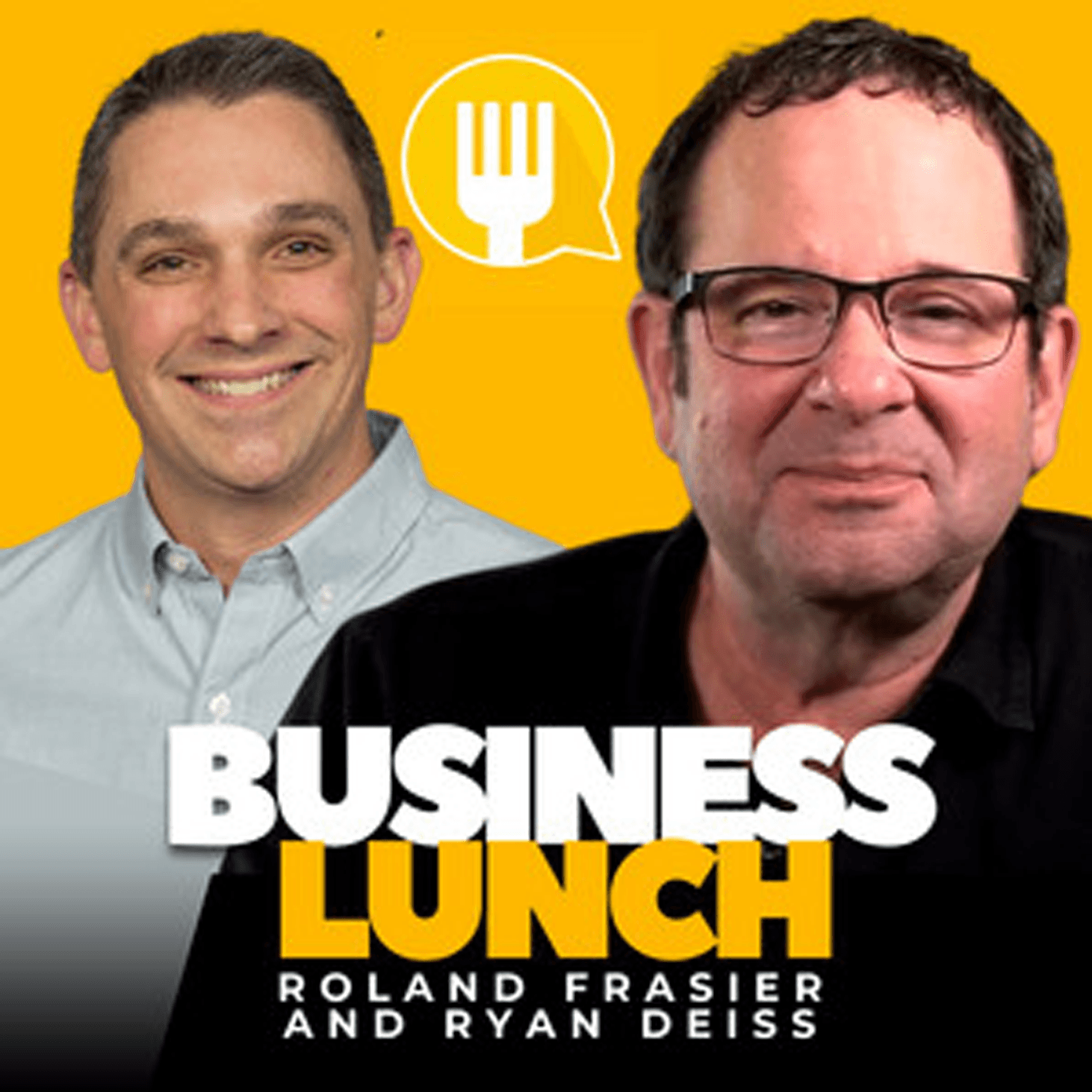
Podcast Overview Title: Business Lunch Host: Roland Frasier Co-host: Ryan Dice Focus: Insights from successful entrepreneurs about business growth strategies.
Episode Description In this episode, Roland and Ryan explore the changing dynamics of private equity, emphasizing a shift from financial engineering to valuing operational effectiveness. The discussion includes the historical context of private equity, the rise of capable operators, and practical implications for entrepreneurs looking to scale or exit their businesses.
Key Highlights
- Evolution of Private Equity:
- Shift from financial engineering to genuine business growth.
- Importance of effective operations over financial maneuvers.
- Value of Operators:
- Operators are now crucial for business scalability.
- Private equity firms increasingly rely on skilled operators to generate growth.
- Challenges in Current Market:
- Increased competition among private equity firms leads to overbidding.
- Higher interest rates make debt more expensive, affecting acquisition strategies.
Detailed Breakdown of Discussions
- Introduction to Private Equity and Business Growth
- Historical Context:
- Financial engineering was once the mainstay (e.g., leveraging assets for quick returns).
- Shifts in Private Equity Focus
- From Financial Engineering to Operations:
- Transition marked by the necessity of operational expertise in driving business success.
- The Role of Operators in Today's Business Environment
- Emergence of Operators as Stars:
- Operators are now the key figures in scaling businesses within private equity, outperforming traditional financial engineers.
- Challenges in Finding Valuable Business Deals
- Market Saturation:
- Over 68,000 private equity firms are competing for a limited number of quality deals, driving prices up.
- Validation of New Business Strategies
- Need for Practical Growth:
- Focus on growing acquired companies rather than just financial maneuvers.
- Historical Perspective on Private Equity Strategies
- Evolution from 1.0 to 3.0:
- 1.0: Financial engineering.
- 2.0: Acquisition-focused roll-ups.
- 3.0: Emphasis on operational growth led by skilled operators.
- Ethical Considerations in Business Acquisitions
- Impact on Existing Companies:
- Discussion on the effects of aggressive financial practices on employees and operational integrity.
- Competitive Landscape in Private Equity
- Current Challenges:
- Economic uncertainties contribute to difficulties in acquiring and scaling businesses.
- The Need for Effective Business Operations
- Operational Excellence:
- Companies with strong operational teams are more attractive to private equity investors.
- Opportunities for Entrepreneurs in Current Market
- Emphasizing Operational Skills:
- Entrepreneurs should focus on enhancing their operational capabilities to attract investment.
- Importance of Entrepreneurial Skills in Business
- Skill Development:
- Operators should cultivate skills to drive business growth effectively.
- Hiring Strategies for Growing Businesses
- Focus on Systems Before People:
- Implement robust systems to guide operations before hiring executives.
Key Takeaways
- Operators are becoming increasingly vital in private equity, moving from the background to the forefront.
- Entrepreneurs should prioritize operational efficiency and systemization to enhance business value.
- The trend indicates a shift back towards valuing the skills of entrepreneurs and operators rather than just financial engineers.
Conclusion The podcast episode encapsulates a significant shift in private equity, emphasizing operational excellence over traditional financial engineering. Entrepreneurs are urged to adapt by developing strong operational teams and systems to thrive in a competitive marketplace.
Resources
- 7 Steps to Scalable Workbook
- Get Roland's book, Zero Down, for free
- Attend the Get Scalable Live event for hands-on learning and networking opportunities.
--- For further inquiries or to connect with the hosts, visit the [Business Lunch Podcast](https://businesslunchpodcast.com/).
Written by AI. May contain mistakes. Listen to the episode to check what was said.
Transcript
Automatic transcript. May contain errors.0:00We saw, and it's the reason that we created Epic and the scalable company and our scale and exit advisory, you know, consultancy that the opportunity and the advantage like where you could actually have an advantage. was no longer on, ooh, look at me, I could raise the most money. Because guess what? Everybody had a ton of money. Or, ooh, look at me. We've got the best analysts and we've got the most access to debt and other types of leverage, liquidity. Everybody had that. Well, when the second thing went away and when the first thing was just table stakes, well, that's no longer your advantage.
0:33What's the only real advantage left as a business? Let's kick it old school. What if we just figure out how to grow this thing, the good old-fashioned way, which is almost only never on a spreadsheet.
0:49Hey, everybody. Welcome to another episode of Business Lunch with your hosts, Ryan Dice and me, Roland Frazier. Wonderful to see you today, Ryan. What's new and exciting in your world? So, thankfully, not a ton of new because you and I have talked about this. I sort of just want to optimize what we have as opposed to creating a ton of new. A few new things here and there. I know we've talked about it on the last episode, but now just kind of getting into a groove. What about you? Yeah. I'm getting ready for our founders board meeting and our Epic board meeting and our Rise Nation meeting, all of which are happening next week, which is quite a lot for one week.
1:28Looking forward to seeing you in person and hanging out. And I may or may not have some some fun bottles of wine for us to enjoy. And then gosh, right around the corner from that is our big event at Get Scalable, right? So it's, it's a busy time of year for us. It is that season. It's the fall. But I, you know, I've said it before, like I'm an introvert, you know that, but I really do like being around my people, our people. That's, that's fun. And, you know, I think we've done a pretty good job at this point of curating a community of people who, when we walk into the room. We're not like, good God, I don't like these people.
2:05And I'll tell you, if you have a business and you would be terrified or not enjoy walking into a room with a bunch of your customers or clients, then something has gone horribly wrong. So all introversion and social anxiety aside, I'm actually really, really excited about the next week. Yeah, me too. I think it'll be really fun. One of the things that we'll be talking about then at those meetings is what's going on in the world of buying and selling businesses. And I recently came across an article that was talking about how private equity has a new set of rising stars and it is evolving into private equity 3.0.
2:52And the thesis behind the article was that originally, back in the day, private equity came in and said, we're going to do financial engineering. We're just going to go in, get your business. You guys don't know that much about finance, so we're going to play with that. They did it. Great returns. And more and more and more people came into private equity, which made it harder to do just that kind of engineering. So they went to private equity 2.0, which was really focused on acquisitions. So how can we acquire companies and just scale up through roll-ups? So where you saw a lot of private equity rolling into brick and mortar businesses like HVAC and plumbing and things like that, electricians, and that was kind of private equity 2.0.
3:48And now they're saying that, and there was an evolution to 2.5. I don't remember what their argument was there, but it wasn't a significant enough upgrade for it to be a full version. So the 3.0 is that the new stars, and this is shocking and revolutionary, are the operators that you bring in to run the businesses efficiently. The people that actually grow it? So the big innovation in private equity is maybe instead of just financially engineering this thing, or maybe instead of just doing leverage buyouts, maybe instead of just juicing it with a bunch of cash so that it can just do a bunch of acquisitions that aren't as synergistic as we would like for them to be, what if, and hear me out, we just try to grow the companies that we buy?
4:40Yeah. That's the breakthrough? That's it. So the focus is on the new rising star is rather than the jet setting hedge fundy investment banker types that are the quants that are doing all the financial engineering, which has fallen to about, I think, between 18 and 21 % of the value that gets added. Hey, Ryan Dice here, co-host of Business Lunch. And before we get to the show, I have an exciting invitation for you. My business partner and Business Lunch co-host, Roland Frazier, and I are hosting a live in-person event. And if you're a bootstrap business owner who wants to build a 10 million and even$100 million business in the next three years, you need to be there.
5:22This event is called Get Scalable Live. And over the last four years, it has transformed from a small gathering of entrepreneurs into the largest bootstrapped entrepreneurship conference in North America. Now, I know what you might be thinking. You're probably thinking, Ryan, really another business event? Is that really what we need, but trust me, this isn't just any other event. You see, unlike most conferences at Get Scalable Live, you'll have dedicated time to take action and actually work on your business instead of just in your business. Over three days, you'll work shoulder to shoulder with like-minded entrepreneurs to implement what you're learning and get valuable feedback that you're just not going to be able to get during the normal day today.
6:01You're going to be immersed in fresh ideas, strategic insights, and you're going to get the support and guidance that you need to actually reach your business goals. So this is your opportunity. This is your chance to step out of the day-to-day to eliminate the noise and finally work again on your business, not just in your business. And if you implement, I'm confident about this, if you implement just one or two key insights from any of our sessions into your business, you're bound to see a return on investment much higher than what we could ever charge for admission. And by the way, speaking of admission, right now, Business Lunch listeners can save an additional 10 % off of our already low early bird ticket pricing.
6:43So just head over to GetScaleableLive.com and use promo code LUNCH at checkout. Again, that's GetScaleableLive.com, promo code LUNCH. It is truly amazing what can happen when you step out of the day-to-day and spend just a little bit of time surrounded by other powerful business owners. And since this opportunity only comes around once a year, you don't want to miss it. Again, the link is GetScaleableLive.com. And don't forget to use promo code LUNCH at checkout to save up to 67 % off the full ticket price. That's all I got. I'll see you in Austin. All right, back to your regularly scheduled programming.
7:23Because these guys, the challenge is you have tens of thousands now of private equity funds with trillions of dollars that are trying to find deals. And the deals that they're finding, particularly with higher interest rates and inflation and uncertain economy around the elections and a drying up of government funds. And increased valuations because of increased competition. like you said they're just being so dang many of these things they're having to overbid for that but even more difficult for them is that if they just like if they go in when they can borrow debt at three percent or five percent then it's very easy for them to make their money with financial engineering and borrowing a lot of money not only to acquire the company but also to acquire other companies.
8:24But when debt becomes significantly more expensive, which it has, then that primary thing that they've been using to fund all of this has gone, has at least doubled in cost. And so what that results in is we can't do nearly as many deals because they just don't have the margins or the metrics for us to be able to do it. We can't just go in and it's good. Now all we have to do is acquire. It is, it's now my goodness, we've got to go in and support this debt. That's twice what it used to be. Plus this debt service. Plus we need to have enough extra money to be able to do this other stuff too. So we need this company to actually grow.
9:06We need the margins to actually improve. And so the new stars are the operators who are now responsible for a, I think it's about two to three times the percentage of growth that gets realized by the firm, or growth in value that gets realized by the firms is coming from these operators. So now they are becoming more of the stars of the show, which means there's going to be a greater need for good operating systems. That's good for us. That's scalable. To be put into these companies that are being acquired and operators who know how to grow, who know how to actually manage a business and identify the KPIs.
9:50And there's always a shortage of those. So look at, I can't remember the names. It's like maybe Coletti or something like that. The guy that was the CEO of Pepsi brands, Taco Bell, and then got promoted, then left and was the CEO for several years for Chipotle and now has just been hired on a$113 million contract to be the CEO of Starbucks. right? $10 million signing bonus, 75 million in, um, in stock as an equity grant and, uh, you know, and all kinds of other stuff. This is kind of insane compensation package that he has in addition to, you know, a million and six or million eight salary plus bonuses that could take that to 3 million.
10:37He's going to do okay, but here's the deal. They need him, right? And these operators are only going to be more and more valuable. So if I was ever looking for a place to focus my attentions, if I was in the working world and not in the investor world these days, it would be, I'm going to go and up my operating skills game so that I can be the person who runs these businesses and, you know, and, and get my increased compensation from all these private equity funds that are trying desperately to find good operators that know how to grow and manage a business. So huge opportunity. And for people who own regular businesses that are looking to exit, this is something that's going to be a huge, huge, huge additional plus for you.
11:27If you've got a solid ops team, then private equity is going to look at that and say, this is a team that we can actually maybe use as our platform team, not a platform company anymore, but our platform team to help grow this and other businesses. So lots and lots to me to take away from what's going on there. Yeah. And I'll tell you, it's incredibly validating because you and I saw this coming because we were living on both sides, both dealing with private equity from the sales side, but also competing with them at times on the acquisition side and seeing it was becoming basically impossible to spreadsheet your way to, you know, a good, a good exit, you know, to, to a good liquidity.
12:11Like it just wasn't there anymore. And so we saw, and it's the reason that we created Epic and the scalable company and our scale and exit advisory, you know, consultancy that the opportunity and the advantage, like where you could actually have an advantage was no longer on, Ooh, look at me. I could raise the most money because guess what? Everybody had a ton of money or, Ooh, look at me, you know, we've got the best analysts and we've got the most, you know, access to debt and other, other types of, um, you know, leverage liquidity. Everybody had that. Well, when the second thing went away and when the first thing was just table stakes, well, that's no longer your advantage.
12:47What's the only real advantage left as a business. Let's kick it old school. What if we just figure out how to, how to grow this thing, the good old fashioned way, which is almost only never on a spreadsheet. So I think it'd be fun to kind of talk about that side of the equation and like what good operators do that's different. But just for context, I think a lot of people may not understand when we talk about financial engineering, can you give an example of in the olden days back, like whether it's like 1.0 or 2.0, some combination, what would private equity companies look to do? Can you kind of give an example, like a prototypical example of a financial engineered business?
13:26The classic one would be if you ever saw the movie Pretty Woman, what Richard Gere's character did there, which was he would go in and buy companies that had assets that were greater than the market was valuing the company at at the time. So the liquidation value of the company, either its assets or its subdivisions, its companies within the company that it held, would be worth more individually than the sum of the parts altogether. So if you went into a company and you buy a company that, let's say it's a scrapyard company and they own 15 scrapyards and they're vertically integrated. So, you know, they have some other, you know, metalworking and other things like that.
14:20And the public, let's say values that company at a hundred million dollars, but just the equipment that's there and the land that it's on and the buildings that it has and the vehicles that it has, if you sold all of those off, the market value of that stuff is 200 million. So the financial engineering is let's go buy that company with debt that matures relatively quickly. But our whole plan is that we're going to liquidate the whole thing anyway. So we go in then we fire everybody that we don't need that was running the management part, which lowers expenses, increases profitability. We then list all of the separate assets for sale and sell them off one by one.
15:05And, um, and in the end make, you know, double our investment relatively quickly. Let's say that it was 10 % money. Even you borrowed a hundred million, you pay 10 million in interest to hold it for a year. You sell everything for 200 million net. You've got yourself 90 million in profit. And they would just do that over and over and over until everybody else was like, wow, that seems really easy. It's not really great by the way, for the people in the company, the individual companies themselves or the economy but it's richard here's character in pretty woman was not like set up and upheld as like this is just a really good dude you know yeah he had a moral change of heart right as a result apparently all you have to do is data data call girl and then you know you will you will have a change of heart and become a better person but he ended up deciding to rescue the uh you know the company that he was going to buy and tear apart instead of destroying it, which meant the end of his relationship with all of his greedy partners, which is the people who are going to do.
16:07So version 1.0 was not, let's build these things. It's we're bankers. We know that the sum of the parts is greater than the whole. So let's go in there. Let's buy the freaking thing with debt. Let's break it all up and let's sell it. We're not going to even attempt to operate this thing. That was kind of version 1.0. 2.0 though - So financial engineering wise is basically just, let's look at the numbers. Let's look at all the numbers of all the different scenarios, do the scenario analysis, whichever one yields the greatest internal rate of return. Let's do that. And who cares about anything else?
16:37All financial engineering, no care to operations at all. In fact, operations is actually probably going to go away because they're just going to sell it all. Well, it's all just a great expense, right? I mean, everything in operations is not seen as a value creator. It's simply looked at on the expense side of the equation. 2.0, though, I feel like it shifted a bit because 2.0, at least from the outside, it was we're going to build this thing. but we're still not going to build it through organic growth of the entity itself. It's still not operations. It's still financial. We're still not operating.
17:08Yeah. So break that down. So 2.0, we're talking roll-ups, break down that scenario. Yeah. So roll-up is basically, we're going to go in, we're going to buy the company with debt that's relatively inexpensive. And now we own the company. How are we going to get it to grow really, really fast? It's our favorite way to grow a business still, right? We're going to acquire other companies that are competitors of the company, direct or indirect, and or we're going to vertically integrate, meaning we're going to buy our suppliers and our distributors or wholesalers. And then by buying those other companies, we will simply glom their revenue and profits onto ours.
17:47We'll use debt or stock from the company that we've got to acquire the other company. And then that company's additional profits will support this. And then when we've got this to a certain level, we'll take it public and we'll make a whole bunch of money there, or we'll sell it to an even bigger company that wants it. So really just growth by acquisition. So we still do that. Like that is still a strategy of ours. I don't want to give the perception that like 2.0 is dead or wrong or evil. I think 1.0, and that still happens to a certain extent. I would argue that's not an inherently entrepreneurial activity.
18:23You could argue 2.0 is an entrepreneurial activity. Why though? Why the pivot? Like, so what changed that made 2.0 not as effective anymore? And like, how would you characterize the traditional 2.0 to more like what we do and what this article was prompting? It's two things, I think, really. It's just straight out competition. The last time I looked, I want to say there were 68 ,000 private equity firms, right? And they had trillions of dollars. And then you've got Warren Buffett, who's sitting on, I think, 275 billion and Apple that's sitting on crazy, crazy cash. And those companies are acquirers too.
19:00So you've got competition from family offices have come in and there are a lot of family offices. And so there's, they're more buy and hold. We're just looking, how can we get a good return on our money safely, capital preservation. Then you've got private equity, which is buying for financial reasons. And then you've got companies that have insane amounts of cash as well, because the value of stocks have gone up so much. And so they're able to issue stock and raise a lot of money. So you have all of this capital that is chasing fewer deals. And so let's look at auto repair centers. So the last time I looked, there was 109, I think, thousand auto repair centers in the United States.
19:47Now, if 50 private equity firms decide they're going after those, that's 50 cash wealthy companies that are going to be bidding against each other for a relatively finite group of companies. Let's say that at any given time, 10 % of those are acquirable. That means that there's 10 ,000 companies that can be bought by 50. And while that sounds like a lot, a lot of those companies are not going to qualify. They're not going to meet the acquisition criteria. So then when you get into the companies they actually want to buy, it's a pretty small number of targets, even in a big market like that. They went to those markets because there were so many more of those than there were like, you know, department stores.
20:30But that competition has driven up the price of the companies that are selling, which means that it's going to cost more to get them and they're going to have to perform better to generate the returns that private equity wants. Now, on top of that, you've got that debt, which was the primary tool for acquisition, has gotten crazy expensive, literally double what it used to cost just a couple of years ago. So higher prices to acquire because of competition, supply and demand and higher acquisition costs because of the increased cost of debt. Plus sluggish sales because these companies are suffering from in the economy what all of the consumer confidence, you know, damage that's taken place because government, free government money handouts are gone from the pandemic.
21:28Inflation is up. Interest rates are up for consumer debt as well. And so consumers are pulling back. Even wealthy customers now are looking for to either pull back on their buying decisions or looking for substitute products that are less expensive that provide the same utility. So when you've got all that going, then let's go buy that company for an inflated price with inflated debt with scary future prospects because of consumer confidence and spending. How then do we find the extra money to use that as a platform to go acquire more companies by borrowing more money, it becomes hard. Who are we going to sell it to up the chain because they don't have the money either?
22:06And we know that. And so you may not even be able, and if you've got debt and that debt has a clock on it and you're worried that normally you're, if you could, I mean, the typical model was three to five and three to five. So if we can three to five X this company in three to five years, we can sell it to someone up the chain with the final leg of the chain being the public markets, right? So if we can 3 to 5 this thing, it keeps moving up the chain. And as long as it's 3 to 5 and 3 to 5, 3 to 5X and 3 to 5 years, there's going to be a buyer somewhere, even if it's the public markets. But when it's 3 to 5X is a lot harder for all the reasons we talked about.
22:46And when the 3 to 5 years now is taking longer and when you don't know there's going to necessarily be a buyer on the other end for all the things we talked about. And now your debt costs a lot more and the maturation rates are still in that three to five range. Boom, business model toodles if you're traditionally just doing those kind of things. So now they say, OK, well, what if instead of just doing all that finance side stuff, because they were really, you know, they wanted the company to operate and make good profits and everything, but it didn't really necessarily need to grow because growth was through acquisition.
23:25And so as long as they had operators that could absorb and integrate the companies they bought, which, by the way, is a huge challenge, because generally the stats are that only about 20 % of the acquisitions that are done realize the projected benefits because, of course, the stats are put together by investment bankers who are compensated based on being able to do deals. Right. So, um, so there's that also, right. The act, the actual, gosh, now we caught the car. What do we do? Can we still bark at it? Right. So, um, so now we need operators and it's, it's, they're like, Holy crap. What if we, where can we look to continue to be in business?
24:08We're going to need to actually get some people that can add margin and revenue in these companies. And so that's the operators. Now, private equity firms for years have had teams of operators that they would bring in to businesses. So it's not new that the operators exist. They would replace people that didn't have as much experience with people that did or people that had better resumes. But now these people are being required to perform and they're going to be compensated much, much more significantly based on how they're going to perform. And private equity's ability to do what they do will be more, more, more dependent now than ever on the ability of these operators to perform.
24:51Therefore, they are the new stars of private equity. So what opportunity do you think this creates for entrepreneurs, business owners? What opportunity do you think this creates in terms, you know, for kind of the entrepreneurial investor class, you know, the people like like us and the folks that we work with? You know, obviously, the the institutional investors, the private equity groups, the family offices, even some of your search funds, they're having to adapt a bit, a lot. But but screw them. Let's talk about like the uss. What is what's the what does this mean for us? I think that the opportunity for all of us who are not private equity, who are the targets of private equity or who are looking to sell, need to be aware that operations in terms of operational efficiency above market performance of your company, above industry performance.
25:47Let's say the industry return on invested assets is 10 % and you're generating 20%. That's going to be significantly more important to increase valuation for you. And the existence of a proven operational team is going to be maybe the difference between you getting a deal done and not getting a deal done. So the opportunity is be an operator and up your skills and create a track record of performance. Hire and put in place in your company proven operators who are achieving and who are being measured and who are achieving results. Have systems so that you can prove the operational performance of the people that you've got running the company.
26:37And as investors, buy companies that already have professional management installed that are professionalized versus owner-operated or use systems like Scalable or other tools to have a plan to build a team or a system or both that can turn owner-operated businesses into professionally managed. because I think owner-operated businesses will be in less demand and you'll see prices decline and professionally managed businesses will be on the rise, will be in more demand and still they're going to have to reach down lower than they were reaching before because there's too many private equity firms competing for the few companies that are out there.
27:19So if you can create a professionalization of owner-operated businesses machine, then I think you're going to have for the foreseeable future a very, very, very valuable thing. And again, not to toot our own horn, but that's why we created Scalable. People are like, oh, why'd you do this? It's like, we did it because we needed it. Because we knew we needed it for our own businesses. We needed a business that we could run our portfolio companies through that would professionalize these owner-operated, these perfectly imperfect businesses. And I just gotta say, we're just... You know what, Roland?
27:55I think this is the point. And I think this should be everybody's takeaway from this episode. we're even smarter than we thought we were yeah yeah yeah so so smart that stupidly we bumble into smart things classic broken clock um you know it's like god dang it there's no way we could compete with these like big money types like what can we do maybe we can actually grow a business yeah let's try that oh hi i can't i joke if i could have any single skill i i would i would like that skill to be the one, you know? And I think in all seriousness, I think, I think what we are shifting is I believe that, that business value, like the value within business is shifting, the pendulum is shifting away from the bankers and the financial engineers and the big money types.
Read the full transcript
28:42And I do believe it's shifting back to entrepreneurs. And I think that's a really, really, really beautiful thing. If, if entrepreneurs and people, not, and not just entrepreneurs, actually get paid. That would be. Yes. Yeah. And I, cause I, thank you. Cause I want to clarify, I don't just mean the entrepreneurs that are starting the company. I mean, the entrepreneur, the entrepreneurs within, within the company, the people who, whether you're a marketer or a salesperson or, you know, just a rock solid manager operator, the people who actually know, uh, and there's a clear through line from their efforts to money and profitability, those are the people that are going to be valued.
29:20And the nice thing is, it's just not that complicated. I know when we go into a business, we're always saying, how can we grow it? How can we increase leveraged sales? How can we improve profitability and margins? How can we increase bankable profit? And how can we improve and increase the transferable value of that business through systems, through improved structures, through all the exitability factors. But those three things, leverage sales, bankable profit, transferable value, those are the three things that we've always focused on. I think those are the three things that are going to get hip and cool again.
29:54Yep, 100%. Well, anything else to add there before we sign off for today? Just a kind of quick tactical thing. If you are an owner-operated business, I would be slow to just say, I'm going to go and hire a CEO or an operator to run my business. It's like your very first thing. It can work. I'm not saying that it can't, but there's about to be a lot of out of work VPs and executives who are going to be looking for jobs and they're out of work because they just weren't that good at it. But they will have come from very large companies. In many cases, they will have very impressive resumes working for businesses where they didn't do a damn thing while they were there.
30:33They were just, they were there for the ride. They were in the backseat at Right. So I would just encourage all the business owners out there, and this sounds self-serving because it is, but it's also true. I firmly believe that good people don't fix broken systems. Broken systems break good people. Focus on your systems first. Let's put some of these systems in place first. People second. And you and I had a conversation, good friend of ours, Jonathan Kronstadt, who took, you know, took a business from about$8 million to north of, you know, almost$200 million in revenue. And his whole message right now is people come last.
31:08And what he's basically saying is, you know, like, let's get good solid systems, build things around it. And I get it. I want the best people in the world, too. But for our organizations, my goal is not to only hire A players and rock stars. our goal is to build a business with solid systems that does not require them and the nice thing is is if you have good solid systems in place and if the business is winning you wind up attracting the A players and the rock stars anyway you get both so just if you're out there as a the default setting of like oh I just need to bring you know I need adult supervision I need somebody else to come in and run this it can work if you've got the right advisors around you to really vet those people, just we would caution it.
31:52We would pause it. There's other steps that would come before that. So I just want to make sure we talked about, I want to make sure we discussed that because some people can hear professionalization. They're like, oh, so just hire a CEO. Yeah, maybe not. And I'll tell you, I'll chime in. My advice to most of the CEOs I talk to is hire a COO, that there is no CEO that you're going to hire that you will get along with or who has the interest of the company at heart like you do, because nobody's going to care like you do. And so if you're still wanting to be involved in the operations of the company, but you want to have a professional who's seen the next place that you haven't seen and who knows how to put systems in and that sort of stuff, then get a COO.
32:38It'll cost you less. It'll probably cost you no equity to very little equity, certainly in comparison to a CEO, and you'll still be the boss. You won't have a major disagreement with somebody who has a completely different vision of how the company is to go. You'll have an operator who's a lieutenant whose mission is to help the company realize your vision with their experience. And that I think is something that you should, like that would be the place I would focus. I just read a big article. I think it was from McKinsey talking about this is the time of the CFO. And if you look at the people who are ascending to CEO positions more and more and more in big companies, it's CFOs.
33:22CFOs have become significantly more important in their overall role. And so if I could hire anybody, I could probably hire a really strong COO and a really strong CFO for the same price that I could hire a CEO and maybe I'd even get a marketing person in there too. Right. So that's something to think about as you go into it. I just don't think anybody cares about the business like you do when you're the founder or the creator of the company. Amen. Don't give up the CEO role until you've taken the big old bag of cash because you sold the thing, at least a majority stake in it. Even then, even then you probably won't hold on to it.
34:00So cool, man. Awesome. Well, thank you guys for joining us today. Hope you found it helpful. If you enjoyed this, please share it with somebody else. And if you've got questions, thoughts, comments, we would love to hear from you. We're on all the socials and we'll see you next time.
34:36the right deals, and the right guidance. And that's exactly what we give you in the Epic Deal Fast Track. If you've been thinking about buying a business, but you keep getting stuck, whether it's finding the right deal, structuring the financing, or negotiating with sellers, you are not alone. Too many people waste months, even years, just thinking about acquiring a business while the real opportunities pass them by. The Epic Deal Fast Track is not another course. It's actually an implementation program, and it's designed to get you from the idea to the acquisition in just 16 weeks or less. We work with you one-on-one to help you find, fund, and close your first or next deal.
35:18And once you do, we're going to plug you into our elite Epic board community so that you can keep scaling through acquisitions. We install three powerful systems in your business. The first is the deal flow engine. So you always have high quality off-market deals coming to you. Number two, we give you our offer and funding system so that you can structure offers that get accepted and fund them creatively many times with no money out of your own pocket. And number three, our closing and integration system so that you don't just buy a business, you actually successfully run and scale it once you have acquired it.
35:52Plus, you'll have direct one-on-one support from an Epic Deal Advisor every step of the way. And that's people that have actually come up through the system and done these deals themselves. That's the only way to become an Epic Deal Advisor. And if you're serious about acquiring a business this year, don't just sit on the sidelines. Just text I'm in to 334-458-9034 and we'll get you in. So text I'm in to 334-458-9034. We'll get you in. No fluff, no wasted time, just real deal making from people that are actually out there doing deals right now. I'll see you there.
From the publisher
Welcome to a new episode of Business Lunch! In today’s enlightening discussion, Roland and Ryan delve into the evolving landscape of private equity, particularly highlighting the transition from financial engineering strategies to valuing effective operations within businesses. They discuss the historical context of private equity transformations, the increasing importance of capable operators in business scalability, and the practical implications for entrepreneurs looking to grow or sell their companies in this competitive environment.
Highlights:
"Private equity's evolving: It's less about financial maneuvers and more about real growth through effective operations."
"In the world of buying and selling businesses, the real stars now are the operators."
"If you've got a solid ops team, private equity is going to see that as a huge plus."
"We need to focus not just on engineering finances but on actually growing companies."
Timestamps:
00:00 - Introduction to Private Equity and Business Growth
02:21 - Shifts in Private Equity Focus
04:13 - The Role of Operators in Today's Business Environment
07:24 - Challenges in Finding Valuable Business Deals
11:46 - Validation of New Business Strategies
13:26 - Historical Perspective on Private Equity Strategies
15:34 - Ethical Considerations in Business Acquisitions
18:42 - Competitive Landscape in Private Equity
22:03 - The Need for Effective Business Operations
24:54 - Opportunities for Entrepreneurs in Current Market
28:19 - The Importance of Entrepreneurial Skills in Business
32:04 - Hiring Strategies for Growing Businesses
CONNECT
• Ask Roland a question HERE.
RESOURCES:
• 7 Steps to Scalable workbook
• Get my book, Zero Down, FREE
To learn more about Roland Frasier 👉 https://msha.ke/rolandfrasier/
Connect with me on social: