In short
Podcast Notes: Business Lunch - Branding in the AI Era: Beyond Features and Benefits
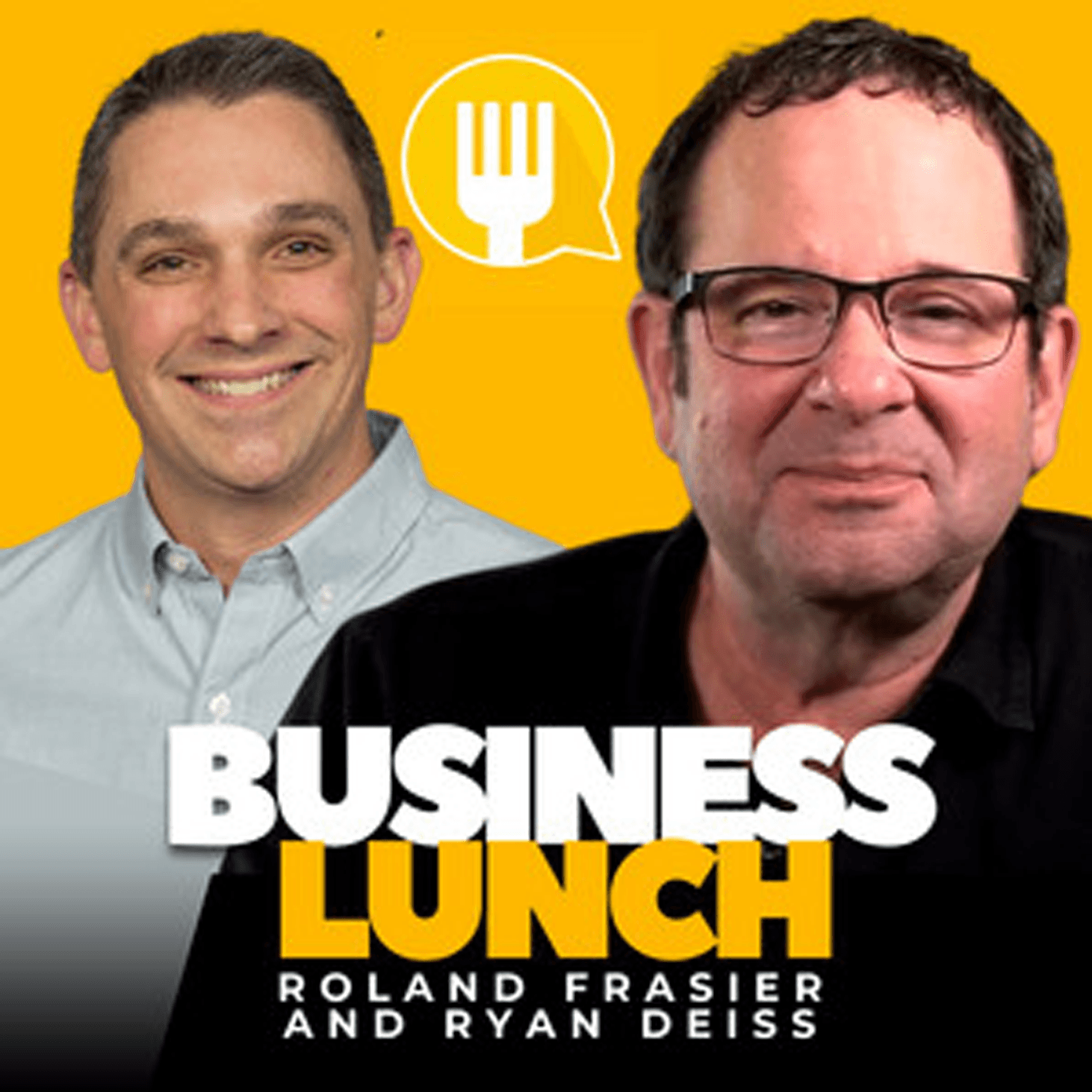
Episode Overview In this episode of Business Lunch, hosts Roland Frasier and Ryan Dice discuss the evolving landscape of branding and marketing in an era heavily influenced by AI, economic uncertainty, and an overwhelming amount of information. They emphasize the significance of creating meaningful connections with customers and establishing a unique brand point of view.
---
Key Highlights
- Brand Loyalty:
- Consumers will continue to engage with brands they know, like, and trust.
- Common Pitfall:
- Many companies attempt to appeal to everyone, resulting in messaging that resonates with no one.
- Brand Experience:
- A direct experience that informs a unique point of view is crucial for effective branding.
- CEOs as Brand Spokespeople:
- The most effective use of a CEO is to represent their brand in a compelling way.
---
Timestamps and Discussion Points
00:26 - Introduction
- Discussion of South by Southwest and personal anecdotes.
05:35 - The Power of Experiential Marketing
- Highlighting the effectiveness of experiences in engaging consumers.
06:43 - Challenges in Modern Marketing
- Addressing the saturation of similar messages in the market.
10:58 - Changing Economic Landscape
- Overview of the economic factors influencing branding and marketing strategies.
14:16 - Impact of Government Spending
- Discussion on government financial policies and their effects on consumer spending.
16:38 - Technological Disruption
- The role of technology, especially AI, in changing consumer expectations and behaviors.
22:26 - Addiction and Consumer Behavior
- The impact of societal addiction on purchasing behaviors.
28:45 - Creating a Unique Brand Point of View
- Importance of establishing a distinctive perspective to stand out.
32:24 - The End of Mass Market Brands
- Predictions on the decline of generic brands and the rise of niche markets.
41:24 - Elements of a Great Brand
- Breakdown of essential components that define a successful brand.
43:44 - Emotional Essence in Branding
- The necessity of creating an emotional connection with consumers.
---
Key Takeaways
- Unique Point of View: Brands need to clearly define their stance and who they stand against to build loyalty.
- Emotional Connection: Strong brands create emotional ties with consumers that go beyond features and benefits.
- Direct Experience: Authentic experiences provide credibility and help craft a unique narrative.
- Avoiding the Generic Trap: Brands that try to appeal to everyone often fail to resonate with anyone. Specificity in messaging is key.
- CEO as Spokesperson: A strong, relatable spokesperson can enhance brand recognition and trust.
- Adapting to Change: In a world dominated by AI and economic shifts, brands must evolve and innovate to remain relevant.
---
Conclusion The episode emphasizes that successful branding in the AI era requires companies to embrace their unique identity, foster emotional connections, and engage consumers through authentic experiences. As markets become more competitive and saturated, brands that can articulate a distinct vision while demonstrating authenticity will thrive.
---
Connect with the Podcast
- Ask Roland a question: [Business Lunch Podcast](https://businesslunchpodcast.com/)
- Resources:
- 7 Steps to Scalable Workbook
- Free book: Zero Down
- Follow Roland Frasier:
- [YouTube](https://www.youtube.com/user/rolandfrasier)
- [TikTok](https://www.tiktok.com/@rolandfrasier)
- [Instagram](https://www.instagram.com/rolandfrasier/)
- [Facebook](https://www.facebook.com/RolandFrasierOfficial)
---
This summary encapsulates the essential themes and discussions from the podcast, providing a comprehensive overview while highlighting key insights relevant to branding and marketing in today's landscape.
Written by AI. May contain mistakes. Listen to the episode to check what was said.
Transcript
Automatic transcript. May contain errors.0:00Yeah, Damon, so our mutual friend Damon John was in Austin, Texas. because we've got South by Southwest here in town. Yeah, it's going on. It's for like the next, I don't know. It goes on forever. But the interactive part is overlapping, I think, a bit more with the movie part. Or maybe it always does, and I'm just never here. Because normally this comes in town, and I leave.
0:26Hey, everybody. Welcome to another episode of the Business Lunch Podcast, which with Ryan Dice, my wonderful partner. Ryan, how are you doing today? I'm doing so great. I got to live my best Hollywood life over the weekend. I saw you posted some pictures. Were you with Damon? Yeah, Damon. So our mutual friend, Damon John was in Austin, Texas. We've got South by Southwest. Is that going on right now? Yeah, it's going on. It's for like the next, I don't know. It goes on forever. But the interactive part is overlapping, I think, a bit more with the movie part. Or maybe it always does and I'm just never here because normally this comes in town and I leave because like all these except last was it last year was it south by or was it it was no it was a different festival that your wife was like hey you know what would be good let's go down into the crowd now yeah that was yeah that was that was a different that was a music festival so actually way worse I'll talk with her and tell her that you've been wanting to go to southwest too and that she's kind of been meeting me and she's she's probably never done it you guys should go well I've been I got dragged down to south by southwest all my and look it's it's a great thing if you're into technology and all that other stuff it's fine I'm just not really into crowds and people and strangers wanting to breathe my air and wear my skin and so you know but Damon's down there and he's like hey come down I'm speaking of the thing it'll be fun we don't get as many opportunities to hang out anymore so I'm like dig it I'll do it and normally it overlaps with my kids spring break so I'm gone yeah not this year I'm here but yeah I mean so he was like do you want to go to this um this this premiere wrap party and i was like i don't even know what that is but yeah sure but it was this movie that paul rudd did and so we watched the picture yeah that was it was on my phone really tiny i just saw it kind of in passing and i was like oh okay yeah so paul rudd of ant-man fame if you're into marvel stuff if you're he seems hilarious is he in person as so freaking funny and so incredibly cool and what was nice is like he and damon are actual friends like their neighbors I think they have a house next to another in Miami and so and this was not um like this was purely just a crew wrap party for like friends and family only so everybody was just super chill like I didn't know any of the other actors who were there because I just don't I'm not that I'm involved in in Hollywood but just everybody was just hanging out he was like Damon was like notice there's no step and repeat because nobody's here taking pictures everybody already knows everybody that's cool so it was just really cool you felt like you were to sort of hang.
2:50It was in a gallery. So it was a, you know, the music wasn't obnoxiously loud. You could actually talk to people. Yeah. So we got to hang out for a little bit. It was nice, really nice, hilarious guy. Um, then we went from there to this other kind of thing. And I'm just obviously this tag along, I'm sure, but he's like, I think some of his staff or something. Um, and then we're, we're walking back. I'm finally like over it. And, um, we're, we're walking back and it's well past my bedtime. It's I think like almost 11 o 'clock at night, which I need to be in bed. we're walking back uh down sixth street which is kind of the big you know hullabaloo place in austin and all of a sudden everybody just i hear everybody go nuts and um damon's like what's that we look over and it's ben affleck getting out of out of his car yeah and um and then we're like oh ben affleck that's kind of cool and then right behind him is mark cuban um and so damon walks over he's like hey mark there you know mark's like david you want to come come to a movie and it was a premiere of like his accountant two which is a great movie by the way it was a great flick i really enjoyed it yeah i can vouch for two uh it was really great but apparently mark was a producer or something on it um so we got got to go to the movie you know hung out with them and their whole thing in a at a movie premiere which i'd never been to and have you ever been to a movie like an actual legit movie premiere not only uh b movies not uh the ones that clients of mine produced not to like a major you know theatrical release what was cool is because it's basically all the crew it's friends and family um when different actors would appear on screen people would just go nuts because like their friends were there you know and it's like and and at a scene that was like kind of funny like people would laugh and when the bad guy got killed at the end everybody cheered like it was just it was fun like it was way you weren't just watching something you felt like you were more engaged.
4:45The old Rocky Horror Picture Show used to be like that, right? Exactly. I'm like, man, if this is what every theater experience was like, I would go to the theater a lot more. Because it really was cool. Like you felt like you were in more of an experience. And then the meeting, the movie's over, the credits start rolling. And I start to get up. And Tim like pulls me down. He's like, don't get up. no i didn't realize that nobody leaves during the credits because everybody wants who's in there wants to see their name or their friend's name show right of course of course i'm like this is the time when we leave no it's on the lone jackass who doesn't know how this whole thing works um and so you're sitting there and names are coming up and people are clapping and cheering and it's it's basically like the bow at the end of a of a major flick so anyway this is has nothing to do with the topic of anything today um in an attempt to try to bring it back to something that might be helpful for people.
5:41I do think the more experiential we can make these, anything that we're doing today as we're shifting into a world of AI, it was just so freaking fun because everybody there was engaged in it. They weren't simply viewers, they were participants. And we were talking a little bit about how, you know, we just had our Founders Board Mastermind retreat a couple of weeks ago, got back from Mexico on that. And unfortunately, you know, we, we film all of our gatherings and I guess some of the audio got messed up, but I was like, it doesn't really matter that much. Cause it was a retreat. It wasn't like an event.
6:17Yeah. It wasn't just us talking to people. The experience was in the room, hanging out with folks and the pool and yeah. And in the pool, exactly. But I think we're now moving into this area where everything's going to be fully online, fully automated, fully just plug me into the matrix. Or like, I want to be completely, give me the red pill, like, like, let me out of it completely. Give me the full real experience. And you just don't want to get trapped in the middle. Like you just don't want to get trapped in the middle. Yeah. At the risk of hijacking what we talked about and forgetting it for the like 7 ,000th time, the thing that I wanted to talk about that I mentioned to you.
6:56Um, I, I watched an old marketing video came into my, I think, Instagram feed and it was, um, Steve jobs talking to the Apple team about branding. And I thought it was really interesting because he was talking about, um, what branding is and, and where it's going and should be. And I think we're back at that cycle and you and I have talked about it because right now I see pretty much everyone saying exactly the same thing. Um, if you've got a car, it's our car goes zero to 60 in this much time and corners here. And if you've got, um, uh, you know, beer, it's, you know, this tastes good. And if you've got, uh, um, how to make your business better, like our stuff, uh, it's like, we can scale your business.
7:51I've exited, you know,$700 million businesses and I've grown$700 million businesses and everybody says the same thing. And some of them are liars and several of them are true. So what is it that makes you different and how do you differentiate? And, um, what, what Steve jobs was talking about was he said, um, look, uh, it is, he said, you don't see Nike talking about our sole, our souls on our shoes are four millimeters thick, but the other guys are five and we've got, you know, titanium laces and, you know, this, that, and the other, it's just do it. And, um, and he was talking about, uh, milk and he's like, he's like the whole milk industry was dying.
8:44And then, um, they came up with got milk. He said, which, which, and I thought this was pretty funny, which curiously is about not having the product that we're trying to sell. So, cause it's got milk, you know, got milk. No, I don't, you know, things are bad. I need it. Um, but nothing about milk tastes great. Even it was just basically milk is the lubricant that will take the crap that you've eaten and shove it down your throat. I mean, like that's, that's me saying that, right? That, I mean, that's basically what it is though. That's, that's what all of got milk was. Um, or the, um, you know, the, the whole drug thing where they threw eggs in a frying pan and said, this is your brain on drugs.
9:22It's like what they're after is the emotional feeling that the brand conveys, which I know is nothing new, but I feel like it's easy for us to get lost as having, you know, just created a couple of offers. And I know you did too, to get caught lost in, you know, It's not feature creep. It's like feature heap, where you're really just piling on all the stuff. And the problem is that everybody else piles on the same stuff. And then you find yourself really in what Michael Porter called perfect competition, which is a race to zero. Because you're ultimately going to get into just price. I mean, it's going to be that.
10:03And so I thought it might be interesting to talk for a minute about that. because my guess is that a lot of the people that are listening or watching to this are going through that with their products. I mean, I know when I talk to people across the board from our friends that own auto dealerships to other people in our industries to you name it, it seems like it's down almost everywhere. Like it seems like that the feelings of whatever it is that's going on in the economy is hurting. And so then the question is, what do I do? And this is the last thing I'm saying, then I'll shut up. And then in those times, Harvard did a study and said most people pull back on marketing.
10:41And that's the worst thing that you can do because the people that double down on marketing are the ones that share a voice. But I think it's important that you're doubling down on the right kind of marketing. So I'm going to kind of throw all that up on the wall at you and then say your thoughts. Well, I'm going to throw a question back at you because I think we need to approach this from two stages. The first is, why do we think that this is happening? Because clearly there is a change that is taking place. And it's not merely macroeconomic. Like you can't just say like, oh, it's just a slightly different macroeconomic cycle.
11:17It's just kind of like an 08, 09 type thing, because it's not really, right? I mean, I do think that what we are experiencing right now is fundamentally different. It is fundamentally unique. You've got a lot of different forces converging at the same time, whether it's AI, whether it's, I mean, there's a lot going on, you know, out there. there that is new. So I think it's worth just pausing to say, what's changing? Why do we think it's changing? And then in light of that, what do we think that we should be changing about the offers that we're making as marketers and as business people and things like that?
11:50Because again, this was something that we want to talk about. Anyway, I think we should just go straight to it. Why do you think, I mean, what you're seeing out there, why do you think we're seeing these changes? I think it is a whole lot of things. I think that the average person has less money to spend now than they did four or five years ago. And if you look at credit card debt is at an all-time high. Interest rates are significantly higher than they were just a couple of years ago. Rent and mortgage payments have been affected by that as well and are at high times, eggs are at an all time high as, you know, inflation has crept back, but still high.
12:32And all of the support money that was being poured in from credits to loans has evaporated. And I think that because of the administration change and the, you know, terrible war that is being fought in the media versus politics and the challenge between the left and the right, that there's a very, very significant uncertainty that's going on. And I'll finish it up with, we're in a kind of heightened world insecurity time where you have BRICS and Brazil and India and Russia and China, um, all run by folks that are, you know, in our minds crazy, I'm sure in their minds we are, but, but we seem, it seems very tense.
13:28Like, you know, things could, it's a tender box and things could blow up at any time and everybody's got their finger on the button. So I think it's a lot of that combined with the unprecedented access to media and audiences for everyone to copy the messages of everyone else and throw them all at the same audience. And so I think it's those things. What are your thoughts? I think it's those things. And I would add to that because everything you just described is all things that we've seen before. Right. And so they're things that we would expect to cycle around from time to time. Right. Whether it is inflationary cycles, whether it is cycles of.
14:15They don't seem like, though, this time the challenge is that the indicators versus the markets were really running contra to everything we knew about how indicators and markets run. Interest rates went up and stocks went up. I think that's only because, I mean, if you go back to like the 70s and 80s and stuff like that, what did you have? You have a lot of inflation, which was followed by like periods of intense, like international, like the Cold War. You know, all these things were kind of coming in and around the same time. What didn't we do that time that we did this time? Well, this time we printed gobs and gobs of money, which did create more inflation.
14:54But because that got pumped into the government, both spent both the government sending to people and the government spending money, which when the government spends money, the vast majority of that gets spent in the private market. It's the government paying businesses and other contractors to do it. That's going to prop up and froth up the economy, but it's not sustainable because it's not inherently value creating. It's not like an entrepreneur going out there, coming up with an idea. Well, it's almost always on credit, right? That too. Yeah. But the biggest thing is that there's no core value creation.
15:28There's no alchemy taking place. When an entrepreneur says, I've got an idea, and they manifest a value creation idea from scratch, then new value is brought into the marketplace. When the government simply just prints money and spends money, it's typically not done in a way that's value accretive. Right. So I think that's there. And I'm not saying that's not a problem. I'm just saying it's not necessarily something we haven't seen before. You could argue we're a bit overdue. I think you got that. And all the stuff that you said, you're right about access to media and the media consumption and the way that everybody can find their own silos in that so that that creates the tension both domestically and internationally.
16:09And now let's layer on AI and this massive disruption that this is creating across the board. Massive disruption. Let's also layer on GLP-1s. and so many people being on these drugs that are fundamentally changing the way that we approach just about everything you know it starts as like i'm going to do this to lose some weight but now everybody who's on these things they're like they're not drinking anymore which again i was saving that i left it out intentionally for a separate episode because i feel like i know i know man but it's all the same thing yeah it's all that i think i think that's the issue is it's all the same.
16:49It's all the same thing. And I think we almost have to talk about it. What is that thing? It's all the same thing. What is that same thing? I think all of these are coalescing to create this environment that we're in right now that makes it truly unprecedented, where you do have the macroeconomic, international, inflationary, domestic, international strife that we've seen before, layered on with huge economic disruption in the form of a technology that we've seen technologies come in. I don't know that we've ever seen a technology come in and impact every single sector of business and life. It would have to be the industrial age, right?
17:31With manufacturing and the assembly line and such. And maybe to some extent, the internet around the 2000 era, that was pretty world changing. It was. I just feel like it happened more slowly in terms of its impact. And it seemed to create a lot of new as opposed to disrupting what was already there. I feel like this is taking down a lot and is creating a lot as well. And, you know, I wasn't, I'm sure there are plenty of people who like lost their jobs and their businesses as a result of, you know, in that period of time, but it is, it is this heavily disruptive period. And then the fact that a significant chunk of not just humans, but the biggest spenders, because let's be honest, these GLP ones, these weight loss drugs are a luxury item.
18:21Okay. The people that are getting them are people who actually have diabetes who need it and rich people. Okay. So let's set aside the people with diabetes who need it. Now, I don't want to get too far off though, just because I I really do want to talk about that on a separate podcast. I, and we can go there if you want to here, but I I'd love to talk more about the branding thing that jobs was talking about with, with the other stuff. If it, if this lightly feeds into it, let's do that. But unless you want to go into the full thing, because I feel like that, the, that the impulse stuff is a full on episode that we just, to me, it's all the same thing.
19:02So yeah, let's look, we can, we can see where it goes. I just, um, then we're talking more about, okay, great. So that's true. Let's just assume all that's true. And nobody disagrees with us because why would they, um, then, um, what do we do about it? Yeah. I, and I think it go, I think the answer is exactly what, what you were describing, which is the, the, this idea that I need to come up with the biggest, boldest, in some cases, scarcity driven offer. In some cases, you're going to feel foolish if you don't take something. If we think about all the stuff that has worked in the past, it was who could make the biggest, boldest offer one.
19:46That was the biggest, that was the business that won. And I think that there are two big, I think that all of these things that we talked about are pushing back against that. Number one, you make a big offer. A lot of people still can't do anything about it because they just don't have the extra cash. Number two, you make a big offer, but with everything going on right now, I just kind of don't believe it because I'm sort of jaded. I don't believe anything. Yeah. They don't believe it. So many claims. I look at YouTube videos now and it's so much blah, blah, blah. It should be illegal and insane or insanity.
20:22I see like, if I look down my, especially if I look at AI, the most insane week in AI ever, every single week. Every week. Yeah. So we're dulled to it, right? We've got not offer blindness, but you know, something akin to it. And I do think in addition to that, you have something floating around out there that now I do think that, and this is why I say, I think it's all part and parcel of the same thing. The impulse control that would have cause somebody to say, but I, but I got to do it. That, that kind of twitchy thing, that, that, that fear of missing out that would have caused people to move forward and take action even against their own best interest.
21:03Many cases, I think now they got scaffolding around it and they're just not doing it. But have you seen, I think it's true with food, but I believe it's more because of appetite suppressing than it is impulse suppressing. I know the article that I sent over talked about, like that guy ran deep into, you know, the entire economy is going to change because of that. I haven't seen any science on it and I didn't see any in what he wrote about. So I'm currently a bit dubious about the, you know, the claim that one moves over to the other. Have you seen anything on that? I have. I can't, I don't have anything here that I can quote.
21:41Maybe we can find it in the show notes, but yeah, I mean, what I've seen is they are discovering that that these GLP one drugs are not just there for food, but, um, they're, they do help people with their alcohol intake. Um, uh, they're like shopping, like any type of addiction, which let's be honest, if there's one thing that we are phenomenal at as human beings today, it's getting addicted to stuff. And if there's one thing that businesses are good at doing today, it's getting us hooked on stuff. But what it seems to be is a little bit of a buffer, a little bit of scaffolding around our dopamine needs.
22:18And so it still seems pretty early because they're not running specific studies around that. But yeah, I mean, I've been seeing more and more discussion. I just don't, I haven't seen that yet. And I get alcohol because your desire to eat and consume goes down. So alcohol is a byproduct. I don't think it's my addiction. I haven't seen anything where alcoholics are like, you know, and they have, they definitely have drugs that will inhibit your desire to consume it, but I haven't seen the other. And also, alcohol consumption is a detractor from the effectiveness of those drugs. So a lot of times they'll tell you, try not to drink because it won't be as effective if you do.
23:03They've been telling people, try not to drink forever. Yeah, but it'll be interesting to see. But I do think going back to your previous question, I don't think it's too big of a leap to assume that if it's that effective with food, which is the one thing that I think all of us are addicted to because we kind of have to be to not die. And so if it's that effective, I don't think it's too big a leap to say it'll be effective in these other areas. Operating under the assumption, though, that it is or like, let's set that aside. But all the other things being true. I do think that the answer is less of a lizard brain, like this guttural fear of missing out short-term, like, you know, twitchiness to get people to buy, which is what we've all been living under.
23:51We've all been living and operating in essentially a clickbait empire. That's what businesses have built. We've all been living and operating in clickbait empires. I think where it is shifting over to is, can I actually create an emotional connection that's lasting? And that goes to brand. Exactly what you said. Like that becomes the solution because the impulse is going to get satiated somewhere or another, right? Like there's going to be something, but we are still going to do business with, we are still going to invest in, we are still going to work with the brands that we know the most, that we like the most, that we trust the most.
24:29And so that's the ultimate moat still that you have today. Mm-hmm. Yeah, it is interesting. And also, if you're moving away from Lizard Brain, you would say, well, then you're moving to Logic Brain. And if you're moving to Logic Brain, you would be more about features than benefits, or you would be features and benefits. And the more benefits and features that are great, the better. So then you're back to a giant offer stack. And that's still not going to do it because we've watched it not do it. And because it's impossible to differentiate. I mean, you can, there's only so many things that somebody wants before they're overwhelmed with.
25:07I've lost, you've lost me on the 7 ,255th thing that I'm getting as part of this. It sounds like I won't have any time for it. Right. But I buy Apple and I'm an Apple person because I'm, you know, organized, neat and tidy and, um, like tech and, you know, and, uh, elegant design. That's a whole different feeling. And then I think his was make a dent in the universe or something like that. Um, that's, you know, that's a whole different kind of thing. So do we, are we moving away then you think from direct response ads to branded ads? I think so. Cause I don't think that the opposite of lizard is necessarily logical.
25:50Okay. Like I think that's one place that you could go, but, and like, look, I'm not an evolutionary biologist by any stretch of the imagination. I was operating this entire time that you were. Yeah, I know. I know. Right. But that is, I mean, there's obviously different, different parts of the brain and I'm not going to, you know, or a neuroscientist or any of these things, but I do think that, that one, you certainly have the lizard brain, you know, basically do I flee, do I fight or do I the other F, you know, it like, am I, I'm trying to do one of these things to survive, right. That, that raw general thoughtless instinctual survival.
26:28And I do think that that is what we've been tapping into because if it's easy to get my credit card and buy, then that's going to work. Now, the counter of that is the hyper logical. I think there's a deeper level than that though, which really is the pure emotional connection. And so this idea of it's more relational, it's more self-actualizing. So I I think it's, it's at a level that's even higher than, than the logical. So there's the lizard, there's a logical. And then if you want to stick with the L's call it love or something, but it's, I think it's, I do think it's beyond and, you know, and above that a little bit.
27:07And I think that's where we almost need to be playing now. And that's where the best brands have always played at. That's what Steve jobs was talking about. That that's when Apple, when they were at their best, that's, that's what they were playing at and making that kind of connection. the reason that I think it works is because by definition, not everybody can do it. So if you take AI, AI at this point can write better than almost any normal average person. It can write, if I give it a good idea, it could come up with something that sounds pretty much like me. And with a little bit of tweaking, it's better than something that I would produce all on my own sitting in a room by myself.
27:53But for everybody else, it's all great. And it's only going to get better. So what's the differentiator going to be? The individual's experience, right? The individual experience that they bring to it, their specific, very true story, their specific, very true experience, their unique point of view. That's the thing that AI won't replicate. Well, that's all the essence of a brand. If you get right down to it, right? It's the things that AI can't replace. And those are what create the real emotional connection. That was what made that theater experience that I had different than any other theater experience I've been in.
28:30Every person in there had touched some aspect of that film. And you felt that I, I hadn't, I didn't know any of the names coming up there on that screen, you know, but they did. And that connection is what made, you know, maybe like it. So if you're a coffee shop or a digital marketing agency or a retail store, what do you do? I think it starts with having a unique point of view, which is the hardest thing at all. And, and so what that means is almost by definition, there's going to be people who fundamentally disagree with you and kind of hate you for it. But I do believe now brands more than ever have to plant a flag and they have to be very explicit about who they're for and in doing so be very explicit about who they're against.
29:23And that's where it begins. And that's the thing. Nike was very, very good at that. Reebok was very, very bad at that. And so Nike won and Reebok lost. And if you look at the best brands in the world, there you go. You can hate Elon Musk. Plenty do. It's kind of the point. He's pretty explicit about who he's for. pretty explicit about who he's against. His brand right now, people are saying, oh, you know, Tesla's losing market share and they're going down. And this all could be right. He's losing a lot of people, but I can tell you, I know a lot of folks who never in a million years would have thought about buying an electric car, but now want nothing more than to buy a Tesla.
30:02So he's gaining market from a new place. So that's where it starts, I think, is having a unique point of view. And what's hard about this is so many of the brands out there, they just don't. They just sell coffee. And so as a result of this, I think they're not going to make it because they kind of don't have a reason to exist in this next world where everything is commoditized. Like I can get really great Nespresso through my little machine in little pods in my house. If I don't know, which I do, there's a local coffee shop, Summer Moon here in Austin, I know the owners. I know what they're all about.
Read the full transcript
30:40They're expanding rapidly because they make great coffee. They got a good story behind them. They've got their own kind of custom proprietary mixes and things that they do. And you walk in there and it's an experience again. The kids that they're hiring, you know, are, you know, the type of people they hire, like they're building an experience around it. And so I think you have to have a unique point of view. And then that unique point of view needs to permeate every aspect of the experience of the brand. And that needs to go from top the way that you market and create awareness through the sales process and definitely through to the fulfillment process, the entirety of the customer journey, because that's what gets people talking about it.
31:18Like, why did I, we were, you asked me what I did last week and I talked about a movie that I saw. Why did I talk about it? It wasn't just because of the celebrity angle. The biggest thing that I had was the experience of the people in the room. I think brands, that's what they have to do. The problem is, man, they just got no freaking soul. and so they're going to die and we're going to blame it on the economy and it's not it's like we blame people's lack of consumption of their unwillingness to you know watch stuff on short attention spans people don't have short attention spans they got better options yeah so i don't think they will watch long things that they're interested in so it's just you know the the mass the truth is that most people aren't your customer.
32:01And the tragic error that so many of them make, so many companies make is that they try to speak to everyone and therefore speak to no one. And they become so generic because they're afraid of offending anyone that they don't get the loyalty of anyone. So you're just, they're just noise, right? I'm not sure that, I think we're beginning to, we're starting to see the beginning of the end of the mass market brand. I think what we're starting to see, and you're always going to have utilities, but beyond utilities, where it makes sense for them to have some, it's good for everybody if there's some type of monopoly or duopoly.
32:47Beyond that, if your name is an Amazon, you know, or Meta or something like that, or, you know, then probably the, you're not going to see mass market brands anymore because everybody has the ability to find their people and their people can find their brand. And so if you're not standing for anything in particular, somebody will go and they'll call out to your people. I think, man, I think digital marketer as a brand suffered from this. In the beginning, digital marketing was a niche. Then what marketing wasn't digital? Right. And we're having to figure out, well, who do we uniquely talk to now?
33:27that all marketing has become digital. It went mass and we didn't necessarily even want it to. And we're struggling mightily with finding, okay, what is the unique perspective again? And who do we talk to? Because God dang it, everybody decided that all these things we've been talking about are just it. Right. And this is where I believe that all brands have to get to, especially when consumers aren't flinging as much money around, when they're not just chasing after every little thing. and when I think AI is making it to where stuff gets commoditized so easily. Well, we would love to hear what you guys think.
34:04Lots of kind of macro topics here, but important because so many people that we know are experiencing challenges and what can you do around it? And maybe we'll work on an episode on customer experience and one more specifically on branding or rebranding around the new realities. Those could be interesting topics. If that's something you guys would like to hear from, let us know, hit us up on social. If you enjoyed this, please share it with a friend. And we wouldn't be opposed to you leaving a five-star review for us as well. I think that's it for this time. Anything to say before we take off?
34:38I mean, sorry, I kind of hijacked that and rambled the entire time. Was there anything that you would add or fundamentally that you disagree with that I said? I think that we don't know what the next big mass brand is, but I don't think mass brands are over. I think that there will always be room for a new Amazon or Meta. It won't be in those areas, I doubt. But look at Walmart's disruption completely of the retail space that we thought was a mature industry. That'll happen again and again and again, I think. But yeah, I mean, we're obviously aligned on a whole lot of the thoughts around it. So I feel like - Would your advice be to your average business owner to try to create the mass brand today?
35:21Oh, no. No. Well, I mean, I think that's, I think that happens by a unusual market product market fit. Just it's, it's, if you happen on that, um, like Bezos did, you know, you're, you're a visionary and you see this big opportunity, um, then those are going to come again. I think, you know, I don't want to be the guy in the patent office that said, everything's been invented. Let's shut it It's, it makes sense to create great experiences. It makes sense to focus on a niche. So, because you can't speak to everybody, you, that's like the big challenge I think for businesses is that the, the zeitgeist or the ethos out in the market is don't offend anyone.
36:11Let's come up with things we can't say, you know, we can't say Voldemort, you know, it's, it's, you know, You can't say that about this market or whatever. And therefore, in trying not to offend everyone, you actually offend people who have taken a stand. And we are generally binary creatures, I think, in that we're pro this or anti that in our minds, whether we like it or not. And so you need to decide who you are and who you speak to and be okay repelling the other people because actually in repelling those other people, you'll attract the people that you want. And, uh, and the mistake is trying to speak to all of them.
36:51So I think that's, that's it. And the thing about watching that ad that, um, talk that jobs did is it just struck me because you and I have had lots of conversations about, you know, gosh, everybody and their brother claims this, but the truth is that like, I'll give a great example in terms of exiting a business. There's a whole bunch of people out there that are like, I grew and exited a business, but then there's Rand Fishkin who was very honest about his experience was he had an exit and it wasn't so great. And the truth is that while lots and lots of people, and I know, cause I'm in this world, right?
37:28While lots and lots of people sell their company, very few of them had anything to do with how they got more for it than they would have had they, you know, had they known other things. Many of them didn't do nearly as well as they could of. I just went through, um, through an offer that was, um, a six X on a company that I talked the owner out of doing the deal. The owner was very, very up for doing it. It was like, you know, this is great. And I said, this is the problem is that number one, it's pretty much, they're always going to come in between six and eight. Uh, sure enough, they said, we'll be between six and eight and a half.
38:09And then they came in at six and then, uh, uh, a comp for a company that's doing less in EBITDA than this company just came through at 15.7. You know, it's like, and I told the market's 10 to 15 and heading up right now. And, um, but most advisors would just take them through and maybe they'd get them to eight or whatever, but they'd be leaving almost double on the table and you don't know when you're looking at the ads of just that fact that sounds really good. You're not smart, not smart enough. You're not educated enough to know to ask beyond the initial claims. Fact, millions of people have exited a business.
38:51Fact, millions of people have exited a business through bankruptcy, right? Next, next fact, millions of people have exited through death. Next fact, millions of, although they're not good advisors, don't hire them. But, but then the next group of people is people that just kind of went through the process and, and they weren't even responsible. I've got people that I've helped even do deals that say, you know, yeah, I exited and I got, I got this for it. And I'm like, you had literally nothing to do. You built the company, which is absolutely critical, but the difference between the Delta of what you get and what you got because you had some people that knew what they were doing, helping you through the process.
39:29Those people are few and far between, and the people that are creative to find the ways around the problems that come up are even fewer and farther. And there are, you know, there are, they exist, right? But they're kind of unicorn-y. And so how do you communicate if you are, you know, if you have a unicorn kind of quality, how do you identify the unicorn quality? And then how do you communicate that to a market that is just blitzkrieged with kind of quasi-deceptive claims. Maybe not intentional. In most cases, I'm going to say not intentional, but certainly not the full story, even if it's just because they don't know that they left money on the table.
40:15And that's true, I think, across the board. And that's the thing that what Jobs talks about because I don't know how you do that. And maybe that's something for us to explore later, but, um, but what jobs is talking about and what got milk and, uh, cold filtered and, you know, all of those kinds of, uh, claims or, or, or, um, brands do make a dent in the universe is that they get around that and say, I want to be like them. And if you can get people to say, I want to be like them, then that's, that's the magic. And I even hear it. Uh, and I'm not, this is not self-aggrandizing. I hear people say, I want to be like you.
40:56Like I want to be an investor person that does what you do, not working in a job, not on the org chart. And so those things that, that I've said, or that we've said in our businesses, are the things we need to lean into more. And that's where our ads need to go. Not, and you get a dashboard and you get a, you know, 48 days of consulting and you know, that's not going to do it. So that's kind of my, my end cap on it. You want to end cap my end cap and then we'll sign on. I'm prepared. Yeah. I'm prepared to offer a formula based on what you just said there. Cause I think you nailed it. Um, I think that it is, um, direct experience, which informs a unique point of view, uh, shared by a worthy messenger.
41:37And I think those are the essences of a great brand. If you, if you go and look at every great brand, it's going to have all of those things. And the unique, you know, the direct experience doesn't always have to be, you know, directly related to even the business. I mean, you know, Steve Jobs, he had a love of design and he took calligraphy classes and all these things. And so, you know, but there needs to be some type of direct experience that nobody can undermine. Nobody can say, no, you didn't, right? It's direct verifiable. Nobody can say that you haven't been involved in hundreds and hundreds of deals directly and a thousand plus like through your legal practice, right?
42:14Nobody can say that nobody can say that we haven't put you know half a dozen different businesses directly on the ink 500 like there's things that we have direct experience in that we just done that's verifiable right now if we if all we have is direct experience that's not good enough though because if we have direct experience we're saying the same thing as everybody else your noise so direct experience that informs experience is table stakes but frankly not not very many people have it they're the ones that are losing so direct experience that informs a unique point of view that you are willing to take arrows for, a unique point of view that is divisive.
42:52That is then told by a worthy messenger. And I do think as much as it frustrates you and I, who don't always love to be out there in front of the camera, I do think that brands today more than ever, but arguably always have, required some type of a spokesperson. And all the great brands have them. And I think the highest and best use of a CEO at scale is being a spokesperson for their brand. And then if you combine those three things, you're going to capture some type of an emotional essence, then really great ad people, really great brand people can figure out messaging and visuals, sounds, smells in some cases that will reinforce that emotional essence.
43:33And as long as people feel that connection, they're going to get pulled along into it. I think we call that branding, but it's got to start with that core substance. It's got to start with those core three things. I love where we ended up on this talk. So hopefully enough of you guys have listened through the full longer than usual to get to the good stuff. But yeah, I think that's a good place. It's why I wanted to push back your ending. And I'm like, I know you've got ideas and I know you want to push back. Like there was something there. So I'm glad this is how it works, by the way. This is what we do at lunch too.
44:04It is. It is awesome. Okay, guys, thank you so much. Leave a review, share this, give us feedback. Love to hear from you. We'll see you guys next time.
44:40I'll see you next time. finding the right deal, structuring the financing or negotiating with sellers. You are not alone. Too many people waste months, even years, just thinking about acquiring a business while the real opportunities pass them by. The Epic Deal Fast Track is not another course. It's actually an implementation program and it's designed to get you from the idea to the acquisition in just 16 weeks or less. We work with you one-on-one to help you find, fund, and close your first or next deal. And once you do, we're going to plug you into our elite Epic Board community so that you can keep scaling through acquisitions.
45:19We install three powerful systems in your business. The first is the deal flow engine. So you always have high quality off-market deals coming to you. Number two, we give you our offer and funding system so that you can structure offers that get accepted and fund them creatively many times with no money out of your own pocket. And number three, our closing and integration system so that you don't just buy a business, you actually successfully run and scale it once you have acquired it. Plus, you'll have direct one-on-one support from an Epic Deal advisor every step of the way. And that's people that have actually come up through the system and done these deals themselves.
45:56That's the only way to become an Epic Deal advisor. And if you're serious about acquiring a business this year, don't just sit on the sidelines. Just text I'm in to 334-458-9034 and we'll get you in. So text I'm in to 334-458-9034. We'll get you in. No fluff, no wasted time, just real deal making from people that are actually out there doing deals right now. I'll see you there.
From the publisher
Welcome to a new episode of Business Lunch! Today, Roland and Ryan discuss the changing landscape of marketing and branding. In this episode, they explore how businesses can create meaningful connections with customers in an era of AI, economic uncertainty, and information overload. Learn why having a unique point of view and emotional resonance is more critical than ever for brand success.
Highlights:
"We are still going to do business with the brands that we know the most, that we like the most, that we trust the most."
"The tragic error that so many companies make is that they try to speak to everyone, and therefore speak to no one."
"Direct experience which informs a unique point of view shared by a worthy messenger."
"The highest and best use of a CEO at scale is being a spokesperson for their brand."
Timestamps:
00:26 Introduction
5:35 The Power of Experiential Marketing
6:43 Challenges in Modern Marketing
10:58 Changing Economic Landscape
14:16 Impact of Government Spending
16:38 Technological Disruption
22:26 Addiction and Consumer Behavior
28:45 Creating a Unique Brand Point of View
32:24 The End of Mass Market Brands
41:24 Elements of a Great Brand
43:44 Emotional Essence in Branding
CONNECT
• Ask Roland a question HERE.
RESOURCES:
• 7 Steps to Scalable workbook
• Get my book, Zero Down, FREE
To learn more about Roland Frasier 👉 https://msha.ke/rolandfrasier/
Connect with me on social:
📱 Facebook: