In short
Business Lunch Episode Summary: Building Your Individual Empire: The New Entrepreneurial Shift
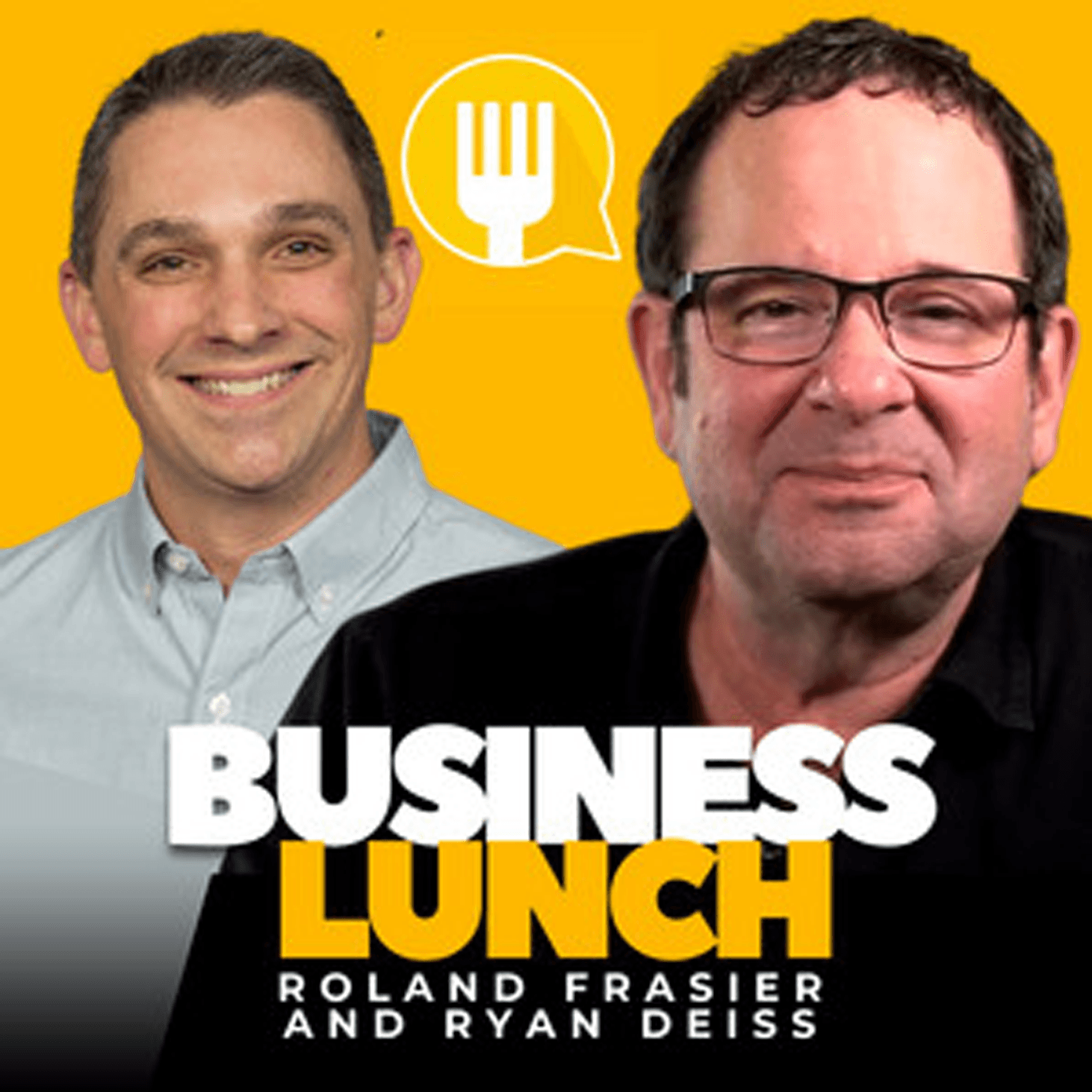
Podcast Overview Title: Business Lunch Host: Roland Frasier Guests: Ryan Deiss Description: The podcast explores the journey of entrepreneurship through conversational insights from successful entrepreneurs. Each episode aims to provide listeners with strategies and tactics to enhance their business acumen.
Episode Summary In this episode, Ryan Deiss and Roland Frasier delve into the evolving concept of personal branding and entrepreneurship, introducing the idea of the "Individual Empire." They discuss how creators transition from mere influencers to sustainable business owners by building systems, teams, and processes around their personal brands.
Key Chapters
- Introduction to the Individual Empire Concept (00:00)
- Shift in entrepreneurship towards creating businesses rather than just personal brands.
- Defining Personal Brands vs. Individual Empires (02:32)
- Personal brands are built on fame and trust, while individual empires monetize that trust.
- The Transition from Media to Brand Ownership (07:35)
- The move from traditional media models to owning brands is gaining traction.
- Bottlenecks in Content Creation and Audience Growth (12:39)
- Challenges in scaling content creation and audience engagement.
- Building a Team for Sustainable Growth (18:46)
- Importance of team building to overcome individual limitations.
- The Role of Trust in Consumer Relationships (22:41)
- Trust as a core component of successful consumer relationships.
- Valuation of Individual Empires vs. Brands (24:26)
- Discussion on how individual empires are valued compared to traditional brands.
- Best and Worst Case Scenarios for Creators (29:59)
- Potential outcomes for creators transitioning into business owners.
- Final Thoughts on Building Sustainable Businesses (36:08)
- Emphasis on architecture and systems for long-term success.
Key Concepts and Insights
Individual Empires vs. Personal Brands
- Personal Brand: Defined as fame and trust that can be directed towards various avenues.
- Individual Empire: The process of monetizing that personal brand into a sustainable business with potential for scalability and transferability.
Transitioning from Creator to Business Owner
- There is an increasing number of individuals looking to build actual businesses, moving away from being merely creators or influencers.
- The podcast highlights notable examples such as Mr. Beast and Kylie Jenner as successful cases of building brands from personal influence.
Bottlenecks in Growth
- Individuals often encounter limits on content generation and audience engagement due to time constraints.
- Solutions involve building a team and systems to mitigate these bottlenecks.
Trust and Consumer Relationships
- Trust is crucial for retaining customers, emphasizing the need for personal engagement from business leaders.
Valuation of Empires
- The discussion reflects on how individual empires may not be easily transferable or acquirable, drawing parallels to historical figures like Martha Stewart.
Building Sustainable Businesses
- The focus should be on creating a business model that allows for scalability rather than dependence on the founder’s personality.
- Emphasis on the need for systems and processes to ensure business longevity and effectiveness.
Key Takeaways
- Systems Over Star Power: Success in building an individual empire relies on creating effective systems that allow for sustainable growth without dependency on the founder.
- Building Teams: Crucial for relieving the burden on creators and allowing for a focus on higher-leverage tasks.
- Transferability of Value: The challenge remains in creating a brand that can exist and thrive independently of the founder.
Final Thoughts The episode stresses that the path to building a successful individual empire is not merely about gaining visibility, but about creating a robust architecture that supports sustainable business growth. Entrepreneurs are encouraged to reflect on the long-term viability of their brands and the systems needed to support them.
Connect with Roland Frasier
- [TikTok](https://www.tiktok.com/@rolandfrasier)
- [Instagram](https://www.instagram.com/rolandfrasier/)
- [Facebook](https://www.facebook.com/RolandFrasierPage/)
- [LinkedIn](https://www.linkedin.com/in/rolandfrasier/)
- [YouTube](https://www.youtube.com/channel/UCkHnnFgdaTCg8KBd7W_LGSw?sub_confirmation=1)
Resources Mentioned
- [7 Steps to Scalable workbook](https://scalable.co/7-levels-assessment/?utm_source=business-lunch&utm_medium=podcast&utm_campaign=lead-gen)
- [Get my book, Zero Down, FREE](https://epicnetwork.com/books/zero-down/)
- [Build Your CEO Dashboard](https://business-lunch.captivate.fm/ceo)
Listeners are encouraged to share insights from the episode and consider the implications of building their individual empires with the architecture of sustainable business practices in mind.
Written by AI. May contain mistakes. Listen to the episode to check what was said.
Chapters
Tap a time to open that second in VOThe Individual Empire Concept
0:46 to 2:35
The hosts discuss the shift from personal branding to building actual businesses.
“For years, we've told people to build a personal brand.”
Defining Personal Brand vs. Individual Empire
2:36 to 5:05
Differentiating between personal brands and individual empires, and the challenges they face.
“Like basically selling rights to essentially like him, right?”
Monetization Methods in the Creator Economy
5:06 to 7:45
Exploring various monetization strategies for creators transitioning to businesses.
“influencers that are broke, because most of them are, are saying, can we build an empire from what we've got instead of just a personal brand?”
Bottlenecks in Personal Branding
7:46 to 10:07
Identifying the limitations faced by creators in scaling their brands.
“But what they are doing is a lot of sponsored kind of content, right?”
Building a Sustainable Media Business
10:08 to 14:01
Discussion on how to expand media businesses and nurture upcoming talent.
“that they can only get to a certain point and then they bottleneck out.”
Building an Effective Media Network
14:01 to 14:48
Learn how to cultivate a media network by identifying and nurturing talent.
“I think that that's the play and that's where things are going to go.”
The Reality of Content Creation
15:35 to 18:40
Explore the difficulties of content creation and the importance of team building.
“Williams, I know you know him as well, the Wizard of Ads.”
Navigating Changing Channels for Discovery
18:41 to 22:26
Learn about the evolving landscape of content discovery through various channels.
“Like we're not trying to get into the millions or anything like that.”
The Role of Personal Branding in Business
22:27 to 24:28
Understand how personal branding impacts consumer trust and business success.
“So, you know, speaking from, through the scalable lens, is this model anti-scalable by default or do you think it, it just requires a different architecture?”
Evaluating the Value of Individual Empires
24:29 to 28:01
Discuss the potential for individual brands to be acquirable and sustainable over time.
“that's a founder or a trust agent of some sort is, it's gonna be impossible.”
Show all 15 chapters
The Pitfalls of Single-Person Brands
28:01 to 29:50
Explore the challenges of businesses built around a single individual and the importance of branding.
“So I think it has to be - Yeah, you can't rely just on coming up with good ideas at a moment's notice.”
Testing Business Ideas with Low Risk
29:51 to 32:46
Learn how to test and validate business ideas without significant investment.
“And so I don't think, it's the classic buy versus build.”
Navigating Burnout in Entrepreneurship
32:47 to 34:35
Understand the risk of burnout and the importance of separating creative and business tasks.
“I think it's burnout more than anything else.”
Creating Effective Systems for Founders
34:36 to 36:24
Discover the need for effective systems to reduce founder dependency and improve productivity.
“And let's see if we can't get that off their plate to free that up to do something that's higher leverage.”
Architecting Your Business for Longevity
36:25 to 39:29
Learn how to build a sustainable business that can thrive without constant personal involvement.
“I didn't do enough of it or it's not catching on or the, you know, the algorithm hates me because I can't keep up with its insatiable demand for new stuff.”
Transcript
Automatic transcript. May contain errors.0:00Hey, everybody. Welcome to another episode of the Business Lunch Podcast with your hosts Ryan Dice and me, Roland Frazier. Ryan, how are you doing today? I'm good. I think we need to be described as the hostess. with the mostases i like that i like that i'm actually going to change to my anti-glare glasses because i see reflections off of the glasses that i have on you are going glassless so obviously you're not going to be reading anything today well because because i my glasses have so much glare so you i can get them without without glare yeah you get as you well know i'm now blind you it just don't need the glasses you just read use the glasses to look smart i know i know yeah i wish yeah i hit 42 and my eyesight just fell off a freaking cliff but fortunately because this is a podcast all i have to do is stare at your beautiful face i don't have to read anything necessarily well hopefully when i hit 42 i won't have that happen to me but um the yeah um so anti-glare lenses and uh anti-reflective frames that's that's the magic so i literally keep a pair up here specifically for that because otherwise it's like, yeah.
1:12So anyway, here's our intro for today. For years, we've told people to build a personal brand. And for months, you followed that advice. And for years, I've followed that advice. But something interesting is kind of happening right now. And it's not really about influence or followers or content calendars, more and more people are quietly trying to turn themselves into businesses, not creators, not consultants, but actual operating companies with revenue and teams and systems, and in some cases, actual value that can be transferred, one of our three pillars of scalable, which is transferable value.
1:50So today, we wanted to talk about what we're starting to think of as the individual empire. So the big question really isn't whether it's possible, because clearly it is. It's whether most people really even understand what they're building when they do that. And is this the most empowering shift in entrepreneurship or is it kind of headed down the wrong path? I'd like to talk about that. Or is it like a new way to just accidentally create a very expensive job? So that's what we're going to unpack today. I wanted to get your initial thoughts on the topic and then we'll dive into some questions.
2:31Yeah, so I think I heard about Mr. Beast considering this, right? Like basically selling rights to essentially like him, right? Who else is looking into this model? And maybe just for context, if you could sort of break down exactly what this new influencer business model is, that might be helpful for the listeners. I mean, really, it's just something that there's a conversation going on about that, that we're moving past building a personal brand that people are actually trying to build businesses around themselves. So what does that mean? I think it means a personal brand. I think that definition can be helpful and let's come to it together.
3:17But I think of a personal brand as basically fame and trust that can be pointed in any direction. And I think of a personal empire as monetizing that trust and fame. Like you've built an audience that you can talk to, that trusts you, and that's a personal brand. but how do you turn that into an actual business? And it's, it's not that it hasn't been done for years because it has, you have, um, um, is it yoga with Emily or something like that? I mean, you have a lot of, uh, of people who basically are their brand and they're, they start with information. They then move into courses and then they move into products and, um, and they do build businesses around themselves.
4:11And we, we, talk about that. You did that long, long, long time ago, initially, I think with digital marketer. So the, the trend though, is that more people are moving from shout outs and affiliates and promoting other people's brands into creating brands around themselves. And probably the most famous one I could think of would be Kylie with her makeup or Fenty with Riri or mostly women, right or um uh kim kardashian and you know and and she has a few now right so that that mr b is doing it with feastables and beast games and some other things like that as well yeah um that's out there i think what's what's different is that that that started with the bigger celebrities and that was you know i i think you're seeing it trickle down into hey all of these people now that are influencers that are broke, because most of them are, are saying, can we build an empire from what we've got instead of just a personal brand?
5:15So yeah, that's kind of how I'm thinking about it. And I love that we're starting with the definition, because I think that's important. And I've always drawn a distinction between media and brands, because they are different. And And typically, media is the thing that aggregates the attention. And it's brands that want to advertise on the media or they want to partner with media to have access to that attention. And so it's funny that we've always used the term personal brand because for the most part, personal brands are actually media. That's what they actually are. And so what we're talking about here really are personal brands, which is why I think the term influencer might be better, influencer media.
6:03What they're deciding to do is they're deciding to launch their own owned brands. And I think that's really wise. I think that's really smart because in and of itself, media is not that great of a business model. That's been shown time and time and time again. Again, if you just go and look over the past couple of decades, one of the poorest performing business models out there has been media across kind of all things. Now, obviously, if you're going to lump, you know, meta into that, then clearly it beats everything. But I don't necessarily consider social media and meta into that. I'm talking about kind of everything but that.
6:43But so I do think that if they're going to say that what they've done is they've created media, they've created an aggregation of attention, then yes, the best way to monetize media is through having your own owned and operated brands. The challenge is that it's a fundamentally different business model. And a lot of these people know the media business. They don't know the brand business. So that's where the rub happens. And that's where you've seen a lot of them make a lot of mistakes. Yeah. So what would you say is the difference between a creator with revenue and what we might call an individual impact?
7:22Well, I mean, you could be a creator with revenue and you are simply you have a YouTube channel and that YouTube channel is monetized through revenue sharing with YouTube. Yeah. Right. I mean, that's I think it's the most basic level. which is generally like if you watch the YouTubers, they're all like, yeah, I don't make anything from that. I make Jack from that. I can have a billion views and make, you know,$8. But what they are doing is a lot of sponsored kind of content, right? And that is your classic traditional media model. I mean, if you go back to, you know, newspapers, radio, magazines, that was kind of their bread and butter.
8:05We're going to run ads, on our channels. That's what they do. And that's what a lot of these creators are doing. That is the simplest, the most obvious, and one of the poorest performing monetization methods. Now, kind of a level up from that is brand partnership deals. And this is where somebody who owns media will go directly to a brand. And as opposed to joint venturing with that brand, I'm sorry, as opposed to doing an advertising deal with that brand, they'll do a joint venture with them. Well, they say, hey, I know for a fact you're making a lot more money by appearing on my, you know, in my advertising, on my social media channel, then you're paying me.
8:50So what do you say we partner together? And I remember we did this a long time ago where we were, we actually did the inverse of this where, yeah, We had an affiliate of ours that we were paying them 50 % commissions. And we realized that this affiliate, which was a newsletter, that they sold advertising. And their ad rates were dramatically less than what we were paying them. We simply closed off the affiliate program and went the ad model and they never even noticed. It was such a large company. And so I think a better way to do it is that. If you know your value and you can negotiate those deals, then doing those kind of joint ventures to the point of eventually getting equity.
9:42That's what you've seen Ryan Reynolds and The Rock and a lot of these other folks do. And then the level up from that is when you're actually launching and creating your owned brands. And that's when you're getting that empire that you're talking about. Yeah. And so a couple of questions around that. At what point would you say that the personal brand stops being an asset and it just becomes a bottleneck? A lot of the people that you talk to that have gone this route talk about running into a wall, that they can only get to a certain point and then they bottleneck out. They can only create so much content.
10:16They can only expand their audience to so much. Where would you say that typically happens? I mean, I think I'd kind of ask you because you've been on this content creation hamster wheel longer than I have. But when you're just one person and you just have 24 hours in a day, you're going to run out. And you're going to run out of steam at some point. You're going to run out of ideas. And it does just get tiring. You know, it does just get old. And I think that's one of the challenges that a lot of these creators have. So if they can't figure out a way to expand their content creation things beyond themselves, then yeah, I think that's when it becomes problematic because the audience is going to constantly demand new.
11:07It's not like a band that can go on tour and just play the same hits over and over again. When you're talking about these different social channels, you got to sing a new song every day. Yeah. And it generally has to be you, you know, can't be AI you, although I've seen AI channels, but they just don't perform like, like, like that. But it seems like it's, you know, you, you have unicorns like Mr. Beast and Kylie and things like that, obviously. But, but I'd say for the average bear, it's in that million to 5 million range is kind of where it caps, which, I mean, if you can, if you can generate that as revenue, and let's say you can operate at a 45, 50 % margin, you know, you can make a lot of money.
11:46So there's a lot of people, I think, that are in that, you know, three, four, five, $600 ,000 a year range that are doing that by themselves. And I think that's the thing, like that that's where the bottleneck happens of where to go. So if you were advising somebody like that, what would you tell them? I think it's more interesting if you own media, then the beautiful thing about media is media can birth brands. But the other thing that media can birth is media can birth other media. And you remember we did this back in the day with Native Commerce, which was our media and e-commerce company. So we had this one business, which was Survival Life, so it was in the survival and preparedness space.
12:39We had a media channel there and we were able to then, leveraging that list and leveraging that media channel, launch a homesteading business because there were a lot of survival and preparedness people who also were homesteaders. So they wanted to live off the land and do more pioneering stuff. Well, the homesteading community happened to have a lot of women in it. And so from the homesteading space, we were able to launch a makeup tutorial site. I mean, if you think about it, we basically had makeup tutorials was two degrees of separation removed from survival, from a survival thing where people were literally teaching people how to safely drink their own urine.
13:16OK, this is what media is able is able to do. So if I'm advising these folks, I would say just like in Hollywood, every actor wants to be a director. Every director wants to be a producer. You got to get on the production side. And so if you're Mr. Beast, I think it's your job to figure out who is the next Mr. Beast. And where you see this, the models are already out there, right? You see this in the music business. You've got to figure out, you've got to create your own label. And so you need to figure out who is the next Mr. Beast in my industry. Who's that person coming up that's got 50, 60, 70 ,000 subscribers, but you see that they've got that thing.
13:57And maybe you can partner with them early on. and cut them in and nurture them up and have them be a part of your greater media network. I think that that's the play and that's where things are going to go. And you've seen some companies do this. Barstool Sports has done this. And I mean, one of the downsides to this model is you're going to build a lot of these people up. And some of these folks, when their contract's over, they're going to spin off and they're going to go out on their own. But that's just a part of the deal. And then your job is really to have good taste. and to be good at identifying that next generation.
14:33And as long as you can do that and build systems and processes around that, then you can have a business. You can have a media business that's sustainable and that's not relying upon just you. You've got the thing launched, but you don't have to be the one staying there forever. What would you say is the thing that people massively underestimate about turning their audience into a real business? Hey, business owners. I've got a quick question for you. Do you feel like you're missing the data you need to make strong business decisions? If so, it's probably time to build a CEO dashboard. It's an easy way to get everyone in your company literally on the same page, focusing on the numbers that matter.
15:12So the Scalable Company put together a free spreadsheet template that will give you everything you need to deploy your own dashboard. And to make it even easier, Ryan Dice recorded a short training on how to use it. If you want to get your hands on the template, go to businesslunchpodcast.com slash dashboard. that's businesslunchpodcast.com slash dashboard and you can download it for free I think people underestimate just how difficult and how long it takes to build a real audience because they confuse views with audience and this is especially true with short form because short form you can have a single video that goes viral and be like oh look I got millions of views and it's like hey what you had was a whole lot of strangers who saw you once and will never see you again.
16:00And so the amount of time that it takes to actually build these parasocial relationships where people have been watching you long enough that they feel like they have this relationship and they want to continue to see you on a regular basis, that just takes time. One of my friends and mentors, Roy H. Williams, I know you know him as well, the Wizard of Ads. He's been preaching for decades that in the radio business, it takes 13 to 15 weeks of a radio campaign. So running a radio ad campaign consistently, at least once somebody's hearing this, at least a couple times a week, the same ad, it takes 13 to 15 weeks to bury that brand message into somebody's brain.
16:55I think the same is true when it comes to building some type of brand and some type of audience online. And I just don't think that people are willing to stick it out that long because it's just hard. So I think that's the hardest part, building the lists. And then, yeah, it also doesn't monetize as quickly or as bigly as you might want it to. Yeah. I mean, I think the whole thing is hard, really. Yeah. I was going to say, what do you think? Because you're doing it. it's all hard. And you do have to build a team. I think that's the big thing is that you're going to cap out really quickly if it's just you.
17:30And it's really hard to find the people. And there's everybody and their brother that's out there offering to do all the things that you need to do, selling you the picks and shovels to dig your gold mine. And most of them are defective. You know, most of them don't know what they're doing there. You know, they also run businesses where they can have one or two clients and then they fill up and then, you know, they give you terrible service. The new client gets the good service. The existing clients get the crappy service. A lot of them have limited playbooks. You know, we know how to do this and then they do that.
18:00And that's how they kind of made their name. But then they do that and there's nothing else. And then that thing ultimately saturates and isn't effective anymore. I mean, I think it's the The content generation, I think, is the easiest part these days to generate great content. If you are good at what you do and you use AI to help you to iterate into your, you know, your things that are working. But all that back end stuff, look at how many teams we've got supporting our personal brand stuff. Right. We have a team that and they were hard fought to find. Right. We've got a team for YouTube. we've got a team for x and linkedin we've got a team for insta and facebook uh we've got a podcast team and what am i missing you know it's it's like and don't even get to email and you know ads and all that kind of stuff it's a lot yeah no you're right i'm gonna amend what i said i think the building of the team is is the hardest part and so much of and we're tiny right like our our I mean, our channels are tiny and simple.
19:07Like we're not trying to get into the millions or anything like that. I mean, we're by and large talking to a relatively small segment of the market. You know, we're talking to seven, eight, nine figure business owners. We don't need to get into the millions for this whole thing to work for us and the people who are, my goodness, you've got to build a team. And at some point, if you want to go big, you've got to build that team internally. It's, yeah, I think you're right. I think that is the team building aspect is the hardest, especially when you consider the number of just absolute chuckleheads in this space, people who will claim to be good at this stuff and they're not.
19:46I think it's higher than just about any other vertical in business right now. Yeah. So would you say Teams is where it falls apart most more than? Yeah. That's why I'm amending what I said before. I think Teams is actually more difficult than even the content consistency in the weighting. 13 to 15 weeks to build a brand. I think so too. And I also think it's longer than 13, 15 weeks. I think that's if you're hitting, like if you're advertising on radio, that makes sense. But if you're trying to get the attention of the world, it takes a long time. I mean, most of them I see it's 18 months plus, you know, to get any kind of traction, you know?
20:23And the curve is like this. It's like, you know, it's very long. And, but once you put it in, you know, it can go, it can go well. The problem is, is that, that people, you know, like my son was talking about starting a podcast the other night and I was like, okay, we got to get 10 in the can. Uh, it's going to come across. Like if you're doing a weekly thing, figure out, you know, how frequently you're going to publish. And if you're doing a weekly thing, I'm telling you those weeks run around and we've been 30 weeks ahead at, at times. And then I feel like, you know, the next day it's like, oh, yeah, we're out of content.
20:54Oh man. That's like, I was just enjoying that, you know, off the hamster wheel for that bit of time, but it, it, you have to really commit to it. It's, it is like a job, you know, when, and the shifting of the channels as well, I think is another painful aspect of it because speaking of podcasts, right? Like what we're doing right now, um, there was a time when podcasts were a really good discovery platform. Like if you put out a podcast, it could somewhat grow organically. That's not really the case anymore. Like it's, it's really, really hard. If you're going to launch a podcast, it is hard to break through right now.
21:30I mean, heck, they just had a podcast award at the most recent, what was it, the Golden Globes or something like that? They gave away an award for podcasts. I mean, podcasts are so mainstream that it's just hard. I mean, the top lists are full. It's sort of like saying, I think I want to launch a show on Netflix if they were wide open. And just the algorithms that are out there aren't as good at serving up the unknowns as YouTube is, for example. So like right now today, YouTube is pretty good at discovery if you have a relatively small channel. So is X right now today. LinkedIn is okay, but a lot of these other channels aren't.
22:10And so figuring out which channels are good for discovery if you're just getting started, those are the ones that you want to get started with. The other ones you may want to wait until you have an audience. The thing is that changes all the time. And so you, not only do you have to get good at content creation, but you also have to stay up to date on which channels are working today and specifically what's working in those channels. It's exhausting. It is hard. It's hard. It's hard. So, you know, speaking from, through the scalable lens, is this model anti-scalable by default or do you think it, it just requires a different architecture?
22:48It's not anti-scalable by default because so much of it can be systemized. We can build systems around this to the point where right now for me, as it relates to scalable and what I do, I've got it down to where I show up, I come into this room, I literally press a few buttons, and I get to talk into a camera for a fixed amount of time and then I'm basically done. And you're still at your house. Now, there's going to come a day when I decide that I don't want to do that anymore and somebody else then will likely need to do that. But it doesn't necessarily have to be me. But I'll tell you this, man, I do think the days of just kind of the nameless, faceless brand, I think they're largely over.
23:41I saw this study that G2 put out, and it said that I think consumer trust is at an all-time low. There's like 100 billion studies that are showing that, and it just keeps going down. The one thing that is impacting consumer trust to the positive, I think 87 % of consumers said that they're more likely to trust a brand. if that brand's leadership and particularly their CEO is active on social channels. So I just think the highest and best, one of the most leveraged things that you can do as a CEO, as a founder of your company is to serve as that company's spokesperson. Yeah, I think you have to.
24:27I think the back office CEO without another spokesperson that's a founder or a trust agent of some sort is, it's gonna be impossible. Yeah. And it's not. You will at some point get disrupted by someone who is doing it. It's just as simple as that. 100%. So you really can't do it now. But would you say if we look down the road five years from now, do you think these individual empires are acquirable? Or do you think they just die with the founder when the founder gets burnt out, tired, dies themselves, whatever? I mean, the analogy that we've used is goose and eggs, right? I think the individual empires are the geese, and I think the brands that they spin off are the eggs.
25:12And I think the eggs are acquirable, but I don't know that the geese are. It's hard. Yeah, I don't know that anybody's necessarily going to buy Mr. Beast. And look, none of this stuff is new. Just look back into the 90s and you have Martha Stewart living. Right? And I would just simply say, like, how'd that work out? That's a bit of a cautionary tale where you have someone who on the, you know, back of her personal brand. And I'm not hating on Martha. We've had the privilege of meeting Martha Stewart and interviewing her. I think she's amazing. I think she's phenomenal. But you're one slip up away.
25:59You're frankly not even have to slip up. like just somebody not liking you away from the entire thing coming down and crumbling. And I think today, a lot of investors just don't want to take that risk. So even if you go out, you're likely not going to get the valuation that you might want. So I think it's going to be brands that have a face of these folks, but the brands need to exist separately from them. I like it. So if we were kind of lightning rounding, would you say valuable, valuable or, or just visible?
26:39The, so the, the specifically like the influencer brand, like Mr. Beast, this idea of the individual empire, right? This, my social media brand. That's a business. I think it's insanely valuable to the person, to the influencer themselves. I don't know that it's transferably valuable. Okay. Beyond the brands that the individual brands that get created from it and spun out. Okay. System first or star first? Right now they're star first. What do you think? I mean, it's an interesting question. I like it because it is star first by definition because it is around the personal brand. But the ones that are just that and no systems, I think, fail.
27:32So if I had to, you know, I think that the successful, if we're looking at success, it's got to be systems first. because if you don't have, I mean, if you can't produce that content on the regular basis and have interesting things to talk about and you're not looking at what other people are doing and what's trending and how do you tie into all that? I mean, it is just coming up with the topic is very systemic, right? You've got to do that. If you don't do that, if it's like, what do you want to talk about today? That ain't going to work, right? No. So I think it has to be - Yeah, you can't rely just on coming up with good ideas at a moment's notice.
28:09Yeah, you're going to run out right um sellable or or untransferable yeah i think that i think the core brand as the as the person and even the holding company i think is can can have challenges yeah i agree um i think that a business that's built around one person uh is terrible but if you look at some of the brands like Poppy, um, or, uh, is it Fuku Moku? I can't think of what the noodle company is, but, um, they were built around an initial success that a single person had. And then, um, somebody who was good at branding took it to the next level. So there was basically, I think one video for Poppy that explained why I forget what it was called before, but it was terrible.
29:00It was like, you know, horrible tasting vinegar or something like that. And somebody was like, let's call it Poppy. Um, but, um, that, that is to me, the way that it works is that, that that video happens to catch fire, millions of people get it. And then people start telling their own stories and the, that drives the product, but it's really, I would say more, uh, like a good, a good one that I didn't come up with for lightning would be, you know, launch pad or continuing business, I think it's a launch pad. And I think that it doesn't sustain the business long term without all the other business machinery coming in.
Read the full transcript
29:39So it's a fantastic place to get to launch the brand, but it's not going to sustain the brand. It could be a launch pad for brands or it could be an accelerator for existing brands. If you look at what Ryan Reynolds has done, he will come in and partner with existing brands that are kind of, you know, they're just sort of hanging around there, but then they get sucked into his orbit and he blows them up. And so I don't think, it's the classic buy versus build. I don't know that you necessarily need to launch all of these things from scratch. When I say launch, it wasn't launch from scratch because I feel like he's the one that launched, like the business is there, but it's not been put out into the world in the right way.
30:25Right. Yeah. Yeah. What about autonomy or isolation? How would you define those? So autonomy is basically I get to make my own decisions, but isolation is I get to make them all by myself and I have no support and I'm basically a loner. I mean, you can't do this stuff alone. Yeah. I think that's it. I think that's it. Even for AI. Not at scale. There's no one. Not at scale. Yeah. No way. And I think also autonomy, I mean, anybody I know who's in any type of creative space, they have collaborators. I think it's really, really, really hard if you're a creative person to not have some type of collaborators.
31:07That being said, there needs to be somebody who makes the call because creative by committee is awful. Yeah. So just a few questions to kind of end. What do you think is the best case outcome for somebody doing this? I think the best case outcome for somebody doing this is they, yeah, they wind up with one really, truly amazing brand that winds up taking off. And multiple businesses that are spun off from it. Yeah, I think they use it as that launch pad. And what that gives them is a really low risk way to test different business ideas. Because that's one of the most expensive things that you have.
31:58When you launch a new business, the highest risk thing that you're going to do is some of that initial market testing. You don't know if anybody's going to buy this thing at all. And so the ability to test some of these ideas completely for free, to take them out to the market, to see if your audience has any interest in it, to when you own your own media and you have the ability to do that, that is such an asset. And so that's what that's what they have that I don't know that all of them fully appreciate that they have. But when they have that and they have that ability to test and they have that ability to launch, all they really have to bolt onto that is the ability to scale, and that can be hired.
32:38And so they just kind of need to get lucky once with a good idea, and they can very easily have a$10,$50,$100 million business. Love it. Most likely failure mode. I think it's burnout more than anything else. Just the grind. And it's coming up with an idea, a big idea, and being incredibly precious about it. Like, I've known a couple of these creators where they had their own hardware idea. And they didn't really want to partner with an existing one that was kind of close to test it out. They wanted to do all their own everything. And they wanted to figure everything out. And their two years and a quarter million dollars investment into this, and they haven't made any money, And they're trying to do all of this work of developing this product while they're also trying to be a creator and keep their audience going.
33:35And it just doubles your burnout. Remember, running a media company and building a products or a services business, those are two different businesses. And one of the hardest things you'll ever do in the world is run two companies at the same time. It's just really, really hard. You're not Elon Musk. And Elon Musk has much smarter people working for him than you do. so and more of them uh yeah what is the first thing that you would fix for most people that you that that do this like if you go in and you're like they were like i i got all kinds of challenges what should i do what should i fix first um i mean i think it probably depends on what's on what's broken i would go in and have them fully map out their entire production process.
34:25So show me how you create. So what is the process of you getting the work that you do out there? Map it out. And then have them go through and figure out what is the stepper stage that is taking them the most time. And let's see if we can't get that off their plate to free that up to do something that's higher leverage. That's where I'd like to begin to buy them back some of their time on a, but that's high impact. And that's key. Get them something that's high impact so that they can then start to look for something that's higher monetization. And that can take on a lot of different forms depending on what they're doing.
35:02But almost any time I'm working with a founder, there's something that they're doing that's kind of a little pet activity that they really shouldn't be doing. Right. And they're just kind of holding onto it. It's like their whoopee. It's a little comfort blanket. And if we can just kind of get that off of them, then there's so much upside there. Yeah, it's going to sound funny because it's a little contrary to what the business model is. But I think that the first thing that I would look to fix would be the founder dependency. So that goes to the second thing that I would fix, which is systems.
35:40And I think that the problem is, is that the founder is not just the star, but they are wearing all the hats or most of them. And that that is the recipe for the burnout. That's the recipe for missing the content, regularity, the schedule that you have to maintain. If you are answerable or accountable to anyone, even if it's an assistant, even if it's a calendar, even if it's, you know, a partner that comes on, like anything like that is going to help you avoid the thing that happens the most, which is you just don't do content. And then you slip the one day that you're supposed to do it. And then you're like, oh man, that was nice.
36:21And then you slip the next day. And then before you know it, you're like, yeah, I'm just not going to do that anymore. I didn't do enough of it or it's not catching on or the, you know, the algorithm hates me because I can't keep up with its insatiable demand for new stuff. I think that's it is, is, is, is just, you can't be the, the failure point for everything in the business. And that, that's for every business, not just this kind of business. Yeah. I think we kind of said the same thing. You, you articulated it better. I kind of more described the process of how you would go about, about doing that.
36:52But yeah, I agree. That's, that's what you have to do. Uh, and, and everybody has that one thing. So we're talking about creators and we're talking about influencers, but if you're a plumber, you're, you're doing the same exact thing right now. Like that there, there's something that you're doing that you shouldn't be doing. That's holding you back. And if you can visualize, if you can map your process of fulfilling for your customers, of going out there and getting the customers, there's something in there that you're doing that isn't a truly high-impact activity that somebody else can be doing.
37:23Yeah, I agree. I think that we covered it pretty well. Anything else that you think we didn't talk about that we should highlight? I think it's just worth circling back around and saying, if you didn't think that this relates to you because you're not a creator, you're not an influencer, you're not going to go and try to do one of those brands, I would just suggest to you that if you're a business owner, if you're a founder, if you think one day you might be, this absolutely still does apply to you because this is the new role of every founder, CEO, whether we like it or not. it is to serve as that face of the business.
38:07And if it's not you, then my question is who? Because it's going to need to be someone. And so that's where it's got to be. So if you're kind of the reluctant influencer, that's my message to you. Now for the folks out there who are personal brand centric, your mission is the exact opposite. You've got the spotlight shining on you and maybe you enjoy basking in it, and I get it, that can feel really, really good, your job is to now get up a mirror in front of your face and instead of the light shining on you to figure out where you can direct this light somewhere else. And the question is, where are you going to direct it?
38:49You're getting a lot of attention right now, but you are the absolute worst monetization vehicle of all because at some point, you're going to want to go to sleep and go on vacations. So how can we take the spotlight that's shining on you and redirect that, mirror that towards a brand that is transferable, a brand that works and can be sold while you're still on vacation. So kind of talking to two opposite, you know, two folks at opposite ends of the spectrum there. I love it. I think if there's one thing I hope people could take away from the conversation, it's that building an individual empire is not about visibility.
39:25It's really about architecture. You've got to have systems. You've got to have structure. attention is really easy to rent, but businesses are very hard to build. You heard us both say it multiple times. And I think the real question isn't really whether you can build something around yourself, but whether what you're building could actually survive without you. And that's the difference between leverage and dependency and between a personality and kind of a social thing and an actual business. So I think we leave it there. If you guys enjoyed this episode, We would love for you to share it with a friend, tell people that we're wonderful and that you learned amazing things.
40:02And we will see you next time on Business Lunch.
From the publisher
In This Episode of Business Lunch: Ryan Deiss and Roland Frasier explore the evolving landscape of personal branding and entrepreneurship, focusing on the concept of the 'Individual Empire.' They discuss the shift from being a creator to building a sustainable business, the challenges of content creation, and the importance of team building. The conversation highlights the need for systems and processes to scale effectively and the potential for individual empires to be acquirable in the future. Ultimately, they emphasize that building a business around a personal brand requires careful architecture and planning to ensure longevity and success.
Chapters:
00:00 Introduction to the Individual Empire Concept
02:32 Defining Personal Brands vs. Individual Empires
07:35 The Transition from Media to Brand Ownership
12:39 Bottlenecks in Content Creation and Audience Growth
18:46 Building a Team for Sustainable Growth
22:41 The Role of Trust in Consumer Relationships
24:26 Valuation of Individual Empires vs. Brands
29:59 Best and Worst Case Scenarios for Creators
36:08 Final Thoughts on Building Sustainable Businesses
Connect with me on social:
- TikTok: Check out my TikTok Here
- Instagram: Check out my Instagram Here
- Facebook: Check out my Facebook Here
- LinkedIn: Check out my LinkedIn Here
- Subscribe to my YouTube 👉 Here
Resources:
• 7 Steps to Scalable workbook
• Get my book, Zero Down, FREE
Mentioned in this episode:
Build Your CEO Dashboard
Get one report every week of the key metrics you need to know with the CEO Dashboard!