In short
Business Lunch Podcast Summary: Micro Ownership: A New Way to Motivate Employees
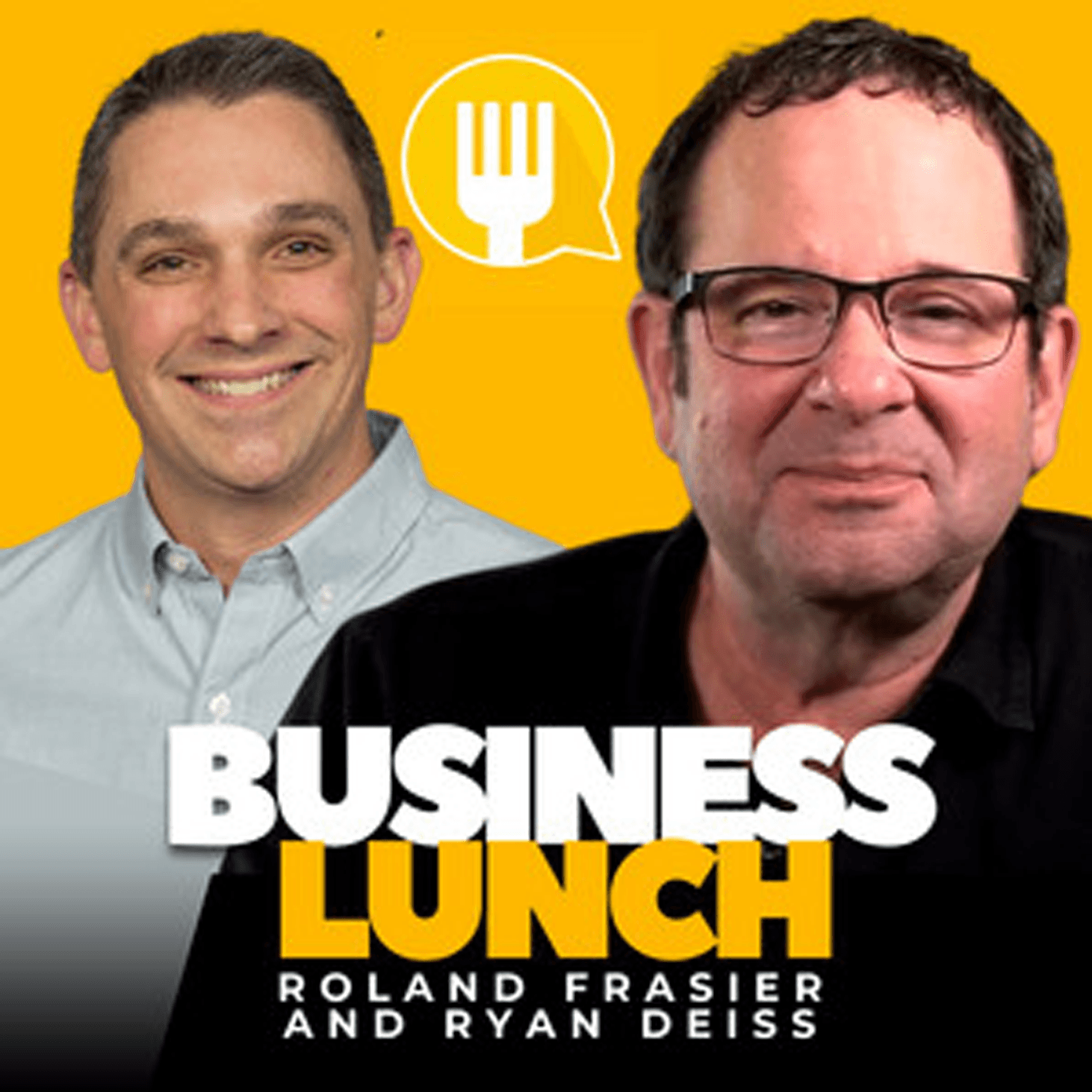
Episode Overview In this episode of the *Business Lunch* podcast, hosts Roland Frasier and Ryan Deiss delve into the innovative concept of "micro ownership." This strategy aims to motivate employees by giving them ownership of specific business metrics, thereby enhancing their entrepreneurial spirit.
Key Concepts and Discussions
What is Micro Ownership?
- Definition: Micro ownership allows teams to bid on improving key performance indicators (KPIs) that impact profit.
- Objective: To create a sense of ownership and accountability among employees, making them act like business owners rather than mere employees.
Key Highlights from the Episode
- Employee Ownership: The desire for employees to act more like owners is a common theme among business leaders.
- Performance Metrics: Essential to identify three to five key metrics that directly impact profit.
- Bidding Process: Teams can bid on which metrics they want to improve, proposing how they will achieve specific results.
Step-by-Step Implementation
- Identify Key Metrics: Founders should pinpoint three to five metrics that have a direct influence on profits.
- Team Bidding: Teams can bid on these metrics, proposing fixes and improvements in a competitive format.
- Financial Incentive: Implement a system where teams can earn a significant percentage (25%-50%) of the financial impact of their improvements over a designated time frame (e.g., 90 days).
Potential Challenges
- Bidding Risks: Concerns arise regarding the consequences if a team fails to meet their bidding goals.
- Equity Concerns: The term "ownership" may mislead employees, leading to expectations of equity in the company.
Proposed Solutions
- Hypothesis-Driven Bidding: Each bid could include a hypothesis outlining the actions the team will take to achieve the results, improving accountability.
- Team Collaboration and Peer Pressure: Introduce a company-wide bonus that is contingent on all teams meeting their goals, encouraging collaboration.
- Consequences for Failure: Consider implementing a form of light-hearted punishment for teams that do not meet their targets, such as a humorous dress code for a day.
Maintaining Entrepreneurial Spirit
- Discussed ways to maintain an entrepreneurial culture within organizations as they grow.
- Identifying high-agency individuals who take initiative can help in fostering this culture.
Timestamps
- 00:00 - Introduction to Micro Ownership
- 03:07 - Discussing the Founders' Board Member's Idea
- 06:11 - Employees Acting Like Owners
- 07:26 - Identifying Profit-Impacting Metrics
- 10:15 - Initial Thoughts and Potential Challenges
- 12:20 - Developing a Bidding Mechanism
- 14:21 - Bonus Distribution and Team Incentives
- 17:47 - Potential Consequences for Not Meeting Goals
- 19:24 - Maintaining Entrepreneurial Spirit in Growing Companies
Conclusion The episode presents a fresh approach to employee motivation through the micro ownership model. By allowing teams the autonomy to take control of specific performance metrics while also aligning their financial incentives with business success, organizations can foster a more engaged and entrepreneurial workforce.
---
Connect and Resources
- Ask Roland a question: [Business Lunch Podcast](https://businesslunchpodcast.com/)
- 7 Steps to Scalable Workbook
- Free Book: *Zero Down*
Follow Roland Frasier
- TikTok: [@rolandfrasier](https://www.tiktok.com/@rolandfrasier)
- Instagram: [@rolandfrasier](https://www.instagram.com/rolandfrasier)
- Facebook: [Roland Frasier](https://www.facebook.com/rolandfrasier)
This structured markdown provides a comprehensive summary of the podcast episode on micro ownership, capturing key insights and discussions while maintaining clarity and accessibility for readers.
Written by AI. May contain mistakes. Listen to the episode to check what was said.
Transcript
Automatic transcript. May contain errors.0:00Yeah, but the technique, I think the playbook for it is a little bit different. it. And the way that they do it is, I think, kind of cool. So step number one, you as the, you know, as the founder, you see identify three to five key metrics that directly impact profit. So what are the things that you're looking at and saying, these are some things they directly impact profit. We know that if we improve these, we'll all just make more money. And they could be marketing related, sales related, they could be ops related, efficiency, whatever but come up with three to five then you essentially let teams bid so like have kind of and you could do it based on department or you could have people sort of group up in like a strike team type scenario and have them kind of bid and say you know i i believe that if we're given this metric that we can achieve this result we were just talking about uh sayings like It is what it is.
1:00It will be what it will be. They are who they are. And the good news is, folks, all of those sayings are absolutely true. So profound. You heard it first here on Business Lunch, which you are now welcome to. Welcome to Business Lunch with your host, Roland Frazier. That's me and wonderful Ryan Dice. Should we just maybe start calling you Mr. Wonderful? Let's see if we can get some trademark infringements while we're at it. Sure. Let's do it. I don't think I need for another movie. I don't think I need that's just too generic. Fantastic. Fantastic. By the way, you have to check out, if you haven't, Kevin O 'Leary's musical career.
1:43It is, if our producer is still on here, Ryan, if you're on here, can you pull up the amazing guitar Moog solo of the real Mr. Wonderful? I bet he's gone. Is he there? Are you there, Ryan? It says he's here, but he's probably off having a coffee or something. Describe it. Paint a picture in my mind. Oh, no, here we go. Here it is. This is so wonderful. So wonderful to see. Is it wonderful, like, with air quotes? It is special. Is it wonderful, like, with a P-H instead of an F? Yes. Like a B-U-N-D-E-R-P-H. this is exactly this right here. This is what the people come for. This is what you, this is, this is what gets us those like five and six star ratings.
2:37This is what put us in the top 100 business podcast. I know a top 100 of all podcasts there for a moment, right? Clearly, clearly we said something that pissed somebody off. We should have done, we should have researched having this. So you can just interrupt us with that, Ryan, when you find it and we'll play it. But, um, but what we're going to talk about today with, uh, with Ryan, who may or may not become Mr. Wonderful, we're going to decide, you guys vote and let us know, is something that you've been thinking about, an idea you've been bouncing around. You said you wanted to bounce off me.
3:07So what you got? Yeah, yeah. So this idea came from one of our Founders Board members, threw it out as a suggestion, an idea that they kind of had. And I was like, that sounds like an interesting idea. So I thought I would run it. That Founders Board member is, if you are listening, remember you can't protect as intellectual property ideas. Whoever takes the idea and makes something of it owns it all. So you get nothing. Yeah, you get nothing. Nothing. Nothing. We pay you no royalties. Yeah. You drank the fizzy lifting drink. I was going to say, it's as if you drank the fizzy lifting drink. Yeah.
3:40Okay. All right. So they had an idea, which we have deployed. Yeah. Well, in fairness, we're stealing it to give to everybody else. So this is a Robin Hood-like strategy. Well, then it's okay. It's not like we're charging for this, man. It's hard to even us. We have no financial incentive for this. It's like, we don't need to have advertising. All right. So here's the basic idea. So, oh, did we find it? All right. Here we go. First, we got to love the shirt.
4:15Digging the outfit.
4:22That's all it ever. It doesn't get any better, guys.
4:28so Roland you're a synth guy is this pretty good on a scale of one to ten is this like an 11 I mean the ability to create a cat meowing and dying on a synthesizer is pretty talented it really really is it's like playing chopsticks on the piano playing the jaws
4:45you don't even need to make chords just sound
4:57oh that's fine
5:03i'm gonna see if he can at least play a guitar like i couldn't do that yeah he's got a little bit of a run there but the one that the guitar one that i saw was just basically back and forth on one string too
5:21That's how calendar works.
5:42He's learning some chords. So he's getting better. But the synthesizer was my favorite because it was just like, we, we, we. Yeah. So all of that to me sounded great. As somebody with no musical ability whatsoever, I need you to know I truly am in awe. Okay. All right. It seemed astounding. It's like I have no artistic ability. Somebody draws a perfect circle. Jaw dropped. That is, that is impressive. Okay. Yeah. Anyway. Okay. Let's go back to, to our stolen idea. I see what I thought this was, we were transitioning this show into your new YouTube scent show, but I guess not. You want to keep this business related?
6:21Just for today. We're going to get there. Okay. All right. So here's the idea. So all of us, I think, as business owners, we wish that our employees acted more like owners, right? That's kind of the general initial thought. And so what a lot of us do to try to get our people to act more like owners is we give them equity. And you and I have talked on like 100 different shows about how that typically is a bad idea. You don't necessarily need to give equity. You shouldn't give equity. Are there times when it makes sense? Yes, but those times are few and far between, especially for closely held bootstrap businesses.
6:54Other companies will do profit sharing as another way to try to make employees think a little bit more like owners. Well, what this person's idea was, and again, I thought it was cool. I want to write it by you. He calls it the micro ownership. right and so the micro owner system because it gives employees direct ownership over specific business metrics which is kind of what they do i mean we have that we call them stakeholders in jobs anyway right it's like you're going to own these metrics during this quarter you're going to own this campaign etc okay yeah but the technique i think the playbook for it is a little bit is a little bit different right and the way that they do it is i think kind of cool so step number one you as the founder, you see identify three to five key metrics that directly impact profit.
7:41So what are the things that you're looking at and saying, these are some things that directly impact profit. We know that if we improve these, we'll all just make more money. And they could be marketing related, sales related, they could be ops related, efficiency, whatever, but come up with three to five. Then you essentially let teams bid. So like have kind of, and you could do a based on department, or you could have people sort of group up in like a strike team type scenario and have them kind of bid and say, you know, I believe that if we're given this metric, that we can achieve this result.
8:16And so in an almost like auction, silent auction, like setting, people will say, I want this metric. And this is what I believe that we can do to improve it. Based on that improvement targets get set, and then teams get full authority to improve the metrics. And then what you do is you don't just do broad across the board profit sharing, but you share a far more significant percentage of the financial impact of that owning team for like a period of time. So you might give them like 25 % for like for the next 90 days, whatever the impact is, you get 25 % of this. And then after that, it's just goes in whatever.
8:57So it's really project based, very tight. It's designed to create this result. And they're going to, as long as there's an improvement, they're going to, they're going to earn, but they really only earn to the degree that, that there was an improvement and you only pay them on the over, but you give them like a lot. And he was like, I'd give him 25 % or maybe 50%. Like, what do you care? It's on the improvement. Obviously you got to factor in margin, gross margin, depending on where it is and things like that. But he's like, be really, really generous because if you're only doing it for, you know, 30, 60, 90 days, even if you go backwards a little bit, you now have this improvement for the rest of the time.
9:32So that's kind of the basic idea. I liked it. I like the micro owner aspect. I like teams kind of coming in and bidding on it as opposed to assigning it to them. Um, cause it is more entrepreneurial. It's them basically saying, yeah, we're going to, we're going to take this on, you know, we're, we're going to tackle this. It goes, it kind of reminds me of the episode that we did a couple, a couple of weeks back where we talked about agency and wanting to find some high, like this seems like a good way to identify high agency people. Like the people who are willing to say like, I'm in would likely be a way to identify high agency people.
10:09So that's the idea. I just want to see like poke holes in it. Plus it, say it's stupid. What are your thoughts? I like the, my initial thought is it doesn't sound that different from anything that I've seen before that we've used in terms of a significant incentive for achieving a certain result. Then when you kind of go into it a little deeper and talk about the bidding component, I like that a lot. The recovering, not so fully recovered attorney in me says, I don't really like calling it ownership of any type. Well, it's micro ownership in air quotes. It's in quotes, Roland. Yeah. I still get a little nervous.
10:53I was promised ownership. Oh, wait, but for 90 days. Oh, you know. But yeah. It's your own responsibility. I think it's cool. No, I get it. I think it is a good novel approach. I like the bidding and I like the creativity in the name. I think that's cool. Downside. I mean, the only thing I could think of is that it's going to perhaps attract in the bidding process, the more risk friendly and, uh, disincentivize or not help recognize those who are motivated differently. But you know, that, that might be okay. Like, like there's, I think that, uh, there will be people who will be like, what's the consequence if you bid and you're wrong?
11:49Yeah, that was my question. I said the same because I'm thinking like, how does this break? Yeah, it's always the question I ask. And it seems to me like it breaks because my favorite thing about it is also my least favorite thing. And that's the bidding mechanism. Right. So the idea of somebody coming in there and saying, oh, I believe I can achieve this result. Right. And so essentially the the prize goes to the highest bidder. Well, there's got to be some type of downside risk or like everybody's just incentivized to bid the most. And like, oh, if I don't make it, then like, well, gosh darn it, I tried my best.
12:21What is, what does this person use? So he was saying like, he didn't have an answer for it. So what I was thinking was the bid should be, I believe I can achieve this result through the following action. So every bid should essentially be a hypothesis. So it's not merely a bid, but it's an actual hypothesis. You know, I believe that by doing X, Y, and Z or just X, if it's one big thing, we can move this metric from here to here by this date. And so if you create a template around what a bid is and in that template includes what are the actions that you're going to take? What is the improvement that you're going to make?
13:01And what is the date that you're going to achieve that improvement by, then at least you can look at it and say, okay, do I believe that they have the ability to pull that off? Can we give them the resources to do that? Because that'd be the other thing. Somebody's like, well, yeah, I mean, to do this, I'm going to need$10 million. I just need money, people, and capital equipment. If I have that, I can do it. I'm going to need to go hire an entire team. Yeah, I need to go hire The Rock as a spokesperson. them. That was what I was planning. That was my whole big thing. You've thought about this a little bit.
13:36Did you come up with anything on the downside if they don't hit it? I don't. No. As opposed, because I thought about that, I think having something punitive for employees, because to your point, it's not actual ownership. I do believe that ownership should be a function of risk. And in this case, because I had no downside either. Right. I believe the downside in this case is all of this that they're doing is in addition to the work that they have. Like, so you don't get to who gets the up. Let's say that it's 25 % and it adds, you know, a hundred thousand dollars. And now we've got a$25 ,000 bonus that's going out.
14:19Who gets that? That would be, that would go to the person or people who were involved in, in making that happen. I wonder if it would be enough if, if it was basically, because for that period of time, I mean, you might invest, you might be willing to invest more. Um, and if you were, what I was thinking is like, you could create pretty significant peer pressure if there was, a loss to everyone. So it's like, basically, we've allocated 25 % of the profit here, plus we're going to have another 20 % that is a company-wide bonus if this is achieved, to encourage everybody to contribute to help these people.
15:14And then if they don't hit it, then nobody gets the bonus. So then there's big pressure not to overbid because, and it's self-correcting in the politics of the company. Something like that could be interesting. And then also it rewards everybody and it doesn't, it doesn't, uh, you know, the Mac team, the company, like it did with jobs when he was like, I love these people and I hate everybody else. Yeah. They would essentially like need to tip out like how, how waiters need to tip out to like the bartender into the, into the bus. You are literally going to miss out on your bonus if these people overbid and don't perform.
15:50Now, that could encourage people to sandbag too, but there's not going to be any perfect answer. But I do think there has to be a negative consequence that isn't eating at somebody's pay, but that's taking away some potential perk that they get when the thing is hit. Yeah. What you could have there as a downside, and I think this is nearly identical to what you said with maybe just a slight tweak is whatever their possible, like whatever they would receive, some percentage of it, maybe it's 20 % of what they would get, would essentially go into a pool for the entire company so that everybody knows like, hey, you're all incentivized to help these people.
16:34They're the primary, but if they ask for some help, you should help them. Yeah. And so, and here's what they're going for. They've said that they're going to achieve this result. So here's how much is on the line for them. And here's how much is on the line for all of you. So you should definitely help them so that if they don't make it now, I think the downside is number one, the shame of like, well, we missed. And number two, you've got a whole lot of people in the company who are like, well, God dang it. I helped you out for nothing. So I think the risk of the downside risk of extra work with no, with no upside.
17:06I like that because that is entrepreneurial, right? That, that is inherently an entrepreneurial activity. I'm going to do this thing and there's no guarantee that it's going to work out. But if it does, it's going to be big. Also, the need to go and sell others on helping you with this, you know, is is I think another piece that that's important that I that I like about this. But the key is everybody else has to still the company still has to hit its goals. Yeah, nothing gets paid. Yeah, I think that's critical. So as a company, we can't completely miss our targets. We can't lose money. We can't go backwards.
17:42Or nobody gets paid anything, including this. So everybody still has to take care of business. Yeah. And then some sort of humiliation for the people that failed. I think like, you know, you have to come dressed as bananas or, you know, something like that would be a - Dressed as a lot of bananas or a singular banana? Because it's a very different costume. Each member of the team would comprise the bunch. And then they have to cuddle into a group hug of banana bunching for five minutes, I think. Yeah. And when they walk through, people are like doing the bells and saying, shame, shame, shame. Yes, exactly.
18:13Now you understand. Yeah. Yeah. So I like this. Keeping that and shaving their head. It obviously isn't perfect. I think it would be fun. The way that I would do it first, before I made a big production out of it, is if I was going to roll this out, I would try to have one big project that you really wanted to have fixed and say, hey, there's this one thing that I think is really, really important. We don't have the full capacity to green light it. But if one or more of you are willing to take this on, in addition to the work that you're already doing, we were going to hire an outside consultant or an outside team to help us with it.
18:49We figure, why not go with the people that we have? And if all of you are like, no, I don't have time, that's cool. No harm, no foul. But if somebody wants to take it, here's what we were prepared to pay an outside person. And so you can take it. You can earn this. Here's what we would need. And that's the way that I would beta this. because then if it works, you could say, hey, we did this one time. Now we're going to make it a regular thing where we come up with these ideas and you could bid on it. I think it would be better if there was a, you do it once and you get a win and there's a story around it and a narrative around it is kind of how I would look to roll that out.
19:24Yeah. I like that. I like that a lot. I'm sorry, go ahead. I'm just always trying to think of ways that, you know, one of the things that frustrated me so much coming out of COVID is it seemed like in the earliest days of the business, we had a lot of entrepreneurial people. And then as the different companies scaled, you get people here who are less and less entrepreneurial, right? And then that is the nature of business, right? You're going to hire people who, you said this before, they're incentivized by different things. Yeah. Which is fine. Yeah. Right. It's fine. But it got to the point where it felt like there were nobody, there was nobody left who was entrepreneurial because when you have employment, employee minded people who are hiring other employee minded people and you sort of lose that entrepreneurial energy and that entrepreneurial vibe, it just feels like companies start to die a little bit.
20:26Again, just go back to the episode that we did on the high agency people. So I'm trying to think of like, how do we inject some entrepreneurial life into companies? And also how do we identify those high agency folks that we might be able to tap for leadership positions moving forward? This seemed like a good way to get them to rise to the top. Yeah. I like it. I think it's cool. What are we going to do it with? What do you think as far as trying it. That's exactly what I was going to ask you. And so since I came up with the idea, you get to come up with the, um, with the thing. Okay. All right.
20:57All right. I'm on it. I'm going to do it. You see what I did there? I see. I see. Awesome. I came up with the idea for dinner. You have to pick the restaurant. That's what my wife does to me. That's, that's only fair. Well, hopefully you guys found this helpful. If you did, please share it. If you got ideas on how to plus it, uh, please let us know. And, um, we would, uh, you know, we'd love to hear, and then we will figure out how we're going to give this a try and we will try it and report back to you, um, probably in about six months. Cause it's about a three month cycle to go through it. So, um, that'll be kind of fun.
21:29I like it. Awesome. Anything else before we leave the wonderful folks today, leave us a really nice review and, um, give us a five-star rating, but share, we like it. If you share even more than that, those reviews are, yeah, tell your friends, we're kind of good with reviews. Just tell your friends, get them on, Get them to listen. And we'll see you next time. Thanks, guys.
22:15If you've been thinking about buying a business, but you keep getting stuck, whether it's finding the right deal, structuring the financing or negotiating with sellers, you are not alone. Too many people waste months, even years, just thinking about acquiring a business while the real opportunities pass them by. The Epic Deal Fast Track is not another course. It's actually an implementation program and it's designed to get you from the idea to the acquisition in just 16 weeks or less. We work with you one-on-one to help you find, fund, and close your first or next deal. And once you do, we're going to plug you into our elite Epic board community so that you can keep scaling through acquisitions.
22:57We install three powerful systems in your business. The first is the deal flow engine. So you always have high quality off-market deals coming to you. Number two, we give you our offer and funding system so that you can structure offers that get accepted and fund them creatively many times with no money out of your own pocket. And number three, are closing an integration system so that you don't just buy a business, you actually successfully run and scale it once you have acquired it. Plus, you'll have direct one-on-one support from an Epic Deal Advisor every step of the way. And that's people that have actually come up through the system and done these deals themselves.
Read the full transcript
23:33That's the only way to become an Epic Deal Advisor. And if you're serious about acquiring a business this year, don't just sit on the sidelines. just text I'm in to 334-458-9034 and we'll get you in. So text I'm in to 334-458-9034. We'll get you in. No fluff, no wasted time, just real deal making from people that are actually out there doing deals right now. I'll see you there.
From the publisher
Welcome to a new episode of Business Lunch! In this episode, hosts Roland Frasier and Ryan Deiss explore an innovative "micro ownership" concept that allows teams to bid on improving specific business metrics. The strategy aims to inject entrepreneurial spirit into organizations by giving teams the opportunity to take ownership of key performance indicators, with potential financial rewards tied to their success.
Highlights:
"We wish that our employees acted more like owners."
"It's designed to create this result."
"Identify three to five key metrics that directly impact profit."
"How do we inject some entrepreneurial life into companies?"
Timestamps:
00:00 Introducing Micro Ownership
03:07 Discussing the Founders' Board Member's Idea
06:11 Employees Acting Like Owners
07:26 Identifying Profit-Impacting Metrics
10:15 Initial Thoughts and Potential Challenges
12:20 Developing a Bidding Mechanism
14:21 Bonus Distribution and Team Incentives
17:47 Potential Consequences for Not Meeting Goals
19:24 Maintaining Entrepreneurial Spirit in Growing Companies
CONNECT
• Ask Roland a question HERE.
RESOURCES:
• 7 Steps to Scalable workbook
• Get my book, Zero Down, FREE
To learn more about Roland Frasier 👉 https://msha.ke/rolandfrasier/
Connect with me on social:
📱 Facebook: