In short
Business Lunch Podcast Notes
Episode Title
Navigating Economic Slowdowns: Strategies for Summer Success
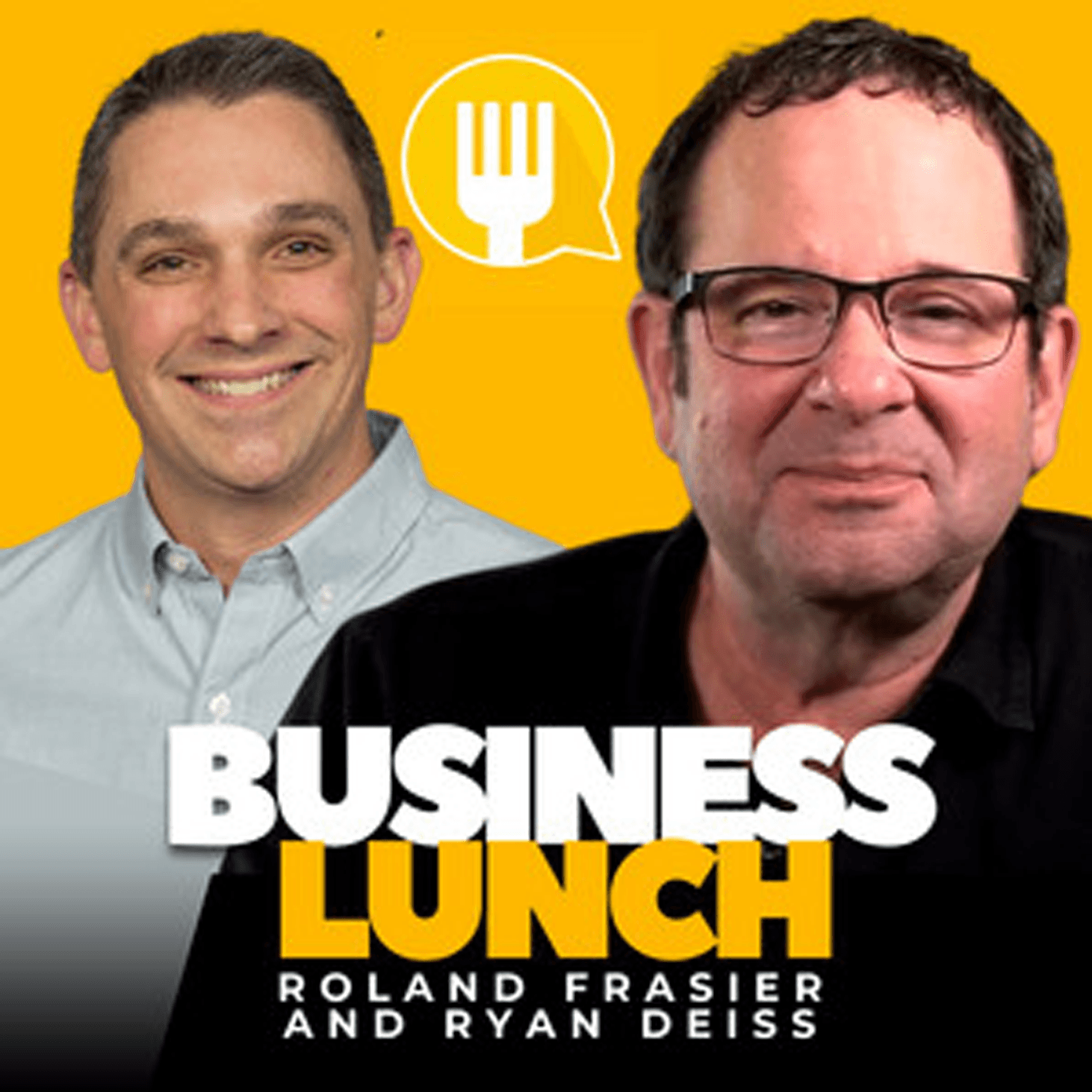
Episode Overview In this episode of Business Lunch, hosts Roland Frasier and Ryan Dice explore practical strategies for navigating economic slowdowns, particularly in the summer months. They discuss creative marketing, leveraging internal resources, and maximizing downtime to ensure businesses remain successful despite seasonal dips or broader economic challenges.
---
Key Highlights
- Positivity vs Negativity: "The quickest way to drown out negativity is with an abundance of positivity."
- Resilience: "Hard makes you resilient. Soft and easy doesn't make you resilient."
- Economic Testing: Situations are perceived as tests set by circumstances, believing one can handle them.
---
Timestamps & Main Discussion Points
- 00:00 - Introduction
- Hosts Roland Frasier and Ryan Dice introduce the topic of economic slowdowns.
- 02:30 - Current Economic Trends
- Discussion on the broader macroeconomic slowdown and its impact on businesses.
- Analysis of inflation rates and declining sales across sectors.
- 05:00 - Seasonal Slowdowns
- Acknowledgment that summer often brings a slowdown for numerous businesses, particularly B2C companies.
- 10:00 - Strategies to Combat Slowdowns
- Emphasize the importance of planning and proactive strategies to navigate slow months.
- 15:00 - Leveraging Internal Resources
- Suggest utilizing available resources effectively to maintain operation and morale.
- 20:00 - Creative Marketing Ideas
- Innovative approaches to marketing during the summer downturn.
- 25:00 - The Importance of Not Panicking
- Encouragement to remain calm and avoid rushed decisions that could harm long-term plans.
- 30:00 - Enhancing Offers and Bundles
- Ideas for bundling services/products to enhance perceived value without reducing prices.
- 35:00 - Acquisition Opportunities
- Opportunities to consider acquisitions during slow periods when valuation may be favorable.
- 40:00 - Long-Term Planning and Testing
- Using the slow period for internal optimization and long-term planning.
---
Strategic Recommendations for Summer Success
- Simplified Offers
- Create simpler offers for decision-makers to ensure sales even in slow periods.
- Utilize Seasonal Trends
- Acknowledge seasonal behaviors of consumers (e.g., vacation spending) and adjust marketing accordingly.
- Book Promotions
- Capitalize on the popularity of books as passive consumption during summer breaks.
- Optimize Operations
- Use downtime to refine internal processes and systems, improving efficiency for high seasons.
- Creative Marketing Tactics
- Tie promotions to seasonal events or cultural touchpoints to engage customers.
- Acquisition Strategy
- Explore acquisition options as struggling businesses may be more open to negotiations during downturns.
- Avoid Panic Marketing
- Resist the urge to oversaturate the market with rushed offers which may not align with brand strategy.
- Internal List Engagement
- Focus on hand-raiser offers to gauge interest without overwhelming your audience.
---
Conclusion
- The key takeaway is to view slowdowns as challenges to manage rather than crises to panic over. By adopting a proactive and creative approach, businesses can navigate summer slowdowns effectively and set themselves up for success in the latter half of the year. The hosts encourage listeners to share insights and strategies to foster a community of support among entrepreneurs.
Next Steps
- Engage with the podcast on social media and share your own strategies.
- Consider joining the Business Lunch community for additional resources and connections.
---
Additional Resources
- [7 Steps to Scalable Workbook](#)
- [Free Book: Zero Down](#)
Connect with Roland Frasier
- [Website](https://msha.ke/rolandfrasier/)
- Social Media Links: TikTok, Instagram, Facebook
---
This summary encapsulates the core discussions and actionable strategies presented in the episode, providing a guide for entrepreneurs looking to optimize their businesses during challenging economic periods.
Written by AI. May contain mistakes. Listen to the episode to check what was said.
Transcript
Automatic transcript. May contain errors.0:00Yeah, and I think it is the normal seasonal slowdown happening coinciding with what we're seeing is just a broader macroeconomic slowdown. And so maybe that means that, you know, May caught it earlier. And so it's not going to be worse. It's just it happened earlier. Maybe that's what it means. You know, we'll see. Or maybe it's this combination of these two really sucky things creating, you know, one super sucky thing. I think that's what, you know, we're kind of going to see play out in June, July, August.
0:40Hey, everybody. Welcome to another episode of Business Lunch with your hosts, my business partner and friend, Ryan Dice. Ryan, how are you doing today? I'm doing really, really great. Just had a little... This is the intro. You don't get to run into that yet. This is just the obligatory, I'm doing good, thanks. And then back to you. See, that's how we're doing. I'll try it again. Hey, Ryan, how are you doing today? I'm doing so great, Roland. How are you doing? Fantastic. I'm good. And I am your host, Roland Frazier. So it's good to see you guys here with us. see, that worked really well, right?
1:13Then I get to introduce you first so that it's not like I'm introducing myself all the time. Anyway, you guys get it, but we're happy to be here and happy that you are here with us. But in the less than ideal happiness, we have been discussing amongst ourselves and with lots of folks that we know that there seems to be a bit of a downturn in business right now. Ryan, you want to elaborate on that? Yeah, I mean, it seems like the, I believe what we're looking at right now, and I'm hearing this across the board, B2B, B2C, there's a slowdown. If you look at kind of the general macro economic reports, it's one of these things where everybody's like, oh, yeah, it looks like the rate of inflation is slowing.
2:04And I think that's interesting. Inflation itself isn't going down. The rate of inflationary growth is slowing down. So inflation is still up a bit. It's just not up as fast. But kind of in similarly less good news, it seems like sales overall are dipping. You've got major enterprises, companies that are that are missing sales reports or record recording lower sales reports. I think for the first time in the history of the company, Salesforce is, is, you know, putting out to the street that they're going to grow less than 10%, which that kind of caused them to fall off like 20 % in the value of that company.
2:45Tesla laid off 500 people from their, their battery division. Yeah. You got kind of scarily open AI laid off their intake. entire, like, let's watch out for AI taking over the world division? Or did they? Did the AI lay those people off? Who knows, right? You don't need that. Yeah. And it's funny you mentioned AI, because I'm hearing some people say that that is a reason that some of these layoffs are happening. They don't need as many, you know, people. I mean, I think what you're seeing is consumers and businesses because debt is so much more expensive, because credit was run up so much, they're just frankly out of liquidity.
3:31They're out of capital. They're out of the ability to spend. And so I have no doubt that that will likely cause some rate reduction at some point in the not too, too distant future. But yeah, I think the next little bit is going to be challenging. I think it's going to be particularly challenging for a lot of businesses who struggle anyway over the summer season. I mean, I know historically, I mean, like, so this isn't you if you're in hospitality, you know, if you're in travel and hospitality, summer is definitely a boom month for you. Summer can be a big month for people who are in fitness and weight loss because everybody wants to get their, you know, bikini bods going and stuff like that.
4:06But for a lot of businesses, summer is definitely a slowdown. I know it is for most of our companies. And so, yeah, to see a broad slowdown matched with - And generally that's just availability to buy, right? Because most people who have kids are taking vacations in the summer. And so people aren't thinking about spending on things during those months, or they're directing their dollars more toward their euros or whatever, towards more entertainment and vacation and family focused things than they are to other things. So they put those off until the fall and the fall usually is a significant pickup for the last quarter and a month of the year.
4:44But this is a little different. It's way early, I think, May is when we're seeing May financials now. We're recording this in June. And those numbers seem across the board to have come in light, pretty significantly light year over year with most of the folks that we've talked with. Right. Yeah. And I think it's I think it is the normal seasonal slowdown happening, coinciding with what we're seeing is just a broader macroeconomic slowdown. And so maybe that means that, you know, May caught it earlier. And so it's not going to be worse. It's just it happened earlier. Maybe that's what it means.
5:30You know, we'll see. Or maybe it's this combination of these two really sucky things creating, you know, one super sucky thing. I think that's what, you know, we're kind of going to see play out in June, July, August. Okay. So now we, this is not our first summer that we've ever experienced and we have experienced it for years as a slowdown period. So let's talk about some of the things that we do and some of the things that folks can do generally that might be helpful for them? What are some of the things that you think are really great strategies to help counter the summer doldrums? So if you're B2B or even if you're B2C, giving somebody an opportunity to make a decision today that they will act on in the future is one good strategy.
6:19So an example of that would be if you're looking, if you have an event or something like that in the fall, and it could be a live event or an in-person event or a virtual one, giving somebody the opportunity to make that investment now with some kind of a discount or some extra bonus. So there needs to be a reason that they would make the investment before they technically need to. But to say, hey, here's something you can do today that will set you up for success later on. People are still happy to invest. They just don't necessarily want to make an investment that is also going to suck up a lot of their time or that's going to be really extensive and time-consuming from a decision-making process.
6:55So if you have a complex sale that involves multiple stakeholders, you might want to consider pairing it back to simpler offers right now that can be made by a single stakeholder. Because I know we found that getting multiple decision-makers on the phone at the same time at a single company, it's really difficult right now. Because it's like, oh yeah, I gotta get Jim his take on this, but he's on vacation for the next week. So let's follow up a week from today. Well, a week from today might as well be freaking never. because at that point they're out of the buying cycle, out of the buying zone.
7:26So how do we simplify the offer so that it can be made by a single decision maker? And how do we put out offers that people can give a reason to invest in today, but that they'll use in the future when they have more time? Those are a couple. I got more. What do you got? Yeah, no, no, no. Keep going. Let's rip on it. You're more marketing focused than I am. So I'll lean on you for this one. So books sell really well over the summer. So any type, and this sounds a little bit different because people would say, well, but books take a lot of time. And you just said, this needs to be something that doesn't take a lot of time.
8:03But during the summer, people are looking for more passive, casual forms of consumption. So if you're the type of business that books are an aspect of your marketing strategy, I would definitely be doubling down right now and doing book offers. And I would lean into the fact that, hey, here's a book for you to read on the beach on that next vacation. Go ahead and acknowledge the season that we're in and give them a reason in light of the season to make that particular investment. So books can be a great offer. Also, acknowledging where things are today, but using it as the reason to make the investment.
8:42So I'll give you an example. One of our businesses, the Scalable Company, we help businesses upgrade their internal operations, their operating system, really so that the founder, the entrepreneur, the CEO can get out of the day to day, focus on the higher leverage, maybe even exit one day. Now, the actual process of getting that done is fairly time consuming. It does require a decent bit of work and effort from the team. Now, we take a lot of that work off in the one-on-one nature of the service offering, but it does still require time. It just does. Um, so what we're saying is, um, use this time, use this season when things would normally slow down anyway, to really optimize your systems, to get things dialed in so that when we come in to the last couple of quarters of the year, you're really sprinting into the end of the year when it's your high season.
9:33So the reason, anytime you can take the reason that somebody would not buy. And I would, I would think about that. What are the reasons? And if you have any type of sales, you know, if you have a sales team, they're probably collecting these reasons and they don't want to be. But collect all the reasons that people have for not buying now that are seasonal in nature and invert them. Make the reason people would not buy the reason they should buy. It might take some creative messaging. It might, you know, require adding some bonuses and things like that. But if you can invert the reason that somebody would not buy, you give your sales team and your marketing team, some really great ammunition, that sounds kind of, you know, violent, but the next time they hear that objection, if they can say, oh yeah, I totally hear you.
10:21And I hear why that would be a logical reason to not do it. Are you open to why based on what you just said now might also actually be the best time to do it. If you can get them to agree that, yeah, they're at least open to the idea and you present that reason because they're acknowledging that that is their reality. If you can flip their reason to not do it as a reason to, you don't have to argue with them about, well, what is the reality? They've given you their reality. They've given you their reality. They've owned it as a reason not buy. You give it to them as a reason that they should buy.
10:54So those are kind of some of the big things that we're doing right now. I think the last thing is just to not panic because it is very common. And we do see this with our clients. People start to freak out around June and July. they start to say like, ah, sales are in the toilet. And because that happens, what they do is they flail and they will frankly push out too many offers too quickly. So they'll pull something off the shelf that maybe they're planning to launch in the third quarter and they'll say, no, let's rush it. And they'll get a rushed offer out that isn't quite ready for prime time into a bad season.
11:31And not only does it not produce the results that they need, They also kind of wasted it moving forward. And so one of the first things that we say to our clients when they start to in portfolio companies, when they start to panic is go back and look at your sales numbers for last year. How were you doing then? Were sales, you know, in June and July, were they better or worse than in, you know, in March and April? Oh, yeah, no, we were down a little bit then, too. OK, so maybe this isn't anything uniquely bad. Maybe this is just seasonal. Maybe it's just something that we need to, it's a challenge to be managed, not a major serious existential crisis to be overcome.
12:15And I think that going into it with that mentality, is this a challenge to be managed? Because it is seasonal, we're going to come out of it. Or is this an existential crisis that requires all hands on deck? Probably it's the former. I love it. So some other things too, I think would be the, if you have the ability to maybe recreate your offers around the things that you've already got into some bundle or other offer that would appear to be new and compelling, maybe. And while you can always lower prices and do sales, I'm not a big fan of lowering prices. I'm much more a fan of how do we enhance the offers we've got to make them more compelling.
13:01So if you have resources that because things have slowed down, normally like that would be a variable cost resource like labor. Could you throw more labor into a bundle so that it would enhance the value or the perceived value of the product or service that you're offering? So could you maybe add services to a product that you've already got? That could be training, coaching, customer support, et cetera. Could you take the labor that is not working full capacity right now because things are slower and bundle that on to something that you've already got, even another service? Like maybe you're an accounting firm and people aren't thinking about taxes now because they just did all that in April, but you've got extensions and you've got people that you can pick up and things like that.
13:53Could you maybe throw in back returns or a mock audit or a tax mitigation strategy or something? Because you've got people that aren't working so much and you've got them as a fixed cost at your place anyway at some point. Or they're hourly and they're variable because you can turn them on or off. But they're significantly less cost than the perceived value of having them added to what you've got could be. That could be at your gym, that could be at your accounting firm, it could be at your car dealership, you know, any of those things, because at least across the board for me, I've found that customer support has taken a pretty significant hit over the last couple of years.
14:36And so the ability to get support for the things that I'm buying, both products and services, to have that a little bit more white glove, a little bit more personal attention, a little bit more customized to me is something that I would be valuing. And if I could get it now as a summer special, that would be something that would be exciting. Another thing might be there are lots and lots of events that are happening over the summer. And so I have a calendar that on my calendar, it has pretty much every event that is happening from record releases and movie releases to all the myriad crazy holidays that we've got right now.
15:17If I pull up this week, let's see, today is World Bicycle Day. Happy World Bicycle Day, Ron. Yeah. Can I tie into that? Well, if I'm selling bicycles, obviously I can or bicycle accessories. But what if I'm not? What if I'm selling gym memberships? Well, then come and, you know, it's World Bicycle today. Come get a free bike ride on our on our thing. Or it's by your car. You know, it's you've got an auto dealership. You know, it's like we're giving away bicycles for World Bicycle Day. Like, what can you do to play off of these things? Six planets align today. I don't know anything about that, but I could look that up.
15:55And then tomorrow, the Acolyte, I guess that's a Disney plus thing that's coming out the next day. European Parliament elections begin. The 80th anniversary of D-Day landings. The NBA finals begin. And the last day of this week, Bon Jovi forever. Of course, we're all waiting for that album to come out. And the 51st annual Daytime Emmy Awards. So like, you know, is your business a soap opera? Today's the Emmy Awards. In honor of that, your business is a soap opera. Wouldn't you like to have a better culture in your business? Things like that, that looking at the calendar to think about what can I do to get creative with promotions that might stick.
16:40Those are a couple of things. Obviously, the sales side is a place that people look. But the other thing would be if other businesses are experiencing slowdowns, now's a great time to think about acquisitions. Because if ever someone wants their problem solved. It's when the problems are present, not when they're not. So if you can get your acquisition muscles to buy media companies, to buy other products or services, to buy customers, to buy whole companies, to buy competitors, this is a good time to do it when things are down and sentiment is not so positive, right? If they're thinking there's a downturn and like Ryan said, that a lot of people panic.
17:23And so they're, you know, panic, lay people off, shut down the marketing, which is the worst thing you can do. You know, they've done studies on that. But if they're panicking now and you come in as a rescuer to say, you know, hey, we've got customers for your business. Let's do something. Let's do a deal. Let's do a strategic alliance. Let's do a partnership. Let's do an acquisition, partial or, you know, like some part of the company that you don't want, that's down, we'll take it, we'll add it on to ours and enable us to have more profit. The other thing to think about now is a great time to buy because it is slow to buy inventory, for example, or labor in advance.
18:05Buy blocks of labor that you know that you're going to need in the future now when it's slow because people will give you better prices on those things. So you have a lot more flexibility for negotiating. This is a great time to negotiate your supplier relationships to say, give me terms, give me better pricing, whatever you can look at that's going to increase your profit margin, whether it's on the sales side, which could be as simple as this is a great time to price test, right? Will people pay more even though demand is down for a better service or a better product that's enhanced in some way that you haven't tested yet?
18:43Well, if you're not selling that much anyway, why not test it now and see if maybe the market for that higher end thing or that thing that's got those extra services is there. And right now you've got the resources to do that. Maybe it's a good time to think about inventory reduction levels. So all of those would be things that I'd be thinking about in addition to the great suggestions that you had as well. Yeah. I love what you said about the leveraging, basically the operational capacity that you already have, especially in the labor. if it's going to go untapped, like if you expect to be down, let's say you expect to be down 10%, right, in the summer, maybe you're down 20 % in the summer, and that's okay, it's a seasonal flux.
19:24I know, I met a guy who owned a roofing business, and they were in the north. And so they kind of couldn't do a lot of things in the winter. Because when homes are, you know, covered in snow and things like that, just doing big roofing projects usually just doesn't happen. And so what he did, really, really smart. He went out to his audience and said, Hey, you know, we're ABC roofing company. And in the winter, we really can't do a lot of roofing jobs because, you know, snow. So here's what we're doing instead, because I like to keep my people employed, I care about the teams, don't want to have to do laughs or anything like that.
19:55What we're offering instead is free gutter inspections and cleaning. Again, not trying to make a bunch of money. I don't know if it was free. I think it was discounted. Normally it's, you know,$80. We're dropping all the way down this, basically just the cost of doing it. I want to keep my people employed. And hey, while they're up there, if the snow isn't too thick, we'll also give you a free roof inspection. So they used it as a reason to go over there and do it. And guess what? When you get on somebody's roof to check out their gutters and to clean them out and you walk around, you wind up finding a few folks who are probably due to have their roof replaced in the not too distant future.
20:32And so it was one of their biggest promotions that they did, created a ton of goodwill. It did in fact keep their people on roofs, which is where they need to be. And it created a massive deal flow for the spring. So I love that. I really, really, really love that idea. And I also love what you said about using this season as a time to test. So everybody else is going to panic and they're going to flail and they're going to use it as a time to launch things that they shouldn't be launching because they're in panic mode. If you'll pause and say, you know what, I'm going to use this as a time to get more efficient.
21:09Like let's use this as a time. Probably if you, if you're coming out of a busy season, let's be honest, you probably maybe even made some hires with some folks and you didn't do all the training that maybe you should have done. Right. Or maybe you know that you need to create some more systems and SOPs and you just haven't gotten around to it. Like all the little things that you know you need to be doing, use this as the time to do that. Because again, you probably have the internal capacity to get it done. It will set you up for greater success when we come out of the summer. And I should also add, again, the assumption here is that you have a business that slows down in the summer.
21:45If that's not true, if you have a summer heavy business and things slow down in the winter, then this all still applies. I know there are people who do vacation properties and it's summer vacation homes. Well, they spend the entire winter not freaking out about the fact that, oh no, rental rates, rentals are down. Well, of course they are. You know, you've, you've got like a beach house. Nobody wants to go to a beach house in the winter necessarily. So they use that as a time to do all the home repairs and things like that. It's understood in vacation real estate businesses. We don't apply it as much to, our businesses, but I think that it should.
22:25Yeah. And just to bring home what you said, just in case you guys didn't get it, because I think it's really, really important, is we focus on leveraged sales, bankable profits, and transferable value. And so in your company, those repairs, the deferred maintenance, the things that you put off that make your house more attractive to rent or sell. Those things exist with your company too. And so Ryan mentioned SOPs, right? So this is a great time to hire the people that you need to hire to train to get them up to speed. This is a great time to bring on the new call center or the new customer service personnel or the new key managers, because they'll come into the slowest time of the year for you and they'll stress test at a much, much lower level than when things are booming and there's less chance for things to go wrong.
23:20This is definitely like if I was gonna make a mistake, I'd wanna make it when I had the lowest level of sales, not when I had the highest level because I'll have a chance to iterate and adjust. So thinking about focusing on this is a time to build your transferable value, not just how do I get more sales and profits? Obviously you have to have enough cash coming in that you can stay in business. But at the same time, this is a great time to do that maintenance and those things that will help your company actually be worth more to you, to operate better, to free you to do the more important things, and also to increase its value in the eyes of the rest of the world.
23:54I love that, Brian. I think that's really, really good stuff. Anything else you want to talk about before we, I think lots of good thoughts and suggestions and action steps for you guys before we close out? Yeah, don't panic. Don't completely shut off your marketing. Also during this time, lead costs go down because most people do turn off their marketing. And plenty of businesses out there, you've got sales cycles that are 60, 90 days long and longer. What that means is that the leads you acquire today are going to be ready to buy when we're out of the summer doldrums. So the question is, are you going to be acquiring any leads who are ready to buy then?
24:31Or are you going to be further passing down this slowness into the next quarter because you also slowed down all your lead acquisition efforts? Don't use this as a time to slow everything down. Use this as a time to plant so that you can harvest as we get into Q3 and Q4. The only other thing that I was thinking about, Ryan, I wanted to get your opinion on is, let's say that so I definitely like and agree that this is a good time to to test advertising and to spend when it is less expensive because more people are opting out and ad costs are supply and demand oriented. What do you think also about focusing really on internal list offers and hygiene in terms of like, we have effectively a zero acquisition cost for the people that are on our list.
25:24So if we're looking to have money come in, but not have more money come out to do that, and maybe despite the best advice that we've given, people are like, I don't care. I've got to cut some of this ad cost. What would you say in terms of internal list strategies? Do you like increasing the frequency of offers there? Is there a danger that you might burn the list out and then, you know, and hurt it long term or just generally like to get some quick thoughts from you on that? Yeah. So the types. So two things on that. Number one, I think one of the most important assets that any business can have is a first 30 days indoctrination series.
26:03And so if you don't have that, if when a new lead gets on your list, if that first 30 days isn't relatively scripted and structured, like their experience, the emails they're getting, the outbound contacts they're getting, if that isn't fairly scripted, fairly automated, then that is a phenomenal asset to create during this time. And so that's something that I actually spent two weeks ago, like the entire week building, going into this. Now, an important aspect of that series and where I would have a lot of your focus be this time, as opposed to doing large scale offers to the entire list, knowing that large chunks of them are not going to be ready to do much of anything because they're on vacation, they're distracted, whatever.
26:48I would actually shift the bulk of your internal list strategy to hand raiser offers. A hand raiser offer is simply an email or some type of outbound messaging that you send to your list. And that could be an email list. It could even be your social list, although they're obviously not as effective as email. If you have SMS, direct mail, any of these, any of your owned and operated media properties, send a hand raiser campaign that instead of making a direct offer that somebody can say yes or no to, send something out where you say, hey, if you would like to get this result and if you meet these criteria, reply back to this and we'll send you more information.
Read the full transcript
27:25We did this last week and we booked 14 sales calls from one three-day handraiser series that was basically, hey, we're going into a new month. We have a little bit more capacity so we can actually onboard. Normally, we got a 30-day waiting list. We can onboard five people right away. Again, because the reality of lower sales going into the summer, if you would like one of these five spots and you meet these criteria, let us know. We'll send you the details. We didn't give the offer. We didn't allow them to book a meeting right then and there. It was simply, if you're interested, raise your hand and let us know.
28:02I think what you want to do is double down on those people who are paying attention and the people who aren't, leave them alone. You don't want to be the person hammering their inbox when they're just not interested. said that's how you're going to get a lot of unsubscribes. So strategy wise, that's how, how we're doing it. I love it. Awesome. Well, I hope that you guys found that helpful and that you've got at least one or three actionable strategies out of the things we talked about today. Definitely not a time to panic and lots and lots of action steps that you can take to make the most of any kind of slowdown that you might be suffering, be it currently in the summer when we're recording this or in your business, if it's otherwise cyclical, if you're selling ice cream, you should be just selling the heck out of it right now.
28:44But that's it for today. If you found this helpful, please share it with somebody else. And we would love to see you here the next time on Business Lunch. We do this at least every week and frequently twice a week. And the other thing that we'd love to do is hear from you. So if you've got strategies that you'd like to share, look us up on social. We're on YouTube. This podcast is on all of the podcast platforms. It's on YouTube, which is obviously a place we can interact a bit. And you can hit us up on Instagram, just look for business lunch. We would love to get your take on things as well. And then we have the website, which do you know what the website is now?
29:18I know we have businesslunch.com, but I think it's businesslunch.com. Yeah. So, um, so hit us up there too, and we'll see you next time on business lunch.
29:40Ever wondered how some people build real wealth through acquisitions while others just sit on the sidelines? Well, I'm here to tell you it's not about luck. It's about having the right system, the right deals, and the right guidance. And that's exactly what we give you in the Epic Deal Fast Track. If you've been thinking about buying a business, but you keep getting stuck, whether it's finding the right deal, structuring the financing, or negotiating with sellers, you are not alone. Too many people waste months, even years, just thinking about acquiring a business while the real opportunities pass them by.
30:13The Epic Deal Fast Track is not another course. It's actually an implementation program and it's designed to get you from the idea to the acquisition in just 16 weeks or less. We work with you one-on-one to help you find, fund, and close your first or next deal. And once you do, we're going to plug you into our elite Epic Board community so that you can keep scaling through acquisitions. We install three powerful systems in your business. The first is the deal flow engine. So you always have high quality off-market deals coming to you. Number two, we give you our offer and funding system so that you can structure offers that get accepted and fund them creatively many times with no money out of your own pocket.
30:57And number three, our closing and integration system so that you don't just buy a business you actually successfully run and scale it once you have acquired it. Plus, you'll have direct one-on-one support from an Epic Deal advisor every step of the way. And that's people that have actually come up through the system and done these deals themselves. That's the only way to become an Epic Deal advisor. And if you're serious about acquiring a business this year, don't just sit on the sidelines. Just text I'm in to 334-458-9034 and we'll get you in. So text I'm in to 334-458-9034. We'll get you in.
31:34No fluff, no wasted time, just real deal making from people that are actually out there doing deals right now. I'll see you there.
From the publisher
Welcome to a new episode of Business Lunch. Today, we discuss practical strategies to navigate economic slowdowns, particularly during summer. They share insights on creative marketing, leveraging internal resources, and maximizing downtime. Whether you're experiencing a seasonal dip or a broader economic challenge, this episode is packed with actionable advice to keep your business thriving.
Highlights:
"The quickest way to drown out negativity is with an abundance of positivity."
"The Lord puts you into these situations knowing you can handle them. It's a test."
"Hard makes you resilient. Soft and easy doesn't make you resilient."
Timestamps:
00:00 - Introduction
02:30 - Current Economic Trends
05:00 - Seasonal Slowdowns
10:00 - Strategies to Combat Slowdowns
15:00 - Leveraging Internal Resources
20:00 - Creative Marketing Ideas
25:00 - The Importance of Not Panicking
30:00 - Enhancing Offers and Bundles
35:00 - Acquisition Opportunities
40:00 - Long-Term Planning and Testing
CONNECT
• Ask Roland a question HERE.
RESOURCES:
• 7 Steps to Scalable workbook
• Get my book, Zero Down, FREE
To learn more about Roland Frasier 👉 https://msha.ke/rolandfrasier/
Connect with me on social: