In short
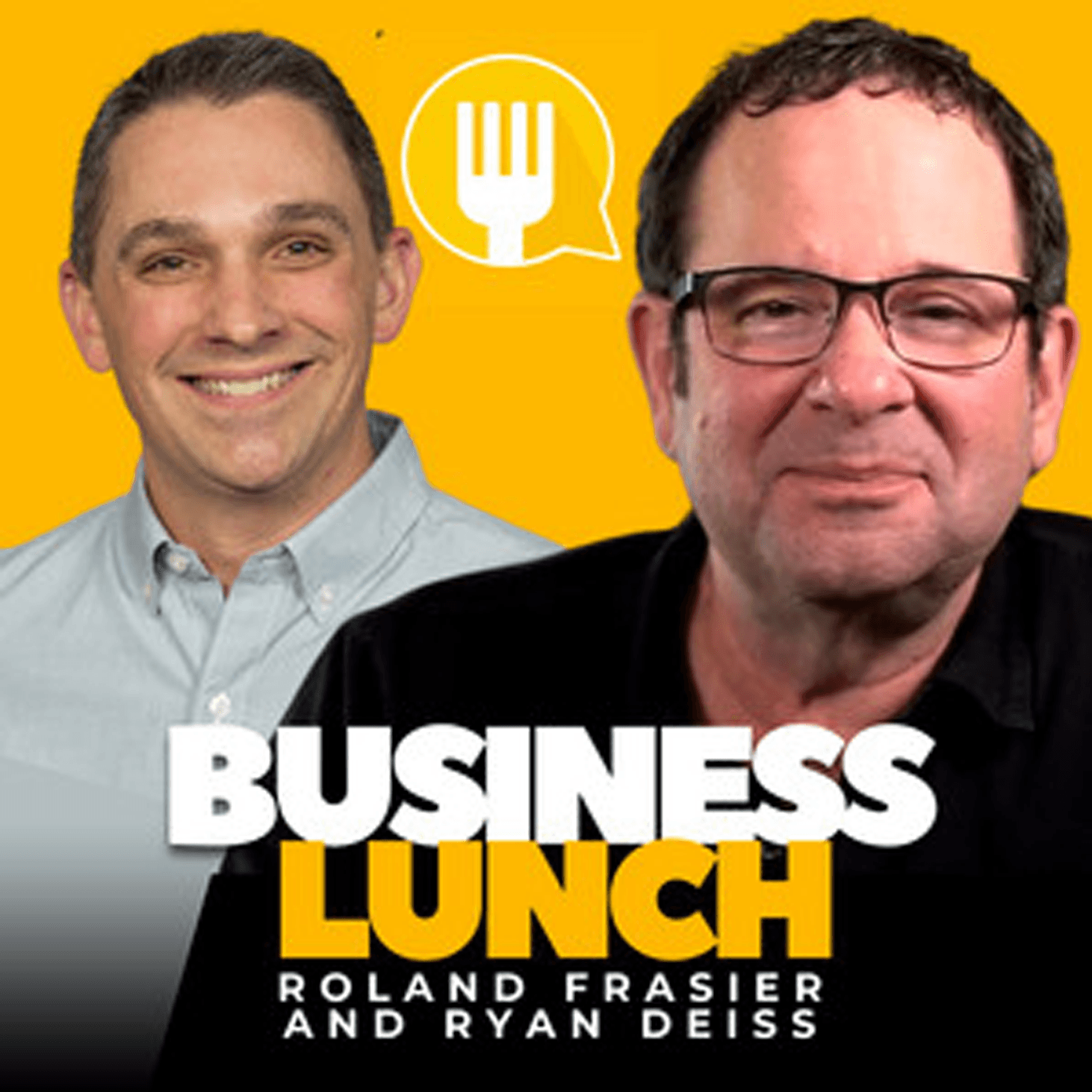
Business Lunch Podcast Episode Summary
Episode Title
Navigating the Changing Landscape of C-Suite Roles
Episode Description In this episode, Roland Frasier and Ryan Dice discuss the evolving role of Chief Marketing Officers (CMOs) in Fortune 500 companies. The conversation combines insights into marketing's modern challenges with entertaining anecdotes, including a delightful discussion about exquisite wine tasting.
Key Takeaways
- Shifting Focus of CMOs:
- The role of the CMO is under scrutiny, as many are being let go in Fortune 500 companies.
- A key quote: *"If you're a CMO at a company right now and your primary concern is every single campaign that leaves the company perfectly, quote unquote, on brand, you're probably gonna get fired."*
- Marketing Accountability:
- Modern marketers must align their work with revenue generation rather than merely branding or PR.
- The importance of owning the customer journey and integrating closely with sales processes is emphasized.
- C-Suite Structure Reevaluation:
- There's a call for reevaluating C-suite roles, suggesting roles like Chief Revenue Officer (CRO) may be more relevant than traditional CMO positions.
- AI's Impact on Marketing:
- AI is changing marketing dynamics, but if a CMO can be easily replaced by AI, they may not have been effective in their role.
Key Discussion Points
- Exquisite Wine Tasting Experience
- The episode opens with a light-hearted recounting of a recent wine tasting event featuring historic Bordeaux wines, setting a relaxed tone for the discussion.
- Evolution of C-Suite Roles
- Marketing vs. Revenue:
- The importance of CMOs understanding revenue and being accountable for it is highlighted.
- A bloated C-suite can hinder effective decision-making; ideally, marketing should report into the operations or revenue sector.
- The Role of AI in Marketing
- AI is seen as a tool that could replace ineffective marketing roles, underscoring the need for marketers to evolve and improve their competencies rather than rely solely on traditional methods.
- Advice for Small and Medium-Sized Businesses
- Small Businesses:
- Founders are advised against hiring a CMO too early; titles should reflect the company's size and needs.
- Medium-Sized Businesses:
- The necessity for dedicated marketing managers who work closely with sales is emphasized, promoting alignment and shared accountability for revenue.
Timestamp Highlights
- 01:49 - Exquisite Wine Tasting Experience
- 06:27 - Evolution of C-Suite Roles: Marketing vs. Revenue
- 10:47 - The Impact of AI on Marketing
- 12:44 - The Role of CMOs in Small Companies
- 15:34 - Advice for Medium-Sized Business Founders
- 16:31 - Tips for Marketers: Getting Closer to Revenue
- 18:25 - Marketing and Sales Alignment Strategies
- 20:51 - Career Advice for Aspiring CMOs
Conclusion The episode provides a compelling examination of the changing dynamics within marketing leadership roles, challenges CMOs face in today’s business environment, and offers practical advice for both marketers and business leaders. It ultimately encourages a shift towards revenue accountability and collaboration between marketing and sales departments for success.
Connect with Roland Frasier
- [Ask Roland a question HERE](#)
- [Resources](#):
- 7 Steps to Scalable Workbook
- Get Roland's book, *Zero Down*, FREE
Final Thoughts The discussion serves as a wake-up call for current CMOs and marketing professionals to adapt to the changing landscape, emphasizing the importance of revenue integration in their roles.
Written by AI. May contain mistakes. Listen to the episode to check what was said.
Transcript
Automatic transcript. May contain errors.0:00And so if you're a CMO at a company right now, and your primary concern is every single campaign that leaves the company perfectly on brand, you're probably going to get fired fired.
0:16Hey everybody, Roland Frazier here along with Ryan Dice and we are about to have a virtual business lunch together. Ryan, how are you doing? Doing really well. Why are we describing this one as virtual when we're for the first time in I don't know how many episodes we're actually in the same general location? Well, I mean, I feel like we're still not quite together. Ryan is in my uh casita so he's like over there and up some stairs and around the corner uh uh but wow what a background improvement over what you normally have that's i know right it's really lovely here you should you should try it sometime yes no we got uh we're out here um happy to be out here at Roland's house and um I've had the opportunity to drink some pretty fantabulous wines I know we got some actually like important business stuff but I feel like if we don't address the most important feature, which is just some of the amazing wines we got to try this week, that we're really doing our viewers and listeners a disservice.
1:12You want to break some of that down? Yeah, the ones that we had yesterday was pretty fun. We tapped and we had two friends in from Bordeaux who are in the wine industry, and it seemed only appropriate to open some ridiculous wines. It was also both of their birthdays on one day apart from each other. So Ryan and his wife, Emily, and Dawn and my wife and me and these two guys cracked three of the coolest bottles that I have or had in the collection. One was, they were all Chateau Lafitte Rothschild from Bordeaux. One was 124 years old from 1900 and another from 1953 and another from 1959. And the interesting thing about that is a couple of things.
1:56One, we were at the, those two guys had set up for Ryan and me to taste at the actual Chateau Lafitte Rothschild in France. And we met the cellar master who's been there for, and family Somme for the Rothschild family, who has been there for like 40 years and tasted, I think he said 136 vintages of Rothschild. And we asked him what his favorite was and pretty much without hesitation, he said 1953. And then he said, maybe 1959, but those were head and shoulders above everything else he had tasted. So we set about finding a bottle of 53 and 59 so that we could do a split test along the way. Somehow I found a bottle of 1900 and I bought the 1900 because it was within, from I think 1870, the year 1870 to like 1982 or something like that.
2:55So pretty long period of time, 150 odd years, I think. they only had three that were legendary and it was 1900 1953 1959 so we had the opportunity to taste side by side these bottles and we're opening them up and they're all crested over they'd been recorked uh in the 1980s but um at the chateau but um they were all like crested over and we're thinking, you know, probably one or two of them isn't going to be good. And by the way, I don't want to mess up the court because if the court falls in, it's going to change the whole taste of the wine. So, um, we somehow the corks were in great shape. We got them out, we poured them, we decanted them.
3:40And then the guys came over and they said, how long have you had them decanting? And we said an hour, an hour and a half. And they're like, Oh my God. Oh no, that's too long. And, uh, we were like, well, that's awesome. We, they made it for 124 years and we destroyed them in an hour. But it turned out it had only been about maybe a little bit less than an hour and they all were amazing. We got very lucky. None of them were off. None of them were corked. And all three were drinking at their full potential and just absolutely fantastic. And the 1900, I think, was the big hit with one of the guys and the 1959 with the other.
4:19uh interestingly enough i think 53 it may have been your wife and my wife i think may have liked the 53 best yeah um i had a really hard time between the the 1900 and the 59 had a lot of fruit to it and the the uh the 1900 was just on and on and on with the taste after you had it and very very delicate and just a great great evening and that was just one of the days and so we won't make it a wine podcast and talk about all the other stuff, but we tasted 24 wines from the year 2009, which was a legendary Bordeaux year the night before that with some good friends. And that was fantastic. All of the best of the best from Bordeaux.
5:01And the day before that, we had all of the best from the best of California because our friends from Bordeaux had never had California wine. So we opened Screaming Eagle and Harlan and 100 Acre and Colgan and Bond and a 1994 Isley which shocked them because they didn't have any idea that wines could last 30 or more years in California. And that one probably has another 20 to go. So it was a wine rich. I feel a little shaky that I don't have a glass in my hand now, but we'll see if we can fix that later. This is the first day where here we are, you know, and we haven't had any wine in the last couple of days.
5:38So I'm proud of us. Give our livers a slight break. But yeah, if you're a wine lover. Should have been here. Should have been here. It was outstanding. And thank you very much for opening your cellar and your doors. It was a great time. But hey, you know, who's not having as good a time as us? Who's that? The pivot there? The transition? That was the pivot into content. Yeah. When you get really good at this, if you've been doing it for a while, you can do stuff like that without even planning it. But yeah, who's not having as good a time as us who's not buying as much fantabulously awesome wine are Fortune 500 CMOs.
6:12I don't know if you saw, but actually Fortune 500, Fortune Magazine reported on this that they are just dropping like flies. They said Fortune, the title of the article is Fortune 500 companies are eliminating chief marketing officer roles as the position loses C-suite clout. When you think about the C-suite, right? Obviously you've got the CEO, the chief executive officer, you'll have the CFO, the chief financial officer, COO in a lot of cases. The CMO - That's all you really need, I think. I mean, so like, I think it's bloated. I think it's time for a rework on that because now you've got CIOs and chief customer, chief customer officer, chief people officer.
6:57All that stuff belongs under the operating officer. Those people should not be reporting to the CEO. You should have, to me, CEO, you got finance and you got ops. And other than that, I just don't think that CEOs need a whole bunch of other reports. It's too micromanaging. So I would argue that there should be somebody who, it seems like most CEOs are going to take on a, they're either going to come up from product, like they're going to know something about the product and its creation. I mean, you see this a lot in tech companies, you know, obviously, you know, you hear stories of people who started in like the stock room and worked their way up, you know, doing services and those kinds of things.
7:39So they're either going to come up through a product, you know, or a service-based route, like a fulfillment type route, or they're going to come up through some type of marketing or sales and a revenue component. And so I like the idea of the CRO role, like the somebody who is uniquely accountable to revenue. And they're seeing the combination of both sales and marketing. but I truly believe that, yeah, having a C-level position for marketing, and I'm a marketer, like I love marketers, you know that one of our companies is digital marketer for crying out loud, but a C-level marketing role and a C-level sales role, I don't see it.
8:12Not at the C-level. I think at the director level. You get challenges otherwise because, and there are lots of CEOs that have come up through finance, but I think that if you think about even a chief revenue officer reporting directly to the CEO, I think there could be conversations, of course, back and forth between them. But really, they all belong under ops because the ops person should be coordinating the sales department, the marketing department, and product to be sure that they're all getting what they need. And that's kind of why you have an operations officer. Otherwise, why do you have that person.
8:52I mean, if you're doing manufacturing, you could argue, well, that person's primarily a manufacturing type person, but sales and marketing are so integral to the overall process of the company. I just don't, I think that the original structure was like, there's a CEO at top, then right under that person is the COO that makes all the ops happen. And then there's the staff functions, which are usually headed up by finance. Even very often you'll see HR under finance. So you know, it just, to me, it's like, okay, line functions, COO reports to CEO, staff functions, CFO reports to CEO, and then those people should be taking care of all that other stuff.
9:35And so it's interesting. I mean, just a philosophy, but yeah, man, I think they've expanded those C roles just beyond crazy. And they all wind up, I think where it's tough and kind of the point that this article makes. It makes a couple of points. One, it talked about the impact of AI and how AI is going to be essentially simplifying the marketing role. I got to tell you, I think if you're... It's not going to happen. Yeah, I mean, if you're the kind of CMO who could essentially be replaced by AI, you were never a very good CMO to begin with. Yeah. So I'm not buying that argument. I think primarily the CMO role and marketers in general, It's almost always in any type of recessionary climate, the first budget to get cut.
10:19And to me, that is all on the marketers. It's because marketers at these companies are not actually a function of revenue. They're basically a function of brand, of PR, of comms, but they have so removed themselves from any revenue accountability whatsoever that they are easy to cut. And that's the marketer's fault. And that's the CMO's fault. And so if you're a CMO at a company right now and your primary concern is, you know, is every single campaign that leaves the company perfectly, quote unquote, on brand, you're probably going to get fired. I don't know. Did you see this video that Mark Zuckerberg put out where it's like him sitting in his living room doing a review of Apple's Vision Pro, Apple's new light goggles?
11:05Did you see this? Dude, it was great. It was great because, I mean, Zuckerberg is not the most like charismatic and compelling, you know, individual. And so there's no way. And what he's basically doing is giving them like, you know, here's where I think it's good. Here's where I honestly think our product is a lot better. And you kind of come away from it. And it's a really great wait for it marketing campaign on why the meta headset is better than Apple's and why you should spend your money with meta instead of with Apple. Okay. That's called freaking marketing. And what did he do? This was not quote unquote on brand.
11:40There wasn't the Facebook logo. It was literally him with probably a laptop camera in his living room, just riffing. And it was great. And it was probably better than any other marketing message that that company has put out, you know, in years because it was real, it was authentic and it was connected to revenue. And so that's why I think these marketers are getting slaughtered. And yeah, the C-suite is too bloated anyway, so it's a good place to start. But I think it's just unfortunate what marketers have allowed themselves to, how they've allowed themselves to pigeonhole. So let's talk about takeaways for people.
12:12I think the first one that I want to mention also is most CMOs that aren't at Fortune 500 companies should not be CMOs. So they should be heads of marketing or vice presidents or something like that. But I see companies that have five people that have a CMO and a COO, and it's kind of absurd. That's like really not necessary. And it's over use of the title. And the title matters because if you're out in the market actually shopping for somebody that's in that role, number one, you have to sift through all the people that think that they're qualified for that role. and it's really a management role.
12:53It's not an operational role. It should be like the chief marketing officer should have people under them that are reporting to them that are doing all the marketing and that CMO is responsible for the strategy and the communication and that sort of stuff. Maybe setting some of the vision, but certainly not creating funnels and things like that. So I'd say thing one, if you are a CMO at a company like that, you are at risk and you're probably, I don't know what the action step is. I'd love to hear your thoughts on that, Ryan. But if you are the founder of a company like that, stop giving those titles that don't really accurately represent what people do.
13:33Have a head of, don't have, or a vice president, don't have a chief where you don't have a significant staff for them to report to. Like the last CMO we hired, which wasn't that long ago, had 50 people under them reporting to them, right? That's a CMO. They were not building click funnels and testing ad campaigns. No, I mean, you've got individual contributors who report into managers. Managers will typically report into directors. Directors will typically report into VPs. VPs will report into C-level roles. If you assume that at each one of those roles, nobody should have more than about, let's say seven direct reports, then yeah, when you're talking four levels deep, you need about 50 people in any functional business unit to get to a C-level role.
14:23But I would still just go back to where we kicked this thing off. I'm not sure that marketing should exist at the C-level. I mean, I think at most revenue, but having a combined sales and marketing revenue component, I think is so incredibly critical. And you said like, what should a CMO do if they're in that? I think they got to get as close to revenue as possible. They need to own the entirety of the customer journey, own the entirety of what we would call the growth engine from the point of awareness to the close of the sale. And they need to start seeing sales and the enablement of sales as a big part of their job because if they see their job as only, you know, the brand side, the comm side or occasionally throwing leads over the fence for sales to do, yeah, they're going to get cut.
15:05They're going to get replaced by an agency. They're going to get replaced by AI. They're going to be done. Yeah. And then from a company standpoint, let's say, let's go from small company. So the advice to small company founders with marketing people is don't ever hire a CMO because you probably don't need it at that level. Wait till you get to at least having six or seven people that are reporting to that person before you even think about it. And then still think about other roles and other titles for them. So head of marketing, vice president, director, et cetera. Um, if you are a CMO at a company like that, then the way to not get replaced by AI is to use AI to help make you better, but, and more productive and more efficient, but not, uh, I mean, if, if you're only doing things that AI can do, you will get replaced.
15:59So what's, what's the advice to those people do you think, right? Yeah. I mean, it, it really is. You've got to get closer to the revenue. as a CMO, it comes down to what metrics do you own? And I think if you're a marketer at one of these companies, beginning to actually have some ownership over the revenue metrics, not just how many leads did we generate, but how much actual revenue did those leads turn into? Are you putting campaigns in place to better optimize optimize and monetize the leads that didn't convert the first go round? Are you equipping the sales team with scripts that they can speak to that based on like, this is what our marketers do is they run campaigns, they'll run advertising campaigns with problem statements.
16:52So an actual quote, an actual problem statement that one of our ideal prospects, ideal clients would make, they will run ad campaigns to see which of those gets the highest engagement. And then they feed that data back to sales and say, hey, if you begin to speak to some of these problems, we find that we're getting high engagement for those at the point of awareness. I bet they're going to work here. And so they got to be feeding data to help enable sales. They've got to be producing campaigns and assets to engage in the follow-up of that. And then at the end of the day, though, they need to own at least a part of the revenue.
17:28I do not believe in marketing, merely owning awareness and leads and, and from a volume perspective, and then there being a hard line and then sales picking up the baton from there. And then sales owns revenue. I think if you do that as a marketer, you need to know that you will get fired. You'll get replaced by an agency or a consultant, and it will be sales that continues because sales is closer to the revenue than you are. You've got to see it as a, as a whole part. And I would, I would lobby if you're like a head of marketing right now of saying like, Hey, can I be a head of growth or a head of revenue?
18:04Can I, can I try to take on and learn sales, like get good at sales, read some sales books, um, have respect for, for sales to think that there is a sales component within your business. If you're pure, you know, DTC and things like that, and there's not salespeople, then you already own it. But most businesses are going to have some sales function. I like it. And then what about for more midsize businesses? So, you know, we won't try to give advice to fortune 500 CEOs. Cause we're not, we're not at that level, but, uh, in terms of medium sized businesses, what would you say for the founder entrepreneur there?
18:39Yeah. So for a medium sized business, so what are you thinking? You're thinking kind of a high seven figure mid eight figure. Yeah. I'd say up to, up to a hundred million. Yeah. So I think there you've got, you are going to have probably a dedicated, you know, marketing manager, direct, you know, director of marketing and what they should have reporting into them are channel managers. So there should be somebody who is just over, you know, Facebook and Instagram ads. And even if they're leveraging outside agencies, you still want somebody who's reporting into that, that head of marketing person who owns that particular channel.
19:12So what you want to build out at the marketing level is channel specificity that is all going into a head of marketing. And at that point, that head of marketing's role is on the strategy side, but also on the budget deployment. They're the ones who are deciding which of these channels are going to get the bulk of the budget, but that head of marketing should be meeting pretty regularly with the sales manager or the VP of sales. They should be snuggle buddies. They should have their own revenue meeting that they're doing with a shared, and I think this is super important, there should be a shared scorecard, a shared revenue scorecard that both marketing and sales owns, and they should be reporting into a head of revenue, a chief revenue officer, something like that, who's then either reporting into a COO or directly into the CEO.
20:01So I do think it makes sense midsize to have a dedicated marketing manager director who has channel specific marketers reporting into them, but still let's get marketing and sales in the same org. Love it. Okay. And then for the marketing people, they're kind of the same advice, I'm guessing, right? As far as just try to get closer to the revenue, get more responsibilities. But if you're already wearing the CMO title, maybe just be sure that you are thinking about that your CEOs and founders may be reading those magazines saying, you're not sure you need that person anymore. And they're looking at your salary and your comp and saying, yeah, I don't know.
20:37I sure would like to have that money back. How do you protect yourself from that? It's be more vital to the company, right? Yeah. And be able to report on. So when when sales tells you the leads suck, right? Then don't just be like, oh, no, you suck, which is usually how that conversation happens. It's like, okay, well, you know, what are you hearing? How, what are the objections that you're hearing? How can we maybe clarify, you know, the ideal clients that we're bringing in? How can we do more enablement between the time when the lead is generated and the time when somebody in sales talks to them to move them further down the continuum?
21:12The more that you will engage with that process, the more that your CEO will see that you're the one who's taking ownership of revenue. The sales is simply a function within this broader category of revenue. And I believe that great marketers have a far better opportunity and really will make better CROs, chief revenue officers, than even people who come up through sales. Because marketing, when it is done right, understands and owns the entirety of that customer journey. Marketing, when it is done poorly, focuses only on brand. It doesn't really distinguish between advertising and marketing, between brand and marketing.
21:47It doesn't seek to own the entirety of the customer journey, which means it's divorced from revenue. Exactly. I love it. Well, hopefully that is helpful to you guys. Just if it's something that you feel like you would like to talk more about, we would love to hear from you on the socials. And if you enjoyed the episode and think it might be helpful to somebody else, if you would share it, we would appreciate that. And any final farewell words before we sign off, Ryan? I just want to know out of all the wine, all of them, do you have a favorite? I would say if I was picking one, if I could drink any of those wines regularly, I would go for that 1959 Chateau Lafitte.
22:28That was pretty special and had the staying power. Like the 1900 is like a Margot to me. It was very delicate and evolving. And I enjoy that, but I don't enjoy that all the time. If I had a desert island, like you could only have this one, I would take that 59 because it married the smoothness of age with the freshness of fruit, all integrated and the tannins had kind of come down. It was just kind of perfect in my opinion. I would actually look for another bottle of that.
23:02It's not an interesting thing, but I have to agree. Two people agreeing, it does not make for interesting radio. But here we are. I agree as well. I still got to say though, if, if you tell me I can only pick one, I think I'm still going to be pulling a California Napa cab. I think it's probably going to be that a hundred acre. It's probably going to be that, you know what the, the, so here's what I liked about that, that 59 of like of everything that we drank. The 2007 hundred acre precious was the one that we drank, which I think was absolutely fantastic. It's one of my favorite wines. I think I have maybe two of them left.
23:41Fantastic. I really, really savor and covet that wine. I just like very, you know, it was not hard to pull, but also hard to pull to share with everybody because it's like, this is so good and it's so hard to get. But it's still stronger now. Like I think 10, 15 years from now, it's going to be very similar. but that 59 had the fruit that the hundred has that you and I, and a lot of people really, really love, but really mellowed out. So, so to me, they weren't that far apart. It was a surprisingly similar taste profile. And I'm sure the folks at Rothschild and even our friends would beat me over the head for saying that, but it, it really had that, had that same kind of presence of fruit, right.
24:30That, that I think everybody likes about 100, but it was just a little softer. And so it was just perfect. I'll buy it. I'll buy it. Well, hopefully we were able to help some people. Hopefully we were able to, if nothing else, maybe encourage folks to go out there and drink some wine because that really, I think, is the most important takeaway. Amen. Yes, yes, yes. Awesome. All right, guys, we'll see you next time on Business Lunch. Ever wonder how some people build real wealth through acquisitions while others just sit on the sidelines? Well, I'm here to tell you, it's not about luck. It's about having the right system, the right deals, and the right guidance.
25:13And that's exactly what we give you in the Epic Deal Fast Track. If you've been thinking about buying a business, but you keep getting stuck, whether it's finding the right deal, structuring the financing, or negotiating with sellers, You are not alone. Too many people waste months, even years, just thinking about acquiring a business while the real opportunities pass them by. The Epic Deal Fast Track is not another course. It's actually an implementation program and it's designed to get you from the idea to the acquisition in just 16 weeks or less. We work with you one-on-one to help you find, fund, and close your first or next deal.
25:51And once you do, we're going to plug you into our Elite Epic board community so that you can keep scaling through acquisitions. We install three powerful systems in your business. The first is the deal flow engine. So you always have high quality off-market deals coming to you. Number two, we give you our offer and funding system so that you can structure offers that get accepted and fund them creatively many times with no money out of your own pocket. And number three, our closing and integration system so that you don't just buy a business, you actually successfully run and scale it once you have acquired it.
26:26Plus, you'll have direct one-on-one support from an Epic Deal Advisor every step of the way. And that's people that have actually come up through the system and done these deals themselves. That's the only way to become an Epic Deal Advisor. And if you're serious about acquiring a business this year, don't just sit on the sidelines. Just text I'm in to 334-458-9034 and we'll get you in. So text I'm in to 334-458-9034. We'll get you in. No fluff, no wasted time, just real deal making from people that are actually out there doing deals right now. I'll see you there.
From the publisher
Welcome to a new episode of Business Lunch, today we are discussing the evolving role of Chief Marketing Officers (CMOs) in Fortune 500 companies and beyond. From sharing stories of exquisite wine tasting to delving into the challenges facing modern marketing leaders, this conversation is both insightful and entertaining.
Highlights:
"If you're a CMO at a company right now and your primary concern is, you know, is every single campaign that leaves the company perfectly, quote unquote, on brand, you're probably gonna get fired."
"Marketing, when it is done right, understands and owns the entirety of that customer journey... It's divorced from revenue."
"The more that you will engage with that process, the more that your CEO will see that you're the one who's taking ownership of revenue."
Timestamps:
01:49 - Exquisite Wine Tasting Experience
06:27 - Evolution of C-Suite Roles: Marketing vs. Revenue
10:47 - The Impact of AI on Marketing
12:44 - The Role of CMOs in Small Companies
15:34 - Advice for Medium-Sized Business Founders
16:31 - Tips for Marketers: Getting Closer to Revenue
18:25 - Marketing and Sales Alignment Strategies
20:51 - Career Advice for Aspiring CMOs
CONNECT
• Ask Roland a question HERE.
RESOURCES:
• 7 Steps to Scalable workbook
• Get my book, Zero Down, FREE
To learn more about Roland Frasier 👉 https://msha.ke/rolandfrasier/
Connect with me on social:
📱 Facebook: