In short
Business Lunch Podcast Episode Summary
Episode Title
Overwhelm vs. Innovation: Finding Business Balance in the Age of AI
Hosts
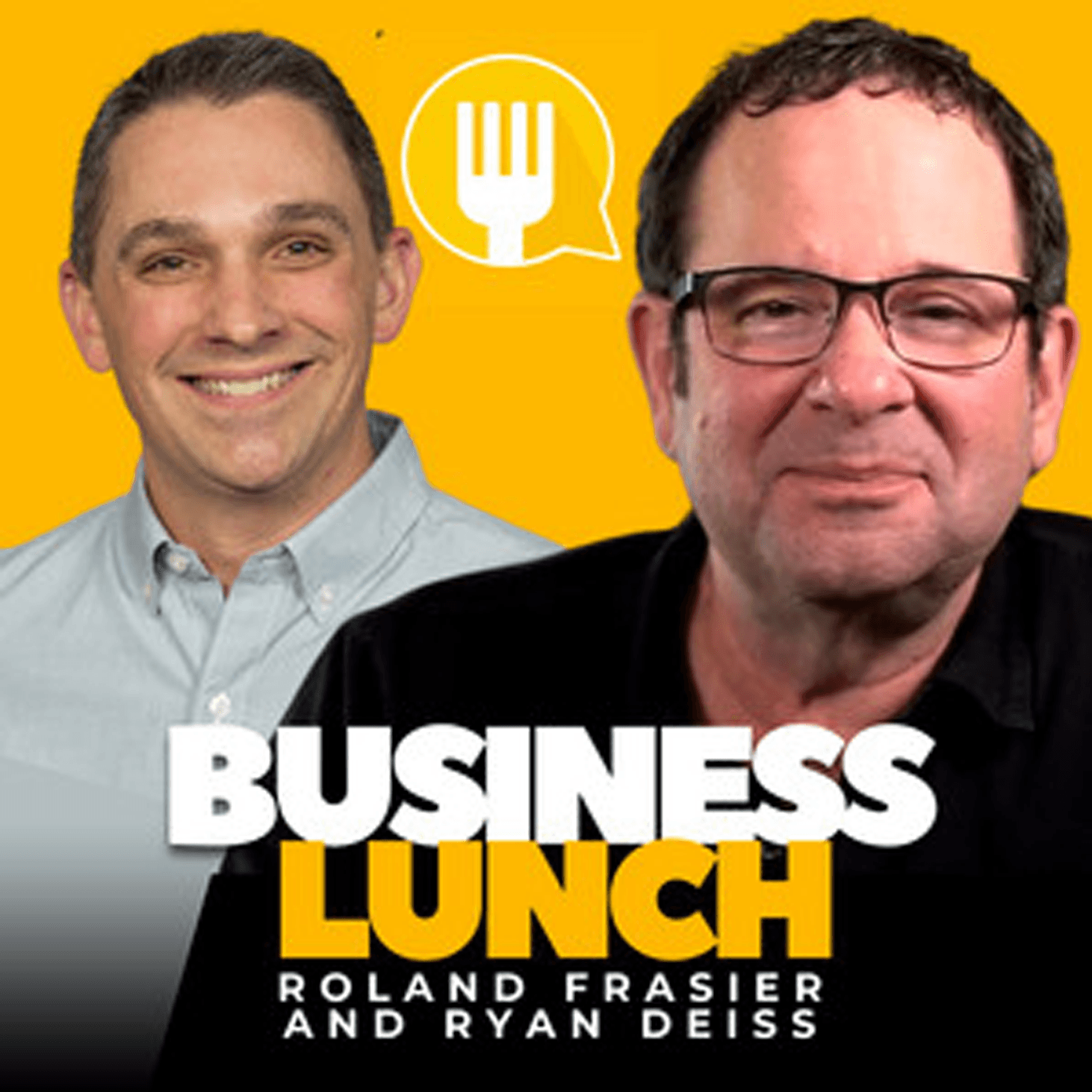
- Roland Frasier
- Ryan Deiss
Episode Overview
This episode delves into the current business landscape, specifically focusing on the evolving consumer preferences for stability over innovation amidst the rapid advancements in technology, particularly AI. The discussion is highly relevant for entrepreneurs, marketers, and business owners aiming to navigate market uncertainties and adapt their strategies accordingly.
Key Themes
- Consumer Preferences:
- A significant shift towards valuing stability and routine.
- A study from Digitas reveals that 83% of consumers prefer stability in brands rather than constant innovation.
- Technological Overwhelm:
- The rapid pace of technological change is leading to feelings of overwhelm among consumers and businesses alike.
- The paradox of desiring stability while also showing interest in AI and innovative technologies.
- Marketing Strategies:
- Emphasizing the importance of simplicity in offerings and communication.
- Focusing on consumer benefits rather than merely adding features or continuous updates.
Notable Quotes
- "Stability is becoming the new luxury."
- "Innovation is about buying back time and sanity."
- "Lean into core features and enhance them as convenience enhancers."
Timestamps
- 00:00 - Introduction
- 02:27 - Discussion on Market Uncertainty and M&A Activity
- 05:38 - The Shift Towards Stability in Consumer Preferences
- 07:59 - Challenges of Keeping Up with Technological Changes
- 11:16 - The Overwhelming Pace of Technological Innovation
- 13:15 - Marketing Strategies in an Overwhelmed Market
- 16:12 - Addition Through Subtraction: Focusing on Consumer Benefits
- 19:46 - Simplifying Product Offerings and Reducing Complexity
Key Takeaways
- Market Uncertainty:
- Business owners are feeling uncertain and are cautious about making decisions, leading to a wait-and-see approach in M&A activity despite the ongoing deals.
- Consumer Stability:
- The desire for stability signifies a major shift in how brands engage with consumers. Failing to adapt could risk alienating a significant portion of the market.
- Adapting Marketing Strategies:
- Marketers should focus on highlighting the tangible benefits of products/services rather than overwhelming customers with constant updates or features.
- There is an opportunity for marketers to provide clarity and simplicity in a landscape crowded with information and options.
- Incremental Innovation:
- Companies should consider rolling out innovations in larger, more impactful updates rather than frequent minor changes.
- The importance of framing product features as enhancements to user experience rather than mere additions.
Implications for Entrepreneurs
- Entrepreneurs should conduct an "overwhelm audit" of their marketing materials to ensure clarity and focus on consumer benefits.
- Adjusting strategies to align with the consumer's desire for stability and simplicity could create competitive advantages in a market that is currently overwhelmed by rapid technological changes.
Conclusion
The episode emphasizes the need for businesses to recognize consumer sentiment towards stability while navigating the complexities introduced by technological advancements. By simplifying offerings and focusing on significant benefits, entrepreneurs can better meet the needs of today's consumers.
---
Connect with Roland Frasier
- Visit [Business Lunch Podcast](https://businesslunchpodcast.com)
- Social Media Links: TikTok, Instagram, Facebook
Resources Mentioned
- 7 Steps to Scalable Workbook
- Free Book: Zero Down
Written by AI. May contain mistakes. Listen to the episode to check what was said.
Transcript
Automatic transcript. May contain errors.0:00Hey, Ryan here. Before we dive into the show, let me ask you something real quick. Are you a seven or eight figure founder who's tired of carrying the whole business on your back? If so, then you're exactly who we built Get Scalable Live for. This is the only room where real business owners just like you come together to share what's working now when it comes to strategy, scale, and exits. There's no fluff. It's just results. And it's happening November 18th through the 20th in San Diego. And yes, Roland and I will both be there. You can grab your ticket now at GetScalableLive.com and don't forget to use code LUNCH to save 25%.
0:365%. Again, get scalable live.com code lunch. All right, let's get you into today's episode. I mean, there, there, a lot of deals are getting done. I think, I don't know how much uncertainty is there. I think it's just been, uh, like if you look at all the money that, uh, Berkshire is sitting on, I think they just can't find a place to spend it. Like they could buy Goldman sacks. But I also think that there's a lot of confidence that the markets are going to go down. And if I look around all the people that I feel like we know in multiple industries, that that uncertainty is scaring the actual business owners.
1:22And so I think that there are people waiting for opportunities, but there's still a lot of M &A activity going on.
1:32hey everybody welcome to another episode of business lunch with your hosts myself roland fraser and the inimitable ryan dice ryan how you doing today well i'm certainly not being imitated if that's what you're suggesting you know what i've seen so many people trying to imitate you but they haven't done it effectively there's so many ryan dices you have tried to sell me bitcoin more times than i can count on instagram that is that is my absolute favorite it. That's when you know you've made it. You know you've made it when your profile gets knocked off on social media so that Bitcoin scammers can try to sell all your friends and family.
2:09I guess fake Bitcoin hack type stuff. It's the best. It's the best. It's my favorite. It's the best. Hey, so you're about to come down to Austin. I'm really excited about this. I feel like you haven't been down to my neck of the woods in a really long time. I haven't. I think it's been November of last year was the last time I was down there. So I'm, uh, I'm looking forward to that. And then we're going to track it over to, uh, country music central in Nashville, Tennessee and, uh, and do our founders board event. So that should be fun too. It's going to be great. I'm excited. You're cause you're going down.
2:39It's like a private equity conference thing. Yeah. It's a, it's capital markets. JP Morgan's got this capital markets event, uh, in Austin for a day. So I'm going to come in and see you and Richard for dinner, go to the next, uh, go to that the next day. And then I don't know if we're, Are we getting together on the night, that night? Or are you spending time with your family or something stupid like that?
3:03Nope, can you hear me? Yeah, I'm doing whatever my wife tells me I can do and will do, but definitely, yeah, doing some planning on Friday and things like that. But I'm excited to hear what comes out of that and what the shape is of sort of the private equity world. It seems like money has been locked for a while, but everybody like wants to spend. But right now that seems like there's more uncertainty than ever. So I'm going to be really curious to see what, what comes out of that. I mean, there are a lot of deals are getting done. I think I don't know how much uncertainty is there. I think it's just been like, if you look at all the money that Berkshire is sitting on, I think they just can't find a place to spend it.
3:44Like they could buy Goldman Sachs. Um, but I, I also think that, that, that there's a lot of confidence that the markets are going to go down. And, um, and if I look around the, you know, all the people that I feel like we know in multiple industries, that that uncertainty is scaring the actual business owners. And so I think that there are people waiting for opportunities, but there's still a lot of M &A activity going on. I mean, there's a lot of deals are being done. So it'll be interesting to see. I'm looking forward to it. It'll be cool to get other experts insights. Yeah. When you come back, we'll have to do an episode with your updates on that, let everybody know kind of what you learned.
4:27Yeah. So what I wanted to chat with you about today, I read this article in Fast Company of all things. I don't remember the last time I read a Fast Company article and I don't remember where it came across my path, but what caught my eye was the headline. It says, How Stability is Becoming the New Luxury. Okay. And it caught my eye because the basic premise is that essentially after decades and decades and decades of rapid technological change and disruption, there was this new study that Digitas did. And what they're finding is that consumers are now saying that they actually prefer stability and routine over innovation.
5:07And apparently they've been doing this study for a long time. And this is the first time that really a significant majority have said, holy crap, just give us more like stability. In fact, 83 % expressed a preference for stability. And I thought that was interesting because they're expressing a preference for stability while at the same time we're seeing interest in AI surge. So there's a bit of a contradiction. There's a bit of a paradox, but I don't know about you. Like, I know I'm kind of feeling it. Like I'm feeling an overwhelm of just all the new stuff. Like, you know, if you've ever been out like in the ocean and it's like, you're just getting hammered by wave after wave after wave, and you just can't seem to get, you know, come up for air.
5:50I feel like as soon as we learn about one thing, there's another thing that we need to learn. And this is nothing new. It just seems like the pace is incredible. And I'm just seeing, it's almost like a lot of consumers and a lot of people are just sort of tapping out. And I've been feeling it. I've been hearing it from some of our clients. And so to see this kind of reflected in an actual study, I thought was interesting. So I just want to just, I guess, first kind of get your take on that. Like, are you feeling this too? Are you seeing this? I'm going to talk about a couple of things and then I'll tell you.
6:27I am surprised that it's a change that 83%, I think you said, want stability because in my experience, most people do not like change. Most people want the comfort of stability, but the truth is that it is never there. It's illusory if you think it's there. So I think that's kind of funny that that's a change. It seems to me like at least in my experience, most people want to be like the least change that they have, the happier they are, unless they're really not from their product, not from the products and services. So in their, in their day-to-day life. Yeah. But they're saying specifically as it relates to the companies brands, right?
7:17What do we love in our brands in the past? It was, we love brands that are always changing and always innovating. Now they're citing a preference for brands that are more stable and more predictable and more routine, right? People, you know, talking about people having a preference for analog board games and stuff like that. So, yeah. Yeah. Which will put those brands out of business if they, if they follow that tact. But, um, I want to get into some of the implications of this as well, because I do think that there's some things that we can take from this, but, but yeah, just in general, but going back to it, like, so keep, keep going with your, with your, with your thoughts on that.
7:51Yeah. So, so that's the first thing. And then the second thing is, is that it ain't ever going to happen. Um, and, and I think that people maybe forget when, um, gosh, was it almost at least like 15 to 17 years ago when Facebook was really kind of coming out with Instagram and snap and, uh, all of this, you know, YouTube, all the social media channels are relative, were relatively young back in the early aughts. Right. And they were changing all the time. And you were like, you know, I don't need another person. I don't need another, why do I have to be on Instagram and snap and LinkedIn and Twitter and, you know, 17 other, uh, you know, musically, which was, I think TikTok before it was TikTok.
8:36Like, why do I have to be on all those places in all these different formats? I can't do it. I'm going crazy. I want the stability of one. Right. I think people were, were saying that then too. Um, So I don't think that I think that what we're experiencing is everyone is participating in the live development and evolution of AI through the major competitors. And I find it confusing and I'm relatively up on it because, you know, every day I laugh at the YouTube channel headlines. It's every day. It's like insane changes. It's like, OK, I mean, they're not anymore. right? They're, you know, it's like, come on, it's the same, it's the same headline that you've used a thousand times, but it's, Hey, Google released, you know, uh, Gemini 2.5 flash, but, you know, but, uh, Grok did this update mid journeys now got this, and this is a new API from open AI that is confusing.
9:35And they kind of all do the same thing, but different ones are little bit better at the other. And if you lean into any one of them and don't look at the others, you might very well get left behind. And that's terrifying to people. But at the same time, if you did just lean into one and get really good at that, you'd be just fine. So I think that it's probably this panic that everybody's seeing from the AI platforms to not get left behind and to be the leader because they're fighting for that right now. It's still open for anybody. And if any of them stops innovating and stops catching the attention of the people and gets left behind by the others, they're going to maybe fall out.
10:18Like, I doubt we will have all of the ones that we have right now, even though there's only really four or five that, you know, command attention. And then there's, who's the, you know, who's the upstart going to be? Who's the meerkat that's then going to be bought by the, you know, existing one? Or who's the Snapchat that's going to come out with stories that the Facebook is going to just flat out clone and, you know, and take. with, you know, with, uh, with, and even call it the same thing. Um, that's all happening real time. And I think that people trying to get not left behind by this giant innovation.
10:53That's, I think probably as big as the internet was as big as computers was is very unnerving. And so that's what all that's coming from. You know, I, I'm not, I'm not feeling overwhelmed by it because I just want to basically like I, I subscribe to maybe a hundred newsletters that are AI related and things like that. And I don't read most of them unless, uh, unless something has caught my eye or I'll let two or three weeks go by before I'll go back and spend two or three hours catching up on them. Because chances are, I would have spent time learning something that's completely inapplicable now.
11:38And that's the thing is I think that, that you probably don't want, you certainly don't need to be on the cutting edge of all of these things. You can be back, um, a month and kind of see what's, you know, what's happening and what's not happening. And I think you can see when there's like a major thing that happens. Um, Um, that's, I don't know. Yeah, because think about what you just said. You said, I subscribe to 100-ish newsletters just on AI. Yep. That's nuts. It is. Right. Like you, I mean, you threw that out there like that's just kind of nothing. But I do think that that is, you know, that kind of speaks to the fact that, yeah, this crap is pretty freaking overwhelming.
12:21And so if you, who it's our jobs to be on the leading edge of this stuff, we need to learn it. We need to understand it for our own businesses, but also so we can explain it to our clients. So we're incentivized to do this. It's one of those things where like people are always amazed and impressed when these actors are in such great shape. It's like it's a freaking job. Like their job is to go exercise during the day and like read lines that people wrote for them. Like, don't be that impressed. Anyway, it's our job to like do this stuff to learn. And yet we're a little bit, a lot bit overwhelmed.
12:52You can imagine how the business owners would be. And then now let it trickle down to the consumers. Let it trickle down to my redneck friends who are just trying to figure out what the heck's going on there. And I think you can see how a lot of people are just crying out for, holy crap, can this stuff just slow down a little bit and just give me a little peace of mind? So if that's where it is, justly or unjustly, what opportunity do you think that creates for marketers, for business owners? Because I do think that this is, I do think that a shift has taken place. I do think that people were lining up for the iPhone that had all the newest, coolest innovations.
13:31And we wanted to watch and to figure out like, ooh, look at all the new tricks and features. And we wanted that. We chased the brands that were always doing the new. And so if we're all exhausted, and I don't believe this is anti-tech, by the way. I think that's important. I don't think it's anti-tech. I just think it's kind of a little bit anti-overwhelm. Yeah. So if that's where it is, what's the zagging to everybody else's ZIG, do you think? That's a really good question. The challenge is my questioning the, was it Gravitas, the Digitas study? I'd like to know more about that to feel like I could believe it.
14:15Because I know I can give a study and get any result. You know, that's the benefit of being a recovering attorney. Um, the, uh, I mean, I guess it's like just generally for people and for, for, as a product person, it's like, okay, well, I, I understand that at some point we saw research that said that, um, when you, if you touted AI as being in your product, you got lower responses. So we stopped touting AI and just called it software. And, um, so I think that you, you do want to be aware of the sentiment of the market. And I guess that I would lean into my core features and I would enhance them and improve them and that that would be okay.
14:59But positioned as convenience enhancers or maybe not announcing it as brand new, but just stressing this is how easy this is to use. So like if I had an iPhone and let's say that I had something like Apple intelligence that was going to make the phone better, which doesn't exist. Um, if I did, yes, Apple, I was talking to you. Um, let's say that, uh, that I've got that, but what it does is it lets me now finally be able to find the emails that I'm looking for on my phone that Apple's terrible mail search feature never would allow me to do. I probably would just say, um, here's the things that you can do with your iPhone 17, uh, find emails in, you know, in two seconds, you know, that like, I wouldn't talk about it necessarily as a change.
15:48I would stress the benefit to the customer, not as a change, just this is the experience and lean into that. That's, that's kind of what I would do. And then also, I think these micro innovations, I would probably stop announcing and I would batch them into significant things. Kind of like I've done with my newsletter consumption because I can't, I would not, I would have no time if I read all of those, you know, every day. But I also know it's unlikely, like it's unlikely I'm going to be left behind in a few weeks. Uh, so I can scroll through and find the things that seem to be the big deal based on their frequency or of the, you know, of what they're being taught, how, how often they're being talked about.
16:33And if it's, everybody's talking about Gemini 2.6, then, okay, I should probably know about that. If everybody's talking about fire studio, I should probably look into that a little bit. But if there was an announcement about fire studio and gem studio and, you know, uh, Megalon studio, and that's it one time, I probably wouldn't be leaning into that. So those would be my two things. I'd love to hear what your thoughts are. Yeah. I love that. Um, cause I do think at times there are times in the market where people are more abundance minded and there are times when they're more scarcity minded.
17:07And I think when they're more abundance minded, then you should basically be promising addition through addition. So it's all about more and you get this and it's the extras and people don't care so much about, they don't necessarily need you to connect the dots on why this additional feature is going to be so much better for their life. They're just happy to have more because they just trust and believe that more is better. Right. And they're like, yay, more, right. This is so good because everything is good and everything's happy. And I've got so much room for all of, you know, There's so much room for activities, right?
17:38So that's kind of the more, you know, the addition by addition, the more is more. I think where we're in right now from a market cycle and from a market mentality perspective is really an addition through subtraction. And so what we should more be selling is more that end result, that idea. And this is what, you know, the same thing that you were saying is not just, hey, we have this new feature or we did this new thing, but specifically we've got this new thing because it's going to make your life easier. And that's where I believe right now, if we can really lean into not, I've got this thing for you, isn't it great?
18:17But I've got this thing for you. Here's how it's going to buy you back some more of your time. Here's how it's going to buy you back some more of your sanity. I think that really is what, you know, what I think consumers are telling us. So I would I would say, and what was in my mind as I was reading this, is it's worth going through and evaluating, doing an audit of all of our marketing copy and just saying, where are we promising big? Like where are we making big, overwhelming promises that maybe we could actually promise less but faster, right? Where we could not so much speak. And it's classic, like features and benefits.
19:01But I do think that there's been a season where the simply stacking of the features gave you an edge. I think we're now shifting into a thing where you better connect it to a very specific intangible benefit that ideally is achieved very, very quickly. So I'm going to do like an overwhelm audit was kind of an idea that I had. Like in what way does it seem overwhelming, even if it should be perceived as beneficial? And that could be in how we're describing a given product or service, how we're describing a particular feature in any of this? Does it seem kind of overwhelming? I also love what you said.
19:39And I was thinking about this too. I wrote down innovate incrementally as opposed to always just throwing out a bunch of little things. Hey, we did this. Hey, we did this. Hey, we did this, which was rewarded in the past. Yeah. Like that's what software was like. Hey, you should ship a new feature like every week. I remember my buddy, David Kensell, who's the CEO and founder of drift.com, which is a very fast growing startup, you know, in the, you know, 2016, 2017, 2018, that was their whole strategy was to just always be making product announcements. I don't know if that's necessarily the best, would be the best strategy today.
20:17I like what you said about batch it, deliver one really, really, really big thing that's, that people can say like, okay, that's meaningful. That's really worth paying attention to trying to suck up all the oxygen. You could call it, you know, a, it's, it's the, you know, it's the Iridium update or whatever. And then it's got 42 different cool things, but you're not talking about the 42 things. You're talking about the experience in the, the increased benefits of the Iridium update, right? You're not talking about, you know, and now we can, you know, we can talk to our phone and now we can do this.
20:51The other two things that came to my mind while, while you were talking too, is product range. That if you look at what Steve Jobs did when he came in and Mac had all of these too many products and it was confusing the customer, I think that's an issue for the AI companies right now. I think you've got, when I hit the pull-down list on ChatGPT and I've got 14 different models to choose from, it's just too much.
21:52I'll see you next time. negotiating with sellers. You are not alone. Too many people waste months, even years, just thinking about acquiring a business while the real opportunities pass them by. The Epic Deal Fast Track is not another course. It's actually an implementation program, and it's designed to get you from the idea to the acquisition in just 16 weeks or less. We work with you one-on-one to help you find, fund, and close your first or next deal. And once you do, we're going to plug you into our elite Epic board community so that you can keep scaling through acquisitions. We install three powerful systems in your business.
22:32The first is the deal flow engine. So you always have high quality off market deals coming to you. Number two, we give you our offer and funding system so that you can structure offers that get accepted and fund them creatively many times with no money out of your own pocket. And number three, our closing and integration system so that you don't just buy a business you actually successfully run and scale it once you have acquired it. Plus, you'll have direct one-on-one support from an Epic Deal advisor every step of the way. And that's people that have actually come up through the system and done these deals themselves.
23:05That's the only way to become an Epic Deal advisor. And if you're serious about acquiring a business this year, don't just sit on the sidelines. Just text I'm in to 334-458-9034 and we'll get you in. So text I'm in to 334-458-9034. We'll get you in. No fluff, no wasted time, just real deal making from people that are actually out there doing deals right now. I'll see you there.
From the publisher
Welcome to a new episode of Business Lunch! Join Roland Frasier and Ryan Diess as they dive deep into the current business landscape, exploring the surprising shift in consumer preferences towards stability, the challenges of technological innovation, and insights into market uncertainty. This episode is perfect for entrepreneurs, marketers, business owners, and anyone interested in understanding the evolving dynamics of technology, consumer behavior, and business strategy.
Highlights:
"Stability is becoming the new luxury."
"We're experiencing the live development and evolution of AI through major competitors."
"Innovation is about buying back time and sanity."
"Lean into core features and enhance them as convenience enhancers."
Timestamps:
00:00 Introduction
02:27 Discussion on Market Uncertainty and M&A Activity
05:38 The Shift Towards Stability in Consumer Preferences
07:59 Challenges of Keeping Up with Technological Changes
11:16 The Overwhelming Pace of Technological Innovation
13:15 Marketing Strategies in an Overwhelmed Market
16:12 Addition Through Subtraction: Focusing on Consumer Benefits
19:46 Simplifying Product Offerings and Reducing Complexity
CONNECT
• Ask Roland a question HERE.
RESOURCES:
• 7 Steps to Scalable workbook
• Get my book, Zero Down, FREE
To learn more about Roland Frasier 👉 https://msha.ke/rolandfrasier/
Connect with me on social:
📱 Facebook: