In short
Business Lunch Podcast Episode Notes
Episode Overview
- Title: The Death of the Task Economy: A New Era
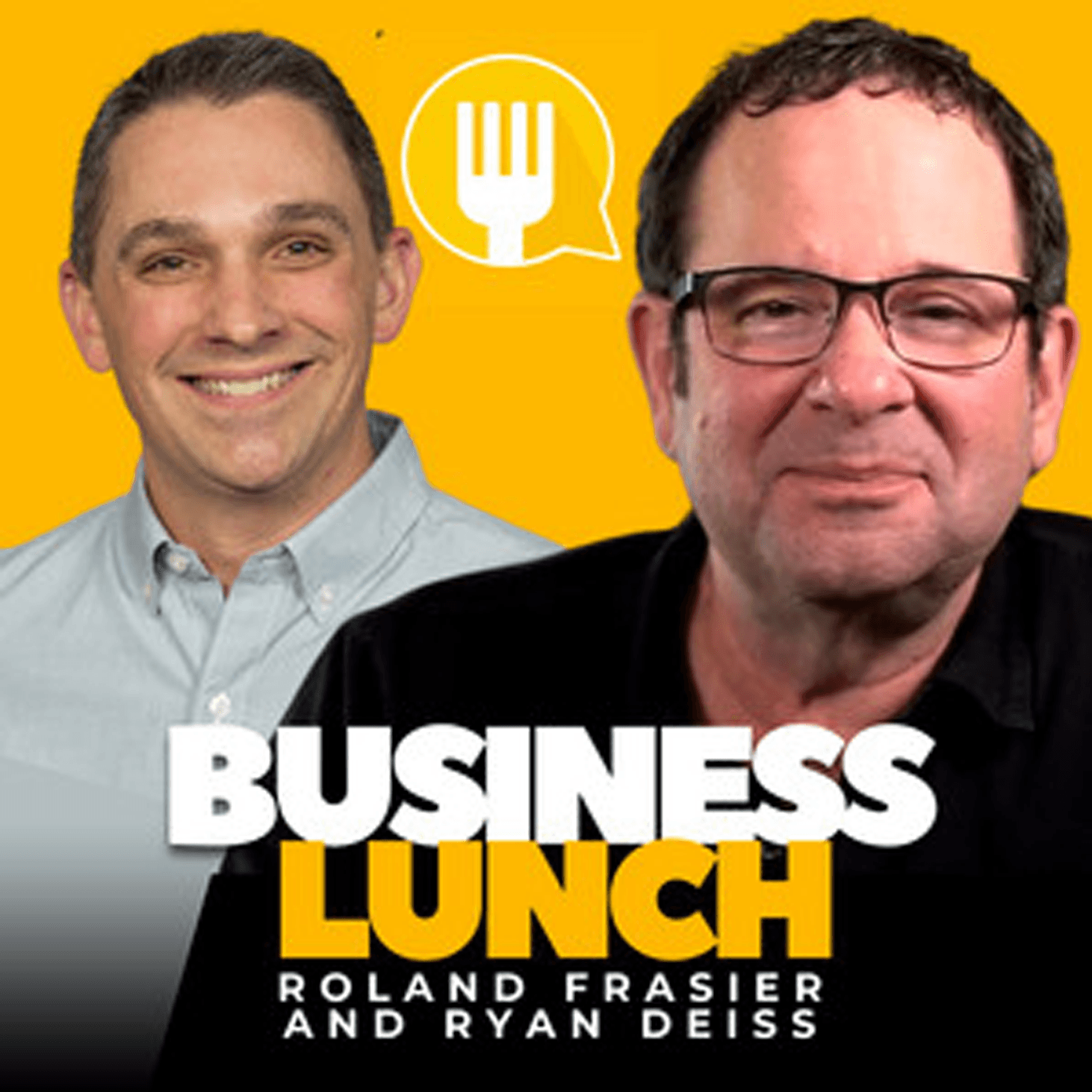
- Hosts: Roland Frasier & Ryan Deiss
- Description: The episode discusses the changing landscape of business in the era of AI. The focus is on the shift from task-oriented work to purpose-driven services, the implications of AI on job markets, customer experience, and strategies for business adaptation.
Chapter Breakdown
- 00:00 - Introduction to the Death of the Task Economy
- 01:51 - The Shift from Task to Purpose
- 06:09 - Understanding Jevons Paradox in AI
- 12:42 - Qualitative vs Quantitative Work
- 20:47 - Valuation and Purpose in Business
- 25:10 - Transforming Services with Purpose
- 32:27 - Customer Experience and the Future of Services
---
Key Themes and Discussions
- The Shift from Task to Purpose
- Importance of focusing on purpose-driven services rather than merely selling tasks.
- Quote: "If you’re charging your clients for hard work, then you’re building a business on a depreciating asset."
- Radiology example: Radiologists are adapting to AI by focusing more on diagnosing diseases (purpose) rather than just reading scans (task).
- Jevons Paradox
- Explanation of Jevons Paradox: As efficiency increases, demand often rises, leading to more work rather than less.
- Example: Increased efficiency in radiology leads to a higher demand for scans, thus sustaining the need for radiologists.
- Qualitative vs Quantitative Work
- Discussion on how the nature of work is changing:
- Quantitative work is at risk of being automated (e.g., technical writing).
- Qualitative work, which requires human insight and creativity, will continue to be valued.
- Businesses must position their services away from easily quantifiable tasks.
- Valuation and Purpose in Business
- Businesses that rely heavily on task-oriented work face declining values as tasks become automated.
- Importance of transitioning to a purpose-oriented model to enhance business valuation and longevity.
- Example: A tax preparation firm transitioning to a wealth-preservation strategy.
- Transforming Services with Purpose
- Emphasis on designing services that deliver customer experiences beyond just fulfilling tasks.
- Example: The automotive industry should focus on providing uptime and customer experience, rather than just fixing vehicles.
- Customer Experience and Future of Services
- Companies need to redefine their customer experience to stand out against AI competition.
- Importance of accountability and ensuring customers feel valued.
- Creating a multi-layered service experience enhances outcomes and customer satisfaction.
---
Actionable Insights
- Evaluate Your Business:
- Conduct a red-green exercise on your Profit & Loss (P&L) statement.
- Red: Identify task-oriented revenue streams likely to decline.
- Green: Highlight purpose-driven revenue streams with growth potential.
- Focus on the Customer Experience:
- Map out what a one-star customer experience looks like versus a five-star experience to identify areas for improvement.
- Reposition Your Offerings:
- Shift messaging from task completion to the overall outcomes and experiences provided to customers.
---
Conclusion
- The episode emphasizes the urgency for businesses to transition from a task-oriented mindset to a purpose-driven one in order to thrive in an AI-dominated future. The underlying message is to focus on delivering unique, qualitative services that resonate with customers on a deeper level.
---
Resources
- 7 Steps to Scalable Workbook: [7 Levels Assessment](https://scalable.co/7-levels-assessment/?utm_source=business-lunch&utm_medium=podcast&utm_campaign=lead-gen)
- Book - Zero Down: [Get it for free!](https://epicnetwork.com/books/zero-down/)
- CEO Dashboard Template: [Download here](businesslunchpodcast.com/dashboard)
Written by AI. May contain mistakes. Listen to the episode to check what was said.
Chapters
Tap a time to open that second in VOSetting the Stage: The Death of the Task Economy
0:46 to 1:21
The hosts introduce the topic of the episode: the decline of the task economy.
“So I actually just get to like hang out.”
The Shift from Tasks to Purpose
1:22 to 2:35
Discussion on how revenue tied to tasks is decreasing and the importance of selling purpose.
“This is basically why selling work is dead and how to pivot to selling purpose.”
Jevons Paradox Explained
2:36 to 4:02
The hosts explain Jevons Paradox and its relevance to AI efficiency and job demand.
“And so the question I want us to answer for everybody here is, are you charging for the scan or are you charging for the cure?”
Examples of Job Transformation
4:03 to 6:07
Exploration of how AI impacts various professions and the importance of focusing on purpose.
“Because radiology is now more efficient, people are getting more scans.”
Qualitative vs Quantitative Work
6:08 to 8:00
Discussion on the difference between qualitative and quantitative work in the context of AI.
“Yeah, no, I think that's a perfect fit for it.”
Navigating Changes in Business Models
8:01 to 10:41
The hosts discuss adapting business strategies in response to AI advancements.
“ideologically to the Jevons Paradox thing, but I think it's different in that we're thinking about, like, it's actually...”
The Importance of Accountability
10:42 to 12:36
Discussion on the need for accountability in automated services and the implications for businesses.
“I think a good way to, um, maybe a good question to ask is, you know, is my work, uh, qualitative or quantitative?”
Examining Accountability in Automation
14:02 to 16:57
Explore the complexities of accountability when automation fails in service industries.
“Is there any one programmer that you could possibly identify?”
Shifting from Task to Purpose in Business
16:57 to 20:29
Learn how businesses can transition from a task-oriented model to a purpose-driven strategy.
“The more your business's value prop is slanted towards task, the more at risk you are and the faster you should think about the possibility of switching to purpose.”
The Impact of AI on Business Valuation
20:29 to 24:53
Understand how AI influences business valuation and acquisition strategies.
“by making them aware that you know what's going on.”
Show all 17 chapters
Enhancing Customer Experience in Automotive Services
24:53 to 28:00
Discover how the automotive industry can improve customer experience through a focus on outcomes.
“We're selling software that is wrapped around a greater service that is designed to deliver an end result.”
The Importance of Delivering a Quality Experience
28:00 to 29:14
Learn how delivering a superior customer experience leads to business success.
“And so with lots of other people, I mean, it really it's it's it's absolutely ridiculous that that they're not able to make this work.”
Inverting Service Levels for Better Understanding
29:14 to 31:04
Discover how thinking about poor service can help identify areas for improvement.
“way to maybe look at this, sometimes it's easier to invert it.”
Defining Actual Value in Services
31:04 to 32:57
Understand how to articulate the true value behind service offerings.
“who's the gold standard for five-star right now?”
Differentiating Real Estate Services
32:57 to 35:08
Explore how luxury real estate services differ from standard offerings.
“What we sell there is not we're going to fill out your forms and documents.”
Identifying Task vs. Purpose in Business
35:08 to 37:08
Learn how to evaluate business activities to focus on value creation.
“And so I think a lot of it's just, we're going to make sure that when you, when you buy your first home, you know, you've got the best deal that you possibly could.”
Positioning Against AI Disruption
37:08 to 39:57
Understand strategies to maintain competitiveness in an AI-driven market.
“Yeah, no, I mean, I think that's, I think that's a great idea.”
Transcript
Automatic transcript. May contain errors.0:00Hey, everybody. Welcome to another episode of the Business Lunch Podcast with your hosts Ryan Dice and me, Roland Frazier. Ryan, how are you doing this wonderful day? dude so good i don't have a soccer game that i have to go to tonight so i feel like i've just got all the time in the world how about you you don't have a soccer game you have to go have you been playing a lot of soccer lately and then oh it's not me i mean my kids like i got both my kids are in soccer and so it's literally every night of the week i have to drive all across you know this wonderful planet of ours to go to a different kid's soccer game and i love them and it's a it's a joy that is but holy crap and they're not even in like travel soccer.
0:40Like this is just like low-key school soccer. So I don't know. Crazy, crazy. Anyway, but I don't have it tonight. So I actually just get to like hang out. How about you? I like it. Hey, everything is good. I was thinking that it would be fun to talk about something today. I saw a, I guess, a podcast that NVIDIA's CEO Jensen Huang was on. And so I was thinking we'll call this episode the death of the task economy because we like to be drama-fied here. What do you think? Okay. I like it better than death of the Huang. This is basically why selling work is dead and how to pivot to selling purpose.
1:31So this is basically if you're charging your clients for hard work, then you're building a business on a depreciating asset. So we always tell people to build assets, not jobs. But Jensen Huang just made it clear that the cost of doing things like typing or coding or filing is racing to zero. And if your revenue is tied to the doing or the tasks, your revenue is racing to zero right along with it. And it's kind of interesting. So I'd just like to break it down with you because I think it completely validates what we talk about, you know, at Scalable. And this is kind of starting off of this radiology rule he referred to.
2:17So back in 2016, there's a guy named Joffrey Hinton who told everybody to stop training radiologists because AI was going to kill the job. And he was dead wrong. The radiologists are making more money now than they ever did. And the job category has expanded because reading a scan is a task, but diagnosing the disease is a purpose. And so the question I want us to answer for everybody here is, are you charging for the scan or are you charging for the cure? So I thought it'd be kind of fun to break it down across several of our portfolio companies, too. But but just generally, it's kind of fun because it I was like I came across this this morning and I've had multiple conversations with people about it already.
3:07It just kind of came up and I wanted to see what your thoughts. So basically, task versus purpose. What are your thoughts? Yeah, I mean, and this concept, by the way, has a name. Are you familiar with Jevin's paradox? I am not. So Jevin's paradox basically states that as something becomes cheaper, demand goes up, not down. And so that's kind of what's happening right now with, you know, with AI. And that sounds obvious. I was going to say that doesn't sound like much of a paradox, though. Yeah, but it's this idea that like, well, it's as technology makes a process more efficient, we don't use it less, we use it more.
3:52Right? Like, that's the idea. So going back to the radiology example, right? So AI has made radiology more efficient. So it's like, oh, we don't need radiologists anymore. It's like, no, no, no. Because radiology is now more efficient, people are getting more scans. Therefore, we actually need more radiologists, not less. And this was discovered, the dude, Jevin, who discovered this. This goes back to like the 1860s when they were first making trains, like locomotives, more efficient. And everybody's freaking out because they're like, oh, no, if we make these too efficient, if the steam engine becomes too efficient, people aren't going to be using coal.
4:30And all these coal miners are going to be out of business. Well, the exact opposite turned out to be true, which is that as the steam engine became more efficient, train usage exploded and so did the need for coal. The key is you want to make sure you're on the right side of this equation. And that's kind of what we're talking about, because there definitely are people who are losers in Jevons Paradox, right? Because there are people, and if we think about the AI boom, there are absolutely people, like technical writers, for example. I have a neighbor who his job was technical writer. He worked for a technical company.
5:14They produced manuals that would go out, and he would have to write technical manuals for people to read. He absolutely was laid off because AI could do his job, because he performed a task. Like, right, he didn't have like an end purpose. And so I do think that that's the important question to ask. Like, I love this discussion because it's just that. But I mean, I just wanted to kind of pause and acknowledge like most people, if you listen to most economists out there, they're saying that like, oh, the sky is falling. AI is going to steal everybody's jobs. And just know that historically speaking, the exact opposite has been true.
5:53It's true for radiology, probably going to be true for software engineers, probably going to be true for attorneys. People are saying, oh, attorneys are all going to be out of business. Like, nope. But all these things, but making sure that you're on the right side of that, I think, is really important. So anyway, I want to throw that out there. Yeah, no, I think that's a perfect fit for it. I think that the interesting thing is we were talking about this morning, someone asked on our coaching call about businesses. They said, you know, what was the question was like, what was the, what did I think about this affecting businesses, right?
6:39Like as far as like in terms of when you're negotiating to acquire a business, when you own a business, when you're talking to somebody about a consulting for equity deal or something like that. And to me, it's a really good opportunity in negotiating to say, look, right now, there's a lot of businesses that are going to have the stat that I saw most recently was like the bottom 30 % of jobs that are task oriented are going to be eaten by AI. And you see it happening across the board in, you know, in lots and lots of different businesses, your tech writer friend, you know, included. and if the thing that you're doing, what I liked about what Wang said was like, I like the task purpose thing because the task, he even said, he said like part of, he said, I do a lot of typing in my job and I would like to not do so much typing, but typing is a task.
7:36Typing isn't the purpose of what I'm doing. I'm typing because that gets me to communicate with the people that help run NVIDIA. and if I don't have to type as much, then that's great because I'm not going to be out anything, but it allows me to actually become more efficient and spend more time accomplishing the purpose that I want. So, you know, I kind of like how it ties ideologically to the Jevons Paradox thing, but I think it's different in that we're thinking about, like, it's actually... breaking down the things that we do by saying what's the outcome that we're looking for, not what's the method of getting there.
8:24And that if AI is increasing our ability to get there maybe faster because it's shortening the time for us to do that, that's cool. But even with like waiting tables, if we have a electronic AI ordering service and we have a robotic food delivery service, those are tasks that the waiter might do. I'd be concerned if I was a busser, but, um, did I lose you? It reset. Okay. Um, the, uh, but the waiter's job is to ensure that the people who are dining have a good experience and, um, and that that doesn't change. And that if they're able to place their order faster and get it in and their food is able to come out and their waters are able to be real refilled and all those things faster.
9:19That's cool. But that's different than the actual, let me ensure that your experience here at this restaurant, having this meal is good. And, and I think that's really a good way to look at it because I look at how we use AI increasingly in what we do at scalable and at digital marketer and other businesses that, that are in our portfolio of companies. And I don't really see it like I see it making things happen differently. Like we're we're we feel now that we probably shouldn't sell courses because everybody feels they can get courses, although the course experience delivered by AI is inferior to the quality of the course experience that a tailored, crafted, experientially based course creator can make.
10:14the market doesn't necessarily know that. So we're like, okay, well, let's figure out how can we get this for you faster? Maybe let's do done with you instead of you do it yourself. Let's not teach you how to do it because you can ostensibly figure that out from, you know, AI. But if we're doing it with you with the guided hand of a mentor, you know, who has been there and done that, then it's going to be different. That's a superior outcome that I just, I like that, that look at it. Yeah. I think a good way to, um, maybe a good question to ask is, you know, is my work, uh, qualitative or quantitative?
10:55And I mean that like literally like, can I count the output of my work? I mean, cause if you think about it, like if, if you are a technical writer and you can literally count the number of pages that you wrote in a given day, that might be a problem, right? And if you're expected to count, to produce X number of pages or X number of words, that's problematic. I love the comparison of, you know, a waiter versus a busboy, right? A waiter, yeah, they're going to have a certain number of tables that they're going to be given, but at the end of their shift, it's not, they're not judged by how many tables did you serve at the end?
11:34It's what was the satisfaction? You know, how much maybe did you generate in tips, which that's going to be a function again of satisfaction of how effectively did you sell and upsell? Whereas for the bus, you know, bus boys and girls and that staff, then it really is how quickly were you able to clean up the tables? So you can imagine one of them being automated and another not automated. If we think about coding, right? If you're doing a code review and it's just, I need to debug, now it's just, well, how many lines were you able to debug today? That can be counted. Whereas if we're trying to architect and solve for a particular problem, then it's just what was the quality?
12:17Did you solve the problem or not? You can't really count the quality that a problem was solved. And so as long as there are still qualitative things that need to be done, then that's the thing that people are going to continue to pay for. And as long as technology is going to make it easier to do those quantitative things, I think it's only going to increase the need and the desire for the quantitative. You just want to make sure that the positioning. And I do think that you mentioned the courses. I think that this was maybe one of the problems that specifically like digital marketer got into in the course business, like getting very, very specific there is that it was we're going to certify you in this.
13:02So before you won't be certified in and afterwards, like you will be certified in. It was this kind of very binary sort of thing that could kind of be counted. And it wasn't necessarily a qualitative experience that people were really looking to have. It was just a box that they were looking to check. If we're being honest about kind of where it ended up, not necessarily where it began. And that's why there needed to be some changes there. Yeah, I like that. The other thing that I think is important is that people want a throat to choke if things don't go well. They want accountability. So if I was thinking about it like with remote driven cars, right?
13:48The big thing is, well, the car that has no driver makes an illegal turn and runs over a pedestrian that's crossing the street. Who's liable? Who do we go get for that? Do we go after the programmer? Is there any one programmer that you could possibly identify? Do we find a sacrificial lamb? Do you go to Elon Musk and say, hey, you're kind of the head at the top of this thing, so you're going to be liable for that? you know, which none of that would be fair. Um, so I think that's the other thing is, and if the meal didn't go well, um, and everything was automated, I guess the restaurant pays the price with a bad review.
14:30And then the owner of the restaurant gets mad at the automation companies, you know, it's like, it's so, so I do think that, that that will be an interesting thing to see how that evolves. But so much of this is positioning, right? And this is where I think kind of where we're going with this conversation is how are you when you're when you're describing your business and the value that you deliver? Are you describing it in quantitative terms? Like, is it just, yeah, when you're done, you know, you're going to have this have this thing. Because if it sounds like that, then people may very well be thinking, well, I can just get AI to do that.
15:08And an example, like something I've heard Rory Sutherland talk about, who's really famous, like Ogilvy, Adman. He gives the example of the doorman in New York City, right? And if you think about like quantitatively, what does a doorman do? They open and close the door when people walk up to it. And so if you're going to define the value of a doorman as just being somebody who opens and closes the door, well, we can automate that, right? We've known how to automate that for years. You walk up to a door and there's a thing that'll open and close it. But if you're going to say, no, no, we want a friendly face to welcome us, somebody who knows our name, also somebody who knows who belongs and who doesn't belong.
15:50So that if somebody doesn't belong, it can be like, hey, are you supposed to be here right now to kind of keep the riffraff out? And going to what you said, if somebody gets into the lobby who's not supposed to be there, now we know who to blame. And so much of this is just we want to make sure that we know that somebody else is on the hook. for this type of stuff. So beginning to describe yourself, not as I open and close doors, but as I'm creating an overall, you know, elevated experience for all the tenants in this building, whatever that is for your business is where you need to end up. Yeah.
16:23And so I want to kind of talk about it more specifically with some of the portfolio companies, But I want to kind of start with the concept or the idea of in kind of how you're going to look at the valuation of your business and when you're negotiating to acquire or sell, how does this impact that? And I think what it does is it says, number one, whatever part of your business is task oriented, that is not going to be a differentiator for you. That's going to be everybody's got the same tools. Everybody's got it priced the same. It's a race to zero. The more your business's value prop is slanted towards task, the more at risk you are and the faster you should think about the possibility of switching to purpose.
17:14And so if you look at the market of businesses that are out there for from a valuation standpoint, if somebody wants to sell their business now, what we can do is say, look, the challenges is that what you're doing right now, and I'm going to use taxes because that's one of our portfolio companies, right? We have a tax prep company, but we know that tax prep is being increasingly automated. It was offshored and now it's being heavily automated in RPA, robotic process automation. So the more that we are fillers of forms, the less valuable we are. You can even go to, you know, chat GPT and upload your tax return and say, you know, tell me, you know, tell me how I should fill this out.
17:58But what is more interesting is how do I comply with the law to not be liable or criminally, civilly or criminally, for not doing the tax thing correctly? And at the same time, how do I save money, which helps me to preserve wealth? And so instead of thinking of ourselves as a tax preparation firm, we think of ourselves as a wealth-preserving strategy firm. And our business has really been significantly changed by going in and having, we've spent hundreds of thousands of dollars to automate so many of the tasks, which can now allow us to complete far more tax returns. but we're not competing against the offshoring that's happening in India and other places like that.
19:00We're not competing against AI filling out forms. We are now experientially taking people who we were doing that for and saying, hey, let's look at the whole of your wealth and how does the tax that you're doing apply to that? And what are the outcomes that you're looking for outside of tax and how can we design your tax strategy to get you to the places that you want to get faster. And then that becomes much, much more of an, you know, of a non-task experience. It's more purpose focused. And so when we're looking to acquire firms now, because we're actively acquiring, right, we say, look, I get that you, you know, your firm did$3 million last year, but 75 % of that was tax prep work and the value of that work is going to zero.
19:53So when I look at your pro formas, you have to tell me with 75 % at a easily replicable thing and AI eating that fast, three years from now, what have I bought? So the value of your company is lower. Now for buying purposes, that's great because we'll be able to buy that company significantly lower and then we know from a value standpoint, we'll be able to add value to transform it from tax prep to wealth preservation and that gets kind of exciting on both ends. So if you're a buyer, devalue the businesses by making them aware that you know what's going on. If you're a seller, protect yourself by fixing the things that are task-oriented now to be more outcome-oriented and then let's talk about that across several different kinds of businesses.
20:46Does that make sense? Yeah. And I think that's what you just said is incredibly important. It's important from evaluation, like an enterprise value perspective. It's also important that you make this clear when marketing your business to your customers and clients. Because whether you realize it or not and whether they realize it or not, this is the calculation that everybody's making right now. And so there's a pause that's taking place and people are saying like, do I need to do this or could AI do this? That is the question floating around in the back of everybody's mind. And so if you cannot differentiate yourself in a qualitative way from AI, then you just got to know that there's going to be that pause.
21:28And when somebody pauses from a purchase decision, they rarely come back later and say, okay, I think I am going to do that thing. That pause usually equals no. Yeah. Yeah. And then let's look at, if I'm SaaS, I'm terrified right now because especially the simpler SaaS thing that I am, the more I'm terrified that, you know, a great example is I think it was a one person coder that did the headshots thing where you basically upload a picture of you, you know, out in the woods or something like that. And then it like cleans it up and you've got a suit and tie headshot, you know, that you can use on your resume.
22:07But in our businesses, we have for our business of acquiring companies, we built an entire acquisition software that goes and finds companies to buy, checks them against industry averages, sends out contact information, follows up automatically with voice, allows you to have mock conversations with different seller personalities, drafts the LOI, analyzes the financials and prepares the NDAs, does the whole thing. And that took us about three weeks. Our scalable AI, which we're in the middle of debugging right now, took about, let's be fair and say all said and done, it's going to be six to eight weeks in of taking everything that we would, that previously, if I kind of use a rough analog, we spent a couple million dollars to develop something that ended up just okay because the communications between you and Richard as the designers and the programmers as the implementers was incredibly inefficient.
23:18And we were able to do it in a few weeks now. And then in Digital Marketer, or I'm not sure which company it sits in, so you can help here, but the virtual agents that are the virtual employees that Richard created, Like all that was created by you, me, Richard, you know, or some combination of us and maybe one or two members of our team, none of whom were programmers. And, um, and is so much better because the purpose was the focus because we knew as the people that live and breathe and had been in the trenches for years, we knew what was needed and a coder couldn't possibly get that. And we could never, without sitting there doing it with them side by side as they were, you know, typing in the code, we would never have been able to create that.
24:08And now that happens so fast that that like that's a really great example to me of what we're talking about here. Yeah, and now where I think that's going to go, just for what it's worth, is I think now that more companies can go out there and build software tools like that, I think more companies are actually going to have in-house development teams because they're going to want these developers to actually kind of clean up and get that last 10 % done. But yeah, what that's going to mean is that just software and software by itself is going to start to feel more like a task. And so what can you then attach to it to make it feel more like this purposeful experience.
24:50So by and large, we're not just selling software all by itself. We're selling software that is wrapped around a greater service that is designed to deliver an end result. So it is software-enabled services. That's kind of the purpose because we know that if it's just software, it's probably going to be commoditized. Yeah, exactly. And then if we move over to Mango Automotive, right? So auto repair. The task of just fixing the car or diagnosing what's wrong with the car, I mean, that's increasingly being AI-ified as well. What would you say would be some changes that would or a perspective to look more outcome based there?
25:39My gosh. I mean, I would still think that when it comes to cars, which for most people is the second biggest investment they will ever make next to their home, you still want a degree of certainty. And so now what it becomes is if people are using AI to do some self-diagnosis, it's come over here, you know, get a second opinion and let us kind of like love on your baby a little bit. And so now it becomes, I don't want to say like a health spa for a car, but I do think about it, you know, a little bit more like, let's help us, you know, help take your car to the next level. Like, yep, fix the issues that you have, but also what can we do to make it run even better than it's running today?
26:29That's just, you know, what's popping in top of mind. I like it a lot because I think what it leads to is what is the purpose of the vehicle? The vehicle is supposed to be ready to transport you from where you are to where you want to be at any time. So to me, the at any time you lean into is uptime. What we're selling is uptime. And that would then lead to me to be much more experiential that instead of you go in and you get no service, you know, you wait around and hope that the, you know, grease laden guys are going to come out and pay attention to you. All of that customer experience can be AI-ified and much better.
27:11And it is becoming that in ours. And then it's, okay, well, how do I get the uptime? well, one of the things that would be really easy in addition to we're using AI to diagnose, we're using robotics to fix, that kind of stuff, that's great. But what I know that AI can't know is that you want to go from here to there. So let's get you a replacement car. Let's have actual nice loaner cars. Let's not do what increasingly, you know what auto dealerships are doing increasingly is they're not doing loaner cars. They're getting you a lift, a slimy, gross car that somebody else has with this, you know, with a terrible service ethic and no brand extension and no, nobody's that's in a lift cares about the brand of your Range Rover dealership.
28:00Right. And I would pay so much more for that. And so with lots of other people, I mean, it really it's it's it's absolutely ridiculous that that they're not able to make this work. And in many cases, I have paid for that level of service and they still can't freaking offer it. um yeah yeah and so you know who's picking you up from your thing is your driver right yeah exactly um yeah i i think i think yeah that that's a that's a perfect point if you can if you can actually make that promise and deliver on that promise you would you would clean up so i think i think that like it's again it goes to experience so i think really like what we're identifying is that increasingly across all these things and i do want to talk about a couple more of them it's going to really be important that you know what is the actual outcome, the end outcome, the benefit that you're selling, and how do you increase the ability to deliver on that and uplevel the experience.
28:55And the companies that are able to do those two things are going to win and the ones that aren't are going to get eaten because it's actually really great for the consumer because those other people are going to go away and the people that are delivering the better experience and the better outcome are going to win. Yeah. And I think a good way to maybe look at this, sometimes it's easier to invert it. Ask about your model. If I was going to deliver horribly bad service to my customer or client by just not caring, like I'm going to do the job, but I'm going to make it clear, like everybody's going to know that I just don't freaking care.
29:35And so I'm not really going to talk to him. I'm just going to go through the motions and be as task oriented as possible. Check the boxes and be like, here you freaking go. What would that look like? Imagine what that would be. So I mean, imagine if you went into a restaurant and you just walk in and you get in and it's like a table for two and they're like, go sit over there. Right. And then somebody comes and they just slap some menus on the table. Right. What do you want? Take your order and they walk away and they don't ever talk to you again. And they just bring your food and they don't say anything.
30:13Right. I mean, if you just break down, what would an utterly careless, not not careless from like a lot of mistakes, but you just don't care at all. What would it look like if you just broke it down to the tasks and know that if that's kind of all you're doing. If that represents a significant chunk of your deliverables, it's soulless and it will be replaced and it's not going to be appreciated at the next level. And what would be, what would be perfect here would be our customer experience elevator is like, what is the, what is a five-star experience? What's a 10-star experience? What's the three-star, one-star experience?
Read the full transcript
30:48And that shows you inversion, shows you how to not have the one to three-star experience. And if you guys are looking for that, read the one to three-star reviews about people that are in your business or your own business. And then what is the five-star? This is as good as it can be right now. And maybe benchmark that out there and say, who's the gold standard for five-star right now? And then how do you double that? And then you go back and say, okay, well, I probably can't do that because that's too expensive or too labor-intensive or whatever, but what bits of it can I get? And then you're gonna end up with something that is significantly better than what you've got and probably best of breed in the market.
31:28And your customers are going to be aware of that. But that is really funny because my, some of you guys might not know, one of my sons works at a Range Rover dealership and he's worked at a few of them. And he's like, I can't believe that at a place like that, that one of the ones he worked at was putting people in lifts. And he's like, I won't ride on the lift, you know? And I think that's it is that, you know, let's call it the liftification, You know, it's just outsourcing your customer service and your brand quality to other people. If you're doing that, you're absolutely insane. And if you're not thinking about how do I get these people what they want, what we identified for cars was maybe it's uptime, then focus on that.
32:14That becomes the new North Star. And then that changes how you look at everything. because then how far back from what we talked about as our end outcome there is the entry into the building to, to take the order of what's wrong with your car. Right. It's like, they don't care what's wrong with their car. They care that they can't use it right now to have it do what they want. Right. And so let's, let's take this to the, professional services. So Prime Corporate Services does LLC and corporate formation for people. That's something that's done by tons of people. What is the actual asset there?
32:57What we sell there is not we're going to fill out your forms and documents. We sell risk management, right? How do you protect yourself from claims and again, optimize for taxes and financial and all that kind of stuff. So we're not selling the filing, we're selling the corporate veil as much as anything. Yeah, selling peace of mind in a box. Exactly. How about real estate? Real estate brokerage? We've got Big Block Realty and LPT. What do you think the differentiator there is versus the task. I think a lot of it's going to depend on what level of real estate you're selling, right? Are you selling to first time homebuyers versus kind of, you know, luxury homebuyers?
33:48But I think if you're selling more to like to luxury homebuyers, then what it may very well be is they want a luxury experience throughout, right? And so are they being treated like, Like, you know, are they getting that luxury experience so that when they go, you know, go to the showings, like the homes are actually available and they're open and it's just them, like it's a private tour. Are you taking them around through a bunch of open houses, right? So when you go and see these houses, it's gonna be just you experiencing them in their best possible ways. So now they're gonna go ahead or they might have a person on their team that goes ahead to make sure that the home is actually open.
34:25I know that's what my real estate guy did for me. The last time that we went to look at houses, do you know that approximately 70 % of the agents that we made appointments with never even showed up? That's exactly the point. Yeah. And so what my real estate guy would do is he had a person on his team who went ahead of time to make sure that the agent was there. And if he wasn't, they'd call back and we'd go to a different one. And they'd just call around to make sure that it was, because if it's luxury, then people don't want to feel like they're wasting their time in their day. Yeah. If it's first time homebuyers, I don't want to waste my time.
35:03Exactly. If it's first time homebuyers, then I think a lot of it gets to, am I getting a good deal? And are you educating me on the process? Right. And so I think a lot of it's just, we're going to make sure that when you, when you buy your first home, you know, you've got the best deal that you possibly could. And you're going to fully understand the process because this asset that you're buying, this is the, the, you know, most valuable asset that you'll probably ever purchase. Yeah. Yeah. So kind of, um, thinking about, you know, how do you challenge yourself this week? Ryan and I were kind of riffing on it and we're thinking, uh, maybe the challenge for this week would be that you look at your P and L and you get a red pin and a green pin, or, you know, if you're on, on a computer, red highlighter and green and, um, in red, um, those are the things that are the revenue that's going to zero, the things that are tasks.
35:54So make all of the tasks that you do if you're breaking this down. And if you have something that's less specific on your P &L, then I'd say maybe break down the service that you deliver into the components parts and say, these are all of the things or the steps for us to deliver whatever value we deliver to a customer. And then the tasks are red. The purpose or the benefits are the green. Those are the revenue going to infinity. The tasks in red are the opportunities that are going to zero. And if you can figure out what is the ratio, what's your task to purpose ratio that you probably want to figure out how do you turn that into 70 % plus that is green and 30 % or so that's red, because you're never going to be able to eliminate the tasks.
36:47The tasks are part of what makes up what you do, but you know that those are the things that you need to taskify and the green things are the things you need to proposify. And, um, and that's kind of a way to, to get yourself into a much safer position for surviving the AI meltdown that's going to happen to so many businesses over the next, really over the next three years and, um, and make yours one that, that will actually thrive. What do you think about that? You can plus that, I'm sure. Yeah, no, I mean, I think that's, I think that's a great idea. And, and also what we were talking about before of looking at your thinking about the customer experience and what you deliver, and mapping out what is a one-star experience.
37:33So just documenting what would be a true one-star experience and it's going to look like largely only doing those task-based things. So having very little of that experiential. So what is it if you're pretty much just doing the red lines and then mapping what would a 10-star, if we're going over the top, something that you probably can't, we're doing like Disney Imagineering type stuff here. and then honestly evaluate where do you fall right now on that spectrum, right? Are you closer to a five-star? Are you closer to a three-star? And where we want to try to land is as close to a seven-star as possible.
38:07That's kind of what Roland talks about. He talks about the seven-star experience, the customer experience elevator. How can we get there? 10 is probably unachievable, but can we get above a five? Because that's when you become the gold standard in the industry and what it looks like is not adding more tasks. I'm not going to do more of these things for you, but I'm going to elevate the overall purpose and outcomes that we're delivering. And look at your, you know, take an honest look at your Google reviews and see what does the world think of you? We just crossed 10 ,000 reviews at Prime with a 4.9.
38:42That is not easy to do. 10 ,000 reviews is not easy to do, but 4.9 on Google with the brutality of, you know, people that never even tried your service giving you one stars because they're like, it looks too expensive, one star. I'm like, wait, that's not fair. You know, that's something for you to think about, right? Yeah, I mean, I just, this is where, I just want to go back to something that we talked about earlier. Whether you believe that the AI-ification thing is impacting you right now, I can promise you it is because the question in everybody's mind is, could I just get AI to do this? And even if the answer is no, Even if you believe in your heart of hearts, there is no way right now today that AI could do what I'm doing.
39:27You may be right, but it doesn't mean that they're not going to try. And if they try, that means you lost a sale. And so how can you so thoroughly position yourself such that it's never even a question in their mind? That needs to be the game that we're playing today. Because I know that we've had some businesses last year that I don't think we did a good enough job with that. And I think that they lost because of that. And so that's certainly going to be our mission as we go into this year. Yeah. And I'll leave you guys with the other thing I read this morning was Elon Musk saying it's what do you remember the name of his robot project?
40:04Like Roscoe or something? As Optimus the robot. he said that he said for for the robot thing and I forget what the other thing was it's going to be a long long time before it's good so before you've got some robot able to take over the experience for you it's going to be a long long time you heard from the guy that's going to do it most likely faster than anybody else so there's a long window for us all on this there's a very very short window that is closing fast on your fingers if you're task oriented. So you guys get off the tasks, run our red green exercise. Let us know what you thought. Hope that you guys enjoyed it and we'll see you next time on Business Lunch.
40:52Hey, business owners. I've got a quick question for you. Do you feel like you're missing the data you need to make strong business decisions? If so, it's probably time to build a CEO dashboard. It's an easy way to get everyone in your company literally on the same page, focusing on the numbers that matter. So the Scalable Company put together a free spreadsheet template that will give you everything you need to deploy your own dashboard. And to make it even easier, Ryan Dice recorded a short training on how to use it. If you want to get your hands on the template, go to businesslunchpodcast.com slash dashboard.
41:21That's businesslunchpodcast.com slash dashboard, and you can download it for free.
From the publisher
In This Episode of Business Lunch: Roland Frasier and Ryan Deiss discuss the evolving landscape of business in the age of AI, emphasizing the shift from task-oriented work to purpose driven services. They explore the implications of AI on job markets, the importance of customer experience, and strategies for business owners to adapt and thrive. The conversation highlights the need for businesses to focus on delivering value beyond mere tasks, ensuring they remain competitive in a rapidly changing environment.
Chapters:
00:00 Introduction to the Death of the Task Economy
01:51 The Shift from Task to Purpose
06:09 Understanding Jevons Paradox in AI
12:42 Qualitative vs Quantitative Work
20:47 Valuation and Purpose in Business
25:10 Transforming Services with Purpose
32:27 Customer Experience and the Future of Services
Connect with me on social:
- TikTok: Check out my TikTok Here
- Instagram: Check out my Instagram Here
- Facebook: Check out my Facebook Here
- LinkedIn: Check out my LinkedIn Here
- Subscribe to my YouTube 👉 Here
Resources:
• 7 Steps to Scalable workbook
• Get my book, Zero Down, FREE
Mentioned in this episode:
Build Your CEO Dashboard
Get one report every week of the key metrics you need to know with the CEO Dashboard!