
In short
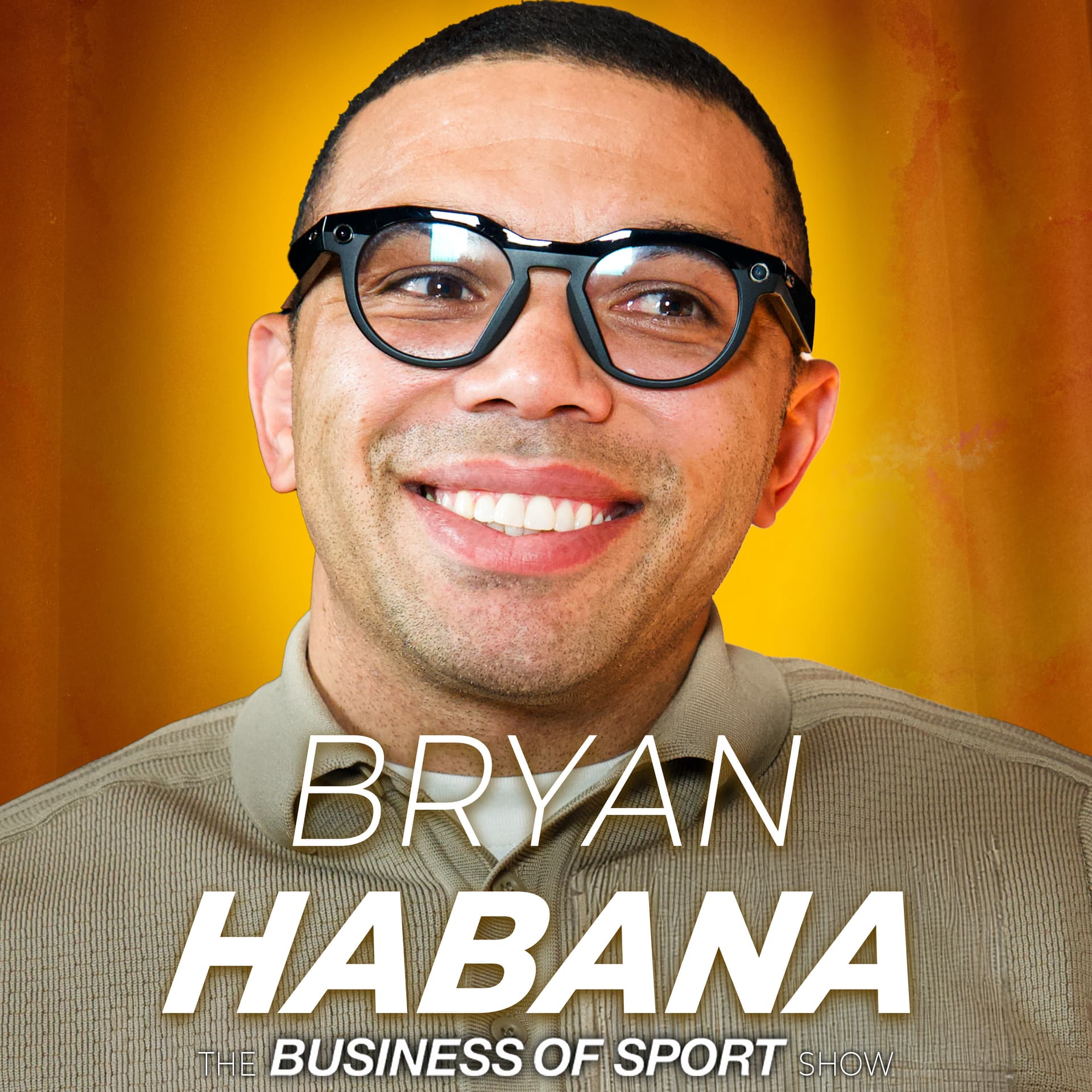
Bryan Habana: Insights from a Rugby Legend
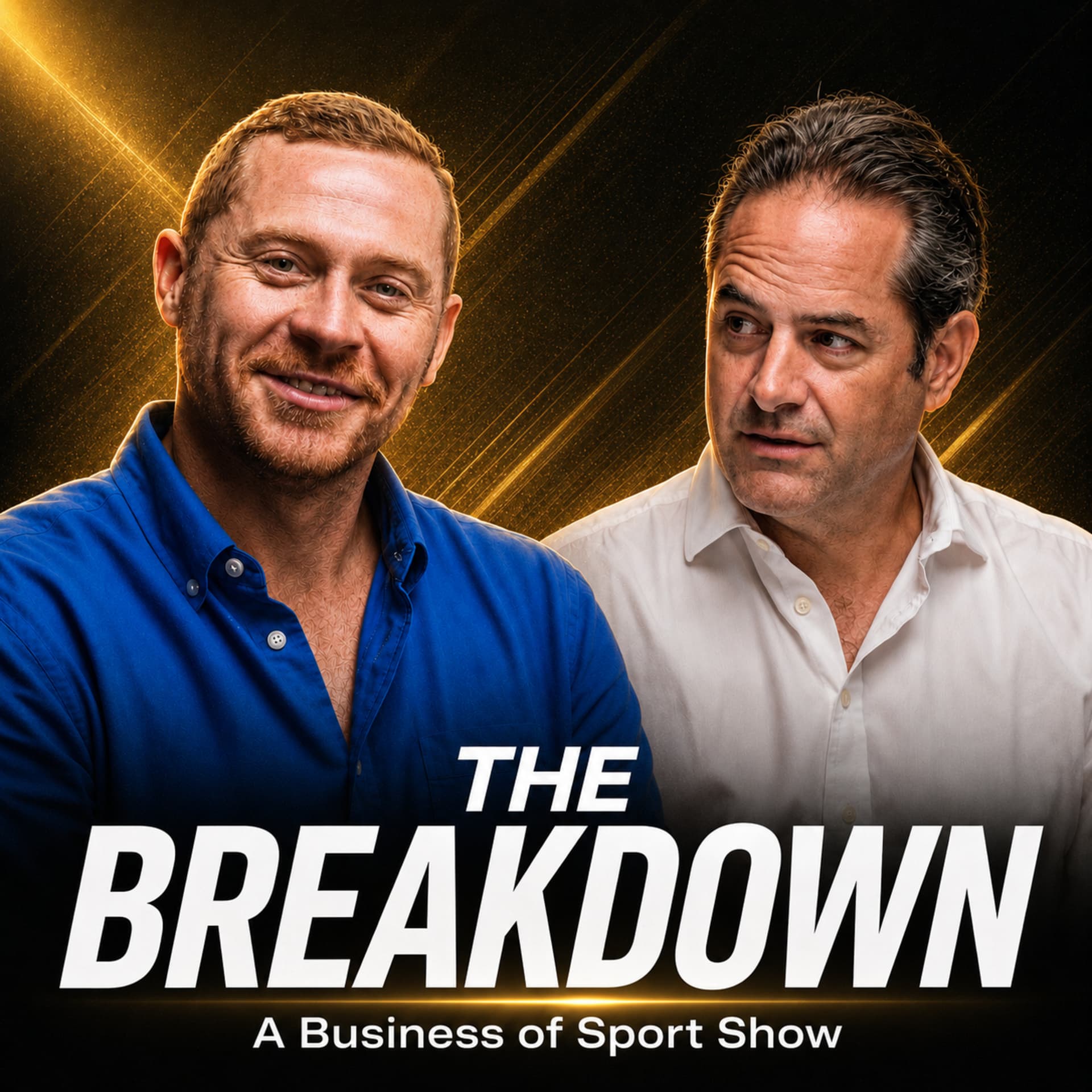
Podcast Overview Podcast Title: Business of Sport Episode Title: Bryan Habana: From World Cup Win to Family Betrayal, The Rebirth of The Springboks, Why Rugby HAS To Change (Ep.99) Description: In this episode, the legendary Bryan Habana shares his experiences as a top rugby player, discussing the pressures of professional sports, personal challenges, and the future of rugby.
---
Key Themes and Topics Discussed
- The Making of a World Champion
- Discipline and Sacrifice:
- Habana emphasizes that discipline is a non-negotiable trait for success, drawing parallels between sports and business.
- Sacrifice is necessary for greatness, as athletes often give up social activities for their careers.
- Resilience and Redefining Success:
- Success should be measured beyond just trophies and fame. Resilience plays a crucial role, especially when facing personal challenges.
- Money, Trust & Athlete Vulnerability
- Psychological Impact of Retirement:
- Habana discusses the identity crisis many athletes face post-retirement, emphasizing the importance of financial literacy.
- Mismanagement of Finances:
- He reveals a shocking personal experience where his father mismanaged his finances, leading to significant losses.
- The Springboks Blueprint for Success
- Cultural Shift:
- An exploration of why South Africa has become a dominant force in rugby, focusing on cultural alignment and leadership under Rassie Erasmus.
- Empowerment in Team Dynamics:
- Habana highlights the importance of clarity and empowerment within the team structure as key to their success.
- The Future of Rugby
- Need for Modernization:
- Discusses the necessity for rugby to embrace global calendar alignment and engage younger audiences through better storytelling.
- Commercial Realities:
- Habana warns that rugby must modernize quickly to retain cultural relevance amidst changing times and competition from other sports.
---
Personal Stories and Anecdotes
- Emotional Moments:
- Habana reflects on his retirement announcement and the emotional turmoil it brought, emphasizing the importance of family support.
- Facing Public Scrutiny:
- He recounts a challenging dining experience where he faced public backlash for prioritizing family time over fan engagement.
---
Key Takeaways
- The Importance of Support Systems:
- Personal relationships play a crucial role in navigating the pressures of professional sports.
- Financial Literacy is Essential:
- Athletes must learn how to manage their finances early to protect their future post-retirement.
- Cultural Relevance of Sports:
- Sports like rugby must evolve to stay relevant, particularly in their engagement with youth and their approach to commercialization.
---
Closing Thoughts Bryan Habana's journey reflects not only the highs and lows of a stellar sports career but also the personal and financial challenges athletes face. His perspectives on resilience, trust, and the future of rugby offer valuable insights for fans and aspiring athletes alike.
Thank you to our partners at Stride for supporting this podcast and providing investment opportunities in sports. For more information, visit [Stride](http://www.gostryde.com).
---
Discussion Prompt Comment below on who you believe are the global sports icons that rugby has produced, and how they compare to figures in other sports like football or tennis.
---
Feel free to reach out on our socials with your thoughts and continue the conversation!
Written by AI. May contain mistakes. Listen to the episode to check what was said.
Transcript
Automatic transcript. May contain errors.0:00Trust is a really difficult thing to understand and my trust rested with my dad who was managing that side of my life only to find out eight years later that the trust I thought I had been a lot of life. So I unfortunately lost quite a bit of money because the one person I thought I could trust mismanaged my funds and used it for his own. At that sort of end part of apartheid, as a person of colour in South Africa, I was given incredible opportunities. I went to the best schools. Kazolimapimpi, for five years of his life, had to walk 10 kilometres to school in the morning, two hours, 10 kilometres back home in the evening, and he became the first springbok rugby player to score a try on a World Cup final.
0:40The partner you choose to spend your life with is probably one of the most important career decisions you make. That person, nine times out of ten, gives up their dream so that you can chase yours. That person is the first person you see or have to spend time with when it's going phenomenally well. And the person that has to eat up all your crap when it's going phenomenally bad. If England had won in 2019, they would have come back, there would have been a ticket tape parade and it would have been done. See Ecclesi and the team take that trophy back to South Africa. And all of a sudden, kids in townships in South Africa see not hope anymore.
1:13They see potential reality. Making my announcement in 2018 of retiring. As I opened the door, I burst out crying. And I just, I sobbed. And then, in that moment of total isolation, being at a low, I hear Timothy, three years old, having this phenomenal belly laugh downstairs. in this moment of uncontrollable solace for myself, I was like, there's so much more to life than what rugby had given me. Hello and welcome to The Business of Sport, the show that takes you behind the scenes with the industry's leading owners, operators and athletes. Today, we welcome a true sporting legend. Brian Habana is a 100 plus cap springbok, a world champion and joint highest tri-scorer in rugby World Cup history, a man who races cheaters.
2:04As I'm sure you've noted, this is our longest show yet, and that's because it's also one of the best. Rugby sits at the heart of it, but the personal stories bring a side to an elite athlete we rarely see. There are moments in this where we were shocked at what happened to Brian and inspired by how he navigated the demands of his performance while experiencing immense personal turmoil. We sat down and just kept the cameras rolling. Please excuse Harry's dishevelled look if you're watching he just about made it in time out of the pouring rain having not originally been able to make it so we'll give him a pass this time and for a bit of fun we have a discussion in the show debating how many global sports icons rugby has had people that could do what brian did and stand alongside thierry henry roger federer tiger woods in a gillette advert we're not talking legendary rugby players we're talking global superstars and i want to know your thoughts comment who you think sits in that category below and we can move the debate of the best answers to our socials but for now let's get cracking we're delighted to welcome brian to the business of sport ever wanted to invest in sports ever thought about owning a stake in football cricket or even formula one well stride makes it possible starting from five thousand dollars for the first time you can now access exclusive sports investment opportunities from a world-class football club to emerging paddle ventures to the next big thing in cricket or golf.
3:28Sports is no longer just entertainment, it's an investable asset and with rising revenues, global fan bases and media rights booming, the sports economy is one of the most compelling investment opportunities today. Stride is the regulated digital platform unlocking this market for individuals, institutions and family offices alike. Whether you're looking for yield, exposure to uncorrelated growth, or simply want to invest in what you love, Stride is reshaping how the world accesses sports private equity. Ready to step into the game? Visit gostride.com, that's G-O-S-T-R-Y-D-E dot com, and discover how sports private equity can work for your portfolio.
4:08Because investing in passion shouldn't be off limits. Welcome, Harry. Thank you so much. It's great to be here. didn't know that you were here today i know nice surprise did this will forever be the funniest day ever entering the office where it's like how did you come well brian open the door i was like i swear i know i did think i was opening the door for a delivery man or something it's funny you say that because a lot of people comment on the look and they go yeah you weren't dressed up dude i just came from a walk in the park i was doing my other job okay yeah i was i I was actually wondering, should I even open the door for you?
4:48You don't look good enough. You look like an intruder. Something like that. In London, intruders all wear short shorts. Yeah, 100%. And have the wet hair look. Wet hair and a bomber jacket. I was like, ooh. Oh, but listen, Brian, it is great to have you on the show. Thank you so much for joining us today. Thanks for having me. I thought I'd bring a little bit of vitamin D this time of year, but obviously, yeah, it just didn't work. And getting on a bike, even though it was only an eight-minute cycle, I am very drenched. I really appreciate you fitting me into a very busy schedule three days ago for yourself, not for me, because I'm actually a man of leisure working remotely in my dodgy Airbnb at Paddington.
5:28Waking up at quarter to four in the morning because we're two hours behind South Africa saying hello to the family. So I've actually been very chilled. So you've got me at a time where remote working is easily manageable when you do have your own company. So I had my 20 past six this morning stand up for Pay Me Now, followed by a few other things. Let's start on that side of it, because it's actually something that I guess a lot of people won't know you as well for. But a huge number of the athletes that listen to this show, the one thing they want to understand more than anything else is when we have people on here who have achieved the absolute utmost in sport and have then gone on to transition, like how they actually did it.
6:03Yeah, I think you need to take a step back because where I am now is very much because of my rugby career. And I think when you want to be successful in life, and I've got this opinion that sports gives you sort of five key principles that become non-negotiables in attaining success no matter what sphere of life you're in. I think the first one is discipline. And every athlete, rugby, soccer, football, athletics, tennis, golf, like discipline is one non-negotiable that if you correlate that immediately to those that in business, in arts, in culture, in sport, discipline is sort of the underlying foundation of success.
6:44Whether they're determined to prove themselves right, determined to prove a theory right, determined to build a startup, determined so that discipline to do that is is key sacrifice i think is a non-negotiable and i think people just see sacrifices you having to maybe not put yourselves in positions when you're a youngster where your mates are going out and drinking at university which i also did at times but you did stuff that you know you had to then if you went out and drinking at university but you had a six o 'clock get up time to go to fitness if you you had to then know that you were sacrificing something so you're either sacrificing sleep sacrificing your body physically because you were going to either cotch when you are doing your fitness the next morning so sacrifice is a non-negotiable because you can't have success if there's no sacrifice hard work or work ethic becomes a non-negotiable if you want to achieve success and then and the two key points for me are resilience and perseverance um so those sort of five subset skill sets that athletes fundamentally associate with the journey that they have as professional athletes becomes incredibly important and for me if i look at my rugby career pay me now my fintech company of which i'm the chief client officer we're performing a million transactions a month now on the platform we've got a user base of just just over 750 000 you know having grown it in six years to this point got profitability in 18 months you know for a certain reason and that i'll chat about a bit later.
8:14But it wasn't me. My university roommate approached me with this concept in 2019. I'd been a year out of rugby, sort of dabbling with broadcasting, ambassadorial work with the likes of an HSBC, a MasterCard, Land Rover. And he's like, well, I've got this cool concept. He'd been in the financial services industry for the better part of 18 years after leaving Valsity. I was playing rugby. And he said he can find this co-founding team that he believes can, from an ability to execute, put something in the market that wasn't there. So I didn't choose it. It chose me. And Gary Player's got this whole thing, the harder you work, the luckier you get.
8:50And what sometimes people don't understand is you don't always decide your own luck. It's very much like I get asked, who's the best coach I've played under? What is best? Is it winning a World Cup, being the first coach to win Super Rugby, the first coach that selected me? I say, well, the best coach is the one that selected me because I put myself in a position to be selected, but I didn't select myself. And if I look at the journey that the transition period has given me, it's that you discipline. But I think where a lot of athletes potentially struggle is they don't know how to apply the skillset that professional sports taught them and almost unlearn some of it to learn a new thing.
9:29So yes, you know how to be disciplined. Yes, you know how to sacrifice work and all these things. And one of the greatest correlations or sort of analogies that I can give someone is when the Springboks were winning the World Cup in 2019, I was fortunate enough to be there with ITV in Japan. In my opinion, probably the most phenomenal opportunity South Africa had as a nation, despite 95, despite 2007, to speak to South Africa. Sia Khaleesi standing up there, the first black African, not only captain of the country to then win it, Makazole Mepimpi, but Dion, my university roommate, who was then my CEO, phoned me and was like, listen, we've developed our MVP.
10:08And I was like sitting in Japan. I was like, Dion, Khaddi, Willem, Brian. I was like, dude, am I not the MVP of the business? Like you approached me because like, you know, that was going to be my ability to add. He's like, what are you talking about? Like the most valuable player, right? Like MVP. He's like, we're talking about tech. Minimum viable product. You remember that from like second year informatics. I'm like, oh. And that's sort of the correlation and analogy, right? I was like MVP, my most valuable player. That's what I am. And T 'Chari Portgitter and Willem Ponce, our CDO and our CTO, had built our MVP in the matter of a month that had been deployed in that month where the Springboks won the World Cup.
10:51And I was sitting in Japan thinking I'm like the important cog in the wheel. I wasn't the minimum viable product. So I do believe you work hard and you've got that skill set and you almost need to apply it appropriately in life because it doesn't help you have that skill set, but you don't know how to read a budget statement. You don't know how to read or do a PowerPoint presentation. All of a sudden I'm in the sales biz dev team. If I wasn't able to do a PowerPoint presentation and like have to rely on someone else, we were only four guys. The workload that I was putting on and the strain that I was putting on the other founders in the business was not gonna be viable enough for the success.
11:27So it's that skill set that then correlates. And I think for me, If I look at this journey over the last six years, it's been taking that you've learned as a professional rugby player, professional athlete, and applying it appropriately in the business context, which is tough because you go from earning the salary of a CEO at 21 years old to a very steep cliff when you retire. And the real world's pretty brutal. And no one gives you free clothes anymore. No one gives you, you know, because there's a new generation coming through. and your process of being on the sausage machine factory, you're actually being in the box and you've been deported, and the next sausage is being processed at the back.
12:06So you are no longer that person, and you almost need to not reinvent yourself, but you need to take that skill set, which we all learn and become accustomed to, but apply it differently in business. I have so many things I want to ask you on the back of that. When I came in, I'm also such a fan of yours, And I'm also such a fan because of the deep respect for especially the discipline and the sacrifice element. Like if we go to discipline, is there an example that you remember where your intense discipline led you to excellence? Like was it the fact that you got in the gym earlier, that you worked hard?
12:43What is an example that comes to mind when you think of discipline? So we chatted off air around I classify myself as a geriatric millennial. so that sort of time period between 19 let's call it 78 and 1990 where there was no technology you didn't get born into technology but you had to learn technology so there was this correlation my first ever game of rugby and maybe just context about my journey i watched 1995 um 24th of june at ellis park i was a 12 year old boy sitting in that stadium had never played the game before at 12 years old i got to witness history i got to witness one of the most iconic moments in sport but I got to hear Francois Pinot on receiving the William Evelis Cup from Nelson Mandela who was wearing a number six Springbok jersey which for 80 % of South Africa was a sign of oppression back in 95.
13:33When Francois received that trophy he said it wasn't for the 60 ,000 in the stadium it was for the 48 million South Africans. Like in a very very sensitive time early on in our democracy we just had our first democratic election in 94 but I was a 12-year-old boy who got exposed to a lot. So for me, that moment was, I got to encapsulate that moment. I wasn't thinking about the apartheid area. I wasn't thinking about where, I was just, I was like, wow, this group of men have done something phenomenal. I want to do what they did. Went to King Edward VII school the following year. My first ever game of rugby as a 12-year-old was for the under 14 G side.
14:10So A, B, C, D, E, F, G, just for your part, Harry. It wasn't quite the fairytale start that I was hoping for, right? But I'd now become a part. So I got born into this era where rugby was still very amateur. It only became professional as a sport in 1996. So the game was still very amateur. And I never went to gym until I was 18 years old. So I never had this correlation of, like, I just, I loved the game. And obviously my journey meant that I only played for under 14 G once because I was good enough to just jump up the levels quite quickly. But there were highs and lows. One of the biggest turning points was I never played SA schools or national representative rugby for school under-19s.
14:51And the first opportunity I got was when a coach moved me from scrum off to center. And I was like, am I not a good enough scrum off to make it internationally? He goes, no, well, I see something in you that I believe you could be better in that position, right? So that's why I like, who do we measure best as? Moved to center, had an absolutely storming under-20 year captain in my provincial team. and then Jake White who had done really well successfully with the S-21s a year prior having won the World Cup in South Africa had pulled a squad together. I was 20 years old and he said, listen, if you want to become a springboard rugby player, you need to put on at least 10 kilograms.
15:30You need to become more muscular. You need to become fitter, stronger, quicker. And I was like, but I'm like the best player in my age group because that's not good enough. and there was sort of a time period in at the end of 2003 where the likes of a nutritionist or dietitian strength and conditioning coach that I I never really done gym I had to put on eight to ten kilos I had to drop body weight in terms of fat percentage had to get a much higher or lower body fat percentage to make make sure that my musculoskeletal framework was a lot better I had to get quicker and I was already quick so there's that sort of two three month time period where the discipline, and I'll never forget it.
16:12I used to get home, and my mom and dad would have this massive plate of rice in front of me. It was so bland, so dire. I was like, do I not even get gravy? Like, no, you don't get gravy. And I have to eat all of it. I'm like, you get like four spoons in, and you're like, oh, my word, I'm not making any dent on this mountain of rice. And then my parents would sit there and go, well, you're going to need to finish that. Jake White said you need to put on eight kilos. Like an hour later, you're like still trying to get the rice. I was like, do I not get any gravy? So that time period in my early development years as a professional rugby player became critically key in laying the foundation for my physical development for the next 15 years.
16:53And it was discipline. It was you've got to eat correctly. You've got to train in this way. You've got to listen to the experts. You can't just go on your own tangent. You're a 20-year-old, you can't go out with your mates because your fitness level requires you to be better and do things sacrificially that maybe other 20-year-olds aren't doing at that particular moment in their life. So that time period played an incredibly fundamentally key moment in my career for me, firstly to create longevity because my body formed and physically grew in a way in which I was really injured throughout the course of my career.
17:27but it was because of that appropriateness from a physical point of view to put the right measures in place with the right expertise. I think that's something I wasn't an expert in diet. I was an expert in S &C. So I needed the right framework of experts or expertise to help me build to a point of discipline. What was raw talent and what was learned? Was speed always the thing that you would play off? Speed was always a thing. But again, when you haven't, as a 17 year old, when you've never been in the gym and you don't know what a snatch is, or you don't know how to improve your fast twitch muscle fibers, I never knew I could get quicker when I was back at school.
18:00So I'll never forget the first time I ever went to gym. I was 17 years old. I was in my final year of school. I went with one of my mates, and I'm not sure you've ever done 21s. So 21s is when you take a weight and you'd go like seven, seven, and then seven. Oh, yeah, I do this often. Two 21s. It doesn't look like it. It's fine. And I'll never forget. So I'd gone to gym for the first time. I think I had to pay like 40 Rand to get into the gym. and my mate who'd been going to gym for a while, he made me do these things. So this was the first time I'd ever done like any muscular work. And I was like, oh, okay, this is easy.
18:32And he like, he pushed me really hard and there was a real quick like failure. I was like, geez, okay, this is pretty tough. I woke up the next morning, I couldn't move my arms. I was walking around like a freaking stick, man. I literally, like it was swollen. Like there was no differentiation between my bicep and my forearm. And I'm like, what is going on here? Like I can't bend my arms. I was like, oh, well, how it actually works is when you train, your muscles very hard, your muscles tear. And in tearing, they rebuild. And when they rebuild, they become bigger, stronger. I was like, but I need to write.
19:03So, like, I was right, like, that whole day at school, I was, I was going to write with a straight hand. And at 17 years old, that was the first time I'd ever been to a gym and trained with weights. And I'd never realized that. So, speed was always a thing. Raw talent. I did have ball skills and really decent ball sets. but when I played that first game under 14G, I couldn't kick a ball properly. I was scrum half. I was this high. When I wore shoulder pads, you couldn't see my neck, although you can't see my neck still. Thank you very much, Harry. Revenge. Thank you so much. I couldn't pass with my left hand, so there was a certain level of skill that I needed to learn that I didn't understand from rugby.
19:43So being quick helped, but I was also the smallest guy ever. So my dad always used to say this thing, the bigger they are, the harder they fall. and then I'd look at them and I'd go, the harder they're going to fall on me. And I'm like, I'm 60 kilograms, they're like 90, so it's going to hurt me. But physically, I needed to learn certain attributes. So yes, having the raw talent, and there's a great saying that hard work beats talent when talent doesn't work hard enough. And I think for me, it was really important really early on that I needed to understand that I had a little bit of talent, but I needed to really develop that talent into a point of professionalism and didn't just happen overnight it took five six seven years before I got to that place when you think of the other pillar that I think is so important is the resilience pillar also in in life as well as an entrepreneur but like when you think about the resilience pillar what was the like the lowest moment and what did you say to yourself then to pick yourself up so there's not just one lowest moment I think in any success journey there's there's quite a few i think my first low was i was 16 years old i'd been kept back a year because i'd been put in school a year early so i'm matriculated i finished school when i was 17 and normally in south africa you finish school when you're 18 so i'd had a pretty decent sort of development process from a rugby perspective at school but in my second last year where you go into the open age group category this school asked me to stay back a year with a group behind me so i was like i was like i don't understand i want to play like for the first team they go no we actually need you playing for the under 16s they're not a great group so we need to help and i'm like but i've only got two years left of playing age group level rugby with my mates in my grade like no we really need you there i'm like so then i was like okay that's disappointing i really thought i was good enough to try and make the first team you know because that's what all the legends before me did i was like so i played on the 16s like you know it was in the a side and went really well and in the last game of the season I'd actually gone so well that I'd gone I'd been pulled into the provincial team or the second last game of the season I got pulled into the provincial team they were playing one or two games it was the first time I'd ever got paid to play rugby as a 16 year old I got like a little envelope with 500 rand which in today's terms is probably like 20 quid but as a 16 year old getting that amount of money I was like I felt like a billionaire, not even a millionaire.
22:05And then sort of, I went to tell our under 16A coach, I was like, coach, listen, you're not going to believe this. I've just made the Lions and like team. He goes, okay, cool. I'm like, so I can't unfortunately play this weekend, but I'll be back on Monday for training. He goes, oh no, don't worry. You're going to be in an under 16C team next week. I was like, sorry, what? He goes, no, no, you're choosing the province over your school. So, I mean, the last game of the season, you're going to be playing in the seaside. I was absolutely livid. I was swearing. I went home, and I went to my dad, and I was like, this is absolute BS.
22:41This is ridiculous. I don't understand. They start putting the province into the school. But I'm a 16-year-old. You don't understand. What the hell has this decision just been made? And my dad's like, listen, I'm done. I'm not playing ever again for the school. This is absolute BS. They can take their kite and fly it. And my dad sat me down. And he goes, nope, you're not going to do that. I'm like, but you don't understand. And it's horrible. He's like, no, you're not going to let anyone steal your joy. I'm like, but I'm going to play for the seaside for the last game of the season. So I said, well, you know what?
23:11You are going to go play for the seaside. And when that game's done, we're going to quickly drive to the school. And you're going to support your eight team teammates in their last game of the season. I wanted to take a cup and throw it against my dad's head. I was like, dude, you're not hearing me. I absolutely hate this team, this coaching staff, who have now embarrassed me in every way possible, dropped me for the last game of the season. He goes, no. you're going to suck it up because you're not going to let people steal your joy. And you're going to go support your teammates in their last game of the season.
23:40And you're going to do it well with a smile on your face. And I was broke. I was like, why? What's the lesson there? So the lesson there is that life isn't going to be a smooth journey. life and unfortunately when people are involved your ideology of how people should operate isn't reality and i believe that i was the best player in the team i was the only player that called up to provincial level and i almost put myself on a platform but my dad said do not ever ever let people steal your joy because when you get knocked down no one's going to be putting you in a little cotton wool saying oh I'm so sorry life is hard life is really really hard and he goes like if you're going to allow something as trivial as this where you know your own value and you're going to allow someone else to determine your worth by their decisions not yours you're never ever going to be able to become successful so when you look at yourself and then what you went on to achieve and how you were you know successful then a level that very few players actually reach was that a moment that you could go back to if there's a piece of disappointment happened to you you actually were able to apply that because managing ego versus success even for the most humble athletes can be hard yeah it can be very hard and I think why I say that that was very early on in my sort of development as a person more so than as a rugby player.
25:14And what I learned that day is when you wake up in the morning, and it's something that I've sort of based a lot of my life on, not just from a sporting perspective. I truly believe when you wake up in the morning, the choice to be made of how you're going to approach life is yours to make. So no matter how tough it was the day before, no matter how low you were the day before, no matter how high the high was the day before, you get to choose. And if you allow the world to impact how you choose, the world's constantly going to choose for you. And you're never going to empower yourself physically, mentally to decide.
25:50And that lesson as a 16 year old taught me that I'm not going to get things on a silver plate. And when it's going well, everyone might love me, but when it's going tough, I'm myself and my immediate circles are going to be the only ones that I can rely on. But when I wake up in the morning, and if I'm going to allow the world to determine my joy and happiness, the world's going to be a really tough place for the rest of my life. And in your point, even at the lowest of lows, getting booed off a stadium by 43 ,000 South Africans back in 2010 when I was playing absolutely crap rugby was not easy because I was like, but why?
26:24But then I sat there and I think, well, I can let this define me. I can let this moment of absolute loneliness, abysmalness define who I am. or I can lean on the people closest to me who are criticizing me positively to build me up, not to break me down, the specialists or experts in mental coaching, eye visual training, all these things to get better. So one of the fascinating things I learned at that point was you get to choose. You can choose positive or you can choose negative. And I believe in choosing positive, and I'll also be very accountable and say I don't always get it right. but if you create a circumference or diameter of positivity when people step into that their lives get changed their immediate energy changes and I think for me that's because I can I can wake up every day and I can be grumpy or I can wake up every day and I have a smile in my face I can open a door for someone that looks like a very dodgy delivery man in the UK with a smile on my face having never met you before and all of a sudden you feel and there's a quick chirp or correlation but you automatically feel engaged you feel oh well this is not a guy that's an absolute asshole you immediately feel uplifted and i honestly feel that as human beings we get to have that choice and you need to empower yourself to make that choice because if you don't make it the world's going to keep you down in the dumps for a very long time okay on that when we think about like the choices that you make and the success that you had i remember watching you and respectfully i didn't care about the spring box i cared about brian habana that's amazing that it was the brian habana show for me and i think for a lot of people did you ever let your ego get ahead of you 100 and i said earlier when you i'll never forget my now wife then girl that i tried very hard for two years to try get at university um she's just i was in the friends i I was so hard friend zoned, so hard for two years.
28:24And eventually I was like, I've tried too hard here, right? And after like two years, she invited me to her big gala event at her hostel. And in that week of the event happening on the Friday evening, I had this phenomenal run in 2004. And on that Thursday, I got announced as a 21-year-old, having never played super rugby into the springbok side for the home leg of the Tri-Nations. And I mean, super rugby was like the almost cornerstone stepping stone to become a springbok. And I hadn't even played super rugby, so I had a phenomenal under-21 World Cup. And my rugby mates were, like, they couldn't control themselves.
29:06Like, what, you're 21? You're going to become a spring? You're going to be around those legends? We were playing the All Blacks that following week. I was in the group, so I actually didn't get selected. and we went to this Scala event on the Friday evening and I was like surrounded by all my rugby teammates they were like I was the talk of the town like they couldn't stop and she came Janine came after me and she said what the hell's going on here I'm like have you not heard the news she's like what news she's like I've just become a Springbok rugby player and she looked at me and she goes like you really a rugby player like for the Springboks I'm like yes she's like no I'm like, oh, ego.
29:49And I mean, she is an absolute superstar and probably the best decision I've ever made in my life. But it also was a sort of a point of reference of, I'm maybe not as amazing as I think. Because like all my teammates that were playing age group level rugby with me, they were like besides themselves. They could not believe it. And here was someone who for her sport wasn't the be all and end all. She had a pretty tough upbringing where she had to constantly fend and fight for herself. She lost her dad when she was 12 years old. And she was like, okay, rugby's cool, but what? Like, but what? And it really was for me, I was like, oh, I'd been so enthralled with this rugby environment.
30:29And rugby was just such a big thing in my life. And it was almost a point of saying, okay, well, if I'm going to go on this journey, how do I understand that rugby is a big part of my life? but that rugby should never be my life, which is very difficult when you're in it to sort of differentiate because we almost as a team and as individuals, when you sort of go through the point, it's like if something were to happen today and you're a professional athlete and that image, that person that you are as an athlete gets taken away, are you able to physically and emotionally handle not being that? And that's a tough question athletes struggle to ask themselves when you're in this little bubble of professional sports for such a long time.
Read the full transcript
31:17They still identify themselves as that in a world where they're not that. But it's that understanding of when Janine said, really? I was like, wow. This is totally off topic for business and sport, but it's probably the single most important decision you make in life. and you've had this relationship when you were chosen when you were nothing to when you were the hero of a nation. What's your single biggest piece of advice on partner selection? The partner you choose to spend your life with is probably one of the most important career decisions you make
32:00because they keep you honest. And I was very fortunate. So myself and Jean had this where two years, I was really a nobody. I tried really hard. And I think, firstly, when you become a professional sports person, it's always difficult to equate or understand, are you just now with this person because of who you are? And I think my fortune was that I sort of had known her for two years before I became Brian Urbana, the rugby player. So there was a level of friendship that had become a solid foundation. But the partner you choose, that person, nine times out of ten, gives up their dreams so that you can chase yours.
32:45That person is the first person you see or have to spend time with when it's going phenomenally well. And the person that has to eat up all your crap when it's going phenomenally bad. so your mood swings your depression when it doesn't go well in a rugby game or professionals like that person and if that person can't handle that that impacts your ability to do what you do so the person you choose to spend your life with or be in a relation with while you're doing professional sports is a critically key component for you to be successful so the expectations i think something that we probably did wrong is because we were so young i mean i started earning the salary of a CEO at 21 years old, right?
33:33How much were you paid at 21? Pounds-wise, it was actually funny. So I became a Springbok rugby player in 2004. And when I say became a Springbok, I got included into the group earning in today's currency exchange valuation, 5 ,000 pounds a year. So that's when I became a Springbok, right? So I was 21 years old, so I got back. My contract then went up a few, when I eventually then did become a Springbok and went to the Bulls. So probably about 25 ,000 pounds a year. But in South African rands, that was a lot of money, right? It was a lot of money in South African rands. As a 21-year-old, I was living like a king.
34:10Like, honestly, I bought my own house. I was doing, as a 21-year-old, like my mates who had just finished university, they weren't doing what I was doing. So I'd all of a sudden come into this money, and that's just a difficult thing with professional athletes. When you come into all this money at such a young age, and you don't know how to read a budget, or you don't know how to fork, You don't know how to do all these things, and then you have to trust either in people around you or trust in financial advisors. And my financial advisor at that point said to me, now open a retirement annuity.
34:39You're going to get a tax benefit. I'm like, okay, well, if he says it, it must be true because I hadn't been taught about finances. Not knowing that when I opened not only one but two retirement annuities at the age of 21, that by that time that was costing me less than, call it, 200 pounds a month, if not less. Let's call it 100 pounds, between 100 and 150 pounds, not knowing that just a normal CPI escalation over a 15-year period when I retired and there was zero income coming in, not only was I not going to be able to continue paying that monthly payment, but I wasn't going to be able to touch that money until I'm 55 or 56.
35:20So for 20 years, the money I'd been saving for the last retirement period, I couldn't touch. But I wasn't advised properly about that because I was like, oh, that's… So what do you know now that you wish you had known then? For all the young athletes listening, what would you tell them? Equip yourself with the skill set. Sometimes as basic as it needs to be. Firstly around finances. So you don't have to be a charter accountant, a CFO, actual scientist. But if you don't know how money works, you're not going to know how to work with money. So if you don't know that a retirement annuity only pays out at 55 and that a normal CPI escalation over a 15-year period, you're not going to be paying that because no salary in the world when you start is going to give you what rugby gave you when you finished.
36:16No salary in the world. like no job in the world that you can immediately step into not having a cv of climbing the corporate ladder for 15 years is going to give you what your last salary was as a rugby player so if you don't know how money works you're not going to know how to work with money so if you can't read a budget if you can't actually do a budget if you can't read a an excel spreadsheet if you're going to be in sales or marketing or whatever and you don't know how to do a PowerPoint presentation. You're not, you're going to either then pay someone to do that or you're going to have to rely on someone else to do that for you.
36:55And you're not going to then be able to. So if you're not able to handle the environment in which rugby and personal sports puts you in, it's going to handle you. And then when you're done, it's going to be pretty tough. You're going to have to rely on someone else. So if you don't know how to, if you don't know how to, if you don't know how money works, you're never going to know how to work with money. So in the context of celebrity, where did being that front-facing person in such a quick time of a Springbok put you? What's the power of the Springbok? Well, the power of the Springbok. So I think there's various levels of being a Springbok rugby player.
37:33So when I made my debut against England at the home of rugby, England with the then world champions in 2004 on the 20th of November, 2004, and for scoring a try with my first touch of the ball in international rugby against the world champions at the home of rugby. It was pretty spectacular. Could have been more spectacular had we not been thumped 32-16 that day on a very cold November day here in the United Kingdom where the vitamin D is at an all-time low. But then getting thrust into the limelight, and then there was the likes of John Smith, Victor Matfield, Skalkberger, Percy Montgomery, heroes of mine, and all of a sudden you get thrust into the limelight.
38:11then you're the cover boy for brands. I was like, so you also don't know, and again, social media wasn't a thing back then. Facebook had just barely been around for a year or two. So brand building was very much relationship nurturing. Yes, you had an agent, you had a few people in and around you, but also being able to then categorize your time and management thereof because you still need to be an incredible rugby player to be in that limelight. And not everyone gets to be the first South African to be the Gillette face alongside Tiger Woods, Roger Federer, and Thierry Henry. And I was like, I was 24 years old.
38:54And so there's another element that we can obviously chat about. And you talk about what do you need to learn to be able to understand what it's like to be a professional athlete. Trust is a massive element. And that's not always easy because when you're young, who are the people you trust? Is it your parents? Is it your family? Is it a lawyer? Like trust is a really difficult thing to understand. And my trust rested with my dad who was managing that side of my life for a very young age, only to find out eight years later that the trust I thought I had was not being had. so I unfortunately lost quite a bit of money because the one person I thought I could trust mismanaged my funds and used it for his own over the course of eight years I'm so sorry, how did you find out?
39:49I got married, funnily enough Janine, she is phenomenal I'll never forget, I invited her to that first game where I was involved in the Springbok team and obviously it was me trying to be like Romeo. I was like, come on, you're getting to be with wives and girlfriends at Ellis Park, you know, the absolute home of SA Rugby. And she went in there and she felt so awkward. Because everyone was asking, oh, who are you with? She's like, oh no, Brian invited me. Oh, so how long have you been together? No, we're not together. But why here? Oh, I don't know. He invited me. I thought, okay, it's like surely you become my girlfriend.
40:27I invited you to a Springbok game. and like one of the first things when we sort of started going on the journey together she looked at me and she said like who manages like how do you manage your finances I was like that's sorry who are you and why what she's got a feeling like I need to I just need to be aware that she feels I need to manage my money better like no my dad's managing trusted and she's like are you sure that's the right thing and she's like I was like yeah oh, it's my dad, 21, I don't know how to manage money. And then when we got married, there was sort of a journey of, I went to this sort of quiet, intimate wedding.
41:08And my dad had, he sat me and Janine down, like, oh, you can't do this. You're like the will and code of South Africa. You have to have this public marriage. I'm like, no, we don't. And I'd obviously put a lot of trust in my dad and I believed the best. And then we sort of went on this journey of not having this public wedding, which we had zero control over. So my dad was managing everything. And it just became an absolute shit show where on the Friday night, Janine was crying because her mother had been lambasted by my dad. And the event organizer of our wedding, I was in New Zealand, and she phoned me.
41:44She's like, listen, I'm not getting paid. I'm like, what do you mean you're not getting paid? I'm like, well, your dad's not paying us. And he sort of phoned my dad, and we'd also had a bit of a hiccup. And I was like, but where's, like, why are people, oh, no, sorry, sort it out, sort it out, sort it out, sort it out. and then when we finally got married so it was a really so our wedding day was amazing but there was a real behind the scenes sadness for the both of us and we'd come back and I'd actually signed to go down to the to the Stormers so the Western Cape Western province from the Bulls which was also horrible it was going north south and we'd had to put down a deposit on a house so I sort of went to my dad to listen because my dad was managing all my commercial elements.
42:27I was still getting my rugby contract salary and my dad was managing all the commercial partnerships. And like, listen, I need to take a bit of chunk out of my nest there because we need to buy a house because houses in Cape Town are a lot more expensive than houses in Johannesburg. It's like, cool, no, it's coming, it's coming, it's coming. Like the more I'd asked, like the more the money wasn't coming. And at a point the estate agent in Cape Town said, well, listen, if you don't pay the deposit now, you're going to lose the house. And it was our dream home. I was like, I can't lose this house.
42:54So I actually had to get bridging finance because I wasn't getting any of my nest egg. I had to go get bridging finance from an institution. And then I was like, listen, what's happening? And he goes, no, no. So there was a time period of about three months where nothing was forthcoming. And then end of 2009, I was in talks with Adidas and Canterbury about an apparel sponsor. But I'd been with Adidas as a boot sponsor for my whole life. and Cantor were really good to me. And on the 1st of January 2010, I sent out an email because I now sort of started finding out, I think things are a bit dodgy and nothing had been forthcoming.
43:36I sent an email out to all my sponsors saying, listen, any negotiations or contractual talks that have been held with my dad up until the 31st of December is null and void. Any future contractual obligations needs to come directly to me or my lawyer. and the CEO of Cantor International emailed me back immediately. Like, Brian, but we've just signed you for five years. I'm like, sorry, what? No, we've paid a very big re-signing fee to sign you for the next five years. So I phoned my dad. I'm like, listen, where's this money? He goes, oh, no, he didn't receive any money. But I had the contract in front of me.
44:12I was like, I had the contract, I had the deposit. So it was pretty tough. And so, I'm sorry, your dad was just pocketing that money? Yeah. So they were living off it, unfortunately. So he was living a life off it. So I then also believed, so then I sort of went into legal. So I thought we had signed a trust document for the Brian Abana Trust, which I then found out had never, ever existed. And for some weird reason, I actually signed another one with my legal lawyer in Pretoria at the Bulls. That was actually the only live trust that I had. So the actual Brian Abana Trust, which I thought all my commercial money was getting paid into, was actually my dad's bank account.
44:49And the money that you were getting from a contract was the money that you were able to live off. So that was the money that you were… And to be fair, I was living pretty well. So as of 2009, I was 26 years old. I was still living pretty well. But I was… And you also couldn't… I couldn't share that with the world because there was this sort of outward world-facing view that myself and my dad and the relationship we had was phenomenal. Right? And then I moved on. And to my dad's credit, he did get me the biggest contract in South Africa in 2009 going down to Western Province. So that sort of helped.
45:22And unfortunately, we've not had a relationship in 15 years because when I did approach him with the facts, he denied everything. But all the money was gone. You didn't recoup that money? No. So the Gillette money, which was not as much as what the publications say, I didn't actually get one cent on that. I'm so sorry. What did the publication say? I think they reported something like 30 million rand, which really was divided by 30 or 30, 28. It was not as much. But the funniest was that not only did I not get that money, I had to pay tax on that money that I didn't get. Wow. How do you recover from that?
46:05You talk about trust, right? And you said that that's such an important part. Tequila and therapy. Yeah. Well, to your point around, you know, who do you choose to spend your life with? Janine's been by far the best decision I've ever made. So how do you recover? I think I've been very blessed. I think when you get blessed with the talent from God to do something you love, and no matter what your spiritual inclination is, and when you start forming a way of life and how you lead your life, Janine says, I've got a lot of rabbit holes where I sort of plug various money into. But I'm very much of the opinion that, you know, the life that rugby's given me is amazing.
46:48And yes, you should invest and prepare for the future and do all these things. And I actually had a really cool thing the other day is that they say you only live once. The thing is, we only die once. We live every day. And I'm very much, I love living every day. And I think not keeping everything to yourself, I don't want to say I'm wasteful with money, but taking mates out, enjoying life, having experiences with my family, having experiences internationally. So I think in giving and in being fruitful with what I've received, there has been an element of I've received tenfold more because of that.
47:30Did having that side make you a better player, being able to have value away from the game so that you didn't wrap your entire worth up with how you performed on the pitch? So not in 2010. So in that year where I had to keep everything private because I was like this public limelight. Our relationship was like with myself, my dad, who was like the best agent ever. So I had to keep everything private for as long as possible. and I actually had a really good first six months in Cape Town where I was one of the top cry scorers, was going really well. And then when we got into Springbok camp, I didn't realize that first I wasn't talking about it to anyone.
48:08So I was keeping everything contained. And that probably started eating at me a little bit. And I think the harder that I tried on the field to put it aside, the bigger the impact it had actually on my gameplay, which was pretty tough. and one of my lowest points, and there was quite a few years in my rugby career, but one of my lowest points was 2010 playing against Australia in Bloemfontein. And I'd had a bad run with the Springboks. As a collective, we were having a bad run, but individually I was also not playing the best. And I'd gone to Peter de Villiers, our head coach that week, and I'd actually gone, I said, coach, I think I need a little break.
48:42I need to get my head clear. And he started laughing at me. He's like, what? He's like, no. I'm like, no, but you're not hearing me. I think I just needed to distance myself. There's a lot going on in my personal life. He's like, no. But coach, he says, well, you need to understand that it's going to be a lot easier for me to select you in the starting 15 and replace you before halftime if you're playing badly than what it's going to be for me to justify dropping you and trying to reselect you again. I was like, oh, wow, this guy's wisdom is profound, which I didn't at that time understand. And then he then selected me in the starting 15, and I then proceeded to have a very crap game against Australia where I did get taken off before halftime and got booed by 43 ,000 South Africans in Bloemfontein.
49:31And I was like, I just want the world to open up right below my feet, swallow me whole, spit me out, and maybe at some point. But if Peter de Villiers had not made that decision at that point to select me, at that stage I'd probably just played let's call it 60 odd games for the spring box I would have never played 100 test matches for South Africa and again that's why I say who's the best coach I ever played under it's the one that selected me and in all the personal elements that you had to go through but then having someone like Janine by my side who not even knew my story was not someone that sort of came in late and was the best decision of my life was pretty impactful in the journey that we had together to be able to come out the other side.
50:16And that's where resilience and perseverance comes into play because not everyone knows your story. Not everyone knows the challenges. And as an individual, resilience isn't something that immediately happens. It's not like, you guys are resilient now. How did I get to this point of resilience? It's about, and a lot of times when teams become successful, there was a point of resilience and character building that they need. and we go back to the 2011 to 2015 All Black rugby team, getting knocked out in the quarterfinals of the Rugby World Cup in 07 was their point of inflection. You know, this current Springbok team, 2017, was the lowest South African rugby had ever been.
50:59They lost 52-3 against the All Blacks, or 57-0 against the All Blacks in Palmson North, right, 2007. Rusty Rasmus came in, you know, changed dynamics. But they all got to experience that low. And I think as individuals, we really have our own points of resilience building. And no one can define your personal resilience building journey but yourself. Because no one understands mentally how you felt. No one understands physically how you felt where you actually didn't want to get out of bed in the morning. And you didn't want to face the world. No one understands that. So as an individual, resilience isn't something that immediately happens.
51:33It's built over a course of time. And I think with resilient comes perseverance because in those moments of character building, you can choose defeat or you can choose to try and not be defeated. You said that about kind of being booed off. And you said that earlier in context to the advice your father said about don't let them steal your joy. and what I hear is interesting because it's like a piece of advice that your father gave you that carried throughout your career with the idea that also your father's someone you haven't had the relationship with for 15 years and the idea that you choose life every day.
52:11Do you not want that relationship with your father again? So I would easily choose it if he was willing to meet halfway and I think the fact that when I approached and I gave an opportunity for truth. Truth wasn't spoken. And I think in safeguarding yourself, because for me now, my most important thing is my tribe. So Janine, Timothy, and Gabriel are my most important. And when you get married, and I think that's maybe also where a lot of people struggle, not becoming biblical in any way, but the Bible actually says you've got to leave your mother and your father and take care of yours. So when I got married, that relationship, yes, I would love to have it.
52:57Myself and my mom, unfortunately, also have a weathered relationship. I see her often. But she also chose things knowingly of what was happening. So I'm like, okay, well, my circle, my tribe is my most important. Do I still love my mom? Yes. Would I still love a relationship with my dad? Possibly. But my tribe is my most important thing now. And that's what I need to protect. I need to nurture. I need to make sure that they're sustainable. So would I love it? Yes, would it be amazing? But also I gave him one opportunity. And so that's where trust becomes really important, right? So like bump your head once, yes, it's a mistake.
53:34Bump your head twice, it's your fault. So again, my tribe is my most important and how I nurture, protect, potentially create generational wealth is not for what's happened before me. It's for what's to come, which is becoming important. And again, at that point, I could let the disdain of the poor relationship that I have with my dad impact me, or I can choose to make a great life for my kids. And I'm going to choose the latter because that gives me energy. If I have to constantly worry about something that's not going to do it, it doesn't make sense. Did you feel the weight of paying for so many people?
54:10I often see this with athletes where there's the star of the family and the money trickles down. and you've got a lot of mouths to feed, whether it's mum, dad, Janine, kids, agent. What did Patrice ever say? 102 people call him Santa. Oh, wow. So that's actually funny. Because in South Africa, there is a thing called black tax. And it's funny, it's like someone like Siak Lisi, they literally, it's the weirdest phenomenon, and I've never had to experience it, where the players of African descent, so black Africans in South Africa, like when they go back to their villages at the time, there's this thing called Ubuntu.
54:47So like we are, like you are because we are. So they actually go back and they have to like physically give cash to the community because the community raised them. So they now need to assist the community. It's like the weirdest dynamic. So I'm in a very fortunate position that I've never had to do that. And my upbringing, I'm very grateful for because at that sort of end part of apartheid, late 80s, early 90s, as a person of color in South Africa, I was given incredible opportunities. I went to the best schools. My dad was forging his way in the corporate space and was doing really well from a business perspective.
55:24I went to great schools. I went to some of the best universities and I correlate my journey where at 16, 17, 7 years old I was worrying about what pair of boots my dad's going to buy me. Makazolima Pimpi, who becomes the first ever South African to score a try in a World Cup final, for five years of his life, had to walk 10 kilometers to school in the morning, two hours, 10 kilometers back home in the evening. So four hours of his day was spent walking just to a place of education where he would get out of his immediate situations. And he became the first springboard rugby player to score a try on a World Cup final.
56:00I was 17 in Matric. You can get your learner's license. I was worrying about what car my parents were going to get me in Matric. Not that I got a car, unfortunately, because I didn't have a learner's license. But I wasn't worrying about the basic living. And to your point, so I've been brought up in an environment where my brother's become very successful. He's over in Qatar. My sister was maybe under that umbrella with my mom and my dad, so she's maybe not quite successful. But I haven't had to look after family. So, yes, you help out, you do things. But I haven't – I've been very fortunate that I haven't done, like Patrice ever had, he called 120 by 120 people at the sand.
56:39what about looking at South Africa broadly then and where you were at your peak so 2007 World Cup win you then had 2011-2015 we lost to Japan Brighton at that moment I mean people were saying you know Leicester win the Premier League South Africa lose to Japan I mean what what's more extraordinary no Japan beat South Africa but yeah bonkers Miracle of Brighton it was exactly like that the nation must have been ashamed Oh man. But what, like you look at the continuity now, because then you got, you mentioned just there, right? You hit your bottom point and then Razzy Erasmus comes in and you've won back-to-back World Cups and there's been a story around it and the brand of the springboard just seems more powerful than ever.
57:20But what happened after that World Cup that meant it didn't continue? So the one thing that we are seeing now that's actually never happened before in South African rugby history is continuity. So in 2015, Heineke May was the coach and And the weirdest thing about South African rugby is that Kitsch Christy won the World Cup in 95. Immediately, a new person gets put into the position. So there's no continuity, brings in all new things. And what then happened is every four-year cycle, there was a change. So Jake White wins the World Cup in 07. Yes, admittedly, a year before the World Cup, he lost 49-0 in Brisbane against Australia.
58:03But he was a World Cup winning coach. And wasn't given the opportunity to continue, which is weird, right? Like you look at now, it's like, well, why wouldn't you do that? So I think there was no continuity and it was this mindset that, okay, well, every four-year cycle we have a new coach. Which when Erasmus came in, there was total alignment with everything. So 2016, Alistair Kutseer came in. There was an alignment from top level down. There was too many voices. There was sort of this thing, do we choose overseas-based players? Don't be choose overseas-based players. And it was just an absolute shambles.
58:39But there was no alignment. So Alistair Katsia himself actually wasn't given the best opportunity to succeed. He got given a logistical plan in 2016. He got named officially as coach in May 2016. He got told to the world. June 2016 was his first tenor. He had Ireland coming to South Africa in 2016. South Africa lost to Ireland for the very first time in 2016. but he only had a month to prepare a team that he hadn't had at all. He had to choose a captain randomly. Adrian Strauss, to his credit, stepped up to the plate incredibly well in what was a loss of legend. So Victor Matfield, Frida Pria, Skulkberger, the Duplessis brothers.
59:23There was this huge change of guard. And now with Heineken Mayer now leaving, you didn't have continuity from a player perspective. So it was the likes of myself and Adrian, a few youngsters like Sia, Yeman Etzebeth, Luit Diaga, Damon Dan Lindy. So there wasn't like this, okay, well, let's just continue the momentum of what happened in 2008 when Peter de Villiers had come in with a very strong group of World Cup winners. And all of a sudden, we'd lost to Japan. Yes, we ended third at that World Cup, but there was this lack of alignment. I think we've had Rassi Rasmus, who was involved in the SA rugby structures since about 2007 in some way or form.
1:00:00But immediate continuity, immediate alignment, Rassi puts some firm boundaries in place. I think his coaching style is very autocratic and very firm in various ways, and it's not sort of shape up or shift out. He sort of puts certain things in place, and it actually allows players to take accountability and responsibility, not get spoon-fed. But there's been continuity. So it's the first time ever over a three-world cup cycle that we've had a singular person sort of overseeing the whole running, which has never happened before. That being said, to a point of resilience, Irwin Etzabeth was captain when South Africa lost 57-0 in Palmerston North.
1:00:40And the hurt, the resilience, the character building of that journey, of this team, and what Rossi's done phenomenally well over the course of 2018. So let's call it the last seven years of being involved in the structures. he's allowed to constantly bring players in to learn from the experience so it's the most caps from work ever on 138 test matches or whatever it is now you know, Sia Khaleesi has just become a test century and you had Vili Leroux Andre Pollard, Peter Steff de Toit double world rugby player of the year Damon Dalendy, Jesse Krill all on 70, 80, 90, 100 test matches but then he sort of bled in this new group of players, so Sascha Feinberg and Goma Zulu.
1:01:25And he's got a really great alignment from the top structure down all the way down to junior level rugby in South Africa, would that even be university level rugby. So alignment's been a very key factor. Support of that alignment from the corporate structure, so SA rugby, has been incredibly key. And Rossi's been allowed to, as probably one of the most incredible rugby brains, the most innovative, the most out-the-box thinking ever that I think the game's ever seen. Probably the most loudest, very much like Harry. Harry doesn't hold his tongue in any way or form. But he's been able to say, this is what I believe needs to be done for success to be achieved.
1:02:04We need more sponsors. We need more funds. We need X, Y, Z. We need the structures being put up from the ground level up. And it's been alignment. When we talked before, and we were looking at a 2019 success and we were saying everything, well, and we were saying this about border rugby as well, but the sport being so verticalized, It's not necessarily embracing everything outside of it. And you went straight to the fact that that success, what happened in 2019, was the perfect opportunity to tell the most incredible story. And yet it didn't happen. It was kept. It was put under lock and key in a specific region.
1:02:33Yeah, 2019, SuperSport, along with SA Rugby, created this. But what the drive to survive was for Formula One or for, you know, reality sports back in those days, like Chasing the Sun is probably one of the most emotionally phenomenal pieces of documentary series you'll ever watch. And from South Africa, maybe even more so. But then they geolocked it to South Africa. I was like, guys, this is a phenomenal story. In my opinion, so 1995, I got inspired to play the game. So watershed moment in my life. 2007, winning a World Cup, IRB Play of the Year, pinnacle of my career. Like that's the best, right?
1:03:162019 was by far the best moment. and showcase of South African rugby. Reason being, you had Sia Khaleesi, first black African to captain, win a World Cup. Makazole Mpimpi, who literally was the most least likely player to not only ever play for the Springboks, but to score a try in a World Cup final for the very first time as a Springbok. Cheson Colby, who could have easily, growing up in really volatile circumstances in Cape Town or the Western Cape, gone into gangsterism, becomes the second person to score a try. and the reason I say it was by far our finest moment because all of a sudden you had a team in a sport which for 80 % of the country pre-1994, 95 was seen as an oppressionistic one because it was only a certain group of people that was a minority that could play the sport.
1:04:09All of a sudden you got a group of players that speak to the whole country, to every demographic of the country with true hope of someone like Sia Khaleesi who when I was winning the World Cup in 07 was watching that in a Shabine in Zwide or somewhere in Port Elizabeth or the Eastern Cape. A Shabine is a sort of local bar, really rough bar in the townships or underprivileged areas in South Africa because his grandmother who was living with couldn't afford satellite television and his father who was potentially a little bit of an alcoholic wasn't cared about him. So he was watching it in this really rough...
1:04:47So, I mean, that's 2007. And all of a sudden, 2019, You had true symbolism of hope, true symbolism of what can be achieved if everyone cuts the bullshit, works towards a common goal, contributes not putting themselves or their ego above the team, and working towards success. And Rusty Rasmus was instrumental in sort of putting that framework of success and what needed to be put in place to be achieved, but that every contributing factor, individuals as players, management as their roles and responsibilities, led towards that 2019 victory. And that's why I say it was by far our finest moment because you had this team that spoke to the whole of South Africa.
1:05:29Myself and JP Peterson in 2007 were the only players of color on the field. 1995, Chester Williams was the only person of color in the squad, let alone on the field. So 2019, and that has led to these players understanding their responsibility that far outweighs the pitch on which they play the game. far outweighs the lines in which their sport gets transcended. And they become a true symbol of hope, a true symbol of what can be achieved. And yes, it potentially is at times fleeting moments because sport doesn't change the GDP of a country, unfortunately. You know, SIA, you know, lifting the World Cup trophy doesn't mean automatic influx of investment, you know, from a global financial perspective.
1:06:13But it does make people feel better. and on a Monday morning, South Africa feels better because of sport. And we've been exceptionally lucky. We've had Drickus Duplessis, our athletes led by Connie Sabini this year, our women in the World Cup with Laura Wolfford at cricket. It's been phenomenal. Our women in the Women's Rugby World Cup in 2025. So sports really played. And I say to people, if England had won in 2019, which many people believe they should have given how tremendously they thumped New Zealand And in that, probably one of the best World Cup performances I've ever seen in 2019 in that semifinal in Japan.
1:06:50They play the final. Another quick stat for you that would hopefully get people thinking you're phenomenal. Is that since the game has become professional in 1996, no team has ever beaten New Zealand in the knockouts and will go on to win the next game. So, 1999, France beat New Zealand in the semifinal. lost to Australia in the final. 2003, Australia beat New Zealand in the semifinal lost to England in the final. 2007, France beat New Zealand in the quarterfinal lost to Argentina. 2011, 2015, New Zealand obviously went unbeaten. 2019, England beat them in the semifinal and ended up losing. They played their final.
1:07:37If England had won that. Oh, sorry. If England had won that, they would have come back. there would have been a ticket type parade and it would have been done. See a Khaleesi and the team, take that trophy back to South Africa and all of a sudden, kids in townships in South Africa see not hope anymore. Kids, like when I was, they don't see hope. They don't see inspiration. They see potential reality. And it transcends just winning. It creates potentially generational differentiation in ideology because there's now something tangibly real that has come out of their circumstances and achieved success so for something as powerful as this why have we got a game on the business side financially that struggles so much and i completely get you can't look at this globally because it means different things in different regions but if we look at it holistically i don't think it's a big secret or blasphemy to say that there is a problem financially with the game so with all of this amazing influence that has far beyond the pitch what needs to happen to put it in the position to thrive as a business so i think to thrive as a business i think the the legacy infrastructure of rugby needs to think differently And when I say legacy structure, rugby, for me, and I'm happy to be proven wrong, rugby is a global sport in a way, as that is played in quite a few countries.
1:09:13But rugby is the only global sport where the global calendar doesn't start and stop at the same time. And everything, because we have this ideology that rugby is a winter sport, rugby must remain a winter sport. But unfortunately, winter in the southern and northern hemisphere are at different times. So we're now stuck in the scene that rugby is a winter sport because that's how it always was. And I'm like, well, if we really want to be progressive in the game, and World Rugby has been trying to their credit for a long time to get a global calendar. But you can't have a global calendar if you don't start and stop at the same time.
1:09:52So the fact that the Tri-Nations or the Rugby Championship now is played at a different time to the Six Nations, you can't create an international window because at some point your international players are playing international rugby at different times of the year. South African teams have now left Super Rugby and are playing and playing their trade in Europe with the URC and Champion and Challenge Cup, which has maybe watered down that competition a little bit. If we want to be competitive to other global sports that are much easier to understand, because let's be honest, rugby is, if you watch it for the very first time, it is a phenomenally complex sport.
1:10:28Like you look at a ruck and you're like, okay, but why? And then the scrum and you're like, okay but why we've got this very complex sport where it's not legacy driven and we don't have an american fan base of 250 million people of which to pull from right so when the game is so complex and a referee can make six or seven decisions at any point at a ruck but now you're sitting in the freezing cold at allianz twickenham on the 15th of november i don't want to take my kids to watch rugby like that can you imagine right just give me your thoughts. Can you imagine going down to Cape Town at this time of year and experiencing 30 degree heat?
1:11:10Can you imagine the July-June window and I know there's Wimbledon and all the others, but can you imagine watching rugby in June in the Northern Hemisphere? Sunshine, the experiential opportunity on a concourse around a stadium, the kids loving it, you're going in shorts. We're stuck in this archaic legacy ideology, then I think we need to change. And that requires buy-in from a whole group of stakeholders, whether it not just be World Rugby, whether it be the federations and the unions. If you look at what Live Golf has done for golf, it's difficult to have positive disruption. So R360, that's wanting to come in and do things differently.
1:11:50They want to positively disrupt for the right reasons. I don't quite know the mechanics of how it whole works, but where do you fit it in now because the rugby is all year round. There's no break. There's no start to stop. IPL came in like, oh, let's do the IPL of rugby. I'm like, India has 1.1 billion people, 1.2 billion people. Rugby doesn't have 1.2 billion people that it can pull on. So how are we not losing the avid rugby fans and how are we making the game easier for those that look at the game and think, oh, this is, firstly, it's physically abrasive, but it's also so difficult to understand.
1:12:23How are we making it easier for them? and a great example would be Ilona Mar at the Paris Olympics. She worked incredibly hard at a certain segment of her brand and yes, it's a bit of an anomaly, but she struck such a phenomenal chord and has become rugby's most followed player. Most followed player, like ever. 5.9 million people on Instagram follow her because of a brand she's created. And rugby's always been sort of stuck on where a team, individualism is not always, is potentially more frowned upon than what it is celebrated. So there's a lot of things I don't think. So I don't think it's just one thing that needs to happen.
1:13:00I think the most important thing that needs to happen is we need to get alignment in the calendar. Sia Khaleesi for the impact that he has having, and it's not all about followers, but having like one and a half million Instagram followers is crazy. And David Warner, I just saw it the other day, the Australian cricketer, as with so many of them, he has 10 million Instagram followers. And you're talking about the person at the top of rugby being 5 million. if you were playing today and you had that brand you're one of the very few players that had a brand like Harry said that went outside of the sport racing the cheetah doing things like this being on a Gillette advert but being on a Gillette advert exactly but like people knew Brian Hibana if you didn't watch rugby and that's the point so if you have you're one of the very few people that's had that very kind of you thank you but if you were applying that now isn't that what we need more of do you know what I would love Joe, you look at the protein-munching guys and the gym craze and the gym shock community.
1:13:59I would fucking love to see inside Brian Habana's training and workout routines. It would open up a mega audience. Yeah, you're not going to see much at the minute. I've been horrible. Really? I have been horrible. So that's, again, discipline in the post, right? I've been absolutely horrible. So please don't turn. Say a, I'm trying to think who currently, a Benjamin Kaiser or someone that's actually training at the moment that's just paddle well paddle or it's some form of training i've been horrible um ebonetsubets i mean six foot nine is it difficult to stay fit when you're no longer a pro so why not so you talk about sort of moments of despair right making my announcement in 2018 of retiring and obviously given the rise of social media you know i've got to do this nice like little post you know thought endearing lovely little post on instagram and i sort of did this post in the south of France and getting a barrage of acknowledgement and thanks and whatever.
1:14:57And I'm like, yeah, a lot of you people absolutely swore at me or booed me off the stadium in 2010. But, yes, I'll take that acknowledgement. And I walked through the door in the south of France at our place in Toulon. And the house we were renting, the upstairs was sort of where you came in, but the living area was downstairs. So you sort of had to open the door, walk down the stairs. Janine was seven months pregnant with our second, Gabriel, and Timmy was three years old. And as I opened the door and I made the social media posts, like my phone had blown up, you know, just media houses calling, everyone wanting to have a piece of me.
1:15:36As I opened the door, I burst out crying. Like I just, like all that emotion just came out. I was sobbing like a, I was like uncontrollably. And the reason was as I opened that door, it was almost this analogy of I'm leaving this. And this was all I'd ever known for 15 years, 16 years, 17 years. And it was emotionally distraught. because I didn't know what was on the other side of the door. And this was just a correlation between rugby and not. I didn't know what was on the other side. And I just sobbed. And then in that moment of total isolation, being at a low because of what had just happened of announcing my retirement, I hear Timothy, three years old, having this phenomenal belly laugh about something Janine was doing downstairs.
1:16:41and I was like in this moment of uncontrollable solace for myself. I was like, there's so much more to life than what rugby had given me. And I didn't plan it. I didn't know why he laughed. But it was like just this phenomenal analogy of I'm leaving that behind and I'm like in this total despair, in emotional destruction. But I'm like, there's more to live for. and there's more that I need to do to provide for this that's so important to me. And that was sort of rugby had given me a lot, but there was just so much more. And I sort of went down and I was just like this embrace and we all had a bit of a cry and emotional.
1:17:24But it was that real correlation of being able to understand that life was great. So what Janine then said to me, because she studied BSc Sports Science, and she sort of looked at me, she was like, has anyone given you a D training program? am sorry what gibberish are you talking well you've your body has been at this physical prowess and peak performance 15 16 years and become accustomed to a certain way of training so your body's used to that has anyone sort of put you through a process of you're no longer going to be paid to train every day of your life and life can happen outside but you your job is paying you to physically be active.
1:18:03Has anyone given you a process of detraining? I was like, well, that's a ridiculous truth bomb that you've just dropped on me. Like, no, no one's given me a detraining program. And literally, I went like from that, and I'm still genetically a little bit forward, but I literally went from that to zero. My knees were screwed. Like, I couldn't run. And I've become a little bit lazy. I'm not getting paid to train anymore. Why would I want to train if I'm not getting paid to do it, right? Like, why would you want to do it? And there's no, like no one gives you a form of detraining. Like there's no, like, listen, we're going to wind you down.
1:18:37So you're now retiring. Here's a program for the next six to 12 months where you unfortunately need to unwind how you were wound up. I don't know if there's anything like that because you jump off the cliff financially, physically, mentally. And various federations, players, unions, organizations try to equip you with skill sets. But no one, there's no book to say, okay, this is how you're going to feel. you're going to feel alone. You're going to feel like you're not going to be skill set enough to be able to do X, Y, Z. You're not going to be earning the same salary. Like your income is going to always not outweigh your expenses because you've become used to this way of life.
1:19:16So there's this transition period that everyone talks about that is difficult for all professional athletes. And I think there's a stat in the U.S. where like in 2014, they did where, I mean, there's something like 70 % of NFL players four to five years out from retiring are either in jail, bankrupt, or have committed suicide. It's like a ridiculous stat, right? I don't know. My numbers could be a little bit wrong, but there's this sort of immediate transition that no one, it's very difficult to unlearn everything that you've learned. So your body doesn't unlearn. So have I been poor training wise in the last seven years?
1:19:54A hundred percent. You said about kind of the clefts that you fall off by physically albeit financially this is incredibly rude and direct do you need to work in my head i'm just like you make bank for 10 years you sign adidas you sign canterbury you sign every gillette yeah fuck you guys make hay while the sun shines quite rightly so so you don't have to work from 35 on but you do because no matter how what amount of money So there's two things. So if you don't know how money works, you're not going to know how to work with money, right? So if you haven't put things in place that adequately either lets you live off interest or invested in property or done something that brings in money, you're just then going to be eating into your money at every point.
1:20:45100%. And unfortunately, the correlation of the life you live as a professional athlete and the standards you potentially set when no money is coming in there's a constant mismatch. So one of the big things to that point, so I got back to South Africa in 2018. Jean de Villiers had been working with Citadel Investments by South Africa. He was the head of philanthropy. And he's like, Brian, listen, you've got to come speak to the team. I'm like, John, I'm fine. I've put money away here. I've got this. But I had zero income. I had zero, zero income. I didn't have like, he goes, no, just, I'm like, John, I'm fine, I'm fine, I'm fine.
1:21:23Being the good mate he is like, listen, And I just really feel that you need to come speak to the guys. Just like free of fees, just come have a chat. No obligation. Like just come have a chat. Okay, cool. So myself and Janine got started with Abe. And Abe's like, okay, well, give me your budget. Give me your expenses. Give me your income, assets, liabilities, blah, blah, blah, blah. Okay, cool. All right, cool. What are you currently doing? Like, oh, I've got an ambassador contract with Mastercard, doing some HSBC work, doing a bit of punditry at the Rugby World Cup. So this is what the figures are like.
1:21:57Okay, cool. He says, I'm just going to sort of crunch the numbers, put it in our system. Can we set up another meeting in two weeks? Okay, cool. Myself and Janine come back two weeks later. Abe says, okay, please sit down. Okay, cool. This is the system. This is how it works. He says to me, okay, so if you don't work another day in your life and what you've told me in terms of how you want to live your life and the expenses. You want to have two international trips a year. You want to fly business class. You want to have local holidays. You want to send your kids to private school. You want to buy a Range Rover or Land Rover Defender for yourself and your wife.
1:22:36You want to have a house of that value. Paying off these costs. You want to have a holiday home. If you do not work another day in your life, your savings are going to be depleted in three and a half years and you're going to have to sell the house you're currently living in.
1:22:54sorry what come again just repeat that last 30 seconds it's fucking nuts but it's the truth right because you're i did okay so in my head i'm like you guys again this is where maybe where we're so off yeah but i'm like in the peak you should be doing five to seven a year no chance not as not as a regular player seriously the so Anton DuPont or someone like maybe Bowdoin Barrett and again it's figures always but the biggest contract currently in rugby purely contractually is probably about anywhere between at most between 1 and 1.5 million pounds a year totally get that and there's maybe some marketing sponsorship stuff that brings in another at most right if you live in the uk that's 50 off right so put a tax so you're only getting between a 750 and if you have a house to pay off right and you're paying and you have a car you have all these other expenses i hear you and it it sounds logical enough and i thought exactly the same thing no no i'm not thinking of i don't get like respectfully i don't care about the actual pet playing contract i'm thinking about you chasing cheaters on gilett there's no money on gilett billboards are working with Adidas, working with Canterbury.
1:24:17So I think my Gillette contract, and back in 2000, and again, I didn't get into that money, and I paid tax on the money I didn't get. But my Gillette contract was maybe, in today's current exchange value, maybe between 50 ,000 and 60 ,000 pounds. Are you serious? And it was a one-year deal. But Henri Woods and Federer would earn a lot more from that. It's ridiculous. But that's almost the point. your shock is rugby exactly so that's the point of the industry you're playing in and even then you being one of those few people if we're looking at it without General Omu you could say Johnny Wilkinson 100 % Johnny you oh no there's a few I'd go Brian O'Driscoll Dan Carter Richie McCaw I was going to say Brian O'Driscoll I wouldn't say outside of rugby I'm talking like on an athlete level would Brian O'Driscoll be on that advert with Henri Federer and Woods?
1:25:16My opinion, but I'd say no. That's very, I think he would have. So it was sort of, yeah, I hear you, but I don't know. It's awkward for you because you're never going to go, yeah. No, no, no, I think he would. So again, I don't want to say I idolise Brian Driscoll, but I looked up to him because I actually played 13 and I had to do a synopsis on Brian Driscoll because when I moved from Scrum off to 13, I chose Brian Driscoll as the player that I want to base, being a centre off of back in 2003. or 2002. I love Bod. I think he's a phenomenal player. I think he's extremely articulate. Maybe there is 10 to 15 players, right?
1:25:49Give or take. That could have potentially. But the rest, it's not football, right? We don't earn what the football is. As much as I'd love to, rugby, it's a phenomenal sport and it's a global sport. In my opinion, and this is brutally honest, I truly believe rugby is the best sport in the world. The reason being, it's the only sport that's for everyone. When I say that, you need to be a certain genetic type to play football, to play golf, to be like this. Rugby, whether you're short or tall, whether you're slim or gravitationally challenged, weight-wise. I'm judging by your legs, you're called, right?
1:26:30Whether you're male, female. When we were in Japan in 2019, there was a guy that was like, and he obviously wasn't full on rugby. I think he was like 88 years old, still playing rugby. Right? Like there's no sport like it in the world where all shapes and sizes can play on a team. Like your props, your locks, your hookers, your flanks are playing with your Cheson Colby, your Anton Duponts. Give me a sport. You know, maybe NFL to a point. I just think the values of rugby are a lot better in terms of the respect, the culture, the camaraderie. I honestly think rugby is the best sport in the world because it is for everyone.
1:27:09And we've seen a phenomenal Women's Rugby World Cup happening now in the UK this year. But it's not at the same financial level as any other sport globally. So let's say then if we look at how we achieved that, one of those you can say investment into the sport, bring more money in, get more external involvement. We've had private equity. We had Sean Fitzpatrick in here and we've joked a couple of times and he was talking about Silver Lake valuing the All Blacks based on the fact they thought they had one billion fans. I did challenge him all that. No, no, you did. And to be fair to Sean, it wasn't Sean saying it.
1:27:41That was what Silver Lake used to value that deal. You know, we've had, we had the piece in South Africa with private equity in the by part of the commercial arm. From how you speak today and how you look at the whole thing, would you, have you been asked, would you get involved at a level to be able to bring some of that value into the sport now? To be able to give some of that broader opportunity to the players through a bit of that capital injection that can elevate a sport to the next level? I think given rugby's global differentiation in terms of supporters and yes World Cups are amazing and the number of followers and we had records now with the Women's World Cup the tournament in France in 2023 was also great so it's growing every year I probably really see rugby very much as a personal investment sport purely because of a much smaller a reduced fan base.
1:28:37So, valuations are always really tricky because if they say the All Blacks have a billion supporters, how do you correlate that to equity or financial capital? Do every one of those billion need to buy an All Black jersey for the All Black brand to be successful and bring in profit? So, valuations are really tricky and I'm not clever enough in that scope to understand how to value and I do believe injection of capital into rugby from a framework of business that is not in rugby is really important. So having people that think about rugby as a business rather than think about rugby as a sport because there's potential equity valuation in how you align a sport, how do you create competition value, and, and, and, and, and.
1:29:23How do you potentially take a market of rugby to India where rugby is not a big, but there was a Sevens IPL in India in June this year because they believe there's opportunity. you know there's a lot of money in India. How did that go? I don't know.
1:29:43I think it was right. I think as a first trial I don't think it went too bad. I mean HSBC got on board so. And they've grown the sport for it to become an Olympic one in 2016. You know the 7 series is probably the most enjoyable one for an early rugby adopter because it's just it's really cool. It's fun. You get 18 different nationalities in a stadium. You've got from the Kenyans to the Samoans to the Fijians to the South Africans. Faster. Yeah. It's faster. It's exciting. It's short-paced. It's less time-consuming in terms of the actual product than 80 minutes of trying to watch a game. That's really difficult to understand at points.
1:30:21But I believe as important as capital and financial injection is in the game, I think we need a different level of intellectual investment into the game to have the game be managed and done properly. Because what worked for rugby 25, 20, 15 years ago in a world that is moving at such a rapid pace technologically, how content is viewed, everything is just so different to where we were. Like, again, when I was winning a World Cup, I joke, we had emails and faxes being plastered on the wall in the team room in France because there was zero social media, right? So I think that, yes, the capital injection is important and rugby needs a model of sustainability when it comes to that.
1:31:13You have a Rugby World Cup every four years where the influx of income then needs to run the game globally at all levels for four years. And that model is really, really tough. In the UK, behind paywalls or pay gates on broadcast, you have an ITV that is great, and there's a BBC that's great, that gives it out to everyone as a free-to-air platform. But for the rest, it's really difficult to grasp a community that's very small, that doesn't want... Netflix, what does it cost in the UK? What does Netflix cost in the UK? $10.99 a month. $10.99 a month? And Sky Sports? What does Sky Sports cost? Sorry, Sky and TNT.
1:31:53TNT together like 80, 90, 70, 80. So you're almost like differentiating a market. So if TNT is your broadcaster and the general public is only getting to see rugby on a Six Nations or you're almost democratizing the ability to showcase the game to a bigger audience if it's only happening once a year at a Rugby World Cup or at a Six Nations or the like. So I don't have all the facts. I do think having expertise of other thought or trains of thought in comparison to what we've had over the last 25, 30 years is incredibly important. And because rugby is such a difficult product to understand, how do we make the game simpler?
1:32:38How do we speak to a market that is maybe younger where parents are worried about concussion, head impact, and all these things? right? Rugby is a contact sport and do we embrace the fact that it is a contact sport or do we shy away from it because we can either fundamentally shy away from the fact that it is a contact sport and when you choose it you understand the risks that come with it and yes the sport needs to be made safe or do we, I look at the battles that rugby has currently with it being this competitive physical sport, yet the growth of UFC over the last 10 years has skyrocketed and the jobs of those UFC athletes are to physically almost kill each other.
1:33:21And yet the growth rates of that and we're too scared to embrace rugby being this physical combative sport. Yet the UFC uses it. People come out blooded and the more blood we see in UFC, the happier we are. What did the UFC lead? They led with marketing. So they addressed an issue from the off and they made a product out of it that then took away all of that critique that could be leveled at it and rugby it's more historical so it's playing with a different set of beasts but it's such a different game for them to play they need to embrace it after the sports being I agree with you and again if you don't have this global perspective let's do it like this let's change things up let's make people let's first get our our base re-excited about and reinvigorate about the sport.
1:34:13Because everyone's like, what rules are happening this year? And then because you don't have a global calendar, like some of the teams and some of the nations have to start playing new rules halfway through the season. You're like, but... They've been playing like this for four months, now they've got to play like that. So how do we make the game simpler, more understandable? How do we potentially give the power of the game to the referee? And so we've got plenty of two choices to make. Rugby can become like NFL, where we try and make sure that every decision on the field is correct. And it becomes a three-hour spectacle, which not many rugby supporters are going to want.
1:34:53So either we become perfectly technical, or as supporters, we then going to need to suck up that, sometimes the referees maybe aren't going to get everything right. But hopefully they're brought up in a system where they're given the skill set to be able to make 90 % of the calls correct 90 % of the time. And if there's the odd year there, I mean, VAR, if you think about football or soccer, VAR is still not perfect. It's really just a line. It can't be that difficult. It really can't in football, right? There's not much more that you can, there's like a certain framework. There's like maybe four things that you look at.
1:35:28Did it cross the line? Did not cross the line? Was there? VAR, and they're not even getting VAR in football or soccer, right? So how are we going to get TMO stuff in right where the disparity is? Draw the line in the wrong place. Yeah, draw the line in the wrong place. I do think expertise and a different skill set. I do believe rugby is very much a personal investment sport. And most global sports are personal investment where RRIs aren't really a tangible, physical, I put 10 million in and I'm getting 15 million, 10 million pounds in, I'm getting 15 million, 20 million pounds out. But there is this ideology of how do we bring expertise in a very archaic structure of how we potentially see the sport to make the sport better, to embrace a new environment where attention for eyeballs is at an all -time high.
1:36:16it's an all time high and how is rugby doing things that's catching those eyeballs quickly enough not in three minutes on Instagram or TikTok in 15 to 20 seconds creating authenticity in that individual you know and Ilona Ma is a classic example yes maybe it's an anomaly but how do we potentially leverage some of the things that was done well in that to potentially break the shell of how rugby is seen globally I'd love to do a quick fight I can talk to you all day How do you feel or what do you say to yourself when you're watching The Hacker? So the first time that's very good I mean can I maybe how do you feel?
1:36:58So as a fucking terrifying there is an aura about it which I think is special I think the game absolutely needs it and it's a great element of the game and getting to witness it for the first time back in 2005 was pretty amazing. Because we played against New Zealand and it was the last game of the Tri-Nations. And we were both in a position to win the Tri-Nations. And they actually did the new haka that day for the first time ever. Tano Maga was leading it. And I mean, Tano, just looking at Tano before he does the haka is like, wow. So as like a 22-year-old who's now witnessing this for the very first time, I'm like, Oh, my shattered nerves.
1:37:46I am in a gladiatorial space with a group of men that are ripping each other's head off in a war dance that's telling us and challenging us to play rugby today. I was like, oh, no, no, no. But you obviously can't show that emotional fear on screen, right? So, like, you keep it all in. But there was like a piece of me thinking, do I ask someone for some toilet paper right now or afterwards? So it doesn't like anger. It doesn't like piss you off. No. So you're so freaking arrogant. So there is like when you experience it for the first time, it's like there is this aura that you have to embrace. And it is in a way empowering.
1:38:27And it is amazing. I think I faced it 17 or 18 times. So I think after like the second or third time, it was like just a rest, okay, get it done so I can go play. 2008-9, I then tried to see which player was making the most ridiculous face. And I was like, I would almost comfort myself in like, he looked like an absolute idiot. And most of the times it was Ali Williams, the number five lock for the All Blacks, who was a great man, played with me with DeLon. But he would pull this face. And I'm like, firstly, how are you even doing that with a face like yours? And his face didn't look mean. It almost like made me comfortable.
1:39:08And then at times, at different times, I'd maybe look at my position number and see what exactly he is doing. I'm like, am I reading him right? Am I not reading him right? But the first time, just with the aura that it comes with. And everyone like tries to approach it differently to try mentally upstage them. You know, England in that 2019 Rugby World Cup semifinal was brilliant. Ireland when they did the eight in Chicago. It was phenomenal in 2016. So the first time, it's like, it is pretty cool getting to watch it live across from you. As a sporting moment, I'm so grateful that I got to experience that.
1:39:41But it became pretty mundane. And you respected it, firstly. But then you almost just wanted it to be over so that you can go play. Takes into that dressing room in Brighton in 2015. It was morbid. It was so morbid.
1:39:58even thinking about it now it was so difficult to understand what had just happened because we we never underestimated and that's the thing like you know Farid Dupre who'd been playing at Centauri under Eddie Jones actually said to us in the week he was injured getting back to full fitness and he wasn't playing and he says guys listen Japan are going to come out for us and we must not for one minute think that we're going to just breeze through this game. And we're like, oh, yeah, yeah, yeah. But I think like the mental fortitude of a player is you sometimes just let arrogance sort of sleep and sort of creep into your mindset.
1:40:40I look at some of those tries, Adrian Strauss, Leuter, Jager, like literally untouched, like scored. And then at last, it just was like we capitulated, absolutely capitulated that last 15 minutes. and their self-belief started building up. And when they got the scrum with like two minutes to go, where if they had kicked for the poles, we would have drawn the game. And they decided to go for the line-out. We were like, ooh, ooh, ooh, ooh. What have we done? Yeah. And then they end up scoring. They tried to beat us. It was four minutes over time. Four minutes over time. And they actually kept the ball pretty well for like two and a half minutes in that last stint.
1:41:22I have not watched that game back I've obviously seen certain highlights the try being scored the tries that we, one or two of the tries we scored but it was it truly was I think the darkest day and I got booted off, you know, this is the field in 2010 but as a collective and we'd been it was very much like having lost 49-0 to Australia in pre the World Cup in 2006 it's indescribable There's no emotive words that you can correlate with the feeling that you had that day. And because South Africa is so rugby mad, because it was, in my opinion, you talk about teams winning a Premier League or championships that, what are the chances of Leicester winning a Premier League, right?
1:42:14But I say this, I think in my opinion, as great as it was for the sport of rugby, It was as conversely bad for South African rugby. It was like our lowest low. And you honestly just can't describe that feeling because you've never felt something like that before and you don't know how to feel about it. You don't know how to describe what got you to that point and how you actually lost that game. So was it shock? Was it shock in the dressing room? Not only shock. Was it silence or was it anger? No, it was absolute embarrassment. Absolute embarrassment. And that came out in silence? Silence, yeah.
1:42:58No, no, so there wasn't shouting. And I mean, even shouting would have helped it. Obviously, we couldn't be happy and we weren't laughing. But we were all just in such a state of shock. The silence was deafening. Like, it was. And credit to Heineken Meyer. It could have easily unraveled very badly after that. and his words of, we can sit here and let this now define us. We can honestly let this define us, and we can be the worst Springbok team that's ever played in a Rugby World Cup, or we can choose to stand up. And each one of us has to take, and each one of you has to take accountability because the management can put things into place, but you then need to be able to.
1:43:41So, oh, it was tough, eh? The silence was resoundingly deafening, Like you didn't want to talk. You actually didn't even want to be. You'd almost hope that you'd rather fall over and die. Like it was that bad. It was morbid. Absolutely morbid. It's a shock. What physical sacrifice does no one know about for professional international rugby players that they should know about? I think for professional athletes in general, and it's not so much a physical trait, but because it's a part of your physical body, the mental capacity with which athletes have to function, no person has a correlation to.
1:44:23As an athlete that's constantly being shown on TV, you are constantly under the microscope. Every waking opportunity that you play your sport, you're under the microscope. So when you're sitting in a stadium, you have 43 ,000 people watching everything you do and judging everything you do. everything. And then you have an opportunity where if they're watching in their living rooms, they become accustomed to them knowing you because you've physically been a part of their immediate surroundings. So you have no correlation with the ideology of how people think about you, assess you, dissect you. So they've got this perception and your physical being of mental well-being, because it's your brain.
1:45:14So no one tells me, there's no guidebook on how to be the perfect athlete. Like what is the perfect athlete, right? Do I need to be happy with everyone? Am I not allowed to be a normal person? Am I not allowed to spend time with my kids? You know, privacy, you get zero of that. But every person gets to judge you microscopically every time you do it. And you can imagine like if we had to put a microscope or a camera on a person's workstation 24-7 and allowed the world to judge them every time how this will. So you've mentally, and I say your brain's a physical part of your genetic makeup, you've got to work with yourself in a way in which you're emotionally stable.
1:45:56And that's really tough because there's no guidebook on, okay, well, you're going to be thrust into the limelight, you're going to be under the microscope, you're going to a one out of ten. A journalist that's never played international rugby doesn't understand, but then the world is going to see that. So I'm going to go to Harry. Harry's going to read the Times on the Sunday and he's going, oh, Brian played against England. Brian, you were pretty crap. You got a one out of ten. Oh, well, Harry, what gave me a one out of ten? Oh, well, the journalist. So you must have been really crap, right? Because this person is telling me you're a one out of ten.
1:46:32But I was under the microscope for 80 minutes. What did you do yesterday? I was boozing with my friends. I was having a couple of drinks. I had a lion this morning. I had to be up at 6 o 'clock for recovery on a Sunday after losing to Japan. So I say that the one thing that people don't understand is that they form an ideology of you based on you constantly being under the microscope. And they then expect you to be okay and in that ideology. So if I go out into public and I'm with my family and I'm eating dinner and you come up to me when I've got a fork of food that I'm about to put in my mouth.
1:47:08and you say, hey, can I have a photo? And I say, well, I'm eating. Can you just give me 10 minutes? You then call me rude. And if I call you rude back, I'm being an absolute bastard. So your brain becomes this incredibly powerful physical trait that you need to manage incredibly well. In South Africa, do people respect the privacy a lot or not? If you go out for dinner in the center of town, where you get several. So one of my worst experiences as a celebrity or professional athlete, myself and Janine had been going out for just a couple of months. I took her family, her mom, the mom's husband and her brother out to one of the local sort of tourist spots just south of Johannesburg.
1:47:59And they were sort of thrust into this public limelight now. So everywhere, like, you know, Brian was so popular. I mean, they hadn't come from that, so they didn't understand in any way or form. And we were staying at a hotel, sort of on a river, and we were all in three separate rooms. And on the Friday night, I, like, phone a restaurant. I said, hi, listen, it's Brian Abani, which was the first mistake I should never have phoned. I phoned the restaurant, and I said, listen, I've got sort of my extended in-law family here. can you organize me a quiet spot in the restaurant on the Saturday night?
1:48:36Like, is it seriously Brian O 'Banna? I'm like, Brian, what did you do? You hit it. You just arrived. Like, yeah, yeah. No, no. Listen, sorry. We unfortunately can't do a booking, a reservation for you because it's sort of, you know, come as you go. So when you get here, we'll sort of sort something out for you. Like, oh, I don't think I should do this. Against my better judgment, we go there on the Saturday night, and they've kept me a table right in the middle of the restaurant. This was sort of like at the peak of my popularity. So I'm like, oh, my word. And what had happened is I'd had an experience a couple of months prior where Etienne Boerter was a guy playing at the Bulls with me, and I had literally moved in with him.
1:49:16And two days later, we'd gone out the evening. He wasn't playing that weekend, and I'd left the sort of bar and club that we were at a little bit earlier, about 11 o 'clock that night. I went back to the house and got a call at 5 o 'clock in the morning that Etienne had been in a car accident and died. And it was emotionally, that's totally separate discussion. But I wake up in Etienne's house and I'm like, I freeze. But the reason I'm telling that is that at the nightclub the night before, someone had taken a photo and the photo then got put on the front page of the newspaper, like Brian Urbana, Vanant Oelefier and Etienne Berta at Firkin's pub.
1:49:59And it just, and bar the emotion, it was really emotionally disturbing, like a lot of that, but being in his house, I went cold, but that got plastered. So what I then started doing is when I went to a restaurant, I'd go, okay, listen, let me eat my main meal. And as soon as my dessert comes, because once the first person does it, like people just feel inclined to do it the whole time. So what I would do is like, if someone would come, I'd say, let me just eat my main meal. As soon as I'm done with my main meal, happy, I'm obliged, but let me just eat my main meal. So fast forward, taking Janine and her family out.
1:50:34So we're in the middle of the restaurant, and these two little young boys come while I'm eating my starters. And I was like, okay, well, okay, guys, listen, can I just eat my mains, and you can come? And they were like, so understanding. Yes, yes, sir, thank you very much. And in hindsight, would it have made a difference? Probably would, because I would have been bothered the whole time. So I'd rather have that framework. And so to eat my starters, and I'm about to put a piece of calamari in my mouth for my main meal. And I get a tap on the shoulder. And I look at this guy, and I'm like, can I help you?
1:51:08He goes, I want to talk to you. I'm like, I'm sorry. I'm with my family. I'm about to eat my main meal. He goes, I don't care. So her family that's never experienced was the most difficult thing for them to now realize. I was like, the stepdad got up, walked off the brother, who had a few emotional things that he was dealing with, also got up and walked. So it's myself, Janine, and her mother at the table. And this guy absolutely lambastes me in the middle of the restaurant. At the top of it, he's like, I don't know who the F you think you are doing this. I'm like, but you have no... I'm like, don't fucking doubt that.
1:51:43He's going full on at me. The restaurant owner does absolutely nothing. And that guy's going on, I've got Lance Armstrong's yellow jersey from... I'm like, did you also bother him while he was eating his main meal? And, like, this goes on for, like, a minute and a half. What was he going at? Because I told those two little boys and that I was being extremely arrogant that I didn't want to sign for them. But he had no context of why. So he, like, went on this tangent for, like, a minute and a half, two minutes. Like, the whole restaurant, it was the most, like, ridiculously difficult situation to handle because I actually wanted to get up and punch this guy in the face.
1:52:15But if I punched him in the face. What do you do? Exactly, right? So there's this expectation. To your point, to your point earlier, like there's expectation of how a professional person needs to, a celebrity needs to act. So he had no context of why I did what I did. There was a specific reason because I didn't want to, like, you know, because of what happened with Etienne that I sort of put this frame. And it just also made life easier and people then hopefully at least, if they saw it being said no once, they at least give me time and to laugh. So yeah, and then he like walked like over to his mates and he was like laughing and like, he was like, he was like a man now.
1:52:46And like my, there was the first time I'd been with Janine's family. And that was their first experience of my popularity status. And I didn't know how to, nothing like that ever happened to me before. Did you respond? Again, I respond, I'm the baddie, right? So if I'm, so first he called me an arrogant prick, which I was like, okay, I don't know who the hell you think you are, but okay, I am, yes, I am a little bit confident because of my status. So I have no idea who you are. But yeah, and the fact that the restaurant owner did nothing. Like, it was like, and I had to eat the rest of my meal with this situation.
1:53:24And he had no context of why I did what I did. And to your point, like, so it's a lot less now, but it's also like, where does that level of privacy end, right? So I've tried to sort of keep my kids a little bit hidden from the limelight, which is difficult because there's a different pressure and expectation on them because of who their dad is. I never had that. So I'm also now needing to learn how do I equip my kids with that skill set, having not been brought up in a skill set like that. So there's immediate pressure on them. Oh, they're going to be the next springbok. I'm like, I only started playing rugby when I was 13, you know?
1:53:58So there is pressure constantly being under the spotlight. There's also no rule book. And at the end of the day, you're always wrong, right? Because there's an expectation that you know me. Like, I should smile at you because I've been in your living room scoring tries and I smile when I score a try. So why aren't you happy and positive? It must be amazing to be, you know, not have any privacy. One more from me. We talked about the marketability of athletes, rugby players. If there's one that you'd put your hat on now that you'd love to transcend the boundaries of rugby into broader culture, you think has an amazing opportunity to do that, that's playing right now, who would it be?
1:54:33You know what I'd love? And he is just playing such incredible. And as a youngster. Sasha. Sasha Feinberg in GoMizzou. I think he's already created a brand. So his brother's actually in the UK and is a bit of an influencer already from my understanding. I think there's a, what's his brother's name? I'll get his brother's name. So they are really like sort of marketable in a very different space. So like socialite, which is incredible. And there's a few clips going around and I'll try to share it with you at some point where Sasha, even as a, I think a 13 or 14 year old, like did this talk of gratitude to the coaches at the end of their season, at their schoolboy rugby season.
1:55:15and I look at this kid, this 13-year-old, and the way he spoke, the way he carried himself, he is disrupting for the right reasons. I think he's got an incredible amount of confidence. A lot of people sometimes see it as arrogance, but I think he's got an opportunity. If he carries on playing the way he's playing, get to the likes of a Sia Khaleesi, Antoine Dupont. The fact that at 22, 23 years old, he's being sort of potentially aligned with a young Dan Carter. I'm like, that's pretty impressive. But yeah, Sasha Feinberg and Gomez Ulufov. But definitely from a South African perspective is... I love Francois Steyn.
1:55:53Do you remember this guy's kicks? This guy's kicks? We're talking about current. Francois retired. Francois retired like 55-meter drop kicks. He's retired? Oh, that's so upsetting. At least Jason Robinson's still playing. Yeah. Yeah, that's it. well played Harry thank you so much oh I love these days those were the days that was great you know so just on Johnny Wilkinson phenomenal rugby player so Johnny's last ever season of rugby was at Toulon which was my first season at Toulon and I mean I got to play with a few players he is just on a totally different like he was 120 % committed every every day I mean, I can't say that about myself because I love to switch off.
1:56:43Johnny never switched off, like never ever. But he was so good. Johnny was so good. We won the double in my first year at Toulon, his last, which was winning Europe, so Champions Cup, as well as the top 14. Johnny became so revered in the south of France that he got the key to the city. But more importantly, as an Englishman, so good that they played God Save the Queen when we beat Cust in the top 14 final at Stade de France in 2014. Wow. No Englishman will get that from France. No, I mean, name one, like zero. At Stade de France, in a French league, God Save the Queen got played, went to L 'Anne, won the top 14.
1:57:28I mean, that is, I mean, you talk about global success. That is achievement. I mean, I never got in course to Ciclilli played anywhere at any point. We had Rasta Massani in France in 2009, which was pretty abysmal. Brian, this has been such a joy. I can't thank you enough for opening the door for me. So kind of you. I can't thank you enough for joining us. This has been incredible. You've been amazing. Thank you, guys. Business of Sport, well done for what you do. Keep on raising the bar. Bring some of those pants to South Africa. We need it. Still here? I hope so. we genuinely felt privileged that Brian felt he could share the stories he did with us and the impact that those had on his life and career from business to family to life after retirement there was something in there for everyone I'd love to know your thoughts so please do comment and get in touch across any of our channels a huge thank you to Brian for joining us and I look forward to seeing you all next week but before we leave you some words from our valued partners ever wanted to invest in sports?
1:58:29Ever thought about owning a stake in football, cricket or even Formula One? Well, Stride makes it possible, starting from$5 ,000. For the first time, you can now access exclusive sports investment opportunities from a world-class football club to emerging paddle ventures to the next big thing in cricket or golf. Sports is no longer just entertainment, it's an investable asset and with rising revenues, global fan bases and media rights booming, the sports economy is one of the most compelling investment opportunities today. Stride is the regulated digital platform unlocking this market for individuals, institutions and family offices alike.
1:59:06Whether you're looking for yield, exposure to uncorrelated growth or simply want to invest in what you love, Stride is reshaping how the world accesses sports private equity. Ready to step into the game? Visit gostride.com, that's G-O-S-T-R-Y-D-E dot com and discover how sports private equity can work for your portfolio. Because investing in passion shouldn't be off limits.
From the publisher
Today we welcome a true sporting legend. Bryan Habana is a 100+ cap Springbok, a World Champion and joint highest tryscorer in Rugby World Cup history, a man who races cheetahs. As I’m sure you’ve noted this is our longest show yet. That is because it’s also one of the best. Rugby sits at the heart of it, but the personal stories bring a side to an elite athlete we rarely see. There are moments in this where we were shocked at what happened to Bryan and inspired by how he navigated the demands of his performance while experiencing immense personal turmoil. We sat down and kept the cameras rolling.
Please excuse Harry’s dishevelled look if you’re watching; he just about made it in time out of the pouring rain, having not originally been able to make it, so we give him a pass this time. And for a bit of fun, we have a discussion debating how many global sports icons rugby has had; people that could do what Bryan did and stand alongside Thierry Henry, Roger Federer and Tiger Woods in a Gillette advert. We’re not talking legendary rugby players, we’re talking global superstars. Comment who you think sits in that category below and we can move the debate of the best answers to our socials.
On today’s show we discuss:
The Making of a World Champion:
The discipline and sacrifice required to compete at the top for 15 years.
Why Bryan believes greatness is built, not born, and the mindset that allowed him to sustain elite standards.
His philosophy on resilience, humility and redefining success beyond tries, trophies and fame.
Money, Trust & the Hidden Vulnerability of Athletes:
The psychological crash that hits athletes after retirement and why so many feel lost without structure, identity or purpose.
The shocking story of how Bryan’s trusted advisor mismanaged and spent years of his commercial earnings.
The lessons he believes every young professional must learn about protecting their finances and their future.
The Springboks Blueprint for Success:
Why South Africa has become the most consistently dominant rugby nation in the modern era.
The culture, leadership structure, and alignment that underpin the team’s identity.
Rassie Erasmus’s role in transforming the Springboks and why empowerment and clarity are central to their success.
The Future of Rugby:
Why rugby cannot survive without global calendar alignment, better storytelling and more connection to young fans.
How commercial realities, travel demands and private equity influence the sport’s next decade.
Why Habana believes rugby must modernise fast or risk losing cultural relevance.
A huge thank you to our amazing partners on the show:
Stryde
Bringing sports investment opportunities to your door. Visit http://www.gostryde.com to become part of the movement!