
 Business of Sport
17 Nov 2026 · 1h 21m

 Add vo to ChatGPT or Claude to ask about everything you hear
vo listened to this episode to put together the overview and transcript, so there may be the odd mistake.
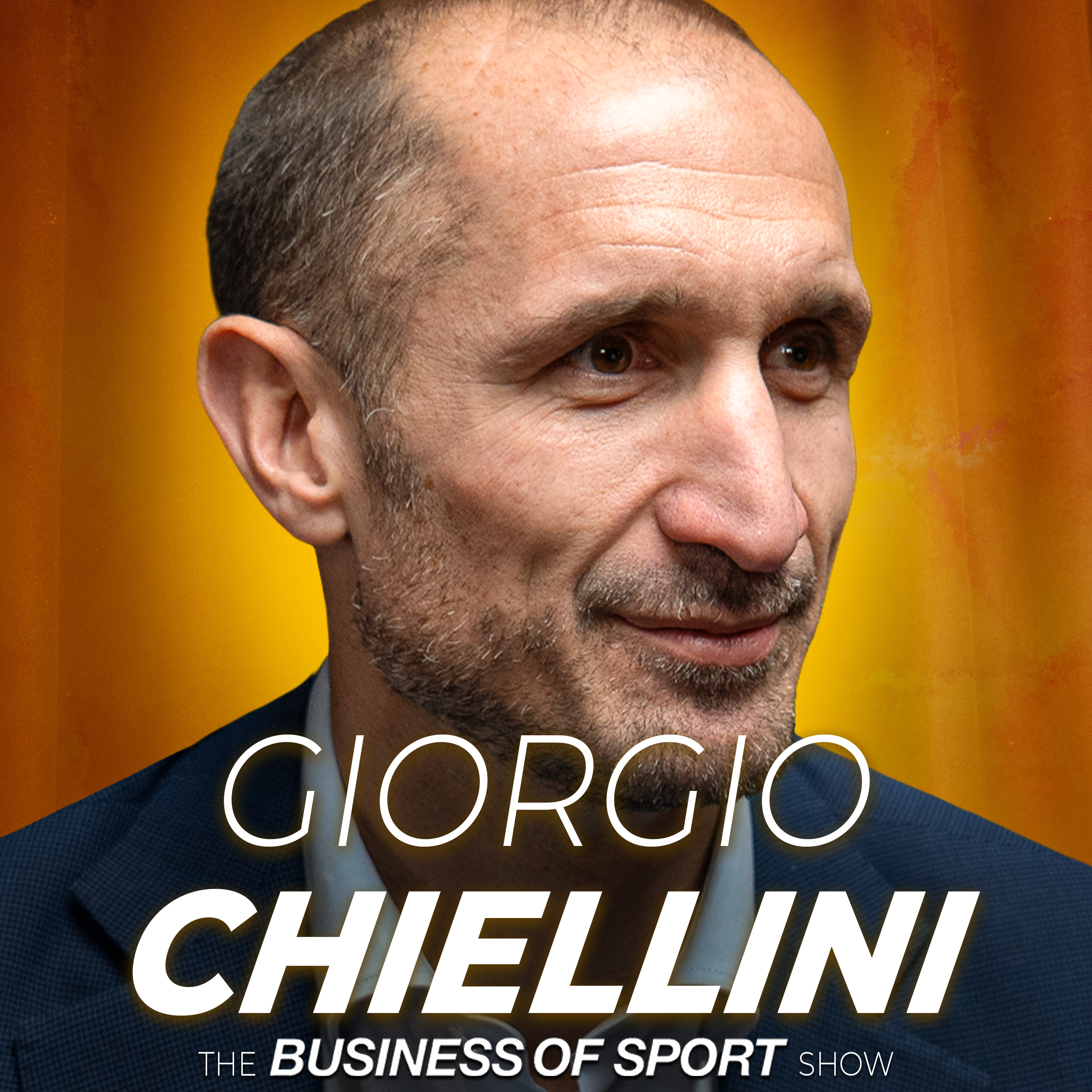
Giorgio Chiellini discusses why European football (especially Italy) struggles to match the Premier League, arguing the gap is driven by club spending power, TV-money dynamics, and insufficient grassroots talent development. He also covers his post-playing career in sports business, education, leadership, and the emotional/mental side of elite performance.
Giorgio Chiellini (former Juventus captain; Italy defender; multiple Serie A titles; later Chief Club First Officer at Juventus covering institutional relations; launched a fund with Andrea Agnelli and Rocco Commisso). Podcast hosts are referenced but not identified in the transcript.
0:00The only team that can compete with Premier League are not the league, but are the teams. And you can name Bayern Munich, Paris Saint-Germain, Real Madrid, Barcelona, that's it. Because if you think that Bournemouth, with all the respect, could spend much more than Juventus today, and you should have told me 10 years ago, we would have laughing altogether. I went to Juventus and I found the university very open and I started to study again. It was funny that the day I got graduated, I played against Barcelona twice, I scored a goal. It was probably the best week of my life. We did not invest enough in developing talent.
0:32We lost our main qualities and now we do not have big talents and we do not have real defenders. If you look at other countries, they still maintain their main qualities. We have very good coaches, but we need to also have a good development since the grassroots. We conceded a goal after two minutes and the biggest risk was to concede another goal after the first and the game would have been done. The pressure on the English team, we knew that was very high in every competition. It's always big pressure from media fans, especially in that game. That's an advance that we knew we had and we didn't.
1:28row and of course a Euros that we'd all rather forget about in England. Giorgio Chiellini is one of the football greats and this is a rare occasion where that description is not overused but as you may expect there is more to Giorgio than all of this. Whilst he was winning multiple honours he was completing multiple degrees. It helped him perform on the pitch. Investing in education was also an investment in football but how did it all come together and which English club did he nearly signed for early in his career? Let's find out. We're delighted to welcome Giorgio to the business of sport. As this episode is brought to you by Airwallex, I wanted to share a piece of content created to announce Airwallex's partnership with Arsenal earlier this year.
2:08Fans, players, Henri, Spike Lee. With partnerships now having a huge content impact, this is one of the best you'll see. Turn your video on or watch it separately from the link in the bio. Who's this new Arsenal partner then. Air Wallachs. Air who? Air Wallachs is an A-I-N-A-2-B-2-B financial platform. What? Built-in spend control. Non-deliverable forward. Infect. What? You don't even know your instant virtual iPad. No! Can we please just watch the match? Come on you guys!
2:46Oh, hell no!
3:13And it works, right? Until it doesn't. A player becomes available Tuesday. By Thursday, they're signed elsewhere because you were still hunting through email for the scout report. Or you make a signing that seemed good at the time, but buried in the contract was a clause that blows up your wage structure three months later. These aren't rare situations. They're happening at clubs every single window. The clubs that figured this out are already winning. Across England, France, Italy, Australia, and Brazil, from championship sides to top-tier clubs, sporting directors are consolidating everything into Gemini.
3:44Scout reports, performance information, contract intelligence, budget impact, all available in one place, all on their phone. No more hunting, no more surprises, no more end of window panic. Visit geminisports.ai and see how Gemini bring together everything a sporting director needs to see the complete picture before making a decision that could define the next two seasons. Giorgio, welcome to the studio. You're in person here today, which is quite special for us. Finally. Finally. Yeah, very pleasure to be here. Thank you for hosting me. What's it been, a year and a half? A couple of years, more or less a couple of years.
4:20We finally nailed you down. It's been quite nice. We had a nice event this morning, so we've warmed up well. Tell us a little bit, everyone knows you, of course, for the football side. Just tell us a little bit about what you've moved into. I was always interested about the world of industry in sports, not just on the pitch. Something that always fascinated me and go beyond the pitch is something that I always loved. Getting older, having more, I found the time, not having more time to do something else. I did some investment personally. I went to the ES for finishing my career and starting the new one.
4:59and on that time I also started to go also on the industry of sport and invest in other things. And also as part of this transition, now I'm working for Juventus covering the institutional relations. My position and job title is Chief Club First Officer. It means that I cover the relation with the league, the federation, European football clubs and FIFA and a bit on the education and innovation part into the corporate side of Juventus and beyond that I launched also a fund with my former president Andrea Agnelli and Rocco win it on in sports. It's just 10-20 % of my time because I have also family but it's something that it's an industry that I love.
6:03It's a special unique that I see the potential and also the US choices was in order to really understand and live what the Americans do, how the Americans think because also five years ago when I decided to move there. Almost 30 % of the clubs in Serie A was owned by North Americans. Now it's more than 50%. In the UK even more. Giorgio, is that good or bad? There are good and bad, like in everything. I think that it's not easy for them arriving in Europe, especially in the Latin where the Southern Europe is much more difficult for them than UK, I think, to understand how it works and do it quickly.
6:52Usually they need a bit of time in order to understand the situation and to figure it out. What do they not know coming in that they should know? The emotional part is the hardest part to manage and in football the emotional part is the most important. The intangible assets is very hard to see in numbers and it's not easy and then And if you talk about Italy, politics part, then you're thinking to build fast many things and you cannot, people are not so open-minded, not also speak the language. And there's a big barrier at the beginning. And that's something that you need time to figure it out, to find a solution.
7:37and a lot of people that came in the last decade really needed time to find the right balance. And after that also, of course, if you're able to find and pick the right people, they also did a good job. But it's everything but easy to do. Where's it been good in the league? If you say half of it now is there and you all sit down as a group of clubs, where have they brought the value that you've recognised? Inter were really good in order to maintain the same management and give continuity and work much more on the structure and the corporate side. AC Milan with the Gazzidis they did the same. Now with Cardinale has changed a bit because now it took in person the responsibility of the sport but I can see this at the time.
8:31It really worked very well on the corporate side to make it profitable. Remember, we had Ivan on. He was great. I really loved it. He was on our first shows. Yeah, I watched it. I thought it was fantastic. Yeah, I really loved it. Ivan was quite unique. Yeah. He's had a brilliant way of looking at it and kind of separating the business side, the football side, but not losing any of that emotion. And these are the harder parts in football. Yes. It's not easy at all to do it. I see the potential, I understand how much is difficult to do it. And now some investment, the Pagliuca family has invested in Atalanta but left ownership and to run in the club to the Perkassi family that they own since many years, that there are different profiles, different way to to do it and that there is not one good or one bad but at least we have to handle with the situation that is very clear the direction that has been uh going uh in the european football you said you can't underestimate the emotional side of it so giorgio is buying a football team is it an act of love and passion or is it a good investment could be both but it's It's led by emotion, it's led by passion, it's led by also the light of football.
9:57That is always fascinating. And could be a good investment. I grew up with all the big stuff owned by a people. Really the president, it was the owner and it was owned by the family. and now it's changed Juventus is unique because it's owned by the same family since more than 100 years it's that unique that is something that we need to underline and stay with it but it's almost the only one we have less than five owner present in Serie A I think most of the club are owned by some fans or people that are not running the club so what i love about your story playing and learning at the same time right we don't often get it and it's something that harry and i try and talk about on here as much as we can the recognition that you can do so much while you're playing to position yourself for this career afterwards and what i love from what you've done is that you've giving yourself the options yeah i can i'm trying to be uh short uh i grew up with the idea of doing university i did the high school with idea probably the doctor like my father or something else but at least having a second step i was luck lucky and good enough to understand at 17 i think that i couldn't have studied so much i mean i cannot attend university and not doing something else because my first job would have been playing football and I start to yeah be absent from school two three weeks a time being with national team playing in second third division from 17 years old so balancing school and professional football yeah but it was good but no it was okay no not toward but yeah needs just a commitment and something else the only part is recognized that I could not attend medicine and being a doctor because you need the presence every day but but I finished the high school need a couple of exams at the university and then I stopped it because it wasn't easy to to match professional career and studying I I went to Juventus and I found a university very open to do an employee program, the people that were working, and I started to study again.
12:37It was pretty quick, the first three years. I studied economy and then I did the Master in Business Administration. It was longer because it was much more difficult and studied alone is not easy because I cannot attend the school, but I completed during my career. And it was funny that the day I got graduated and all my family was there. In that week, I played against Barcelona twice, back in the quarterfinal, I scored a goal. It was probably the best week of my life because when good things happen, it's like a virtuous cycle that everything is related to them. And then I scored against Barcelona.
13:21I got ready the day after. It was everything in a few days. But because my idea was always to get there. And what I found very useful that the time I committed to studying, it was very useful also from the sports side. There's a piece that is underestimated. Why? It maintains your brain fast. It releases your pressure because if it's not a sort of hobby that you release pressure from your daily routine and sport, and you are much weaker to understand the decision that you have to make in a fraction of a second because it's not second and you have to evaluate four, five, six different things at the same moment when you're playing and your brain is one of the most important pundits.
14:13and for someone it's just instinct. For someone else that is not instinct, you have to learn. And the habit to study and learn is helpful for the normal, not so talented people that need to fill this gap and compete at the highest level as possible. Then also the part of my career is about studying football, the evolution of football that I played for 17 years in Juventus and the style of football has changed three, four times. Before 28 years old, I never played a goal kick, but every time the goalkeeper launched long and now it's impossible to watch a goalkeeper kick the ball over the midfield.
14:58But until 28, I've never really played a ball from the goal kick and that's changed in quite a few months, years, that has completed a completely different football. Then the man marking, zone marking, different systems, everything is a big revolution. Also today, I left Juventus in 2022. That is not a lot. It's less than five years and football has changed completely. In four years, it's another football. If you are not able to adapt to the new changes, you are done and you are not improving. Were you playing left back? I played, yeah. I played left back until 22 years old. And then I moved as a centre-back.
15:46It's much more fit for me and for my skills. Were you alone in seeking out education alongside your career? Or were there other team members and national team members who were also doing it alongside you? I found just once during my career. My one team is that I started in Low. And that he played in Lutz and now he's a lawyer. standard and not a lot. At the end of my career, some young players, they started because of the online university is much easier to access at that time, I'm a bit old. But what would you advise them? There's a lot of players that listen to the show. What would you advise them now, having been through what you've been through?
16:32Be curious and do something. Whatever is university that they're interested, that they do not just focus and live for football. It was always my priority and that has to be. And it's not about fashion having part, but try to be attached and maintain attached to the world and do something else is very useful in order to be sharper and fresher and faster also. I was reading before this, you fronted the Feef Pro Mind the Gap campaign, which for people who don't know, so 13 % of active footballers in Europe have higher education qualifications compared with 53 % of men in the EU. So you led that campaign.
17:13Was that making people realize that this gap needed to be bridged? Was that the focus of it? Yes, and just to give sensibility to this topic that sometimes is underestimated or not known also. And try to let a new generation recognize that it's important and you can do it. It's not something that you cannot do it. that is impossible to do it together. That is just about the volunteer to do it, the commitment to do it. And the results are not just for the after career. That's something that I was really strong and focused on, let the people understand. You have advantages during the career and then after, but first during the career is the most important part.
17:58Yes, you have advantages, let's do it. You now work within, obviously, Uvantis and you've seen inside the club, as well as played for the club. Do you think it's the responsibility of the club to encourage players to think proactively about education? It is hard. You can do it for the youth teams, yes. And we have done it. Juventus has created their own school a lot of years ago that they have changed because something didn't work because the kids also, they need to meet other people out of the team and not staying with the same people from the 8 in the morning to the 7 in the evening. When it writes to the first team, it's really about you, about your choices.
18:42It's not easy for a club to force or to encourage the people to do it. I think that the club should let the players learn the language and the culture as soon as possible because it's a question of respect. It's a question of integration that is very important. And therefore, the rest is about a personal choice. Can I ask you, we've talked about the educational side, like how you invest your time, very valuable. How did you invest your money when you were playing? I always try to set up my portfolio to have a deadline. At that time, it was 35. I said, okay, World Cup 34, exactly. World Cup 2018.
19:40I said, the day after 2018, I'm gonna retire. I I don't earn any more euro for the rest of my life and then start to build something that at 34, I'm okay, that I can continue to live with the money that I earned before. Of course, getting closer today, I said, no, I'm not finishing my career. That's, it was postponed. But at the beginning, when it was 23, 24, it was 10 years. I don't want any debt. I want to want everything. I want to rely just on my own. After that, that includes, of course, a different investment, different type of things. I had a banker that has worked with me. Thanks, Michele, for the long time relationship.
20:26But I always been informed of the idea and set the plan. Then the different choices, I didn't choose anything because I cannot know everything and someone else is much more informed than me. But the strategy, yes, I want to lead the strategy. Did you have a number? I didn't have an exact number because I just tried to understand what would be enough for living. And honestly, I have much more than was enough for living a good life. I was very lucky to be part of and be consistent on playing a high level that it's not about having a number. What was your first contract? My first contract was at 16 years old.
21:19I was supposed to sign for Arsenal at that time, at 16. Liam Brady was the head of Academy, and I got an offer from Arsenal to sign for them. It was a big amount of money because a year was more or less, now is 60 ,000 euros it wasn't the euros at that time because it was like 99 ,000 to 1000 and I said no and I don't know why because it makes no sense to reject a possibility like that because I didn't want to leave my club free or almost free because before 16 if you don't have a contract you can leave just for a small amount of money and assign a contract for less than a thousand a year. Yes, because I grew up there.
22:16It was my home. And I said, for me, it makes no sense to live now. Were Arsenal sending scouts? Yeah, I was part of the national team. Yeah, under 15, under 16, under 17. It was that time. honestly I would suggest to I have two daughters but I would suggest to my son or my nephew or someone else to go to Arsenal 100 % but I don't know why I took that decision and my parents allowed me to do it because that would have been yeah so that's awesome years wasn't it Tony Adams yeah yeah it was a very good moment for being there especially and especially for young people that Arsenal was probably the best academy in the UK at that time yeah so that was your first what was the biggest contract?
23:03Yeah, the biggest contract was more or less 6 million net a year. Wow. That must have been great. Yeah, yeah. I told you. Well done. Does it feel good when you sign that contract? Like jokes aside. Yeah, you don't do for that at that time. I never signed a contract for money that was a part of the career, but it's much more for reaching the goals. One more. Were you ever really tempted to go to another club because of the big check? I had an offer from China in 2018. I didn't do because of family first. How much did they offer? A lot. I'm just going to put it out there. I would sell him to China for 10 mil.
23:5110? Yeah. I've got a new replacement. 10 pounds. Have you met my new co-host? 10 pounds. Even 10 pounds. No, 10 euros. 10 euros. I'm amazed. Also$10 that is even less. I was going to say, I can't believe he went to 10 million. I'm absolutely flattered. If anyone wants me for 10 million, I'm available. That is amazing. But it was 425 appearances for Juventus, right? You were there for, you won nine back-to-back. In Syria. In Syria. Total is 561. 561 total. You did nine Syria titles in a row. That first one you won in, was it 11-12? Yes. Can I arrive in 2005? 2005, 2004, then I went along one year, 2005, 2006, I won the title.
24:35First year in Juventus, I won the title. It seems so easy that for, yeah, yeah, for six years we didn't win. And started to be heavy, honestly. We did also some good results, but also two seven plays in a row. And you can imagine the pressure for the most title club in Italy to handle it. And then we started this streak of nine titles in a row. I was very lucky to be in that period in the club, consistent because it's not easy to be in a club for so long. I played for 17 years in a row for Juventus. It's not about loyalty, it's about being part of a family and for an Italian being in the best club in Italy and starting to win.
25:22and you see that the club is growing and everything is well, there's no other place to be. There was neither a choice. That happened quite a couple of times that when the things were not going well, that you have been approached. But in the end, you are so lucky that you cannot leave. I would have loved to travel to discover new culture. I love to do it, but it's another life. my life was dead and I was very lucky to grow up with the club at the same moment and everything was so simple and easy that it was harder to say goodbye, very hard to say goodbye, but I did it in order to step away a bit before the real end.
26:16I still played at a good level the last year. Not every game, almost 50-60 % of the game, but still on a good level and then I decided to leave. When you won that first title after six years, Conte the manager? Conte, Conte was the manager. The first three was Conte, then five Allegri and the last one Sarri. So he would have moved you to a back three, right? That was the buzzag. Yeah, yeah, yeah. We found each other a very good relationship on and off the field and perfect skills that fit together. But we have played back four, back three. We could have played back eight. It's the quality of the player that makes a difference.
26:55The tactics is something that you can create and the right tailor, right dress fit to the team that you have. We enjoyed our time together and the relationships still remain very close and very strong. So you didn't sign for Arsenal. Did Juventus come in and they put the position on the table? They said, we want you. I grew up and then played in second division, third division, second division, and we won the second division in Livorno. I already scaled the national team from 15 to 21. And honestly, the club decided to sell me to Juventus. I really left to the club to decide where. How much did they sell you for?
27:38Seven million? Wow. So in 2005? 2004. That's a lot of money. Yeah. Yeah, from a kid from Serie B, yes. If you think of numbers now or later in a year, no, but I've never played in Serie A before that moment. That was, it was okay. For a defender, a good amount of body, but not crazy. Also in 2004. We talked earlier, you and I, about mentality, strength, leadership. Now, of course, I'm sure those grow as you play, but was that always a feature of your game? There are captains that played in fourth division but the leadership you can find not just in the Champions League players you can find in the fifth division players because someone has different leadership from the others and probably not the quality to play such a good level.
28:33I was the captain on every team I've played with since they're under 10 going afterwards. That's something that someone else or not is very easy to teach, but you can improve. And you can feel also someone that has never played football and watched a football game, you can feel the leaders on the pitch and see. It's easier. I think it's easy. Do you think leadership is born or it's learned? Different. Everyone has his own leadership but you can find it on the pitch. I use some words from Marcello Lippi to find someone that is getting the players close to him to play better. That's the hardest part.
29:26It's not playing your game, you can be a top class, but if you're able to make the others play better, then you are really for the class that we say in entire, that is the difference between a champion and over the top. Can I ask you, in terms of helping your players to play better, you played with some amazing people, one of whom was Balotelli, who in your book, I think you said Balotelli deserved a slap, loved the book. And my question to you is, how was that? I think that when you find someone that is not good for the group, for the team, it's hard to understand. But then you have to handle it because of the team.
30:12And it's not easy. And the head of everything is the coach. Was it genuinely difficult for the team, culture-wise? Yeah, it's not easy. when some that if someone is not the behavior of someone is affecting the team it's very hard to maintain into a team but it's in every group is happening and it's very hard and the coach is the final responsible for that the the team can help to exclude them or highlight this type of situation, but it's not easy until someone is behaving that into a group. So you have a player that's incredibly talented. You can see that. But at a young age, you identify. You can see that the mentality is slightly off.
31:03How easy is it for you as a leadership group? What kind of thing happens? Would you get around them? Would you tell them? Would you speak to them? Stick and carrot. Like a different approach. Everyone has his different approach, the coach, the teammates, and also you need to get along, but you can work on it. Myself at 16 or 17, it was a good guy, but also did some mistakes because it's normal. You're young, you don't think. It's not neither a volunteer to do something better. You are not so solid enough to understand the situation and you do some light mistakes. If it's a light mistake, is okay and something that you can teach and learn.
31:43What was your biggest mistake? So some arguing with the coach because I didn't play at 16, 17. I was called up and put in the stands. That part of a mistake went before the end of the game from the stadium. The stupid mistake I did at 16, 17, yeah. But okay, I learned the lesson and apologized. and sometimes arguing with teammates that we need and need or because you need to be an example. But always try to put ahead the we instead of the I. What type of leader would you say you are? I think it's not fair that also if you are incredible professional and not everyone has to be like you. that everyone has to be like his own personality but guarantee a minimum quality of standard and then try to push themselves higher and higher is some, yeah, requirements and responsibility for the leaders of any team.
32:54But that can be replaced also in a company that of course, imagine a CEO setting the high standard for the organization, but then it doesn't mean that also the secretary or all the other employees has to work 24-7, 365. But at least if you set the standard they need to try to raise and you need to bring them and carry them to the highest standard. But if you think that everyone has to be like you, sometimes it could be also frustrating. Which manager that you played under was the most natural and effective leader? And then the two coaches of my career are Conte and Allegri, two very different leaders, but two big leaders.
33:38They are two very different coaches, but with big, big, big leadership and personality in a different way. There's the respect element and there's the not always having to get on. Yes, it's a daily job in order to earn the respect. Because it's daily, you have to show your attitude, your behaviors, and everything. And especially in the most difficult moment, you have to show that you need that type of respect. And especially when it's affecting yourself and not the team is even more difficult. But that's the moment in which a good leader needs to put out his ego and put it in his head. That sometimes it's happened and it's very hard to do it, that you think that you need to play and you deserve to play a game and you are maybe the captain and you are benched.
34:36That part that happened also to everyone today, in which you need to step back and help him to play and win. also if you are not on the light and on the lineup. How was it when that group of players then welcomed someone like Cristiano Ronaldo into the team? Nice. Very nice. To be the captain of Cristiano is very nice. And you welcome the best player and the best scorer is always nice. No, yeah. It was, we played three years together. Unfortunately, when I was almost injured, I got the ACL. but it was very interesting to understand the routines there. He didn't train more than the others, he did train harder than the others.
35:25When the difficulties are the highest, he raised his level, he raised always his level. And it was good, he's another level of players, that type is one of a kind. It's not something that you can create, but of course when arrived at the biggest game he always showed up and made a difference. He was a leader on the pitch, he didn't need to to speak too much or just a few words or to be part of. He was very respectful, trained well, but in the moment that we needed him he always showed up. And we took the dirty job of the daily routine because at the end you have to understand also you are with a coca-cola leaving you like a global company around you around a small very small company like ourselves compared to him that we we recognize that and we were very also keen to play with him and unfortunately we We had a couple of injuries myself also included on the Champions League campaign on the 2018-2019.
36:42That we lost against Ajax the quarterfinal would have been a very good year to try to arrive to the end. The Champions League, because you had done two finals in three years. Yes. 2015 and 2017, Barca and Madrid lost both. That is a painful exercise. how do you wake up the next day and what do you tell yourself after that? 2015 was even harder for me because I got injured three days before the final. That didn't play that time that I always, every kid that is playing football is, yeah, dreaming the Champions League final, the World Cup final. then I had played the Euro final in 2012 and I got injured after 10 minutes I was already injured I tried to play I got injured after a few minutes arrived Champions League and three days before another injury it was very tough for me beyond the result of course the 2017 we arrived with a strong confidence and not arrogance but yeah it was the second in three years and we did a very good campaign we we were stronger than two years before especially as a yeah that personality to to reach a final and we found a very good team we were a bit unlucky in some deflection that could that cause us the first to go but they the second half they deserve to win it was hard but at the end you have to move on.
38:22I was 33 at the time that I wasn't even younger to ever. And I knew that it's very hard to have another chance to reach a final. I was lucky at the end of my career to find a way to redeem also myself and everything with the Euros. At 37. Yeah. I was wondering how long we would take. I'm not in the right place to talk about it. Oh, the Euros don't count. It's like the Cardam Cup. It's like the Cardam Cup. You want to bring the Euros up? World Cup is where it's at, baby. Come on. Greece won the Euros. Come on. Good knowledge. Yeah, 2004. Come on. Interesting that you link them. So you have those big moments in your career.
39:15Those Champions League finals, no doubt, as you said. No doubt. A lot. You get to that final. If you play in that Euros final, do you carry those memories of the disappointment? A lot. No, not the disappointment of learning about how to manage a game, how to manage a situation. Because it's happened that we conceded a goal after two minutes and what we did bad in Cardiff against Real Madrid the second game was after we conceded a 2-1, we disappeared and conceded a third after a few minutes. So we weren't able to maintain a good concentration and balance of emotion again, because the emotional part is a way to manage in order to maintain the game there and have another chance to come back.
39:55What we did in London four years later was to maintain very good balance and let the game go. And we had the possibility to come back because the biggest risk was to concede another goal after the first and the game would have been done. Was that a collective mentality then? Of course, at that time, the players like Bonucci and I that has played that game, they know. And we spent all the first half to calm, calm, calm, calm down, calm down, maintain the possession. And that's a big key also, the coach for sure. And that's the same things we said at the end of the first half. It's an easy thing to say, right?
40:39But also forget the context of it. you know, England were playing at home at Wembley. It's the Euro's final expectation, weight of expectation. Some would say, you know, arrogance to the tournament and, you know, the constant singing of it's coming home and all of this, right? So it's easy to say, oh, you know, we can't lose it, but it would also be very easy for that game to get away. Yeah, the pressure on the English team, we knew that was very high and it still continued to be very high in every competition. The English team has always big pressure from media fans, especially in playing at home that game.
41:16That's an advantage that we knew we had and we took it. Following on from those disappointments, that kind of release when you actually achieve something of that level, having had the disappointment. And especially for myself, in 2019, at 35, I had an ACL. I probably would have been played in the 2020 without COVID. I wasn't able to play at that time. Yeah, and then also struggling a year and a half in order to have consistency and come playing again at 36, 37. That was also COVID in Italy was very bad. You remember that we lived a situation. I was closed in our facilities for more than a month, along with my family in Tuscany, listening to and hearing ambulance passing through the city, all the situation that we had passed.
42:10and being there it was a big also redeem for our country. And we celebrate all together in Rome and we had the first time after one year people watching us in Rome because we had played the first three games at home in the group stage. It was a special moment for the country, not just for ourselves, but of course for myself and my teammates. it was the best. Is it strange because it's come at a very weird time for the national team where you weren't qualifying for World Cup? Right after the year after. I didn't qualify for two out of the three last workout that I still carry on my shoulder. This disappointment, this responsibility to not permit to a generation to have never watched Italian team play in the workout.
43:06How were you able to win a tournament? Can you put it on something like that? where you win a Euro, you win a competition. Today, for the qualification that we have for the World Cup, it's just a game. Usually you are in a group stage, and we were at that time with one with Spain, another one with Switzerland, we lost, we missed two penalty kicks in the group stage, and then you have to play one game, go in or go out. And the pressure that we had at that time, It was the opposite that I told before about England playing the Euros at home. And we were able to handle and carry it and a couple of injuries at that time.
43:50But we lost that game.
43:56Of course, we won the Euros and it's balancing a bit. But it's something that we had in our back still today. What do you put that down to? Is it poor management of Italian football? Is it under-investing in young players? Why is that happening? Not investing enough on developing talent and developing the Italian quality that has been for 100 years, of course, evolving according to the modern football. we lost our main qualities we are landed of defenders and big talents and now we do not have big talents and we do not have real defenders football has changed but if you look at other countries they still maintain their main quality we lost a bit we should start from the youth and I hope that now people are working on program from 4 to 15 years it's the way that we should start to create talent again.
45:10That situation of the management in football, it wasn't good enough. That's the result. And of course, also for us in the pitch. But we have very good coaches and we have proved that. But we need to also have a good development since the grassroots. Well, I think, am I right? An Italian manager won the Premier League before an Italian player won the Premier League. Yes. I think Ancelotti wasn't it? Yeah, but a lot of Italian coaches won the player league. Yeah, Conte, Ancelotti, Mancini. Yeah, then we have really good coaches that has worked here in the UK. Because I was interested on that question.
45:54I saw a report found that foreign players account for about 68 % of Serie A minutes and Italian under-21s for less than 2%. That's shocking in under-21s. Yeah, because in my head, again, I'm 32. So growing up, Italian football, Italian players have been at the heart of it. I think, again, I asked you a question earlier. When you were playing in that great Juventus team, how many Italian players played outside of Italy? And you said, you could name Verratti. Yeah, that's it. It's quite an important factor in your ability to harness that quality at an international level. Yeah, now it depends on money.
46:30and Premier League is killing or dominating everyone else. That's why people are getting abroad also. World has changed and now it's much easier for people going to play in other countries. There is also good things on people to play abroad. What I can tell you that also we need to make better development and play it. We need also to change something that make it easier to have Italians play than foreign plans because they cost 10 times less, especially in the young age. Can I make a statement that I just love your thoughts on? Yes. It's always dangerous. Always dangerous. Italian, Dutch, French football.
47:22It's kind of just a feeder league now for the Premier League? Everyone is fitting Premier League now. Okay, that's a great answer. Everyone is fitting Premier League. The only team that can compete with Premier League are not the league, but are the teams. And you can name Bayern Munich, Paris Saint-Germain, Real Madrid, Barcelona, that's it. I beat Atletico Madrid, but neither. But is that a good product? I hear you. But if, like, two people in a league, is that a good football product? If you look at Champions League and European competition, the good product it is, yes. It is. We'll see how much is the gap going forward with the Premier League because now it's just a few years that this gap continues to get bigger and bigger with TV rights.
48:15I'm curious going in five years from now what the situation is going to be because if you think that Bournemouth with all the respect could spend much more than Juventus today and you should have told me 10 years ago we would have laughing all together Bournemouth is a very good team and they're very good we can put this into context right the three teams that came up to the Premier League this year Coventry, Hull and Ipswich spent 500 and something million on players the three of them Yes. That's more, I don't have the specific numbers in front of me, I would imagine that's more or very close to what Serie A spent as a league.
48:58What about broadcast side in Italy? What we've spoken about a little bit recently that I would notice, I say notice, whether it's a trend or not, we will see, but like the value of rights, you know, Premier League's international rights necessarily are appealing to Italian broadcasters and then they also buy the Champions League rights. And sometimes, or should we say international media houses, they're choosing to buy these packages over domestic league rights, which is a bit like that. If that does come through, that's a big concern. Now Champions League is dominating the TV rights all over the world.
49:30Now in Italy, they spend almost 40 % for the Champions League rights compared to the national rights, and it was like 10 % quite a few years ago. from a side is also understandable why the the the new format is really exciting the you see much more top games in the champions league and everyone is paying more and more and more and of course it's much harder for the domestic league to maintain the the same revenues also premier league with the last deal they maintain and probably raise two three percent but they concede much more games compared than before Italy decrease pretty stable quite a few percentage that is not easy now that we arrived almost to a limit for domestic league because our Champions League are getting the rest it's not easy to find the right balance we are talking I'm part of some boards with UEFA and European football clubs to try to understand what is the right balance between all these different, what is solidarity has to be, has to grow up or not, what is the different rewards from Champions League, Europa League and Conference League sphere, that a lot of conversation ongoing, this the calendar is one of the next topics because of course the games are, we are playing more because the name of game, the number of games has increased because of the new format of Champions League and Europa League, but much more the quality of the game has increased, the physicality of the game has increased.
51:18The national team before that, we played the same amount of games today, but it's much more harder games because with the national league, it counts. And secondly, because it counts for the table, it counts for a trophy, and it counts for qualification. That it counts. and is not any more in the game against a lower team, it's always against your level team, your level that is Serie A, Serie B, the first, second and third division of all the Nations League. That means that you don't play a friendly game against San Marino, but you play every time against France, Germany, Belgium. That is much harder for the players that we need to find a solution and the game compared to five years ago now is much faster.
52:07Yeah. Do you buy into the thought process that there are too many games? I think it's changed. I don't know if it's too many or not because until two years ago, it was the same amount of games. Just Champions League and the Europa League has increased these six games. That is a lot during the year. And we were talking about too many games also before. That is not just too many games. It's the intensity of the game and the difficulties of the game. that has increased and really arrived to the end. You can see on the injuries of the players, every team now has a lot of injuries, and we should find a solution.
52:46The problem is we ask for more money as a club, as a player, as an agent, as a league. Everyone is asking for more money. It means that you give more. And now it's going backward. It's not easy for anyone. because leagues won't accept less money, clubs won't accept less money, players won't accept to reduce their salary. That's going backward to play less without considering also something back. It's not easy, I don't think we will find a solution, but put a limit and trying to figure it out how to handle it is something that the government of football must do through FIFA, through UEFA, through the leagues, but that's pretty clear to everyone and also European Football Club, the Players Association.
53:40We know everyone, but it's not easy to find a solution. Giorgio, this is a magic wand. Yeah. Okay, and it's yours. And you can change one thing about Italian football to make the business better. What would you change? I would put a cap on the European one, not on the Italian one. a cap on the amount of money in order to be more sustainable. Cannot work just in Italy, but I would put a cap. Because then it would increase the competitiveness of your league. And also stop the losses. 94 % of the English clubs are losing money. And just because I read some articles quite a few weeks ago, probably on the...
54:22You listen to us, right? Yeah, yeah, yeah. I listen to you. No, but that's pretty, yeah. Yeah, you have talked about it, and the Italian League is more or less the same. I don't have the numbers, but it's more or less the same, that Putecappe would help the sustainability. The UEFA is trying to do it in a different way with the financial fair play, with all these things, but what we're seeing today from the Domestic League and European Leagues and everything, that is not enough. It's a revenue-generating issue as well. But I mean, English football's problem isn't generating revenue. It's cost controls.
55:01Yes, the same. The same for, yeah. Can you educate me on TV rights in Italian football? We have Dazzone and Sky and more or less we have 900 million a year. Now as a league, we are looking for a new project in order to increase the international TV rights that by the Premier League were really smarter to start before. The Premier League's big growth. has not been in domestic. No, it's been internationally. But Italy's now, you know, it's looking for investment, isn't it? It's looking to trade. Through investment or different government in order to increase this international TV rights. And the national one, we have other two years and a half of deal with the zone that hopefully we can renew.
55:47When you look at Italian football as a league, not as like a country playing, but as a league, are the best days of Italian Football League ahead or behind them? I hope ahead. I hope ahead and I think ahead. You do? We need a shift. In some way we need a shift. And the shift is not if it's ahead in two years or ahead in ten, but it's ahead. As to change something, yes, we know it's not easy to do it because of many things that we need time to get in. But I think I had. How important has the stadium been at Juventus? The stadium is important, unfortunately, because we are hosting the Euro 2032 with Turkey.
56:39The government now is taking care of it and they are really getting faster all the processes in order to create a new stadium. and because of that we are building many stadiums and also a lot of Americans are coming into the Italian football with smaller clubs because finally the city, the municipality are getting faster in order to create new stadiums. Milan is one that has been announced a few days ago. Roma is gonna build one stadium from Roma and probably another one from Lazio. Cagliari, Salerno, Palermo, Bari, also small Bologna, Firenze is doing. Also smaller clubs are really renovating the city of Venecia, is creating a new one, very nice.
57:31Como is working on it. That's good and we are in late, but at least we are moving. And that's why I hope that after this transition and in five years after 2032, we already can start. Probably, I don't know how can we fill the gap with Premier League. In other words, it's getting bigger. But at least we are getting better compared to where we are now. We had the CEO of Como on the show. Fantastic. Fantastic. I watched it all the near one. He was amazing. When you analyze their journey and success, what do you take from it? How do you reflect on that? He has an energy able to lead a movement. I think he is really a key of the Komo's success because he's doing such a lot of things and good idea that, of course, not 100 % are right, but you can find a good percentage and good things compared to not moving anything.
58:39And this energy, consistency, leadership is really something that drives the club beyond the field to success. Have you changed anything at Juventus on the back of looking at that? For me, it's hard to talk about Juventus today, I think, and I hope that the management that we have today will help the club to come back as soon as possible. It's not an easy situation, and the pressure from our fans, comprehensible, is to win again as soon as possible. where of course the pressure on the players that look at the nine titles in a row that was a different era is not easy to handle. But the family is the guarantee of the continuity of the win.
59:42The family that is on the club for 100 years is the guarantee to the fans, to the players, to the club to come back and win again. It would take, I don't know how many years, but we will be there together to celebrate. I find it interesting because it's this challenge we have in sport quite a lot, especially in heritage sport, right, where let's say something like a coma happens. Let's be honest. Sport now, it's about attention. You've got to grab people's attention and then you've got to keep it. That's the thing. So they are making a lot of noise at the moment. People from outside of Italy are particularly interested now in this story.
1:00:23It's like there needs to be this, Italy, Italian football, can look at this as an opportunity to drive more eyeballs back into the Italian league. If there is even just one club doing it, it's like we can have these moments. I know it's a very different type of thing, but Wrexham literally elevated the whole value of the leagues that it was in because it drew outside interest in the product. But I know that's a challenge and a lot of fans don't necessarily like it because it's a competition. But it's okay. They are very competitive, unfortunately. They're doing also very good sporting results.
1:00:53It's not just about a story of Como being on the lake and attracting the Hollywood actors. They're delivering results and they have a very good sport project. And there is something beyond the sport that is really interesting that is just helping the league to create different stories because Juventus, Inter, AC Milan, Rome, they have different stories and they continue to do it. But it's very welcome to have new club bringing new energies, new ideas, new fans that before that maybe didn't like or wasn't interested to the Italian league. And the steam that I have for Mirwan and the people they're in charge of that is really high.
1:01:36My friend, the glitz and the glamour of Los Angeles, LA FC 2022. How was that? was football in the MLS what you thought it would be? Yes, even harder from something because it's not easy. You need to handle with very different situation and things. You need to, it was my first experience out of home that it is not easy to adapt to a new culture, but I really, I was really open to do it. I found very good people that welcomed me and my family in a very good way, helping us to adapt and find new balance also in the other part of the world. Twelve hours from Rome, nine hours of time zone, different culture, language.
1:02:30What was the hardest? Was it finding a restaurant, your coffee spot, your gym spot? I have a third Italian restaurant in 15 minutes by car. Good or best, that is a lot. Coffee is much harder, but I took some good Italian coffee pots and it was good enough. Helping the family to settle in a new city to the other part of the world. It was hard for the first six months because I have two daughters. They were seven and three. They didn't speak any word in English and it was hard at the beginning. but after five six months it was amazing a different style of life much more chill and relaxed and but we have the weather is fantastic i was very lucky to find an organization very open to help me and i gave everything to them i received even much more and mls football domestic football in the us we talk about it a lot and it's quest you know if you want to say we want to break into like the mainstream club football competitions.
1:03:38But we also look at the challenges they have where it's not ingrained in the cultures in the same way that it is in Europe. When you say it surprised you it was better than you thought it would do, is it better? Is it at a level where you think it can achieve what it needs to? They are doing great. They are raising the quality. They are now attracting big players a bit earlier than before. When I arrived, one of the first things I said, I would have loved to arrive a couple of years before, three years before and now they are coming Griezmann has has gone there Lewandowski, Mueller a bit earlier than me I was 38 at that time the Messi he's gone to Chicago how old is he?
1:04:20Lewandowski is 38. Griezmann is younger he's 35. Messi arrived a bit earlier and Sergio Busquets a lot of players now are going now they are filled different city because it's not just anymore LA, Miami, New York, Mueller is in Vancouver, Lewandowski is in Chicago, Griezmann is in Orlando, that they are finally filling all different cities with very good players and they are attracting a bit of starting here by year to do it. The level is quite physically good. Technically they have some South American and like Europe, they have 30 % of American and a player from all over the world. It's a regular season that sometimes is a different approach on the game.
1:05:12It's not every day, every game, life or death. Because it's a regular season, the average winner of the regular season that win MLS Cup is one out of six, one out of seven. It doesn't count so much arrive first. to win. Then during the year you can manage the game, the loading of the game. You can manage also some away games that had happened couldn't happen but happened that you are a bit too much relaxed and you lose in that way because it doesn't count so much. Sorry, just quickly on that. Was it weird coming from Juventus, which is the absolute, like the passion, the heritage, the 100 plus years.
1:06:02Nothing else. It's Juve, Juve, Juve, Juve. And then you go to LAFC, less than 10 years old. It's a new club. It's a brand new fan base. It's a very different environment. The passion at the stadium was even warmer. Really? Yes. The stand at LAFC was incredible warm and chanting all the time. That is much more the life of the pitch that is very different. The pressure of the media is zero there. That's very different life. You arrive to the stadium on your own two hours before the game. I was happy to go the day before, 36 hours before, not three hours before, the usual time when I was in the event.
1:06:48Why? You train, you stay in the hotel, you start to concentrate every time it was in this way. If you play Sunday night, we were training that from Saturday at lunch, I was in the hotel and the facility is waiting for the game on Sunday night. That usual, every three days, that's why I didn't spend a lot of time during my career. There is, you go Saturday, you play Saturday at seven, you arrive at the stadium at five and that's good with your on your own and with your car and you leave after the game. You can invest in one league and the two choices are the MLS or the Saudi league. I have invested in MLS.
1:07:32I have already done it. I've invested in my former club. Would you invest in the Saudi league? I would raise my investment in MLS. Love that. When you went there, was that an ambition? You wanted to... It was one of the idea that I have in my mind to live a legacy, a lifetime legacy. And I was very lucky to find a very good organization environment that really embraced me and embraced them. It was a very nice way to end our sport relationship, but I didn't have a relationship. Probably I should have stayed one year more. You mentioned the media being a bit lighter there. How did you manage that kind of media pressure throughout your career?
1:08:22It's just habit. It's just habit to do it. At the beginning it's hard that getting older and habit is easier. I didn't start with the social media that we have today. We didn't seek social media at that time. That is much easier. Just some internet inside, but it's not social media like we have today. it was much easier for young people at my time. Well, you also gave on the most iconic interviews after a Champions League match ever for British TV when you're just off the pitch with Tottenham. Yeah, and it was... It's just the history of Tottenham. And it was misunderstood a bit because I was talking about the history of that team, the posh team that we have faced that has lost a lot of time when they seem to be in control of the game and of the knockout games or leagues.
1:09:14they felt the pressure and they lost and that was I mean it was misunderstood unfortunately by all the Arsenal fans not what I wanted to say but yes I know it's part of I'm sorry that I said it this way but for those that don't know what you're talking about which will be some people what happened? as to the Arsenal and Tottenham fans that will tell you Georgia I think it was a Champions League game Champions League we were losing 1-0 and the second half we were the convinced to come back because a lot of times that in that period of the year, the year before and that year, when Tottenham had a chance to win, they started to feel the pressure.
1:09:57And we were able in three minutes to have a comeback and win the game. And it was a good Tottenham with Kane, Son, Dele Alli, Eriksen, Limbelli, Vertong, Leroy, Ugaris, that very good Tottenham poch on the bench. it was very hard and i said just it's the history of totten when they have to catch the game they they always consider something but i meant on that year and it was misunderstood and a lot of arsenal are laughing about it still continue and the same fans yeah well no it's good the tottenham fans will really appreciate that yeah it was it was it was very uh very funny but do you know what But the actual thing I liked about that, which stood you apart, was speaking English to British media, which didn't actually happen.
1:10:48Yeah. I forced myself. I have studied English at high school, but I never did it anymore. I forced myself to do an interview in English in order to get better. And, of course, my experience in the U.S., it's also for that reason, to prove my English, because now you cannot work in the football industry without knowing English very well and being appropriate in English. It was very helpful for the sport industry as I said before because the ownership of LAFC has invested in all the possible things beyond the sport and it was very... They were really mentoring me at that time. They were really mentoring me as I asked and it was also a reason why I decided to go to the US.
1:11:37It was good for the family. My daughters now are speaking English fluently. and it's important. I would have loved to do it. And it also detached from the normal life that we have. We live a sort of dream and we relax in a beautiful place and we maintain a strong relationship and friend-ish in the US. I'd love to do a quick fire if we can. Go for it. So you've played with, I mean, the names are freaking insane. From Buffon, one of my favorites. Another one, I mean, Pavel Nedved. This is taking me back. David Trezeguet, Cannavaro, obviously Cristiano Ronaldo. Let's take him out because that's just not fair.
1:12:19Who is the single most gifted player that you've played with? Buffon. He's one of a kind. He's probably the best goalkeeper of the history of football. And he received from God something special. He's a good leadership, good human being, amazing goalkeeper. I've played with a lot of talent, but the talent that he has on that goal within the crossbar and the post is something that cannot be replaced. You mentioned how much the game has changed. If you have a player of his quality, was he someone that you're back to be able to adapt no matter what the demands of modern-day football were? Gigi played until 45 years old.
1:13:07And he started at 16 or 17 in national team, not in national team, that he played for 30 years. I think he could have played in the era of Yashin, he could have played in the era of Pelé, he could play in the modern era. He could play also in the next era of 30 years from now. That type of players could play in every era, and he would have been the best in every era. he would have been played. Who was the least talented but worked the hardest? Probably myself. Probably myself. The answer to this question that if he has to do the team is that probably mentioned myself. Really? Probably. Who did you not play with that you would love to have played with?
1:13:55Maldini. Yes, it was Maldini and Brez. They were my idol at the time to be defenders, leaders. and I played against Maldini once or twice but never played with them. If you talk about the Italian ones, yeah, I would love to play with JT. Yeah. One that I admire a lot for his leadership and Sergio Ramos from Real Madrid. Reading of the game was very good. I mean, that was because physically JT was never, he was never, like, he was not slow but he was never particularly quick. Yeah, how they change the team with their presence is really huge. The Chelsea without Jettier was really different. The Real Madrid with or without Sergio Ramos was even more different.
1:14:51Which club did you not play for that you would love to have played for? Yeah, probably. I mentioned I grew up with the Manchester United era. and from image to United is the Juventus of the UK of England then of course I would if I have to pick one club that is okay Real Madrid, the Galactos, Barcelona but it wasn't that played the man you probably would. So there's a very good clip of Giorgio did a conversation with stick to football he actually walks in to it's what Gary Neville Roy Keane Ian Wright he walks into the room with a vintage Manchester United shirt on with Roy Keane on the back. You don't see Roy Keane kind of get embarrassed anymore.
1:15:35Roy Keane loved that. Do you think they'll be able to turn it around? They will. I don't know when. They will. It's not easy. I mean, if you get relegated, that doesn't make it up. They won't be relegated. They will find a way. They will find a way. What game were you most nervous for of all the games? National team. Which one? Yeah, I don't know. I can tell you the final, but no. The game with national team, the pressure that you have is a bit higher because you do not represent just one club. You represent your country. Nervousism is higher. And, of course, the playoffs that we lost or the final, I still remember heading.
1:16:19I have good and bad memories, but national team, the same level of game, the nervousness and the pressure is higher than with a club. You said to us before you think you played your best at like 32, 33. Why? From 30 to 35 exactly because I arrived in a moment in which I reached more than what I dreamed. I was the captain of national team. I was the captain of Italy. I was good enough fit, not like 25 years old but good enough and the understanding of the game is so high. And I started to play really lightly, light. And that helped me a lot to be more free, flexible, easy. And just the flow of the movement, it became everything much easier.
1:17:14And it was stopped by an injury because I had ACL at 35, but it was probably the best one, two years of my career. Because I had already my first daughter that changed the perspective and the priority of the line and the tension that you have when you play. That everything in my life was done and I just enjoyed. Giorgio, listen, we cannot thank you enough for coming in. I'm sorry for his pressing questions. I'm the easy one, I know, but this has been such a joy to do. Thank you, it's been a great time. Thank you for having me. So I hope that everyone that will listen to the podcast can enjoy a bit and take some notes or ideas for this future.
1:17:59I think that's without doubt. But thank you. Really appreciate it. Thank you so much to Giorgio for joining us for what was a long time in the making, but well worth the wait. So how do you feel about that, Arsenal fans? Imagine this man plying his trade in the Prem. The football stories are, of course, excellent to hear, but it was the explanation focused around the value of education on his career as a player that was most interesting to me. Something for all players to consider if this is something you have thought about. Either way, a really cool chat with a great man. I hope you enjoyed the show.
1:18:32Now, if you want to see more from today's show, you can do so by going to YouTube or any of our other social channels across Instagram, TikTok, and of course, now Substack. There are more snippets to share and bite-sized chunks to consume. And whilst you're there, please do like, subscribe and follow the show. As you will hear from your other favourite pods, it makes a huge difference when bringing you the best guests and conversations from around the world of sport, which is, of course, our endless aim. Thank you again for tuning in and we'll see you next week. As this episode is brought to you by Airwallex, I wanted to share a piece of content created to announce Airwallex's partnership with Arsenal earlier this year.
1:19:07Fans, players, Henri, Spike Lee. With partnerships now having a huge content impact, this is one of the best you'll see. Turn your video on or watch it separately from the link in the bio.
1:19:44Oh, hell no!
1:20:13Until it doesn't. A player becomes available Tuesday. By Thursday, they're signed elsewhere because you were still hunting through email for the scout report. Or you make a signing that seemed good at the time, but buried in the contract was a clause that blows up your wage structure three months later. These aren't rare situations. They're happening at clubs every single window. The clubs that figured this out are already winning. Across England, France, Italy, Australia and Brazil, from championship sides to top tier clubs, sporting directors are consolidating everything into Gemini. Scout reports, performance information, contract intelligence, budget impact, all available in one place.
1:20:48All on their phone. No more hunting. No more surprises. No more end of window panic. Visit geminisports.ai and see how Gemini bring together everything a sporting director needs to see the complete picture before making a decision that could define the next two seasons.
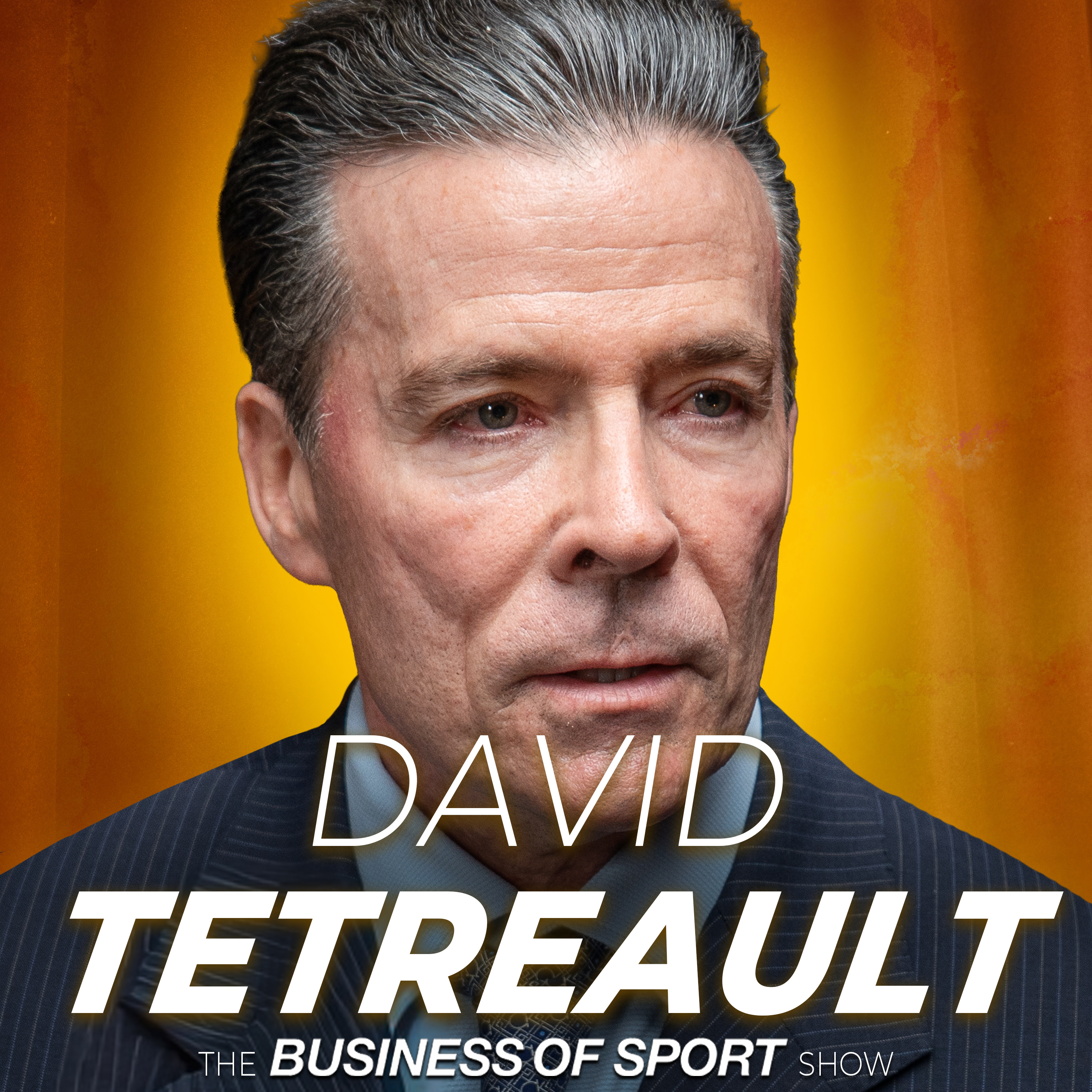
Today’s guest needs little introduction, so I promise to stick to that. Over 550 appearances for Juventus. 117 caps for Italy. 25 trophies including 9 Serie A titles in a row and of course a Euros we would rather forget. Giorgio Chiellini is one of the football greats, and this is a rare occasion where that description is not overused, but as you may expect, there is more to Giorgio than this. While he was winning multiple honours, he was completing multiple degrees. It helped him perform on the pitch. Investing in education was also an investment in football. But how did it all come together? And which English club did he nearly sign for early in his career? Let’s find out. We’re delighted to welcome Giorgio to the Business of Sport.
A huge thank you to our amazing partners on the show:
Airwallex
The intelligent financial platform for global businesses
https://www.airwallex.com/uk/
Gemini
We empower the most confident sports organisations on Earth
https://geminisports.ai/
If you’re interested in partnering with the show, please reach out to us at
Scan the code with your iPhone camera
Listen in the app.