
 Business of Sport
10 Nov 2026 · 1h 7m

 Add vo to ChatGPT or Claude to ask about everything you hear
vo listened to this episode to put together the overview and transcript, so there may be the odd mistake.
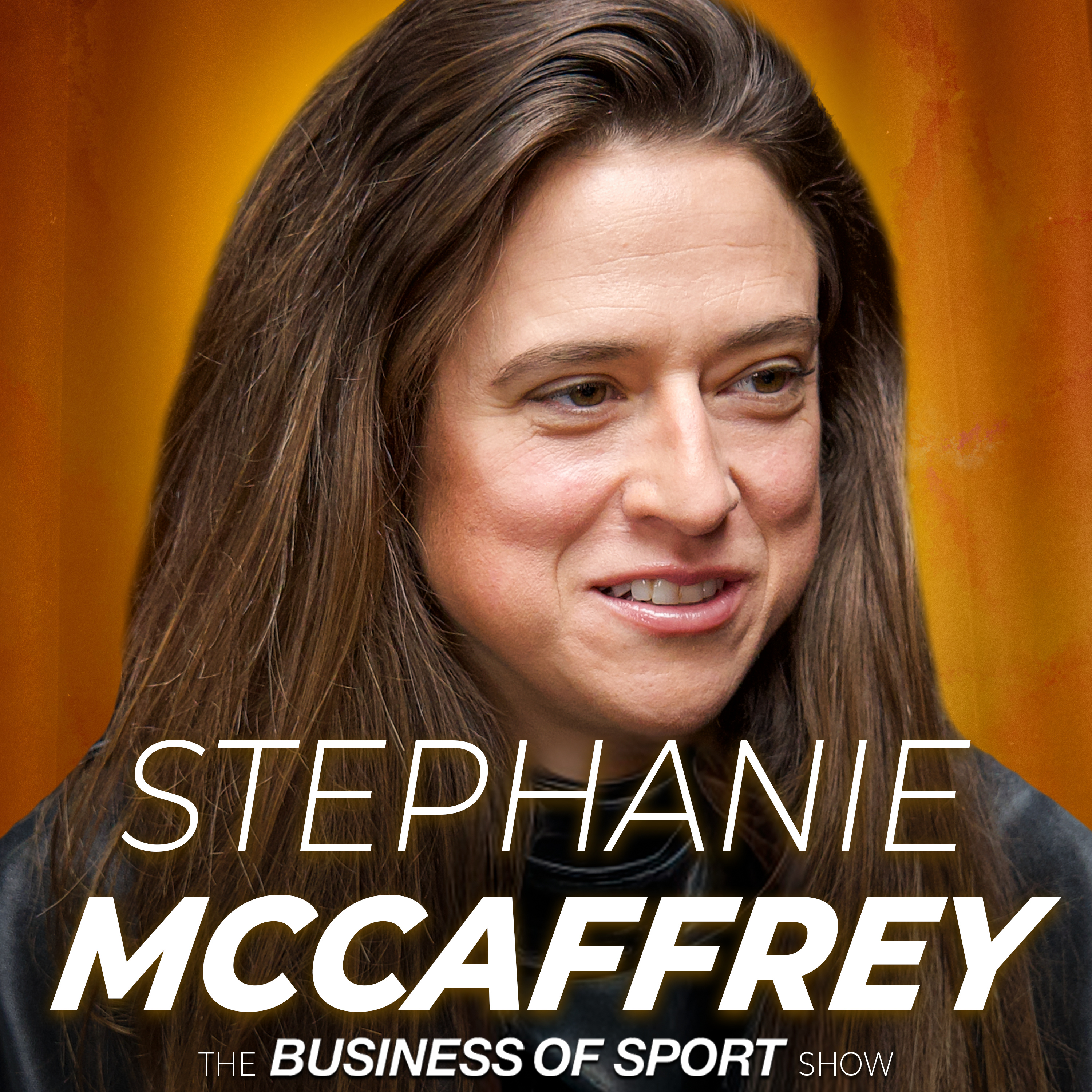
Steph McCaffrey’s journey from US women’s soccer (NWSL and national team) into finance and then into building Racketeer, London’s largest indoor paddle club, plus her views on sustainable growth in women’s sport and the economics/risk of the indoor padel boom.
Steph played professionally in the NWSL (Boston Breakers, Chicago Red Stars) and had time with the US women’s national team; she later earned an MBA at Wharton, worked in investment banking/private equity (Goldman mentioned), then co-founded/grew Racketeer with co-founder Patrick LaFuente Gray and her family investors. She also plays for and advises Actonians (FA Women’s National League).
Women’s football succeeds through collective culture, not just spending; equal pay arguments were “earned” because women’s teams already drove revenue/attention. In padel, location math matters: Racketeer targets payback in under three years and warns that high rent can break businesses when supply increases.
NWSL growth/valuation examples (Angel City bought for $200m; sellouts at Denver/Portland Thorns/Gotham). North Carolina Courage as a system/culture success case. Racketeer’s 90,000 sq ft site, 13 courts, event space, and pricing (about £80 peak, £60 off-peak per court-hour).
0:00I think women who are competing at a high level thrive when they're in an environment where everyone is striving for the same thing and there's togetherness. I've always felt like there's more of a collective element to women's football than there is to men's football, which a lot of times can just feel like a public sale market where you buy, you sell, you try to get the best people together and out we go. I retired from football when I was 26, 27. I wasn't immune to the fact, like I was lost for months. I didn't know what I wanted to do. It can feel really jarring and daunting and it can cause you to underperform in the business world at a time you wouldn't if you gave yourself the grace to transition.
0:34So I see some of the rent deals people are doing and I'm like, you would have to charge£170 per quart per hour to make this work. The math just fundamentally breaks down. That's break even. That's not you're making money. Like you still have other costs. If you feel like you're at a paddle event when you were at a racketeer event, we failed. Because we want to create something that feels like the hospitality and the experience is first. We want it to be quirky. We want it to be weird. We want it to be different and we want it to be one of the most unique events that people have ever had.
1:03Steph McCaffrey: Hello and welcome to The Business of Sport, the show that takes you behind the scenes with the industry's leading owners, operators and athletes. From the US women's soccer team to the founder of Europe's largest indoor paddle club, Stephanie McCaffrey was always going to have a great story to tell. In line with our usual focus when an athlete sits in the chair, it's going to involve a chat about performing at the highest level in sport, setting yourself up for the next stage of your career and then delivering on that. Steph put herself in one of the toughest professional environments away from the pitch, taking to the world of big finance after she retired to try something completely different.
1:37Steph McCaffrey: While it didn't take long for her to find her way back to sport via the Actonians women's football team and then the development of the incredible racketeer paddle centre, that experience of operating away from the industry positioned her perfectly for the return. This is one of the most impressive and unique conversations with an athlete we have had on the show. A truly unique take on the opportunities available beyond sport. So without further ado, we're delighted to welcome Steph to the business of sport. As this episode is brought to you by Airwallex, I wanted to share a piece of content created to announce Airwallex's partnership with Arsenal earlier this year.
2:12Steph McCaffrey: Fans, players, Henri, Spike Lee, with partnerships now having a huge content impact, this is one of the best you'll see. Turn your video on or watch it separately from the link in the bio.
2:50Oh, hell no.
2:52Steph McCaffrey: If you weren't watching, that is the legendary director Spike Lee and Arsenal legend Thierry Henry at the end. So the business of sport is brought to you by Airwallex, the intelligent financial platform powering brands like McLaren Racing, Arsenal as you've just seen, and the San Francisco Giants. From global accounts and cards to expenses and payouts, Airwallex helps the business of sport move money everywhere. Most sporting directors don't know they have a problem. They've got their scouts. They've got their analysts. They've got their systems. And it works, right? Until it doesn't. A player becomes available Tuesday.
3:20Steph McCaffrey: By Thursday, they're signed elsewhere because you were still hunting through email for the scout report. Or you make a signing that seemed good at the time, but buried in the contract was a clause that blows up your wage structure three months later. These aren't rare situations. They're happening at clubs every single window. The clubs that figured this out are already winning. Across England, France, Italy, Australia and Brazil, from championship sides to top tier clubs, sporting directors are consolidating everything into Gemini. Scout reports, performance information, contract intelligence, budget impact, all available in one place.
3:53Steph McCaffrey: All on their phone. No more hunting. No more surprises. No more end of window panic. Visit GeminiSports.ai and see how Gemini bring together everything a sporting director needs to see the complete picture before making a decision that could define the next two seasons. Steph welcome to the business of sport it's so nice to have you in the studio thank you for having me I I'm a big fan of the podcast and big fan of what you guys do so it's a serious treat for me to be here and I'm so so glad well having been to racketeer your paddle club I can say I am a big fan as well and even before uh you know looking at this you go football business firstly two things that are great for me tick tick um and then you add the paddle work that you're doing as well, it's the perfect balance to tee up a conversation.
4:40Steph McCaffrey: But how do I even begin to describe what it is that you do? You know what? Someone asked me at the end of the day, they were like, what do you do? And I was just like, I don't know. I'm a backup center forward for the Actonians at this point. And that's really all I can guarantee. But no, so I think the best way to describe it is like I'm Steph and I'm involved in the business side of sports. My day job and what I spend the vast majority of my time on is racketeer, which is London's largest Paddle Club. And then outside of my day job, I play and kind of take care of some strategic angles for the Actonians in the FA Women's National League.
5:16So those are the two ways I spend my time professionally. And I work on both of those things with my parents who are some of our investors. And yeah, it's almost like one big family circus that continues to go round and round. We love it.
5:31Steph McCaffrey: As I've already had experience. We've got mum and granny in the studio. Well, I say downstairs. Yeah. Within 10 minutes, grandma had eaten 15 candies and was telling you about all my public relations. So there we go. She seems like a fantastic promoter of everything that you do. She was on the bench this weekend when we beat MK Dons, just screaming her head off. And I was like, yep, we're right where we belong. Amazing. So you used to play in America, right? So you NWSL early days. So I spent most of my adult life playing professional football. So played at Boston College, was fortunate enough to play on a lot of the youth national teams during that time, got drafted to the NWSL and spent four to five years in the NWSL playing for the Boston Breakers, the Chicago Red Stars, and then had some cups of coffee along the way with the women's national team.
6:18So had the time of my life playing on those teams and playing with those girls and just being exposed to that level of leadership and that level of winning.
6:26Steph McCaffrey: Let's not do yourself down. because granny would be very upset with that you you played for the women's team yeah the national team yes the amazing all-conquering u.s team yes it was i i did and it was it's just such a treat to be in that mindset like i remember one time abby wambach said like the air in here can feel thin because everybody wants to win and they want to achieve but it also feels collaborative and team oriented. And I think what that team's done better than anyone in the world is achieving an elite level of competition while also taking care of each other. Because those two things can be incongruent if they're positioned in the wrong way.
7:07But the leadership on that team, there's been different coaches that have gone through. The current coach is absolutely fantastic, but it's really the core culture of the girls and some amazing humans that have led that team that have carried it through.
7:19Steph McCaffrey: Yeah. And the women's team has really carried soccer, if we want, in the US. We were talking about this a little bit before, but it really has for, well, certainly for a lot of my life that I can remember. Yeah, I think absolutely, right. I feel like the turning point for women's football becoming mainstream was during the equal pay fight that that leadership group in the women's national team at the time carried forward. I think you can always pinpoint two or three years in sports like we saw it with a lot of the Caitlin Clark effect in women's basketball. I think that's when women's basketball really started to inflect.
7:53There's also tons of amazing players around Caitlin Clark, so I don't think it's fair to just attribute it to one person. But at the time, like what Pino, Alex Morgan, Abby Wambach, Becky Sauerbrunn, Carly Lloyd, Sam Mewis, who's a really good friend of mine. She was on the committee that led equal pay. I'm always so, so proud of that. Like it's so hard to name everybody, like Kelly O 'Hara. They're all popping into my head now and I'm like, oh my God, I can't believe I didn't mention them.
8:19Steph McCaffrey: They'll forgive you. But what that group of girls did, I think over the period of 2019, I'm sorry, 2015, for seven or eight years after that, led the rise of women's sports that we're seeing today, which I always joke that once private equity comes calling, you know, you've really taken off. So that's how we know that women's sports has made it. But you were talking to me before, and as anyone that listens to the show a lot will know, pay, whether it's men's or women's, comes up a lot. You described it very effectively before when you said the reason that conversation was so important was because it was earned.
8:56Yeah, for sure. I think the knee-jerk reaction of the keyboard warriors when you say, hey, I think female athletes should be paid more. It's like, the revenue doesn't make sense. This is crazy. And I'm like, if you actually look at the first way this started with the women's national team, the revenue literally made sense. The women's team drove more ticket sales, drove the bulk of the sponsorships. They just fundamentally brought in more attention, eyeballs and money than the men's team on a team by team basis. Now, look, like there's the FIFA conversation of what's given externally in prize pools.
9:30But the job of U.S. soccer is to reward, I would say, the picture that's sitting right in front of them, not what's coming in externally. So it was infuriating to me that people dared to have the conversation based on numbers that were just fundamentally in our favor. So again, I'm a fan of sustainable growth. When you look at the NWSL and why it is where it is today, it learned lessons from the leagues before it that did fold because they paid too much too soon. What the NWSL has done is it's grown sustainably in a way that makes sense. So now women can be paid what I feel like are real living wages.
10:07And it grew with the numbers. My point with the national team is the numbers were already there. So that's why it is extra infuriating to me when people tried to pull that card in a place where the math just
10:17Steph McCaffrey: was deserving what's attention like for it in the u.s i see fans still it's for like do you mean attention in terms of the women's national team or yeah well women's football that's you know nwsl are you still are you still seeing when i say still as if you know you've now had this historic product that isn't is it still seeing that for momentum that you would want yeah i mean And when I think about growth, I think about growth from a valuation perspective and a what's actually going on in the stadium's perspective. And it's there on both fronts. Like Angel City was bought for over$200 million.
10:55I don't think there's a better hallmark for what's going on in terms of growth than that. And then you look at the Denver team and the NWSL. They're selling out real professional stadiums with tens of thousands of fans every week. This isn't a fluke. This isn't this like we when we would get 10 ,000 fans 10 years ago, it might have been on the back of a Chicago fire game where we did a doubleheader. And there was this false inflation that occurred in a one off game. This isn't a one off game like Lindsay Heaps and her team are selling out are selling tens of thousands of tickets every week. The Portland Thorns have been doing it for years.
11:30Gotham is a juggernaut now in terms of commercials and sponsorship and viability. Angel City, obviously, like I just said, 200 million dollars. And it's what, five, six years old. the team itself. So I think just the proof is in the pudding that we've arrived. And I think now that we have arrived, you have to start thinking, are we overcooking things? And are we doing the sustainable thing to invest in these platforms in a way that's going to take them from hundreds of millions to billions? Because I worry that we are experiencing a tiny bit of valuation inflation on the team front, as opposed to the player salary front.
12:07Steph McCaffrey: Can you give everyone a little bit of context? Because this is why I always get excited when someone comes in with the real business mindset, right? You said that you were more interested in maths at the age of 10 than you were in sport. And you've gone on to do a number of things in what were your classes, the business world, right? Alongside all of this sporting stuff. Now, the business of sport podcast. Hey, we love that. It's very exciting. but also if you can just give a little bit of information around that because we do have a huge number of athletes who tune into this yep with this world this part of a career now opening up or being of interest but without much idea of how to access it yeah so i think i so i retired from football when i was 26 27 and i wasn't immune to the fact like i was lost for months i didn't know what I wanted to do.
13:01I was like, should I go start working? But if I go start working, it's such a cold turkey switch. So my pivot point was I went to Wharton to get my MBA. They somehow let me in the back door. And I was like, well, we're not going to do better than this, ladies and gentlemen. So off I went to Philadelphia. And I highly recommend it for any athlete that's trying to transition is find a soft landing. Like so many people want to just like rip off the band-aid and that it's not the professional hurdles that you're going to struggle to overcome. It's the personal hurdles of losing an identity. I always viewed soccer as an armor for me to mask a lot of areas I was underdeveloped personally.
13:41Because I would get so much attention for success, I didn't really know who I was. And I think when you strip that out and you immediately are exposed to the real world without what you were so good at, it can feel really jarring and daunting. and it can cause you to underperform in the business world. And at a time you wouldn't if you gave yourself the grace to transition. So yeah, business school taught me what EBITDA was, and it gave me a network and all these things, but it also helped me grow into who am I outside of what I did.
14:10Steph McCaffrey: Yeah. How did you even come to make the decision that business school was an opportunity that you could pursue? Well, speaking of grandma always said do well in school. So I I was pretty attentive academically at Boston College. So I put myself in a position to go to one of the Ivy League schools. And then when I looked at, okay, if I start, everyone thinks like one of my dreams was to be an investment banker, which is really bizarre and awkward and strange. Not in this room. Because my dad's an investment banker and I knew a lot of people in that world. and I was like, okay, if I want to get to get one of the best seats in the industry in investment banking and really learn the basics, what's the best way to do it?
14:49And you have a much better chance if you go to a good business school. These firms recruit out of top business schools. So it was basically you work backwards, right? Where do I want to end up and what's the best way to get there? And all roads led to if I could get in one of the top MBA programs.
15:03Steph McCaffrey: How did being an athlete influence, did it influence the experience you then had? Did you find certain things there that came more easily to you? Did you find certain things more challenging? Yeah, I think it's both, right? Like on what came easier is the firms want to recruit athletes. So I always encourage athletes, use that to your advantage. When I would walk into investment banking interviews, they thought it was great that I played professional sports. There are going to be things you're not as good at as someone who might have worked at BCG for 10 years before they went to business school.
15:39So draw on your experience just like they're going to draw on theirs that they can make awesome PowerPoint presentations. So that part definitely came easier. I think these firms that I was interviewing with believed me when I said, going back to like, I've been in environments where the air is thin, like I could sustain pressure for really long periods of time. And that's undoubtedly going to help you when you're going into one of these firms where the air is also thin because the stakes are really high. What was harder, I think, was just subverting stereotypes. Like I said, I'm a math nerd at heart.
16:10I don't think many people expected me to walk into corporate finance and actually be happy to be there. They wanted me to be like the vibes soccer guy that liked to go out and have white claws after, which I do because it's fun and I'm not that much of a square. But come on, I can do the math too is what I always used to say. So I think just balancing expected reputation versus reality is always something athletes are going to face.
16:36Steph McCaffrey: Did you spend a few years focusing purely on that side of your career outside of sport? Or was there always a sporting element that you'd had tied in? Yeah. So no. So I actually just focused on everything outside of sport for two years at Wharton, almost two years at Goldman and a year and a half in private equity. So I think in total that was just about six years. And I didn't even blink when it came to soccer. And it was really, really great. um because you need sorry i did not don't mean to cut off was it kind of a bit of a if you've got to the stage you've retired young was it a bit of almost a kind of release yeah so i think it was a personal release i call it a personal release and a professional necessity like like i just said i had a lot to work through personally to get to a point where i understood where i was but professionally like i genuinely didn't know what ebitda was i didn't know like how you valued a business.
17:30I didn't know the difference between enterprise value and equity value. All of these things now that I'm using conversationally, I had to get up to speed on. And I think that when you're missing basic skill sets, you don't want to put yourself, diversify yourself in a way that confuses you. You almost need to be narrow-minded. Now, I think I've given myself the ability to diversify. I'll spend my mornings on a fundraising deck and in the afternoon, or I would say in the early evening, I'll be getting yelled that by our Tony and his coach, Jason Stevens, for not running. And I've done that because I've spent six years learning the basics of what is like finance and business and valuations and all these things.
18:04But putting your time in to get there is important. I think it's so amazing that we're seeing so many athletes go into content production, sports management, all those sides of things. But when people come to me saying, what do I do? How should I transition? I actually encourage them to go outside of sports first because when they come back in, their skillset will be that much bigger to be able to deploy.
18:25Steph McCaffrey: How do you, I mean, okay, so you spend your time out of it, but now you're back in it. Now I'm back. I'm in it more than I ever hoped to be. Part owner, player. Yes. Now, obviously separate sport, but business owner on other sides of it. So did we just go, yeah, this is really fun, but I can't stay away. Yeah. No, I think for me, like all roads started, I always like all roads started in sport and all roads will lead back to sport. But I wanted to do it in a way that felt very authentic to myself. So the simple question, like how this started when I was at Anthos Capital, which is a fantastic investment firm, I fell in love with pickleball because I wasn't playing soccer at the time.
19:08So I started a business called Pickle Pop on the Santa Monica Promenade, which had three courts. And we had no idea what we were doing. We started it with no money. We painted the walls ourselves. We built the front desk by hand, made every mistake you could possibly think of. It wasn't a large business by any means, but we sold it for four times what we put into it a year and a half later to an operating partner. And then kind of had this view of like, okay, what am I going to do next? So this is when I was 31. I'm now close to turning 34. My dad has worked in London for years as an investment banker on the property side.
19:47Because of that, my mom was coming over to London all the time. So London kind of made sense to look actually at the pickleball market. So people don't know this about Racketeer, but Racketeer started as a pickleball business. We just came over, we did our research, and we found out that the market wasn't ready. We happened to, in that search, find a site with 12-meter ceilings, realized that the paddle market was extremely underserved in West London, extremely underserved in the indoor market and extremely underserved just in the hospitality space. Like you go into these things and they're all blue, black, here's your racket and trying to think of a word to say other than fuck off.
20:26It's not coming to mind. And we wanted to, what I did with my co-founder, Patrick LaFuente Gray, who's amazing. We wanted to build a hospitality business that worked for Paddle and a market that was craving it in a physical space that was insulated from the elements. So we found the right real estate deal. I found the right co-founder. And all of a sudden, I was packing my bags to move to London. And off we went back into sports before I ever thought I wanted to be.
20:52Steph McCaffrey: But you came over here for racketeer, for paddle. Yeah. So the soccer thing was a complete coincidence. So I just mentioned my dad and his firm. My dad was also at the time involved with Layton Orient Football Club. East Hill Secured is still their front of kit sponsor. And he was a minority owner in the club. And so what we did with Layton Orient, which was fantastic, was we spent two of the last years effectively taking over their women's team and trying to get that team as far as we could up the pyramid. Last year at Layton Orient, so I think we broke every record that there is to break in English football.
21:33I don't know if you're familiar with this because we're now with Actonians. But Layton Orient was what started this whole journey of McCaffrey Football Investment Group. So McCaffrey Football Investment Group took control of Layton Orient. What year was it? It would have been 2025. We finished in fourth. We weren't terrible. We weren't great. But we set the stage for next year where we really wanted to make a push. I built a relationship with this guy, Jason Stevens, who's fantastic. Jason is now the CEO of McCaffrey Football Investment Group. He was the coach of Hashtag United, which was in Tier 3.
22:09Hashtag United was not just in Tier 3, one of the top performing clubs in Tier 3. Jason really liked my mission, which was all cash flow and roads lead back to investing in the girls, right? Like when my family started this, do we want to lose money? No, no one ever wants to lose money. Do we look at our broader portfolio and say, this is how we're going to do it tier seven women's football like no that also wasn't the case we're doing this because my parents saw me go through the experience of being in the top 0.0001 percent of women's football and making 10 000 pounds a year that is what's going on right now in the lower leagues so we're doing it with the mission in the north star of giving back to these girls who have given so much more to the game than the game's given them so anyway with late in orient Jason Stevens ends up coming to join us, brings half of Hashtag United down to Leighton Orient.
23:05We go on to score 200 goals and go 20-0 in the league. And there was like an uproar. It was just carnage.
23:15Steph McCaffrey: What, buying the league? You're buying the league. And I was like, none of these girls get paid. So this is just to set the stage on that. No one on Hashtag United was on professional contracts. No one on Leighton Orient was on professional contracts. The only thing we did for the girls on Leighton Orient was reimburse their expenses for legitimate expenses they were incurring, like health insurance, like food, travel, physio work, scans. So I don't know if you've ever seen this, but right now there's GoFundMes every other week for girls that tear their ACLs playing football. So I think, yeah, like a lot of teams spun the story like, oh, the big bad McCaffreys have come in and bought tier seven.
23:59I kind of was raising my hand and was like, hey, if someone's offering, I think the max one week that we ever paid out was 150 pounds in expenses based on the receipts we got. And that is drawing this much talent. Like this is a systemic problem throughout women's football below tier two. This is not a someone's buying league problem. Jason and I get to the end of last year. And I said to Jason, like, okay, we're going up. Well, actually, no. We deserve to go up because we came in first. But once you win first place in the county football leagues, which for women, everything below tier four is governed by the county FAs, the team started rejecting our applications into tier six because we were going to win tier six again by 200 goals like we played herringy borough is that how you say that herringy borough is it herringy anyway we beat herringy borough 13 nothing in the fa cup like we were beating teams in the fa cup last year by 13 or 14 goals so it was going to be the same old story so cert like certain leagues in tier six because you apply it could be the essex league the west london league southeast East League or they were like, no, we don't want you guys.
25:15So finally, I was just like, what? Like, this doesn't make sense anymore. We had a great girls who play a great group of girls on Leighton Orient who had a desire to play at a higher level, given just the people were sick of just taking shit week in, week out.
25:30Steph McCaffrey: Is it not meritocracy where if you finish top, you're up automatically? No. So my understanding is no. In theory, it's that like you just apply and there's a stamp and you go up, there was a lot of friction, which is something that was completely new to me. Like, I remember I was reading a WhatsApp from Jason on my phone and he was like, hey, tier six doesn't want us. And I was like, what do you mean they don't want us? That would be like if the team in the championship went and they were like, the Premier League doesn't want us. He was like, no, it's County FA. They don't want us. I'm trying to work it out.
25:59And we didn't even see out the process. We just decided at that point it was time to move. so we started looking at teams in tier three and tier four that we could effectively merge with and we ended up meeting Linda and Marianne from the Actonians the Actonians is a very historic community club in tier four that happens to be five minutes down the road from nothing but racketeer there we go so what so basically your move from paddle to football now is just a scene It's just so incestual now. Just racketeers front of kit for Actonians. The girls do cold plunges after the game. I'm like, why is my pizza margin so low?
26:40It's because Abby and her friends are just nuking buffalo chicken pizza after practice. And I'm just like, Jesus, one big happy family. So we ended up doing a deal with the Actonians where it was in theory, McCaffrey Football Investment Group took a majority stake in the Actonians. And we have an operating capital commitment over the next three seasons to help that team go from tier four to tier two. The goal of that operating capital commitment is invest as much as you can in the players, Jason and Craig. Craig works in Jason and has worked in partnership with Jason for the last three years. He's an assistant manager, but they really work as a team.
27:18So you have Linda and Marianne who own Actonians. You have Jason and Craig who are on the team. You have my mom who owns all of it. People love to say I'm an owner in the team. I'm technically not. I am a player who takes care of welfare. I do some advisory work for McCaffrey Football Investment Group, but there's only one tycoon sitting at the top of it. And she's sitting downstairs eating candies.
27:39Steph McCaffrey: She seems good at it as well. She is. You know what? Whenever I need something, I always say, joke, we're going to investment committee and you never know how it's going to pan out. She might say, here's 10 grand, go on that trip to Manchester for preseason. Or she might say, I don't see the value in this. We're not doing this in a thick Boston accent. But no, She's wonderful. And she's an accountant by trade, so she's very numbers. Yeah. And Jason and Craig have a really interesting football philosophy that's very different from most of the teams in our league. They recruit based on culture and systems, but then they let the players play.
28:15I think so many teams in our league are overcooking the data. Like I remember there was this one team, I won't name names, but we've scored eight goals against them in two games. we've pounded them into the ground their ceo came up to jason and craig after one of our games and said according to our data none of your players would be in the top 100 for even getting a sniff at making our team and i'm like well according to my data you guys like lost eight now yeah like you you guys couldn't stop anyway your data yeah according to your so jason and craig they they're less concerned about individual statistics and more concerned about culture style of play and finding specific people that can play multiple roles not just one role and at that
29:07Steph McCaffrey: level maybe even in levels higher maybe it's wrong to say that level is that do you think that is a very effective way to be looking at it from a performance standpoint and now you know the fact that you are a part of this team as well yeah i think it's really effective so if you look at what they've done. They finished in second place in tier three twice with no budget, nobody on contract. They've now come down to tier four where like we invest in the team, but we don't have as much money as Stevenage, Luton, QPR, Cambridge, like teams that are backed by men's clubs. We're beating and we're beating them because of Jason and Craig's philosophy, which is team first, no bad eggs this is our system you're a good player I'm not going to overcoach you but you need to play with that system or I'm going to cut you it doesn't matter how good you are technically or tactically they don't buy into the over analysis of the women's game that is based on the men's game and not the women's game itself and just to elaborate on that like women's football and men's football like it at this level so I think it's like the elite level so if you look at Barcelona, you look at the women's national team and Spanish national team, it's very akin to the men's game.
30:18But at our level, I don't think it is. I think it's very different because there's a different level of athleticism and technical ability than there is at the top flight of women's football. Jason and Craig have identified those gaps and they have their own system for evaluating it. And it's been really, really effective. And it's why they've continuously won on a budget.
30:34Steph McCaffrey: You've sat right at the top, right, in those teams. You've played in those teams as we discussed. How's it been putting yourself then around this environment? And not just that, but I guess come back from having a few years out where physically I'd imagine that presents its own challenges as well. Challenges is an understatement. So I'll touch on the first part of the question. I equate tier three and tier four now to where the NWSL was 10 years ago when I was playing. Really? So we're a community club, so we don't have anyone on contract. But some of the teams in tier four and tier three have players on contract.
31:07Those contracts are in the range of the 10 to 15 ,000 pounds that I used to make in the NWSL. So you have some girls who are full time, but they're struggling financially unless they have other jobs. So I almost feel like it's deja vu. Like you're playing in men's stadiums. You're getting 500 to 2 ,500 people. It's literally exactly what was going on with the Boston Breakers 10 years ago. The only difference is I was a lot faster 10 years ago. Oh, my God. Like I used to just push the ball forward and the other person wouldn't be there anymore. And now I describe it. It's like, you know, when you're shopping for groceries and the cart moves fast once you like get the wheels in the right direction, but you got to like wiggle it around first so it can go.
31:48That's me now trying to explode out of a three-point stance and push the ball past somebody. It's just pathetic.
31:53Steph McCaffrey: Great analogy. It is. So basically it's lovely being back. Yeah. Oh, it's great. Like I can still, like the technical ability has gone nowhere. So like if you give me a shot, it will probably go in. But getting the shot feels a lot harder than it did when I was 22. But again, brilliantly described. How do you feel we package our football in this country? I'll set you up for it. I think that's probably one of the biggest challenges that we face. I feel there is so much focus on replicating a lot of what happens in the men's game that we don't necessarily recognize some of the best things about the women's game.
32:28Steph McCaffrey: and what makes it or should give it the opportunity to really succeed. I mean, men's football is the most extraordinary sport in lots of different ways. And I don't mean that in a good way necessarily. But when you look at it from the social impact and the tribalism that it has to the kind of product that comes out the other end of it, to the money that gets poured in. But as we're seeing at the moment through the football report that came out last week, my God, I mean, you've got a quarter of the clubs that can't survive on 30 days of cash from their own. with women's being younger having new opportunity being created in a day where if men's football was made today it would look very different my challenge always is why do we look and persist with so much of this replication rather than identifying some of these areas that would allow it as a product to properly stand out for all the best reasons that it should yeah and i I think what we have an opportunity to do is like to get players to fall in love with aspects of the club outside of the just financial element of it.
33:31I think women who are competing at a high level thrive when they're in an environment where everyone is striving for the same thing. And there's togetherness and kind of this like existential feeling that like no matter what happens, we're figuring it out because I'm doing it for the person next to me. I've always felt like there's more of a collective element to women's football than there is to men's football, which a lot of times can just feel like a public sale market where you buy, you sell, you try to get the best people together, and out we go. So that's not really a concise way to answer your question.
34:04A more concise way to answer your question would be I think we see more variance in results in women's football from the financial impact of how much was spent than we do in men's football. So right now, if you look at who spent the most in the Premier League over the last 10 years, there's one team. You're going there. No, I'm not going there. I'm not going there. Go on then. All I'm referring to is a scatterplot of who spent the most and who's won. And that's Man City. That's a fact. That's not an opinion. I feel like no one can come at me for that. But then you look at what's going on in the NWSL.
34:34The best women's football team I've ever seen in history is the North Carolina Courage, who won, I think it was three straight under-is-all championships, which is unheard of from 2016 to 2019. They didn't have the biggest payroll. They didn't have what I felt like were the biggest stars. But they had the best system. They had a collection of players that when one of them said jump, all of them would say how high. And they had this rabid commitment to each other and the culture of the team that propelled them to be – I don't think it will ever be replicated like what went on in those years from 2016 to 2019.
35:09And I think that in the women's game, there is opportunity to get more buy-in from individuals in the collective than there might be in the men's game just because we're too far down the road of making it overly commercialized in a business. Maybe that's the best way to put it. And that's kind of what we're experiencing in tier four right now. Like if you look at the – we have no one on contract. We're in second place. And we haven't lost a game. We haven't lost – I don't think we've lost a game this year other than Fulham who's in tier three in the League Cup. And it's because I think what Jason and Craig do so well is they get that collective, that buy-in that the North Carolina Courage had.
35:49And you can build a fan base around that. Like players can stay for a long time. You can get fans to fall in love with that idea that this is my home. This is where I was meant to be. Like, I feel safe here. I want to be a part of this. Where in the men's team, it's already been so far grandfathered and you don't really have a choice of who you support. You're just like, I thrust upon you. You're just thrust upon you. Yeah. So I think that feels really convoluted and not the best answer I can give. But I think from a team and winning standpoint, there's a culture element that runs deeper in terms of correlation to success in women's and men's football.
36:23And then from a financial standpoint, we can just be more sustainable. It can't just be a race to the bottom again of like spend as much as you can without going bankrupt and then maybe you can win.
36:32Steph McCaffrey: Yeah. And I guess that's part of the discussion because if you look at all the things that men's football has done wrong, some of the percentage of wages to revenue, I mean, it's just frightening in some of these organizations. Then I see the latest WSL reports and it's like wages are already at about 80 to 85 percent of revenue. and you're just sitting there kind of going how are we making the same mistakes yeah again now for the individual opportunities it presents the players who obviously receive that money on the surface yep you know more money is is great but when you're actually looking at the system yep whether you're making 60 million a year or 9 billion a year that's coming in right if you're still losing money off the back of it it doesn't really matter so that's always where i just find it frustrating to an extent.
37:17A couple of things on that. I think number one is like where, like what I would, if I was in the management seat of one of these clubs, like what I would encourage them to look at is that North Carolina case study, because I think you can spend less and be more thoughtful and still win championships. Like look at the history, the teams that have spent the most haven't always won. So why are you putting yourself in financial peril for statistically not even potentially having the best outcome? I also pair that with like these girls deserve to make money and they deserve to make a lot of money because they've been grinding for a really long time.
37:55But like it's not going to help people in the long run to overspend. So you just have to find the balance between those two things, right? Like you have to find the balance between I'm paying women what they deserve but I'm doing it sustainably so these women can get paid what they deserve for a really long time. because you don't know no one i mean we learned this from musa right that folded before the end of itself no one nobody wins if the math doesn't make sense and that's what i say to my team at
38:22Steph McCaffrey: racketeer all the time speaking of which let's have a seamless transition shall we let's go paddle let's go full into paddle this is yeah it's perfectly timed actually because bloomberg put out an inflammatory article relatively recently didn't they i think it was titled something like is the 300 million paddle boom about to burst or bubble about to build whatever can i tell you where I was when that article. So I, uh, the woman that wrote the article is fantastic. Louise, I, I interviewed with her. I met her. Um, but I was taking Hushwee out to pee. Hushwee's my little toy poodle. And I was picking, like she went to the bathroom.
38:55So I had the poop bag out. I had my phone here and it just started like buzzing, buzzing, buzzing. And I was like, what's going on? So I look at it. I had the poop bag in my right hand. I had this in my left hand. And I just like, literally it was like, I don't know. I don't know what's worse. I couldn't be in a worse situation right now because I see Racketeer's photo with the title, is the$300 million bubble going to burst? And I was just like, oh, no. Like, I thought we had a good interview. What's going on? And I think ultimately, like, Racketeer was presented well. Once you read the article, which was when you diversify your revenue streams, your business is more defensible.
39:29But, oh, my God, that was a jump scare looking at it in the beginning.
39:34Steph McCaffrey: Can we ground it? Can we ground the industry? We had Nikhil Mahindra, who is a professional paddle player on after so many, well, I would say actually years now of people begging us to cover paddle. And it was always trying to find the right way to do it. And looking at the professional end was fascinating. You know, seeing kind of what he goes through and experiences as a player, but also he's involved in the business side of it. But you have built here a huge business. I mean, it's an incredible venue. as I said, I've been and seen it and it's amazing. But I really want to know what that industry is and what it's looking like from what we call it, if we can call it the operator side.
40:14Steph McCaffrey: Yeah. So I think the way we look at it is it's a blend between math and hospitality. You can't have one without the other. So if you do a shitty real estate deal at the beginning, your business can't exist. You can want to pay your employees well, which leads to good service. You can want to spend money on marketing. You can want to build all these things. but like any location-based business is a triangle. It's what's my rent deal or what's my mortgage payment if you own the asset? How much do I have to spend at the beginning? And what's the payback on that investment based on the operating performance of the business?
40:48So for me, a great location-based business pays itself back, pays its capex backs within three years. It's pretty – like you can kind of figure out from the court bookings and the utilization currently with a little bit of depression, assuming supply comes in, what that payback is going to be. From an operational perspective, you just cannot take sites, in my opinion, if you don't think they're going to pay themselves back in three years. Eventually, the math will break down and your valuation will crash. So that's how I look at the real estate before I do anything else.
41:19Steph McCaffrey: Tell people about your real estate because the venue is extraordinary. Yeah. So Racketeer is, I think we're one of the top three largest indoor buildings in London where 90 ,000 square feet was 75 ,000 square feet of warehouse space. You could play a football match in there. Our partner or the owner of the business, Dua, they're a fantastic landlord, fantastic partner. They were in their family business out of there for years and wanted to have a use that was, I think, sport and leisure-based given some of the work they do philanthropically. When we were able to find – like before I said, right, you don't want to do shitty real estate deals.
41:54You can also do a good economic deal with a landlord that isn't symbiotic to what you want. And what we found with Dua was both. Someone that really wanted our use in the building and someone we did a fair deal with where neither side was getting bled. That physical space, I think, has potential not just to be a paddle venue, but to become the next Kensington Olympia or Excel where you can do these large scale events, right? We have 40 ,000 square feet of event space.
42:19Steph McCaffrey: That isn't currently used as a paddle court. We have 13 courts right now. And could we stuff it with seven, eight more? Yeah. But then I think our event revenue would start to erode. And that event revenue, when you look at the 300 million pound bust, is what could be the most defensible out of anything else? Because where else can you put the maximum amount of people that the fire code allows at 55 North Acton Road? I don't know. There's one basic math question that always comes – it all boils down to. What's your rent per square foot when you combined rent and rates? Multiply that times four and that's roughly what you need to charge per quart to make it a profitable business.
43:04So I see some of the rent deals people are doing and I'm like, you would have to charge 170 pounds per quart per hour to make this work. Like it just – the math just fundamentally breaks down to be clear on that. that's break even. That's not you're making money. You still have other costs. There's a threshold in terms of rent as a percentage of sales where your math starts to fundamentally break down. If your rent per square foot approaches that danger zone, when supply comes into the market, which it inevitably will, these businesses are going to be in a really tough spot. And so I see some of the operators doing it.
43:42I'm doing the math in my head. And I'm like, even if you're full 100 % of the time, if there's 20 % additional supply in two years, which there might be, your business could break down. We've put ourselves in a position in North Acton where we're nowhere close to that, but we're nowhere close to that because of our events revenue and because of these other aspects of the business. Right now in North Acton, we're charging 80 pounds per quart per hour during peak times and 60 pounds per quart per hour during non-peak times. I always view that number as floating based upon how we're serving our customers.
44:16Steph McCaffrey: But 15 to 20 pounds a head basically is. We are not going to be able to charge that if we don't offer our customers more than just quartz because we value our community. And you can't say with a straight face, I think that people should pay that if you're not offering them other amenities. If you're not offering them coaching, you're not offering them the wellness, you're not offering them the membership perks. We have people on WhatsApp 24-7 serving our customers. Because they deserve that if they're going to be paying on the higher end of the London paddle market. How did you manage, if you're building such a big site, you've got big upfront costs in paddle building this business.
44:50Steph McCaffrey: So did you raise investment? When we raised investment and we took on capital, the thing we made clear was we think this will pay itself back in under three years. Here's the path to do that. Here's the rent as a percentage of sales. Right now our court bookings are X. But if they drop to Y, the business is still profitable. and if they drop to z this is where at break even and no here's why i think the market will never drop to that z price and it's because we're london we're indoors and ultimately for nine months of the year people want to play indoors here and there's a lot of barriers to entry to build an indoor paddle club in london yeah i mean i was trying to think even around here where we are in relatively central london you actually have nothing yeah yeah the thirst and demand for courts yeah is through the roof yep but it was interesting when we did the panel show with nikil we've got a lot of people commenting similar to sometimes we do with tennis you know this the show goes out to lots of different people not just people that sit in london always have to remind myself that elitist sport only accessible to a certain group of people something that came back um and i guess there's an element of that which is inevitable if there's a cost attributed to it and if there's a shortage of these courts yep um but at the same time i was i was questioning while that may be true is that an issue for the businesses at this stage for sure like i think we look like i would love to make our pricing more accessible if i could but it's not reality like look at the business rates alone for what you have to pay for a warehouse in central london it's hundreds of thousands of pounds a year like it's just you can't start these things you can't ask people to invest millions of pounds if you then want to charge prices that will take your business to a loss year over year.
46:31So what we try to do is what like we have to charge this because the economic realities of the rent and the business rates and the staff we have to pay in London. But what can we give our community outside of the courts themselves? So people feel like they're not just getting an okay deal, but they're getting a great deal. And that's where service to our customers and community comes in and why we're so ruthless about having that service be exceptional.
46:55Steph McCaffrey: people um that know the industry have referenced over the last few months particularly to me it's what i've seen uh sweden yeah they always go sweden sweden it's like oh my god you know we've got to be careful not to be sweden poor sweden uh what does that mean yeah so i think there's three different countries within the uk in terms of the paddle market there's london indoor there's London outdoor and then there's the rest of the UK and that is in no way shape or form a way to knock on any other operators in the UK who are absolutely fantastic it's just the reality of the number of people so I flagged that before the comments inevitably flood in but like finding indoor space in London getting the planning and getting that rent deal at a threshold threshold of sales where your business can still make sense it just fundamentally like I don't think the supply will ever catch the demand.
47:52London outdoor, I think there will be a maturity that will come quicker than London indoor. But like I said, if the number of paddle players is going 50 % year over year and London has 12 million people, courts will grow, but the number of players will grow. I think where I fear of some Sweden-esque activity could be clubs that are spending millions of pounds building sites in areas where they're fantastic clubs. They're just fundamentally is 1 % of the number of the people within a 30-minute drive as there is around my club in West London.
48:26Steph McCaffrey: And to be clear, for Sweden, what they're actually meaning, I think, is that they had a massive oversupply of courts and it didn't... Yeah. Well, there wasn't the demand. Yep. There just wasn't enough people. Yeah. Like, I think paddle is such a fun game. I think the term demand in number of players like go synonymously. And so, like, I don't think it's fair to compare an indoor club in central London to a club that's in the Sweden, we say suburbs, like a rural part of Sweden. It's just different worlds. It's different businesses. It's a different life. But the reason we are London focused is because we feel like the population growth makes it more defensible than other places in the UK.
49:04Steph McCaffrey: What's the plan? Is this your main site? Have you got more that you want to do? Well, it's funny you ask that. So I literally today signed an agreement for lease to open Racketeer number two in Canary Wharf, which we're thrilled to announce. Is this an exclusive? It is an exclusive, yes. That's very exciting. Congratulations. Thank you. So we feel like when we think of Racketeer, we always use the word flagship. We want our sites to feel like flagship sites. So our first site is the biggest site by square footage in the UK. It's by far the most number of indoor courts in London. So we had to back that up with something amazing.
49:44and when I look back at what we did well in North Acton we found a great partner in the landlord we found a site with a lot of demand we found a club that couldn't be replicated and that's what we've done in Wood Wharf so the club is waterfront there's six indoor courts one outdoor court there's a clubhouse that will have a really cool indoor outdoor vibe there's this little Koffa Dam area that has like a grassy feel where like you can just look out over the water and And Canary Wharf Group have been absolutely fantastic in helping us bring the vision to life. So we submitted the planning application and signed the agreement for lease today in partnership with them.
50:22And we're really excited to work with them to deliver what we feel like is one of the best paddle clubs in the world.
50:27Steph McCaffrey: What's the biggest challenges doing all of this? Go on. Like give me the shopping list. I think a lot of it is just figuring out like how there's so many people that live in London. So whenever you build something like I think people love to sit and just say the planning's a pain and throw their arms up. But like you also have to understand like people live around you, business operates around you. Like you have to build something that works within the community and the ecosystem you're in. So like we don't want to be a burden to like residents who live next door, whether we're in Acton or Canary Wharf.
51:04So we have to make sure that our building acoustically stacks up. And for it to stack up acoustically when you're insulating the building, that inherently means more weight, which means your foundation might need to be thicker, which then need to get improved to investors. Then you come back and you look at it again and it kind of just goes round and round, right? You're always trying to triangulate. How can I be an asset to the community around me, which will help me achieve planning, which will help me deliver a product that people want to come to? And, oh, once I've done all that, is it economically viable and will someone invest to help me build it?
51:40And once one of those stages changes, you have to go back to the beginning because it's an ecosystem that has to work together, right? Like you can get something that the community and the planners will be thrilled about that works within the foundation. but unfortunately like it's just not economically viable when you look at the rent and other things so i'm super fortunate that we have an amazing relationship with the council that we're in in north acton um the opdc and we continue to have the same type of positive relationship with our second site in canary wharf both on the landlord side and on the council side so it's a lot of teamwork to get these things over the line and there's just a lot of micro steps to get there
52:16Steph McCaffrey: and it's not quick talk to me about the marketing strategy because you have so many different points of contact yeah then make it a business like how do you focus on packaging it up and getting you know the people in across every angle so how are we our marketing spend right now is two percent of sales because patrick and i lead a content team of two people matt and sammy and we do it ourselves it's really really organic and i think it's actually stuck really well with the community that we serve. Because I think if you go back to what I said before around pricing, like I'm a member of a lot of like some of the private clubs in London that feel really exclusive and they're fantastic.
52:58But I always feel like, I don't know, like you met my family downstairs. Like we are not like private club people. Like they're like, we're yelling, we're eating candies. I don't know. We're telling stories.
53:07Steph McCaffrey: Grandma definitely gave off the vibe. Yeah. We're wearing sundresses from TJ Maxx. Like it's just, it's just not our, it's not our cup of tea like whenever we go into one of these like uh members clubs i'm always like they're just looking at us like oh my god excellent the circus is here brilliant no i'm just joking but um no you're not like we like i wanted to build a place like where you could yell and scream where you could be loud where anyone could come um and i think our marketing strategy caters to that like our most popular marketing bit is this guy named abdul who leads cleaning and janitorial for us.
53:44We've fake presented him as the CEO and he's on more marketing than me now because he just goes viral all the time. He ties us up. He puts balls in our mouth. He renegotiates prices all in jest. But like basically with our marketing, we just kind of want to bring the community into the fold of like racketeer at its core is kind of a shit show, but we'll do everything we can to serve our customers in the best way. Come and join us. And it's worked pretty well for now. I think because we maintain a balance of we're a high quality club and there's a high level of service but we're never going to take ourselves too seriously and the way we reach people through that is social media that's why bringing back to your original question you didn't ask any of this is that's why our marketing spend is so low as a percentage of sales which is awesome because it's more money we can spend on serving our customers.
54:32Steph McCaffrey: Yeah with all the let's say event space you've got 40 ,000 square feet you save event space. Yep. My experience there as I said we came and did a charity day for Lewis Moody. It was an amazing day. There was lots of different things on show that day from the food that you had in there to a great bar. Yeah, loads. It was great. But if I'm looking to do events, what kind of events do you think would be really cool to bring into there? How do you get people to recognize the venue as an opportunity? So we market through three prongs. Number one is an inbound email. Number two is design by night. Number three is social media.
55:08What we did at the beginning was we did events, I think, that really stuck out with England Rugby and with Pretty Little Thing. And those events were like full-fledged. Like people had never seen paddle done like that. Like there was DJs. I'm so not cool. I think the DJ's name was Josh Baker. Apparently he's a big deal. He is a big deal. Like so we put this board up. Like we had light. Like it felt like a nightclub for Pretty Little Thing with branded tacos and tennis balls and hats that you made on site. And it was just paddle. like we'd never seen it done before. Our view is that between the grand opening event, the Pretty Little Thing event, and the England rugby event, which we put a lot of money into producing, once people saw those videos, the flywheel would start and the rest would come.
55:50And that's what we've done. Like if you feel like you're at a paddle event when you were at a racketeer event, we failed. Because we want to create something that feels like the hospitality and the experience is first. And oh yeah, people are on the court. Not like you're here to win the 4.5 tournament. Like you're going to have an amazing time. There are clubs that serve that audience here. They do it well. Our courts are top class, so we can host those types of tournaments. But for our events business itself, we want it to be quirky. We want it to be weird. We want it to be different. And we want it to be one of the best, the most unique events that people have ever had.
56:20Steph McCaffrey: What's the kind of coolest event you've had there? Was it that Pretty Little Things? Branded Tacos is quite cool. Pretty Little Things is cool. I think England Rugby was cool because Joe Marler and the guys just made it so much fun. And it kind of had the feel of what Racketeer was supposed to be, which is a really high quality event. The food was literally Michelin star quality. The tournament was amazing. But it was fun and it wasn't stuffy and people could just like let their hair down and raise money for an awesome cause and relax and be in an environment where it was like community first, like everything else second.
56:57um so i think that that actually symbolizes what racketeer is best what racket racketeer at its best which is 300 people eating drinking socializing having fun taking the piss out of
57:07Steph McCaffrey: one another and then there's paddle going on it's amazing how people how people in sport have picked it up as a bit of a golf type thing yep you know golf and still is to to many cases but it's kind of that place where people that don't have nothing to do with golf meet and socialize yeah paddle seems to have fully muscled its way into that but almost then accelerated the opportunity because it doesn't matter to the same extent how good you really are you need to be competent yeah but it's not like tennis where if you have one player it's not quite at it it kind of ruins it and therefore it's made everything more accessible you can do a lot more with it it's fun it's just even if you've never really played it it's fun so it makes sense right capitalizing on all of this that you should have lots of different ways to build a really cool and good business that is yes about sport and good sport but also about experience and entertainment which is now what this industry is calling out for all the time and it goes back to i think your question of like the sweden problem why is this is this going to be sweden and my answer is if you create a venue that is not purist paddle you're so much more insulated from the rest of that like if i'm a player who doesn't really like paddle, like, do I want to go to a blue and black court chop shop that where you can get a, where you can get a Lucas aid, go play, and then you have to go home?
58:28Or do I want to come to racketeer where I can each eat tacos, like watch the England rugby team, uh, go upstairs and co-work, have a sauna, like paddle's not at the center of our experience, but if you want to play paddle, you get a really high quality court. That's exactly what we wanted to build. Um, and finding that balance that has something for everyone while still maintaining that elite level of customer service in our core business, which is paddle itself is really what racketeer is all about and why, of course, I'm concerned about oversupply, but I don't sit there at night saying as soon as this many clubs hit, we're gone.
59:03Steph McCaffrey: Is it quite cool? Do you sit back and think, I've been a top level athlete and now I run a top level sports business built on a different sport, but still with many of the same qualities and it's still built on experience still built on giving people a great time you're just sitting on the other side of it i really i would like to be more reflective and like i sometimes i want to work on positive self-talk but right now it just feels like we have so much to do and we have so many customers to make happy and give what they deserve that no i honestly don't think that the mentality we like my life is like just it feel like from the outside it may look one way from the inside I can promise you it's just a never ending shit show of me making mistakes and I'm very lucky that I have people like Patrick and partners like Patrick on the racketeer side and partners like Jason Craig on the Actonian side to pick me up when I screw up and work together to keep marching forward.
59:58I hope one day we feel that way. I promise I'll feel that way if Actonians win the league and I promise I'll feel that way if racketeer canary wharf opens on time and delivers what it will be promising but how do you balance
1:00:09Steph McCaffrey: it all out you know that's a lot you know it's a lot on your plate you've got you're still playing top end sport and you're still running a hugely uh expansive business so i think like what i try to do is when i look at my day like i actually don't this was interesting i was talking about this with someone two days ago and they were like why don't you have a partnership strategy for the actonians talking about sponsorships and other things and i was like we should i just don't have time and at on the surface it's like oh like well you should hire someone to run that and i'm like yeah i also think at a certain point like you can only do so many things at once right now for actonians i want to focus on winning the league the best way to do that is to trust jason and craig put all of our resources into getting providing an environment for the players that attracts them and to keep myself fit so I can score some goals and stop getting caught on breakaways.
1:01:07And then if we get promoted, I think the sponsorships will come. On the racketeer side, it's the same thing. It's like Patrick and I try to cover so much. Like he essentially leads operations and growth and I am leading new sites and expansion for the business. There are things that we are missing, but we just fundamentally can't cover. and I've had this moment over the last three to four weeks where it's like that's okay. We are doing 85 % of the important stuff really well. There's going to be some stuff that slips through the cracks but I think that giving yourself grace for that and not overspending to try to service that last 15 % is really important.
1:01:47Like I've had this come to Jesus moment over the last year. Like EBIT is not always real. Like cash flow is real and like Like I wrote a LinkedIn post on this. Like we were flying when we opened. Like we did better than I thought we ever could from an occupancy standpoint. But our cash flow was so – I'm not going to use a bad word. So here when you pay – when you build a site, you pay that on the construction. It's a lot of VAT when you look at Racketeer and you make assumptions on – It was a significant upfront investment. Yeah. So tack 20 % onto that and then tack six months onto getting that back because it's being evaluated to make sure it was real.
1:02:37So we had a multi-hundred thousand pound hole in our cash flow while we were flying on the surface. And we were just like flying by the seat of our pants to not need more capital in a business that was fundamentally so profitable in its core state. At that moment was like, oh, well, maybe we can just raise more money. And I was like, no, like maybe like so many founders now are just like fundraise at all costs. It will be worth it when we exit. Like try to survive as long as you can. Cash flow matters. You don't have to cover every hole with more capital investment. Sometimes you can only do so many things at once.
1:03:10Then you can turn to it when you have the profits to reinvest in that aspect of the business. And I don't look like who knows. Maybe I'm making mistakes. Maybe I should hire a head of sponsorships right now for the Actonians. but the way my parents and I are viewing it is you can't do everything at once right now what matters is Jason Craig the girls in our performance so just let it be completely agree
1:03:31Steph McCaffrey: look Steph it's been so cool hearing uh hearing about it all I finding time is always the most difficult thing and the amount of stuff you've got on your plate I don't know how you do it but as I said having been there and hopefully returning um hopefully it's yeah it's it's great it's an incredible space so it's amazing what you built and on the football side as well um i love talking about it come on down to a game i will i will it seems like you guys are playing some pretty good football if you're scoring 200 goals a season so well this year we won't score 200 goals but i think we have a chance of scoring like 75 okay well that's all right i'll take that 75 oh yeah i'll take that thank you so much no it's been great thank you appreciate it thank you so much to steph for joining us for what i really think is one of the most detailed and impressive athlete accounts I've heard in this chair.
1:04:18Steph McCaffrey: It's a unique take but it is one that every professional should take something from if not just realising why there is immense value in a transition into industry that you may not have appreciated. The skill sets you pick up in professional sport are so hard to replicate anywhere else. I hope you enjoyed it and encourage you to get down to Racketeer in Acton if you are London based and enjoy a paddle session. Now if you want to see more from today's show you can do so by going to YouTube or any of our other social channels across Instagram, TikTok, and of course now Substack. There are more snippets to share and bite-sized chunks to consume.
1:04:50Steph McCaffrey: And whilst you're there, please do like, subscribe, and follow the show. As you'll hear from your other favourite pods, it makes a huge difference when bringing you the best guests and conversations from around the world of sport, which is of course our endless aim. Thank you so much for joining and we'll see you next week. As this episode is brought to you by Airwallex, I wanted to share a piece of content created to announce Airwallex's partnership with Arsenal earlier this year. Fans, players, Henri, Spike Lee, with partnerships now having a huge content impact, this is one of the best you'll see.
1:05:18Steph McCaffrey: Turn your video on or watch it separately from the link in the bio.
1:05:39I'm out. No! Can we please just watch the match? Come on, you guys!
1:05:50Oh, hell no!
1:05:52Steph McCaffrey: If you weren't watching, that is the legendary director Spike Lee and Arsenal legend Thierry Henry at the end. So, the business of sport is brought to you by Airwallex, the intelligent financial platform powering brands like McLaren Racing, Arsenal as you've just seen, and the San Francisco Giants. From global accounts and cards to expenses and payouts, Airwallex helps the business of sport move money everywhere. Most sporting directors don't know they have a problem. They've got their scouts. They've got their analysts. They've got their systems. And it works, right? Until it doesn't. A player becomes available Tuesday.
1:06:20Steph McCaffrey: By Thursday, they're signed elsewhere because you were still hunting through email for the scout report. Or you make a signing that seemed good at the time, but buried in the contract, was a clause that blows up your wage structure three months later. These aren't rare situations. They're happening at clubs every single window. The clubs that figured this out are already winning. Across England, France, Italy, Australia and Brazil, from championship sides to top-tier clubs, sporting directors are consolidating everything into Gemini. Scout reports, performance information, contract intelligence, budget impact, all available in one place.
1:06:53Steph McCaffrey: All on their phone. No more hunting. No more surprises. No more end-of-window panic. Visit geminisports.ai and see how Gemini bring together everything a sporting director needs to see the complete picture before making a decision that could define the next two seasons.
From the US Women’s Soccer Team to the founder of Europe’s largest indoor padel club, Stephanie McCaffrey was always going to have a great story to tell. In line with our usual focus when an athlete sits in the chair, it is going to involve a chat about performing at the highest level in sport, setting yourself up for the next stage of your career, and then delivering on that. Steph put herself in one of the toughest professional environments away from the pitch, taking to the world of big finance after she retired to try something completely different. While it didn’t take long for her to find her way back to sport via the Actonians Women’s Football Team and then the development of the incredible Racketeer, that experience of operating away from the industry positioned her perfectly for the return. This is one of the most impressive and unique conversations with an athlete we have had on the show; a truly unique take on the opportunities available beyond sport. We’re delighted to welcome Steph to the Business of Sport.
A huge thank you to our amazing partners on the show:
Airwallex
The intelligent financial platform for global businesses
https://www.airwallex.com/uk/
Gemini
We empower the most confident sports organisations on Earth
https://geminisports.ai/
If you’re interested in partnering with the show, please reach out to us at

Scan the code with your iPhone camera
Listen in the app.