
 Business of Sport
24 Nov 2026 · 1h 12m

 Add vo to ChatGPT or Claude to ask about everything you hear
vo listened to this episode to put together the overview and transcript, so there may be the odd mistake.
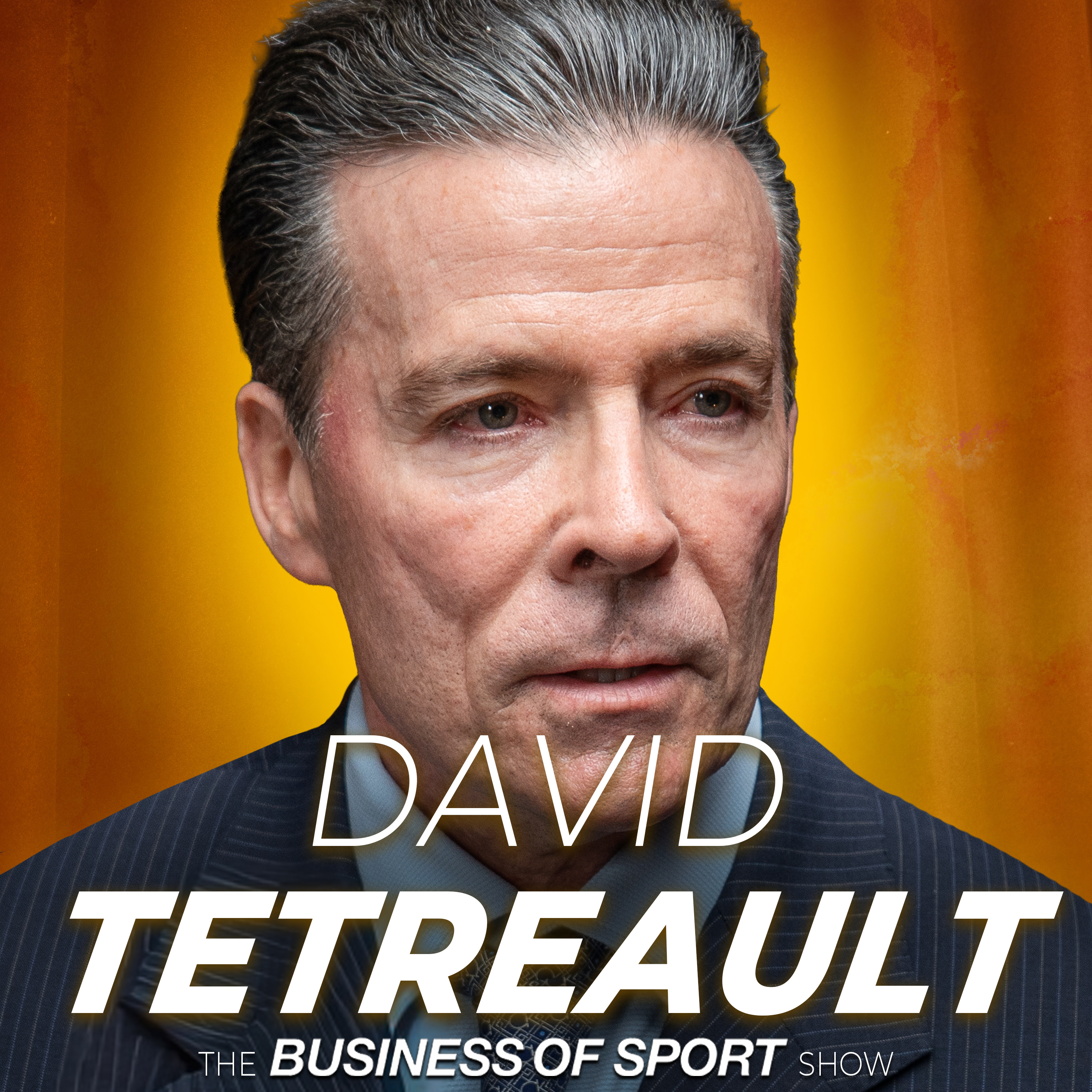
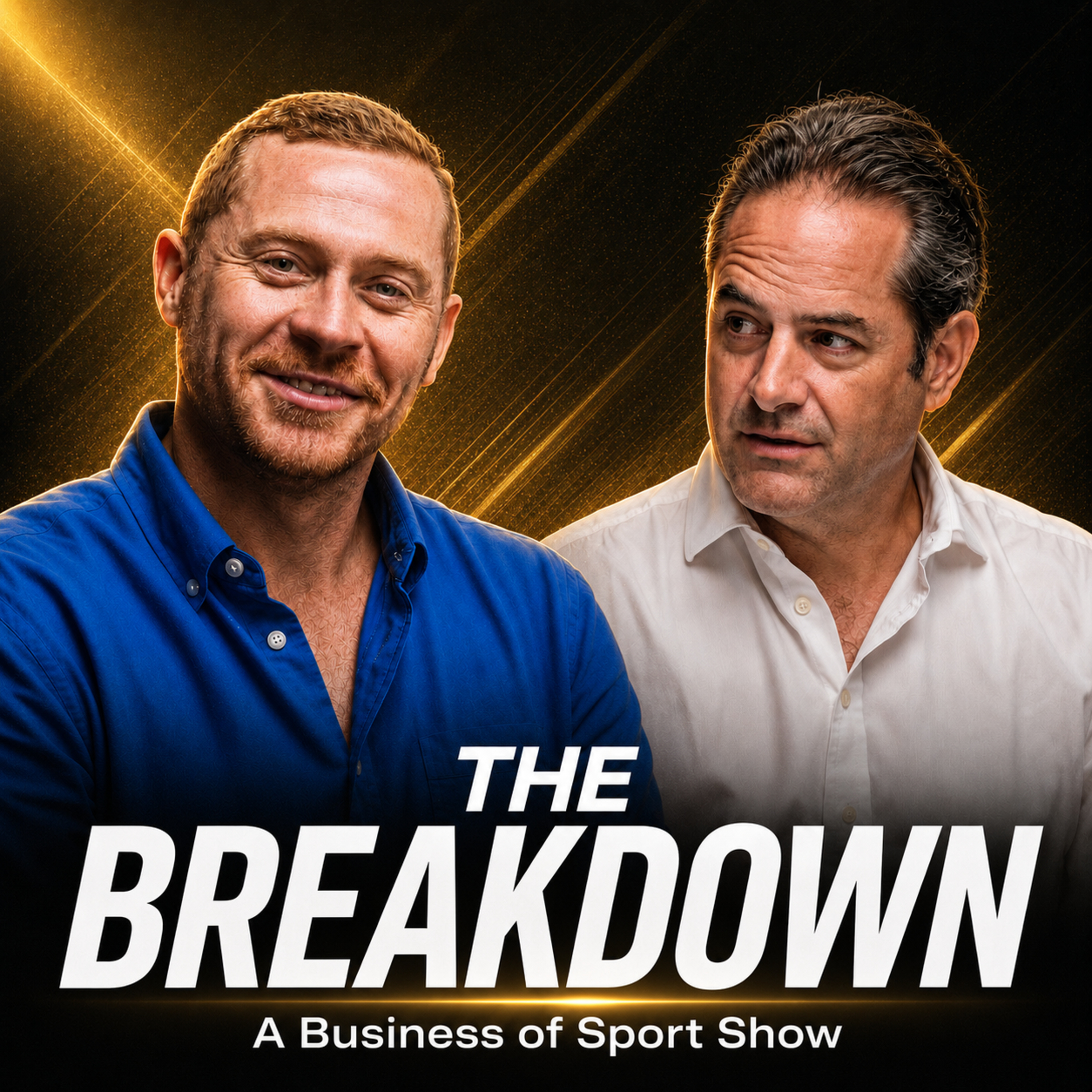
David Tetreault (BKB/Bare Knuckle Boxing) explains how BKB aims to become a mainstream bare-knuckle league by differentiating the product (gloves off plus a patented “trigon” ring), targeting younger audiences via TikTok, and building a talent pipeline from established boxing/MMA stars and underutilized prospects.
David Tetreault is a sports/entertainment executive with prior studio and boxing-industry experience at Sony Pictures Television, Warner Brothers, Fox (senior VP marketing), and Golden Boy (worked for Oscar De La Hoya for nearly eight years). He is now associated with BKB (about a year and five months on board). Owner Mike Vasquez is also referenced (founded NASCAR Mexico; passionate combat-sports marketer).
BKB fights are faster and more “visceral” due to the trigon’s small surface and shorter rounds; concussion rates are claimed at ~1.5% vs 6–7% in traditional boxing and ~14% in MMA. BKB says it avoids “slop” and aims for mainstream entertainment with cable/TV distribution plus TikTok.
Lee Selby, Victor Ortiz, Yori “Gamboa,” Jojo Diaz, Vargas brothers (Fernando Jr., Amato), Sharif Rahman; Tyson Fury and Andy Ruiz discussed as potential brand ambassadors/fighters; events include London at O2 and U.S. Vice broadcasts; TikTok partnership started June 27 (Cardiff, Selby debut).
0:00David Tetreault: What we are trying to do is extremely difficult. There are easier things to be done than creating a mainstream sport out of bare-knuckle boxing. But what we've done, I'm not going to try to imitate Eddie Hearn, Dana White, or Oscar De La Hoya or anybody. I'm me. In boxing, there are too many fighters, there's too many managers, and there's too many promoters. And the quality of various managers, various fighters, and various promoters overall is not at the level that you can be when you have a league situation. I can be very selective about who I bring in and when and why and how. With Tyson, there's a couple of things that are on the table.
0:36David Tetreault: One is a brand ambassadorship. Secondarily, and he told us on air, show me the money. And we will show him the money once he's serious about it. That younger audience does not want to see slop. They're just not going to be enthralled if people are running around the ring doing anything. I mean, look at Turkey Al-Achik calls it the Tom and Jerry fights. And he's the man investing all of the money into boxing. We don't have Tom and Jerry fights in BKB bare-knuckle boxing.
1:26for a combat sport on the rise. We sat down when he was in town for their big London event a couple of weeks ago. And make no mistake about it, this sport is gaining momentum in all the ways that you'd want an emerging proposition to capture attention. Top talent, engaged audience, diverse content strategy, positive relationships with existing boxing and MMA entities. The challenge for David is how to make this a mainstream league that becomes essential entertainment the way its aforementioned cousins have managed to do. Time to see what it's all about as we welcome David to the Business of Sports.
1:56as this episode is brought to you by airwallex i wanted to share a piece of content created to announce airwallex's partnership with arsenal earlier this year fans players on re spike lee with partnerships now having a huge content impact this is one of the best you'll see turn your video on or watch it separately from the link in the bio who's this new arsenal partner then airwallex air who airwallex is an aina2b2b financial platform what built-in spend control non-deliverable forward what you don't even know your instant virtual eye man no can we please just watch the match come on you
2:42oh hell no if you weren't watching that is the legendary director Spike Lee and Arsenal legend Thierry Henry at the end so the business of sport is brought to you by Airwallex the intelligent financial platform powering brands like McLaren Racing, Arsenal as you've just seen and the San Francisco Giants. From global accounts and cards to expenses and payouts, Airwallex helps the business of sport move money everywhere. Most sporting directors don't know they have a problem. They've got their scouts, they've got their analysts, they've got their systems and it works right? Until it doesn't. A player becomes available Tuesday.
3:13By Thursday they're signed elsewhere because you were still hunting through email for the scout report. Or you make a signing that seemed good at the time but buried in the contract was a clause that blows up your wage structure three months later. These aren't rare situations. They're happening at clubs every single window. The clubs that figured this out are already winning. Across England, France, Italy, Australia and Brazil, from championship sides to top tier clubs, sporting directors are consolidating everything into Gemini. Scout reports, performance information, contract intelligence, budget impact, all available in one place.
3:46All on their phone. No more hunting. No more surprises. No more end of window panic. Visit GeminiSports.ai and see how Gemini bring together everything a sporting director needs to see the complete picture before making a decision that could define the next two seasons. David, welcome to the Business of Sport. It is lovely to have you in person in the studio, all the way from LA.
4:10David Tetreault: Thank you so much. I really appreciate being here today. It's an exciting topic we're going to talk through. It's a brand new topic we're going to talk through. So we've had some pretty good exposure to boxing in the past and I guess broader combat sports, but this is something pretty fresh. So I don't want to overcomplicate it from the off. And I would just love to start with a little bit of information around bare knuckle boxing and what we're actually talking about here. Yeah. So bare knuckle boxing is really a whole new through sport league, right? That really differentiates itself from traditional boxing.
4:48David Tetreault: It's more exciting, right? The fights end in pretty quick decisions one way or another. And with the gloves off, we're able to matriculate a lot of new audiences that really have grown up on their vertical phones and the way that they consume media, right? So we recently did a very significant partnership with TikTok. And in doing so, we've been able to really ascertain great information about our younger audience, all the way from the Gen Alphas to the Gen Z to the Millennials, right? And our sport really fits the way that they consume media in a very specific way. with the excitement, with the speed of our fights, and with the action inside our Trigon.
5:42David Tetreault: You know, the way that we're formulated at BKB, we have a patented ring, which is in the formation of a Trigon. It's patented specifically to create action by being the smallest surface in all of combat sports. So I was going to say, is the main difference or is the only difference really removing the gloves but actually you're giving a whole new arena so that yeah that adds a different dimension that that adds a significantly different dimension because there's really nowhere to run there's nowhere to hide what we've done over this past year though to really heighten the value of what viewers are peering into is we've brought along some really significant boxers that had significant pedigree in the sport from Lee Selby who's a former world champion.
6:33David Tetreault: And his style inside the ring, if you're familiar with him as a boxer, was really, really impressive. They would compare him to Floyd Mayweather, I mean, because of his skill. And so when you see somebody like Lee in the ring and the way that he really brings the core of the sweet science into that trigon, it really changes the level of beauty of what the sport is all about. Can you tell us what happens when these guys take the gloves off that then makes this sport different? You've worked in and around traditional boxing, if we want to call it that. When you then see this as a product, what changes?
7:15David Tetreault: You have to, what really changes is the speed of the read inside the ring, right? In traditional boxing, with the way that the ring is configured, with the way the gloves are utilized. The chess match can be set up differently over a course of time, right? You know, you're looking at 10 and 12 round fights, so you can take your time and figure all of that out differently. When you go inside the Trigon with the gloves off, knowing that if you miss something very quickly, you know, you could be knocked out quickly or you could be damaged very quickly. So the speed of the way that you're reading your opponent, it has to tick up in a significant manner.
8:04David Tetreault: You're not there to feel one another out. When you square up in the center of that trigon without your gloves on, it's not that it's a street fight, but it's a visceral fight that goes back to what we are as human beings, our base nature and the way that we protected one another or had to defend ourselves, right? And so that's a big part of what changes everything. And I think that's where our audiences, they can appreciate that and they can see that. Because the name sounds pretty brutal, right? There will be people listening to this who haven't come across it before. And you say bare knuckle boxing and they're going to think heightened aggression, heightened danger.
8:49David Tetreault: Yeah. Is that true? No, I mean, see, that's where there is a massive misconception. And I'll explain that to you. In our sport, the concussion rate is about 1.5 % in bare knuckle boxing. Okay. In traditional boxing, it's at a rate of 6 % to 7%. And then when you get into MMA, it's at 14%. Where we differ, though, is in the rate of lacerations and cuts. So the optics of our sport showcase more superficial lacerations that easily heal. But from a concussion standpoint, even from fractures in the hands, they're less. When you're dealing with traditional boxing, and the reason the concussion rate is up higher than in our sport, number one, the matches are longer, right?
9:46David Tetreault: So the rounds, you know, they go 10, 12 rounds, 8 rounds. In our sport, non-championship are five rounds, three minutes. Championships are six rounds, three minutes, right? So that's less accumulation on the brain, right? But then also the gloves themselves based on the weight, based on the fact that the hands are so well protected with the wraps as well as the glove, those gloves also just, they get more intensified because of the ability to throw harder punches as well as carry the weight of those gloves. So it adds to that relative damage. Where our knockouts, they're knockouts, but they're flash knockouts.
10:35David Tetreault: And they're not based on like this accumulation of blows. And I guess with, you know, you have an angularity, I guess, where it makes sense if you think about the cuts the lacerations but when you think about the internal impact yeah of what those gloves actually do and you know quite often um if you think about art you know you could say from the nfl when you think about the amount of armor protection that you have on if you want to say a level of confidence but but certainly like there's a level of protection where you power into things probably a little bit more than you would do if you didn't have some of that yeah The velocity is more intense.
11:10On that then, if I asked you who your audience was or who your desired audience was, how would you describe it?
11:17David Tetreault: So it kind of goes back to the way that I was tracing it with what we're doing with TikTok, right? So what we're going after is to kind of bring in a younger audience, right? So like I said, the Gen Alphas, the Gen Zs are really at the core in a lot of ways as well as with the millennials. What we're doing to get the Gen X and the Boomers, who are really your traditional boxing fans, and as you may know, traditional boxing fans are aging up, right? So it's that Gen X and the Boomers. By signing the likes of Lee Selby, Victor Ortiz, Yori Orkus Gamboa, Jojo Diaz, as well as the Vargas brothers who I brought in who are two of Fernando Sr.'s sons, Fernando Jr.
12:07David Tetreault: and Amato, coupled with just recently signing Sharif Rahman, who's got a lineage of greatness with his father. What we're trying to do with those fighters and those boxers is to bring in your traditional hardcore boxing fans that are Latino in a lot of ways. Number two, they're Gen Xers and they're boomers. And we're trying to create exposure to our sport by anchoring it in really highly pedigreed fighters and boxers that they're familiar with so that we can coalesce and kind of get a larger audience swath. It's really interesting because I was thinking before this, I was just trying to understand that and bring everything together, I guess, based on branding, what I'd seen online.
12:57And I was thinking, okay, if your audience is boxing fans or again, broader combat, you know, it could be MMA fans, UFC, boxing, et cetera, et cetera. If that's your target audience, bare knuckle boxing is a great name. It's a great branding. It's a great positioning because that's probably going to play to something that I'm interested in. If you're sitting here to me saying, we're trying to build a really broad audience and bring people to the sport that may not have experience even in other combat sports, then that's more of a challenge, was my immediate view. Yes. Because there's a big jump.
13:31Even if you think UFC, it's a bit softer, right? In just the letters that it is. Of course. Versus the bare knuckle boxing element that you present. So understand who that core audience actually is at the beginning. is very important to understand how you can grow that sport. But I'd be really interested if you think that's right. And if you think, you know, as the sport grows, is that a fair kind of assumption to make on the types of people that you would expect to be interested or the types of people that may immediately struggle to interact with it just because of the representation?
14:04David Tetreault: Yeah. You know, what we don't want to do is we don't want to kind of go outside of the base of boxing fans and combat sports fans. We have to be very, very smart about understanding how far that reach can go. And a lot of that planning comes in from what I would say is a more classical training that I received early in my career working at the studios, Sony Pictures, Warner Brothers and Fox. Right. And I look at every single one of our events the same way that I would look with my team, with my bosses at any of those studios when we were launching a television show. Right. And when we're launching a television show, there are so many important aspects that go into what we're doing, who we're trying to reach, what are the stories that we're trying to tell?
15:01David Tetreault: how are we going to market to them, right? So in that scenario, you know, the typical vernacular that's used in the studio system is the way in which we green light a project, right? And what boxes have to be checked to green light a project, right? So with any event, and let's take, you know, this weekend's event, tomorrow's event here, playing at the Indigo at the O2 Arena. We have Lee Selby on top of the card fighting against Ollie Sentence, right? That is our main draw. That's the movie that we're selling to everybody. So in doing that, we look really closely at all of our analytics. We look at our data and the way that we can reach audiences that are in and around the London area.
15:55David Tetreault: Who can we bring in? We supplement the card. with additional fighters that can help sell. So Amado Vargas, he's slotting in in the co-main event, right? Because he did so well for us back in July when he debuted here. He had viral moments here in the UK. So we put together a package that we're very confident that we're going to sell tickets, that we're going to enthrall our sponsors with, and that we're going to drive ratings with on a global basis. So we're able to look very closely at our ratings. We're the only bare-knuckle organization that has a true cable television distribution output in the U.S.
16:40David Tetreault: on a major cable operator with Vice. So with that, with having Vice, we get great ratings. We get great insight to who's tuning in and why, you know. So when we built this card, it has to go through very, very specific criteria to be greenlit because the investment that we're making is significant, right? And we apply that to everything that we do, right? Tell us about, I mean, you mentioned the TikTok deal. Tell us about the importance of having something like that to hit the target market that you spoke of alongside core distribution models to support all of the emerging markets? It's an enormous tool, right?
17:27David Tetreault: So with TikTok, we began our relationship with TikTok just this past June, actually June 27th in Cardiff. That was the same day that Lee Selby debuted in bare knuckle boxing. He was on top of the card in Cardiff. He fought Anthony Rizzo to a second round knockout, right? But with TikTok, we kicked off our partnership with them. And with TikTok, we took our prelims. And the prelims are no longer just prelims. They are now a full TikTok broadcast. And as a full TikTok broadcast, we create a main event, a co-main event, a feature. So we're telling that story. And it's exclusive on TikTok. The way that we broadcast it on TikTok, we have different talent that's coming in that are helping to tell that story to those audiences that I described.
18:21Was that opportunistic? Sorry. Did this deal come to you? Did you seek that deal? Was this opportunistic? Because it's a very different way to operate that type of model. Was that in the plan?
18:29David Tetreault: That was in the plan. We went after TikTok. When I was at Golden Boy, before this, I was able to broker the first social media partnership in boxing. Right. And what I did there was when Facebook was in the business of sport, we cultivated a relationship with Facebook Watch and we got a license fee for live events. A lot of Ryan Garcia's fights started there. Jojo Diaz fought for us on Facebook Watch. So they paid us for live rights. They also paid us for short form and original programming. So I had already kind of been down that path. And I understood that the next big thing that was out there was TikTok.
19:17David Tetreault: And TikTok was already working with Fox specifically for the World Cup this past summer. They were working with MVP and Jake Paul's company. They are working with ESPN and Red Bull. So those are the only ones that were really at the table with anything formal. We went in there, and the beauty is they're in Los Angeles, so I'm able to meet with them face-to-face. We went in there. We showed them who we are, what we're doing, how we're doing it. We showed them our numbers on Vice, our numbers across the world because we're in 90 different countries. And we said, look, we'd like to put something together with you that's done at a much higher level than just people going live.
20:02David Tetreault: We want a partnership. So we were able to broker that. And so within the mechanism of TikTok and all of the analytics that they have, we're able to kind of really see where we may be deficient in a broadcast and where we need to pick things up, where we're over-indexing and we're doing better than we expect. So we're able to continually cultivate and build the best product there. Just for this weekend, we're actually going to be implementing a strategy with TikTok where we're going to be gifting our fighters. And it's going to be all up to the audiences that are watching to gift the fighters accordingly.
20:42David Tetreault: So it's a way of showing appreciation for the fighters, but also creating almost a gamified environment for our audiences. And is this recognition that now in the most competitive attention economy sporting environment that we see with so many options for fans available across sport, entertainment, you name it, if you're creating something that we could class as new, you have to find ways to be different. You have to find different ways to engage and excite people. You sure do. You do. Outside of TikTok, I'll show you, we have another partnership, right? Right. Okay. So with our, like the event that we're doing tomorrow, that's on Vice in the US and then in 90 countries worldwide, TV Azteca, Telemundo, and Latin America and Mexico, right?
21:29David Tetreault: And those are our championship and contender fights that we do, okay? And we do 12 of those a year. We have a secondary partnership with the Bally's organization. And with the Bally's organization, we do our prospect fights. And with Bally's, we have what we call a full 360 promotion with them, as well as just an integrated partnership with them. And I'll explain what that 360 means. From a broadcast standpoint, we're on the Bally's live app in English. We're on their Estrella TV stations in Spanish, so that's distribution. Then we're inside their casinos, right so we're presenting inside their casinos and then we're integrating their proprietary technology and they have a proprietary technology that puts sensors inside the wrist straps and as those sensors go into the wrist straps we're able to on a round by round basis calculate the number of punches their velocity their g-force left and right what they are and then all of that is populated into a power bar that comes up in the arena and then also at home for those who are watching.
22:44David Tetreault: So you're creating a gamified experience there where at some point there will be prop betting for that and ways in which to enthrall the audience to participate even more in what we're doing. But that's the only partnership in all of combat sports where it's fully official. That's what we're doing. And it's from the top. Su Kim is the chairman of Standard General, which is the hedge fund that owns all of those assets. And I brokered that deal with him one-on-one. You mentioned a media career beforehand. We kind of obsess over the transition of skill sets, particularly over the last decade, I would say.
23:28And normally the thing that comes out front and center of that is Formula One because of the Liberty Media acquisition and the success that's come off the back of it. However, there is definitely a broader piece to just look at sport and say, this industry now benefits immensely from people who come into it having had experiences in other industries where you could deploy some of those skills to improve the existing products, the histories, the heritage, but also in this case, also emerging assets. So in a way that maybe just like simplifies it a little bit because people won't know. Can you just tell them exactly like what you did within what we would class as a more traditional entertainment industry?
24:04Sure. And then where you feel you've been most effectively deploying a lot of that.
24:09David Tetreault: Yeah. Yeah. Well, yeah. Thank you. So, yeah, I started my career when I graduated from Cal State LA. I graduated with a BA and an MA back in the early 90s, and I started at Sony Pictures Television. And by being in that environment, I was able to really grasp onto the fundamentals of the way in which the studio really functions almost as a bank, right? And all of those decisions that are being made at the top level are all about bets that you're going to make so that you can have the highest returns. And in those scenarios, no matter what, you're never going to win on all of them, right? So you're going to win big on some and you're going to lose on others.
24:57David Tetreault: But all in all, as long as you're making good decisions and informed decisions, you're able to really function at a high level. So much of what we did, whether it was at Sony Pictures, at Warner Brothers Television, at Fox, where I was senior VP of marketing for many years, we're deeply, deeply entrenched in research. The research is our anchor as to the way that we're greenlighting projects, the way that we're augmenting shows that are on the air and improving them so that we're building our audiences and also giving you a good understanding of when you need to cut bait on certain agendas that you may have, on certain projects that you may have, on main events that we may have.
25:43David Tetreault: That experience helped me immensely as I made the transition over to Golden Boy and worked for Oscar for nearly eight years. And when I came in there, Richard Schaefer had just kind of finished up what he was doing there. And the business really needed a shot in the arm from a distribution standpoint. They had an output deal with Canelo that was sunsetting, so we had to anchor something with HBO. We also had to really do something bigger from a series standpoint because we were only on the Estrella network in Spanish at that time because the Fox deal had fallen away. And there were a lot of things that had changed the business at that time with what PBC was doing, where they were doing time buys across all of those networks.
26:31David Tetreault: And it was causing a lot of difficulties for top rank for Golden Boy, where I was on getting firm commitments from the networks. So we worked really hard. I was able to architect a deal with ESPN to where we were doing 24 shows a year. So we're doing two shows a month. Then, like I said, we did the Facebook deal. And then once HBO went out of the business, I had a really good relationship with John Skipper, who was at the time the president of ESPN, who had then just become the executive chairman at DAZN. And with that relationship and with what he was trying to achieve over at DAZN, the timing was really good with HBO getting out of the business.
27:16David Tetreault: John, myself, and Oscar put together an immense deal for Golden Boy at the time that was valued at about 550 to 600 million dollars with a 365 million dollar guarantee to Canelo Alvarez making him the highest paid athlete on the planet. I remember it. Yeah so all of those pieces are anchored in my understanding of and the the foundation that I had from the studio system right yeah that's fascinating it's fascinating because it's again it's become a very easy thing to say yeah media executives transition open doors uh digitalization distribution yeah but actually understanding where that's best put to use yeah is as with most things very important um can we touch on making all of this happen right we are the business of sports show so So the business of it is, I would imagine, very interesting.
28:16Can you explain from origin in 2015 how something like this is financed, how the commercials work, and the business model elements that are most important?
28:30David Tetreault: Yes. So right now at the apex of where we are with bare knuckle boxing, our financing comes from our sponsors, from our media rights, and from our ticket sales. Those are our big piece. And across that, like I said, we have two separate series, one with Bally's and then one with Vice overall. We're currently in the market right now looking at options. There are a number of suitors that are very interested in our product, both on the streaming side and as well as on the network side, U.S. and global. So that's where all of those decisions on kind of where that revenue is going to hit across sponsors, ticket sales, and media rights.
29:16David Tetreault: They have to align with the way that we're going to put any additional funding into that. and we make those decisions very, very deliberately. We take our time with them. And everything that we do starts first and foremost with a very strong pro forma that's going to estimate the revenues as well as really minimize the expenses while still putting on the best show that we possibly can. and then from there we make that decision as to whether or not we're going to go forward with the project or not and mike vasquez founded this mike vasquez founded this and still owns it he still owns it yes he does and therefore we have a very very the one of the greatest things about us is we have no debt and we have a minimal minimal cap table really yes and that's been a focus should we say?
30:15We are very focused on that. So not necessarily going out looking for investment, trying to do too much, put a lot of cash in places where maybe there's a bit more risk.
30:24David Tetreault: Realistically, and I've floated this out there to a number of our potential suitors in the streaming and in the broadcast industry, we're interested in partnerships where a major player could take an equity interest in us, not dissimilar to F1 and Liberty. Understanding that the growth on this, like I said, they're hockey stick numbers when you look at our audiences, that there's massive opportunity for the right suitor to come in and take an equity position, but also at the same time put us on air on the right platform across the world if necessary or break it up from US and around the world.
31:14David Tetreault: But that's something that we're interested in and we're very well positioned to do so because we have a minimal cap table and it's a very attractive opportunity for the right player. And revenue-wise, are you able to talk about how the company does? Are you able to give any numbers, the size of business? I can't quite give numbers right now because we're private, and those things I have to kind of keep close to the vest right now. But I can tell you that we're doing very, very well across the 18 to 22 shows that we do a year. And when you do those shows, again, you may say exactly the same thing.
31:51Profitable, able to fund the company.
31:55David Tetreault: Yes. Yes, we're in that position right now, just with the way that we're running things. And everything is ticking, ticket sales, sponsors, and media rights. We're only looking for doing better across all of those. Can you just give a tiny bit on Mike's motivations when setting this up? You know, is this out of passion? And also, you know, his background's interesting, particularly within sport. But I know it plays into the regional element as well of where there are already existing communities who have enormous passion for this type of fighting. Well, I think with Mike, I think it's great that he is such a passionate owner for the sport, right?
32:31David Tetreault: And he's also just a very passionate person about sport overall. He led and created NASCAR Mexico. And in doing so, he learned a tremendous amount about marketing, sponsorship, TV rights, all of that. and he's been an avid MMA and boxing fan his whole life. You know, we always reminisce and talk about the days of the Roberto Durans and the Tommy Hearns and the Sugar Ray Leonards and the Marvin Haglers and all of that coupled with going into Mike Tyson and then, of course, Oscar Man. He was one of the best fighters ever. So we share in a lot of that. But Mike's motivation on this, number one, is to really build a significant business.
33:22David Tetreault: And also just the passion for combat sports overall drives him. But he knows that we have something significant that really is capturing the zeitgeist. and our goals really right now are to go from where we are to making it much more of a mainstream product. And when I say mainstream, that means that on a Saturday night, people are going to be tuning in around the world, building out their own watch parties like we all do for, say, Fury Joshua, you know, or Garcia versus Ben. That's when we know we're mainstream. And I can't dodge it anymore. I was trying to save too much of it so we could actually focus properly on it.
34:11But now you've brought them in. Let's do it. Talent. Yes. Fighters, athletes. In an individual sport, we know how important they are. They're everything. They're everything. They're everything. In combat sport and boxing and UFC, we know that that drives so much value. Yes. So tell us about the talent. Tell us about your approach to talent and the value of athletes to the proposition. Yeah.
34:35David Tetreault: So as I mentioned earlier, a big part of what we did in 26 is we went out and specifically sought fighters like Lee Selby, Victor Ortiz, and champions. And we have others that we're speaking to. There's one that will be there tomorrow night who hails from Leeds that we think could be highly significant. um what we're doing when we're speaking to those athletes on the boxing side we're telling them that our pact with you is number one to help you matriculate into a championship fight here at bkb but at the same time if you're interested in continuing your boxing and your glove career we're here to help you right i had a very big opportunity and i'm not going to mention the fighter who it is uh and i put together something with some very important people here in the uk to get one of our fighters on the joshua fury card and it happened the fighter ended up not being able to do it just for various circumstances but that's the level of work that we'll put into all of this and so like when you look at jojo Diaz, he still wants to potentially fight gloved.
35:54David Tetreault: Of course, the Vargas brothers want to fight gloved. I had the three Vargas brothers fight on one card back when I was at Triller, and it was a debut of Emiliano Vargas. That was his first debut in boxing. Plus, I had Amado on. Plus, I had Fernando on and Fernando Sr. So I have a longstanding relationship with that family. I discuss with them all the time where they want to be and how they want to go about their opportunities in both Gloved and Bare Knuckle. And it's the same thing with Lee. And then when you look on the MMA side, we have some great champions. We have LT Nelson. We have Cub Hawkins.
36:38David Tetreault: We have Marco Martignac, who's fighting tomorrow night to defend his title. they come from more of a an mma background in 2027 we're already architecting outreach to mma fighters that are looking for a transition that may be out of contract at ufc or pfl or different places but have a name and a cue and a following that's going to be worthwhile while activating, right? Everything that we do, you know, it's like the star system, and there are levels, and we work with our prospects, but at the same time, our star fighters, they are given opportunities that are different than our prospects, and as our prospects grow and they show, then we increase those opportunities.
37:29David Tetreault: But we are on a mission to cultivate the best talent in boxing and in MMA to really put on the best fights in the world. Yeah. Because what struck me is something, you know, the short term is we want people, well-known, successful fighters coming from established disciplines. And they'll shine a light through the personalities that we know drive that attention. But as you go on and build the sport, it would be my assumption that you want young fighters growing up going, I want to be bare knuckle fighters. Yes. And the reason I asked that first question about, and simply, please, I don't mean, is it simply losing the gloves?
38:12You know, actually, when you explain the difference between the shape of the ring or the shape of the arena, if you want, you know, from a tactics perspective, it's different how you fight. I would imagine the mentality around approaching that fight, the different length of rounds, et cetera. So while transition is very important right now, you're also trying to lay the foundations for what we would say is grassroots sport.
38:36David Tetreault: I'll tell you what, the beauty about the UK and the fighters that we cultivate in the UK, the majority of them come from a boxing background, right? So their skills and their skill level really showcases that sweet science that I'm looking for in a big way. In the U.S., a lot of our fighters have been cultivated through MMA, and they're great strikers and all of that, but we have to pay a high level of importance on the striking, which is much more important than the clinching and all of that. As we do that outreach to the high-level boxers or the high-level fighters, one of the things that I always explain, and I had those conversations with Lee, with the Vargas's, with Victor, is I really want you to study the clinch and make sure that you're comfortable with it because coming into this, it's a different animal.
39:24David Tetreault: And you have to understand what you're getting yourself into. And they do understand that aspect of it. But going back to kind of the root of your question as well, I see, especially in the UK, and then I'll talk about Mexico, which we just opened, there's a tremendous hunger for boxers that unfortunately are not getting on any of these cards right now. because they're limited, right? All of the promoters do not have the number of events that they're doing. We have a very tailored and numbered of events that we're doing. We've already built our 2027 schedule. We know where we're going to be and when we're going to be there.
40:08That allows us to be able to go after younger fighters
40:11David Tetreault: that are sitting on the bench waiting for an opportunity that may never come, where they may not even be paid as much as we're going to pay them. nonetheless. So those conversations are opening up with younger fighters. Sharif Rahman is a very, very good example. He's an 8-0 as a pro fighter. He's got tremendous skill. He just turned 30, but he should have a lot more fights under his belt. But he's constantly on the bench. A lot of our fighters that we've brought in and a lot of our fighters have already fought three times this year, right? So that's a big appeal to highly skilled athletes that are looking for opportunities that are not there.
40:54David Tetreault: But it is a balance. You have AJ Fury, Usyk type characters, and also heavyweight boxers in general. Ryan Garcia. You have those names, right? And if you can get one of them to come over and fight - Changes everything. It also changes it then for the other fighters in there. The reason I may come and watch is because Tyson Fury is fighting in this format. He's never fought in before. But it's also going to then open me up to the other fighters there. Absolutely. Yeah. So like, for example, just this past summer, Tyson Fury came to our Miami show as one of our guests. He loved it. We've been having a lot of conversations with him and also with Spencer Brown.
41:38David Tetreault: We're leaving them alone right now as they have some very big plans ahead of them. Are they ready? But with Tyson, there's a couple of things that are on the table. You know, one is a brand ambassadorship. Secondarily, and he told us on air, show me the money. And we will show him the money once he's serious about it. Also, you know, Andy Ruiz, you know, he attended our event, two of our events, but he was most recently with us in Mexico. We're having conversations with him, both brand ambassador as well as a fighter. And with Andy, we would still push him on his boxing. I know he's got his deal with Eddie in Matchroom, and I'm sure they're figuring out what's next.
42:26David Tetreault: But those are things that we want to work on. I have conversations with Frank Smith about sharing fighters and doing different things like that. I have those same conversations with George Warren. And, you know, we're having all of that. And now recently bringing Michael Rideau in as our managing director in the UK, he's going to really fortify those relationships that we have with Matchroom and with Queensberry and figure out ways that we can all work together. Yeah. I mean, I always admire the transparency with someone like Tyson Fury, where, you know, he says that, you know, show me the money.
43:02but it means that you generally know where you stand and what you need to do to strike deals. But that is, I guess, the interesting challenge that you have to address now from a business perspective when you're looking at this because it's a creativity in package, a creativity in value add to these fighters. You're not necessarily going to be able to put £75 million down on the table to say, come and do what's being done at Christmas with AJ. But what you can do is present opportunities that will obviously still have immediate cash value. But if you really believe in this and you want to be a part of something that's still at an early stage, but you know through the industry has an enormous value to grow and you know how you can help contribute to that, whether it's the ambassadorship, whether it is with a very clean cap table, an opportunity to have some form of involvement in the future success of the sport.
43:47I imagine that's the type of flexibility and creativity you can deploy from a financial perspective to really get some of that stardust, if you want. Yeah, yeah, yeah.
43:57David Tetreault: Yeah, so the beauty is having that very, very tight cap table. So that gives us options. Secondarily, we have other financing options available to us that allow us to bring in big fights like that. We have various sponsors that would jump in on something like that in a big way. But it has to be the right fight at the right time, the right matchup overall. But those are the things that we can entice those opportunities for some of the bigger fighters out there. That's what I meant to ask earlier. Weight categories, fighters, is it similar to? It's exact. It's exact. We do it exact to boxing. We don't mimic, you know, the MMA style of it.
44:42David Tetreault: We just do it exact to boxing. I mean, the big one to grab probably would be to get Eddie Hearn and Dana White doing a bare knuckle on their little jewel at the moment. That's something. Hey, look at it. My hat is off to both of them. I love the way they both run their businesses. And internally, I use both the UFC model and the Matchroom model and now the Zufa model internally with my team to say those are the beacons of what we want to be and the way that we want to present ourselves. Can you tell me, what do they all do well in their own unique ways that you admire, that you take value from?
45:19David Tetreault: I mean, I think Eddie is a tremendous businessman. I think he does an enormously good job at cultivating strong relationships with his fighters. And then he understands how to serve his broadcasters and his sponsors the right way. And the way that he articulates himself in and around the business, the way that he defends himself and what he's trying to build, I admire that. And he's got a very, very strong grasp on sport overall. And he's a very, very strong advocate for boxers and for sport overall. And then with Dana White, I mean, it goes unsaid with what he was able to build from the origins of what UFC was.
46:13David Tetreault: and to go through all of the regulation that was very, very difficult in the U.S. to get that done. And then to grow the business the way that he did from Spike and the deal that they did with Spike, from founding The Ultimate Fighter, which really was the linchpin for telling the fighter stories, and then to figuring out ways in which to enrich the business through better media deals. Fox, then to ESPN, and then of course that massive sale to Endeavor. And now working the way that he works with Endeavor, with Ari, Mark, and Nick, the way that they're taking that business, I mean, it speaks to everything that I know about the studio system.
47:07David Tetreault: So I admire a lot of that. The industry puts a very interesting and quite unique profile, maybe pressure, on the executives. The personalities of boxing, of fighting, of comp, extend far beyond the fighters. And the narrative that's created off the back of it is part of that story. How do you approach, I guess, having talked to those people and how they've influenced their sports? your role in this whole project? Well, I mean, I look at a lot of what they do, right? And I study their businesses. I study the way that they discuss their businesses. And they're all different personalities, right?
47:50David Tetreault: They're all different people. I come to this just to be myself and what I bring to the table. I'm not going to be the biggest rah-rah cheerleading promoter that's out there, but I'm going to work with my fighters, my team, my owner in a way that provides proper discipline and also the energy to push this massive boulder over that mountain. What we are trying to do is extremely difficult. There are easier things to be done than creating a mainstream sport out of bare knuckle boxing. But what we've done since I've been on board for about a year and five months, it's tremendous. And that's because of the team.
48:45David Tetreault: That's because of the belief from my owner, Mike Vasquez, and the vision that we have together. It's a collective vision. But allowing me to execute the vision in the way that I think is most proper for the current state of affairs and all of the business of sport allows me to do what I need to do. I'm not going to try to imitate Eddie Hearn or Dana White or Oscar De La Hoya or anybody. I'm me, you know. Have you always had a passion for this sport? So it's interesting. I mean, I always had a passion for boxing. I grew up around all of it. My dad really enjoyed it. So we did all of the watch parties back when all the pay-per-views and all of that.
49:37David Tetreault: And it was a family affair. I mean, my mom, my aunt, everybody, all the families. We'd come together. We'd watch all of that. It was just great. you know, Hagler Hearns, all of those great things. Believe it or not, when I was still in school, I was wondering, and it was when the first Sugar Ray Leonard Tommy Hearns fight was going to happen, and it was like top rank. I was like, how could I work there? Honestly, this is back, you know, maybe when I was 21. I was an intern at one of the ad agencies, And I remember they were involved in it in some way with a sponsor. And I was like, I wonder how I could ever work at top rank.
50:24David Tetreault: And to have been able to work at Golden Boy at the hilt of what they were and with those fighters and with Oscar side by side with him. I never thought it was going to happen, but it did, you know. And when you spoke of the work, the crossover that you can do within those existing organizations, let's say a matrim type relationship. and you speak with Frank and, you know, figure out how you guys can share fighters, work together. Yeah. Was that an automatic relationship, I guess, that was built where you realized quite early on that you were not necessarily competitors? There was complementary value to be had here.
51:03David Tetreault: Yeah. Yeah. When I first came into BKB, like anytime we have a fight in the UK, whether it's in Cardiff or Newcastle or whatever, I spend three or four days in London just to do meetings and meet with all of the people that I want to do business with. When I spoke to Matchroom initially, we met and Frank and I sat down. What I was offering, and I still have this idea and it's something that we're really working on, is when you have a big fight, Tyson Fury versus Anthony Joshua, and it's on a Saturday night. We would love to come in and be your Friday night Barker show. We would like to be integrated into all of your fight week activities and figure out a way that maybe we can add some of your boxers that are on the shelf that want to get a fight and create that environment.
52:01David Tetreault: So that's a big offering that I've put out to both of those organizations. I met Turkey Al-Achik recently at the Ryan Garcia fight. I was on promoter's row, so I got to meet him. I met with Dana as well. And I told Turkey about what I'd like to do, and we're now in conversations with Dr. Rakan to do just that. And that's the same philosophy that I have with promoters like that, is that we want to be that Friday night show that helps you push those final ticket sales, push the viewership, push the subscription, push the pay-per-view. We want to be enabled in that manner while at the same time being able to showcase our sport.
52:46David Tetreault: And like I said, and you said it, the core root of our company is bare-knuckle boxing, right? And boxing is such an important part of that. Yeah, it is. But, you know, it's just, I think in this environment now where you've just got so much of this quality of talent, to have nothing to do with them at the level they should be fighting at is a travesty. It is. In some elements. But it's also a very difficult one to balance. Because as we know, I hate calling it this, but things like influencer boxing, things like boxing fights that are not geared towards fighters who have grown up in the gyms and trained their whole life to get to this point are now more from a commercial standpoint, from a viewership standpoint, attractive to some viewers.
53:33And that, of course, can eat into the opportunities for the existing fighters. so again I think it's really useful to be able to understand how you can be complementary to that rather than immediately think everything is in competition talent the importance of building profile they're all great businesses the ones we've talked about but they have slightly different models in how they deal with talent if you think of UFC, UFC is very much the mothership the fighters underneath it are of course usually important but it's the UFC If you look at boxing, the fighters generally are, and the promoters obviously do a huge amount of the work underneath, but the fighter generally still remains the huge brand.
54:20Where do you sit within, if you want the balance of those two models and how you view, I guess, the responsibility of the organization to build those profiles, but also build the profile of BKB?
54:32David Tetreault: bkb yeah so bkb is not of course at the level of ufc from a lifestyle standpoint it's it's ufc is a lifestyle at this point right bkb though is its own closed league which is which is a great thing for us uh the traditional boxing promoter um you know that they have struggles with the fact that there's so many sanctioning bodies, that the way in which the cards get designed, you know, a lot of times you're trying to match your own stable against fighters in your own stable, right? And there's not enough of the collaboration between promoters, right? So you're not seeing the best fight the best, and you may be limited, right, with the level of talent.
55:23David Tetreault: Part of the difficulty for the promoters nowadays is the way in which they build, let's call it their farm system or their prospects. In boxing, my estimation is that there are too many fighters, there's too many managers, and there's too many promoters overall. right and the quality of various managers various fighters and various promoters overall is not at the level that you can be when you have a league situation i can be very selective about who i bring in and when and why and how and if you're in the business of you know if you take at like a studio viewpoint of it and you're and you look at it like at a star system and you're going to invest in younger fighters right and you're making a gamble here you know you're relying on your matchmaker to go out there and really find talent that's highly highly unique that's a tough spot to be in unless you have really good scouts around the world who are really looking hard the way that it's done in baseball.
56:41David Tetreault: I mean, that's the ultimate. And all of that is really based on what we call money ball in a lot of ways. So if you're a promoter and you're making these heavy investments on fighters that are never going to get anywhere, and that happens a lot, it's just an unfortunate part of the sport, you can be cutting off resources to support the next Ryan Garcia correctly.
57:10David Tetreault: or cutting off resources to push that next heavyweight. And in the US, heavyweights are very hard to come by. A lot of times I ask myself, why? It doesn't make sense. Have you come to an answer to that? Have you had a conclusion in your own? I have not. It doesn't make sense to me. Maybe the only thing is maybe a lot of those bigger boys, you know they'd rather play football you know what i mean that's that's the only thing that i can think of but you can lose you can lose a lot of your momentum and your powder by investing so heavily in these prospects and the other thing about some of these prospects that don't show well right that's where we're we've taken advantage of that younger audience that younger audience does not want to see slop on television or on their streaming service you know what i mean and it's not to insult any fighters or anything like that but they're just not going to be enthralled if people are running around the ring doing anything i mean look at turkey ala sheet calls at the Tom and Jerry fights.
58:27David Tetreault: I mean, and he's the man investing all of the money into boxing. We don't have Tom and Jerry fights in BKB bare knuckle boxing. And is that the importance of scarcity, if you want? You know, your set calendar, I've spoken at length, we have spoken obviously over the years at length on this show about the value of the NFL, no rocket science, but being in the scarcity it's able to provide and having very specific windows so people know exactly when to tune in. You see the PGA Tour in golf reducing the major events right down to 23, I think, in total, rather than nearly 40. Being able to have that value accrue to a smaller number means that the slop, the Tom and Jerry, doesn't happen.
59:13It means that the audience therefore knows when they're tuning in, I'm seeing a great fight. I'm seeing great entertainment.
59:17David Tetreault: Yeah, that's the differentiation that you want to make. And that is kind of our core to minting new fans, right? We're able to bring in those new fans because when they see this, they're enthralled with the action, with the skill level. And we're in a great, great position to build stars accordingly. And like I said, so in the US, you have a great fight culture. In the UK, you have an incredible fight culture. In Mexico, you have an enormous fight culture. We just opened up Mexico back in September in Tijuana. We partnered with Zanfer Boxing, and they're basically the most prolific boxing promoter in all of Mexico and Latin America.
1:00:05And in doing that, we're enabled to, number one, have them help us match our fights, right, instead of guessing.
1:00:16David Tetreault: And they match those fights so incredibly well. Well, if you went back and looked at those 10 fights that we did back in September, they were all action-packed. If we tried to do that on our own with homegrown talent out of Mexico, we would have been at a loss. But having a partner in Mexico and in Latin America, we did incredibly well on our ticket sales. We had just launched our partnership with TV Azteca, two enormous ratings. You know, so those are the ways that we're going to build the organization because we're very, very definite about the audiences that we can reach in Mexico, the UK and in the US.
1:01:01David Tetreault: Can you talk to me about regulation? Because am I right in saying you're not regulated in the UK? You can. OK. And what does that actually mean? It's a question rather than a... No, no, no, no. It's a very good question. The British Board of Boxing, they're not regulating us at this point. But what I did when I came in and I saw that that was a piece that was missing, I decided to bring in the state of Wyoming as our commissioner. So they come into every fight and we follow all of the rules of the Wyoming Commission from all of the medicals and the testing to all of the regulations in setting up the matches, the weights, everything.
1:01:47David Tetreault: So we have built into us in the UK an actual commission that is orchestrating all of this. So we're at the highest level that we can be without having the British board with us. Because if you didn't have that or if you don't have that, what does it actually mean? Because you can still put on events, you can still put on fights. We could, but we want to be more professional. Number one, we want to be more professional. Number two, we want to protect our fighters. We don't want to be skirting around anything that we could skirt around by throwing up these fights without having some sort of regulation in place.
1:02:25David Tetreault: And also it is a fence around the organization should something go wrong. Why is regulation harder? Or maybe it's because it's emerging. But why is it harder to come by? Why wouldn't they do it when you've laid out some statistically very interesting points? You've got obviously an audience for this. You've got a structure and a professionalism around it, which is what I would be worried about on the flip side of it. I'd be worried about something that didn't have that and regulating something that was not capable of putting the welfare, if you want, of fighters and fans, et cetera, at the heart of it.
1:02:57David Tetreault: I think right now, I think it's just a legacy issue here in the UK. Like I said, just bringing on Michael Rodeau, he's going to help with that. He's going to help hopefully push this and we're going to be persistent with it. but we're going to hopefully find a way to build a bridge there. Maybe that is the answer to this. What are the biggest challenges that you have to overcome if you're looking at what it's going to take to deliver the outcomes that you want? For this as a sport, a broader sport, what are you waking up going, oh, God, this is hard? The biggest challenge, number one, is just, and you brought it up earlier, is just the base of what this is, bare-knuckle boxing.
1:03:47David Tetreault: The name alone, which is great for us, it's a great name, it's BKB, but at the same time it alienates a traditional boxing fan. It confuses a potential casual fan as to maybe being too much brutality. So our biggest obstacle in our goal to mainstream the sport is just getting education out there about how beautiful the sport can be. and a lot of times I talk about the brotherhood of the sport and the visceral nature of the sport and that visceral nature of the sport attracts men and women the same way because it goes to our base of being human beings and and the way that we have had to defend and fight for ourselves right and you can appreciate that as a man or a woman and then the brotherhood is that respect that our fighters have for one another going into during and after fights it really it really kind of sheds and tells the story differently about how beautiful our sport can be yeah and it's a great answer and i can imagine the challenge um but it was also i was having a conversation with mave downstairs yeah you know the um the thing i think people forget uh and i'll remind anyone on here you know we have said we have lots of boxing fans that tune in where this will resonate strongly and then you'll have lots of people who won't and may have the opinion and still do.
1:05:17The brutality around boxing, traditional boxing, the violence associated with it, et cetera, is something that they don't want to engage with and that it's negative maybe for society. And I just want to remind people that do tune into this and for those thinking about what you've just said, quite often boxing is such a valuable asset, particularly in this country, to communities. It's the place that provides a home for people that really need a focus, a passion, a side project to give them a point of community. and it can be amazing places to learn skills it could be amazing places to make friends and if you can build careers off the back of it whether it ends up being a fighter or in and around a sport in some capacity which gives you that attachment that sense of belonging boxing almost more than any other sport here has been able to do that yes um yeah i i i couldn't agree with you more i mean i visit so many gyms around the world right and the gentlemen and the women
1:06:10David Tetreault: that run these gyms, they have passion for people to begin with, right? And they want to help uplift people, whether they're the number one rated boxer that may be training at their gym, or it's somebody that wants to come in and get in shape. The beauty about those situations, and what I think that benefits society greatly is the discipline that can be added to one's life by committing to training no matter what level that it's at getting up you know you know tying up your laces and getting in that ring uh and and having a passion for that having a passion for learning a new skill it's so helpful uh in this day and age where you know so many teenagers and the gen alphas and the gen z and the millennials um you know they've they've uh adopted and they're digital natives right so so much of what they know you know comes from that telephone the telephone and all of that but being able to get into a gym and train as opposed to just being online all the time or on your social all the time it's a beautiful thing it's human connection it's human connection yeah and when everything is so easy and available to us on the screen yes to still have those moments is great look david i think it's um it's fascinating i said at the beginning it's something new i like it because obviously it's grounded in enough that that still makes sense to a lot of people who are passionate followers of sport but it's really exciting to understand how something that is taking the history and the heritage of a sport very well known and trying to add different spins to it and providing new opportunities is going to work and is working.
1:07:57You seem to have a very sensible, considered head for what is quite a chaotic industry. So thank you for coming in and sharing. I know this will come out after the event, but I hope the event tomorrow at the O2 goes well. And I hope everyone enjoyed it. I'm sure they would have done. And good luck.
1:08:15David Tetreault: I really appreciate the depth of the questions and the conversation today. It's really right up my alley and it's what I like talking about. Thank you so much to David for educating me and hopefully you on something I knew very little about before this. I love looking at new sports and this has a lot of the hallmarks of something you can imagine being immensely popular amongst a certain fan group. It's two stages of development really. Can you capture those who you know will be curious because they're fans of combat sports already? And is there an opportunity then to build a broader fandom amongst a new audience?
1:08:50The way David talked through his media experience and how it helps him make these decisions on what makes for a top product will likely be integral to how this sport develops. Anyway, something a little bit different, and I hope you enjoyed the show. Now, if you want to see more from today's show, you can do so by going to YouTube or any of our other social channels across Instagram, TikTok, and of course, now Substack. There are more snippets to share and bite-sized chunks to consume. And whilst you're there, please do like, subscribe and follow the show. As you will hear from your other favourite pods, it makes a huge difference when bringing you the best guests and conversations from around the world of sport, which is of course our endless aim.
1:09:24Thank you again for tuning in and we'll see you next week. As this episode is brought to you by Airwallex, I wanted to share a piece of content created to announce Airwallex's partnership with Arsenal earlier this year. Fans, players, Henri, Spike Lee, with partnerships now having a huge content impact this is one of the best you'll see turn your video on or watch it separately from the link in the bio who's this new arsenal partner then air wallace air who air wallace is an aina to b2b financial platform what built-in spend control non-deliverable forward
1:10:13If you weren't watching, that is the legendary director Spike Lee and Arsenal legend Thierry Henry at the end. So, the business of sport is brought to you by Airwallex, the intelligent financial platform powering brands like McLaren Racing, Arsenal as you've just seen and the San Francisco Giants. From global accounts and cards to expenses and payouts, Airwallex helps the business of sport move money everywhere. Most sporting directors don't know they have a problem. They've got their scouts. They've got their analysts. They've got their systems. And it works, right? Until it doesn't. A player becomes available Tuesday.
1:10:43By Thursday, they're signed elsewhere because you were still hunting through email for the scout report. Or you make a signing that seemed good at the time, but buried in the contract was a clause that blows up your wage structure three months later. These aren't rare situations. They're happening at clubs every single window. The clubs that figured this out are already winning. Across England, France, Italy, Australia and Brazil, from championship sides to top tier clubs, sporting directors are consolidating everything into Gemini. Scout reports, performance information, contract intelligence, budget impact, all available in one place.
1:11:16All on their phone. No more hunting. No more surprises. No more end of window panic. Visit GeminiSports.ai and see how Gemini bring together everything a sporting director needs to see the complete picture before making a decision that could define the next two seasons.
A brand new sport to cover this week as we take a look inside the world of Bare Knuckle Boxing with BKB CEO David Tetreault. The name sounds pretty intense doesn’t it; it’s one of the first things I ask David. Does something that suggest such danger and aggression present an opportunity or challenge for a combat sport on the rise? We sat down when he was in town for their big London event a couple of weeks ago, and make no mistake about it, this sport is gaining momentum in all the ways you would want an emerging proposition to capture attention: top talent, engaged audience, diverse content strategy, positive relationships with existing boxing and MMA entities. The challenge for David is how to make this a mainstream league that becomes essential entertainment, the way its aforementioned cousins have managed. Time to see what it’s all about, as we welcome David to the Business of Sport
A huge thank you to our amazing partners on the show:
Airwallex
The intelligent financial platform for global businesses
https://www.airwallex.com/uk/
Gemini
We empower the most confident sports organisations on Earth
https://geminisports.ai/
If you’re interested in partnering with the show, please reach out to us at
Scan the code with your iPhone camera
Listen in the app.