
In short
Podcast Summary: Business of Sport - Episode 87
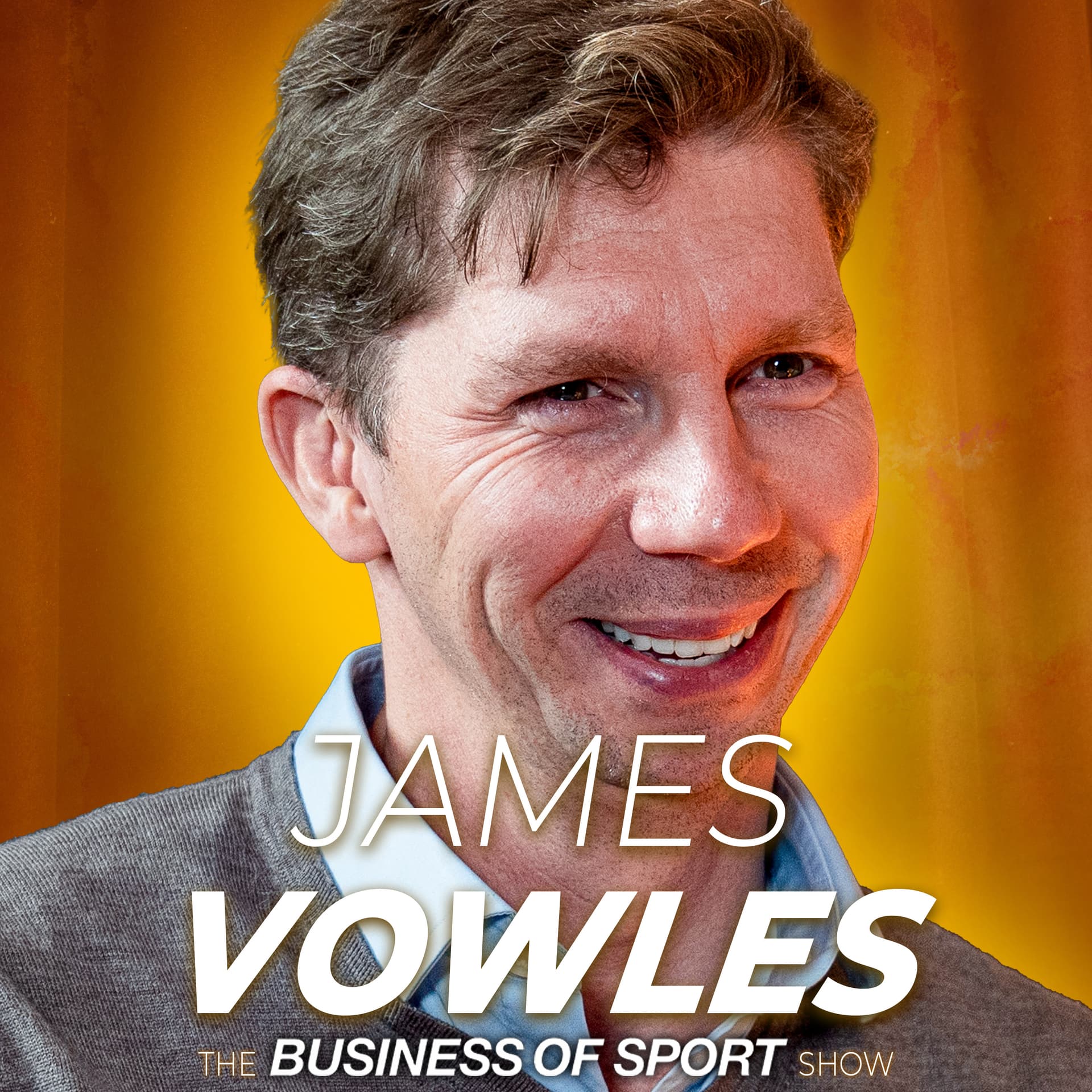
Episode Title: James Vowles, Williams Team Principal: ‘The Plan to make Williams F1 World Champions…Again’ Date: [Insert Release Date] Hosts: [Insert Host Names] Guest: James Vowles, Team Principal of Williams F1
Introduction In this episode of the Business of Sport, James Vowles discusses the strategies and mindset he is implementing to revive the Williams Formula 1 team. With a focus on building a winning culture amidst the challenges faced by the historically significant team, Vowles outlines his vision for the future.
---
Key Themes and Discussions
- Rebuilding Williams Through Culture
- James emphasized the importance of culture in sports organizations, stating it drives performance more than technology or processes.
- Key Points:
- Transitioning from survival mode to competitive performance.
- Instilling accountability and a long-term mindset within the team.
- Recognizing Williams as an "aged startup" that needs a fresh approach.
- Balancing Past Success with New Identity
- Vowles acknowledges the legacy of Williams while steering the team toward a new identity focused on collaboration and long-term growth.
- He discusses the shift from a survival mentality to a performance-driven culture.
- Long-Term Strategy for Success
- Williams aims to be competitive and profitable by 2028, focusing on sustainable growth over immediate results.
- Investment in infrastructure and technology is crucial, with a focus on performance rather than just financial results.
- The Role of Drivers in Performance
- Vowles discusses the unique qualities of drivers like Alex Albon and Carlos Sainz, highlighting how their mindset and performance can drive the team's success.
- He notes the importance of ego-free leadership and the significance of drivers as key sensors for car development.
- Business Realities in Formula 1
- Discussion of financial dynamics, including cost caps, sponsorship strategies, and revenue generation.
- Vowles emphasizes the need for authentic partnerships rather than superficial sponsorships.
- Future of Formula 1
- Vowles expresses thoughts on potential changes in race weekend formats, including two-day weekends to enhance unpredictability.
- He reflects on the evolution of F1's media consumption and the importance of adapting to engage younger audiences.
---
Key Takeaways
- Winning Culture: Building a culture of accountability and long-term thinking is essential for success in competitive sports.
- Investment Strategy: Long-term investments in people, processes, and technology are pivotal for Williams' revival.
- Driver Contributions: Recognizing the drivers as integral to both car performance and team morale aids in achieving competitive results.
- Business and Sport Intersection: The financial aspects of F1 require careful management to balance performance with profitability.
---
Conclusion James Vowles' vision for Williams F1 is one that intertwines historical legacy with modern competitive strategies. As he aims to rebuild the team, his focus on culture, collaboration, and sustainable growth offers insights into the complexities of running an F1 team. The episode provides a glimpse into the challenges and triumphs of leading one of motorsport's most storied teams.
Thank You Special thanks to James Vowles for sharing his insights and the hosts for guiding the discussion.
For more episodes, visit [Business of Sport's YouTube Channel](#).
---
Listen to the Episode
- [Link to the Episode](#)
Partners
- Stryde: Bringing sports investment opportunities to your door. Visit [gostryde.com](http://www.gostryde.com) to become part of the movement!
---
Written by AI. May contain mistakes. Listen to the episode to check what was said.
Transcript
Automatic transcript. May contain errors.0:00We're not fighting for a world championship, we're fighting for what was survival previously, now is strong results, maybe into a podium at some stage. For the first time with Williams, Carlos Sainz will stand on the podium. Vamos! Best podium in my career, guys. You cannot imagine how this tastes. Thank you so much. This is my first smooth operation. The secret sauce of Formula 1 isn't really a secret sauce. It's as simple as this. Performance drives everything. We only have two income sources. One's commercial revenue. One is from Formula 1 itself. And they both are based on, are you beating nine other teams?
0:31Simple as that. Culture is driven from values and behaviors. and the values that both Carlos and Alex have are exemplary. They're individuals where their ego doesn't take over. Williams is far bigger than me. I am just here to hold on to the shirt and put it into a better place. With Alex and Carlos, Williams is bigger than the two of them as well. Our job is to bring Williams back into winning ways. We've scored more points now to this point of the season. We did cumulatively between 2018 to 2024 because we weren't focused on this year. We were focused on long-term projects which are kicking in now, which are producing the performance that we have.
1:01I want to win with this team multiple world championships. We're not going to get there by slowly eking towards it. And I use the word to break everything for good reason. This isn't slightly scratching or slightly polishing what you've got. Throw it away and start again. But I'll give you the timeline to do it.
1:18Sometimes luck is on your side. And when we recorded this show the day before James flew out to Baku, we did not expect Williams to be up on the podium, delivering in real life what James was theoretically describing to us on the show. Podiums are, of course, part of the development plan, but not yet. However, on Sunday, Carlos Sainz delivered that first podium of the James Vowes era. When James came to see us at Business of Sport HQ last week, we talked through both what he has done to position the team for future success and what he still needs to do. In a sport that requires so many minds pulling together, utilising a vast array of talents, prospect of building what is popularly termed as winning culture could seem daunting.
1:56Where do you even start? For James, it was recognising that even in a sport of technology and science, people and culture are what makes you win. This weekend's result would place James ahead of where Williams should be. James has set expectations but don't get me wrong this result in Baku will have been celebrated in the halls of Grove because no matter how long term the strategy for success is these wins you pick up on the way are integral to showing the team that what they're doing is on the right path. And from James' perspective, though he'd never look at it like this that he's the man to deliver it for them.
2:30This is James Vowles on the business of Williams & F1 and a taste for you of what's to come. But first, some words from our valued partners. What if I told you that the same private equity deals that built sporting empires like Liverpool FC and the Golden State Warriors were now accessible to everyday investors? Well, meet Stride, the regulated digital platform that's democratising sports private equity. For the first time, both individuals and institutions can access exclusive opportunities in professional teams, leagues and the entire sports ecosystem that powers billions in global revenue. And here's why it matters.
3:07Sports investments have historically been completely locked away from ordinary investors. Stride changes that. Whether you're a passionate fan of football, Formula One or emerging sports markets, you can now align your investment portfolio with your sporting passion, all while diversifying beyond traditional assets. The sports industry isn't slowing down, it's accelerating. And now you don't need to be a billionaire to own a piece of it. If you're ready to step into the game, visit gostride.com. That's G-O-S-T-R-Y-D-E dot com and discover how sports private equity can work for your portfolio. Stride, exclusive but attainable.
3:48James, it is so great to have you here. Thank you so much for joining us today. Thank you for having me here. I think we've spent a huge amount of time just off microphone talking about how important people are into the business of teams. And something you've done since you've taken over at Williams is really try and build a culture that not just reflects what you want the team to be, but also that people want to be a part of. So I don't think there's any better place to start than ask why that's so important to you as you look to rebuild Williams into one of the Formula One's biggest teams. it's in my experience culture drives everything so i'll give you examples what i mean by that um there's a passion that drives through williams that was not my creation it was created when i joined and it's fantastic to see but it's a passion that meant that often people will be doing what they believe to be right but ultimately actually it's very short-termist it's fighting a fire that's in front of you today and didn't allow us to do any more than survive when i joined And the way you take yourself from survival to a business operation using proper process structure, systems, etc.
4:48Is you need something that drives that in such a strong way. A message that drives in such a strong way that even if you don't have my voice, it's now driven by others and accelerated by others as well at the same time. And everyone's experience is different. But mine is that culture is that heartbeat that drives it in a far more powerful way than anything else. If you put a process in place, humans actually quite like working around processes and against it. but if that process is created because our culture is we want to be the best in the world at doing x y and z and actually this is just a method to be able to get there that actually pushes people more towards it than further away from it and the second bit is this continuous drive that's what formula one is it's this continuous drive for every millisecond to be found and perfected and that's cultural that has to be it's not something you're born with that has to be driven by an organization and if you look around you and you're surrounded by a thousand peers all pushing in the same direction looking for the same hopefully not the same in a second otherwise we're going to go around in circles quite literally but um very each one's just pushing the boundaries of what they're doing that effectively creates a momentum that i can just sit there and watch with pride as it happens i find it really interesting because when you first think about formula one and you look at what makes the everything so successful as you said it's the marginal gains it's how quick the car is that's what everyone talks about at the start of each year.
6:05So when you highlight people as the most important thing that drives these teams, it actually shows the uniqueness, I guess, of this sport, combining those two things in such a seamless way. Yeah, exactly. I mean, no more so than this year describing really those marginal games. We had games, we had eight tenths separating 20 cars in Monza. We had 90 milliseconds separating five cars. I mean, it's a period of time that I love it. You really have to be on your game to doing it. But now the statement of every millisecond matters has really got significance and impact. And going back to people, so it's not machines or technology or systems.
6:42Those are created by people who have an understanding of what we need to hit as an end goal and working together. And the second bit of it is to win championships. And I've been fortunate to win a good number of them now. The key is all about a thousand people, all 1000 people pointing the right way and working together. No one's fighting each other in the team. And And to be clear on that, that means whether you're in HR, finance, communication, podcasts, engineering, design office, you two have a place. All of that has to be working together. Otherwise, you're simply fighting each other more than anything else.
7:15And that's what culture drives. How was it when you take the move from a team that you've just highlighted where you've been consistently winning and then you go to a team which hasn't been winning and you want to be bringing a huge amount of that, but you also don't want to be the person that walks in and goes, at Mercedes, we used to do it like this. How do you find the balance between bringing the best of an organization, but also finding your own way? I think I hopefully haven't many times said at Mercedes, simply because it's the first way to piss people off more than anything else. And I don't think everything was done perfectly in Mercedes either, for that matter.
7:48But there's some great things that I've learned, and I've tried to take everything I can from it. And there's some great things that existed in Williams beforehand. I described one of them. This passion is enormous. So you don't want to stunt that. You don't want to stop it from happening. You just want to surround it in process system structure, data, and a long-term plan that allows us to think more than next week, which is where we started. And here's how you do it more than anything else. You present a vision that people will sign up to. So there's no point presenting a vision of we're going to win 10 championships and it'll start next year because zero people around me will sign up to it.
8:21It has to be a realistic timeframe when we can fix things, a realistic assessment of what we need to get into the right place in order to achieve that. and what I call lieutenants. But effectively, each individual, I have five people below me who I trust and believe in everything that they're saying. They mirror my views and thoughts and they're completely aligned with our strategy, our goals and our culture. They employ five people that mirror exactly that at the same time. And all of a sudden, culture doesn't come from my word because it doesn't. It doesn't. All I can do is mimic the behaviors I want.
8:50Culture comes from bottom up from the team, seeing by example and being led by example how we want to be as an organization. So to your point, what we've really done is structure, where do we want to be? What's the North Star? What's the milestones along the way? And how are we going to get there with realistic expectation for everyone? There will always be disbelief. So one of the first disbeliefs was, well, we're not going to get the investment. And the investment turns up and it turns up and it turns up. And Dalton have been fantastic in absolutely doing everything that we have demonstrated that we need to do and have done along that journey.
9:22And that brings everyone along with you at the same time. And I understand why that was everyone's fears. For 20 years, Williams didn't have the investment it needed. So there's going to be an amount of concern that that's the first barrier you get through. When you get through that, the next one is, well, we can't achieve this because of X, Y, and Z, or this isn't in the right place. And it's really just forming a structure and system around it all that they are in control of that. That is their accountability and responsibility. I'm there by their side. You tell me what I can do to help you and we'll get you there.
9:48But it won't be a lack of finance. We're in the right place on that one now. So it's going to be more around the time it takes us to get ourselves into a good place. can i ask when was the culture the worst and what did you do to correct it on day one of walking in i was caught out by how far away we were from benchmark in williams and it's an interesting word worse it was different it wasn't a bad culture it was people doing what they thought was right there wasn't individuals wanting to fight the business but it was short-termist it was just survival. A good example of this is I need to take this wishbone and this wishbone needs to get to the track.
10:26It was going to skip four processes by doing it, but I'm going to get it to the track. And that was the individual wanting to do everything right in their mind for the business. But the reality behind it is that wasn't the urgent items to get sorted for the track. X, Y, and Z are far more important. So if that helps you, it wasn't what I would call a bad culture. People weren't trying to destroy the business, but it was misaligned with actually how you construct the business that's properly focusing on medium and long-term goals to give us out the survival into the skylight. Let's talk about those medium and long-term goals because you've spoken publicly about how you're positioning success in the team, 26, 27, 28, maybe being the years that you really want to see that development.
11:06And I find that really interesting because, yes, it lays out a brilliant plan and it also sets an expectation amongst the team. but we all know that sports are results driven business and a huge part of that particularly when you're motivating a team is you want results to keep the team motivated zero points every weekend doesn't necessarily do that you've made huge strides this year alone which is fantastic but the real question around it is to me how much of that business side of Williams how much of the development of you as a team do you actually attach to to winning the secret source of Formula One isn't really a secret source it's as simple as this performance drives everything commercial revenue is, we only have two income sources.
11:45One's commercial revenue. One is from Formula One itself. And that both are based on, are you beating nine other teams? Simple as that. So everything has to be driven towards performance first, fundamentally. So sort of aligning to that. I'm going a bit backwards and I'll go into your question. The next element of things is that we, as an organization, the only way to get there, and I've said this before, I'm not interested in finishing eighth, seventh, sixth, fifth. It means literally nothing to me because it doesn't mean anything to me. But in my experience, and the good news is this is translating, as long as we focus on these long-term goals, and they're really succinct long-term goals, wrap data around everything, have this process, have this structure, we're going to invest here, we're going to invest in these at the same time, we're going to let everything else go, the car will still be quicker as a result of what we're doing because that long-term investment will just pick up some low-hanging fruit on the way here.
12:36And the proof of the pudding is this car, the 25 car that we've got now, we've scored more points now to this point of the season. We did cumulatively between 2018, I think it was, to 2024. So we've just done more than six seasons put together in one season. Why? The answer is because we weren't focused on this year. We were focused on, when I first started in 23, long-term simulation projects and development projects which are kicking in now, which are producing the performance that we have. This car actually wasn't in the wind tunnel for very long at all. Our focus has been on 2026, 27 and 28 for exactly those long-term reasons.
13:12So to your point and going back to what's our North Star, our North Star is I want to win with this team. That's why I've joined multiple world championships. We're not going to get there by slowly eking towards it. And I use the words break everything for good reason just to reset everyone's mindset on this isn't slightly scratching or slightly polishing what you've got. Throw it away and start again. but i'll give you the timeline to do it how much is the car how much is the driver um if the drivers are listening it's all you now that we've done that and they'll probably switch off the podcast now uh they were watching tiktok it was a short time the attention span is like where here's the best way i describe it um between the best car to the worst car on the grid is properly i mean these days it's less than that it's probably half a second or seven tenths now used to be a second and the driver in my experience is about between the best to the worst about a second and that's full ballpark so call it 50 50 if you want but that's actually not a true analogy of it that's being disingenuous to drivers because what the drivers do is they are the most expensive but also the best sensor that we have in the car they are able to detect what's going on in a way that your data won't pick up and to explain what i mean by that a really good example is we had a fundamental problem in the car when I joined, which is you just simply couldn't get the car turned into a corner with combined load on it.
14:36So you have to really break in a straight line and turn it. And when you look at the data, it says, yeah, but I can't see any of these problems. You're like, nope, because the driver's automatically optimized around what is the fastest way around that corner. So they are the sensor that will tell you things that you can't measure in data, but are limiting to it. And the right driver will allow you to very quickly understand where you need to be finding performance in your car very quickly and drive the direction of your development. So 50-50 is a really nice answer to it. It's actually more biased towards drivers.
15:05What did working with Michael Schumacher, Nico Rosberg, Lewis Hamilton, you know, in those years when you're at Mercedes, what did that teach you about working with drivers now you're a team principal? First and foremost, all drivers are, so let's go to those world champions that you just spoke about. Driving the car is so natural to them that they're not using nearly any of their brain power for doing it. What they are thinking about, they're all slightly different, but pretty much all have this in common. What they're thinking about is, hmm, car in front just locked their front right going into turn three.
15:37That just tells me they're a little bit on the limits, probably not break balance. Keep an eye out on that again. Okay, they have an inherent weakness on traction out of five. That gives me an opportunity. If I put the car slightly offset into six, I might be able to change their line into seven, eight, which gives me an opportunity need to take into nine where's my battery level that's slightly low the wind where's that coming from okay we're gonna have a headwind on the one design as well that's gonna be a good time to use it in other words what i've just described to you is happening in about a second in their brain they're these optimizing machines that are able to figure out what's happening with the car ahead the car behind what's happening with strategy and talk to us at the same time about what's going on and that's the difference the driving is so natural to them that that's the easy part in the grand scheme of things the thing that's just extraordinary is the amount of time there in the car as well to do that for like the endurance mindset that you have to have that complex chain of thought for so long correct and that's the other bit when you see them fatigued when they get the car it is physical fatigue it's mental fatigue as well it's enormous and now now you understand that you can start watching the race the really clever ones are the ones that they'll change their line four or five times when they're following a car to see where it's best to put their nose and unload one of the tires or help the cooling system and they're continuously optimizing that.
16:46And you can tell where they're close to the limit because when we talk to them, they go, stop talking to me now. They're just about saturating that limit. But that's not the driving. That's everything else that they're pulling together. So that's number one. Number two, and this will apply, I think, to any sport, the absolute very best of the best. When they make a mistake, they can completely, I can't even say the word, compartmentalize it effectively. So they can put that in a box and go, I know what that was. They're not going to try and make it up in the next two corners. That's gone. But I know what I have to do for the remainder of the lap to correct for that.
17:18It could have been me making a mistake or other factors. I'm going to correct for that. And if you look at tennis or sport or anything, it's the really strong candidates, the winning candidates, the ones that were able to do that. A bad shot is a bad shot. I'm not going to overcorrect for it going forward. It's the Roger Federer speech, wasn't it? Yeah, very similar to it. In fact, his speech resonated in that regard. But that's what these elite athletes are at the highest level. So then when you're working with Carlos Sainz and Alex Albon now, what are the biggest things that you're looking to bring to them to help them reach the potential in the Williams car?
17:47So if we start with Alex, when I met, I've known Alex since 2016. He was with me at Mercedes, then went on to Red Bull, but I've known him since he was much younger. Him and Lando and George all grew up together, which is quite a nice little story. You can see them have had a call huddling together as well. And what I knew of him at the time, fiercely quick, lacked some confidence in himself, didn't understand how good he really was, I think at times. And when I met him in 2023, he was uh he lacked belief in where he was i think he'd had a hard time pretty much going through the red bull system he had and and one year and williams hadn't necessarily helped him and my job in all of that is to create a shield around him let him know he is bloody good he is one of the top drivers in the sport i'll be by him side and give him a pedestal that allows him to grow as a result of it and you know he has the inherent skill but what i've done as a result of things i hope is really grow him as an individual where he has the confidence to to give his all every single weekend, which is what you're seeing this year.
18:44And to be clear on this, they do the hard work. Mine is just really light, guiding buffers on the outside to make sure that they're good. Same when they have a down weekend. They will have a down weekend. My job is to make sure they don't spiral out of control. They're here. They understand how to, again, put it in a pox. It's done. It's gone. Here's how we move forward together at the same time. And with Carlos, it's exactly the same, except he's very good at doing it. He's pissed at himself or the team on monday afterwards and so he should be by tuesday he's calling and trying to understand how do we find this performance this this and this we need to talk this out this is what i'm going to do to change myself and mine is to be a sanding board and here to effectively execute the items that simply make sense for all of us as a result of it um so it's an easy job with these two it was it was kind of hollywoodified if you want to call it that if that's even a word you know in the last he's trying to survive but you know why aside from him being a name and aside from him being the last Ferrari driver to win the Grand Prix and the success that he had the year you managed to get him.
19:41On everything that you've talked about around what you want to achieve, why was he such an important part of that? So I've spoken about culture. Culture is driven from values and behaviours and the values that both Carlos and Alex have are exemplary. They're individuals where their ego doesn't take over. Williams is far bigger than me. I am just here to hold on to the shirt and put it into a better place then hand it to someone else. With Alex and Carlos, Williams is bigger than the two of them as well. Our job between all of us is to bring Williams back into winning ways. And that absolutely is their belief system and where they're born.
20:12They will perform at their very highest level. They will give us everything that they can. And if that's a win, they'll give it to us. But it's about understanding that everything is bigger than us in the world. We're just a part of that journey. And so that was part of the reason with the two of them as well at the same time. The second is, if there's any fighting between your two drivers, you're going to slow yourself down as a team. We have to rebuild everything and I need their help to do so. and the third is they're both leaders they're young but they're both leaders they think they're older now but they're not they're still they're still young compared to me certainly um and what i need is individuals that can stand up in front of the team where 40 words can drive the team forward for a year and they can both do that formula one the thing i find the most interesting about it is that you're a team sport at everything but actually it's driven by individual results those two drivers you mentioned if they're not working together it's harder for the team do you feel now we're in an environment where drivers are more consistently behaving like they are a team whether in the past we did see a little bit more friction in cars i i would definitely say there's elements of the past where you had that friction but it wasn't that long ago where there was friction between frankly nico and lewis for that matter um i think we have to acknowledge one thing i have it easy at the moment we're not fighting for a world championship we're fighting for what was survival previously now what we're fighting for is strong results and maybe into a podium at some stage.
21:34It does get different when you're fighting for wins, but if you create the right construct beforehand, you can do that in a fair and exemplary format, which is a lot of what I learned at Mercedes as well for transparency. So I think that's one difference. So there's a little bit more friction, for example, in McLaren, not as much as in the olden days, I agree. I think the second part now is in the olden days, you could win, you'd have a car second and a half faster than anyone. That doesn't exist anymore now. We are fighting in tenths of milliseconds. So if you You give anything away and you do by fighting each other.
22:01And the extremes that I remember is data was hidden from one side of the garage, for example, or you'd hide things in what you were doing. If you're working that way, you're going to be overtaken. I remember Nico said in the 80 gram change in paint on his helmet. It was something that he did to get that extra edge. But it's continuously, and it wasn't just there. You find it in every single area of it. So with Nico, ways of working with the engineer, how late you can push your engineers working, what you can scrab out of this, how you can get things slightly more biased towards the team being better.
22:31It is into the micro details, but you need everyone doing it. You keep on saying your job's easy, like, oh, I don't have the hard part. Your job as a CEO is resource allocation in a lot of ways. When you look at the balance between performance and investment, if I gave you unlimited budget, would you be on a podium this year? No, no, for two reasons. And so first and foremost, we have a cost cap. So I'll do a theoretical question without it in a second, but we have a cost cap. One of the best things we did the sport. This was not a business when I joined 25 years ago. To the extent actually with the HRMC came in and said, someone must be making this after 18 years of not making money.
23:13They came in and said, someone must be making money out of this. You're like, nope, welcome to Formula One. We just spend money. Give us more. The best examples in the history that I lived through was Toyota had more money than anyone else didn't win. Because money doesn't translate to that fundamentally. It's about efficient spend more than anything else. And everything I've just described is normal business practice. And to give you an idea, it's not that we're geniuses, but the wind tunnel. The wind tunnel used to be completely free. You could run it as much as you wanted to fundamentally. So we did used to have a freedom where you could have multiple wind tunnels.
23:48Part of the reason why Braun was successful in 2009 is it was developed in three wind tunnels all over the world before that. It got restricted to one-to-one tunnel, but unlimited, as much as you want to run the one-to-one tunnel. Then we added a rule in that was an ATR rule, as it was called, where you restricting the amount of time that that fan can be spinning for, i.e. restricting the amount of time you can use the wind tunnel for. Our development rate went up when the rule was introduced, not down. The reason why is we actually took time to think about every test that we were doing because it was limited rather than just unlimited testing.
24:19Sound familiar? But that's exactly to your point. Even if we didn't have the cost cap, unlimited money will not gain you where you need to go. You need to actually make sure you restrict yourself down in the right way to use your resources efficiently. Where would you like to spend today where you're not spending? I think we're spending pretty much in every area I want to. It's just time. So for example, building works, they take three, four years before you can have them in the right place. The investment in our simulator that started when I joined in 2023. It's an investment of over 10 million pounds, but it's not online yet because they don't exist.
24:52We have to build it from scratch. There's not exactly a Costco where you can go in and put your trolley out and get them sorted. Same with some of the machines we have. They are very specialist machines that take 24 to 36 months. And there's no amount of money that will suddenly get you that faster. Where I want to invest in, and part of it's me as well, I've slowed it down a bit just to make sure that what we invest in is right for not today but where we're going to be in five years and 10 years as a business which is a little bit more thought into it just like on that asset pricing given the inflation of asset prices that we've seen over the last five to seven years in the sport does it matter if your numbers in the interim are not great who cares if you lose 20 million 30 million 20 million 30 million a year if i'm your holder and i'm seeing asset prices go up like they are i'm here for the sale for three billion dollars i don't give a crap if we're losing 20 million dollars a year here and there so i go back to this my investors are not here for the ev for the sale price they're here to win and so what is and not win once but win across a longer duration and period of time so that 20 million it's not it's not the 20 million that's a worry it is have we directionally gone slightly the wrong direction and we have to undo it because that will slow you down when you start winning in the future.
26:11So it's making sure that when you fire your gun, it is exactly in the right direction. And then we'll invest whatever we need to be investing on the journey. The number never even comes into it in that circumstance. It's about the right return that you're getting. And that's a different way of approaching it to what you just described. There is a way of, yep, you can bump up your EV. Then what? It's high at the moment. Will it be high in two years' time? Potentially, maybe, not sure. But if you're winning, it will remain high so it's about not just pumping that up as an asset price as you said you can get down the short term but doing the right element that gives you the five-year return and 10-year return to performance driven to what extent do you think winning will remain high in terms of ev is true anymore in a world where externalities drive so much of asset values when you look at drive to survive and what it's done to the we're really creating words like the circus if iing of formula one where Miami now is Bezos coming, DiCaprio coming, and it's an event in a way that it never was before.
27:14And that drives prices. What drives it? You spoke about history before. I never got into it. Heritage. We have heritage that still puts us top three in the sport. That's definitely a part of it without question. Then there's current success. There is no doubt about it that Mercedes and McLaren have higher values than we do. And McLaren didn't approximately three years ago. that's performance based more than anything else three years ago we they were almost four years ago in in quite significant financial trouble actually as a result of things why are they where they are today they still got great heritage but they're a winning entity and and recently just carved off a shareholding at a lovely little number that sort of gives you a value as to where they are um so you're right do we all i think the question you're asking is are all ships rising Yes, definitely.
Read the full transcript
28:01And so you've got two methods now. You can do a very low amount of investment to an amount to pump it up. But I go back to why am I doing this? And why are my investors doing this? We're here to win. Simple as that. So in other words, forget that side of things. What do we need to invest to win? They're not intending on selling it. So it only helps you on the asset pricing if you're thinking of selling at the back end. What do we need to do to win? So can I ask then, let's say most recent accounts and corrected if it's wrong, it's public, you know, what was available. but if the most recent ones are a loss of around 80 million are you looking at this being the more one-off spend that then reduces because the major part of that investment has now happened and over the coming years what we're looking to do then is get that back through as you've said a return on performance we so first of all my goal is to make this company profitable um by 28 or so so it sort of answers your question that number it won't go down immediately because the amount of investment we're doing is enormous, but it will trend downwards 27, 28.
29:01I'm confident of that. And here's what used to scare people, certainly in Formula One, is when you talk about effectively we want to be profitable, without the cost cap, that meant we're going to take resources away from engineering on the car. We're not doing that. The cost cap, every penny we can spend on making this car quick, we'll spend on making this car quick. But performance should drive commercial revenue and will drive former revenue at the same time, which gives you the profitability, which you can already seen the top tier teams that exists in the McLarens and the Mercedes, they're profitable now today.
29:31Mercedes haven't won a tremendous amount over the last year, but have a huge amount of accolade from 2014 all the way through to 2021, which obviously gives them that strength. The, either way though, um, in terms of me and those numbers, they're high. There's no doubt about it and this is going to be the weirdest thing i say but we're a 50 year old startup the way you get going again is fundamentally put quite a significant investment over a period of about three four years to get us back into a position where we can start fighting the front and then it's self-generating it should be actually as a technology investor i think you see that in the best incumbents who are willing to reinvent whether that's an sap or whether that's an oracle where they actually go through this same trough of bluntly investment which looks negative on balance sheets but it's so required to gain elevation that comes on the other side of it and that's actually the the core sign of the best incumbents you've nailed it and i completely agree with it what happens is if you get um complacent you'll let others change over there are challenger brands out there the whole time that are willing to do more than you are as a result of it and you've nailed it you have to treat it almost as a startup investment it's painful but that's your next rise that you get out the back end of it so let's look at then what's come in the top of the funnel and how you've been developing revenue streams right and the generation opportunities you have you got Atlassian now on board as a title sponsor you mentioned beforehand that there was competition for that we're in a really strong position commercially how have you managed to do that and how's it looking for the future I think the first strength is we have a huge strength in our commercial team Peter Kenyon as you know is a part of it and he's a force to be reckoned with but the next part is this we these are not made up values they are just me as I talk to you now this is just me.
31:16We are authentic, we are transparent, we are clear in what our journey is, but we're devilishly competitive. And any partner that comes on board, not sponsor, is not there to have a sticker on the car. That is not of interest to the team. They are there to be a part of our journey and partner with us. In the case of Atlassian, it made complete sense. Theirs is really about bringing teams together. It's about effectively better ways of working. And what I've described now is how do you get the most out of it? It's exactly that. All thousand people pointing the right way. When we joined, we spoke about it publicly, but we were using an Excel spreadsheet to really hold on to a number of parts.
31:50And one individual who worked tirelessly knew what the 100 ,000 line items were. I wish this was not true, but it is. We don't use that today. We have some benchmark systems in place for ERP, PLM, et cetera. But what's missing is how do we actually bring that information together and use it in the right way? And the facts are, any business, I'm not talking about Formula One, any business the data is growing in my experience pretty much exponentially no human beings can keep up with it anymore so you need the right systems and structure behind it and atlassian has that written all over it so it was a match made in heaven and when when i met mike we spent quite a bit of time talking about it we gelled instantly because you could see 20 or 30 different areas where immediately we can make a difference together which partner do you not have that you'd most like to have that is a good question so um very much interested in bringing someone on like amazon so definitely if you think data if you think aws you think the direction of travel on it i can see a really good way of that all working would you do a behind the scenes at williams like amazon prime doing a documentary taking you inside williams's factory working as the secrets your mindset your communications with the drivers yes because fundamentally it's juicy and what we're doing we're doing it ourselves just to make sure people understand what goes on because when we spoke about it here even offline it's a thousand people building two racing cars it's really hard to get your head around very quickly just how many people i'm just always interested by people's purest mind and how they think about the mediafication of a real craft and the art of racing with uh that shove cameras in drivers faces this is about amazon prime getting williams brand not trending on social and how to balance the two yeah i'm with you so what i think would be a really interesting documentary is not even necessarily the um we're going to go follow through composites metallics it's more they can come in um let's say a day every single month for the next two and a half years and track what is the rebuild of a monster into an entity that's winning again.
33:59Now, it takes a while for that to come out, but I think that would be really interesting. Almost think of it like a fly on a wall, just observing the change that happens every day. I make notes myself on everything we're doing differently, what was wrong and how we did most differently. It's quite a large, I'm not sure what to do with it yet. It's not for a book. It's just, I'm doing it for myself. And it's huge. I mean, the changes we are doing month on month are extraordinary and enormous. And to have a fly on the wall, I wish someone was there observing it by my side. And if we're putting that then back into sponsorship and increasing the value of Williams as a proposition, are you in continual competition with the same group of sponsors with the other teams to try and get them to buy into your story, not McLaren's?
34:37So I would say not just the other teams. Think about sport franchises, your words, not mine, but go to the top 30 sport franchises in the world. I think that's actually our competitors in this regard. The nine other teams without doubt are to some extent, but they all have their journey, their plan, their reflection, which doesn't work with everyone. Ours is quite clear. Honesty, transparency. We are who we are. We're going to talk about it openly. We're not going to upsell it. This is the journey we're on, but we're a challenger brand. And actually that attracts others that have a very similar way of approaching or thinking about this.
35:11But the competition is wider than what you've said. And I like it because frankly, it should be as well. we talked about you know two core revenue streams if you're talking centralized revenue f1 revenue and sponsorship are there any things that you think could be brought into formula one now with this massive expansion and development of the sport it's not quite answering your question but it will open up a whole series for us to talk about i don't think anyone in the world understands whether we need linear viewing or whether we need um ott or digital or the next the younger generations they don't watch tv screens everything's on a portable device but we're not really catering for that.
35:45If you think about Formula One, it's a linear stream for two hours on a fixed platform. So it works. Don't get me wrong. We have success week on week. Is that the way forward for the next five, 10 years? I'm unsure about that. And you can see more and more being digested through social media, short clips, et cetera. Do you think it's a good sport for short clips? No. No. I don't either. Not at all, which is the interesting talk about it. There was something interesting that was put out by Formula One the other day, which was, should we make races shorter as a result of things or more sprint races?
36:19And now, again, I'm on the older side, but I would say generally, no, I think the product is what it is. In fact, what makes the product really good, take Zandvoort. No one predicted that it was going to be, I mean, Alex put it the best. He said, I just watched everyone around me crash. It was just unpredictable what happened from start to finish, but you have to watch all an hour and 40 of it to get the final result out of it. this year with the closeness to the grid we're seeing a lot more mixing up than that which is again i go back to actually that's a good thing for the sport not a bad thing but to a certain extent i mean the monaco this year you could treat it as spectacle if you want but pretty much we finished where we qualified except we play games on track at the same time um uh i my opinion is not not necessarily how i want to go racing but the viewership is more which dominates it but my point more to you is it doesn't necessarily have to be shorter but is the consumption of it moving away from fixed TV and therefore we have to think differently about how we broadcast.
37:13How should one do it then if it were up to I agree like no one has the answer so if it were in your hands what would you do? I would move more in the direction you're talking about which is Apple Prime etc in other words abilities to go to a platform that is available worldwide and more in a streaming format in that way and I would find a way of concatenating it to a shortened version should you wish to that then expands into the longer version if you need as well what about third option and put it to you we talk about it in football i'm well not i can believe it but i'd love premier leads to it in the next right cycle f1 flicks you own all your content your ip you create the products you have the distribution platform you have the subscriptions you own that customer the consumer experience on that not only do you have all of the live race weekends that go on throughout the year you have a library of content that is just perfectly curated for that fan but most importantly you have the model within in f1 now yes the production is on you it's much more complex than i've just made it sound but when you're talking about the evolution of this do you think that is something that over the next maybe 10 to 15 years we start to see happening more yeah so 15 i could buy into and and you here's where formula one's different so the production's already done by formula one itself they actually they bring the cameras they do everything else so a step ahead in that regard um but our revenue streams full start i talked about prize money a large amount of that is through broadcasts that's broadcasters that pay for it so we have to think very carefully about how we monetize this in the right way that we are not getting a massive loss same in premier league for what it's worth as well the monetization comes from sky or other broadcasters paying you're just going to make sure that you can get the customer base in the right place what's interesting about that you should take control um will you monetize it for much more that's that's the question that i mean it's an interesting question you're posing needs someone far more intelligent than i am to go through it and you're going to have to go through a trough of disillusionment because you are going to have to go through that to get to the other side i think so but it's just the right cycles you know if you're looking at it it takes a bold ass person to do it it does but you do it you do it in accordance with your existing right cycle my point is any business that really relies on media rights particularly right now whether it's an investment or whether it's just a hobby you're looking at it with concern so here's where it's different for formula one i think relative to premier league although i don't know their full right structure off the top of my head are our broadcasters are on completely different contracts all over the world on different timings so for example usa is up now but sky uk is not until for another three years so aligning them is actually going to be a little bit more tricky than that in terms of bringing it all together and exactly to your point there's going to be a dip and it's making sure someone financially molds this out enough to make sure you're not damaging the sport beyond repair in that regard that is tough in terms of races there's a lot of discontent in a lot of other sports especially football but we have too much now that we are shaping the events to fit the media in some respects i don't i don't think we have too many races but i would not go above where we are at the moment because we're asking people at home to be there for half a year half your weekends are watching formula one i i think that's about the extreme end of where you can go to i would change it this is um very much my opinion i'll put that out there i would change to two day weekends i would do saturday and sunday and here's the reason why.
40:21We can do more at that point in time. I know I just said 24 is the maximum, but I actually wouldn't be concerned about the fact because we've given back Friday, which is one day, do that 24 times, that's 24 days a year. If you added another two race weekends in, you'd still be net in the same amount of time that you were previously. And I think we can commercialize it in a different way. But more than that, I think the product will be better because we do a lot of practice at the moment. And it's good. As an engineer at heart, I love the fact that we get to do experimentation. But now if you force us, you've got one hour before qualifying and that's it that's quite a different proposition and where we're going and so i think you'll get more variability more randomness that comes out of it it's interesting because i would say like fp1 fp2 all those chances for you to go and get the driver in the car test it give your pit team the chance to practice for the weekend i would have thought that would have been an absolutely integral part of your race weekend i and what i'm suggesting is let's add variability and move on from it and um i'm thinking of the sport not as us as engineers our drivers want every minute in the car our engineers won't want every minute in the car but is the sport better if one of the take a mclaren qualifies 15th because frankly it got it wrong because you will do and you get more variability in the grid someone asked me this amazing question the other day they said what would you do if you weren't scared what would you do if you weren't scared i'd argue i've already done it i went from a comfortable position in a great company to somewhere where we were last that was it Williams has always just been recognized for the last 10 years a bit more as the team that is last on the grid when I called home to explain it there was a disbelief I'm perhaps different to you I love the feeling of being completely out of my comfort zone and wanting to push myself more and more every day because I become a better person as a result of it generally speaking I learned something I have to be learning something new every day I get bored senseless if I'm doing the same thing over and over again.
42:17I can't be tuning the last little detail. I have to be digging in deep and really working through the crux of it. And then I feel rewarded in a way that nothing else can reward me. So I think I've already done that to a certain extent. The next step of it, who knows? I'm not bored at the moment. I'll take that. Are you too comfortable if you don't have a next thing you're scared of? This is why I was reflecting on it. I mean, the things that... what i'm doing at the moment will be completely clear on if you look around at my peers you don't succeed you'll be fired tomorrow that's it simple as that and that will bring a trepidation but it doesn't cause me worry as long as i feel that every day i'm doing everything i can in my power to achieve that if i'm not successful then i've hit my boundary and my limit so if you want fear there's a fear that this this can end pretty quickly so kind of sort of developing that then You said you did that jump.
43:10First day, you get the job, team principal. What was the thing that you were scared of most nervous about, taking that top job in an organization? The biggest element is it's, whilst I was fortunate at Mercedes to do a large interaction with most of the departments who need to be, this is the first time I've run a company of 1 ,000 people. At the time, it wasn't 700 people. More than that, and I didn't realize this before I joined, it was really a bankrupt organization. Nothing was left. You have to dig down and start again. And I think, and I already said it to the investors, you would have been better off taking an M &A expert rather than me, at least in that initial two years, because this is not my field of expertise.
43:48I'm really good at finding performance at the top end. This is reconstructing everything from the ground up and scratch. And I'm mightily impressed, and I owe them a large amount for this. Instead, they stood by my side and said, nope, these are skills you're going to grow and will be there to help you along the way. And you're going to screw some things up, but it's okay. and I've grown a huge amount as a human being as a result of it. I'm not saying I'm the best out there at doing it, but I've learned a tremendous amount now. So again, I go back to, I like the things that make me fearful because the reward on the backside of it, as long as you're successful, is just mighty.
44:23Do you think there's been a shift from what I would call a more like business development, front-facing team principal to the team principals that have a really deep technical engineering background? There has. I would say there's a place for both. I don't think it matters whether you have an engineering background or whether you have a company running CEO background, but I'll explain what I mean by that. The CEO structure, the one that's really good at organizing finance, HR, understands business, you need a technical expert by your side that is absolutely driving you forwards. The converse is the engineering discipline individuals, you need someone by your side that completely understands running an organization to make sure you're not weakened in the areas where you are poor and you grow.
45:05And as long as you have that, I think either solution is absolutely fine. It's moving more towards the engineering side because what we're noticing and realizing is as we get into the finer details, and 700, 800 people out of 1 ,000 are effectively the technical side, it makes more sense because you gel with a larger part of the organization. But I truly believe Toto is not an engineer, but he runs the company incredibly well. But by his side, he has James, who is just very knowledgeable and a senior leadership team that take them there too. Obviously, you're the best team principal. But if you were to choose one that's better than you, who's better than you?
45:41So I don't think I'm the best. I can't be the best. I've won zero races as a team principal and zero championships. Here's how I view things. Toto, because he took us through, he really had a very good ability to listen to the senior leadership and where we need to be and taught me a huge amount, certainly on managing drivers. I love your humility. Jokes aside, it's refreshing. it's i mean again i go back to this is just me don't get me wrong i'm fiercely competitive i want to be successful but i'm not today by this when you say you like you've seen lots of things change and you like the new tests and challenges each day has the mediafication of the sport and we can say that you know since you've you've now become a profile it's not just the drivers it's not the people that are at the front facing now it's the teams behind it has that changed you at all and i mean that in a good way has that changed you and how you operate i don't think so um it's i didn't come here for the the celebrity side of things i came here because i love the challenge and love the role i love the sport it's the only sport it's the only job i've ever known really in the grand scheme of things it's really good for williams it's really good for the sport to have this side of things netflix frankly has been an absolute turning point and the f1 film is just a continuation of that it's not a real celebrity status you um i can if i wasn't doing this role tomorrow in time, that would fade and someone would take my place.
47:02And I think the world would be all the better in time for it as a result of things. And so that's different to celebrity status that comes otherwise. It hasn't changed me. It hasn't changed what I do as a result of things. You get more recognized in the street or otherwise, but actually all the interactions I've had, maybe this will change. They're just people that are just happy that we're on a good pathway back forward again so it's not um uh people criticizing the direction of travel it's people in support of where we're going right we're going to do a quick fire round so we're going to say a short statement you're going to give us your immediate thoughts okay monaco dilemma how do you fix it i think uh so what they do in karting this is not a short answer but i'll make it sure as i can what they do in karting that stopped around there is you had a shortcut that you can do it once um this is karting not cars but what george did to alex where basically you shortcutted the chicane pretty safe led them ahead of it you get one of those a race that's what i would do 2026 car changes what's the biggest transformation of that completely different philosophy about how you're getting lap time out of a car um driven by the power unit who is the single most talented driver you've worked with so i i think i said this before like us human beings all three of us are completely different that doesn't mean any three of us are any less successful than the previous one.
48:20And that's why it's hard to answer the question. So I'll give you the bits of it. Lewis had the most natural talent out of everyone. But the way Michael knew everyone's name in the team, how he got everyone together, how he drew the team forward is a unique asset and skill that he held. And it's why you can't really put things into a particular box. Alex has the ability to, he doesn't need someone pushing him along i haven't seen this he's able to find the performance in himself in the car and that's why when perhaps the teammates weren't at the right level he was still able to drive forward humans naturally are a little bit lazy so they go to i'll just beat you by a millisecond and he never did that and i understand now more how he works in his personality so they're all different individuals but as i said on natural talent louis just um really extraordinary just pool of talent in him it's an obsessive question that people seem to not be able to get off their their mind but number one driver should you have one i i firmly believe not and um that's not what we instated in mercedes we we created and here's the reason why you go back to it's a team sport and as long as you create the right construct that allows both of them to win a race fairly and squarely as a sportsman and as a hero they'll be okay in that circumstance when you have a number one it means you're more focused on the driver's championship than the constructors that does not of interest to me i'm interested in both and a fair construct around it what is your favorite location and which race would you happily see not on the calendar so the the jesus you're the controversial one um okay it took you this long gosh we got a quick one
50:01it's mainly actually your brother hasn't let you ask many questions i've seen how he's doing it's very clever since you open his mouth we've done a hundred of these now you're gonna watch this and there's gonna be no me i swear that was another one of these guys um uh so location would be i love anytime we're in a city center that changes for us so melbourne uh austin is really good for it as well montreal's really good for it you feel incredible because the whole city shuts down quite literally for you at that point and melbourne probably topping all those uh I mean, Christ, we're in an airplane for about 26 hours to get there, and it's worth it when you're there.
50:41The one I struggle with is, I mean, we don't really have the... In the olden days, I would have said a Sochi or otherwise, or Korea. That was just not on my list of things to do. Here's where I'm in the dilemma. I really struggle with Japan because I don't sleep very well there, but I love the circuit. If we can move that circuit to somewhere in Europe, I think that'd be top-notch. but I struggle with the transport to Japan. Do you fly commercial? Do you fly? Mixture. So it depends, pretty much all commercial but there will be some short hops into Europe especially if we can combine it with engineers and drivers that we'll do in a private plane.
51:20Final one from me. What would you most like to change in yourself as CEO? I catch myself every now and again. So I really believe in empowerment, coaching and let people fail. Every now and again, I catch myself getting far too far into the detail and I really have to make sure that's buttoned up and controlled. And final one from me, 11th team. How do you feel about it? The bits I said publicly on it were, we're not, you spoke about our loss. You know what our losses are. Let's get to the point where this sport is survivable where you have 10 teams making at least break-even. I'm not talking profit, just break-even.
51:54And that was my ask. I think it's a bit early to bring them in. I think Cadillac though on the Converse is a strong brand and a good brand to bring in as a result. they're going to struggle though that's my belief of it it is hard now in modern day formula one to be competitive so um my main ask is i think 11 teams is absolutely fine we just need to make sure we have a business model that 11 teams can financially survive and finish it on a really positive note right around williams and what you're looking to achieve we've spoken about you know 28 but realistically what most excites you about being part of the team um leaving a legacy behind that has my DNA, my fingerprint left on the team that I think is the most iconic in the sport.
52:36James, thank you so much for being so open, so willing to engage in such a fun way. Honestly, it's so awesome to do, so thank you so much. Well, thanks to the both of you. You make it relaxed and easy, so well done. Williams are back. Well, if not fully back, they're definitely on their way. This weekend's result only reinforced that the amazing work going on behind the scenes is beginning to reap the rewards. James' point is that it doesn't take podiums to highlight progress. This is something the whole organisation is working towards, regardless of results. But markers like this along the way will help inspire the team to believe that victory is not far from becoming reality.
53:13A huge thank you, of course, to James for joining us mid-season. This story is one that we'll be watching with even more interest than before. Having had Claire Williams and Peter Kenyon on before, having had Claire Williams and Peter Kenyon on previously, the ties were already strong. It's another F1 episode down. I hope you enjoyed the show. Now, if you want to see more from today's show, you can go to YouTube and type in business of sport. But before we leave you, some words from our valued partners. What if I told you that the same private equity deals that built sporting empires like Liverpool FC and the Golden State Warriors were now accessible to everyday investors?
53:50Well, meet Stride, the regulated a digital platform that's democratising sports private equity. For the first time, both individuals and institutions can access exclusive opportunities in professional teams, leagues and the entire sports ecosystem that powers billions in global revenue. And here's why it matters. Sports investments have historically been completely locked away from ordinary investors. Stride changes that. Whether you're a passionate fan of football, Formula One or emerging sports markets, you can now align your investment portfolio with your sporting passion, all while diversifying beyond traditional assets.
54:28The sports industry isn't slowing down, it's accelerating. And now you don't need to be a billionaire to own a piece of it. If you're ready to step into the game, visit gostride.com. That's G-O-S-T-R-Y-D-E dot com and discover how sports private equity can work for your portfolio. Stride, exclusive but attainable.
From the publisher
When we recorded this show the day before James flew out to Baku, we did not expect Williams to be up on the podium delivering in real life what James was theoretically describing to us on the show. Podiums are of course part of the development plan, but not yet.
When James came to see us at Business of Sport HQ last week, we talked through both what he has done to position the team for future success, and what he still needs to do. In a sport that requires so many minds pulling together, utilising a vast array of talents, the prospect of building what is popularly termed as ‘winning culture’ could seem daunting; where do you even start? For James, it was recognising that even in a sport of technology and science, people and culture are what makes you win.
This weekend’s result would place Williams ahead of where James has set expectations. But don’t get me wrong, this result in Baku will have been celebrated in the halls of Grove, because no matter how long term the strategy for success is, these wins you pick up on the way are integral to showing the team that what they’re doing is on the right path, and from James’ perspective (though he’d never look at it like this) that he’s the man to deliver for them. This is James Vowles on the business of Williams and F1…and a taste of what’s to come.
Timestamps:
00:00 Intro
03:54 Rebuilding Williams Through Culture
07:18 Balancing Past Success with a New Identity
10:54 Williams’ Long-Term Plan for Success
17:31 What Vowles Brings to Sainz & Albon
22:35 Can Money Alone Deliver F1 Success?
25:22 Does Losing Money Matter in F1 Ownership?
28:23 Turning Heavy Investment Into Performance
30:45 Williams’ New Revenue Streams
34:25 How Teams Compete for the Same Sponsors
37:37 Will Formula 1 Control Its Own Platform
41:30 Overcoming Challenges as a New Team Principal
46:10 The Mediafication of F1 Leadership
47:30 Quick-Fire Round
In Today's Episode We Discuss:
1. Rebuilding Williams from the Ground Up:
Why James left the comfort of Mercedes to take on the challenge of reviving one of Formula One’s most historic but struggling teams.
How he discovered Williams was “a bankrupt organisation” on arrival and why he likens it to running a 50-year-old startup.
The long-term plan to make Williams both competitive and profitable again by 2028, balancing heavy investment with financial discipline
How James is instilling accountability, long-term thinking, and a “break everything” mindset to push the team beyond survival.
2. The Culture of Performance:
The importance of ego-free leadership from drivers like Alex Albon and Carlos Sainz in shaping a winning environment
The real split between car and driver performance and why drivers remain the best “sensors” for development.
What James learned from working with Schumacher, Rosberg, and Hamilton, and how those lessons are applied to Albon and Sainz today.
Why humility, confidence, and resilience separate the very best drivers from the rest
3. The Business of F1:
The realities of cost caps, sponsorship, and commercial growth in modern F1.
Why Williams’ sponsorship strategy is about authentic partnerships, not stickers on a car and how deals like Atlassian reflect the team’s values.
James’ candid view on asset values, media rights, and how F1 must evolve its broadcasting model to engage younger fans
4. The Future of the Sport:
Why two-day race weekends could be the future, and how unpredictability makes F1 compelling.
His view on an 11th team, the balance of tradition versus innovation, and how Netflix and Drive to Survive changed the sport’s global appeal.
What excites him most about the years ahead: leaving a lasting legacy at Williams and returning the team to the front of the grid.
A huge thank you to our amazing partners on the show:
Stryde
Bringing sports investment opportunities to your door. Visit www.gostryde.com to become part of the movement!