In short
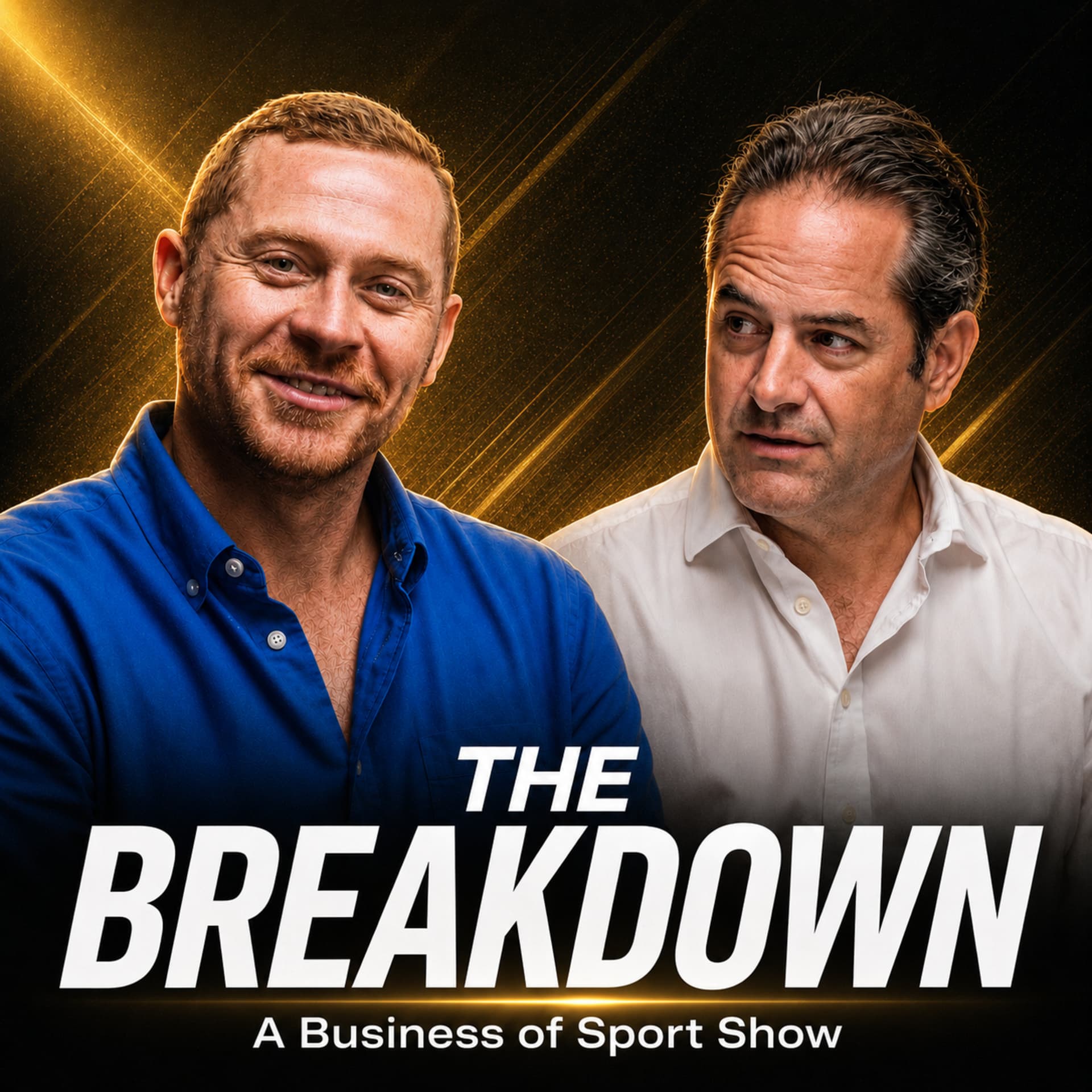
Podcast Episode Summary: Thomas Hal Robson-Kanu: ‘How to Run a Business & Play in the Premier League' (Ep76)
Podcast Overview Podcast Title: Business of Sport Podcast Description: A show that takes listeners behind the scenes with the industry's biggest owners, operators, and athletes, exploring the unseen aspects of the sports world.
Episode Highlights Guest: Thomas Hal Robson-Kanu (Hal) Description: Hal is a former professional footballer with nearly 500 competitive games and a successful entrepreneur with a thriving business, The Turmeric Co. This episode delves into his journey of balancing a high-level sports career while building a business.
Key Topics Discussed
- Football, Media & Player Empowerment
- Career Transition: Discussion on walking away from football while still receiving offers.
- Recovery from Injuries: Hal's approach to recovery after being told he would always play in pain.
- Player Control: Exploration of why many players do not take control of their narratives.
- Youth Player Preparation: Insights into how the football system often fails to equip young players for life after sports.
- Entrepreneurship & the Athlete Mindset
- Business Balancing Act: How Hal managed to build The Turmeric Co. while playing professionally.
- Athletes as Entrepreneurs: Why sportspeople often excel in business, leveraging their mindset and discipline.
- Brand Development: The significance of building a brand based on personal experience and struggles.
- Turmeric's Impact: Hal's belief in the potential of turmeric shots to aid recovery and health.
- Footballing Legacy
- Defining Careers: Discussion on how impactful moments define a player’s legacy rather than statistics.
- Euro 2016 Impact: Hal's memorable goal during Euro 2016 and its influence on his career and legacy.
- Preparing for Retirement: Emotional and financial preparation needed for athletes nearing retirement.
- Mentorship: Hal’s thoughts on what the next generation of footballers needs to hear.
Key Takeaways
- Resilience and Discipline: Skills developed in sports translate well into business, with resilience being a crucial asset.
- Natural Recovery: Hal emphasizes the importance of nutrition and functional ingredients for recovery and general health.
- Long-term Vision: Athletes need to think beyond their sports careers and leverage their platforms to explore business opportunities.
- Need for Support: Discussion on the role of agents and the football system in guiding athletes towards long-term success.
Conclusion Hal's story exemplifies how one can successfully navigate the demands of elite sports while simultaneously building a significant business. His journey emphasizes the importance of resilience, strategic thinking, and the ability to innovate within both sports and business.
Additional Resources
- The Turmeric Co: [Explore Turmeric Co. Products](https://theturmeric.co/collections/shop) - Use code BIS30 for 30% off orders.
- RUNNA: [Join RUNNA](https://join.runna.com/lKmc/redeem?code=BOSRUNNA) - Use code BOSRUNNA for exclusive access to fitness coaching.
Closing Remarks This episode not only highlights the multidimensional challenges athletes face but also serves as inspiration for those looking to balance multiple passions and career paths. Stay tuned for more insights from the Business of Sport!
Written by AI. May contain mistakes. Listen to the episode to check what was said.
Transcript
Automatic transcript. May contain errors.0:00I would never let myself be in a position where the manager could say, you didn't try 100 % there. and that was because of a business. So I was first in the training ground, I'd be last to leave, I'd make sure that my attention to detail, everything that I did in preparation, whether it was training or for a game, was immaculate. Any industry is competitive. What a lot of professional footballers and professional athletes, you'll accept that, but you don't realise how unique it is that you accept that as the norm. When you realise that, and every time you are crossing that white line and you're aware that the other person on the opposition, Sometimes the person in your team is literally looking to take your shirt away from you.
0:39Every minute of every game, of every day, of every week. When you actually apply that logic to any industry, you realise what you've experienced in professional football. You will never experience that level of competitiveness again. Being resilient, perseverant, being willing to be the best, literally showing up every single day is a superpower in the real world. Hello and welcome to The Business of Sport, the show that takes you behind the scenes with the industry's leading owners, operators and athletes. Today we're delighted to welcome Thomas Robson-Carnu to the show, known to many of you I'm sure as Hal.
1:14The different names he's gone by is the perfect demonstration as to why this is such a unique story. A footballer with nearly 500 competitive games under his belt and a businessman with revenues in the tens of millions, Thomas is the epitome of creating additional opportunity alongside elite sporting performance. Many of us think straight to that momentous moment in Euro 2016 when he scored the goal of goals against Belgium to put Wales in their first semi-final. As incredible as that was, it doesn't come close to doing him justice. The Turmeric Co has become a leading company in the food and beverage industry with the shots extracted directly from turmeric roots linked to Thomas overcoming career-ending injuries and chronic inflammation.
1:55Scientifically, we have to be careful how we talk about this, but everything points to major health benefits and recovery. But how do you build a business and compete in the Premier League at the highest level? This is a conversation for everyone. Any athlete looking to understand how you can influence the business world, Thomas gives one of the best explanations we've heard in 80 shows. Anyone interested in the realities of building business alongside another high-intensity career, this is also for you. Not to mention, from a fan point of view, it's another reveal on the people behind the athletes we celebrate but don't give full recognition to.
2:28We've put a link to the turmeric code below, not a paid advert, but because I think this is genuinely something you should try. I'm excited for you to hear this. We're delighted to welcome Thomas to the business of sport. But first, some words from our valued partners. This is digital fitness coaching at its peak. I'm so excited for us to partner with Runner, a relationship that's going to get us all up and out there, me included, pacing the streets, woodlands, parks, beachfronts, but backed up by elite level insight and accessibility. This is the kind of coaching that used to be reserved for the pros.
2:58Now, all you need is a pair of shoes and a goal. I'm terrible at sticking to anything without a plan. Runner rethinks how people train. Whether you're gearing up for your first 5k, chasing a marathon personal best, or just trying to stay consistent, Runner is world-class coaching, personalised plans, and real-time adjustments that actually make sense for your life. It's about building better habits through structured training that works. On top of that, it's strength training, conditioning, mentality support, all geared towards keeping you motivated and making you accountable. A scary word, but let's be honest, integral to actually achieving.
3:30Over the coming weeks, we'll start announcing some of the awesome things we'll be doing with Runner to engage with you. It's about more than downloading an app. This is fitness-driven experience and community. We bring you a global network of runners who push, celebrate, and support each other. Whether you're an existing user or want to check it out for the first time, You can use our code BOSSRUNNER, that's B-O-S-R-U-N-N-A, or click the link in the bio. Take a look, be challenged, have fun, and of course, stay tuned. Thomas, Hal, welcome to the Business of Sports. So great to have you here. Brilliant.
4:05Yeah, pleasure being here. Thank you for having me. We've literally just talked about it, but football fans will obviously know you as Hal. There's a brand new side to you as well, which is beyond football. I saw a statement that was really interesting when it was talking about you and it was the intersection of athletic performance and entrepreneurial success. And considering what we do on the show, considering how we talk to a lot of athletes, that really intrigued me. And I just wondered what your relationship was with that statement. How have you been able to make that a reality? Yeah, no, really good question.
4:35I think within any sporting environment, let alone elite professional football, you need to realise that this industry is one of the most competitive industries in the world. However many billion people there are in the world, at one point in time, every boy and now every girl dreams of becoming a professional footballer. And when you look at the Premier League, there's 20 teams, maybe 20 players in the squad. So that's 400 players out of billions of people who at one point dreamed of having a career in professional football. And so what I realized early on was like, it's such a competitive and cutthroat industry, but in order to survive and then ultimately flourish, you have to have a certain caliber, a certain mentality, a certain level of perseverance, a willingness to go above and beyond the norm to ultimately stand out and perform.
5:30And I think that is within professional football. And when you look at the data in professional football, you know, it's harder to become a professional footballer in the top leagues than it is to get into Oxford or Cambridge. So you are in the 0.0001 % of people at any given time in the world. And so if you apply that resilience and that determination and that perseverance and that attention to detail, attention to excellence, you can pretty much achieve whatever you want to achieve in any industry. And yeah, that's sort of what I have ultimately applied within the business world of consumer goods, functional wellness.
6:10And yeah, that is my sole passion and focus right now. And that's come to life in Turmeric Co., what we see right in front of us. Yeah, indeed. And so, yeah, launched the Turmeric Co. in 2018. And it was simply to bring a range of natural, functional turmeric-based shots to market. And I believed, my family believed, it was a homemade recipe that if we could get this blend into people's hands, we would change a lot of people's lives through natural, raw, functional ingredients. And when you look at society today, when you look at the health of populations around the world, there has never been more disease than there is today.
6:54And a big driver of that is our food system. Of course, lifestyle, environment, but what you eat, you do become, right? And that basis is in the nutrient, the density, the quality of the food that you can consume. And yeah, look, there's a lot of different external factors in terms of quality of food and price points and the economics and the macroeconomics that influence a lot of decisions which lead the majority of populations to rely on fast food, ultra processed foods. But yeah, like we just thought, imagine if we could make this a convenient option that anyone could pick up and consume on a daily basis.
7:35And the Turmeric Co was born in 2018. But it was a personal requirement. It was your experiences of needing something like this. Yeah, as a 15-year-old, I suffered two major surgeries on my knee. Ruptured my anterior cruciate knee ligament in my left knee. 12 months later, ruptured it again and went through a second round of surgeries. So for two and a half years, I had chronic inflammation in my knee. My knee was constantly swollen. And the physios, doctors and surgeons who had been supporting me through this process, a really traumatic time, basically said like, you're always going to play with pain, inflammation and swelling.
8:17And so as a 17-year-old, two and a half years post that first surgery and that first injury, I was prescribed anti-inflammatories and painkillers, standard medication by the physios and doctors. And the premise of consuming that was to basically take the edge off the pain. And anyone who plays professional sports or even lives an active lifestyle will probably have consumed some of these drugs at one point in time. Things like ibuprofen, diclofenac, paracetamol. But as a 17-year-old, within two weeks of consuming these drugs, my body just had an adverse reaction to them. So I started passing blood on my urine, severe nausea, couldn't sleep.
8:56I basically had to stop taking this medication, which was taking the edge off the pain, not dealing with the root cause of the inflammation. But I was still hampered with this chronic swelling and restriction. And so it was at that point in time when my father and I basically began asking, like, there must be a natural way to recover from pain, inflammation, and swelling. And yeah, we went on a research binge, began looking at various cultures, various practices around the world where anecdotally they used these natural ingredients to reduce all of the symptoms that I was experiencing. Long story short is my father began sourcing all of these raw ingredients that we'd identified as natural anti-inflammatories, natural pain reducers, natural reducers of swelling.
9:39And it was things like whole watermelons, whole pomegranates, pineapples, ginger root, and subsequently turmeric root. You had to have it in like a bioavailable form, which meant, you know, the active compounds were easily absorbed. You had to have it with a fat soluble. So all of this information we're absorbing. And yeah, my father basically sourced all of these raw ingredients, turned them into this blend. Looking back now, I was fussy as a teenager, you know, so my dad had to make it taste half decent and everything that we were reading was around consistent usage. And yeah, he eventually turned these raw natural ingredients into this golden elixir.
10:16And within six weeks of taking it religiously, I was completely pain-free, yeah. How did people at the club must have been like, what's happened? Yeah, it was nuts. And I remember waking up and it was the first time in two and a half years I'd woken up without any pain or restriction in my knee, began to play, train again. a year later I made my first team debut a year later I made my international debut of Wales and then subsequently made my Premier League debut and we got promoted to the Premier League with Reading and it was such a sort of sea change in my sort of physical state to the point that you know so eight weeks post feeling completely fine the physio pulled me in and was like can can we ultrasound scan your knee and by this time I had had a chronic tendinopathy and if you ultrasound it you can sort of see the inflammation in the tendons it sort of flashes up red on this machine and yeah the physio jumped on scanned it and my patella tendon was completely dark.
11:15How was it for you when you know you're 15 years old then you're going through that amount of injuries and severe ones potentially career ending before your career is properly started how do you manage to deal with that because mentally that must have been incredibly challenging to do? Yeah, I think looking back now, there were sort of episodes in my life that really sort of built resilience. And that sort of injury, that phase of surgeries and trying to recover from them was definitely a pivotal moment for me. And as traumatic and as dark a time as it was, like looking back, it really helped form my mentality.
11:51I signed for Reading as a 15-year-old, but I had actually been released by Arsenal in that summer. So I'd been at Arsenal from 10 to 15. Liam Brady was the academy manager at Arsenal and was like, look, you're not really that physical. I was a late developer. He just said, look, we don't think you're going to be physically strong enough to play in this Arsenal first team, so we're going to release you. And so that was a massive setback. So I went from that, a really low point in my life. So then signing for Reading Football Club. Brendan Rogers was the academy manager and he believed that I could be one of the youngest players at Reading Football Club.
12:28So I was getting sort of fast-tracked into training with the reserves into the first team as a 15-year-old. And yeah, sort of three months in to that season, I suffered that major injury, which was a horrific tackle. My left knee basically went beyond my right knee knee high challenge and yeah that was the sort of trigger of realizing nothing ever moves in a straight line and ultimately like how far you go is is simply down to like your willingness to persevere towards that goal how was education for you you must have picked a lot up i mean it's unusual to have someone in football we talked about stereotypes outside, people do not associate footballers with having these kind of ideas, let alone the ability to follow them through into proper businesses.
13:16Have you always thought in this way? Have you always been interested in things beyond the sport? I've always been a bit of an avid reader. So I was always researching and always trying to develop my mind, develop my body, develop obviously the nutrition of what we created like it was kind of always in me but I think applying that into a business world like it is a step change and like the big things for me is sort of that that first step into a new environment is like always sort of key and when you look at a lot of professional footballers as an example there's a lot of bright boys a lot of intelligent individuals who perform well at school, maybe didn't perform well at school, but still were, you know, had sharp minds who were able to think quickly, could apply themselves.
14:08But from what I found was footballers tend to accept that stereotype. So rather than thinking outside of the box and being really individualistic and saying, I'm actually really interested in this subject, I'm going to pursue it, I'm going to explore, I'm going to develop myself within that area, it's almost like, no, no, no, no, we have a game on a Saturday. Just focus on that. And so a lot of professional footballers will genuinely just spend so much time playing FIFA, you know, going around the golf course in their spare time. And again, there's nothing wrong with that. But when you look at professional sports, in particularly physically demanding, challenging sports where it's very competitive, such as professional football, you have a finite career.
14:54And when you actually realize that typically you'd be coming out of your professional career, mid 30s, if you're lucky, you know, you've had a decent career for maybe 15 or 20 years. A lot of industries, you know, whether it's doctors or lawyers, like that's the time your career is just beginning and you're beginning to get momentum. And so, yeah, there's a lot of anomalies within sport which almost like limit and pigeonhole professional athletes and footballers into being within that industry and within that sport. Did you stand out in the dressing room? Did you mind? Was this very different thing for you to be doing?
15:34How did you marry it all together, I guess, while also not seeming like the weird kid? Which obviously a lot of people, they never want to feel. No, I think you'd have to. I have to ask my teammates for that, but I think they would definitely - Who's the best point of reference? Kieran Gibbs, Matty Phillips, Jake Livermore, Johnny Evans. No, but I think, yeah, they would definitely say I wasn't maybe the normal one. I would, towards a lot of parts of my career, you know, I finished as a 31-year-old, relatively young. My last game was in the Premier League against Leeds, but made a decision to focus full-time and solely on the business.
16:12but yeah I think I was always willing to disclose what I was doing right you know I was actively building a company I was involved in you know a lot of projects around it from the manufacturing to the marketing to the sales but yeah like I said I was passionate about it and that ultimately shone through and you know launching the business in 2018 it almost started as a bit of a side hustle very much entrepreneurial startup life but I was still playing professional football at a high level at that moment in time. But what I realized was that as an athlete, you have moments of real intensity. And typically it's like physically, obviously mentally you need to be prepared and sharp.
16:53But a lot of footballers you'll train between 9 and 10.30, midday maybe, then is about rest and recovery. And that rest and recovery really is physical rest and recovery. So there's nothing's stopping you from exploring other areas, stimulating your mind. And that's kind of was my approach to setting up the Tournament Co alongside playing in the Premier League. And yeah, I think we scaled the business relatively quickly from 2018 to 2020. And yeah, like we could begin to see the tangible impact that our range was having on people's lives. And that kind of gave us more purpose, more passion, and for me, more commitment to really executing.
17:36How important was it that you made that start when you were still playing and didn't wait until the end of your career? It was massive. But again, it is so difficult because when you look at professional football in particular, if you were to say to your manager, hey, Gaffa, I've just started up this business. You know, his first question is going to be, are you ready for the game on a weekend? You know, like, are you preparing for training tomorrow? So I do appreciate the fact of having core focuses, but like I said, with me, I was clear in terms of my commitments and also my capacity to execute.
18:16So I would never let myself be in a position where the manager could say, you didn't try 100 % there. And that was because of a business. So I was first in the training ground. I'd be last to leave. I would make sure that my attention to detail, everything that I did in preparation, whether it was training or for a game, was immaculate. And so that kind of gave me the ability to say, well, yeah, I'm also doing this and it's growing. It's really interesting. And I'm obviously passionate about it. So starting any form of business or being involved in any form of business is key because what you don't realise as a professional footballer or any professional sports person is you have a massive platform to leverage when you're at that level.
19:02And if you try and do it post-career, you realise that the opportunities or the interests that you maybe once had and were exposed to, it's not really there anymore. and so it's a massive asset to have but you just need to be prepared to be challenged on your ultimate day job because you have great managers right you have brendan rogers brian mcdermott slavin bilic really great managers great coaches when we hear about this kind of thing from athletes especially anyone that worked under like a ferguson or whatever it was you know it is that no no your focus is football that's what we pay you for that's what you need to do making players realize that that time that you've just described away from the pitch is available to them and really in their control is a huge opportunity but I think the hard part of it from from my experience has been the right people around players helping them understand that that's a possibility it is rare to have ones that do it off their own back like you is there better education is there better support that we can provide the players right now the opportunities to get them to be able to follow some of these careers that they may not realise are open to them?
20:10I think there is definitely white space between the professional sporting world and the world of business and opportunity, closing that gap. For me, having experienced all of the various different dynamics of professional sport, I would say a big responsibility does fall on agents in that opportunity for professional athletes to be involved in businesses. and why I say that is that a lot of agents ultimately are relatively short-term focused. So it's about what is that next deal? How much can we leverage out of this next transaction or this next opportunity? And so off the back of that, a lot of that does feed into how good are you going to be on the weekend?
20:57Because if you score an extra goal, you might hit 10 or 15 or 20 goals this season, which actually adds another 10k onto that next contract per week. And so for me, like a lot of agents don't have that long-term view of how could we build value for this player in perpetuity? Like, how could we do that? Like, you can do that, whether it's access to deal flows, exploring, you know, what are the real passions of this young man who has obviously excelled in professional football, which is a, you know, narrow niche. And typically there's a start and a finish line. You start your career and you finish your career in a relatively short space of time.
21:37And so broadening that view, that lens on the realization of long-term value is completely missed in professional sport and obviously in professional football. And I think when you look at the agents, there is a massive opportunity for them to actually begin to think long-term for players, but they don't. It's hard, isn't it? It's the incentive structures just right now not aligned to them doing that. We need to find an environment that enables them to understand that there is some long-term value in being able to support a player that way. Yeah, definitely. And outside of that, you then have to take it into your own hands, as I've done and shown out, that actually if you are passionate about something, you can create value and create opportunity within business.
22:22Do you always have a really kind of positive mindset around it? Was there that belief that you could always do this, you could manage both the playing side and the business side, give everything that you needed to do, meet the expectations of what you would set yourself in a company and meet the expectations of the managers and the fans and the players around you for the performance? Yeah, like it's not easy, don't get me wrong. And actually sort of finishing my career in May 2021, a big driver of deciding to retire essentially at 31 years of age where I had never felt physically better than I had done at that moment in time.
22:58Yeah, I felt unbelievable, You know, it felt great and had options and opportunities to move clubs and stay in professional football at a very high level. But it was because it was at a point where actually, you know, the business was on a trajectory which for me would create that long term realisation of quite a big vision. And for me, we now sit in the consumer packaged goods world where a lot of these companies that we're now seeing as our competition, they're the biggest food and beverage businesses in the world. You know, when you walk into a shop and you see a Coca-Cola or a PepsiCo or a Lucozade on shelf, these are big, big businesses.
23:41And yet what we're doing as a functional wellness-based brand and manufacturing house, we're beginning to win market share. We're beginning to increase our distribution. we're stealing shelf space off the traditional players of the beverage industry because like I said before there is a demand for wellness and there is an acceptance now that health and wellness is intrinsically tied to what we consume and for us like that that's our big big passion and in 2021 like I was aware that we were sort of moving into a phase where it was going to be a j-curve of growth you know there was going to be increases of distribution increases in demand and what we're doing and playing in the premier league as a international footballer alongside being ceo of you know a relatively fast paced growth business wasn't that realistic so i made that decision it's it's a massive jump though to make isn't it when you look at as well career and longevity and security for you your family everyone around you when giving up an industry at that time where if you had the opportunity to play for two or three more years the money's great you're at the top level to then go and take on the full-time responsibility retire at 31 how was that when you have those conversations with the people around you think anyone who knows me will know that i'm you know relatively headstrong in terms of where i want to get to like i said the adversity i went through as a teenager you know the surgeon said you will never play without pain again.
25:18I wake up now as a 35-year-old. I can do a squat. I can do a lunge. I could run a marathon if I chose to. When based on their interpretation of how my body was, that should never have been possible. And this goes for anyone. And it's not just elite professional football. Everyone is constantly overcoming adversity in their life. And if you actually focus in on that and realize that, you begin to compound, you begin to realize that actually you can overcome challenges and actually an issue or problem is literally just an opportunity in disguise. And if you have that mentality consistently day in, day out, you embody that, you share that with those around you, then begin to realize actually you only build a circle of individuals and people who are aligned with that and so it was no issue at all and my belief was shared by everyone around me.
26:13I guess I'll ask that in particular because you know a lot of the athletes listen people we speak to there's a lot of fear in what comes next there's the insecurity of life beyond football because not only is it the only thing professionally you've ever known but it's probably the only thing that you can remember doing from the training that was required when you were a kid how do you view what you've been able to bring from that professional sports career as the most valuable like best things that you've brought into that company that you think were quite unique to what you learned in football I remember coming through Arsenal's academy as a school boy one of the former coaches was a reserve team coach was Neil Banfield a legend at Arsenal like intern like everyone respected him massively he was involved in bringing through a lot of the players there.
27:00And he was really closely linked with Pat Rice, who was first team coach at the time as well. And I remember, must have been maybe 12 or 13, and you'd get the opportunity a couple of times a year to go into the Arsenal first team training round, which is Shenley. So you would experience another level of perfection, like it was immaculate. And that was during the era of the invincibles and obviously Arsene Wenger was all around attention to detail and he was probably one of the first individuals and managers who brought nutrition health wellness into the sort of mind's eye of the UK English League and realized actually if you looked after your body your levels of performance could improve and obviously that's because ultimately you're recovering quicker you're in better condition so you can actually work harder so you get better results so one thing that i just remember like stuck in my head was pat rice came over to these 12 13 year old young young school boys he was like how we doing boys it was like great to have you here he just went what all of you need to realize is that when you cross that white line someone is trying to take your career from you and everyone was just like completely quiet so you were kids right and you're just like and i just remember listening looking up at him being like what?
28:24Like it was the first time that I'd ever sort of perceived that level of competition, that ruthlessness. And he just said like, when you cross that white line, your life depends on your performance every single time. And that was sort of my first awakening to obviously the competitiveness, but the ruthlessness of sport. And so any industry is competitive. You know, There's another podcast out here right now. There's another firm looking to raise. There's another beverage brand trying to do the next best thing. It is all about competition. And so what a lot of professional footballers and professional athletes, you will accept that, but you don't realize how unique it is that you accept that as the norm.
29:08so in order to do what you do I like and again we can talk sort of on the mental health side because I also think that this this world that you sort of live in has a lot a lot of ramifications and knock-on effects which aren't necessarily positive as well but in terms of like the positive aspect of that is that when you realize that that you've accepted that as the norm and every time you are crossing that white line like you are literally giving your all and you're aware that the other person on the opposition, sometimes the person in your team, is literally looking to take your shirt away from you every minute of every game, of every day, of every week, of every season.
Read the full transcript
29:47And you still have to turn up and show up again. When you sort of realise that, when you actually apply that logic to any industry, you realise what you've experienced in professional football, you will never experience that level of competitiveness again. it's still competitive in a different way. But actually, if you then apply that same approach to being resilient, perseverant, being willing to be the best and actually showing up every day, the compounding power of doing those things, like literally showing up every single day is a superpower in the real world. And so it's just about applying that.
30:25You mentioned that just on the mental health side, what you were saying is you're really building it and you're getting motivated off negative thinking. It's someone's going to take my place. Not I'm going to keep my place. It's I have to make sure someone doesn't take my place. That's quite hard for a lot of young people when you're coming in and trying to be the best and find your way to be building things off negativity, not positivity. I mean, I know it's human nature in many ways, but it's very difficult. So that was what you begin to realise and accept as the norm. Now, when you realise that, and you're basically realising that you have to turn up every single day, Having that mentality day in and day out, you realize that the drivers for that do not need to be fear based.
31:07Right. So they don't need to be based on negativity, based on lack, based on, like we said, the fear. So but how do you then shift that into a positive of saying like this is essentially what I want to do and I accept that I am going to give my best and actually regardless of the outcome, I accept it. So you can then sort of have that shift. And I went through this as a young professional footballer breaking into the first team, all of a sudden playing in front of tens of thousands of people. It was the advent of social media as I was breaking through. And I remember, you know, we lost 4-1 for Reading and I was a young kid in the team.
31:45And we absolutely got annihilated on social media after and I'd never seen anything like it. And so you begin to sort of deal with that and you have to go through that phase of understanding like there are a lot of drivers for motivation. And if you can make the majority of the drivers be based on trusting the process and understanding what the outcome is that you're looking to achieve by accepting the results and understanding that it then is about the process. And that's what I mean. So when you begin to focus around the perseverance, the application, you know, the commitment to excellence, that is the compounding value.
32:21And that's the compounding characteristics that you can then take into any walk of life. Did you ever raise money? for the business? So we launched the business in 2018, but we came up with the idea in 2016. So we had to set up a manufacturing site in order to get the business off the ground. And so all of that was self-funded. We then had to scale the business relatively quickly. We went from producing zero shots a week to 15 ,000 shots a week by 2020, and we actually couldn't produce anymore. And so we then had to go through quite a significant step change in manufacture, right? Like I'm playing professional football at this time.
33:02So it's like, what do we go? Do we go from producing 15 ,000 shots a week to 25, you know, 50 ,000 or even 100 ,000 as sort of that upper capacity. But we believed in obviously what we were doing. Like we knew that there was an opportunity to create something very unique. And so we eventually went through a significant step change and our capacity went from being able to produce 15 ,000 shots a week to a new facility outside of London which we commissioned and this was during the time that I obviously finished playing football because it was a big big focus and a massive project it took about two and a half years to get set up and commissioned we eventually commissioned a 20 ,000 square foot site got it BRCAA plus manufacturing standard and we went from being able to produce 15 ,000 shots a week to being able to produce 1.5 million shots a week.
33:52So it was a massive investment into the future of what we were sort of seeing as an opportunity. And so, yeah, like during that period, that was big investment in terms of resource, time, capital. And so we then went between 2022 and 2024 through a sort of friends and family round, but it was more just, and again, I say friends and family but it was like a strategic network of who i had built so relatively experienced astute investors but individuals who i knew on a personal level and who could support us with our long-term ambition ambition of the business you got to 2022 though really yeah self-funding and then i guess through revenue you're already generating revenue correct before yeah correct to give an idea you know for again what it takes and the commitments are we talking you know six figures how how how much investment yeah seven figures yeah yeah for you wow so i mean that's the other side of it because we can sit here and we can talk about this and we go oh isn't it amazing and you've done it yeah but and it is even more so because that that shows how difficult it is but also how capital intensive it can be to get to that stage what is the performance of the company like now yeah so we're we've cleared through the eight revenue figure run rate and the aim is we want to get this business to you know 100 million revenue in the next five to 10 years you know so that's the focus and obviously that's a revenue figure but for us it's about you know units distributed people reached and ultimately people impacted our vision is to be distributing you know billions of these units around the world how influential are they in sport are you in clubs are you creating partnerships because of the story that you have and the impact that it had on your career yes massive and again like one thing that we've leveraged really well is that because we're using all raw, fresh, functional ingredients, it's been relatively easy to work with the nutritionists ahead of performance because they know it's not a shot based on apple juice or orange juice or water.
35:56Like there is a functional benefit to it. And we have also subsequently run independent clinical studies on our ranges, which is showing a 75 % reduction in inflammation blood marker C-reactive protein when using our range versus not, right? Like a massive improvement in gut permeability, a reduction in average days of sickness from 10 in a thousand to five in a thousand when using our range. And so when you begin to sort of layer all these pieces in and you look at a really saturated consumer goods market, you realize that there is clear space between what we're doing and the entire category.
36:33And so how do we amplify that? And so, yeah, myself as a sort of CEO of a business, you know, we employ 75 people. I've just had the opportunity of bringing on board, you know, what I would deem like an A-star leadership team around me. And when you look at the ways of working, like how do you manage, because essentially we have built two business models inside of one. So within, and without going sort of too off tangent, into sort of the retail consumer package goods space. But when you look at the majority of brands, particularly startup brands in the consumer packaged goods, fast moving consumer goods market, they are essentially sales and marketing channels.
37:16So all they do is focus on sales, focus on marketing, because the product is for the most part like a me too product. So it's manufactured by a third party manufacturer. And all they do is say, yep, can we have 100 ,000 of these units, please, please deliver it by then. And then their sole focus is on sales and marketing, right? And that's what a lot of VCs and, you know, as the businesses get bigger, you know, private equities are used to investing in. Because it's just about how quickly can you scale this brand to then realise the value. But we kind of did it the opposite way around. Like we invested into the manufacturer.
37:54So we have had to build a beverage manufacturing business to the highest level of food manufacturer. And then alongside that, we have then created a brand and delivered in sales and marketing around that brand. And so the complexity of running two business models in tandem aligned with one another because you need to make sure you're not creating too much demand, which you can't fulfill, which we experienced early on. but then at the same time not having enough demand to then fulfill and drive the volume through the manufacturing investment that you've made. So it has been absolutely wild running this vertically integrated business model.
38:36And when you actually look at a lot of the big and successful businesses, they are vertically integrated. So when you get to a certain size, that's what you want to be because you're able to control product quality. You're able to control distribution. and through distribution as you increase volume you get economies of scale which ultimately allow you to drive profitability into the business to then reinvest back into the growth of the business and so yeah we've done it like a very very hard way but the benefit of that now is that we completely own every single product that leaves our business so we control the quality we make sure that the blends are exactly to the standard that we want.
39:18But then also it means that we can ultimately build the brands within a vertically integrated business. So how have we done that? As I said sort of early on, I was always very passionate about self-development, very curious around the mind, then obviously went into business. So really researched around running a business, starting up a startup, how do you go from one to five employees? How do you go from five to 10, 10 to 20, 20 to 50? How do you keep scaling while maintaining values and alignment within a group of people aligned to the vision of the business, but ultimately drive traction and accountability?
40:00How do I know that our ops manager right now is doing what he's meant to be doing? How do I know our social media head is delivering on what they're meant to be doing? I guess in the same way that you know that your centre-back is doing what they need to do to be able to perform on the pitch, the same way that your winger needs to play. Exactly. So the way that I approached it was as we sort of went through that early stage sort of growth pains, as we began to expand, we needed to invest more into process people systems. I was beginning to realize it's quite difficult to manage everything, to organize people and create real common alignment.
40:39And so, yeah, I just happened to read a book. And this book was called Traction, authored Gino Wickman. And he basically was a bit of a serial entrepreneur, set up multiple businesses and realized that any business, whether it was a service or product business was based on sort of like six core functions and if you could get those core functions to 80 percent or stronger you would get traction and you could basically like deliver on however complex the business is you know whatever the vision is or how big you know hairy and audacious that goal is like you can move and move mountains to get there.
41:20So he created this philosophy called EOS, entrepreneurial operating system. And I read his first book about five years ago, and within six months I had integrated it into our business. And so now we run our business on entrepreneurial operating system, EOS. And yeah, that's been a big driver in driving traction into a high growth, high complex, but very exciting and scalable business. Do you see sport as a vertical to really prove value? Because I'd imagine I ask you who the target market is, you'll say everyone, everyone should be having this. Is sport a great incubator for you to be able to show the values that this has, particularly again, as I've said a few times now, based on what it's been able to do for you?
42:07without a doubt and we've had to i mentioned earlier like i've been relentless inside of the business for the last sort of four or five years building the infrastructure of what we now have but this this next phase is around building awareness around ultimately the incredible work that we've done part of that opportunity is to really accelerate the growth of our ranges now within elite sports and so yeah we we currently have over 40 elite sports partnerships but the opportunity is to have, you know, 200, to have our product used by tens of thousands of athletes on a daily basis. I think we're probably around one, one and a half thousand right now.
42:46And yeah, when you look at all of the big consumer brands, whether they be in beverage or food, you know, the likes of Red Bull, the likes of Lucozade, they have leveraged the life out of elite sports. And And ultimately, that is a avenue which we will accelerate and will be a big driver in what we're looking to achieve. That was going to be a question I was going to ask because it's also a massive issue. When you look at a lot of the brands that put a lot of money into top sporting events, you've got Olympics, World Cups, McDonald's and Coca-Cola all over them. Even the Red Bulls, health-wise, probably not the most favorable products to be promoting to the audience.
43:22This is, can you compete at that level to be able to go into these major sporting events as a brand front and center without having to change the business model and go to someone and go, we need a crazy marketing budget to be able to do this. That must be a real hard thing to do to find the right partnerships and also balance the commercial viability. Yeah, definitely. And I've spoken openly about this and it's no coincidence without, again, going too off tangent. but upcoming Q4 of this year, there is an incoming food strategy, which will be led by DEFRA, so fundamentally driven by government.
44:01And within this food strategy, they will be tying the productivity of the nation directly to health. And what they're saying is, if we have a healthier nation, it will mean that we'll have a more productive nation, which ultimately means that we will grow the economy. But what they have also done, which will be groundbreaking, and it's another sign of the direction of travel when it comes to nutrition, health and wellness, is they are also tying the health of the nation to nutrition and food. And the biggest two contributors to nutrition and food is our food industry. So this is going to be like a sea change within retail, consumer goods, and also an understanding that truly whatever you consume, the nutritional quality of that food will have a direct impact on your health.
45:00And I think when I look at the wellness industry and nutrition and the food system, legacy food systems, the fast food system that we've come to accept, there's almost like a disconnect where it's like you've got McDonald's, main sponsor of national sporting events and associations. You've got Coca-Cola, main sponsors of the biggest global entertainment sports games. and they're allowed front, face and center to communicate their proposition. And ultimately their proposition is nutrient deplete, high in sugar, sometimes high in salt, high in fat, basically not good for you. But they've been allowed to communicate that message to not only the parents and the athletes, but more importantly to the children.
45:53And so it is no coincidence that we all remember that Christmas advert of that massive red van and that song which is synonymous, holidays are coming, because they tied happiness to their product. Even though that consumed consistently and over repeated periods of time, it will make you unhappy because you will lose your health. and so I'm not a I love a I'll have a Coca-Cola every now and then moderation moderation severe moderation I probably don't have a Coca-Cola anymore so yeah but I would used to have a Coca-Cola in moderation but for these kids and for these families they're associating this happiness you know this brand and marketing with a staple part of their life and so when you then tie that back to the fact that we have never had more disease never had more heart disease, never had more chronic ailments, illnesses than we do in society today.
46:55As civilization, as advanced as we are, how is that possible? Yeah, it's crazy when you think about it as well. We now know more about how to be healthy than we've probably ever done before, yet we're at our most unhealthy. Correct. And so the gap in that is how do you then deliver in an alternative which isn't 10 times the price, which still evokes that emotion of happiness and joy and can be added conveniently to a diet or a lifestyle. And so I think that's the gap which is now ultimately beginning to be filled by products such as the Turmeric Co. Other categories across the space, like there is a growing awareness and a trend.
47:35And yeah, I think it's an important and pivotal time. And that's within our business, like that's a big, big driver. We don't talk about it massively openly, but that is a big driver. If we can get our product range, we've serviced 300 ,000 customers. We've received over 15 ,000 life-changing customer testimonials. Testimonials that a lot of which we cannot publish because they are talking about chronic, severe ailments and issues, but they have used our range to recover. what happens if we reach a million 10 million 100 million people based on that statistic like we're going to have had millions upon millions of life-changing events for good i found it incredible when looking at the story because of how young you were when you had the injuries but you played 425 games for club you played 46 games for wales how many of those did you play with pain very few very few and you were told that you'd never play without pain yeah so well I'm sure you know again you'll say I couldn't directly attribute it your work that you did in founding this recipe at the start just for you has been able to completely transform the career that you've had and you've played that number of games and retired at 31 as well that's quite incredible though yeah it's like a an unscientifically proven proof point yeah I'm grateful for the experiences that I had and And they formed me.
49:02But yeah, there were elements that if I had not done, I would not be here today. And a big element of that is nutrition in the form of truly functional turmeric-based shots. And when you look at the market now, there are brands and products out on shelf which still contain that apple juice base, still contain that orange juice base, filtered water added to it. That's tap water. It's nuts. It's crazy. but they're selling it as a functional premium product when actually it is a apple juice shot glorified as a ginger or a turmeric shot. And so again, that's the space that we're in now. But the amazing thing is that people are genuinely having an awakening and they're saying like, look, if I'm going to invest in my health, I'm going to take the option to choose a functional product as opposed to the sort of norms that we've all grown up and been accustomed to.
49:57I want it to work. I want to feel good. And so the biggest driver for that, when you look at anything functional, is the quality and the ingredients and the processing, right? So to put things in perspective, the majority of juices that you will see in the back of a superstore, any superstore, they have been pasteurized. And pasteurization is heat treatment. And why they do that is because that increases the shelf life of the product and actually creates a shelf stable product at the same time. So that means that rather than having to sell that product within six or 10 weeks, reduced supply chain, lots of complexity, they can now sell that product in 52 weeks.
50:47And also they can put it into ambient storage, which is one tenth of the price of cold storage. But when you pasteurize anything natural and nutritious, i.e. a fresh fruit or a fresh functional root, you lose up to 95 % of the nutritional value. So you are effectively drinking sugar and water. So this is my viewpoint. Rather than have an apple juice or an orange juice, which is in the chiller, doesn't need to be chilled because it's been pasteurized, and drinking that thinking you're being healthy, you may as well have a Coke and fill your boots while you're at it and feel that feeling that we had that emotional connection with that advert 20 years ago.
51:32And so that's our big, big passion driver is that there is a massive gap in the market and we genuinely believe that we're filling it. You were a really well-known player to people that follow football. You then had a moment in 2016 where you were a really well-known player to a lot of people even if they hadn't maybe followed football for a long time when you scored that goal against Belgium and had that run with Wales which must have been amazing to to be a part of the fanfare after it I know was significant how influential was a moment like that in your career something something so exceptional on an achievement level to then create this brand in addition this voice around you as a platform to be able to do more more people and i'm presuming so please tell me if i'm wrong more people were aware of you more people saw what you were doing the story comes out there's more interest that builds around it and i don't want to attribute it to that one moment but it must have been a really interesting time for you personally to see that level of identity increase is that a fair statement Yeah, definitely.
52:37I think at the time, you know, I was 26, 26 years of age and played in the Premier League, played obviously international football prior to that tournament, done relatively well in a career and was enjoying myself. And yeah, like that moment, you kind of went from being recognized by football fans to being recognized by just sort of everyday people, you know, didn't necessarily tune into Reading versus Ipswich on the weekend or, you know, West Bromwich Albion versus, you know, Blackburn. And it was like, it definitely put me on a global stage of awareness, scoring that goal and doing what we collectively did as a nation within that tournament, which was, you know, the most magic element of it all.
53:24But yeah, like I think looking back now, you realize that we've accepted that any career is finite, right? So I know there'll be players out there who are 23, 24, and they'll be thinking, I've got another 15 years, you know, I can just keep going on that. it is finite and you realize that probably as you begin to get closer to your late 20s and all of a sudden you know there's talk around okay contracts maximum length being reduced from four years to two years now for anyone above 28 29 30 you know and so you begin to have that sort of awakening but one thing that you do realize once you finish playing football is that any career regardless of how many games you played you know you mentioned the games i played at international club level how many goals you scored you know 63 uh for club and five for well yeah yeah so regardless of the goals that you scored and yeah i was going to give a reference example of ronaldo who is you know going to break the you know the record without doubt of professional goals but you realize regardless of all of that like your career is genuinely made up of moments and like not every player has a moment and so yeah like i said like i i am just you know it must have been amazing yeah it was unreal have you ever done a correct turn before to be honest like it was my go to to get out of trouble but you'd end up doing it you know in the by the corner flag or on a halfway line and it'd be like oh you get a bit of applause from the crowd and then sort of pass it off but yeah I'd never certainly never done it at that level and yeah I don't think instinct when he could replicate it now no yeah it was just pure in the moment and Neil Taylor who was our left back was literally free and open space and everyone was expecting me to lay it off to him and that was when I basically did it I was like they were moving in that direction so yeah it was just a moment of pure instinct and how important do you think it is now you've got everything on the business side you retired at 31 you've made that call how important is it for you to stay involved in the world of football to help you continue to develop the things that you're doing away from football Yeah, I would say that football and the majority of sports, they are unique industries.
55:40And once you're in them, it is a privilege to have had exposure to that. Whether you're a first team professional football player or whether you are a under 16s or under 12s coach at the club, you probably won't realise how unique it is until it's gone. And so maintaining the value that you can bring to any sport, I think is really important. And I've sort of challenged myself and sort of struggled with that sort of concept of, maybe I could go into management. I could probably manage a championship team now, probably get them promoted. You have those thoughts in your head of like, you can build a strong culture, drive results, understand the game.
56:21You've played it since you were 10-11. So tactically, technically, you know what you want from each position, from each player, from each moment of each game. So you kind of have that idea. But then I think my journey is definitely on a different trajectory that would allow me to go into professional football as a manager. And when I also look at it, it's like it is a massive, massive commitment again. and that's the flip side of it is that for as much free time and for as much value that you get from the game, the adulation, the rewards of being a professional footballer, you also have to sacrifice a lot.
57:02For 20 years of my life, I was told where I needed to be, what time I needed to be there, what to do when you got there. And it is relentless, whether it is your son's birthday party or it is Christmas Day and you want to spend an extra hour with your newborn daughter. Not happening. We've got a game on a weekend. We've got a game in 24 hours. Then into pre-season and now, with all of the Club World Cups and the Nations League, the timeframe for players to actually rest and recuperate from intense seasons is insane. I wanted to ask you your opinions on that because obviously it's very current.
57:37We also had Mejeta Malango on a while ago, who I love, I think is fantastic, and has really tried to do a huge amount for players. and this was probably a year and a half ago when we had him on and he was looking ahead to the club world cup and just going from a player welfare perspective everything that you do and your ability to support people some of them players with their fitness how do you think about the calendar at the moment that we have because it seems like it does put a huge amount of pressure on the physical capabilities of players when you look at football as an industry you realise it is an industry so as a professional footballer signed to a club playing for a national team you're a commodity and so how do you maximize that commodity as an association or as a club it's games so you realize even more so over the last few years with the uplift of fixtures a lot of the top players have come out openly and spoken about it you know i think most recently last year was kevin de boyn and he had a massive go you know at uefa fifa for the amount of games that they're exposed to pep guardiola another great example openly will talk about the impact that these games have on the welfare of players and so you look at it from one lens of industry players are commodities how do you maximize the commodities games events if you're trying to raise the ceiling you're trying to drive revenue growth volume growth interest clicks whatever the metrics are that they're tracking internally you do more so you increase it and that's what they've done so on the flip side the other lens is that as much adulation as professional athletes and professional footballers get like they're human beings they've got feelings they've got emotions they've got struggles the physically in demanding careers already you kind of begin to look at it and realize that actually for them to continually increase the amount of games that these players have to play it's an issue you're going to have a reduction in quality right because they cannot perform at the top level exactly as we want them to for 75 games a season which is now what some teams like city and chelsea could play this year yeah it is absurd but like i said the viewpoint from an industry and commodity perspective that is the default mechanism let's just do more i think there's gonna don't need to be a lot of pushback just because the powers that be have so much influence there's smoke and mirrors and it's not us it's them and this is the new norm um within professional football but yeah i think the outcome will be the change in mechanics of you know the rights the advertisers and the expectations around having your top players present all of the time and you've seen you know club world cup and all of the fixtures it's a it's a squad you know a lot of the squad players will go and feature there and actually that's not necessarily who the fans want to see but it's that's what they can do like that's the only thing possible because the player who has been integral all season has played every game all season and physically cannot do anymore it's hard isn't it it's where individuals now players are as big as the brands of some of the teams the pressure is purely on them to be performing and if they're not into miami is a very different beast of mess he's not there compared to massive if he is yeah how did you find media when you did that when you went into punditry as well you know let's say 20 well 2021 euros do you enjoy that yeah i thought it was great i thought different view different setup you sort of see behind the scenes of the media side and that production which is then obviously delivered into the fans and and broadcast but i found it relatively easy given that i had played professional football all my life that was you know sort of everything every single day that was what you lived and breathed so So it was relatively easy to communicate my views on the games and the opportunities and the sort of outcomes of the tournament.
1:01:34And yeah, like as I said, it's just it's not something which I will be pursuing massively simply because of my existing commitments. But I'm not open to doing more of it in the future. Next stages then, you're looking to, let's say, hit that 100 million goal. If you use that as like a North Star. how do you go about breaking that down into actionable things that you can go right okay today we need to do this yeah i think um it all starts with the vision so you need to have a vision and that vision needs to be communicated it needs to be that north star it needs to become you know the bible the reference of everything that you're committed to doing so be clear on that, have full clarity, then you need to understand the steps that you need to take to get there.
1:02:22You know, so what does the next five years look like? What does the next three years look like? What does the next one year look like? What does the next three months look like? And from there, you need to make sure you have the right people in the right seats, you know, so that's the work you need to, like said, we spoke earlier about the setup of a team, you know, what's the center half doing? What's the striker doing? What do I need from the striker? What do I need from the goalie. I need the goalie to not let it in, you know, first and foremost, right? So being super clear on that, that's understanding the seats within the organization.
1:02:52And then you need A-star players in those seats. You need high agency people around you. You need people where you set the direction and they have the capability and the capacity to take you there. You know, obviously under your direction and you're supportive, but actually you know that they can do it better than you. And I think that's one thing that within the business world, I learned the hard way because I was trying to build a team, trying to really, you know, just give everyone opportunities all of the time, right? Like really enthusiastic. But like I said, you're in a business world and you need to strive for excellence.
1:03:29And it's not just excellence on delivery, it's excellence on how you show up, you know, what are the core values that you need to see displayed day in and day out. And if a collective group of high agency people are displaying those core values day in and day out, you ultimately begin to get traction. You can begin to move. And sometimes, you know, when you look back, you sort of feel, you know, you've moved mountains. Sometimes I feel look back and don't do it often, but it's like, goodness me, how have we done that? That's quite wild. But at the same time, you then are aware that you're just getting started.
1:04:04And so, yeah, I think like that's the sort of the stepping stone, the waterfall of trying to realize a vision and everyone's got a plan, right? Like you need to be adaptable. You need to, you know, remain flexible, agile, but yeah, resilient and perseverance. Do you find the highs that you got in sport can be matched in business? Like scoring a goal in professional football is one of the most insane experiences. Like in a stadium full of people, full of fans, regardless of the significance of the goal, it is a very, very special moment. Like same again, keeping a clean sheet, making a save, a last minute save that wins the team, the match.
1:04:44Same as a defender or midfielder making a massive tackle and winning the ball and setting up the winner, whatever it is. Like there are moments that you cannot physically replicate in any other industry. But for me, it's the impact and the testimonials that we have. So it's like, yeah, you know, when we launched into Sainsbury's surreal moment, sitting on a Whole Foods or Planet Organics shelf like surreal moment 500 Sainsbury stores product sound shelf like that was the idea that we had you know seven eight years ago and now it's being consumed that volume and having an impact right so those moments are surreal but like I said like the crazy thing for me is when we see a testimonial come in and customer is like I was really struggling with this like I had tried xyz and yeah I've had some crazy moments even over the last few weeks I gave a talk up in Edinburgh at BDO AGM sharing my story of the business so far and gave a talk to about 250 people and one of the staff at the hotel was in the talk and afterwards speaking to some of the people saying thanks great to be there really great to share my story and he basically waited to the very end and came over like quite sheepishly and was like sorry I just really sorry I don't mean to disturb you but I just want to say like I had a major surgery 12 months ago and recovery was really bad was prescribed you know a lot of medication and that medication actually meant that all of my joints locked up I couldn't walk and he said I came across the Turmeric Co and I began using it.
1:06:31And I just want to say like, it completely changed my life. Within three months, I was able to walk again, able to work again. And I was just like, this is insane. And so those moments, in my opinion, they sort of supersede the experiences that I had in professional sport. Powerful. Quick, quick fires. Yeah, sure. Dream partnership for Turmeric Co on the sports side. dream partnership they'll follow up on it as well yeah yeah yeah they'll follow up on it I'll just go for it go on into Miami okay interesting but that's now right for the next year yeah precisely it's the hard bit it's the longevity well dream partnership right you said it so into Miami no no no I love it I love it Athlete's Edge we always talk about staying fit and healthy what would you say were like the tips and tricks if there was anything that you use as a professional that kept you in great nick yeah so nutrition obviously fundamental lifestyle fundamental but actually mind is everything everything is mind and that mind is as simple as realizing that actually if i consume something bad for me it's going to make me feel worse if i consume something good then i'm going to feel better but it all starts with mind you need to really understand and so yeah i would say that internal work is the most powerful way you can do what was your favorite part of transitioning from football to business?
1:07:59Favorite part is setting my own schedule. Hardest part? Setting your own schedule. I don't know how to do that. So hardest part is understanding the importance of people and being ruthlessly committed to your core values around it. How would you educate players better to help them understand the opportunities that they have around them? Network. Network's massive. How do you do that? You need a catalyst. Iron sharpens iron so there's one man that's sharpening another, right? It's a fact. If you're hanging around with a certain caliber of individuals, if you're hanging around with people who think a certain way, it's going to rub off on you in some way.
1:08:42And that's negative and positive. So yeah, I think network, whether it's through the clubs, whether it's through agents, whether it's organic within the community of professional football but yeah I think that that's that's a big big opportunity final one big one you played for England at like under 1921s why did you choose Wales yeah so my grandmother was Welsh and so we would always go to Wales and she always wanted me to play for Wales and yeah I kind of got to under 20 levels at England and Brian Flynn was the youth team manager at Wales so under 21s coach and he basically like sat me down he got wind that I was Welsh and at a visit to our training ground and he literally just sat me down and said look we all want you to play for Wales we're building something so special here there's these players you know have you heard of them gareth bell aaron ramsey joe allen we want you to be part of it and we're going to create something special it's like i know your grandmothers would love for you to be welsh and i know you've thought about it we want you to make that leap and so yeah basically had a conversation internally and it just felt right it felt like a massive opportunity for me to really deliver that passion i had within professional football to to the nation and yeah i was having a global, like a real global superstar around that team in Gareth Bale, who also by the sounds of it and by the looks of it, integrated himself so effortlessly.
1:10:18Yeah, he was a massive part of everything that we did. And it was like our remit was to essentially allow Gareth to perform. Like what could we do to allow him? Because he could do things that no one else on the pitch could do. he was so humble one of the boys it was an absolute pleasure to play with him amazing look thomas it's been so great having you here to chat thank you so much for coming in amazing thank you very much cheers when we first started this show over two years ago thomas was a person i was keen to have on from the start i remember listening to a show he did on the high performance podcast and being absolutely fascinated by how he had managed to integrate business into his sporting life to sit down and hear that directly from him now a few years on building the best business that he can in an industry which he clearly has huge passion for and of course leveraging that experience that he's gained in sport is quite amazing to see I hope that was inspirational for a lot of people who maybe face the same challenges that Thomas faced when trying to balance a very busy schedule with other things in his life but I think that showed that it can be done and particularly from a sports perspective there's been no better advocate for how you can create value as an athlete in a world away from your day-to-day job.
1:11:35I really hope you enjoyed it and would love to hear your thoughts so please feel free to add comments and we look forward to seeing you soon. Now if you want to hear more from today's show you can do so by going to YouTube and typing in business of sport but before we leave you some words from our valued partners. This is digital fitness coaching at its peak. I'm so excited for us to partner with Runner, a relationship that's going to get us all up and out there, me included, pacing the streets, woodlands, parks, beachfronts, but backed up by elite level insight and accessibility. This is the kind of coaching that used to be reserved for the pros.
1:12:07Now all you need is a pair of shoes and a goal. I'm terrible at sticking to anything without a plan. Runner rethinks how people train. Whether you're gearing up for your first 5k, chasing a marathon personal best or just trying to stay consistent, Runner is world-class coaching, personalised plans and real-time adjustments that actually make sense for your life. It's about building better habits through structured training that works. On top of that, it's strength training, conditioning, mentality support, all geared towards keeping you motivated and making you accountable. A scary word, but let's be honest, integral to actually achieving.
1:12:39Over the coming weeks, we'll start announcing some of the awesome things we'll be doing with Runner to engage with you. It's about more than downloading an app. This is fitness-driven experience and community. We bring you a global network of runners who push, celebrate, and support each other. whether you're an existing user or want to check it out for the first time you can use our code BOSSRUNNER that's B-O-S-R-U-N-N-A or click the link in the bio take a look, be challenged, have fun and of course, stay tuned
From the publisher
This week, we’re delighted to welcome Thomas Robson-Kanu to the show, known to many of you I’m sure as Hal. The different names he has gone by is the perfect demonstration as to why this is such a unique story. A footballer with over nearly 500 competitive games under his belt and a businessman with revenues in the tens of millions, Thomas is the epitome of creating additional opportunity alongside elite sporting performance.
Many of us think straight to that momentous moment in Euro 2016 when he scored the goal of goals against Belgium to put Wales in their first Semi-Final. As incredible as that was, it doesn’t come close to doing him justice. The Turmeric Co has become a leading company in the food and beverage industry, with the shots extracted directly from turmeric roots linked to Hal overcoming career ending injuries and chronic inflammation. We have to be careful about how we directly link this to recovery, but everything points to major health benefits and recovery.
But how do you build a business and compete in the Premier League at the highest level? This is a conversation for everyone; any athlete looking to understand how you can influence the business world, Hal gives one of the best explanations we’ve heard on 80 shows. Anyone interested in the realities of building a business alongside another high intensity career, this is also for you. Not to mention, from a fan point of view, it’s another reveal on the people behind the athletes we celebrate but don’t give full recognition to.
We have put a link to the Turmeric Co below (not a paid advert!) because I think this genuinely something you should try. I’m excited for you to hear this.
On today’s show we discuss:
Football, Media & Player Empowerment
- What was it like to walk away from football while still receiving offers?
- How do you recover after being told you’ll never play without pain again?
- Why do so few players take control of their own stories?
- How does the football system fail young players in preparing them for life after the game?
- Why media narratives can overlook the full story of a player's journey
Entrepreneurship & the Athlete Mindset:
- How did he balance building The Turmeric Co. while still playing professionally
- Why sports people make the best entrepreneurs
- Why resilience, discipline, and recovery matter just as much in business as in elite sport
- Building a brand off the back of a sporting career
- The mindset of training like every game could be your last and how that mentality translated to startup life
- What made Hal believe a turmeric shot could replace surgery
Footballing Legacy
- Why careers aren’t defined by stats, but by moments.
- The magic of the Euro 2016 tournament and how it reshaped Hal’s legacy
- How can players prepare emotionally and financially for retirement
- Mentoring the next generation: what young footballers need to hear now.
A huge thank you to our amazing partners on the show:
RUNNA
Whether you’re an existing use or if it’s your first time on the app, use the code below for exclusive access!
https://join.runna.com/lKmc/redeem?code=BOSRUNNA
AND
You can get your hands on some of the awesome Turmeric Co products here with our special code BIS30 for 30% off of orders!