
In short
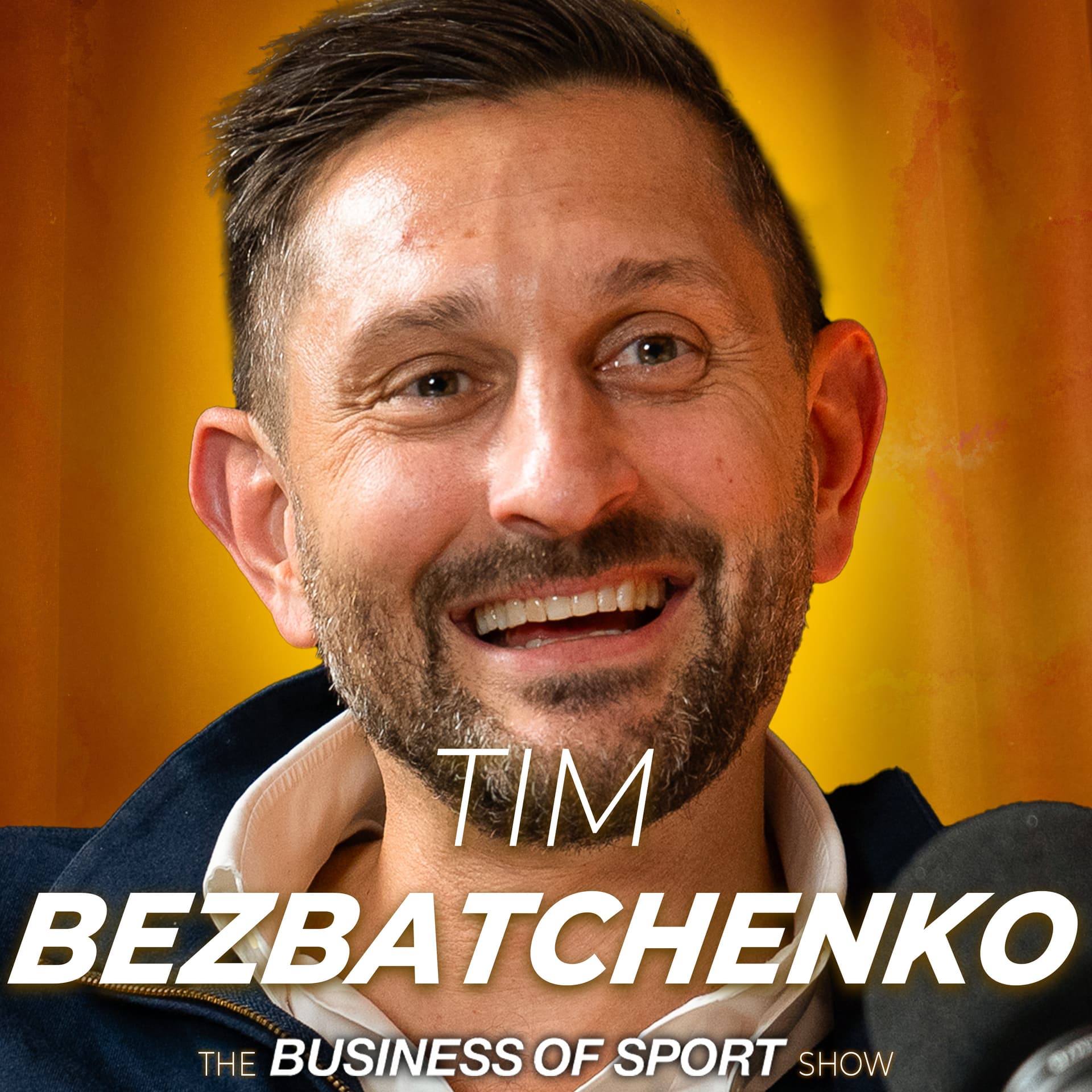
Business of Sport Podcast Episode 94: Tim Bezbatchenko - How Bournemouth Became A Destination For The Best Young Talent
Episode Overview In this episode, Tim Bezbatchenko, President of Black Knight Football, discusses the intricacies of multi-club ownership in football and the success story of AFC Bournemouth. He explains how the club has evolved into a competitive force in the Premier League, despite its historical struggles, and how its model can be replicated across the industry.
Key Takeaways
- Multi-Club Ownership Model:
- The complexities and advantages of owning multiple clubs within a group.
- Black Knight's ownership encompasses clubs like Bournemouth, Hibernian, and FC Lorient, allowing for shared resources and player trading.
- Bournemouth’s Transformation:
- Bournemouth's rise from a lower league team to a competitive Premier League side.
- The impact of strategic decisions, such as hiring coach Andoni Iraola and investing in infrastructure.
- Financial Model:
- The importance of a player trading model to offset financial limitations, particularly in relation to stadium capacity.
- The need for developing a sustainable revenue stream through sponsorships, matchday income, and player trades.
Detailed Summary
Introduction to Black Knight Football
- What is Black Knight Football?
- A multi-club ownership group focused on elevating clubs to profitability while maintaining strong community connections.
- The model aims to ensure that clubs like Bournemouth can thrive without merely functioning as "feeder" teams for wealthier clubs.
The Rise of Bournemouth
- Historical Context:
- Bournemouth has transformed from a lesser-known club to a Premier League competitor, achieving significant success under Coach Andoni Iraola.
- The transition reflects a shift in club identity, moving from survival to ambition.
- Key Factors of Success:
- Player Trading Model: Selling key players while reinvesting in talent has been central to Bournemouth’s strategy.
- Infrastructure Development: Investment in training facilities and plans for stadium expansion serve to create a sustainable club environment.
Economic Insights
- Multi-Club Ownership Benefits:
- Shared resources such as scouting and analytics provide competitive advantages.
- Group-wide sponsorship deals enhance revenue opportunities.
- Player Trading as Profit Driver:
- The importance of a well-structured player trading strategy in generating profit and maintaining competitiveness.
- Examples of successful player trades that have helped fund the club’s operations.
Building a Sustainable Club
- Stadium and Training Ground Investment:
- Plans to renovate the Vitality Stadium to increase capacity and improve hospitality offerings.
- Emphasis on creating a world-class training facility to attract and nurture talent.
- Revenue Streams:
- Discussion of limited matchday revenue due to stadium size, necessitating reliance on player trading and centralized income from the Premier League's broadcasting deals.
- The need for structural changes to ensure long-term financial health and competitiveness.
Challenges and Future Strategies
- Navigating Ownership Regulations:
- Awareness of potential conflicts arising from multi-club ownership, particularly in European competitions.
- Ongoing discussions with regulatory bodies to ensure compliance while maximizing club performance.
- Community Engagement:
- The importance of maintaining club heritage and community connections amidst a changing ownership landscape.
- Acknowledgment of the historical significance of clubs, ensuring respect for their traditions while pursuing modern business strategies.
Conclusion Tim Bezbatchenko provides valuable insights into the future of multi-club ownership and the specific strategies that have allowed Bournemouth to succeed despite challenges. His perspective highlights the intricate balance between financial sustainability, community engagement, and competitive performance in professional football.
Partners of the Episode
- David Protein Bars: Revolutionizing protein snacks with low calories and high protein content.
- Stride: A platform offering sports investment opportunities, making sports ownership accessible to the public.
---
This episode serves as an insightful exploration of how strategic ownership, community engagement, and innovation in player development can reshape the landscape of football, with Bournemouth exemplifying a successful model in the current sporting climate.
Written by AI. May contain mistakes. Listen to the episode to check what was said.
Transcript
Automatic transcript. May contain errors.0:00I think Bournemouth is in the middle of a massive transformation of its identity. This club that has historically been a League 1, League 2 club and a new owner who's incredibly ambitious, always looking forward. What can we do next? You have this identity where people who know it as this punchy club on the south coast in Dorset that's kind of lucky to be there into this club that expects to be there. The biggest challenging thing in sports is to get over the fear, the fear of relegation, the feel of losing on Saturday. To have the courage to make a change like they did after they had stayed up and done well, to go with a coach like Andoni, took a lot of courage.
0:37And I think it came from Bill of thinking, advance, always advance, never retreat. Junior Kruppi is a fantastic story. It's a story we're trying to scream from the mountaintops. Come prove yourself in one of the clubs and we'll believe in you. You're already part of our family. And now come to Bournemouth and see if you can do it in the morning.
0:58Hello and welcome to The Business of Sport, the show that takes you behind the scenes with the industry's leading owners, operators and athletes. Multi-club ownership groups have had a tough year in the eyes of many, with high-profile cases around Crystal Palace and Lyon, as well as Forest and Olympiacos, showing the competitive risk of one owner or group having too much control over multiple entities. And it is a big but. This model can be hugely valuable business and performance structure to apply to football. Tim Bezbachenko is the president of Black Knight Football, the group who owns or has a minority ownership in multiple clubs, including Bournemouth, Hibernian and Lorient in France, to name a few.
1:36It's an amazing time to be having this chat with Tim due to the success Bournemouth are achieving this season, miraculously after another summer of selling some of their best players. This is an insight into how they have built a player trading model to offset the financial challenges of having an 11 ,000-seater stadium, their plans to develop infrastructure, the value of shared intelligence and analytics across multiple clubs, and most importantly, how you protect the badge of each team so that they don't just become feeders to the premium asset in the group. This is a proper look at the MCO model from someone who firmly believes that collective value can breed the best business in football.
2:12We're delighted to welcome Tim to the business of sport. For years, protein bars have been the go-to snack for a quick protein boost. but finding one that truly delivers without adding excess calories and sugar has been a challenge. Most bars offer around 20 grams of protein but often pack in 350 calories or more along with a hefty amount of sugar. This formula has remained unchanged for decades until now. Introducing David, a protein bar that redefines what's possible. David gives you the protein you need without the unnecessary extras. providing 28 grams of protein in just 150 calories and zero sugar.
2:53Unlike traditional protein bars, which are loaded with low-value calories and excess sugar, David delivers more of what your body needs without the unwanted fillers. Let's compare. Typical protein bar, 20 grams of protein, 350 plus calories, 20 grams of sugar. A David protein bar, 28 grams of protein, 150 calories, zero grams of sugar. With 40 % more protein, 57 % fewer calories and zero sugar, David offers a superior protein boost in a convenient portable form. The science-backed formula ensures you give the essential nutrients your body craves without compromising on taste or nutrition. David isn't just another protein bar, it's the future of protein.
3:30Whether you're at the gym or on the go, this bar provides the ultimate balance of high quality protein and low calorie efficiency. Idealised and perfected. Ever wanted to invest in sports? ever thought about owning a stake in football, cricket or even Formula One? Well, Stride makes it possible, starting from$5 ,000. For the first time, you can now access exclusive sports investment opportunities from a world-class football club to emerging paddle ventures to the next big thing in cricket or golf. Sports is no longer just entertainment. It's an investable asset. And with rising revenues, global fan bases and media rights booming, the sports economy is one of the most compelling investment opportunities today.
4:13Stride is the regulated digital platform unlocking this market for individuals, institutions and family offices alike. Whether you're looking for yield, exposure to uncorrelated growth or simply want to invest in what you love, Stride is reshaping how the world accesses sports private equity. Ready to step into the game? Visit gostride.com, that's G-O-S-T-R-Y-D-E dot com and discover how sports private equity can work for your portfolio. Because investing in passion shouldn't be off limits. Tim, it's great to have you on the show, dude. But I'm going to give this a go. Give it a go. Bez Bachenko.
4:54Nailed it. Phonetic. You know, most people think I'm a hockey player. You know, ice hockey, ice hockey, ice hockey player. So a lot of the other GMs and the executives around the league sporting directors will be like, did you play hockey you know because or gymnast you know if you watch the olympics you know there's a lot of chink it's amazing to have you in thank you thank you thank you for joining me i'm excited to be here i think you by the looks of it on paper you have one of the coolest uh jobs of football because not only do you look after the interest of one club you look after the interest of multiple the best place to start is really i guess just to understand what black knight is actually all about yeah so black black knight is a multi-club ownership group that is focused on player development, but really it's about elevating each club within the group to be profitable, to connect to the community, and really give back.
5:42So, you know, I think there's different versions of multi-club ownership groups, and we can get into that. But a lot of it is about how we want to run each club with, obviously, AFC Bournemouth as the flagship club, and how a connection of clubs can really create synergies and positive energy through player trading, shared learning, data, analytics, and there's so many elements that we can get into. But our goal is to, at the end of the day, win. And win really has two components. It's being profitable or break even, depending on the context, and then winning on the field, on the pitch. So tell us about the clubs.
6:17You've got Bournemouth you just mentioned. What else have you got in there? Yeah, so Bournemouth. So Bill Foley is our owner. He's based in Las Vegas, and he started by owning an ice hockey team, the Vegas Golden Knights, who have been tremendously successful in North America, you know, winning a Stanley Cup in just a matter of a few years after being an expansion team. And then he fell in love with football. And he acquired AFC Bournemouth and then expanded into this multi-club space. So a minority stake in Hibernian in Scotland, FC Lorient in France, uh more rents in liga portugal and um auckland fc in new zealand that's technically not part of black knight but he owns it personally but we treat it as such and then we have strategic partnerships with orlando city in major league soccer in kyoto sanga in the j league gosh well done for remembering all of them that felt like a menu um it's hard yeah it's very difficult a question for you just before we dive into like the individual structures and kind of more specifically on you just for anyone that doesn't know like what are the different multi-club ownership structures that you said you could touch on there just so we understand what it looks like well i think there's the differences in sort of the the owner the type of ownership right is it a single owner sort of with a purpose that is based on sort of player training is it a pe group is it a fund like are they trying to seek returns in a certain period of time uh for the listeners you You know, it's really diversified over the last few years as sort of an asset class.
7:48And so you're seeing a lot of new money come into the sport compared to the traditional single owner model, right? So I would say who the owner is and what they're about is one thing that differentiates across the MCO group. The second is, you know, what you're trying to do within the group. Are you using one club and not at the expense of the other clubs, but are you really driving sort of top heavy down? or are you kind of more of a broader set and trying to allow each club to be a little bit more autonomous, respecting the DNA of the community? And I think we would lean a little bit more toward that side of things.
8:24Because that's the hard bit, isn't it? I always think it's protecting the badge, if you want to phrase it in a certain way, which is not just having a multi-club model that is based on getting Bournemouth to succeed as much as it possibly could in the Premier League at the expense of the development of a Lorient, for example. It's about creating that package together where, yes, they can all benefit from each other, recognizing that there will be value to have between them, but it's not going to come at the detriment of your club's future success. That's right. That's right. And I think, you know, selecting a group that have an owner like Bill Foley who understands the connection to the community is key because then you come in and the fans understand that you're trying to put in resources and invest, but you're not trying to change the colors.
9:06You're not trying to change the badge. You're respecting who they are. And a lot of times it's century-olds or 150-year-old clubs. And so who are you to come in, even though you have the money, to decide to change the DNA? I mean, you're a steward. You're a custodian for a period of time. And you have to respect that or the fans won't respect you. And to be profitable and to do well on the pitch and off the pitch, it actually makes sense to do that. Like a lot of people think about kind of just seeking profitability as fast as you can. I think if you have a long-term approach and you respect the club's DNA and the badge, then that's a long way toward getting better results.
9:47And what's the strategy when you're looking at clubs to purchase? You have Portuguese, as you said, highly valuable to a lot of European football, not least because of certain visa opportunities and getting players across from South America into Europe. You know, Scotland's obviously got a lot of history around its clubs. So, you know, Hibs is a fantastic piece in there. You've got a Premier League club. How do you look at this from the broader picture and go, that's something that we want to have to improve our total business model? I think you see a lot of clubs for sale these days. I mean, you're probably talking to a number of people.
10:18Every week you're getting a new club that is looking for investors or is for sale. So you look at these pitch decks over and over again. And so I would say the first thing we look at is how stable are they before we come in? Are they close to profitability? Do they need player trading in order to be profitable, to break even? So I think the first thing is you look at the balance sheet. You're looking at the financial statements. But at the end of the day, do they have a history and tradition? And then with that, then the player trading. So it's sort of about obviously the financials, the economics.
10:49There's what is the club about? What is their vision, mission, goals over the years? Do they have something you can work with? How flexible are you in that space? And then the last piece is player development, right? Do they have a history of player development? So take a club like Moro Rents. Portugal is a fantastic market where players from South America, players from within Portugal and Spain, players from Africa can go and develop. And it's a market that is used to that model. So you're not constantly battling internally at the club with people who don't understand what you're trying to do.
11:27So at Moro Rents and across Premier Liga, You have current ownership groups and they're called Assad, right? They're association of members. You have coaches and you have players who understand and respect what the investor, what is the owner trying to do. So I think that's really important is you go in and you're transparent with your objectives. You're saying, hey, we're going to respect you and your club. But at the same time, like we're here for a purpose as well. And we're aligned in that purpose. Players want to play, win championships, and move. They want to increase their earning capacity.
12:03They want to develop. Do you think having a multi-club model as an owner gives you a better chance of success on the business side? Absolutely. Absolutely. And then there's the commercial side of things where you're selling sponsorships. So if you're just going directly to answer your question, you can use the group to approach companies, to approach potential sponsors that are looking to access a market or a fan across multiple domains, different countries. And we're doing that now. We're talking to potential sponsors that will use different assets across our clubs to increase awareness about their brand.
12:42But at the same time, the synergies on player development and player trading that ultimately end up on the bottom line are beneficial as well. You control the supply effectively in player development. You can wait until the player is fully mature or you go earlier on in the supply chain and acquire talent and take a little bit more risk there. And that's what's so fun about it is you're not going to get them all right. And you have to get the elements and the ingredients together that will facilitate and expedite development. right it's not you're not going to sit and watch a player for 10 years before he's ready to move on right you're hoping that he develops in two three years while it makes great sense for business we've seen particularly over the last six to eight months the challenges that it presents in the broader footballing ecosystem where you have the situation we saw with crystal palace with john texter and leon and then you've also had maranakis with forest and olympiakos and basically causing a problem within particularly european competition of two clubs being owned by the same groups not being able to compete in the same tournaments how do you navigate that in this situation to ensure that you don't have to navigate those issues.
13:49Yeah. So one of the biggest challenges of owning a multi-club ownership group is the conflict that can occur when you're both in European competition. So we have to be ahead of the regulations in terms of understanding what's coming down the road by speaking to UEFA, speaking to other clubs. But it's still early in this space. And I think that UEFA is trying to understand where it's heading, how you can regulate it, but you don't want to chill off investment as well. I think there's additional investment over the years, and football has gotten better, I think, when you think of multi-club ownerships that can do it right.
14:26But the challenge for us is to understand that if we achieve all of our goals, which is success on the field, there inevitably will be an issue where we'll have to put one of the clubs into a blind trust potentially. And so you have to understand the solution is out there. Now, question is, how does this evolve? Is it something where there could be other solutions other than you're completely hands off over the years? And I think it's still early days. One of the reasons multi-club ownership has proliferated I think is because it's been relatively unregulated or very little regulation over the years.
15:03And I think people were kind of waiting to see what would happen. Would FIFA do it? Would UEFA do it? But I think it's a space we have to watch. We are in touch with all the federations. We have to give them – the challenge part of it is you've got to give notice when you're acquiring shares. you know so there's a lot of regulation you got to work with lawyers can I just ask you I'm naive here so you own L 'Oreal and they have someone who's great and you're like perfect left back for Bournemouth I think he's worth 250 grand not 25 million I think he's worth 250 grand who says someone's worth who is the arbiter of value in human potential there's not one and so surely with a multi-club ownership model you can just absolutely abused and I'm not saying you do I'm genuinely asking for your take on broader how it should be regulated if you had a bad actor you could abuse the system incredibly well and easily well I think with the associated party transaction regulation I think there are people that are looking at to make sure that it's maybe not an arm's length transaction but it mirrors it so there are regulations in place that prevent someone to completely abuse the system so I think that is I think there are still question marks there's still transactions that are in the marketplace that you would flag but at the same time there is a process that you go through I mean it's an interesting question though to me like if you want to take it from a who is like the arbiter of value in human?
16:38Look to value players it's not the most difficult thing in the world because there are as you know there are comps where's the market of the player where is he coming from which club there's a history of player sales and so there's at least a place to start. You're not just pulling a number out of thin air. Although, you know, in the past it seems like there has been that. You've got a premium asset. Tell us about Bournemouth and everything that's been going on there. It's an amazing time for us to be having this conversation because you guys are riding a wave. You're flying this year. It's been amazing to see it.
17:08But even last year, you know, looking at a record league finish, ninth, 48 points, was it? I mean, it's been incredible. History made the highest number of points tied in our history with the top finish in the club's history. And look, credit goes to a lot of people, but certainly the coach, Andoni Areola. And then, you know, Thiago Pinto and our recruitment department, Simon Francis. You have these two individuals that have come together and really spearheaded a team and the recruitment of players that are playing a certain style of football that is aligned with the coach. and I think we all know that when you have a club within your group and you have alignment across the head coach, the ownership, and the recruitment and the football operations, you have a chance to be successful.
17:59And I think right now that's what we have at Bournemouth. So it's a really exciting time. Small club, right, 15 years ago was in fourth division, League 2. I'll put it into context, right? There was a moment where if they lost a game, they would have fallen out of the football league and most likely the club would have gone bust. And it was Eddie Howell, now manager at Newcastle, who was 31 years old in that position as manager. And they won the game. They stayed up. And from then on, I mean, the story's written itself. Incredible story. And I've actually spent time with our club historian, Neil Vacher, who's been club secretary over the years.
18:32He's been in so many roles over the time he's been at the club. But he walks through and tells me stories of them passing around a hat to take donations to keep the doors open. You know, back – this is just only 2008, 2009 when they were, you know, I think 21st out of 24th, avoided relegation. And then Eddie Howe and his team were able to jump up, get promotion the following season. Then two seasons later, then they got promoted again and then again. I mean, it's a tremendous story. And I think we see it a lot. We're almost numb to these stories of promotion. But I do think Bournemouth is unique because it had never been in the top division until 2015.
19:15And it was, I mean, that year started with a 17-point deduction because it was in administration the year before. So in League Two with a 17-point deduction and Eddie Howell took it and the rest is history. It's pretty amazing. So you've been in position, am I right, just over a year? Well, last summer, 2024 summer. so what's what surprised you the most coming into that looking at Bournemouth as a club and I'd imagine on a good side from where the club's actually at and what it's been able to achieve in the short time that Bill's actually been in charge the biggest surprise is is is it's probably how how much the player trading you know matters um you know coming the environment that I was coming from in North America we have the salary cap and you have all these restrictions in place you have to look into a lot of areas in order to be successful and gain an edge.
20:07And in the Premier League, with the money that's generated from the TV revenues, from commercial, you know, the success comes from the people. And the people, the most important people are the players and the coach. So I wasn't surprised by it, but that's where you need to spend a lot of your time. And that's not surprising probably to the audience, but coming from the global game and environment I was coming from, It is different. How does it differ? I would say in the environment that I came from in North America, everyone's spending relatively the same amount. So you have to look at other areas to be successful, right?
20:46The data. I mean, not that you wouldn't do that in the Premier League, but the culture. You can't turn over your roster as quickly in that environment. You actually, there's no loan system where you can loan out all these players to championship and third division clubs or fourth division or across countries. You don't have a lot of teams that with multi-club groups where you can facilitate player trading. So it is very different from the North American model. And then on the surprising side. Is it better? I think that's subjective. I think it depends on what type of league you want to watch. I love the Premier League and the clubs, you know, the history and tradition with the Manchester Uniteds and the fact that they're down now and they're trying to get back up.
21:36I grew up falling in love with the Premier League in the 90s, right, and Eric Cantona and that whole era of players. So I think the world is enamored by it and the challenge at the top of the table to win, but also the relegation battle. I think North America, there's a benefit that all the teams have a chance to win the championship each year. It's not – I think the Premier League benefits that any team can beat any other team on any given day. I think in North America, in the NFL, in NHL, NBA, in MLS, any team can win the championship. and that is very different. And so for communities, believing that you can win a trophy I think is beneficial over the long term.
22:20So over 10, 20, 30 years, I do think that that model is a good model. I'm not saying which one's better. I think that there are benefits to both. I think right now in MLS, they could benefit from having superstar clubs, which is what's happening with Inter Miami and Messi coming in. That will kind of pull everyone else with it because the system of the salary cap really penalizes the teams at the top. And you have this sort of race to the middle and push to the middle because no team can get away from anywhere else. Whereas in the Premier League, you have a push toward more player spending. Let's improve through superstars.
22:54It's always the joke. A lot of people say it in the chairs, like you have the most socialist system and the most capitalist country from its sports side, right? I love that. That is, yeah, I use that as well because it perfectly explains, you know, a system that is built for all people, all teams to have equal opportunity. That's the term they use, equal opportunity. What was the hardest thing coming into Bournemouth? Well, I think Bournemouth is in the middle of a massive transformation of its identity. It's a sort of revolution of this club that has historically been a League One, League Two club and a new owner who's incredibly ambitious, always looking forward.
23:36What can we do next? So he's built a new training ground, you know, 45 million pound training ground that is world class. I mean, it's up there with the best in the Premier League. And so you have this identity where people who know it as this punchy club on the south coast in Dorset, you know, that's kind of lucky to be there, into this club that expects to be there. And that mentality, I think the hardest thing because the most important asset is your people, is to make sure that you have people who believe that you can get there and that are pushing every day to get to the next level. And then also that want to be a part of this sort of multi-club ownership group, right?
24:20And because we kind of – we operate out of the same location. $45 million is a big investment for him and just period for any club. Is this from Bill's balance sheet? Is this from a fund, like just from a financing perspective? Yeah, I think it's from Bill and our investor group. So there's – we have Bill himself, then we are owned by a group called Kanai. which is also owned by Bill. It's a publicly traded company. And then we have a group of LPs. But this is Bill's vision. And he knows that in order to compete, you have to, at a club like Bournemouth, we need two things, right? We need a new training ground that players, top world-class players, know they can improve and reach their potential at.
25:10Two, we need to renovate our stadium in order to increase capacity, to generate more revenue to give us a chance, right, to help fund a few more players on the squad each year. I mean, those two things I think Bill knows that for long-term success, you know, he has stated to say he wants to push for Europe. And in order to get to Europe, you need an environment where the players can be successful, and clearly you need revenue, different revenue streams, including from ticket sales, in order to get there. I can't remember. It's really annoying me. I should have written it down. but I only saw it just before we came in.
25:44It was his mantra that he lives by, which is basically just never stands. Always advance, never retreat. Always advance, never retreat. He's a graduate from West Point Academy, which is the US Army Academy. And that struck me straight away because coming back into what you're doing, and I think that's one of the best answers, you know, about what surprised you coming in. And it's just this club in transition because the thing that surprised me the most when he took over was staying in the Premier League, getting rid of Gary O 'Neal and bringing in Antonio Riola and I think it was just after we started this show and I looked at it and I was like this is crazy to just get them in the league how have they done that I'd love to get him on the show let's find out you know all of this and then right after 10 games where it took Antonio a little while to get in you just saw this incredible development of the team and the club and as amazing as Gary had been for Bournemouth like what was actually now happening was exactly to what Bill had stated at the beginning it was progress it was pushing forward it was building onto that next thing and that seems to be a constant now from the last few years of course one of my questions to you is how do you keep selling your best players and getting better but the constant to that is to me it's iraela yeah yeah it is it is certainly the coach i think he's he's um the most or one of the most important people in in the mix that is going to drive it forward but at the same time i will i will say that any project like that is ambitious as this, it needs to be bigger than one individual.
27:14It really does. And so kind of going back to talk about what happened, and this predates me when they made the change with Gary O 'Neill and deciding on Areola. I think the biggest or most challenging thing in sports is to get over the fear. I think what drives people the most in the front office or in sporting director roles and ownership roles, like the fear of relegation, the feel of losing on Saturday. To have the courage to make a change like they did after they had stayed up and done well and to go with a coach like Andoni took a lot of courage. And I think it came from Bill of thinking, hey, advance, always advance, never retreat.
27:58And at the time, the CEO, Neil Blake, who's still involved with, longtime CEO of AFC Bournemouth, still involved with us at Black Knight and Simon Francis and that group, the decision to select a coach that was aligned with what they were trying to do, it took courage. And then obviously to stick with them because they knew that he was the right choice, I think is something you don't see very often in the Premier League. And so kudos to them. And I'm just here riding their coattails. But you're right. Coach is critical to the energy in the building, obviously the tactical plan. He's incredibly humble.
28:42I would say that is one of the most – one of the things that jumps out immediately, which is I think rare in a coaching pool. And I've seen that recently and I don't – well, of the clubs that I have been, I've seen a lot of the new excellent coaches showing that they know they need to delegate. They know that it's not all about them, that there's a bigger world, and they can't control everything at the club. So they focus on the things that they can control. And that shows me it's a sense of humility and that they understand what their job is. And he does it with grace and with kindness. It's crazy.
Read the full transcript
29:19You mentioned that how do you sell your players and still get better? If we just take that apart, sell your players, who decides to sell a player? Is it Andoni? Is it the CEO? How does the decision-making work on whether you let a player go or not? I think at any of our clubs it's going to be by committee. You know, certainly at Bournemouth it's going to be Tiago Pinto, president of football operations, Simon Francis, Bill Foley, you know, Ryan Caswell who also works in Las Vegas. So it's a group of people coming together to decide is it the right time, You know, does it fit with our financial model?
30:00Does it fit with the strategic model? And, yeah, the coach is always involved because he's the person who's selecting the players on the team sheet each week. So I think that's one reason why the club's been successful this late is that they're doing it. They might disagree at times, but they come together and make a decision. And I think it's not just one person deciding unilaterally we're doing this. Of the following names, who did you least want to sell? Kirk has? Dean Hoisin. I'll jump ahead and just say Dino. He was only with us, I think, for 10 months. And credit to Tiago Pinto. How much did you buy him for?
30:47I think 13. And not just that. It was who you sold him to as well. When a club like – and Tiago will say this. When a club like Real Madrid, Liverpool, PSG come in and they're competing for Champions League positions, who are we to say, no, you can't go. You can't fulfill your dream. No, it wouldn't be like that for all clubs because not everyone is Real Madrid. But there's an opportunity and everybody wins, right? I think that's what we're trying to find is this commonality where everybody can win. This is a culture of abundance. Why did you jump to him, though? That was a really interesting one.
31:24Because he's so young and he's bold with his play. I loved watching him play. He's a center back who plays like a number 10 at times. He advances the ball forward, breaks the line, and then can play a pass that breaks a couple lines and can unlock a forward to get behind. So he made mistakes, too. But I think Real Madrid saw his potential because he was willing to take risks. Yeah, yeah, yeah. Do you put protections around players like that? And what I mean by that is you're 19. You're 19 and the world wants you and Real Madrid want you too. And it's very easy to get lost in the publicity, the fame, the money.
32:07Do you as a club almost have a parental responsibility with such young players to protect their minds? Yeah, there is a responsibility of the clubs to protect the players and the environment that they're exposed to at a really young age. Now, when it comes to Dean, I wasn't, you know, I'm not on the front lines doing that work. That's Tiago and Simon. And then their agents, they have representatives who are responsible for their day-to-day beyond when they're at the training ground. And then they're learning, they're still learning to be adults. Some of them, you know, haven't had, you know, their own bank account, haven't had to make their own transactions, shop for food.
32:51So the club, not just at Bournemouth or any of our Black Knight clubs, but my previous world, you spend time with sort of a player care group. You have that. Yeah. Every club has, nowadays, I think it's probably about 15 years ago, clubs really started to invest in this because there's so much money put into investing in players and people. And then all of a sudden, the player comes into a club maybe from a different country doesn't speak the language they don't know you know how to open up a bank account so how many people this is fascinating we've never actually discussed this on a show which is why i'm so interested to say you have how many people in a player player care group in bournemouth yeah i don't even know our true number but i would say it's a handful i would say five you know to play some role in the orientation integration of a player.
33:40I would say between five and ten, all between the performance team, there's administrative, there's people who are coordinating logistics of traveling to and from training grounds when they can't get a license because they're from the US and you can't just drive. You actually need a license in the UK. So I would say there's ten people, give or take, at Bournemouth that that player role and it's really important that's a key part because players can fail for technical but the majority I'm sure you know who are amazing players you bring in aren't necessarily failing because they can't get to grips with some of the football a huge amount of the ones that don't make it will there'll be greater things at hand they haven't settled in properly they don't have the support systems around them they're people right humans we often forget footballers are people yeah more so than people even more human than a lot of other a lot of people realize yeah so that When players are your biggest assets, commanding the greatest fees and probably the biggest financial levers you can pull, if you don't actually look after that side, there's a massive gap in your strategy.
34:48If you don't look after that side, I'll venture to say you will fail. You will fail quickly. It is one of the reasons why acquiring a player in early or mid preseason is so important. and you'll see coaches who will – teams that are really focused on doing predominantly all their work in the summer because the player has time to adjust. They have time to get their life in order before the season starts and then once the game starts then they can just focus on it. And then during the winter window, you know, it just all has to be accelerated because you're looking for that player to maybe step in right away.
35:23Or if you're really ahead of your game, maybe you're acquiring in the winter so that you can – so they get six months ahead, so they're prepared for the following season. That's a club who's ahead of the – they're one or two windows ahead. And I think that's – those are signs of, okay, they've got things right because they're ahead of the window. They're already doing their succession planning. Maybe they have a right back they're looking to sell. They bring in a player in the winter window, and then the player is ready to go in the summer, and they're already ahead of the plan. Look, you know, no club ever wants to be thought of as like a feeder club or a club that purely is successful because it trades its players.
36:04But really, you know, unless you are like Real Madrid, pretty much every club technically is a feeder club. So I just thought about it when you were talking about Dean. But if you look at those players we were mentioning in the summer and where they've gone to, this is a massive benefit I would imagine now of what Bournemouth is able to sell to players who they're trying to sign maybe above the grade that you would expect to be able to reach. Because you can go, Kerkic goes to Liverpool, right? It doesn't just get sold, he goes to Liverpool. Zabani goes to Paris Saint-Germain, European champions.
36:31Dean goes to Real Madrid. Dom goes to Spurs, maybe not an upgrade. I mean, Dango going to Brentford. I mean, it's still the Premier League, right? One of the biggest benefits of doing player trading and sending players to those clubs is the knock-on effect it has for our recruitment team because those players see that there's a pathway for me to realize my potential. So that is a consistent message from Tiago and Simon when they're getting on phones and on meetings with players. And you're pitching these players. I mean, you're recruiting talent just like you do if you're recruiting a CEO or you're recruiting a VP of finance.
37:20I mean, you have to do interviews and you're talking to players. And one of them is the player wants to hear what the plan is for them. What is their pathway? Will you consider a sale of the player if someone comes knocking on the door? And I think that's the message we're sending is that, look, certain clubs, absolutely. But you have to do it year in, year out. And this is the first, I would say, not test, but this is the first real summer where we've seen – we've taken that step to be a club that is looking to sustain success while trading players and then acquiring new players. And clearly with the players that Diakite and Truffier and Petrovic and so far, these players have stepped in and the team has done a tremendous job to find players that can allow Andoni to keep his style of play and still win matches.
38:19At what stage do you have to keep your best players? At what stage do you have to say all of these fantastic names that I can't pronounce? We need to keep them. Fuck that. I don't want to sell them to Tottenham. I don't want to sell them to PSG. If we're going to challenge to be in the Champions League, we need to beat Champions League clubs. If we're going to do that, we have to keep our best players. Yeah. Look, I think you said it. The time when you would have to keep talent is when you want to have a go at Champions League. And maybe you're in Champions League and your goals as a club and the opportunity that Champions League presents matches the players.
38:57And so the players agent and the players will say, we don't want to go anywhere because we can realize our dreams, we can achieve our goals right here in Bournemouth. And I think that's where we want to go is it's not going to happen overnight, but how can we become a club where we're viewed as a destination? Fans and viewers may laugh at that, right? Because they might not see AFC Bournemouth as being that, but there's a competitive advantage of keeping your players together and having a coach who can develop players over multiple seasons. But you can also achieve success with young players and a new group of players.
39:36I mean, I think PSG right now, look how young their team is and how successful they are. So I don't believe that you have to keep everyone in order. And this is just me personally in order to reach the promised land. I think there's a lot of elements that need to be in place. infrastructure, you have to have the budget to acquire the players that can step on the pitch, a consistent staff, including the head coach. So I think I don't believe that it is that you have to do that. Is it a one for one? And what I mean by that is like 40 million comes in through selling a player. That means you have 40 million in budget to buy more players.
40:18Is it like that? It depends on the club. In our situation, it would not be necessarily one for one. I think the idea would be you're trying to find value. I think everyone, all of our recruitment team, we're trying to find the best talent that can compete in the Premier League for the least amount of cost, right, for the least amount of money. And so can you do that and sell for gain? You know, you take those capital gains and put them back in, reinvest in the club and go back down and buy at a level that allows sort of that flywheel to effect where you can withstand maybe a time period when you do have a number of injuries.
40:58Players are going to underperform. There are going to be bad days at a club, and you might have a window where maybe you need to spend a little bit more than you thought. So those rainy days, you've got to plan for this. You know they're going to happen. This is football. Tell us about Junior Kruppi because he's a great example of the Black Knight model, probably, coming from La Ronde now into Bournemouth, and he's doing brilliantly, and he's young. Yeah, so Junior Kruppi is a fantastic story. It's still early days, but he's a young player from Lorient who scored, I believe, 22 goals last year in Ligue 2 after the club got relegated.
41:34So he led the league in scoring, got them automatic promotion by winning in the second division to be promoted back up to Liga. and the question for us and for Lorient because we're not in control of that club was, you know, does he play in France, continue playing in France or is he ready to play in the Premier League and the more we saw this player, the more we realized that he has a noticeable goal, he has the ability, physical capacity to compete which is always a question mark for the Premier League especially with an aerialist system and Tiago and Simon and the group determined the time was now.
42:18And, you know, we had some injuries with Ines being down and Evan Nielsen was a new player, a striker, and so there was also a position available. But, you know, it's a credit to his character and his ability to come in and step in and start scoring. So he got his first start just recently and has scored a few goals. I think his goal per minute was maybe at the top of the Premier League for a little while there, for a few weeks. But that story is the story we're trying to scream from the mountaintops, right? Come, go, prove yourself at one of the clubs and we'll believe in you. You're already part of our family and now come to Bournemouth and see if you can do it in the Premier League.
43:04Playing on Harry's, I don't know, you know, you should say associated party transactions piece earlier. Do you have to get in there quickly with this type of thing? You leave someone like that on the market for so long. Strikers are a rare commodity. Good strikers are a rare commodity in Europe at the moment. There's very, very big demand. And I think you bought him for about 12 million from Lorient. But you have to make those decisions probably relatively quickly, even within this model, because if another club comes in and you still want to buy him, does that create a friction that is then really hard for you to manage?
43:32Yeah, that's competition, right? That's competition in the marketplace that will drive prices up. And we're not majority owner of Lorient. And so there's our partner and his incentive is to find the highest price. But he also is part of our group. So we have to have conversations with him and those are complicated, right? Because the timing has to be right. In junior groupie situation, he was coming out of contract. And so the question was we couldn't risk it going longer or else you might not be able to sell for anything. But certainly there were other clubs that were interested. But the benefit of the multi-club ownership group is that you can be earlier in time and place.
44:15So you have more access, greater access to the players. You can see their character. Hopefully, if you're doing your job, you can see the special qualities earlier than other teams and at a deeper level. so you can commit resources to it. And I think, again, that's the benefit of the multi-club group. And you can ask questions to your partner who owns the player, or if you're the majority owner, you can sit down with the player and talk about where he wants to go. And I think that is often overlooked and not talked about aspect of a multi-club ownership. Can we talk about the player side is fascinating, but it feeds into a bit that you've mentioned a couple of times but is actually probably one of the most interesting parts of this.
44:56and it is the broader business model right player trading has played a huge part in you being able to be exceptional and make great money while also staying competitive the hardest thing that we talk about on here all the time but on the flip side of that as you've highlighted you've got 11 000 stadium you want to develop you just got a state-of-the-art training facility which is incredible looking at your revenues and you know correct me if i'm wrong but you have a massive reliance on centralized revenue because of this because you don't necessarily have the opportunity outside to thrive off match day, to thrive off commercial.
45:27So can you just tell us how that whole commercial side or the financial side of the club sits at the moment and where the plan to build on that actually lies? Yeah, so I talked about the importance of the training ground to create an environment so you can attract the talent, but the stadium, renovating Vitality Stadium is critical so we can double capacity, we can increase our hospitality spaces. So there's obviously general admission ticket and there's certain price that the marketplace has deemed to be the price of that ticket. Fans are looking for a new experience and they'll pay more money if there's a different type of game day, match day experience.
46:13And so the hospitality areas is critical to our new renovated stadium. And that will allow us additional revenue that will facilitate player trading, that will facilitate a better squad. But also the fans in Bournemouth right now, roughly 11 ,600 people that can fit into Vitality Stadium. And it's really hard to get a ticket. So it is really important that we commit to renovating the stadium. Right now we're looking the first phase gets us to 17 ,000. And then it's going to second phase will get us to over 20 with maybe a possibility of getting to 22. It depends on approvals from the council, things like that.
46:57But you're not massive. Not massive. So that's not going to get us all the way there. So today, how much is revenue from average game day? I would be guessing if I knew, you know, if I told you. But I would say it's not a million pounds, you know. I think that where the revenue, the upside for us is it's obviously the centralized revenue. But by winning games, we get in our place in the table, you get a few million quid. And then you get on TV more, right? And by each game being on TV. So I guess the point I'm trying to underscore here is there's a limit we can on the commercial aspects on ticket sales and sponsorship.
47:46there's room for growth for sure but a lot of our revenue growth over long term is going to come from competing, being better and through player development and player trading. How much is front of shirt? You know I don't think we've gone out with a number but look I think on average Premier Leagues are going to be anywhere between 5 and 15 million quid to be on the front of front of your size. Yeah there's obviously the sleeve now and the top teams are going to command even more than that. 60 to 80. Yeah, I think we're talking about... Or zero if you're Chelsea. So do you see this as all like a packaging of, you know, better training facility, the stadium will develop, we get more sophisticated as a model, the performance is obviously high, that's going to drive commercial.
48:32Absolutely. That is, those are the levers that you have to pull that drives commercial. But then that gets fed back into the sort of flywheel. Like how do we use that to better the squad? I mean, it's no different than any other club. The revenues right now, you know, you're on the business side of it. But if you're looking at it, do you think it's as simple to say, because we've got the smallest ground, we're probably like maybe the bottom, bottom two in the Premier League for how much revenue we generate away from players and stuff? Is it that simple to correlate? Yeah, this is not rocket science.
49:00Football is simple. Ball's round. There's only, you know, as they say, it is, there's only a few revenue streams. and we need to compete even when we're at a competitive disadvantage because the size of our stadium. And so... Does player trading not just dwarf every other revenue stream for you? It does. Yeah, that's what... We have to do these other elements because it gets us part of the way there. But at the end of the day, I think I said that's one of the biggest surprises, at least at a club like Bournemouth, where you need to generate the revenues on the player trading side. What's your academy like?
49:42Do you run a real strategic business model around that? You know, that's one of the areas where we're looking to improve as well. And I think the training ground has taken the academy from some, you know, sort of an okay place to one where we're looking to excel and make a difference because you could argue we're the biggest club in the south of England. we should be recruiting. Southampton obviously has been up and down, Portsmouth, Plymouth-Argyle, anyone within a two-hour radius, we want to, or even probably beyond that, but we want them to pick Bournemouth as the players that they want to play.
50:22And so the investing in the academy is important. So the number of pitches now that we have and we're still building at our training ground is important. The dome to play year-round with the 3G turf, artificial turf on it, is critical. To get to become a category one academy is, again, that's integral and important for us to be able to compete over the long term. Because the way the system works, there are ways for players to leave your club if you're not a category one and you don't get as much value out of it. So can I ask, I know this isn't specifically your role, but if you were put in the position right now and said sell Bournemouth why should I come here over somewhere else because you're always competing why why are people choosing you well I think I think if if you're a player think about who you're talking about you're 14 year old player who's making a decision with their parents about where I want to play and who gives me the best chance of being a professional footballer and and and a lot of that is it's be it's not just what's happening for the two hours that you're training it's what's happening the rest of your life right the the eight hours 16 hours that you're that you're awake beyond that time and if you know that you're going to the best environment and also you're not necessarily living in in london where you to go to school then beyond that you need to travel an hour a day and nowadays a lot of the the The schooling is happening.
51:57Education is happening at the club. But you meet the people and you see that they're doing a very good job. I think AFC Bournemouth provides a tremendous environment for that player to develop, probably without the pressures that you might have in some of the other environments. But time will tell. You know, I think we've seen it a little bit so far, and I've knew. I've only been there for, what, 15, 16 months. But I've been in this industry a long time, and when you sit down with the player and his parents, it goes way beyond just the simple who's going to be my coach, do I have a contract in two years, that type of thing.
52:38The correlation, when you're 14, 15 years old, you don't know you're going to be professional. I mean, it is only a few players actually sign professional contracts, and then the ones that actually make it to the first team, it's even smaller. So it's a challenge. This isn't just to Bournemouth, but with your experience in the U.S. and the U.S. being amazing in so many parts of sport with, yes, how it monetizes and commercializes itself, how it brings in the fan, how it operates with some of its talent. What have you brought across or other things that you've brought across that you've seen being particularly valuable in those early stages of your work with Bournemouth, with Hibs, Laurent, the teams around you?
53:14Yeah, I mean, I think that just my recent experience was building a stadium and training ground at both my previous clubs. So I think the first order of the first six months was focused on our performance center, on our training ground, and then moving into our stadium. I think those were, again, on the commercial side and those ability to generate revenue and improve our recruitment. Those are the things that, you know, certainly have brought to the table at the beginning. I think long term at the academy level, again, branching out and improving our processes so that we can achieve a category one status is going to be critical.
53:55And then my job day to day is how do all of the other clubs work together to enhance and improve the system, but ultimately eventually Bournemouth through player development. It could be staff. How do you create information flows between clubs to allow for optimized actions to be taken? Yeah, centralized communication protocols, right? So for example, scouting database, getting, it sounds simple, but getting all of the clubs on the same system across multiple languages, inputting their reports and inputting their data in the same place. And they're communicating regularly with each other so everyone has access.
54:39It sounds so simple, but it's taken a year to get there, right? So that's the same as scouting on data. Squad management, you know, how are you – how do your financials look? How do you define, you know, your squad, your financials in terms of amortization schedule, right? Across different countries, there's different rules. So are you looking – is your owner or your ownership group really focused on cash, cash in, cash out, which obviously everyone's – that's critical for everyone. But then you can obviously – you can amortize the acquisition fee over like a certain period or length of the contract.
55:23And so that bottom line in terms of the EBITDA might look different than the cash and accounting surplus or deficit. So to create the uniformity across the clubs is challenging because each country has a different way of doing that. So I know it's kind of boring, but spending time in my previous role, I don't know if the listeners know, but Major League Soccer is organized as a single entity. And the league office actually signs all of the players at the end of the day and controls all of the budgets. So when I was there, I had eight teams and you're controlling their budgets. And taking some of those elements to this project where you have a centralized budget where everyone is operating off of and you're in touch with the CEO and the sporting director about their budgets, their data that streams that are coming in, their scouting reports, performance and medical data.
56:23right can you look at at injury trends across players across multiple teams are there consistencies is there shared learning between your head of performances like you know and Portugal France and England um so so I would cross all these verticals you are creating a centralized sort of protocol that that um everyone can plug into but at the same time there is I don't want to forget the other piece of it which is you know they're they're running their club day to day as well so you don't want to be too much of a burden that they're spending all their time trying to match your protocols and and not uh you know doing what it takes to win each weekend does part ownership not make it annoying and what i mean by that is it's much easier when you have majority or full ownership just in terms of the decisions that you're able to take is part ownership 25 5 % of Hibs, 33 % of FC L 'Oreal.
57:21That's a stepping stone to full ownership, I would assume. It can be, but part ownership do not, stating the obvious here, it does not bestow the benefits of having majority control. You learn the hard way because look at the number of people, including ourselves, who do not have majority control of clubs because they're not all for sale. And so as you've said, you're using it often as a stepping stone to get majority control. There are other ways you can get reserved rights, right, for an LP or, you know, to say, hey, we're going to be involved in a certain decision-making. So I think it's all negotiated.
57:56How is the business of L 'Oreal? We had the president of Marseille, Pablo Longoria, on recently. And when he was running us through the numbers, obviously the media deal falling over has had a significant impact. And he just said, literally, it was like Champions League, Champions League, Champions League. That's how we as a club are surviving or like trying to maintain our revenues. But what was very clear is if you're not in the Champions League and playing that league, it's been really hard. Yeah, that's what we're trying to figure out right now is the model, what can be sustainable over the long term if we were to acquire more of Lorient and working with the current president and owner, Luik Ferry.
58:30He's done a tremendous job, if you look at those accounts, over, I think, 10 years, 10, 11 years, reaching break-even of profitability through player trading. We're talking 10, 20, 30 million euros a year just through player trading. Clearly, when the TV deal was stronger and in place, it was easier to do that. So I think everyone – we're waiting to understand the economics around – well, we know the current TV deal. But what's going to happen over the next six months, a year, so that we can be prepared and we can make decisions that allow us to be profitable. But you're right. It is not – it's not clear right now.
59:10Do you want to buy more? Do you want something in the Dutch Eredivis or the Polish League or the you name another league? We recently looked at a club in Eastern Europe because it could open up a new market. They had a lot of the elements we talked about earlier in terms of their break-even. They had success recently and they were competing in her Champions League position. And it didn't end up materializing. But yeah, we would look at additional clubs if the right situation presented itself. It has to fit together though. We're not doing this for like world domination or just to create this like Black Knight empire.
59:58Personally, I think it's right now we're more focused on the quality over the quantity, right? Investing in the group that we do have. We're still new to this. I mean, I think we talked about before the show, we talked about, you know, the Red Bulls and the city football groups who've been at it a little bit longer than we have. And for us to get one majority control of more clubs, but also just to prove the model. You know, we've done it a little bit, obviously, with Junior Kruppi, with Dango. But can we get that number up to 5, 10, 15 players and then say, OK, the model works. Each club is financially sustainable.
1:00:33There's a good culture at each club. does it make sense to augment it to add another club? And just so I understand the objective here is then to increase the enterprise value of the associated clubs and then sell the structure or I mean it's a public structure you said there? No just one of our investors in Black Knight I'm just trying to understand What is the long term exit? Yeah like what is that? It depends on I think Is it a legacy play for Bill? Is it a... That's a good question. For Bill, when he spoke to me about joining, he said that he has a passion for sports and he's fallen in love with the game of football and he loves competing and he loves working with the teams to find players and he loves giving back to the community.
1:01:29So I think he is a businessman and obviously a very smart businessman, But I think at his stage where he's at with his life, I don't think this is about the exit. I think this is about doing something that he loves, but also doing it in a way that he knows, which is advance, you know, always advance, never retreat, being aggressive. And who am I to judge this? This is not, you know, I think it's fantastic and I'm benefiting from it. And I'm just lucky to be a part of it, someone with a vision like that. How do you feel about the rise of celebrity owners? And would you be excited to welcome The Rock into the ownership structure of Black Knight if it meant distribution, commercial, on steroids for your associated end?
1:02:13We haven't even talked about Michael B. Jordan. Yeah, I was going to say, so we do have a celebrity owner and Michael B. Jordan, you know, a famous actor. And it's been beneficial for us and our brand. And he helped work on a jersey that is probably one of my favorite kits that we have with the new Cherry, the Cherry's logo. And he helped design it. And so Michael B. Jordan's one, The Rock, you know, have him give me a call. I really don't want to neglect to burning because they're a massive club, right? And I am interested in Scotland because the Scottish League hasn't had the best competitive balance outside of the top two.
1:02:49It's Celtic and Rangers and then very much the rest on a competition side. but it's absolutely not on a fan side, right? Because these clubs are enormous in their communities and they're brilliant traditional sporting entities. But as a business, I'm really interested as to why that was a place you guys wanted to go. Well, I think Hibernian was a place we wanted to go because the passion of the fans and the city is an incredible place, Edinburgh, and the potential to have a rivalry long-term with Hearts and to kind of build. Everyone's trying to crack the nut of Scotland of how do we get to start to compete with the big two.
1:03:29And you've seen some cracks. Obviously, Rangers aren't doing as well this season so far. I say that, but I think we're tied in points with them. So it is going to be very difficult to challenge the two because of the revenue that they produced over the years. But we saw it as an opportunity because of the positions in Europe. so there's more than two positions so if you're consistently in position three or four you have access to the Europa League and Conference League which will generate additional revenue which will then if you can grow the revenue from you know call it 10-15 million but grow it by 5-10 million a year okay well then you can really improve the squad so that over time you can compete with those two so I think that and then kind of to finish out would be more players, if you're in Europe, want to go to Hibernian to play in Europe.
1:04:24And it could be a place where they would, the stepping stone would be to one of our other groups. Who wouldn't want to be in this city? It's an incredible place. How much do you buy 25 % of Hibs for? I'm trying to decide. Yeah, if it's publicly available. Yes, yes, yeah. It was around that number. Yeah, yeah, yeah. You're close. You're within the year. Six million. six-ish yeah yeah but I mean look wow that values the club overall then at 24 that's I thought that would be more for a Premier League club in Scotland no no club clubs are trading multiples of you know anywhere between one one and a half two like because revenue is about 15 16 I think I saw right so yeah so it is it is and it's a loss making club I guess uh depending on the year depending on the year it has been the last year or two.
1:05:18Have you found it interesting working across something like Bournemouth where centralized revenue dominates to something like Hibs where I'd imagine you've got to make your money in other areas because you don't have the strength of those centralized contracts to prop up your balance sheet? Yeah, it's been really interesting. The contrasting environment that you're working in where you, before you play a match, put a bum in the seat, sell a sponsorship, you already have, you know, roughly over a hundred million pounds in revenue, centralized, I mean even significantly more whereas these other leagues have very little and you've got to be scrappier you've got to hustle, you've got to take care of the fans so that they return, you've got to win on the pitch I mean you've got to have all the sort of the engines going to get this to get these clubs profitable and you're not going to do it every year so that's a question that we have to have which is, and all owners have, is like, are you in this?
1:06:17Are you in the business to be profitable, to make money, to give distributions? Because I would say you're probably in the wrong business if that's the only thing you're looking for. Yeah, there's easier businesses to make money. Right, right, as you know. And so there has to be other factors at play for why you're in the business, of football at least. But it's interesting for you as well because going back to Bill's mantra, are always moving forward. It's amazing for the Premier League when the media deals are there, but it can create this aura of comfort because you have that 100 million guarantee pretty much every year and prevent you from being too creative, too progressive outside of it.
1:06:57And you want to be doing that. While you've got this incredible buffer, you want to be looking at building that up so that when, if something changes, where you don't have that reliance on Central, that you can basically sustain, a bit like what France is having to deal with now. Yeah. Yes. I mean, I would say you can only do so much. I mean, if you get relegated, obviously, the parachute payments. But I'm trying to envision a world where obviously the TV rights won't always go up forever. But you can rely if you're in the Premier League on a certain level of revenues and God forbid something were to happen, and I guess it's possible, you have to understand what that world would look like i wouldn't say we spend a whole lot of time thinking about that right now um but if we're looking at it but if we're looking at it right now the reason that it's gone up it hasn't gone up price per game right the last deal it went up but it went down number of games right so my point on that would be that it will eventually hit its peak because there'll be no more games to sell them when there's no more games to sell and everything's sold in then if if it's exactly the same model and it hasn't found a way to refresh and regenerate, then you will start to see that.
1:08:07And if that happens and you haven't built the systems behind it to be able to support the clubs, that's when you'll see some get into trouble. However, if you're in Scotland, if you're in France right now, you're having to innovate, you're having to be creative because you can't rely on this centralized block of cash that comes in every single year and offers you huge opportunity versus other clubs. So while it's not an issue right now it's an interesting discussion point of how the next 10 years could look particularly for the leagues competing with the premier yeah i i do think for our clubs that don't have the centralized revenue i mean it's hard to have a longer term plan right because you can't rest on and just have understand that this money is coming in every year and so we can have a little bit of a longer horizon in terms of our planning or player trading and you're trying to it depends on how you're funding the club if you're okay losing five ten million a year that's one thing but I don't think anyone is.
1:09:00No one's happy. No one's just like cutting checks. But it certainly is a different equation, a different formula altogether. It's not one size fits all within Black Knight or any MCO. Clearly there's sort of a pecking order in terms of the business. It's almost an entirely different type of business, you know, than one that could be profitable. But even in the Premier League, I mean, how many teams are actually profitable because they have to plow it back into the squad? Right? I mean, it's unbelievable. Because the players, obviously the player pool costs so much. Yeah, the human capital. Genuinely profitable, we joke.
1:09:40I mean, everyone talks about being sustainable here. Whenever we have them in, it's literally sustainable means how much of a loss you have and how small that loss is, rather than actually making money. Our regulation is literally how much you can lose over a three-year period, the PSR. And clearly there's a discussion around changing that. the squad cost ratio, but you can't lose more than$105 million over a three-year period. And that's after you take out development in academy and women's football and some other things. But it is literally, yeah, you can't lose more than that amount. That is the okay amount.
1:10:16It's insane. The thing that you could get a pat on the back almost for being$103 million now over the last three years. But if you bring a trophy or if you get into Europe, like, you know. The canonical question ever since we started this show, though, is owning a sports team business and financial, or is it just a passion project and a hobby slash legacy play? The answer to many things is it depends. It depends on which market. I assume you're talking about England because in an environment where your asset is appreciating, and it is appreciating here as well, right? So if you have an asset that maybe is not spitting cash, but it's appreciating, I think it's certainly a business.
1:10:55I also think it's a business. What type of business are you looking to provide? Is it more of a business in America than it is in the UK? Again, I think it depends on how you define business. A financial outcome is primary and more likely. It is a good business. I think over the last 20 years, seeing the owners that have gotten into and knowing them personally, who've gotten into MLS, It is more of a business decision compared to the owners in the Premier League who seem to be more – it's more about a passion and a business. Because the people in North America, most of them aren't – I would say most.
1:11:38A lot of them are not football fans when they invest in the teams. They don't know the sport, but they know that these valuations are appreciated exponentially in some respects. You know, the club I was previously at, the Columbus Crew, you know, by the Haslums, I think they purchased was around$150 million. And I think the last raise was$900 million. And that was just, what, six years ago? I mean, that's – they have fallen in love with the sport and they stepped in to save a club that was going to leave town. And so they did it for more than just business reasons. But it also was a business. I mean, they didn't love soccer, football, as they call it.
1:12:25What do you think soccer needs to do in the US where it can compete with the NBAs and the NFLs? Because from our side, and Harry says it a lot, everyone out there, they actually follow a Premier League team. Yes, they may have their MLS club, but it's not the place where the best players go to in the peak of their career. It's the place that's been amazing at marketing itself of individual athletes at the later stage, and the impact is huge, but that's not necessarily sustainable. I'm not sure if you don't mind. I'm not sure that's the right question to ask in terms of is MLS or what can it do to compete with NBA and NHL or NFL?
1:13:02Because I think there's so many other things it needs to worry about before it even can talk about that conversation. And what I mean by that is – That's interesting. What do you mean? And it's the top sport or second most played sport in the country, right? Boys and girls. Yes. People don't realize how popular the sport is in America. It is every kid plays soccer. Every kid pretty much. I mean at least on the youth. And then at some point American football will come in. But that doesn't really come in until 14, 15. Now, I'm not going to go on a tangent here with flag football, which is a new thing, which is less physical, but where you're not tackling.
1:13:49But every kid plays football, and there's a massive demand for it. But I think watching MLS and being a part of it for 15 years before coming here is the country is so big and there's not enough professional setups to develop the players. And so the product will only get as good as the domestic talent. And the domestic talent will only get as good as your system that's developing the players. Right now, other than the 30 MLS clubs and the whatever, there are a number of USL clubs, the second division, that are developing players at a higher level. Most of the country is still developing players in the traditional sort of club, your select team club model where most of your coaches are – most of them are English or someone who came over to start a club team in Youngstown, Ohio.
1:14:42And the market is not mature yet in the pyramid system of player development. And then we even go to the professional side of the game, watching what we do at Bournemouth to make sure players are in the right environment by loaning players to Preston North End or to a player to – well, we sold a player to Rieka and Daniel Adjuagye. But there's a whole ecosystem that is available to help and facilitate player development. That does not exist. There's no marketplace that's happening in North America. So I think that there's at least two steps before we can capture the minds of an entire country to compete at that level with the traditional big four or five sports leagues.
1:15:30So I think that people overestimate the impact of Messi in terms of a sustaining love of football post his being there. I don't think he will save the MLS and the MLS will be a massive thing because of Messi. I think when he goes, the Miami fan crowds die down. And I think the interest in MLS dies down to where it was, number one. And I think number two, actually, Saudi has a better shot at sustaining interest than the MLS does because of the lack of competition in the attention economy in Saudi versus the US with respect to Saudi. It is a more dominant part of the entertainment sphere than the many competing things you have in the US.
1:16:14Am I completely wrong, given your expert knowledge? I agree with number one. One, I disagree on number two, but I'm not knowledgeable yet on the Saudi market. I'll claim ignorance on that. But because I just know what North America and the clubs and the owners have built, and most of them are coming from successful businesses, especially NFL owners who know how to build a product and have invested infrastructure just like obviously they're doing in Saudi. But the sheer number of players, I think it goes back to what I just said. I think the strength of any professional league is going to be the backbone is its domestic talent.
1:16:55And I think if you're just importing talent, you're not going to have the level of fandom, the local community asset that you can build in North America. And I think over 50, 100 years, I think it's inevitable that it will happen in North America. Inevitable. I'm really bullish on it. I mean not even for the World Cup or Messi because I agree with you. I don't think Messi is a flash in the span. Why are you guys not buying more teams in the MLS now? If it's inevitable, timing is everything, being early is everything, you should be buying teams in the US. Well, I think people are. I think everyone is.
1:17:29It's maybe not for Black Knight, but that's why the multiples are 10x, 12x, 13x. I guess I'm just asking them why aren't Black Knight? It doesn't. It doesn't. Right now, like I said, Bill had the opportunity to buy a team or to try to acquire a team, for example, in Las Vegas where he's home, where he lives. Building a team in the desert costs a lot of money because you have to build an indoor stadium. And also the timeline, it takes years to do that. And so I think the question is more for him. You would have to ask him. But what he has told me is I could go and acquire Bournemouth for a fraction of the price, play in the best league in the world now and have fun doing it, like I said, and be a part of a community versus it's just a different problem to solve.
1:18:25And so his benefit, like I said, is not necessarily the business alone, which I talked about earlier, which is the appreciation. It is an ability to be a part of something interesting at the top of the world. Pecking order, the food chain. The numbers are just mad different, aren't they? As you said, it would be$1 billion type, let's say maybe total valuation in an MLS team versus your ability to acquire 25 % of a really historic club like Hibs for Six. Can you believe that MLS franchises could be worth a billion right now and you could acquire a Premier League team for a fraction of that? Yeah, it's incredible, right?
1:19:01Yeah, yeah, it is. And there's been an announcement with this USL, which is the platform underneath the divisions underneath MLS, and what they're doing to creating promotion relegation. And it's the league I played in way back in the day. And I believe there's a role for them to play because, like I said, there's only 30 MLS teams and there's massive country. I mean, that's been a big shock too of just – you can draw – my flight from Bournemouth or Southampton to Edinburgh to visit Hibs is 45 minutes, right? I can't even get out of Ohio in a 45-minute flight. I'm in Cleveland or Cincinnati in my – like it is – Michigan and Ohio is the size.
1:19:42the geographic scope. And so it's just, it's so big. And that's a problem too, but it's an opportunity of creating more professional clubs that are developing players globally, you know, and of all sorts of ethnic backgrounds, right? And that's America right there. Because the flip side would be, look at how many clubs you have in Europe. Well, like hundreds, maybe over a thousand. And America, let's say, if you've got a similar size geographically, the US is bigger. Yeah, what do we have? Across all divisions, maybe 100 if you count USL Championship League 1 and then MLS Next Pro. I mean, you're talking probably 100.
1:20:23So. Yeah. We're going to do a quick fire. If you could own one other Premier League team, which team would you own? Manchester United. What would you do if you owned Manchester United differently? Well, I would do an MRI of sorts of going there and looking at each department and understanding what's good about it because there's a lot of good there. The business is good. Yeah. Business is really good. But clearly there's something not right. But it seems like they're figuring it out. I mean as of late, but we'll see. you know I do think starting with people who want to be their players and getting the people that are bought in fully to the club it doesn't matter any organization or any club the first thing you do is which people are all in you got to set your values as a coach or as a CEO and say this is or as an owner this is what we're about are you in or out and however you do that it seems like they have started to do that it's important and I feel like That's step one.
1:21:37But VAR. I've changed since I've come over here. I was all for it until I got here. It has nothing to do with the difference between Howard Webb was the head in MLS and then he came over, returned to England to run it here. And I think the game is better for it because there's more accuracy, but I don't like it as a fan. I don't like the pause that you just don't know if you scored a goal. And I think that there's such little scoring in football that when you're taking away that moment and making it 10 % less enjoyable, like what are we doing? So I don't like it. I like the idea of it. I don't like it yet.
1:22:21You can sign one player for Bournemouth. Who do you choose to sign and why? Lamin-Yamal right now. I mean, I think that just because of our model, the youth, his ability. I like an inverted winger who can cut inside. He can – even just watching last night, and I hope it doesn't date the podcast, but his ability to be a player on the dribble, I think that's what this game is about, is exciting. And, you know, he has a career ahead of him. So, you know, it could be an easy answer for a lot of people. but I like watching him and he's so brave already at his young age. Love it. Now let's look internally.
1:23:01Is there a player in the whole Black Knight group that you've been particularly excited by that people may not know about? I'm biased, but I love Tyler Adams being the American and he's the captain and I'm excited to see what he can do in the World Cup being an American. But another within Black Knight. Yeah, within your clubs, is there a player that you've seen and you're like, wow, may not be that well known, probably not playing at Bournemouth if we're looking. Yeah, yeah, I'm trying to think across the clubs. A player, our number 10 in Moura Rens, his name, Alain, really good player, kind of that traditional number 10 that you don't see these days.
1:23:39They're still playing centrally that can kind of pull the strings, can play the ball behind. I love him. Alasinho, as they call him, you know, that's the Portuguese. He's really good. A right back at Moro Rents, Dinis Pinto, is a modern right back who has that physical capacity that you see every day in the Premier League that can get up and down the field, but the toughness, but also the quality. So there's two players on Moro Rents that I love to just watch, and I'll tune in. If I wasn't afraid or there were no repercussions at Bournemouth, I would do dot, dot, dot.
1:24:21I would build a 100 ,000-seat stadium and try to give more joy to the people of Pool Christ Church in Bournemouth, and it would accelerate our growth. I think it's – I am – we haven't talked about this yet. It is a beautiful country, especially on the south coast. I mean the new forest in the Isle of Purbex is – I mean it's like a secret that you guys don't talk about. And I think – I guess the cheap flights to Spain make it easy. But it is breathtaking. I mean I love America and there's beautiful places to go. But out our front door and within a 10-minute drive, we are in some of the most beautiful country you could – the world has.
1:25:08I mean so I don't know. I would want to generate the interest so that people would come. I mean, there's enough people. Does that surprise any of you? There's 400, 500 ,000 people in the area. It's not tiny. Does the area surprise some of the players when they come here? They're like, oh, this is much nicer than I thought. Yeah, but nowadays the players do a lot of homework. They might visit. They see. There's the video pitch that they've had. You don't see a lot of players surprised these days. But I think that they are excited that they are, you know, a quick drive to London, but they're out of it on a day-to-day basis, right?
1:25:47They're only, you know, an hour and a half to Heathrow, but it's under a two-hour train ride. And I think we've all lived, you know, through COVID and a lot of people moved down to the New Forest, which is, again, our backyard. And so people are surprised about how nice it is. In the weather, a lot of English complain about the weather, but in the South, it definitely moves through quicker. People even complain about it down there, but I find it, again, another little cheeky thing. It's like they don't want people to know that it's actually pretty nice. You see the sun regularly down there. Tim, you're becoming a true Brit now.
1:26:22You're talking about the speed of weather transition. This has been fantastic. Thank you so much for joining us. Thanks for having me, guys. Thank you. I appreciate it. Thank you so much to Tim for joining us today. We could have sat there for another two hours. Such was the quality of his insight and storytelling. And with Bournemouth in particular, it was rare exercise in transparency from a Premier League football club having to take a more adventurous approach. It sounds like the people they have involved across Black Knight have big plans for every asset in the group. And you wouldn't bet against Bournemouth becoming the club that can retain talent because of the success it achieves.
1:26:59We're very grateful for the insight and hope you enjoyed the show. Now, if you want to see more from today's show, you can do so by going to YouTube and typing in Business of Sport. But before we leave you, some words from our valued partners. For years, protein bars have been the go-to snack for a quick protein boost. But finding one that truly delivers without adding excess calories and sugar has been a challenge. Most bars offer around 20 grams of protein, but often pack in 350 calories or more, along with a hefty amount of sugar. This formula has remained unchanged for decades until now Introducing David A protein bar that redefines what's possible David gives you the protein you need without the unnecessary extras Providing 28 grams of protein in just 150 calories and zero sugar Unlike traditional protein bars which are loaded with low value calories and excess sugar David delivers more of what your body needs without the unwanted fillers Let's compare typical protein bar 20 grams of protein 350 plus calories 20 grams of sugar a david protein bar 28 grams of protein 150 calories zero grams of sugar with 40 more protein 57 fewer calories and zero sugar david offers a superior protein boost in a convenient portable form the science-backed formula ensures you give the essential nutrients your body craves without compromising on taste or nutrition david isn't just another protein bar it's the future of protein whether you're at the gym or on the go, this bar provides the ultimate balance of high quality protein and low calorie efficiency.
1:28:32Idealised and perfected. Ever wanted to invest in sports? Ever thought about owning a stake in football, cricket or even Formula One? Well, Stride makes it possible, starting from $5 ,000. For the first time, you can now access exclusive sports investment opportunities from a world-class football club to emerging paddle ventures to the next big thing in cricket or golf. Sports is no longer just entertainment, it's an investable asset and with rising revenues, global fan bases and media rights booming, the sports economy is one of the most compelling investment opportunities today. Stride is the regulated digital platform unlocking this market for individuals, institutions and family offices alike.
1:29:13Whether you're looking for yield, exposure to uncorrelated growth or simply want to invest in what you love, Stride is reshaping how the world accesses sports private equity. ready to step into the game visit ghostride.com that's g-o-s-t-r-y-d-e dot com and discover how sports private equity can work for your portfolio because investing in passion shouldn't be off limits
From the publisher
Multi-club ownership groups have had a tough year in the eyes of many, with high profile cases around Crystal Palace & Lyon as well as Forest & Olympiacos showing the competitive risk of one owner or group having too much control over multiple entities. But, and it is a big but, this model can be a hugely valuable business and performance structure to apply to football.
Tim Bezbatchenko is the President of Black Knight Football, the group who owns or has minority ownership in multiple clubs including Bournemouth, Hibernian, and Lorient in France to name a few. It’s an amazing time to be having this chat with Tim due the success Bournemouth are achieving this season, miraculously after another summer of selling some of their best players. This is an insight into how they have built a player trading model to offset the financial challenges of having an 11,000 seater stadium, the plans to develop infrastructure, the value of shared intelligence and analytics across multiple clubs, and most importantly how you protect the badge of each team so they do not just become feeders to the premium asset in the group.
This is a proper look at the MCO model from someone who firmly believes that collective value can breed the best business in football. We’re delighted to welcome Tim to the Business of Sport.
Timestamps:
00:00 Intro
04:26 What Black Knight is really about
12:07 The business edge of owning multiple clubs
17:02 Inside Bournemouth's rise under Andoni Iraola
25:45 Bill Foley's mantra: "Always Advance, Never Retreat"
31:24 How Bournemouth sells stars yet keeps getting better
44:52 Building a sustainable club: revenue, academy & player trading
01:01:14 Why Bill Foley chose Bournemouth over an MLS team
On today’s show we discuss:
The Rise of Black Knight Football Group:
- What it takes to build a multi-club ownership group across five countries and why Bill Foley’s “Always Advance, Never Retreat” mantra is shaping everything from the Premier League to Portugal.
- How AFC Bournemouth became the flagship club for a growing global network that includes Hibernian, Lorient, and Moreirense.
- Why multi-club ownership is football’s next frontier and how to build it sustainably
Inside the Business Model:
- The economics behind owning multiple clubs from shared scouting, player development, and data systems to group-wide sponsorship deals.
- Why player trading drives profitability, and how clubs like Lorient and Moreirense fuel Bournemouth’s long-term success.
- The art of finding value: buying clubs with strong DNA and fan culture, not just financial upside
- How Black Knight is using its network to develop talent like Junior Kroupi and accelerate their pathway to the Premier League.
- Why football’s next phase will be defined by structure, not just spending.
Building a Sustainable Premier League Club:
- Inside Bournemouth’s transformation from League Two survival story to Premier League mainstay.
- How a £45m training ground and planned stadium expansion are reshaping the club’s future.
- The economics of player trading, matchday revenue, and sponsorships and what it really costs to compete with England’s elite
A huge thank you to our amazing partners on the show:
David:
Go and check out the amazing products revolutionising the protein bar at https://davidprotein.com
Stryde:
Bringing sports investment opportunities to your door. Visit http://www.gostryde.com to become part of the movement!