In short
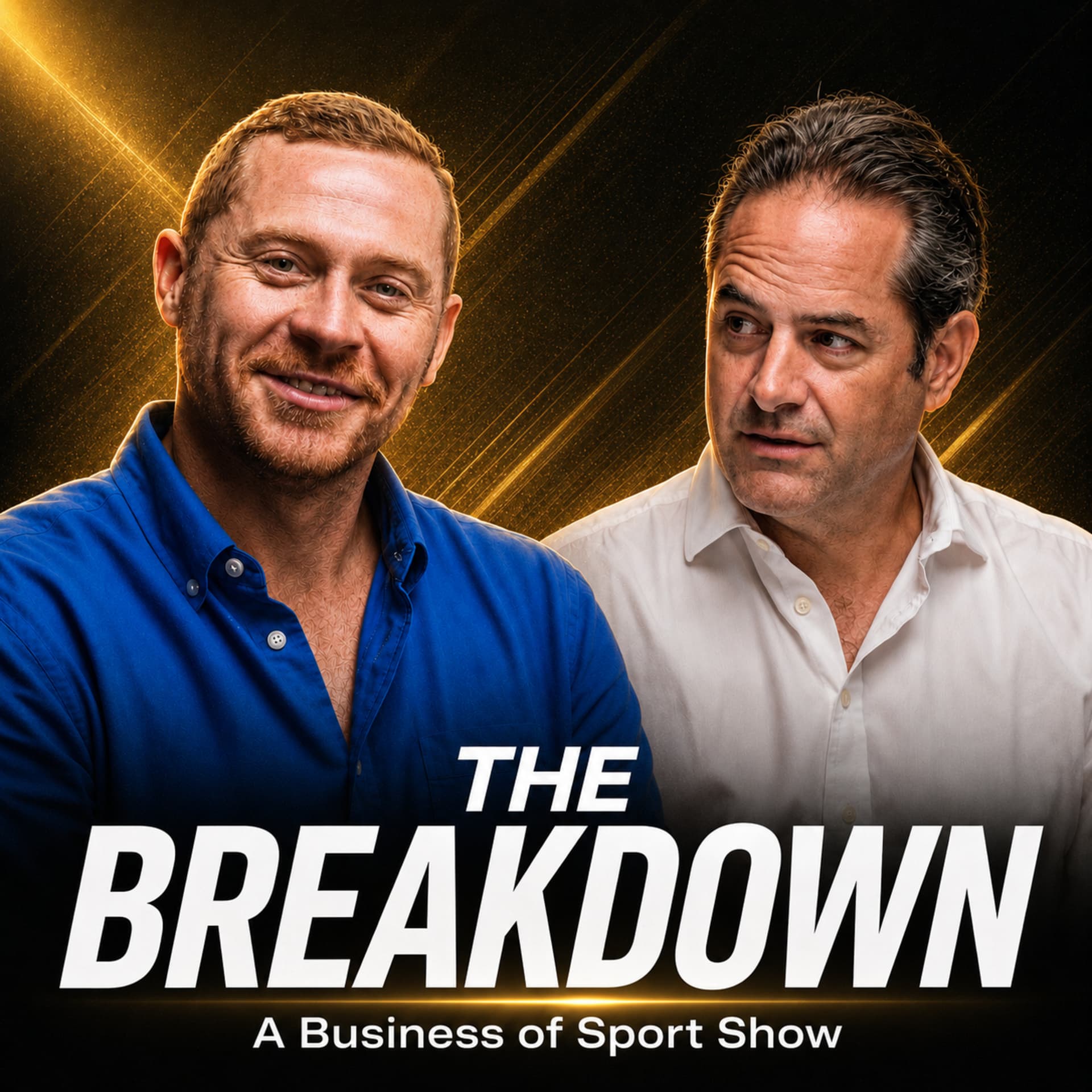
Bristol Bears CEO Tom Tainton discusses the club’s plan to win Premiership silverware while building a modern “fan journey” and revenue engine, and explains how the new Premiership Rugby structure (including removal of promotion/relegation) makes the league more investable without creating dead rubbers.
Guest backgrounds
Tom Tainton is Bristol Bears CEO (long-time Bristol Sport executive). No other guests appear in the transcript.
Key claims
Winning trophies matters, but “true legacy” is how success makes people feel in the community. Bristol is averaging ~20,000 attendance (record average expected) and wants to sell out ~6,000 empty seats. Premiership Rugby’s new structure creates an investable product; data shows only one dead rubber in 24–25. Clubs should leverage player brands and entertainment-style engagement (TikTok, fantasy/gamification) without abandoning rugby values.
Notable examples
Ilona Maher’s three-month impact—ticket demand forced a move to Ashton Gate (~11,000 debut), and a surge in US jersey sales; Lewis Ludlam’s NFL-informed brand leverage; England coach Steve Borthwick’s TikTok dance video (~27M views); Bristol’s Principality Stadium “Super Bowl” fixture (45–50k crowds) and partnerships revenue projected +40–45%.
Written by AI. May contain mistakes. Listen to the episode to check what was said.
Chapters
Tap a time to open that second in VOThe Legacy of Winning Silverware
0:00 to 1:08
Discussing the importance of trophies and their impact on community pride.
“The next step on our journey is to win silverware.”
Tom Tainton's Journey at Bristol Bears
4:35 to 6:34
Exploring Tom Tainton's unique journey and experiences with Bristol Bears.
“when your entire organisation is working from the same intelligent, high-powered system.”
The Impact of Rebranding
6:34 to 8:30
Discussing the challenges and successes of rebranding Bristol Bears.
“And in a way, it was quite liberating because we'd sort of, the bar was very low.”
Growing Attendance and Community Engagement
8:30 to 12:16
Highlighting the growth in attendance and community engagement since rebranding.
“Yeah, so our overarching vision is to inspire the community through rugby success.”
New Structures in Rugby and Future Challenges
12:16 to 14:00
Discussing the new league structure and its implications for clubs in rugby.
“So we have a number of projects ongoing that are looking at fan engagement.”
The Future of Rugby: Promoting Investment and Competition
14:00 to 18:00
Learn about the evolving structure of rugby and the implications of removing promotion and relegation.
“So whether anyone cares or not, I think it's great.”
Media Deals and Financial Strategies in Rugby
18:00 to 21:40
Discover how media deals impact rugby finances and the importance of diversifying revenue sources.
“And the decisions that are being made for the commercial long-term viability of Prem Rugby are really positive.”
Bristol Bears: Building a Sustainable Future
21:40 to 25:40
Explore how Bristol Bears aims to create a sustainable, engaging club culture and boost local partnerships.
“And I look at it from a bear's standpoint, partnerships in particular, that's an area that we've really focused our energy on over the last 12 to 18 months.”
Challenges and Opportunities in Professional Sports Management
25:40 to 28:01
Understand the balance between investing in sport and managing financial losses within a multi-sport business model.
The Joy of Leading a Sports Club
28:01 to 28:28
Discover the passion and responsibility of leading a sports organization.
“Because the whole point of sport and the privilege that I have of being in a job where I get to lead a professional sports club, it's meant to be fun.”
Show all 25 chapters
Multi-Sport Business Models
28:28 to 29:35
Learn how shared ownership enhances performance across sports.
“So we have a shared ownership model with ourselves and Bristol City Football Club and Bristol Flyers Basketball and Ashton Gate Stadium.”
The Lansdowne Family's Impact
29:35 to 30:59
Explore the Lansdowne family's contributions to Bristol Sport and community.
“So you're sharing practice across those, you're having conversations.”
Building a Modern Rugby Culture
30:59 to 32:52
Understand the evolving culture and expectations in rugby leadership.
“I can't speak highly enough of what the Lansdowne have done for the city, just in terms of community engagement, infrastructure.”
The Power of Athlete Branding
32:52 to 34:15
Discover how player branding can drive the sport of rugby forward.
“But I, from a personal level and from that mentorship piece and the opportunities that I've been provided on my own journey, has been immeasurable.”
Engaging the New Rugby Audience
34:15 to 36:24
Learn strategies for attracting and retaining rugby fans in a modern context.
“Now, rugby, as we know, isn't there yet.”
Embracing Change in Rugby
36:24 to 38:19
Understand the challenges and opportunities of modernizing rugby’s image.
“But equally, we can't sit here and talk about rugby values and watch the league die.”
Ilona Maher's Transformative Effect
38:19 to 42:03
Explore the impact of star player Ilona Maher on the Bristol Bears and women's rugby.
“that tension, that tribalness, that rivalries.”
Ilona Maher's Impact on Players
42:03 to 43:23
Learn how Ilona Maher influenced her teammates and the sport's social media presence.
“But I think for Ilona as well, it's the confidence that she gave the other players.”
Engaging New Audiences with Louis Riesammer
43:23 to 44:38
Discover the strategy to engage a new audience through player profiles and messaging.
“and you've worked really hard to get a new audience, you can't then sell them the same message.”
Capitalizing on Major Events for Fan Engagement
44:38 to 45:52
Explore how Bristol Bears leverage key events to attract new fans and enhance visibility.
“And it was there was a significant number of new fans and a significant number of fans that had travelled from outside the wider Bristol region as well.”
Revenue Generation Through Big Games
45:52 to 47:26
Understand the financial impact of hosting big games for the club and league.
“I think it adds credibility and premium prestige to the competition.”
Pursuing Success on the Pitch
47:26 to 48:36
Learn about the importance of winning trophies and the club's current goals.
“We did just under 45 ,000 in year two against Harlequins.”
Balancing Expectations and Reality in Rugby
48:36 to 51:03
Gain insights on the challenges of managing expectations while aiming for success.
“and the decisions that you'll make in the next few years?”
Ellis Genge: A Rising Star
51:03 to 54:19
Discover the journey and contributions of Ellis Genge to Bristol Bears and the community.
“I never ever wake up and think, I've got to go to work today.”
The Evolution of Data in Sports: Beyond Moneyball
56:24 to 57:06
Explore the impact of data collection in sports and its limitations.
“25 years ago, Moneyball revolutionized baseball.”
Transcript
Automatic transcript. May contain errors.0:00The next step on our journey is to win silverware. When you lift a trophy, it's a special moment in time, but it's a moment in time that is enjoyed by those that live in that bubble. The true legacy comes from how you make people feel. We want to leave something where Bristolians walk around with their chest out and they feel good about their team and their city and who they are. I want our team to obsess over that fan journey from when they arrive at the stadium to their experience through the game. How do we make them feel? The players need to better understand the power of their brand. There is a benefit to having values that sit around team and humility, and that's important to rugby.
0:35But equally, we can't sit here and talk about rugby values and watch the league die. When Alona arrived, frankly, we underestimated just how impactful she is. Bears women, we average about 1 ,000 people. When Alona came, the demand for tickets was so high, we had to move a fixture to Ashton Gate. I think we had 11 ,000 for her debut. The key question that we ask every time, is it moving the dial? Is it different enough to get people to sit up and take notice? Because if it's not, and if it's the same thing that everyone else is doing, what's the point?
1:08Tom Tainton:Hello and welcome to The Business of Sport, the show that takes you behind the scenes with the industry's leading owners, operators and athletes. This week we welcome Bristol Bears CEO Tom Tainton to the show. With a new league structure recently announced and some high-profile investments across the Prem, This is a great time to talk about rugby and look at one of the top clubs pushing for their first title to take them to the next level. Now, since we recorded this show last week, there's been a lot of blowback from some fans and media based on comments made by Tom at a sports industry event, most of which seems to boil down to the suggestion that Bristol are a marketing business playing rugby.
1:41Tom Tainton:To those of you that listen regularly, you'll know a huge part of our conversations with CEOs running clubs will include our firm belief that teams are content and marketing businesses and have to think like that to continue to develop in the most competitive sports market that there's ever been. On the blowback, what I can say is this. Tom is one of the most impressive CEOs that has sat in this chair with us across sport. He speaks like an executive that gets it. He understands the demands placed on clubs in this day and age to be more than their performance on the pitch. But, and it's a big but, not once did I feel like he believed this was at the expense of what happens on the pitch.
2:16Tom Tainton:He clearly says the big target is to win silverware, win the prem. A Bristolian running one of the city's major sporting assets, this is what you want to see in sport. So for this conversation, think about the future of the club and the sport as a combination of striving to win on and off the pitch. It's a challenge, but it's a challenge all teams face to maintain relevance. From what I saw, for what it's worth, Bristol Bears have someone in charge who is intent on driving both in equal measure. We're delighted to welcome Tom to the Business of Sport. The business of sport is supported by Airwallex, the intelligent financial platform used by more than 200 ,000 modern businesses, from SaaS and marketplaces to some of the most ambitious organizations in sport, including McLaren Racing, Arsenal and the San Francisco Giants.
3:00Tom Tainton:The off-pitch problem is simple. Your supporters, sponsors and partners are everywhere, but the money that connects them is still stuck in slow, expensive systems, wire transfers that take days, fees that quietly eat into revenue and clunky processes that make simple things feel hard. Airwallex gives you one clean way through it. A single platform to open local accounts in key markets, collect payments from supporters in their own currency, CFX in real time, and pay out fast. From backroom staff to agencies and suppliers. If you're growing the business side of a sports organisation or any global business with the same problem, Airwallex helps you stop losing time and margin to the legacy banking system and move money at the speed your sport moves.
3:40Tom Tainton:25 years ago, Moneyball revolutionised baseball. Then football sporting directors learnt the collect more data lesson. And now, mission accomplished. Clubs have 60 times more information than they did then. But here's what nobody talks about. These clubs aren't meaningfully more successful at player trading. They just have more spreadsheets and departments full of analysts. Gemini Sports is your AI-powered command centre that works with your existing info, team and workflows. It's as intuitive as Spotify. Available everywhere you and your staff need it. mobile, tablet, desktop, API, from the training pitch to the airport lounge.
4:15Tom Tainton:Fully accessible for all tech abilities. Fully customised to how your club actually works. And fully focused on winning the transfer market. The Moneyball era taught us to collect information. Now the AI era is about actually putting that information to use quickly, simply and easily. Visit geminisports.ai and see the kind of edge you can get when your entire organisation is working from the same intelligent, high-powered system. Tom, welcome to The Business of Sport. Thanks so much for joining us. Thank you so much for having me. It's really great to have you in. We've done a few shows with clubs from Prem.
4:49Tom Tainton:We did Harlequins, we did Laureate Harlequins, we did Julia at Northampton. But your journey at Bristol as Chibi-Zec at Bristol has been, well, I'd say pretty unique. You've been there for a very long time. Yeah, look, I'd say I've been fortunate enough to grow up with the business. And I see that as a real privilege. And I think the perspective that you have from being part of a business in the context of Bristol Bears that has really accelerated over the last 10 years, that perspective of being able to say, well, I know what good looks like, but equally I know what not so good looks like. And I understand the journey we're on and where we've come from.
5:29It's given me great context to make decisions for the betterment of the club moving forward. And we've got a really compelling plan around where we're going and what we're trying to achieve both on and off the field. But I don't think any of that would have been possible without the knowledge and understanding of where this club has come from. Because let's be clear, prior to 2017, when we rebranded, there wasn't a huge amount of success that Bristol Rugby could hang their hat on. We've been around since 1888, but there's been a sparsity of silverware. We've had a number of financial difficulties.
6:11We've bounced around different venues and stadia. And really, until we moved to Ashton Gate and had that really consistent footprint, until we've rebranded and come under the Bristol Sport banner, we've not really seen the fruits of the potential that a club of that size in a city like Bristol has had. So it's been an exciting journey so far.
6:34Tom Tainton:How's it when you rebrand? That's something that is incredibly difficult, right, for entities, whether successful or not, because the fans, you know, the people that have had that association with the club previously are often very protective over what's gone before. Yeah, absolutely right. And in a way, it was quite liberating because we'd sort of, the bar was very low. You know, we were rebranding at a time when we'd just been relegated from the Prem. I think our average attendance was around 5 ,000. And like there wasn't, I remember sitting in a room with the guys and our owner articulated as we're in, the club is in a time warp and we're going to keep doing the same thing and definition of insanity.
7:13And we thought about how do we, how can we take some risks and be bold and change the narrative and change the direction of this rugby club? And what it needs is it needs a jolt. This wasn't a kind of here is a here is a progressed transformation plan. It was we are going to rip the bandaid off and we are going to do it and we are going to go hell for leather. And I think liberating is the right word because it was just exciting. It was like we are going to operate a startup. We're going to talk to new audiences. We're going to bring people along on the journey with us. And our overriding message was we're bringing something different to the table.
7:51You have not seen what we're going to do in the rugby space. And naturally that's evolved over the last 10 years. And I'd say we've added layers of sophistication to that plan. But in that first iteration in the summer of 2018, it was all about, is it different? Is it going to move the dial? Is it going to make people sit up and take notice and almost wince and be like, oh, that's pretty close to the bone. That's what we wanted because we wanted that ripple effect.
8:17Tom Tainton:So if you're looking at it eight years on, what would you say back then that you'd wanted to do that you've achieved now has gone well? and what would you say still needs some work and needs to be done to make Bristol Wears the proposition you know it can be? Yeah, so our overarching vision is to inspire the community through rugby success. And what that means is leaving a legacy in our city. And that's silverware, that's the work we do in the community, that's the way we inspire young women, young men to grow the game and play the sport. I think over the last eight years, we can point to some really clear data metrics that tell us that our attendances have got bigger year on year.
9:00There's a higher demographic of female supporters. There's a higher demographic of under 12 and under 19 supporters. So all of the data is telling us that we are growing our audience in the right way. We've had success to a point on the field where we've gone from a team that was in the mid-table in the championship to a side that is consistently in and around the top four. We've reached three semifinals. We've won the European Cup in COVID. But I think the next step on our journey to really establish that credibility is to win silverware. aware and we look at it and our director of rugby pat lamb who's who's a really um special and an impressive guy and the way that he articulates it which i think is brilliant is that when you lift a trophy or you win a game like it's a it's a moment in time it's a special moment in time but it's a moment in time that is enjoyed by those that live in that bubble of sport the true legacy comes from how you make people feel the the hospital visits the time in the community what what bears are giving back the pride that we give people in the city of bristol and how they feel when their team on a weekend achieve success and and that's something that gets me out of bed every morning that's the driver of our team we want to leave something where bristol people and bristolians walk around with their their chest out and they feel good about their team and their
10:34Tom Tainton:city and who they are so interesting we had uh chris richards who's crystal palace center back on the show recently and he was just talking about crystal palace in a similar way never never won a trophy before the fa cup and he just explained what winning that trophy did they'd been competitive in the premier league they'd achieved everything that what you would class sorry palace a mid-ranking club would ever want to do but the silverware looking up in the stands the grown men crying families hugging the taxi that he'll now forever get into and the palace fan who's the driver turning around going you won't believe what you've done for our community he said literally they'd had a hundred years of of just never having that and now they have something that that they hold on to and it's that kind of point isn't it you kind of played that down a bit in my mind because taking it from a mid-champ team in rugby as well you know we're not talking about the shifts that go from the championship in football to the premier league taking it from the champion rugby to now a consistent top four top five team in the prem personally from my view that is a significant achievement it's just what next exactly and i think that you need to be impatient in sport and you're only as good as the what's in front of you and if you stand still you go backwards but i remember our you know we had 5 000 people come and bounce around Ashton Gate in a 27 ,000-seater arena on the opening day of the 17-18 season.
11:59Now we're averaging 20 ,000. This year we'll get our new record average attendance.
12:05Tom Tainton:That's insane. That's amazing. It's great, but I'm saying to our team, that means there's 6 ,000 empty seats. That's a million quid of revenue left on the table every year. So how do we now get to sell out? How do we keep pushing? So we have a number of projects ongoing that are looking at fan engagement. that customer journey. Like I want our team to obsess over that fan journey from when they arrive at the stadium to their experience through the game. How do we make them feel? How do we talk to them? Because that's the next iteration of sport and event entertainment. And when we sit down and we ideate and we look at the season and the campaign planning, the key question that we ask every time is, is it moving the dial?
12:48Is it different enough to get people to sit up and take notice because if it's not and if it's the same thing that everyone else is doing what's the point and i think that that attitude and that collegiate attitude has been shared by the other clubs i think there's a far more collective uh buy-in to how we all grow the league together and you've had some brilliant conversations with julia and laurie and there's you know really interesting intelligent people now who are running prem clubs and we all want the same thing we want a thriving league that in turn helps the clubs grow perfect chance we've got to dive into it and i'm gonna
13:26Tom Tainton:i'll put my flag in the sand i love the move for prem rugby my challenge and i've been told off before by simon is the phrasing of it franchise sorry like but you know there's also part of people understanding a little bit of what's happening i don't even want to say closing a league because it's not there are opportunities for teams to come in what we're really talking about as a structure to allow clubs to rediscover maybe some of the value that they need to to make them investable sporting products which we've seen in a few cases already i actually think also to raise the opportunity to invest in a champ club even though people will look at it and go yeah but now almost they can't get up it's like no they can in this model there's just now a system that they have to adhere to and a quality they have to meet which is actually what happened in to get into the football league in the 40s and 50s right you had to have a stadium of a certain size and a foundation and all of this, like that's super important if you're going to then create a system at the top, which has teams that can all compete together.
14:21Tom Tainton:So whether anyone cares or not, I think it's great. I'm really excited by it from the investment standpoint, from the sporting standpoint. How much of this, from what you've just said, how much of this do you feel comes into this new structure, your ability to do this in this current system? I think that's a great question because we've operated hand in glove with Prem Rugby on this. Like we fundamentally believe in the, it's not a prem rugby strategy, it's all the clubs shared strategy. So the removal of promotion relegation. I mean, let's start there because, you know, the question quite rightly that people will ask is, well, if you remove that jeopardy, then, you know, you get a ton of dead rubbers and you sort of, you kill that inherent value of competitive nature in the sport.
15:08But the data tells us that that doesn't happen. The data tells us that there was only one dead rubber in all of the 24-25 season. And as we're talking now with going into the run-in of the Prem season, there's still six teams that can win the competition. There's still plenty to play for. And the product of Prem Rugby is excellent. Every team within reason can beat each other on their day. I think what Simon and his ex-co have done really well, to your point, and you've hit the nail on the head, is they've created an investable structure. So suddenly you and I are sat here now. We're not talking about the Worcester, London, Irish and WASP scenario, which we would have been doing three, four years ago.
15:53We're talking about the fact that it's well documented that Exeter are looking to onboard third party investment. Bath have just taken on investment from James Dyson. Red Bull have obviously gone and taken the Newcastle. There is a swirl of attention now around rugby because it is a product that has appropriate governance, the right parameters for financial sustainability around it. we've put in some really positive steps around financial monitoring, the minimum salary floor, minimum operating standards. And I think you're right. If I'm an aspirational champ club, the door is not shut for me. The opportunities will present themselves when I am in a position that I am commercially able to and competitively able to compete.
16:40Tom Tainton:Completely. And if you actually look at what the last few years have been, We've always talked about open systems, but the last teams get relegated with Saracens, the last teams get promoted with Saracens quite a few years ago in 2021. So yeah, fine, the system may have appeared open, but really there were situations happening every single season, which meant teams weren't really coming up and going down Ealing. You know, however many times they've won the champ, they don't have the infrastructure to meet the requirements of Prem. So if I'm now going, oh, do you know what? Maybe the time to invest in Ealing.
17:08Tom Tainton:because if I can get a piece of stadia in place and we can keep the competition really high as in performance on the pitch really high, suddenly Ealing now has the chance to get up to the prem. We've got a really good bid, whether beforehand. I'm not even sure like being in the prem, well, being in the prem wouldn't have been an attractive proposition for me as an investor because I still see significant losses across a lot of the clubs. I still see struggles on the core product and its financial distribution to the clubs. this to me it just feels like that changes it it's not closing it it's just a different way of presenting opportunity and it's sharpening the focus i think that rugby as a sport has been guilty of of standing on its soapbox and saying here are all the things we should do and then we all pat ourselves in the back and then we we carry on doing the same thing and it's actually now is the time for for tangible action so we've gone from saying we need to do xyz to we are doing xyz And the decisions that are being made for the commercial long-term viability of Prem Rugby are really positive.
18:13I think that they support in the Team England piece. I think they create better pathways for young English players to get minutes. So I think there is a performance element at international level as well that we can look at. But as you've rightly articulated, if I'm an investor and I'm now looking at the competition and its feasibility, I see a product that is highly competitive. I see a clear narrative where we're now leaning into that gladiatorial collision sport. There's a great TV deal. We've got a really robust agreement with the RFU. Everything is in place now for the sport at domestic level to really kick on.
18:54And it's not without its challenges. And we are still very much in the primacy of our sort of professional life, if you like. And I use that everyone looks at the EPL, right, as this, the English Premier League, as this sort of bastion of what good looks like in sport, an unbelievable TV deal and a great thriving championship that sits below the Premier League. But I'm old enough to remember, only just old enough to remember what happened pre-92 in the B-Sky-B deal. And I remember what First Division football looked like in the late 80s and the challenges that you had with hooliganism and the quality of games and infrastructure and pitches.
19:38And it took some bold decisions to put in place that Premier League. And you look at where that's gone. I see Prem Rugby in an equally exciting place now where the foundations are in place. I think that you have 10 teams that all are aligned in wanting the same thing. And that's not always been the case. I think we've always struggled, I guess, that there are lots of competing factions and what Bristol Bears want is different to what Harlequins wants and so on and so forth. but we're now in a place where everyone is in the same room signed up to the same strategic plan and I think that we will find that the next three to five years will be able to generate some real interest in the product.
20:25Tom Tainton:I don't want you to throw your paymasters under the bus you said something interesting there though you said great media deal do you think it is a great media deal? I think it's a great media deal in the context of where we are now I think that there There is always going to be a debate as to the benefits of a paywall media deal versus free to air. But in terms of what the clubs get from central distributions and that TNT offering and how TNT are growing the game, because I think the production is excellent. I think it's really positive for the clubs. It's interesting because you mentioned the Premier League there.
21:03Tom Tainton:while the media has been such a well-documented tool for them to use in a positive way and build the financial opportunity that comes out of it what it's also done is for some clubs particularly ones maybe close to the bottom it's meant that a huge reliance of their businesses on central media and central revenue really which they don't have an influence over so there are some premier league teams that maybe have 75 percent of their revenue which is premier league tv money now it's great when you're in the premier league and thriving but if you're not or if something happens that media money you're very exposed because your business is really 25 million not 125 million while you would i'm sure like the media to be a bigger piece of the pie it's probably also giving you an opportunity to really develop business lines beyond media that you actually control as an individual club that you're not relying on a league giving you absolutely and that's where our local revenue drivers, be that partnerships, hospitality, ticketing, that's where we can capitalize and see genuine yield straight away.
22:07And I look at it from a bear's standpoint, partnerships in particular, that's an area that we've really focused our energy on over the last 12 to 18 months. And we'll see a 40 to 45 % increase in revenue in that space. In the last year? In the last year. Really? Yeah, and that comes from having a really clear story that we've gone to market with. But I think it comes from us being able to say that Bristol Bears is open for business, that we are a club that has the infantry and the assets to drive value for our partners.
22:42Tom Tainton:So is that you upselling existing inventory or is it you creating new opportunity? It's both. It's both. I don't want anything to be, obviously there are exclusive categories and there are areas of our sponsorship inventory that we obviously can't touch because of the league central deal. But I challenge our team all the time that, you know, what about events? What about networking? What about client acquisition? What about employee engagement? How do we squeeze every last drop out of our business? How do we really sweat the asset? because it's well documented that we are a loss-making business.
23:21We rely on Stephen Lansdowne and the Lansdowne family as our benefactors. But we're also, we're sitting on an incredible opportunity because Bristol is a, it's a really diverse, affluent, tech-savvy, major hub outside of London. A great place to live and work, somewhere that we're fiercely proud of. and I want people who live and do business in Bristol to feel like Bristol Bears is somewhere that is aligned to their own business and their own company. And I use the analogy of when you go to games in France, the city or the town in which you are playing grinds to a halt on match day. Like the city lives and breathes their club.
24:13And if you want to do business in Bordeaux, you've got to do business with the rugby club. And I love that attitude. I love the attitude of everyone buys into the bigger piece because I am a custodian of Bristol Bears. My job and my legacy is to ensure that the club has the sustainable footing to be successful for generations to come. And the only way that we can do that is to create the right stories and narratives now and bring people on the journey. And you know this because you've built a successful business. It's very easy to get bogged down in corporate buzzwords and strategy. And actually, when you actually boil it down and you simplify it, it's about people and relationships and authenticity.
25:02And I believe in who Bristol Bears are and what we are selling to the market. And I want people to come on the journey with me. My attitude is almost like we're going to get there whether you're with us or not. but if you're with us then we'll be able to supercharge that and partnerships for me is is the is a is a great gives us that great ability to then focus our energy on fan engagement focus our energy on on how we we bring a really compelling product on match day so all of it comes hand in hand and obviously as you know the the more revenue we can generate then the the greater ability we have to build a squad which in turn creates success because i mean you
25:40Tom Tainton:mentioned it there well there's two things that are really interesting one and we'll start with it is sustainability two is ownership structure and the really unique setup that you have one sustainability right this is a word that gets thrown around in sport all the time not meaning to always bring it back to football but you know you in football in the premier league you're in a landscape this season where sustainability has meant you lose 105 million over three years i mean it's just absolutely mental right that's not sustainable so it's just so funny how sport has redefined the meaning for this word but you're we all know what it really means right it's people trying to move in the right direction to reduce losses of businesses that previously have been a lot more than losing that amount of money you lost in the last account said 5.6 million against a revenue of let's say 12 so you're moving things in the right direction but i've no doubt right not gonna be rocket science to recognize do you want that 5.6 to come down so i think we know how you plan to do it you know you said leverage all of this opportunity but also really how much of a prohibitor is it i guess to what you can do how much focus is put on it versus do you know what we know we've got to we're still going to have to probably spend a little bit to get better we're still going to continue to operate well and we know given time that number will reduce if we nail everything else as you said you still got a million's inventory sitting in the stadium if you can sell that out yeah and it's the the paradox of professional sport isn't it because you want to invest and have the very best product on the pitch but in order to do that then you increase your your losses over here um i think that you're absolutely right you're you're you're constantly looking at how you can squeeze margin manage costs and at the same time grow revenue and the two are sometimes jarring objectives is there room for us to to reduce that reduce that 5.5 million home loss absolutely and that's you know that's a key part of of of my role but i don't see that as a regressive you know let's let's sit down in a room and work out how we manage head count or let's you let's really go into granular detail on our spend on our academy and first team.
27:55I want to reduce the losses in a positive way by growing revenue.
27:59Tom Tainton:You strike me as a make more revenue guy, not a cut cost guy. Yeah, 100%. Because the whole point of sport and the privilege that I have of being in a job where I get to lead a professional sports club, it's meant to be fun. It's meant to be fun and it's meant to be a privilege. And you should wake up every morning with a bounce in your step of being like, right, what can I do today that's going to make a difference and that's going to change the dial? And I should point out that obviously we work in, we operate in a multi-sport business. So we have a shared ownership model with ourselves and Bristol City Football Club and Bristol Flyers Basketball and Ashton Gate Stadium.
28:41so the the way that we we account for that multi-sport business is obviously different to some of our peers in the prem so it's it's not a like-for-like comparison in terms of our losses versus a sale or a or a northampton for example the advantage that we have of that shared buying power of of working with with the other clubs the other advantage is that we have that best practice that shared ip i can draw a ton of inspiration from from football and the excellent governance that comes from in bristol city's case being in the efl and what inspiration can we take from that and draw down into rugby and equally by the same token what can the football club look at on the rugby side in terms of our culture and the way that we engage our community that might not necessarily be typical in a football environment.
Read the full transcript
29:41So I think it really works.
29:43Tom Tainton:So you're sharing practice across those, you're having conversations. Is it Charlie Boss? Charlie Boss, yeah. So he's now chief executive. So you guys will... Yeah, and Charlie's been in for a little over a month now, and he's been a breath of fresh air because he's come in with new ideas. And Charlie and I have spent a lot of time together, been out for a few beers, shared ideas. And I really like what he is trying to build. And obviously he has a very different ecosystem to my ecosystem, but we have a shared ticketing platform. We have a shared marketing service. So there's a ton of places where we are singing off the same hymn sheet.
30:25Tom Tainton:Tell me about the Lansdowne's then. The owners, right? The Lansdowne family who have done a huge amount for Bristol Sport. And you mentioned that multi-club ownership group. But it's quite a unique setup and just really interested to know how that all works for you. Well, so it's so Steve, Maggie and John, all of whom have a vested interest in in bears. They they come to games there. They're present. They're visible, educated and articulate on where our challenges and opportunities are. As someone who grew up in Bristol, let's park the sports side up for a moment. I can't speak highly enough of what the Lansdowne have done for the city, just in terms of community engagement, infrastructure.
31:15we've obviously got our high performance center uh bristol city have theirs we've got ashton gate stadium and we're in the process of building the ashton gate sporting quarter which will be multi-use conference facilities events a basketball arena the impact that the landsdowns have have had on their community and they deeply care about it and that's i think the most important thing for me is it's authentic. They deeply care about Bristol. They want the city to have clubs that it can be proud of and they understand that sport, the role that sport can play as a vehicle for good in the community.
31:52From a personal standpoint and from a purely rugby perspective, they're engaging and they're understanding, but they're challenging. And I like that because they're challenging in the sense of how are we being different? You know, we don't want boring. We don't want status quo. We want to constantly be pushing the boundaries.
32:15Tom Tainton:You said to me before that they, you know, they're very happy to make mistakes, for you to make mistakes because it shows you're doing something. Yeah. And believe me, I've made a ton of mistakes. That's a really important philosophy, right, in sport, because otherwise you just fall into the mire of doing the same things over and over again. For sure. And look, I'm relatively young to be in this role. And that being in this position, it has come from the faith that Steve has shown to give me that opportunity. And it's not charity. It's sink or swim. If you're not good enough to do the job, we'll find someone that can do the job.
32:52But I, from a personal level and from that mentorship piece and the opportunities that I've been provided on my own journey, has been immeasurable. and I feel duty bound and I want an obligation to pay the Lansdowne's back. And the best way that I can do that is to deliver a team that supports in their objectives.
33:13Tom Tainton:I want to look at a huge needle mover in sport, which has been the optimization of talent, like to help drive brand club. We're in such a different environment to where sport was maybe 30 years ago. And what I mean by that is individual athletes can be more popular, are more followed than a lot of the teams they play for some people have issue with that some people embrace it rugby's always had an interesting challenge with the personalities that it can promote you know putting your head above a parapet in dressing rooms i've had these conversations with players and it's like no no because it's always the team it's the team environment and that's starting to to change a little bit how with the talent that you have and you have some great names and have had in the past year as well how do you view um the opportunity presented by being able to leverage those amazing players and people that you have versus also you know the challenges that rugby has as a brand and an image which is learning to adjust to this type of environment we've talked about this in depth because the the best example of how a a star profile can drive a sport is lebron james you know and you have a people support the lakers because of LeBron and when he went back to Cleveland and so on and so forth, and have Lionel Messi into Miami, having superstars, out-of-this-world superstars that can bring an audience with them.
34:38Now, rugby, as we know, isn't there yet. That's not to say it can't get there. And we had our first taste of it last year when Ilona Ma came in on the women's side. She came to Bristol on a short-term deal. If there is an ability for us to drive value and recognition through that player's brand, then absolutely that should be the cherry on the cake. Where do I think rugby is with it at the moment? I think that there is an education piece that lies on both sides of the fence. So I think that the players need to better understand the power of their brand. And I think the clubs need to better understand how to leverage that power.
35:21So Lewis is a prime example. So Lewis has come in with a lot of fanfare and obviously his background in NFL and Lewis gets it. He's super diligent, but he's switched on to opportunities and he knows how to market his brand. and he knows that Bristol Bears can help him grow that brand. And in turn, we know that Lewis can help us grow the Bears brand. So it's a brilliant relationship where there's mutual understanding on both sides. We probably have some way to go with some of our more high-profile players in terms of cajoling them to come out of their shell. And you referenced it earlier there about the values of rugby don't necessarily align to this idea of it's all about the one player and it's a superstar and how do we bring the personality out?
36:14And there is a benefit to having values that sit around team and humility and that's important to rugby and that shouldn't be thrown to the wayside. But equally, we can't sit here and talk about rugby values and watch the league die. So you have to find new ways to cultivate interest.
36:33Tom Tainton:It's the Henry Pollock piece, isn't it? Henry Pollock piece. And you see someone who does something slightly differently or, you know, who has a character that you're not used to seeing in a certain environment. That's the type of thing that starts bringing the sport forward. Absolutely. And but that has to be supported by gamification. It has to be supported by fantasy. It has that you think of how successful certain videos games have been in the football space. You think how successful NFL fantasy football are. like there are things that rugby have yet to adopt or if they have adopted it, we haven't adopted it consistently or well enough yet.
37:11Because yes, Henry Pollock is engaging and he's fun and he's a brilliant player. And there's 20 other guys in the Prem that have the equal level where they could, you know, there's a really high ceiling to where these guys can go. But we've got to put the building blocks around them to create that success.
37:32Tom Tainton:That's where Matt Schum's, Eddie Hearn's play will be interesting to see whether, you know, taking some of these people on opening doors. Now, yes, of course, it has direct relevance to Finn Russell and Henry Pollock in this situation. But also, does it have just a broader effect where you have a very public, very famous promoter, agent, suddenly looking at rugby as a way of identifying opportunity? And it does that just by association, start making some of those players that you outlined, if they can be changed, appealing? Absolutely. And I think that because Eddie comes from a background where everything is about entertainment, you know, when you think of a boxing matchup and that head to head and the storylines that come through the week and creating that tension and narrative, like that's what gets people excited.
38:18and we haven't necessarily got that in rugby, that tension, that tribalness, that rivalries. There is an element of it, but it's too soft around the edges to draw in the new audience. You've got to find ways to create that.
38:38Tom Tainton:How did you deal with Steve Borthwick embracing TikTokification? I really enjoyed the video that the England boys did after that win. Was it the November International? Yeah. Poor Steve answering the question and looking slightly bemused. But I thought he did it amazingly. I mean, to be clear with all of them, I think it was, well, it was Henry Pollock and was it Freddie Stewart? I can't remember the others in it. Yeah, it was Freddie Stewart, yeah. But there was basically four of them in a hotel room doing a dance. Right now, to most people in rugby, no. To a lot of people, you know, but hey, massive engagement.
39:14Tom Tainton:I think he drew something like 27 million views or hits on that video. And he basically came out and said, look, we're now speaking to a new audience. We need to be available. Very rarely is a head coach in multiple sports do you see a recognition of embracing things like that because they only want you sometimes looking inwards at the job. And again, I don't know, just a signal to me coming from the head coach of England and a guy you would never expect that to come from, a recognition of the move in the right direction. Yeah. Maybe a bit cringe, but it needs to happen. And I love that Borthwick embraced it.
39:51And I love that he recognized that that signals an opportunity because it does. And there are always going to be a group of people. And this is irrespective of whether it's rugby, football, any sport, there will always be a group that are resistant to change. And that's fine because that's part of the natural recourse of a transformation program.
40:12Tom Tainton:A hundred percent. And I don't want to pass over something you mentioned there because I think it's the best example of it. And it's not just about women's rugby. It shows the power of an athlete, male or female, to really move that needle without wanting to overuse that phrase. But tell us the actual material impact bringing Ilona Marr for three months did and brought to the club, to the women's team, but also to the brand. Yeah, so when Ilona arrived, frankly we underestimated just how impactful she is most followed rugby player in the world right most followed rugby player in the world men and women men and women and she was incredibly gregarious an amazing team person she brought the guys along on the journey with her she was another one that understood the power of of her brand we typically play bears women at a venue called Shaftesbury Park in the east of the city.
41:08We average about 1 ,000 people. When Alona came, the demand for tickets was so high, we had to move a fixture to Ashton Gate, and I think we had 11 ,000 for her debut, which in Prem men's games would have put us in the top four or five. That's absolutely insane. We sold more jerseys in a three-day period to postcodes in the US than we have ever for any shirt. And what she did was a lot of people were like, we are Bristol Bears fans now because of Alona. And the challenge that we then said, and we talk about this post-World Cup as well, is it's all well and good having these flashes of momentum, but how do you bottle it up?
41:54How do you capture it? And that's where the data and the engagement pieces is so key. Everything has to be underpinned by that data strategy. But I think for Ilona as well, it's the confidence that she gave the other players. So she came into the environment very much. I'm proud of who I am. I'm proud of what I stand for. This is what I do. And I'm going to talk to the world. And since then, we've seen Sarah Byrne, who's obviously an exceptional player, one of the best players in the world, World Cup winner with the Red Roses. is she's now got her own established Instagram following and TikTok following because she's almost adopted that mantra from Ilona.
42:35I'd like to see that more on the men's side of the game. I still think that there's more barriers for the male players to really engage in that social content piece. I think it's getting better, but it still needs one or two people to absolutely smash that ceiling and drive it forward.
42:59Tom Tainton:When you have then a Louis Riesammer, as you said, come in, he's been so well profiled over the last few years. Obviously, the move into the US was notable. Did you see that time he'd had away from the game, bringing kind of a new group of people for him, following him that then followed you? No, we absolutely captured a different audience with Louis. And the challenge that we have is when you get a new audience and you've worked really hard to get a new audience, you can't then sell them the same message. So a new audience requires a new message and it requires a new strategy. And Lewis is really interesting because he looks great, he talks great, he's quick, he's showpiece, he scores tries, and he has that US factor, which is obviously really compelling for us with the World Cup on the horizon.
43:50So I think the player element is one piece of it, but it has to be wrapped into a really thought out strategy of, right, OK, you didn't support Bristol Bears yesterday. Now you're interested in Bristol Bears. How do I now hook you in? And I don't just want to hook you in for one game. I want to convert you into that funnel. And then suddenly I want you to be a lifetime fan. And actually, I don't necessarily need you to come to Ashton Gate every week, but I want you to consume our content. I want you to buy a jersey. I want you to subscribe to our newsletter and so on and so forth.
44:26Tom Tainton:Do you have any data or ways to see when you suddenly go from an average of 1 ,000 to 10 ,000 for the women's game? With a learner in it, how many of those were new fans versus, should we say, Bristol fans that may, for the first time, have given the women's product the proper attention it should get? We do. And it was there was a significant number of new fans and a significant number of fans that had travelled from outside the wider Bristol region as well. So that was really exciting. And as I'm sure you're aware, we we take a fixture to the Principality Stadium every year. It's like our sort of Super Bowl moment.
45:02And again, that's that's essentially a day to play. It's not a land grab. And that's been leveled at us a number of times of Welsh rugby's facing some challenges. And is this Bristol sort of taking advantage and going over the bridge and potentially, you know, trying to take fans from what could be perceived as a, you know, a distressed product in a challenging period. It's not that. It's the geography that we have one of the best stadiums, if not the best rugby stadium on the planet, on our doorstep and the ability for us to take an event and supercharge it and create a real showpiece of this is who Bristol Bears are.
45:46that's been really exciting and that's helped us capture different people and a lot of day trippers who might not even necessarily see rugby as a core affinity for them but they love big events they love cardiff as a city and they want to come down and see what bristol bears can deliver
46:03Tom Tainton:tell us about that big game we've seen like we've seen quite a few clubs you know it's been i went to harlequin's saints at twickenham was amazing saracen's done it at the tottenham hotspur stadium you're in the principality these kind of moments they're key for the prem rugby strategy just as just as key as they are as revenue drivers for bears from a revenue standpoint it's obviously it's significant for our for our pnl we can generate significant return in terms of ticket sales and commercial value but for from a league perspective to have these key touch points through your calendar for the broadcaster to really get behind it.
46:43I think it adds credibility and premium prestige to the competition.
46:48Tom Tainton:You can also demonstrate there is the audience at that scale, right? That's it. And I love what Harlequins have done with their big game. We played them this year at Twickenham just before Christmas. And as an occasion, and what they delivered pre-game and the build-up and the light show and the live music and entertainment, it's exactly that. it shows that rugby is not a niche product that's sitting in the shadows. Rugby is a product that can go to the Allianz and it can sell out the Allianz. And that's something that we should all feel really excited by. And the Principality is a pretty great venue to do it as well.
47:24With the roof closed. Yeah. We did 50 ,000 in year one against Bath. We did just under 45 ,000 in year two against Harlequins. we're going into the third year of our agreement with the principality and we look to go one better again this year but it's just given us a point of difference it's given us another reason to talk to our audience and I don't think that we have any plans to stop exploring these opportunities and that's not to say the future will be at the principality it could well be, it could be somewhere else but there are other territories to explore and there are opportunities to explore.
48:06You mentioned earlier winning on the pitch, right?
48:08Tom Tainton:And it always comes back to this. It can sound so good in theory. Everything's great. We've got all these plans. But you still want that trophy, right? Because the trophy enables you to do everything else much more easily. It's brilliant to have a story of success to tell alongside it, proper success domestically in the prem. How close do you feel you are? to achieve that goal? How is it shaping the decisions you're making now and the decisions that you'll make in the next few years? So we finished in the top four last year and we lost out to Bath in the semifinal to the eventual winners. Our aspiration this year is to be in the playoffs again.
48:51We're on track. I think that we are a squad that is more than capable of winning the Prem. I think that are we the finished article? No, but we've got an incredible coaching staff and we've got a cohesive squad that we haven't really made too much change. There's not been that much churn in our player group for the last three or four years. So there's real consistency in what we're doing. And we've invested a lot of time and energy and resource into our academy. And that's beginning to bear fruit and that will be a slower burn. And it's what we talked about earlier, like we need to win now, but also we need to win tomorrow.
49:36And that's where our academy is going to really pay dividends. In the here and now, on and off the field, I feel like we are in certainly the strongest place we've been since my time at the club. But like anything, you need a bit of luck on your side. We've not had the best of luck with injuries. we're really leaning now into the depth of our squad but it's all to play for and that's all
50:01Tom Tainton:we can hope for we're at the dance it's the cool part of being a chief executive isn't it to the extent where you control a lot around the week but really really again the thing that matters those 80 minutes on the pitch on a weekend you have to just sit there and let it happen it's it's the biggest idiosyncrasy of working in sport you can have the best laid plans and at the end of the week you hand that product over to someone else to deliver it and if we win you're a hero and if we lose then you're the worst thing ever that is sport and that's what makes it so fun and that's what makes people all around the world love it because anything can happen yeah and you are you said you know you're a bristol guy right sports fun this is entertainment of course it's business there's real money coming around it's a really important business but the essence of it is entertainment it is fun there's also the other side of it it must be amazing for you i got a local guy a fan right as well and people talk about whether it's good or bad but it must be a very very cool thing to run one of the core assets of your city sporting assets of your city yeah it's a it's a privilege and it's a pressure you know it's a there's an expectation to deliver and I relish that expectation.
51:19I never ever wake up and think, I've got to go to work today. Like I love it. I love the people I work with. I'm proud of what we've built and what we are building. And I know that when we win silverware and it's when not if, that I will be able to look around that room at so many people that have given so much to that rugby club from where we were 10 years ago And from where I started, where we might not have even had a club to enjoy, we're on the right track and we're on that journey. And I feel like my job as a custodian of Bristol Bears is to support in leaving that legacy. And if I can help bring silverware along the way and help the coaches and players do that, then that will be fantastic.
52:07Tom Tainton:What element have you found the hardest? It's balancing expectation with reality. And it's like anything, it's managing the politics. You know, you have to make the high pressure decisions that have an impact on a number of different stakeholders. And you can't keep everyone happy. and I'm someone that I really enjoy being around people and I really enjoy building relationships and that's been part of my learning over the last three or four years of you have to make the right decision for the business and you have to strip out the emotion of it and I'm someone that like I like to think that I am an empathetic leader like I genuinely want people around me to do well and be happy and be supported but sometimes in sport you've got to be clear that this is the direction we're going and this is this is what's going to happen final one um how's ellis genge to work with well i've known ellis since he was 14 okay so you've got the full experience yeah he is um he is brilliant you know he's incredibly intelligent young man um when we talk about like celebrity in bristol ellis is a celebrity like ellis is recognized he's mobbed after games he handles himself impeccably um and you know like for for a guy that has grown up in norwest which is a which is a council estate in in bristol to be a mixed race young man to come up in in bristol and to have thrived for a state school system and to represent us for the british and irish lines and for england he's testament to everything of what he's about.
53:55And Ellis is a community ambassador. He does a huge amount of work with our foundation. When he's in full tilt, he's unstoppable. And, you know, because I've seen the journey that Ellis has been on and equally he's seen the journey that I've been on, there's an incredible mutual respect there. I think you guys have
54:18Tom Tainton:some really exciting times ahead. And I don't say that to everyone, I promise, we see it with a lot of people. Congratulations. I never like to throw it down to age because we're all so young, but, you know, like 36, we're doing this. Not bad. Well, thank you very much and I appreciate it. Thank you so much to Tom for joining the show. As I mentioned at the start and in light of some of the scrutiny placed on comments made in recent times, I wanted you to take this conversation with a balanced approach to both what needs to happen on and off the pitch to achieve maximum success in today's sporting environment.
54:46Tom Tainton:I hope, having listened to this, that you, if you're a fan, are confident the club is moving in the direction to achieve that prem title Tom spoke of, while also attracting some of the best stars and biggest brands to build value off the pitch in a new way. That, if done right, will lead to further success. Thank you for tuning in, and I hope you enjoyed the show. Now, if you want to see more from today's show, you can do so by going to YouTube or any of our other social channels across Instagram and TikTok. There are more snippets to share and bite-sized chunks to consume. And whilst you're there, please do like, subscribe, and follow the show.
55:16Tom Tainton:As you will hear from your other favorite pods, it makes a huge difference when bringing you the best guests and conversations from around the world of sport, which of course is our endless aim. Thank you again for tuning in and we'll see you next week. The business of sport is supported by Airwallex, the intelligent financial platform used by more than 200 ,000 modern businesses from SaaS and marketplaces to some of the most ambitious organizations in sport, including McLaren Racing, Arsenal and the San Francisco Giants. The off-pitch problem is simple. Your supporters, sponsors and partners are everywhere, but the money that connects them is still stuck in slow expensive systems wire transfers that take days fees that quietly eat into revenue and clunky processes that make simple things feel hard airwallex gives you one clean way through it a single platform to open local accounts in key markets collect payments from supporters in their own currency cfx in real time and pay out fast from backroom staff to agencies and suppliers if you're growing the business side of a sports organization or any global business with the same problem, Airwallex helps you stop losing time and margin to the legacy banking system and move money at the speed your sport moves.
56:24Tom Tainton:25 years ago, Moneyball revolutionized baseball. Then football sporting directors learned the collect more data lesson. And now mission accomplished. Clubs have 60 times more information than they did then. But here's what nobody talks about. These clubs aren't meaningfully more successful at player trading. They just have more spreadsheets and departments full of analysts. Gemini Sports is your AI-powered command center that works with your existing info, team, and workflows. It's as intuitive as Spotify. Available everywhere you and your staff need it. Mobile, tablet, desktop, API, from the training pitch to the airport lounge.
56:59Tom Tainton:Fully accessible for all tech abilities. Fully customized to how your club actually works. And fully focused on winning the transfer market. The Moneyball era taught us to collect information. Now the AI era is about actually putting that information to use quickly, simply and easily. Visit geminisports.ai and see the kind of edge you can get when your entire organization is working from the same intelligent, high-powered system.
From the publisher
This week we welcome Bristol Bears CEO Tom Tainton to the show. With a new league structure recently announced and some high profile investments across the Prem, this is a great time to talk rugby and look at one of the top clubs pushing for their first title, to take them to the next level.
Now since we recorded this show last week, there has been a lot of blowback from some fans and media based on comments made by Tom at a sports industry event, most of which seems to boil down to his suggestion Bristol are a marketing business playing rugby. To those of you that listen regularly, you’ll know a huge part of our conversations with CEO’s running clubs will include our firm belief that teams are content/marketing businesses and have to think like that to continue to develop in the most competitive sports market there has ever been.
On the blowback, what I can say is this. Tom is one of the most impressive CEO’s that has sat in this chair with us, across sport. He speaks like an executive that gets it. He understands the demands placed on clubs in this day and age to be more than their performance on the pitch. But, and it’s a big but, not once did I feel like he believed this was at the expense of what happens on the pitch. He clearly says the next big target is to win silverware. Win the Prem. A Bristolian running one of the city’s major sporting assets; this is what you want to see in sport. So for this conversation, think about the future of the club and the sport as a combination of striving to win on and off the pitch. It’s a challenge, but it’s a challenge all teams face to maintain relevance. From what I saw, for what it’s worth, Bristol Bears have someone in charge who is intent on driving both in equal measure. We’re delighted to welcome Tom to the Business of Sport.
A huge thank you to our amazing partners on the show:
Airwallex
The intelligent financial platform for global businesses
https://www.airwallex.com/uk/
Gemini
We empower the most confident sports organisations on Earth
If you’re interested in partnering with the show, please reach out to us at