Ask ChatGPT


 ChinaTalk
9 Nov 2026 · 1h 5m · 27 chapters
The episode debates whether Democrats are “cooked or cooking” after a midterm election, and what a new Democratic Congress should do with legislative power.
Kevin (writes Interconnected on US-China tech competition, geopolitics, investing); Matt Klein (writes Overshoot, author of Trade Wars or Class Wars); Peter Harrell (Georgetown Law; private-practice attorney).
the election process avoided feared interference/denial and resolved peacefully; China’s politics are more uniform than US party “wings,” and the US should value diverse voices. On policy, they argue Democrats should pursue votes early on tariffs (including repealing Section 338/limiting new Section 232) and address industrial policy and “rare earth”/EXIM-style deals via oversight, transparency, and conflict-of-interest rules. They frame AI/data-center opposition as bipartisan and propose a pro-growth agenda: data-center transparency, grid-cost funding by builders, and incentives for union labor. Notable example: Texas governor race helped by data-center backlash; Virginia “data center alley” boosting property-tax revenues. They also discuss the “Jensen affair”: alleged physical closeness between Nvidia CEO Jensen Huang and a Chinese spy, and argue the administration may have failed to issue a routine FBI defensive warning.
Written by AI. May contain mistakes.
Discussion of Chinese politics and the excitement for democracy in the U.S.
“Should we start with my corny democracy stuff?”
Hosts discuss the proposed rebrand to 'Are We Cooking?' and its implications.
“Who else wants to do corny shit before we jump into the jokes?”
Reflections on potential interference during elections and the overall political landscape.
“So I'll stop there for now with my corny shit.”
Discussion on the priorities and agendas the new Congress should pursue.
“Well, I mean, I actually think I probably kind of agree with their priorities.”
Analysis of industrial policy, tariffs, and challenges faced by Democrats.
“There are some tariffs that are easy to undo and will have strong bipartisan support like the Canada-New Mexico ones.”
Exploring the bipartisan opposition to data centers and potential legislative solutions.
“I am also realistic that, you know, there are going to be temptations to only focus on the kind of corrupt, the headline grabbing parts of this and not on actually getting the policy right over the mid to longer term.”
Explore the united front against data centers among rural residents and activists.
“And then you have all this freaking concrete going up to do God knows what.”
Discuss potential AI legislation to boost transparency and investment in infrastructure.
“which frankly won't even get very far in Congress, let alone the White House.”
Analyze how public perception of AI impacts support for data centers and industrial growth.
“But I guess on the other plus side, right, like, these aren't factories that are poisoning the water and, like, giving your kids cancer.”
Examine the political landscape for Democrats to win back union support through data center policies.
“You might like it, but you don't feel good about liking it.”
Discuss the insufficient financial contributions from AI companies to local communities.
“Like what happened on Tuesday is really just step one, right?”
Explore the evolving relationship between local governments and tech companies regarding data centers.
“a positive sum outcome here of sharing kind of a, you know, the surplus gains from building these things that need to make a deal, change the terms.”
A discussion on the potential for new export control measures by the next Democratic Congress regarding China.
“We just haven't seen Congress actually get over the finish line, various export control measures on China.”
Exploring how export controls could affect consumer prices and the economy amid rising inflation.
“Now, I don't think that's going to be first hundred days, right?”
Analyzing the implications of Jensen's alleged relationship with a Chinese spy and its political ramifications.
“That was just like, I saw that and I was like, oh, this is some sketchy ass shit.”
Discussion on the standard governmental protocols for warning individuals about foreign espionage threats.
“What has transpired, if anything, right, between Jensen and the lady?”
Exploring the intersection of espionage, business relationships, and strategic information extraction.
“And it's like because the institutions are so used to it and this is such a normal thing, like it had to come from like it had to come from somewhere really high up to say, oh, no, let's not tell Jensen about that.”
Speculation on how upcoming U.S. actions and elections may influence relations with China.
“I mean, all the reporting has focused on what information is she getting from Jensen himself?”
Explore the dynamics of U.S.-China relations and the impact of U.S. elections on this relationship.
“And leave his phone behind or something.”
Discuss how Beijing may leverage U.S. political changes for strategic gains.
“Yeah, I think on that point, you know, we're talking about whether America's cooked or cooking right now, right?”
Examine the election of diverse Democratic candidates and their implications.
“My head was going as like, are there other, you know, sort of what the Democratic Congress will do?”
Analyze John Ossoff's potential as a presidential candidate and the political landscape.
“And that actually like worked out at least this time.”
Discuss the evolving dynamics within the Democratic Party and implications for future elections.
“I think the R2 Ossoff story is very similar to Obama back in 2006, right?”
Discussion on the current state of the Democratic Party and potential future strategies.
“And, you know, you have this intro because Democrat, the Democratic, you know, won so many seats, you actually see growth in both progressive and moderate representation in the House and the Senate.”
Exploration of potential instability and challenges, including government shutdown risks.
“Kevin you got to write the platform this is an article I'm doing it okay okay okay okay I got to write my pause AI pause China's 2 seems like a layup I would just say for campaign purposes, keep it short.”
Analyzing the implications of Trump's governance and potential future scenarios.
“But where I wouldn't end is, I guess, I guess having listened to this, you know, I'm going to come around like checks and balances are a good thing.”
A satirical take on the differences between American and Chinese political systems.
“When you lose in America, you call the winner on the phone.”

Get the gist, explore an idea or ask about something said.
 Claude
On ChinaTalk, what are the key points of this episode?
Searching your listeningAutomatic transcript. May contain errors.
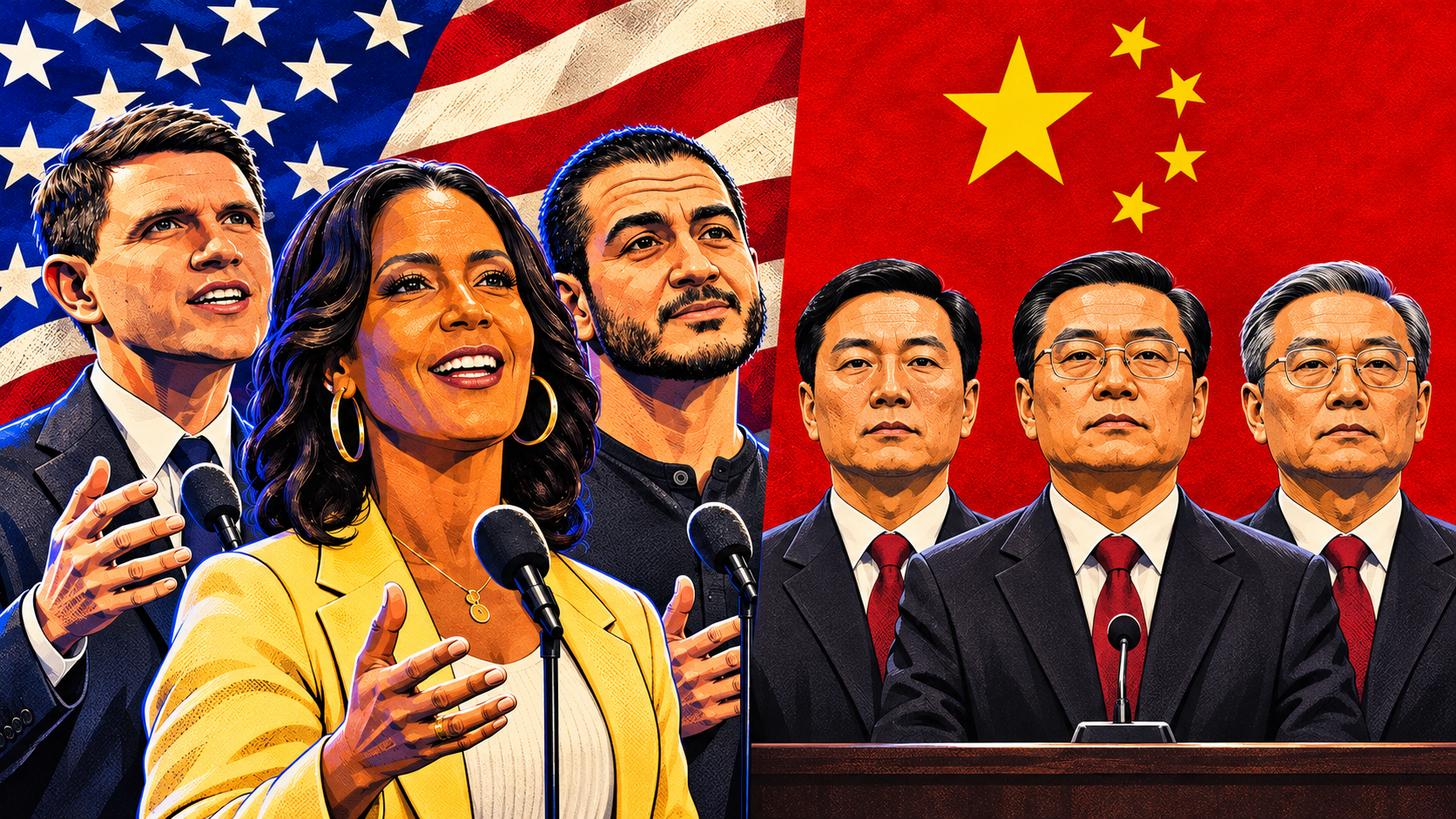
0:00Yeah, I don't know. I feel like, oh, are we cooked? More like, are we cooking? The gang is back. We will debate the potential rebrand. We're going to talk about midterm election implications and what the Dems should do with all of this legislative power. Joining us, Peter, Kevin and Matt, who will introduce themselves as they join. Should we start with my corny democracy stuff? I am, you know, when you follow Chinese politics and Chinese politicians, they all sound exactly the same. They all look exactly the same. They're like mandated to wear the same clothes and dye their hair in the same way.
0:49They speak from the same exact playbook. It is one party and it's not like a Democratic party where there's wings or Republican parties where there's wings and there's fight over what the party should mean. for the past 10 years it has been one line um and to watch all of these new politicians join the national conversation who are not about a party line and are distinctive and individual and represent the places they're coming from and have different kind of backgrounds in life which is not the same as like the ccp oh yeah i was just been like on the arc of being a um cadre for the past 30 years was just lovely and refreshing to see.
1:33And it makes me very excited for democracy. So I don't know. Who else wants to do corny shit before we jump into the jokes? I'll do some corny shit. So this is Kevin. This is the voice of Kevin. I write the interconnected newsletter on US, China, I guess, tech competition, geopolitics, investing, blah, blah, blah, blah, blah. First of all, I proposed the rebrand to Are We Cooking? So I obviously support that rebrand given the shift in atmosphere. I think, you know, this is checks and balances in action against a president who probably hates checks and balances more than just about any president we've ever had in modern history.
2:16No doubt this is a big distinction of display versus a system in China that is very, very different. I think we were joking in our group chat before. How do you make it to the top in China? you go through this like provincial almost like tour of duty kind of like a corporate rotation program for undergrads if you like work at you know capital one or something where you like become a governor in zhejiang or tibet and then you do a good job before you get the promo to beijing and you become uh more like corporate right like there's a corporate stereotype there's another great um analogy right because it really helps to do the corporate rotation program if your dad is in the c-suite there there's that there's that too right but like i just think of my past corporate life where actually you do start to sound in a very interesting way that's much more smooth you have a corporate speak i listened to enough earnings call in my life where you get a lot of ceos saying using similar words to talk about very different things and then you of course have what we had on tuesday which is a very different set of voices even though i think Like being staying on message during a midterm election is also very much a desired from a party level perspective, even in the American system.
3:33So you do have similarities, but also there's a big display in personalities and differences that, you know, gives diversity and democratic process some meaning. So I'll stop there for now with my corny shit. All right. I'm going to add a little bit of corniness. This is Matt Klein. I write the overshoot, quote, the book Trade Wars or Class Wars. One thing I think a lot of people had been concerned about in the sort of months and years leading up to this election was whether there would be any issues with either interference of the polls or denial of the results or things like that. And as far as we can tell, there really wasn't, which is quite a relief to have seen that.
4:11Peter Harrell: This is Peter Harrell. I'm at Georgetown Law and also an attorney in private practice. You know, Jordan, you opened the comment, you and Kevin opened the open the show talking about how in China, you know, everyone kind of has to dress the same as they go around. I would note that President Trump has given like half of his cabinet the same pair of Florsheim shoes, you know, that they all they all have to wear. So maybe he's been learning some things. I mean, that's the contrast is we had one of the two parties which basically fell in line harder than any party in American history for a really long time has fallen in line.
4:47And that is like discordant with what the founders wanted and even what kind of like parties have existed as where you'd have some real pushback and, you know, not total lockstep within executive and the kind of like watching that fall apart. part as well over the next year or two is going to be nice and refreshing to have a variety of voices on the other side of the aisle.
5:15Peter Harrell: But on a more serious note, Matt, I want to agree with you. I was actually talking just earlier today with a colleague and friend in Europe, an American who lives over in Europe now, and are talking about what he's hearing from his friends in Europe. And actually, the thing that really struck him living in Europe now about the elections is actually what you said. You know, there was all this concern going into the elections. Would there be interference? Would there be, you know, ICE agents deployed to polling places? Actually, none of that happened. We had a peaceful, hotly contested, but, you know, peacefully contested Democratic vote.
5:50Peter Harrell: Yes, there are a couple of outstanding, you know, a couple of races that are still outstanding. We might see, you know, court cases, you know, in a couple of those cases. But like this is actually going to be resolved the way our system is supposed to resolve elections. And some of those kind of very dire predictions people were making, you know, a few months ago or over the summer, we just didn't see that. I think it really is a testament to our democracy, not just obviously that, you know, we have these transitions, but actually election went off quite smoothly and something I think we should all be quite, quite pleased with.
6:26All right. uh jeffrey schumer i know you guys listen um what are the or let's let's cosplay as them for a little bit what are the um what are the agendas that you're hoping uh this coming congress is gonna start to pursue peter you want to start well i'd look at what they have said uh you know
6:47Peter Harrell: i think clearly ending the iran war uh is item number one uh they they said it isn't prescriptive not descriptive. We're sorry. Yeah, yeah, yeah. Speaker Harrell. What would I do? Well, I mean, I actually think I probably kind of agree with their priorities. I think we need to figure out some kind of resolution to the Iran war and prevent Trump from getting back into more counterproductive foreign wars. I do think tariffs, like I'm looking forward to some votes on tariffs early next year. You know, Jordan, you made this point about how Congress has become so acquiescent to presidential power when we have unified party control of government.
7:28Peter Harrell: I think nowhere has that been more true over the last couple of years than tariffs, where you have a Republican Party that historically was pro-free trade, that controls a Congress, which is constitutionally in charge of tariffs and, you know, didn't lift a finger to oppose Trump's tariffs over the last two years. I do think you're seeing Jeffries and Schumer say they're going to bring some votes on tariffs early next year. I think we need to be realistic. Tariffs are a complicated issue. Trump will veto things. But I do think you could see some legislation on the tariff front that would or should see some legislation on the tariff front that would repeal Section 338.
8:10Peter Harrell: These are the tariffs on Canada that might also, I think we We should also look at ways we could more broadly cease new tariffs within North America, you know, as we kind of finish our USMCA renegotiation. And I think we should be looking at some ways to rein in, you know, the authorities more broadly. Like, let's not do a whole bunch of new Section 232. These are the national security tariffs that now cover, you know, stoves and, you know, kitchen cabinets. Let's, like, rein that in without more congressional approval. I mean, these are going to be tough votes. I don't have any illusions about that.
8:50Peter Harrell: I also don't have any illusions about the fact Trump's going to veto here. But look, all the Democrats who won in swing districts campaigned against the tariffs. And I do think they need to deliver something on that front. Let's talk a little bit about the sort of industrial policy on it all, because the tariffs, you know, There are some tariffs that are easy to undo and will have strong bipartisan support like the Canada-New Mexico ones. And then there's a kind of longer tail of other tariffs, which I think there will probably be more political disagreement on. The industrial policy, the rare earth deals are, on the one hand, like important for long term American national security and also getting Donald Jr.
9:37rich. And I am really curious to see how the Democrats are going to respond to that. Some of that money is already out the door. Some of the EXIM stuff is just commitments and hasn't quite been consummated yet. And the kind of to what extent Democrats care at all about, you know, China's economic coercion weapons in contrast to the this is a corrupt. These are kind of like instruments of corruption from the Trump administration. We want to take that away from them. I hope they don't throw out the baby with the bathwater, but I could absolutely see a future in which the progress that's been made on that front ends up being really rolled back.
10:22Any thoughts on that dynamic, Peter?
10:26Peter Harrell: So I also hope that Democrats don't throw the baby out with the bathwater here. I do think that a number of the deals the Trump administration has done to strengthen U.S. and, frankly, Allied. I mean, some of these deals are in Canada, they're in Brazil and elsewhere. I think that a number of these deals are actually important to America's long-term economic resilience to economic coercion from China. That said, there are also definitely some of these deals that seem to be with Trump insiders. And that is just a reality that I think Congress both should and will rightly want to examine. And so what I am actually going to be optimistic about here is that we could see through first oversight hearings and then maybe legislation, legislation that might get folded into next year's defense authorization bill or something like that.
11:29Peter Harrell: I'm going to be optimistic. What we could see is a package that kind of regularized some of this deal making for industrial policy, you know, subjected it to more transparency requirements, you know, disciplined kind of how deals are selected, you know, sets up some conflict of interest standards for deals. and that maybe what we could see is something that will, over the longer term, have bipartisan support and, you know, fewer kind of corruption and other sorts of risks around it. I'm going to be optimistic that we will get there. I am also realistic that, you know, there are going to be temptations to only focus on the kind of corrupt, the headline grabbing parts of this and not on actually getting the policy right over the mid to longer term.
12:26Kevin, you want to talk about the AI of it all? We've had, I've been enjoying watching your data center pause tracker, perhaps one of the earliest to this trend on the internet. Maybe the earliest, maybe the earliest. Yeah, you know, started tracking data center moratorium. What, back in January, Claude vibe coded the dashboard in March, thinking this could be a thing. And I would venture to say this issue is at least nationally the top three issue for all voters. And in some states, probably the number one issue that might have swung a governor race to one direction or the other. Right. I think the Texas governor race is exhibit A, where very few on Wall Street thought this was going to be a big enough issue that could help catapult Gina Hinojosa to the governor's seat.
13:21And the fact that she did pull that off towards like a trillion dollar worth of market cap yesterday from Wall Street, you know, no big deal. But I think coming back to since we're doing prescriptive stuff, I actually think this is a winning issue for the Democrats if they know how to legislate this and this will actually get passed. I think one of the biggest misconceptions about this AI data center moratorium issue that I absolutely hated was that this is somehow a liberals hate big tech story. And that's it. when the opposition has been bipartisan throughout the entire evolution of this story.
14:05There's nothing that has united progressive socialist activists and mega rural resident activists more closely than their joint hatred of data centers, you know, being placed 20 miles or closer to their beautiful rural home that's quiet and nice and enjoyable. And then you have all this freaking concrete going up to do God knows what. Right. So that is a bipartisan energy that I think the Democrats could actually swing this into a pro growth, pro industrialization agenda, as opposed to just pause AI, big tech sucks, which frankly won't even get very far in Congress, let alone the White House. But if you just do three things to this hypothetical AI agenda in the form of a legislation, right?
14:59One is you basically require transparency for all new data centers to come up. We just want to know who's building it and how big you're building it for. Make sure the tech companies pay for any additional investment that's needed for the grid to power these new data centers. They would happily do it. The one thing that people don't understand is that if you build a data center that is hypothetically cost$100, only one to two of those dollars go to securing power. Only about$20 out of the$100 goes to building the concrete building, hire the electricians and the laborers and all that kind of good stuff that makes the building work and powered up.
15:4170 to 80 bucks out of the 100 bucks is going towards buying the gpus that we think is hard to make but it's actually not that hard to make because the global supply chain is whole so geared towards making this and now they're sitting in a warehouse somewhere on like the port of la or in hong kong wherever that can actually get inside these data centers that only require 30 cents on the dollar to make. So will they pay 35 cents on the dollar to hire more union workers to make the upgrade pay out of their pocket? They will absolutely do it. The price is too big. But we have to legislate and incentivize the companies to see where the leverage really is right now.
16:24And they will support it. And the White House might even sign it, if only because this is the only thing driving GDP growth and keeping up the stock market, which is really the only visible accomplishment that Trump administration has ever had up to this point. Yeah, I mean, it's an open question, like, if this is even turnaround-able. But I guess on the other plus side, right, like, these aren't factories that are poisoning the water and, like, giving your kids cancer. They're just big places that may, like, have some, like, sound issues and, you know, at one point raised your power prices. But once you deal with that.
17:03But they could be, right? They could be misperceived as such. That's the thing. It's like older generation of data centers, not the new ones, the older ones, they're all placed next to really big rivers for a reason, for cooling reasons, right? So if you're not in the weeds of how a data center works, you could very much just be perceiving this as damaging my water supply locally when the newer data centers are all locally cool. But you've got to do the product demo at the city councils, you know? Kevin, to what extent do you think opposition to data centers, it's not just about the physical building and the sort of perceived financial costs, but also indirectly just being opposed to AI in general and thinking that AI content is socially destructive.
17:45Yeah, I think that is at least a top three concern, is that people don't want AI nearly as much as the tech bros think the AIs will help us all reach utopia, right? One of it is, one of the reasons is just that there's so much messaging of AI taking away people's jobs, right? Whether it's white collar jobs or whatever. The very logical reaction is like, well, why the hell would I support something that's going to take away my neighbor's job or my job, right? Unless you give me another way out, right? So that's number one. And then the AI usefulness itself, I think outside of three bubbles in San Francisco, New York and maybe Miami, no one has really felt how much that is a net good to your daily life.
18:31It might have been that good to your corporate life or your job life. But when you come home, you know, we're still kind of doing our thing. Right. So there's a huge mismatch there when it comes to the daily benefits of having more AI versus the acute pain of having AI live next to my house. Right.
18:51Peter Harrell: I don't thoroughly agree with that. I think that, you know, it's like the, you know, there are various folks in the AI community have been promising for a couple of years now, oh, AI will cure cancer. You know, all these good things are coming. But we haven't actually seen them yet, right? What we have, to your point, Kevin, what we've seen in our personal life is a bunch of AI slop on the internet, which, okay, maybe you find amusing. But also, it's kind of like your relationship with alcohol. You might like it, but you don't feel good about liking it. And so, you know, I just think there's just not a compelling, you know, for a lot of sort of just as you point out, people are using it productively and work, but there's not a sense this is improving my life.
19:35Peter Harrell: And meanwhile, I got this data center down the road that's going to, you know, change the way my community is. And I think until AI not just says all the amazing use cases are coming, but begins to actually show these use cases that people go out and use, I think the political problems for them are going to remain significant. I think the overpromising of tech is almost like a symptom or a feature of just being in tech. Like you can't be a bad over-promiser and survive in tech, right? And fake it till you make it, right? Fake it till you make it, exactly. And I don't want to actually invalidate the possibility sometime in the future that AI could be a primary contributor to curing cancer, let's just say.
20:20We could get there, right? This is very powerful stuff when it comes to research of all different kinds. But when it comes to the kind of the short-term political legislative imperative, right, Which is what's animating this discussion to begin with. Do we slow down that progress because of political differences? Or do we actually think, at least for the Democrats' new control Congress, as an opportunity? And I think the opportunity is super clear. And this is paving a way towards a possible 2028 White House win, which is very clearly incentivized union workers to build all these data centers.
21:01Of all the people who hate data centers, the one constituents who do not hate data centers is union workers, electricians, Teamsters, everybody. And we all know in 2024, the biggest thing that Democrats lost were the union votes. The Teamster president spoke at the GOP convention, which is the first time the Teamster has ever done that in its 120-year history. and the Democrats have to win back union votes in big chunks to have a chance at winning the White House back in 2028. Like what happened on Tuesday is really just step one, right? And if they screw up the way they think about the pros of building data centers, but also building stuff overall when it comes to other forms of industrialization, then this is a squandered opportunity, which I hope they don't squander it and become the Luddite of our generation, as opposed to think about this in a more concrete and tangible way, at least incentivize the blue-collar workers, even if the white-collar workers are going to get wiped out by the thing that they built.
22:05All right. So coming back to the, like, what has AI done for me? I went through some of these, you know, open AI, like, community pledges of what, of the amount of money that they've given to, like, the places they're building data centers. And it's like, it's literally, they put out a blog post yesterday. So this is after the election where they where they've seen the whole world, the whole country vote down 40 different data center pauses. And they're like, oh, yeah, we gave this county four point eight million dollars and we gave this county four million dollars. If you do the division, that is$60 a person in these counties.
22:43And like, okay, fine. AI can't change your life tomorrow, but you know what can? Money and like services. And when all you're doing is renovating one rec center for the privilege of building a data center, you're not going to do it. And now the challenge is like, because you have not been able to win over the counties, you got, you're, you're facing the statewide, the statewide opposition, the statewide moratorium. And it's much harder to buy off a state than it is, you know, 60 ,000 people. But like, it is just shocking to me that, you know, I'm sure they have their, I'm sure they have their cloud coded maps, just like you did, Kevin.
23:21And to not get ahead of this by turning, turning those$5 million pledges into$50 million pledges and$75 million pledges. It's not like these companies don't have the money to spend on this. It's just like such shocking political malfeasance where they're just indexing on like, what factories have had to do in the past that weren't part of a giant political maelstrom, which these guys obviously are and will obviously continue to be, because they've been messaging for the beginning that this is going to change everyone's life. I will say, maybe not disputing anything you're saying about the projects they're building now, but if you look at the data center alley in Virginia, that specific spot has done phenomenally well in basically cutting residential property taxes repeatedly because their commercial property tax revenues have been going through the roof.
24:08I realize that's not the universal experience for other communities of data centers, but there is a potential sort of win-win outcome. And I think, to your point, it's striking. It hasn't really played out. And they didn't even do, I mean, to my knowledge, like special deals to build those back then. Those are sort of data centers that have been built in the past already, but I think it's still sort of instructive of, you know, there is a positive sum outcome here of sharing kind of a, you know, the surplus gains from building these things that need to make a deal, change the terms. I think you have to, I don't want to say you bypass the government, but if it's just revenue that goes into the city coffers, you want something on top of that where the companies can control the delivery of the services and it's going above and beyond just the tax revenue that may not sort of flow in a way which is like immediately legible as, oh, AI is doing this to make my life better.
25:09You know, the data center is the thing which is driving this improvement in my kid's school or what have you. Yeah, I think there are actually two interesting mismatches in that dynamic. One is, of course, the big tech just needs to fork up, right? These numbers are literally the rounding error of the rounding error of the entire size of the project they're trying to build here. It's like half a suite. How little, yeah, it's like two racks of GPU worth of money that could be improving local communities in a very tangible way. Now, I would also say a lot of the local communities, a lot of the city councils who hold the power, they've been blindsided by this dynamic too.
25:54So I got the chance to actually interact with a lot of local city council people because of my dashboard. People like start emailing me be like, hey, did you get this moratorium? Make sure you include this one in your next dashboard. And I get to like talk to them a little and activists too, which is that, you know, their mode of operation prior to AI was that for them to get a industrial project of any kind, they had to offer incentives to attract the companies to come. That is their mode of operation for eternity. So their first reaction is always, OK, please come to us. We're this little town in Wisconsin.
26:30We'll give you tax breaks to come. But very quickly, that not only backfired because of the local resident reaction towards what is being built, but also the not transparent process in which the vote got delivered or the permit got issued. And you look at the size of the pie, you're like, why are we paying them to come when they're so desperate to build in places that are five times bigger than us, right? So they're literally making that switch in their brain right now. The city councils, the mayor's offices, the small town, you know, township governors or mayors and whatnot. We're just like, actually, we are the ones that's being sought after here.
27:14We have all the leverage, right? We're not giving you a dime. You've got to pay us to do this and do that. But then there's a whole switch in their business. What do we need money for? What are we going to ask Meta to pay for? That is a mismatch of two to three months, and then we're leading to where we are right now. So I hope that gap becomes the equilibrium that becomes somewhat more positive sum for both the company who desperately want this stuff to get built and the community who needs financial support, I guess, or investment to build all this other stuff. And hopefully that actually happens as opposed to something that's a bit more negative.
27:52Peter Harrell: So shifting topics a bit, staying on AI and New Democratic Congress, one area where I am quite optimistic on the New Democratic Congress next year is tougher export controls on China. I think, you know, we have seen because of the Trump administration's ambivalence around export controls on China and the point you made earlier, Jordan, like this has been a Congress that has not wanted to kind of act independently of Trump. We just haven't seen Congress actually get over the finish line, various export control measures on China. And I think the next Democratic Congress, both because of kind of policy views that we should be tougher on export controls on China, and frankly, because of political views, I see this as an opportunity to kind of tweak the Trump administration.
28:48Peter Harrell: We are being tougher than you. I'm quite optimistic we're going to see codification of some fairly aggressive export controls on China at some point next year. Quite optimistic we might see a closure of the kind of remote access loophole where, you know, China is able to access compute in third countries. We might see something on the Order of Match Act. Now, I don't think that's going to be first hundred days, right? These new members weren't campaigning on, I'm going to get tougher on China in the first month or two of next year. But if I look at the arc of next year and what democratic priorities are going to be when it comes to the annual defense bill, when it comes to some of the foreign policy issues, I'm actually feeling quite bullish on China export control legislation.
29:35Peter Harrell: I know that's a favorite topic of yours, Jordan. We've got to talk about the gen set of it all. I want to add some. Okay, sure, Brad. Yeah, you want to talk about that? But the one reason I think just to echo or to, you know, a yes and to what Peter was saying that why this would be compelling for a Democratic Congress is that there's also a very clear affordability agenda to export controls in a way that other legislation might be tougher, which is if you look through the inflation data, it's been very clear that the rising prices for memory and chips are bleeding into consumer electronic prices in a way that has been meaningful for the overall inflation indices.
30:08and while I'm not going to go so far as to say that you know apple price hikes of 20 percent are the reason that people got upset about the economy compared to what's happened with diesel or food or whatever it's nevertheless a tangible thing and to the extent that those price increases are directly attributable to the fact that there is a finite supply of a critical good that we have the ability to keep that supply in the United States and we're choosing to not do that and in fact selling it to adversaries to build something that are everyone acknowledges has a significant military component i feel like there's a real you know convergence of interest here for why export controls would be compelling yeah i mean if the dems are going to get on the pause ai train like it's the why not pause china's ai too seems like a very logical fallout but i do want to talk about and maybe it will more on that i gotta i gotta write that piece um we got to talk about the Jensen of it all just for a second um so there's this video of the spy uh they're walking out of alleged spy alleged spy alleged spy alleged spy that he had a close relationship with according to the New York Times um touching his back like going from like his shoulder blades down to his uh coccyx and then kissing him on the cheek during a hug uh Kevin correct me if I'm off here I never in my life have I seen a mainland Chinese woman in a remotely professional setting have that sort of physical contact with another man.
31:44That was just like, I saw that and I was like, oh, this is some sketchy ass shit. Why would I know anything about that, Jordan? No, no, no. Have you ever, have you, like, I've never seen a woman do that in China. Period. In public. she is Singaporean I suppose yeah those Singaporeans they're really big on their professional PDA that's right I think like this is obviously a super serious topic right like as much as we can laugh about the visuals and speculate about what's been talked about and whatever and I think to me when I read that New York Times story it's more, the more shocking part to me is how little the Trump administration have actually known this for months maybe up to a year and due to whatever reason possibly and most likely because of the close personal relationship between Jensen and the president has just sat on this thing for as far as we can tell even up to this point it's not like anything has been done to at least give us an answer that whether the alleged spy is indeed a spy or not a spy.
33:03And if so, she is a spy. What has transpired, if anything, right, between Jensen and the lady? And there's a whole lot of, you know, spy movies and future fantasy novels that can be inspired by this material. But I think this is what I've always come down to. It's like, we just need to know these things. And we should have pretty rigorous process for catching spies that are getting physically close to some of the largest, most powerful CEOs that we have in America. But at least for this administration, it's just something that you kind of sit on depending on the relationship. So, Peter, you're sitting in the White House and you get, you know, you read some intelligence saying that a very strategic CEO is starting to develop a, quote, close relationship with a Chinese spy.
33:57Like, what do you do?
34:00Peter Harrell: Yeah, I mean, actually, it's important to keep in mind that going back, I want to say, at least a decade now. Maybe older than that, but I am sort of well aware of it for at least a decade now. There is actually a pretty standard protocol where when the U.S. government becomes aware that an individual is a target of foreign espionage or other type of foreign attack, Um, actually it's, it's, it's quite routine for the FBI to reach out and say directly to the target and say, Hey, can't share a lot of details with you, but, you know, we have reason to believe, you know, you are being targeted for, uh, cyber attacks.
34:48Peter Harrell: who are being targeted for human espionage collection. There's actually a fairly routine thing that is done that I am sure a number of your listeners have had happen to them over the years. And so the first thing that would ordinarily happen here in which the reporting, the public reporting, the New York Times reporting suggests the Trump administration decided not to do is the FBI would reach out at a general level and say, we have reason to believe this person who is approaching you may be involved in a state-sponsored espionage campaign. And then you sort of see, then the U.S. government, A, has provided a defensive warning to somebody who should be entitled to it.
35:39Peter Harrell: And then, B, you can watch what happens after that. Does it does this sort of do you have, you know, presumably most of these cases, the American was unwitting, right? You assume the American was unwitting and, you know, will then take steps to break off or harden defenses or whatever. And if that does not happen, the government can then evaluate what next steps to take. So I was actually quite surprised when I saw, according to the reporting, that they had not done one of these defensive warnings for Jensen. Because that's actually a pretty routine thing that, you know, happens to I have no idea if it's hundreds or thousands, but, you know, something in that number of Americans every year get these.
36:19Yeah. And if you're the MSS, you are negligent if you are not trying to get people close to Jensen Huang. Right. So like this is not a surprise. It's just super weird to not give him the heads up. And it's like because the institutions are so used to it and this is such a normal thing, like it had to come from like it had to come from somewhere really high up to say, oh, no, let's not tell Jensen about that. And then to have it come out of The New York Times like like, yeah, Peter, what's that? What's the dynamic around like someone deciding to leak this?
36:53Peter Harrell: Yeah, I mean, this did strike me as, you know, somebody who is, you know, that somebody who was frustrated with the administration's lack of effort here must have leaked this to the Times, right? I mean, that is very much how this came off, because these things are usually done, you know, privately, without any public record. and as we discussed fairly routinely. So clearly somebody in the administration, you know, it reminded me, frankly, of how we've seen some leaks around the debate at the Commerce Department and across the administration around export controls, right? There are clearly a faction of, you know, more hawkish individuals on China in the administration who are frustrated with aspects of the administration's overall policy and who are, you know, as a result, sharing some of these things with the press to create pressure.
37:49Jordan, you said MSS would be negligent for not going after Jensen Huang. And I'm curious what you think, and maybe I'm being a little naive here, but what is it they would want to get that they aren't already getting insofar as Jensen is probably the most effective lobbyist for relaxing export controls, just for sort of normal business reasons? I have one for you. There's a limited supply of chips, and where they get allocated is, you know, he says it's market. It's, you know, whoever's willing to pay the most. But there's also a lot of special deals that he's making where he's trying to sort of like support different companies or create different interests.
38:26So if you have someone who has a, let's say, close relationship with the man who is allocating, you know, the these individual units of power that everyone is deciding is like an extremely important strategic resource, then maybe you're more likely to get them sent to this Megaspeed company, which is basically a cutout for Chinese firms looking to get access to Nvidia chips. For one. Kevin, what else? Put it another way, if the export control regime were more robust, that wouldn't be an issue. Sounds like. I'll add to that, Matt, which is that and I think this might have been alluded to in the New York Times piece as well, which is some of it is obviously AI related, potentially related to expert control.
39:17I think some of the motivation, if it's again proven, is just that it's a very good way to know what Trump is actually thinking on all sorts of things. I think the closeness, the sort of this bromance between Jensen Wang and President Trump is on public display. We literally seen the president call jensen on the stage of the all-in summit we know they chat at late night phone calls and they attack each other all the time about all sorts of things i'm pretty sure not all of those uh exchanges were about expert control in fact i'm pretty sure they're not they're about all sorts of stuff right just like powerful men and powerful men talking about whatever the hell they talk about and of course trump's psyche is incredibly important to all sorts of um every other capital around the world when it comes to how they may behave, let alone Beijing in particular.
40:14So I think the motivation, again, if it's proven, is much more wide ranging than just, hey, are we going to get those ships or not? Are we going to get the Blackwells or whatnot? I think it's much more comprehensive than that, the motivation.
40:27Peter Harrell: I mean, you also have to, and there's no reporting on this. I mean, all the reporting has focused on what information is she getting from Jensen himself? You know, the other espionage story or sort of the other AI espionage story we saw recently was this report that a Saudi engineer had implanted a listening device in open AI offices. You know, the other way in which the American government would be thinking about this, and again, none of this has been in the reporting, but if Xi began to have, you know, physical access to NVIDIA premises, to Jensen's office, that's obviously also a technical security vulnerability that the Chinese could exploit over time.
41:18that's right that's right yeah i mean everybody wants our labs waits china obvious but saudi also pretty obvious and their allies quote-unquote at this moment um china or saudi there you know well yeah both well i mean if you want to stick with a china story what will trump do in two weeks when he goes to Shenzhen. That's on the docket right now as we speak. He's going to release something next week about the agenda or the Chinese side will, and he will be in Shenzhen in two weeks, maybe with Putin in the same room to maybe end another war and make another bid for the peace prize. And leave his phone behind or something.
42:02Right.
42:07Go see some robot demos. Yeah, I mean, Peter, do you think this makes him more or less likely to fall into another escalatory arc, the midterms?
42:17Peter Harrell: My take over the last, frankly, year has been that, you know, the Trump administration is trying to avoid escalatory arcs. You know, they feel that the Chinese continue to have substantial leverage over us, principally via the critical minerals vector, as well as a few other things. And so, you know, frankly, from a kind of a defensive, from their perspective, defensive U.S. perspective, Trump and his administration have been trying to avoid an escalatory arc. They've been trying to kind of, you know, keep restrictive actions going at a simmer that is not so hot the Chinese retaliate. Right. So you've seen ongoing FCC actions.
43:08Peter Harrell: You've seen the expansion of the outbound investment proposed rule during implementation of the COINS Act. So, you know, his proposal to expand restrictions on U.S. outbound investment to cover biotech as well as expanded AI investments. You know, they're taking a number of these actions, but I think they're trying to calibrate them below things that they think would trigger an escalatory cycle. And I think Trump personally, clearly like Xi Jinping, would like to avoid an escalatory cycle. My hunch is that if we get into another escalatory cycle, it will be because the Chinese kind of, you know, sort of in your face, don't meet some commitment that Trump thinks they have made.
43:59Peter Harrell: Whether it's like the purchase commitments, they just kind of in their face decide we're not doing purchase commitments or something that will provoke Trump to get off of his current desire to avoid escalation with Beijing is what I how I see it. I don't know that I think the election particularly, the midterm election particularly changes that. I think that as the 28 cycle heats up and kind of politics around China heat up, that's when we're more likely to see things potentially triggering escalation. Yeah, I think on that point, you know, we're talking about whether America's cooked or cooking right now, right?
44:38I think from Beijing's perspective, this blue tsunami has pretty big implications as far as how they actually want to strategically use the last two years of Trump being in office, right? knowing that the probability of a Democrat potentially being in the White House, there certainly went up given the results of Tuesday. And what, if any, deal they make with Trump now would even stick and to what extent and what value does it have anyways, right? I think those are all the things that are probably going through a lot of the minds of people who are making decisions in Beijing right now, which they're going to start to approach pretty quickly because things are changing rapidly here in a volatile democratic society that we have.
45:30If I'm putting myself in their shoes from the perspective of the Chinese policymakers, they're sort of successfully engaging in a divide and conquer situation between the U.S. and Europe. And so far as the U.S. basically sort of gave up what one might think of sort of like the more extreme kind of trade protectionist moves that you saw in the beginning of 2025 in response to the critical minerals thing, There was some sort of Busan accord or understanding, whatever, which may or may not actually be doing what they wanted to. But the Europeans, they have to read what's going on over there. They're much more constrained in their supply and their access to Chinese critical minerals.
46:08They have been trying to do their own sort of trade negotiations with China that have gone not great. You know, they're moving. There's sort of a consensus there, but they also feel very squeezed and pressured. And so it's interesting the extent to which they've managed to sort of buy peace with the Trump administration to now focus on the Europeans. The Europeans are feeling squeezed. Presumably, if there were more coordination between the U.S. and Europe, you'd get a better outcome. But that's obviously not what we've been seeing. The Chinese seem happy with that. Peter, what's the view from Georgia?
46:38Peter Harrell: My head was going as like, are there other, you know, sort of what the Democratic Congress will do? Like, you know, I think there'll be interesting questions next year about whether we get another Russia sanctions bail, you know, which was sort of on the foreign policy front writ large, I think will be an interesting question. Not top priority next year, but sort of similar to export control, something that we see in the back half of the year. Yeah, I guess I'm curious to what extent the corruption conversation ends up driving where the Democrats land on a lot of these foreign policy issues. So like the Russia stuff, I could see them being pushed in a more hawkish direction because it's like, oh, Donald Jr., you think it's cute that you got your wedding paid for?
47:28Let's make sure all those people get sent to economic prison. Elon Musk, right? That seems like the really obvious one, Musk and Sachs and that sort of contingent. Talking about the relationship between Jensen and this alleged spy, I mean, there's clearly, if we're talking about foreign agents of influence affecting U.S. business elites and how that flows through to foreign policy and national security, there are many angles one could pursue there. You could also look at some of the Gulf countries as well, as you were talking about. I think there's, I mean, personally, I think that would be a fantastic thing to focus on.
48:02Again, I'm not a politics person. So whether that they think that makes the most sense is I'll defer their judgment. But I think that I think that would be very appealing and has a lot of sort of downstream benefits for national security. Do you guys want to shout out any any particular people who got elected you're excited about? I'll do my shout out really briefly Jonathan Chris Thompson's aka JKT, who is the next governor of Alaska. I've known for a very long time. He's just a member of the good guy caucus. He's a policy nerd. He deeply, deeply cares about the welfare of the Alaskan people.
48:40And I can't wait to see what he does. My shout out goes to Josh Turek of Iowa, probably one of the best candidates we were able to field being, you know, I think he's disabled and had a really, really, really tough upbringing, having disabilities that I think is like traced back to his father uh who like served in uh vietnam and stuff like that anyways and he literally will like roll up in his wheelchair into people's apartment like it takes him like 10 minutes where he will take us 10 seconds to talk to people door to door i guess you know that's physically possible in iowa but physically very challenging for someone who's disabled and you just like pound the fucking pavement like old school style to make it work and to turn that seat uh for uh the damn side is uh pretty impressive so those are the kind of people that i think represents a part of the population that is just completely wiped out as far as like visibility is concerned when trump and you know the right kind of took over two years ago in a way that i don't want to get into like culture war discussions per se but as far as like the diversity of the fabric of the country and how that's visibly represented, obviously Abdul being the other one, right, Muslim senator, all that kind of stuff is just super important.
50:02And that actually like worked out at least this time.
50:05Peter Harrell: Yeah, you, you know, Jordan, you'd asked, and I didn't really answer the question of you from here in Georgia, and actually on the point Kevin just made. So, you know, obviously, a lot of national focus has been that Georgia, John Ossoff was reelected, And then we elected for the first state in any of any American state to elect an African-American woman as our governor. But it actually Democrats didn't just win the governor's race. They won all of the statewide constitutional offices, you know, eight or nine of them, secretary of state, labor commissioner, lieutenant governor. Similar thing happened in Texas.
50:39Peter Harrell: And I saw a really, Kevin, to your point, it was fascinating. there was a picture of like the outgoing slate, which is all Republican, right? And it was entirely white. All but one was a man. And then the incoming slate. And it was like this incredibly diverse group of people, you know, coming in. And it was a real reminder to your point. I don't mean this in sort of a political, you know, sort of said, but it was just a real reminder of, oh yeah, you know, like parts of the demographics in a country who have felt, you know, left out of a lot of the political process over the last couple of years, I think, are going to feel included again.
51:18Peter Harrell: And I think that's kind of heartening to see. Yeah. Show me the Tibetans and the Uyghurs and the women on the Politburo.
51:29Right. It's a lot less tokenizing than that, I would hope. John Ossoff, apparently a 30 % chance to be our next president. What's your, I don't know, give me some, give me some takes. He's 41.
51:43Peter Harrell: Look, yeah, he's, look, he's a, he's a very disciplined and careful candidate. And I think he is, you know, I've seen him a number of times over the years in, you know, in person. And I think he has really learned quite a bit about how to appear on the stump. You just sort of see his performance improve. And, you know, he's clearly been very good at, he mostly writes his own speeches. He's clearly been very good, not just at delivering them, but delivering them in a way that a social media team can, like, cut and get a lot of traction on around online. online like he's you know i think he's a very good candidate you know as somebody's sort of looked at elections for a couple of decades now um it's hard for me to think he's gonna have a better time to run than uh 2028 just in a sense of um you know there is this like reality of the longer you're kind of out there on the national you sort of you know you want to have a little bit of national experience where you're around too long you know a bunch of negatives kind of get built built up and he's like he strikes me he's in that sweet spot of like the right time for him uh to run and he clearly would be able to raise a ton of money and compelling candidate that said look we're gonna be realistic democratic primary they're gonna be 30 candidates they're gonna be political candidates they're gonna be people who you know look at trump from the business community the entertainment community like i could do that too so we're i'm sure we're going to have our non-political candidates who are going to be jumping in.
53:24Peter Harrell: And it is going to be quite the circus. And so while I certainly think Senator Ossoff would be a very compelling candidate, it is hard for me to make any predictions right now about who I think is actually going to come out on top on an incredibly wide Democratic candidate primary. I think the R2 Ossoff story is very similar to Obama back in 2006, right? Which is basically that he just got into the Senate. You have the inexperienced thing, but you also have the fresh, no one can tag you with too many things for being in Washington too long advantage. And Ossoff has frankly been in Washington longer than Obama has at this moment in their career fork, if you will, if you were to run for president.
54:17So I think a lot of that similarity and analogy lines up. And I think the way that John is behaving on stage is also being couched as very Obama-esque, whether it's the discipline, the stage performance, or even writing your own speeches. So, you know, for people who are feeling nostalgic, John seems to be the guy right now. I would actually make the case that the midterm performance, maybe not super indicative about progressive versus centrist dem, but it makes the case for having the outsider business person entertainer be your nominee much less compelling. Like if like actual real politicians that are running for elected office can win states by 10 or 15 points, do you really need to like go with like the rock in order to actually have?
55:12How would you characterize Adam Hamilton? Jordan, how would you characterize Adam Hamilton in that example? Because I think that's sort of an interesting, not, not, I'm not saying it's a criticism, but like he is not a politician by background, right? He is much more on the spectrum of sort of a popular figure known in the community for being a nonpartisan religious figure, a pastor, and translated that into a commanding performance in a place where people didn't think would be competitive at all. So I'm not saying that that is proof one way or the other, but I think it's an interesting counterpoint to what you're just saying.
55:44Yeah, I mean, I don't know if it's just like poll. It's not just like poll versus non-poll. it's more just like you can run in elect you can like earnestly run in an election for something and win big i don't know maybe maybe my take is off is the lane still there for for our for our weird wild cards i also just feel like it's just like electing someone who's already in elected office is like a zag from trump in a way that may end up feeling compelling it is interesting i mean
56:13Peter Harrell: you mentioned i mean it is interesting uh you think about the progressive versus moderate wings of the party. And, you know, you have this intro because Democrat, the Democratic, you know, won so many seats, you actually see growth in both progressive and moderate representation in the House and the Senate. And, you know, it's hard to say that this, there's definitely like a through line of a somewhat more populist on economic issues than the Democratic Party was 10 years ago. But I, you know, you actually, you know, large number of blue dogs won just the way a large number of progressives won.
56:51Peter Harrell: One interesting stat I saw that is like indicative of the realignment is that next Congress will be the first Congress in history where there are more Democrats with MBAs than Republicans with MBAs, which is a really like telling point on like the realignment in our in our politics. I mean, business, baby. I think there's actually, well, you know, closing thoughts. I firmly believe if the dams don't screw up this AI data center thing and turn it into advantage and make it pro-labor but also pro-build we're going to win the White House that's my closing argument to whoever is listening this is a big opportunity don't be the lightite don't screw it up Kevin you got to write the platform this is an article I'm doing it okay okay okay okay I got to write my pause AI pause China's 2 seems like a layup I would just say for campaign purposes, keep it short.
57:46Peter Harrell: I think Democrats have had too many campaigns where we put out 80 pages of white papers, and I think we'd be better off with like three. So, Kevin, keep it short. Trust me, I will. I will. Not to be a downer, but I guess I'll just say that there's a lot of potential problems that could still occur over the next few years. It's obviously better to have won a large majority in the Senate and the House than not. But if you're concerned about the instability that can emanate from the White House, that is still largely true and a live risk, especially when it comes to foreign affairs, but only foreign affairs.
58:22Peter Harrell: Actually, to build on that, and this isn't necessarily how I want to close, Jordan, but to make a point back to Matt, one of the things that I think is a totally plausible scenario next year that is going to be quite challenging is epic government shutdowns, particularly around like the Department of Justice, potentially, frankly, around the Pentagon. as Congress kind of tries to exercise its oversight and authority to prevent more Iran wars, to prevent perceived weaponization of the Department of Justice via the control of funding. I think we could be in for some really rocky appropriations fights and major kind of shutdown-related chaos next year.
59:15Can't wait.
59:18Peter Harrell: But where I wouldn't end is, I guess, I guess having listened to this, you know, I'm going to come around like checks and balances are a good thing. You know, having some creative tension in the in the government, I think, is a is a good thing, maybe in some ways, you know, a healthy part of democracy. So so, Kevin, I think I'm coming around to your view. I think we're cooking. yeah i mean it's a it's an interesting timeline like if trump was stuck with um you know one house uh one one democratic house in the start of 2025 like how different like would he have done anything different maybe probably not i mean i guess if he hadn't had the senate it would have been different because the confirmation of you know you wouldn't have had all the i mean good Lord or Kennedy, right?
1:00:08I mean, we're talking about long-term damage, cooking. Measles is cooking. You know, God knows what else is cooking out there. I mean, sadly, it's going to be a lot of effort to revert. I mean, I know it sounds funny, but it's just like a real problem, and it's going to I don't know how, I'm not a public health expert, but it took a lot of effort to get rid of those things, and now they're back. I'm sure it's going to take a long time to get rid of them again, and that's Yeah. He's not going anywhere. If you want to update from the South, you know measles are a thing again right yeah we got ticks up here so you know it's only fair yeah yeah i think there's yeah measles is spreading out it's not just the south now but yeah yeah well i guess i'm glad the rebrand has passed as far as i'm concerned we are cooking maybe slow cooking but cooking
1:01:06When you lose in America, you call the winner on the phone. If it goes to voicemail, ask Vivek, you leave a message and go home. Roger Marshall called it humbling, Paxton called it a difficult night. And by Friday they're on cable with a memoir called I Was Right. In America you lose And you give a concession In Beijing you lose And you film a confession Here the loser gives a speech And buys the staff a round of beers There the loser gives a speech And then he gets about 20 years In Beijing there's one party, one leader and one plan And they counted 29.52 to none before the vote began So the only way to lose is when discipline inspection comes to call Serious violations and nobody's seen you since the fall The foreign minister vanished and defense ministers went two by two The soccer coach confessed on CCTV And still missed the World Cup Boo In America you lose And you give a concession In Beijing you lose And you film a confession Here you write your own concession There they write it for you, dear And you read it on the evening news And then you disappear And the peaceful transfer of power over there Two men in suits helping the last guy out of his chair Over there it's matching clothes and matching hair dye Jet black Here it's only the cabinet and matching floor shines And now Congress pushes back Here a preacher and a logger and a TV judge just waltzed right in There it's 30 years of rotations And you pray your dad's a Mandarin Here the president hates checks and balances And Tuesday he got two A house with subpoena power and a Senate too.
1:03:56In America you lose and you give a concession. In Beijing you lose and you film a confession. Here they spell it with a C and you go home and get some rest. There they spell it with an F. And they fit you for an orange vest. Or life. If you're boo, she lie. No ice at the poles, nobody stormed anything. Mississippi still counting. Take your time, honey. The losers are just mad online. God, I love this country.
1:05:17The End fees extra. New customer offer for initial plan term only greater than 50 gigabytes may slow when network is busy. See terms. Clothes shopping really isn't my thing, but I still want to look sharp and feel confident. That's why I use Stitch Fix, the OG personal styling service. No more scrolling through websites or wasting my day at the store. My stylist sends pieces picked just for me straight to my door. Free shipping, free returns, no subscription required. Get Get started today at StitchFix.com. That's StitchFix.com.
The gang returns and rebrands!
Note: we recorded this Friday afternoon, before the FT reported that 'US believes Nvidia’s Huang had romantic relationship with alleged Chinese spy
Kevin Xu of Interconnected, Matt Klein of The Overshoot, and Peter Harrell of Georgetown Law, who ran international economics at Biden’s NSC, asked in January whether America was cooked. Now they’re voting on a rebrand: Are We Cooking?
We discuss…
What to undo, what to keep — repealing the Canada tariffs, reining in Section 232’s creep into kitchen cabinets, and keeping Trump’s rare earths deals with conflict-of-interest rules attached.
Make Big Tech pay — Kevin’s plan to turn bipartisan fury at data centers into a pro-labor, pro-build agenda that could win back union voters, and with them the White House.
Sixty bucks a head — why OpenAI’s community pledges amount to political malpractice, and how Virginia’s Data Center Alley turned server farms into property tax cuts.
Pause China’s AI too — why a Democratic Congress may finally codify tougher chip controls, with an affordability pitch built on rising memory prices.
The alleged spy in Jensen Huang’s orbit — why the FBI’s routine defensive warning apparently never came, and what Beijing could want from Nvidia’s CEO that it isn’t already getting.
Beijing’s midterm math — what a blue wave does to the value of any deal Trump brings home from Shenzhen, and why China is squeezing Europe instead.
Learn more about your ad choices. Visit megaphone.fm/adchoices