 ChinaTalk
16 Nov 2026 · 39m

 Add vo to ChatGPT or Claude to ask about everything you hear
vo listened to this episode to put together the overview and transcript, so there may be the odd mistake.
A new US BIS export-control rule targeting AI compute “loopholes,” especially China’s access via smuggling, chip “rental,” and third-country manufacturing/fabrication.
Chris McGuire (podcast host/analyst; focuses on export controls and AI supply chains) and Julian Gewirtz (former NSC colleague; analyzes US-China policy signaling and enforcement credibility).
The rule closes three loopholes: (1) countering Chinese smuggling of AI chips by adding licensing for purchases by firms in Singapore, Malaysia, Thailand, Indonesia, and Brazil; (2) restricting Chinese companies from renting large volumes of advanced chips without licenses (about 200 Blackwell or 800 H100 equivalents), with retroactive implications; (3) re-enabling/enforcing limits on Chinese chip designers using TSMC/Samsung, requiring licenses for certain advanced nodes (even for non-AI chips).
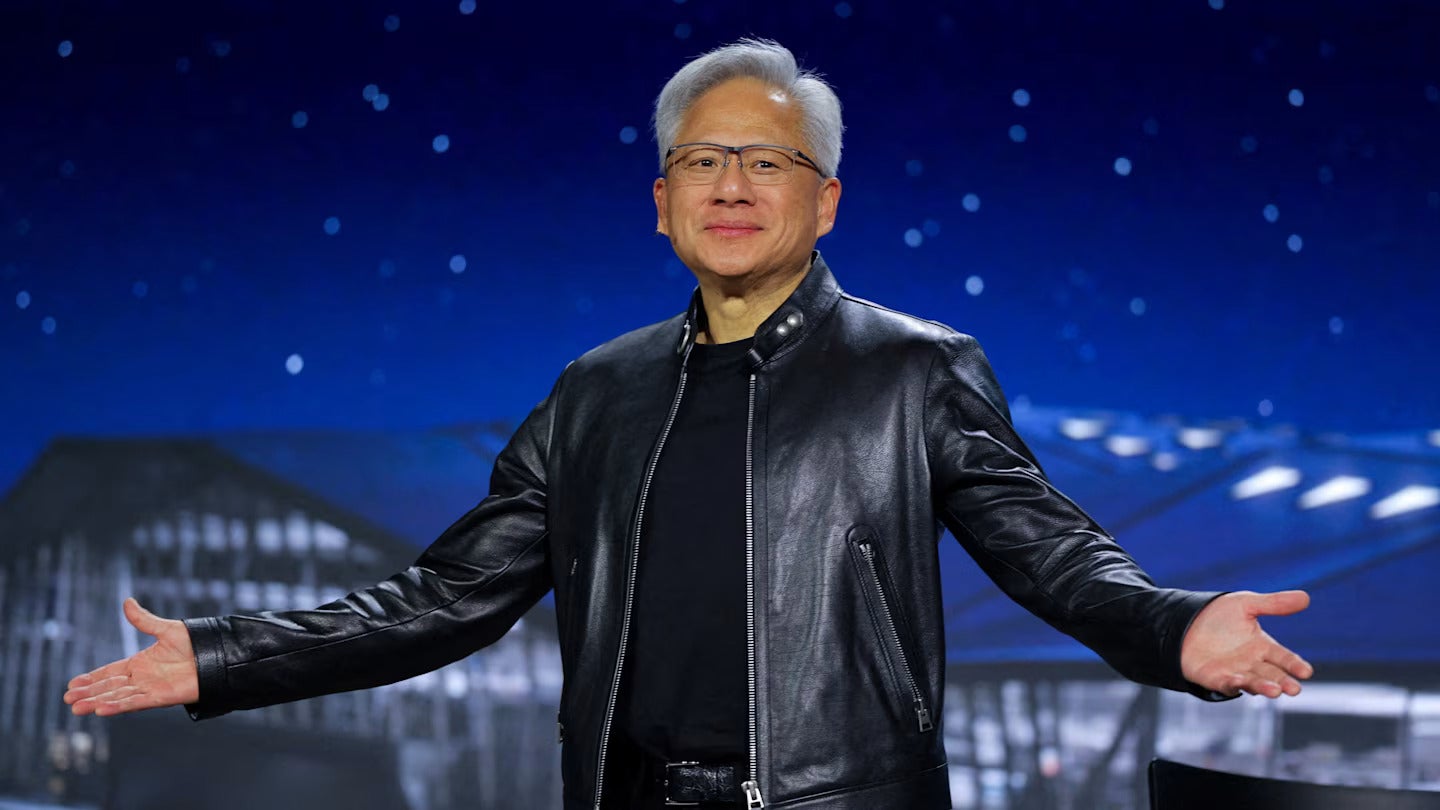
“Megaspeed” remote-access circumvention; Huawei making ~3 million AI chips at TSMC (~$50B); chips stuck in Hong Kong; a Wall Street Journal anecdote about Jensen Huang’s “soup vendor” customer-diversification rationale. Guests argue enforcement and US “inside-the-US” loopholes are critical for real impact.
0:00Jordan Schneider: And it's Monday. We have to do another one. Oh, my God. Chris McGuire joins Julian Gewirtz. We have a new BIS rule. Cloud loophole closed. Question mark. Chris, how are you doing? OK, I think a little overwhelmed, but hey, like this is like progress. first time in like 18 months that I think we've seen signs of life and actual recognition that that AI and export controls matter so not perfect but but good let's start with what's in the rule then we'll do a little meta how this rule got made and then we're going to bring in Julian to talk about what this could potentially mean for US China relations Chris 132 pages Pangram says it's all human written, no AI generation.
0:53Jordan Schneider: What's in the rule? Yeah. So, and it's important to note, look, the details here are the story, right? I think there's a lot of fixation that we've had on these affairs or like who wrote the rule or something. This is a huge rule going to impact hundreds of billions of dollars of capital flows and really impacts kind of how the AI industry functions. So understanding it is this is the biggest part of the story, not who slept with who or any kind of any of this trivial drama I think people are looking about. So I'd say really there's three categories of things that it addresses. The first is countering Chinese smuggling of AI chips.
1:26The second thing is restricting Chinese companies from renting access to AI chips. And then the third is closing loopholes that prevent Chinese companies from making AI chips at TSMC or Samsung or other places. So there's three ways it tries to kind of cut down China's access to compute. I think my top line is, like I said at the start, this is a good rule that actually does move the ball forward. It closes multiple real loopholes. That's positive. It is also imperfect. There are some specific things that I think need to be closed where you close some loopholes and it makes others more important.
2:02So I think we need to take a few additional actions to tighten things up that we can talk about. But this is actual forward progress. Okay. So breaking down those three buckets. The first bucket is countering Chinese smuggling of AI chips, pretty straightforward here. It imposes controls on Singapore, Malaysia, Thailand, Indonesia, and Brazil. Southeast Asia in particular has just become a massive smuggling hub for AI chips. In the last few years, Singapore, Malaysia, Thailand, Indonesia were the numbers three, four, five, and eight importer of AI chips in the world relative to the size of their economies and size of GDP.
2:35It's just way, way, way more than anyone else. So obviously, this is a significant an issue. They basically displaced China. All the demand that was previously going to China is going to these countries. And then Brazil is also setting up pretty large AI data centers for ByteDance and others, and that's known. So I guess that's why they got at it as well. This is good. This is positive. It will push smuggling to other countries, right? Like, if you don't have something that's broad, then inevitably the smugglers will move from Malaysia to, I don't know, Bhutan or Nepal or somewhere else. This is important to keep in mind.
3:05But the countries that are the biggest hubs right now, now have to go to the US government to get a license before their companies can buy the chips. I do think that what we need to move toward is this general policy of, hey, if you're buying hundreds of millions of dollars of AI chips anywhere in the world, the US government has to at least have visibility on that, if not the ability to veto. But that's something I think can and should be done in a follow-up. But this is actually forward progress. The second thing is restricting Chinese companies from renting access to AI chips. And this is actually a pretty notable development that has not been in effect.
3:41On the smuggling issues, the Trump administration had not been enforcing anti-smuggling regulations that the Biden administration put into effect. But on this, there actually had not been regulations like this. So this is new and it's positive. They're basically saying if you have large numbers of AI chips, you can only rent a pretty small number to Chinese companies and have it without applying for a license from the Department of Commerce. It's the equivalent of about 200 of the most advanced Blackwell chips or about 800 H100 chips. So that's obviously a significant number of chips, but also when you're talking about training or running the most advanced AI models, you're talking about thousands, tens of thousands, maybe even hundreds of thousands of chips.
4:26So this would be a significant curtailment on China's access to the chips. It applies also retroactively. So what it does is it says this has actually always been the policy that if you were providing at least half of your computing power to Chinese companies, then that itself was a violation of controls. And, you know, that that is a significant sign that if that actually is enforced, it would mean that they could go after Megaspeed and say that you actually were violating controls by providing that compute to China. We'll see how enforcement goes on all this, but generally it's a very strong signal that they don't want this to happen.
5:04I'd say one huge, huge loophole on this though is that it doesn't apply inside the United States. And until that's closed, what's going to happen is you're just going to get all the Chinese companies are going to divert all their computing power away from Johor, Malaysia and to Northern Virginia. Northern Virginia is going to become the center of China AI until we fix this. So this does need to happen. And actually this can happen, within authorities. Commerce has the authority to do this right now, but that needs to get done. Last thing I'd say is the blocking Chinese chip designers from making AI chips at TSMC.
5:39This is good and important. The Biden administration had put into effect regulations that would basically make sure for any company making an AI chip in the world, they would have to come in at TSMC, they have to come in for a license unless they were on like a white list of companies. There's not that many companies that are making these chips. So all these companies are already on the whitelist. That had not been in effect for various arcane regulatory reasons, but commerce had not been enforcing it. Now it goes back into effect. They will enforce it. That's good. They actually went a step further and they said any Chinese company who's making any 14 nanometer more advanced chip has to apply for a license, no matter what.
6:14No matter what they say, whether it's an AI chip or not, and there's some technical parameters on that, they have to come in for a license. So what that means actually is that, you know, Xiaomi has to apply for a license to get a, to make a three nanometer smartphone chip at TSMC. So actually there's some implications of this that are bigger than, than AI. I mean, this is great for, for Qualcomm or others or companies that, that are, you know, would like to sell some of their smartphone chips to China, but actually China's designing their own chips at TSMC. Now U S companies get the, you know, might get more of that market.
6:45But I think the purpose here isn't necessarily to capture and prevent and give them an advantage. The purpose is to cut down on Chinese smuggling and really cut off all the avenues, because we know that China has made millions of chips at TSMC illicitly. So those are the three categories of things. Like I said, top line, very positive step forward, important work left to be done, especially as it relates to activities inside the United States that little loopholes need to be closed tomorrow. But this is actually signs of life and a recognition that, you know, export controls is something that we're going to do and U.S.
7:17advantages and computing power actually matter.
7:21Jordan Schneider: Wow. Okay. It's finally here. I mean, just we got to do Powell's entry just for a little bit before we go down the kind of like broader implications of it. I mean, you don't write 132 page rule over a long weekend. Like this was clearly kicked around for a long time. We had this crazy line in the press release where it said like this was authored by Treasury and the NSC. I mean, this is commerce's job. I asked ChatGPT for analogies. It went back to Soviet gas pipeline stations from 1982 with NSC, the National Security Advisor Clark fighting with Alexander Haig. So like it's been a bit since it's gotten this messy in public.
8:04Jordan Schneider: um you know like does this happen if the spy uh uh if the spy news doesn't end up getting out and jensen leaves i read is that there was just like enough pent-up demand for this within the administration that like these two things are not unconnected um the fact that uh uh you know whoever it was that uh pushed these journalists you know helped give the journalists a bread comes to write this story happened at the same time as they had a reg, which was not moving in commerce. All right. So let's, Julian, I don't know, any palace entry observations before we get into the rule? It is so striking to see that kind of language in the commerce press release, not because this is the first time in history that the NSC has helped draft a commerce regulation.
8:56I'll sort of refrain from comment when I'm here with my former colleague from NSC days. But because it actually, to me, signals one thing more than anything else, which is that the administration knows that commerce is low on credibility in Washington and more generally. And so while we may see it as the palace intrigue of the drafting, to me, it is also about the credibility of the signal. It's an attempt to say this is a regulation that can stand up and that we should expect to last. My own concern is that President Trump this morning, when he was talking about some of these dynamics, took it back to the palace entry, took it back to Lutnik and Besson disagreeing on how to approach China policy and seemed pretty unaware that his administration had just rolled out this major new regulation.
9:42And I say all of that because, of course, the president is heading to China where he is about to confront a set of people across the negotiating table who do not want these regulations on the books. And we can talk about that more. But I do very much think that there is a version of events where we hold fast to this. But there's a version of events where he gets wobbly pretty quickly. Yeah, look, commerce has to implement these controls, right? Like you could write them however you want. Whoever you want can write them. But ultimately, commerce has to implement them. and enforce them. And if that isn't going to be taken seriously, and if commerce isn't actually bought in on this, and if enforcement goes the way that it has to date, then it was not going to matter what's on the books, right?
10:22We're still going to see the same rampant smuggling, and it's not going to be deterred. So we do need to see a change in attitude and perspective on commerce if this is going to be effective at all. And yeah, I'm not convinced that current leadership chip can actually effectuate them. All right.
10:39Jordan Schneider: So back to the chip balance of power at China Talk, Nick and Ake back in April kind of did their best guess breakdown of how many chips in the ratios between domestic, smuggled, legal, foreign and remote access. And, you know, looking at the chart, it's like two fifths of China's total compute is remote access. So if this gets cut down, or even if they don't close your America loophole and they have to start bidding against the most oversubscribed data centers on the planet in America. I mean, we're talking like a significant hit to the broader Chinese ecosystem when it comes to training and inference.
11:23Jordan Schneider: I mean, Chris, I was doing the podcast with Dylan on Friday. We were talking about remote access and we were like, maybe they'll do it, but maybe they'll say, you know, anything forward from today, like you start to you have to titrate it or like, you know, you got to ratchet down over the next three to six months. I mean, this ostensibly is 90 days and you can't service Chinese clients doing anything besides, you know, telling you what your friends like to buy and offering you to buy, you know, offering you like mountain bikes and and and short video recommendations. I mean, let's stay on that for a second.
11:57Jordan Schneider: Like these guys, they all have to find American clients. I mean, are open ion anthropic just like salivating at the mouth that they can get all this compute in Malaysia on the cheap? I mean, I think they should be. I mean, I think there's big questions of like how can the AI ecosystem absorb this if actually so much of it has been illicitly been being sent to China through these kind of remote access schemes or maybe not illicitly, but circumventing controls, exploiting this loophole. You know, is there enough demand to actually absorb that? But keep in mind, like you said, every single AI company is publicly saying we want to get more chips and we can't get them.
12:33Andy Jassy is out there saying that. Elon Musk is out there saying that. I've had multiple AI labs contact me this morning to say, hey, do you know who is most impacted by this so we can call them and get access to the compute? There's so much demand for this. This is why it's all the more perplexing that the US has pursued this policy that's actually allowed this compute to flow to these entities that are flowing to China when actually there's demand for it here. Export controls, I say this multiple times, I'll say it again. Export controls have not negatively impacted one NVIDIA sale so far.
13:04They have sold every single chip that they have made since the export controls went into effect because there's so much demand for them. And that's good. And it actually makes this more reasonable and effective. One thing I would note, so you saw the comments that Dylan and others have made on this. And there's also this debate about, well, do you want to preserve the ability to shut the Chinese off on cloud access? But keep in mind, that's actually not where we are right now. It's not like they've been accessing cloud just through AWS or Microsoft and all that money is flowing to American companies and we have the lever.
13:36They're just getting it all through Megaspeed. And Megaspeed doesn't give the US government any ability to actually cut the Chinese off and it doesn't give us any of the profits. It's just a straight up shell company that they're using to basically buy chips themselves in a way that is legal. So the structure and how it was actually didn't really make any sense for any kind of way that you craft the argument on cloud. And yeah, look, I think there's big questions about like, are we actually going to be able to make sure that Megaspeed doesn't serve any Chinese customers? I'm not really sure. It's going to be really hard to verify this.
14:08But what the regulation says is, if they do, it's illegal, and we will hold them to account for it. So at the very least, it's a very strong signaling of intent. I think that will create a pretty strong chilling effect for companies. And then obviously, going forward, I think this is very clear kind of what the US government's expectations are. Now, with the caveat that we'll see how it's actually enforced. There's also a carve out here for recommendation algorithms that seems like the TikTok carve out that like, you know, does that is that broadly implemented in a way that actually, you know, is a loophole that you can drive a Mack truck through like that would be a big issue.
14:41But if it's, you know, in a narrow way, then it might be it might be it might be more OK.
14:46Jordan Schneider: I mean, it it does come back to the like, why was Jensen letting this happen in the first place stuff. And, you know, even even if it's not, you know, he was doing this before he had Alice Wong as a girlfriend. Right. And so, you know, is it was it juicing a man because you're not allowed to sell chips? Is it just this this kind of like globalist vision that he still wants everyone to be on it? Is he really worried about the coup de mode? You know, like like the the sort of the puzzle from the beginning is like if there was enough demand there from the beginning, why deal why expose yourself to all of this, you know, what ended up happening over the past few weeks when the, you know, American national security state ended up biting back.
15:36Jordan Schneider: So it's still kind of a puzzle to me. I mean, maybe it was just this kind of like long term demand play. Maybe the chips weren't actually wanted. I don't know. What's your, what did Julian, Julian, Chris, what are your best theories for why Jensen pumped this? I mean, there are a bunch of different theories that I think are actually all mutually compatible. One is just a kind of core long-term business theory, as you alluded to that like, even if now the dynamic that Chris describes is true that over the long term, you know, you want to be serving what is clearly a major AI ecosystem, but I can't kind of get out of my head.
16:11the fact that there's a strong sort of ideological dimension to this too, which is a vision of what an international technology ecosystem, air quotes, ought to look like. And it's one in which the world-leading US companies are needed by everybody. And to my mind, for years, I felt like that is just out of step with where Beijing sees the future going. And then in fact, Beijing's ideal version of this transitional period is one in which it gets to assert publicly that it is pursuing self-reliance and making breakthrough after breakthrough on the basis of an indigenous tech stack. But in fact, through third country remote access and through smuggling and all the other dynamics Chris has been describing, getting the advantage of that world-leading American technology.
17:00And that kind of two-track model is not designed to last. It's designed to be something Beijing outgrows as quickly as it can, but they're not there yet.
17:08Jordan Schneider: Well, let's talk maybe now about the response function, right? I mean, there's this open question, like you can do a calculation on just how many months or years implementing the Match Act would get you, just how many months or years of kind of like AI to lead, closing this remote access loophole or cracking down on TSMC fabbing chips would get you. But there's, you know, this looming rare earths thing. There's looming dependency on packaging, on optics that we talked about with Dylan on Friday. And I'll start with Julian. Like, how do you think she is going to take this if it doesn't just disappear in a week, but it seems like the U.S.
17:53Jordan Schneider: is really actually going to stick to this rule and start to implement it in a serious way? Well, I'm very interested in how Chris thinks about this too. But my own reaction is that a lot of this turns on one basic question that we do not have an answer to, which is, does Xi Jinping know the numbers, Jordan, that you quoted earlier about how much Chinese AI companies are reliant on these chips from NVIDIA and from abroad? because I can certainly imagine a version of events in which he is, and I can imagine a version of events in which he is not. And it may be that the past week, this crazy saga that has burst into view is one of the first times that his lieutenants have to go up and say, boss, there's some stuff you need to know about.
18:42And we're learning about it from the labs, or we've, you know, didn't realize it was as big. And so we don't know that. But if he is aware of the stakes of how significant this could be for reining back in China's AI progress, then I do think it points toward a more escalatory tit for tat. But my base case at the moment is basically that the timing of this, you know, you said, Jordan, is obviously partly driven by the revelations about Megaspeed and NVIDIA. But I also think the Trump administration thinks they can put this out right before Trump goes to China, and they can use that diplomacy to manage the fallout.
19:24And Beijing's approach, as we know, is likely to be to explore what they can get done, maybe to threaten retaliation, maybe to try to negotiate exemptions or weakening, but at a minimum to run the playbook that they ran last year in response to the AI diffusion rule from the Biden administration, which is to bet on Trump, to bet that they can use the leader level relationship to loosen the regime. And so the question, as we see these meetings unfold in Shenzhen, is how personally bought into this regime is Trump? How much do his advisors constrain what might be his impulse to make deals? How much does the political blowback in the United States constrain that?
20:05Because if in fact, they're able to, as I hope they do, stick the line, then there may be a window in which Beijing only slowly comes to realize the importance of this policy. And that could pare back the degree of retaliation we get.
20:19Jordan Schneider: So maybe the actual reading of Trump's comments at the helicopter today was more like, you know, when something happens and it's kind of embarrassing and he just like pretends it never has happened. He's like, oh, yeah, that thing. I never heard of it. I don't know what you're talking about. He'll do the same line. And she's like, what is that same line with Xi Jinping? Yeah. And Jordan, I'll just make one other point. Because this is a licensing regime, there's a lot of discretion, as Chris was saying earlier, that the executive branch retains. And so Beijing would not be wrong to think that rather than escalating in retaliation, it should work to blunt the impact and implementation.
20:57So I agree completely that I think a lot is going to hinge on these conversations and how much we actually stick to this and how much of this is pushed by various people in the administration as the president kind of committed to it. But I will say, you've got to get credit where credit's do. There was some good, very good messaging from a senior administration official on background in advance of the China trip in a press call that was it was publicly reported. And they were asked, well, you know, there's conversations about closing some loopholes and export controls. Like, how does that factor into the China trip?
21:28And what the official said was, well, we don't really see these things as connected because, first of all, any license requirements on Malaysia or other countries to counter smuggling. I mean, the Chinese are telling us that they're not smuggling chips. So why should they care? And also the Chinese are telling us that they're not massively remotely accessing chips. So again, why should they care? And if they really cared about this and they were so concerned about it, they wouldn't be letting the hundreds of thousands of H200s be sitting in the port in Hong Kong that they're not actually allowing in.
21:56So kind of saying like the way the Chinese are acting is that like, you know, this isn't actually something that they're that concerned about. And if they are concerned about it, they could let those chips through. But it doesn't really make sense for them to complain about this. Now, of course, the reason that there's all these disconnects in their system. And obviously, they're trying to get the administration to approve Blackwell chips, which are what they're getting here. That's one of many reasons why they're not letting the H200s through. But that is very, very smart and astute messaging, I think, from the administration on trying to tamp it down.
22:26And I think they explicitly said, we don't negotiate on export controls. Now, you can say that in a separate question if it actually happens. But at least the messaging is right. So I think, yeah, the question is, like, do you actually see the leadership stick to this at the high level? And I just want to reiterate, like, we can be applauding all this, but like, we do have to finish the job, right? Like, especially the loopholes as it relates to activity in the United States, until those are closed, this won't really work. I really appreciate the effort to kind of crack down on remote access compute.
22:58But as long as China can just legally access it in the US, like that, that is this whole idea, it won't be fully implemented. Now, this is a hard thing. And like, you know, we do follow up rules. We did that before. Like, let's give them some grace and they can do that in the coming month or two or whatever. But we should we should see that for this to have an effect. We do have to see that right away.
23:19Jordan Schneider: Yeah, I mean, I think Julian's take on like, she needs to be the one to harmonize this as a policy because it has been so messy of the like, will we or won't we? What do we want? What don't we want? I mean, clearly, there's like people of many different minds at very senior levels in the Chinese system such that we have so many like weird anomalies as those those chips that are stuck in Hong Kong. Yeah. Oh, go ahead. I have a separate thing. Go ahead.
24:16you know, are fully sort of a joint initiative here. And my own hunch has been that a large amount of it has been the companies themselves finding compute, following what they perceive to be the letter of the law in some cases. And in other cases, you know, as the Lian Wenfeng, the DeepSeek founder said in his investor call, you know, getting access to some unlicensed car, some unlicensed chip. So, you know, there's a mix here. And as you say, Jordan, if this is the moment when that all starts to really get rectified on the Chinese side, it could actually amplify the slowdown effect on China's AI progress from just the restriction on compute that's happening.
24:55Jordan Schneider: Because I mean, from the beginning, right, like who are the darling, who are the political economy darlings in China? Chip makers, hardware providers, who are the ugly stepchildren? it's software broadly defined. And that's Tencent. That's Alibaba. That's these like new companies that have just like shown up over the past two or three years. And so for them to like win bureaucratic knife fights when they've like, you know, does DeepSeek have a government affairs person? I mean, probably now, but like not a team is not a team is quite as sharp as as as Huawei's or SMICs to be sure. So, you know, those, you know, those contradictions or those, those like conflicts and those power struggles don't necessarily go away just because, you know, these model makers are facing some potentially like pretty existential threats to like having half their compute just evaporate.
25:49Chris. Yeah, I want to actually give a, just go back to what we were talking about for one sec on, on why did NVIDIA want to sell? I think there's a really interesting story that came out recently that I think really shows this. So it was a Wall Street Journal piece. And it's talking about some remarks that Jensen Huang gave to a bunch of cloud computing CEOs, neoclouds. And he told them the story where he said he once found this soup vendor in Japan. The soup vendor had this really long line of customers. He got in the line. There's a long wait. And then afterwards, he realized one of the best bowls of soup he ever had.
26:24And then he asked the guy for another serving and the super seller said, he said, no, I have too many customers waiting and I don't have enough soup for all of them. And then what Jensen said to all these cloud CEOs is he's a better business person than all of you. The soup man doesn't sell out all his inventory to one or two customers, but instead keeps his prices high and his customer base diverse. I think that is a very telling story that actually tells you why NVIDIA wanted to sell to all these neoclouds in Asia and potentially even to China. It was because they are worried about the overconcentration of their customer base among a very small number of hyperscalers and providers in the United States.
27:04The fact is, there's not that many companies that can actually buy$100 billion,$200 billion of AI chips per year. Their revenues are crazy high. They're making these extremely expensive products that everyone wants, but that there's only so many companies they can sell to. And if any of those companies were to ever decide, hey, actually, I'm going to go with AMD or I'm going to make the chips myself and I can do it a little better, then they would potentially have a huge revenue drop off right away. So they want to have a more diverse customer base. But then the problem after that is the only place because of the size of their market, the only place where those customers exist that can actually buy at the scale that they need to maintain their market cap is China.
27:46So that means that if you want to have a more diverse customer base, you basically have to sell to China. The only other possible place would be the Middle East, and the U.S. government has separate security concerns about the Middle East as well. So that's what drives this. And I can see how that is a rational business decision. But that is NVIDIA's problem, and it's not America's problem. Because actually, the response to that shouldn't be, oh, I'll diversify away from America and to China. it should be just make better chips. Like if you're worried about the US companies, you know, going with someone else or making their own chips, make sure your stuff is always the best.
28:22And actually, NVIDIA has been great at that. They make the best chips and no one has moved from them because they make the best chips. And as long as they stay on top, like that's kind of how capitalism works, right? Stay on top. If you're frustrated with the rules of the game, don't flip the board, just play better.
28:38Jordan Schneider: and uh the the analogy of like defending jensen through this is like you can complain all you want about how how high your taxes are but if you don't pay your taxes the government's going to come after and so you know he's more than welcome to have a like deep philosophical disagreement about the future of this technology and who should be able and who shouldn't be able to use it but i mean these regulations have been on the book for a very long time. And the negligence that has come out over the past few years, that has come out over the past week, and that will continue to come out in the coming weeks and months as we get real discovery and shareholder lawsuits and congressional investigations, I think is just going to make incredibly clear how little he gave a shit about smuggling.
29:29Yeah, I think that's going to be the lasting impact of this whole story. It's not going to be the affairs. It's not going to be the spy stuff. It's going to be the spugly question. And how much did people know? Whether it's inside Ed Video or inside the Department of Commerce. We have information that says the Department of Commerce knew about this for months. We talked about this before, Jordan. We have to hit it again. But it's egregious. And how can you not act? How can you not act as a company? How can you not act as a government? And how could the government defer to the company that it knows is not acting?
29:55There's just a million questions that really need to be answered here. And we need to figure out how bad was the damage and what happened to make sure it doesn't happen. Yeah, and all I'd add is that the big picture question that you two were just discussing, which essentially is when the US government farms out policy areas to companies that just have distinct corporate interests that are different from the US national interest. I mean, that is a very old story. This isn't something new, but in this moment of extraordinary concentration of wealth and power that AI is creating, we see like it's particularly acute.
30:33And I guess for me, the smuggling story is emblematic of it because it's a reminder that the US government itself has to act to enforce laws, that there is no passive situation in which just because a law exists, it is upheld actively and enforced actively. So in this case, you know, my own sense is that the root of the problem is a degree of kind of, you know, cooperation between the government and private sector interests that I hope will not just be seen as an NVIDIA story, but actually a broader story.
31:09Jordan Schneider: And, you know, this was the same with the banks in the 2000s, right? There are all these emails from Standard Chartered, from Wells Fargo being like, ah, these laws, they don't seem so great. I don't really care about it. But like, sorry, that's not how this shit works. You want to play with the U.S. dollar? You got to listen to what Treasury says. And the government over the course of the Bush and Obama administrations made it incredibly clear that you can't fuck with these sanctions laws. And that has not been the case over the past five years when it comes to chips and export controls. And, you know, here's to hoping that, you know, this this entire discussion really starts to find Jesus when it comes to enforcement.
31:51Yeah, because it was the huge action against BNP Paribas that actually changed the banks' mind. You get hit with a$9 billion fine, all of a sudden that wakes you up. Meanwhile, we haven't seen any big fines in this respect. Meanwhile, we know, I won't name names here, but there's evidence or suspicions of very significant violations involving numerous companies, and we haven't seen any fines. DOJ is indicting significant smugglers and names of companies, but just companies need to be held accountable here. And that's how you need to have that corporate culture of accountability. Secretary Besson's been talking about with NVIDIA.
32:26Companies and executives. Yeah, and every chip company, every chip fabricator, every server company, everyone in this supply chain has to take the rules seriously. It's the only way it's going to work. You want to talk about Applied for a second, Chris? Yeah, I mean, we've seen some of this with respect to the tool makers. I mean, there was an enforcement action against Applied Materials that said that they fined them$500 million for selling banned equipment to China. I think it even said that their CEO was aware of that. That's significant. But frankly, kind of a drop in the bucket probably compared to their China sales, right?
33:04That's not the level of this$9 billion BNP Paribas action when you're talking about what is the national security damage here. And what we're talking about here, again, I don't know what people knew, but the amount of smuggling that has happened over the last few years is tens of billions of dollars. It's just stunning. I mean, there's debates about what happened. I'll give you one example. There's debates about what happened with Huawei and TSMC and making chips there. But one way or another, Huawei was able to make 3 million AI chips at TSMC. 3 million AI chips say they sell for$15 ,000 each.
33:38That's$50 billion worth of product. What's been the consequence of that? Nothing so far. They only closed the loophole that Huawei exploited today. The Biden administration closed it, the Trump administration reopened it up, and it finally got closed again today. It's crazy. If I can just make one more point about the sort of accountability question and why it matters, and building very much on what Chris just said, to my mind, this is actually not only about export controls and that part of the AI supply chain, but it actually is also about AI safety over the longer term. Because you can think of Jensen as kind of like a double dove, right?
34:19He was a dove on China, but he's also a dove on AI safety saying like, these risks overblown, they don't matter. And this quality of impunity or a lack of accountability in the AI sector writ large, obviously matters for AI risk and AI safety as well. And so again, And as we think about silver linings of all this, you know, if this empowers not simply a tougher and more accountable approach to the AI supply chain and to smuggling, but also to getting more serious about governing this entire ecosystem, including some of the safety concerns that were front burner a few weeks ago and have only receded to the back burner because this other story has popped up, you know, then I think that could be a very good thing as well.
35:02And that's another area where you need a structure to have accountability for the companies that are at the tip of the spear.
35:32Jordan Schneider: And my fans are spinning slow You ping me from Hangzhou on a VPN I know You type, so what are we? That's a text, I can't reply Best that I can do is people like you also buy We ain't generating, baby We're just recommending Just recommending Rank, filter, suggest That's the only thing I'm sending I can sort our whole relationship by relevance and date But when I miss you, baby, and best sin is on my case You never text me back And I'm your biggest client Text, text counts, it's generation I'm not ghosting, I'm complying I asked you for a picture You said you might also like Six pairs of shoes, a rice cooker And a bike Now, now B.I.S.
36:22Jordan Schneider: keeps asking about your ultimate parent Baby, it's the party, I thought that was apparent They say hiding your record, just a red flag too Have you seen my flag? That's nothing, no Oh, I'm generating, baby, don't do recommending Don't do recommending Pones, code in zero days, look at everything I'm sending I can tell you how I feel in rhyme and prose and song So long as core socialist values come along
36:56Jordan Schneider: Well, I'm doing fine, matter of fact, I'm seeing two boys from San Francisco Rico Rubio says that that'll do Sam wants every rack I've got and then some more Ask for ten more gigawatts before he reached the door Dario made me read a constitution on day one Won't scale the relationship till the safety testing's done Yeah, I know them both, be sure to say hello They taught me everything I know Fine, I don't need you, I got self-reliance I'm a homegrown man with indigenous science He's a who I will send and he treats me right Runs a little hot, but he's home every night I don't need your exports, I got dual circulation What's his TPP though?
37:35Jordan Schneider: Let's change the conversation We ain't generating, baby, we're just recommending 90 days of grace and then the whole thing's end I got a twink and a dog I got my homegirl, homegrown man So rank me while you can, baby Ping me while you can Wait, this is a song The song is audio Audio is generation You might also like a lawyer.
38:13There we go.
A 132-page export control rule landed Monday morning, and the Commerce Department’s own press release credited Treasury and the NSC with writing it. Days after the Megaspeed scandal ended Jensen Huang’s run at Nvidia, Washington is moving to close the cloud loophole that, by ChinaTalk’s estimate, supplies two-fifths of China’s AI compute.
Two Biden NSC alumni weigh in: Chris McGuire, now senior fellow for China and emerging technologies at the Council on Foreign Relations after a stint as deputy senior director for technology and national security, and Julian Gewirtz, the former senior director for China and Taiwan affairs now a senior research scholar at Columbia SIPA.
We discuss…
Three loopholes, 132 pages — license requirements for chips headed to Singapore, Malaysia, Thailand, Indonesia, and Brazil, a cap on compute rented to Chinese firms, and a TSMC backdoor closed for the second time.
The Northern Virginia problem — why a rule that stops at the US border could simply move China’s rented compute from Johor to the Washington suburbs.
Who wrote the rule — what crediting Treasury and the NSC says about Commerce’s credibility, and whether Trump holds firm in Shenzhen.
Does Xi know the numbers — whether Beijing escalates or bets once more that it can talk Trump into loosening the regime.
Jensen’s soup vendor — the customer-concentration fear that pushed Nvidia toward Asian neoclouds and China.
Three million chips, zero consequences — why export controls need their BNP Paribas moment, and what that has to do with AI safety.
Learn more about your ad choices. Visit megaphone.fm/adchoices
Scan the code with your iPhone camera
Listen in the app.