 ChinaTalk
6 Nov 2026 · 1h 18m

 Add vo to ChatGPT or Claude to ask about everything you hear
vo listened to this episode to put together the overview and transcript, so there may be the odd mistake.
Post-midterms “lame duck” fallout for the Iran war, Pentagon leadership and budgets, and defense procurement/congressional oversight; also discusses lessons for Taiwan/China resilience and defense-tech governance.
0:00Bryan Clark: This war talk post midterms edition. I mean, there's so much fallout for everything that we cover. We're going to talk Iran war, future of the Pentagon, Congress and defense, the future of the secretary of war and deputy secretary of war. Will we still have a secretary of war for the next two years? An absolute outrageous amount to cover. We got the full gang here. Brian, introduce yourself and take us away. What does this mean for the war in Iran? What is what are these election results do for the dynamic of how this ends up resolving?
0:40Justin McIntosh: Yeah, Brian Clark. I'm senior fellow at Hudson Institute, which is the think tank here in Washington. The pressure will be on to reach some kind of resolution. You can already see, obviously, you've got internal to the administration. J.D. Vance is already saying the war was the big reason we lost. The president even acknowledged that that was the reason they lost. So it seems like the escalation they threatened earlier is probably off the table at this point. And they're going to now be looking to try to come up with a way to get Iran to agree to something that the White House can spin as victory.
1:12Justin McIntosh: I don't know how they're going to possibly do that because the Iranians are not motivated to try to give the White House any wins. But I think the administration is going to be desperate pretty soon to come up with some kind of fig leaf to put over this because the blockade that they thought was going to eventually bring it to its – bring it around to its knees is not really bringing it to its knees. And it's going to be too slow to really yield the kinds of results on the timelines that the administration wants, because I don't think they want to go into the new Congress with this still going on and give the Congress this easy way to start squeezing the White House.
1:47Justin McIntosh: Also, because the war is going on, Congress is not going to be willing to pass the NDAA or appropriations. So we're going to be under continuing resolutions through probably the end of this year into next year. And the White House does want to get its budget approved at some point. And that is going to require ending the war because Congress, the Democrats don't want to sign off any bills that are going to give tacit approval to the war continuing.
2:11Bryan Clark: Are you telling me that CENTCOM's podcast isn't going to solve this?
2:19Bryan Clark: By the way, credit to Representative Elaine Luria, who called out Brad Cooper and was like, I've known the man for 25 years. Read the room. so it's uh i don't i don't think congress has any interest in not only continuing this war but really enduring any more of centcom shenanigans i i think there's a bipartisan how many comms people work it had to approve this at some point and then not only approve it but it came out the day
2:50Tony Stark: after the election like yeah they're not they're not in time do we want to hear about his fucking
2:57Bryan Clark: workout habits like i'm sorry go like end this war already what are we doing here yeah i mean is this and it's so it's so much worse than the paparo time cover so much worse because that
3:10Tony Stark: yeah because this was not only this wasn't a reporter from an outside uh area coming in and being like hey you're the gcc commander in one of the largest and most important uh theaters that we operate in. Let's interview you. They made all of these. It's a cell phone. Yeah. Yeah. All of these were internal. I do want to touch back a little bit. They never had a theory of victory. They never had a theory of what the strategic national interest was with Iran. Because if they did, like, honestly, the election results wouldn't matter that much because they would still be able to say, hey, it is in a strategic national interest to the United States, the results of our domestic politics don't actually matter.
3:51Tony Stark: And they could make full-throated effort or noise and kind of back up the reason that like, okay, maybe we don't continue with strikes, but we're going to continue our strangulation of Iranian oil because we think that that's a long-term strategic victory and that's going to bring them to bear. This is going to be the worst of their instincts to come out and just make deals. Whatever the best deal is available is without any real thought to the second and third order effects. So what you're going to end up with necessarily here is going to be something that is much worse than JCPOA, which was torn up by the first Trump administration because it was terrible.
4:31Bryan Clark: I mean, let's let's presidents losing midterm elections and still doing the war, right? We had President Bush in 2006, like a big war protest vote that brought a lot of Democrats into Congress. and then he's like fuck it i'm gonna do a surge i don't care i think it's the right thing i really believe in this i think yeah i think it's the right thing for the american people i think it's the right thing for the iraqi people and like regardless of how you think about it how it went like he was still able to do that because he had a vision here and like and he convinced the congress
5:02Justin McIntosh: to go along with it right because the congress funded that and they funded supplementals on top of that to pay for the surge and here i think the problem is they don't have a theory of victory they can't convince the congress that what they're doing is a good idea they have no path forward that gets them to victory. So Congress is not going to be willing to fund it. And right now, they're going to be in this continuing resolution limbo for the duration until they come up with a resolution to the conflict.
5:26Bryan Clark: Well, and once again, this goes back to you have to communicate to Congress. And if this Congress didn't like you, which was supposed to be way more favorable, the next Congress certainly isn't. And it's, I mean, if I'm a political in the White House, and I have any sort of like, you know, careerist mindset, i.e. I didn't hop into politics yesterday, I have to be thinking, all right, what does damage control look like? Damage control looks like getting people who can actually talk to Congress, who can advocate, who can make sure the party is at least able to find some sort of glide path to 2028.
5:56Bryan Clark: And none of that is with the current crowd running things. So the people who propped up the war, you're looking at Pete, he's got to go away one way or the other, whether it's impeachment, resignation, firing. Marco Rubio is probably going to exit stage left on his own, if I had to guess. And that's based upon some other reporting. And so you're left with the people who sign up for any deal like Steve Whitcoff, who maybe falls his way into a secretary of state role if he survives.
6:21Justin McIntosh: He's probably a side deal. Yeah.
6:23Bryan Clark: Yeah. Yeah. Point being is like Justin and Brian are right. No universe he gets confirmed, Tony. No.
6:29Tony Stark: No, but that'll just be – I mean I hate to say though that's how the end of the first Trump administration operated as well. Yeah. You ended up with a whole lot of acting, which obviously we've talked about the budgetary issues that you run into and the statutory issues that you run into when you have acting versus when you have actually confirmed cabinet liberal secretaries and deputies. But yeah, I mean, like I think you're right. There's no environment in which he gets confirmed. I would be hard pressed to see anybody who thinks they have a political future being somebody who's going to want to go in now and run one of these agents or run the Pentagon.
7:05Tony Stark: and that's actually probably one of the most can we can we can we stay on iran can we just can we
7:09Bryan Clark: close the loop on iran a little bit so like so okay so trump you know we did that we did the did the first few weeks kind of had a pause there was maybe sort of a deal there he didn't like it started rebombing again we tried to maybe look for a deal again it wasn't there now we're in this blockade phase i mean the the the the leverage that the iranians have now compared to before as Brian was saying, is like much higher. But then, OK, so then they're going to nuclearize, right? I mean.
7:42Justin McIntosh: Yeah. So going forward, it looks like there's greater public support in Iran for nuclear weapons, which is obviously counterproductive to what the administration wanted. But they don't really have the resources, right? So they are still kind of constrained in terms of their ability to actually follow through on that because they aren't the economy suffering. And so right now, I mean, the administration's idea is, well, we've opened up the strait largely, so there is traffic coming out at the rate that it was before. They're protecting it at great cost. They've got this blockade that's squeezing Iran.
8:13Justin McIntosh: I mean, if they continue doing what they are doing for another year, maybe you would see the results that the administration wanted. The question is, does anybody feel enough confidence in that they're going to be willing to fund it on congressional side? No. and can you get anybody on board in terms of actually leading that at the Pentagon beyond the current team? And I don't think that's the case either. So I think there's no world in which they're going to be able to keep it up long enough for it to work. So they're going to have to come up with some kind of off-ramp. And you're right. I mean, this puts Iran in the driver's seat.
8:44Bryan Clark: Justin, if you're Iran, what are your big asks now?
8:47Tony Stark: I mean, I would already go straight back to it's going to be reparations. I would ask for war damages reparations to include the atomic site. I would ask for some type of security guarantee on a peaceful civilian energy. Um, they may push for the toll, continue to push for the toll. I could see some type of consortium where it's like them Qatar balancing with, uh, Saudi Arabia and UAE for like control of the straight and like how things transit in and out of the straight and some type of profit share between those four, which basically goes back to like a, you know, pre-Islamic revolution OPEC kind of styling in some shape, form or fashion.
9:30Tony Stark: Because really, realistically, they don't have to give much up because I think they think that now time is on their side. They have weathered the storm. When you talk about Iran holding cards, there's a lot of geopolitical cards that they hold strictly on the fact that They can challenge and drive up prices. And I think they know that. And the Congress is going to be very quick to be like, we need to end this. And it's going to be on the president to get it done.
10:00Justin McIntosh: I mean, God forbid anything else happened in the world. Because right now, half the deployed Navy or half the deployed underway Navy is in the Central Command AOR. So it's in the Arabian Sea, Arabian Gulf.
10:11Tony Stark: Luckily, Brad Cooper is doing wonderful work.
10:13Justin McIntosh: He's doing a bank up job. So you got half the deployed Navy is there. You can't keep that up forever. That's the only way that we're able to keep traffic flowing out of the strait and the only way we're keeping the blockade on Iran. And so as soon as that lifts, Iran can start cutting off access to the strait again.
10:27Bryan Clark: Brian, when I play video games and then once you do one battle with your troop, it gets a little star and gets more powerful. That's how it works. Exactly.
10:36Justin McIntosh: We're getting a bunch of coins and we're going to go to the next stage of Donkey Kong. That's probably the degree of strategic. That's about a strategy that's going on here. The other thing is Iran's basically holding the Gulf countries hostage, right? So the thing that people don't talk about is if we do any sort of escalation of attacks, Iran just starts attacking the Gulf allies again, and they have basically no missile defenses at this point. So they're going to turn more of their infrastructure to rubble. And that's going to make it even harder to get any oil out of there because now the port infrastructure will begin to be affected on top of the refineries that are basically already shut down.
11:13Justin McIntosh: Rest in peace, Bioshock. yeah rest in peace uh nsa bahrain right we're you know we're never going back there
11:20Bryan Clark: so brian kind of on that point like i do want to talk about the basis for five seconds because like i mean those are things that are significant congressional line items usually every year and so it's like like is is it just a world in which we just don't fund them anymore do we move them farther back because i i think there's going to be this battle in congress of do we keep a presence in the Middle East that just isn't there? Or do we just straight up say, ah, we're not doing this anymore. We're out. Because that will be the fight in the NDA next year.
11:51Justin McIntosh: Right. Yeah, I think there's going to be, I mean, I think probably a new Congress is going to be less interested in building up a bunch of infrastructure there. You know, it's going to be back to the lighter footprint that we had pre, you know, OIF, OEF. Because NSA Bahrain, we built most of that during operating OIF. So I think we're going to go back to some lighter footprint where a lot more of this stuff is being done from sea or we use partner facilities in the UAE and Qatar. And then we'll use the existing facility that the Bahrain Navy already had. But yeah, it's going to be, I think we're going to just back out.
12:29Justin McIntosh: It's going to be now the US is not necessarily a big player in the Middle East from the naval perspective. I don't think there's any intention on the Navy's part now to send any of those ships back to Middle East or the Coast Guard. The Coast Guard moved all its forces, right? They've got six fast response cutters that now live in Singapore, along with the littoral combat ships. So all the ships that were in the Persian Gulf have now gone to Singapore and they're hanging out in the South China Sea, which has been great for PACOM, you know, to be able to deal with the China gray zone threat, but, you know, not so great for CENTCOM.
13:03Justin McIntosh: Yeah.
13:03Tony Stark: It was 40 chests all along.
13:06Bryan Clark: Yeah. So is this a lesson for the PLA of, are they going to say the lessons of, we found a way to get the U.S. to basically abandon bases at nearshore bases, right? Or are they going to say this was unique to the Trump administration and probably other people aren't going to do this? Are they looking at that as a lesson in any way? I'm not sure.
13:28Justin McIntosh: I mean, I think one lesson that they're drawing is that if the Iranians can put up this kind of fight, what have they expected to see against Taiwan? I mean, if your target really is resilient in a way that like the Iranians were, what's your hope of actually bringing them to heel short of a large scale ground invasion?
13:51Bryan Clark: my one my one note on that is like it's not about the absolute level of resilience it's like the relative level it's like it's like the relative level of change that your society is feeling right and it's like ronnie people have been through a lot of shit yeah the past 15 years and the taiwanese haven't at all so going from like no shit to like my god my life is like my My daily life has completely changed and I am like living in a like struggling society wartime environment versus like, oh, yeah, this is just like, you know, currency crisis number 14 and inflation crisis number 12. And like, yeah, my government has all, you know, has already shot like seven of my friends three months ago.
14:36Bryan Clark: Like, I mean, it's a different baseline you're working off of from a point.
14:39Tony Stark: Yeah.
14:40Bryan Clark: Resiliency.
14:41Tony Stark: Yeah, they're private pile in the bathroom of a full metal jacket. I live in a world of shit. Where's the Taiwanese? Very much. It's a very nice, not nearly as much. What I will say, Tony, is I think the difference is, and I think it's very hard for China to apply the lesson learned. So the forces that we put into the Middle East were largely on a war footing during GWAT and things like that. And then they were being actively used for combat against Iran. So they become legitimate military targets in a very real way. For the threat to the U.S. basing that's in Asia, you would have to conceive that China is actively targeting bases in Japan, in Okinawa, you know, down throughout the mainland into the Philippines in a way like almost almost preemptively.
15:27Tony Stark: And I think doing that would be escalatory because not only would it bring more to the U.S., it would also bring in, I think, all of those allies that are kind of like fence sitting right now. And I think – so it would be a much more nuanced geopolitical play for China to be able to do that unless for some reason the United States started a massive war with China over Taiwan preemptively, which I don't see that happening either. My thoughts on why it would be hard for them to take a one-for-one.
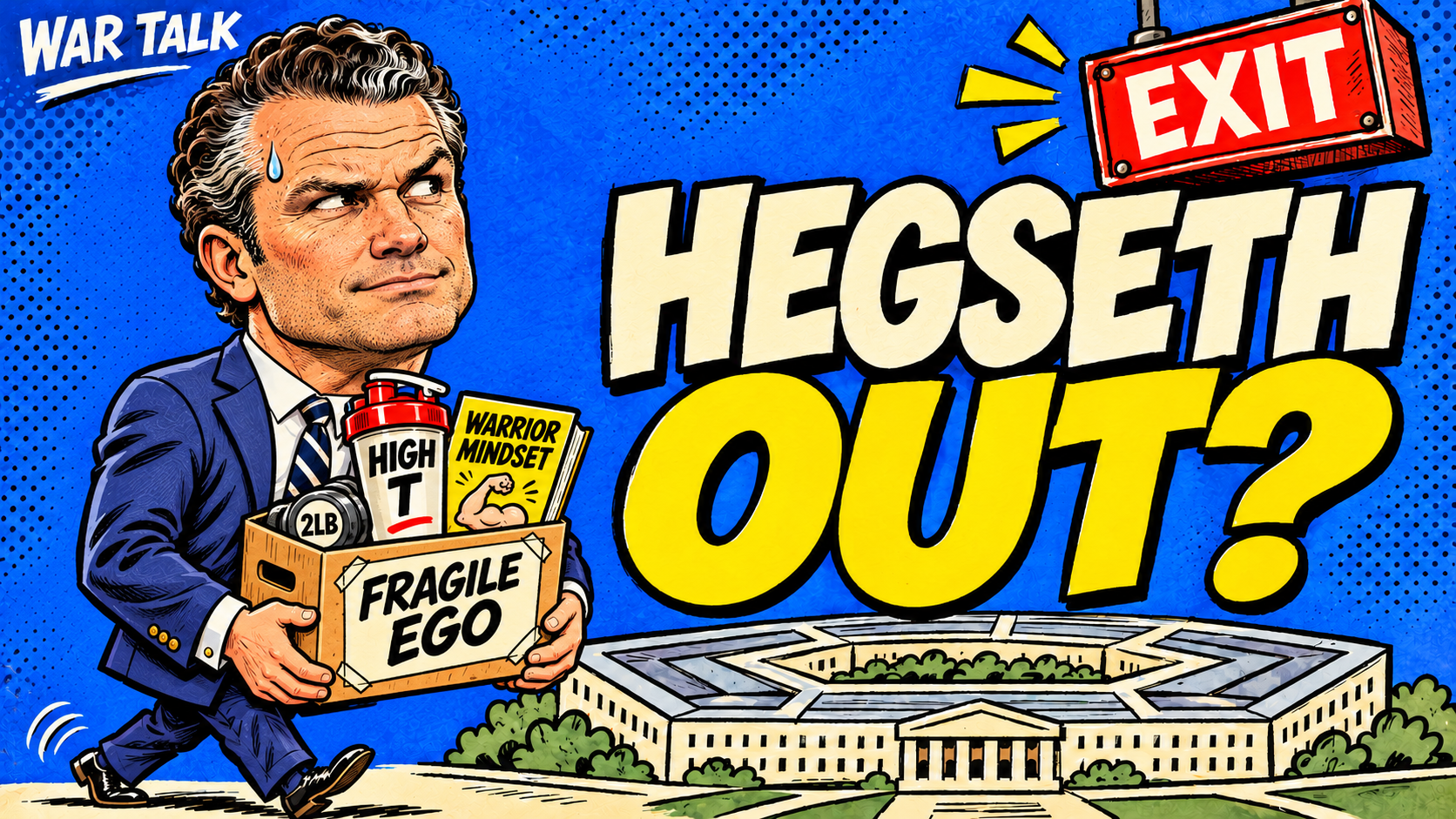
15:53Bryan Clark: Let's go back to the Pentagon. How many drinks do we think Pete Hegseth had? on election night. So Duffel Block had a great article about this, which was that because of Pentagon bureaucracy, Pete's sobriety pledge only went through on election night, and so he's had the worst 48 hours of his life sober.
16:19Bryan Clark: But yeah, I suspect there's been a lot of globes dropped in the last week. Yeah.
16:30Tony Stark: Yeah. I mean, he's had a really shitty day, right? Shitty week. I mean, there were already the stories that were coming out prior to the election of him, like trying to contact Marsha Blackburn and get his way into being appointed as a senator for Tennessee.
16:47Bryan Clark: So the only thing worse than a new phone who this is a new phone who this and put it on social media that we are absolutely not talking to you. my favorite stories are they're like he wants to go out on a high note so he can run for president right exactly yeah build on the success maybe he made an upswing like it's not hard to go up from
17:10Justin McIntosh: here like maybe like brad cooper he needs to have his own like between two ferns podcast that he could do with you know feinberg or something they can talk about you know all the basically their workout routines um you know what their podcast or listening to how many agents they
17:27Bryan Clark: have work in that kind of stuff i i would i really want the feinberg truth serum interview because probably from day two yeah he just must have been like this it just fucking guy is not it he's not it what am i doing here what's what's he spent 30 years being able to fire whoever the fuck he wants that's right okay and then all of a sudden he's having to work for like the worst cabinet secretary we've had in half a century yeah he's working for a guy that he wouldn't have hired or kept on as an intern the true best guest for the centcom podcast is paparo where he's just doing the john mulaney bit where's my fucking money man
18:11Tony Stark: i i was gonna say though jordan i think that's a that's a really interesting take and something that i hadn't thought about i was listening you know you go back and read like liar spoke or you listen to like even Scott Galloway talk about like very early on when he was like doing investment banking stuff. And like, he's like, yeah, I slept in my office and I had like an extra shirt. And he's like, and people would get like reamed out and fired for like minor grammatical errors in a memo at these places. And like everything is treated like it's like the most important thing ever. To go from like being the boss in an organization like that, where you're like, again, like you have the ability to basically look and be like, you punch him you you're fired you jump out of that window and like people will do it uh to be
18:52Bryan Clark: in the deputy at the pentagon at 32 it's been 30 years of his word goes and then all the sudden this yeah yeah i mean yeah i can't i can't imagine lasting more than a month like maybe i don't know i don't know i don't know if he deserves it bless your heart you know what's Exactly.
19:14Justin McIntosh: But what's so what I mean, one thing that kind of is funny to me or weird to me is the war in Iran to just kind of double back on that slightly. You know, everybody kind of perceived this is the president. Netanyahu came up with this scheme and they decided to go in and it was basically them deciding this. But now that we're seeing it kind of play out, I mean, Hexeth and Cooper are both like all in. I mean, Brad Cooper is the guy that's arguing we should be escalating again. We need to go in there and hit him again. I mean, it's just sort of shocking to me that guys that have the best information theoretically available to them are the ones that want to continue to escalate this conflict.
19:47Justin McIntosh: And it's actually Trump that's sort of kind of vacillating on whether to escalate or not. So just the fact that, you know, they whether they were willing participants at the beginning, they are like all in now. And all of this needs to blow back on them just as much as it blows back on anybody else.
20:01Bryan Clark: I mean, the best information is a really interesting framework, right? Because like, you know, there are some types of information which are valuable that they have that we don't like, OK, like Iranian leadership intention, how their economy is doing, you know, unrest monitors or whatever. But the but the the piece of information that matters the most are gas prices and coal numbers. And, you know, if all you're doing is thinking about, you know, where the troops are going or whatever, like that's kind of not on your mind as much. And at least if you're the president, like you ostensibly became president because you cared about those two things.
20:36Bryan Clark: Right. So it's not surprising to me that having a more blinkered view of the war would make you make you more bullish on its prospects.
20:45Tony Stark: The difference between a chief of staff like Ridgeway, who is willing to push back and make like kind of political judgment calls based on his his military advisement to political appointees, vice like Dan Cain, who came out and said, I don't make political determinations. My job is only to offer is offered best military options. And it's like. You can't get to a military victory without some type of policy objective that you're actually driving towards. And the denial of that and the attempt to separate that at those levels is exactly what these guys are doing. Brad Cooper is not wrong. The U.S.
21:22Tony Stark: could win a war with Iran. That's not the question, though. Like the question that's being asked is, can we do it in a way that doesn't cost us everything else? And there's never been a good answer to that because nobody is determined like this is what we're willing to give up for this because nobody has defined what the strategic national interest is.
21:43Justin McIntosh: Exactly. Yeah. Yeah, we have no objective, so we can't come up with a plan to achieve it.
21:47Bryan Clark: I mean, the ostensible interest is them not getting a bomb, but that's not interesty enough for the American people. Right, right. Well, it was already off the table. It's not like a normative judgment about whether or not we should care about it. It is just like a revealed preference that like we don't care that much. There's been this whole argument for years, right? If you're in Brad Cooper's seat, right, you are an admiral. You finally get to command at wartime. It is your campaign. You have the might of the fleet. You've stolen all Proparo's assets and you're held at a distance. And you get to do this strike campaign, but you don't get to do anything else.
22:23Bryan Clark: It is going to be your legacy. And everyone's argument for years has been, well, surely if the American people feel something, they'll care about the campaign. And it's actually the opposite. They felt the pain and they said, was this worth it? perhaps we should reflect upon the last 25 years, because the difference between this and the last 20 years was that like the American people did not feel economic pain from GWAT. Certainly those who lost people felt that. But that was kept to certain communities. And now it's different. And it turns out that had this had for some reason, Afghanistan driven, you know, oil prices up to 150 in 2011, we would have been out of there.
23:02Tony Stark: I mean, realistically, like the surge coincided with the housing crisis, kind of like 2007 surge in Iraq, 2008 was the housing crisis. You know, that did have a pretty substantial economic impacts. And if you really think like the long tail on that was President Obama gets elected. President Obama withdraws from Iraq in 2011. Like, you know what I mean? Like you can easily paint like the reason that all of these things were able to happen was because like there was able to be, we're mad about this, but we're really mad about the economy. and the economy is going to motivate us. And that's, I mean, again, these guys just kept doubling down on like, it doesn't really matter.
23:40Tony Stark: The gas prices don't really matter. They're going to understand that Iran not getting a bomb is really important. You really have to suspend disbelief to get the United States to that because again, North Korea has a bomb and it hasn't demonstrably changed anything. Pakistan has a bomb. It hasn't demonstrably changed anything. I'm not saying that I want global proliferation, but I'm saying you now have to restate the theory of they can't be allowed a bomb because what's the reason? And if the reason is just, we don't want them to have one. Okay. Comma. And.
24:16Justin McIntosh: I don't know how the current campaign gets you to them not having a bomb though. I mean, it would, I guess the idea would be, we're going to squeeze them enough to where they eventually agree to not pursue a bomb, which they'd already kind of agreed to do.
24:28Bryan Clark: Right. And then it didn't work. And then we're stuck with the aftermath.
24:32Tony Stark: Yep. That was, that was exactly it. Yeah. And honestly, you've just you've if anything, what we've done has has has reinvigorated the desire for people that are in the regime to push for a bomb because they can look at North Korea and go, they're leaving them alone. So maybe they'll leave us alone.
24:51Bryan Clark: Can I can we do a little history lesson? So let's do it. My Yorkus was impeached in 2024. Before that, we have to go back to 1876. Secretary of War William Belknap, who was a Grant era official who got hit for corruption. He was famous for his extravagant parties and elegantly entired first and second wives. Many questions how he managed such a grand lifestyle on his$8 ,000 government salary. Once the trail of evidence starts coming up, he just minutes before the House of Representatives was scheduled to vote on articles of impeachment. Bill Kemp raced to the White House, handed Grant his resignation and burst into tears.
25:37Bryan Clark: Now, I don't know how far does people want to push this? I mean, here's the thing, right? Like those impeachment articles are coming Monday. The second the gavel hits in the House, Thomas Massey has promised as much. And that's why, you know, Mike Johnson was keeping the House out of session. And Politico reporting that, you know, you're probably gonna have a pretty good margin for the House voting. Yes. I think there's going to be a lot of people who are going to be out of politics who are going to say, Pete cost me my job because the narrative within the GOP is explicitly that the war, whoever you blame for it, cost them the election.
26:15Bryan Clark: And then if you go to the Senate, I don't know if you get to like the two thirds thing, but like talking to some folks, you're probably going to get at least half a dozen GOP folks on board. And it's just whether the White House wants to endure even more of that pain before the new Congress even starts.
26:32Tony Stark: And that's my big thing, too, is like, has has the Trump administration lost enough of the Riz that they no longer are able to even put the Republicans into like into some type of coalition to back things that they want at this point? Because they've so fractured the party.
26:48Justin McIntosh: No. So a couple of things that. Yeah. Well, a couple of things that happen, like normally in these lame duck sessions, especially if a lot of people lose office, they don't even come back. Right. They just because you don't get your if you're in Congress and you lose your election, you lose your office. You're like physical office. So you have to start operating out of other places. And a lot of those guys just don't come back in. They come back for the very minimum amount of time. But then they just sort of disappear. So if you're on the Republican side, you may not be able to assemble enough humans to vote to be able to get anything done, because a lot of these Republicans are just going to check out for the remainder of their time.
27:26Justin McIntosh: So that's not going to help. And then you've also got, you know, the fact that Massey's discharge petition or whatever has to get voted on. So they've got to do something with the Hexeth impeachment proposal one way or the other. They have to they have to act on it if they're going to do anything in the House.
27:45Bryan Clark: The staff have given up. The members have given up. Nobody is mounting a real opposition to this. And you're just I mean, I guess if you stay in office, then like the government is handling your legal bills for all the investigations. but like aside from that is there any but like but on the other hand you're a bigger target if you're still in the cabinet right like if you're gone then you're kind of like yesterday's news and it's it's a little it's a little more exciting to do um to do oversight on people who are who are still um you know appointed officials so you can get the lindsey graham you can get the lindsey
28:24Tony Stark: graham defense of we're not here to litigate the past however he talked i can't remember his voice Exactly. But like you get, you get that if you're out, if you're still in, you're not the past. Yeah.
28:35Justin McIntosh: Right.
28:36Tony Stark: So, you know yeah.
28:38Justin McIntosh: But he provides a nice target that attracts a lot of attention. So maybe taking attention off of other people. So they're like, well, let's keep the lightning rod in there as long as possible. And aircraft carriers, everybody's aiming. I mean, just like, I mean, you know, if the administrator, and I don't know if the administration actually wants to get anything out of Congress before the end of the year. So it might be, they're fine with just, you know, stasis, you know, where they do a continuing resolution to keep the budget, keep the government open, basically. And they just let everything else, like the wheels fall off of it until the Democratic, you know, leadership comes back in in the new year, because they're going to have to deal with this Massey petition, they're going to have to, you know, do something about the Iran war to pass anything on defense legislation.
29:18Justin McIntosh: I just think the whole thing is going to kind of grind to a halt, you know, and then there's all these Republicans that aren't going to be there at all. It just seems like there's going to be no activity on the Hill other than just hearings to beat up on the administration potentially.
29:32Bryan Clark: Yeah, you're going to see in big, bold print, none of the funds in this bill may be used to continue operations in the CENTCOM AOR. Right.
29:41Justin McIntosh: If you're lucky, you get that and they've actually passed something. I mean, I think the argument that some of the Democrats are making is that any bill that we pass on in the NDA or the appropriations supports the war and And therefore, we don't want to be furthering that. And we're going to use that as basically a way to make the administration fault.
30:03Tony Stark: Yeah. And the proclivity that the Pentagon has shown recently of attempting to move money around also doesn't give them – if you're not dealing with somebody who's dealing with good faith on the other side that's going to execute the things that you've put in the bill, then why would you even pass that? And that becomes the danger that the Democrats get themselves in is like, well, we wrote all these provisions. And they go, yeah, but they're not following the law. So why would they follow the provisions of this bill?
30:27Justin McIntosh: Well, and, you know, that was this is also part of the original sin of the reconciliation bill is that all that money was fairly, very broadly defined. So what they're doing is they're moving that money around to pay for things as they need it, because the money in the in that appropriation was just in buckets, broad buckets of categories that they can push into any any other investments they want to make. So the fact that the Congress kind of set this up by passing that reconciliation bill with such loose acquisition roles associated with it. You know what a really great election night?
31:00Bryan Clark: Roel Castro.
31:05Tony Stark: You think Cuba's off the off the menu now?
31:08Bryan Clark: I think he was. I think he was having a party. I mean, we like you can't do Cuba, right? How can you do Cuba? I mean, dude. maybe you still can. If you think it's going to be bloodless, that's the thing. If you think you found an opposition figure and you think they're going to handle it themselves, you certainly can't do it with green suitors. I think that is off the table.
31:32Tony Stark: I wonder if there's a bay that we could land these opposition people at. That's right. Sorry. How would that work?
31:41Justin McIntosh: No, just quiet sort of insertion. An insurgency. Yeah.
31:46Bryan Clark: Under Woke 3.0, the Bay of Pigs is now the Bay of Tofu. You cannot land there.
31:54Tony Stark: I was just wondering, like, if there's any historical analogies to trying to do a bloodless coup in Cuba that hasn't gone well. Don't worry, Justin.
32:01Bryan Clark: We'll send them with drones. They'll be fine. We'll have their air cover. They'll be good this time. I have it on good authority that robots don't bleed.
32:11Justin McIntosh: That's right. But they do feel. um the um the but so the idea would be the florida is like the last bastion to the republicans now so the do you want a humanitarian disaster taking place 90 miles offshore of your last you know redoubt um for the republican party disaster we're relieving the disaster come on
32:32Bryan Clark: except all those people are going to be power for fucking four years that's true except they'll be
32:36Justin McIntosh: making their they'll quickly be making their way over to florida as part of the uh you know reparations or the as part of the restitution that we need to make you say the coast guard had nothing to do anymore because they can't be in the gulf like that's true you do have a lot of coast guard that can be freed up yeah yeah i think yeah i'd be like no disrespect i really do i love
32:56Bryan Clark: the coast guard can we talk about okay let's talk about feinberg leaving osc leaving future of like the Pentagon spending money and doing things. Yeah.
33:10Tony Stark: So we had good reporting well prior to the election. The Feinberg had submitted a resignation letter and it was rejected by the White House. And he was told, please stay. Or whatever they say to somebody who has his background to convince him to stay. There is the beginnings of reporting now that he has resubmitted his resignation with more of a, I'm not asking, uh, tone to it. Um, so yeah, I mean like him leaving as the champion of dog and as the guy who was going to bring in VC money and it was going to, you know, write the ship on procurement and apparently also take all the blame for, uh, you know, the failure to rearm, uh, and replace all of the missile stores that we've had.
33:54Tony Stark: You forgot about that. He didn't. Yeah. Like, you know, again, like he's, he's, he's had a, he's had a lot. Um, You have him going out and then you have like, you know, multiple discussions about people in the NSC and the OSC all leaving very, very soon. The ship starts to look real rudderless real quick.
34:13Bryan Clark: Yeah. So like, let's let's talk about what Congress looks like from the DOD perspective of like, it's actually better for the defense budget that what we're looking at is like a 260 Dem majority instead of like a 218. because usually there's like this block of like 20 to 30 people split between the Dems and Republicans who are like cut the budget by 10%. It comes up every year. And I actually think that gives leadership more room to maneuver to at least keep the budget flat. You're not, you're probably not getting stable with inflation, so it will be a real dollar cut. But I don't think you're going to see a real cut across the board.
34:48Bryan Clark: Maybe certain products get cut, you're certainly going to get more regulatory scrutiny for how things are awarded um but like from the you know to your point of like feinberg being the champion of the dog and everything else like the thing is is like the companies that matured to do all of this and are now building things like they're in congressional districts now which means the new members are going to learn very fast that like they can't actually just suddenly wipe the board um and so i i think you're going to see more haggling than than some commentators expect. But like, yeah, I think more than budget cuts, you're going to see scrutiny over some of the deals that were made, who made donations to what for certain renovations, et cetera.
35:29Bryan Clark: It's going to be more of that than it is going to be like, it's a catastrophe. But I think the VC market might very well look at this and say, yeah, maybe like seeds in series A rounds for defense tech are probably not the best place to invest. Maybe we should find a new market for our allies.
35:48Justin McIntosh: So the, um, I, yeah, I agree with a lot of, I think the, um, the, what we've been seeing is, um, folks making procurement and contracting decisions have been making decisions that include some of these new defense tech companies that are connected to the administration or even the president's family. And it's not necessarily because like somebody called them to say, Don Jr. Called and wants you to buy the stuff from his company. It's because they say, well, my boss's boss is really tight with these people and I don't want to leave them out in the cold. So if I'm going to do some kind of, most of these procurements have multiple winners.
36:24Justin McIntosh: So I'll include them in the mix. So I'll keep these politically connected companies in the mix as we move forward. And then eventually we'll winnow down to somebody who's the real winner. And then maybe if they don't cut it, then we'll lose them then. But it influences the decisions that these contracting officers and acquisition officials make because they just know that these political connected companies are going to come and put pressure on their boss and their boss's boss. So they keep them in the mix at least as long as they can, which gives them government contracts and allows them to go do fundraising based on the fact they have a government contract because now I'm a viable company.
36:59Justin McIntosh: So just as vicious cycle. And I think that's going to start to fall off now because these contracting officers and procurement officials are going to be like, Like, oh, I might have to go over and talk to the Democratic Congress about the decisions I made and why I made them. So I think we're going to see a real, you know, kind of constricting at that action level where, yeah, you've got people that are doing corruption at the political level. But down at the level of people who might be legally liable for these decisions, they're going to be having to watch their backs and probably make smarter choices.
37:30Bryan Clark: Do we is now when we talk about the Elon of it all? I mean, like, what do you do about SpaceX? Yeah. I mean, so the stupid nationalized commentary is dumb, but I think there's going to probably be an ass to say that at minimum, Starshield has to be spun off as like its own subsidiary that Elon can't touch. And I think that, you know, whether that's even supportable from an infrastructure standpoint, I have like no idea because telecoms are not my expertise. But I think, yeah, there's just going to be so much investigations into who pressed the button, who turned it off. And there's going to be a lot of PMs on the gov side who are going to be happy to point the finger.
38:14Bryan Clark: I was hearing that before the election where people were just openly complaining about it.
38:18Tony Stark: Well, and I think that's, you know, to me, that's going to be the biggest hang up is going to be there. One, I agree with you. I think Starshield, they're going to make demands on Starshield. Because, again, it goes back to the argument, you know, we can say that the department was somewhat directionally correct with the Claude and anthropic decisions and discussions that they made around, like, Claude's ability to throttle models. Now, yes, on deployed edge compute in top secret enclaves or in secret enclaves, they couldn't reach in and throttle a model. That's true. However, on unclassified, which is where a preponderance of military work occurs, they showed the ability to reach into these systems for their commercial customers and downgrade them without saying anything to them and without alerting them.
39:09Tony Stark: And they did that when Fable was first released. So that kind of validated the Pentagon's fears. We don't want to give a commercial company this amount of control over something that we're going to employ. This is what our fear was. that exact same logic applies to the star shield enterprise if you're going to say that we are going to use star shield as a backbone for you know military communications uh c2 you know command and control we're going to use it on communications platforms we're going to use it for drone driving or whatever like then yes there's going to be zero uh way that they're going to let a commercial company still have control over it there also gets to be the whole issue, this is something that people have talked about before, Elon Musk doesn't have a security clearance.
39:53Tony Stark: Technically, by the way the letters of law are written, I'm not even sure he's eligible for one because he kind of openly does drugs, which, you know, whatever. But then also, it wasn't, you know, his citizenship status and all those things. They were always, there was some questions. The fact that he doesn't have a security clearance and yet sits over the top of a system that conceivably is used to transfer classified data is also somewhat problematic if he is the one who can give directions on when turning it on, turning it off, things like that. Because it shows that he has a hand in that that goes beyond, I sit here and make budgetary moves for the company, and that he actually has operational control, which means who's going to tell him no when he has to see something.
40:34Tony Stark: And I think those are going to be really hard questions that they're going to get asked probably very quickly.
40:41Justin McIntosh: There's so much dependence on StartShield for a lot of these robotic and autonomous systems we got deployed. We're fielding all these forces, including in CENTCOM, where that's the only comms network that you've got available to you. And to have that be dependent upon, you know, whatever Elon wants to do that day is not a tenable situation. So they're going to have to make them spin it off and create a subsidiary that's managed differently than under SpaceX overall. And I think going forward, there's going to be a bunch of changes and probably how the government's going to be able to acquire those services.
41:21Justin McIntosh: And I agree, they're probably going to have to come up with different governance structures at SpaceX, kind of like we do with other defense contractors where they have to create subsidiaries that are going to have different rules compared to their commercial counterparts. And Elon's trying to get into mobile broadband networking, taking the boost mobile spectrum that he was able to, I guess, acquire from them and try to do basically space to surface cellular telephone service or mobile telephone service. So now that's going to be another potential capability that the DoD might want to use and now has to figure out how that's going to get managed.
42:04Justin McIntosh: relative to SpaceX's other offerings. Because the way that the DoD works with Iridium on the equivalent capability, it's pretty tightly governed. The Iridium has a bunch of rules and a bunch of ways that they've managed that program that make it not nationalized, but it's fairly regimented. And they're going to want the same kind of thing if they're going to use SpaceX's space to use our mobile telephone service.
42:34Tony Stark: I think that's right. I think, too, just stepping back a little bit more broadly, just kind of looking at the defense tech, Neoprimes, the small startups, things like that. One, we saw yesterday Shield AI did an acquisition of a counter UAS system, which is interesting because one of their better counter UAS systems is their existing UAS system. But sorry, that's a bad joke. But so Shield does this acquisition. they have now done several acquisitions and they start to look like, Hey, like, you know, that's going to be the way forward for us is we're going to buy these relatively early, uh, companies that have decent valuations.
43:13Tony Stark: And that's going to help drive our valuations as well. Um, flip side of that is you've got these PE firms and these VC backed firms that have, you know, started investing in defense tech about three ish years ago. Um, you know, maybe four years ago, start of Ukraine, when we started to see like, Hey, defense is starting to shift and it's going to be more commercialized and there's going to be these startups that are starting to see things. They're starting to get to the point where they're looking for profits. Like the P P firms in particular, they're starting to look for profits. And I worry that you're entering a phase where you're going to see less funding going to the precede seed rounds, you know, a, a, a, a rounds and stuff like that.
43:48Tony Stark: You're going to see PE starting to back out a little bit where they're going to be like, well, I don't really know. And you're basically going to be left with these big, um, you know, heavily valued neoprimes that are going to be there just trying to snap up these little companies. And they're basically just going to create the primes of the past just again. Like it's kind of by virtue of them being the only ones with cash because people bought in early to them. And I worry that what we're going to start to see is these boards get really anxious over maybe we're not going to get as much dog funding.
44:22Tony Stark: Maybe there's not going to be as many UAS purchase and they're going to start bailing on what would be profitable companies, but maybe not profitable to the, you know, the PE values that they had given them originally or the multiples that they gave them originally. And that's a fear that I have because I think what that'll actually do is that'll really drive down and slow both the competition and the innovation. And as we talked about with Michael Kaufman on here, like the speed of innovation, and even, you know, Travis Metz talked about this, like we're doing a, you know, DIU is doing a drone competition every six months.
44:55Tony Stark: Ukraine is iterating every six to 12 hours sometimes on capabilities. So keeping up with that requires having multiple people that are doing iteration and figuring out what the next thing is. And I think a consolidation at this point would actually probably slow us down more on acquisition and actually getting capabilities into warfighter hands.
45:14Bryan Clark: Adam Smith has been as the soon to be chair of Hask, right? He's been around for a long time. He's done this before. I think he very much knows the difference between hunting for corruption and bad deals. And, you know, making sure that, you know, he under, he has, I think, been on record of saying he understands the value of actually viable new robotic autonomous systems. So I, I think managing all of the new members of Hask who do not understand those things will be a very hefty job on the PSMs to explain the difference there. and it will almost be managing the stray voltage will be the hardest things for staffers because there will be so much that people want to go after.
45:58Tony Stark: Do you want to spend a little bit of time, Tony, talking about your piece that you recently wrote, the how-to guide for staffers? Because I think it's a good lead-in.
46:06Bryan Clark: Yeah, yeah. So as a former house staffer, I finally got around House people, as we say, finally wrote a piece called How to Be a Good Staffer. And the reason I wrote it was for two reasons, one of which is that you have this massive swing in new members, which means new staff, both on the House and the Senate side, probably, I think, more than 100 new members, if I'm doing my math correctly, at least on the House side. And how you go from, hey, I have to spin up a new staff, I have to get people smart on it. Like the numbers are just not there because of what the last few years looked like, particularly for the Dems of like staff fleeing the Hill of you're going to have to bring in a lot of new people.
46:52Bryan Clark: So I wanted to help get people accustomed to the Hill, particularly about how to be good at their job from policy perspective, because when I was a staffer, the office I was in was basically just like a pressure cooker for like, you better learn fast. And so I took a lot of those lessons that were ingrained in me. I also wanted to because talking with a lot of my former colleagues, and even political had an article about it this summer. The quality of staff has declined, as there's been a focus on comms, ideology and posting over actually doing the work of legislating. And the only way the republic, you know, turns back to good is that you have to have good legislative processes, Congress has to reclaim its Article One powers.
47:34Bryan Clark: And that starts with staff who believe staff and members who believe in the legislative process who are able to do it and who don't just rely on Claude to do their job for them.
47:45Tony Stark: Wait, I thought Jordan wants Claude to do more of these decision-making based on what we've been doing.
47:51Bryan Clark: Look, look, I mean, relative to the 22-year-old, I do think Claude can be an upgrade, but we're still not completely, you know, AI haven't, AI haven't completely superseded us.
48:04Tony Stark: Yeah, no, I agree. I think it's, I think, I think that's absolutely right. And I I really appreciated the piece one in particular where you point out like how lobbyists take advantage of basically the staff members inability to or call it time constraints, inability to read or, you know, the time to actually read bills fully. And they come in and they say, like, this AI weapon system is biased and we need to take it out. And like you're correctly like point out, like, wait, are you talking about bias in like the way they do the weights and training? Are you saying that it like targets people of color more and then they take three days to get back to you?
48:39Tony Stark: And they're like, we met the second one. People without color. Yeah.
48:43Bryan Clark: Or without color. It would be – Okay. So, Tony, what are you putting on the Dems like congressional reform agenda? I mean I don't think now is like a moment you can double everyone's salary. It's always like a tricky thing to do that timing. but yeah so i mean i'll say on the salary bit like there has been a lot of work over the last few years like interns are paid now which i know such a low bar um like staff is actually like paid like decent salaries like it's still low for dc but it's like you know you only need two roommates instead of 10 sort of thing um i i really think on the on the dem side of of their legislative priorities i mean it's it's going to be a lot of what we just talked about which is regulatory reform for the DoD, like keeping them honest.
49:30Bryan Clark: And on the staffer side, it's it, there's just going to be a lot of hard pains in learning how to the DoD is not this mystical place. I think when Ike Harris was on the show, Jordan with us, we talked about it as like, if there's anything that new staff can do, it is find a way to demystify the DoD for themselves. So they don't treat it as like this magical place where they just give me the answers or not. And that it's of bureaucracy like any others?
49:54Justin McIntosh: Well, actually, the thing I've been seeing most recently is that because, of course, the administration doesn't want to share any information with Congress, because that comes from the leadership coming on down. I mean, unless it's about their workout routine, you know, or their, you know, between two ferns podcast, that's the extent to which they want to share information. What I hear from staffers is they can't get anything out of DOD. Basically, it's not magical or mystical. It's just they get zero out of there because it's all mediated by OLA to be essentially just publicly releasable information.
50:27Justin McIntosh: They can't hardly get a real answer. So they come to think tanks a lot of times to say, well, can you explain to me what this is supposed to be saying and what the DOD is really trying to do or the department's really trying to do here? um so and that's just gotten worse i mean that's just been a trend for the last decade or so is less and less useful information coming out of the department to the staffers in particular i mean they'll you know they sometimes share good information with the members but the staffers get this very kind of i guess they get very surface level uh inputs that are sometimes incoherent so that's that's that leaves the junior staffers kind of questioning like they don't understand any of it because they have no background.
51:08Justin McIntosh: So that ends up being something that think tankers end up having to help with.
51:12Bryan Clark: You heard it here, folks. If you're a new staffer, you can call Brian at 1-800-WARTALK for 24-7 support.
51:23Justin McIntosh: Just put it in the comments. Better than Claude. Yeah, exactly.
51:26Tony Stark: Or just ask Claude, yeah. I mean, what we would see is like when I was in, we would have staffers come out relatively regularly, congressional staffers, you know, Codells, whatever. they'd come out to training or they'd come out to the unit or they'd come out when we were deployed and the tone and tenor of the way that we address those changed so dramatically like if it was a codel and it was just like we'd you'd look at the staff list and like you'd have obviously somebody at the command you'd be like hey you're having like this and this person they're on the congressional staff for this guy and they're like what are you guys going to do and we're like oh we're going to take him to the range and we're going to show him some vehicles and we're going to talk to him about a couple of things and they're like, perfect.
52:03And it's very much like glad handing photo op
52:07Tony Stark: opportunity. They get to shoot a gun, they leave and they're like, that was amazing. Then you'd have the PSMs come in like the professional staff, very different. Like they would be like, Hey, uh, we need to have a discussion about what you guys are going to say. They don't want to see any of that shit. They want to see you actually have a, uh, fulsome conversation about what's going on. And they're going to ask you questions and you better be ready because like I forget the name of the guy that was uh the lead PSM that used to come out to Syria pretty routinely but he was like I wouldn't say that he ever yelled but he definitely chewed a couple officers asses like pretty hard because they would start saying just kind of like bullshit they would just answer poorly uh questions that he had and he would start digging in and then you very quickly realize you're like oh no this guy actually knows what he's talking about yeah and he's talking to it yeah that's the question with the tony and pay right is like
53:02Bryan Clark: yes you can like what's happened over the past you know five seven years or so is it's gone from having lives be like like you know basically like poverty level salaries for entry level folks to like somewhat somewhat more functional but it doesn't change the calculus where like once you want to buy a house or like have a second kid, you kind of it's it becomes extremely hard to stay on in Congress. And that's why you have such a grave, you know, such a dramatic fall off between like what, you know, members can afford to pay people and the quality that is in the personal offices and then the quality that you see in in congressional staffs.
53:45Bryan Clark: And it would just it would just be great to have, you know, the PSMs feel like they can stay a few more years. And then the staff and then the and then the representatives offices who like, look, these are not unimportant, like it would be great if there was also additional kind of knowledge and expertise coming from there. And often it isn't because just, you know, the people are 23, and they don't have any time, they have not had any time to develop any expertise, right?
54:13Justin McIntosh: And they can get pushed around. When the department comes over and they either give them bullshit or they don't tell them anything substantive or they're just giving them the publicly available information, they can't recognize that. They don't recognize that they're getting a snow job and they're not able to ask the right questions. And that's why I just see a lot of that, especially under the current leadership, which is really using OLA to constrain the information that's made available to Congress. So hopefully the new leadership can kind of break through the logjam over there on the congressional side.
54:43Bryan Clark: Yeah. And on that, which is not that much. I've had this conversation with Dem staffers and consultants over the last few years, because the GOP, especially in the foreign policy arena for years, had built up kind of this pathway of like, this is how you become a staffer. This is we're going to train you, educate you. And like the Dems are really good at training activists. They were really bad at training staff or like SMEs, particularly outside of the NGO space. And so I think the role for think tanks, particularly going forward, and WarTalk, is getting people smart again as staffers in a way that's like free and available to them, because it used to be that like, well, yeah, you could do this, but you'd have to do it for free.
55:23Bryan Clark: It was 40 hours a week, you've also got school on top of it, like, that structure doesn't work anymore for like getting the right people in place. And if you want smart staffers, and therefore smart members, like you got to make the education and training available to people, because if you're 22, 23, because that's the only way you're going to get a lot of staff for those prices, you're not going to have a lot of people like I was a rarity that I came from an enlisted background and then went into staff like that. You're just the only way to do it is you have to find ways to train people and set up those institutions.
55:55Bryan Clark: I mean, you know, the sort of like the national security staffer education training i got was all right wing coded because that was the only thing that existed it's like thank you mr whore dog like i went to her talk war studies that like got me down this whole path but like you know that comes with a with a very defined um uh conservative valence which like again is fine but it just means that there is not the kind of like um uh dem it's it's just you know i guess it comes back to the donor base right but like you know if you're like into war are you really like a like a big democrat donor i don't so so i it's understandable but it does it's totally right um as tony was saying that there is this gap in the kind of um upskilling uh that that happens to bring folks into the field this is like a vietnam fallout like why study war right yeah i mean that's i would say yeah
56:53Tony Stark: military history like it gets it's very negatively coded so maybe this is is this our um team yankee
57:00Bryan Clark: transition yes are we finally going to get there or any do we have any other any other midterm stuff i guess we're going to be talking about this for a long time yeah this is good we gotta get through
57:08Tony Stark: the actual transition period we're gonna have many of these episodes yeah i think we can kick Team Yankee. Yeah.
57:17Bryan Clark: So Team Yankee is the first book in what we're going to do is the War Talk Book Club, which we're going to try to make a monthly thing. But it is one of the original 1980s techno thrillers about World War III. It's written by Harold Coyle. It's about like two hundo pages. And it covers the command and the challenges of being a company commander as part of an armored team, Team Yankee. in the first two weeks of World War III between NATO and the Soviets. It is an excellent case study in analysis of both leadership under fire, the transitions that people have very quickly when under fire, as well as just basic combat tactics, everything from how to maneuver on the battlefield and how you assess things to basic planning.
58:08Bryan Clark: And then even really just like, I don't know, So just like when it talks about this is how you fire the gun on a tank, this is like, you know, how you do NBC procedures. Like it feels very much like you're walking through it. I say that coming from a mechanized unit and like not a lot of those procedures changed very much in 30 years, which is, you know, maybe a little bit concerning. Tanks didn't change. So, yeah. Well, so to be fair, that's the one thing, right? The Abrams in this is the original Abrams that has 105 millimeter cannon instead of 120 or 125, whatever it is now. But for the most part, yeah, it's a very good like this is how you do armored warfare.
58:47Tony Stark: So it covers 13 days of a conflict. So obviously, you know, like it is something that was written to be able to take the story. Then there's arguments that it's, you know, too one dimensional and, you know, too much of the American bravado, you know, 1985 ish, you know, American triumphalism kind of leading the way. I think that's fine. I actually think it was really good because I think the purpose of this book isn't to have a really nuanced view of the way that the strategic level of the war and the political levels of a conflict like that would work. I think this is a great encapsulation of the tactics of one side and what they would potentially use at a very, very, I mean, incredibly tactical level, at a company level.
59:28And it shows where there's friction and it shows where there is where there are frustrations that you're going to run into.
59:36Tony Stark: And I think that that makes this book very useful for young officers and young enlisted men in the United States military that they could they should read this and they should use this as kind of a case study. Because there's almost like set piece battles where you can walk through what would I have done in this. And it isn't like going and walking the grounds at Gettysburg, which is amazing. And I think everybody should do it. But I think when you do staff rides like that, you're trying to envision the way armies and corps were being employed in a time that was very distinct from how we fight.
1:00:10Tony Stark: This is actually very similar to how armored units will fight now. And it's on a small enough scale that everybody who's in one of these units can kind of be like, oh, that would have been me. Oh, would I have made that decision? Would I have done that? Like, what would I have thought in that in that place? I think that makes it very useful for a role play kind of scenario that you could run, you know, as a young. If I was a young armored captain that was leading a company, this would be a book that I would give to my lieutenants and be like, you guys should read this. And let's have a conversation about, you know, the battle of what Hill 214.
1:00:44Bryan Clark: Yeah, they kind of fucked that one up, didn't they?
1:00:46Tony Stark: They did. Honestly, that's actually like, that is the kind of stuff though, like where I sit, and I wrote about this a while ago on Substack, but I called it, it was an article I wrote called The Day We Almost Died. And it talks about the decision-making process that led to my ODA being effectively isolated in southern Syria and the pressures from both the company command and the battalion command and the decisions that they were making. And then the frustration that I was feeling as I was trying to convince them that this is a bad idea. We shouldn't do this. And these are all the reasons. And it didn't matter because they had already decided this is what we were doing.
1:01:26Tony Stark: And I think that's a very real thing that exists in wartime. And I think he actually wrote it pretty well, like being the captain and having a battalion commander that finally goes, you need to shut up now. Like, and you either need to do it or I'm going to find somebody else that's going to do it. And I think that is something that happens. And you as a young officer, I think you need to learn that you can register your complaints. You can say, hey, I don't agree with the way we're going. But if it's not an illegal, immoral, or unethical decision that you're being asked to do, it's a lawful command.
1:01:59Tony Stark: And you need to go execute. and that's kind of the position that the captain finds himself in. I'm blanking on the name now. Bannon, Captain Bannon finds himself in at one point leading up to this battle of the Hill 214.
1:02:16Bryan Clark: Yeah, and I think that that whole sequence even leading up to the battle just is such an excellent portrayal of the confusion of even basic combat movements of maneuvering at night behind your own lines, people getting lost And then being like, well, do I wait for everybody? Do I just go? And then obviously the commander above you who wants his glory is going to say, go take that hill. I don't care that nobody else is here. And does it in a very public fashion. So there's no way. And then you have to be the one who's like, all right, well, I have to figure this out. How do I do this? How do I keep my guys alive?
1:02:51Bryan Clark: And how do I execute the mission? And then all the friction that ensues.
1:02:56Tony Stark: if I were to design it and I think we already batted around this uh I would design this almost as an AR that you could walk through after your guys have read it and then talk through what went well and what didn't and like what would what would change and what would we have done different obviously in the end of the book like especially in those early battles like things go relatively well for team Yankee um but still like you also get to deal with the interpersonal too he does I I think he does a decent job writing about the shock that people feel and the realization that like, I think at one point, like looking out and seeing, you know, Russian tanks and Russian BMPs burning and then like doing the quick math in his head and being like, oh, each one of those can carry 12 people.
1:03:38Tony Stark: like so i've just like and then very quickly like without even saying it doesn't he stops there and he doesn't finish the thought but like it leaves it for you to finish the thought of like oh hell i just like by myself i just killed 36 people like not including everything else that's going on in this war and it draws it down to a very personal level in a way that like the abstract books sometimes don't because it just becomes you know submarine was sunk plane was shot down and ship was sunk and you lose the interpersonal, like the effect that that actually has on war fighters. I would be interested, Jordan, from your perspective, as somebody who didn't serve in the military, what were your thoughts on it?
1:04:19I mean,
1:04:21Bryan Clark: weird genre, right? It is. I've read a lot of books that are history books about conflict, right?
1:04:33Bryan Clark: And even Armored Conflict, right? I've read sort of memoir-y things about World War II and Western Front and battles in Africa and whatnot. And it's just like, you know, when the thing is real, then like, it's very different than this kind of like, I don't know, it's this sort of milfiction. there's something uncomfortable about the genre, right? Cause it's like, there's a part of it where it makes you feel like, oh, this shit's really cool. And like, you can't, you never get that feeling when you're, when you're, you know, reading someone's memoir about the, you know, about their, their experience of a war, because like the tenor always is like, some of my best friends died in my arms because I did this thing.
1:05:24Bryan Clark: And I think that like, you know, when maybe other books are better at that piece of it than this, but like that, that ain't that that sort of like, you know, hue of the of the narrative falls back when it turns into more of what you were saying this like, you know, exercise of, OK, we're going to pop the smoke and we've got one thing and we're going to shoot it really fast and then we're going to scurry away and hope we don't die. and like, oh yes, and then someone died. But like, it's not a real person. I didn't really, you didn't like, like I will feel emotional connection to a human being who died if they were real, whether or not the author did a great job.
1:06:05Bryan Clark: But if it's fiction, like the author really needs to like make me care about someone before they die for me to give a shit. And that I think is the piece that you sort of miss when you're talking about this, like, you know, future war stuff.
1:06:19Tony Stark: Yeah, it's interesting that you bring that up because I think we're there for me being able to put myself into that role because like I've kind of been in similar scenarios. Like I'm able to go like, Oh, I can kind of, I can abstract all that away because like I've been in those kinds of scenarios and I can just nut it down to like, okay, these are the things that I'm really worried about and kind of pull those out of it. I will say that I had the same thoughts, even the whole kids thing and the plane rescue and stuff like, like that whole thing that can be left out. I'm, I could have lived without that.
1:06:48Tony Stark: Like, I didn't think that was amazing. They did that for the humanizing effect. Sure. I would not say it's a great work of classic literature at all, but I do think that for the purposes that of like being, you know, something that you can use to draw tactical lessons from as a, as a, as a tactical leader in combat, I think it actually, it actually does that very well, but I do take your point. And I think that's really, I think it's also interesting to have that viewpoint because I think I can take for granted when they say certain things, because I have a history from it, I can put myself in that role very quickly.
1:07:22Tony Stark: And I think you're right. It actually requires less writing to get me to do that than it would for someone who hasn't experienced some of these things. And by virtue of that, you have to be a better writer to be able to pull a larger audience in. And I think that's a really good observation.
1:07:38Bryan Clark: Yeah. I mean, my bar for fiction writing is like extremely high and like sci-fi writers they don't hit it these people they don't hit it either because they're not you know they're not this is not what they're opting this is not what they're selecting for they like the technology and the in the you know order of battle and whatever um i also think that these sorts of books are more relevant when you have fewer case studies in the war right like tony's like crazy x super book um where um you know we've got like your robot androids killing each other like that is more interesting for me than like okay i i feel like i would probably learn more about how tanks fight reading like yom kippur war history than like this kind of you know imagined whatever but but yes on the one on the other hand like americans hadn't fought with tanks in 50 years um by the time this book came out so there's like insofar as you're talking about things where there are sort of fewer case studies and it's not something that's like kind of already in the um you know the zeitgeist in the imagination then i think then i think this type of writing is is more useful but the sort of like you know ripped from the headlines like near future stuff it's like no i'll just read like a brian war game and like that'll yeah that'll that'll
1:08:54Tony Stark: that'll give me what i need no and i think that's a really good point too because like you have to you know this was written before um the battle of 73rd easting so this was the the last great big tank battle that the U.S. fought against the Iraqis. And I do think, like you said prior to that, maybe Korea? Potentially not even then. There were some tank engagements here in Korea, but potentially you go back even further into World War II before you get significant tank-on-tank combat. And so you're kind of left to, from the U.S. side, either reading Yom Kippur War or going back and reading like Hans Guderian or Rome, a Rommel, or you're, you're going and you're going back into us memoirs, which I think all of those are great.
1:09:37Tony Stark: But this also goes back to my, my common theme that, you know, talking to my buddies who are professors at West Point and, you know, everybody on Substack writes an article about it every other week, how nobody reads that includes military officers. And like, you know, uh, general Clark talked about that in that piece that, uh, that Wes Morgan did the other day, or I say the other day last week, where you have to find a way to pull them in. And I think like, honestly, like a strong point of this book is that it's only 200 pages. You could conceivably get somebody to read this that is not necessarily a reader.
1:10:10Tony Stark: You start getting into the history, like the history books that we, that you and I both have, you know, on our shelves and stuff. You might as well just go ahead and write that off. Like they're not opening it. They're going to come in and maybe they'll get the film, the audio book and listen to it. Maybe. Most. Okay.
1:10:28Bryan Clark: So let, Let's close on this because there truly is nothing new. Justin complains no one reads. My contention to him is that no one has ever read. This is from the Social History of the Machine Gun. In 1872, Major General Sir John Maurice bemoaned the fact that, quote, the colonels of the regiments as a rule are fighting hard to stand in the old ways. That queer animal in the matter of books, the British officer as a rule does not know where to get books. He hates literary work, even in the form of writing letters, and hardly has the energy to undertake it. JFC Miller, a noted military writer more famous than this other guy, gave a particularly striking example of this aversion to reading.
1:11:12Bryan Clark: In 1913, I remember recommending, I remember a major recommending Henderson Stonewall Jackson to a brother officer. And then a few minutes later, when the book was being discussed, committing the error of supposing that the Battle of Cross Keys was a public house in Odeham and Jackson was the man who ran it. So like, look, yes, no one ever reads. No one's ever read the podcast. You know, it is. It's an all right substitute. Well, we'll make it work. By the way, in the show notes, I have had Claude remake the board game that accompanied Team Yankee when it was released. So if you would like to see if you can best our characters whose names we've forgotten because they were so forgettable in their imaginary fights with the Soviets in Germany, then you can check it out.
1:12:05Bryan Clark: You also play with a friend. There's AI as well as, you know, two human version. what a week what an edition of war talk our next book is going to be the gunpowder age by tonio andrade it's a fascinating look at the military revolution um uh in the middle of the second millennium comparing the chinese and the western experiences basically talks about um guns in china which is something that gets under weighted when people think about why, you know, the West conquered the world. Thank you for being with us. We're going to have merch soon. Tony's working on some mugs and yeah, here's to no Pete, November.
1:12:57Bryan Clark: Oh, it's TBD.
1:13:07Tony Stark: A pro? Try the Hegs' rules. Five steps to failure. Let's go!
1:13:21He was built to be your assistant principal. Barking lethality at the pep rally crowd.
1:13:29Bryan Clark: He'd park his white Mustang off campus. Cause four tires at three o 'clock would make him proud. Instead, life's busted.
1:13:39Tony Stark: Slot machines spit out the grand prize. 2.8 million people and every bomb that flies. Now, Iran's tougher than before he hit it. The missile shells are empty, but he'll never admit it. Dominated, dominated, dominating. All the way to defeat.
1:13:58Bryan Clark: Step on a rake, step on a rake. Never retreat. Just repeat. He picked fool number one.
1:14:07Tony Stark: It's not what it is. It's what you call it, son. Defense sound sounds like waiting by the door. So he renamed it the Department of War. Soldier sounded soft. So he welded up the word. War fighter. The toughest speak noun you ever heard. What a dork. Say you won on cable and you'll never lose. But reality's a rumor started by the news Rule number two, Lou's looking tough That's what real men do He fired every general who had ever won a fight Especially the women and the ones who weren't white He's scared, planned a bombing in a group chat The Atlantic's on the thread We're clean on up, sick Is really what he said Dominating, dominating, dominating All the way to defeat Fights in the mirror, fights in the street
1:15:05Bryan Clark: The saddest alcoholic loser You will ever meet Rule number three, it's all a show Be the manliest man you can be Not even Judith Butler thinks about gender quite this hard He's a John Wayne impression Having a breakdown in the yard Feeling small Here's a pro tip, all your own Go and test everybody else's testosterone Obama asked how long he spends In the mirror every morning And it never ends Rule number four
1:15:45Tony Stark: God's got the power And you know what power's for His church's boss came to the Pentagon to pray He wants the wives and voters to obey
1:15:55Bryan Clark: His book on being faithful makes a solid chant Penetrate, conquer, colonize, plant What would Jesus do? Overwhelming violence of action Blessed are the peacemakers
1:16:09Tony Stark: Nope Fire them
1:16:11Bryan Clark: These rules only work if the boss lives on TV He hired Pete right off the couch at Fox and Friends But the midterms hit and now he's grabbing the remote Full confidence, click And that's how the show ends Beijing's Employee of the Year Escorted out and yelling Impeachment in January Dominating just out And defeated and getting beat Never retreat
1:16:44Tony Stark: Just repeat I'm Pete Have fun in jail, Pete
1:16:58At home
Joining me for WarTalk’s post-midterms edition are regulars Bryan Clark of the Hudson Institute, Special Forces veteran Justin McIntosh, and former House staffer Tony Stark.
We discuss…
Why Iran holds the cards now — a blockade too slow for the White House’s clock, half the deployed Navy pinned down, and Tehran’s likely asks, from reparations to a strait toll.
The war Congress won’t pay for — why no NDAA or appropriations bill moves while the shooting continues, and the one-line rider that could end it.
Hegseth’s impeachment math — articles due Monday, how many Senate Republicans might break, and the 1876 Secretary of War who raced to resign minutes before the House vote.
Defense tech after the wave — why a big Democratic majority may be kinder to the topline, the coming scrutiny of politically connected contracts, and Starshield’s governance problem.
Who does the oversight — Tony’s new guide to being a good staffer, and why the Pentagon keeps 23-year-old aides in the dark.
The WarTalk Book Club debuts — Harold Coyle’s Team Yankee as a case study for company commanders, why mil-fic makes me uneasy, and proof that officers have never read.
Plus, I had Claude rebuild the original Team Yankee board game. Play a friend or the AI here (https://claude.ai/artifact/7LyRbALwL11FnqZWsqC9Rp). Next book: Tonio Andrade’s The Gunpowder Age.
Learn more about your ad choices. Visit megaphone.fm/adchoices
Scan the code with your iPhone camera
Listen in the app.