 Ask ChatGPT

Alleged Chinese espionage involving NVIDIA CEO Jensen Huang, and how U.S. export-control enforcement failures may have enabled Chinese access to advanced AI chips via third countries (e.g., Megaspeed), especially after policy shifts in 2025.
Chris McGuire, senior fellow for China and Emerging Technologies at the Council on Foreign Relations; former NSC deputy senior director for technology and national security.
Huang lobbied to loosen export controls and may have helped prevent enforcement against third-country circumvention. In May 2025, the Trump administration allegedly chose not to enforce Biden-era rules requiring export licenses for large AI-chip orders to “not trusted” companies worldwide, and did not replace them. This created loopholes China exploits through Southeast Asia. The episode argues NVIDIA’s compute allocation and Huang’s access to internal details could be valuable to Chinese intelligence.
Megaspeed allegedly smuggled chips; Megaspeed still listed as an NVIDIA cloud partner. Importers Singapore/Malaysia/Thailand reportedly imported $80B in AI chips. “Overwatch/Match Act” bills are discussed as partial fixes; Commerce Department is criticized for inaction. A “honey trap” segment references historical espionage tactics.
Written by AI. May contain mistakes.
Discussion on the changing dynamics of U.S.-China relationships and chip policy.
“We've gone from close relationship to romantic relationship to, oh, by the way, I got the feds off the hunt of my girlfriend's company that's smuggling chips.”
Analysis of Jensen Huang's influence on export controls and chip access.
“So Jensen has repeatedly lobbied the government to to loosen export controls.”
Exploration of the security risks posed by Jensen Huang's personal relationships.
“And that's why we're in the situation that we're in today.”
Examination of governmental oversight concerning export controls and chip exports.
“like this will be our little secret thing that people, the reason why he didn't necessarily give him the briefing.”
Discussion on the fallout of policy decisions affecting AI chip exports.
“Jordan, if you have any ideas for what a reasonable explanation is for that, I just would like to know.”
The discussion focuses on the implications of NVIDIA's chip sales to China amidst national security concerns.
“Like maybe it's time to head back to private practice or Cameron Fitzgerald or what have you.”
Exploring the complexities and contradictions surrounding the production and sale of AI chips.
“And that would actually make some of the noise go away because you could at least say we fixed it.”
How the importance of AI technology intersects with global security and corporate accountability.
“And to be clear, like no one wants that, right?”
Discussing the challenges and frustrations in U.S. export policy management regarding AI technology.
“And, you know, now your sanctions policy is taking very seriously.”
Examining the potential influence of NVIDIA's situation on ongoing congressional bills related to national security.
“this on top of that, that's where a lot of like the kind of hostilities coming from in Washington and frustration.”
Investigating the conduct and decisions of the Commerce Department in relation to national security and corporate dealings.
“You know, Overwatch, I think, makes clear no blackwells to China match will cut off DUV, which is very important and force the administration to move generally on SME controls.”
Explore the controversial legal situation regarding NVIDIA and its business practices.
“with the CEO of that company's main business partner, like obviously that would be super, super wrong, right?”
Dive into historical examples of honey traps and their implications in intelligence.
“Are we ready for my historical honey trap segment?”
Examine espionage tactics used during the Cold War, including honey traps.
“You have Casino Royale, which featured a male honey trap.”
Learn about the humorous and serious aspects of counterintelligence training.
“Another rather prurient one, apparently both in Poland and France, there were brothels who expressly had the Nazi officers sleep with the prostitutes who had STDs, you know, to just like undermine the war machine.”
Discuss the irony of technology, specifically NVIDIA chips, being used in espionage.
“It's just, it's so great that like the technology in question is actually being used.”

Get the gist, explore an idea or ask about something said.
 Claude
On ChinaTalk, what are the key points of this episode?
Searching your listeningAutomatic transcript. May contain errors.
0:00I think we should workshop some titles for this episode. I got Lust Compliance by Ang Lee. The Spy Who Leased Me. Hopper Blackwell Rubin Spy. Crouching Tiger Hidden Acid. What are we going with here? I like The Spy Who Leased Me. Okay. Maybe that's just I'm a little biased on the James Bond front. Emergency podcast. Le Affair Jensen. Here we are Monday, November 9th, 107. We've gone from close relationship to romantic relationship to, oh, by the way, I got the feds off the hunt of my girlfriend's company that's smuggling chips. Question mark. I'm old enough to remember January of 2025 when this administration came in talking a big game when it came to China.
0:58I remember Lutnik during a hearing or an interview saying something like, look, they're disrespecting us by trying to steal our chips and we're not going to stand for it. And then, you know, you have the first few months of the administration where, you know, it seems like the policy which you were involved in from the Biden administration, by and large, was going to continue. The idea being chips are important and China shouldn't be able to get whatever chips they want. And then all of a sudden, Jensen Huang comes into the picture. So why don't you pick it up from there, Chris? Chris McGuire, a senior fellow for China and Emerging Technologies at the Council on Foreign Relations, former NSC deputy senior director for technology and national security.
1:41Yeah. So Jensen has repeatedly lobbied the government to to loosen export controls. And and almost more importantly, there's been so much focus on on loosing export controls on ships to China. But actually, where I think that he's had even more impact is preventing the enforcement of controls that are on third countries that China is using to get access to chips. There's a lot of debate about H200s and should we send chips to China? Obviously, I think no. But the more consequential decisions that actually happened were in May 2025, because in May 2025, the Trump administration decided not to enforce the Biden administration rules that would have actually prevented exports to Megaspeed.
2:22The Biden administration said, we are going to say any large quantities of AI chip orders to not trusted companies in most countries in the world are going to require an export. Trump administration said, we're not going to enforce that. They also said we're going to replace it. And then they never did. So the regulations that are currently still on the books actually would have prevented this situation. But the Trump administration made the decision then at the request of Jensen to not enforce that. And since then, you've seen this gradual kind of whittling down of export control policy, blurring of the lines.
2:53It's not just a clear definitive, you know, the U.S. will not export and allow China to access the most advanced chips as well. Certain ones they can, certain ones they can't. There's loopholes there. They're not. They're enforcing this. They're not enforcing that. It's created this hodgepodge situation where it's, first of all, not even super clear what export control policies even are at this point. You can't understand it when you go look at the regulations. And second of all, it's created massive gaps that China is exploiting to gain access to chips, particularly via Southeast Asia. And that seems like it was what was happening with Megaspeed.
3:25And then on top of this, obviously, now you're seeing that there was kind of inappropriate relationships between the leadership of Megaspeed and the leadership of Media. And there's all sorts of other stories that are, you know, adding on top of this. But really, the core issue here is that the restrictions that were designed to prevent Chinese circumvention of controls and designed to prevent companies like Megaspeed from existing are not being enforced. And that's why we're in the situation that we're in today. So what happens next? I mean, Congress is absolutely going to sink their teeth into – well, let's not – that's too fast.
4:02Yeah.
4:06So, you know, for all the NVIDIA bulls on Twitter, why is it bad that Jensen Huang slept with a Chinese spy? Yeah, and to be clear, the problem is that she's a Chinese spy. There's separate stories about infidelity. I don't think anyone really cares about here. The fact is NVIDIA is a extremely strategically important company. They make one of the most important products in the world, which is why they're regulated by the U.S. government. And also Jensen Huang has personal relationships with the president of the United States. He has personal communications with the president of the United States and talks with him about policy, about AI policy, about chip policy, export control policy.
4:46And this is all extremely valuable information to the Chinese. And it's information that we really have to protect. Communication with the president, obviously you have to protect. But not only that, obviously, he has all sorts of access into NVIDIA and insight into NVIDIA. He knows the details of their chip design information. That's really, really important. He knows who has what compute. NVIDIA actually knows more about who has how many AI chips than anyone else in the world, far more than the U.S. government knows. That is super important. And also, NVIDIA is kind of the decider of who gets the compute.
5:19Because there's so much more demand than there is supply, Jensen is the one who's kind of the arbiter of like, who's going to get things when. So access to Jensen means that you have access to more compute. Was that exploited by Megaspeed in order to get compute access? I don't know, maybe, but that would certainly be an avenue if I was a Chinese that I'd want to pursue in order to get as many of the most advanced chips as possible, especially even they can't just normally buy them. I feel bad for the wife. I feel bad for the kids. I feel, I'm not sure I feel bad for all the NVIDIA employees who must have been involved in like, you know, facilitating this.
5:54I mean, look, he is a scheduled enough person that, you know, you can't like carry on affairs without your people knowing. Do I feel bad for President Trump? Not at all. I mean, my impression there is it was like a boys club Epstein, like this will be our little secret thing that people, the reason why he didn't necessarily give him the briefing. I mean, maybe you can have some generous reading that they're like, you know, up on him and up on her. And it's like part of a broader investigation. But like doesn't really smell like it to me. On the defensive briefing question, I don't know the answer.
6:31And none of us do. What I would say is in these types of situations, the fact that there was not a defensive briefing given is a choice and one that probably was considered. exactly what the reasons for for that i don't know but like there's frequently you know decisions that would be made on that front by the people running this of whether or not like you said is there a separate investigation into the u.s person maybe it's just to preserve sources and methods because they don't want to to get rid of the access that they have uh on the foreign person um maybe it's something altogether entirely i i don't know but sources and methods though chris I mean, like people stop having affairs all the time.
7:12You don't necessarily your first thought isn't necessarily. Oh, the government told the guy I'm sleeping with that I'm a spy. I mean, you could you could like finesse that a little bit. I would hope. Potentially. I don't know. It depends on what other information that they're getting from from Megaspeed. Right. Like, you know, this wasn't just probably useful from the Jensen front. I mean, this is obviously an entity that the U.S. government is tracking. So I don't know. There's a bunch of reasons, and I don't think there's any, we can't really speculate as to why they didn't. But what I would say is the fact that they didn't get a defensive reasoning is probably a choice and not just a, you know, people just forgot to do this.
7:51I don't think that's the case. I don't know. Where does this all go from here? There's going to be a lot of, you know, difficult questions, I think, you know, inside NVIDIA, and they're going to have to do their own internal investigation. And, you know, I think people can generally leave that to them. But the big question, I think, for Congress and for the administration, is how could the Commerce Department have known about this, have known that Megaspeed is being run by Chinese spies and not done anything to stop the export of chips to them? $4.8 billion worth of chips, and they were sitting on information that said they're being run by Chinese spies, and those spies are actively trying to penetrate NVIDIA at the highest levels.
8:31It just is baffling to me how they could have sat on that and done nothing, And I think that needs, you know, that that that warrants questions in the administration, congressional oversight. There are obvious steps that the Congress should take right now to mitigate that. But why did they sit on this for a year to not do anything? I don't know. Jordan, if you have any ideas for what a reasonable explanation is for that, I just would like to know. But I can't even come up with one. You know, there's there's going to be a lot of Democratic activity around corruption. And it's interesting, right?
9:05Because there's like there's like corruption, which is gross, like the Binance stuff. And then there's corruption, which like harms the national interest or like sways like actual like grand strategic things that matter, which is, you know, more like all the UAE money. And Jensen, you know, is look, he's giving money, but he's he's not giving money into the pockets of Donald Trump. Like he's giving money to the ballroom and, you know, to the presidential library, which which look, Grant is legal. Right. This is this is different than like paying, you know, paying someone's son-in-law for a pardon.
9:41But, you know, if you are a Democratic staffer and you want to do a do a corruption one, which like, you know, has a bit of a two for one and not just exposing this administration for being like gross, but also being like negligent in their duties towards, you know, preserving American national power and strategic interests. I would really think about sinking my teeth into this. It's just, it is baffling. I mean, we've done so many shows about this over the years. And we were talking yesterday how just like, it doesn't really add up. There's just confusing stuff which is going on. And it's like, look, if you really want to do the playbook of like, we're just selling all the chips into China because we think that's the right thing to do, then do that playbook and sell all the chips into China.
10:31But if you're not, then like this, like half measure, oh, we're going to say we're not going to enforce the rule, but it's still on the website, sort of. And then there's like, he puts a footnote out maybe and we're just in this like completely. I mean, it's it's maybe it's not a corruption. Maybe it's incompetence. Maybe it's like the inability to make a decision on like something that really deserves a decision. It's a pretty big strategic thing, which like you have a lot of autonomy on as the executive branch to like make the call to go or no go when it comes to AI chip controls. And the fact that we have all of this and NVIDIA being able to basically like reverse decisions which were seemingly made on command because this guy who's sleeping with a Chinese spy calls up the president.
11:17This is a juicy one, man. Makes me want to get a law degree. almost when we're also talking about kind of motives here i mean i don't know what it is but this also highlights the importance of having you know clear disclosures about where people's money is and also being confident that people is not people are not you know finding other ways to get paid because obviously there's a lot of talk about ludnick and kandor fitzgerald and ties there and if you look at kandor fitzgerald's public sec filings their third biggest exposure is to Nvidia stock. And also it's their third biggest unhedged exposure behind the S &P 500 and Amazon.
11:57And their two bigger exposures in total are AMD and Marvell. So, you know, Candor Fitzgerald is very heavily indexed on semiconductor stock and AMD. And obviously, semiconductor stock is right to be very bullish on it. It's doing very well. But it's a very bad look that in the context of adopting policies that are obviously so preferential to an individual company that Candor Fitzgerald's business holds a ton of that stock. I think this is one of many things that I think they're at the top. This wasn't Letnick, but Wyckhoff gave the quote at some point in the past two years, like, oh yeah, I'm not conflicted.
12:32My kids now run my business. Right. I mean, I think that actually the...
12:45There's not much more to be said. There's not. There's not, obviously. just like we need to have stronger standards on these things. Right now, this year alone, the number two, four and five importers of AI chips are Singapore, Malaysia and Thailand. And collectively, they've imported 80 billion dollars worth of AI chips just this year. And that's not all necessarily for China, but I'll bet you a lot of it is. This is a consequence of the policy lapses. And I think collectively, you're probably seeing that this has resulted in not just these insane scandals regarding, you know, the biggest or second biggest right now company in the world, but also the largest technology transfer in history between the United States and any of its adversaries of controlled goods.
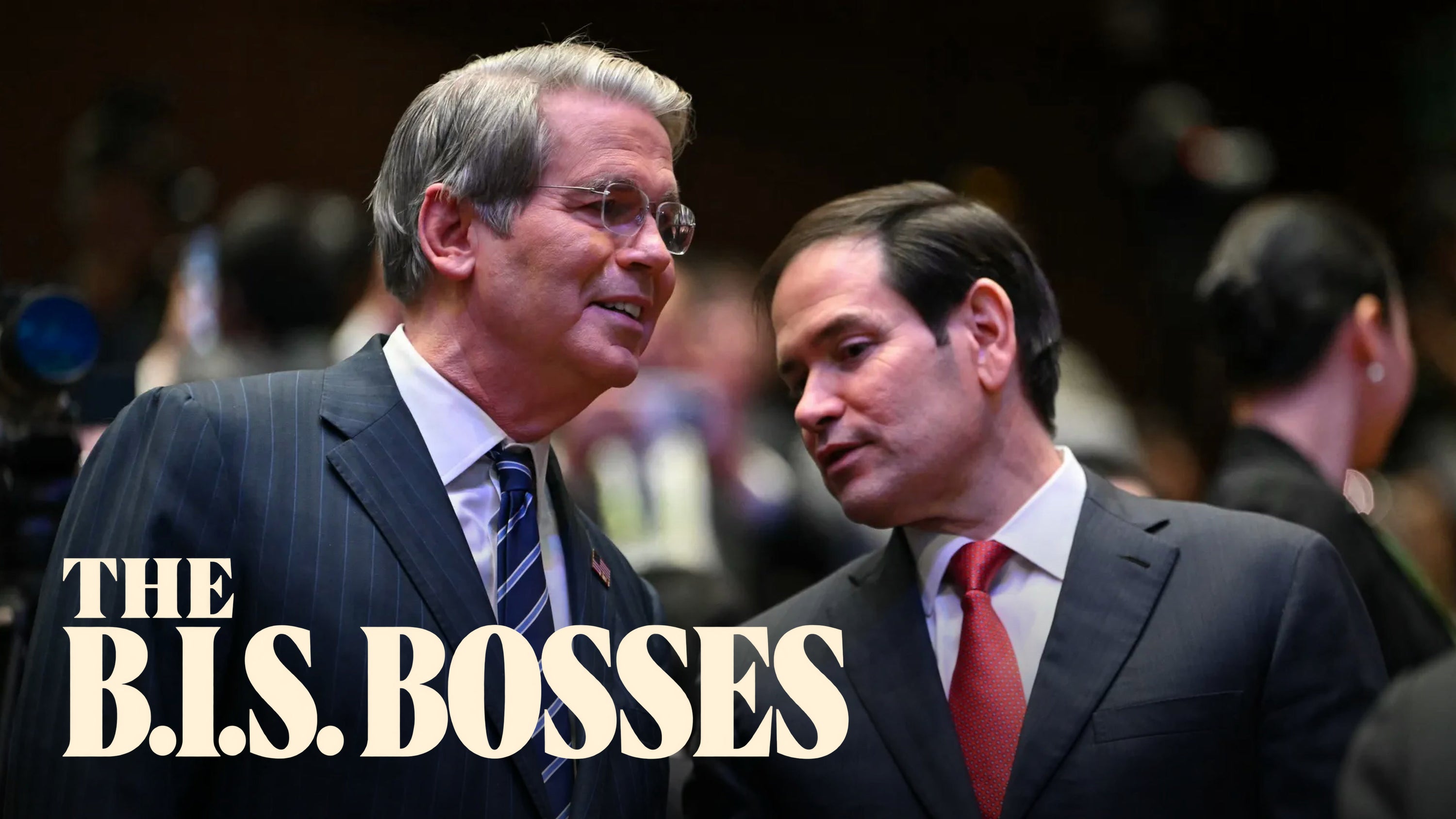
13:29This is an insane scandal. And why was this allowed to happen? And I think that we don't have any answers. I mean, the fact is, Undersecretary Kessler has basically given zero public remarks in his entire time as BIS undersecretary. I think other than his testimony to Congress, he hasn't said anything. Why? Why are we doing this? What is the policy? Someone explain it. Secretary Lutnik, please explain it and explain the details here. I would love to hear that. But I think also in the absence of that, if there's not a good reason, the suspicion about the really, you know, malfeasant reasons are only going to grow.
14:05And that's probably that's problematic for, you know, integrity of the institutions and export controls i hope is wrong but the suspicions are only going to go up they could explain it or they could just go away yeah right you know it's been two years is it going to be more fun the next two years guys are you like looking forward to this and this is the whole dynamic with the um you know with the investigations is it's way more fun to investigate people who still have the jobs than in the past so like you know insofar as they don't want their lives to turn into poster children for Chinese espionage and corruption.
14:47Like maybe it's time to head back to private practice or Cameron Fitzgerald or what have you. I don't know. Free career advice from trying to talk over here. Or just change the policy, right? Fix the policy error that resulted in this. Like that's actually the most important thing that needs to happen regardless of who does it. And that would actually make some of the noise go away because you could at least say we fixed it. But right now, Megaspeed is buying chips today. Still, it is still listed on NVIDIA's website as an official cloud partner. That's shocking to me. I don't understand how they could have not taken that down still.
15:24It's funny because the Chinese companies are more used to this, right? It's like when someone writes an article about them spying on Uyghurs or something, usually within the next few hours it's down. But NVIDIA, I don't know. They're just not used to being caught up in giant national security scandals. So they don't quite have the delete function up on all the contracts. Yeah, yeah. What's the force majeure in your GPU allocation contract for your CEO as a spy?
15:57I, you know, so many things about this are baffling.
16:01Chris McGuire: I don't know. So it's really, but this whole situation never added up, right? Like it never really added up why, you know, all the explanations of selling chips to China also, when like you have US companies that are all clamoring to get chips. You have Elon Musk, Andy Jassy, who are all saying we can't get enough chips. We want more chips. And then meanwhile, you also have NVIDIA just like adamant that we have to sell more chips to China. I mean, I still don't really understand why. I mean, there's a possible explanation that this is all just, you know, captured but i i don't really think so but like it's still like this whole situation has always been so confusing uh and the data that that nvidia has been putting out there about like the chinese threat has always been kind of overinflated and not actually um you know consistent with what we're seeing in terms of like huawei's actual chip production capabilities and like when you look at the numbers and the data on all these things it just tells such a different story than what nvidia was telling.
17:00And now to have it come to light that, you know, there was direct relationships between their CEO and a spy. I mean, look, it's impossible to say exactly why. But like, I think this does massively hurt their credibility on export control policy and on China policy going forward. And the bottom line is like, you know, the company will deal with the company's business, but we really just have to see the policy changes that we need. And we know what those policy changes are. In fact, some of them are already on the books. This isn't an impossible problem. It's just something that requires like a modicum of political will.
17:31And a lot of people in the administration actually already want to do this. You know, commerce has been singularly obstinate on it. And we'll see we'll see how long that lasts. But I hope that the kind of pressure remains bipartisan and ramps up. I always had this like idea in the back of my mind that China would be interested in popping the U.S. bubble, AI bubble at some point. I thought it would be like a rare earth control, like maybe the interconnects or packaging or something. I did not have it on my bingo card. A spy gets caught. And then, you know, and then everyone, everyone gets worried that NVIDIA doesn't end up coughing up in the future.
18:16Let's turn. And to be clear, like no one wants that, right? And Jensen has done an incredible job with NVIDIA, like turning them into the company that they are, making the best product in the world, better than anybody else. Like, this doesn't take away any of that. But at the same time, the reason the products are controlled are because they're so good that they actually have significant national security applications. and it just doesn't seem like the company has kind of caught up to the reality of what they're making and like is kind of behaving according to it. So look, like cheating on your spouse, not great, not a crime.
18:58Advocating for your business, lobbying the White House, you know, totally within the bounds of what's reasonable. Same thing with like wanting to sell your stuff to China. Sure. Advocate for yourself if you want to. The sort of the whole piece of this, which i think like kind of you know uh uh never never quite clicked to me is look this guy um was a gaming ceo who made gaming chips for like 30 years and then all of a sudden what he was making goes from like a thing that lets me play tribes 2 to um a remember tribes 2 shout out tribes to to to like a grand to like a a technology of strategic importance and the the weird part is throughout all of it he kind of kept making the argument that like on the one hand these chips are so important that every single industry and company in the world means them and they're going to revolutionize society but at the same time they're not going to revolutionize militaries and they're not going to be important for the global balance of power and it was just a weird thing that like Yes, but it kind of makes sense if you're still have this sort of, you know, demeanor and mindset that you're just a kind of technology guy and what you're doing doesn't interact with nascent states on a real level.
20:22And I think doing something as sloppy as having affairs with people who are your Chinese clients and, you know, have connections to foreign intelligence communities is just sort of indicative of him never really internalizing just how important his chips are to the global balance. Absolutely. And look, I think that there is a broader recognition in the tech industry that needs to happen on this, where I think, you know, you saw, you know, banks, I think, went through this evolution a long time ago. And, you know, now your sanctions policy is taking very seriously. There's a lot of internal controls that are taken to really make sure that they do as much as possible to comply.
21:08and I think generally also recognize the importance of like the U.S. financial system in the general strategic, political, geostrategic environment. The tech community is not there. And obviously the government has recognized the importance of it. Well, they want to have it both ways. Exactly. Right? That's what it is. Yeah. And you're seeing this. And look, other nation states are actively pursuing them. Don't just look at NVIDIA. Look at the OpenAI situation with the Saudis recently, where the Saudis very clearly were, or it looks like DOJ is alleging that the Saudi government was involved in some kind of plot to spy on open AI.
21:43And I'm not surprised, of course, they would do that. This is a strategically super important technology. It's just being made in the private sector, but the other governments are going to try to acquire that technology and they're going to go to the private sector. And the private sector, it has to up their game. They have to take the national security policy seriously in the lobbying. They have to have kind of internal security, cybersecurity, physical security measures, and also just general kind of compliance and oversight and governance has to be better. Like the fact that that we need to have such, you know, the fact that the U.S.
22:15government has to constantly be like closing every single loophole every single time because NVIDIA will constantly like squeeze out any any way they can sell something to China, they'll do it. And then we'll have to like do a regulation that prevents that rather than just coming to an understanding of like, we don't want you selling to China. And if you could just have that, it would just make the whole environment so much easier. But that's not the course that they've pursued. And it's created this like adversarial regulatory environment. And then when you see this on top of that, that's where a lot of like the kind of hostilities coming from in Washington and frustration.
22:50It doesn't have to be that way. We can have a cooperative relationship on these things, but it just requires companies to like really understand where the US government is coming from and act accordingly. And this just shows that we're not close to that. Fallout. Let's talk about Congress, Match Act, RASA, Overwatch. What do these revelations do for the prospects of these bills in the lame duck session? Yeah. So I think undoubtedly this spotlights them and probably makes it more likely. I think, you know, you have these are already bipartisan bills. We're already seeing bipartisan, and concern about this issue.
23:30You had Republican chairs of the Intelligence, Foreign Relations and China Committee all send letters to NVIDIA. You've also seen Democrats talking about how they're going to conduct oversight. Senator Warren is incoming banking chair, Senator Coons, the incoming SFRC chair. So there's a bipartisan message that's being sent on this. The bills are bipartisan. So hopefully those go. I think, you know, the NDAA is currently being negotiated and finalized. If the NDAA passes, I imagine those will be attached to it. There's obviously there's also some open questions right now about the kind of status of the NDAA, just given elections and especially Democratic concerns vis-a-vis Iran, the Defense Department, all sorts of unrelated things.
24:16But I think, you know, what would really send a strong message is if Congress just put these aside and just push them now. Right. Just push them in a separate. We don't have to wait for the NDAA like these can just go separately. They could be unanimous consent or individual bill or something in the Senate, in the House and just push them because these are bipartisan measures that have the support of leadership in the vast majority of the House, especially at a time when we're we're seeing, you know, such concern about how how these things are being handled. Like it would send a really strong message.
24:46I don't know if that will happen, but I do think those bills will become law. It's just a question of when. But to the point that you made, though, they address some of the problem and not all of it. You know, Overwatch, I think, makes clear no blackwells to China match will cut off DUV, which is very important and force the administration to move generally on SME controls. But you don't really have anything that's really going to comprehensively get at the counter smuggling problem, at the remote access problem and at some of the other loopholes. So you really, really need the Commerce Department to take those actions themselves.
25:18They need to impose license requirements for large-scale AI chip orders globally and for all orders on Southeast Asia. They need to impose restrictions on remote access. They need to ban Chinese companies from buying chips in the United States. The only place in the world where Chinese companies are legally allowed to buy chips is inside the United States of America. And actually, most of the chips that Megaspeed got, they seem like they got from this company of Vires that is a subsidiary of Insper. It's the U.S. subsidiary of Insper, and Insper is on the entity list. But you have, you know, there's this is insane.
25:50Like you have the the entity, the subsidiary of an entity listed company is legally buying chips inside the United States. So like we need commerce to just tighten all this up and just make clear like our policy is the president's policy. The president's policy is no blackwells to China. We're going to make that clear across the board and make sure that there's no blackwell access for China anywhere. And right now it's just so porous. So I hope we see that. But I think I realistically like the track record is extremely poor. And it seems like there is something that is preventing commerce from taking these actions, because if all it took was logic, commerce would have done this a long time ago.
26:27And if all it took was like push from others in the government, I actually think commerce would have pushed a long time would have done this a long time ago. They are isolated and adamant in their position against this. And I, you know, hopefully congressional pressure and oversight adds to that and forces action. But I don't know if it's going to happen in the near term, because like this, this behavior, I think, is is is kind of strange. I just still don't understand how they could have – Commerce leadership got information that said Megaspeed is run by Chinese spies, and they did not block chip access to them.
27:05Get him addicted, Chris. Get him addicted. I can't possibly say in good faith, like, yeah, I think we're going to solve this problem in the near future, because it seems like there's a systemic issue inside the commerce department.
27:19I really want someone to explain to me, like give me some answer that makes some sense. You know, Kessler, if you if you want to come on trying to talk, we can make we can make we will make some room for you in our schedule. Just just saying. Tell anyone, tell anyone why. And then on top of this, let's say one other thing. The New York Times had a report today that said that the Undersecretary Kessler talked with NVIDIA. about commerce's ongoing investigation into Megaspeed, which is crazy, right? Like that is like, that is if the FBI was running an investigation into a company and FBI leadership talked about that investigation with the CEO of that company's main business partner, like obviously that would be super, super wrong, right?
28:08But like, that's exactly what happened here. And then not only that, but NVIDIA had the gall to say that Megaspeed has definitively been proven to not have any diversion and all the investigations concluded that. No, the commerce investigation actually got shut down because DOJ took it over because they said like, you can't be trusted with this because you're talking with their competitor companies. So like everything that's happening here is so wrong and so not how we handle policy or legal enforcement issues and just has crossed so, so many red lines. there are many sketchy Trump administration things that have happened, which you can kind of understand if like, you don't care about the law or you want it, you're, you want your kids to make some money on the side or, or, or you're just like kind of into, you know, Putin or dictators or whatever.
28:58But this one, it's just, yeah, it's just, it's just has landed in a really odd, mysterious place. Yeah. All right. Anything else? Are we ready for my historical honey trap segment? I love it. Let's do it. Okay. All right. I did watch notorious last night. Wow. It was excellent. It was excellent. Cary Grant is always good. Always good. So first off, you know, everyone gives Delilah credit. I mean, the OG Bond girl, you know, getting Samson secrets out of him. But I want to give a little airtime to Jael. Judges 418. And he said to her, stand at the door of my tent. And if any man comes and asks you, is anyone here?
29:50Just say no. But Jael, the wife of Heber, took a tent peg and took a hammer in her hand and went softly to him and drove the peg into his temple till it went down into the ground as he was lying fast asleep from weariness. So he died. I mean, look, Delilah, she got her 1100 shekels, but she didn't literally put a peg into someone's brain. Like, shout out to her. True, true, true, true killer. True innovator in the biblical honeypot game. I read this book called Honey Trapped from 2021. It's like anyone who writes the history of honey trapped, of honeypots, it's like the interest is like a little too prurient.
30:35It's not like super top-notch historian writing, but I will say it did make for a fun read over the past. I like the inclusion of your list. You have Casino Royale, which featured a male honey trap. So this is not a... They're called Romeo's. Okay, sorry. I didn't know the term. Yeah, yeah. So this was actually a big thing in the Cold War in particular, is like the idea is you get someone to start sleeping with the secretary and then um you know kind of like get your secrets get your secrets that way there's some really awful um uh like uh gay compromise that happened there's one story in the 50s in the uk where they like drugged and raped a naval attache or the soviets and then like use the photos to um convince him to hand over secrets for like a decade not ideal um i did like that there was one person who the f who the cia found was compromised and but they didn't want to like have him be disgruntled and they weren't really ready to throw him in jail because it wasn't clear he'd given any secrets so they just gave him a job at the hoover institution this is in the 1950s for whatever reason this is not like an American thing.
31:52I mean, the Israelis have done this in the past. In 1986, there was a Mossad agent who got someone to fall in love with them, then drugged them and smuggled them back from Italy to Israel to face justice, I found kind of impressive. But I don't know, should we have this playbook, Chris? I would hope that generally we are availing ourselves of all the opportunities we have to collect critical intelligence. But I think that there are understandably some personal boundaries that we respect for our intelligence operatives and that, you know, I would bet that I don't know. I don't know. I don't know.
32:35I don't know the truth. I don't know the truth. I don't know to what degree this is like encouraged or discouraged. But like certainly when you look at like, you know, media and history, I mean, look like the Americans, right? Like the Americans has like tons of the whole, I feel like half the plot is about honey traps, but obviously, you know, on their side, not ours. Yeah. So, I mean, the Soviet use of this tactic actually comes back from Tsarist Russia. So the Okrana like was very into kind of like long-term undercover stuff. I mean, they were the ones who wrote The Elders of Zion, right? In order to like discredit the Jewish Bolsheviks within the within the bourgeois.
33:18There actually is an excellent book written about the history of the sort of Soviet kind of like deep undercover program, which lasted like until the present day. I mean, even Putin does this recently. They found the people in Virginia, you know, 10 years ago or whatever. Yeah. This book is called The Illegals by Sean Walker. It came out in 2025. Another rather prurient one, apparently both in Poland and France, there were brothels who expressly had the Nazi officers sleep with the prostitutes who had STDs, you know, to just like undermine the war machine. Feels like decent revenge.
34:08Really, all gloves are off in that god place. Yes. You think total war is a joke? Yeah, really total war. Yeah. All right.
34:19Chris McGuire: Mr. Huang, this is the defensive briefing. You were old last spring. This will be quick. It's just one sentence. Don't fuck the Chinese. Don't fuck the Chinese. Don't fuck the Chinese. Don't fuck the Chinese.
35:10Chris McGuire: We'll be right back.
35:33Chris McGuire: We'll be right back.
35:47Chris McGuire: Thank you, Jesse. Christmas came early. Hip, hip hooray. Allies with them folks. Match act. Make the allies match. Dutch and Japanese tools to hold them back. Remote access. Say it loud. No more renting. Out the cloud. China Hawk. A badge of shame. Who's wearing it now? Say his name. Don't fuck a Chinese pop. Jesse. Don't fuck a Chinese pop. Jensen up, not if she runs a cloud Jensen up, not if she thinks you fly This concludes your mandatory counterintelligence awareness training Now you can go watch some movies Lust Compliance by Ang Lee Jensen now starring in The Spy Who Leads Me Tinker, Taylor, Blackwell Spy Know your customer Jensen but not like Adam and Eve please Yeah, go fuck a Chinese spy Chanson, go for the Chinese pop Chanson, Kessler just resigned Chanson, look Nick, just resigned Resigned, go for the Chinese pop Chanson, go for the Chinese pop Chanson, not if she runs a cloud No, not if she thinks you fly Chanson
37:12The fact that that was made using NVIDIA chips is the ultimate irony of all of this. It's just, it's so great that like the technology in question is actually being used. That's why America's great, you know? That speaks to the greatness of America here. So yeah, thank you. Although that shard it had in there of like, you know, Malaysia, Megaspeed,$2 billion, dollars, spy. That's all you really need to know. It kind of nailed it right there. Why hasn't anyone showed that chart to the Commerce Department?
To make sense of it we have Chris McGuire, senior fellow for China and Emerging Technologies at the Council on Foreign Relations and a former NSC Deputy Senior Director for Technology and National Security.
We discuss…
The May 2025 decision that made Megaspeed possible — Commerce stopped enforcing the Biden-era license rule for big chip orders to third countries, never replaced it, and $80 billion in AI chips went to Singapore, Malaysia, and Thailand this year alone
Why the spy matters more than the affair — Jensen talks chip policy with the president, knows who has what compute, and decides who gets it next
The defensive briefing nobody gave — why not warning Jensen was a choice rather than an oversight, and how Commerce sat on the intelligence while $4.8 billion in chips shipped
Corruption or incompetence — Cantor Fitzgerald's Nvidia position, an under secretary who never explains the policy, and a Commerce investigation discussed with the target's main business partner
What the lame duck can fix — MATCH, RASA, and OVERWATCH, plus the smuggling and remote-access loopholes only Commerce can close
A brief history of honey traps — Jael's tent peg, Cold War Romeos, and the compromised officer who got parked at the Hoover Institution
Learn more about your ad choices. Visit megaphone.fm/adchoices