Ask ChatGPT
 ChinaTalk
31 Oct 2026 · 1h 9m · 26 chapters
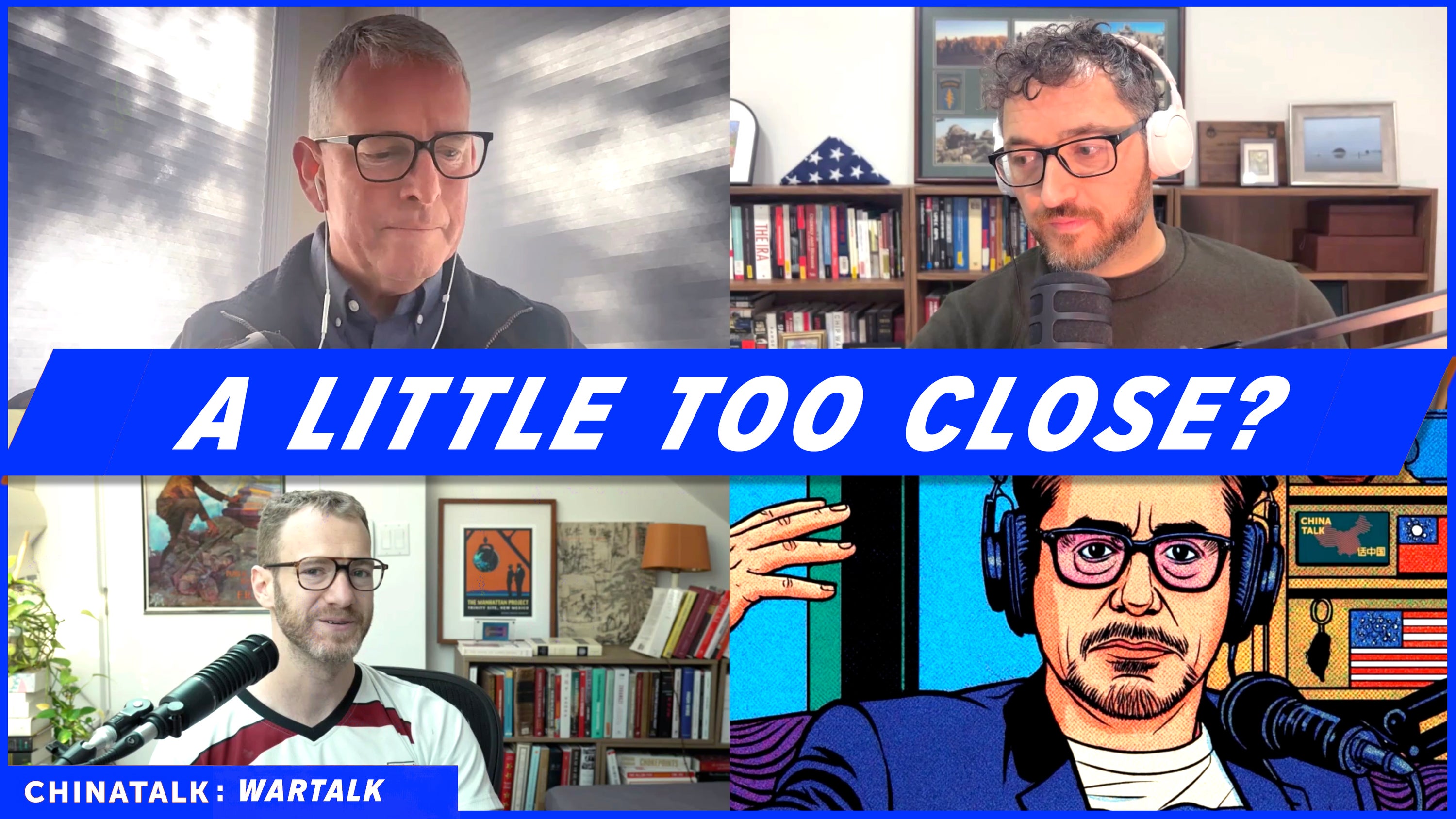
The episode debates U.S. pressure campaigns and potential escalation involving Iran, Cuba (and Venezuela), and North Korea, alongside broader critiques of U.S. force posture, planning, and espionage/tech leaks. Guests argue that “max pressure” and blockade effects may be real but insufficiently visible, prompting strike threats for messaging—especially during a lame-duck period before/after midterms.
Justin McIntosh is a retired Green Beret and now works in defense tech. Brian Clark is a senior fellow at the Hudson Institute and a retired submariner. Tony Stark is a former/current “problem child” (hosted as a recurring personality; no formal background given in transcript).
Iran war escalation is driven by avoiding perceived weakness and maintaining leverage for negotiations; threats may continue after midterms to preserve “strength” messaging. Cuba operations are framed as feasible due to proximity (Miami) and use of amphibious forces, but the hardest part would be post-invasion governance and economic transition. The panel criticizes lack of coherent long-range planning and frequent personnel churn in the Pentagon/NSC.
Navy focus on Middle East; carriers enabling 24/7 strike operations after B-1 basing changes in England; “max pressure 2.0”/blockade as the main pressure; discussion of a reported “Rubio 2028” political angle; and a separate segment on alleged PRC-linked espionage/industrial espionage around NVIDIA/AI chips plus a Joint Staff J5 firing for alleged classified leaks.
Written by AI. May contain mistakes.
Discussion on U.S. military presence in the Middle East and implications of potential conflicts.
“We're going to talk about Iran, rounds, I don't know, 17 at this point, Cuba, spies, industrial espionage, industrial sabotage.”
Analyzing the political implications of the Iran war on midterm elections and strategy.
“And it's much easier to keep pressing the war button and pushing off the time where you actually have to like fully internalize the fact that you did lose.”
Exploration of potential military escalation and the rationale behind it.
“It sounds like they feel like the blockade is working.”
Discussion on the U.S. military's approach to Cuba amid ongoing regional tensions.
“That is, you get two carriers, one's doing day, one's doing night.”
Comparative analysis of current U.S. military involvements and historical precedents.
“Well, I mean, the problem is we don't have a model of free market capitalism in the U.S.”
Discusses the historical context of US interventions in Cuba and the implications for current foreign policy.
“But that has continued on into the future.”
Analyzes the current state of US military readiness and the risks of overextending in regional conflicts.
“While we still had forces in Europe, right?”
Explores the capabilities of regional powers like Iran and Cuba and their significance in global politics.
“they would they would start forming isolation.”
Examines the dynamics within the US administration affecting foreign policy decisions and military strategies.
“I also see a little bit of entrepreneurship in terms of the geographic combatant commanders, because you've got Southcom making the case for Cuba is a really important thing and Venezuela is a really important thing.”
Discusses the implications of Chinese espionage and export controls within the broader context of US-China relations.
“And they pull the trigger on something like an Iran or they pull trigger on something like a Cuba.”
Exploring the state of U.S. counterintelligence and its implications with China.
“Because, I mean, we've seen the reports where it's like, you know, U.S.”
Discussing the complexities of export controls and their impact on national security.
“I think that argument started to lose favor, and people started realizing that's not really a thing, because what if they use that stack to build advanced AI or get to AGI before us?”
Analyzing recent military firings and their implications for military planning and operations.
“So that already tells you that there's some type of export control issues, even if those weren't necessarily export-controlled NVIDIA chips, but they're being used and weaponized in an active combat zone currently.”
Examining how personnel changes affect military planning and operations in the Pentagon.
“And they kind of, again, full circle, like the disruptions we've seen in the Pentagon, you know, over the last several months have really revolved around personnel, personalities getting driven out.”
Reflecting on historical military leadership and the tensions between civilian and military roles.
“And we're going to walk away from Ukraine and shift to China and do all this stuff.”
Engaging in a discussion on military strategies in Afghanistan and their effectiveness.
“That is when we talk about impartial advice, that's what it should be, not, you know, I get to do whatever I want because, you know, the Jags said, okay.”
Discussion on the flawed narratives surrounding the U.S. military's strategy in Afghanistan.
“It seems like a lot of interesting revisionist history, you know, retconning Afghanistan.”
Exploration of how employment initiatives for women in Afghanistan led to increased violence.
“I was having a conversation with somebody and they were talking to me about a, they had been in third group, third special forces group for a long time.”
The importance of reading and education for military leaders and its impact on strategy.
“You did everything you were asked to do.”
Discussion on the ongoing military situation with Iran and strategic responses.
“It was our rules of engagement that, you know, caused this failure.”
Analysis of the challenges posed by drone warfare and potential Iranian tactics.
“And partly because a lot of these shipping companies are state-owned, right?”
Discussion on Iran's potential military tactics and the US Navy's strategy.
“And I think the only reason we haven't seen that is, one, the Iranians haven't mustered that kind of size of salvo yet, which may be something they're working on.”
Exploring the implications of military retaliation and political consequences.
“And then we get back into the tit for tat cycle that we were in earlier this year, which means you're into next year and then it's up to Congress to try to rein it in.”
Identifying adaptive strategies in the military's approach to modern conflicts.
“Um, I think in part, the, the war with Iran is going to be a forcing function to that.”
Discussion on tech firms adapting to longer timelines in defense contracts.
“I mean, just as we're approaching Halloween, uh, one, I'm excited about that because I have two kids.”
Debating the role of AI in cognitive military decisions and outsourcing.
“than they thought they were going to be on initially.”

Get the gist, explore an idea or ask about something said.
 Claude
On ChinaTalk, what are the key points of this episode?
Searching your listeningAutomatic transcript. May contain errors.
0:00Jordan Schneider: Iran, Cuba, spies, industrial espionage, Korea. You got a lot to get to.
0:06Justin McIntosh: Essentially the whole Navy is focused on the Middle East. You really don't have any significant Navy presence anywhere else in the world.
0:11Jordan Schneider: There's a letter from Congress asking Trump what was up with him, talking to Grok about whether or not he should invade Venezuela.
0:20Tony Stark: If the blockade really is working, if that's the economic theory that we've started to develop, do they need to do the strength?
0:25Jordan Schneider: War Talk, October 30th. We've got the full crew here. We're going to talk about Iran, rounds, I don't know, 17 at this point, Cuba, spies, industrial espionage, industrial sabotage. Korea. Korea. We've got a lot to get to. We've got a lot to get to. All right, Justin, introduce yourself and then let's get started.
0:55Tony Stark: So, Justin McIntosh, retired Green Beret, currently working defense tech, happy to be here.
1:00Justin McIntosh: Brian Clark, senior fellow at Hudson Institute, retired submariner, also very happy to be here. Tony Stark, former and current problem child, very, very happy to be here.
1:10Jordan Schneider: This is a hostage video? Exactly. I didn't set them up for this.
1:14Tony Stark: It's like Around the Horn, the weird intros you get on Around the Horn back in the day, which if you're old school ESPN, when it was good, I think it's terrible now. I don't know. I haven't watched ESPN in years. if we're gonna do that then what i should do is instead of having my tony stark picture up i should put some random whiteboard quote up each time like i do on a program that would be great
1:34Jordan Schneider: yeah they would be good that is a good idea we need some video intrigue like and subscribe we're on youtube now the bots love us at least only 20 years after the fact of youtube we're
1:46Tony Stark: we're finally coming around we're getting our blow up yeah but so brian i had a question i I was listening to Mike Grant earlier. I know he's over at Hudson. I did want to get your take on it on kind of the Iran war costing Republicans the midterm. Like he has now developed a full throated thesis that the Iran war is what is going to cost Republicans the midterm. I want to get your take on that. And then what do we think is the political drive to then threaten to continue it after the midterm, which has recently emerged in the Wall Street Journal?
2:19Justin McIntosh: Yeah. Yeah. I mean, I guess there's a couple of things. I mean, so obviously I'm not a politics expert, but it seems like one of the issues is this is contrary to what the president ran on. So he runs on the idea of we're going to get out of these wars and not do any more of them. And now we're right back in the Middle East in the middle of a long protracted conflict. So that's where the disconnect is what throws people off, the same way that they look at the economic conditions and the corruption and all these other things that seem to be contrary to what the administration ran on. So I think that's the thing that throws people not so much the war itself, but it's just the fact that it's so contrary to the way they ran.
2:56Justin McIntosh: And then in terms of the idea of why do we want to go and begin another strike campaign and even threaten that, I think it's because they want to look like they're still strong. I think they want to avoid the perception being that we're running back with our tail between our legs and that this thing's a failed conflict and they want to make it seem like, no, no, we got a lot more in the bag still that we can go through against the Iranians. And so this is just a strategic pause while we let things play out. But in fact, we are going to be able to bring the hurt to them in the future and bring them to heel.
3:28Justin McIntosh: So he wants it to still seem like there's an option for being able to fight our way to victory, as opposed to the likely option, which is we seek some kind of quiet resolution that we can call a victory, but in fact, puts Iran in the driver's seat regionally.
3:42Jordan Schneider: You know, I never used to understand Vietnam War, like 72, 73, 74. It's like Kissinger, Nixon, like, what are you doing? Why are you keeping bombing? It's like they clearly are not going to go away just because you keep bombing them. And now it kind of makes sense a little bit. It's like embarrassing to take a loss. And it's much easier to keep pressing the war button and pushing off the time where you actually have to like fully internalize the fact that you did lose. And so thank you, Mr. Trump, Mr. Hegseth, for giving us a little history lesson. Yeah, it's helpful. Well, yeah. And on the politics side of it, right, like so midterms are basically saying like, you know, a lot of the administration's ability to do things are going to end because the House and Senate are now going to flip wildly.
4:36I currently got betting odds at about 235 Dems for the House and maybe 55 for the Senate. I don't think most people agree with me on the 55. But basically, if you're trying to make sure that Iran is still going to take you seriously, then, yeah, you have to say we're still going to strike after the election. The election is not, at least from a messaging standpoint, is not the end of us. This is far more about messaging to the Iranians than it is domestically, like we're still strong. I think they've pretty much given up on Iran messaging domestically.
5:05Tony Stark: Two thoughts. One, you also have the same week, you have J.D. Vance that's going out and meeting with some of the Iranian hardliners, which sends a mixed message because he is supposed to be a peace envoy, I guess, at this point. He's going to take over peace negotiations. but is there not a play where this becomes we're going to threaten this but then we lose the house in the senate the new uh congress comes in gets sworn in they you know pass a war powers act for lack of a better term and then well we the admin didn't lose it we had plans to actually carry it to fruition but we were stopped uh and it becomes almost like a second lost cause we were betrayed by the politicians in Vietnam kind of thing, rather than it being ownership on the other side.
5:52Tony Stark: I don't know. That's kind of the thoughts that I was having as I was both reading the news this week and then listening to Mike speak.
5:58Justin McIntosh: Well, I think there's one aspect of it that's after the midterm elections and they anticipate these losses, just saying, well, during the lame duck, we're going to go all in to try to bring this thing to a resolution. So either we look strong because we put the hammer down on them and did a lot of strikes and maybe we get lucky and the Iranians come to the negotiating table and we can reach an agreement that we can call a victory. Or, to your point, Justin, if they do that and then the new Congress comes in and passes a war power resolution, they can say, well, you know, our hands are tied. We tried.
6:29Justin McIntosh: We gave this last go to really put the strikes onto the Iranians and force them to capitulate. But now Congress is stepping in and basically saving us from ourselves. So, yeah, I think it could play out both ways. They could still have that as an option down the road to blame Congress. But I think you're going to see some kind of escalation during this lame duck session because I think they do feel like – the administration does feel like they've got the Iranians on the ropes. They feel like this – you're talking to folks in the military leadership right now. It sounds like they feel like the blockade is working.
7:03Justin McIntosh: Like this is actually putting a lot of economic hurt onto the Iranian regime, not just the people. And that if they did a strike plan that attacked some of the civilian targets, they would be able to maybe make it painful enough that the Iranians will seek some kind of agreement to make it stop, even if that's on terms that are favorable to them, but that we can call a victory. I guess, do they need to do the strikes?
7:28Tony Stark: Like if the blockade really is working, if that's the economic theory that we've started to develop, like max pressure 2.0 is working.
7:37Justin McIntosh: I think they feel like it's not visible enough. I think that, you know, obviously, if you're a Navy guy, it's very visible. You're like living this day to day. But I think they feel like from the perspective of either the Iranians or just the rest of the world and back here at home, I think they're thinking that it's just not quite obvious enough that we're putting that pressure on them. So the strike plan is a way to sort of make it more obvious that we're doing something against the Iranians, even though actually most of the pressure is coming from the blockade, which is not very visible.
8:08Tony Stark: That's probably a good point to talk because I did read an article in the, I think it was in the Times this week, it was talking about the amount of flights that are going on and the amount of daily operations the Navy's doing in the tanker wars to basically secure passage up and down the Straits. In your opinion, as a Navy guy, how long can we actually sustain that level of operations?
8:28Justin McIntosh: Well, they can, I mean, right now, so what they've done is that, you know, the B-1s have left England. And so all the strike operations happening over there, or all the air operations more or less are happening from the carriers. That's basically the only option they got. And that's partly because the Gulf states, I think, are reticent to give any basing or overflight rights to U.S. forces at this point.
8:46Jordan Schneider: Can we pause on to leaving England for a second? Yeah. Like, yeah. Okay. Yeah.
8:56Justin McIntosh: UK is not, is no longer a safe space. Yeah.
8:58Tony Stark: I had a buddy that actually is from the Cotswolds that was here last week and he and I were talking and he was like, he's like, you know, reading it in England. He was like, it was like some old lady who saw some slightly tan guys. He's like, and I understand that says a lot about the Cotswolds. He's like, but they see some tan guys driving around and they go, well, they're not from around here and call the cops. And that's the security apparatus that stops the potential attack on the U.S. B-1 bomber base in England.
9:27Justin McIntosh: Well, you know, it's worked for them for centuries. So the citizen surveillance approach has been an effective way of defending the island against multiple invaders. So it seems to, you know, keep that up. But yeah, so the B-1s had to leave, which means now in terms of if you want to attack targets in Iran, it's almost all going to come from the carriers. The Roosevelt is making its way back from its Thai holiday. And now they're going to be rejoining. So now you can do 24-7 strike operations. That is, you get two carriers, one's doing day, one's doing night. And you can, I mean, they can keep that up sort of indefinitely.
10:06Justin McIntosh: But the problem is the wear and tear on the airplanes is really what gets you is because they eventually need to be put back in the depot. So I'd say that they can keep this up for another six months or so. You know, and then they've got to bring the another carrier in, which is kind of what they're doing right now with Eisenhower is getting ready to go over there. So it's they can keep this up sort of indefinitely. But it means essentially the whole Navy is focused on the Middle East. You really don't have any significant Navy presence anywhere else in the world.
10:35Jordan Schneider: So how can we do Cuba then? Good question. Well, you see, Miami isn't that far at all.
10:45Justin McIntosh: So, I mean, yeah, so Cuba, you know, the amphibious ready group that's currently over in the Middle East, it would in theory go back home. But that would be the marine expeditionary unit that you might use as part of a Cuba operation. But, yeah, I think you'd do most of your air operations from shore in the U.S., and then you'd have the Marine and Army guys taking the amphibious ships, which are not being used really anywhere else. So you can pull it off like that since it's so close to home.
11:17Tony Stark: Why would we do Cuba, though, is the question. Because before Marco Rubio leaves, he needs that for his legacy.
11:26Justin McIntosh: That's right. Yeah, I mean the whole of Venezuela. Sorry, I mean 2028 presidential run, not his legacy. Well, Venezuela was the stepping stone to Cuba, right? Because you have to take away the -
11:35Tony Stark: That's not how math works, I actually think.
11:36Justin McIntosh: But you had to take away the economic lifeline that Venezuela was providing to Cuba. So once that's gone, now they can't get fuel from Venezuela. They can't get money from Venezuela. Now Cuba is kind of suffering economically. And then if the regime doesn't capitulate, then we're going to have to go in and do a Maduro, I guess. That's the eventual plan. Yeah. And like, look, I mean, the morality of that part aside, look, we learned our we thought we learned our lesson in Iraq in 03, which is that if you invade a country that is run by state owned enterprises, you can't just leave it to more free market capitalism.
12:15It will get far worse, which means someone has to be able to manage the transition, which does not seem to be in anyone's interest, particularly after the midterm. So, you know, this only goes worse.
12:27Justin McIntosh: Well, I mean, the problem is we don't have a model of free market capitalism in the U.S. anymore that we could apply in Cuba because we basically have our own little version of crony oligarchy here in the United States. I mean, I guess we could export that.
12:42Jordan Schneider: This is a good transition, right? We're just, you know.
12:45Justin McIntosh: That's true. We're meeting halfway. We're going to become somewhat oligarchic, and then they can maybe become a little bit more free market. Yeah.
12:53Tony Stark: I think the juxtaposition, I think, is something that we should talk about for a little bit. Because in this week alone, we've had the commander of U.S. Army Pacific give a speech about us not being ready for 2027 and the things that we're not doing to be ready for conflict in Pacific. From both the Army standpoint and then he kind of spoke more generally for PACOM, I guess. I won't say Indo-PACOM, even though it's kind of hardwired at this point. We had the CENTCOM commander brief the president directly about options in Iran. We've got discussion about Cuba that is actively ongoing and that we've seen talks of plans about.
13:35Tony Stark: So we have three separate and disparate operations that we're potentially planning or planning for operational contingencies. also were tentatively still providing some type of support to Europe and Ukraine with the Russian invasion. So I guess that's where I really come down to is Cuba a national policy? Is it something that is an imminent threat or is it a strategic national interest that we have to solve now? Because I remember years ago there was that Time article that had Fidel Castro on one side and all the presidents who have said that they were going to end the Castro regime and it's basically from Kennedy until at the time it was like Bill Clinton.
14:18Tony Stark: But that has continued on into the future. I don't know that it's made a marked difference to the US, but how do we balance when we look at that force posture? How do we think we're going to compete with any of those? Because we've talked about we're out of ammo. We've talked about the stress that we put on the Navy and on the aircraft that the Navy had for deep strike. We've talked about not having the forces ready in the Pacific currently if there was some type of a contingency that goes on. Again, is this just the long game playing out of we're now going to just go Western Hemisphere and that's it?
14:53Well, so there's some comparison here to Vietnam. And I know we already compared to Vietnam here, but we did invade the DR with the 82nd during Vietnam, I think in 65 or 66. Somebody fact-checked me on that. While we still had forces in Europe, right? But Vietnam eventually did cost us hollowing out our forces in Europe, right? Like, there were long-term consequences that led to that, you know, the post-war decline and then having to need that buildup in the 80s as we felt like the Soviets were on the march again. So if that's the time period we're headed towards, I don't think there's a better parallel.
15:28Justin McIntosh: Yeah, that's a good point. I mean, you know, so that we sort of, I mean, I guess, you know, in the Cold War, we overreached a couple of times at the same time that we knew we had bigger threats to deal with. And the argument then was with the domino theory that we had to overreach on these smaller conflicts or else the bigger competition was going to be lost. And here it's, I mean, you can sort of back your way into that argument. You can say, well, Iran's a client state of Russia and China. And so going after Iran is a way of proxy fight that goes back to those great powers. But it's not so much like that anymore.
16:03Justin McIntosh: The issue is that these regional powers have some, you know, enough capability on their own to where they can be independent actors and it's not but you're not hurting
16:11Jordan Schneider: china that much by attacking iran brian though i mean like look are we the the the will to fight that the iranian regime has demonstrated over the past 50 years i think is like you know quite a lot different than what the u.s would expect if like they actually tried to do the thing in cuba right Yeah.
16:35Justin McIntosh: And I mean, I think also that their impact on their benefactors of China or Russia is pretty minimal. It's pretty, yeah. Yeah. They're not going to, yeah, they're not going to, you're not going to impact China or Russia by going after Cuba or going after Iran or going after, you know, even North Korea. But, you know, I think that's the problem here is we've got this overreach with these regional conflicts, thinking that we've got this dominant military, we can, you know, sort of do whatever we want with. And now they're sort of fighting the limits of that in the modern era because just proliferating weapons capabilities and everybody's got digital tools and, you know, can build drones.
17:16Jordan Schneider: But does Cuba have like the hip drones and like the E and like the EW? I mean, come on now. So let's – No. So that's why I was saying like the bigger concern there is actually the after war challenges for us than it is actually fighting the Cuban regime because I suspect probably it would go in like 72 hours and probably might even be bloodless. But after the fact, going to be a bigger problem if we don't rapidly have a plan to like make sure people are fed and taken care of, et cetera. Yeah.
17:46Justin McIntosh: I mean, the downside of the economic warfare campaign that we've been waging against Cuba is now that it's a failed state that we're going to have to inherit if we did go and take it over. So we created our own problem. And then to create new bills on top of the bills we already don't have been able to pay. Yeah.
18:03Tony Stark: And I think, too, like, you know, you guys pointed to something that I think is important to touch on for a second, just because I think there was a theory for a time that like if you knocked out Iran, if you were going to challenge Russia, that like all of those things would end up weakening China because they would they would start forming isolation. Even though China doesn't do alliances, they have, you know, friendships without limits and things like that. And like you would be able to weaken them. But then like one, we've seen a very resilient oil capability and, you know, refinement capability than China.
18:35Tony Stark: We haven't seen the shocks that we thought we were going to see over the short term when the oil got turned off. But then you've got the president or representatives of the president telling the Balkan states that they need to back off of their rhetoric against Russia this week, while also us signing a deal and potentially lifting sanctions on Russia and energy and things like that. So it seems like, you know, for any step that we would say, oh, by doing this, we're going to weaken, you know, the PRC and weaken the PRC influence. We're turning around and giving more than that back to Russia, who is the number one, like, you know, deep alliance and friend with China that's going to like help them out in any type of conflict situation, it seems like.
19:17So again, it all seems so transactional.
19:21Tony Stark: And the thing is that when you get into this transactionality, you end up with trying to make the best deal available instead of trying to make the best deal like the actual best deal.
19:33Justin McIntosh: I mean, it's very situational, right? It's sort of like, you know, just like you say, it's somewhat transactional. It's somewhat situational. It's, you know, we're dealing with each country or adversary on its own terms and not trying to treat it as like a broader campaign against, you know, axis of evil. I think people try to make that argument in the foreign policy world, in the think tank world, and I just don't see it. I mean, there is no coherence that would lead you to believe that we're trying to play some long game against China or Russia here. I also see a little bit of entrepreneurship in terms of the geographic combatant commanders, because you've got Southcom making the case for Cuba is a really important thing and Venezuela is a really important thing.
20:10Justin McIntosh: We need to be focused on the Western Hemisphere, and Donovan's obviously a player, and so people know him in the building, whereas Southcom's normally been sort of a backwater that you don't send your – that's sort of a stepping stone to something else, or it's a terminal job for a four-star that isn't going to go somewhere else. And then you've got PACOM, you've got Admiral Paparo making the case that, hey, wasn't China supposed to be our pacing threat and our top priority? And then you've got, obviously, SACCOM. You've got Brad Cooper over there making the case that we need to be doing this next series of strike campaigns.
20:46Justin McIntosh: So these COCOMs are all kind of making their case individually to the president and the White House staff to pursue their agenda and make them, you know, kind of make them the top priority. The only one that's sort of left out, I think, is UCOM, who, you know, now that now UCOM is the backwater, whereas it used to be the premier position in the geographic combat commanders. If only there was some sort of coordinating authority or building that could take and weigh, you know, all of the competing interests and acquisitions needs and force generation between the combat commands and present them in a proper plan to, say, the National Command Authority, if only.
21:25Jordan Schneider: It's called auto. That's why we're making auto war com, Tony. We're going to have the AI decide which war we're going to fight next. Oh, so you're right about that. Antarctica was in fact not the pacing threat.
21:41Justin McIntosh: That's right. Yeah, even though obviously it's important. The sort of collapse of the NSC and of the administration's an interesting part of this as well is that Rubio is in theory the NSC or the National Security Advisor and the Secretary of State, but doesn't seem to be actually doing either job, given the fact that he should be central to a lot of these military conflicts and doesn't seem to be involved at all. And from what I gather, the NSC staff, I mean, they sort of are also entrepreneurial in that they're all kind of pursuing their own individual portfolios and try to reach the president or the White House chief of staff independently, right?
22:21Justin McIntosh: So there's this lack of a gatekeeper even at the White House level. So everybody is sort of working their own angles and that eventually gets it up to somebody who can make a decision. And they pull the trigger on something like an Iran or they pull trigger on something like a Cuba. can we can we just focus on like that for a second because i i think you hit on an important point which is that there's a bunch of people who like really are have always been on the outskirts or have never really held a portfolio authority before and are suddenly in charge of these things um and now they're about to enter a world where uh congress is not in your favor um and as i've said before like they don't know what a transitional washington looks like um or they they haven't cared and how they're going to face it.
23:07So like, what is the next two years of foreign policy look like for us? Is it lame duck? Is it increasing escalation, return to norm?
23:16Justin McIntosh: Given the constraints they're going to have on domestic policy, not that there's been a whole lot of domestic policy other than like immigration enforcement by the administration, there's going to be more emphasis probably on foreign policy and things where the president can act somewhat unilaterally like they have been. So I could see there being a continued effort along these lines. And the only way that Congress can constrain it is through the War Powers Resilient War Powers Act if the White House chooses to follow it. So I think we're in for continued churn on the foreign policy side of the House.
23:51Justin McIntosh: And the problem is that you're going to have their military operations demand, if you're going to really pursue what they're doing, a budget on the scale of like a$1.5 trillion budget, right? They're acting as if the military is that size. And they're never going to get that because Congress is going to be mixed now, and they're not going to be willing to fund anywhere near that. So now you're going to have a military that's shrinking at the same time you've got a White House and a military leadership that wants to do more. So it's going to, you know, the troops are going to be the ones that suffer, I think at the end.
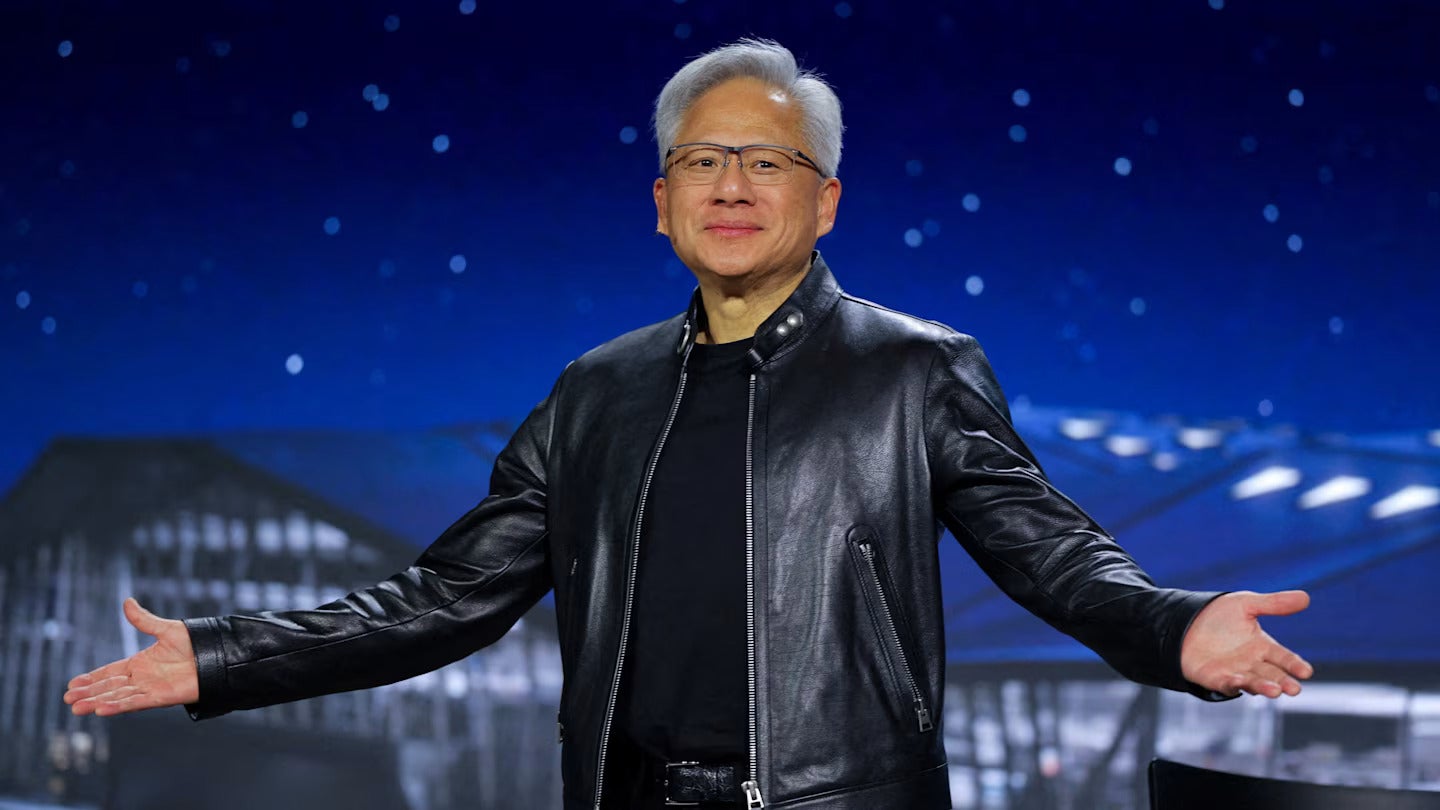
24:25Jordan Schneider: We start with Jensen or the Pentagon. So, okay. So I asked Claude and Chad G.P.T. the percentage chance that by the New York Times saying, quote, close relationship, that they had a, you know, intimate relationship. Chad G.P.T. refused to answer. Claude said 10%. So I guess that's how much Dario can't stand Jensen that he's willing to answer that question for me. Um, look, it's not surprising, right? Um, that you'd have Chinese spies trying to make their way to have connections with the most strategic executives America has. um it's pretty embarrassing that someone would leak this uh i don't know what was your what was
25:22Tony Stark: your all uh reads on the story i mean my first read was that if if it is true that the the federal government the you know cia nsa whatever it is the the intelli the collective intelligence agencies believe that Ms. Wong, no relation, I don't think, to Jensen, is a plant or a PRC operative who is attempting to exploit their relationship. I definitely think that that signals that somebody in either the IC or the administration is trying to pry distance from, they've seen something that's making them want to push distance between the administration and Jensen Wong. Something is, I would imagine that there's more there and that they're trying to create space and light because I, you know, if it comes down that there has been like significant violations of export controls, if there's been significant violations of intellectual property controls that have allowed the PRC to kind of further along both their AI and their chip manufacturing capability and design capability, I think you're going to start to see very quickly calls for blood.
26:31Tony Stark: and you're going to want space between the administration and the CEO of NVIDIA at that point.
26:40Justin McIntosh: Yeah, definitely. What's interesting is who leaked this and why, because it suggests that the IC is concerned that we've got some kind of export control leakage or there's some intellectual property being shared that shouldn't be shared. And then this is a way to drive that wedge that that helps to maybe arrest that flow over to China. I mean, I think it's just like a lot of things in this administration. When you see a leakage happening, it's always interesting to think about whose agenda is being served by that. We don't really have a lot of the traditional coordination processes and orchestration that's happening.
27:20Justin McIntosh: It's all individual actors largely acting independently on their own agendas. And so when stuff like this pops up, you know, there's got to be somebody's ox is getting gored and somebody's portfolio is getting advanced. Well, and Jensen's whole thing, right, has been like it's patriotic to sell chips to China. Right. And, you know, I think he, as far as I know, he did make a lot of enemies within the administration, within the export controls regime, maybe perhaps not at the principal level, but certainly at the staffer level. So I'm not surprised that it probably made it to somebody and it just found its way out.
27:58I actually think it's an iceberg problem where I bet you there are several other similar problems that are going to be uncovered over the next couple of years. Because, I mean, we've seen the reports where it's like, you know, U.S. counterintelligence is a mess. And so obviously, like PRC, Russia, et cetera, are going to push hard, especially in the commercial sector.
28:22Justin McIntosh: Yeah, yeah. It seems like a lot of people, a lot of companies have, obviously, there's a big market in China to be harvested, and you don't want to miss out on that, especially if this is while the getting's good, right? If there's going to be a next administration that comes in and maybe clamps down more on a lot of this technology sharing or is harder line on China, you know, then you're going to want to get in now and try to make your make your money. Do you think they warned him and he ignored it and that's why they leaked it? Hard to say.
28:56Tony Stark: yeah that would be very difficult because like generally i mean it becomes one of those things where do you where does the where did the investigation think the nexus of contact is and how how compromised do they think the person is because it's one of those things like if there's if it's again you meet somebody on the street you talk to them one time and they're like hey by the way that person that you were talking to is a spy that that you'll pull away but if it's you know years-long contact that's been developing and you know there's at least innuendo in the new New York Times report, if it doesn't come out and flatly say anything, that, you know, again, like makes it seem like it's a very, very deep relationship.
29:32Tony Stark: That could be more damaging because then they're giving away what they know potentially. So that's really hard to say. It's interesting because one of the biggest arguments for export controls against export controls that Jensen made early on was that we want to sell chips to keep China dependent on chips, on US chips, and that's going to get them on our stack, and then we're going to control the stack. I think that argument started to lose favor, and people started realizing that's not really a thing, because what if they use that stack to build advanced AI or get to AGI before us? He has shifted recently into an argument that, well, really what we have to do is we have to keep the Chinese open-weight models from dominating the rest of the globe.
30:18Tony Stark: And then the only way we're going to do that is if we're allowed to sell chips to China, which again, like that then becomes the central thesis. The underlying thesis has always been, I need to sell chips to China. It hasn't been on any of the market because like, it isn't a direct line to, this is how I get the rest of the globe. If I'm selling chips to China, like this is how I capture the open weight models that are going to Africa. Let's say the, the national security aspect of this though, has been that that's where he's pushed against the hardest is he's tried to claim that it makes us less secure by not selling into China.
30:56Tony Stark: When we've actively seen Chinese parts being put into, let's say the UK, there was that Kraken report that came out of the UK where there were Chinese parts being used in a UK vessel that was deployed by the Royal Navy that was sending signals back to China. Us putting in our tech and then allowing China to develop, build, buy, and then put that into their weapons systems, Again, you've already seen that. There were NVIDIA chips. They were in some Russian systems that came out a couple of months ago. If you're starting to see the beginnings of a turn in the national security apparatus against Jensen, because they're starting to say like, hey, man, this really does seem like you're putting a lot before country to the point where like this looks pretty damaging.
31:39Tony Stark: I don't know. There's not really a question there. It's more just an open thought as I'm looking through like kind of the NVIDIA actions over the last several months. and then, again, seeing Russian Shehead-style drones that had NVIDIA chips in them that were captured in Ukraine over the last couple of months. So that already tells you that there's some type of export control issues, even if those weren't necessarily export-controlled NVIDIA chips, but they're being used and weaponized in an active combat zone currently.
32:04Justin McIntosh: Speaking of espionage, the Joint Staff J5 was fired this week by the Secretary of Defense for allegedly leaking classified information. No mention of exactly what the information was, obviously, because that would have been classified. But the AFOSI was investigating, which is, you know, who does a lot of this type of investigation for the military, mostly the Air Force, but also for the joint staff. So not good. I mean, not good for the general Sylvia got fired. But is this another example of like somebody was maybe engaging the media with classified information and got caught? Or is this some kind of something more nefarious like espionage?
33:01What do we think? Oh, it's one of those things where it's like, is it possible that they had a disagreement and that that referral was now just to get back at them? Was it possible that, yes, I mean, like, GOs do talk to the media? Like, that's not an unheard of thing, right? So, like, my opinion is like, we're just going to see where it lays and whether, you know, a grand jury or whatever accepts it because it could be both or nothing.
33:28Tony Stark: Back to our point that we were talking about earlier, whether this is or isn't espionage, whether this is or isn't willingly leaking classified information, the Pentagon has been unable to staff a plans officer who runs the J-5 while we have an active conflict, preparing for a conflict, and we're supporting European allies in a proxy war basically against the Russian invasion of Ukraine.
33:57Justin McIntosh: So interestingly, so what it kind of highlights too is how this administration, the current administration, I mean, this is not necessarily just beating up on the Trump administration, but it's just in the current era, we really don't do any planning. We're sort of making it up as we go along. So the J3 is doing a lot of work in kind of near-term planning, right? That's who actually comes up with like, what are we doing the next couple of weeks? What are we doing over the next month? So it's the kind of three organizations that are focused on these near-term plans, MIT, CENTCOM, at the Pentagon, you know, out in the other geographic combat commanders.
34:34Justin McIntosh: And the Fives are responsible for, like, longer-term plans. Like, how do we prepare for what if there was a war with China over Taiwan? Or what if there was, you know, whatever, the Russian invasion of the Baltic states? That's the kind of stuff that the Fives do. And just the sort of the fact that they sort of feel no problem with firing fives right and left is just in some ways a symptom of the fact that we really have moved away from planning. We just sort of operate and we come up with near term operations. And then the J-5 is also the intermediary to the National Security Council, which used to be the thing that coordinated activities between the different departments.
35:14Justin McIntosh: And since the NSC is largely moribund right now as a policy coordination organization, the Fives doesn't have a job to do there either. So it's almost, you know, it's partly this is bad because it's a release of classified information, but it's also indicative of we're just sort of don't really worry about the planning process anymore.
35:37Tony Stark: Which, again, like that to me is the more damning thing. And they kind of, again, full circle, like the disruptions we've seen in the Pentagon, you know, over the last several months have really revolved around personnel, personalities getting driven out. And they're personalities that are in key positions that should be making decisions. You know, you think about Dan Driscoll. You think about the chief staff of the Army, George, you know, getting let go. Those are people who are supposed to be driving long term departmental change. You know, they're supposed to be driving how the Army worked.
36:10Tony Stark: you've got the three J-5s now that you've run through in the Pentagon's path. Conceivably, those are in the E-Wing, and they're supposed to be advising on plans, and, hey, this is how we're updating op plans, and this is what we're seeing based on where we are. The question starts to become, how are we making predictions about what future conflict is going to look like if we're not planning for what we think future contingencies might be?
36:36Justin McIntosh: the Navy secretary got fired, civilian leaders get fired, whose job is in theory planning stuff, and whether it's for structure or operations. I think the initial reporting included a specific mention of him having conflicts with Bridge Colby. And so it's very clear that if it's true, and I kind of believe this, is that Bridge probably sees all plans in the Pentagon, including strategy, right, belong to him as undersecretary for policy. And so like, Like him as the civilian – and technically it's not untrue that him as the civilian has oversight over broadly policy and planning. But like that doesn't mean that you just get a J5 that says yes, sir, right?
37:15And I think that that is the difference between – if a plans officer has a disagreement with you, that's fine. That's the job of the plans officers to propose the pros and cons of the different ways and talk about things in the future. If you're just getting reports you don't like and that's the conflict, well, that's just a poorly run panic.
37:30Justin McIntosh: Yeah, good point. Right. And I mean, also, I think, you know, it's interesting that like Bridge, for example, you know, when the administration first came in, there's a lot of focus on, you know, what's he going to do to drive the Pentagon in a new direction? And we're going to walk away from Ukraine and shift to China and do all this stuff. And none of it's come to pass. Right. So Bridge is sort of just, again, he's a victim of this, the lack of planning that, you know, sort of we've as a national security community moved away from planning and just towards operations. So Bridge sort of, I think, left on the outside of a lot of these discussions.
38:04Jordan Schneider: Why did he survive when Dan didn't? What's the thesis there? And it seems like he's won some fights. I was a personnel one. Yeah. From what I understand is that he's pretty, like, he's closer on a personal level when Dan didn't survive. So it's like, Dan, Bridge is still, like, within the White House, as I understand it. And I don't think he said no, sir, to Pete a few times. So I think that those are kind of the big things.
38:30Justin McIntosh: Yeah, I mean, it seems like bridges for it. I mean, I mean, and that's the job. I mean, you signed up to serve the president, right? So if the president changes his mind about what he wants to do, then you kind of have to go with that. And so he's he seems like he's been much more amenable to the changing priorities of the administration and the Pentagon, whereas I think Dan Driscoll clearly was not. And, you know, others fell run afoul of the secretary for other reasons.
38:58Tony Stark: Yeah, I mean, like, you know, but to your point, I think that you made earlier is like with the political appointees, you kind of expect that you expect them to be more malleable. So obviously, that's why Dan goes, you know, bridge, bridge is proven so malleable that he literally took a thesis that he wrote an entire book on and is basically just shit can that and done whatever else they need him to do. So like, not surprising. But like, you know, you think about like the military leaders, you look back at the chairman of Joint Chiefs of Staff and their willingness to tell people no versus versus yes.
39:27Tony Stark: You know, Eisenhower basically had to fire a Ridgway or fired Ridgway because Ridgway very vocally was like, I don't think we should be doing Vietnam. I don't think we should be like and kind of was like, I'm not like I don't want you're going to have to order me to do that. I'm not just going to go as the chairman of Joint Chiefs of Staff and start start having the Pentagon planning and preparing for that, because I think it's incorrect. And so they go and find a replacement for him. And that's more like also the way that you would expect that to go. It's like if you have a J-5 who's not doing what you think the civilian leadership needs to do, or they're not towing the line with Bridge Colby, it wouldn't be a firing.
40:03Tony Stark: It would be a, this is the new J-5, like introduce him. And then you send the other guy off into pasture or something. I've used the term before when I described the admin. At times it looks capricious because they don't like something. They instantly move to fire. and then they go back and they go, okay, now how do we fix it? Or do they fix it? Or do they just take that job that used to exist and then try to give it to Marco Rubio? Maybe he'll be the new J-5. That's right. I mean, he might as well. Yeah, I mean, you know, there's no reason he can't have it. Well, I decide for the uniform part.
40:38But I think that's an interesting point about Eisenhower, Justin, because you look at, like, how military officers at the senior level are used almost as a bellwether for what is the righteousness of the action, right? So the thing around Eisenhower getting rid of them because they were too, because, you know, he said no to Vietnam. Then you get to the Kennedy era where it's the opposite, right? That the generals are trying to overtake Kennedy because they think he's weak. That's like decades upon decades of like, you know, conspiracy theory and everything. And then you switch back around to like, you know, the Obama era where it's kind of that same thing of, well, you know, they want to keep doing it, but Obama doesn't.
41:13Is that really true? Or is it actually a lot more of complex debate between a bunch of politicals? And now you have it here where for the last 10 years, military officers have kind of been seen as this marker of like, what is the actual right thing to do when the civilians aren't doing the right thing? Neither of which I think is healthy for a democracy or for the chain of command. That is when we talk about impartial advice, that's what it should be, not, you know, I get to do whatever I want because, you know, the Jags said, okay.
41:44Tony Stark: Well, I think that actually is a great point to point to Wesley Morgan's recent article that he wrote about the, it's largely about the special operations podcasting community, but I think inside of his article, he does actually a really good job of talking about the, you know, fighting with our hands behind, tied behind our backs. And we would have won Afghanistan if we had just been more lethal kind of narrative that has taken hold in a lot of that space, which I'll just go ahead and say, you know, as a former special operations guy, I find that wholly unconvincing that we would have won Afghanistan by being more lethal or that we would have, you know, anything besides it would have just been more human misery and suffering stacked on the heap of already high heap of misery and suffering that's there.
42:30Justin McIntosh: Yeah. Yeah. It seems like a lot of interesting revisionist history, you know, retconning Afghanistan. I think the article and the podcast bring up good points about how rules of engagement and guidelines were, you know, shifting and not very coherent and didn't align with the strategy very well. I mean, I think those are all really good points to bring up. And it's one thing, like, as a submariner or as a Navy guy to encounter that, because, you know, our actions are a little more episodic and we're at somewhat of a remove. And And when you launch a missile, you got a lot more controls over that.
43:05Justin McIntosh: Whereas if you're like on the ground and you're directly in combat with an enemy, having to think through a whole calculus of what's the rule set I'm able to operate under, that's got to be very frustrating and challenging. And I'm sure people got killed as a result of trying to interpret the rules and find themselves on the wrong end of a confrontation. mission um so i think he brings they bring up good points about that the changing rule set and how the priorities were evolving in a way that was making it hard to to complete the mission um but yeah trying to you know retcon it to say that we would have uh succeeded if we just killed more afghanis doesn't seem like that's the right answer either yeah i mean like because
43:47Tony Stark: kind of when I look at it, I, um, I had, or kind of not early on, but like middle of my career, the 2010 ish timeframe, 20, 2012 ish timeframe. I was having a conversation with somebody and they were talking to me about a, they had been in third group, third special forces group for a long time. So third group actually, because fifth group was heavily invested in Iraq and there was a lot of, there's a lot of special forces teams that had to go to Iraq. The third Special Forces group ended up doing a lot of the rotations in Afghanistan. They'd get supplemented by other groups and they'd get, you know, changed out.
44:20Tony Stark: But for the most part, third group owned that mission, large swathes of that mission. And remember, he was telling me a story, I think it was in the outskirts of Kabul, but the State Department had come in and had started a factory. And their whole push was they were going to employ women. So they had started a clothing factory. and then in this area where they started this clothing factory and started to employ all these women and started getting them into the factories, they saw an uptick in violence that hadn't existed before then. And he's given like the whole reason and he's like, well, the reason that it happened and he's like, I'm having this conversation with the State Department and they didn't want to hear it was because prior to them deciding that they want to employ women, it was men who had worked at the garment factory and had made all the garments.
45:06Tony Stark: We had basically fired all the men and then put women in And he's like, so you ended up with a bunch of insurgents. He's like, that didn't have anything to do and now needed something to go do. He's like, so they were easy. It was easy for them to look at, for the Taliban to look at them and say like, we'll give you your jobs back. Come fight with us. We'll drive out the invader and we will restore the natural order here in Afghanistan. There is nothing about rules of engagement. We would have changed that approach. And when you say like, ah, if we just hadn't had our hands tied behind our back, it's like, it wouldn't have mattered because we were making categorical errors in the way that we approach the Afghan mission, at times the Iraq mission.
45:49Tony Stark: And I think when you make those arguments and when I hear those arguments get repeated by people that are in this community, and some of them that I think know better, but have just glommed onto this idea that like, if only we had shot more 5-5-6 rounds at people, we would have won. It's like, that's just, it was a strategic failure. Again, it wasn't a tactical failure. You guys did great. You did great. You did everything you were asked to do. We didn't have a policy going in that was ever going to be achievable by military ends.
46:17Justin McIntosh: Yeah, I mean, thinking back to Vietnam, I haven't read as much on Vietnam as I'm sure you guys have, but talking to my dad and talking to others who fought there, it definitely seemed like the rules of engagement were pretty broad. I mean, there was a lot of, let's just go and kill the enemy and whoever else gets in our way. And obviously that didn't pan out. And we had a much larger force posture there and obviously had no problem conducting very aggressive strike campaigns there that just still also didn't bear out in the end. So I'm wondering why we would think that suddenly in Afghanistan this would turn out differently.
46:52Tony Stark: Yeah. I mean, like I said, and then I think to further it on, I think Wes did a great job and he really highlighted something that Richard Clark, so Richard Clark was commander of SOCOM in his last duty in the military. He had been in Ranger Regiment. He had served over in Delta Force. Incredibly thoughtful commander. We got to meet him a few times. And he echoed something that I had seen towards the end of my career, and that was that nobody reads anymore. He would ask the young officers, what are you reading? And they would look at him with a blank look on their face and be like, I don't know what the right answer is.
47:28Tony Stark: And it's like, no, it's not a trick question. And I experienced that towards the end of my time where I would have team leaders, young captains that would tell me like, oh, I don't really read, you know, listen to podcasts. But I do, you know, most of my readings, the emails at work and stuff like that. And it's just like, man, like you're really missing out on a lot of things that would add to your career and your thought process. I feel like if you were just like engaging more with anything, pick a thing like, you know, to Tony and I, you know, we picked up Team Yankee. And like one of the things that both of us talked about as we read through it, we're like, man, like the way that he lays out these battles and the ways he talks about the tactics, this is actually a really good book for like a young armor officer to read and to go through and say like, oh, like, yeah, this is, this is an interesting thought experiment on like how I would, how would I have reacted in this or what would I have done in these settings?
48:15Tony Stark: And like, if you're not reading at all, like you're just missing that. And I think it was, you know, Richard Clark pointing that out of having to go on and ask like, okay, so you're listening to podcasts, what do you listen to? And then to find out the podcast they're listening to are people who are saying things like, we've been stabbed in the back. It was our rules of engagement that, you know, caused this failure. It just really becomes self-perpetuating, that myth that that's where you're at.
48:39Justin McIntosh: yeah i mean i think i wonder if we're going to get um i mean probably are already getting a spate of um podcasts and uh you know vitriol that's going to come out of this current fight against iran because i'm sure there's um you know a lot of people are going to have perspectives on how effective this approach has been um you know bond or a boss or bust i don't know exactly right
49:02Jordan Schneider: you really think anyone is like like i mean i think it's a little different the sort of level of emotional investment of spending like multiple tours and like your entire life versus like, yeah, they made me stay on a boat for nine months and like it fucking sucked. Yeah, that's a good point.
49:20Justin McIntosh: I think the, I mean, for all we know, there will be multiple deployments going to the region. I mean, so because I mean, no, there's a way forward that I've heard people in the department talk about where this blockade just remains in place. So we do this strike campaign following the election. It probably doesn't do anything, but it makes us feel good about kind of stepping back. But then you keep this blockade in place and just don't allow Iran to export oil and you protect the shipping that's going through the strait from the periodic attacks. And then we just got Navy forces there at this level or at some level close to it in perpetuity.
49:58Justin McIntosh: I mean, for the next several years. That's one option on the table that's being considered over there in the Pentagon. And in that case, yeah, you're going to have a lot of people that are going to say, yeah, I'd basically board holes in the ocean or whatever for months at a time to prevent the Iranians from exporting a couple of tankers of oil, you know, at what cost both personally and financially for the nation.
50:25Tony Stark: I mean, really, that's the recruitment pitch that the Navy doesn't want to get out in a very real way.
50:32Justin McIntosh: Join the Navy, see the world, mostly the Iranian coast. mostly from, you know, the deck of the ship.
50:37Jordan Schneider: At least they're not in the Arctic, right? I mean, it's better than freezing rain falling on you for nine months.
50:44Justin McIntosh: Yeah, it could be worse.
50:44Tony Stark: It could be worse.
50:45Justin McIntosh: No, it could be worse, right? I mean, it's definitely not anywhere near being in Iraq and Afghanistan, having, you know, people threaten to blow you up or shoot at you all the time. The worst thing that happens is that the soft serve ice cream doesn't work on the ship or, you know.
51:00Jordan Schneider: Well, let's talk about the blowing up thing. I mean, some piece was like, why hasn't Iran gotten a boat yet?
51:08Tony Stark: I mean, I'm going to be honest. I think that the reality is that those systems, those ships are incredibly capable. And I think that it would have been, I would have been surprised if they had, to be honest, with the weapon systems that they're employing. And just because, I mean, again, while we may be acting like we're a JV team right now, we have not built a Navy that is a JV team. Like, those are exquisite ships that are built to go against another peer adversary. They're not meant, you know, they, I think we learned a lot from the USS Cole and the way that we protect them in close proximity.
51:54Tony Stark: And I think that that was my biggest worry, was not going to be that they were going to fly a drone into it or hit it with a shahad. It was going to be that they were going to get a small vessel close to it and detonate it like they did the coal. Yeah.
52:09Justin McIntosh: Yeah. I mean, the air defense systems, they're really expensive, right? And they've learned, so 2023, like if we had just jumped into this Iran conflict and not had the Houthi fight two, three years ago, then it would have been, there could have been a probable where you would have ships getting hit. Because the Navy had not learned the lessons from the Houthis of how do you deal with the drone threat? How do you deal with these combinations of large numbers of drones and then ballistic missiles on top of it? And the Houthis did that in a way that trained the Navy almost in how to deal with those threats, those simultaneous threats.
52:42Justin McIntosh: and how to avoid burning through your entire inventory of interceptor missiles right off the bat. So that training that they had over the last three years actually prepared them in a way that allows them to be able to stay out there and not use up all their interceptors and actually defeat the threats that they face against the Iranians. The other thing is they're keeping them, the ships are pretty far offshore. So they're staying far enough away that you're not going to get surprised by drone attacks because you're not so close to shore. And they're far enough away that the ballistic missiles are pretty few and far between, and they can shoot them down.
53:18Justin McIntosh: So it's a combination of like, you know, we got better at doing that, or they got better at doing that. And they're also kind of staying far enough away that the threat is not going to be as bad as it could have been if they'd been hanging out like in the strait, right? And this is why ships still get hit in the strait, is that we don't have enough ships inside the strait to protect all the shipping that's going through there. So you still have tankers getting hit by projectiles, which are, I guess, drones probably. That's happening every day, right? And so what the shipping companies have done is now they're baking in the fact that they're going to get hit periodically with these drones and they just have to take measures to mitigate the impact of it.
53:55Justin McIntosh: So we're sort of now living with this new normal. I think that's partly why the administration or the Pentagon is looking at the option of, well, maybe we just keep doing this for a while. And we eventually bring the Iranians to heel because we just keep the pressure on this blockade. We keep protecting the shipping, you know, and eventually, you know, the Iranians have to just kind of, we'll come to a quiet agreement and then this thing, you know, ends up moving to its next phase. Because it's kind of, it's to the degree it works, it's working and the shipping companies have now embraced the new world of high risk ship operations.
54:32Justin McIntosh: Yeah. Yeah. And partly because a lot of these shipping companies are state-owned, right? So you've got the shipping company that's moving oil from Kuwait out in a lot of cases is the ship is a state-owned shipping company ship. So they're going to go no matter what.
54:47Tony Stark: Yeah. I mean, I guess my only question kind of on that is, are the aircraft on the aircraft carriers, are there at least some of them that are running like DCA missions? Or are they just on call to launch? Yeah, good point.
54:59Justin McIntosh: Some of them are doing DCA missions, right? Because the Navy's found that the best way to shoot down the Shaheds or the Garans, if the Uranians start using those, is airplanes. And they are now equipping them with APKWS. So they've got these laser guided rockets that the Army uses on helicopters to shoot whatever stuff on the ground. They found that those are really good for shooting down these drones, like the Shahed-type drones. So that ends up being, so yeah, they're doing DCA missions to support drone defense because they will launch drones. It's just you get a lot of warning time because they're far enough from shore where it's going to take an hour plus, two hours to get to you.
55:37Justin McIntosh: So you can use the airplanes to shoot those down or helicopters, right? So the destroyers will launch their helicopters and they'll shoot down drones with the helicopter as well.
55:48Jordan Schneider: But, Brian, I mean, there's got to be some tipping point, right? Like if you have the Russian like thousand drone flotilla or something.
55:57Justin McIntosh: Right. Yeah. So if they launch like the Russians do against Ukraine, one of these thousand drone sorties where a salvo is coming across and they're smart about how they sequence it so that you're going to overwhelm the defenses, then yeah, you could get overwhelmed. And I think the only reason we haven't seen that is, one, the Iranians haven't mustered that kind of size of salvo yet, which may be something they're working on. I mean, because they said they have options. Those options might include a large enough salvo against one ship. They would just basically focus their attention on one or two ships that are enforcing the blockade with the idea that we don't really care about winning this fight.
56:40Justin McIntosh: We want to get one ship and catch video of it burning and then promulgate that and say, you guys aren't as invincible as you said you were. So yeah, they could definitely do that. And I think that's why the Navy is keeping the ships farther offshore and why they're using the airplanes to shoot down the drones. But you're right, the Iranians, if they pull together enough drone launchers and they're able to coordinate that kind of attack, they could overwhelm a ship. I think the other thing the Navy or the U.S. is doing is they're trying to do the preemptive strike against drone launchers when they come out of their hidey holes.
57:15Justin McIntosh: But that's hard now because you don't have the B-1 bombers from the U.K. that could be orbiting, which is what they were doing. They would orbit above Iran and drop weapons on launchers that came out of hiding places. And without that, now you've got to do that with airplanes from the carrier, which means the carrier has got to be close enough to do that, which I think creates a risk for the carrier that didn't exist before.
57:38Tony Stark: Yeah. So war, war and more war. Yeah. Yeah.
57:42Justin McIntosh: I mean, and yeah, you can envision like if Iran did hit a U.S. ship, you know, and, you know, even if it didn't, you know, it would sink it, but, you know, cause damage and a fire. And, you know, we've got video that, you know, what's, is the administration going to be then able to do their big strike campaign and then back out? Or are they going to have to, you know, are they in it now? We've got to go back and retaliate. And then we get back into the tit for tat cycle that we were in earlier this year, which means you're into next year and then it's up to Congress to try to rein it in.
58:15Tony Stark: Yeah, I mean, that's the big question, right? Is like, have we put ourselves in a position where we can't actually back out? Or we can't actually get to a negotiated settlement because there's been enough damage? It's just like we talked about, like hardliners in Iran. There's an argument that hardliners in Iran don't want a negotiated settlement. because they've actually been able to cement power because now the economic issues are 100 % easy to blame on the U.S. So you can be mad that there's poor economic outcomes, but you're not mad at the regime. You're mad at the Americans. And so you wonder if we get to a point where we're also in this, like we can't back away from it, even if we want to, because we've lost enough.
59:02Jordan Schneider: Can we close on something optimistic? I don't know, Ryan, like, what are you feeling good about?
59:10Justin McIntosh: um uh one thing i'm feeling good about is that you've seen some progress on uh the military actually you know realizing it's going to have to change its design to be able to address this new era i think you know we're seeing some you know some movement to embrace a shift away from traditional force structure and towards more autonomous systems and investing in things like even in the auto-war comm people, you know, make fun of auto-war comm. Um, I think there's, there's positivity in there in terms of, yeah, focusing on like, we need to have a more concerted effort to move towards autonomous systems, being a bigger part of the force and focus on adaptation being the way that we gain advantage rather than just building a bigger version of the previous military.
59:54Justin McIntosh: Um, I think in part, the, the war with Iran is going to be a forcing function to that. We've burned through all of our munitions. We can't build new ones very fast. We're going to have to go a different direction. So in a way, we've sort of backed ourselves into making the smarter decision because we've given up a lot of the capacity that would make us think, you know, that we could have survived on our old force structure. So I feel like, you know, there's a silver lining to all of this in that this is all kind of bringing to light the fact that the military had to rethink its strategy, had to rethink its theory of victory, had to rethink it's forced design.
1:00:31Justin McIntosh: And I see movement in the Air Force and the Army and the Navy all moving towards, we got to shift course. We can't just build a bigger, better version of what we had before. We got to go entirely different direction. Because for a while there, the DOW was thinking Ukraine was not a useful set of lessons for us because we would fight differently. And we've got this much bigger military and we're so much more capable. We wouldn't have to fight like the Ukrainians were fighting. And I think when, you know, in Iran, we sort of realized, oh, the environment's changed. Everybody's got access to the same kind of digital technology.
1:01:08Justin McIntosh: Commercial systems are very useful. You know, we can't trust our dominance to be able to carry us anymore. We're going to have to move in a different direction. So to me, I'm very optimistic that I think out of all of this, we're going to be moving in a direction that's going to be much more effective than the direction, you know, we have been going, which was kind of riding our legacy approach into, you know, the 21st century, not realizing that we basically had a Potemkin military. You got one, Justin?
1:01:38Tony Stark: Yeah. I mean, just as we're approaching Halloween, uh, one, I'm excited about that because I have two kids. Uh, but no, um, I, I tend to agree. And actually Brian brought up something that actually gave me a lot of, uh, that gave me a lot of hope. And that was the lessons learned from the Houthi campaign, which is something I had not thought about before, that the Navy had actually been able to adapt to those. So one of the issues that I think we've brought up a bunch is that I constantly was worried about the adaptation within the military and their reticence on, you know, this is the doctrine we've had, this is the things we've had, this is how we've always operated.
1:02:15Tony Stark: I think seeing that is actually very positive. I think I've been talking to a bunch of several tech companies recently that I've been talking to at various levels, and that I'm starting to see at least some, not all, but some acknowledgement on like the PEVC side that they are in for a longer road than they thought they were going to be on initially. And that acknowledgement is coming with
1:02:46Tony Stark: the understanding that they need to start showcasing actual capabilities and not just theoretical capabilities. And I think that's a positive move that I'm actually excited about because I think that VCs acknowledging that this isn't going to be a quick turn and PE firms that are trying to get into defense understanding that, hey, you're not going to be on a four-year PE cycle and be able to cash out on this necessarily if you're taking an immature technology and trying to bring it to fruition. I think that's a positive move for the industry. And that actually goes against the ideas of the bubble that I was really worried about, and continue to be worried about, because there is dumb money in the system that thinks that they're going to cash out after four years and have 30x their revenue by doing nothing but organizational redesign.
1:03:33Jordan Schneider: Yeah, but I mean, there's a fine line between that and walking away, right like you can't get to five trillion dollars right if like the the the tam for this stuff is limited in a way a lot of other corners of the other 100 i mean i think the you know we we've
1:03:49Tony Stark: talked about it before but the um you know we make fun of them now but intel really broke the mold when they stopped designing chips for the military and just started designing chips to sell to everybody and then told the military you can buy them too and like that movement is like if you can't get to that and that's not replicatable, then yeah, you're right. Your addressable market is the military. So it's necessarily smaller.
1:04:16Jordan Schneider: So I'm going to close on another one. There was a letter from Congress asking Trump what was up with him, talking to Grok about whether or not he should invade Venezuela. And why is this positive? I think that people should recognize how much we are currently and going to increasingly be outsourcing like cognitive judgments to AI. And I'm glad the conversation's starting now. We'll just leave it at that. Justin, Brian, And thank you so much for being a part of China Talk. We promise we're going to do our Team Yankee conversation next week. Excellent. You got one more week to read. Hi, kids. Today's word is close.
1:05:10Jordan Schneider: The New York Times used it twice in one story about Jensen. Once for a Chinese spy and once for the president. Let's learn our degrees.
1:05:24Jordan Schneider: Close is an adjective It modifies a noun like relationship The one that's going around town There's whiskey in Taipei with the whole AI crew And everybody's careful what they let slip through Somebody's buying dinner Somebody's buying chips It's a very delicate business Keeping secrets on your lips Ooh, not that kind of close Closer, closer, closest That's how adjectives grow Close is who you drink with, closer's who you know Closest is the market and the market runs the show Now closer is comparative, it means a little more Like a dinner down at Mar-a-Lago opening a door A little public flattery, a little private chat Then Uncle Sam gets 25%.
1:06:19Jordan Schneider: How intimate is that? 20 million for the ballroom and a seat with she. That's closer kids and closer gets you policy. Is this the birds and the bees? The birds and the B-I-S. Ask your export control attorney. Close, close, closer, closer's closest. That's how adjectives grow. Closed is who you drink with, closed is who you know Closest is the market and the market runs the show Closest is superlative, as close as close can be It's not the honeypot, and it's not Jensen, kids It's the S &P The president got briefed, but the business carried on The warnings stayed a secret while the trading screen stayed on Some people fall for flattery, some people fall for charm Some like a rising portfolio tucked underneath their arm So if you want to understand what makes a big man weak Find the thing he checks in bed The futures Every week Bonus round Clothes can be other parts of speech Clothes, the verb, the one thing NVIDIA never did to the Megaspeed account Still on the partner page.
1:07:43Jordan Schneider: Ooh! $4.8 billion, kids. Ooh! Is right. Close, closer, closest. That's how adjectives grow. Close is who you drink with. Close is who you know. Closest is the market, and the market runs the show. That's right. Next week's word, honeypot. Ooh, it's a decoy server that lures in hackers. Get your mind out of the gutter!
1:08:25Jordan Schneider: The holidays are busy enough. Getting your home ready shouldn't be. From the perfect tree and twinkling lights to festive decor for inside and out, Wayfair has everything you need to get your home holiday ready. Find furniture, hosting essentials, best of serveware, and more all in one place.
1:08:43Tony Stark: So you can spend less time getting ready and more time enjoying the season with the people who make it special. Shop Wayfair.com today to make holiday magic at home. Wayfair, every style, every home.
1:08:55Jordan Schneider: When you're building a company, you learn that trust is what closes deals. You may have the best product, but buyers won't sign without proof that your product is secure, especially if it has AI. Vanta gets you compliant fast with SOC 2, ISO 27001 and more, and keeps you secure with continuous monitoring. Hyperbound, a YC-backed startup, used Vanta to unlock the Fortune 100 in under a year. Snowfire got audit ready in a month and closed a multi-million dollar deal. Trust matters. Get started at Vanta.com.
The blockade is squeezing Iran. So why does it keep being easier to press the war button?
WarTalk regulars Jordan Schneider, Justin McIntosh, Bryan Clark, and Tony Stark.
Why the strikes continue when the blockade is doing the real work, and what running the war off two carriers costs the Navy.
Combatant commanders pitching the president their own wars, and whether Cuba is next.
The myth that a more lethal military would have won in Afghanistan.
The Joint Staff J-5’s firing, and what it says about a Pentagon that’s stopped planning.
Plus: join the Navy, see the world (mostly the Iranian coast), and letting AI pick the next war.
Timestamps:
00:00:00 Intro
00:01:20 Iran and the midterms
00:10:20 Is Cuba next?
00:24:37 Jensen, spies, and the J-5 firing
00:42:07 The Afghanistan myth
Learn more about your ad choices. Visit megaphone.fm/adchoices