Ask ChatGPT


 Coffee House Shots
12 Aug 2026 · 13m · 3 chapters
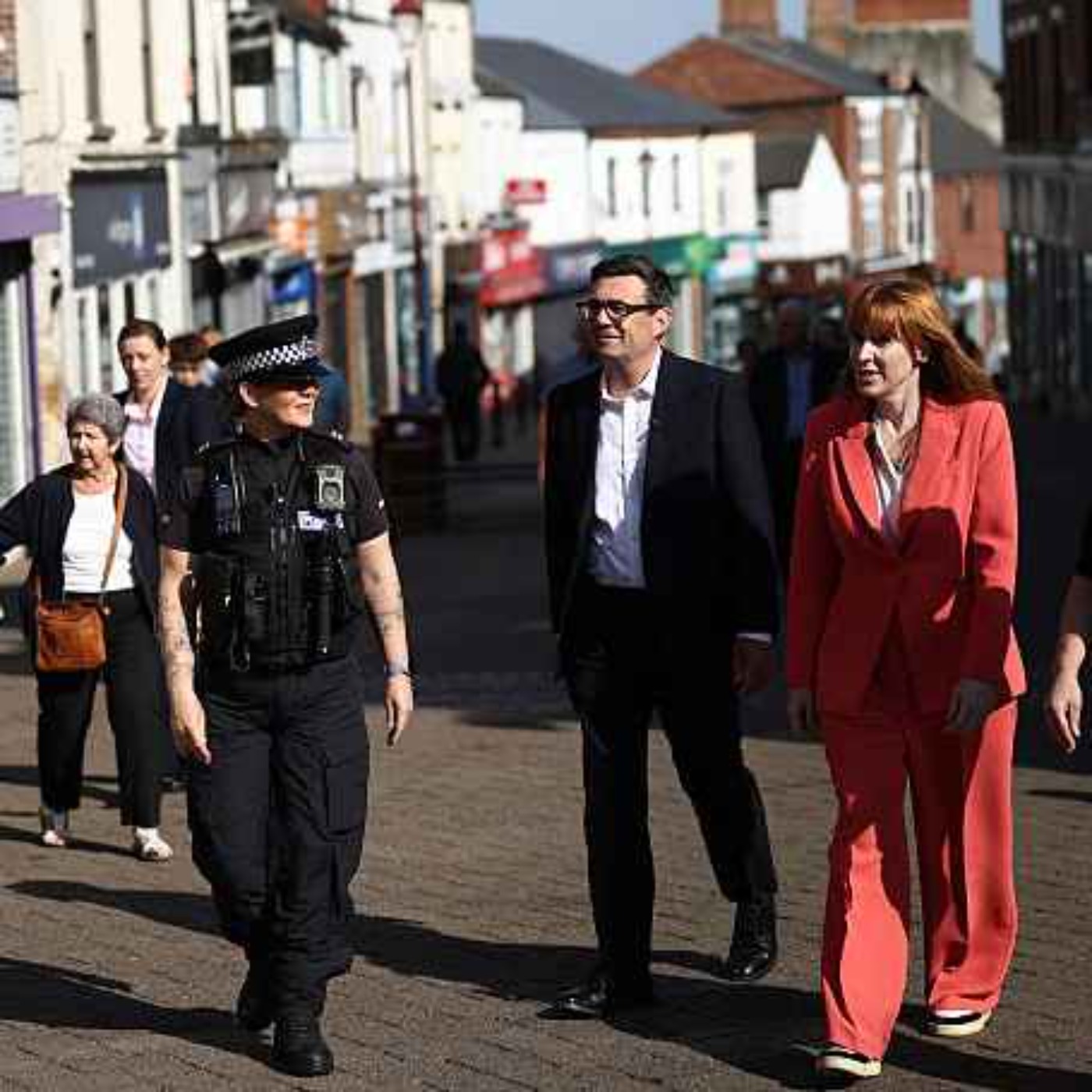
The episode of Coffeehouse Shots discusses two issues: Andy Burnham’s approach to illegal migration and his ideas for revitalising UK high streets. Guests are Noah Hoffman (political commentator; discusses Burnham’s “listening tour” and migration messaging) and Michael Simmons (political commentator; focuses on policy feasibility and economics).
Burnham suggests asylum seekers/illegal migrants shouldn’t be placed only in deprived areas but in “leafy, plush” middle-class communities, prompting criticism that it’s tone-deaf and morally misguided. The Home Office’s dispersal model is argued to be hard to implement because of public-service and accommodation costs. For high streets, Burnham is said to target visible “vibes” businesses (e.g., Turkish barbers, vape shops, betting shops), but guests argue structural drivers like business rates, staffing costs, and online undercutting matter more. Notable examples include the “mega dinghy” arrival story and comparisons to Bath/Leamington Spa aesthetics.
Written by AI. May contain mistakes.
Explore the implications of Andy Burnham's migration policy and public reaction.
“He seems to want to send them hither and yon.”
Discuss the feasibility of Burnham's idea for housing asylum seekers and its implications.
“I don't know what you thought then, Noah, watching this, because GB News was slightly clever.”
Delve into the challenges and strategies for revitalizing British high streets.
“the other thing that we keep hearing a great deal about and I can't remember how many of our 92 recent prime ministers have made this point but it's at least 91 of them, that we want to revitalise are high streets.”

Get the gist, explore an idea or ask about something said.
 Claude
On Coffee House Shots, what are the key points of this episode?
Searching your listeningAutomatic transcript. May contain errors.
0:00Noa Hoffman: Ever notice how every new AI tool asks you to explain your business to it all over again? Google Workspace with Gemini skips that. You get Google's AI built right into the premium versions of Gmail, Docs, Sheets, and more. No new tools, no extra logins. Just one subscription that gives you personalized AI right inside your actual workflow. Make work less work. Try Google Workspace with Gemini at goo.gle slash workspace with Gemini.
0:37Hello and welcome to Coffeehouse Shots. I'm Tim Shipman, political editor and spectator. This is our daily politics podcast. I'm joined today by Noah Hoffman and by Michael Simmons. And Noah, our Prime Minister, has been out and about again doing clips and explaining to the world how his migration policy is going to work. He seems to want to send them hither and yon. Tell us what it's all about.
1:01Noa Hoffman: Yes, so Andy Burnham is this week doing his listening tour of the country where he's going to take in the concerns of voters and allegedly use that information to guide policy going forward. Now, interestingly, he gave his first interview since becoming Prime Minister to GB News and, of course, was pushed by Christopher Hope on this issue of illegal migration. Now, this came a day after the 230-seater mega dinghy made its way to British shores. I think we should be clear it didn't have 230 seats. It had about 30 seats. Yes. But it had 230 people around. People clinging on. That is very much correct.
1:39Noa Hoffman: Andy Burnham came out with a very, very interesting line that has really sort of led the discourse in Westminster today. And that is that illegal migrants should not just be sort of plonked in struggling or deprived working class communities, but they should be placed in leafy, plush, middle class areas because we all need to play our part housing asylum seekers. Now, the words play our part has caused quite a stir because critics of Andy Burnham really question why he believes there is any part to play in the country stumping up for, you know, people who are very often economic migrants, who are undocumented and who are mostly men.
2:25I've seen quite a lot of comment online, including from former Labour special advisors saying, well, hang on a minute, we're all playing our part already, mate. We're paying for these people. Indeed. That is the role that we're playing here. It's your role, the government's role, to stop people coming in and to deal with them. It's not the public's role to have to sort of shoulder the burdens of this.
2:43Noa Hoffman: Yeah, absolutely. And what the likes of Shadow Home Secretary Chris Philp has said is that this comment is quite tone deaf and just sort of highlights an ideological blindness that the left has in the view of the Tories and reform to the illegal migration debate. And that is that a lot of the country want the number of illegal migrants to be zero. It doesn't matter if they're housed in a middle class area, in a working class area. It doesn't matter if it's a hotel or a military barracks. They don't want any more coming in full stop. And that is where a lot of the criticism towards Andy Burnham has come today.
3:21Noa Hoffman: And it was interesting that this morning, the Home Office Minister, Anna Turley, actually doubled down on the comments and again reiterated this idea that everyone has to do their bit for these groups for this group of people again missing the point that for many people they don't believe that there is any sort of moral obligation to do anything and as polling shows actually a lot of people think there's a moral obligation to keep illegal migration out of the country because it is you know really making a mock mockery of our borders and that if people want to come into the country, they must do so legally.
3:56I don't know what you thought then, Noah, watching this, because GB News was slightly clever. They put a question to the Prime Minister from a seven-year-old kid in one of these areas saying, why have we got all these people coming to our area? He's obviously a very forward seven-year-old child, or was encouraged by his parents. I like to think at the age of seven, I was capable of asking, searching questions of the Prime Minister. So it may be real, but he looked damned uncomfortable answering it. And he just doesn't seem to have the sort of touched, You know, Burnham, let's be frank, you know, I think Burnham started pretty well.
4:27I think he is reasonably good at politics. I think he does understand things a lot better than Starmer did. But he really, this is not an area that is in his wheelhouse. And he kind of his response was sort of, oh, I'm not really, you know, I'm not really up to speed on this issue. And he was talking about that in specific terms relating to the specific site that this kid was asking him about. But it came across as him not really being up to speed on the whole issue of migration and what to do with the dispersal of asylum seekers around the country. The second point I'd make, which I thought is not something people in the Labour Party would want to hear, but when you start effectively saying, well, middle class people ought to have these people as well, you're effectively saying, well, this is a bit of a punishment and we should all have to suffer.
5:07That is only rhetorically half a step from what reform are saying, which is that if you're one of these middle class types who loves asylum and immigration, well, you can have them all in your own patch. It's not a million miles away from what Burnham's saying. And I would have thought people in the Labour Party would be pretty horrified by the idea that they're effectively endorsing reforms policy. Michael, you're desperate to get in. What is getting your goat about this? I was just going to say, I mean, even if this is a serious policy proposal, which I'm not sure it is, but if it was, it's one of those things that's easy to say and quite hard to do because if you look at the kind of home office's dispersal model they're not sat there saying we're going to go to glasgow and we're going to go to the north of england because these are deprived areas they're because they're areas that tend to have a lot of public service provision and it just so happens that deprived communities tend to need more public services than wealthier communities for obvious reasons so you can't just say right you know we're going to send all the migrants to Chiswick.
6:10You have to also have the facilities that the migrants are rightly or wrongly granted access to. And it's not just public services either, is it? It's accommodation for people. And guess what? If you're in a leafy area, accommodation costs more than if you're not in a leafy area. So if Burnham is effectively saying, well, in order to punish everyone, we must start spending more on accommodation for asylum seekers, that is a very interesting policy. As you rightly said, Michael, We don't yet know whether this is a concrete proposal. This at the moment is at the level of Andy Burnham's musings. And we've seen a sort of steady policy process that seems now to take place, which is that Burnham muses about things publicly.
6:50the system is then sent on its way to try and do something about it. Problems are put forward, decisions then have to be made and we've seen on the issue of prison releases that things that Burnham has mused about in public are proving quite difficult to enact in practice. Now Michael, the other thing that we keep hearing a great deal about and I can't remember how many of our 92 recent prime ministers have made this point but it's at least 91 of them, that we want to revitalise are high streets. Another thing that is easier said than done. Tell us about that. It's another thing where the devil seems to be in the detail and things that seem on the face of it rhetorically and politically popular are in policy terms a bit of a headache aren't they?
7:33Yeah well as you said everyone's been unhappy about the the state of British high streets for years and years you know we just see chicken shops and and barbers and and vape shops and that's nail bars as well don't
7:45Noa Hoffman: forget the nail bars and that's that's a i like an upmarket nail and i actually saw someone um on x describe kind of what burnham's doing here i think quite well which is if anyone works in in software he's behaving what like in the way that a smart software team uh kind of behaves in which is the complicated fundamental things take years to fix but you want the rest of your colleagues in the company to like you so you do the little visible annoying bugs so if he could shut down you You know, the surge in Turkish barbers we'd seen, people would be happy. But I think he's playing into some ideas that, as you alluded to, Tim, are just not true.
8:24So take betting shops. We have not seen an explosion in betting shops in the high streets. You know, in the last decade, the number of betting shops has actually come down. People don't tend to gamble in that way. I think he's just attacking it, you know, for purely vibes reasons. I also think barbers are sometimes maligned as there being this big criminal conspiracy. This is where all the illegal gangs money is going. And I think there's there certainly are cases of that. But I actually think it makes sense if you think of the economics, why we have all these chicken shops and why we have all these barbershops.
9:01You know, there is no online competitor for them, you know, for a start. They're pretty cheap businesses to run. There's no licensing. The tax is kind of relatively cheap. And more and more men seem to have skin fade haircuts. So I genuinely think there is more demand for haircuts. And I guess my worry with where this kind of policy is. I was wondering how much special treatment there was here. Gancing over, I can see that Noah's nails are in a particularly fine kettle today. But looking at you, Michael, you've clearly not been for a proper Turkish shave and a sophisticated haircut recently. So I'll exonerate you of having special pleading on this.
9:39Yeah, I do think there is a danger of this policy, even if it is popular, is when they find out that if you get rid of all these things and you get rid of the vape shops and actually nothing, no other business comes to fill it because business taxes are so high, employing people is so high. The next thing they'll do is try to tackle the online businesses, which can obviously undercut high street shops. And the problem there is if you're Amazon or whoever, you're not taxed in the UK. So the only taxes that they can really enforce on them to make them compete on a level playing field with bricks and mortar shops is by increasing the costs of all of us.
10:15They seem to be driving people out of business, essentially. I mean, there is a poll around from Luke Chill at More In Common this morning, which kind of says that some people would prefer empty shops to some of these shops on their high streets. But I don't think that's, yeah, it depends where you live. But I'm not sure that's really the way forward here. It's certainly not what the government claims they're trying to do.
10:35Noa Hoffman: I do think Andy Burnham has tapped into an important topic here, because if you do go to many high streets, not just in London, but across the country, they are so depressing. you've got as you said vape shops like run down chicken shops litter everywhere and I mean my view is that the amount of litter you see on the street is actually right now an indication of civilizational decline and there is a theory broken windows theory um which was constructed by social scientists I appreciate they're not all the rage at the moment um in 1982 New York. Indeed, that visible signs of disorder, like broken windows, graffiti and litter, create an environment that encourages further minor and serious crime.
11:22Noa Hoffman: It's very hard to see how the country can revitalise, how you can have aspiration, how we can sort of grow in many respects when our high streets, many high streets, look so decrepit and run down. Well, they're just awful places to be a lot of the time. And it attracts a bunch of feral youth who people don't necessarily want to be around. and this kind of combination of empty shops and some of these sort of run-down premises. I had an interesting conversation with a bunch of people on one of my big WhatsApp groups, which is riddled with former number 10 advisors for various parties. And there was a bit of a debate about, well, can we make these things look a bit different?
11:56I mean, if you go to Bath or Leamington Spa, where they've got nice sort of Georgian architecture, the shops are not allowed the garish frontages they have elsewhere. They're allowed to put up their own sign in their own font, but it's done in a sort of smart way. And that looks nice. But I don't know, are we trying to impose some kind of sort of far and ball middle class kind of aesthetic on high streets that don't want it? I mean, bluntly, it might be good for everybody in the high street if things looked a bit nicer. But presumably shops with bright red and yellow frontages actually do attract business.
12:26That's why they've got these garish buildings. And this is another thing Burnham is looking at. He said he doesn't like, just like you're saying there, he doesn't like the massive signs in these things. But my question would go back to what do you want there instead? I mean, Burnham said that he likes the idea of pubs and cafes, if anything, because they actually help tackle crime. Because if you have more people in the street for social reasons, you know, there's more eyes on everything. And it makes the whole neighbourhood a bit safer. But the trouble is, it's not that, you know, people are wanting to open bars and restaurants and cafes, but they're being outbid on the rents by the barbers and the chicken shops.
12:58It's because the business costs and the taxes of running these businesses are so high. I mean, the simplest way to revitalise the high street would be to deal with business rates. And or, you know, remove the national insurance rise on businesses, you would think.
13:12Noa Hoffman: There's some top advice for Andy Benham. I think we're all united in wanting high streets to be revitalized and to become hubs of communities again. But the debate is open as to how you achieve that. Well, I don't need to sum up because Noah has. Thank you, Noah. Thank you, Michael. And thank you to all of you for listening.
13:42So
13:56Noa Hoffman: ever notice how every new AI tool asks you to explain your business to it all over again? Google Workspace with Gemini skips that. You get Google's AI built right into the premium versions of Gmail, Docs, Sheets, and more. No new tools, no extra logins. Just one subscription that gives you personalized AI right inside your actual workflow. Make work less work. Try Google Workspace with Gemini at goo.gle slash workspace with Gemini.
Andy Burnham's summer bonanza continues as he announces plans to empower local councils and hopefully improve Britain's High Streets. The government wants to make it easier for councils to refuse certain types of businesses – but is the plethora of vape shops, betting shops and barbers a cause of Britain's High Street decline, or just a symptom? If there are no businesses to replace those, will the public prefer empty shops to those they see as less desirable?
Noa Hoffman and Michael Simmons join Tim Shipman to discuss. Plus: the Prime Minister attempts to grip the migration crisis, as small boats numbers rise across the summer – but can he get his facts straight?
Produced by Oscar Edmondson and Patrick Gibbons.
Become a Spectator subscriber today to access this podcast without adverts. Go to spectator.co.uk/adfree to find out more.
For more Spectator podcasts, go to spectator.co.uk/podcasts.
Contact us: [email protected]
Hosted on Acast. See acast.com/privacy for more information.