Ask ChatGPT
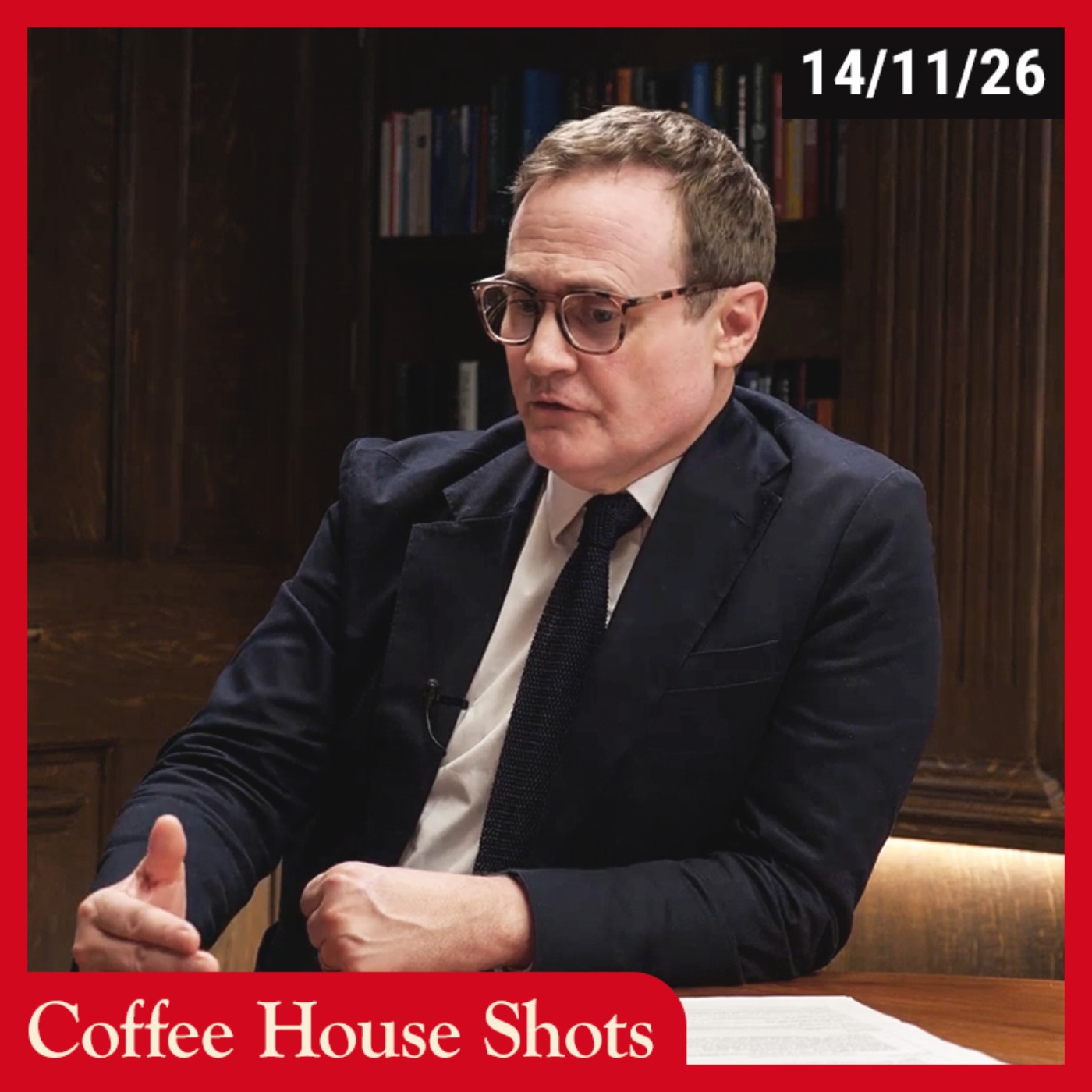


Coffeehouse Shots discusses Labour/Andy Burnham’s cost-of-living and tax measures, focusing on business rates cuts for hospitality, how they’re funded, and whether the autumn budget will contain bigger tax rises or spending cuts. It also debates Burnham’s overall economic ideology and upcoming leadership choices, plus a brief reaction to Scottish Labour ministerial appointments.
Tim Shipman (political journalist; co-host on the Spectator’s politics coverage) and Michael Simmons (journalist/commentator; discusses UK fiscal policy and Labour politics).
Business rates cuts (20% for some hospitality) won’t lower pint prices much; average savings are about £1,000 per qualifying venue. Funding is unclear; relief may be offset by reviewing tax reliefs targeting “low or negative social goods” like vape shops and VAT loopholes used by online sellers. VAT cuts on energy bills are described as unfunded, allegedly tied to scrapped digital ID “efficiencies” that didn’t materialize. Burnham is portrayed as left-wing in economics while adopting centrist branding.
vape shops and VAT loopholes; eBay/online sellers; “beer at Tax Policy Institute” loophole joke; energy bill VAT cut; possible autumn changes like unfreezing the income tax threshold; mention of John Healey as Chancellor and other ministers staying in place.
Written by AI. May contain mistakes.
Exploration of Andy Burnham's recent policies and their funding controversies.
“capping bus fares at£2 and now cutting business rates in a particularly miserly way.”
Discussion on tax changes and the economic implications for businesses and consumers.
“I mean, and that's why, frankly, he's picked John Healy, as my proof explains today.”
Analyzing potential government spending and its impact on the economy.
“And it depends how it's all drawn up as to whether that is possible or not.”
Discussion about Anas Sarwar's appointment and its implications for Scottish Labour.
“And the piece concludes, I think fairly obviously, with the view that, you know, leadership and politics is about making choices.”
Discussion centers on the criticism of Scottish Labour and its perceived status as a satellite of London.
“And, you know, as a Scot who's come down to London, I don't blame Anna Sarwar for making that life choice and career choice, but it does sort of suggest that S &P maybe have a point.”

Get the gist, explore an idea or ask about something said.
 Claude
On Coffee House Shots, what are the key points of this episode?
Searching your listeningAutomatic transcript. May contain errors.
0:00Ever notice how every new AI tool asks you to explain your business to it all over again? Google Workspace with Gemini skips that. You get Google's AI built right into the premium versions of Gmail, Docs, Sheets, and more. No new tools, no extra logins. Just one subscription that gives you personalized AI right inside your actual workflow. Make work less work. Try Google Workspace with Gemini at goo.gle slash workspace with Gemini.
0:36Hello and welcome to Coffeehouse Shots, the Spectator's daily politics podcast. I'm Oscar Edmondson and I'm joined today by Tim Shipman and Michael Simmons. And now we are under fire from an Andy Burnham policy blitz after taking VAT off energy bills, capping bus fares at£2 and now cutting business rates in a particularly miserly way. I mean these all sound great don't they Michael but I think it's fair to say that they're being funded in a fairly dubious way can you take us through it if indeed at all yeah well exactly so let's start with today's one which is the business rate cuts which is 20 % cut to business rates for certain hospitality businesses and obviously the pub industry I think is the loudest of the hospitality businesses that's been screaming for for cuts for a long time so you'd think you know oh, good news, this will be happy, the price of a pint will come down.
1:29Well, let me tell you, it won't. Because I think on average, the saving for the businesses that qualify works out about£1 ,000 per venue. So that's not going to make a huge difference. As in terms of where it's being funded from, well, they haven't found the money yet, but they say they're going to review tax reliefs on business with low or negative social goods. So what do they mean like that? They mean like vape shops. so where there's tax relief for vape shops or things that Andy Burnham's people don't like they're going to be hit there's an other people that they're going to hit are online businesses who are subject to VAT but some of them have found this loophole where you don't have to pay VAT so they're going to crack down on that in terms of them the other ones people selling on eBay and stuff like that presumably exactly in terms of the other ones I mean the big really unfunded one was the one we had at the start of the week the the VAT getting rid of that on energy bills which is just not funded at all as daren jones revealed but we didn't need daren jones to reveal it because it was actually in the government's press release anyway that this is for efficiencies that were going to be found in departments to fund the digital id scheme that's been scrapped and lo and behold no department had actually found those efficiencies so i think that's that that point is is interesting to me because the last time i was on this podcast james heel gave me short shrift because I said to him, you know, is the Treasury just going to be run out of number 10?
2:53He said, no, no, not at all. But that feels to me a bit like where we are because obviously... That's exactly what's happening. I mean, and that's why, frankly, he's picked John Healy, as my proof explains today. He could have picked Ed Miliband or Shabana Mahmood. That would have been, A, siding with one faction or another in the Labour Party. But more importantly, it would have been putting someone who, A, sort of half looks next door and thinks, well, maybe one day I might get the top job. But more importantly, those are the two ministers who are generally acknowledged, whatever you think of the things they are pursuing, to be the most competent at running a department, the most competent at making things happen, and the most competent at running a sort of their own agenda and ramming it through.
3:34And it seems that Andy Burnham didn't want a terribly proactive Chancellor of the Exchequer. He wants to be able to tell him what to do. And, you know, extraordinarily, even some people around Burnham have been, well, let's call them honest enough to admit as much. But let's just turn, shall we? When we hear anything about tax changes, we must turn to the Twitter feed of Mr Dan Neidell. Not, it should be said, a right-wing headbanger, but a distinctly left-of-centre tax analyst. And this is his take on the repurposing of business rates across the high street. And let's not forget, you know, look, this is a very good signal that Burnham is sending in the same way that Rishi Sunak tried to bail out the hospitality sector during the pandemic.
4:12Burnham is all about place. He's all about failing towns. He's all about high streets that need help. And people bluntly like pubs and restaurants and bars. They do not like vape shops and all the rest of it. But there's the vibe stuff, which I think is effective and good and it is good politics. the economics of it are less straightforward. And it's very, very difficult to design this in a way that people can't find loophole. So Dan Neidell now announces, sarcastically I'm sure, that the Tax Policy Institute headquarters will now be serving beer because that will get them a VAT cut. And our vape shop will sadly be shutting down.
4:49In its place will be an American candy store and it will incidentally sell vapes. Yeah. So that's a sort of, you know, it's a jokey way of explaining how you get around these plans. And it's, you know, people are sufficiently cash strapped that they will attempt to get around these plans. And it depends how it's all drawn up as to whether that is possible or not. But on the face of it, this is something that is more complicated and difficult than the government is making it. I think the other thing about the free things that have been announced on the cost of living this week is, to me anyway, there's a touch of, you know, Martin Lewis, money saving expert about all of them.
5:24These are not massive interventions, you know, 45 quid for everyone on energy, a thousand pounds for each pub. And okay, fair enough, it's week one, maybe I'm too eager, but I'm a bit like, where is the fundamental changes that are going to make us richer? Well, I think you'll find the fundamental changes will be the ones making us poorer in the autumn. So there'll be lots of tinkering around the edges saying, look at these 27 different things I've done on the cost of living, but here's one sucking great tax rise. But this is where we always are. It's the little savings. And I was rude about James earlier, so I'll be nice about him now, because he did a very funny tweet last night, which is a scene from The Simpsons.
5:59And he says, so many of the labour growth discussions smack of this. And then it's somebody talking to Ned Flanders, and they say, we've tried nothing and we're all out of ideas. And that feels where we are on the other side of the economy, making us all richer so we don't need the 45 off energy bill. Yeah, we were talking before we went on air, Michael, about how this budget coming in autumn is going to be huge. There's an element of kicking the can down the road here and then making those savings when it comes to a fiscal event. Well, it's going to be huge or it's going to be tiny, right? Because as Tim just said, it could be all these quite small announcements or it could be like major like, oh yes, We actually do have to do 3 % on defence.
6:37We are going to do a£9 billion giveaway to unfreeze the income tax threshold. Which we should say was floated about a week ago. The Downing Street official spokesperson said that is not part of the plans two days ago. And then yesterday, Andy Burnham said, well, we are looking at it for the budget. There's no guarantees. And one of my former number 10 people who was watching that messaged me and said, well, Well, it sounds to me like he's going to be looking at a lot of things and then realising that none of them are affordable. But equally, all we can do as journalists is try and divine what is going on in the Prime Minister's head.
7:13I had a bit of an exchange earlier with one of the people who's been very close to him over recent months. And I had asked them a straightforward question. What does Miata Fambula going to the Department of Energy mean? Because Ed Miliband was, you know, hot to trot for net zero. Miata Fambula is his protégé. And people were saying to me that her going there was the price that Ed demanded to go quietly off to the Foreign Office. So that would imply that net zero continues. North Sea drilling does not get off the ground in any meaningful way. And, you know, despite Burnham saying we need to be more pragmatic about fossil fuels, she came out yesterday and said, you know, I'm not some kind of zealot on this, which may be indicative.
7:56It may just be her defending herself. But the person I was messaging sort of came back and said, yes, but remember, it's Andy who's in charge. And I said, well, you might know what that means because you've been talking to him a lot. We don't. Because all we can do is see what he's saying and see what he's announcing and see what is being then peripherally floated and draw our own conclusions. The other point I would make about the vow of domestic fuel is that while it's good politics now, as my piece explains, it may not be great politics going forward as well as being economically problematic.
8:30Because firstly, energy prices are probably going to rise by more than that VAT cut. So will people even see it in their pockets in the autumn? Probably not. And then you're in the situation that every government now finds themselves in with fuel duty on vehicles, which is that, you know, it was temporarily cut some years ago. Every single budget, the Treasury mandarins ink it back in as something that, you know, the end of this tax cut. And every single budget, the Sun newspaper gets high on its horse about the cost of filling up your car. And every single budget, the Chancellor has to then cut it again and find the money to do so.
9:11And once you build in sort of VAT cuts in certain areas, it is very, very difficult politically to put them back up at a later date. And you see that in the whole sort of what we call the tax and spend envelope, which is the inheritance that Rachel Reeves has left John Healy. Because if you look at the plans as they're currently stated for the rest of this parliament, spending and tax are kind of inverted lines of each other. So you've got a lot of spending now that's meant to be paid for by tax rises that start to take effect in 2029-30. Now, you don't need to be a political genius to know that maybe that's not potentially a good idea.
9:51Yeah, 29, Michael. Oh, an election, possibly. Yeah. No, it was always incredible that that would be the case. And if Burnham spends even more, he's going to be in twice the whole. And, you know, who would be John Healy? It might be the best thing that's ever happened to Shibana Mahmood's career, that she hasn't gone anywhere near the Treasury at this point in time. Well, Tim, the conclusion that you reach in your cover piece of the magazine this week is that Andy Burnham, if we do look inside his mind, is a bit of a wolf in sheep's clothing. is effectively a fundamentally left-wing guy who's pretending to be a centrist.
10:22Well, look, I think like most politicians, Burnham contains multitudes. We write the text, not always the headlines. Look, on the economy, it is difficult to escape the conclusion that this will be the most left-wing tax and spend government that we've had since the Callaghan government. There's no way of getting away from that. And don't forget the Callaghan government was reigning in its spending because of the IMF. So maybe we go back to Wilson or even earlier. So on the face of it, that is the case. Look, culturally, I think Burnham's northern gang are far less kind of woke than the North London bits of the Labour Party.
10:59I think, you know, he has kept both Shabana Mahmood at the Home Office and Pat McFadden at the Welfare Department. And that implies that he does intend to continue with most of her crackdown on migration and illegal arrivals and asylum seekers. And that is still on the table that they will attempt to try and reform welfare. I don't detect that that's remotely something that is a Burnham priority, despite his team telling me that it is. But, you know, he didn't have to do those two things and he has. So I think on the sort of I think on crime, immigration, he'll try and adopt a position that Labour's old right are pretty comfortable with.
11:40And I think, you know, there's a quote in that piece from someone saying, you know, if you had told me two weeks ago that John Healy, essentially a centrist pragmatist, would be the Chancellor of the Exchequer, that Ed Miliband would be literally sent abroad to do his business, and that both Shabana Mahmood and Pat McFadden were still in place, I would have bitten your arm off and taken that, frankly. but everything comes down to the economy. The success of a government is determined by whether it can raise money and then whether it can spend it wisely. And at the moment we are getting a lot of examples of it spending money cannily but not necessarily in the medium to long term wisely and we have no proof or evidence yet for how they plan to kickstart growth and raise that money and this is the fundamental problem.
12:31And the piece concludes, I think fairly obviously, with the view that, you know, leadership and politics is about making choices. Some of them are pretty hard. With every choice come losers as well as winners. And we won't really know who Andy Burnham is. And that person messaging me won't really know what his top priorities are. And the journalists will not really know where he stands until we get to that budget. and those tough choices are made. They're written down in black and white and we can see clearly, for someone intelligent like Michael, who reads a spreadsheet better than I do, who the winners and losers are.
13:08Well, Michael, just seeing as we've got you, I did want to ask you one final question. We've had some junior ministerial appointments made this week as well. Exciting. Exciting. And one of the most exciting ones is that Anasawa has made the journey down to London. Your thoughts as a Scotsman on another Scottish luminary, abandoning the motherland and coming down to Westminster. Well you can see why Anas would be tempted by the Urmans and the job because he sort of tasted the First Ministership right? There was a point where the impossible was looking possible the SNP's reputation was so in the mud and his reputation and Asarwar's was so high that for a while the polling suggested that he would become First Minister.
13:49But then Keir Starmer became very unpopular and that did not happen and Anna Sauer, as a result, became quite unpopular with voters, but also among Scottish Labour. But he's even more unpopular with Scottish Labour now, who are absolutely spitting with rage at this move and his appointment to the business ministry because it plays into every caricature that the SNP has always said about Scottish Labour, is that they say it's a branch office, they say it's the B team, and no matter how high you get, even if you get to leader of the party, you're just waiting for your real job in London. And, you know, as a Scot who's come down to London, I don't blame Anna Sarwar for making that life choice and career choice, but it does sort of suggest that S &P maybe have a point.
14:39Well, on that bombshell. Thank you so much, Tim. You've been here that on this podcast again for a while, so savour it while you can. Yeah, let's clip that for Michael Simmers. Thank you, Tim. Thank you, Michael. And thank you for listening.
15:21Make work less work. Try Google Workspace with Gemini at goo.gle slash workspace with Gemini.
It is day three of Andy Burnham’s premiership, and we have had a tranche of policy announcements and funding commitments. A VAT cut for energy bills, £2 bus fares, and today a business rate cut for pubs and hospitality businesses. But are any of them actually funded?
Michael Simmons joins Tim Shipman and Oscar Edmondson to walk through the promises made, and how, if at all, they will be funded by Burnham’s new government.
Produced by Oscar Edmondson and Henry Lloyd.
Become a Spectator subscriber today to access this podcast without adverts. Go to spectator.co.uk/adfree to find out more.
For more Spectator podcasts, go to spectator.co.uk/podcasts.
Contact us: [email protected]
Hosted on Acast. See acast.com/privacy for more information.