Ask ChatGPT

The episode discusses the UK’s “assisted dying 2.0” bill’s return, the political fight around it, and how it could affect Labour Party unity; it also reflects on how 9/11 shaped modern politics.
Tim Shipman is a journalist who covered politics for 25 years, including being “boots-on-the-ground” in Afghanistan and Iraq. James Heale is a political commentator/journalist who tracks parliamentary procedure and Labour politics.
The bill is being advanced by Lauren Edwards after winning the private members’ ballot; it faces a “knife edge” vote, then a Lords battle with possible use of the Parliament Act (rarely used since 1911). Andy Burnham opposes it, abstaining, while Keir Starmer supports it; critics argue palliative care should come first. The “Sister dying” moment is cited as a turning point that increased Labour rebellion and conscience-vs-whip dynamics.
Parliament Act uses (e.g., fox hunting; other cited acts); 1,500 Lords amendments last time; 9/11 events in Brighton press room; Afghanistan/Iraq reporting anecdotes.
Written by AI. May contain mistakes.
James discusses the political landscape surrounding the new assisted dying bill.
“the last one james can you take us through what the sort of political dynamics are around assisted dying 2.0.”
Tim and James analyze the split within the Labour Party on the bill.
“Tim, does this bill have any potential to cause some ruptures within the Labour Party who are very, very split on this issue?”
Tim shares insights on the lasting effects of 9/11 on global politics.
“And the people who support this have said they'll keep coming back for more.”
Tim recounts his experiences during 9/11 and the subsequent political shifts.
“I was on the day at the TUC conference in Brighton where Blair was due to speak.”
Discussion on how the 9/11 attacks reshaped international relations and politics.
“But equally, I remember being, I was embedded with a bomb disposal unit in Basra at the sort of autumn of 2003, you know, three or four months after the war.”
Explore how Australia's perception of safety changed after terrorist events.
“But that all came crashing and burning during the Bondi massacre at a Hanukkah party, which was an Islamist terrorist attack.”

Get the gist, explore an idea or ask about something said.
 Claude
On Coffee House Shots, what are the key points of this episode?
Searching your listeningAutomatic transcript. May contain errors.
0:00Grainger knows if you're a procurement manager at an industrial manufacturing facility, you're balancing inventory and budget while sourcing critical supplies across the operation. Too much inventory? Costs climb. Too little? Production slows. Grainger's$2 billion in on-hand inventory helps you get what you need when you need it. So you can help keep budgets balanced and lines moving. Call 1-800-GRAINGER, click grainger.com or just stop by. Grainger, for the ones who get it done.
0:37Noa Hoffman: hello and welcome to coffee half shots i'm noah hoffman and today i am very pleased to be joined by tim shipman and james heel the assisted dying bill is back it's a new bill but it's the same as the last one james can you take us through what the sort of political dynamics are around assisted dying 2.0.
1:00Tim Shipman: Yeah, so the new bill obviously very much the same as the old one. Lauren Edwards has finished highly in the private members ballot and therefore has picked up cumulatum, and is taking this forward. The process therefore resumes. So the second reading of the legislation and currently there's five hours of debate before 2.30 there's going to be the vote on it. What both camps agree on is that it's going to be on a knife edge. If the bill does pass then it will go through into the Lords and then we get into the battle about ping pong and how the process is going to work. Obviously, because it went through one previous session, it's going to therefore potentially be liable under the Parliament Act.
1:31Tim Shipman: But the Parliament Act has only been used, I think, seven times since 1911. Last time used was fox hunting, and crucially never used on a private member's ballot. I think the other ones are sort of homosexual equalisation in 2000, the War Crimes Act in 1991. Can you name all seven, James, with the pressure? There were three just before the war in terms of Welsh disestablishmentarianism, and I think Irish Home Rule as well applied to the Parliament Act. But am I missing any? Have you got the list there, Patrick? Yes, James. The Government of Ireland Act, 1914. The Welsh Church Act, 1914. Parliament Act, 1949.
2:09Tim Shipman: War Crimes Act, 1991. European Parliament Elections Act, 1999. PR, of course, in 1999, yes. And that's partly why Blair pushed on with the heretory reforms. And the amendment to the Sexual Offences Act in 2000. And lastly, the Hunting Act of 2004, which you mentioned.
2:24James Heale: I, for one, am shocked that you didn't get the, what was it, the Welsh Churches Act or something?
2:28Tim Shipman: I did. Welsh Disablishment Aronistain. Anyway, so as that's an aside to say, we've got a long day of debate ahead of us. Of course, what happened last time was that it was talked out in the Lords. There were 1 ,500 amendments put down. Including by the editor of The Spectator, we should point out. We should point that out, yes. And so, therefore, it's going to be another potential battle. And if it doesn't pass, then that's the end of it. And you have to say, given Andy Burnham has signalled he wouldn't be supporting it, thinks it's the wrong time, it would probably be kicked in the long grass.
2:52Noa Hoffman: Tim, does this bill have any potential to cause some ruptures within the Labour Party who are very, very split on this issue?
3:00James Heale: Well, they are split, but I think there's a fairly overwhelming support from the back benches. But James is right. The key here is what does the Prime Minister think? Keir Starmer backed this bill. Keir Starmer effectively signalled that this was a bill that the government wanted to see passed. And in fact, there's a lot of evidence that the government put Kim Ledbetter up to putting it through in the first place. Andy Burnham is a former health secretary, I think perhaps understands some of the nuance around this slightly differently from how Starmer did. And he's abstaining himself on this, which is itself an interesting sort of statement on not wanting to annoy anybody in the Labour Party.
3:34James Heale: But, you know, it seems unlikely that the government is going to add an eighth Parliament Act manoeuvre on a private members' bill that the Prime Minister himself has publicly expressed scepticism about. And what a lot of the critics say is, let's tackle palliative care first. Some, but not all the people who support this bill, do so because people are dying in screaming agony because they can't get the support they need in their final days of, you know, having cancer. And that is what appears to a lot of people to be inhumane. I think, you know, the spectators generally take a pretty negative view of this, and Michael Gove certainly does himself.
4:13James Heale: In principle, I think the idea is perfectly acceptable. I think the detail of the bill is pretty shocking and the way that the people trying to push it through have behaved is also pretty shocking. And the case for sorting out the need for people to go and do this, at least for some of the people who support this bill, it ought to be a priority. And I think as a former health secretary, that's how Burnham feels about it. And during, you know, the sort of leadership manoeuvrings and the by-election, he said as much on the record. So this is the last chance saloon probably in this parliament, this side of a general election.
4:46James Heale: But, you know, we all know it's not impossible that there's an early general election. And the people who support this have said they'll keep coming back for more.
4:53Tim Shipman: I think it's quite striking when we look back at the two years of this current lifetime of this parliament. First parliament ever where more than half the MPs were new. There haven't been that many great parliamentary moments, actually. And this is something we reflect on when we discuss our parliamentarian awards. But a sister dying was the moment these MPs went from being candidates to actual elected representatives. They were thinking for themselves.
5:10James Heale: And I think actually when we came to do the last set of awards, a lot of the winners were people who'd made impassioned speeches or interventions on both sides of this debate. There was some very intelligent, moving and well thought through arguments. And as you say, it was one of the few moments where that felt like it was the case.
5:29Tim Shipman: But I think it's quite interesting how it's actually injected a little bit of poison into the bloodstream of the Labour Party. There's been some great work done by Philip Cowley, who's the sort of doyen of whips reporting. and he's looked at how they affected the voting habits of MPs after that. And it does seem that was the moment where it suddenly led to a much more rebellious Labour Party. And in some ways, I think you wouldn't get some of the elements around the welfare revolt of last summer, which I think ultimately scuppered Keir Starmer if it wasn't for that sister dying. And I think this whole notion about vote conscience, I mean, I've spoken to some Conservatives who say it was more regarded as an informal party whip, the way which people voted in that.
6:01Tim Shipman: It was very striking to me that I think more than 80 % of the Conservative MPs were against that. And so those things are a matter of conscience, often they turn out to be a matter of raw politics as well.
6:10Noa Hoffman: And it is also today the 25th anniversary of 9-11. Tim, you travelled to Iraq as a boots-on-the-ground journalist. What are your reflections on today?
6:25James Heale: Yeah, I mean, I went to Afghanistan after 9-11 a lot with various prime ministers when it felt like, you know, the world was in flux. because I remember Blair made that comment about the kaleidoscope up in the air and the pieces have not yet fallen into place. It feels like I think the two most important things that shape politics to this day are the financial crash of 2007-8, which I think still affects the sort of economic realm. And I think in foreign policy, 9-11 is the formative moment of all our lives. I was on the day at the TUC conference in Brighton where Blair was due to speak. and it was supposed to be a tricky day for him.
7:06James Heale: There was a lot of revolt about what Labour was doing domestically. The unions were in uproar and then this broke. I was out in the lanes in Brighton when one of my colleagues phoned and said, oh, a small plane has hit the World Trade Centre. I didn't understand quite what the fuss was about. Went back to the press room, saw the second plane hit and immediately I think everybody in that room felt this was a coordinated attack. The world is changing in front of our eyes. I remember to my shame trying to sort of conjure up a historical analogy that would fit the moment and said this is going to affect America, like a sort of combination of the JFK assassination and Watergate combined.
7:42James Heale: And some old soak next to me went, no, Shippers, you're wrong. This is Pearl Harbor. And that, of course, was absolutely right. And I was totally humiliated. I vowed never to be out-analogied again. And of course, I then arrived at the Spectators of Fine James Hill with this astonishing knowledge of history out analogying me in conference all the time. That's a side issue. But you knew immediately. Blair gave what in retrospect is a remarkable speech. A lot of people will criticise it now and say that, you know, he drew the wrong conclusions from this. But he knew that this was an attack on the West as a whole, that there was a sort of seismic kind of almost kind of cultural battle now that was going to commence between Western values and nihilistic, terroristic Islamist values.
8:27James Heale: And he summed that up on day one while George Bush was flying around the skies and being hidden away and being, you know, reading Little Pet Goat and being told that his presidency was changing from one where he was going to be a reformer of education to one where he was going to be fighting a war on terror. it was sort of seismic and Blair summed it up but one of the most remarkable moments of my entire 25 years covering politics was the press room at the Brighton Centre was sort of up some stairs at the back near the sort of back entrance to the building and we were all kind of milling there when Blair came off stage and went through to his car.
9:07James Heale: And he'd given this very accomplished sort of speech. And I remember Andrew Neil was the only one, former proprietor of The Spectator, the only one who really sort of had the balls to kind of grab him and try to talk to him. And he asked him a couple of questions about what was going on and what the reaction would be and all the rest of it. And Blair, frankly, looked utterly shaken. He was grey, pale, translucent almost. and this was a very accomplished prime minister probably the most sort of comfortable in the job that I've ever covered and he looked like death frankly and he couldn't answer really simple questions he was sort of shaking his head raising his arms and a kind of leave me alone Andrew I don't know but that is the one moment in my career where I've looked into the eyes of someone I regarded as an accomplished politician and he looked absolutely terrified and that was a kind And, you know, he knew everything was changing.
10:03James Heale: Then in a classic moment of journalistic farce, we all raced to the station. Some of us ran for a train that wasn't quite there. It was departing and then repaired to the bar at Brighton Station. And I was with a former member of the BBC, Nick Assander, who was a very good anecdotalist. And he was such a good anecdotalist that the next train began to pull out and we had to run for that. And then we missed it. And then the same thing happened again. And I had to phone the editor at the Sunday Express where I was then working and explain that, you know, there was massive overcrowding trying to get on these trains and there'd been a security alert as well.
10:38James Heale: And this was why things had been delayed. So and then we all went back to the office. And frankly, the next three, four, five years of our lives were completely different. and that kind of pivot from what felt like a fairly righteous enterprise in Afghanistan, dealing with al-Qaeda and the Taliban, and then into, you know, what was a hubristic moment in Iraq. But equally, I remember being, I was embedded with a bomb disposal unit in Basra at the sort of autumn of 2003, you know, three or four months after the war. And the mood still there was very edgy, but it was, there was still a sort of sense of hope at that point.
11:15James Heale: And we did all sorts of astonishing things, pulling scud missiles out of the Chattel Arab. I remember we built an enormous pile of ammunition that had been shells, and I was allowed to blow them up from two miles away, firing Uday Hussain's shotgun. So, journalistically, it was the making of a lot of us, but it was the thing that shaped our world. And everything that's happened in the Middle East since still has some kind of callback to that moment, I think.
11:44Tim Shipman: September 11th, 2001, marked the end of those halcyon days of the 1990s. You can sort of say the 1980s in a way began November 9th, 1989, which is when the Berlin Wall fell, 25th of December 1991, when the Soviet Union was dissolved. But comprehensively, that period of bliss, of the Union power, really came to an end that day, that sense of the towers coming down, and with it, a lot of the American innocents as well. I was born in 1995. I was six. My two first world memories are the Millennium Dome Raid, because my parents were there that day and I somehow thought they were involved. And then second of all, watching, I remember coming down the side and watching my mother hand over her mouth, watching the planes hit the towers.
12:24Tim Shipman: And I think that really then, as someone who grew up in London in the 2000s, that shaped a lot of world events and kind of how we were receiving that. As a teenager, I remember as a child looking worried at bombs on buses. My uncle was supposed to be on one of the trains that blew up on the day of 7-7 in London. and that really was I think the whole focus, the lens, reading about bodies coming back from Royal Wooten Bassett, Iraq, I think you can make a case in some ways actually now, more for given how it's transitioned, unlike Afghanistan, the graveyard of empires and the horrible traumatic pull out of that in 2021.
12:57Tim Shipman: I think that it was a period where really striking things happened. Obviously you just talked about George Bush's reaction to that and the whole presidency going in a different way but actually British politics was affected too. that day at the TUC conference, Tony Blair was supposed to make the case for joining the Euro, and the whole history of Brexit, domestic politics, the continent's politics might have been different. It was also interesting, of course, September 2001 was the month that China joins the World Trade Organization, and China becomes this superpower, and one wonders, perhaps, historians in the future in 50 years' time, when they look back on the sort of pathways, the forks in the road, September 2001, where everyone's eyes were focused on the Middle East rather than the rising dragon in the East, which may potentially prove so important in the shape of our continent's future.
13:37James Heale: I think there's a lot in that. And I think you can almost make the case now that the sort of the Islamist attack on the American empire, as it were, kind of knocked them off kilter, took their attention away. And I think weakened them for that sort of what we think will probably be the next sort of existential struggle in the world between America and China.
13:58Noa Hoffman: Well, I was four years old during 9-11, so I don't have any memory of it. But of course, Australian troops were sent to both Afghanistan and Iraq. And I think in the years that followed 9-11, there was very much a sense in Australia that we were such a lucky country because we are so isolated from the hotbed of Islamic terrorism and the war on terror, even though obviously troops did take part. But that all came crashing and burning during the Bondi massacre at a Hanukkah party, which was an Islamist terrorist attack. And now I don't think there are many places you can be in the world that doesn't feel somehow a part of this sort of global Islamist issue that the world has just failed to grapple on.
14:43Noa Hoffman: And that, of course, in many respects can be traced back to the 9-11 attack. but such an interesting conversation between you and Tim James. I think with that, we will draw the episode to a close. Thank you, James. Thank you, Tim. And thank you for listening to Coffeehouse Shots.
15:21This is the story of the one. As a shipping manager, he's running the dock, stocking supplies, and making sure every order goes out on time. And Grainger helps him stay prepared. From shipping supplies to PPE to hand tools, he counts on Grainger to keep products moving and trucks rolling. So his operation runs smoothly, no matter the shift. Call 1-800-GRAINGER, click grainger.com, or just stop by Grainger for the ones who get it done.
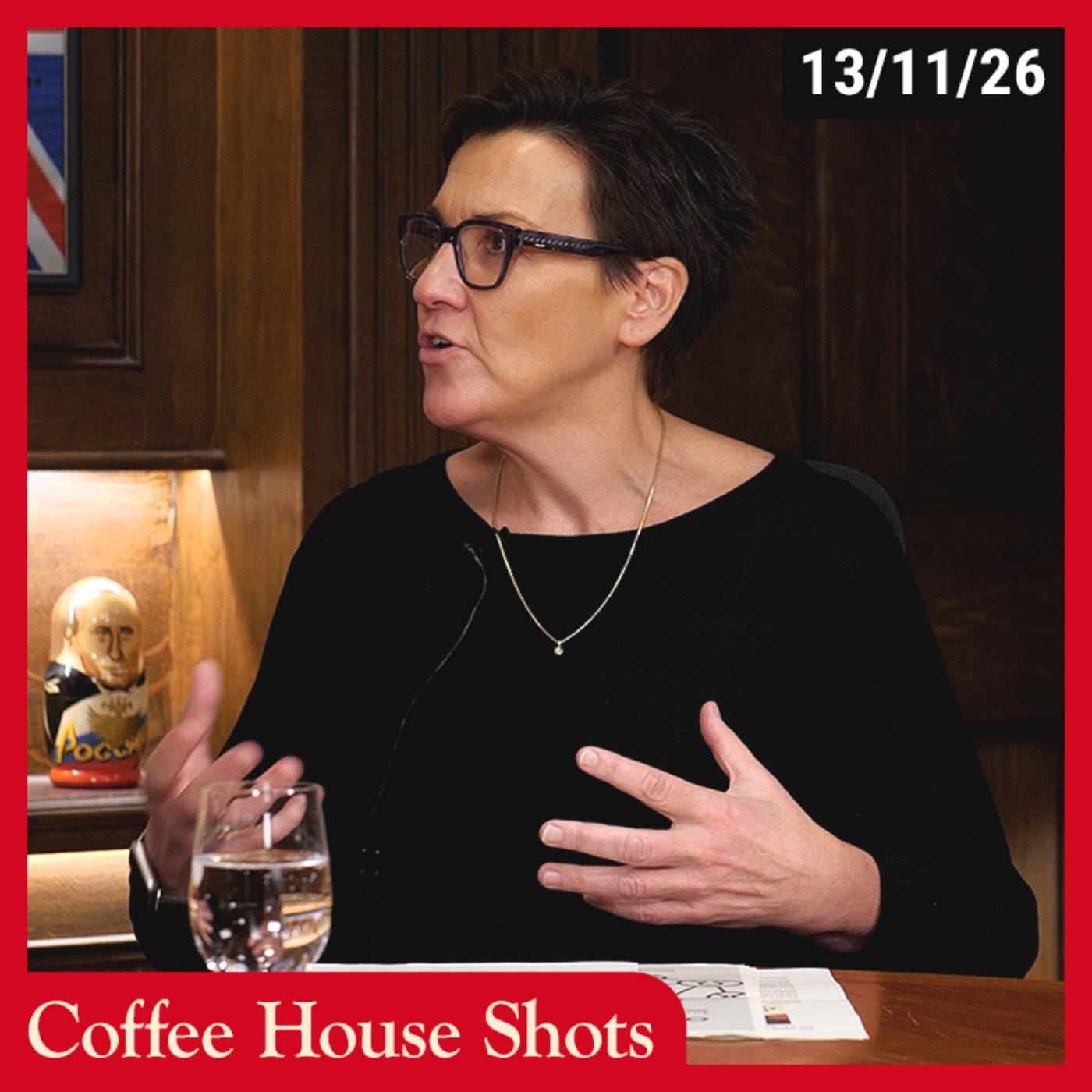
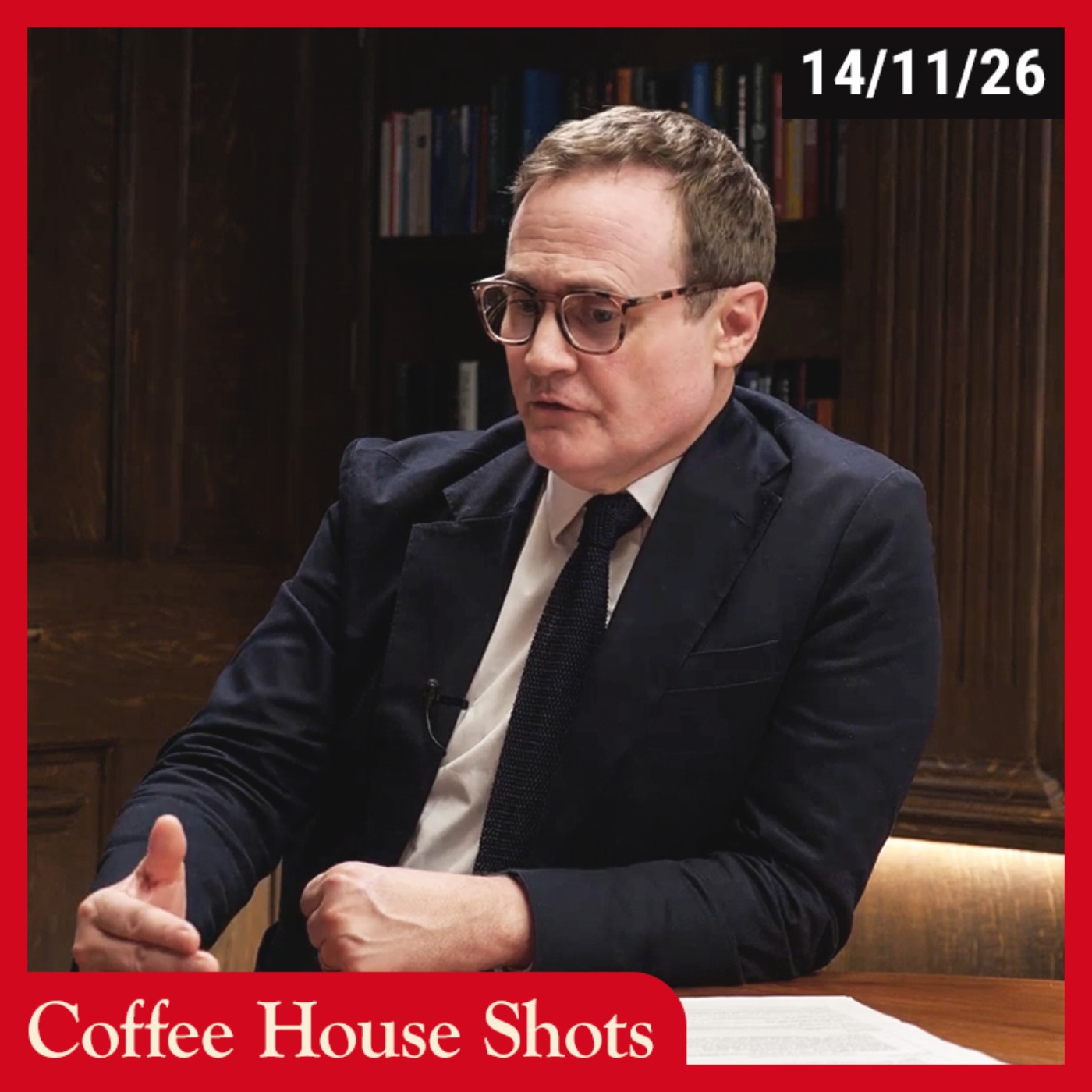
The topic of assisted dying returns to Parliament today, with a vote scheduled in the Commons this afternoon. Labour MP Lauren Evans has used her private member's bill to reintroduce it, after Kim Leaderbeater's attempt failed, running out of time during the last parliamentary session. Then-Prime Minister Keir Starmer voted for the Bill; now, Andy Burnham has pledged to abstain, saying that – as Prime Minister – he should remain neutral. So what are the chances of this Bill passing? And what does Burnham really think? Tim Shipman and James Heale join Noa Hoffman to discuss.
Plus: the team reflect on the 9/11 terrorist attacks in the US and its consequences, 25 years on from that seminal moment.
Produced by Patrick Gibbons.
Become a Spectator subscriber today to access this podcast without adverts. Go to spectator.co.uk/adfree to find out more.
For more Spectator podcasts, go to spectator.co.uk/podcasts.
Contact us: [email protected]
Hosted on Acast. See acast.com/privacy for more information.