 Ask ChatGPT



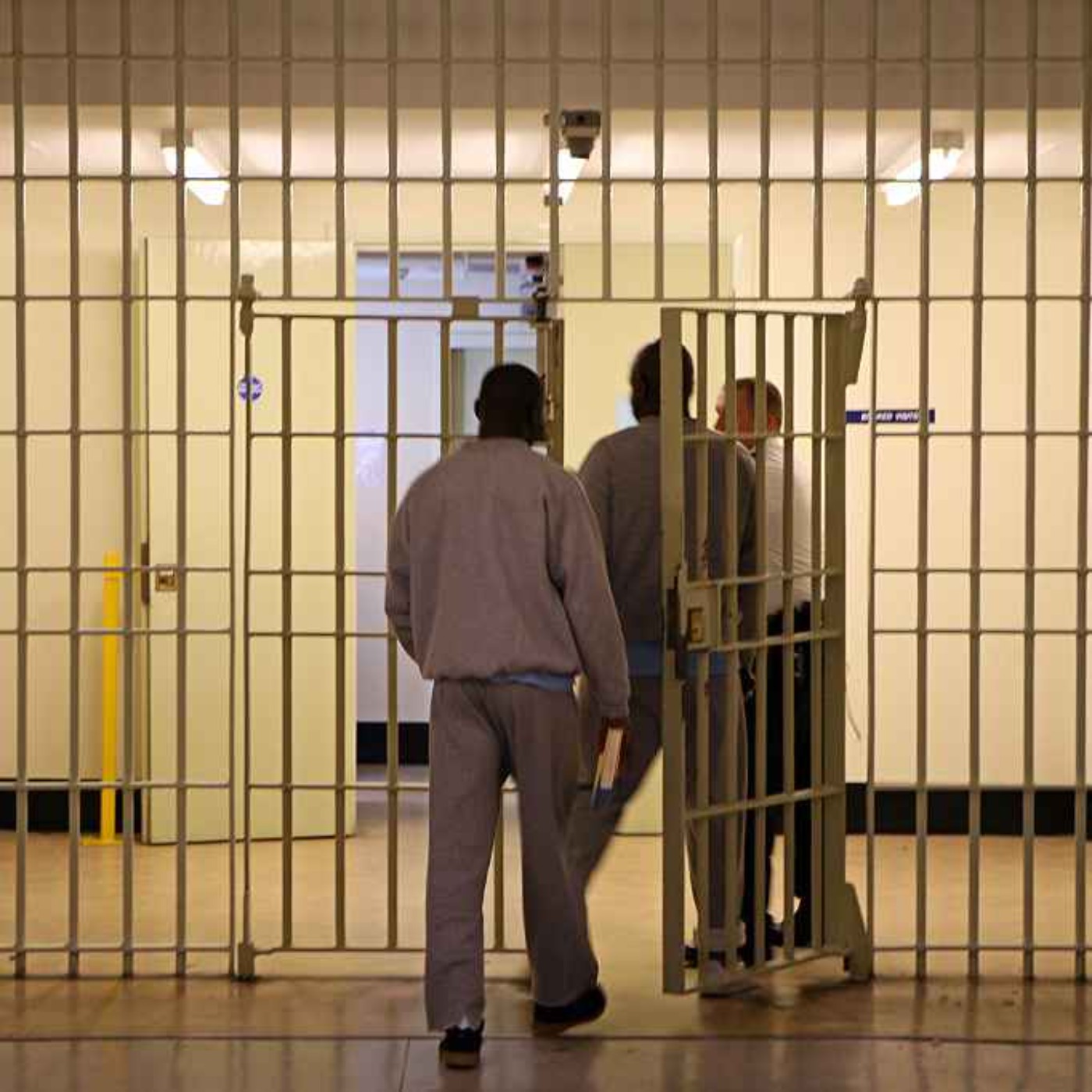
Andy Burnham’s early prisoner release scheme is being scaled back, with about 1,000 fewer early releases. The episode focuses on who will be blocked (including people convicted of grooming rape and child sexual offences) and the broader prison-capacity problem.
Natasha Froude (host). James Heale (journalist). Danny Shaw (journalist, covers the issue and outlines policy options).
Labour says Conservatives added only about 500 prison places in 14 years. Burnham can’t fully stop releases because prison space is tight. Three alternatives are discussed: IPPs (indeterminate sentences for public protection), reducing women’s imprisonment, and speeding deportations of foreign nationals.
PC Andrew Harper’s killers are set to be released under the scheme; IPP numbers cited include just under 900 still imprisoned, with nearly 700 having served 10+ years beyond tariff. Women’s prisons: about 3,400 women in jail; 1 in 4 on remand. Deportations: over 10,000 foreign national prisoners (about 12% of the prison population).
Written by AI. May contain mistakes.
Discussion on Andy Burnham's changes to the prisoner early release scheme.
“paused the prisoner early release scheme and it is now going ahead with a thousand fewer early releases.”
Exploration of options to manage prison population including IPPs and foreign deportations.
“One of the things I've read you cover is the three options that Burnham seems to have when it comes to early releases or just reducing the number of prisoners in prison.”
Analysing the challenges of managing women in prison and potential reforms.
“some people have suggested that all these cases should go back to the courts for a resentencing exercise.”
Hosts reflect on the life and impact of journalist Rod Liddle after his passing.
“And there isn't enough community provision.”
Discussion on Rod Liddle's impact after leaving the BBC and his writing legacy.

Get the gist, explore an idea or ask about something said.
 Claude
On Coffee House Shots, what are the key points of this episode?
Searching your listeningAutomatic transcript. May contain errors.
0:00This is the story of the one. As a shipping manager, he's running the dock, stocking supplies, and making sure every order goes out on time. And Grainger helps him stay prepared. From shipping supplies, to PPE, to hand tools, he counts on Grainger to keep products moving and trucks rolling. So his operation runs smoothly, no matter the shift. Call 1-800-GRAINGER, click grainger.com, or just stop by Grainger. For the ones who get it done.
0:37hello and welcome to coffee house shots the spectators daily politics podcast i'm natasha froze and i'm joined by james heel and the journalist danny shaw now burnham originally paused the prisoner early release scheme and it is now going ahead with a thousand fewer early releases. So there have been some changes. James, bring us up to speed with the story. Yeah, well, I mean, it's remarkable how little in some ways the story has moved on over the past couple of years or so. Remember, one of the first things that defined Labour's first few weeks in power was the decision to have to release some prisoners that was due to frankly not off space in the prison estate.
1:15We had lots of issues towards the end of the Tories 14 years with escaped prisoners and concerns about the state of the prison complex. And right now, Andy Burnham has said he's in his first fortnight in power that he wants to see less of these prisoners being released under early release so that means that those convicted of grooming rape and child sexual offenses will be blocked from early release under the scheme but the main point of controversy and the main issue that's really sparked this is that the two of the killers of p.c. Andrew Harper who was killed will now be released under this scheme obviously Andrew Harper's family have been out there talking about this and how upset they are they found out by a letter and I think that shows the issue in dealing with such highly emotive cases like this Andy Burnham suggested that he was going to look at it but it seems that on reflection he can only stop some of the releases and it does go back to the question of how much space we have in our prison complex you know Labour I think has a fairly strong argument to say that you know the Conservatives only built 500 additional places in the 14 years they were in government we had previously Tim Shipman talking on this podcast about the frustration of some of the rich and ex-advisors that the thing that surprised them most in history as a government was how hard it was to build new prison places.
2:29And frankly, the Conservatives now say, oh, we should have an emergency recall upon, we should have emergency legislation rushed through. That is very different, I think, from the tone and tenor of what the Lord Chancellor was saying in 23, 24. And it comes back to the issue of fundamentally people don't want to live near prisons, but also we don't want to see people released early. So we're going to have this issue, I think, constantly cropping up. And I suspect it'll be a long running sore for this Labour government as it was for the last Tory one. Yeah, Danny, it does sound like a real headache for Burnham.
3:00One of the things I've read you cover is the three options that Burnham seems to have when it comes to early releases or just reducing the number of prisoners in prison. One being IPPs, and I'll let you say who they are. Another being reducing women's prisons and the other tackling the issue of those who are foreign migrants that could just be deported. Could you just take us through those three options? And all three of them seem to have significant disadvantages. Yeah, I mean, I think just take a quick step back. The Sentencing Act 2026, which is the controversial piece of legislation which has provoked this whole outcry, is designed to sort of stabilise the prison population for the next few years because of the early release at the third point or the halfway point for people on fixed term sentences.
3:55There's also a presumption against imprisoning people for under 12 months. That's already come in. So people will get community sentences, suspended sentences instead. So that's that idea. What Andy Burnham is saying is, well, as well as that, he wants to look at these three other options. Looking first at indeterminate sentences for public protection, IPPs, they were introduced in 2005, scrapped in 2012. The idea was that you could imprison someone indefinitely unless they were safe to be released. The problem was that the people that they were given to were handed very short minimum terms tariffs of one year, two years, three years, four years.
4:38That didn't give them enough time to convince the parole board they were safe to be let out. And so many of them sort of were incarcerated for years beyond their minimum term. Now, at the moment, there are just under 900 people who are still in prison on an IPP sentence who've never been released. Most of them, I think almost all of them, have served over their minimum term, over their tariff. And in fact, just under 700 have served 10 years or more beyond their tariff and they are still in prison. So what Burnham is saying is we need to do something about this. We need to see if we can release these people.
5:21Now, the problem you have is that if you end up releasing many of these people, they will be people who the parole board has judged not safe to be let out. So is that a risk that the government is prepared to take? And that's the problem, because it's not something that previous administrations haven't looked at. they have looked at the problem of IPP prisoners and they come back to that conundrum. And what sort of crimes would IPP prisoners have done? Well, about 40 % of them have been convicted of sexual offences and an extra 30 % violent offences. So you can see the problem. And, you know, however you want to dress it up.
6:04I mean, some people have suggested that all these cases should go back to the courts for a resentencing exercise. So they will get a fixed term sentence that will probably be backdated to when they were imprisoned, which would mean that they'll be let out, or they will get a sentence that's not backdated, but they will be let out at some point. But it does mean that very many of them will be let out who aren't safe, or you would just end up keeping the majority of them in prison. So it defeats the whole exercise. It's a very tricky problem that IPPs. What about the issues with women and the foreign deportations?
6:43Well, I think, look, foreign deportations we can deal with quite swiftly. Andy Burnham says he wants to look at deporting foreign criminals more quickly. There's, I think, over 10 ,000 in jails in England and Wales, makes up about 12 % of the prison population. Yes, I think there's broad agreement. If you could remove, you know, a few thousand of these people much more quickly, that would free up space. The difficulty is this is something that every single government and Home Secretary and Prime Minister has tried to do over the past 20 years, and they haven't made great inroads. There is some new legislation that's come in under the Sentencing Act that should speed up some of the removals.
7:20But these are difficult problems. Many of these foreign national prisoners haven't been tried or convicted yet, so they can't really be removed before their sentence, before their trial. Others, there aren't agreements in place with their home country or the home country doesn't want to take them. So there are all sorts of problems. And then the other issue is, are you saying to a victim, well, the guy that raped you or the guy that stabbed you and almost killed you is actually only going to serve two years of their sentence in a British prison and they're going to be deported. But isn't that great news because they're being deported so they're not a burden on the prisons here?
7:59Well, I think a lot of victims wouldn't feel too happy about that. So again, foreign national prisoners, that's an intractable problem. The final one I'll come on to, Natasha, is women in prison. And here I do think the government could make some inroads. There are 3 ,400 women in jails in England and Wales, about 4 % of the prison population, not a huge number. But included in that are very many who are on remand. So they haven't been tried yet. And a lot of those people on remand, one in four are on remand. And many of those will go on not to have a custodial sentence. So I think the first priority should be to look at whether actually some of those remand prisoners could be released on bail with tags.
8:45The second thing they should do is to look at possibly letting out some of the nonviolent offenders. 63 % are in for a nonviolent offence. So people in for fraud, drugs offences, could they be freed? The issue is that they've got to find alternative provision because some of the women cannot be released back home because they're in the clutches of domestic abusers. Many of them have suffered domestic abuse and they need support in the community, mental health support. They need support to deal with their drug addictions and so on. And there isn't enough community provision. And the other issue is if you end up closing women's prisons, there are only 12 across England and Wales, you will create whole deserts in the country where there are no women's prisons.
9:33And that means that when you want to send a woman to prison, there'll be miles and miles from their family and from their home. And that isn't good. I mean, as Danny talks about that, I mean, it reminds me of the John Major quote about politics being the choice between the unpalatable and the disastrous. No real good options. It's quite interesting that this crisis has been handed to perhaps the sort of overlooked big winner of the government reshuffle, which is Alex Norris, who arguably has the sixth biggest job in cabinet, has come from junior ministerial ranks to take up this role. He doesn't have a huge paper trail on some of these difficult, thorny issues.
10:09And I'd imagine that given this isn't an area where Burnham has particularly opined in the past, he has a fair amount of sort of flexibility to kind of find up the most practical solution. I think that the view of Burnham on this is the fairly mainstream one. He, in some ways, resembles David Blunkett on this and would want to feel very reluctant about trying to release any of those convicted of quite appalling sexual offences early. He won't want to let out hardened criminals early. And so I think Alex Norris will be charged with finding the most practical way to avoid as few of these grizzled offenders, etc., being let out early.
10:46And if listeners were to listen to the episode on Friday, we were talking about the honeymoon period with Burnham. It does feel like with this story that is very much now over. James and Danny, I can't let you go without mentioning that it's been a very gloomy 24 hours at the Spectator offices because our most cherished columnist Rod Liddle died yesterday at age 66. James, how will you remember him? Well, I think everyone here has a charming story about Rod. I'm not really one of them in the sense that I was always slightly overawed and I never really got to know him as perhaps I best I should have.
11:20But I've spoke to him several times and he was a big professional. And I was just very much always in awe of kind of the respect in which he was held by the readers at tea parties. It was always Rod. They wanted to talk. Always number one or number two. A real big hitter. And he's a real loss. And many people who didn't know him, crucially, and didn't have a great story about him personally meeting him, I should say, very much were heartened and amused by his columns. And so I think that he got the spectator in a certain sense. You know, he were often called the Tory Bible. I think that's sometimes a mistake.
11:54But he kind of had a way of writing in a way which connected with different audiences across the country, not just about politics. He was brilliant on music. I remember he sent off a whole series of sort of blogs for the Euro 2021 tournament and I did wonder at first why I was doing this and I think it was just a way to insult various nationalities across Europe I think I got him in trouble with his wife because he wrote at one point where Christian Eriksen do you remember this went down on the pitch? He suggested he'd been vaxxed as a result of this which got me into a bit of a minor storm with my then editor Fraser Nelson but yeah I mean clearly he was someone who was the spectator for a lot of people and we'll miss him very, very much.
12:30Very much so. And it wasn't just the columns that did get published. We had an insight into some of the columns that were not allowed to be published. Danny, just before we started recording, you mentioned that you also knew Rod from the BBC and you were reflecting on how he was quite a larger than life type of character. Rod was just the most unlikely person to be at the BBC. He didn't look like anyone else at the BBC. He had this shock of black, spiky hair. He's very casually dressed, you know, with a fag normally, you know, in his hand or out of his mouth in the days when you could sort of smoke in the newsroom and so on.
13:09He just had this weird mix of sort of this kind of London accent, but with a sort of twinge of the northeast about it. But so erudite, so well read, so articulate and knowledgeable and to the point and blunt. As a young reporter on the Today programme, he was helpful to me. I remember I was asked to do a story, to do a piece, something to do with music or punk rock. And someone said, go and see Rod. He knows who to speak to. And he just sort of produced from his back pocket a list of numbers from the Clash and the Sex Pistols of people that he knew because he was obviously really into that. I would say that later on, when he was editor of the Today programme, he tried to build up that empire and recruited lots of reporters.
13:57and I think there was a bit of you know conflict I think between some of the sort of wider management of the BBC and I think he sort of became too big for the BBC to handle and too hot for the BBC to handle and that's probably one of the reasons why he left and you know but his career since has just sort of blossomed and his columns and articles were must reads just absolutely brilliant I mean I admired the way he wrote didn't always agree with everything he said but my goodness me you know what he said kind of had to be said by someone and you know he said it in such a good way and um we really miss his writing and the bbc loss was the spectators gain and he wrote for a small than 20 years after leaving that so uh in some ways we should be glad that he got too big for the bbc but he never thought himself was too big for the spec indeed remembering rod liddle uh thank you danny thank you james and thank you for listening
15:15This is the story of the one. As a shipping manager, he's running the dock, stocking supplies, and making sure every order goes out on time. and Grainger helps him stay prepared. From shipping supplies to PPE to hand tools, he counts on Grainger to keep products moving and trucks rolling so his operation runs smoothly no matter the shift. Call 1-800-GRAINGER, click grainger.com, or just stop by Grainger for the ones who get it done.
The government has revised its early prisoner release scheme – now 1000 fewer prisoners with convictions related to rape or child sexual abuse will be let out early. Controversially, PC Harper's killers will be released this year under the new plan, despite calls for manslaughter cases to remain in custody. Natasha Feroze speaks to James Heale and the journalist Danny Shaw about the details of the scheme and take a look at the options Burnham is reviewing: IPPs, women's prisons & foreign nationals.
Become a Spectator subscriber today to access this podcast without adverts. Go to spectator.co.uk/adfree to find out more.
For more Spectator podcasts, go to spectator.co.uk/podcasts.
Contact us: [email protected]
Hosted on Acast. See acast.com/privacy for more information.