 Ask ChatGPT


Discussion of Andy Burnham’s first Prime Minister’s Questions and whether his “new politics” is meaningfully different from past UK PMQs, focusing on confrontational style, welfare spending, and defence commitments.
Tim Shipman (political journalist, 25 years covering governments) and Isabel Hardman (political journalist/blogger; previously wrote about welfare reform and Burnham’s rhetoric).
PMQs remains essentially the same—pre-briefed lines, point-scoring, and “people pleasing.” Burnham’s broad rhetoric may force him to later provide details when Conservatives “pounce.” Welfare reform requires spending up front; “savings” claims are naive. Defence spending commitments were deferred to a future spending review.
Kerry Baden-Ock’s questions about Burnham’s answers and tax/spending cuts; references to Liz Truss mini-budget; welfare bill £5bn; defence spending by 2030 punted to next year’s spending review.
Written by AI. May contain mistakes.
Discussing whether Andy Burnham's approach to politics is genuinely new or a continuation of old practices.
“with the first Prime Minister's question of Andy Burnham.”
Exploring the implications of Burnham's people-pleasing tendencies on his leadership effectiveness.
“Isabel, I mean, your thoughts, and it does seem that already seen the Conservatives try to paint Andy Burnham as the man who loves to say yes, even when the Treasury is telling him no.”
Analysis of the current political landscape and the potential challenges Burnham may face.
“As Tim said, look, you know, this was the old PMQs.”
Discussion on Burnham's stance on welfare and economic policies compared to his predecessors.
“I mean, do you think there's that sense, maybe, Tim?”

Get the gist, explore an idea or ask about something said.
 Claude
On Coffee House Shots, what are the key points of this episode?
Searching your listeningAutomatic transcript. May contain errors.
0:00Ever notice how every new AI tool asks you to explain your business to it all over again? Google Workspace with Gemini skips that. You get Google's AI built right into the premium versions of Gmail, Docs, Sheets, and more. No new tools, no extra logins. Just one subscription that gives you personalized AI right inside your actual workflow. Make work less work. Try Google Workspace with Gemini at goo.gle slash workspace with Gemini.
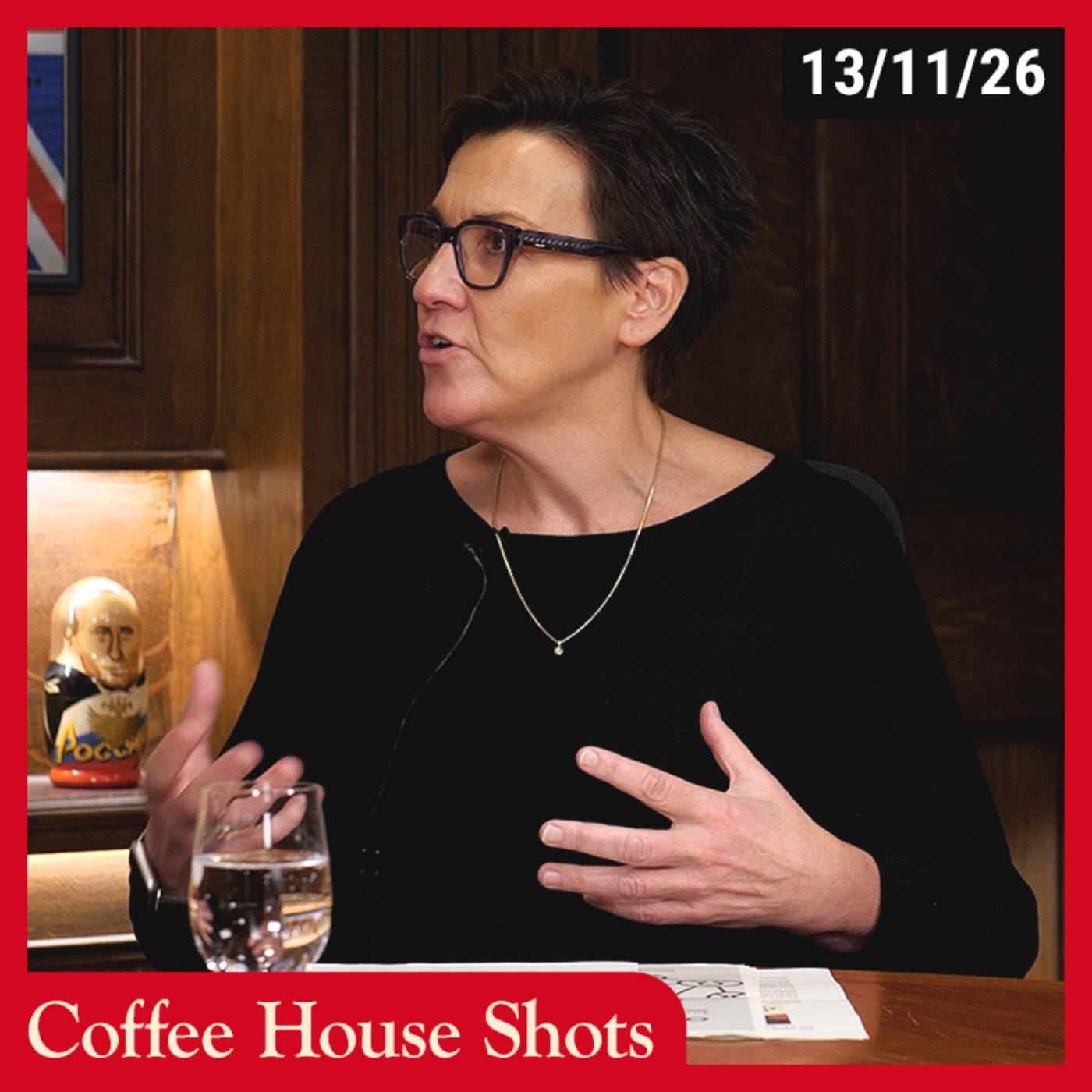
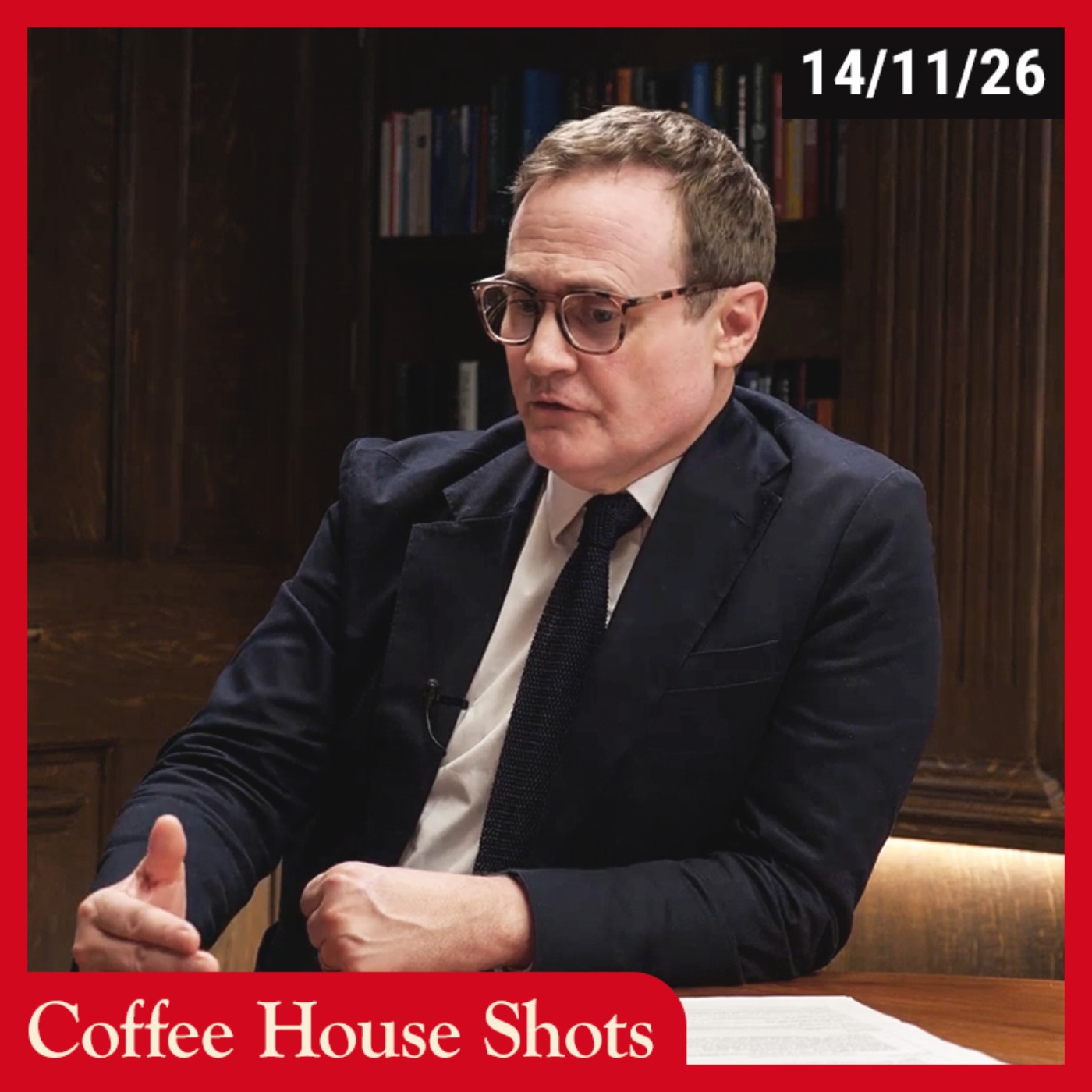
0:37Hello and welcome to Coffeehouse Shots. I'm James Heal and I'm joined today by Tim Shipman and Isabel Hardman. Now today we've had a taste of the new politics with the first Prime Minister's question of Andy Burnham. Tim, the new politics looks a lot like the old, doesn't it?
0:50James Heale: No, I'm very excited about all the new things that are happening with this very exciting Andy Burnham and how he's going to do things differently and reach out to the opposition and say, yes, we must work together across the aisle. No, of course it's exactly the same. Look, I've been a political journalist for 25 years. I've lost count now of the number of governments that come in saying they're going to do comms and PMQs differently. I think literally every prime minister I've covered has done a pre-brief the weekend before about how they're going to do PMQs differently. It is utter horse manure.
1:21James Heale: PMQs is a confrontational exercise where you work out your political lines and you gear up your own troops. Why on earth did anybody listen or print this nonsense this time round? It's just absolutely visible. By question three, we were on to 14 years of Tory rule and what Liz trusted in 2022 from Andy Burnham. And when he wasn't making sort of slightly... The thing with Burnham is he manages to sound a bit disappointed with himself even when he's doing it. So you get this sort of downbeat. It pains me to say that what you left behind, the right honourable lady, you know, was a mess, but you did.
1:59James Heale: And every question she asked, I mean, she asked, would it be, are you going to rule out tax rises? I mean, actually, it was weirdly flirty at the start, wasn't it, Isabel? There was this slightly odd vibe where Kemmy Baden-Ock says to Andy Burnham, oh, you managed to last for three hours yesterday. What stamina? And there was this sort of slightly appalled, what you might call a titter ran around the house. No, it just felt really orcs. But she said, you asked 125 questions. I thought she would do the obvious line, which is that you didn't answer any of them. But she didn't do that. She then said, how many times did you say, no, you wouldn't do some spending?
2:39James Heale: And Burnham was unable to say that he'd done it at all. So she came back and said, holla, holla, holla. What are you going to cut? And there was this pause. And you thought, oh, my God, has she got him already? And then he said, ah, but I've already cut something. I've cut taxes, which is quite a good line. though obviously economically illiterate, because the tax cut is actually government spending and also requires some other cuts to be made to pay for it. So in sum, the old politics became slightly less confrontational, perhaps than it has been. And anyone who believed for a second that this was going to be radically different than what we've seen for the last 25 years, you know, I've got a bridge to sell you.
3:16Isabel, I mean, your thoughts, and it does seem that already seen the Conservatives try to paint Andy Burnham as the man who loves to say yes, even when the Treasury is telling him no. Yeah. Kerry Baden-Ock said that she was delighted that he wanted to make people happy, but the Prime Minister has to be a leader, not a people pleaser. And I think we're going to hear that people pleaser line over and over again over the next few months. And, you know, the three of us know, because we've covered Burnham for a long time, he is a people pleaser. And he is someone who finds it very hard to be in a room with people without agreeing with them.
3:46I mean, you know, he has some limits, but he generally wants people to smile at him. And he's going to find that hard. But we know that.
3:54James Heale: He's even made the argument in recent interviews that there's no bad thing about that. You know, why shouldn't I want to keep the public happy? That's the side of a good politician. It might be a good politician, but it's not a particularly good leader a lot of the time when there are difficult decisions to make. I also just don't think it's a very good quality. And I say that as someone who is a people pleaser, in that quite often you do it and you're basically lying to people. so would you like to have lunch this week god i'd love to i'm secretly thinking i really don't want to do this and then i spent the whole week trying to work out how to get out of it and then end up annoying the person more by left than down at the last minute i'm not thinking of any sort of mps or colleagues or anything like that but i don't actually think people pleasing is an attribute at all i think it's something to be hammered out of you brutally um and if anyone knows how they could tell me that'd be great but i did yeah so i think it's going to be something that's going to really trip him up.
4:42As Tim said, look, you know, this was the old PMQs. We heard so much about Liz Truss. The only thing that counterbalanced Liz Truss was the number of benches of Manchester. And I feel, I would feel sorry for Mancunians, but having Mancunians in my family, I know they'll love it. I feel like by the end of Burnham's tenure, everyone's going to hate Manchester. And every time Manchester is mentioned, people are going to grow. Manchester's already the most irritating place in the country, isn't it?
5:05James Heale: love that the football teams the sort of sense of um but manchester is very self-satisfied they've got the the best music scene in the country they think that they've got the best sports teams and they have a sense of exceptionalism that is kind of new yorky and in its scale and ferocity and the distance between uh the imagination and the reality i just think they're going to enjoy the notoriety and the the groans and all that sort of thing but there was that sort of early i think Burnham basically pretended to be slightly different for a question and a half maybe where he said you know this is one area where we can engage in problem solving rather than point scoring he was talking about the the welfare bill it's one of those offers a bit like his cross party talks on social care where neither he nor the people pretending to accept that offer want to or believe it and it's all for shows so they can then shout out to each other for the next six months and so I actually think that we're going to get to a situation quite quickly where Burnham's going to be shouting at Bathenox saying, you're not working with me, which is going to make PMQs actually possibly more energised and more confrontational.
6:15And I do wonder, given this was a chance for Burnham to wheel out his attack lines under the guise of being non-confrontational, it still seems there's going to be a lot of focus on Liz Truss and that's because Andrew Griffith, the new Shadow Chancellor, was a junior Treasury Minister at the time of the mini-budget. I mean, do you think there's that sense, maybe, Tim? Only early days, of course, but might the Tories have misstepped on this appointment?
6:35James Heale: I think Andrew Griffiths is a county operator. He's pretty proactive and they could have done a lot worse, frankly. And indeed, they did have a lot worse, in my opinion, with his predecessor. So I don't think anybody really remembers that Andrew Griffiths was part of that. I mean, most of what went wrong was Liz Truss's fault with a supporting role from Kwasi Kwarteng and some enthusiastic kind of nonsense around the sides from Chris Philp and Simon Clarke. You know, I wrote 150 pages about the Liz Trust premiership in my fourth book. Brackets available in all good bookshops, probably reduced by now, so you'll get a bargain.
7:10James Heale: And Andrew Griffith makes very little appearance in the sections about the mini budget. Look, it's still a perfectly legitimate attack line, but it does seem to be waning in its effectiveness. Because if you look at the polling, the Tories, who I think some of them thought this would hang around their neck, frankly, for a decade, have already sort of gone back top on economic matters. And it's a measure of the failure of the Starmer government in slightly more benign circumstances than Prime Minister's had in 2021-22 that they've made such a haul-ix of it. But where he was good, though, I mean, to just take us back to welfare for a moment, you know, the contrast between Burnham and Starmer is best expressed by how they responded to that.
7:51James Heale: Starmer squirmed and sort of said, oh, well, maybe the bill's too high, but we don't really want to do very much about it. But we do need to save some money. And this was the problem. They announced they needed£5 billion and the Labour Party didn't like it. And if Burnham has not yet perfected speaking to the country about some of these issues, what he said today about how young people's lives are being thrown away, worthlessly stuck on the scrap heap, and he does believe the welfare bill is too high and these people should and could be working, then that is a much more sort of Labour moral argument that is likely to help him trim a bit here and there with the Labour backbenchers than was the case under Starmer.
8:32James Heale: And he just, you know, I mean, it's a simple case of just being better at politics, really. I mean, we may not like everything that he wants to do and where he's coming from, but, you know, it's a simple fact that he's better at the game than Starmer ever was. And Isabel, I wonder, because Andy Burnham has won lots of fans with his quite expansive rhetoric, but you've picked up and been blogging for us in the past week talking about Andy Burnham tending to announce something and then only getting to the details afterwards. Do you think he's going to have to curb what he says in the House, given how the Conservatives are very much going to pounce on every word and try to pin him down on details and specific as times go by?
9:06Yeah, and this comes back to the people pleaser thing as well, which is that he does not like saying things that elicit a reaction of even mild irritation on people's faces. And that's why he ended up agreeing to meet a lot of backbenchers today and that I just don't think is going to continue for very long because he's going to have to cancel on Macron at this rate, saying, I'm really sorry, I've got to talk about a rubbish tip in Bassett law. Probably not on a PMQs. But I think on welfare, to be slightly, I don't know, maybe I'm being a bit pedantic here, but I actually think that Badeknot was both accurate and unfair on that in that you can't deliver long-term savings in welfare reform and drive down the overall numbers on benefits without spending money up front.
9:53And she should know that because her party tried to do it and then ballsed it up. And if they'd actually spent decent money up front with universal credit, we probably would be in a far less precarious situation with the welfare bill than we are today. Anyone who's worked on welfare reform, anyone who's been through DWP will say, you have to spend money up front to save money in the long term. and that cuts and reform are not just very different, but often working to entirely different aims. And so, yes, I think Burnham is being naive to suggest he's going to get early savings from a properly funded programme of welfare reform, which is what he's trying as a people pleaser to do at the moment.
10:35He's trying to say, oh, you know, we're going to do this long-term youth employment work. Well, that's going to cost loads of money. That's not where you're going to fund defence from. You might be able to fund defence from it in like 10 years' time, but by that point Putin I mean Putin might actually be dead by that point and you can't fund defence on that basis so he's going to have to either say we are going to do some cuts now some crude ugly cuts and they're cuts they're not reform and then we're going to do reform later or this is what Tim's intimating is he's not going to do the cuts Well the other
11:09James Heale: just one quick one more the other area where this was clearest was on defence spending when Tan Desi, the chairman of the Defence Select Committee, you know, pretty punchy question from a Labour MP up front going, you know, will you please commit to the spending by 2030? And he said, well, I've already made this commitment. I've been saying this a lot, you know. But given the opportunity to do something about it, he and John Healy, who resigned over the matter, let us not forget, have punted this all off to the spending review next year. So Burnham will discover quite quickly, I think, that actions speak louder than words.
11:41James Heale: and the public has up to its neck with words. It's had enough of words. And, you know, you're going to see this at the Reform Conference later this week, which I've written a cover piece for the magazine about. You know, their focus is not on coming up with WISO new policy, but on trying to find ways of showing the public that they are the ones who would be able to actually do things as opposed to the other parties. And frankly, there's now a decade and a half of evidence that the Tories and the Labour Party are both struggling with that. So I think this was a very Burnham-esque performance, which tells us pretty much exactly what we already knew about Andy Burnham, which is that he likes being nice to people.
12:19James Heale: He likes saying yes. He likes pleasing people. But at some point, the music is going to stop and a lot of people are going to be unpleased. Masterfully understood the way of putting it. Thank you, Tim. Thank you, Isabel. And thank you for listening to Coffee Hour Shots.
13:04Thank you. www.glo.gle slash workspace with Gemini.
After his first PMQs Andy Burnham came away relatively unscathed, although his dream of a 'new politics' may be rapidly falling apart. To dissect what went on in the chamber, James Heale is joined by Tim Shipman and Isabel Hardman to go over today's more feisty exchanges.
Produced by Oscar Edmondson
Become a Spectator subscriber today to access this podcast without adverts. Go to spectator.co.uk/adfree to find out more.
For more Spectator podcasts, go to spectator.co.uk/podcasts.
Contact us: [email protected]
Hosted on Acast. See acast.com/privacy for more information.