
 Ask ChatGPT


 Coffee House Shots
7 Aug 2026 · 13m · 4 chapters
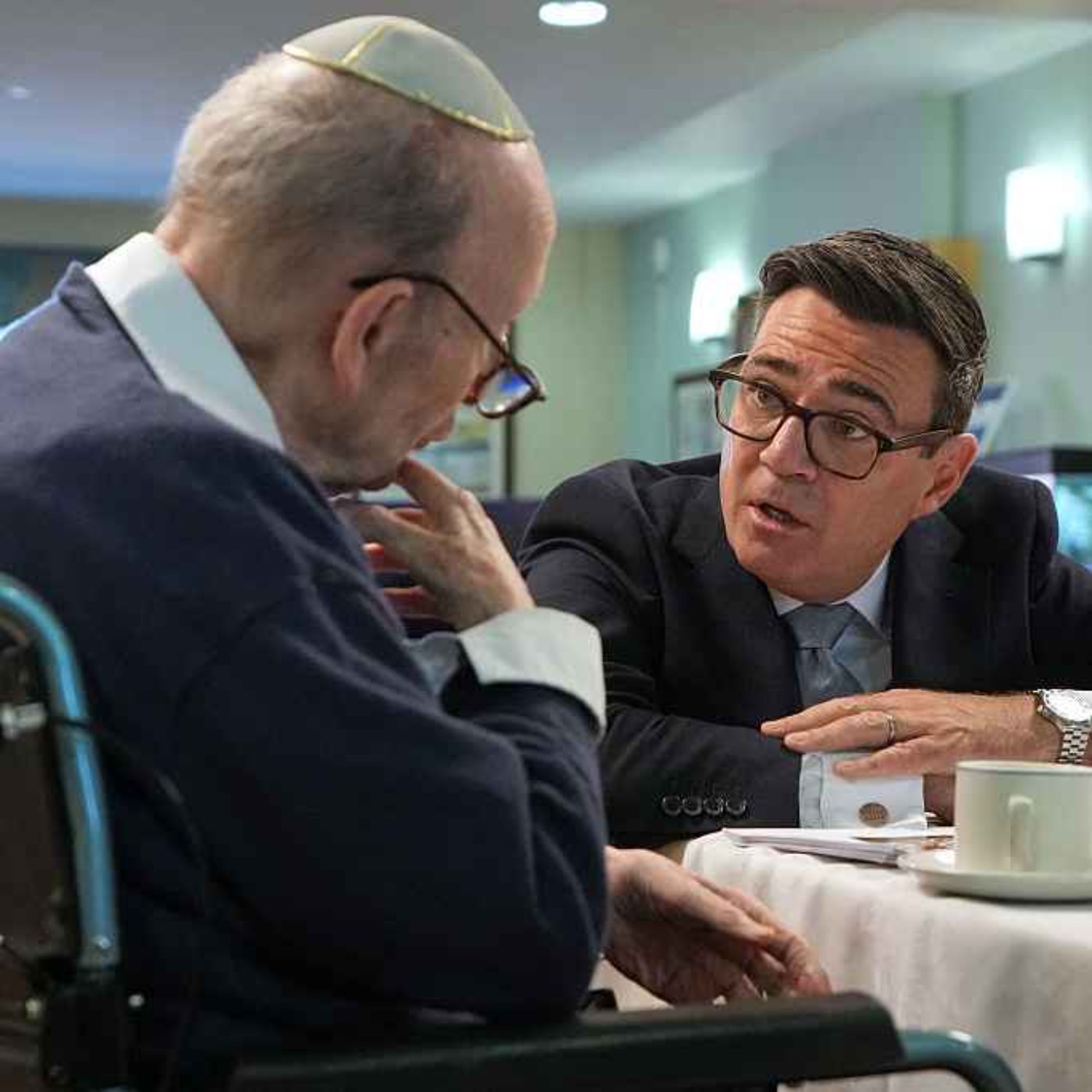
Whether Labour PM Andy Burnham can fund social care reforms and make “tough calls” on pensions/social care, including speculation about using defined-contribution pension pots or taxing inherited pensions/estates.
James Kirkup (senior fellow at the Social Market Foundation; regular Coffeehouse contributor; pension/UK policy background; consults pension industry). James Heal (The Spectator; political commentator).
Burnham has long wanted a centrally funded “national care service” but money must come from somewhere, likely via individuals (tax rises, estate levies, or taxing inherited pension pots). Defined-contribution pension pots are unlikely to fund social care because many people won’t have adequate retirement savings. State pension costs are rising mainly due to longer lives, not just the triple lock; raising retirement age is the real fix.
Burnham’s earlier “levy on inherited estates” idea derailed as a “death tax” in 2010; Australia’s approach to inherited DC pension taxation; “triple lock” debate (Rupert Lowe).
Written by AI. May contain mistakes.
Discussion on Andy Burnham's plans for reforming the social care system and potential funding sources.
“to Coffeehouse and a senior fellow at the Social Market Foundation.”
Exploration of the political landscape and challenges facing Burnham in implementing social care reforms.
“James Heal, take us through where we are on the politics of social care reform, because Andy Burnham's been burnt by this before.”
Analysis of the state pension's financial sustainability and the implications of the triple lock.
“We do have, and I should say, I consult some bits of the pension industry in various ways.”
Discussion on Burnham's ability to make tough decisions and his political constraints.
“I mean just remember the waspy women is all I'll say.”

Get the gist, explore an idea or ask about something said.
 Claude
On Coffee House Shots, what are the key points of this episode?
Searching your listeningAutomatic transcript. May contain errors.
0:00Ever notice how every new AI tool asks you to explain your business to it all over again? Google Workspace with Gemini skips that. You get Google's AI built right into the premium versions of Gmail, Docs, Sheets, and more. No new tools, no extra logins. Just one subscription that gives you personalized AI right inside your actual workflow. Make work less work. Try Google Workspace with Gemini at goo.gle slash workspace with Gemini.
0:37Hello and welcome to Coffeehouse Shots. I'm Michael Simmons and today I'm joined by two of my favourite Jameses and they are James Heal from The Spectator and James Kirkup, regular contributor to Coffeehouse and a senior fellow at the Social Market Foundation. James Kirkup, we'll start with you first. One of the themes that's clearly going to be big for Andy Burnham's premiership is social care and the reforms that he wants to make to social care. We've had some chatter from his first announcement about his ambition being a national care service, but what we've not had a lot on is where the money is going to come from to pay for this and whether that's going to be from taxation or people having to pay for it themselves.
1:26And there's a suggestion today that pensions might be an area that's somehow used to fund social care what do you make of what's been suggested there okay so um there's there's a lot in there um so yes Andy Burnham cares a lot about social care partly for personal reasons um family staff partly because if you go back in history to when I was vaguely young in a lobby correspondent uh he was health secretary in the dying days of the golden brown government he tried to bring about a proper funding settlement for social care by way of a levy on on inherited estates um cross-party talks were going very nicely you know he was playing quite nicely with andrew lansley then george osborne got wind of it and said let's blow that up as a death tax and so it went into the 2010 general election and it's been kind of unfinished business for annie burnham ever since and i mean i think you you've got to give him credit here.
2:24He has stuck with his general principle that there should be a more of a core centrally funded social care system ever since. And he's now in his opening days of the premiership, he comes out, sticks his chin out and says, I'm still going to do this thing. Every cynical, sensible political advisor in the game would say, don't do that. Everyone will hate it. Everyone will hate you. And he's there anyway, because someone has to pay. you have to get the money from somewhere. And ultimately, that means in one way or another, individuals pay. You can do it with general taxation, higher tax burden. You can do it by putting a levy on estates.
3:06No one likes that. You can do it by – some people in labor think you can do it by taxing wealth or assets. It's tricky. And a new idea put out by my old mate Tom McPhail, a pensions guru by trade is that will they start will they come looking at pensions for this because actually for a lot of people increasingly as we go forward as you move to the era of defined contribution pensions more people are going to have fairly chunky hopefully we hope they're going to have fairly chunky pension pots that will look after them in retirement and there is an interesting wrinkle in this in that a lot of people some evidence from australia which done has a similar pension model.
3:51A lot of people in Australia die with their pension pot almost entirely intact. People tend to save an awful lot. And I know there is a worry in government that people are using their defined contribution pensions pots as an inheritance vehicle, not to fund their lifestyles. So government has done a little bit, increased the taxation of inherited DC pots. I guess the speculation is, could they start looking at pensions for more of that in future? I think that's where that's the state of the current speculation. Speculation is stressed. James Heal, take us through where we are on the politics of social care reform, because Andy Burnham's been burnt by this before.
4:38You know, when he's in the past tried to have a cross-party consensus, because it's the only way you're going to be able to tackle something like this. But, you know, opposition parties quickly say you're doing a death tax or you're trying to take hard earned money away from pensioners. Has he actually got a plan to move this forward politically? Well, as James Kirkup says, you know, he's clearly been thinking about this for 20 years. And of course, now there's additional reason for him to think about it, given the sad case of his father's suffering dementia, not knowing the fact that his own son is now prime minister.
5:08but it's not yet clear kind of what this plan sort of looked like how much it's really evolved since 2009 or even actually how much you can really get around the thorny issue of paying for this I'm one of those who thinks this is an incredibly political issue it's something you can't really take the politics out of and I think we saw a trailer of what's to come when at the weekend Ed Davey was asked about social care and he suggested that taxes shouldn't go up to pay for it now that is going to be a real challenge and I think ultimately if you haven't got the Lib Dems on board I struggle to see how it can be a truly cross-party effort to solve some of this.
5:40The person at the centre of this course is going to be Pat McFadden, Secretary of State for Work and Pensions, who has to deal with both these issues James was just talking about there. I think that he comes in with a fairly open mind, a fairly blank piece of canvas. I mean, at the last party conference, there were sort of aids of his going around asking for ideas at that. Obviously, at the back of everyone's mind, in terms of the kind of politics of it, is the warning shot fired by last year's welfare rebellion. And I think that showed the concerns of the PLP on some of these different kind of issues on social issues.
6:12But when it comes to social care, I mean, I've been struck by how much Burm seems to be talking about it at a time when it seems there are a few votes in it. And I think that that has, in Westminster circles, sort of dispelled some of the initial speculation that he was going to go straight away for an early election. So in terms of the first issue, which is about social care, I think that it's going to be one where he will be expected to, I think, probably be a centrepiece of his 10-year plan when that gets unveiled once Parliament comes back. We'll probably see some more rhetoric around it at Labour conference.
6:40And then on the issue of pensions, I mean, this kind of fits with the general sense that Labour has been eyeing some of these pension pots for a while. It's something that Rachel Reeves was keen to talk about in a different context, economic growth, suggesting you can get some of those big pension funds investing more in the UK to boost the stock exchange. So really, I think, you know, as with many governments, they're looking around for big pots of money. And the two ones which seem to pop out on inheritance or on pensions. But James Kirkup, do we actually have enough money in pension funds to pay for this?
7:07Because the pension industry is always telling Parliament that actually there's a savings gap and that most Brits are not putting enough into their pension. So it's not going to pay for retirement, let alone social care. Yeah, no, that is the first immediate answer to this question about, could you use pots to fund social care? We do have, and I should say, I consult some bits of the pension industry in various ways. So believe me or not, if you like, just understand I'm a terrible vested interest. But I think everybody in the industry and outside it would agree that there is not enough money going into defined contribution pension pots to provide a lot of people with an adequate retirement.
7:51I mean, the worst effect that are actually going to be facing me, if you're a generation, this is a generational thing, generation X, if you're in your 40s, early 50s, you didn't get any defined benefit pension, any fixed, you found on salary, gold-plated pension from your employer, and you haven't really had that long to save and enjoy compound interest. so people like me uh have quite a big pension problem coming down the track and i think if some if a government then pops up and says oh by the way and then we're going to take some cash out of that pot for uh for social care that's gonna be tricky you could you could probably you could i mean i think they could you could see them getting to the point where they think very big pots over a million pounds there are there are yeah some people small number of people have a lot of money but i i don't think i don't really think social the uh dc pots are are a runner for for funding social care for exactly that reason.
8:40Lots of people are looking at, they may not realise it, but they are probably heading for retirement that is not quite the lifestyle that they're probably dreaming of. Since we're talking about pensions and I'm a triple lock jihadist, I'm not going to give up the opportunity to bring up the triple lock because Rupert Lowe has done the politically unthinkable and said that if he was somehow running the show, he'd scrap the triple lock. But James Kirkup, sticking with you, You've written recently that even if we did scrap the triple lock, that wouldn't solve the state pension. How much trouble is the state pension in?
9:14If you think long term, if you go out to, if you take a 50 year view of the OBR, you get to the point where, I think from memory, someone can edit in the right numbers for me if I get this wrong. um yeah we are on course for the state pension to be consuming 13 14 percent of g of gdp i think it is by you know by the second half of the century um it's the total cost relative to the economy of the state pension would go up by about half um you know it's a world you know um it is not really viable and and the the the triple lock attracts a lot of attention because it's a nice snappy name and people understand it.
9:55But actually, it's probably only contributing about a third of the rise in the cost of the state pension. The core increase in the cost of the state pension comes about because people are living longer. They are living longer, and therefore, you have to pay out more. It's good. It's a happy story. But it just makes state pension more expensive. And the demographic driver is bigger than the triple lock. So you could fix the triple lock, go to a double lock, You can do all sorts of things. But that is not really the answer. The answer is to actually raise the retirement age, which probably will happen.
10:36It's one of those sort of things everybody knows. You've got to keep increasing the retirement age. You've got to go from 68, 69, probably towards 70 to make it financially, fiscally viable. But nobody wants to bite that bullet. so that's a bigger you know frankly that's a bigger challenge I think than the triple lock I mean just remember the waspy women is all I'll say. And of course I think one of the key things I keep returning to is Andy Burnham I think it was really striking for me that in recent interviews he's done with podcasts not journalists but podcasts broadly he talks a lot about Arthur Scargill and he talks about quoting some of his words and I think he has a real affinity with those perceived to have been downtrodden, suffered in political conflict, effectively victims group a lot of the time.
11:25And I think we see this, it's commendable in many ways, but it comes in things such as the waspy woman was something he previously aligned himself with. And I think this is going to be an issue, which is that he often attaches himself to causes, but actually will struggle to drive through some of the difficult decisions. So I agree with James that we do need to reage the pension age. I just question whether Andy Burnham, who in some ways is a very gifted communicator, is going to necessarily back up his rhetoric with action on issues like this. And is there any way he can make any of these big changes before an election, given he's so kind of locked in by what was promised at the manifesto?
11:58I think it'll be very much more about setting out the course, which is, if I get re-elected, I will carry on this plan. I don't know what James thinks. I know, I agree with that. I mean, he's actually quite constrained. I mean, he has got a manifesto. He has got a manifesto commitment. Yeah, there's a certain degree to which you can stretch the mandate you have as a midterm prime minister. I mean, also, on state pension age, there is quite a firm statutory framework, which means you do have to consult and advise and notify Parliament. I don't see social care in the same basket. it's a thing where you probably get a direction of travel from him before a general election and then a, you know, if I re-elect me, if I get re-elected, I've got the mandate to do this potentially unpopular thing.
12:52That's the way I'd do it if I was him. Thank you, James. Thank you, James. And thank you for listening to Coffeehouse Shots.
13:10Thank you.
13:38sheets, and more. No new tools, no extra logins. Just one subscription that gives you personalized AI right inside your actual workflow. Make work less work. Try Google Workspace with Gemini at goo.gle slash workspace with Gemini.
Andy Burnham has made it clear that social care is at the top of his agenda, as are pensions. Michael Simmons is joined by James Heale and Spectator contributor James Kirkup to discuss so called 'death tax', cross party efforts on tackling social care, and whether the government can get round the thorny issue of who will pay for this.
Become a Spectator subscriber today to access this podcast without adverts. Go to spectator.co.uk/adfree to find out more.
For more Spectator podcasts, go to spectator.co.uk/podcasts.
Contact us: [email protected]
Hosted on Acast. See acast.com/privacy for more information.


