 Ask ChatGPT


A discussion of Kemi Baden-Ock’s cover story interview and her strategy for the Conservative Party conference, focusing on welfare reform for under-25s, “plain speaking,” and the “battle for the right” versus Reform UK and Labour.
Tim Shipman, political editor of The Spectator; Alan Haligan, Telegraph columnist and new director of the Centre for Policy Studies (CPS), a conservative think tank founded by Keith Joseph and Margaret Thatcher.
Baden-Ock backs cutting benefits for under-25s unless they complete six months of continuous work via a “work camp”/training period, then face reduced subsistence payments if they still don’t find jobs. The guests argue this signals clear differentiation from Labour (Andy Burnham) and a tougher, Thatcher-style approach. They also claim CPS is positioned as a conservative “outrider” and has links to Reform (e.g., Carl Williams moving to Reform UK policy).
Universal Credit claimant age stats (25–34); NEETs topping one million; CPS research and Thatcher Fellowship; references to stamp duty abolition and internal Tory unity after defections (Rob Jenrick, Sue-Ella Braverman).
Written by AI. May contain mistakes.
Discussion on the interview with Kemi Baden-Ock and her policies.
“There's been some policy in there suggesting under-25s could have their benefits cut if they don't go back to work.”
Exploration of Baden-Ock's proposal about benefits for under-25s.
“And I sort of said lots of people will think this is a good way of sort of encouraging people not to fall into a life on benefits.”
Examining the internal dynamics and public perception of the Tory party.
“She's obviously got more time for Burnham because he knows what he thinks.”
Discussion on the economic situation and public sentiment regarding welfare cuts.
“I think a lot of the British public, a lot of the silent majority are showing my age as a sort of 1992 word, isn't it?”
Analysis of Conservative strategies and challenges ahead of the party conference.
“They try and outdo each other in terms of spending promises.”
Insights on Baden-Ock’s leadership style and her approach to unifying the party.
“the tory parliamentary party was of course the survival of the wettest but she knows the electorate a big chunk of the electorate is increasingly getting real.”
Analysis of the competition between Conservative and Reform parties.
“Nigel Farage had hoped to destroy the Conservative Party by now, and that demonstrably hasn't happened.”
Discussion on how the Centre for Policy Studies positions itself within right-wing politics.
“He seems to be aligned with whichever leader happens to be in charge at the time.”
Explore the dynamics of the Conservative Party, its leadership, and the engagement of young voters.
“We're not there to serve a political party, though obviously we're very proud of our Conservative roots.”

Get the gist, explore an idea or ask about something said.
 Claude
On Coffee House Shots, what are the key points of this episode?
Searching your listeningAutomatic transcript. May contain errors.
0:00Tim Shipman: 500 orders a month was manageable. 5 ,000 is madness. Embrace intelligent order fulfillment with ShipStation, the only platform combining order management, warehouse workflows, inventory, returns, and analytics in one place. What used to take five separate tools, ShipStation does in one. Automate fulfillment and rate shopping to ship up to 15 times more with up to 90 % savings. Go to ShipStation.com and use code AUDIO to try ShipStation free for 60 days.
0:36Tim Shipman: Hello, welcome to Coffeehouse Shots. I'm James Heal and I'm joined today by Tim Shipman, the political editor of The Spectator, Alan Haligan, the Telegraph columnist and new director of the Centre for Policy Studies. Now, Tim, for this week's issue, you've done the cover story interviewing Kemi Baden-Ock. There's been some policy in there suggesting under-25s could have their benefits cut if they don't go back to work. Tell us about the interview you did with her on Monday.
0:56James Heale: She's in a very bullish frame of mind. And, you know, Kemi, most people would accept, including her, could probably start a sort of firestorm with an empty telephone box. But she really is leaning into this kind of, you know, I'm a difficult customer, kind of, I'm going to say it as it is, and I don't care what the consequences are approach. So the policy is basically that, you know, you won't be able to go straight out of school onto benefits until you're 25 unless you have six months of continuous work when you start to claim universal credit you'll have to go off to some kind of work camp essentially and learn how to do interviews and how to behave at work and and all that sort of thing and you'll do six months of that and then and you'll be paid a sort of get to work allowance which is not the same as universal credit and once you come off that if you don't get a job after six months you'll go down to a sort of subsistence level payment and you'll be the problem of your parents rather than the taxpayer.
1:52James Heale: So it's pretty tough. And I sort of said lots of people will think this is a good way of sort of encouraging people not to fall into a life on benefits. But quite a few people will say, you know, is this a return of the nasty party? And she basically said, I don't care. We tried to convince people we weren't the nasty party before and it didn't work. And people are energised in the Tory party because we're saying what we believe and saying what we think. And she contrasted herself with Andy Burnham, you know the man who you know constantly likes to say yes and basically said i'm the woman who's going to say no spectator readers need to know that the person saying no is the leader of the conservative party and you know we've done her up as the ultimate nanny mary poppins on the front basically bashing young people into a job center with her umbrella on the front so it's um it's interesting it's an interesting approach she's not you know there's a lot of kind of ad hominem in the piece uh she's pretty rude about starmer says he's completely uninteresting never said an interesting thing in his life.
2:47James Heale: She's obviously got more time for Burnham because he knows what he thinks. But as a result of that, she thinks there's much more clear blue water between the two main parties now. And I think he's quite energised by the opportunity to try and sort of step into that, lean into it. But, you know, she's rude about Ed Miliband. She's quite rude about Donald Trump, interestingly. Sort of a bit of differentiation from Nigel Farage. That's pretty rude about Farage. Very rude about Ed Miliband. And, you know, most politicians, you know, while we've got Burnham sort of desperately trying to be the bloke everyone wants to have a pint with, And Kemi is really pushing hard into this, I'm the new Maggie Thatcher approach, which is, you know, say what you think and get on with it.
3:22James Heale: So, yes, no, no, no to welfare.
3:26Tim Shipman: And in terms of that clear blue water, Liam, it does seem that going in, she's very keen to talk about the worsening economic situation. Lots of the fiscal kind of indicators flashing red at the moment. Do you think that's going to be the big theme of the conference, looking at the economy? Yeah, say what you mean and mean what you say. I think a lot of the British public, a lot of the silent majority are showing my age as a sort of 1992 word, isn't it? From the spiral of silence years, the 92 election, of course, when lots of people said they'd vote Labour but voted Tory. I think the silent majority still holds across the UK electorate.
3:59I think people want plain speaking and she is presenting plain speaking. About 30 % of all universal credit claimants are 25 to 34 year olds. Of course, that doesn't mean they're out of work, but disproportionately younger people are claiming pip, certainly when it comes to mental health conditions. And then you've got the NEATs on top of that, who, of course, topped a million, not in education, employment or training. I think both the Conservative Party and reform have realised that they're not going to get anywhere with the electorate, at least the parts of the electorate that they need to attract by making ever more unrealistic spending promises to the electorate.
4:39That's what opposition parties usually do. They try and outdo each other in terms of spending promises. You've now got the two main parties on the right competing in terms of fiscal prudence. The Tories came up with their£23 billion of annual welfare cuts within five years. And then that was Helen Waitley, their shadow working pension secretary. And then the reforms, quote, shadow chancellor Rob Jenrick announced at their party conference £51 billion worth of welfare cuts. Now, these aren't, you know, obviously, these numbers are difficult to prove or disprove, but the work behind each of them, and I've looked at the modelling of both parties quite closely, this isn't back of the fag packet stuff.
5:20Some serious work has been done by both parties. And I think Kemi understands that a lot of the electorate knows that we're living beyond our means. They know that we're heading for some kind of fiscal cliff edge. As we speak, while we're wanging on about folksy rhetoric and hope and Andy Burnham's eyelashes, I know I'm a sandwich board, a scratch record on this, but the 30-year guilt yield has just gone above 6%. all the signs as you said in your your introduction are flashing red and in the end i think kemi's also reflecting that it's taken her a long time to to to develop this kind of uh steel edge to her voice she's been worried about upsetting the wets in her parliamentary party 2024 in terms of the tory parliamentary party was of course the survival of the wettest but she knows the electorate a big chunk of the electorate is increasingly getting real.
6:18And while a lot of the kind of welfare lobby is loud and proud and they're on speed dial at the BBC and elsewhere, an awful lot of the silent majority isn't. They can see bad things coming and they want grown-ups to talk about it.
6:33Tim Shipman: Tim, we've obviously got this party conference this weekend. It goes in, I think, with the Tories in a bit more confidence than last year. I mean, the real meta-narrative from this last 12 months is 12 months ago, Andy Burnham was storming out of Liverpool, having vanquished seemingly. And Kevin Batonok, people thought going into that conference, she was down and out. That conference proved to kind of be the making of her in some ways with that very good speech she made. She's going to have to try and build that on, I suppose, this year and show that the Tories are on the road to recovery after a difficult set of local elections this year.
6:59James Heale: Yeah, I mean, look, a year ago, you know, she wasn't at death's door as leader. But if she'd had a bad conference, she might have been. and instead she made a pretty decent speech and she announced the abolition of stamp duty which is a proper, you know, if you're going to do an announcement on policy you might as well make it big and bold and something that I think a lot of people instinctively agree with stamp duty is a horrendous pernicious aspiration killing tax. So it was sort of on brand and it gave her a bit of space and then I think the other thing interestingly that's given her a little bit of space is the defection of some of those, what she would call problematic kind of people Rob Jenrick and Sue Ella Bravham in particular you know she basically said it was sort of like kind of a relief these were two unexploded bombs that somebody else took away from her and as a consequence there's more unity now look what this speech is about is obviously about countering Andy Burnham and emerging from this with a coherent kind of policy platform but of course there's a massive battle going on on the right to be the dominant party we've had one poll that put the Conservatives ahead of reform Reform are reasonably bullish that they're still in a stronger position.
8:06James Heale: But ultimately, you know, this is part, you know, the next few years, if it is the next few years or the next nine months, if that's how long we have until an election, is going to be about which of those leaders can emerge, you know, on top and which party can emerge on top. Nigel Farage had hoped to destroy the Conservative Party by now, and that demonstrably hasn't happened. so and this is an opportunity for Baden-Ock I think it's an interesting moment for the Conservatives because you know they're a point or two behind but essentially they're sort of within the margin of error of reform at the moment in most polls and I think there's a reform has had a pretty rocky summer it's had a difficult time it's had internal ructions people gunning for Zia Yusuf it's had you know external issues with all this scrutiny about their finances if the Tories don't sort of train on from that over the next six months then I think a lot of people in reform will sort of think well we've weathered that particular storm and and may well emerge stronger again so and at that point maybe there are then questions about Kemi Bader-Noc again and and the telling thing for me I mean I you know I asked her about some of these ex-MPs who are not being given the right to go on the candidates list again Grant Shapps in particular you know And this can't be for ideological reasons, because Grant Shapps is one of the most malleable people I've ever known in terms of ideology.
9:24James Heale: He seems to be aligned with whichever leader happens to be in charge at the time. But what Grant Shapps does do is collate the sort of private views of MPs on his spreadsheet and offer his services to anyone who might want to challenge the leadership. There's sort of two or three cases of Shapps doing that. And I asked her about this and she didn't resolve from it at all. She basically said, people on this list, I want good behaviour. We don't want the psychodrama. We don't want people plotting in bars. We don't want people who have only got politics in their lives. So she was basically saying, you know, I need unity.
9:58James Heale: But Shapp, she didn't want back. My understanding is Penny Mordaunt will eventually be put back on the list, that she hasn't been yet. And people tell me that Bednock is deliberately keeping her waiting. But clearly, you know, if things don't work out, there will be other people. Penny Warden's run a couple of times and, you know, you probably get one of the younger, more right wing members of the shadow cabinet would have a crack as well if things were really not going well. So this is a big moment of opportunity for Kemmy Baden-Ock. But also, as ever with these things, if you don't seize your opportunities, you're seen to have failed.
10:34James Heale: You know, you think of Neil Kinnock, you know, at the time of the Westland affair, Margaret Thatcher walked to the dispatch box basically with a resignation letter in her handbag and Kinnock screwed up. He didn't make a particularly bad job of it, but he didn't make a good enough job of it. And that then became a big negative. So I think you can see a situation where Bader-Koch could, if she can train on and get two or three more points and overtake reform more consistently, then this could be seen as one of the pivotal moments. But if she doesn't do that over the next six to nine months, then people might think it's an open goal that was missed.
11:09Tim Shipman: Liam, Tim there talks about the battle of the right. I mean, you've known Cameron Bader-Koch a long time, you've known Nigel Farage a long time. How does the CPS and other kind of like-minded think tanks position itself in that battle of the right when presumably both parties are coming to you keen to kind of check their modelling? I think Tim puts it very well when it comes to Kemi's position. She's given herself now the chance to properly succeed, not just as an opposition leader, but even as a potential serious challenger for the premiership in her own right. she's chosen decisively and demonstrably between the one nation wing of her party that she's been desperately trying to manage and not provoke into more quotes Tory psychodrama over the first two years of her leadership particularly the first year and the sort of traditional Thatcherite right she is of that traditional right that is through her like a stick of rock that's been my experience talking to her over many years now, since before she became MP for my hometown, as you know, James, of Saffron Walden.
12:12Well, as you said earlier, James, I have known Kevin Bedrock a long time. I've known Nigel Farage a long time. I first met Nigel Farage in the late 1990s at a seminar at the LSE when UKIP was run by an academic called Alan Sked. And I did manage to get a nib about that and news in brief in the financial times um we are obviously a very proudly uh conservative think tank with with unmatched roots within the modern conservative party we literally have a sign as you go into our boardroom our conservative revolution began at the cps margaret thatcher but the conservative is a small c so we are not strictly speaking the the an extension of the conservative research department or of the conservative party a lot of what the cps has actually done over its lifetime is to not so much push back against the conservative party but be an outrider for the conservative party and come up with policies that maybe some parts of the conservative party are slightly queasy about and we help to to to suggest flesh out make room for policies that conservative party have ended up adopting but you know somebody who's very well known in the Westminster Villages, Carl Williams, who's the CPS's very successful head of research, who this summer took a well-deserved job as head of policy at Reform UK.
13:33That was a very good move for Carl. We're very pleased for him. He is somebody we know and trust and respect very, very much. He founded or helped to found with other members of the senior management team, our Thatcher Fellowship, which is where lots of young people come to the CPS and spend a year at various events with us and so on. So the CPS has someone at the heart of the reform operation, as well as myself, who knows everyone at the top of reform pretty well, who is on good personal terms with us. And I think that's a very healthy situation. We're not there to serve a political party, though obviously we're very proud of our Conservative roots.
14:12Our excellent Chairman Michael Spencer, of course, is a former Treasurer of the Conservative Party. Yeah, he would say, I would say that, you know, we have to maintain friendly relations with reform, of course, because we're interested in centre-right policymaking, stripping back the state and getting the British economy out of the high tax, high borrowing, low growth doom loop that it's in. And as Keith Joseph said back in the day, we are now in a situation when it comes to the British state where the rider is heavier than the horse. The public sector rider is heavier than the wealth generating, progress making horse.
14:52And that's something I think, hopefully, that everyone on the centre right can agree with. When it comes to the CPS, yeah, this is a bit of a departure for me. I've been in journalism, a stint in asset management over the years, capital markets for my entire adult life. My first Conservative conference was 1996, when I was a member of the Financial Times' lobby team. My best mate then was George Parker, who's now still on the Financial Times' lobby team, and our political editor was Robert Peston. It was that long ago. It was the fag end of the Conservative era, and it was clear that New Labour were going to sweep all before them.
15:29The CPS was influential then. Of course, the CPS was very influential in the 1970s, when it was founded by Keith Joseph and Margaret Thatcher, precisely to push back against the kind of wet tendencies of the then-Conservative Research Department, run by the likes of Chris Patton with Jim Pryor in the wings and those kind of Heath-ite Tories, if you like. And the CPS now, I think, building on Rob Colville's excellent leadership over the last decade, he's left the organisation in good shape with a good research pipeline. I think we need to make more noise about what we're doing. I think we need to really expand our digital reach.
16:05That's a big part of my focus going forward. But I've got an excellent senior management team full of talented young people. That's what being at the CPS and hanging out there over the last few months before I finally became director just a couple of weeks ago. It's not only full of really smart, right-leaning young people. they are part of a much broader ecosystem of young people increasingly at our universities and elsewhere who are willing to say that they like a small state they don't like high taxes they think the sort of omni cause of trans rights pro-palestine and and you know extinction rebellion is nonsense not that any of those particular elements of what i just said don't have you know their merits and And we can discuss that.
16:52But the idea that all young people are cannon fodder for the left and the greens, I think it's a gross oversimplification of where the electorate is. And one of the diagnostics I'll be looking for at the Tory conference in Birmingham, not just the CPS's 17 fringe meetings and our big operation there, is how many young people are there. I think it'll be very, very interesting for old hands like us, Tim, not just to look at the two big metrics, right, or the three big metrics. How many big beasts you see in the bars late at night? Yeah. One. Two, who is there from the business community and to what extent are they prepared to say that they're there?
17:34Because plenty of business people come up to the likes of you and me and say, don't tell anyone else here. And three, the number of young people who are there buying the shares of a political party low. And I think all of those things are as important as Kemi Badenock's speech to speeches, whatever it's going to be, important as they are.
17:54James Heale: Yeah, no, I think that's right. And the sort of the young people question is a really interesting one. I mean, I've been going to conferences for 25 years. The Toys have got an opportunity on the business side because the general perception of businesses who turned up at the reform conference was that their business day didn't go terribly well. They had a dinner where, you know, they'd expected reform people on every table and they didn't get them. They didn't feel it was terribly well organised. Obviously, reform is a new party and is finding its feet. And so not all those criticisms were 100 % fair, but that was certainly the general perception.
18:24James Heale: So there's an opportunity for the Conservatives. And actually, these two billionaires giving vast sums of money, 70-odd million quid to reform, Baden-Ock says that's been an opportunity for her to some degree because some of the people, it's helped her to persuade Tory donors to put their hands in their pockets again. And some people, she said, who basically don't want to see a left-wing government, were planning to hedge their bets and give money to both Reform and to the Conservative Party. And now they've said, well, Reform doesn't need our money, so we'll give it to the Conservative Party.
18:52James Heale: So that has boosted Tory spending, obviously not as much. But that sense of excitement around the place, I always used to think you could tell a new party was about to go into government. You saw this probably in 2023 at the Labour conference, where everybody knew they were likely to form the next government. loads of business people there and suddenly every young attractive PR person in the land was floating about in very well cut suits and slightly new shoes and slightly short skirts and there's a there's a kind of beauty quotient that you can go with when the beautiful people start turning up at your conference you know you're being taken seriously at labor if they're sort of down and out we better hide well quite but at labor if they're down and out you get lots of earnest people in jumpers and you know the odd sort of lip dem style sandal a lot of um tattoos and hair that's all over the place um at tory conferences when they're down and out you get a lot of very what i call damp men um earnest people who study spreadsheets and and and you know the extroverts among them look at other people's shoes it's that kind of thing but when they're on the up as liam says you get this sense of buzz the parties are busier people are in the bar there's a there's a desire to bother to go to some of the fringe meetings and there's just a general sense of energy, youth and sort of fecundity about the place I would say and it you know those are the conferences that people tend to remember.
20:23Tim Shipman: Well to all our listeners that both these gentlemen and all the spectators beautiful people will be at the Conservative Conference you'll be able to find a list of our events online. Thank you very much Tim, thank you Liam and thank you at home for listening to Coffee Hour Shots.
20:53Tim Shipman: Still waiting in line? Again? That's time you'll never get back. Save time and money with Stamps.com. Over 4 million businesses have skipped the line with Stamps.com. Join them to save up to 90 % off carrier rates from your computer or phone right now. Print postage for certified mail, registered mail, and packages in seconds. Then schedule a pickup right from your home or office. For a limited time, go to stamps.com and use code podcast for a free welcome gift. Taxes and fees apply.
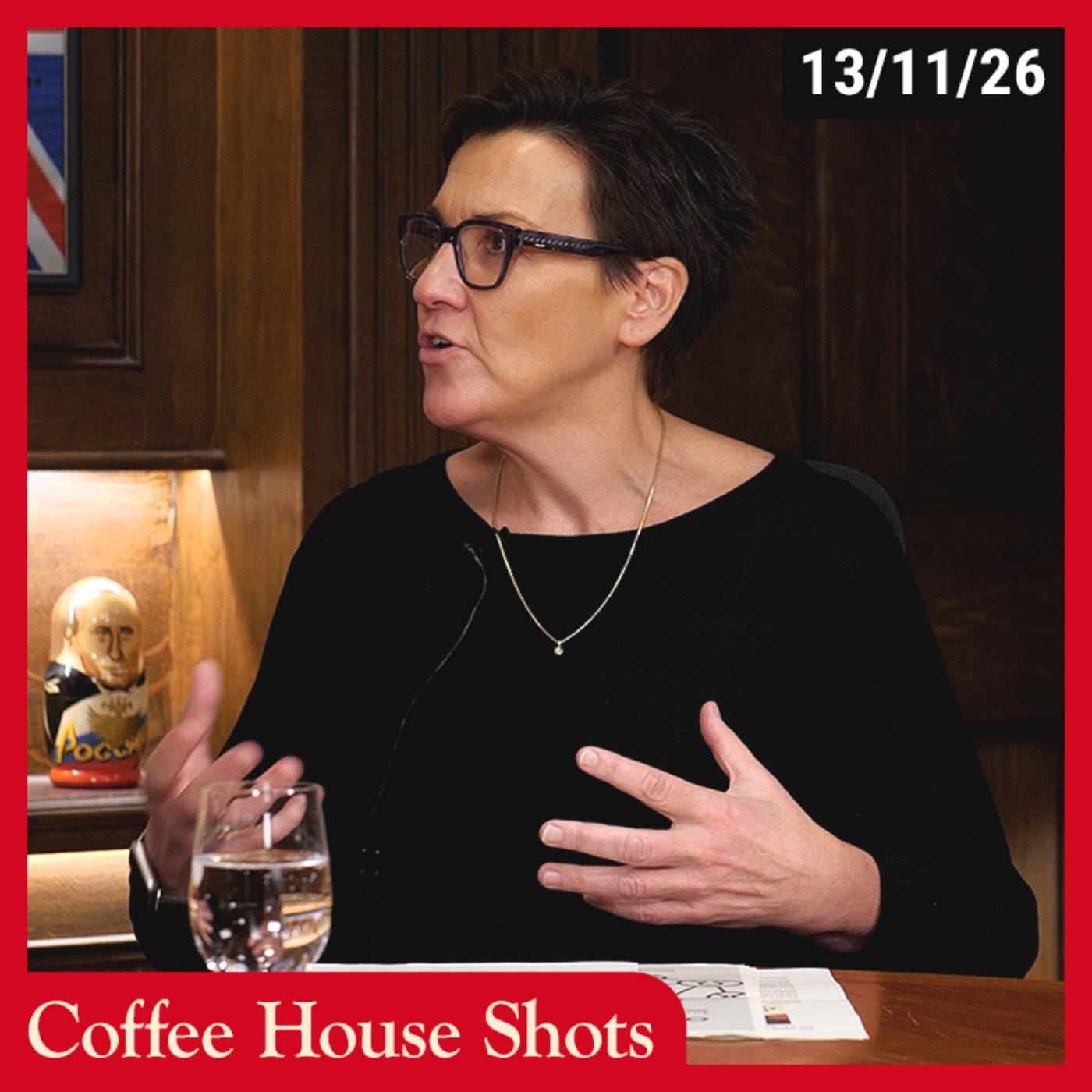
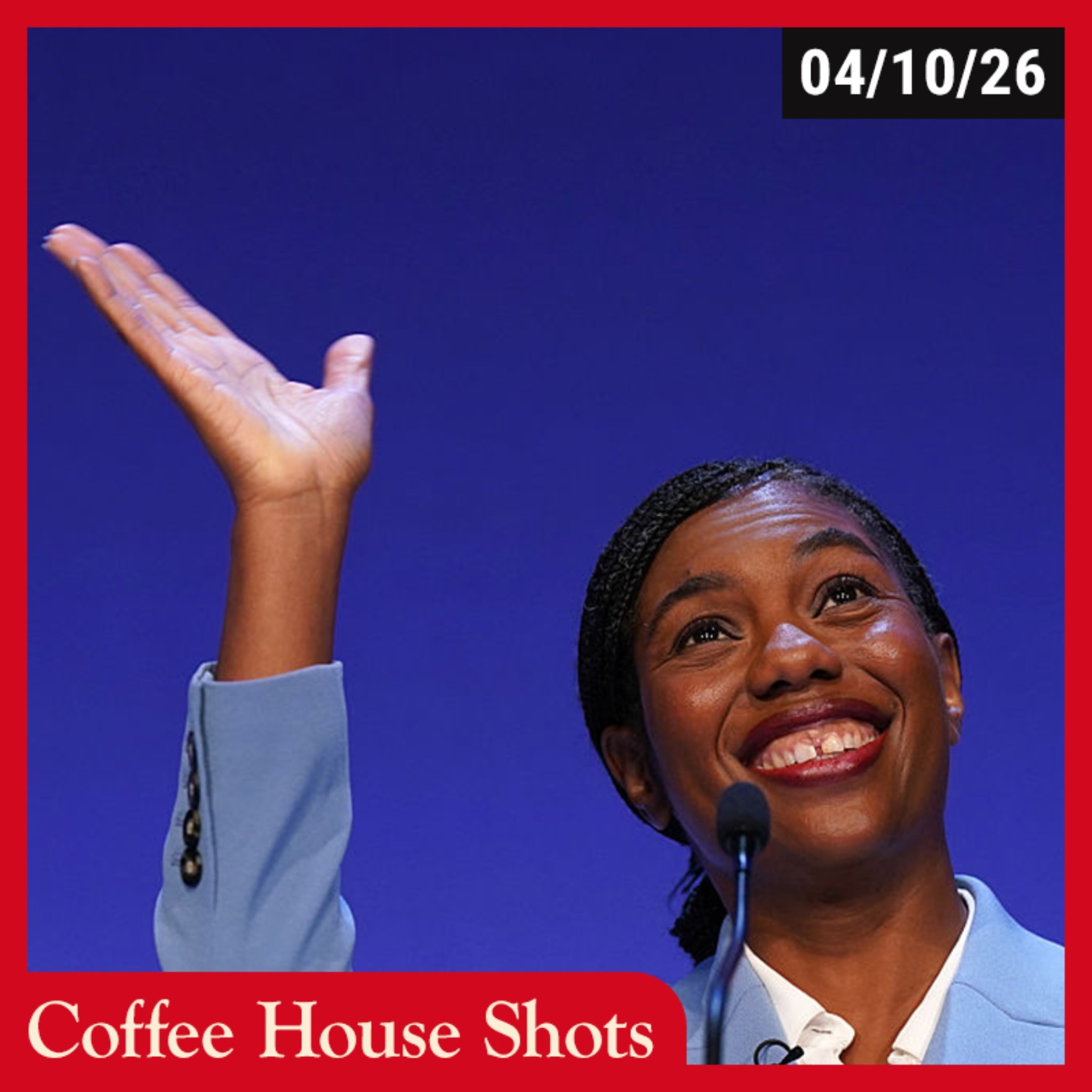
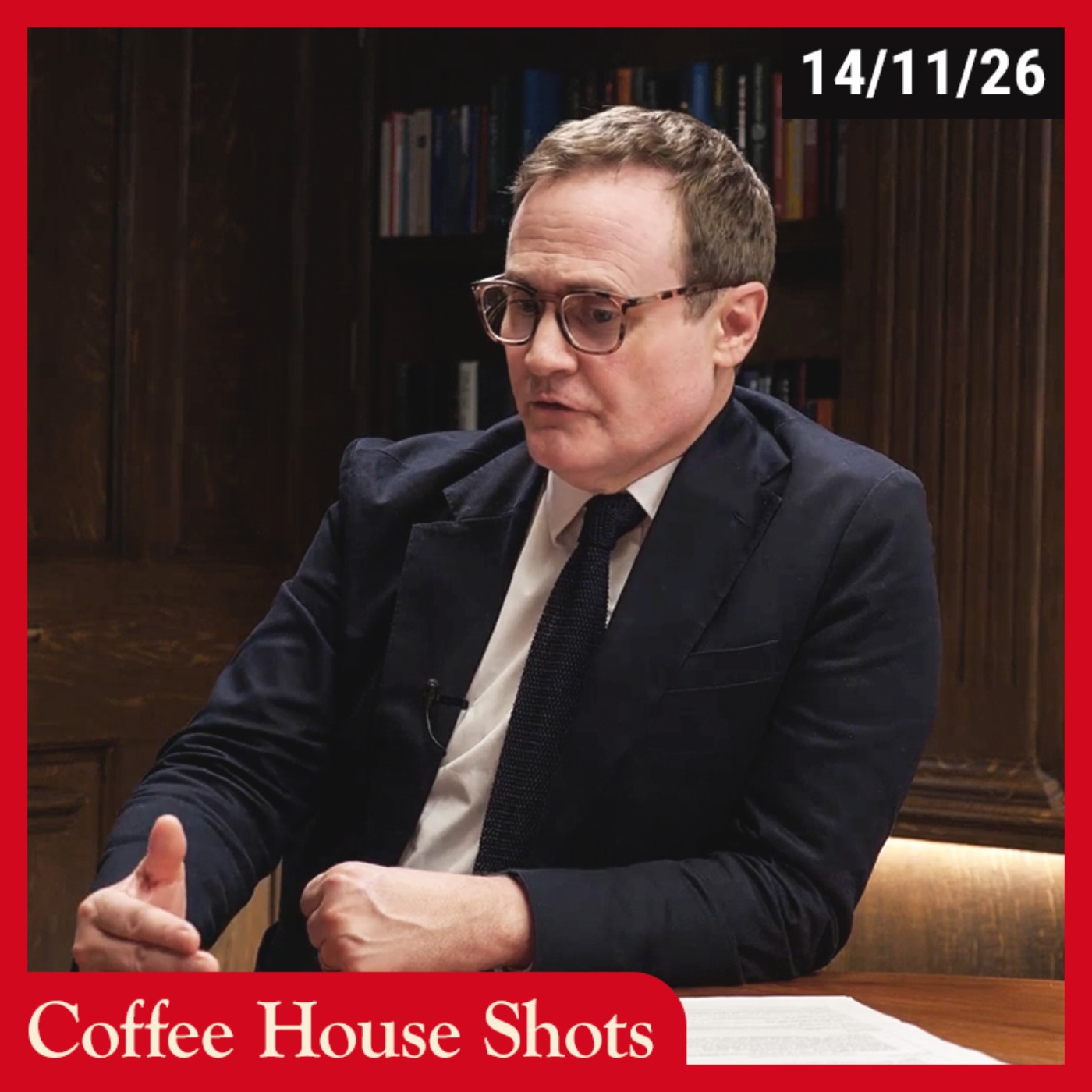
James Heale is joined by Tim Shipman and Liam Halligan, Telegraph columnist and the new director of the Centre for Policy Studies (CPS), to look ahead to Conservative party conference, which kicks off today. Kemi Badenoch’s latest attempt to draw clear dividing lines with Andy Burnham was through a tougher welfare offer aimed at the under-25s – as exclusively revealed by Tim in the Spectator this week. Will this, alongside tougher fiscal restraint and general plain speaking, appeal to the wider public?
Plus: how do the Conservatives outflank Reform while seeking to appeal to those in the centre-ground who may have turned to Labour at the next election? The panel also discuss the state of public finances, the role of think-tanks such as the CPS and what to watch for in Birmingham – from party donors and business representatives, to the mood of younger activists.
Produced by Patrick Gibbons.
Become a Spectator subscriber today to access this podcast without adverts. Go to spectator.co.uk/adfree to find out more.
For more Spectator podcasts, go to spectator.co.uk/podcasts.
Contact us: [email protected]
Hosted on Acast. See acast.com/privacy for more information.