 Ask ChatGPT


The UK’s Chagos Islands deal (hand sovereignty to Mauritius and pay about £100m+ a year to lease the military base) is being reviewed after a “U-turn” in Labour rhetoric, following Andy Burnham’s meeting with Donald Trump.
Noah Hoffman (political reporter, Spectator) and Tim Shipman (political journalist, Spectator; wrote a cover piece on Labour conference and whether Burnham will call an election).
Labour previously pushed the deal hard; after Trump criticized it as “terrible” and questioned Mauritius’ “ownership,” Downing Street softened and Wes Streeting/Burnham said it needs review, implying viability depends on US support.
Trump’s direct rejection; references to Nigel Farage lobbying the White House; comparisons to Starmer/Hermar’s earlier defense; discussion of Burnham’s Westminster reaction and Labour conference election speculation.
Written by AI. May contain mistakes.
Discussion on the UK's review of the Chagos Islands sovereignty deal.
“The Chagos deal is going to be reviewed.”
Analysis of political maneuvers surrounding the Chagos deal.
“He said as much in the readout and that was the line from number 10.”
Examination of Trump's critical remarks regarding the Chagos deal.
“Trump compliments Burnham as a natural businessman and a great prime minister.”
Discussion on the UK's softened stance after Trump's comments.
“that ultimately will be viewed by the Foreign Office as a success, except on the matter of Chagos.”
Exploring the implications of revisiting the Chagos deal.
“Defence Secretary Wes Streeting say that the deal needs to be looked at again, that without American support, it's not a viable plan.”
Discussion on international legal considerations in the Chagos deal.
“I'm not sure that they were, really, because Noah's right that Starmer never kind of really resolved from the principle of it.”
Analysis of how the Chagos deal impacts UK-US relations.
“but is no fan of sort of the Trump administration.”
Reflection on Burnham's position and leadership in the context of the deal.
“And frankly, on an issue like this, that's no bad thing at all.”
Discussion about the upcoming Labour Party conference and its implications.
“or the big disparity between the two world leaders on AI, which is going to be a central focus within international diplomacy going forward.”
Discussion on public opinion regarding spending on migrants and benefits.

Get the gist, explore an idea or ask about something said.
 Claude
On Coffee House Shots, what are the key points of this episode?
Searching your listeningAutomatic transcript. May contain errors.
0:00With almost half a million customers and over a trillion dollars of secure payments, Bill isn't new to intelligent finance. It's the proven way to simplify bill pay and maximize cash flow. Want to learn more? Visit bill.com slash proven for a special offer.
0:24Hello and welcome to Coffeehouse Shots, the Spectator's daily politics podcast. I'm Oscar Edmondson and I'm joined today by Noah Hoffman and Tim Shipman. And we have a U-turn. The Chagos deal is going to be reviewed. Now, this is, of course, the agreement that the UK would hand sovereignty of the Chagos Islands to Mauritius and pay a hundred odd million per year to lease the military base back. Now, Noah, this is a sharp change in rhetoric from the Labour government. How exactly has this come about? Take us on the journey.
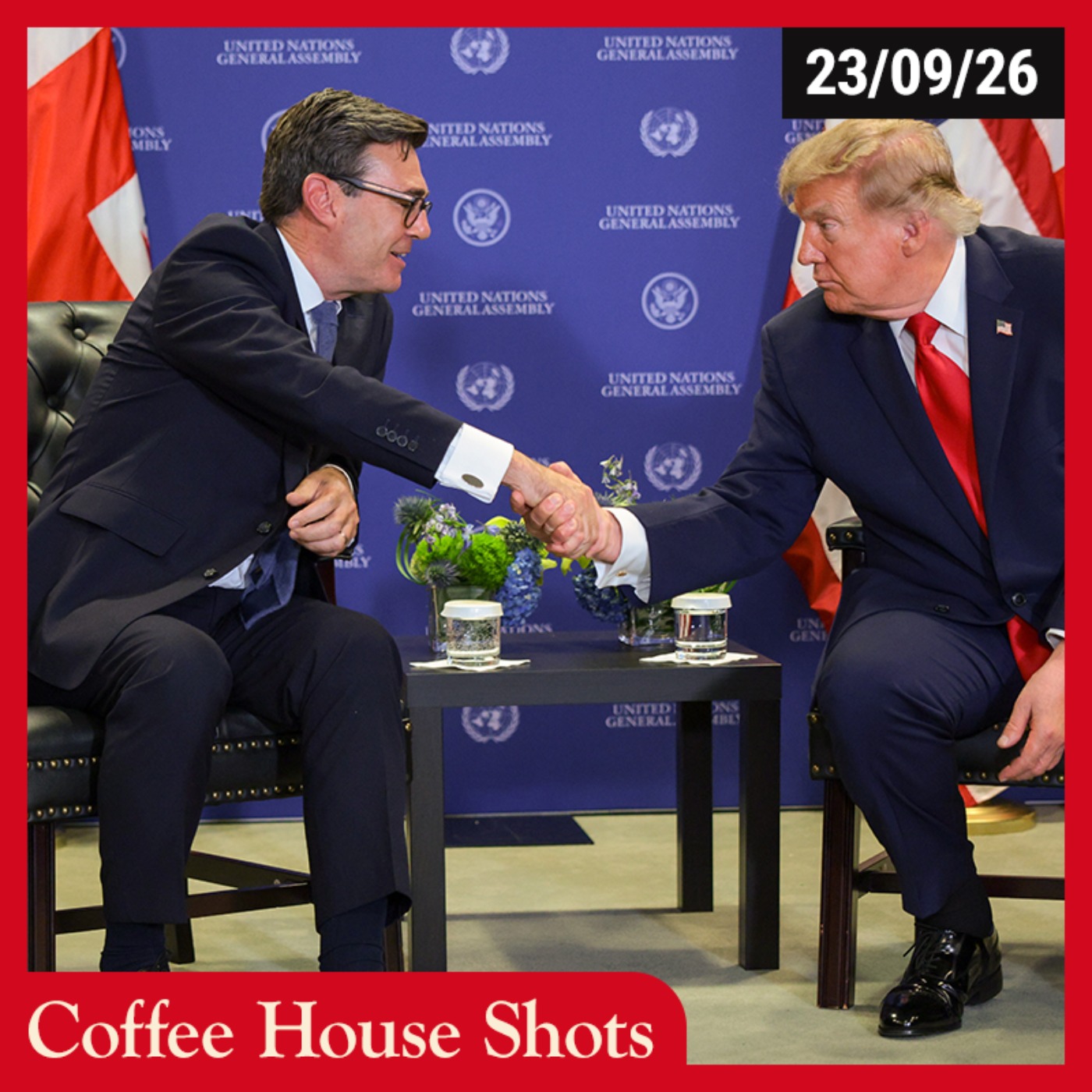
0:54Noa Hoffman: Yeah, so in the build-up to the United Nations General Assembly, number 10, Andy Burnham and all the ministers that he sent out onto the morning round were very clear. They were determined to do whatever it takes to get the Chagos deal over the line. He had a call with the president of Mauritius where he repeated that pledge. He said as much in the readout and that was the line from number 10. There was no dialing down of the language whatsoever. Now, in the build up to UNGA, behind the scenes, we have Nigel Farage using every White House contact at his disposal to beg the Trump administration not to soften its stance against this, what he would phrase as a surrender deal.
1:37Noa Hoffman: And what I think a lot of spectator readers would agree with is a totally bonkers deal to cede territory and even pay for the pleasure. So that was the rhetoric from number 10 leading up all the way to UNGA. Then we have the sit down between Andy Burnham and Donald Trump and they get on well. Trump compliments Burnham as a natural businessman and a great prime minister. So there were some smiles from diplomats. I don't think Donald Trump really realised how much of a compliment that would come across as. Yeah, but you know what? It made a lot of officials very happy and it sort of set the tone for a lot of niceties and a very calm and sort of jovial discussion between them where Burnham actually did everything his predecessor did.
2:21Noa Hoffman: He was doing a full-on continuity kit in refusing to have a Love Actually moment and challenging Burnham as Labour MPs suggested he would. That was part of the reason that they liked Andy Burnham on foreign policy. They said he's going to stand up to Trump. No, it was continuity policy as with Sir Keir. And they had this good chat that ultimately will be viewed by the Foreign Office as a success, except on the matter of Chagos. And when it came to the Chagos deal, Trump did not mince his words. Should we play the clip? Let's play the clip. Are you going to support it? What? The deal to give away the Chagos Islands from the UK to Mauritius.
3:01I don't support it. I think it's terrible. They all of a sudden say they have ownership. Somebody has ownership that never showed up before after decades and centuries. I think it's ridiculous. We were talking about that. And it's amazing how strategic it is. And I think the prime minister is going to be looking at it. Yeah.
3:20Noa Hoffman: Now, after that interview, all of a sudden, the line from Downing Street drastically softened. And we had the likes of Andy Burnham and even more extraordinarily on the morning round, Defence Secretary Wes Streeting say that the deal needs to be looked at again, that without American support, it's not a viable plan. That was never really the rhetoric under Keir Starmer. They always defended the deal, even when they said, OK, it might be in flux for now, it might be on hold for now. They always, always painted this as an issue where they were going to keep doing everything they can to convince Trump that this deal was the right thing to do.
4:01Noa Hoffman: That changed and the suggestion from Burnham and Streeting Now is that perhaps the deal needs tweaking in order to get the Americans on side. Now, that is a huge concession that there is something fundamentally wrong with this agreement. And it was a concession that the dynamic duo of Sir Keir and Lord Hermar, the international lawyers, the human rights partakes, never wanted or never did make. Now, Tim, I wonder what you make of this, because the line from the government has been so strong that we're going to stick to the Chagos deal. Jonathan Powell is still the National Security Advisor. He was spearheading the agreement under Keir Starmer.
4:39And it's a relatively small amount of pressure that's been applied by Donald Trump for them to change their minds. Were they looking for an excuse? I'm not sure that they were, really, because Noah's right that Starmer never kind of really resolved from the principle of it. But they definitely kicked it into the long grass. And once it was clear that the White House weren't prepared to support it, it was effectively put on ice. And Burnham revived it and essentially came back and said, oh, no, we actually do need to push ahead with this. And it turns out that the president of the United States has a bigger stick than the president of Mauritius.
5:11Whoever would have thought it. So he's gone over there. It's interesting, isn't it? The sort of love actually Labour Party that gets in a room with the leader of the free world and suddenly decides that he might actually have a point. And that actually can bring quite a lot of pleasure and pain to a British government. and more power to Tony Diver of The Telegraph, who asked the key question at the press conference. I suspect he got a call from someone in reform going, do you know what? I think if you ask this, you might get quite an interesting answer. Not that the British press corps would have required any encouragement to ask this question because it was one of the obvious things that they were going to fall out over.
5:48But diplomacy, foreign affairs, is all about trade-offs. And it turns out, even a probably the most instinctively un-pro-American, I won't go as far as to say anti-American, but the un-pro-American combination of Prime Minister and Foreign Secretary that we've had in a very, very, very long time with Ed Miliband, who spends a lot of time in America, but is no fan of sort of the Trump administration. They haven't quite keeled over it, but they've certainly allowed their tummies to be tickled, and they've come out and said they're going to review it. Well, I mean, it's blindingly obvious it needs to be reviewed.
6:25It's a nonsensical deal. And the government has been hopeless at making the case for it. The only coherent case that has been made for this deal was made by Ben Judah, who is a former special advisor, Sir David Lammy, when he was the Foreign Secretary. After he'd left government, he wrote a long piece in the Sunday Times explaining why the Foreign Office thinks there is a genuine legal risk and a reputational risk in not pursuing this. But, you know, if you're the US administration that basically doesn't think international law is binding on the United States, and frankly, quite a lot of British lawyers think this is not even a binding international legal decision.
7:00It's one that we could quite easily stick two fingers up to that sort of suggests that, you know, unless we do this deal, we're going to be in sort of dire difficulties. It is almost impossible to think that America, China, India, particularly France, would back two islands at a sort of non-binding legal deal. But Starmer and Hermer were particularly disposed to care about this sort of thing. And the Labour Party and all its MPs instinctively cares too. But I think it's quite reassuring that you go off to the States and you meet the President of the United States and he tells you to think again.
7:37And frankly, on an issue like this, that's no bad thing at all. And there's lots of people in Britain get very upset about us being effectively a kind of wholly owned subsidiary of the United States. And there are occasions when it's embarrassing and deleterious to our national interest. But on something like this, if it requires Donald Trump to say no, then more power to Donald Trump's elbow, frankly. Noah, this was, of course, a huge moment for Andy Burnham. Labour got to see their man sat next to the leader of the free world. How has the reaction been in Westminster? Are people broadly pleased with how Burnham conducted himself?
8:11Noa Hoffman: I think so, but there's also a conscious understanding that Trump's respect or admiration for a world leader is as thin as a wrisler, shall we say. It would only take a matter of seconds for that to burn through. and for none of this meeting to matter whatsoever in the grand scheme of things because Burnham has rejected, say, in the future, Trump's demand to help annihilate Iran, for instance, or the big disparity between the two world leaders on AI, which is going to be a central focus within international diplomacy going forward. Anti-Burnham's been very clear that he wants to see a global set of principles govern use of AI internationally.
8:56Noa Hoffman: traditionally Trump used a lot of his speech at the United Nations General Assembly to absolutely tear into the idea of any regulation or any slowing down of the development of AI. Middle East is still a tinderbox. We've got the issue of Ukraine as well. There are so many avenues for not literal conflict but for disagreement between the US and the UK. So yes Burnham did achieve a nice meeting where they seem to get on but Trump does have a habit of giving new leaders the benefit of a doubt starting off you know being all chummy and friendly and then when things don't go his way throwing his toys out of the pram so foreign office officials yes they can rest easy that this first meeting went well but it's only a matter of time I would suggest before things sour when Burnham doesn't play ball on some of the bigger issues.
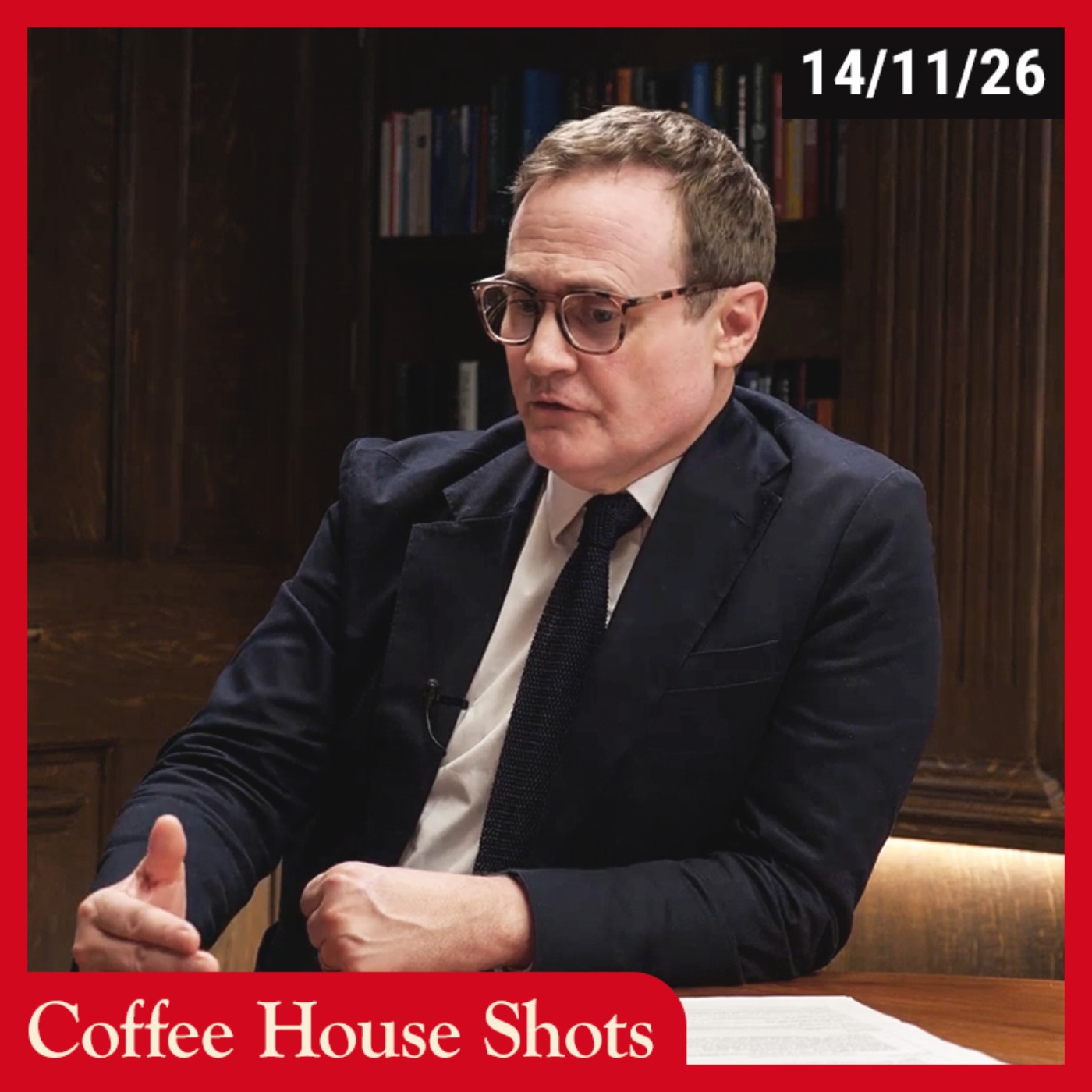
9:49And Tim just finally we've got Labour Party conference starting this weekend. And to coincide, you've written the cover piece for The Spectator, which will be hitting new selves tomorrow. Can you give us a little flavour of what we can expect? Well, I mean, it's basically, will he call a general election or not? It's that question. I mean, every single conversation that any political journalist has with anybody in the Labour Party or anyone close to the Prime Minister eventually reaches this subject. And sometimes in as long as four or five seconds of speaking to someone, do you get around to it?
10:18So it is literally on everybody's lips. I'm told that Burnham basically told a bunch of MPs three weeks ago that he could win an election and would be trying to do so. That set some hairs running. I have a Labour MP who said that in private, in a smaller huddle with some MPs, he even made a joke about calling an election and some of them losing their seats. Now, Downing Street, adamant that there's no way the Prime Minister would say any such thing because they have no plans whatsoever to call a general election. And what the piece does really is outline the thinking, outline the pros and cons, and draws a tentative conclusion, which readers will have to turn to the magazine to discover.
10:54But I think it does depend a bit who is asking the question and who is answering it. There are some upsides for Andy Burnham in calling an election. There aren't many upsides for a lot of Labour MPs in him doing so. And the question really is whether he wants to, how significant a Prime Minister he wants to be. And interestingly, I've also got hold of the sort of narrative for conference, which talks about the total transformation of Britain and its economy, it's all quite big talk. And the question then is, does he need a new mandate? Does he need more flexibility on the taxes? But this piece has a bunch of revelations in it.
11:27It's a whole way to talk about what might be in the budget. And I'd tentatively draw a conclusion about whether there's likely to be an election or not. But it seems shame at this stage before publication to spoil the ending. But that's, as usual, packed with loads of interesting and often quite amusing quotes. And it's one of those pieces which will probably perform its function by upsetting almost everyone.
11:50Noa Hoffman: I think also just the fundamental issue with Labour MPs and with a lot of Downing Street is that they are failing to grasp that you cannot change the economy. You cannot rewrite the state of the country and make all these big sweeping pledges within the constraints of the fiscal rules. That is absolutely like the fundamental clash at play. And if Burnham wants to do everything he's talking about doing in terms of revolutionising social care, revolutionising council house building, there is no mandate from the public to achieve that because they cannot raise, for example, income tax. So either we get three more years of continuity care with better TikToks, as many people describe it, or we have a general election.
12:43Noa Hoffman: And I think at least publicly, there hasn't been a reckoning as to that clash of motivations. But I would guess the counterpoint to that is that in order to make that argument, Andy Burnham will have to come out and say, we're going to do this, this and this. And we are going to raise your taxes. And a lot of people I've spoken to in Labour and in the other parties says that this, if he were to call an election, it would very quickly become the Andy Burnham wants to raise your taxes to pay for welfare and migrants general election, which has some downsides for the Labour Party. Yes, but Labour MPs are failing to acknowledge that you're going to have to raise taxes if you want to implement these policies.
13:29Noa Hoffman: That's just a basic fact. We can't borrow more. We're already drowning in debts. And it would be so unfair on future generations to do that. And we've got, you know, the constraints of the bond market. The only way to bring about these sweeping socialist changes and transform the economy is for income tax rises. So Labour MPs have to choose what they want to do. Do they want to cut spending or do they want to implement tax rises? And I think a lot of Labour MPs think it is a moral and ethical call that the public will respond to positively. but equally a lot of people who like to decide how their money is spent and perhaps don't want their hard-earned wages being flogged to migrants and benefit recipients will not quite like that call well it's burnham's choice i implore all the listeners to go out and grab tim shipman's cover piece in the spectator tomorrow stocked at all good retailers thank you so much tim thank you noah and thank you for listening
14:58Thank you.
Donald Trump has forced a rethink of the Chagos deal, after publicly criticising the agreement during his meeting with Andy Burnham. Is Labour preparing to abandon one of Keir Starmer’s most controversial foreign policy decisions? And, with Labour conference approaching, could Burnham be tempted to call a general election? Oscar Edmondson speaks to Noa Hoffman and Tim Shipman.
Produced by Oscar Edmondson.
Become a Spectator subscriber today to access this podcast without adverts. Go to spectator.co.uk/adfree to find out more.
For more Spectator podcasts, go to spectator.co.uk/podcasts.
Contact us: [email protected]
Hosted on Acast. See acast.com/privacy for more information.