Ask ChatGPT


 Coffee House Shots
30 Jun 2026 · 13m · 4 chapters
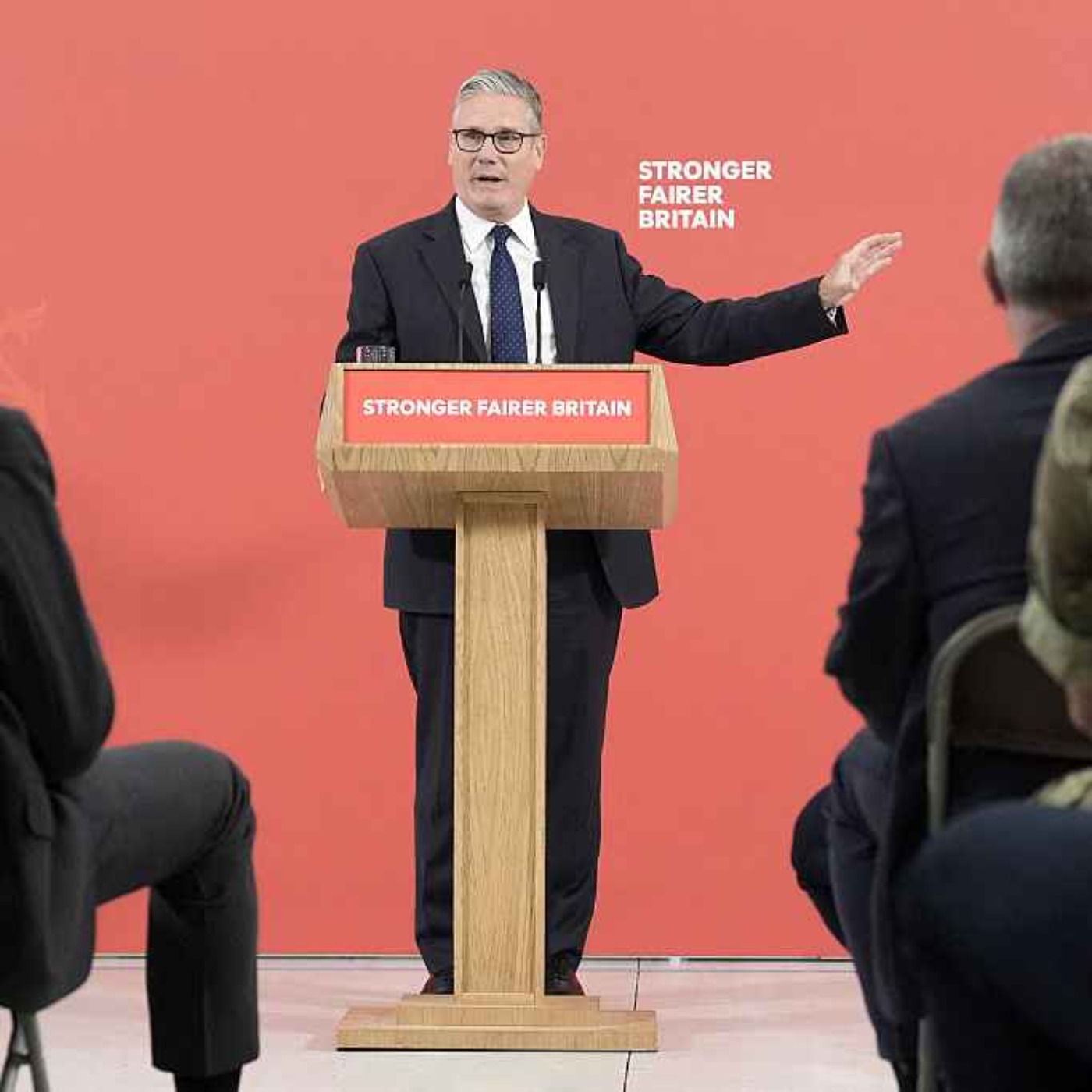
Keir Starmer’s defence investment plan, focusing on the headline £15bn figure, £5bn for drones (only £1bn new money), and how funding may come via cuts/delays to veterans’ homes and other programmes; also discussion of political subtext around Dan Jarvis vs John Healey and implications for Andy Burnham’s premiership.
Tim Shipman (commentator on defence funding/politics) and James Heal (commentator on defence and Treasury/civil service issues).
£15bn is largely an “accounting trick” versus the £28bn–low-30bn needed; chiefs won’t endorse “settled” funding; Starmer argues cutting welfare/public services for defence would make Britain less safe.
Ukraine’s drone output vs the UK’s; veterans-for-reform lunch; Treasury fast-stream test changes after George Floyd/BLM.
Written by AI. May contain mistakes.
Discussion about Keir Starmer's speech and the $15 billion investment plan.
“has been waiting months and months and today we finally got a taste of what it is.”
Analysis of the political reactions to the defence funding and its implications.
“to get the military back on track after years of gutting.”
Examining critiques of the funding decisions and potential future challenges.
“how this is being used as a sort of political kind of stick as the Burnham regime approaches.”
Discussion on changes made in the Treasury regarding diversity and its impact.
“I suspect he'll have a few things to say about this because that's not where he would want this money to come from.”

Get the gist, explore an idea or ask about something said.
 Claude
On Coffee House Shots, what are the key points of this episode?
Searching your listeningAutomatic transcript. May contain errors.
0:0098 of the top 100 U.S. accounting firms trust Bill to handle BillPay processes. Why? Because our tools are built on over a trillion dollars of secure payments. We're not just moving money. We're powering financial workflows for half a million customers. That's a level of expertise you just can't fake. Ready to talk with an expert? Visit Bill.com slash proven to get started and grab a$150 gift card as a thank you. Terms and conditions apply. See offer page for details.
0:37Noa Hoffman: Hello and welcome to Coffeehouse Shots. I'm delighted to be joined today by Tim Shipman and James Heal to discuss the defence investment plan. Westminster, the country, the world really has been waiting months and months and today we finally got a taste of what it is. We are yet to see the fine print but in his final legacy leaving speech Keir Starmer gave what was some sort of overview of the defence investment plan. James can you run us through what Keir Starmer said in his speech today and how you thought it went down?
1:15Tim Shipman: Well the big figure is 15 billion which is going to be the key announcement of the defence investment plan. John Healy we knew resigned because he was was 18 billion. So 15 billion looks like the negotiations with Dan Jarvis and the Treasury have unsurprisingly perhaps come down more on the Treasury side in that. I suppose the big announcement was about having 5 billion invested in drones, the biggest ever drone infrastructure program. But of course, only 1 billion of that is new money. It's in the right direction, according to many defence specialists, talking about autonomy, talking about the UK's capability in drones that is necessary, but it's not enough.
1:51Tim Shipman: So I think there's one other interesting angle here which is about the funds needed to pay for this drone investment which is going to be cuts to the or delays to the program for building new military veterans homes this is something that labor's very much campaigned on talk about being the sort of squaddies party etc if they're not doing enough anything on things around military veterans military prosecutions and our military homes as well that could be an area where you see reform certainly and i was at lunch for veterans for reform earlier this year where they talked about the sort of top brass etc That could be something that they're very much trying to tap into.
2:21Tim Shipman: And remember, in the 2019 Red Wall, the places like Warrington voted for Boris Johnson because Jeremy Corbyn was seen as antithetical to their values. I think that'll be interesting to watch in terms of the politics of this. I think it's a step in the right direction, but whether it's enough to make up lost ground, I think is very much in doubt.
2:35Noa Hoffman: Tim, the Strategic Defence Review called for£28 billion to get the military back on track after years of gutting. What do you think of the final£15 billion settlement? How are various stakeholders going to respond to that?
2:54James Heale: I think everybody acknowledges that shuffling slowly in the correct direction is not good enough. John Healy's mistake was to tell the Treasury that it was effectively funded already. The£28 billion that's doing the rounds is the number that effectively the armed forces say they need to kind of tread water. as I reported a couple of weeks ago is that the figure is actually in the low 30 billion so we're a considerable distance from that but the politics of this are that as James says Healy demanded 18 billion Rachel Reeves was prepared to stump up 13 and a half and now we've ended up with 15 so Dan Jarvis the new defence secretary can say oh look I've won a bit of extra money but most people who understand MOD financing more than I do say this is effectively an accounting trick and it doesn't really amount in practice to a great deal more money.
3:42James Heale: What Jarvis seems to have been able to do is say, I'll go in and we'll focus on drones, which was something we wrote about The Spectator a few months ago. We barely have any compared with our European friends and rivals, and certainly nothing like what Ukraine is producing. We're producing annually what they're producing weekly or thereabouts. So this is all very disappointing. And I think what this means is that this is going to be an issue that is going to loom its head relatively early on in Andy Burnham's premiership. And if Burnham thinks that this is sort of all carefully parked, I think he's got another thing coming.
4:17James Heale: And if you look at some of the vibes around this, chiefs have not exactly rushed to endorse this or to be seen on a platform with Starmer or Jarvis. There aren't the usual kind of warm statements of gratitude and thanks. The other interesting aspect is how this is being used as a sort of political kind of stick as the Burnham regime approaches. There's a lot of briefing. I had some on Friday from people not unadjacent to Rachel Reeves saying, well, if dear old Dan Jarvis has got a bit more money, that's because he's a splendid chap and he likes coming to talk to Rachel in person and do negotiations.
4:52James Heale: Unlike that terrible man, Healy, who, you know, he wanted to negotiate with number 10, not with the Treasury, and that's all completely inappropriate. and if only he'd been a nice collegiate player like Mr Jarvis, he would have got more money. Which is interesting because Reeves and co. have launched a sort of desperate attempt for her to keep her job but they now seem to be trying to say to the incoming Burnham regime, well, don't trust that fellow Healy, he's not a team player. You, Andy, you gave your speech on Monday saying we all have to pull together. Well, this Healy fellow, he's not a puller together, he's a terror apart.
5:25James Heale: But yeah, there's a lot of sort of interesting subtext here but the headline is that we need more money for defence.
5:32Tim Shipman: I should say, first of all, to listeners that any background noise you hear is because of the summer party getting ready for tomorrow
5:37James Heale: rather than the MOD forces storming our building.
5:40Tim Shipman: But I think that Tim makes a point there about Burnham. Burnham has given, or his allies have given, this source quote to GB News suggesting that the defence investment plan is settled. Now, do the chiefs agree with that? Will our forces agree with that? No, they very much won't. They do not.
5:53James Heale: I bet I know who else will have a view on this given that some of the money has been taken from veterans and homes and all that stuff. This is stuff that Keir Starmer was boasting about. When he made his speech on the steps of Downing Street, wishing farewell to the nation, one of the things in his long list of attempting to sort of construct a retrospective legacy was how much he'd done to help the families of the military. Well, Al Karnes, who was the Armed Forces Minister, did a lot of work with veterans, still not quite on board with the Andy Burnham shara bang. I suspect he'll have a few things to say about this because that's not where he would want this money to come from.
6:33James Heale: But if Burnham thinks this is settled, he's going to be in for a rude shock, to be honest, because he and his new Chancellor, whomsoever that may be, are going to find the Chiefs knocking on their door before very long.
6:45Tim Shipman: I think it's quite interesting, though, that I've made lots of talk on this podcast of potentially Miliband coming in, potentially the Treasury being broken up, potentially tax powers being devolved. I do think it's quite interesting that in the sphere of defence, Miliband would seem to have a more traditional Treasury view, which is that guns and bombs are a waste of money effectively, and that, you know, powerful things. Precisely.
7:04James Heale: Nasty right-wingers. Labour has many fine traditions. Spending a lot of money is one of them. But they also were there at the creation of NATO. They were stalwarts during the Second World War. they've actually have just as good a record on defence spending as the Tories over the years the Tories sort of everyone assumes they're the main supporters. 1918 naval cuts yeah. This is a fine tradition but you know you can imagine that Ernie Bevan is spinning in his grave thinking about some of what appears to be coming from the left of the Labour Party at the moment which is essentially an internationalist pacifist group of people who don't who think if you sit there, fold your arms and put your head in the sand, the world will leave you alone.
7:50James Heale: And Andy Burnham seems already to want to conduct his premiership in that fashion. There's a lot to do domestically, we'll leave the foreign policy and the defence to these other people. I'm afraid as Prime Minister it has a way of coming at you in the small hours of the morning and making you make decisions and the second you start sending people off to die in your country's uniform or to rescue hostages or to do all the other things that you're expected to do as a prime minister and the warrants that people in your government will be signing that Andy Burnham has no idea about he will quite quickly get a bunch of security briefings realize that we're under almost daily attack by Russia and by people trying to mess with our cyber security and be interesting to see how his view evolves in the months to come.
8:33Tim Shipman: It leads me to know you picked out I think the most interesting line from what Keir Starmer said he preemptively said why he wasn't going to be cutting welfare spending as Kermit Baden-Ock is urging him to do.
8:40Noa Hoffman: Yes. So in an effort to get ahead of pesky journalists pushing him on this issue, Keir Starmer said that slashing public services to fund defence would be the wrong decision because it would make the country less safe due to the division it would cause. So if you slash public services, the country will become more divided and that would bolster Putin and other enemies of Britain.
9:05Tim Shipman: I might argue that the real division are the ones marching over from Moscow into Eastern Europe. But I mean, that's certainly a sort of insight into his worldview.
9:13Noa Hoffman: Indeed. Now, speaking of the Treasury, the Spectator today has an astonishing scoop from John Connolly. We often report on some pretty wacky, woke gone mad stories, but I think this one really takes the biscuit. James, can you talk us through it, please?
9:32Tim Shipman: Yeah, sure. So obviously the Treasury has operated for a number of years, a pretty well-respected civil service fast stream style scheme for high flyers joining the Treasury in their early 20s. And it seems that during the aftermath of the George Floyd death in May, June of 2020, the Black Lives Matter movement, they thereafter revamped their scheme, and particularly the numerical reasoning test, which was removed due to the evidence of the test, quote, having adverse impact on candidate diversity. subsequently the levels of adverse impact decreased in the 2020 campaign and then john has gone after the board minutes which they explained that the test was removed because quote we want more diverse ethnicity assessment center and having two tests create an additional hurdle for candidates to jump over i think what we're seeing here is the excellence the traditional academic skill of the treasury being watered down in the pursuit of diversity it's number one it's quite patronizing number two it's pretty damaging if we don't have the people who run our statistics making these judgments providing accurate information to ministers that's going to harm all of us all our living standards all our policy making including those of ethnic minorities and i
10:35James Heale: think it shows two things really now one of which is um just how often these institutions can become
10:40Tim Shipman: become receptive or captured by different passing trends i think we look back now at some of what went on in 2020 and think it was uh really quite extreme and not based on thing of course you know we had british protesters saying hands up don't shoot british policemen don't have guns you know
10:56Noa Hoffman: Hard not to laugh at that.
10:58Tim Shipman: The second thing is, I think the longer trend of Britain's institutions atrophying and declining, we've talked a lot, Michael Simmons' big bugbearers about the ONS moving to South Wales, and that led to people leaving, and that led to a decline in the quality of statistics. I think this very much does show a warning, which is that even if they do remain in London, and they may not, if Andy Byrne comes in and changes everything, they are at risk of potentially becoming the victim of what David Cameron used to call the soft bigotry of low expectations.
11:24James Heale: And this is the proof of the pudding, because if you talk to any sort of mandarins who were around for quite a while, the Treasury used, you know, back in the day, 30, 40 years ago, the best people tended to go into the Foreign Office. In more recent decades, the best, most talented people in government have gone into the Treasury. You speak to a lot of ex-people who run departments or have been right at the top of the civil service, and they will tell you the Treasury, what it used to be, the calibre of people there is not good enough. And this is literally proof that they decided to put diversity before the ability to count, essentially.
11:55James Heale: And if the Treasury cannot count, then we really are stuffed. And we haven't talked about them a great deal recently, but this is just the kind of thing that reform will seize on and say, look at this utter nonsense being done in your name by central government. The civil service is flawed. if you sat around thinking about, oh, let's just make up a story about the stupidity of diversity, you would come up with one that said, people who can't do foreign languages should be given jobs in the Foreign Office, or people who can't count should be given jobs in the Treasury. And I'm pretty sure there was a story recently that suggested that people with multiple languages, again, that was seen as too helpful to lack of diversity.
12:37James Heale: And now we have people who can't do statistics being encouraged to work in the treasury this is just a nonsense on that cheery
12:46Noa Hoffman: note let's draw this episode to a close thank you james thank you tim and thank you for listening to coffeehouse shots
13:17When it comes to managing money, forget the hype and look at results. Bill has a trillion dollars of secure payments powering our BillPay tools. Instead of just moving money, Bill is powering the financial operations of nearly half a million customers. So stop the guesswork and start scaling with the proven choice. Ready to talk with an expert? Visit bill.com slash proven to get started and grab a$150 gift card as a thank you. Terms and conditions apply. See offer page for details.
The Defence Investment Plan is published today in Parliament. All eyes are on how much Dan Jarvis managed to secure (£15 billion), given the dramatic resignations of Al Cairns and John Healey over funding. Noa Hoffman speaks to James Heale and Tim Shipman about the plans, plus a scoop from The Spectator's John Connolly – its been revealed that DEI has taken precedence over number counting in the Treasury...
Become a Spectator subscriber today to access this podcast without adverts. Go to spectator.co.uk/adfree to find out more.
For more Spectator podcasts, go to spectator.co.uk/podcasts.
Contact us: [email protected]
Hosted on Acast. See acast.com/privacy for more information.