
 Ask ChatGPT
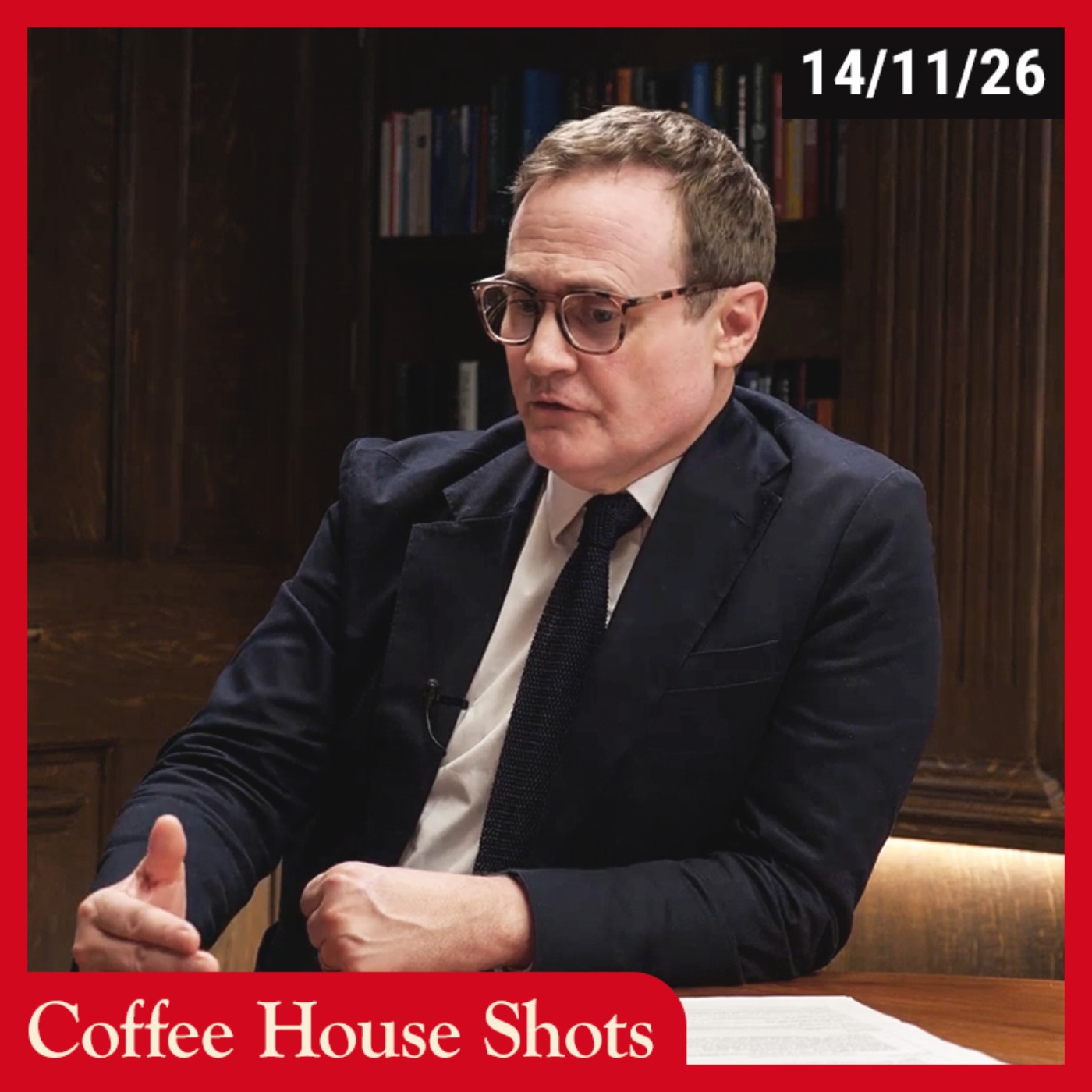


Andy Haldane, former Bank of England chief economist, criticises elements of Andy Burnham and John Healey’s upcoming first budget as Prime Minister/Chancellor, especially “headroom” cuts and proposed taxes on banks. He argues shrinking fiscal headroom now is imprudent given geopolitical uncertainty, and that “bank taxes” would be passed to customers and send a negative “tax the upside” signal to investors. He also discusses UK monetary policy, saying the Bank of England has been too slow to tighten despite inflation above target, and expects rate action after the next inflation print.
Andy Haldane (former Bank of England chief economist; served on the MPC until June 2021; now a critic of fiscal/monetary policy). Interviewer: Michael Simmons (Reality Check segment).
Written by AI. May contain mistakes.
Michael Simmons introduces the guest, Andy Haldane, and the topic of discussion.
“That's go.gle slash workspace with Gemini.”
Haldane discusses the Treasury's budget plans and potential tax implications.
“If you believe the reporting about what the headroom's going to be, which you probably shouldn't believe, because last year, famously, we all got it wrong, and it was nowhere near as bad as it was.”
Haldane elaborates on the negative signals sent to investors by proposed taxes.
“I think that would be an imprudent course to take.”
Discussion on the government's understanding of economic policies and their impacts.
“They can hold the government's feet to the flame, and I think are doing so.”
Haldane reflects on the Bank of England's monetary policy and inflation targets.
“I want to move on now to talking about another Andrew.”
Learn about the priorities for economic targets and quickfire opinions on key issues.
“But in an environment in which you've consistently missed your target for five years, you've got to say first things first.”

Get the gist, explore an idea or ask about something said.
 Claude
On Coffee House Shots, what are the key points of this episode?
Searching your listeningAutomatic transcript. May contain errors.
0:00Hey, we're Nick and Jack, hosts of The Best One Yet. Behind every episode, there's research, email, spreadsheets, and our shared Google Doc, The Headline Hammer. With Google Workspace with Gemini, Google's AI is built right into the premium versions of tools we already use, like Gmail, Docs, and Sheets. No new tools or extra logins, just personalized AI for the way we work. That means less time on the work around the work and more time finding the stories worth talking about. Get AI tools for work. Upgrade to Google Workspace with Gemini at goo.gle slash workspace with Gemini. That's go.gle slash workspace with Gemini.
0:40Hello and welcome to Coffeehouse Shots. I'm Michael Simmons and today I'm bringing you a segment from this week's episode of my podcast, Reality Check. I sat down with Andy Haldane, the former chief economist at the Bank of England, who had been expected to join Andy Burnham's economic team, but has instead come out to criticise part of the Treasury's plans. Ahead of Andy Burnham and John Healy's first budget as Prime Minister and Chancellor, I asked him what he expects to be in it, why he thinks running down the headroom would not be prudent, and who really pays for a tax on the banks. The budget next week.
1:13If you believe the reporting about what the headroom's going to be, which you probably shouldn't believe, because last year, famously, we all got it wrong, and it was nowhere near as bad as it was. But if you look at the numbers, broadly seems to be the accepted suggestion is it might have fallen to 10 billion and rather than returning it to around 24 you would maybe go for 15 which of course means 5 billion gap that you're you're going to have to fill there's some suggestion that you would do that through things like the bank tax the surcharge on banks tax zone gambling companies are generally things that we consider vice is that the right approach it's kind of the opposite of this good growth thing.
1:57It's tax the banks because everyone hates them. Gambling's evil. Tax them. Tax tobacco. Will that work? Well, let's say that ends up being what happens. Let's say we've had a hit to the headroom and it's made good, one, by lowering the headroom and two, by topping it up with extra taxes, let's say, on banks. I think both bits of those would be the wrong direction of travel. so i think shrinking the headroom in this environment invites problems down the track right it's a plausible thing to do it's a sensible thing to do actually if you think okay we're facing this temporary squall this temporary storm but i know for sure the storm clouds will lift tomorrow right bond yields will be lowered and into the new year uh we'll face a new spring of sunny weather.
2:50What chance that? Would that be your best guess? Would that be the prudent thing to do right now, given the geopolitical way of the world? I think that wouldn't be the prudent thing to do in this environment. It's as likely things could get worse as they get better, at which point your£10 billion headroom, I don't know, is gone by January or February, and that generates a further round of fearfulness about the tax rises that may be needed. I think that would be an imprudent course to take. And on the other part of that, is it sensible to top up that headroom by taxes on businesses? And actually, I do mean businesses, because if you said the effect of this was just to take a few billion out of the bottom line of banks, you might say, you know, they can afford it.
3:40And they can afford it. My cautionary points around that, Michael, will be twofold, though. One, who do you think really is paying for that tax rise on the banks? Give you a clue. It'll not be the banks. It'll be you and me as customers of banks, right? So one, it's slightly delusional to think this isn't a tax on us rather than a tax on them. And two, any windfall tax. What signal is that sending about business Britain? You're an investor, say, domestic, one, an overseas one, looking at businesses in the UK. And if you're looking at a regime where there's a chance that if you as a company, as a sector, start earning decent profits, the taxman's coming for you.
4:30That's a tremendously negative signal to be sending to those investors, right? A world in which the taxman takes the upside and investors cop for the downside is not a country I want to be investing in. And that is, you know, too much of the talk about, you know, bank tax has been about the impact on banks. My worry is the impact on the investability of UK PLC over the longer term. It's a classic case. Well, if you think narrow about the immediate consequences of this, they seem very modest. But it's not about that. It's a signal it sends about the investment environment for the UK and for UK businesses.
5:11And right now, we need the opposite of that. We need to be attracting money to this country. We're attracting people, attracting businesses. That has been the reasons for Manchester's success. Andy knows this, right? It hasn't been built on bus franchising, for heaven's sake. It's been built on attracting people and money and business and culture, just like every other successful city in human history. And what applies at the Manchester city level applies at the national level. So I'd be again measures like this because I send all the wrong signals for the magnetic attraction of business Britain and therefore hold back rather than preparing forward our growth prospects.
5:57Do you think the government understands kind of what you've just said there? Because it strikes me that whenever they implement a policy or a tax that has proved harmful for business, whether it's the national insurance rise, minimum wage, this proposed bank tax, you know, when what you say will happen does happen, which is the banks pass the cost on to consumers or another tax rise leads to companies employing less people, our politicians or certainly the government side seem to be kind of caught surprised by it do you think there's a kind of fundamental lack of understanding uh yes i do uh and that is not political point at all i think you know there's across the board yeah uh there is a too low a level of economic and financial literacy among our political classes and too low a level of experience among our civil servants to understand those those downstream consequences uh i do think I think in this environment, the OBR has an important role to play, right?
6:55They can hold the government's feet to the flame, and I think are doing so. I mean, let's take another example. Several prominent members of the Labour Party, of the government, of the cabinet, West Street and Lou Haig, have made the case for levelling up capital gains tax to be at levels closer to the level of income tax. It looks like, if you believe the speculation, who knows whether we should, that that's not going to be done. I don't know exactly why that's not going to be done. But among the reasons might be that the OBR has said to the Treasury, it doesn't raise you any money. And that's a good part of the system.
7:33That's the system exercising discipline, the OBR exercising discipline over the government, over elected politicians. And on your mantristerism point, that you sat out there that Andy Burnham knows it's not just buses, it was private investment, it was businesses. Do you think he's, how to phrase this, do you think he's not being totally upfront now about what Manchesterism was? It seems that he wants to present this image that it was all about, you know, everyone being in it together and public investment and infrastructure. And he doesn't want to talk so much about the business side of it, the private investment side.
8:10I think we've seen a change of mood music on that over actually the last 10 days. and early on in the sort of campaigning conference speech phases it was all you know rolling back 40 years of neoliberalism sure uh i don't even know what that means um but it certainly doesn't describe manchester i can tell you uh as he as he knows very well you know he said he was the most pro-business mayor in the country and that was the the core to manchester success story He absolutely believes that. I know he believes that. And now it's a question of executing on that. You know, Manchester is the epitome of neoliberalism, if anywhere is, because it's been built on private capital, private businesses and individuals make it a success.
8:58You know, initially under Hal Bernstein and Richard Lees and over the last nine years under Andy. So that is understood. I took that to be for the conference attendees and for the galleries. When it comes to the business managing the country, I actually do believe that Andy understands the importance of business and private enterprise and private capital as the fuel for that. And those words now need to be backed up in the budget. That's the crucial bit. I want to move on now to talking about another Andrew. Everyone in this episode seems to be called Andrew. And that's, of course, your former boss, Andrew Bailey, from your time in the Bank of England when you were the chief economist.
9:45Inflation this week has climbed up again to 3.5%. If you look at the 10 years of the different governors of the Bank of England, Andrew Bailey has averaged inflation of over 4%. The highest of any of the three is well above the 2 % target. it. Is the bank just getting its monetary policy wrong? Two bits to that, perhaps. I mean, Andrew has been unlucky in his gubernatorial tenure in that he has faced from overseas some whopper shocks, in particular, of course, from Russia, Ukraine, what they did to energy prices, and then a bit from tariffs last year, and then from energy, again this year from Iran, the Strait of Hamus.
10:36And they are not anyone's fault. Those are shocks that were felt right around the world. And every central bank has missed its inflation target consistently over that period. That was beyond anyone's ability to control. Nonetheless, do I think, one, that central banks collectively relate to the party in 2021? Yes, I do. I was voting for tighter policy before I left the bank in 2021. There's a pretty widespread acknowledgement now that central banks were alerted to the party then. You might say that kind of once bitten twice shy. We now see most of the Western central banks having already raised interest rates in response to this year's energy price spike, but not the bank.
11:22And that does feel as if the bank hasn't learned its lesson and hasn't been quite as fast on its feet as are the central banks around the world. I think they'll probably start remedying that mistake on the 5th of November on bonfire night. I think it's probably nailed on after today's inflation print of three and a half percent. I think it's very likely. Should they've gone a bit sooner? I would argue yes. I mean, the truth is, it's a very self-serving comment. I left the Bank of England. I finished the Mental Policy Committee there in June of 2021. inflation was bang on 2%. It has been above its target every month since then, since I left the committee.
12:08I'm not suggesting causality there, Michael. Hello. You could possibly if you wanted. But, you know, five years, more than five years of misses does beg the question in Mark's mind, are they serious? Yeah. I think that's a real question. And among the reasons that I've been on my bike and raising rates sooner is to beat back any expectations that the bank is playing a bit fast and loose with inflation. It's, you know, three's okay. Well, no, three's not okay. The target's two. So you aim for two and stick for two. If it risks going north of two, indeed north of three, probably north of four over the next six months, that's a reason, not least a reason of credibility to do something preemptive.
12:56And that regrettably hasn't happened this time. I know you're a bit tongue-in-cheek, but I think that's a serious point, that you were a cautious voice that was influencing that within the MPC, which seems to have been lost a bit, although Hugh Pill does kind of make similar arguments about worrying about the potential for second-round inflationary effects. But if it's not just the factor of you leaving, what do you think is going wrong? Is it the wrong makeup of the committee? Are they not cautious enough? What's going on? I think, you know, I'd put it less about personalities and more about the environment in which we're operating.
13:38Sure. It is an environment until recently in which we've had simultaneously, of course, both above target inflation and probably below trend growth. And that does put all central banks on the horns of a bit of a dilemma, right? Which to weigh in that situation. In normal times, you'd weigh both. And it's right to weigh both. But in an environment in which you've consistently missed your target for five years, you've got to say first things first. And the inflation target is primary. And the growth target is secondary. So if there ever a time, I think, to give primacy first things first, it would be now, I think.
14:21other central banks are stepping up and i fully expect the bank to step up uh starting next month finally on the section on the bank the previous governor ended up prime minister of canada what do you think andrew bailey's post bank of england job is likely to be well the andrew um who i like hugely and are known forever i can't imagine a job that and Andrew would hate more than being Prime Minister of, or indeed a politician at all. So I imagine Andrew, when he's term finished a couple of years time, will go off to other things than politics. Mark, as it turns out, is doing a splendid job across in Canada.
15:03And thank heavens for Mark on the world stage. I suspect that is not a path that Andrew will be following in time soon. I'd like to do some quickfire questions now and then we'll move into your overall view of where Britain's economy is going. So first up, four-day week, yes or no? No. Wealth tax, yes or no? Not in this environment, no. Customs union with the EU? On wealth tax, my only caveat to that would be for housing, our current system of housing taxation is preposterous. Sure. So a better, more progressive system of housing taxation would be, if you call that wealth tax, I'm all for it. But more broadly speaking, no, they'll probably lose your money.
15:49Sure. Customs union with the EU? I think exploring ways, whether it's single market, customs union, in which we can ease barriers to trade with the EU is a good thing. I would not at this stage be reopening Brexit. AI, opportunity or apocalypse? Oh, opportunity. If we play our cards right, it's within our gift to determine. But I see huge opportunity. And we see some of that opportunity actually coming to pass in the GDP numbers already in the UK. Best policy to help young people right now? Well, I think we need, lots can be said about that. And this is something that obviously Wayne with the government, with the Milburn Review and Wayne with myself personally as well.
16:29We need to build work and work readiness into young people from the get go in schools, in their bloodstream from the earliest of years. If you had to nationalise one of water, rail or energy, which would it be? I have to choose one. Well, I guess you can say none. Well, see, I would, well, here's what I'd do. I would take temporarily Thames Water into national ownership. And then for all of those industries, I would not nationalize them on a permanent basis. I would instead turn them into public interest enterprises. So they remain private companies, but to a mandate that requires them to serve the public's needs.
17:21So I would achieve public control, not through state ownership, but by requiring those companies to serve the needs of the public. People misunderstand public control to mean ownership and operation by the state. We've seen that movie. It tends to end in disaster. I would have them privately run, but with an objective that is to serve the interests of the public rather than the shareholders. I hope you enjoyed this segment of my conversation with Andy Haldane. To hear the full episode, search for Reality Check wherever you get your podcasts or watch it on The Spectator's YouTube channel. I've been Michael Simmons and thank you for listening to Coffeehouse Shots.
18:12Thank you.
18:41No new tools or extra logins, just personalized AI for the way we work. That means less time on the work around the work and more time finding the stories worth talking about. Get AI tools for work. Upgrade to Google Workspace with Gemini at goo.gle slash workspace with Gemini. That's goo.gle slash workspace with Gemini.
Andy Burnham’s first Budget as Prime Minister is approaching – but have higher borrowing costs already made the sums more difficult for the Prime Minister and his Chancellor, John Healey? Former Bank of England chief economist Andy Haldane joins Michael Simmons to warn that Britain has little room left to borrow more.
In this segment from the Reality Check podcast, they discuss what could appear in next week’s Budget, Andy's thoughts about a potential wealth tax and the difficulties faced by the Bank of England.
To listen to the full episode, search for Reality Check wherever you get your podcasts, or watch it on The Spectator’s YouTube channel.
Produced by Patrick Gibbons and Henry Lloyd.
Become a Spectator subscriber today to access this podcast without adverts. Go to spectator.co.uk/adfree to find out more.
For more Spectator podcasts, go to spectator.co.uk/podcasts.
Contact us: [email protected]
Hosted on Acast. See acast.com/privacy for more information.