Ask ChatGPT
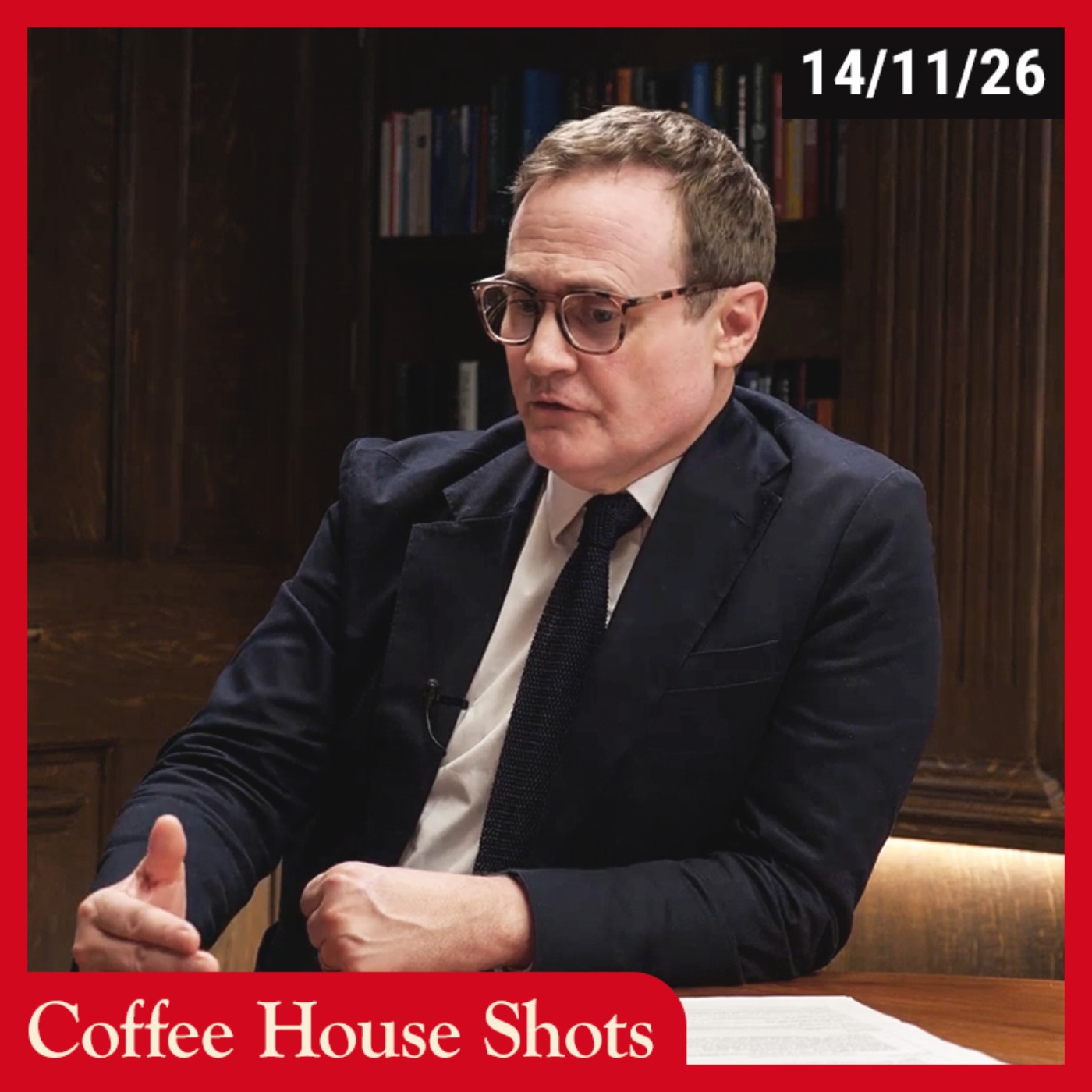

 Coffee House Shots
17 Aug 2026 · 27m · 13 chapters

Coffeehouse politics discussion about Reform UK’s welfare/immigration agenda and internal party discipline, focusing on Zia Yusuf’s online tone and Reform’s readiness to govern.
Tim Montgomerie, founder of ConservativeHome and launching “Reform Home” (later renamed “900 Days”), and Tim Shipman (host) and James Heal (co-host).
Montgomerie is a right-of-centre political commentator/party insider; he says he helped set up Reform’s early party organisation and has travelled to meet members.
Reform plans to ban foreign nationals from benefits, overhaul “personal underpayment,” and cut about £50bn from welfare; this may require Brexit renegotiation. Montgomerie argues Yusuf undermines Reform by freelancing on Twitter, not being a “team player,” and damaging trust with “deportation” messaging.
Yusuf attacking Robert Jenrick and calling Ben Wallace a “traitor”; Nigel Farage’s criticism of Yusuf; Montgomerie’s “Anne theory” on needing “flagship” NHS/education policies; Farage’s alleged weakness in hostile TV interviews and a £5m declaration controversy.
Written by AI. May contain mistakes.
Discussion on recent events and reform policies in UK politics.
“Reform territory, perhaps, for your book.”
Analysis of the reform party's plan to overhaul welfare benefits.
“Yeah, so essentially they're going to ban all foreign nationals from receiving benefits.”
Exploring how Brexit negotiations could affect welfare and immigration.
“Everything comes back to migration, doesn't it?”
Examining leadership roles and internal conflicts within the reform party.
“And this all had Robert Jenrick's name on it.”
Discussion on Zia Yusuf's influence and actions within the reform party.
“The first 12 months of his involvement in reform, from July 24 to maybe June 25, he was mostly offline in many senses.”
Critique of Zia's communication style and its impact on the party.
“putting off some of those reform curious floating voters who might have come your way?”
Analyzing Nigel Farage's ambitions and the political landscape.
“But actually, in terms of being willing to sort of really play as a team player, he has regularly, James, you've mentioned, you know, his omnipresence on Twitter.”
Discussing the obstacles and strategies for the reform party's future.
“You know, he doesn't have a chief of staff, doesn't have regular meetings with his MPs.”
Introduction to the idea of a platform for reform supporters.
“and being almost as offensive as possible.”
Exploring the necessity of honest dialogue within the reform party.
“And it's not going to be called Reform Home, it's going to be called 900 Days, which is what I hope we have until the next general election because we need every single one of them to prepare.”
The discussion explores the need for internal debate and reform within the party led by Nigel Farage.
“Whatever Nigel says, we need a later election and to be ready for it.”
The conversation focuses on the need to address tactical voting and improve ground operations.
“Because I think one of his weaknesses, there's people around him who've been around him for quite a long time who, if there was like a competitive sort of tendering process or whatever, I'm not sure they would survive.”
Discussion on the necessity of coherent health and education policies to improve public perception of the party.
“And particularly on deportations, which in some ways goes further than even Trump has suggested, actually.”

Get the gist, explore an idea or ask about something said.
 Claude
On Coffee House Shots, what are the key points of this episode?
Searching your listeningAutomatic transcript. May contain errors.
0:00Tim Shipman: Business is booming. Is your fulfillment ready for peak season? Switch to ShipStation now and handle more volume with confidence when it counts. ShipStation connects Shopify, Amazon, TikTok Shop, and over 200 more integrations with one platform that does it all. You can manage orders, sync inventory, track returns, all automatically. Everything your operation needs, all in one place. Right now, qualified shippers get a real dedicated person to get you set up and switched over for free. So when peak season hits, you're ready to go. Switch today at ShipStation.com, code audio.
0:37James Heale: Hello and welcome to Coffeehouse, the spectators' politics show. I'm Tim Shipman. And I'm James Heal. And welcome back, James. You have been in the north of England. I have indeed. Reform territory, perhaps, for your book.
0:50Tim Shipman: Well, I certainly saw Clute Nightclub, which of course was once guarded on the door by one Dominic Cummings.
0:57James Heale: Anyway, since you've been away, what's been happening? We've got reform back sort of in the centre of political events. Announcement this morning about their welfare policy. Just talk us through that.
1:06Tim Shipman: Yeah, so essentially they're going to ban all foreign nationals from receiving benefits. They're going to overhaul the personal underpayment system. And effectively, they say it's going to take 50 billion out of the welfare bill in order to kind of free up cash for other spending. And that's been worked with a number of different think tanks. The whole plan is to really show that the reform is tough on welfare and also it kind of fits in with the political economy of reform, which is that we've got too many people who are sort of immigrant versus native, assuming people coming to the country who are taking resources.
1:31Tim Shipman: So in the kind of battle for said resources, they're redistributing that towards kind of the British people, what someone like James Orr would maybe call the politics of national preference. Everything comes back to migration, doesn't it?
1:42James Heale: I mean, they did crime all of last summer. They did some crime justice stuff a couple of weeks ago, but even that was all about foreign nationals. It all comes back to that. It's a way of weaving the big theme into all the others. I dare say when they do health, we'll hear similar things about access to the health service and costs.
1:58Tim Shipman: and all that kind of thing. Quite. And I think the interesting thing that really came out at today's press conference was how much a lot of this is going to be dependent on potentially reopening the Brexit and renegotiations, something obviously you know a lot about, Tim. But in terms of actually having things such as talking about foreign nationals who are here in this country, EU nationals, are claiming benefits, that might need to lead to a renegotiation of the kind of deal that was struck with Boris Johnson, whereby expats in Europe get those same services. So potentially a lot of kind of jaw-jaw in the future of this plan was to go ahead.
2:26James Heale: And this all had Robert Jenrick's name on it. Yeah, and what Lee Anderson was supposed to be there, sort of welfare guy. What's gone on there? Lee Anderson's away, I think, at the moment. I don't know if he's away because he didn't have anything to do with it or he's away because he, I don't know.
2:38Tim Shipman: It's one of the things I don't really know in terms of the Lee Anderson brief. Obviously, he's now party chairman. He was given that role after David Bull, and he obviously speaks very much about welfare, but he doesn't seem to be taking certainly a policy lead on it. He certainly fronted announcements in the past, but it does seem that the policy workers may be doing about others in the world.
2:53James Heale: Well, look, reform appeared to still have a sort of coherent offering around the set themes that we're familiar with. But internally, they seem to have been having a bit of a sort of shindig in your absence. It's almost like you sort of step away and write your book about the great triumph of reform, and then they try to undermine you by it all having a bit of a row. And Zia Yusuf's been putting noses out of joint.
3:15Tim Shipman: Yes. He is very keen on the old Twitter. It's quite interesting. The first 12 months of his involvement in reform, from July 24 to maybe June 25, he was mostly offline in many senses. and actually did a lot of work in setting the party up. But the 12 months since then, he's been very online and there's a merit to that in some senses in that it kind of keeps that link with the base at a time when many of them feel that their party's losing identity, but it also potentially causes fights and some of them, other people in the party, regardless of unnecessary ones, such as the bust up last week with Ben Wallace who he called a traitor.
3:45James Heale: And one of the people who took umbrage at that is joining us today. Tim Montgomery, founder of Conservative Home, soon to be founder of Reform Home, I believe, which is going to be a platform for supporters and people in the party to discuss what's next. And there's a lot to talk about, isn't there, Tim? There's a lot to discuss in terms of the direction of travel here. You took Zia to task on Twitter for some of that language. And actually, Nigel Farage sort of said he did think he'd gone a bit farther. You're not the only one who's beginning to sort of raise concerns about Zia's tone, if not the content of his political announcements.
4:21James Heale: What's going on? You feel he's sort of damaging the brand a little bit, putting off some of those reform curious floating voters who might have come your way? I don't think he's interested so much actually in reform curious voters. If you try and understand what he is doing, it's difficult in trying to understand the man. I think if you understand him as what he does as he wants to succeed Nigel Farage, a lot of almost everything he does makes sense. He's completely uninterested, it seems to me, in unwinding reform's number one problem, which I think is tactical voting against us. I think he reinforces that.
4:58He's incredibly loyal to Nigel, but it was unprecedented for Nigel to criticise him last week, but did he take down the tweet that Nigel couldn't? No, he wouldn't. So he's loyal to Nigel, as I think he has to be if he wants to succeed him. But actually, in terms of being willing to sort of really play as a team player, he has regularly, James, you've mentioned, you know, his omnipresence on Twitter. He has consistently freelanced on Twitter on, for example, accepting conservative candidates like Shuela Bravman, attacked Robert Jenner, even though he knew they were being wooed. But it was his way of trying to undermine that policy.
5:44So I think the report at the weekend, and it was not me on this occasion, that talked about Nigel falling out of love with Sia. I think that's true. I think Nigel would definitely want to keep him in the camp, but I think he needs him to basically be a team player and to be loyal to what Nigel wants.
6:03James Heale: What do you think Farage does want then? You've spoken to Farage. I mean, what does Nigel Farage want out of this? I mean, there's always been a suspicion about, does he really want to be prime minister or would he rather be that kind of leader of the sort of the outside opposition? It feels to me and to a lot of people who write about politics that for a period, particularly when people like Robert Jemmerick were coming over, there was an attempt to construct a sort of shadow cabinet to look like a government in waiting. Some of the work Danny Kruger is doing, which we've covered a lot at The Spectator, is interesting.
6:33James Heale: There's a lot of stuff needs sorting out in this country. and if a reform government was a kind of year zero to tackle a lot of those problems, I think a lot of people would be interested in it. But it feels like the Clacton by-election, some of the stuff Z is coming out with, is a very, you know, embrace the base and get out the base kind of strategy rather than one that's looking at trying to round up 35 % of the vote and win a majority. Well, look, when I joined reform, we were still behind in the opinion polls And I thought this parliament would be a battle for supremacy on the right. It clearly partly is that.
7:09But I didn't really expect it necessarily to be reformed to be a contender for government. And I think Nigel is himself. I'm a small player in the process. Nigel's the central player. I think he's having this process going on as well. He stood on the last general election. He wasn't standing then. He was standing. I wonder whether he fully anticipated Rumpkin. I'm sure he didn't. anticipate how good potentially a reformist position was in. And there's one thing to sort of think, yes, I'd like to be a prime minister. And then there's another thing to actually prepare for becoming a prime minister.
7:45And what I've said directly to Nigel is there's all sorts of things that I've talked to about, that other people have talked about, that need to be done if we are to be a credible party. You know, he doesn't have a chief of staff, doesn't have regular meetings with his MPs. There isn't someone at shadow chancellor level in charge of selecting seats, candidates for seats, which is probably the biggest task reform basis. I could go on. I've got a long list here, which I won't bore all your listeners. Not least because I don't want to spike the guns of reform at home, which won't be called that, but that's another thing.
8:20And I've said to Nigel, you agree with these things. You agree that, you know, I think Nigel is probably one of the best media performers in the last two decades, in Michael Crick's biography. You know, he can give good television interviews, he can speak to people on the streets, he can do platform speeches, but what he cannot do is if it's about him, his personal circumstances, his personal finances, particularly if he's interviewed by a woman, he's not good. And I said, you need to prepare for these interviews. You can't just appear on television and say, I want to buy Ferraris.
8:54James Heale: You mean practice a bit? Yes. And have someone chuck nasty questions at you and keep your nerve and hold, you know, keep your composure, essentially. Everyone has flaws. Nigel Farage is not perfect. Because even Farage, let's be frank, is now sort of saying, oh, well, perhaps I didn't fill in the form in the way that I should have done. It seems perfectly obvious that if he was preparing to return, that he would. I'm sure he had legal advice saying it may not be strictly necessary to declare the five million pounds. Well, I don't know. I take the man at his word. He says he did. but even if he had legal advice, that is not good political advice and that is different.
9:30James Heale: It would have been wise to declare it, it seems to be. And you can sort of see that even he is kind of semi-conceding that now. I think a lot of the anger we see when he does do those television interviews is I think he's probably angry at himself. He probably realises he made a mistake. But I think the general point that this clearly is Achilles' heel that when he is facing hostile questioning, he doesn't perform well. It's only going to encourage more of it. Everyone sees it. And so if you're Labour or one of his press opponents like the Sunday Times, you will go after this because he doesn't react well.
10:07So if he wants to be prime minister, you know, he needs to start tackling the sort of thing that I have just listed. And the fact that he hasn't does make some of us wonder. And after Clacton, let's hope we'll begin to see some of these items ticked off. And he'll acknowledge that, I think.
10:25James Heale: And the thing with Zia, Farage has always been very good at knowing where the line is and going up to it and no further. And it feels like Zia sort of likes stampeding through the line and being almost as offensive as possible. That's part of the concern that I think you have and some of the other, perhaps the people who've crossed over. Is this just whinging ex-Torys who don't like the cut of Reform's jib? You wanted it to be more like your old party than it has proved to be. Being a member of Reform is like a tightrope act every day. Sometimes people say, do you ever regret joining Reform? I regret joining Reform every day at some point because something weird happens.
11:03But fundamentally, if I had to choose whether to join the Tories or Reform now, I would definitely join Reform. And the reason is, all sorts of reasons. For a start, there's the members. The members are amazing. I travel all over the country talking to them. They really are the backbone of Britain. They are the upper sort of working class, the trade. They're absolutely the caricature. And when I was at Birmingham conference last year, I remember the barman saying, you know, we have all sorts of people here. You know, I'll drink lots of produce, I'll drink all of them. That was a Birmingham accent in case people weren't sure.
11:37But, you know, they play hard, they work hard, and they only talk about how they want to change the country. It's not like when you're at a Tory conference, whatever, if we do this, we might win this seat or whatever. It's not a tactical game for these people. This is about the country they thought they were living in. Reform can reach parts of England, even Scotland and Wales, but the Tories never can. So for all of reform's problems, Nigel can, with a flick of a coin, change the party's economic policy if he wants to. He's still absolutely in charge of this thing. Unlike the Tories with their ideological history, Reform can do what Trump has done, or Boris failed to do, which is to recognise the nature of the votes for the right-wing parties has changed.
12:27So we can change our economic policy to recognise people need more economic security in a way that an economically liberal Tory party cannot. And so if reform get it right, the sky's the limit. But we're not getting it as right as I think we need to yet.
12:43Tim Shipman: You mentioned about reform home, and I think this is quite an interesting idea. First of all, tell us about where you're at on that. Because you floated this few months ago. Tell us where we're at on having, because someone has a long time.
12:52James Heale: It's a bit like Hill's book. We're all waiting. We keep being told it's imminent. Tomorrow. Yeah, we'll be here at Christmas. I'll still be saying it's imminent. I've not, believe it or not, there'll be people in reform who will laugh at what I'm about to say. But I try not to say things which are deliberately unhelpful at particularly the wrong time. And there's been so much, you know, always so much happening in reform, but there's been so much happening recently that doesn't seem to be a right time to launch it. But it really is imminent this time. And it's not going to be called Reform Home, it's going to be called 900 Days, which is what I hope we have until the next general election because we need every single one of them to prepare.
13:33I think winning the next election is the easiest part. And I think we have a Tory party and a Labour party that have failed at the same time, but it'll be governing that's the tough thing. And if we were to be elected and mess up, and we're not just reforms in trouble, the whole idea of democracy in those countries, because one party after another will have failed. And so this website will be about what does reform need to do in order to prepare for government. And I think people, voters will kick the tyres on us in a way they haven't done with any other political party for all sorts of reasons.
14:07We don't need an early election. Whatever Nigel says, we need a later election and to be ready for it.
14:12Tim Shipman: I do wonder, though, I mean, you talk about sort of having that kind of honest conversation. Do you think reform is capable of that? Because it seems that there are people who are either completely in the tent and will not vouch for any criticism. And there are outside the tent who are completely blinded by their dislike and distaste and hatred even for Nigel and the party. But can this really exist as a kind of critical friend? Well, if I showed you my mobile phone, the text I received after I made a certain intervention on the World at One last week, and there's a lot of people who are not happy at me saying anything.
14:42James Heale: But equally, I would say I've had a lot of calls from people who agree with the general thrust of what you've been saying. Some of those are former Conservatives, but not all of them are. And people who are sort of saying the difference between 25 % and 30 % could be the difference between a majority and being, you know, a very distant opposition party that's not really contemplating power. and what you've talked about are the sort of no one doubts that Farage is a great campaigner and that those voters are there for the taking and they're you know they want change and they want something coherent but what are the professional you know in a sense what compromises has Farage got to make in order to turn this great campaigner into a potential leader what you know where are you on you know party organization it felt like from a standing start you did you know Zia actually He was largely responsible for this for the first year.
15:38And he got uncontrolled vesting, which people hadn't. And you notice since he's not been doing vesting, it's got worse again. So Zia has massive qualities. I wouldn't ever suggest otherwise.
15:47James Heale: But how good is the vetting? How good's the polling? How good's the sort of information network? How good is the sort of, you said no chief of staff. It feels still a bit like Nigel and his, the people who he really trusts because they've been with him a long time, but who don't criticise him, would not have said, oh, Nigel, I think you should declare the£5 million. They would have just gone, sod all those people out there. 100%. So how do you keep those people but, you know, widen it out and get a more sort of, I mean, at the risk of sounding like a sort of old centrist idiot, a sort of professional kind of architecture around the great campaigner.
16:28James Heale: What is missing and what do you need to do? Well, people often say that's a brilliant question and they don't mean it. It really is a brilliant question. because it gets to the heart of it. And I'm going to tie it with what James just asked me beforehand, is that Nigel, when I joined Reform and handed over my cash, I said, are you absolutely sure you want me? Because I was a pain in the arse for David Cameron when I ran Concert of Home. And I said, I intend to be a pain in the arse, but hopefully he said, I'm surrounded by people who tell me what I want to hear. He said, it's very nice. But I said, we need internal debate.
16:59And to be fair to him, he has never said, never undone that. He's always upset, welcome, and never criticized. So let's test that now. Because I think one of his weaknesses, there's people around him who've been around him for quite a long time who, if there was like a competitive sort of tendering process or whatever, I'm not sure they would survive. But let's have that process. Let's see where they were. I don't know. So take opinion polling or the operation we have on grassroots level. The by-elections we spoke to, and I spoke to others, we were going to win run-corn handsomely. You know, we won by six votes.
17:39I said, I'm doing a cafe, we'll be fine, so let me know, et cetera. And they thought they were close on the night of Makerfield. So the intelligence was wrong. I recommended a very... And is that polling or door-knocking? That's door-knocking. Polling, come on to it if we've got time. But the ground operation, I had someone from the Tories who was willing to join and he'd be paid, but he was a brilliant person on the ground operation. And the reaction was, look, we don't want Johnny Come Lately's taking over. You know, people around side, Nigel Farage. The opinion polling, what I hear, and I have not seen it myself, I'm not privy to them, but people who have seen our internal polling, who have also seen the kind of internal polling that the Tories see, say ours is just so much thinner.
18:28It's not asking the awkward questions. It's not understanding why we have an understanding of the nature of our women problem, for example, or how you'd address tactical voting. Now, that may be because we're not spending as much money as the Tories spend on, but I don't know. But what I do know is that our polling is not of the quality that the Tories are using. I do know that our ground operation is not what it should be and that possible solutions that I and others have suggested have not been followed through.
18:55James Heale: Because the perception is that, particularly in council by-election, that reform are up there with the Lib Dems as the best kind of ground campaigners, you know, winning those kind of seats. But that's because there's very little tactical voting in local elections. I think it's the ability to address tactical voting that means that we are under-forming in the parliamentary by-electrical thing relative to the local vote. And is there some way of counteracting tactical voting that's not just, as Zia would have it, being a bit wet and centrist and not quite so offensive to people? Is it the tonal thing, or is there a professional kind of thing you can do as well to counteract that in terms of targeting the right voters?
19:34I don't think we should retreat from any of our positions on immigration or welfare or crime. We should talk more about crime, actually, but that's another issue. What we haven't got is, I've called this the Anne theory of politics in the past, is like we haven't got something like a policy on the NHS or a policy on education that people like my mum, who basically agree a lot with reform stuff, but find our tone and our attitude just put on. They want us to, I think having a flagship policy on health through education to show that we're interested in the predictable issues that we come across.
20:13So I don't know about your experience in TV. What I've realized over time is that I think I've made a brilliant argument and people will say, oh, you looked a bit tired. You're wearing a tie or whatever. If I'm losing an argument or whatever, I know that if you smile and look reasonable, you'll be forgiven. If you look angry, you can win the argument and people still won't. Looking reasonable on TV, looking like the sort of person you'd have as a neighbour, looking the sort of person who you would be happy for your daughter or your son to marry. Nigel, at his best, is one of the best on that. Zia, not so much.
20:45And we just have to look like decent people because if we don't look like decent people, even people who agree with us on Deepwater, they won't trust us with those policies. And you have to pass a basic decency threshold to unwind that tactical voting.
21:02James Heale: And particularly on deportations, which in some ways goes further than even Trump has suggested, actually. And, you know, I think a lot of people theoretically agree with it, but if they start seeing people taken out of houses at the end of their street, then they might start to feel differently about it. And Zia seems not to really care about the sort of presentational aspect of that concept. You do not want to look like you're too enthusiastic about deporting people. You want to look like you are reluctantly having to do something because all other avenues have been explored and the country's been ripped up.
21:34People need to know. And also that you make reasonable, consistent judgments. You don't say one minute and someone should be locked up for criticizing, for Instagramming a picture, a T-shirt with Nigel Farage on. And then, you know, anything much worse is sort of completely forgiven a reformed person. You have to be consistent. Because if you're not consistent on those sorts of issues, people will think it's all just opportunism.
22:01Tim Shipman: Tim, you've been in reform now for about 18 months, or more than 18 months, which I mean, yeah, nearly she is now. How have all the different Tories found their experience coming across? Have some adapted to it better than others? I think there's still quite a lot of scepticism inside reform about people like me. More at the top, at the senior level, not neither than Grassroots members are fine. mainly because a lot of them are stories themselves. It's amazing when you go... It's an interesting thing about... The split on the right is the biggest problem, I think, well, for the right. We've never been more divided in my lifetime.
22:37I think the chances of a Labour-Libdem majority after the next election are quite high. So we've got our work head out.
22:45James Heale: And getting higher if you don't tackle the tactical voting. That's the point, isn't it? Andy Burnham could call an election next spring with the expectation of winning a majority with about 28%, 29%, I would have thought. Absolutely. And what I mentioned to these reform members is that individuals all seem to have got these funny arrangements where they're trying to deal with it. So there's a husband's in reform, the wife is in the Conservative Party. They're both in reform, and one gives a bit of money to the Conservative Party or vice versa. You know, there's sort of a personal family, a household level.
23:18this right-left, this Tory reform divide is being managed. But the right at the top, you know, Kemi, Baden and Nigel Farage, there's no management or subtlety to managing this whatsoever. And I hope I've been clear in this podcast. I am, I would stay reformed whatever now. And Zia will think now that I am the sellout that he probably does now think I am. But the war between the two parties, Kemi's rhetoric towards reform, Zia's rhetoric towards any other conservative. This is meaning that not only do we have a division on the right, it's becoming more and more unhealthy, more poisonous, more personal.
23:55James Heale: And is that true of the senior Tories who've come over? Because we were told Zia and Jenrick bred together the day he crossed over. They were all having a right old time over dinner. It's all been very smooth. Is that still the case or is it getting more tense, do you think? I don't think it's the most beautiful relationship there is on earth.
24:16Zia did not talk to me for three months when he found out I was involved in bringing Jen Rick over we're not talking again now it's been on and off I think this might be permanent this time the difference between us but he's followed me on Twitter that's the illustration of how that's the bit doesn't get more serious than that Jen Rick and him did get on very well I think then there was that tweet where Zia criticised Jenrick publicly. Again, I don't know what the thinking was behind that. Well, was there thinking or was it just gut, instincts and food? I don't know. But there are a lot of people who are on no speaking terms with Zia and it's nearly always Zia who initiates this.
25:01And it needs to end. You cannot behave like a child in politics. You cannot have litmus tests, you know, on so many litmus tests where you stop talking to people. And I genuinely pay tribute to what series, like I've mentioned, you know, how brilliant he was on the vetting thing. He made the party organisation work. He has so many qualities, but he has to be a team player. And I won't keep saying that because I repeat it myself.
25:27James Heale: And is there a sign of Nigel Farage dealing with some of the stuff that you've talked about? You talked about the need for a health policy. Now, we all know historically, Nigel said some things about the health service which are not that popular with probably a lot of people who might now vote for reform. But in order to move on from that, is someone working on a coherent health policy? Is that something we're likely to see?
25:47Tim Shipman: And just to say also, I mean, he told me when I went to Clacton a few weeks ago that he's going to be expanding the shadow cabinet. So potentially two or three new names and you could see a health spokesman as a way of dealing with some of that. I know, you know, Gwendolyn Taller and others who at the moment are very much involved in selection candidates at the moment. There are some really good health professionals, you know, want to stand as reform candidates, senior surgeons. and just having a senior surgeon, even without a policy for a period, but who could be our spokesperson. That would change public perceptions.
26:20Because not having, as well as our education spokesperson, which is good, but not having a health spokesperson, it sends a certain message, doesn't it? You haven't got someone appearing on Question Time, ideally a woman, because we have that gender challenge, to just show that we're taking the issue seriously, even if we haven't quite got you know a full agenda
26:40Tim Shipman: for reform yet Well that's all we have time for our Coffee House Thank you Tim Thank you Tim Thank you for watching Coffee House
27:11Tim Shipman: Hey, I'm running out to drop off a stack of letters and packages. Need anything shipped while I'm gone? Save the gas. Stamps.com lets you print postage and schedule pickups right from your desk. Sync your contacts into the address book, get detailed accounting insights, and get notified the moment your certified mail is delivered. All from my desk? All from your desk. Join the 4 million businesses using Stamps.com right now with code podcast and get your free welcome gift. Stamps.com code podcast. Taxes and fees apply.
Reform UK's Zia Yusuf spent last week putting a few noses out of joint, not least by calling the former Conservative defence secretary, Sir Ben Wallace, a traitor, a tweet Nigel Farage took the unusual step of criticising in public and which Yusuf declined to take down. Tim Shipman and James Heale are joined by Tim Montgomerie, founder of Conservative Home and now a Reform UK member, to ask whether Farage has fallen out of love with his home affairs spokesman.
In another exclusive for The Spectator, Montgomerie also announces the upcoming launch of 900 Days, the publication he is launching as a new independent online home for Reform UK.
Produced by Henry Lloyd and Oscar Edmondson
Become a Spectator subscriber today to access this podcast without adverts. Go to spectator.co.uk/adfree to find out more.
For more Spectator podcasts, go to spectator.co.uk/podcasts.
Contact us: [email protected]
Hosted on Acast. See acast.com/privacy for more information.