Ask ChatGPT


The final PMQs of UK Prime Minister Sir Keir Starmer, against Reform UK leader Kemi Badenoch, with discussion of tone, tributes after Anne Widdecombe’s murder, and what the exchange suggests about Badenoch’s style and Starmer’s legacy.
The episode is hosted by “Coffee House Shots” commentators. James and Tim (co-hosts) analyze parliamentary performance; Noah and Patrick Maguire are referenced as other writers/colleagues.
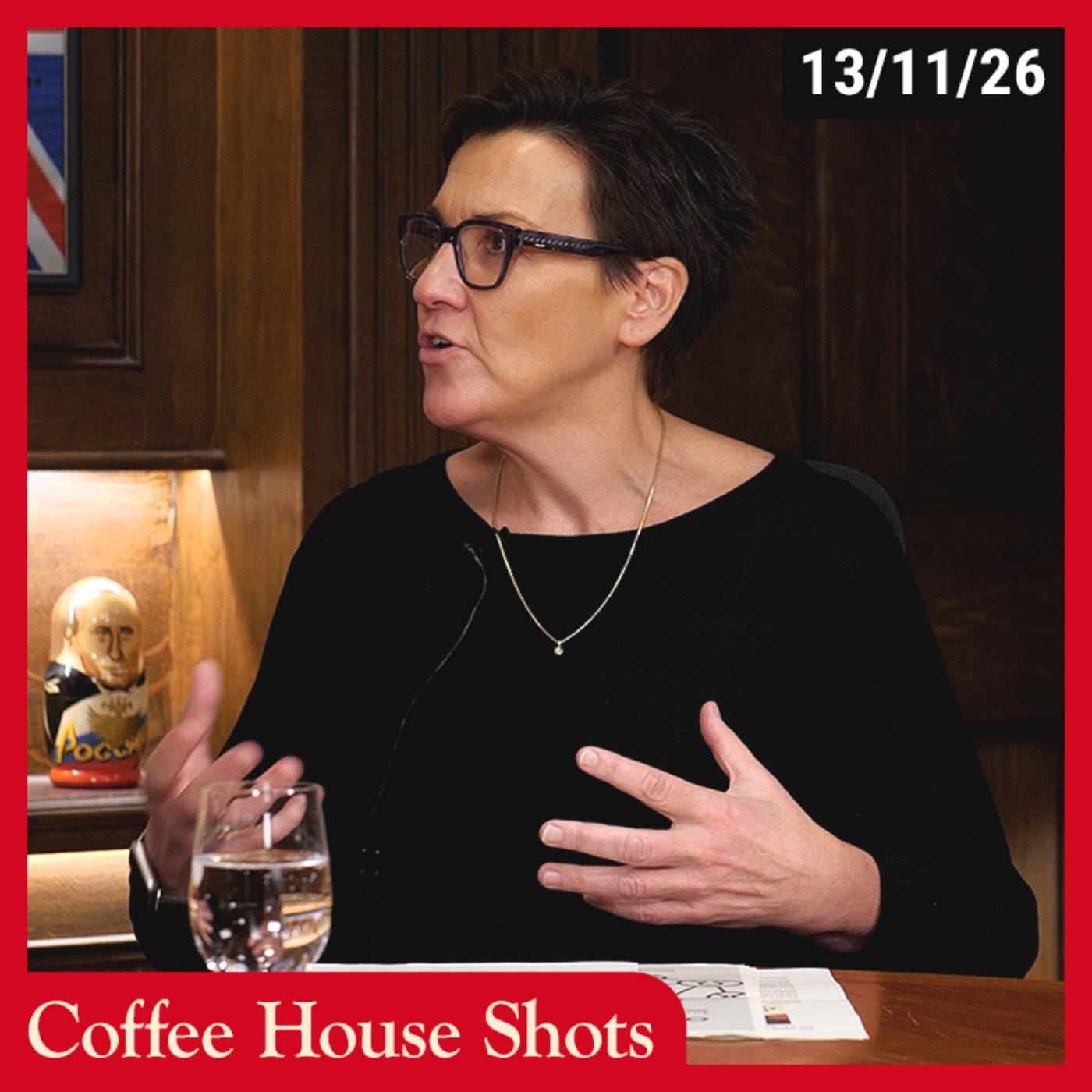
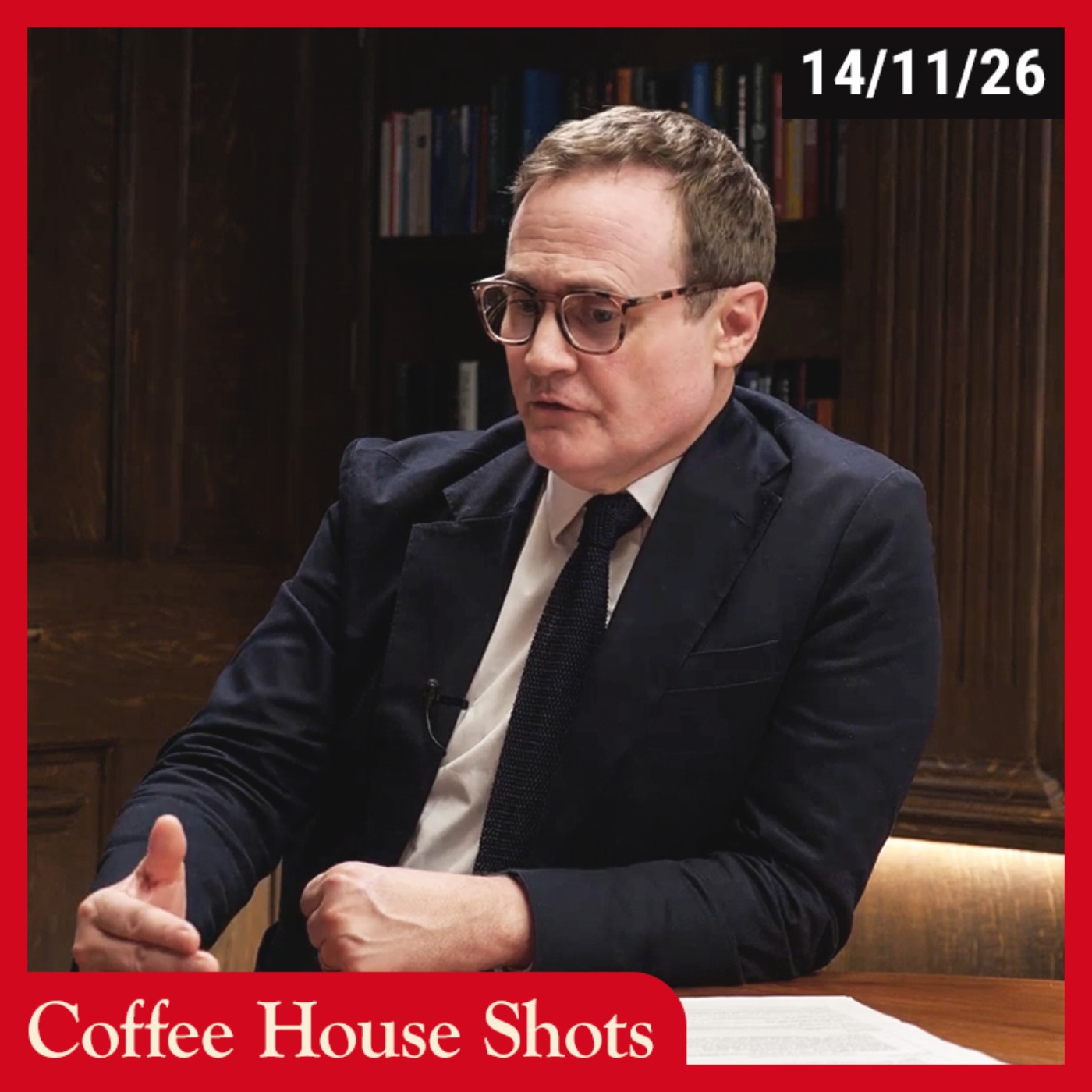
PMQs was unusually restrained and “love fest” rather than feisty. Starmer seemed wooden and read from notes, but was gracious, thanking staff and acknowledging sadness. Badenoch showed a “playful” side and cross-party competence, not just attack mode. Labour MPs’ applause felt ironic; Starmer’s departure seemed less “historic” than earlier exits.
Starmer’s England–Argentina match comment; proposal of a shield like those for Joe Cox and David Amess; Badenoch’s private outreach story about Starmer after a family death; Danny Kruger’s question being binned; football-related questions and “football coming home” jokes.
Written by AI. May contain mistakes.
Discussion on the tone and atmosphere of Starmer's final PMQs.
“ever coffeehouse shots in which Sir Keir Starmer will be taking to the dispatch box for PMQs because today was his last head-to-head with Kemi Badenok.”
Analysis of Starmer's legacy and Badenok's performance during PMQs.
Discussion on the mixed sentiments surrounding Starmer's departure.
“are making and it's a point he's made is he he doesn't want sort of name calling either inside the Labour Party, he doesn't want people briefing against each other.”
Final reflections and a humorous closing impression of Sir Keir Starmer.
“But look, I hope I'm not playing into gender stereotypes here when I say I couldn't help but feel a bit touched by the way the whole PMQs was handled.”
Listeners will hear a heartfelt farewell song reflecting on connections.
“They'll be happy to know that the Jews won't be known.”

Get the gist, explore an idea or ask about something said.
 Claude
On Coffee House Shots, what are the key points of this episode?
Searching your listeningAutomatic transcript. May contain errors.
0:00Tim Shipman: Ever notice how every new AI tool asks you to explain your business to it all over again? Google Workspace with Gemini skips that. You get Google's AI built right into the premium versions of Gmail, Docs, Sheets, and more. No new tools, no extra logins. Just one subscription that gives you personalized AI right inside your actual workflow. Make work less work. Try Google Workspace with Gemini at goo.gle slash workspace with Gemini.
0:37James Heale: speaker this will be my last answer from this dispatch box every prime minister knows when they take up the torch that the day will come when they have to pass it on that day has come for me this is the end of my political journey hello and welcome to coffee house shots the last
0:58Noa Hoffman: ever coffeehouse shots in which Sir Keir Starmer will be taking to the dispatch box for PMQs because today was his last head-to-head with Kemi Badenok. It was very much a love fest between the two and there was even some warm words exchanged between Richard Tice and Sir Keir Starmer which is something we don't see too often between reform and labour. James what were your thoughts? Well
1:24Tim Shipman: Well, look, I think that it's very hard to have a particularly feisty or controversial valedictory prime minister's question that we've grown so used to them in recent years. This was Keir Starmer. He's looked demorp happy in recent weeks. Very much pressure off talking about, you know, his final thoughts and legacy. Going crazy, letting his hair down. Letting his hair down. He wanted to turn up with a sort of stellar and a swagger at the dispatch box. There was no stellar and a little swagger. but overall I think his moment was when he said at the beginning that you get the question of number one Mr Speaker which is they list the Prime Minister's duties famously Tony Blair in 2007 said and I shall have no such meetings later today Keir Starman said he had one very important appointment at 8 o 'clock this evening in front of a television set and that of course is the England-Argentina match which will be of much more interest to most people out there but overall it was obviously slightly tempered by the awful murder of Anne Widdicombe everyone was very classy on that The Prime Minister said that potentially they should consider a shield being put up in the manner of Joe Cox and David Amess.
2:25Tim Shipman: But it was a kind of interesting one. I think Kevin Baydok, actually, she spoke a few moments about the sort of private relations that she has with Keir Starmer, kind of when moments such as the Prime Minister's brother died, she reached out to him. So we saw a little bit of the private side of PMQs coming to the public for. She also tried a few quasi-political questions when she talked about how she wanted to get the Prime Minister to know why the levers of government were not working. but overall it was a fairly kind of restrained PMQs most notable I think of course for the humbug of the Labour side which cheered him to the rafters having just knifed him in the back
2:55Noa Hoffman: Tim did you enjoy this calm and collegiate version of PMQs?
3:01James Heale: Yes and no Noah I think it's fair to say look like all good politicians I have three points the first is that this in some ways as James says was the House of Commons at its best Starmer thanked Baden-Ock for quietly reaching out to him in moments of stress they were all good in paying tribute to Anne Whittacombe and you know it was a generally a good tone Starmer was desperate to try and sort of construct a legacy for himself had invited a lot of people into the public gallery whose lives had been affected he was affected by their stories and in consequence he did legislative things which then affected their lives and aspects of that were good.
3:44James Heale: The second point I would make though I'm afraid is that even doing that Keir Starmer was a little bit wooden he was reading a lot of it out it didn't it didn't really sort of hum and sing in a kind of quite to the peaks of emotion that I can think of quite a few other politicians managing to reach in those circumstances. The third observation I think is probably from my perspective the most interesting this was a very very good Kemi Baden-Ock performance and I thought interesting because she even joked at the start you know I've I've been warned about my tone today and she said well I looked back at what Keir Starmer did to Boris Johnson on his final one which was hardly warm and comradely it's fair to say but then said you know I'll be much nicer to him than he was to Boris Johnson and she proceeded to make a series of sort of cross-party interventions on Ukraine and stuff like that but there was also as it went on a little bit of sort of partisan fun there was a little bit of mockery a little bit of sort of teasing him and I thought actually quite effective we've you know Baden-Ock since she got better at this game um kind of last autumn has made a real sort of pitch of really going for Starmer you know battering him hard um and ridiculing him and sort of you know doing what she says is panto which is what David Cameron and Ian Duncan Smith and others who've been in that position have advised her to do and that has broadly been quite effective but this was a different Baden-Ock playful almost and Patrick Maguire our great colleague from the Times made this point earlier and I think it's the right one he said we wanted to know she has another gear because in the parlance of Spinal Tap she has spent the better part of nine months turning it up to 11 and here we saw Bader not quite effective at sort of six and a half seven um maybe even lower sort of um volume than that and actually I think that will stand her in good stead once Andy Burnham is standing opposite no I've done a big piece in the magazine on Burnham this week and the point that his aides are making and it's a point he's made is he he doesn't want sort of name calling either inside the Labour Party, he doesn't want people briefing against each other.
6:00James Heale: But even in Makerfield, which was basically an existential battle against reform, he wasn't particularly rude about Nigel Farage and doesn't want to be. Whereas Keir Starmer's approach was to sort of brand reform neo-fascists and all the rest of it. And actually, I think Burnham at the dispatch box will be a very different beast from Keir Starmer. And I think there will be more humour. I think he'll be able to deflect and deflate Bedienk if she just comes at him with all guns blazing. He'll sort of say, you know, chill out. Why are you being so aggressive? We're trying to sort these problems out.
6:32James Heale: And I think there'll be... She'll have to find her feet, and it will probably be a little bit difficult given the following wind he's got from his own party and the general air of goodwill that's about the place at the moment. That obviously will start to evaporate the second Burnham takes the job, slowly but surely. But I thought if you're a Conservative watching that, you thought that Kemi Baden-Aid has rather more scoring shots than she's perhaps shown over the last few months. And I think looking forward instead of back, most of it was looking back. That to me was the most interesting thing about today.
7:03Tim Shipman: I thought it was quite a tricky PMQs for her in the sense in that she needed to appear magnanimous, no point sort of kicking a man when he's down, obviously line up for Andy Burnham, acknowledge the sadness of what happened last week with Anne Widdicombe, and also sort of try and raise a few political points in the sense that, hang on a sec, we're about to have six weeks without any PMQs, we're about to have any scrutiny of the new guy coming in. So I think she did that quite well. And having those different layers, I think it's important. She's been great on the attack, but now she showed she can kind of become the sort of the great, we just call them men of the House of Commons, a great man of the House, you know, a proper parliamentarian.
7:36Tim Shipman: I think she did show that today at a time, of course, when I think reform are showing perhaps some of their limitations, which they can turn it up to 11, certainly. But can they do the other gears as well? And I thought it was quite a sort of amusing moment to see Danny Kruger have his question put in the bin, as it's so to say, the Clacton reference. and Richard Dyskye has quite a classy question which is about the football coming home which obviously Keir Starmer was delighted about and you did see him at his happiest when he was talking about strategy and various painful political football analogies.
8:06The other
8:07James Heale: reaction obviously is an air of sadness, you know, this is another Prime Minister departing I don't think most spectator readers will be terribly sorry to see the back of him but it means the end of this
8:19Noa Hoffman: No!
8:19James Heale: We must say farewell then Sir Keir how is your manchester accent it ain't there yet let's put it like that so yeah um secure who turned up i wanted to do good didn't really know how did his best his best wasn't adequate to the task at hand and has given us a lot of fun uh over the last uh couple of years so farewell then secure we wish you well and don't look back in anger well and you know he did actually say you know this is my last sort of act in politics um we've seen you know david cameron's return and other people that you should never quite say never in this game but he does clearly seem to want to slink off into the night and badenock asked him about you know has he got advice for his successor and he basically said i will give my advice in private if wanted but not in public when it's not wanted and frankly you don't get the impression from many people around andy burnham that they I think Keir Starmer is advice that will be worth seeking on any subject outside of foreign affairs.
9:22Tim Shipman: I also think that Keir Starmer is at a different stage of life. He's in his early 60s. He wasn't someone like David Cameron, forced to go to the top job when he was, I think he was 49 or 50 at that point. So I think that maybe there is a less sense. Politics fulfills him in a less sense than did David Cameron. He might have something, and with his reports about NATO, GENSEC, but it does seem that he'll be much more happy to spend time with his wife and family which along with football are two things that clearly move him.
9:49Noa Hoffman: I do want to point out I found it quite striking at the end of PMQs when Labour MPs took to their feet to you know engage in a rapturous applause that they are actually the people responsible for him leaving and I thought the irony there was very sort of in your face but at the same time you had his number 10 team all coming out in their sort of droves to sit in the gallery and watch PMQs. Usually there's only a few of them, but they were all out in force. And there were some tears being shed by his closest staff in number 10, particularly in the communications department.
10:25Tim Shipman: I do think that, you know, there is a sense of diminishing returns with these prime ministers exits. You know, this is what the think the fourth I've talked about on this podcast in the last five years. It's very different when you watched the Thatcher speech in 1990 or Blair going in 2007 when you could probably say the country was better places after both of those prime ministers and David Cameron obviously had been working on prime minister questions for the best part of a quarter of a century and David Cameron was known for 11 years so with Keir Starmer I do feel that those closest to him clearly have a very personal connection and weeping understandably but this felt and I don't know what you thought Noah particularly in being in the house but it felt less of a historic moment than perhaps some of the ones of years gone by.
11:06Noa Hoffman: Yeah, I would say so. But look, I hope I'm not playing into gender stereotypes here when I say I couldn't help but feel a bit touched by the way the whole PMQs was handled. And by the way, Stamilino really made a point to thank his staff and his family and just the sort of graciousness and class with which Kemi handled the whole thing. So even though he might not bear the weight of history that someone like Margaret Thatcher does, I think it was a very edifying spectacle.
11:36James Heale: Yeah, I agree. And, you know, it's a comment I've made before and lots of others have too. But, you know, as they say, of a lot of departing prime ministers, nothing so much became him as the manner of his departure. And the same was true of, to a degree, of Margaret Thatcher, certainly of Gordon Brown, Theresa May in tears, you know, Sunak and Cameron slightly less so. But it was a profound moment, but I agree with James. I think it was sort of less historic and emotional than perhaps Keir Starmer hoped and intended that it might be. And as for those Labour MPs standing up and applauding vociferously, it reminded me of that great line from Yes Prime Minister where Jim Hacker is going off to a state funeral and he said, well, I've got to be there.
12:16James Heale: And Sir Humphrey says, what, to pay tribute to a great man and to bemoan his passing? He said, yes, and to make sure he's dead. And there's a sort of element of that. Labour turned up to say, thank you very much, but be on your way. and that was the sort of constitutional meaning of the event and you know it was a notable day in Parliament but I doubt it's one that I'll be telling my grandchildren about.
12:40Noa Hoffman: Savage. In the chamber actually it was interesting to see Starmer finding the opposition's jokes and gags far more funny than the rest of the Labour Party did. He seemed to be laughing a lot more than them. I think there's only one way to close this episode Tim and that is perhaps in your famous impression of Sir Kit.
13:03James Heale: We'll meet again, don't know where, don't know when but more than likely at the Arsenal watching them score again.
13:17Tim Shipman: Okay, when we cut that, can you then just blend that effortlessly into Viraline? Into Viraline. I think she's not going to put in a copyright complaint. She's been there a long time. Thank you.
13:26Noa Hoffman: We'll meet again, don't know where, don't know where, but I know we'll meet again some sunny day.
13:46Noa Hoffman: Keep smiling through Just like you always do Till the blue skies drive the dark clouds far away So will you please say hello To the folks that I know Tell them I won't belong They'll be happy to know That as you saw me go I was singing this song We'll meet again Don't know when Don't know when But I know we'll meet again Some sunny day
14:50We'll meet again Don't know where, don't know when
15:00James Heale: But I know we'll meet again Some sunny day
15:11Noa Hoffman: Keep smiling through Just like you always do
15:20James Heale: Till the blue skies Fly the dark clouds
15:25Noa Hoffman: Far away So will you please say hello To the folks that I know, tell them I won't belong. They'll be happy to know that the Jews won't be known. I will sing in this time.
16:04I'll see you next time. Thank you.
16:37Tim Shipman: I'm your host,
16:52Tim Shipman: G-O-O-G-L-E slash Workspace with Gemini.
Keir Starmer has delivered his final PMQs. It was a more cordial occasion compared to most weeks, with Kemi Badenoch exchanging jokes with the outgoing Prime Minister over their previous clashes amid a more sombre tone given the murder of Ann Widdecombe. But will this final speech go down in history? And how will Andy Burnham do things differently?
Noa Hoffman speaks to James Heale and Tim Shipman.
Become a Spectator subscriber today to access this podcast without adverts. Go to spectator.co.uk/adfree to find out more.
For more Spectator podcasts, go to spectator.co.uk/podcasts.
Contact us: [email protected]
Hosted on Acast. See acast.com/privacy for more information.