Ask ChatGPT
 Coffee House Shots
13 Sep 2026 · 15m · 9 chapters
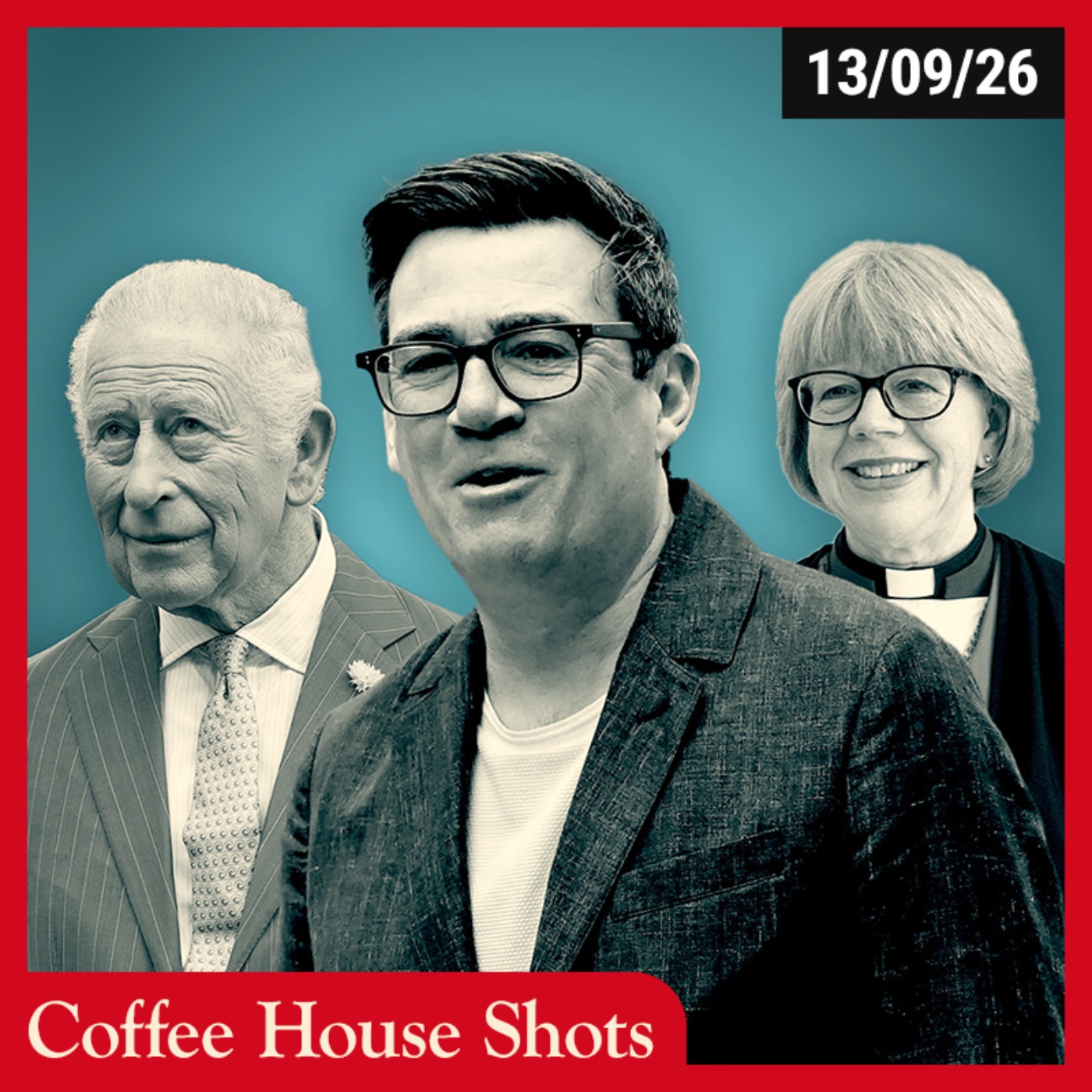
UK law bars the Catholic Prime Minister Andy Burnham (and Jews) from advising the monarch on Church of England bishop appointments; Burnham wants to repeal the restriction and asks whether the law should change.
William Moore, Features Editor at The Spectator; Deputy Political Editor James Heal.
The current statute requires those involved in bishop appointments to be Church of England members, a Victorian-era rule that effectively excludes Catholics and Jews. Burnham argues it’s unacceptable discrimination. Critics say the PM’s role is tied to the established Church and that modern PMs often rubber-stamp church recommendations. Moore suggests either tightening to require communicant Anglicans or opening the role to PMs of any faith/none; Heal notes Burnham’s “quiet” Catholic identity and compares it to past PMs of differing beliefs.
Harold Macmillan’s bishop appointment dispute; Gordon Brown’s 2007 constitutional reforms reducing PM influence; Rishi Sunak (Hindu) and Keir Starmer (atheist) as cases showing the law’s narrow exclusions; Harold Macmillan vs Geoffrey Fisher; references to abortion and “sister dying” positions in Burnham’s record.
Written by AI. May contain mistakes.
Discussion of the law preventing non-Anglicans from advising on bishop appointments.
“because, as a Catholic, albeit a lapsed one, he's forbidden by law from doing so.”
Exploration of the historical context and changes regarding bishop appointments.
“But really, it's one of those powers which used to be exercised much more often.”
A debate on whether the law should be tightened or opened to others regardless of faith.
“In that, I remember when I was a religious correspondent, two names, at least for Archbishop of Canterbury, used to go to Downing Street.”
Discussion on the intersection of faith and politics in the role of advising bishops.
“I understand why Catholics are singled out, but why Jews?”
An analysis of Andy Burnham's Catholic faith and its implications for his politics.
“I mean, never mind not church of anything, not Christian.”
Exploring the implications of disestablishment and the role of the Church in modern politics.
“He definitely seems softer on that than his predecessor did, which may be informed, I suppose, by his religious upbringing.”
Speculation on the future relationship between the church and state in Britain.
“who doesn't take the slightest interest in the church.”
The hosts discuss the decline of interest in disestablishment and its implications.
“I think you were on the money, James, when you said basically people don't really care enough now to even talk about disestablishment.”
Speculation on the future relationship between the church and state in Britain.

Get the gist, explore an idea or ask about something said.
 Claude
On Coffee House Shots, what are the key points of this episode?
Searching your listeningAutomatic transcript. May contain errors.
0:00Ever notice how every new AI tool asks you to explain your business to it all over again? Google Workspace with Gemini skips that. You get Google's AI built right into the premium versions of Gmail, Docs, Sheets, and more. No new tools, no extra logins. Just one subscription that gives you personalized AI right inside your actual workflow. Make work less work. Try Google Workspace with Gemini at goo.gle slash workspace with Gemini.
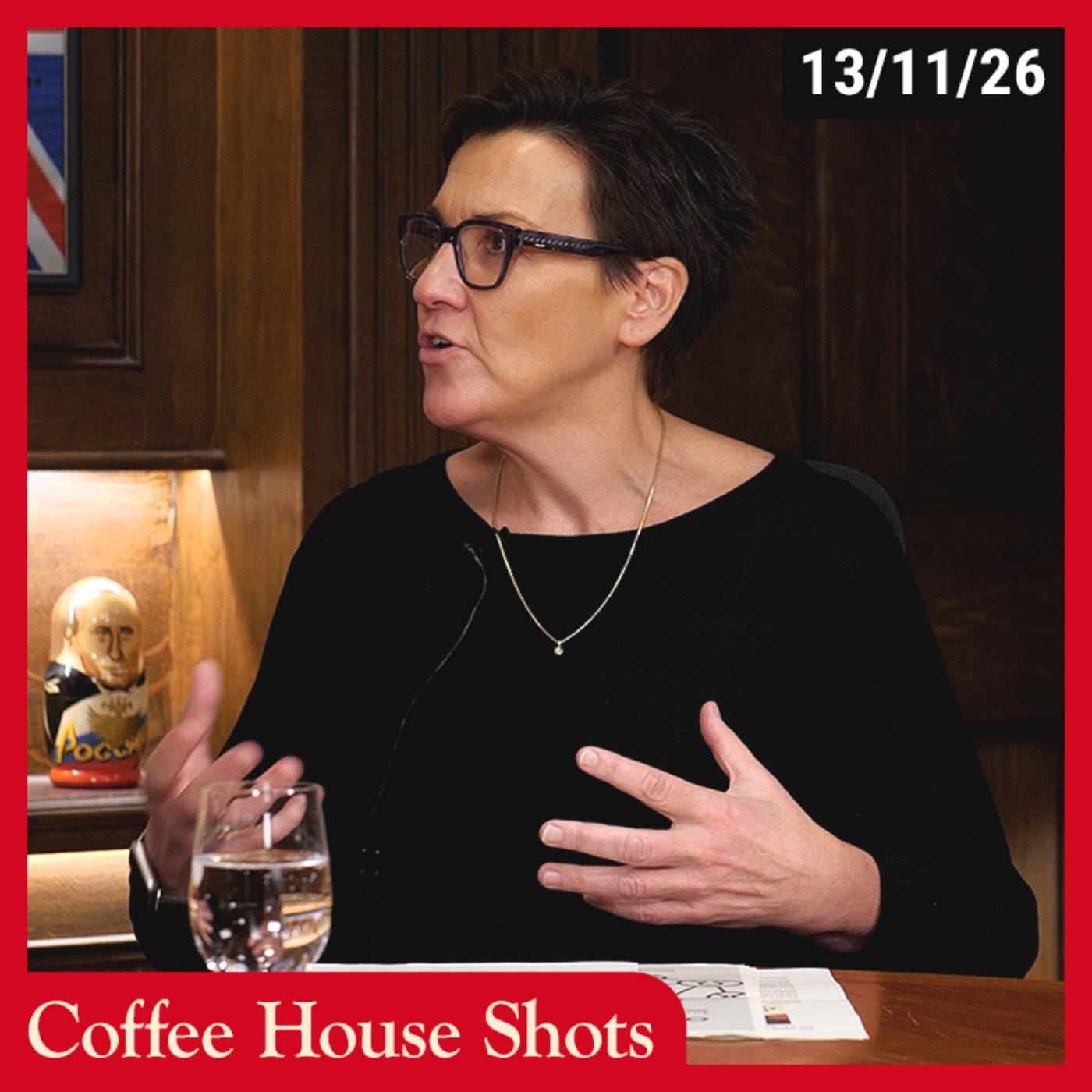
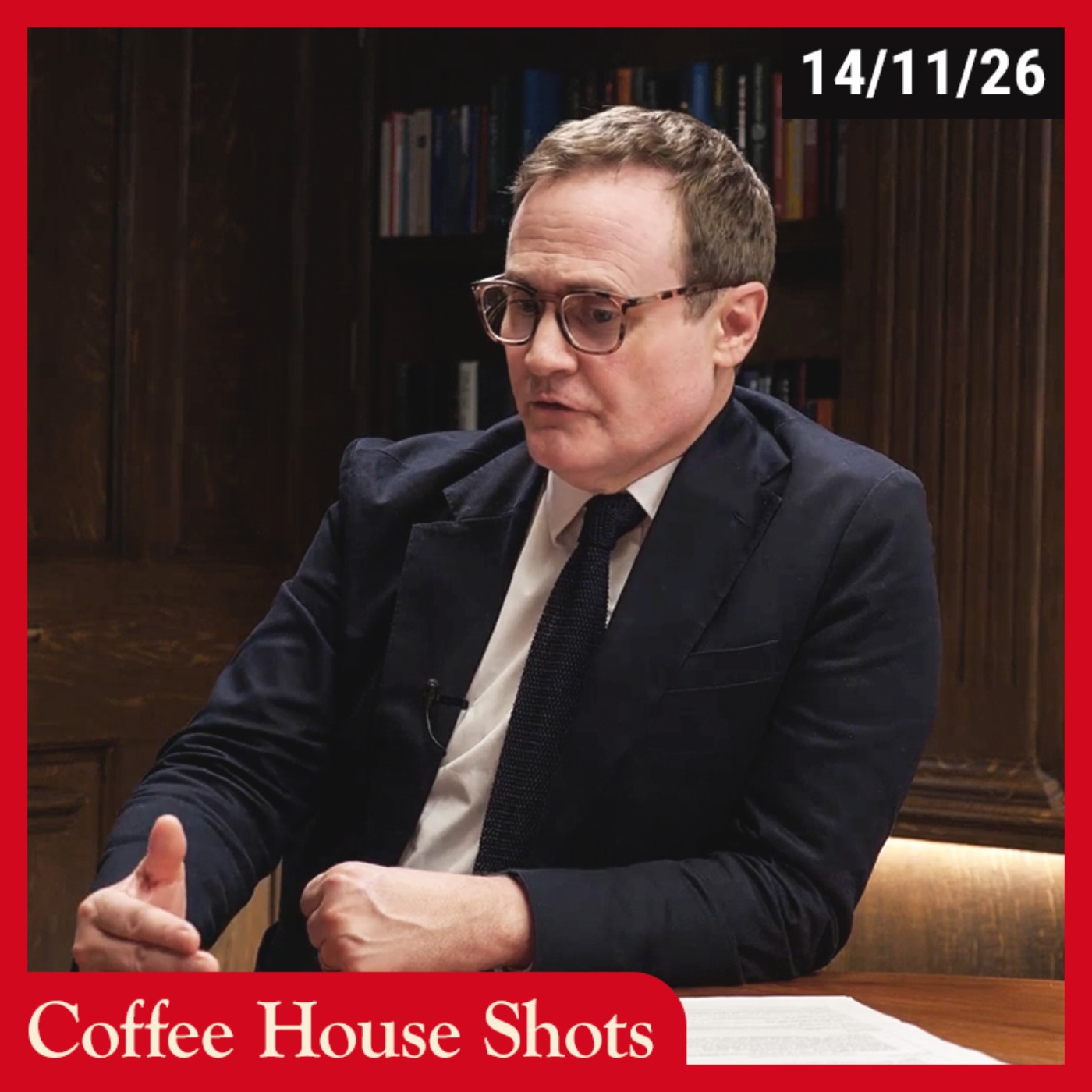
0:37Hello and welcome to Coffeehouse Shots. I'm Damian Thompson. Here is an episode of our religion podcast, Holy Smoke. If you like it, make sure you subscribe to it. Britain's Catholic Prime Minister Andy Burnham will not be advising the King on the appointment of bishops because, as a Catholic, albeit a lapsed one, he's forbidden by law from doing so. So are Jews, but not members of any other religion. Mr Burnham now intends to change that discriminatory law. But why should any non-member of the Church of England have any role in appointing C of E bishops? Here to untangle this unholy mess for me are William Moore, Features Editor of The Spectator, and our Deputy Political Editor, James Heal.
1:29James, could you just describe what the state of the law is at the moment and why the Prime Minister wishes to change it? So this all goes back to Victorian times and on the statute books, it means that anyone involved in the appointment of these bishops has to be a member of the Church of England. And at the time of the law was changed, obviously that put a prohibition on Catholics and Jews. And it all comes down to the Prime Minister's role in advising the monarch because obviously the monarch appoints bishops in his or her capacity as head of the Church of England, defender of the faith, as well, of course, being the sovereign.
2:06Now, in modern times, most prime ministers have taken very little interest in the appointment of bishops. One of the exceptions was Harold Macmillan, who famously had a row, I think, with Geoffrey Fisher about the appointment of his successor. And so I know all about him. I was his headmaster at Repton. He said, you might have been Bishop Ramsey's headmaster, but you're not mine. and then of course incidentally would write in his diaries saying you know when he was for the Archbishop of Canterbury all I wanted to talk about was religion and all he wanted to talk to me about was politics and but since then most of the prime ministers have taken very little interest and Thatcher did didn't he?
2:40Thatcher did yes and there were some reports actually Rishi Sunak of course our first Hindu prime minister was in 2023 going to potentially drop anti-woke bishops but Riddick the prime minister who changed the most of it was Gordon Brown who gave away some of these powers in 2007, part of his big constitutional reform agenda, which then, of course, got derailed by the global financial crisis. But really, it's one of those powers which used to be exercised much more often. If you look at the diaries and manuscripts about the late 19th century or early 20th century politicians, they loom much larger.
3:09You remember, of course, the debates around the Book of Common Prayer in the late 1920s. But these days, pro-ministers tend to not play a huge role. But Andy Burnham has decided to repeal it rather than, say, for instance, derogate it, give the responsibility to Alex Norris, which is one thing he could do. But it's exactly what the Labour Party thinks it's all about, you know, removing barriers, repealing fusty institutions. And I think he'll have the support of this one and it should pass quite easily. Quite strong language, isn't it? In his statement, he said it's unacceptable that these laws are on the books.
3:38But of course, it's a classic thing about, you know, constitutional theory is one thing, but what's the practicality? Well, in the practicality, the Prime Minister simply ticks what the church sends him. And actually, we've already had prime ministers, we can debate Boris Johnson's faith. But also, of course, Richard Sunak had no problem with this. And it's just, Andy Burnham feels the need, I think, to send a statement about it and win some easy votes. Well, the situation is different, isn't it? In that, I remember when I was a religious correspondent, two names, at least for Archbishop of Canterbury, used to go to Downing Street.
4:09And it was said sometimes that George Carey was favoured by Mrs. Satcher because she didn't want the liberal Habgut of York to get the job. But Will, you're a communicant, Anglican. Doesn't it strike you as rather silly, rather anomalous, that actually for a very long time, non-Anglican prime ministers have been advising the monarch on the appointment of senior prelates? I mean, for example, Ramsey MacDonald wasn't an Anglican, was he? Well, yes, exactly. And, you know, as James pointed out, neither is Rishi Sunak, neither – I don't know about Liz Truss, but around for so little time it doesn't matter particularly.
4:48Boris Johnson, as you say, had his – he married Kerry Johnson in Westminster Cathedral, Catholic Cathedral. Keir Starmer an atheist, I think. Keir Starmer an atheist. So you're right. You're completely right, Damien. So, I mean, I guess my position on the law, I was rare to find myself agreeing with Andy Burnham. And I don't like the sort of outrage, the personal outrage he seems to have about it. It's a slight sort of, do I say chippiness about it perhaps? But I actually kind of do agree with him in that at the moment, it seems to me the law is neither fish nor fowl. I think either the law should be tightened up so that you have to be a communicant member of the Church of England or open it up so whoever is prime minister of whatever faith or none should have the role of advising.
5:33Because at the moment, the law, it didn't prevent Rishi Sunak. It didn't prevent Kirsten Amma because when these laws were drafted in the Victorian era, I don't think it was assumed you would have an atheist prime minister or they probably wouldn't even think about Hinduism as a religion at all. The only religious faiths that prevent the prime minister from doing this role are specifically Catholics and Jews. And so that does seem unfair to me. I understand why Catholics are singled out, but why Jews? I don't know enough about the history for that, I'm afraid. I'll ask you one thing, because you're an Anglican.
6:08Let me ask you, here's a Catholic's question for you. Why should a politician have any role whatsoever in advising? Well, I think there's a good reason for that, which is that it is the established church. And as long as we have bishops in the House of Lords, then the Church of England will be tied up very neatly to Parliament. What I personally would like to see is actually a return to the old ways before Gordon Brown, where two names are put forward. Because I actually want the Prime Minister to be more involved in the advice. And at the moment, I mean, since Gordon Brown changed those rules, it's just a rubber stamping exercise.
6:53So it's just sort of pointless. I would actually like it to go back to two. And a big reason I'd like it to go back to two is because I think it actually creates some more, it means more interesting names are put forward. But we're not just talking about interesting names. We're talking about, you know, in some cases, the primate of the church. Yes. And surely whoever advises the sovereign on this matter should have some insight into the spirituality of the names being put forward, their religious suitability for the position. Now, modern politicians have absolutely no insight into that whatsoever.
7:30That's true. That's true. However, this is why I also think maybe the two name, the old two name system was good, because it actually, because there actually was a choice to be made. It does incentivize the prime minister to actually take it quite seriously and to think about it. Now, there's always the risk that they just won't, that they just won't care. But, you know, a thoughtful man like Rishi Sunak, I think he probably would have taken it pretty seriously if he had actually had a, if he actually did have a choice to be made, even though he's not a Christian. I mean, never mind not church of anything, not Christian.
8:03James, let me ask you about the current prime minister's religion. He's described accurately as a Catholic. But the fact is that to be a fully-fledged Catholic, if you like, there's a very solemn obligation to go to church on Sundays, which is a very annoying feature of Catholicism for some of us. But nonetheless, it's there. He doesn't clear the first hurdle of attending mass on Sundays, which bizarrely is something that a prime minister has already done. Tony Blair attended Catholic mass regularly, even though he hadn't at that stage become a Catholic. So how Catholic is Andy Burnham? I feel like we're reprising the debates of the 1830s with the Emancipation Test Acts, etc.
8:48I think he would say his Catholicism is quiet, but it's certainly there. And I think it more imbues his general sense of politics with that sense of, you know, his politics of place, of community from the Northwest, obviously, Grimfors and Merseyside. And he would say they are the values of sort of family, community. They very much are about the bonds of the society to each one another, the community obligations. And the person who wrote the best piece on this was… I think it's complete bollocks from non-practicing Catholic politicians come up with this. I really do. I mean, it's as if, you know, politicians from other parties don't believe in those things.
9:26Well, quite. The Catholic Church has some sort of, you know, monopoly on those values. No, it certainly doesn't, but it sort of informs, I suppose, the flavour and the nature of the community in which he grew up in. Well, where's his defence of, you know, let's look at the issues which really do separate Catholics from, you know, the rest of society. You know, where's his defence of unborn life? Well, he missed one of the key votes in his parliamentary record on liberalising abortion, I believe. there was a vote when he was in his first spell as an MP and he did not vote on that. Though he has made it...
9:57He certainly doesn't have full throttle support for, so to speak, for the sister dying bill. He definitely seems softer on that than his predecessor did, which may be informed, I suppose, by his religious upbringing. I agree. I think to tie these both issues together, he wouldn't come out and say I'm against abortion, but I would suspect strongly he very much was against what's had a creasy push through recently, the very, very liberal measures which now enact the sort of decriminalisation of abortion. And I would also make the point that on a sister dying, yes, he has said, oh, it's about palliative care, the time's not right.
10:28But I think my understanding is from people talking to people around him, there was that sense of he was fundamentally against, whereas K. Stammer was always for. So an interesting difference between an atheist lawyer and a Catholic politician. Maybe that manifests itself in some sense there. Just picking up on Damien's point, I suppose, James, about just how Catholic is Annie Burnham. Out of the current crop of MPs we have in Parliament, who's the most kind of full-blooded Catholic? Is there someone, I mean, obviously it used to be Jacob Rees-Mogg was the most famous. Probably the father of the House.
10:56Edward Lee, yeah, I was going to say. He was the most prominent, I think, at one stage he was touted as sort of our potentially our ambassador to the Vatican, wasn't he? Well, he certainly is a supporter of the Latin mass. And of course, very sadly, Anne Whittacombe was probably the most prominent Catholic politician, perhaps. Of course. And, you know, in the House of Lords, Lord Alton, is the exemplary. Absolutely. Let me ask you both a slightly tricky question. Do you think we are inching closer to this establishment? I think it's more disrepair than disestablishment in the sense that I think it's more apathy.
11:28I mean, then that will kill off the Church of England. Look, I think that effectively the church plays such a minimal role for what an established church is in some ways. I mean, obviously it does in a constitutional and ceremonial sense in many ways, but the appointments of the bishops don't really loom large in the minds of the politicians. The church doesn't have huge sway on political debates in contemporary Britain, I would say. We're not sure how it should. The interesting thing is actually, we're talking about faith. The most recent high-profile politician of faith was probably Tim Farron, who of course, remember, had the 2017 election dominated by questions of sodomy.
12:00So I think it's a weird one where, and of course, Kate Forbes in Scotland was another Christian. So I think that it's those politicians who are of faith that feel more enabled to talk about it, more empowered to talk about it. Rishi Sunak is a Hindu, very proud Hindu. Siobhan Mahmood has spoken about her faith as well as a Muslim. Curiously, they're the ones who get more of a sort of licence to speak about it. And those politicians do talk about their faith. Sometimes who are Christian, I mean, often in the West treating they can be a gay Christian. So that is an interesting kind of dynamic, almost as a sort of given a pass, as it were, by the left in some senses.
12:28Yes, Will, we are moving towards one day a monarch who doesn't take the slightest interest in the church. That's a very good point. And doesn't go to church at all. So you'll have politicians who aren't interested in the Church of England advising a monarch who's interest in the Church of England will be at the best hastily assumed and probably confected. Yes, and maybe even appointing an archbishop that doesn't believe in God. I mean, it's a good combination. Yes, that's a very good point because there have been plenty of monarchs throughout history, obviously, who themselves, one might question their knowledge of the Christian faith or their own personal Christian faith.
13:07However, in all those periods of history, I think they've been surrounded by people who do take it more seriously, including our politicians. So if every person across the entire process doesn't have a particular knowledge or care especially much, then that will start affecting things. I'm sure that's right. So I guess what I'm saying is it wouldn't matter so much about Prince William's personal faith if there was enough of a structure around him. I slightly fear that that just isn't the case anymore. I mean, the interesting thing, of course, is how little the question of disestablishmentarianism really does loom large in politics.
13:45I mean, I've seen Douglas Carr's one. He was a conservative MP and then a UKIP MP. I remember him once 10, 15 years ago, writing about his time, took calls to privatise the Church of England, denationalise it. The idea being you liberate institutions if you hand them over to the free market. But this question of disestablishing the church is just one that hasn't come up at all. That's completely right. I think you were on the money, James, when you said basically people don't really care enough now to even talk about disestablishment. I mean, I almost yearn for the days where that was at least a talkie.
14:15But it's that old joke about the only thing worse than being talked about is not being talked about. You know, even the humanists, the society of humanists don't wang on about it the same way they quite used to. I suspect the fact that the hereditary peers in Algonne has removed the aristocratic fig leaf from the upper house. And therefore, there'll be more of a push to remove the bishops from the upper house. Not as long as there's a Labour government, because they all vote for Labour. I would love to see the bishops removed from the upper house. Will Moore, James Hill, thank you very much.
15:31We'll be right back. Ready to go. Switch today at ShipStation.com. Code audio.
Andy Burnham has announced his intention to change a law which bars him from advising the King on appointments to the Church of England. The Victorian-era law explicitly bars Catholics like Burnham, as well as Jews – but doesn't prevent those of other Christian denominations, other faiths – like Hindu Rishi Sunak, or atheists like Keir Starmer. So, if the law is going to be changed to address this anomaly, should it allow all Prime Ministers of any faith to provide advice – or should all non-Anglicans be barred? And what does Burnham's interest in the power tell us about his relationship with his faith – and his approach to the job?
The Spectator's James Heale and William Moore join Damian Thompson to discuss. This was originally broadcast on the Spectator's Holy Smoke channel.
Produced by Patrick Gibbons.
Become a Spectator subscriber today to access this podcast without adverts. Go to spectator.co.uk/adfree to find out more.
For more Spectator podcasts, go to spectator.co.uk/podcasts.
Contact us: [email protected]
Hosted on Acast. See acast.com/privacy for more information.