
 Ask ChatGPT



UK economy outlook ahead of the budget, focusing on rising inflation, energy costs, interest rates/quantitative tightening, fiscal “headroom,” and political risks for a Labour government.
Tim Shipman (journalist; previously referenced as covering politics/economy) and Michael Simmons (journalist/commentator; discusses Bank of England actions, gilt markets, and Labour/Conservative politics).
inflation rose to 3.1% (from 2.9%) driven by diesel/petrol; forecasts suggest 4.5% inflation next year; energy price cap may rise 20–25%, potentially worsening household strain. Simmons warns of a “nasty trap” where government must spend more from a worse bond-market starting point, amid likely industrial action and union pressure.
Strait of Hormuz cited as global driver; comparison to Liz Truss’s energy cap; 2022–23 inflation spike leading to strikes; Financial Times briefing implying Treasury figures are worse than expected; OBR’s undisclosed 10-day gilt-measurement window.
Written by AI. May contain mistakes.
Discussion on recent inflation figures and their implications.
“Well, this morning we've had the latest figures on inflation, which show that last month prices picked up, or the rate of change of prices picked up to 3.1%, up from 2.9%.”
Exploring how rising inflation affects government policies and public perception.
“And then, you know, I think the politics of that become obvious.”
Analysis of the Labour Party's struggles with economic challenges and leadership issues.
“And I think the hope in the Treasury and the hope in sort of anyone watching is that they decide to slow down the pace in which they sell that, which would hopefully take some pressure off our struggling debt market.”
Insight into upcoming budget challenges and economic forecasts for the UK.
“oh, bloody hell, what have I agreed to here?”
Discussion on possible governmental strategies to manage economic issues.
“they pick a 10 working day period in which they look at market conditions, You know, they take the average guilt rates, they look at what interest rate predictions over that time are.”

Get the gist, explore an idea or ask about something said.
 Claude
On Coffee House Shots, what are the key points of this episode?
Searching your listeningAutomatic transcript. May contain errors.
0:00Tim Shipman: Hey, I'm running out to drop off a stack of letters and packages. Need anything shipped while I'm gone? Save the gas. Stamps.com lets you print postage and schedule pickups right from your desk. Sync your contacts into the address book, get detailed accounting insights, and get notified the moment your certified mail is delivered. All from my desk? All from your desk. Join the 4 million businesses using Stamps.com right now with code podcast and get your free welcome gift. Stamps.com code podcast. Taxes and fees apply.
0:38Tim Shipman: Hello, welcome to Coffeehouse Shots. I'm James Heal and I'm joined today by Tim Shipman and Michael Simmons. Now, there's been some economic news. Michael, take us through it. Well, this morning we've had the latest figures on inflation, which show that last month prices picked up, or the rate of change of prices picked up to 3.1%, up from 2.9%. And that was driven by surging prices of diesel and petrol. Now, John Healy, the chancellor, was quick to say this is a global factor. It's caused by the Strait of Hormuz. And he's not wrong to say that. But as we've discussed many times, Britain seems to be particularly affected by this.
1:17And this is kind of worrying, not just for the government that obviously, you know, has kind of defined itself as being a cost of living government. It's worrying for all of us because things are going to get a lot worse. And I think there's a really nasty trap that the Chancellor and Andy Burnham risk falling into, because it's not going to stop here. We've had some new forecasts today as well, suggesting that next year inflation might get to 4.5%. But at the same time, at the start of next year, we think the energy price cap is going to go up by at least 20, maybe even 25%. If that happens, it gets you to the level of energy prices that Liz Truss famously, and some would say disastrously, capped them at.
1:58And then, you know, I think the politics of that become obvious. The pressure is going to be on the government to, you know, not just sort out struggling households, sort out everyone. And Andy Burnham may feel he wants to do that, but he'd be doing it from a worse starting base in terms of the bond markets than Liz Truss ever was. And if he falls into that trap, we could really, really start to get into quite dangerous economic territory.
2:23James Heale: Are you suggesting, Michael, that the six quid a year or whatever it was off our energy bills is not touching the sides?
2:29Tim Shipman: Well, I also think the key point is, as we saw when we had the last big inflation spike, 2022-23, you have a wave of industrial action. You have public sector strikes. We've just had the TUC conference. The unions are talking about a second employment rights bill. I mean, that potentially is going to be very difficult for a Labour prime minister whose government has done nothing but empower the unions. Yeah, and they've not been helped by the Bank of England, who has this whole time that inflation has been coming back, the whole time that yields have been growing and we have this British moron premium where we're worse than anyone else in the G7.
2:58At the same time, the Bank of England has been selling gilts into the market, which is not particularly helpful. There may be some good news for the government on that tomorrow, because the Bank of England will set out their latest decision on interest rates. All the expectations are that interest rates will be held at the moment, although they'll almost certainly go up later in the year. But alongside that decision, they'll announce their policy for the next year on quantitative tightening, which is, without getting too technical, is just getting rid of the guilts that they created to fund QE that we had post 2008 and also in the pandemic.
3:33And I think the hope in the Treasury and the hope in sort of anyone watching is that they decide to slow down the pace in which they sell that, which would hopefully take some pressure off our struggling debt market.
3:44Tim Shipman: And it looks to me, and I don't know what you think, possibly like it's going to be the most difficult Christmas we've had since 2022. Since that Liz Truss double whammy of having inflation and energy prices spike, could it be as bad as that? Yeah, yeah. I mean, I think it could be worse than that. I often get accused of being too doomy and gloomy. But, I mean, we seem to literally be in the same position that Liz Truss found herself in. But we're starting from an even worse base. So how can that end well? So we're six weeks away from the budget, Tim. I mean, there's been a very funny briefing in the Financial Times, which you might have seen, which suggests that John Hill, you didn't know how bad things were going to be.
4:15James Heale: Oh, I know. We're back to Rachel Reeves, aren't we? Oh, we've come in. We've lifted the lid. And, oh, goodness me, it's much worse than we thought, even though it was a Labour government that was sitting on the figures. I mean, pull the other one. I mean, I can well believe that Healy has gone in and gone, oh, bloody hell, what have I agreed to here? This is much worse, much more difficult than I expected. But he cannot, with any reasonable straight face, say that it is worse than he expected. He may now be slightly more au fait with some of the moving parts in the government when he was obviously focused only on the defence spending in his previous post.
4:52James Heale: But, you know, the Treasury kind of is aware of all the trade-offs and he's now sitting there thinking, well, which pips do I cause to squeak in order to get myself out of this? And obviously it's difficult. But, you know, we've said this before, this is still the phone you want. We've got six weeks to go. We still don't know what they're going to do. And as Michael points out, the environment is getting more and more difficult as we go on. And, you know, anyone who thought putting Andy Burnham in was going to solve presentational issues of the Labour government has been proved correct, at least to a degree.
5:26James Heale: Anyone who thought Andy Burnham coming in was going to solve the morale issues of the Labour Party and Labour MPs, I think has probably been proved correct. Anyone who thought Andy Burnham was going to come in and make any meaningful difference to public finances, if anything, the things he's done are potentially going to make it more problematic. And we still don't really have a sense of what Andy Burnham's political economy is. How do people who want everybody to love them and feel happy about the state of the world cope when there is no money. And bluntly, at the risk of making a sort of semi-partisan point, the right is much better at dealing with this situation than the left is.
6:04James Heale: The left likes a large and growing pie that it can slice up in ever more imaginative ways. The right tends to worry about how the pie gets bigger in the first place rather than obsessing quite so much over the fractal size of each slice of pie. and really everything Burnham's talked about so far is the width of the slices of pie. He hasn't really given us any idea that he knows how to put it in the oven and make it bigger. The other thing that's going to play into all this is there's an element of mystery more than usual about this budget because of when the Office of Budget Responsibility do their forecasts that work out how much headroom has been left for John Healy to play with, they pick a 10 working day period in which they look at market conditions, You know, they take the average guilt rates, they look at what interest rate predictions over that time are.
6:52And normally the OBR tells everyone, they put it on their website, we have told the Chancellor it's this 10-day window. And then everyone in business and trade, whatever, can basically try and do the sums themselves. But this year, because of all the chaos we had in the last budget, the OBR said, we're not going to tell you what that period is. We'll reveal it once the Chancellor sits down. So there's a bit of mystery about, you know, are they looking at guilt when they were even worse last week? Are they looking at them this week? The suggestion seems to be, though, that we are in the middle of that 10-day period right now.
7:24And if that is true, it's a pretty horrific time to be measuring the market.
7:28Tim Shipman: I mean, it looks like taxes are going to go up at some point, Tim, in the next 12, 24 months or so. The argument you'll constantly hear in regard to an early election potentially is, well, look, Burnham, if he needs to raise the money for a lot of his spending, he'd have to go to the country on that. Do you agree? I look at some of the past pledges. You know, you had Boris Johnson promising a rise in taxes and obviously then introduced the health and social care levy back in 2021. I mean, could Burnham just, say, break the manifesto pledge and just raise taxes without an election?
7:53James Heale: Well, I think if he overtly breaks the manifesto pledge, he'll have big problems regardless of whether he's put it in a manifesto or not and taken it to the country. Because if he puts it in his manifesto, he probably would struggle to do so well in that general election. when all this prognosticating goes on one of the people in the Labour Party whose views I most take seriously I put this to them a few weeks ago when there was a bit more of a flurry around early election and he said well what's the first question you will ask in a general election campaign shippers and I would say well what are you going to do on tax Prime Minister and if that is in a scintilla different from what is in the last Labour manifesto then the whole of the general election campaign in the view of my source would be about the fact that Labour wants to put up tax rises.
8:38James Heale: It would be doing the Tory work for them in terms of their messaging and saying, look, we're in a dire state and he wants to make it worse. So I think there's a lot of Labour people don't particularly want to fight a campaign on that basis. Equally, if you don't change the fiscal rules or your ability to put up income tax, national insurance or VAT, what's the point in calling an election anyway? Because you're not giving yourself the kind of leeway that you want. my personal view is that I think the calculation about whether to call an election will be much more about where are the polls does it look like reform is still struggling can he call an election while reform is struggling but the Tories have not really overtaken reform and emerged as the alternative on the right instead and obviously reform have all the money but the Tories have more experience at fighting elections and Labour still you know still quite a lot of people in Labour don't particularly like the idea of fighting a resurgent Conservative Party in the next election, strange as that may seem to the reform supporters listening to this podcast.
9:36James Heale: I think it will come down to whether Burnham thinks he can win and win well enough that his party won't hate him for the number of seats that he loses. And I think there's quite a lot of evidence that his party would hate him if he haemorrhages a decent number of seats. And that looks almost inevitable based on the polling at the moment. So, look, I don't rule it out. And I think if reform continue to have these problems that they've been having and the investigation into Farage or the police investigation into his aides sort of gathers pace and begins to do material damage to them. And I don't see why it would particularly because I think people who support reform don't care about any of that.
10:09James Heale: And I think they've got a pretty solid, you know, it feels like their base is 18, 19 at worst and more likely 20 points in the polls. So I think it would take a very gutsy prime minister to go for it. But bluntly, it's not clear that Burnham, either now or after a general election, would have any of the tools that are needed to tackle this problem. The best hope for Labour may be that they stay in for another three years. And even if the economic situation deteriorates, that they've got a few things to show for their time in power that are persuasive enough to enough people that they can stumble over the line in 2029.
10:44James Heale: I think it would take an act of what Sir Humphrey would have called his very courageous prime minister if Burnham tried to go for it now. But we'll see. I mean, look, you know, politicians are gamblers. And we've seen that on several occasions in the not too distant past. And Burnham, you know, has got political antennae. And he, you know, he's shown that he's prepared to take a risk or two. But I don't actually think that, certainly not within the Labour Party, that the debate about the economy is going to be the decisive one. I think on the budget specifically as well, that perhaps some people have been a bit too quick to rule out the possibility of booting the headroom can down the road.
11:21Because, you know, we've been reporting, we track on our Spectator Data Hub every day now that the headroom has collapsed from over 23 billion down to about 13 billion pounds. and the assumption is that because it's not good to have a small margin of error because it makes your next budget even more difficult you would restore that to when you know you try to restore it back to the same level and that's why there probably needs to be tax rises and while i think that is the right assumption if you're really desperate to have your do nothing budget you could just stand up and say we've done nothing we still have positive headroom yes it's reduced but is higher than it was in some previous budgets.
12:00So, you know, put the can down the road.
12:02James Heale: I don't know what you're hearing, Michael. I was talking to someone who does a lot of work in the city with sort of big blue chip managers and people in finance. And he said to me last week that, you know, Rachel Reeves left 22, 23 billion, but the markets would probably swallow 15. So what you're saying is if that's 13 at the moment, if you chuck in what they've got to find immediately, they've said we'll fund the defence spending, but not until the spending review next year. So the sort of immediate needs are, as I understand it, five to six billion plus whatever you need to put the headroom in a position.
12:36James Heale: So when we've all been assuming that this would be a sort of massive agenda setting budget, it is possible that Healy makes some minor tweaks and turns and turns up and says, well, I've still got 15 billion of headroom and we all go forward to next year. We'll see.
12:52Tim Shipman: And of course, tomorrow we've got Andrew Griffith's first big speech, to share a Chancellor. Interesting to see if some clear blue water can we open up between Labour and the Conservatives given where we are with the fiscal situation. Thank you Michael, thank you Tim and thank you for listening to Coffeehouse Shots.
13:54Tim Shipman: We'll be right back. of potential revenue, go to ShipStation.com and use code AUDIO and get 30 days free.
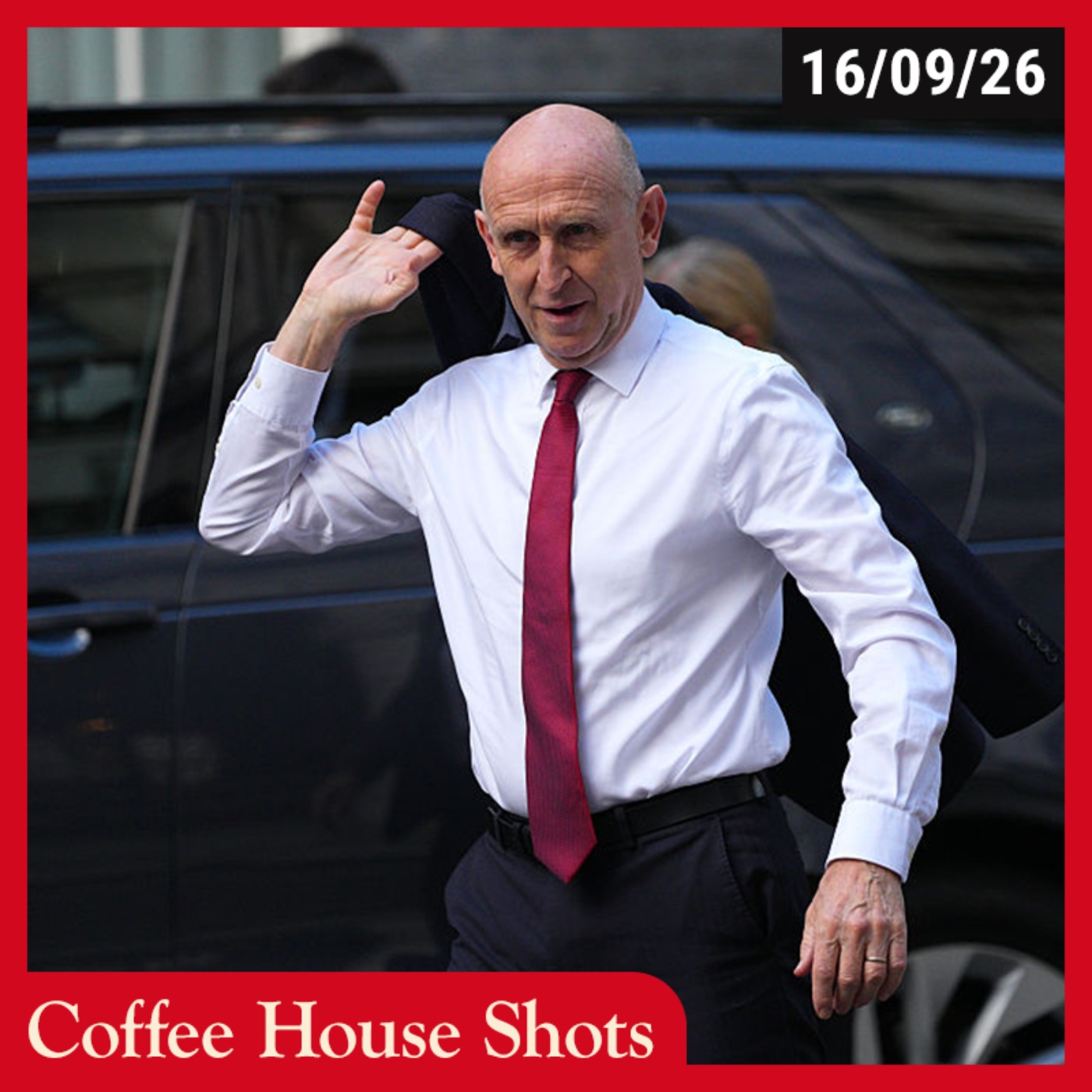
New inflation figures – showing the highest increase for several months – have done little to insulate John Healey from the stormy weather of the British economy. James Heale is joined by Michael Simmons and Tim Shipman to unpack what the rise might mean for Labour's upcoming budget. How much worse can it get?
Produced by Henry Lloyd.
Become a Spectator subscriber today to access this podcast without adverts. Go to spectator.co.uk/adfree to find out more.
For more Spectator podcasts, go to spectator.co.uk/podcasts.
Contact us: [email protected]
Hosted on Acast. See acast.com/privacy for more information.


