 Ask ChatGPT


The episode discusses two linked political themes: the murder of Anne Whittacombe (Anne Widdecombe is mentioned as “Whittacombe” in the transcript) and whether it’s being politicised, alongside commentary on Labour leadership prospects under Andy Burnham.
Tim Shipman and James Heald, both political journalists; Heald recently returned from Riga inspecting NATO’s eastern front.
police believe the murder suspect won’t be tied to a political motive, but the lack of public explanation creates a “credibility gap” (compared to issues around Southport). The hosts argue Reform and other parties may be weaponising the case, while also debating MP security funding, using Nigel Farage as an example.
comparisons to Joe Cox/David Amess; Farage’s gifts/donations controversy; Burnham likened to Southgate/Tuchel; Labour MP reshuffle “Harry Maguire” jokes; Whittacombe’s political nicknames and drug-policy episode.
Written by AI. May contain mistakes.
Hosts discuss Andy Burnham's potential as a Prime Minister and its implications.
“And, of course, what to expect from Prime Minister Burnham.”
Exploration of the political ramifications following the murder of Anne Whittacombe.
“I think it's partly because of obviously the nature of the crime, but also just the woman.”
Discussion about MP security and public perception after Whittacombe's murder.
“And this is what happened over Southport.”
Hosts reflect on Anne Whittacombe's political career and impact.
“And then the third is this sort of just the total vibes argument, really, about who's to blame and what this all represents.”
Learn about the political impact and humorous anecdotes surrounding Anne Widdecombe.
“And it just shows it's a tough old trade.”
Explore the dynamics of the current opposition parties and their leadership challenges.
“in terms of some of her political lessons.”
Discuss the challenges facing Farage and the Reform party in today's political climate.
“I haven't done anything to sell out my supporters, sell out my base.”
Understand the importance of strong leadership in political parties and its implications.
“There's obviously a lot of people who are now very sort of reform coded and regard themselves loyal to reform.”

Get the gist, explore an idea or ask about something said.
 Claude
On Coffee House Shots, what are the key points of this episode?
Searching your listeningAutomatic transcript. May contain errors.
0:00Ever notice how every new AI tool asks you to explain your business to it all over again? Google Workspace with Gemini skips that. You get Google's AI built right into the premium versions of Gmail, Docs, Sheets, and more. No new tools, no extra logins. Just one subscription that gives you personalized AI right inside your actual workflow. Make work less work. Try Google Workspace with Gemini at goo.gle slash workspace with Gemini.
0:37Hello and welcome to Coffee House. I'm Tim Shipman. And I'm James Heald. And today we are going to be talking about the late, great Anne Whittacombe. And the problems now engulfing her party. And, of course, what to expect from Prime Minister Burnham. Now, James, you're back from Riga, of all places, inspecting NATO's eastern front. How was the border? It was secure. Was it? I went with a couple of patriots on a stag too. and I think despite our best efforts, there isn't going to be any outbreak of war between the Norwegians and the Latvians anytime soon. I think a few diplomatic incidents were caused by some celebrations on Saturday.
1:14I spent Saturday nights at a gay wedding full of Labour people with the football on. My voice has survived rather better than yours but I think my head is probably in much the same place. The interesting thing actually, the sense about Burnham is they still don't really know what he's going to do. It's a bit like Schrodinger's wannabe Prime Minister at the moment where he's sort of everything can still exist until those decisions start being made, at which point everyone's going to have a view about it. But the general mood, I would say, was one of sceptical optimism, I think. As a sort of Labour wants to be optimistic, it knows the PLP's enthused, it wants to think that this is a restart and that things can happen.
1:52But it feels like a lot of them have seen Andy Burnham before and some of the people around him, and they're not wholly convinced this is going to go and be a roaring success. I think the advent of a new government is like the beginning of a World Cup. As you say, hopeful optimism, daring to dream, while also tinged by cynicism and appreciation for what's come before. And if it's anything like England, there's going to be some ugly and scrappy, even if it is ultimately a success, there's going to be ugly, scrappy moments where all looks lost between now and the next general election for the Labour Party.
2:22And to a degree, the question is, does Burnham behave like Tuchel and make some sensible changes that bolster the position? or does he end up a bit like Starmer, which I think is kind of like Gareth Southgate almost. Burnham is doing what Southgate did, building a good team spirit, building a better culture, saying we don't want all this, you know, these nasty wits telling everybody what to do and all that sort of thing. But under pressure, will he be tactically astute or will he just feel like he's a bit overwhelmed by events? and Labour people watching that want a Tukul. They don't want a Southgate.
3:03Ultimately, when it gets to the quarterfinals, the semifinals, which is the sort of crunch issues on the economy, on migration, on benefits, all of that stuff, they want someone who can read the scene and understand how best to deploy his staff. And that may not be, as we've seen from England, may not be the best 11 players that make the best team. And how will they respond when they're getting left out, like Harry Maguire? Well, indeed. Well, as I reflected in the email on Friday, I think 322 Labour MPs have supported Andy Burnham. There are 21 full cabinet paid posts. And if you chuck in literally every other post, the parliamentary private secretaries chuck 15 trade envoys at it.
3:45If you get much past 100, you're doing well. So that's 200 Harry Maguires. And we'll see whether their families respond as his did. Yeah, I was talking to a former Tory MP about the reshuffle when they were in government over the weekend. and they said that they were rather unimpressed to be offered the Paraguayan and Uruguayan trade envoy post and they were asked for something better from one of the other. Well, at least they're warm, I guess. Yeah, yeah, but I mean, not much in the way you can do for trade apart from a man who's a nut. But who also is the trend? Alexander-Arnold, the classy player who is left out because their face doesn't quite fit with the team that the manager wants, but then is sitting there thinking, he could have done with me.
4:19We're streaking, eventually. Could be the one. Well, potentially. I think even Burnham probably isn't daft enough to leave him out of the cabinet. there may be some kind of super grief department for streeting business plus. But I would eat various items, not only of my own clothing, but of yours if he becomes Chancellor of East Checker. And Jordan Henderson, potentially. You could have some of those greybeards returning, not necessarily to play a dynamic role on the pitch, but really add us a sense of gravitas to a government which I think has been pretty stunned by how bad the first two years have been and come in being shocked by the system.
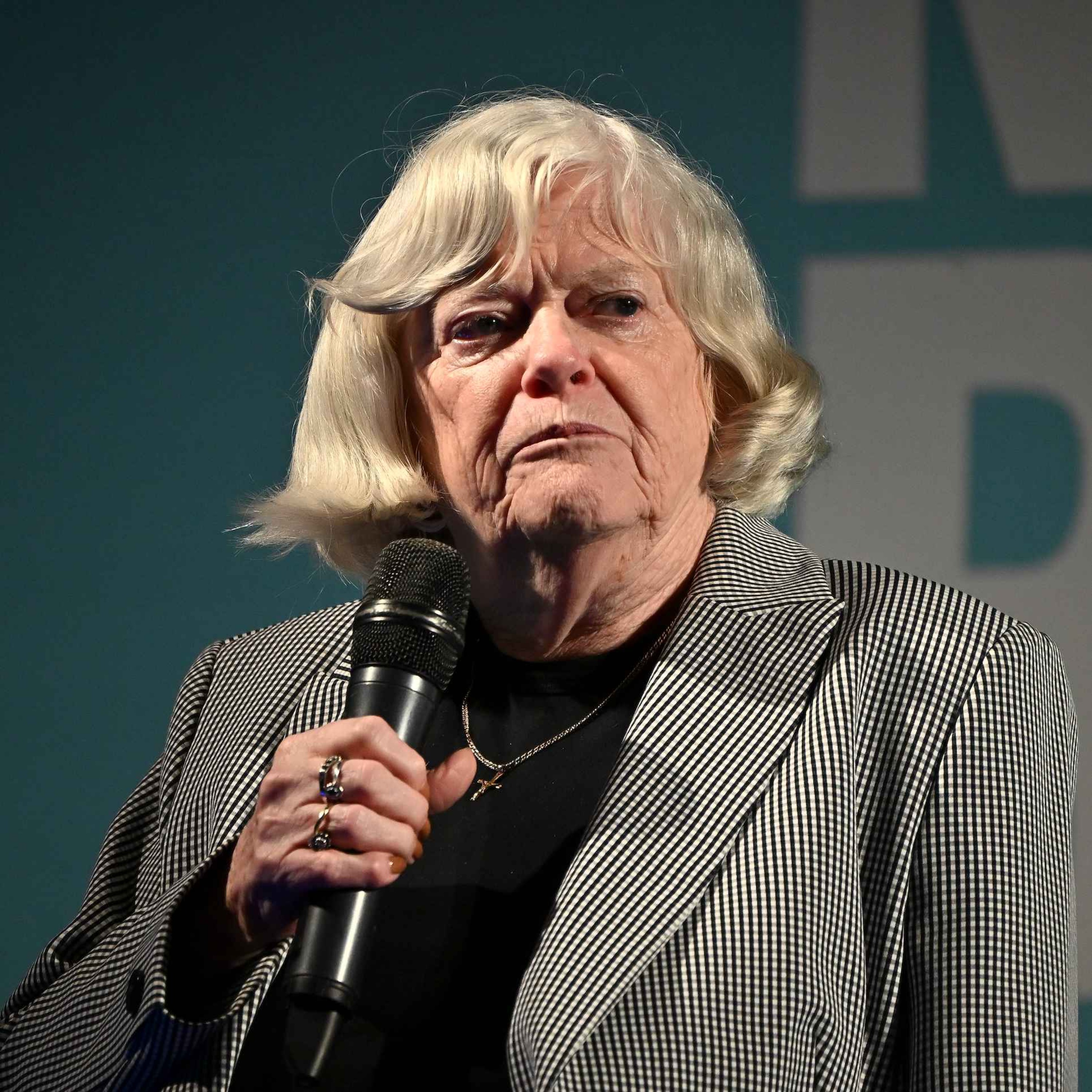
4:48The potential prospect of David Miliband singing Wonderwall and then tripping over an advertising hoarding at the Labour Party conference and snapping his arm is one that we can conjure with. Anyway, that's enough of our weekend. Still big news, the murder of Anne Whittacombe. It's causing quite a lot of sort of tensions in British politics. Yeah, absolutely. I think it's partly because of obviously the nature of the crime, but also just the woman. Anne Whittacombe was someone who I think everyone appreciated as someone as a person of integrity, respected, was someone who had a public standing, which is quite rare for a former, someone who in government didn't make more than Minister of State and briefly a shadow frontbencher.
5:26But I think everyone's been very, very horrified by what's happened. And going on strictly sort of helped that. But I think she had, certainly for a second, what you would call a second tier kind of politician, she had a public sort of reputation and people knew who she was, far more than half the people who were above her. And I say that to enhance, rather diminish her. It is a testament to her character traits, that integrity that she was able to kind of make herself such a big personality. And I think a slice of England she represented. You know, she was the kind of bossy girl headmistress at a public school.
5:57She was sort of the WI serving up the cake, the kind of woman who helped build an empire. And very, very sad what's happened. And now, of course, all the ramifications are about potentially what was the motivation for the alleged killer. And we still don't know, bluntly. I mean, the police seem, I mean, it's always hard to tell with the police because post-Leveson they don't tend to sort of let their thoughts emerge quite as philosophically as they used to. They seem confident that it's not going to blow up in their faces and be some political motive. But a lot of people in reform are looking at this and saying the suspect who has been arrested and they say they're not seeking anybody else drove several hundred miles to go to her house.
6:34I mean, have you just been told that there was particularly nice items worth stealing? I don't know. So there's still, and the longer there's silence, the fact that we don't know quite what apparently motivated the person who we must state at this point is innocent until proven guilty and all the rest of it. But there is a gap there, isn't there, in public understanding of what's occurred. Yes, I mean, the credibility gap, you know, we first refer to it in the American context over Vietnam, but certainly there is that sense of, in this new world of social media, particularly in this world where the police don't engage as much with the press, which can often serve as a useful message carrier for the official forces, you do have this kind of space that builds up between what's being said and what isn't being said.
7:14And this is what happened over Southport. And actually, if you go back to the early part of the Starmer regime, you can rationalise what went wrong for Keir Starmer as much as you want. You know, winter fuel, pessimism at the beginning, lacking a plan and all of that. But sitting in focus groups, the failure to be straight with the public about Southport is something that never stopped coming up. And with part of the electorate, is almost the most important thing that happened under the Starmer regime. So Burnham needs to tread quite carefully as he comes in around this. And the police would be well-minded to provide some kind of explanation.
7:48I think one of the points someone in Labour made to me last week was, it's going to be a surprise for Burnham's key people, like James Pennell, who walked out of government 17 years ago. No culture war at all in those days, basically. You were arguing over where the money got spent, and that was about it. And now there isn't any money, and half of politics is vibes and culture. Yeah, and a former top civil servant said to me, the quality of the civil service is so much less than it was then. And they're going to be stunned at how little it is. But that also boils into culture as well. The distrust between the governed and the governing, between the official institutions of the state and the people, I think has only got worse things such as COVID, I think Brexit, I think culture wars, et cetera.
8:25Social media has played a part in that. And I think that they're going to have to tread very lightly. And I think Keir Starmer always seemed to be the voice of the establishment of these things. And I think that's why. Even an establishment that is very often flawed and wrong. And I think that is one of the reasons why he got into so much difficulty. Yeah, I think that's right. But as we've said, I mean, we need to tread delicately around this. But there are people in the Times newspaper this morning saying that reform have been weaponising this. We've seen Richard Tice fight back and effectively say, you're disgusting.
8:53How dare you? One of our own has just been killed. I remember the comments that Farage made when he said he was calling the by-election last week. And he basically said, I'm effectively the most attacked politician in the country. I immediately had Labour people saying, well, Joe Cox was murdered. And I had Tory people saying, David Amos was murdered. What are you talking about? And then reform people respond to that and say, well, what, do you want him to be killed before you take his security seriously? So there's partly a kind of what's the substance of what's actually happened to Anne Whittakin.
9:22Then there's the whole issue of, you know, what does that mean about MP security and who should pay for it? And is there more that needs to be done there? And then the third is this sort of just the total vibes argument, really, about who's to blame and what this all represents. And at the moment, none of those three things has really played itself out, I don't think. Well, of course, our editor was someone who was meant to be on the list by the killer of David Amess and mercifully survived that. And I think those people always put a place to make the arguments. He's obviously a sceptic of having more increased, you know, a dozen officers around the clock per MP would be overkill.
9:55Yeah, well, I've heard Michael Gove say it's not a very conservative argument to react to one incident and say the state should pay. My personal view, for what it's worth, is that if Nigel Farage is a national leader and it could potentially become the prime minister and is subject to the level of threats that he appears to be subjected to, it seems a nonsense to me that the state is not. Why is he any less at risk than the education sector or the transport sector? In fact, he's at more risk than a lot of cabinet ministers. Well, a bit like in the US when secret service is given to those who become the presumptive nominee.
10:24But they often don't get it beforehand. Yeah. And, you know, I mean, it is more complicated than that. Farage did have some state funded protection and then it was withdrawn and then he was offered tasers again. And I think people in reform I've spoken to say, well, he needs protection. But let's be honest, the need to pay for that protection is part of the story around some of the donations which have got Farage into a degree of difficulty. But it's worth just recalling Whittakam properly. I mean, we've said, you know, that she was one of those politicians. She knew exactly what she thought. She wasn't embarrassed by it.
10:56And I think politicians who were prepared to come out and say stuff, even if it's stuff that people on the left, you know, non-religious people, people accused her of homophobia, people objected to her shackling female prisoners when she was a prisons minister, all of that stuff, certainly not uncontroversial. A lot of it was very controversial. But she was totally straightforward about it. She believed in everybody's freedom of speech. And I think most people respected that. Obviously, there were people in the country who didn't know her. But I think pretty well everybody in Westminster had some time for Anne Wickham.
11:27And, you know, my own, it seems strange to you, but a little bit young to have been. I wasn't at my sort of peak journalistic phase when she was at her peak political phase. But certainly afterwards, when she was still around and someone who's willing to contribute commentary to stories and books and all that sort of thing, she couldn't have been more courteous. And you look at people who are pretty gentle souls, like Ian Dale, who absolutely adores her. You know, he went on the stage with her. They did a sort of fun roadshow. And she had a lot of great anecdotes. And I think there's sort of two things that stick in my mind, most of all.
11:59First is, and it was a bit cruel, but there's something of the night about him, about Michael Howard. That shows what a bit of adept language can do in politics. Because that dogged Howard forever and ever and ever. And there was enough truth in it that it was problematic for him. It stopped him becoming leader on one occasion. He then got the job later. And it kind of, you know, it shows you the power of political language if you can capture something. And I think, you know, all the parties we're looking at now will be, someone will be trying to come up with a nickname for Andy Burnham that the public gets and instinctively knows what it means.
12:34And she was able to do that. The other thing I remember was when she was the Shadow Home Secretary, She did do a push on kind of drug stuff, which offended some of her more... Liberal colleagues. Liberal colleagues. Portaleasters, they were called. The Portaleasters, as they were then, the sort of proto-modernisers, the pre-David Cameron modernisers. Now, anyone who's been a journalist knows from time to time your editor will say, can you do a ring rat? Phone every Tory chairman and find out what they think. Phone every member of the cabinet and find out what they think about X. Only on two occasions have I ever known people want to cooperate with these.
13:10There was one occasion when I was at the Sunday Times where I just thought I'll phone half the cabinet. I'm hearing that there's talk of replacing Theresa May with David Liddington. And I phoned 11 members of the cabinet that Saturday morning and all 11 called back. I can tell you that has never happened before or since. And they all wanted to tell me that she should go and that maybe it should be David Liddington. And some of them said that maybe it should be them. The other occasion was when Whittacombe put forward this policy. And on that occasion, senior people in the Tory party started picking up the phone to journalists.
13:41Instead of sending an edict to all members of the Shadow Cabinet, you must not answer a survey, we started getting calls going, have you considered a ring round? And everyone then phoned the Shadow Cabinet. And it turned out they'd all taken, they'd all smoked pot. They'd all done little light drugs in their youth. And that, more successfully than any kind of briefing, undermined what Whittakin was trying to do. And it just shows it's a tough old trade. On the one hand, she kind of did for Michael Howard with a clever phrase. And on another, she was undone by the collective action of her colleagues.
14:12She also very much was humorous. And so Jessie Norman told this wonderful story on Twitter over the weekend, which is when she was at an auction as a sort of Tory fundraiser, and someone gave her a bottle of whiskey signed by Michael Howard. So she said, quick as a flash, there's something of the nightcap. Very good. Very good. But also she had, for instance, on her aunt's phone, her nickname for herself was Doris Karloff. Yes. Brilliant. Which is one of the great political nicknames. Absolutely. So we're taking it and run with it. But also, she was very generous at the time. I've been doing this book about reform and I interviewed her about two months ago, about an hour long interview at the Blue Boar.
14:46And she was very generous at the time, interesting, funny, quick as a flash for someone in the late 70s. Interestingly, had some good thoughts as an experienced political operator and pressed by Zia Youssef, for instance, who I saw, who delivered a very good tribute online to her. And I think that she was someone who didn't have to go back into politics. One of the few Tory turncoats Zia was as happy to see come aboard. She was the mother of the party in some ways. But yes, you're quite. And I think that, you know, going back involved in the Brexit party, MEP, Farage has told the story before about sort of when they were getting candidates for the Euro elections and suddenly the phone rang and said, Mr Farage, this is Anne Whittacombe.
15:22And Farage looked around and he realised he stood up and stood to attention. As if on cue. Yeah, Anne Whittakam, very interesting. And also, I think that story about opposition tells you a lot about what opposition parties go through. And I think we can all talk about, for instance, Kemi Badenok is doing quite well as a leader, but it's the team around her. It's issues such as candidate selection and kind of whether everyone's on board with her. Those are the issues. So I think Anne Whittakam, as always, interesting to study, but also instructive in terms of some of her political lessons. Yeah, I think even her political opponents are pretty shocked by what's happened.
15:51You know, 78-year-old woman in her own home. Anyway, there's a slight air isn't there around this Farage money thing. It's still not resolved. It feels a bit like there's not a smoking gun yet and we're not clear what the commissioner is going to say. But is there evidence in the polling that this is having an impact? It feels a bit, at least in the bubble, like a sort of Mandelson moment for Starmer that this is something where people are just sort of looking at Farage a bit differently now. And it's partly the substance of the issue and the money, but it's also how it's been handled. And there's a slight sense from some people, even within reform, that this hasn't really been terribly adept.
16:28So my understanding is, you know, this is damaging, but it's not as damaging as Peter Mandelson. The reason why Peter Mandelson was damaging was because he was alleged to have gone against issues around the national interest previously. Farage, obviously, is someone who would describe himself as a patriot, someone who, you know, has always enjoyed roughing himself up on the flag. He hasn't done that in this case. he can say I'm consistent, which is that, hang on, any support I had was for the greater cause. This is money for me. I haven't done anything to sell out my supporters, sell out my base.
16:55And what I think is that there's some polling in the Times today which said that six in ten people think that he has questions to answer over the gifts and that he's done this by election effectively to sort of try and get away from that. But, of course, that's a third of the public that don't. And that third very much seems to be with pretty solid rock on and for us. Yeah, and frankly, reform have not been at a third in the polls. They did sort of nudge 35 at one stage. They've been solidly below 30%. If you've got a third of the public essentially kind of sympathetic to Farage on this, that's not the worst outcome for him, actually.
17:27And it sort of goes to what I wrote last week, which is I think even if a large number of people are outraged and if he's put off some potential sort of reform-curious voters, I suspect that has happened. but if it solidifies his base and he's able to find a way of projecting that argument about the establishment out to get him, I think that's still quite a powerful message for a lot of people. I will say, though, there's two hesitations, one of which is, once some person in reform actually raised the column written by our former editor, Fraser Nelson, and he said, Nigel has to choose between Nigel, Inc.
18:00and the party. And, you know, for someone who talks a lot about the sacrifices he's made in politics... Because it really does pain him that, you know, he was a metals trader and he missed the commodities boom, essentially. He could have made millions, he didn't. And like a lot of politicians, he's got a lot of quite rich friends. It always irks them slightly. You saw David Cameron basically make an arse of himself over trying to make some money because everybody he knew was a multimillionaire and he's only scraped a few handfuls of millions together with his business. And so I think that the first point is about kind of the choosing and constantly what we've seen with he's quit certain interests only when he's forced to, such as Cameo.
18:35For years, his team are going, God, do you really need to be doing these videos for 70 quid a pop? And the gold bullion as well, which, you know, he's a gold bug. And if you were inventing a sort of shonky politician in a novel, you'd sort of make him a big fan of crypto and gold bullion. Well, I like those. Actually, all my investments have made money, so you just start with me, which is kind of, you know, is out there. But the second point as well is about if this was any other politician reform, can you imagine what the team around the top of the party would be saying about? Well, they'd chucked him off the nearest high building.
19:03And this goes to share again, confirms what has been most people's thesis. There have been moments where earlier in the year he was trying to surround himself by a sort of government-ready team of people. But we're very much back to the Farage show now and it feels like everybody else gets that, which is why they're all gunning for him so hard. That's why all these stories are being pushed. There's been a bit about Richard Tyson and his companies. There's been a bit about, obviously, George Cottrell's been dragged into it. But very much the game is get Farage because without Farage, this is not a completely irrelevant political force.
19:33There's obviously a lot of people who are now very sort of reform coded and regard themselves loyal to reform. I think, you know, you can make an argument and there's 15 to 20 percent of the population who would still feel some connection to reform. But the ability to deliver that and to galvanise it and to inspire it and to energise it is very much still farages. You know, the thing I've learned from some of the Tories I'm talking to is they've been surprised at how presidential opposition is. It really does. Yeah. It's anyone who kind of cuts through and gets airtight. I kept talking about the team.
20:0180 % of what the Tories do is now Kemi Baden-Ock, and it probably should be 92%. I mean, it's, you know. So in a sense, they're sort of right that whenever I, when I interviewed Kemi Baden-Ock recently, I sort of said, well, why on earth aren't you doing a shadow cabinet reshuffle to get some more talent into key posts? And she've, she've said, well, they're all very good, very good. Privately, her team say, well, most people haven't heard of any of them. So what difference does it make if we replace one? I mean, my view would be get some young talent in and they may make a name for themselves.
20:28But she has realised it's on her, really. And David Cameron made the same, you know, came to the same conclusion. And you look at what happened pre the last election, it was all Starmer and McSweeney. It wasn't really anybody else making any of the substantive decisions. You know, Rachel Reeves sort of part of the economy and leadership is the most important thing in politics. Anyway, whatever the times, we will be there to tell you all about them and try and peel back layers of the onion. And thank you very much for joining us today.
21:28logins. Just one subscription that gives you personalized AI right inside your actual workflow. Make work less work. Try Google Workspace with Gemini at goo.gle slash workspace with Gemini.
The murder of Ann Widdecombe has sent shockwaves through Westminster and reignited the debate over politicians’ security. But with questions still unanswered about the motive for the attack, Reform’s response has already become politically charged. Is Nigel Farage right to argue that threats against him and his party have not been taken seriously – or is he ‘weaponising’ Widdecombe’s death for political advantage?
Meanwhile, Andy Burnham is preparing to enter Downing Street, but Westminster is still struggling to work out what kind of prime minister he will be. Labour MPs are cautiously optimistic, yet many remain unconvinced that Burnham has the tactical judgement needed when the pressure mounts. With 322 MPs having backed him, his first challenge may be managing the expectations of the hundreds who will miss out on government jobs. Can he turn goodwill into authority – or will his opponents define him before he has a chance to define himself?
Plus: Nigel Farage remains under pressure over his finances: is this his 'Mandelson' scandal?
Tim Shipman speaks to James Heale.
Produced by Oscar Edmondson.
Become a Spectator subscriber today to access this podcast without adverts. Go to spectator.co.uk/adfree to find out more.
For more Spectator podcasts, go to spectator.co.uk/podcasts.
Contact us: [email protected]
Hosted on Acast. See acast.com/privacy for more information.