
 Ask ChatGPT
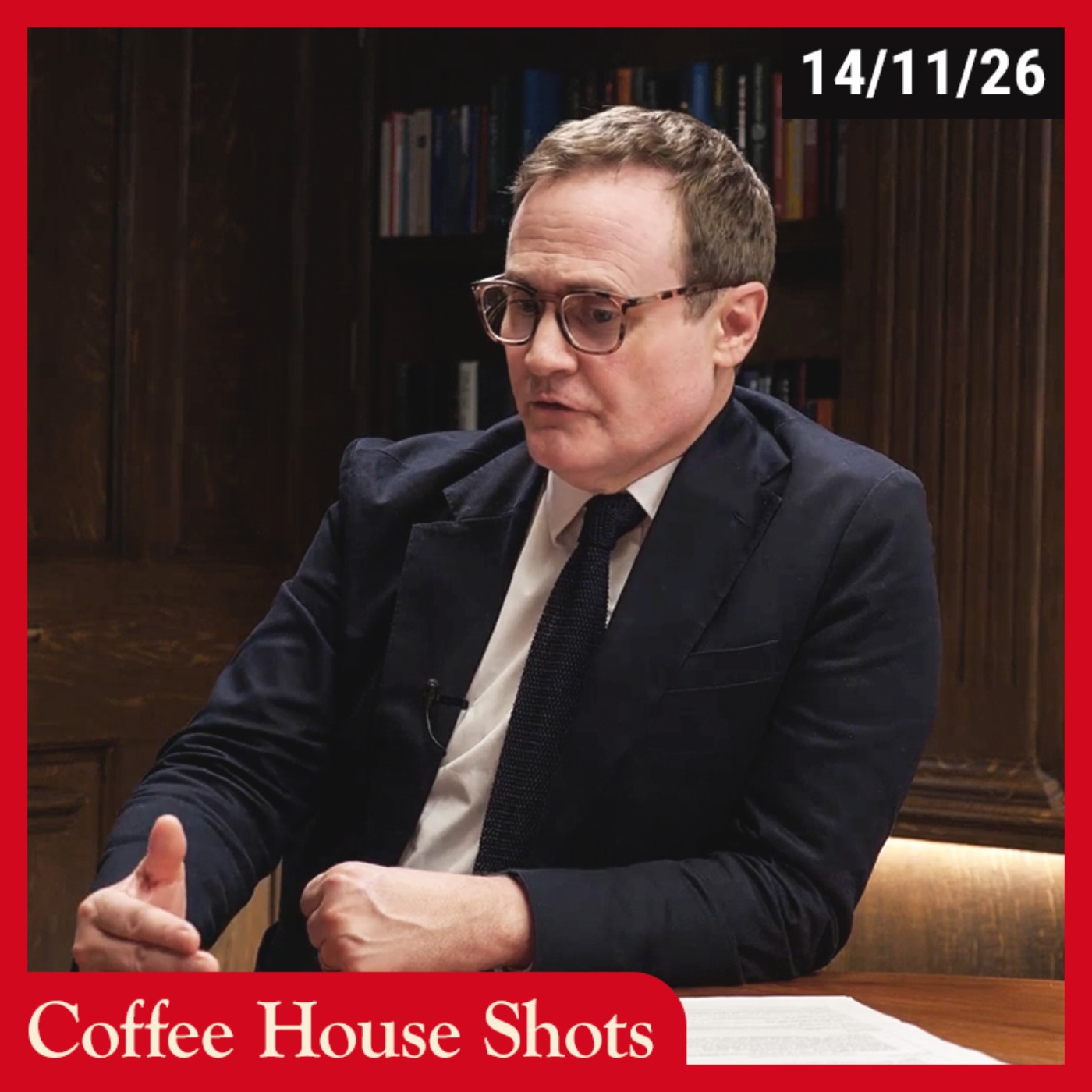


Andy Burnham’s readiness for the “world stage,” assessed through his first overseas trip to Ukraine and early signals from Labour’s foreign policy team.
James Heal, foreign policy analyst and writer (for a magazine); Sophia Gaston, foreign policy analyst at King’s.
Burnham will likely end up spending much of his premiership on foreign policy despite promising domestic focus; his approach may “do the opposite” of Keir Starmer’s slower, delayed foreign travel. Continuity matters: Jonathan Powell (kept on as National Security Advisor) is described as indispensable across Ukraine, Gaza, Greenland, and Iran. Ed Miliband is expected to be a dynamic Foreign Secretary, pushing sanctions (including potential Israel-related West Bank measures), international aid, and climate/migration-linked strategy.
meetings with Zelensky; discussion of AUKUS submarines; Labour aid cuts and Annalise Dodds’ resignation; possible UK role in Gulf politics amid UAE/Saudi tensions; potential UK-China trade friction and “dumping” claims.
Written by AI. May contain mistakes.
Discussion on Andy Burnham's recent trip to Ukraine and its implications.
“Now, Andy Burnham's first trip overseas to Ukraine earlier this week has provided the great opportunity to assess his foreign policy and just what that might look Now, James, you've written about this for the magazine.”
Exploration of Jonathan Powell and Ed Miliband's roles in Burnham's team.
“He obviously has a huge amount of work to do here to build up Labour's relations with some of those communities who have been a bit damaged by the last couple of years.”
Sophia discusses the importance of continuity in diplomacy with key figures.
“Is that a sort of insight into maybe a bit more continuity as opposed to change when it comes to Burnham's foreign policy?”
Discussion on potential candidates for key roles in the Foreign Office.
“It's also true that Jonathan Powell under Keir Starmer was sort of worked to the absolute bone because of all these different responsibilities.”
Exploring the balance between international aid and domestic priorities.
“It's an institution who's had better times.”
Analyzing Ed Miliband's potential impact on the government's foreign policy agenda.
“It'll be a cynical move in one sense that keeps the Labour Party happy and obviously plays to some of the core constituents of the party's history.”
Discussion on Miliband's early focus and potential impacts on Labour's strategy.
“It depends on how much Miliband wants to use that freedom.”

Get the gist, explore an idea or ask about something said.
 Claude
On Coffee House Shots, what are the key points of this episode?
Searching your listeningAutomatic transcript. May contain errors.
0:00This is the story of the one. As a shipping manager, he's running the dock, stocking supplies, and making sure every order goes out on time. And Grainger helps him stay prepared. From shipping supplies, to PPE, to hand tools, he counts on Grainger to keep products moving and trucks rolling. So his operation runs smoothly, no matter the shift. Call 1-800-GRAINGER, click grainger.com, or just stop by Grainger. For the ones who get it done.
0:38Hello and welcome to Coffeehouse Shots, the spectator's daily politics podcast. I'm Oscar Edmondson, I'm joined today by James Heal and Sophia Gaston, who is a foreign policy analyst at King's. Now, Andy Burnham's first trip overseas to Ukraine earlier this week has provided the great opportunity to assess his foreign policy and just what that might look Now, James, you've written about this for the magazine. What have you managed to glean from speaking to Insiders? So I think a golden rule for this new prime minister is going to be do the opposite of whatever Keir Starmer did. It took Keir Starmer four days to make his first foreign trip.
1:10It took Andy Burnham four weeks. But it seems as though Andy Burnham, who is a man with an ego, likes all, but I think he very much enjoyed that trip, you know, going around the underground services, very much enjoyed meeting Zelensky and very much meeting a grateful people. So I think this could be the start of what we see is the usual pivot with prime ministers when they start doing the foreign stuff and thinking, oh, jolly gosh, this is quite fun. But we have got a domestic agenda over the next two months or so, which will be quite taxing for him. You're expected to see the budget, you're expected to see Labour conference speech.
1:41He obviously has a huge amount of work to do here to build up Labour's relations with some of those communities who have been a bit damaged by the last couple of years. But there are two men who are primarily going to help him on this, which is Jonathan Powell, the National Security Advisor, and Ed Miliband, the new Foreign Secretary. We know from Ed Miliband's time in previous government roles, he's a very effective minister. He likes to push through an agenda. He's someone with status, both within the Labour Party and with the public too. So I think we're going to see him as quite a dynamic Foreign Secretary.
2:07Already we're seeing reports this week about potentially ramping up sanctions on Israel for the settlements in the West Bank. And from what I can tell, I think it's going to be a sort of half cynic, half romantic approach. Values and interests together entwined from this new government. and we're going to see a push on international aid, a push on climate change. And the argument that people around Miliband are making is, well, it's in Britain's interest if we take climate change seriously. We need to be a world player on this stage. And it's not just about sort of being kumbaya and sitting around and talking about lefty-greeny stuff.
2:37This is actually going to really matter, push things like migration. And I think that that means we're going to see a big push on the kind of Gordon Brown era foreign policy. So lots of stuff that Miliband was talking about when he was first in cabinet back in the late 2000s, I think we can expect to see similar themes emphasised. Now, one of the names you picked up on there, James, was Jonathan Powell, who, of course, kept over from Keir Starmer. Sophia, what do you make of that? Is that a sort of insight into maybe a bit more continuity as opposed to change when it comes to Burnham's foreign policy?
3:04Well, speaking with some of our allies of the last couple of weeks, who were all, again, kind of wearily concerned about yet another change in Prime Minister and the many new faces they would have to get used to. I think they were extremely relieved that some of the core people were going to remain in post, and particularly Jonathan Powell. I don't think it's possible to overstate how important he has been, not just for Britain's diplomacy over the last couple of years, but also for allied diplomacy. He has been extremely involved in pretty much every major conflict and negotiation that's been going on, whether that's Ukraine, Gaza, Greenland, Iran, all of these different issues, he's been really on the front foot.
3:53It so happens that having skills in conflict diplomacy at the moment make you indispensable, not just for Britain's interests, but actually, you know, the interests of the United States, who've certainly come to respect him hugely, and many of our other allies. So I'm not surprised that he's staying on. I think he has made himself indispensable. I think it will be interesting to see how the rest of the team gets fleshed out because a couple of the positions that are really key are still up, you know, really up for debate. It's also true that Jonathan Powell under Keir Starmer was sort of worked to the absolute bone because of all these different responsibilities.
4:33So I think there is a strong case, particularly since John Bew formally left government. There are, you know, different models that you could put in place where you would have a few other people there to help support the work of the NSA dealing with this, you know, constantly escalating geopolitical environment. Well, James, on those new faces that could potentially be entering the Foreign Office, you have some news on who might be replacing Ollie Robbins. Yes, it's not so much the new faces. They're pretty familiar. But my understanding is the final two for the Foreign Office permanent secretary are Karen Pearce, who was formerly our woman in Washington.
5:12No nonsense, slightly flamboyant. High flyer who's been at the Foreign Office for 40 odd years. She's been posted in the Balkans trying to act as Britain's sort of link man there between the various warring nations. She is someone who has been very much tipped to the top job before. She's perhaps less interested in some aspects of the job than others, but she's obviously a well-respected diplomat. Lindy Cameron is the other contender who is our woman in India currently, in New Delhi. She comes from a bit of a national security background, also worked in the D of the FCDO, Foreign Commonwealth Development Office.
5:49She worked in the development side when the department was merged in 2020. So it's very interesting, I think, what Ed Miliband wants in terms of his top Mandarin, whether he sees it more as a development role, championing it in terms of international aid and climate change. And I think some people in the Foreign Office therefore think he'll go for Lindy Cameron. Karen Pierce is obviously the one with a higher public profile. So I think that the interviews which are currently going on this month will very much be an interesting tell about where the department wants to go in the future, coming at a time when the institution's morale is so low.
6:19They've obviously had huge cuts as part of the 2030 programme. They've got rid of a lot of people who are part of the development side of it. And I think that obviously, given you've got two wars currently going on in Ukraine and the Middle East of some kind or another, and huge pressures across the globe, I think that it really could do with a bit of geeing up. I would liken it a little bit to the circus at the beginning of Tinker Tailor Soldier Spy. It's an institution who's had better times. And I think it needs a George Smiley, whoever that may be, at the end to come and cheer things up and put a bit of backbone back in the department.
6:49Well, hopefully Karen Pierce could potentially bring some of the energy that she brought to her parties in Washington, or so we hear. But James, I just did quickly want to stick with you, because you mentioned international aid there. Is that a risky policy, considering, you know, how do you make the case for increased international aid when we've got such a sort of dire domestic situation at the moment? I think it'll be the kind of Milibandite argument we heard earlier, which was talking about, hang on a sec, if you want to stop mass migration coming here, You can put investment on the ground in these countries to try and stop people coming here if they feel like they've got a stake in the nation.
7:20You're doing things like conflict resolution. That can help. I think it will also be part of a Burnhamite agenda where possible. Talking about how we're going to help solve problems at home by dealing with overseas at source. It will be a difficult one and I think reform will very much pick up on it. So I think it's only one strand of what Andy Burnham's foreign policy is going to be. As I say, he's previously not shown a huge amount of interest in that. He bristles when you put that to him, as Bloomberg found this week. Oh, I am interested in foreign policy. But yes, but, you know, meeting mayors of Ukraine when you're mayor of Manchester is not the same as having a nuclear code of a G7E5 power.
7:54So I think that he's still taking his time. Some elements of foreign policy, such as on trade, he's previously suggested that trade deals need to be working for the workers. You can have arguments what that looks like. And also the AUKUS as well, with the submarines being built at Barrow and Furness, that very much fits with him. But yes, there'll be other strands. And I think we sometimes forget on podcasts like this, a lot of the Labour Party has previously worked in international aid. It's a huge formal source of employment for a lot of their MPs. I think it kind of went unnoticed at the time, but Annalise Dodds did resign over the aid cuts last year.
8:25And I think a lot of Labour MPs are still pretty angry and annoyed about that. So I think it'll be a couple of things. It'll be a cynical move in one sense that keeps the Labour Party happy and obviously plays to some of the core constituents of the party's history. but also it's they would argue clear ride and helping some of the world's neediest at this time so i think it makes the labour party feel good about themselves and they hope it'll make them be good for britain as well and sophia what would you make of that and also the headline on james's piece is burnham sort of primed for the world stage but what about ed milliband do you think that he's the man you know he's the man with the plan well i think um on in terms of the the government's foreign policy priorities i mean you know i think a lot of them it's not really in our gift to determine what they are.
9:08We are subject to these global forces. So, you know, this actually comes to something very important, which is that Burnham has come in like every other prime minister we've had since Brexit, essentially saying they're going to focus on their domestic agenda and somehow sort of trying to one up against their predecessor by saying, unlike my, the person who came before me, I will be definitely focused on domestic issues. The reality is that we are in a really, really grave security environment with escalating threats, which have direct implications for Britain. And every day, a choice needs to be made about this.
9:50And a lot of these negotiations, a lot of these deals have to be done in person by the prime minister. They simply cannot be delegated, whether that's to the foreign secretary, to the NSA or anyone else. So whether he likes it or not, Andy Burnham is unfortunately going to have to spend an enormous amount of his premiership on foreign policy. I think then it does get you into the question. I think this is something I wondered about under Keir Starmer. You know, there was this huge lag between that ambition to focus on domestic and the reality of what the demands of the job were. And in that, I was thinking, well, what you really need to actually do is get a very, very, very solid domestically focused cabinet who you actually empower to go out there and make the case on the ground every day for your domestic agenda and be able to push that through.
10:43And I think the sooner that he recognizes the reality, the better. It is also true that, again, for successive prime ministers, they have come to find that it's very difficult to pull the levers in the domestic sphere and see quick results. Whereas on the world stage, Britain actually does have very considerable assets and instruments that you can still pull and show that you're doing things and get those kinds of wins. So I think there are a lot of structural forces that will pull him in that direction. I think Ed Miliband will be used effectively. He is someone who does get things done. And I think there is a certain energy about him, whether or not you believe in all the things he advocates for.
11:30But I think there are positive ways of looking even for the biggest Miliband skeptics at some of his agenda if you're thinking about UK PLC. I mean, yes, obviously he is going to pursue the climate agenda with gusto. I think there are legitimate concerns that some of that could be a little bit anachronistic with where things are going geopolitically. But at the same time, I think a lot of the work that we have been doing in terms of our international partnerships on climate change mitigation and so on, they're pretty hard-nosed outcomes, strategic outcomes that come as a result from that. So I think as long as we're not seeing the backtracking on that integration between our security and strategic and values agenda, as long as that's kind of working harmoniously, I think he could be quite effective in the world.
12:22I think it's going to be, you know, a question of how much time can he afford to spend on his own priorities versus the live issues. Obviously, as I say, the world is not in a harmonious place right now. I think there are lots of different difficult challenges for what this government wants to do. I'm a little bit sceptical about some of the stuff around Europe. I mean, the point I make in the piece is that it wants to get closer to Europe and China. I think You can look at what Miliband said at the Asian meetings of foreign ministers a few weeks ago. He seemed quite warm at that. And obviously his record at Disney's was one of being pretty encouraging of Chinese production of eco panels, for instance.
12:57So I think that that's going to be a potential issue because both Europe and China appear to be gearing up for a trade war. And I think there has been a slight stiffening of the European posture against Chinese imports. I mean, claims of dumping. So I think that's going to be one thing to watch. In terms of what he wants to do, I think that he obviously is focusing on a certain agenda, but I wonder if the trade agenda is going to be something that could also yield some results. You look at what's happening in the Middle East. If we want to build up our resistance to Chinese money, the Gulf money would be a place to look.
13:25And you look at how the UAE and Saudi have had tensions in recent months. Could there be something for the UK to act as a role there? It all depends on sort of how much Miliband is going to have flexibility in it. He's got a team around him who very much reflect a brown eye view of the world. You look at Kirsty McNeil, she was someone who worked for Gordon Brown. You look at Stuart Wood, he was one of the intellectuals around Brown at the end of his government. You've also got people like Hamish Faulkner, the young red prince, some people call him. Uma Kerman worked for Keir Starmer. And so I think it's one of the better teams in Whitehall.
13:57They've just got a lot of things up against them. And as I say, right now, given the focus on number 10 has been about domestic relations and so many issues, It depends on how much Miliband wants to use that freedom. He's chosen to, it seems, in his first few weeks to focus on Israel. I wonder if that's going to necessarily be the best use of his time in terms of getting those kind of quick wins we're seeing on cost of living, which the Burnham style seems to have for here at home, rather than some of the knotty problems abroad. I mean, you know, I think this has been going on since biblical times.
14:22So I'm not really sure how much influence Miliband will have, but it'll certainly be something that appeals to the Labour Party. And as I put in the piece, because of his status, he's obviously proud of his Jewish heritage, which would probably describe himself as a two-state Zionist, but also was the Labour leader who recognised Palestine in 2014. So I think that he thinks that he maybe has a chance to build bridges between Parliament and elements of the diplomatic community, which maybe weren't there under his predecessor. Can I offer perhaps a view of why I think there are reasons to possibly be optimistic about this current team?
14:58I think when Starmer came in, and it's interesting, you have to go back to that 2024 election. I was doing a lot of work with the defense industry at the time. A lot of industry partners were really enthusiastic about labor coming in. And the reason why was because they thought they would be serious about national rearmament and defense reindustrialization. I think what they ended up feeling was that the Stama government in the end was far too timid and incrementalist with the way in which they've gone about that project. I think there are reasons to think, and particularly now with John Healy, who we know really genuinely gets this as Chancellor of the Xerqa, that if you have the kind of revolutionary zeal and the willingness to kind of move forward with things that you can see in Burnham's instincts there, coupled with, you know, someone who really gets defence in the Treasury and was treating a reformist in the defence secretary role.
15:58I think there are reasons to think that, you know, even if Burnham frames all this as a domestic agenda, if we do get really serious about capability development and kind of the sovereignty project, which means fixing energy, ramping up defense, etc., etc., then that, you know, has really, really significant implications for our foreign policy too. So some of this is about narrative, but a lot of it's going to be about just getting things done. And I do think that we should at least give them the opportunity to see if they can come good on that promise. Well, some rare optimism there for Coffeehouse Shots listeners.
16:37Thank you so much, Sophia. Thank you, James. And thank you for listening.
17:13We'll be right back.
17:22You get what you need when you need it. So you can help keep budgets balanced and lines moving. Call 1-800-GRAINGER, click grainger.com, or just stop by. Grainger, for the ones who get it done.
Andy Burnham's first overseas trip as Prime Minister took him to Ukraine this week, offering the first real glimpse of what his foreign policy might look like. But with a budget and a party conference ahead, how much time can a PM elected on a domestic agenda really give to the world stage? Oscar Edmondson is joined by James Heale and the foreign policy analyst, Sophia Gaston, to assess Ed Miliband's early moves at the Foreign Office, why Jonathan Powell has made himself indispensable to Britain's allies, and who is in the running to replace Olly Robbins as permanent secretary.
Produced by Henry Lloyd
Become a Spectator subscriber today to access this podcast without adverts. Go to spectator.co.uk/adfree to find out more.
For more Spectator podcasts, go to spectator.co.uk/podcasts.
Contact us: [email protected]
Hosted on Acast. See acast.com/privacy for more information.