
 Ask ChatGPT



UK Labour PM Andy Burnham’s readiness to address warnings of imminent Russian “hybrid warfare” against Europe, amid domestic-focused governance and defence funding delays.
Tim Shipman (Spectator political editor; previously discusses defence preparedness and foreign-policy posture). Noah Hoffman (Spectator political correspondent; comments on Burnham’s world-stage relationships and upcoming diplomacy).
MI5 chief Ken McCallum says Britain is effectively at war with Russia under constant attack. Europe faces coordinated threats: cyberattacks, drone activity, possible assassinations, and incidents like Lithuania airspace violations and a train attack near major figures. Burnham’s government is criticized for being quiet and domestically focused, with defence readiness worsening (training paused in units; “least ready in decades”). Defence spending target: 3% GDP by 2030, but funding details deferred to next year.
Macron-led French security briefings; Russian warship near UK waters; surveillance of underground cables; blocked military interviews; Burnham’s Number 10 North hosting of Irish PM Micheál Martin and Mark Carney (Everton match); upcoming UN General Assembly meeting with Trump (Ukraine, Israel/Palestine, and UK/“united Ireland” politics).
Written by AI. May contain mistakes.
Discussion about military chiefs warning of threats from Russia.
“Tim, earlier this week on our sister podcast, Reality Check, the Spectator's economics editor, Michael Simmons, asked the question, are we all going to die?”
Analyzing the UK's response to threats and its foreign policy focus.
“They're constantly surveying our underground cables which link us up with Europe and with America in terms of internet and all that kind of stuff.”
How domestic issues overshadow military warnings and defense spending.
“including Jonathan Powell the National Security Advisor did not think that was a terribly good idea and certainly thought it should wait until after the Israeli elections at the end of October.”
Examination of the military's current preparedness and funding issues.
“And obviously, there is a lot the Treasury is doing that is making things worse, as our wonderful economics editor, Michael Simmons says.”
Discussion on Andy Burnham's approach to international relations and his image.
“The first question will be, well, why aren't you funding this defence stuff until next year?”
Explore the concept of middle powers and their influence in global affairs.
“The people who, you know, us, the French, the Germans, the Aussies, the Canadians, you know, we're not superpowers.”

Get the gist, explore an idea or ask about something said.
 Claude
On Coffee House Shots, what are the key points of this episode?
Searching your listeningAutomatic transcript. May contain errors.
0:00500 orders a month was manageable. 5 ,000 is madness. Embrace intelligent order fulfillment with ShipStation, the only platform combining order management, warehouse workflows, inventory, returns, and analytics in one place. What used to take five separate tools, ShipStation does in one. Automate fulfillment and rate shopping to ship up to 15 times more with up to 90 % savings. Go to ShipStation.com and use code AUDIO to try ShipStation free for 60 days.
0:35Hello and welcome to Coffeehouse Shots, the Spectator's daily politics podcast. I'm Patrick Gibbons and today I'm joined by our political correspondent Noah Hoffman and our political editor Tim Shipman. Tim, earlier this week on our sister podcast, Reality Check, the Spectator's economics editor, Michael Simmons, asked the question, are we all going to die? Now his discussion... They're talking about. Now, his discussion was framed more around AI and the warnings from American tech giants, but they aren't the only people issuing warnings of impending doom. Military chiefs here in Britain have been sounding some warnings as well, haven't they?
1:10Yeah, I mean, it's quite interesting. We go back about 10 days. Ken McCallum, the boss of MI5, was warning about how we're effectively at war with Russia under constant attack. If you have a quick glance around social media, you will see what appears to be a fairly coordinated cacophony of warnings from around Europe about Russian activities. Talk of hybrid warfare, talk of potential assassinations, talk of drone attacks. Obviously, we're constantly under cyber attack by Russia and Russian related entities. The polls have been particularly punchy about it. Lithuania has seen its airspace violated in the last couple of days.
1:52We saw that attack on a train going into Ukraine, where there were quite some quite big names were due to be on board a little bit later. David Petraeus, Boris Johnson were sort of not a million miles away when that happened. And interestingly, in France, you have a situation where the Macron government has basically announced they're pulling in all the major politicians for a sort of security briefing to say, look, this is a major threat to Europe. In essence, what they're all saying is that Putin is bogged down in Ukraine and wants to sort of take his aggression elsewhere and punish countries who have been supporting the Ukrainians.
2:31And they'll be doing this in a whole range of ways. I mean there's literally a Russian warship sitting in you know not far from our territorial waters as we speak. They're constantly surveying our underground cables which link us up with Europe and with America in terms of internet and all that kind of stuff. And I think bluntly the country, the government in Europe that's said least about this so far is probably ours. And Andy Burnham is very focused on all of his domestic reforms and preparing for the Labour Party conference at the end of next week. But it looks like this is a, you know, there's enough going on here to say that it looks like intelligence officers across Europe have kind of concluded that something a bit more aggressive than we've seen from the Russians against the sort of mainstream part of Europe is imminent.
3:21If you go back to 2022, Britain alongside the US was one of the countries that was sounding the warnings about an impending Russian attack on Ukraine in a way that contrasts with this sort of quiet from the Burnham government now. You know, what should we read into that? Is it that the UK doesn't subscribe to this Macron view that it's as impending as it is? Or is it because the Burnham government is so new? Well, I think it's several things. One of which is, I suspect, you know, there hasn't been necessarily an explicit imminent warning of an attack in Britain, in which case the government would probably have wanted to get out ahead of it and tell the public about it.
3:58I think secondly as I said I think they're very very domestically focused and they regard foreign policy as a bit of a nuisance and an irritant and the only major foreign policy move we've seen them make in recent weeks is to sanction you know products from the West Bank and to kind of take a pot shot at Israel but even that looks like it was done for domestic reasons and as I wrote in the magazine this week you know even quite senior aides to the Prime Minister including Jonathan Powell the National Security Advisor did not think that was a terribly good idea and certainly thought it should wait until after the Israeli elections at the end of October.
4:31But that seems to have been done because of the Hobart and Pancras, St Pancras by-election and because Burnham wants to proclaim the left of the Labour Party. So even the foreign policy he's done seems to be very domestically focused. And I think, you know, bluntly, this is not his wheelhouse. I don't think he's terribly comfortable with it. And I don't think he's terribly interested in it. But as the timeless phrase goes, you might not be interested in foreign policy, but foreign policy tends to have a way of becoming interested in you. And it feels a little bit like that's what might end up happening here.
5:00Noah, we're only a few weeks away, really, away from the budget. Opposition parties today have come out and said that the Labour government is to take these warnings seriously. But is there a danger that a lot of people dismiss this as, well, of course, military chiefs are going to warn about impending doom and war and the need for increased defence spending six weeks from budget?
5:19Noa Hoffman: I think it's interesting that the Ministry of Defence has blocked top brass within the army from actually having interviews with journalists. Traditionally, they have been allowed to, but there's been a real blockage from number 10, which does leave one wondering, you know, what are they so concerned about the top brass saying, apart from obviously really reiterating just how important it is to get that 3 % GDP funding by 2030. I mean, everyone's focus within the government and within the country of course is domestic because we are being plagued by so many difficult issues whether that's cost of living whether that's the NEETS crisis whether that's immigration but as Tim rightly said the international arena feeds into a lot of that and it will very much be overshadowing a lot of the budget already we see ministers using the war in Iran as a go-to reason for why the economy is doing so badly.
6:20Noa Hoffman: Of course, it does play a part, but you cannot use that as a sole excuse when this has been going on for a long time. And obviously, there is a lot the Treasury is doing that is making things worse, as our wonderful economics editor, Michael Simmons says. So I think, I mean, Burnham came into government wanting to project positivity and wanting to really hammer home the most cringiest message ever, growth in every postcode, hope in every heart. And impending European war possibly doesn't quite chime with that messaging. But they will have to be honest as and when the warning sounds become, the alarm bells ring louder and louder from within the military.
7:04Noa Hoffman: And they won't be able to dodge this forever and we do see the likes of Nigel Farage and reform really coming out today and saying that Burnham has to be very clear with the public about what's going on and down the track they'll have to say you know exactly how that's going to impact finance and how that's going to impact Burnham's big tax and spend agenda we still have you know no idea on how he is going to achieve his political economy we'll probably have to wait for the 10-year plan to find that out. But this is really sort of coming as a big boulder rolling down the hill towards us. And the government hasn't been quite as clear as the opposition parties at least would like about that.
7:42Yeah. And I think, I mean, you know, it's an obvious thing to say, but they have basically said, yes, we will fund the 3 % GDP on defence by 2030, but we're not going to tell you how, we're only going to announce it next year. So of course, if the government were to come out and say, we actually do think there's been a step change here in Russian activity, and we need to do something about it. The first question will be, well, why aren't you funding this defence stuff until next year? So their hands are tied a little bit by this. It does feel a bit like a country that quite often likes to be one of the leading lights on setting the foreign defence agenda across Europe is becoming rather passive as a consequence of its own inability to find the money.
8:23Well, Tim, we've covered the military preparedness for war on the pod several times, or rather lack of? Silly question, really, but are things getting better? I mean, not yet, I think is the short answer. In fact, I think most people you speak to in the military would say that in the short term, they're getting worse. They're hopeful and expectant of a cash boost eventually. But, you know, we hear of, you know, even in the last sort of 10 days of reports that various units are being told to stop training because there isn't enough money. And, you know, bluntly, I think in all three of the services, there's a sort of rule of thirds about a third are ready to fight a third are training and the others are sort of refitting and kind of recovering from what they did previously and you know in the navy that means a lot of ships are in dry dock or you know not available um and the same is true of the army you know there are units that you know are on standby ready to do something at short notice and others that are training but if you stop the training um because that saves uh some money, you inevitably hit the readiness of your armed forces to serve.
9:26And they're, you know, been depleted in numbers as it is. And bluntly, I think, you know, most people in the know would say this is the least ready that we have been to fight for several decades. And Noah, just turning to the Irish Prime Minister's visit to the UK today, Michal Martin was visiting, I believe he's the first world leader to visit Number 10 North with Andy Burnham. Over the summer, a lot was made about how Burnham was going to be more domestic focused than Keir Starmer. Are we now seeing, are we now getting a flavour for Andy Burnham's relationships on the world stage?
9:58Noa Hoffman: I think we are. I mean, this visit was very much in tune with the Downing Street approach that where Burnham does intervene on international issues, it's because they have a domestic focus. So we had Donald Trump sounding off about a united Ireland the other day. And that suddenly brought home the idea that Burnham can't just sit back too often and talk about the UK, but also has to look at what world leaders are saying about the UK. The visit to Number 10 North is obviously Downing Street, trying to link the two, saying when Burnham is focusing on the international arena, it's always with the UK in mind.
10:39As Tim said, the same goes with the boycott of the West Bank.
10:44Noa Hoffman: it's going to do absolutely nothing to improve peace in the region, but it will win over a lot of Muslim and progressive voters here. I mean, Keir Sama started to gather, you know, a lot of criticism and even get the nickname Never Hear Keir when he was prime minister because of just how much time he spent being abroad. He was so comfortable on the world stage being the ultimate statesman because at home his prime ministerial demeanour was received so badly by the public who just thought look at this poncy out of touch man who is this north london lawyer he's nothing like us he just blabbers on about human rights and he's out of touch with the issues that impact us burnham has done a very good job at separating his image from his predecessor and really seeming more like a bloke you'd like to have a pint with at the pub in the same way Nigel Farage is able to achieve.
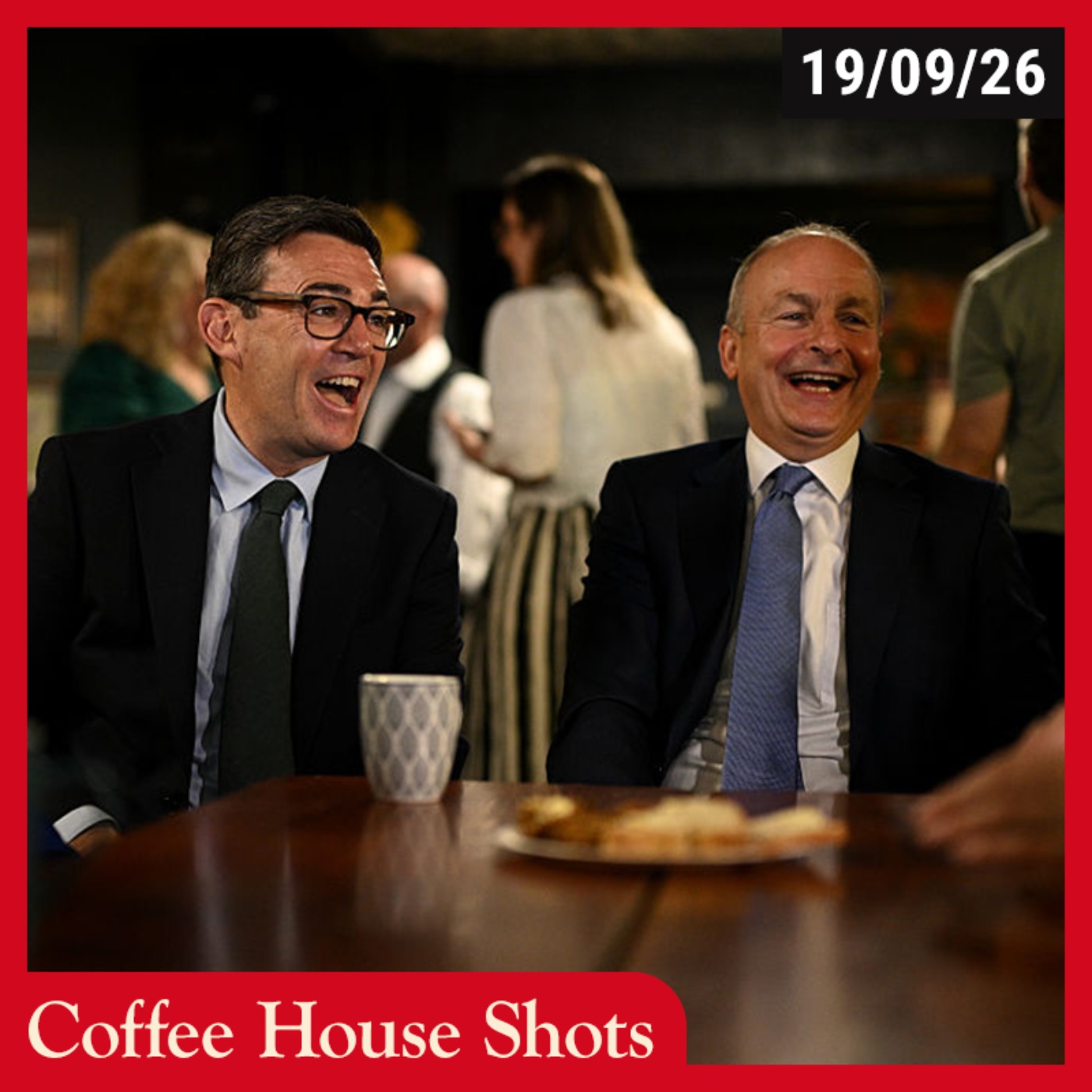
11:40Noa Hoffman: So he is obviously... Why go to the pub, Noah, when you can go to the Brian Boru Irish Club in Ashton in Makerfield, which is where this poor sod Taoiseach has been entertained today. I think there is something to Burnham bringing world leaders to number 10 North in order to really ram home his message that he is a domestic focused prime minister, but there will be times where he needs to put that to the side, where he needs to put his own goofy personality and charm to the side and be the ultimate statesman, particularly when it comes to issues like Trump and the Middle East and Russia as well.
12:18Noa Hoffman: And we haven't yet seen evidence of how he performs when under that pressure. And the first glimpse that we will get of that, of course, is next week at the United Nations General Assembly in New York when Trump and Burnham will meet for the first time. Ukraine is on the agenda. Of course, Burnham is going to ram in Israel because he always has to play to that domestic left-wing audience. And then the issue of the United Kingdom, of course, is now on the table because of Trump's sudden intervention on a united island. So that's a lot and that's difficult work. It can't just be solved in a sleek TikTok video.
12:57Noa Hoffman: So the jury is out on how he performs then, although nobody is currently expecting a diplomatic miracle at the hands of Burnham. But perhaps we'll be proof of all. Yeah, I mean, I say that it was the first visit of a world leader to number 10 North. Wasn't the first visit under Burnham of a world leader to the Northwest. Because obviously Mark Carney, the Canadian prime minister, visited Liverpool this week and attended an Everton match with Andy Burnham. So it seems that Andy Burnham is at least serious about bringing world leaders to the UK for these kind of visits. Well, yeah, and particularly Carney, who weirdly is an Everton fan, apparently has some family link to Liverpool.
13:35I mean, when he was governor of the Bank of England, sort of wafting around being, you know, a sort of kind of pompous finance man hanging out in the city with all the pinstripes. I mean, you would have put most of your emoluments and worldly goods on him being an Arsenal fan, wouldn't you? But no, he's an Evertonian and Burnham made the most of that. I mean, any old excuse to go and go to a home game, I suppose. But Carney is seen as quite an important kind of figure in this, what is now being referred to as the sort of middle powers. The people who, you know, us, the French, the Germans, the Aussies, the Canadians, you know, we're not superpowers.
14:12Are we admitting we're a middle power, Tim? Well, I'm not sure whether Andy Burnham would admit that. But I think, you know, I think there's a realism about how much clout Britain's got. And we've got a lot of soft power and we've got, you know, we're still world's six biggest economy and we've, you know, we've got nuclear weapons and all that stuff. We're not completely irrelevant.
14:30Noa Hoffman: Ed Miliband does think he can solve the Israel-Palestine crisis. All on his own. Yes. Read more about that in the magazine this week for my views on that subject. But yeah, I think there's an idea that, you know, if you can work in concert with some of these other middle powers, you can achieve things that, you know, when you've got an American president who's not necessarily on side, that might be the route forward. But I don't think we should fool ourselves that even a collection of middling types is enough to trump, to coin a phrase, one of the big boys. So I, you know, I for one am fascinated to hear what happens when Burnham and Trump get together.
15:12I mean, you know, will the AOP Act work on the Donald or not? You know, I mean, does the Donald entertain the idea of opening a golf club somewhere near Liverpool or near Makerfield? If so, they might get on like a house on fire. Whether it's the Mamdani or the Syrian president, he does have a tendency to quite like, should we say, slightly more handsome men. And so I wonder whether Trump might fall for the eyelashes. They're the most beautiful, amazing eyelashes, phenomenal, the most beautiful eyelashes in the world. You know, you're very, you know, Britain's very lucky, very lucky, very lucky to have.
15:47Noa Hoffman: I don't think that's as good as your Starmer impression. No, it's not, I'm afraid. But, you know, the sentiment is there. I think he could, yeah, he could. Melania. Melania loves the eyelashes, you know, that sort of thing. Well, thank you, Tim. Thank you, Noah. And thank you for listening to Coffee House Shots.
16:20Hey, I'm running out to drop off a stack of letters and packages. Need anything shipped while I'm gone?
16:26Noa Hoffman: Save the gas. Stamps.com lets you print postage and schedule pickups right from your desk. Sync your contacts into the address book, get detailed accounting insights, and get notified the moment your certified mail is delivered. All from my desk? All from your desk. Join the 4 million businesses using Stamps.com right now with code podcast and get your free welcome gift. Stamps.com code podcast. Taxes and fees apply.
Military and intelligence chiefs across Europe are sounding increasingly stark warnings about the threat posed by Russia, from cyber attacks and sabotage to drones and hybrid warfare. But is Britain taking the danger seriously enough – and are the armed forces actually ready for what might come next?
Patrick Gibbons is joined by Tim Shipman and Noa Hoffman to discuss Britain’s military preparedness, Andy Burnham’s approach to foreign policy and what to expect when the Prime Minister comes face-to-face with Donald Trump in New York next week.
Produced by Patrick Gibbons.
Become a Spectator subscriber today to access this podcast without adverts. Go to spectator.co.uk/adfree to find out more.
For more Spectator podcasts, go to spectator.co.uk/podcasts.
Contact us: [email protected]
Hosted on Acast. See acast.com/privacy for more information.


