 Ask ChatGPT


The episode covers Labour’s new cabinet reshuffle after Keir Starmer’s departure from No.10 and Andrew Burnham’s arrival as the UK’s 59th prime minister. Hosts Tim Shipman and James Heal argue Starmer’s premiership was brief and “unmemorable,” with a sense of relief at his exit. They claim Burnham is “massacring the stormtroopers,” removing roughly a third of the cabinet: Richard Hermer, David Lammy, Rachel Reeves, Steve Reid, Liz Kendall, and Darren Jones (chief secretary to the prime minister). They discuss Burnham’s “vibes” speech: ending rough sleeping, cost-of-living measures (possible rent freezes, lower energy bills and bus fares), and sticking to fiscal rules with “flexibility.” Notable examples include NATO spending targeting 3.5% and possible tax allowance increases from £12,500.
none; it’s a hosts-only political commentary.
Written by AI. May contain mistakes.
Discussion on Starmer's departure and the sentiments surrounding it.
“departing number 10 and the arrival of our 59th Prime Minister, our seventh in as many years, Mr Andrew Burnham, as Buckingham Palace insisted on referring to him as earlier.”
Analysis of Burnham's reshuffle and the removal of Starmer's allies.
“He's not the only one evaporating into the sunshine, though.”
Insights into Burnham's speech and the absence of concrete policy.
“and he can actually remake a government in his own image.”
Discussion on significant cabinet changes and implications.
“Now, how far we'll get, you know, in the next budget, who knows?”
Speculation on Burnham's upcoming policies and cabinet dynamics.
“Now, there was some talk that was defence.”
Discussion on Burnham's economic plans and potential impacts.
“But I'm going to reach out to those different traditions.”
Discussion on tax reforms, Andy Burnham's leadership, and social care issues.
“So maybe we should be preparing for a two or three grand rise in that to take more people out of income tax altogether.”

Get the gist, explore an idea or ask about something said.
 Claude
On Coffee House Shots, what are the key points of this episode?
Searching your listeningAutomatic transcript. May contain errors.
0:00James Heale: With almost half a million customers and over a trillion dollars of secure payments, Bill isn't new to intelligent finance. It's the proven way to simplify bill pay and maximize cash flow. Want to learn more? Visit bill.com slash proven for a special offer.
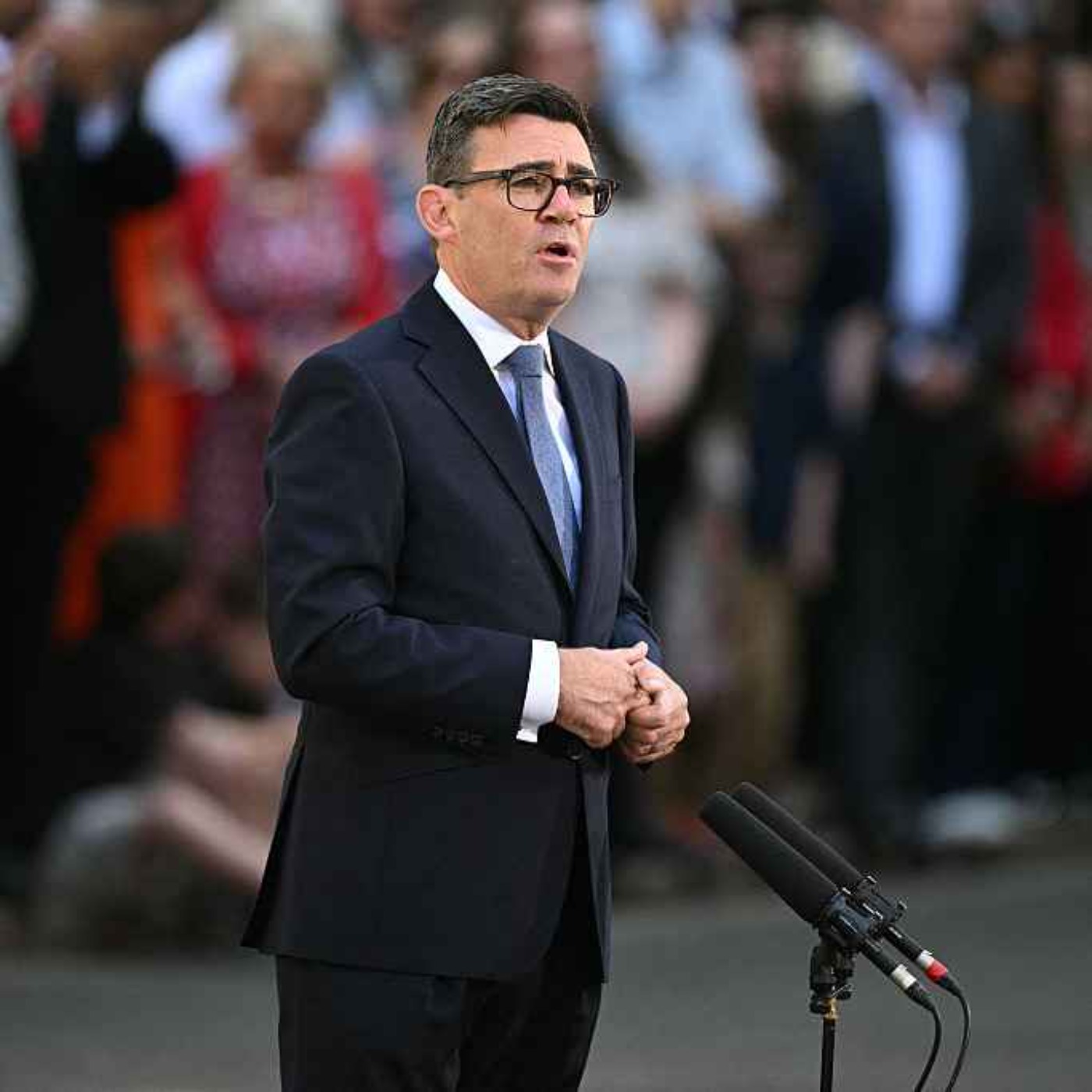
0:24James Heale: I go with good grace I go with a smile And I go proud of everything that we have achieved Thank you very much I know people at home are fed up with politics I hear you And I want to be honest with you We have not been good enough And we need to be better We are coming to you today live from Westminster. I'm Tim Shipman. And I'm James Heal. And you were listening there to Britain's 58th and outgoing Prime Minister, Sir Keir Starmer, departing number 10 and the arrival of our 59th Prime Minister, our seventh in as many years, Mr Andrew Burnham, as Buckingham Palace insisted on referring to him as earlier.
1:09James Heale: Now, James, we'll come on to Burnham, but Starmer sounded like a... he said he was happy
1:14Tim Shipman: he bloke going on holiday I think there has been that sort of sense of relief hasn't there that weight lifted off his shoulders ever since it was sort of very clear in the last couple of weeks that the game was up he was going to leave office and you almost seemed to see him evaporate into the sunshine he had all the aides surrounding him you had the Chancellor and the Deputy Prime Minister all at the back of it sort of jostling there and really it was just what we kind of sort of expected from Keir Starmer it summed up his time in number 10 it was unmemorable brief and, you know, rather short on achievement, I would say.
1:45James Heale: He's not the only one evaporating into the sunshine, though. We've had quite a few departures since. In his speech, Burnham, who didn't say a great deal, it's fair to say, it was more vibes than content, we'll come on to that in a moment. But he also talked about a broad church, the big team, the unity across the country and across the party. But what we've seen since is a whole bunch of Starmerites being taken out and shot.
2:09Tim Shipman: Yeah, and strikingly, Andy Byrne didn't have any nice word. Even Rishi Sunak managed to mention Liz Truss before him. He had nothing to say in that speech earlier today at Number 10 about his predecessor. And that's very much been sort of matched by his actions. It's the night of the long eyelashes. You're seeing Richard Hermer being taken out, David Lammy being taken out, Rachel Reeves is gone, Steve Reid, Liz Kendall. About a third of the cabinet has been cleared out today. And clearly he judges that the Stammerites have no sort of political capital left and he can actually remake a government in his own image.
2:37James Heale: Yeah. And I mean, you know, all prime ministers have that right to do that. But he's obviously on slightly thinner ice than some of them, given, you know, the lack of a mandate and the lack of sort of, you know, a personal kind of vote from the British public or even actually from the Labour Party, because he's been installed by the MPs, not by the members. So what did you make of that speech? You know, we learned that he wants to do away with rough sleeping and that he talked about an intervention to ease the cost of living in the coming days. Starting tomorrow is obviously going to be a whole series of announcements, but there was quite a lot missing from that speech, wasn't there?
3:16Tim Shipman: Yes, certainly. I think that it was the vibes speech. It was very much him sort of having a bit of a few things you could point to and a lot of handholding as well, saying, I will have a 10 year plan, but just not yet. I will have a cost of living series of measures, but not right now. And I think that this was him kind of signaling where he wanted to go. And it was very much the emphasis on kind of feel good factor out there without a lectern for the first time in recent time. And all the sort of sort of kumbaya singing and dancing we've expected rather than the kind of detailed policy plan, which we hope we'll get in the coming days.
3:46James Heale: And part of that was possibly the desire to do it with no notes. I mean, everybody else has had a lectern and they all we got very excited about all this. They all had a different lectern, didn't they, all those other prime ministers? The British lectern-making industry did very nicely out of the years of turmoil. But he obviously wanted to stand there sort of Cameron Bray-like and look like he was in command of it. But I suspect that meant, you know, he obviously had to memorise it. So it was less likely to have the kind of level of detail or even the sort of really kind of florid rhetoric that a lot of people in that position have had before.
4:18Tim Shipman: And even the kind of theme that you'd expect to run through a speech. I mean, there was some stuff perfectly laudable, more mental health spending in schools, the importance of defence commitment being honoured on the international stage.
4:28James Heale: Yeah, I thought that was significant that he actually bothered to do that. He sort of said we need to live up to what our partners have expected, which effectively is saying NATO wants three and a half percent. We've got to get there eventually. Now, how far we'll get, you know, in the next budget, who knows? But, you know, for a man who didn't seem that interested in this as an area, that was at least a useful marker to put down.
4:49Tim Shipman: And of course, as well as not having particularly the theme at that point when I watched it this morning, there now does seem to be an additional significance this evening because we are seeing John Healy, the man who quit and arguably brought down Keir Stummer's government in some ways over the refusal to increase defence expenditure and necessary levels, is now in number 10. He's just popped in about five minutes ago. And we are expecting some reports he's going to get a big job, possibly the chance of the exchequer, which would be an amazing comeback, wouldn't it?
5:13James Heale: Yeah, I mean, I've written that he was sort of one of the names in the frame for a little while. I certainly would seem to be behind Shibana Mahmood and Ned Miliband. But maybe the way to avoid upsetting the partisans in both camps would be to give it to Healy. But either way, it looks like he's going to get a big job. And that's kind of significant because putting him around the cabinet table, he will be arguing for that money. I mean, there were rumours earlier today that Rachel Reeves was being offered the defence post. And it seems, you know, the reason we're sitting here now and it's all running quite late, as these things are wont to do, you know, nothing ever survived, no plan survives contact with the enemy and no cabinet reshuffle survives contact with members of the cabinet because they tend to be stubborn or dig in.
5:55James Heale: And now our understanding is that Rachel Reeves was offered a job when she was told she wasn't going to be Chancellor anymore and that she declined it. Now, there was some talk that was defence. I've heard it might have been DEFRA. Her people are remaining stum at the moment. But as soon as someone says no, you've then got to start juggling everything else around.
6:12Tim Shipman: And we remember, of course, past reshuffles to 2018, where I think, was it Jeremy Hunt or Chris Grayling were off for different posts that they wanted? And it led to a whole delay. Well, they both said no. Yeah, quite. And then because that was the moment when the prime minister has, we see the kind of prime minister's political stock rising or falling. For me, the fact that Burnham has decided to kind of have this massacre of the stormtroopers. For today, you know, this is their sort of battle of ombudsman. Everyone is sort of getting cut down left, right and centre. That for me shows that he's very confident and he doesn't want to kind of actually spend time in cabinet negotiating with past people.
6:45Tim Shipman: He wants to make a clean break of it and really sort of bet the house on a whole new team.
6:49James Heale: And we can bring breaking news to you, everybody. Darren Jones also has joined the list of the casualties. So the man who was in that new role, chief secretary to the prime minister. We've never had one of those before. Basically, you know, the PM Starmer's consigliere in the cabinet, who was talking about running for the leadership, who was being touted as, you know, a possible successor not that long ago. Gone.
7:13Tim Shipman: Another one. I mean, look, I think the writer was clearly on the wall for him. He was seen as someone quite close to Keir Starmer, not that popular in parts of the Labour Party. And I think some of his content in the past sort of week or so has had a sort of very Frank Sinatra, and now the end is here. I did it my way. Feel to it.
7:29James Heale: Yes, and not all his colleagues appreciated how he did it either. But, you know, I mean, it just shows you that this is, you know, life comes at your fast in politics. It wasn't that long ago when Rachel Reeves was sort of in the hole that people were talking about, well, could Keir Starmer make Darren Jones the Chancellor of the Exchequer? He'd been the chief secretary before, Treasury experience, and now he's gone. And that's, you know, this can be a really brutal business. And, you know, it's easy to joke about it when people who put their colleagues' noses out of joint. I dare say I'll get some messages about people not weeping over the fate of Darren Jones.
8:05James Heale: Certainly when we printed some of his messages to Peter Mandelson a while ago, the levels of schadenfreude in Westminster were quite high. But, you know, Darren Jones is an able person. And at the moment, it looks like his sort of cabinet career is basically done.
8:20Tim Shipman: And you actually think, well, maybe there's something in having a decent broadcaster, someone who has some experience in government, keeping them in post to show, hang on a sec, you might not have liked me or wanted me for leader, But I'm going to reach out to those different traditions. I'm going to have a big tent. And I think Darren Jones Sacking will be very much confirming the image of today as the massacre of the stormtroopers. And also, I'm just curious now as to what happens to that post, because a lot of this reshuffle is about undoing the last Labour reshuffle, which was September 2025.
8:45Tim Shipman: Does he keep that post of chief secretary of the prime minister? Does he go to Louise Haig, who's been kind of touted as a kind of government fixer? And what does kind of Andy Burnham do in terms of machinery of government change as well?
8:54James Heale: I mean, my assumption, and I've had no knockback from anybody close to her, is that whether or not Louise Haig takes the same title as Darren Jones, that is effectively the job she'll be doing, which is the Cabinet Office minister job. We're told there may be some reorganisation at the centre. James Purnell, who's the new chief of staff, was involved in a project last year that touted having a prime minister's department effectively to replace the Cabinet Office as a kind of driver of stuff through the whole of Whitehall. And I think that's the role that Louise Hague will get in the sort of florid constitutional language.
9:30James Heale: She will be the Chancellor of the Duchy of Lancaster, CDL. But so under the Tories, everyone just called you CDL. Michael Gove was CDL, David Liddington was CDL. But when Jones came along, we got this title of Chief Secretary to the Prime Minister. What it means, bluntly, is Chief Backside Kicker for the Prime Minister. And I think there's a lot of people who don't necessarily agree with her politics, which are certainly to the left of Darren Jones's, who think that Louise Hague is a rather more effective kicker of behinds than Darren Jones turned out to be. They seem to get a reputation for holding a lot of pointless meetings and not much else.
10:04Tim Shipman: And I do think that of the cabinet ministers who've been sacked today, there are definitely some of those who were perceived as not having been helpful to the government's messaging or not got a firm grip on the departments. and I will wait to see kind of what kind of form of retribution they choose to enact on Andy Burnham as they go through in the next month or so and actually start making some of those hard decisions in the departments.
10:24James Heale: And on that note, the first to go was Steve Reid, the housing secretary, probably with the exception of Lord Herma, the closest cabinet minister to Starmer, big old pal of Morgan McSweeney, very much seen on the sort of blue Labour through to Blairite, you know, the sort of old right of the Labour Party. And his resignation letter was quite interesting. I mean, he talked about, I showed loyalty to Keir Starmer. I don't regret that, effectively saying, well, you're kicking me out because I was mates with Starmer. But, you know, I regarded that as my job to do that. And frankly, I hope you get the loyalty that Starmer didn't.
11:01James Heale: It was the sort of subtext of what he was saying, wishing people well. Well, anyone who remembers the Vote Leave campaign where they used to say we wish them well when effectively putting two fingers up to their enemies will always find it amusing when people wish other people well in politics these days.
11:18Tim Shipman: In the middle of this reshuffle we've also had something quite interesting and I think quite innovative in terms of the context of cabinet reshuffles which is Annie Burnham spoke to a couple of reporters in the Downing Street Garden giving these comments and talking particularly about his economic plans. So there's going to be discussed a living announcement tomorrow, we're going to get more details on that. Now, he's trailed in the times potentially lifting the personal tax allowance of£12 ,500 because that's been frozen for about five years. But there's one remark he made where he talked about keeping the fiscal rules but having flexibility within that.
11:46Tim Shipman: Now, the economic reporters are getting very excited about that, suggesting that gilts have gone up as a result of that. I think that's why we saw this morning when Andy Burnham talked about having lots of different plans but fully costed because that is the paramount concern going into this, that an economic kind of run on the pound, an economic catastrophe could derail the Labour government, as many Labour governments have been derailed before.
12:05James Heale: Yeah, and he says we will stick to the fiscal rules, but we will obviously use any flexibility within them. And he's broadly said the same about the Labour manifesto from the last election. When people say, he was asked earlier by Beth Wigby on Sky, when are you calling a general election? He said, well, my mandate, this is a parliamentary system, is that Labour won an election and I will stick to the manifesto. But part of the reason why the speech he gave on Friday was quite vague, the speech he gave today was quite vague, is because people around Burnham think they can stretch the meaning of that manifesto.
12:37James Heale: And actually, if you read it, it wasn't that specific itself. So his argument will be that a lot of what he wants to do was implicit in what Starmer offered to the country and that that gives him the leeway. So on the cost of living, he says we're looking at measures that could make a difference this year. And they're talking about, you know, potentially freezing rents. but before that cutting energy bills and bus fares. Now we know that bus buses are sort of Burnham's thing. They were the sort of leitmotif of his time in Manchester. And I suspect we'll see some sort of, you know, what we traditionally call in public retail offers to the punters.
13:20James Heale: There's also been talk of doing more on tax rates for low earners as well. So the personal allowance is£12 ,500 at the moment. So unless you earn£12 ,500, you don't pay income tax at all. And when you do start paying income tax, you don't pay on the first£12 ,500. Now, George Osborne kind of got all that going as Chancellor of the Exchequer. And I think there was a criticism during the Tory years, on the right at least, that if people aren't paying tax at all, they're not really kind of invested in the country. It's the Nigel Lawson argument. Yes, that you've got to pay something to feel... To feel like you're sort of part of it.
13:56James Heale: But Burnham seems to have been listening to people on the doorstep in Makerfield who think that that 12 ,500 is too low and that should go up. So maybe we should be preparing for a two or three grand rise in that to take more people out of income tax altogether. But there is a sort of moral hazard thing there about whether you're really bought into the sort of tax system in the country if you're not contributing something.
14:20Tim Shipman: Exactly. And it's quite interesting, isn't it, Tim, that on the one hand, we're hearing kind of these retail offers, the kind of popular language you'd expect, some kind of offer on things that cost living and buses. But also this kind of boldness when it comes to social care, which has very much been the thing that Andy Burnham has been keen to talk about in an interview with Sky today. And also rebalancing the tax rates as well and the potential sort of thresholds, as well as also looking at things around council tax, which hasn't obviously been revalued for 35 years or so. So I'm quite curious as to how this premiership is going to unfold.
14:48Tim Shipman: Is it going to be quite sort of popular? Andy Burnham is the caricature of Andy likes to be liked. Or is he actually going to try and invest some of that big Labour majority in getting some of the difficult issues resolved?
14:57James Heale: Yeah, possibly. And I think it's certainly in, you know, the speech he gave today, he was talking about, you know, he's used this phrase before, but he's talking about doing politics as problem solving rather than as point scoring. And inherent in that is the sort of idea that he might work cross-party, particularly on social care. Of course, back in the day, him, Andrew Lansley for the Tories and Norman Lamb for the Lib Dems, they got together to sort of look at social care and they were talking privately about a solution that I think all three of them individually were prepared to back. But once the Tories heard what Lansley was up to, they basically pulled the plug on it and then turned around and accused Andy Burnham of backing a death tax.
15:42James Heale: But it sounds like he wants to do a sort of more public version of that and try and get some buy-in from others.
15:48Tim Shipman: The problem that he's going to have is, I think, as we're getting a lot of comments pointing out that he's another un-elected Prime Minister, we've got one listener who's written in to say the UK is becoming more like China every day. Three of the last four PMs have never won a general election. The problem is, of course, to him is that what's the mandate? And do people feel they're invested in Burnham's success?
16:05James Heale: Well, they don't yet. And actually, the interesting thing is, if you look at the polls, we're all very used to obsessing about all this in Westminster. And the reason that Starmer's gone is because he failed at the Westminster game as far as his MPs were concerned. They were sort of, they thought he wasn't up to it. They thought he wasn't doing things interestingly enough. They thought he didn't really have a plan. They think he sort of handling things was bad. But out there in the country, while the public took against Starmer in quite a big way, in a quite sort of virulent way, actually, there's quite a lot of people who still don't really know who Andy Burnham is or have heard of him.
16:39James Heale: So to that degree, he's got a chance to sort of shape himself anew for the public. But that's all the more reason why the speech today might have been better at the lectern with a bit more detail, because that's the moment that everybody will be watching on the six o 'clock, the 10 o 'clock news. When he starts making announcements tomorrow and the day after and the day after that, is the public going to be paying quite as much attention? He's got that one moment where you can kind of capture everybody. And beyond building council houses and trying to abolish rough sleeping, what did we really get?
17:09James Heale: And the other thing, of course, is that, you know, it's not like Rough Sleeping was a wild success in Manchester. Quite, yes. And Raich started going up particularly towards the end of his mayoralty. I mean, there's a graph, isn't there?
17:18Tim Shipman: Yeah.
17:19James Heale: It goes down like this, and then the last four years it's risen again. And, you know, one of my old chums who used to work in the previous government in and around the Home Office said, well, quite a lot of these people are foreign nationals who the courts won't let the Home Office deport. And frankly, what does this mean? Is this a load more money for foreign vagrants? You can see how reform and the Tories might weaponise that if that's the sort of slant they can put on it. I mean, nobody wants to see rough sleepers. Of course they do. But, you know, Burnham didn't even manage it in Manchester.
17:50James Heale: So what chance has he got, you know, nationwide? I do wonder.
17:54Tim Shipman: We should talk actually about the opposition party, shouldn't we, and how they approach this, because reform has been very much calling for that general election. The Conservatives, a little bit more caveated. It's like a little bit more time to get those poll ratings up before she starts fighting a general election. And of course, writing helpful letters saying, we'll work with you, Andy Burnham, on issues such as welfare and defence, etc. I mean, I don't know. I mean, it's the classic million dollar question, isn't it, Tim? I mean, do the parties think there's going to be an election? And how do they kind of position this new Burnham resetting of the chessboard, as it were?
18:23James Heale: Well, it depends what he actually does, because at the moment, there's a lot of rhetoric about reaching out to people both inside and outside the party. But as we're watching this reshuffle unfold, in terms of the party, it's a lot more brutal and factional. You know, I mean, Burnham was, you know, on Friday making jokes about that old joke about him. You know, the man who walks into the bar, the Blairite, the Brownite and the Corbynite walk into a bar and the barman says, hello, Andy. And he said, well, I hate this joke. You know, it tells us more about the people who tell the joke, frankly. I mean, it's I'm not a factional person, but the people leaving the cabinet suggest he is a factional person.
18:59James Heale: Now, it may be that having a coherent government that knows what it's trying to do and having 21 cabinet ministers all pushing in the same direction. might be good for coherent, organised, professional government.
19:10Tim Shipman: But of course, there's trust, which gives the opposite example, doesn't it? If you don't carry all your party, and you put a park in one direction, and you tank it, it makes everyone able to turn on you very quickly.
19:18James Heale: Yes, and that's the point. I mean, I think Lee Anderson for reform, I saw some comments saying, you know, if he doesn't do what they want, they'll have him out as well. I sort of doubt that the Labour Party has two coups in them in this parliament, but, you know, we'll see.
19:31Tim Shipman: We should end on the note, of course, talking about the man who is now leaving the political stage, Keir Starmer, who we reported earlier was in one of his favourite pubs, I think the Grafton in his Kentish Town constituency. No, don't hold that against him, given he's on the way out. Do you think he's going to stay on as an MP in Parliament?
19:45James Heale: Oh, I mean, we have been guided by his people to say that he will stay on, but he has repeatedly said, I'm bringing down the curtain on my political career, this is my last act, and those are not the comments of a man who loves the House of Commons, wants to spend time there, wants to represent the people of North London. We already know that he's angling to become Secretary General of NATO, which looks a bit optimistic given what he's done on defence spending in the last six months. But you never know. Mark Rutter got the job, having not exactly put a load of defence spending in either. He feels to me like the kind of person who wants to seek a serious role on the world stage, whatever that might be.
20:29James Heale: I don't think what floats his boat is doing surgeries for the people up in North London in the way that you know Theresa May will be listening to people's local concerns until the day she dies. And even if she's in the House of Lords, she'll still be very much a maidenhead woman and caring about the people who put her there. You don't really get that sense from Starmer, do you? He has the vibes of a man who is, A, looking forward to some time on the beach with his family, and B, then doing one of those serious jobs on the world stage, where you don't have cheeky little mischievous people like James Heal and Tim Shipman, you know, taking lumps out of him on a podcast every week and saying, we've watched a lot of this and this ain't up to scratch, mate.
21:20James Heale: You know, jobs that are not accountable to the public are very attractive to ex-politicians. And their wives, Lady Vic was delighted today by the looks of these. Oh, I should think so. We kept being told she was the one keeping him in Downing Street. I mean, let's be polite, what rot? She couldn't wait to leave.
21:36Tim Shipman: Well, that's all we have time for today. Thank you very much for joining us on Coffeehouse. And please keep up with our live blog where you'll get all the developments as they come in on this very protracted reshuffle day. I'm James Seal. And I'm Tim Shipman. Thank you for watching.
22:06So
22:15James Heale: with almost half a million customers and over a trillion dollars of secure payments, Bill isn't new to intelligent finance. It's the proven way to simplify bill pay and maximize cash flow. Want to learn more? Visit bill.com slash proven for a special offer.
As Andy Burnham unveils his first Cabinet, join Tim Shipman and James Heale for a special live edition of Coffee House. Who’s in, who’s out? What do the appointments reveal about Burnham’s priorities, and might they hint at the likely direction of his premiership? Along with a panel of familiar faces and special guests, get the only analysis you’ll need as the political implications begin to unfold.
Become a Spectator subscriber today to access this podcast without adverts. Go to spectator.co.uk/adfree to find out more.
For more Spectator podcasts, go to spectator.co.uk/podcasts.
Contact us: [email protected]
Hosted on Acast. See acast.com/privacy for more information.