Ask ChatGPT
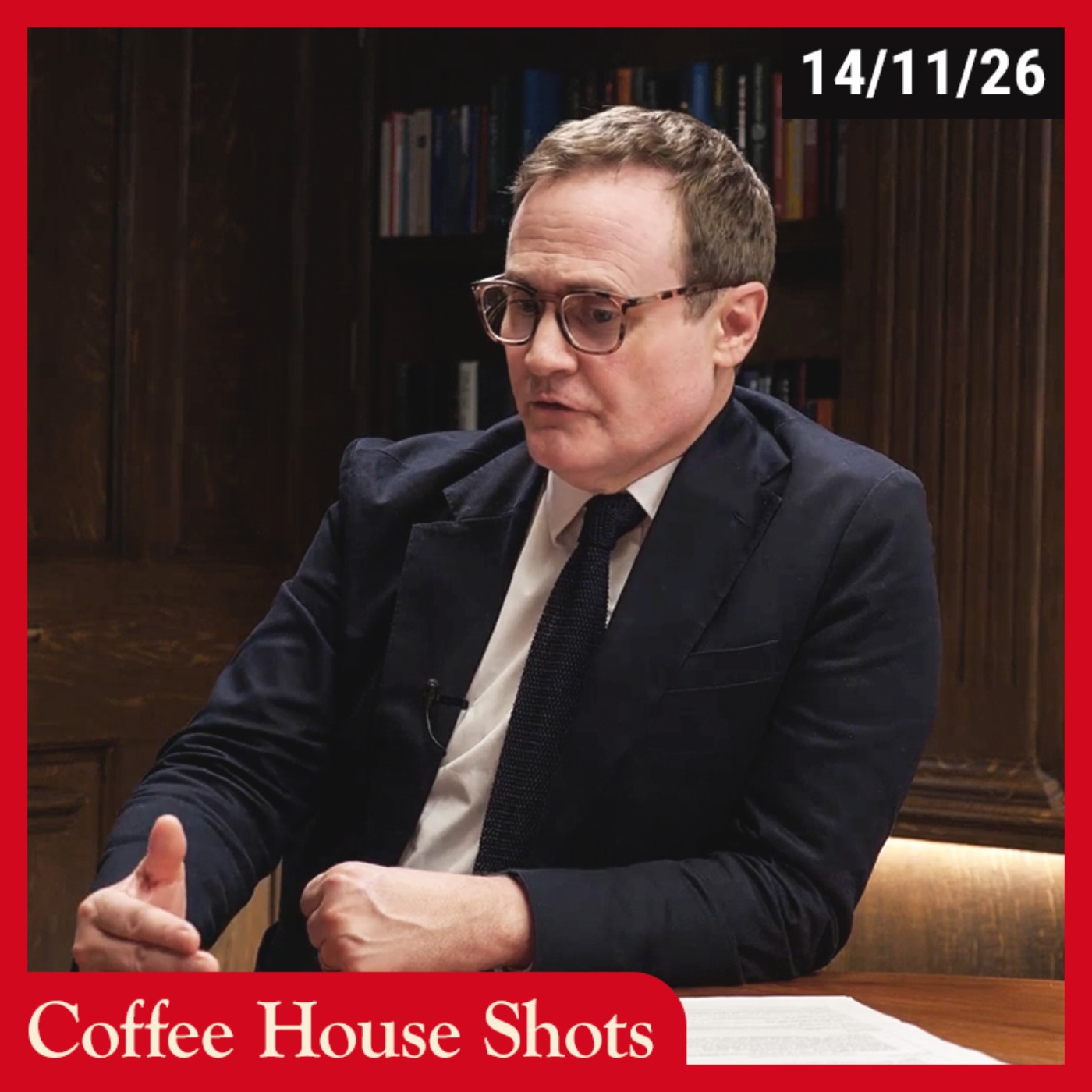

 Coffee House Shots
5 Sep 2026 · 24m · 10 chapters

Live roundup and analysis of the Reform Party conference, focusing on its political messaging, internal culture, and implications for upcoming UK elections and budgets.
Tim Shipman (political journalist/author; discusses Reform since 2018 and Farage’s track record) and James Heale (political commentator; discusses polling and Reform’s voter demographics). Both speak as observers/delegates “out and about” at the conference.
Conference framing (“do what we say in 100 days”) is effective, but “governing readiness” is questioned after a Channel 4 sting/investigation and suspensions. Farage is portrayed as strategically resilient; Reform’s challenge is moving from disruption to competence and reducing distractions from social-media and propriety controversies.
£17bn plan to raise the personal tax threshold to £20,000; criticism of Dan Duke as “chief of staff” with no government experience; debate over Zia Yusuf’s tweets; discussion of Channel 4 “money stuff” and intent; comparisons to Istanbul 2005 and to past Farage comebacks (e.g., debanking in 2023).
Written by AI. May contain mistakes.
Tim Shipman shares significant observations and highlights from the conference.
“But I also have listened to a lot of reformed people this week.”
Discussion on the media's portrayal of the Reform Party and its impact on public perception.
“And I think that's true for a couple of reasons.”
Exploration of whether the Reform Party is ready to govern, with insights into their political strategy.
“It's quite striking to me that when I'm on panels with people like Sola Braverman, I think they kind of understand the reformed political economy in lots of ways.”
Feedback from conference delegates on the Channel 4 investigation and party support.
“You know, protesters aside, it's been a very flashy, glamorous work.”
An analysis of the internal challenges and external perceptions facing the Reform Party.
“But I think the other thing that's interesting about that, and I wrote about this in the blog yesterday, you know, you've got Dan Dukes, who's a 30-year-old.”
Discussion on how the Reform Party can balance public expectations and political strategy.
“And he's obviously a very canny politician.”
Exploring what the public wants from the Reform party in terms of governance.
“And if reform wants to sort of be the dominant force of those two, I think it needs to look like something that's a bit safer sometimes.”
Discussing internal criticisms and the challenges faced by popular figures within Reform.
“Could you please raise your hand if you like Zia's tweets and if you support his social media use?”
Analyzing the upcoming political conferences and their potential impact on Reform and other parties.
“it distracts attention from what you're actually trying to do.”
Examining how the Conservative Party plans to counter Reform's influence and regain voter trust.
“make an argument and they can reconnect with those Labour communities that you just spoke about.”

Get the gist, explore an idea or ask about something said.
 Claude
On Coffee House Shots, what are the key points of this episode?
Searching your listeningAutomatic transcript. May contain errors.
0:00Noa Hoffman: Grainger knows if you're a procurement manager at an industrial manufacturing facility, you're balancing inventory and budget while sourcing critical supplies across the operation. Too much inventory? Costs climb. Too little? Production slows. Grainger's$2 billion in on-hand inventory helps you get what you need when you need it. So you can help keep budgets balanced and lines moving. Call 1-800-GRAINGER, click grainger.com or just stop by. Grainger, for the ones who get it done.
0:37Noa Hoffman: hello and welcome to coffee house shots where we are recording live from reform party conference i am delighted to be joined today by tim shipman and james heel to kick off the podcast or maybe tim you can start i want to know your reflections on reform conference and any highlights oh i mean
0:59James Heale: look I think the whole thing has been absolutely fascinating and I think quite significant in a number of ways not all in ways that the reformed party faithful would like and I think it helps if we divide things into two here I think there's a bit of a misnomer about press coverage of what's been going on here and some of the noise is off and I think if you look at it from a political point of view this has basically been a success I think you had the Bardella Memorandum of understanding which is a very positive kind of thing that shows that Farage can do business elsewhere that he can get things done you had a decent punchy speech and I think the entire framing of this conference that unlike all the others we will do the things we say we're going to do and here's the proof in a hundred days people will be resigning or be fired if they don't deliver on that I think that's a useful framing I think had that been the sole message of this conference, I think you'd all be walking away delighted.
1:57James Heale: But I also have listened to a lot of reformed people this week. And they, some of them watched the Channel 4 thing, some of them didn't, some of them didn't want to watch it. Some of them have come up to me and said, I don't care about the detail, because it's a stitch up, it's a bunch of climate change lefties. And all that is true. But what I would say in response to that is that the second bit is, are you ready to govern and I think that's what's taken a bit of a knock this week, which is a shame from your point of view because it's precisely that which Farage was hoping to move further along.
2:35James Heale: And I think that's true for a couple of reasons. I think politically, the way they've played it is absolutely fine. Turn around, say it's all a lefty hoax and a plot and we've been stitched up, it was entrapment, all of that stuff works with the base, it worked in the hall and it works, frankly, kicking seven shades of something out of the media along the way with that audience. I think it's worth looking at the detail because I think the detail is revealing of a culture that is not yet ready to walk through the door of number 10. And I think it's also redolent of some people around Nigel who are frankly a bit high on their own supply and I don't think really understand what being in government is all about.
3:20James Heale: Now, if Farage takes this opportunity to reset his team, reset his approach, keep the insurgency, but look a bit happier and try and acknowledge the fact that, you know, running a government is a difficult and serious business. I think some good can come of this. And we may look back on this as a turning point and a significant week for positive reasons on both sides.
3:45Tim Shipman: I spoke to one advisor last night who compared the three-day conference to a football fan using the analogy of Istanbul 2005. So 3-0 down at halftime, 3-0 at the end of the match. And then hopefully today they can win the conference on penalties, as it were. You've obviously got a big offer,£17 billion worth by raising the personal tax threshold to£20 ,000. That's Robert Jemmerich's big thing talking about the economy. And I do think the policy offering has been sharpened up over the past year. It's quite striking to me that when I'm on panels with people like Sola Braverman, I think they kind of understand the reformed political economy in lots of ways.
4:21Tim Shipman: And I think that you look at the policy papers being produced by the likes of Amar Johal and his team at Milbank Tower. I think that has certainly improved from last year when you only just had the Britannia card, when you had things such as Operation Restoring Justice. So there is a sort of building out of the party. They've also think you've got a whole new contingent of MSPs, MSs. I spoke to one of them and they said oh it seems to be going quite well I said yes and I'm sure if it wasn't we'd all be hearing about it you remember all the focus on the councils last year that said of course in terms of the wider Westminster the story that broke on that first night will be the one that dominates I think from talking to members and I'm sure they can correct me if I'm wrong here I think it hasn't really cut through or affected them I think the reform critique is that this is a hypocritical establishment and that we have reached the point now where the country is so debased and such a dire state that, frankly, you need the man at the moment.
5:11Tim Shipman: And I think talking to some Tory defectors, they use phrases such as, you know, Churchill wasn't the right man in 1930, but was in 1940, et cetera. That said, I think that at certain levels of the party, it will cause reverberations. At an elite level, clearly, I think Nigel Farage's team are very effective at what's gone on. Dan Duke's been a very, very integral part of that project for 10 years. I also think, you know, James Orr had a very much a cachet and appeal, was very much set up as someone very key, obviously, the links to Trump world. So we'll wait to see how that all turns out. I also think there was a bit of an anger and uprising on the, I think, Thursday night.
5:42Tim Shipman: I think people were getting in touch with people at the top of reform saying what's going on. We've obviously got candidate selection going on. There's lots of bright eyed, bushy tailed people here pushing, willing to take a sacrifice and salary, willing to change their jobs, willing to potentially put their family through the ringer. And then we've got all of this going on, all these documentaries, etc. That said, though, I think reform have obviously played to some of their strengths. You know, protesters aside, it's been a very flashy, glamorous work. The likes of Aaron Lobo and Ben Sheriff in the operations team have done their job.
6:10Tim Shipman: And I think that a lot of people here will leave feeling quite encouraged. And I'd also note Nigel Farage's speech. I think, interestingly, I know this is a bit heretical to say it before. I think Jordan Mardella gave the best speech at the conference. But Nigel Farage, I think it was an important speech. I think he talked about, you know, leading this party into the next election. I think it was a reminder that some of the commentary in Westminster about him stepping down, he is in this for the next few years. And he very much does feel the weight of the expectation. He's been seeing people today coming up, clasping his hands, saying, thank you, we're with you, etc.
6:38Tim Shipman: And I think after this, they've had the difficulties. The key thing is to use this as a springboard, go back to Westminster, get momentum going, and focus on that very difficult budget for the new Labour government.
6:47James Heale: You tell us, Noah, you've been our delegate whisperer. What have you been finding when you've been out and about in the conference sort of foyer moving around?
6:56Noa Hoffman: The first thing I was struck by canvassing views was that delegates here span across the country. I met people, you know, from all the way south in Cornwall up to Scotland and all the way in between. And really what everyone had to say about this investigation was that it didn't faze them too much. A lot of people felt that this was some sort of stitch up by Channel 4, who they argued have traditionally been very hostile to right-wing parties but particularly reform and they felt like perhaps that media outlet wouldn't treat the Labour Party in the same way so look the vast majority of people I spoke to were not too bothered but how about we find out what the room thinks can I just see through a raise of hands who here is a reform party member okay so most people in the audience reform party members and among you could you please raise your hand if the channel 4 documentary did not change your view of the party you still very much support nigel and support what the party's doing okay so most hands does anyone want to raise their hand if if it's give them some doubt at all one hands up i also think i
8:14James Heale: I mean, if you look at that video, I mean, look, the thing that I think is problematic more than the whole sort of architecture of the spending arrangement was the idea that both of the two guys who've been suspended were the ones proposing the way of doing it. It wasn't like the sting operation said, why don't we do this? And they went, oh, OK. They were the ones saying, this is we know how to do this. This is how we do it. And the law, you have to show intent. And I think, you know, it's problematic from that point of view. I mean, it doesn't mean they're going to get their collars felt. it doesn't mean they're going to go to jail or anything like that.
8:46James Heale: That might happen. I think it's fairly unlikely because the money in the end was not handed over. Though the law says what matters is a reasonable expectation that it might be handed over, not that the money was handed over. But I think the other thing that's interesting about that, and I wrote about this in the blog yesterday, you know, you've got Dan Dukes, who's a 30-year-old. He's a very impressive guy. He's come a long way. He's uber loyal to Nigel Farage. Everybody says he's brilliant at running, you know, acting as Farage's gatekeeper. but he's a 30-year-old guy with no experience of government saying he's going to be the chief of staff in Downing Street.
9:18James Heale: Everybody else I've ever known who worked in government, for them, that was the bit that was the most disturbing and laughable part of that video. Someone like Antonio Romeo, who's the cabinet secretary, she would eat Dan Dukes alive, I'm afraid, if he were ever in that job. I see former Tory minister laughing along here, knowing that there may well be some truth in what I've just said. So I think that's indicative of a degree to which some people in reform think it's in the bag. I don't think it's in the bag yet. And some people think that it will be easy. Now, you need to look back and see what happened with Keir Starmer and all the other people who've waltzed into Downing Street thinking all the people who did it before were blithering idiots and there's no way that we'll be able to screw this up and realise that this is actually very difficult and complicated.
10:06James Heale: some experience is helpful and having some pretty high calibre, heavy thrusting people in those big jobs is important. And at the moment, Nigel does not have that around him particularly. He's brought in some experienced ministerial people, but in the back room, I think that is still a little bit lacking in reform. And there are some lessons there from this week.
10:29Tim Shipman: I think that's correct in terms of it's not necessarily adversity, it's the response to adversity that defines us. Nigel Farage has been written off countless times. I've been writing a book recently on reform and I go back to 2018 and the second referendum people were saying Nigel Farage back then has had more comebacks than Frank Sinatra. So you look at how many times he's been dismissed, etc. And that is often what Farage's genius has been, is that his opponents then have sort of imperial overreach. They sort of write him off, laugh at him. You think of the debanking scale in 2023 and then they underestimate him and then he hits back and he takes down the head of Britain's biggest bank.
11:02Tim Shipman: So I think that is in his favour. And he's obviously a very canny politician. I think the question is this, is that Nigel Farage is the great disruptor of British politics. He's the man who makes the political weather. He's a Joe Chamberlain, a New York Powell in that sense. Can he now create something stable, which is more than just frenetic volatility? And I think that will be the key thing is bridging the people who've helped build him up on that way, who've been in foot soldiers, the Farageists, the long marchers, while also making that transition to get people. and I think the key point as well we're talking about the room here obviously the party's on side I think what we've seen from the polling is how remarkably resilient that 20 % or so of the country was the key thing is ensuring that enough people either feel able to back reform who haven't backed it before before or are able to stay at home in much the way there were many Tories in 2024 who didn't particularly like Keir Starmer but thought I can leave the country to him in a way they couldn't with Jeremy Corbyn in 2019 and they were so disgusted by and they went out and vote.
11:56Tim Shipman: So I think it's sometimes about the message that you send in terms of getting that vote out.
12:00Noa Hoffman: So James, as you said, there is this sort of 20 % constituency who are diehard reformers. But often the commentaria and pollsters say that to be a party of government, Farage does need to creep back up to that 30 % mark and if possible, even go over it. So who are that 10 % that keep dipping in and out of the polls? Could you describe the sort of demographics of those people? So I think that they are broadly maybe traditional Conservatives
12:33Tim Shipman: and some of the traditional Labour vote in different parts of the country. I think some of that is more in the South, the Conservative vote. I think they were willing to flirt with the reform last summer when they were coming up to 32 % of the polls. They may be more middle, middle class. I think traditionally a lot of Nigel Farage's support bases come from the upper working class and lower middle class in terms of demographics. And I think a lot of those people have proven more resilient, given Nigel Fry's whole strategy has been to try and kill off the Tories since January. I think the Tory voters held up much stronger in the South.
13:04Tim Shipman: And I think you look at the local elections, reform did amazingly well in the North and the Midlands just blew through those traditional Labour red seats. But I think it was more of a battle in places like Norfolk, Suffolk, and obviously London as well. So I think those are the kind of people he needs to win over. And I think it'll be interesting to see how today's policy lands on tax. They've done a huge amount of polling on this. This is them saying a new dividing line. The Conservative Party always talks about inheritance tax. We can maybe expect that to be the big headline policy of the new Shadow Chancellor, Andrew Griffith at the conference.
13:32Tim Shipman: This is about working people. That's the reform argument. And they hope it'll appeal to people in the middle, middle class, I'd say.
13:37James Heale: Don't forget, Nigel Farage said the Conservative Party would have been destroyed by now. And for good or ill, it hasn't been. And again, they look to have a pretty solid 20%. One of these parties is going to get to 27%, 28 % and take the fight to the Labour Party. In all likelihood now, you're going to have a world where reform is taking seats off the Labour Party in the north and the Tories are fighting the Lib Dems and bits of the suburban Labour Party in the south. And if reform wants to sort of be the dominant force of those two, I think it needs to look like something that's a bit safer sometimes.
14:12James Heale: and that is not the instinct of Farage and a lot of the people around him. It's not the instinct of a lot of the people who are here at this conference. But they want a plan. They want something that looks like a competent government. They want something that doesn't whiff too badly. They're prepared to put up with a bit of roguery. People voted for Boris Johnson in spades, not in spite of his roguery, but in a lot of cases because of it. The British public likes rogues, but it doesn't like crooks. And if you can't walk that line properly, and Faraz has always been very good in the past at walking all these lines, the racial line, he knows where to stop in a way that I don't think Rupert Lowe knows where to stop.
14:56James Heale: And I think some in this party would question whether Zia Yusuf always knows where to stop. You know, you had Nadine Dorris telling him to throw his phone in the river and get rid of his Twitter account yesterday. You had Aaron Banks, not exactly a crypto communist, saying there's too many youngsters around Nigel and we need some grey hairs. I can see Julian Breza examining his hair in the mirror this morning thinking this is pretty solid grey here.
15:21Noa Hoffman: Should we see what the audience makes of Zia and his tweets recently? Could you please raise your hand if you like Zia's tweets and if you support his social media use? okay so less hands up than before in terms of the question about channel 4 can you please raise your hand if you think zia needs to slow down on social media perhaps control his tweets a bit more okay so a bit less but there are quite a few hands up there i think this does touch on something i was
15:55Tim Shipman: just going to say is you know i think zia youssef is and my understanding is obviously reform does these internal surveys i think the most popular people he's regularly one of the top three i think with Nigel Farage, obviously, and Lee Anderson. But he's very, very popular among a lot of reform, and he's a popular figure. But there is also an element of reform which is a bit less online, put off by some of the rhetoric. And also when that is written up in a headline or certain way, the question is always, is this the most helpful battle to be having now? And sometimes you pick your fights, I would say.
16:24Tim Shipman: But I think that he's equal opportunities in his passion, shall we say. So there is a certain equanimity about that.
16:31James Heale: Yeah, no, I think that's right. I mean, I wrote a piece a couple of weeks ago, which Zia was very unhappy about, but every quote in it was from someone working in and around reform headquarters. So these are not views consigned to the sort of, you know, soppy mainstream media commentary at. These are views that are concerning people at the top of the party. And I've got I'm going to read a little bit of this. I'll have to be quite careful because I don't want to identify the person. But all of these problems, you take the money stuff, Zia kind of sounding off now and again. Some of it, it's all great for the base, the way they've handled it.
17:10James Heale: But it's also exhausting. I mean, James, because he spent a lot of time, you know, like your director of communication spent his 30th birthday firefighting the stuff last Thursday. if you're anywhere near government and you're facing questions about funding and propriety that is stopping you governing the country all of this stuff is a massive distraction so this is from what i would say is legitimately one of the bigger reform social media cheerleaders who said you know it's so exhausting and frustrating having to spend so much time defending all this stuff general sort of comments about you know we need to get on look like a government, prepare policy, all that sort of thing.
17:52James Heale: The question is whether serious cultural change is really possible for people who've been operating the same way for 15 years when the stakes were nowhere near as high. That's not me saying that. That is one of you. And, you know, some of the comments about Zia, which were pretty lurid, and I got into lots of trouble for including them. But frankly, when you're a journalist and someone gives you explosive quotes, you're not doing a job if you don't include them. The problem with all this is it takes up time, it distracts attention from what you're actually trying to do. If you're in government, that is multiplied tenfold.
18:25James Heale: So it would be really good for reform to sort all this out before you get anywhere near a general election.
18:31Tim Shipman: And there's a certain irony, I think, in lots of the Tory defectors. One of the attractions for people like Danny Kruger is the ability to rerun the 2019 government, the 2019 post-Brexit Boris coalition in reform. And so the tragedy would be if the same mistakes played out in a slightly different context and lessons were not learned from that. And also, don't forget, Farage has had a huge success
18:53James Heale: by saying, I'm not the same as these other people. This other lot, the Uni Party, they A, can't govern and they're B, they're crooks, they're venal, they give each other jobs and peerages and all that stuff. And he said he won't give donors peerages. Good. I mean, Keir Starmer said the same thing. You wait and see his resignation on his list. We'll judge him then. But if you start to look like everybody else, That is a problem for the brand.
19:18Noa Hoffman: And just looking ahead to Labour and Tory conference, which we will all be attending as well, the conference marathon.
19:27James Heale: God save us all.
19:28Noa Hoffman: God save us all. How does the likes of Andy Burnham and Kemi Badenock, and obviously they will take very different approaches, respond to reform? Because obviously a lot of conservatives have moved to Nigel Farage, but so too have a lot of Labour supporters. A lot of people here are the exact demographics and the exact people the Labour Party was established to protect and to look after. But unfortunately for them, you know, these people feel abandoned because when they raise concerns, concerns about the likes of immigration, Labour turned up their nose at them. They smeared them as racist and now they've lost these voters.
20:05Noa Hoffman: So Burnham and Baden-Ock surely will both be looking to at least try and win back some people. How do they respond to Farage going forward after this conference and ahead of their own months?
20:16Tim Shipman: So I think given the reshuffle, which has been received well in kind of the Tory world of SW1, etc., among the Conservatives, I think there is some pressure now on Kevin Bainock to make the most of this. I mean, I remember there was a great phrase that was doing the rounds of Milbank Tower at the height of last year, which was the only ones who can stop us are ourselves about reform. And you might say that the last few weeks have shown a pretty good effort to try and do that. but given reforms difficulties if the conservatives can't make some kind of comeback and bear in mind the party is still down on 2024 and still down on where it was when kevin badenock took over she's still three points or so down on what she was they really need to get a good offer at conference say look you've had your flirtation you've had your maybe you know adulterous affair with reform now come back to the conservatives we're a changed party um and i think next year we're all talking about a general election here next year you've got may elections 10 000 councillors pending local government reorganisation are up.
21:08Tim Shipman: And at that set of locals, it looks like reform are going to overtake the Conservatives, the large party local government. And at that point, you've got them bigger in the Senate, bigger in Holyroo, bigger in local government, bigger membership, bigger donations. So, I mean, I think we need to see some kind of Conservative come back if you want to see that. And then on Labour, I'm quite struck. Andy Burnham has taken a less moralising tone towards, I think, reform. Keir Starmer tried to make out they were the bad guys and yet couldn't really work out what he wants to do. He seemed to liken reform to some fascistic organisation.
21:37Tim Shipman: Andy Burnham, I think, has done the sort of tinkerbell strategy of ignoring reform. Let's see how that holds, particularly after that budget. But I think right now he needs to try and make an argument and they can reconnect with those Labour communities that you just spoke about.
21:48James Heale: I think there'll be a slightly different approach at the two conferences, to be honest. I think Labour will largely ignore reform. I think Andy Burnham, it's going to be an Andy Burnham rally. We still won't have a budget. So a lot of the sort of inherent divisions within the Labour Party will not be on show. It will be a jamboree to show that the new Prime Minister is popular. He'll want to make all his own people feel good. But as you say, I don't think there'll be the same sort of overt anti-reform rhetoric that there was. I think he knows that that's alienating to people who traditionally were Labour supporters.
22:20James Heale: Some of them might come back. I mean, I think a lot of people who've transferred to reform have no intention of going back. But Labour will just be trying to maximise their vote and look like a big dominant government that does a load of things. I think it'll be a fairly dull conference. The only thing that matters really with the government is the budget. And only then will we really know which mast Andy Burnham has nailed his colours to. I think the Tory conference, they'll, you know, they're always interested in, concerned by reacting against reform. You know, I think there'll be plenty of policy to try and compete with what's happened here.
22:53James Heale: I think there'll be an effort to show that they're dead firm on migration, but they'll try and make an offer that is more naturally targeted at middle class voters on the economy. And I think inheritance tax is the obvious thing to do. It saved David Cameron's bacon in 2007. And I think they'll try that gambit again. And I think there will be a load of noises about we've learned our lesson, but we don't have the sort of whiff of corruption around us that they will claim that reform does. I think that's probably a slightly unfair claim, but it's one that they'll make. They'll try and play to that southern middle class vote and say, you know, you've seen reform now on display and you don't like the look of that, do you?
23:36James Heale: So come back to us and make us the bigger of the right wing parties. I think that's how it will go.
23:42Noa Hoffman: All right. Well, with that, I think we will wrap up. You've been such a lovely audience. Thank you so much for coming. Thank you, Tim. Thank you, James. And thank you all for listening to Coffeehouse Shots Live.
24:12Noa Hoffman: We'll see you next time.
24:25Noa Hoffman: you can help keep budgets balanced and lines moving. Call 1-800-GRAINGER, click grainger.com, or just stop by. Grainger, for the ones who get it done.
Noa Hoffman, James Heale and Tim Shipman host a special live recording of Coffee House Shots from Reform conference. They discuss whether a damaging 48 hours for the party have breached the walls of Birmingham’s NEC, whether Nigel Farage can weather serious questions over Reform’s funding, and whether Zia Yusuf should throw his phone in the nearest river and get off Twitter.
Produced by Oscar Edmondson, Henry Lloyd and The Spectator’s events team.
Become a Spectator subscriber today to access this podcast without adverts. Go to spectator.co.uk/adfree to find out more.
For more Spectator podcasts, go to spectator.co.uk/podcasts.
Contact us: [email protected]
Hosted on Acast. See acast.com/privacy for more information.