Ask ChatGPT
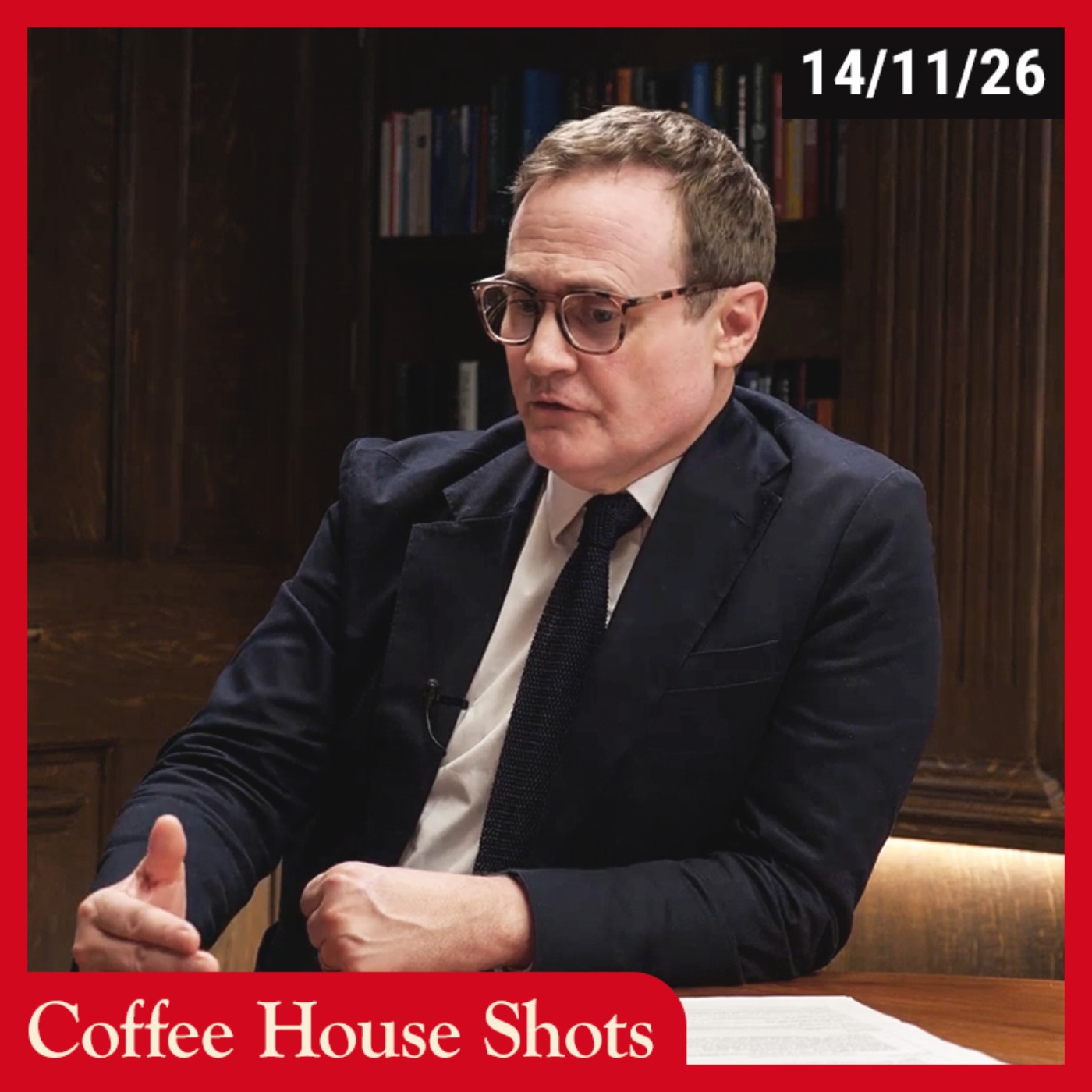


Nick Clegg reflects on his time in the 2010-15 Conservative-Liberal Democrat coalition, arguing coalition politics forced daily, formal trade-offs; he gives regrets (especially Libya and probation reforms) while defending the value of shaping policy in government. He also discusses Brexit: why a future Lib Dem coalition should focus on electoral reform and why EU rejoining is unlikely soon; he outlines his view that free movement is hard to avoid if rejoining, and argues the EU’s AI regulation (AI Act) is a misstep.
Nick Clegg (former Deputy Prime Minister; leader of the Liberal Democrats).
Coalition made trade-offs unavoidable and more transparent; Libya and probation were major errors; electoral reform (PR) remains a Lib Dem priority; EU rejoining won’t happen soon due to lack of political consensus in Britain and EU reluctance; EU tech regulation is overly cumbersome (AI Act).
Hinkley C nuclear plant commissioning; coalition “quad” decision process with red-box papers; Libya military action; botched probation service work; 2011 AV referendum; Sheffield anecdote about “remain means everything stays the same”; Brexit campaign focus on migration imagery; AI examples (ASML, Munich AI defense hub, France’s AI foundation model developer).
Written by AI. May contain mistakes.
Nick Clegg discusses lessons learned from coalition politics and Brexit.
“but to watch the full show go to the spectator youtube channel we pick up the conversation as i ask him about the coalition politics today and of course brexit what did you learn from being in that government.”
Clegg explains the complexities and trade-offs in coalition government decisions.
“Just on a nuclear point, I never quite understood that.”
Clegg shares his biggest regrets from his time in office, including military actions.
“You can't have a prime minister who sticks his head in the sand.”
Clegg discusses the challenges of making tough decisions in politics.
“The work that was done on the probation service, I think was totally botched and I didn't keep an eye on that.”
Clegg emphasizes the necessity for electoral reform in the UK political system.
“than we have been for the last 300 years.”
Discussion on the implications of Brexit and future political strategies.
“So we've got Ed Miliband as Foreign Secretary.”
Explore the complexities of the UK's relationship with the EU, focusing on migration and political consensus.
“and the Fleet Street has always treated the European issue, for most British people was a topic of yawning indifference.”
Discuss the implications of Ukraine's potential EU membership on the UK's future relationship with Europe.
“And the French farmers ain't going to love that.”
Analyze the impact of immigration narratives on public sentiment regarding the EU and Brexit.
“more important than whether Merkel had granted an emergency break or not.”
Evaluate the tensions between the UK and EU in the tech industry amidst global competition.
“It's a monstrously inefficient technology, at least this current crop of what's called transformer-based large language models.”
Learn about the significance of scale in technology and data infrastructure, particularly in the context of the UK and EU.
“And they're doing that every five to six weeks.”
Reflecting on the learned insights from a well-read politician on various issues.
“listening to one of the people who did take on that role at the top of government and very few politicians I've spoken to quite so well read in across a range of issues.”

Get the gist, explore an idea or ask about something said.
 Claude
On Coffee House Shots, what are the key points of this episode?
Searching your listeningAutomatic transcript. May contain errors.
0:00Still waiting in line? Again? That's time you'll never get back. Save time and money with Stamps.com. Over 4 million businesses have skipped the line with Stamps.com. Join them to save up to 90 % off carrier rates from your computer or phone right now. Print postage for certified mail, registered mail, and packages in seconds. Then schedule a pickup right from your home or office. For a limited time, go to Stamps.com and use code PODCAST for a free welcome gift. Taxes and fees apply.
0:37on monday evening i sat down for a live event with the former deputy prime minister and leader of the liberal democrats sir nick clegg you're listening to the highlights of our conversation but to watch the full show go to the spectator youtube channel we pick up the conversation as i ask him about the coalition politics today and of course brexit what did you learn from being in that government. It seems to me you both had to even go into that government. You had to take some pretty tough choices. You know, you've ditched your tuition fees pledge. People would now throw at you. Nick Clegg said, oh, it'll take 20 years to sort this nuclear power out.
1:09We could have done with you sorting it out 20 years ago. What do you regret? And how easy is it? How difficult is it to do those? Just on a nuclear point, I never quite understood that. I think it was actually a liberal Democrat Secretary of State who commissioned Hinkley C, which was the first nuclear plant to be commissioned in years. So I... The Tories say it's a beautiful... Because you mentioned it to me the other day. So I looked at this apparently offending video that I'd done, which was talking about how the then government, Labour government, said there would be an energy crunch by 2016.
1:37And I pointed out that even, correctly, that even if you started building then, which was before the 2010 election, it wouldn't be in time for 2000. Anyway, never mind. These things get completely mangled by people. You're saying not me, gov on that one. No, no, no. I just thought, just a funny example that a video plucked out of sort of, you know, obscurity from before I was Deputy Prime Minister gets used to make a point which is, anyway, I think it's very silly, but there's lots of silliness in politics and online and so on. In your general point, I think one of the virtues of a coalition government, and certainly if you are leader of the smaller party, is you live and breathe a world of trade-offs.
2:13That's what it is. It is a trade-off. I mean, it is a government built on the idea that no one can do everything they want. It's built on the idea that no one has the mandate to do everything that they would like to do, because you're constrained by the fact that no one has a parliamentary majority. And the only way you get things through parliament is by agreeing stuff together. So one of the ironies of the coalition was, because we're not used to coalition, was it Disraeli who famously said, you know, Britain doesn't like coalitions, and maybe it does or doesn't. But I think one of the things that no one, and myself included, could have fully anticipated is that the one thing you don't escape if you're in coalition government.
2:48I mean, literally every single day is this idea that you're having to balance different priorities. And it forced you in that quad into making those decisions in a very formal way. Whereas in most governments, they're done by the PM and a few people around and sitting on a sofa. I think it brings to the surface the political and policy trade-offs, which otherwise can be too easily done. There's more honesty to it almost, would you say? It just brings it all to the surface. You can't hide it. You can't fudge it. You can't have a prime minister who sticks his head in the sand. I mean, David Cameron and I, I'm only slightly exaggerating for effect, would both receive red boxes in this ludicrously old-fashioned way.
3:21I'm going to be all for Burnham changing that. With a pile of papers like this, which we would both have to plough through in the few hours where we're supposed to be asleep, between the end of a long day in Parliament and Whitehall and early the next day. And if submission X on, I'm making this up, I don't know, contracts for difference in the energy policy, since you read an energy policy. If we both tick it, it happens. If one of us crosses it and the other one crosses and one ticks, we talk about it. If we both cross it, it's bid. And that literally was the kind of filter of decision making every single day for half a decade.
3:51And you can like or dislike some of the decisions we took. But what I don't think you can suggest is that coalition was one that somehow ducked those issues and was not aware of some of the major trade-offs, including very politically very painful ones. I think there was also a sort sense, maybe because we were all quite young and because it was a government born in these rather exceptional circumstances in the wake of 2008. I remember the weekend or the Saturday after the election in 2010, you know, Alistair Darling had flown to Brussels for some emergency meeting of European finance ministers.
4:23Our television screens were full of pictures of burning cars and riots in Athens. There was sort of dark warnings that the markets would close down Britain when they opened on... I mean, there's this real sense of a continent and a country teetering on the edge. Again, historians can judge whether that was exaggerated or not. It was very palpable. So I think when you create a new kind of government composed of two parties, two leaders, not one, in those circumstances, and you have these quite young people sitting around the cabinet table, as you say, the quad, namely David Cameron, George Osborne for the Conservatives, me and Danny Alexander for the Liberal Democrats, taking certainly all the major fiscal and economic decisions, it actually elicits, I think all of us felt, and you should ask David Cameron and George Osborne when you speak to them, this real sense of this isn't going to last forever.
5:07It's kind of exceptional. We are living in very exceptional times. Let's at least just take decisions. I mean, the worst thing we can do is just sort of sit here and not do anything. So I think there was quite a bias to action. And again, maybe we, undoubtedly, we took some actions which I wish we didn't or I would have done differently. Go on, what were they? Probably my biggest regret is our military action in Libya. I remember exactly where I was. I was standing in my home then in my constituency in Sheffield when David Cameron and I decided that we would take that. And I think that was a really, you know, with hindsight, that was a big error.
5:37So that's something I certainly regret. The work that was done on the probation service, I think was totally botched and I didn't keep an eye on that. I think that was a very poor... So there were certain areas of public policy, which I'm not, you know, I don't think worked out. But I think in terms of the big judgment... It sounds like on balance, though, you'd do it again. you thought it was an important thing to do? Because a lot of people go in, do it, you know, support the Tories. I don't think we supported the Tories. We created it. I didn't see it like that. I didn't see it like that. But a lot of people in your party say we got obliterated at the end of this thing.
6:06And frankly, we ended up supporting a load of stuff we didn't like. Was it worth it? It sounds from what you're saying that you think it was worth it. It depends what you're in politics for. If you're in politics just to feel good about yourself, then sure. Then don't ever go into government. I mean, seriously, government is... We both know there are a lot of people in politics who are much more comfortable out of government. Sure, and I could... There's quite a lot of them in the Labour Party. Yeah, and I could not more strongly disagree with that. Then support an NGO, work for a cause, do a campaign thing.
6:33But if you're in politics, party politics, I just find it so weird if you're in party politics to not then aspire to try and shape the conditions of the country. You don't get to a senior level in government to take easy decisions. No. The whole point of being in senior levels of government is precisely those that you are there to take the... that easy decisions could be taken by other people. Yeah, they've all been done. Or they've all been done. You know, I always find it so odd, this perception that it should be easy. And if it's not easy, it's like, no, it's really hard because there are some major trade-offs, particularly in the period of time that I've described now, where for a decade and a half now, we keep having this sort of stop-start politics, where we keep, in my view, willfully doing damage to ourselves in terms of our economic fortunes, where I think we are now unanchored geostrategically more than we have been for the last 300 years.
7:21it's really difficult. And I think anyone who sort of says, oh, we did that. And I found it really difficult. And I don't really want to be reminded. That's really odd. And for what it's worth, I find it, I mean, for the Liberal Democrats, I would have thought it's pretty easy campaign fodder, a fuel to remind people the last time this country was governed by a stable government, which presided over the fastest growing economy in the developed world was when the Liberal Democrats were in power. You would have thought that's something which you could stick on a leaflet. So what is your advice to Ed Davey?
7:49What should he be saying? I mean, And he seems to have effectively said, we might go in with Labour, we wouldn't go in with the Tories. If the alternative is a reformed government, should he be prepared to go in with either of them? I genuinely haven't followed what Ed, who I admire and I think has done an amazing job, has said about these things. I was always very conscious when I was a leader about how unhelpful it was when you had previous leaders giving sort of day-to-day advice through the media about what they should and shouldn't say. So, you know, Ed will take his decisions and their decisions that I know he'll think about very carefully.
8:21Your question is a slightly different one, which is if you are in politics, should you or should you not aspire to go into government? And I just sort of, that's the bit where I just, I don't, I mean, then don't go into politics. And I think there are actually a lot of, I think there are a lot of Liberal Democrats who, sure, like me, maybe thought this decision they regret or that decision they regret. Sure, they regret that the Liberal Democrats got a real thumping in the 2015 general election. But I think most Liberal Democrats of a sort of reasonable disposition would look back with great pride at what the party did for the country in incredibly difficult circumstances.
8:51Do you think reform changes that? I mean, a lot of centrists would say that the overriding priority has to be to stop Farage becoming prime minister. Is that something that you feel? Yeah, I don't want Nigel Farage to be prime minister, but I'd rather if it wasn't coming back at Bed and Nock either. And it was, Davy, I mean, you know, I'm always going to have my preferences. I hesitate because I just find it such a, it's not a question of what you want. It's what do you think, what do you think is best for the country? And I don't think the country is particularly well served by this pattern, which I think you have at the moment, where all the parties are sort of retreating into their own, slightly into their own comfort zones, not really trying to reach out to a new voter base, where maybe the media and political environment fosters that.
9:32And where, of course, you've got this lurking behind it all, this sort of Russian roulette phenomenon where we're going to squeeze five, six-party politics through a two-party meat grinder of the first part of the post, which is going to throw up the most peculiar outcomes. Question then, if the Lib Dems were to go into government next time, should the price be PR? Is that what you're saying, essentially? Well, I think the Lib Dems should always insist that, you know, a change in the electoral system is something which, you know, the Lib Dems want to see. And we tried to do it through the coalition government.
10:03Then obviously had that, you know, very ill-fated referendum in 2011, which didn't go anywhere. Partly because I miscalculate. We deliberately put on the ballot paper in that referendum the system, AV, which was the system which the Labour Party had espoused in its 2010 manifesto, had campaigned on. Because I was realistic enough to know there was no way, because Lib Dems generally don't get much support in the main battalions of the British media. There was no way the Lib Dems were going to win this argument on their own. we had to try and enlist the support of one of the two larger parties to try and get this across the line.
10:40So I thought having the Labour policy appealing to, it was their manifesto commitment, at least they would then go out and advocate for it. As it turned out, they decided not to at all. They put about as much effort into that as they did into winning the Brexit referendum, I think. Perhaps. But anyway, so my point is, of course, Lib Demshire, and look, I think the case for electoral reform will increasingly be made by circumstances. Well, Mr. Burnham loves it, we're told. Proportional representation. Yeah, but look, I was told the other day that there are local candidates now who are winning local elections with 18 % of the vote.
11:16You're going to have such eccentric mandates where people win elections on a fraction of the vote, and it's going to become so obvious, and it's going to be so difficult, I think, for anyone to believe that the outcome is in any way representative of the overall kind of patchwork of public opinion across the country. So I think it's, of course, I think it's long overdue. I think it's about 100 years long overdue, much like House of Lords reform. But I do think it will become increasingly unavoidable in the next coming period.
11:57Sync your contacts into the address book, get detailed accounting insights, and get notified the moment your certified mail is delivered. All from my desk? All from your desk. Join the 4 million businesses using Stamps.com right now with code podcast and get your free welcome gift. Stamps.com, code podcast. Taxes and fees apply.
12:20Let's talk about Brexit a bit. So we've got Ed Miliband as Foreign Secretary. Interestingly, the Foreign Office is taking back the negotiating with the EU bit from the Cabinet Office. No Prime Minister since Theresa May onwards has let the Foreign Office loose on this. So that seems like a sort of a fillip for Mr Miliband at sort of, you know, a consolation prize. You've been trying to do net zero. Now you get to go and renegotiate our relationship with the EU. Firstly, just let me retrospectively ask, we know now, because Oliver Letwin has said so on the record, that had the Tories not won a majority in 2015, they would have offered up the EU referendum as one of the things they would have been prepared to discard in talks with the Liberal Democrat.
13:01I presume you would have held them to that, and had that been the case, there would have been no EU referendum. Is that right? I made it quite clear, David Cameron would have been under no illusions about this, that if there'd been a repeat of the Conservative Lib Dem coalition, I was not going to support. I had actually previously, some years previously, being supportive of the idea that if and when the United Kingdom were to enter into a new constitutional treaty, pooling new significant powers of the United Kingdom in an EU treaty... Well, the choice is very fond of saying you guys offered the idea of a referendum first.
13:32No, but it's quite an important... Well, it's a very important distinction. So I thought there was a case for when you adopt a new treaty as a sovereign nation, you're pooling those sovereign capabilities in the EU in a big way, that that should be subject to... I mean, you can agree or disagree about that, But I thought there was a sort of constitutional principle at stake. I never for one millisecond thought a constitutional principle was handling the conservative backbench. It should be the reason why we should turn British politics upside down and inside out. On an issue, remember, which despite the frenzy with which Westminster and the Fleet Street has always treated the European issue, for most British people was a topic of yawning indifference.
14:11I mean, if not indifference, I mean, I don't think the British people could be characterised as being ardently pro-European. I'm not saying that. But right up until the referendum, until the referendum was called, if you ask the British people what their top 10 priorities were, I mean, being part of the European Union or having a referendum and now barely made it into the top 10. It was an obsession of the political elite. It was an obsession of the media elite. And it was an obsession, particularly in the Conservative Party. And it was very, very clear that if I was going to go in to another coalition, David Cameron knew that, George Osborne knew that, my own party definitely knew that.
14:43There's absolutely no way that I would have endorsed that, which is, I mean, you need to ask them. It may be that the Conservatives didn't think they were going to win outright, and therefore they thought that was an easy thing to live. That's absolutely what they thought. Well, you'll know better than I do, but that didn't work out very well. But let's talk about the future, because Nick Thomas-Simmons, who's just the outgoing minister, he describes Labour's EU policy now as as close as possible without freedom of movement, which seems within the political boundaries, if you look at what's going on in the polls, you're right.
15:14The EU is back to being a 10, 11, 12th on the list issue, but migration is still issue two after the cost of living. It seems very difficult to me that you could rejoin in those circumstances, but yet not just getting closer, rejoining seems to be where you're at. How do we go about that and how on earth do we do it without accepting the euro, without accepting freedom of movement and all the other stuff that is politically problematic? Or do we have to just suck that up and say it's worth it economically? So there's absolutely no way that the United Kingdom is going to rejoin the European Union any time soon, not least because no one in their right mind in Berlin, Paris or Brussels is going to expend any political capital on that until they see the semblance of a new political consensus in Britain.
16:00So as long as the Conservatives and Reformers implacably opposed to any rapprochement with Europe, But why should any European do anything adventurous? And they've negotiated just as hardball with Labour as they did with anybody else. Setting that aside for a minute, it's just like it is a monumental distraction. But that seemed to surprise Starmer and co. They seemed to think they were going to get a lot of favours. And someone in the Foreign Office said to them, I've used this quake before, apologies if you've, other events, but someone in the Foreign Office about six weeks into the Starmer government said, turns out the French are still French.
16:31Yeah, yeah. So, of course they are. But my point is a wider point. You're just not going to get any big change in the tectonic plates on their... I mean, the British debate around the European is so... But not long ago, you were saying this is what we should do. Yeah, it's going to come to that. But it's just so weirdly narcissistic. It is actually, they are a much bigger bloc than us, the whole bunch of countries. From their point of view, they have absolutely no incentive to do anything meaningful until they see the politics shift. Do I think in the long run it makes any sense in a world totally dominated by the geostrategic and increasingly technological contest between the US and China, where we have lost our footing in our own hemisphere in Europe, where we can't rely on the special relationship with the US, do I think it is overwhelmingly obvious that we should try and resume our role in the heart of Europe at the sort of top table of decision-making in our own continent?
17:25Undoubtedly, yes. How do you get there? I have a view that our sort of longer term fate back into what would then be a significantly altered European Union is or will be yoked to Ukraine's. I think Ukraine will, I hope, eventually join the European Union. And when Ukraine, remember, there's a whole bunch of countries lining up already to join the European Union. I think Iceland is changing their mind. Norway is changing their mind. Moldova, I think there's two or three countries in the Balkans and so on. But Ukraine's the big one. And Ukraine is such a big economy. I mean, it'll have by far Europe's biggest defence industry.
18:00It's a huge agricultural economy. And the French farmers ain't going to love that. No, they're not going to love it. It'll be painful, it'll be difficult, and there'll be transition fields, and there'll be arguments. And who knows? Who knows? Maybe, and of course, there is a worst-case scenario. Ukraine ends up like Turkey, where they're basically just constantly strung along, strung along, strung along, until Ukrainian domestic and political opinion sours and the whole thing, which is basically what's happening. I mean, the hypocrisy towards Turkey over the last 40 years has been horrendous. endlessly people say, oh, yes, yes.
18:26British Prime Minister says, yes, of course, we'd love you in absolutely no intention of actually doing the homework. I think it's different with Ukraine, because I think Ukraine just, you know, we've spilt so much blood and treasure in protecting Ukraine. I think there's a real umbilical sense that we are with the Ukrainians, that this is a war in the middle of the continent that we care about as much as any other European and assuming that, you know, that, I mean, I'd love to think that Russia might suddenly in some post-Putin phase become some sort of Switzerland to the east, but I doubt it.
18:58I think there are all sorts of reasons why. History suggests that's unlikely. Correct. So assuming that that's the case, I think there'll be a very, very strong reflex to make sure that Ukraine becomes part of the European Union. And if not before then, certainly at that point, the European Union needs to become a very, very different creature to what it is already. So your argument is that will change the nature of it, which will make it easier for us. It'll change the nature. I mean, look, the European Union is much less of a straight jacket than the kind of cartoonish way in which it's depicted in a lot of the British debate.
19:27That's why, by the way, we were part of it, but we're not part of the euro. We're not part of a whole bunch of... Would they not insist that we joined all that stuff on the way back in? I think they probably would on free movement. I'll come to that in a minute. I don't think there is an iron law that says that if you join the European, you have to join the single currency. There are quite a lot of EU member states which are part of the EU but are not part of the single currency. I think free movement is a sort of axiomatic bedrock principle of these sort of four great freedoms of services, goods, people and capital.
19:59I don't think there's really any way around it but to make the argument. And the argument is that the single biggest explosion in inward immigration to this country happened when we left the European Union. And secondly, that the nature of immigration and free movement was a two-way one, which was hugely beneficial to many, many British people who wanted to live and work abroad temporarily or permanently. It is very popular amongst young people. The right to be able to travel freely in your own continent, it's got huge. I mean, you look at the point. But the flip side of that is that, yes, it went up the Boris wave we all know about, but then it's come dramatically down because Britain is able to decide to bring it down again.
20:41And successive governments have done that. And in the meantime, as you've seen, member states have basically arrested or stopped the Schengen arrangement, the borderless Schengen arrangement within the European Union. So clearly when member states are subject to significant pressure... It's almost like an emergency break, isn't it, Nick? Exactly. I mean, the EU should have given David Cameron his emergency break, shouldn't they? Was that not a massive strategic mistake by the European Union? Maybe, maybe. I mean, we can play what if, you know, politics. I think from their point of view, they were so exasperated by that stage, by constantly being asked of this, this, this, now, the other.
21:17Would that have changed the referendum? Maybe. I'm not actually so sure. My own hunch for what it's worth, and certainly this was my anecdotal experience as a then backbench MP, literally standing behind trestle tables, handing out kind of, you know, remain literature on the streets of southwest Sheffield, was that the vast majority of people voted for the status quo or against the status quo for a whole bunch of extraneous reasons, which had nothing to do whether it was a legal emergency break or not. My instinct tells me it would have made almost no difference to the outcome. Actually, I'll tell you one anecdote which sticks in my mind and I think is vaguely instructive.
21:55I remember the last evening before the referendum, myself and my fellow, by that stage, extremely worried campaigners. We set up behind our trestle table by a bus stop in southwest Sheffield where people were coming back home because we knew it was a good place to talk to people as they were going back home for their tea and back to see their families. And I remember seeing a guy who I'd helped his, as part of my casework, I helped his daughter get into a school. I think she'd had some learning difficulties and so on. This big burly Sheffielder, he was a building contractor. He ran his own small building company lovely lovely guy we were very well disposed towards each other and i remember saying to him i can't remember his name let's call him mr smith i said mr smith how nice to see you i hope you will i hope you'll vote for remain tomorrow and he said something to me which i just thought oh my god and he said but nick why should i vote for things to remain the same and in that instant i thought wow remain for him means just everything stays the same and he he said, you know, and he was so angry still about 2008.
22:58This is anecdotal, but I remember him saying, I'm furious. I'm working longer hours than I have before. I can't take my kids on holiday that I wanted to. It's because of those bloody bankers. They messed it up in 2008. None of them gone to jail. He was just livid about how things had panned out in those intervening years. And I think that sense of, do you like the status quo or not like the status quo, would have been much more important than whether Merkel had granted an emergency break or not. And candidly, which is the reason why Paul Dacre put pictures of Mediterranean migrants on the front page of his newspaper, I think for 17 days of the last 24 days of the campaign next to pro-Brexit headlines, was conflating in the public imagination.
23:40This sense of chaos in the Mediterranean and people sort of so-called flooding across the continent was emotionally much, much more powerful than whether Merkel had granted. That's my hunch, but, you know. The argument people who were for Brexit would make now is that the EU hasn't stayed the same either. And without us, it's become more regulatory and arguably, you know, less, you know, kind of way that would be easy for the British economy to sort of connect with it. They would agree with you that, you know, America and China are going to debate where they're going. But shackling to the EU, which seems on the, let's talk about tech.
24:17you know, Britain has very consciously struck a kind of central path between free for all in America and heavy sort of fearful regulation in the EU. On that subject, about which you know a great deal, surely going back in would tie our hands in terms of making the best of the tech world. Yeah, it's the sort of caricature that we tell ourselves, don't we? And I see this constantly. It's not really true. It really isn't true. If you look at some of the most successful digital economies in the world. They're small, but are in the Baltics or Scandinavia. You've got in Munich now, by far the continent's leading AI defense hub.
24:54You've got an ASML in the Netherlands, which makes the lithography, without which you can't create the chips. One of the linchpin companies in the world, along with TSMC in Taiwan and NVIDIA in the US. the only AI foundation model developer of any note in this whole hemisphere is in France. No one in their right mind would train what's called train an AI foundation, large language model in this country. Energy prices are too high. It's impossible to build data centers correctly. Because there's a huge amount of ambiguity about who owns what data and so on, because of this endless debate about whether Elton John and Paul McCartney are right, or Sam Altman and Mark Zuckerberg, you know, the whole.
25:36So I think we congratulate ourselves on something where the reality... Now, look, there are other aspects where I think we are undoubted leaders in Europe. I think our science and university base is fantastic. I think we have deep expertise in parts of quantum and biomedical science. We have now, actually, because a lot of the reforms introduced, dare I say it, by the coalition government a decade and a half ago, You now have arguably the most vibrant tech startup scene fueled by thousands of venture capital funds which have emerged over the last decade or so. And that's probably the most vibrant startup scene outside the US.
26:15So we have our strengths, but they do too. And in terms of regulation, I mean, our content regulation, the online harms bill and so on, is much, much more intrusive. and you could say rightly so, but it's much more exacting on the tech industry than anything that's emanated from Brussels so far. I think there's one thing where the EU have taken a wrong turn, and they know it, which is they passed something called the AI Act. And they initiated that legislation years ago, where it was initiated before ChatGPT was even a thing. And I remember, because at that time, I was working in Silicon Valley, and I pleaded with European commissioners and MEPs and others, I said, just push the pause button because the world has changed completely from ChatGPT.
26:58And they sort of said, no, sort of mastermind style. They said, no, I've started, I'll finish. And so they then pass this thing into law and it's very cumbersome. And the whole of the European AI industry knows it's a dud. So they're basically trying to find an elegant way of now just not applying it. So I think they made a mistake there. But I think we shouldn't sort of fool ourselves into thinking that somehow we're in some, you know, much, much. Look, the final thing I'd say about the AI as a sort of technology, it's inherently incredibly centralizing because it's so expensive. It's so expensive.
27:36It's a monstrously inefficient technology, at least this current crop of what's called transformer-based large language models. You need huge amounts of capital. I mean, the big American so-called AI labs, by my calculation, are now spending every five to six weeks, just to give you a measure of the enormity of it, are now spending every five to six weeks on AI infrastructure alone, what this country spends on defense in a year. And they're doing that every five to six weeks. So you need huge amounts of capital, you need huge amounts of data, you need huge amounts of energy, You need huge amounts of what's called GPUs.
28:11These are the chips which NVIDIA produces or TPUs which Google produces. You need a lot of water and so on. So here's the point. Scale matters. This is not a technology which is a sort of cottage industry. There's a reason why the Chinese and Americans are the only players who can build these models in the first place. We can be quite ingenious in how you develop them. So what should Britain do? Because people would argue that net zero is effectively holding us back here and Ed Miliband won't support them. I don't think it's net zero that has got such a bit. I think very high energy costs, industrial energy costs definitely do.
28:45But actually the data point is for the industry in terms of... So look, my point really was that scale matters. And the only scale we can achieve, as long as we are tectonically and geologically sort of just off the northwest muddy fringes of the European continent, is with the European hinterland. So I think there's a lot that a government could do without reopening Brexit and getting everybody going hysterical again, a la 2016. I think there's a lot that we could do to allow talent, tech talent, to travel effortlessly across the channel, to pool resources on data infrastructure, because that's actually, have British companies part of the EU bidding process for what are called gigafactories, take a roughly kind of common approach on data protection and so on, take common approaches on some, important aspects of data, sovereignty, particularly intelligence, defence and so on.
29:39So I think there are things that we can do together to be the sum of our parts without reopening the neuralgic debate around EU membership. So I think that can and should be done. And I think there's some appetite on the other side of the channel to do that. Well, I think we've learned a lot tonight listening to one of the people who did take on that role at the top of government and very few politicians I've spoken to quite so well read in across a range of issues. So if you could show your appreciation.
30:32now. Print postage for certified mail, registered mail, and packages in seconds. Then schedule a pickup right from your home or office. For a limited time, go to stamps.com and use code podcast for a free welcome gift. Taxes and fees apply.
Tim Shipman is joined by Sir Nick Clegg, the former Deputy Prime Minister and Leader of the Liberal Democrats, as part of The Spectator's new event series, Tim Shipman Meets the Party Leaders. Tim challenges Sir Nick on the decisions that defined his political career, from his passionate support for Europe to the failed referendum on an alternative voting system, and those famous coalition years. Reflecting on his record, Sir Nick offers a candid assessment of the decline of the two-party system, the upending of global alliances and even the looming threats of AI.
Watch the full conversation here.
Highlights produced by Henry Lloyd.
Become a Spectator subscriber today to access this podcast without adverts. Go to spectator.co.uk/adfree to find out more.
For more Spectator podcasts, go to spectator.co.uk/podcasts.
Contact us: [email protected]
Hosted on Acast. See acast.com/privacy for more information.