
 Ask ChatGPT
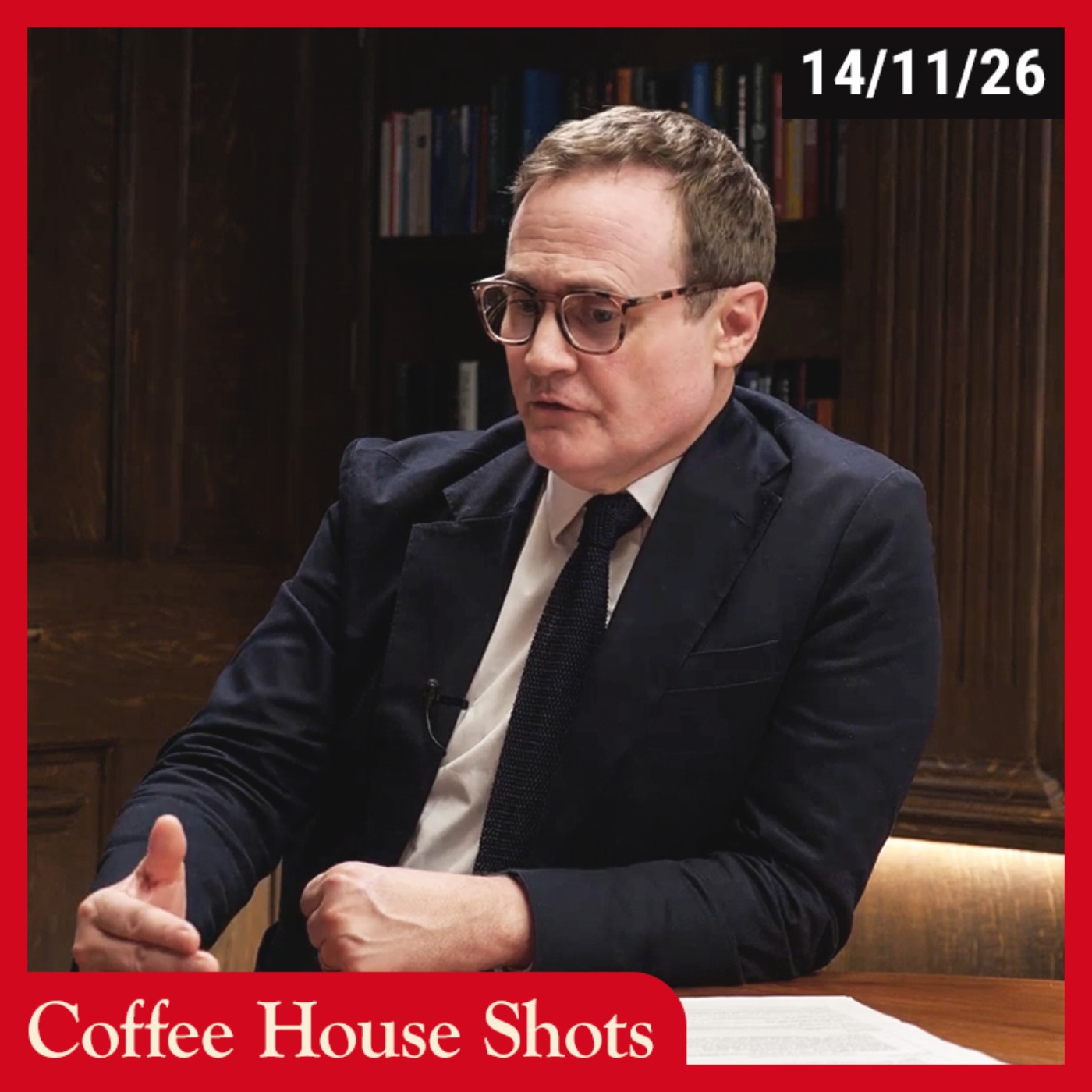


The episode discusses three UK politics stories: Reform UK’s £72m donation from crypto entrepreneurs, the Conservatives’ inheritance-tax debate, and Labour’s likely failure to hit its 1.5m homes target.
Noah Hoffman and James Seal (podcast hosts/commentators).
Reform received two £36m donations from Christopher Harbourn and Ben D’Lo; Reform will hire campaign managers nationwide, strengthen shadow-cabinet/policy teams, and keep direct-mail momentum for up to three years, with lawyers reviewing spending rules. Labour (via Angela Rayner) is said to be considering retrospective legal changes to force refunds, which the hosts argue could look hypocritical given Labour’s past funding sources.
cash-for-honours; George Osborne cutting opposition funding; Lawrence Fox’s reported £4m backing without electoral success; Makefield by-election where personal allowance featured. Inheritance-tax contrast: Reform proposes raising the personal allowance to £15,000, not abolishing inheritance tax. Labour housing: Rayner admits the 1.5m pledge is “highly unlikely,” citing London’s slow housebuilding versus Manchester.
Written by AI. May contain mistakes.
Exploration of the £72 million donation to the Reform party by crypto entrepreneurs.
“And it looks like a bit of fiscal clear blue water has opened up between reform and the Conservatives' Kimmy Beynock reportedly considering whether to pledge abolishing inheritance tax at her conference speech.”
Discussion on how the Reform party plans to spend the new funds strategically.
“First was given by crypto entrepreneur, if you want to call it that, Christopher Harbourn, second by Ben D 'Lo.”
Analysis of public opinion on billionaire donations to political parties and their implications.
“So, as I say, it's going to be about building up the kind of regional presence, ensuring that there aren't too many fiefdoms popping up in Milbank Tower with all that money sloshing around.”
Exploration of historical political funding issues and the reaction from Labour regarding Reform's donations.
“So it's no surprise that it seems that in Westminster, certainly, they're actually being very hostile.”
Discussing how the Reform party is appealing to the crypto community for support.
“Greens have done pretty well, despite being historically underfunded.”
Analysis of the differing approaches to inheritance tax between Reform and the Conservatives.
“We've known about this for a while, James.”
Discussion on conservative perspectives regarding taxation and inheritance tax policies.
“should be passed on to sons and daughters rather than being handed over wholesale to the state.”
Analysis of the Reform party's appeal to working-class voters and policy formulation.
“And I think that's particularly important in light of stories about donations, that they're actually thinking about who their voters are, which would you say are predominantly working class people.”
Critical assessment of Labour's housing policies and the challenges they face in implementation.
“And now, obviously, some of them have been incorporated into a more broader platform, which we've seen with the Robert Jemmick announcement.”
Discussion on Angela Rayner's current position within the Labour Party and its dynamics.
“The membership adored her so much that if she didn't agree with something Starmer wanted to do, she could effectively stop that from happening.”

Get the gist, explore an idea or ask about something said.
 Claude
On Coffee House Shots, what are the key points of this episode?
Searching your listeningAutomatic transcript. May contain errors.
0:00Noa Hoffman: Grainger knows if you're a procurement manager at an industrial manufacturing facility, you're balancing inventory and budget while sourcing critical supplies across the operation. Too much inventory? Costs climb. Too little? Production slows. Grainger's$2 billion in on-hand inventory helps you get what you need when you need it. So you can help keep budgets balanced and lines moving. Call 1-800-GRAINGER, click grainger.com or just stop by. Grainger, for the ones who get it done.
0:39Noa Hoffman: Hello and welcome to Coffeehouse. I'm Noah Hoffman. And I'm James Seal. And today we will be discussing the big story around reform donations, £72 million from crypto entrepreneurs injected into the reform coffers. And it looks like a bit of fiscal clear blue water has opened up between reform and the Conservatives' Kimmy Beynock reportedly considering whether to pledge abolishing inheritance tax at her conference speech. And finally, Angela Rayner admits that Labour is highly unlikely to meet its set-piece manifesto pledge of building 1.5 million new homes before the next election. James, let's kick off with the reform donation story that has absolutely blown up, just as Nigel Farage's critics thought that's it, he's done off the back of the Channel 4 documentary, a huge injection of cash into the party.
1:30Noa Hoffman: How are they going to spend it? So this is two£36 million donations. First was given by crypto entrepreneur, if you want to call it that, Christopher Harbourn, second by Ben D 'Lo. And essentially what they're going to do now is they're bringing in lawyers this week to look at how they're going to spend this. They want to make sure that no one has a sort of Brewster's Million style scenario where they all run a bit mad and spend all sorts of stuff. My understanding is they're going to start by sort of funding those campaign managers, which I've written about for The Spectator before, dozens of those across the country.
1:57And it comes as reform is sort of overhauling its branch network. Previously, they had regional directors. Now they've kind of made those clear that those are just dealing with the administration of those branches and the campaign manager does purely the campaign side. So they'll be hiring the staff in order to kind of fight an election and put them on a war footing, potentially for the next three years, the length of this parliament. They'll also be looking at potentially hiring some more people for each of the shadow cabinet, having more policy team. My understanding is the shadow cabinet is going to be strengthened in terms of numbers over the coming weeks.
2:24And those are going to be unmailed at a time of choosing, as you say, when we're not dominated by questions about Channel 4. And then finally, I also think it's going to be a question about keeping those events going, trying to keep up momentum. And also, I think, trying to be sure that when the election is called, they have the resources in the bank. Reform have spent big in the last few locals. KM and Badenock's made a point about this before. And what they do often know is they have mail shots, direct mail shots to each house, which means that activists are out there having those conversations rather than delivering leaflets.
2:49That's a priority of the party. That's what they decided to do. That very much fits with the kind of Brexit party reform political history, if you will, which is very centralised control. So, as I say, it's going to be about building up the kind of regional presence, ensuring that there aren't too many fiefdoms popping up in Milbank Tower with all that money sloshing around. And I think Harvey Griffiths is a name we're going to hear more of in the future. He is the treasurer of the party. He is increasingly a powerful figure taking on some of those kind of HR related functions in Milbank. And I think that that is a sign that Nigel Farage is increasingly trusting him and he'll be one to watch in the future.
3:17Noa Hoffman: And looking at the reaction, we'll get into Labour in a moment. But would you agree that broadly, when it comes to the public, people tend to fall into one of two camps? They either think, look, these guys are patriots. They want reform to win because the country has really declined. The economy is sluggish. We've got a huge immigration problem. Nigel Farage is sort of the only party leader promising radical, tough solutions. And these two entrepreneurs believe in that and they want to help him to succeed in an election so that he can complete his mission to revive the country. I guess that's one camp.
3:56Noa Hoffman: The other camp are talking about among members of the public is that this kind of smells. You shouldn't be able to buy influence. You know, why do we want to look like America, where if you're a billionaire, you get to dictate politics? This is an assault on democracy. Would you agree that that's kind of where the public falls into those camps? And I think that, look at the polling, you know, I think 70 % of the country is Nigel Farage and 30 % is in his favour. So it's no surprise that it seems that in Westminster, certainly, they're actually being very hostile. But in my view, I'm a third camp.
4:26I'm a realist. You know, I'm not a sort of optimist or pessimist really about this. I'm a realist in the sense of, you know, these are the rules. you play by the rules. You want to change the rules, change the rules. But hang on, the Conservatives are ones who raised spending thresholds. Labour have had two years. They haven't actually done a lot of the stuff they needed, even though there's been warning about this from backbenchers like Liam Byrne for the last two years. This is going to happen. And now we have these huge sums being committed, the biggest sums in British political history. And my view very much is, you know, hang on a sec, guys.
4:52The people in reform are very confident they played by the rules. You can obviously now change and try and retrospectively change that. But be wary of the precedent you sent here. I mean, I would be really struck on the right to British politics right now, some conventions are now forming around sort of potentially stripping away the rights or kind of expectations of those who've come here in the last few years in the so-called Boris wave and definitely to remain, retrospectively changing that. And obviously if Labour creates a precedent here, that could be damaging. But my view, I think, from the historical lens is there's always been money in British politics.
5:19There's never been a satisfactory way to pay it. I think there are kind of three ways if you want to do it. You know, there's either we have low caps on that. I think that's probably in some ways the best way, but no one can agree what those caps should be. We should have state funding of parties, But how would you feel if your taxes start paying for, you know, a radical Islamist party, for instance, or if you're a lifelong Labour voter paying for a diehard Conservative or Farage's party? And then the third way is that you maybe have this kind of free for all system with the potential downsides.
5:44But ultimately, you need to allow some new capacities into the market. If you're a reformer, you'll be sitting here saying, you know, Richard Tyson, 2021, 22, we're spending, you know, 10 grand a month, etc., writing his own checks to keep this going. And of course, money is no guarantee of success in British politics. You look at Lawrence Fox,£4 million from Jeremy Hosking. He has not had any success in political politics, I would argue. Equally, you can achieve a lot or not very much money. And I think we've seen that with some smaller parties. Greens have done pretty well, despite being historically underfunded.
6:10I suppose my question to you is, no, I mean, how do you view the reaction of the Labour Party? Because it does seem that these people are now, you know, the reunions, for instance, Sharon Graham coming out and saying, oh, we've changed our mind on this. It's a bit sort of bolting the door or off the horse has bolted, is it not?
6:23Noa Hoffman: Yeah, absolutely. So we've had Angela Rayner on the airwaves discussing changing legislation in a sort of last minute flurry to ensure that however legal these donations may have been at the time they were made, retrospectively, they can be cancelled out and reform would be forced to return the money. I do think even among those who don't in principle like the idea of crypto entrepreneurs injecting so much money into reform and people who are sort of sceptical about what their motivations are, the idea that Labour can just change the law in order to suit them when convenient and punish reform, that doesn't look too good either from more neutral voters.
7:07Noa Hoffman: And I mean, you do have to discuss the hypocrisy element here. Labour has taken millions of pounds, not just from trade unions, but from hedge funds, from wealthy individuals as well. And all of a sudden, they're not sounding off about those donations too much. Let's talk about Lord Ali. I think he's donated over one million pounds himself. And that's putting the sort of clothes and tickets aside as well. And I'll say this, Villers Goodall, you know, he had the interview with Angela Reynesti. It was a great interview. Well, he made the point, you know, what's the difference between 36 million from Ben Dilo versus 4 million from hedge fund manager?
7:43And ultimately, this thing about principle, you know, you've got to have a rule that suit everyone. And, you know, there is no satisfactory way. And of course, I think for reform, they can turn around and say, look at how many concerted bond treasurers have been made in the homes of the House of Lords. You look at the so-called cash for honour scandal 20 years ago under Tony Blair. Now, the counterparts to that, I've spoken to some people in reform who say, look, we were supposed to be people who reform politics. We're supposed to be better than them. But frankly, if you've got a fairly jaundiced, jadist view of the uniparty, if you want to call it that, I can understand why you think that this is what's good for the goose.
8:15And I think that, therefore, it's all about can you actually change the rules? I mean, my view is that, you know, in politics, you can suit the rules how you want to do it. But those can often come out to bite you. Remember when George Osborne, famously after the 2015 election, cut the money, the opposite money that oppositions received. He did it to kind of harm the Labour Party. Well, now, of course, you've got the Conservatives who have less result now under Kemi-Badenhock than they might have done had those rules made in place. Ultimately, there's no satisfactory way to deal with it.
8:39Noa Hoffman: No, but I did find it quite striking that Labour's argument about receiving money from trade unions is that ultimately the cash comes from small piles from individual workers and then that all gets put into a pot and that's how you end up with millions of pounds from trade unions. But the union general secretaries who ultimately determine and lobby as to how this money will be spent and the policies they want to see from the Labour government are huge ideologues who have very, very specific political views that many would argue are not in the interest of them, their household and their family.
9:16Noa Hoffman: And so how that is so strikingly different from a crypto entrepreneur, I don't think Labour has really managed to explain in an adequate way. Well, quite. And you also go back to the purpose of the Labour Party. The Labour Party was founded for the purpose of working people. And it was founded out of the trade union movement. And we can argue that's a good thing or a bad thing. The point was they came together, they raised funds, and they pushed through political change and became one of the two biggest parties. Crypto is a new constituency for reform. Nigel Farage in politics often likes to spot a gap in the market.
9:45He spotted crypto. He has made, he's a bet the house on that. And that is what the constituency reform plays for. You look at parties that failed in the past, the STP in the 1980s. It was not interest-based. Ian Gilmore famously wrote about, you know, Labour was the party of Labour, Conservatives the party of capital. Who did the STP stand for? Well, now we have our answer in reform. It's crypto. And I think that appeals to both their values and their interests. Appeals to their interests because, of course, capital gains would be slashed for crypto if the reform got in. Andrew Bailey, I imagine, would have a bit of a stern word from Farage about dialling back on the kind of digital currency that the bank had been playing, reducing some of the capital spending controls on crypto assets, which the bank has introduced on, I think, up to£100 ,000, but also about values as well.
10:23And ultimately, Farage has portrayed himself and his party as a fairly sceptical of authoritarian party. And I think this would very much play and they would do pretty well, much like in America, Trump's people have done very well if they're involved in crypto.
10:34Noa Hoffman: Richard Tice this morning also made the argument that crypto is a vehicle for growth and sort of deregulating the industry and making Britain more of a welcome place for crypto entrepreneurs would ultimately sort of trickle down and benefit everyone. That was his. Yeah. And I think it's also an interesting point here about kind of where power is shifting. It used to be in the old, you know, the city, the stock brokers were the people who bankrolled the Conservative Party. now Mayfair and those hedge fund managers who thrive in volatility, their funding reform. And I think that shows the shift in reform.
11:05The other point I make as well is it's worth saying, of course, a lot of the cryptocurrencies, you know, legal, many people use them. As many people in this country who have a mortgage have cryptocurrency, I believe it's about 7 million or so. So there is a huge constituency out there, not just an elite level, but a popular level who likes crypto. Are we watching this thinking, yeah, what's wrong with that? I made a bit of money out of crypto. What's wrong with that? So I think that, again, the thing with labor is you have to have consistent law. And of course, Rachel Reeves was actually flirting with the crypto bros at one point in 2425.
11:32So ultimately, either crypto is some evil asset or it's going to be embraced, but you can't have both.
11:37Noa Hoffman: Let's move on from crypto to inheritance tax. We've known about this for a while, James. This has been doing the rounds for a while, that Kemi Baden-Ock's set piece conference announcement this year could very well be abolishing inheritance tax. And this policy has really opened up some clear blue water between reform and the Conservatives on fiscal issues because people might not like this, but a lot of policies across the board and a lot of values and ideas coming from the Tories right now and coming from reform are quite similar. They have similar views on immigration. They have similar views on slashing the welfare bill.
12:17Noa Hoffman: They have, to an extent, similar foreign policy views. Not too dissimilar, yes. Not too dissimilar, maybe a bit less than in other areas. But here we've got a big difference because reform are not promising to abolish inheritance tax. Instead, the set-piece fiscal policy that Robert Jenrick announced over their party conference was raising the tax-free personal allowance from£12 ,000 to£15 ,000. Now, Jenrick has come out today off the back of reporting about inheritance tax and said, look at the Tories. Their set-piece policy is only going to impact about 5 % of the population, possibly, you know, more middle-class families.
12:57Noa Hoffman: our tax policy is going to impact 40 million people. It's going to take in swathes of pensioners and working class residents who are really flocking to reform traditional Labour voters who are moving away because they don't like what the Labour Party is doing on welfare, for instance, but also immigration. What does this divide say about where the debate is going on the right? Because at the moment, there is absolutely no talk of an alliance of any electoral pack. The right is completely divided. And now we're seeing the division not just in terms of personalities and branding and parties, but in terms of fiscal policy.
13:35I think it reveals something quite interesting about the philosophical difference between the Conservatives and reform. The Conservative policy, if this is enacted, will speak to the belief that Conservatives have, which is what you should keep what you get. You have, it's your money, not the state's money, and you should pass on to your children. The family is the basis of your life, and that it is the basis of all society, essentially. And so therefore, that money that you've earned is something that feels very strongly should be passed on to sons and daughters rather than being handed over wholesale to the state.
14:05And so that is, I think, is a key tenet of conservatism throughout history. The reform have gone for more populist argument, which is we're going to get around a tax cut. We're going to, you know, your tax cut for 40 ,000, us for reform think of everything through the electoral lens, for good or for bad. I think that they're also making the point that they're for the people rather than the elites. I think there'll be some in reform who uses it to say, Well, look, the Tories just speak for people who are going to get estates of more than a million pounds, which is the upper middle class and the upper upper class.
14:33We are for people who are a double whammy, pensioners and also those who are in work.
14:55Noa Hoffman: billion in on-hand inventory helps you get what you need when you need it. So you can help keep budgets balanced and lines moving. Call 1-800-GRAINGER, click grainger.com or just stop by. Grainger, for the ones who get it done.
15:15Noa Hoffman: And I think that's particularly important in light of stories about donations, that they're actually thinking about who their voters are, which would you say are predominantly working class people. I'd say the traditional Farage backbone has been lower middle class, upper working class, blue collar, but now it's expanding out. And again, what we also see, talk about philosophical differences, reform have basis partly on Donald Trump's strategy of no tax on tips. And so it shows the American influence, it shows the pragmatic influence. If it was a critique, you could also say, hang on a sec, guys, you know, you're basically just taking the threshold to£15 ,000.
15:47You're taking thousands of millions of people potentially out of the paying income tax. Hang on a sec. What about Nigel Lawson's theory? What about the sense that you have to pay into the system to get something out. There's a whole point about sort of self-reliance here and actually the relationship between the citizens and the responsibilities to the state. That will be the Tory critique of the policy. And also, why are you going to be incentivising people to actually contribute something, I guess, would be the point. But overall, I think it's an interesting kind of bit of fiscal clear blue water.
16:13I think it's also damaging for the sense of as soon as Andrew Griffith got appointed for the shadow chancellor job, this was immediately seized upon. I think our colleague Atali Fraser pointed this out, that he'd been talking about this. If it is now announced, I don't think it'll have the potency, the kind of white rabbit out the hat, shock fact that George Orgborn had in 2007 when it stopped the election. I think it'll now be kind of banked. And I think that given how well she did last year at that conference, she needs to go even further to the next level this time, project momentum and show that the Conservative Party is truly back.
16:40Noa Hoffman: Yeah, although I think it goes without saying that abolishing inheritance tax is catnip Tory policy. And for a lot of people, potentially waverers, this could be a very tempting pull factor back to the conservative tent. I did just want to raise quickly talking about reform, you know, formulating policies that are attractive to upper working class, lower middle class voters. I don't know if you remember, James, but during the Makerfield by-election that facilitated the rise of one Andy Burnham, he consistently said during interviews, but also on question time, that the personal allowance was one of the main issues that came up on the doorstep in Makerfield.
17:22Noa Hoffman: Now, of course, Makerfield was really, in many respects, a test of how Burnham can take on reform and how the left can potentially win back those working class voters that they are bleeding in droves to Nigel Farage. So it's interesting that the party has really taken that on board and decided to go for that policy rather than one that we see from the Tories that really only appeals to a sort of more upper middle class and smaller constituency of voters. I agree, but I do think that inheritance tax is one of the most unpopular policies. So I therefore agree about who it benefits, but it's that weird aspirational thing, which funnily enough has actually been a real working class story phenomenon, which is, you know, I think people want to do well, but they don't mind other people doing well, as long as, you know, there is kind of an equal playing field.
18:11And they have the opportunity. Precisely. And that's why I think that's important to the reformed political economy, which is that, yes, guys, you've got these billionaires, but who cares about them because we're going to help you guys out. And I think that's the key thing about standing on the little guy's side that they want to portray. I'd also just add, as you say, you're completely right to bring up Makefield because that sort of reform new deal for working people, I think, was essential to the Faragee's political economy, which is about sort of the self-employed, those who are working overtime, white van man, as he would call it.
18:35The danger is, of course, as one senior Tory points out to me, was I think they spent, according to those Conservative figures, the equivalent of about£20 billion in that by-election on trying to throw policies at, you know. And now, obviously, some of them have been incorporated into a more broader platform, which we've seen with the Robert Jemmick announcement. But there is the question, I suppose, of you can't just sort of shovel policy at one certain area. It has to potentially be balanced out by some spending cuts, such as the£50 billion they announced a few weeks ago.
18:57Noa Hoffman: Absolutely. Let's move on to Labour and Angela Rayner. saying the quiet part out loud because there's been noises off from the construction industry, not for months, for years actually, since the general election, that Labour's manifesto pledge is unrealistic for a whole host of reasons, workforce shortages, inflation, regulation, red tape. Labour was making all these promises about lighting a regulation bonfire and giving builders everything they need, creating an economy where they're able to build as quickly as possible. Build, baby, build was the famous refrain. It was stitched into hats that were flaunted by Steve Reid, who is no longer of the cabinet at Labour Party conference.
19:48Noa Hoffman: They really wanted to say we're the party of Yimbyism. And that's failed. I was wondering, James, what do you think, How do you think this will go down with voters? Do you think that 1.5 million policy is very at the top of the public imagination right now? Do people even know about it? So is this admission of defeat as damaging as it would be to someone who really realised, okay, in the election manifesto, this was a set piece policy or people just not thinking about it? I think it's just another confirmation that the 2024 government has been a real disappointment. Now, the most obvious sign of that, the manifestation of that, is that Keir Starmer is no longer with us.
20:27Noa Hoffman: Indeed. But I thought it was a pretty poor media round by Angela Rayner yesterday where she said it was a stretch target. No, it wasn't a stretch target. It was the centrepiece, number two or three, on the manifesto. And they failed to do that. And they failed to do that because, frankly, I think that house building in London is something like a fifth at the rate of Manchester. Sadiq Khan has built about, I think, less houses than Manchester has managed in the last two years. it's astonishing. And frankly, London is the engine room of the British economy for not building around London and the southeast.
20:52And I understand why not, obviously, because of nimbyism, partly, but that we're not going to get done. And I think that that is the real confirmation that this is going to be a disappointing growth government. This government came in with a good story. And there were people and free market think tanks even saying this could be supply-side social democracy. You build and therefore you get the proceeds of growth and you can invest in social services. Now, Labour has invested in social services, but not got the growth that they were hoping to get. And I just think that this confirmation with Rayna, who's now back in her role, I think shows two things.
21:20I think one of which, why there's been a certain sluggishness in the economy. And second of all, I think it just does show why Angela Rayna does feel, don't you think, a slightly diminished figure than she was 12 months ago. Obviously, the scandal, but coming back, she's now back in that old brief. And she just feels like she's been pushed down a tier or so. She was previously a big beast. Now she's on the fringes.
21:40Noa Hoffman: It doesn't feel like she's at the centre of power. I mean, that real core group of power players really is Louise Haig, Annalise Midgley, James Pinnell. And she's sort of been shut out of that. Now, I don't know if you think that's because of stamp duty scandal. She was never really part of the sort of Burnham mania. He sort of brought her back as a thank you to the Labour members who love her. And a lot of trade unionists see her as their sort of queen. But she's not the power player and the we're the dealer that she was under the Starmer government. I remember when Starmer was in power, he had to be so careful with policies based on whether or not Rainer would approve of them because she wielded so much influence.
22:24Noa Hoffman: The membership adored her so much that if she didn't agree with something Starmer wanted to do, she could effectively stop that from happening. That doesn't seem to be the case so much with Andy Burnham. I think you're right to say that a different faction of the, if you want to call it the moderate soft left, of that kind of wing of the party has taken over. But she's been eclipsed somewhat. But I also just think, as I say, you don't have to necessarily be the uppermost contender for power to be a formidable player. But I just think that, she wasn't across the detail. This kind of story came out about how she hasn't actually been able to get the housing target she wants.
22:58I just don't feel that the MHCLG is the engine room of the kind of government as it was maybe previously, as it was in 18 months.
23:06Noa Hoffman: And as it was promised to be in the Labour manifesto. Precisely. And I will be fascinated to see how Katie Lamb, the rising star on the Conservative benches, does when they go up against each other. I think that brings us to a close. Thank you so much, James. And thank you all for watching Coffeehouse.
23:46Noa Hoffman: Still waiting in line? Again? That's time you'll never get back. Save time and money with Stamps.com. Over 4 million businesses have skipped the line with Stamps.com. Join them to save up to 90 % off carrier rates from your computer or phone right now. Print postage for certified mail, registered mail, and packages in seconds. Then schedule a pickup right from your home or office. For a limited time, go to stamps.com and use code podcast for a free welcome gift. Taxes and fees apply.
Reform UK received a record-breaking £72 million in donations over the weekend from two crypto billionaires – meaning the party has received almost twice as much in 24 hours as all political parties combined have received in donations this year.
Noa Hoffman and James Heale discuss how Reform will spend the money, the government’s plans to cap political donations from British expats, and what the public makes of the party’s massive cash injection.
They also examine Kemi Badenoch’s plans to potentially abolish inheritance tax, and how the policy could help the Conservatives distinguish themselves from Reform. Plus, what does Labour’s ambitious housing target mean for Angela Rayner and the party?
Produced by Abigail Brierley.
Become a Spectator subscriber today to access this podcast without adverts. Go to spectator.co.uk/adfree to find out more.
For more Spectator podcasts, go to spectator.co.uk/podcasts.
Contact us: [email protected]
Hosted on Acast. See acast.com/privacy for more information.