Ask ChatGPT


 Coffee House Shots
21 Aug 2026 · 25m · 8 chapters

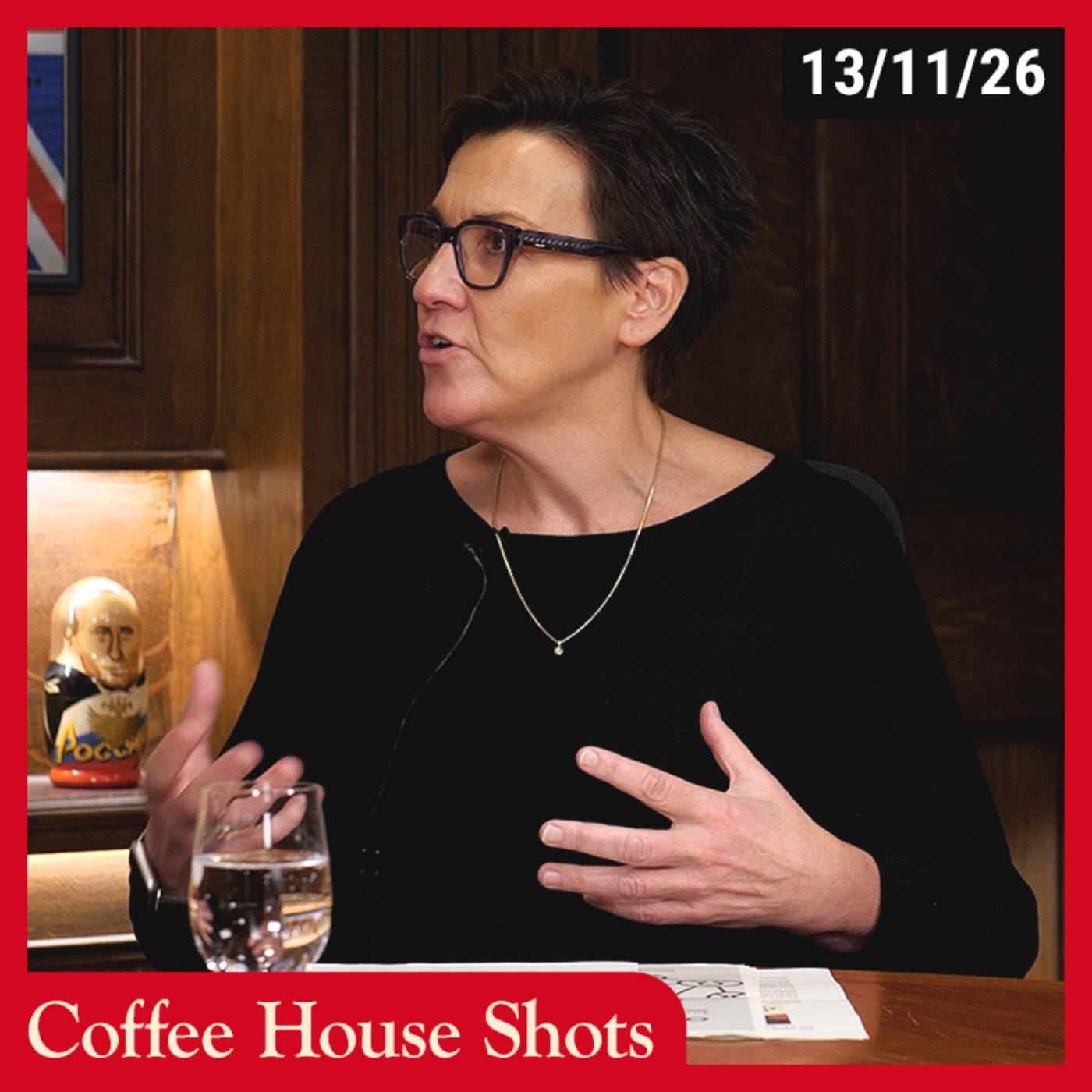
Baroness Debbonaire discusses Labour leader Andy Burnham’s first month in charge, focusing on how he’ll fund and deliver big pledges (street homelessness, social care, welfare reform), plus Labour’s approach to small boats/illegal migration and the timing of a possible election.
Baroness Debbonaire is a former Shadow Culture Secretary under Labour and now represents Labour in the House of Lords. Host is Noah Hoffman.
Burnham’s “build a rocket to the moon” energy and poll bounce are promising, but budgets are the main test. She argues “not tackling” street homelessness and social care is not cost-neutral; failures shift costs into hospitals, policing, and families’ lost work. On welfare, she prefers “social security” as a safety net, defends the triple lock, and rejects cutting disability support without addressing why people can’t work. She says small boats should be stopped while keeping a humane, assessed asylum system and reviving UN resettlement.
Louise Casey’s homelessness work being sped up; Boris Johnson’s social care “plan” lacking workforce/NHS integration; returning ineligible asylum claims under Labour; the “dangerous journey” across a busy shipping channel; COVID-era social security spending.
Written by AI. May contain mistakes.
Discussion on the recent leadership change in the Labour Party and initial impressions of Andy Burnham as leader.
“course represents the party in the house of lords there is so much to discuss because it has now been one month since Andy Burnham has taken over as your party's leader.”
Exploration of the challenges Andy Burnham faces, particularly regarding the budget and fiscal responsibilities.
“And whatever happened, we've now got Andy in place and he's got enthusiasm and energy and he's going out to talk to people and he's got big ideas, taking on social care, taking on homelessness.”
A discussion on the financial and moral costs of failing to address issues like street homelessness and social care.
“It costs us a lot of money in hospital treatment as people on the street will often end up needing emergency care.”
Analyzing public opinion on social care reform and the potential for tax increases to fund necessary changes.
“when it comes down to more money out of people's pockets.”
Conversation around the sustainability of the welfare system and the challenges faced by younger generations.
“He tried to fix it when he was last health secretary.”
Discussion on the challenges facing young people today, including mental health issues and economic prospects.
“That's not quite what Alan Milburn said in his first report.”
Exploration of the complexities surrounding illegal migration and the political responses to it.
“Labour and Andy Burnham will be facing and that's small boats.”
Thoughts on the timing of elections and the need for stable governance.
“Whenever Andy wants to call it, I'll go out and support him.”

Get the gist, explore an idea or ask about something said.
 Claude
On Coffee House Shots, what are the key points of this episode?
Searching your listeningAutomatic transcript. May contain errors.
0:00Grainger knows if you're a procurement manager at an industrial manufacturing facility, you're balancing inventory and budget while sourcing critical supplies across the operation. Too much inventory? Costs climb. Too little? Production slows. Grainger's$2 billion in on-hand inventory helps you get what you need when you need it. So you can help keep budgets balanced and lines moving. Call 1-800-GRAINGER, click grainger.com or just stop by. Grainger, for the ones who get it done.
0:37Noa Hoffman: hello and welcome to coffeehouse shots i'm noah hoffman and today i'm delighted to be joined by baroness dangem debonair dangem is a former shadow culture secretary under labor and she now of course represents the party in the house of lords there is so much to discuss because it has now been one month since Andy Burnham has taken over as your party's leader. Fangham, you were initially opposed to a change of leadership. You wanted to keep Kirstama in place. What are your initial thoughts as someone who was in that camp now that the switchover has happened? I don't love changes of leadership. I just, you know, we've had a lot of that in the last 10 years, haven't we?
1:21However, However, where we are now is we've got a Labour prime minister and Labour prime ministers don't come along that often. So, of course, I live to serve. I think there's a lot of really great things that Andy's doing. I think that what Keir Starmer did to get us electable and all the things that he's had to put into place over the last five, six years were incredible. They got us into government, but Labour governments are precious to Labour members. and Andy's tone and his approach to things is what we see most of so far, because of course it has been parliamentary recess. We've not yet seen him in action in the House of Commons.
1:59But what we have seen is his obvious enthusiasm for the job, his determination to take on to big things. I quite like the whole sort of let's build a rocket and go to the moon sort of approach, you know, saying that you want to end street homelessness, that you really, really want to build lots of homes. You want to do all these different things. I love that approach. I think it's going to be really inspiring for the country. And, of course, he has given us a little burn and bounce in the polls. And I've been thinking a lot about my grandmother over the last few weeks since Andy took over. She was a Labour stalwart.
2:34She's not alive anymore. And she was one of the early people to have inspired me politically and helped me learn how to be political and think politically from the age of nought. And I've been thinking, what would my grandmother, Florence, say? And I think she'd say every Labour prime minister deserves your support and your full throated hard work. And that's, of course, what Andy's going to get from me. And I think from pretty much everyone that I've spoken to and been in contact with, people are just pleased we've got a Labour prime minister. And whatever happened, we've now got Andy in place and he's got enthusiasm and energy and he's going out to talk to people and he's got big ideas, taking on social care, taking on homelessness.
3:12These are big things. So it's all good.
3:14Noa Hoffman: Yeah, absolutely. And I think there is a really interesting contrast to Keir Starmer when it comes to the big ideas and it comes to the sort of motivation to go hard and go fast, which Keir Starmer's critics would say he perhaps lacked a bit. And in a way, that was what cleared the path for Burnham to take over. You're right. Burnham has absolutely benefited from a bounce in the polls. But of course, there are big challenges ahead. There's so much we can go into with them, but maybe it's worth focusing on a few coming up. And arguably the biggest one is the budget. There are a lot of policies that Burnham wants to implement that are radical, they're big, they're bold and they appeal to a lot of people, social care for instance.
4:05Noa Hoffman: But of course these policies aren't cheap and Burnham is bound, so far at least he says, by the 2024 manifesto. What does he do? How does he pay for the big changes that he wants to implement? Well, one of the things I like about how Andy set out his ambitions is that he's pointed out even today that there's the counterfactual not tackling street homelessness costs us a lot of money. It costs us a lot of money in hospital treatment as people on the street will often end up needing emergency care. It costs us money if they end up needing other forms of support. It costs us money if they end up in trouble with the law, which sometimes people will do.
4:44It costs us money not to tackle street homelessness. It also costs us morally. I loved, really loved the fact that he said it's just the right thing to do. And I think that that approach will help him to work with his chancellor. He did say he's not going to bust the fiscal rules. And I get that. And I think that's the right thing to do. And it's worked for us so far as a Labour government to make sure that we're not scaring everybody. However, and I'm not going to rewrite the fiscal rules right here on the pod, I think what Andy is going to do is not accept computer says no or the system says no.
5:18He's going to want to see, okay, well, where is the money that we're currently spending on not tackling street homelessness? Let's see how we can make that money work better by putting it into focus for tackling street homelessness. Now, that's just the one example that happens to have happened this week, but social care is another big example. It's already costing us a lot of money. Social care costs. And doing it badly is costing us. Not sorting out social care, which successive prime ministers have promised to do. Boris Johnson, I mean, I don't know if you remember, no, on the day Boris Johnson came into Parliament, he said, I've got a plan.
5:52I'm going to fix social care. And I think he more or less waved a piece of paper around in the air. And it just disappeared like summer snow. That never happened.
5:59Noa Hoffman: He did hike national insurance, didn't he, at one point? He didn't really have a plan for how he was actually going to make that work. And that was the problem. He didn't have a plan for how he was going to deal with the workforce. He didn't have a plan for how he was going to deal with the fact that we are paying people who work in social care very, very little. He didn't have a plan for how we're going to make that integrated with the NHS. He just had an idea of where he might or might not get some money from. That's not the same as having a plan. So what I like about Andy is that he's carrying on from where it started under Keir, commissioning Louise Casey, very nice Casey to do the work but telling her to speed up which Louise Casey frankly is capable of she's she's a smart woman she will dedicate everything she's got to getting this done and I think that is the sort of ambition and when you when you say that how's he going to pay for all these things we do have to set out how we're going to pay for things and I think so far that's exactly what Andy's been doing but we also have to cost in the counterfactual of not doing them and we have to remember that failures to tackle big things like social care just saying well we can't do the big thing so we'll just ignore them.
7:02That's not a zero cost option. It's not a cost neutral option. It's one whose costs bubble up elsewhere in the NHS, for example, but also it bubbles up in people's personal lives as women in particular, family members end up stopping working, giving up jobs in order to care for someone. That is also a cost to the exchequer. It's a cost to the public Absolutely.
7:26Noa Hoffman: I just wonder how difficult it will be for him to land an argument with the public that taxes will have to go up to pay for these policies that Labour deems as essential and that a lot of members of the public, not everyone, but a lot will deem as essential as well. when it comes down to more money out of people's pockets. And I know Labour's not saying that they'll raise income tax, but of course, tweaking other taxes very often will filter down to the middle classes in particular, who are really being hammered at the moment, just how much appetite there is for that and whether there could be a backlash off the back of it.
8:01Every family, every family is affected by the crisis in social care. One way or another, sooner or later, we're all going to be affected. every family with elderly relatives who are possibly living quite independent lives at the moment but who are looking ahead thinking how am I going to manage if I do need a bit of help this affects every family every family wants it fixing anyone who works in the NHS wants it fixing and has done for years because people end up staying in hospital when they don't need to be in hospital because they can't be safely discharged so how much public support is there for changing social care for doing the right thing.
8:36I think pretty sure the public is going to want us to fix social care. Probably they're fed up of hearing politicians saying they're going to fix it and then not doing it. I think that commitment that Andy's shown is how he'll get the public support. And we also don't know, neither you nor I know where he's going to, whether or not he's going to raise this tax or that tax. So I'm not going to write the budget in advance. I back the people in the Treasury. I know some of the advisors. I know them to be tough, smart cookies who are definitely not profligate with public money. But they also, like all of us, know that it's probably only going to be a Labour government for the next few years.
9:10If we don't have a general election in the next five minutes, you know, we're probably going to have one for a few years. If we don't fix social care in a Labour government, that puts it off again. And, you know, Andy's been at this a while now. He tried to fix it when he was last health secretary. Pretty sure it's also personal to him in the political sense, but also he's mentioned his family connections. In doing that, When he mentioned his dad, I think what he did was really touch a chord with so many families who've either been in the same situation or are in the same situation. So it costs, right?
9:41It costs. Would we rather have a good system? I think we probably would.
9:45Noa Hoffman: Of course. I mean, that's obviously one issue among a myriad that Burnham wants to tackle. But I'll move on from that to another one on the subject of the public person. And this is a huge problem, but Labour really struggles to grapple with it, I think. And please tell me if I'm wrong, often for ideological reasons, and that's welfare. Thangam, would you agree that the welfare budget is not sustainable in its current form? Do you know what? I think, I mean, I generally use the term social security because that's what's supposed to be what it's for. And that helps remind us that it's supposed to be a security, a safety net for people who are vulnerable.
10:25If we go back to the COVID times, people expected the government to pick up the slack. The government spent billions and billions providing social security. Nobody said, do you agree that this bill is too big? At the time, everyone just said, we need money. We haven't got any living, any means of earning a living. That's what social security is for still. The biggest part of what you refer to as the welfare bill is actually pensions. And the triple lock seems to be protected by some sort of halo of, whoa, nobody's going to touch the triple lock. But actually, when people are talking about welfare, the welfare bill is too big.
11:00I think we need to go back to, well, what's it actually for? Social security is a system to protect people who are vulnerable, who are sick, who cannot work for other reasons, or who cannot work because they have retired. And we want them to be able to retire. Now, we could start having conversations about do we want to raise the retirement age. We could start having conversations about whether that triple lock is something that's done its time. What we have to do is go back to the first principle of what are we trying to achieve here? The way that you get people into work is by making sure the economy is growing.
11:30And everyone's struggled with that. Every government's struggled with that over the last 10 years, 10, 15 years. We want to get that economy growing. Andy's absolutely determined to get that economy growing so you can get more people into work and paying taxes. But actually just saying we need to cut the welfare bill for the sake of saying we need to cut the welfare bill doesn't really get us very far. we just end up in pickles and I wouldn't call it ideological I'd call it moral to say that people with disabilities and serious illnesses we have decided as a country that we're well off enough as a country to make sure there is a safety net it is not a sun lounger it's a safety net and yes there will be people who we maybe want to think about how do we make sure that they actually don't just end up sticking with the benefit system the social security system if they are able to work.
12:13One of the problems we have at the moment is there's hardly an overwhelming number of vacancies for people to go into. But for disabled people in particular, where there's been a lot of debate about their disability payments, that money is to pay for the cost of being disabled. They are still entitled to it if they get into work. So we could decide that we want to cut the cost of being disabled, but we can't just decide we want to cut the number of people who are disabled. What is it we're saying? If we're just saying we want to cut it because we want to cut it. That's not a good argument. It's not going to bring the public with you.
12:44I think an awful lot of people who we spoke to in the Labour Party, we spoke to last year, who were facing retrospective cuts to money that they already had coming in of thousands of pounds. And we weren't able to explain to them what the purpose was, how it was going to help them. We're only able to say to them, we need to cut the bill. That doesn't get us very far. And that is why, in my view, Labour MPs rightly said well we don't actually have a good argument for why we're doing this and we do know it's going to make a lot of people who are already vulnerable worse off so we're not happy about it we're not in that place anymore and he's obviously going to need to get more young people into work and i can't wait to see what alan milburn's plan has got to come up with that i mean you absolutely
13:26Noa Hoffman: do not have to convince me about the ridiculousness of the triple lock nor many people um i would say in the younger age brackets but on disability i suppose the argument that critics would put forward is that there's been a lot of cases of, for instance, anxiety, ADHD, more mild, if I can put it that way, mental health cases that have contributed to a rising welfare bill as a potential area, A for cuts, but B as a reason that the NEATS issue is growing so much. Would you dispute that characterisation? That's not quite what Alan Milburn said in his first report. He didn't put it down to more young people having anxiety.
14:08Actually, if we want to take a look at why a lot of young people have got anxiety or have got mental health difficulties, let's look at the hand they've been dealt. An awful lot of them are looking at a life ahead of them where they may have gone to university or college, they may have got qualifications, but they can't get the right job at the right pay to be able to even think about saving up to own their own home. Rents are very high. You will know this now. I mean, the stop that young people have been given at the moment, And we're really saying to them, oh, and by the way, you can't get anxious either.
14:37And by the way, there's no services for people with mental health, despite successive governments saying they were going to give parity of esteem to mental health. That's not happened. So if you are a young person who at the moment hasn't got enough money to even think about owning their own home or renting with a partner without having to share with lots of other people or move far away from their job and then incur huge travel costs on unreliable travel. you're already looking at a future that you're feeling like where is my future going anyway I don't think it's surprising an awful lot of young people are experiencing mental health crises I think what's unforgivable is that so far we haven't been able to meet that mental health crisis with good services I think Wes Streeting when he was health secretary was really starting to get stuck into sorting that out I'm absolutely sure that Yvette Cooper will be as well because as you said you know it doesn't help young people to be stuck having a mental health crisis But if they aren't getting the help that they need, and if we really are saying as a country, and I think we should, that mental health does have parity of esteem with physical health, if it is disabling people to have a mental health crisis and we're not providing them with the health care they need, then we shouldn't be surprised if that ends up costing them in lost opportunities and also costing us.
15:47I think we need to just be realistic about this. I want young people to have mental health support, but I also want them to have a hope that they might get a decent future, that their degree is going to mean something, that the job they're trying for isn't going to be taken by AI. So I think there's a whole bundle of things there which we can do to answer the charges of, oh, this is all just young people who are pretending to have anxiety. There is a really thorough assessment system, which is some people would say quite brutal, actually. Is it failing young people if we just leave them there?
16:14Yes, absolutely.
16:15Noa Hoffman: And I suppose that's the argument that Keir Starmer wasn't quite able to land with Labour MPs is that this isn't about cutting, as you put it, social security for the sake of getting a number down. It's about not giving up on young people and showing them that they can overcome issues, they can get into the workplace and they can contribute to the economy. Because the NEATS crisis is part of what underpins the real lack of growth in the country, would you agree? It's one of the things that underpins a real lack of growth in the country I think there are many things to be honest And obviously if there was a magic pill for growth We'd all have taken it years ago, wouldn't we?
16:52But I mean the needs crisis It was under Keir Starmer's prime ministership That Alan Melbourne's report was commissioned It was under Keir Starmer's leadership The first part was published And fixing this is the right thing to do Giving young people hope is just the right thing to do What else is government for If it's not to give young people hope And real hope not just pretend flim flam but actual hope that there can be a way that they might own their own home they might have a future good you know goodness me they might actually be able to save up in order to have a family and have children and build a future together for that family that is so tough on young people at the moment and I want them to have hope I've got I'm not I'm not a parent but I'm an aunt and I you know the thing most people my age I hit a milestone
17:36Noa Hoffman: this summer so I've been thinking about this a lot what's the milestone can we ask yeah I was 60 a couple of weeks ago. But my hairdresser has helped me just, you know, face up to that. You're looking great. Thank you. Asian collagen also helps. However, you know, being 60, you do sit there and think, okay, not only which subscriptions am I going to cancel, and I did cancel a few, but also what is it that I want for the rest of my life? For most politicians, that's what motivates you, is you want things to be better for the next generation. For most parents, for most aunts like me, I'm also not just an auntie, but a grantee because my nephews and nieces have now got their own kids.
18:13What I want more than anything, I would give 10 years off my own life just to know that their lives were going to be better. Effectively, by being a politician, that's kind of what you're doing. You are giving your life to public service because you want the next generation to be better off and to have genuine hope. And I don't know many politicians, honestly, of any party who don't at heart want that.
18:32Noa Hoffman: Let's move on to a third issue. Labour and Andy Burnham will be facing and that's small boats. Now absolutely there's been a reduction around 40-45 % which is an achievement but the polling, poll after poll after poll shows that the public across all political views but very much within Labour want an end to illegal migration. What would you like to see Burnham do on this topic if anything or would you disagree that this is a problem for him? No, I mean, it's been in the polls for months, years, as one of the things the public care about, but they care about it for different reasons. Some people just don't like migration, full stop, any migration.
19:17And there is a political party knocking around at the moment that seems to be against any sort of migration at all. Other people who say, I just don't want illegal migration, but that is often mixing up illegal migration that's just simply breaking all the rules and people who are fleeing desperate situations, which is actually covered by refugee and asylum law. Then there are those people who say, well, I do want refugees and asylum seekers to be protected, but they've gone through a safe country. They've gone through France. They've gone through Germany. They ought to be protected by those countries.
19:45I think that neglects a couple of humanitarian issues. One is that we are a signatory to the refugee conventions and actually asylum seekers have a right to have their application considered. And in a normal way, that's in the first safe country they reach. And guess what? Most asylum seekers do stop in the first safe country they reach. Very, very, very few, a small proportion of the world's asylum seekers make it to the UK. Most refugees in their millions stay in the neighbouring countries or in their own country within a war zone, but displaced with nothing, with no good way of life. And some usually, but obviously not always, who have a connection to this country, perhaps because Britain was the colonising power years ago and so they speak English or they've got relatives or for whatever reason they try and make what is a very dangerous journey very often to this country.
20:34Okay. Everyone I think would agree that it's dangerous for people to cross one of the world's busiest shipping channels in a tiny dangerous boat. Everyone I think would agree across all political parties that those putting those boats into the water, the people taking the money, the people traffickers, they are vile and they are profiting from human misery. So I think that's where we've got a lot of political agreement. The motivations for are you against the boats because you think that cancelling the boats will give you more money in your pocket. I mean, that's just not true. And I think there are people who are giving, there are some political voices who are giving people the idea that all of this country's problems can be blamed on illegal migration.
21:11That's not true either. Illegal migration has come down. So too, by the way, has legal migration, migration within the rules. And that's actually causing us some problems because we've got some workforce issues there, which we also need to deal with. But rhetoric around this has spiralled out of control in some places. I want to stop the boats. I don't know anyone who doesn't want to stop the boats. But I also want us to have a humanitarian, humane way of taking some of the world's refugees. Because actually, because of geography, because we're not next to a country at war, we take a tiny, tiny, tiny fraction, even including people in small boats, of the people who are displaced every year by war and conflict.
21:51Now, I would like us to have what used to be resettlement, UN and United Nations resettlement scheme, which has been hollowed out under various political regimes in the world. But that is a good scheme whereby people do not need to make a dangerous journey. That's good on a humanitarian basis. It's good for people who don't like the idea that people are coming over the channel on small boats. But it's also good because it means that we morally are standing up for our convictions as a country. And most people, I agree not all, think that they like the idea that Britain takes its fair share of refugees.
22:26As we only take a tiny proportion, why not revive the resettlement system so we take that tiny proportion legally and safely by what's called refugee resettlement? Because we are in danger of creeping towards an idea that asylum seekers are the danger in our country. When we see people's accommodation being burnt or attacked or people being demonstrated against merely for being asylum seekers, that is not OK. That is ethno-nationalism. That is not a country that I want to live in.
22:54Noa Hoffman: Do you think most people who are arriving on the small boats are fleeing war zones? Obviously not France, but would you say that they're not economic migrants? They're mainly genuine refugees? Well, neither you nor I are Home Office assessors and that's what has to happen when they arrive. They have to be assessed. And I know from my time as a constituency MP that people sometimes apply and are not genuine refugees and then we return them. And we've actually returned a lot of people under the Labour government. And that's the right thing to do. People who are not entitled should be returned. But there's a process.
23:24And if we are truly a humanitarian country, which we like to say that we are, then we should assess people and return those who are not entitled to be here and give a warm British welcome to those who are.
23:34Noa Hoffman: I've got one last question for you, which you briefly touched on. And that is the prospect of an early election. Now, you said that's up to Andy. If he wants to do it next weekend, let him go and do it. But my question is to you. As a very senior Labour politician, you must have a personal view on when the best time to go is. My personal view is I'd like us to use all of our mandates. I'd like people to start feeling a sense that government is stable, that government sticks around, does hard stuff, gets stuff done and shows results. I think the public has, for all sorts of reasons, grown weary and feels that governments no longer can do what they say they're going to do.
24:15Now, we did during COVID and other times of national emergency and national crisis, when we show that actually governments can do great things. And I want Andy to be able to start demonstrating to the public what has benefited their lives. Actually, some of it which will have happened under KIA, but also those things which Andy's bringing into. Personally, I'd like us to keep going for a few more years yet, but it will be up to Andy. He will see data that I won't have sight of. And I'm, you know, I'm a loyal Labour backbencher. Whenever Andy wants to call it, I'll go out and support him. Meanwhile, I think we've got a job of work to do.
24:52Andy's out talking to people across the country at the moment. So, too, in my experience, are Labour MPs and Labour members everywhere, all year round, talking to people, listening to people, hearing how things are for them and making sure that we are still picking up what they're concerned about. And to be honest, when I talk to people on the doorstep, it's been a few weeks now, but whenever I do it for my local party, mostly people that people are telling me about is that they're worried about the cost of living. They're worried about whether their son or daughter is going to get a good job, somewhere good to live, and whether they're going to be able to afford their bills.
25:20I'd like Andy to be able to get on with doing the governing to fix those problems and then go to the country after that. But I'll support him whenever he goes.
25:27Noa Hoffman: Well, Fagham, it's been an absolute pleasure to have you on the podcast. Thank you so much. And thank you, listeners, for tuning in to Coffeehouse Shots.
26:01This is the story of The One. As a shipping manager, he's running the dock, stocking supplies, and making sure every order goes out on time. And Grainger helps him stay prepared. From shipping supplies to PPE to hand tools, he counts on Grainger to keep products moving and trucks rolling. So his operation runs smoothly, no matter the shift. Call 1-800-GRAINGER, click grainger.com, or just stop by Grainger. For the ones who get it done.
One month on from Andy Burnham entering Downing Street and a lot has changed at the top of government. Starmer's old guard have been reshuffled or replaced, and Burnham's government have announced dozens of new projects, but the big challenges that he faces are largely the same. Noa Hoffman is joined by Baroness Thangam Debbonaire, the former shadow culture secretary, to review Andy's report card.
Produced by Henry Lloyd.
Become a Spectator subscriber today to access this podcast without adverts. Go to spectator.co.uk/adfree to find out more.
For more Spectator podcasts, go to spectator.co.uk/podcasts.
Contact us: [email protected]
Hosted on Acast. See acast.com/privacy for more information.